





A golden coat can turn an ordinary-looking dog into the one everyone notices first. Shades of gold are produced by pheomelanin, and genetic differences can influence whether the coat appears pale yellow, honey, coppery, or richly golden.
The coat can look surprisingly different depending on its length, thickness, and texture. Those differences are worth considering before choosing a dog, since that gorgeous coat may also mean regular brushing, loose hair around the home, and extra care when the seasons change.
Golden-coated dogs also vary considerably in size and personality. Some were shaped by generations of work in the field, while others became valued primarily as companions. Their energy levels can range from highly driven to pleasantly moderate, and their training needs can differ just as much.
So, if you are searching for a dog with a golden coat, appearance is the beginning. These seven choices reveal how much personality, purpose, and variety can sit beneath that memorable color.
Key Takeaways
Golden coats have more variety than a single shade can suggest, and each breed on this list wears that color a little differently.
The Golden Retriever can range from light golden to deep reddish gold, while the Vizsla is known for its sleek golden-rust coat.
The Tibetan Spaniel takes things further with dark-tipped hairs, while the English Cocker Spaniel offers an unusually wide range of coat colors and patterns.
There is plenty more to uncover, especially when you reach the breeds whose golden coloring comes with some fascinating genetic details.
Amazing Dog Breeds Featuring Golden Coat Colors
1. Golden Retriever
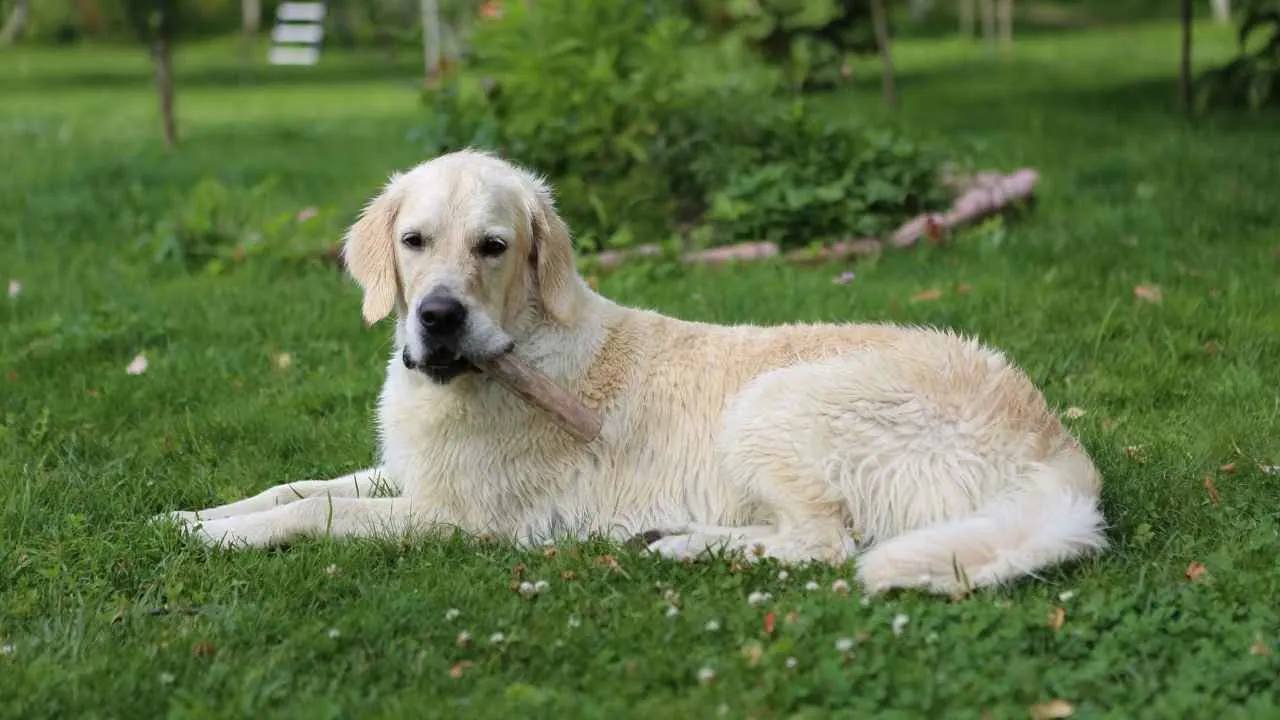
Golden Retriever began as a specialized gundog bred to retrieve ducks during hunts, with a natural ability that later suited several forms of human service.
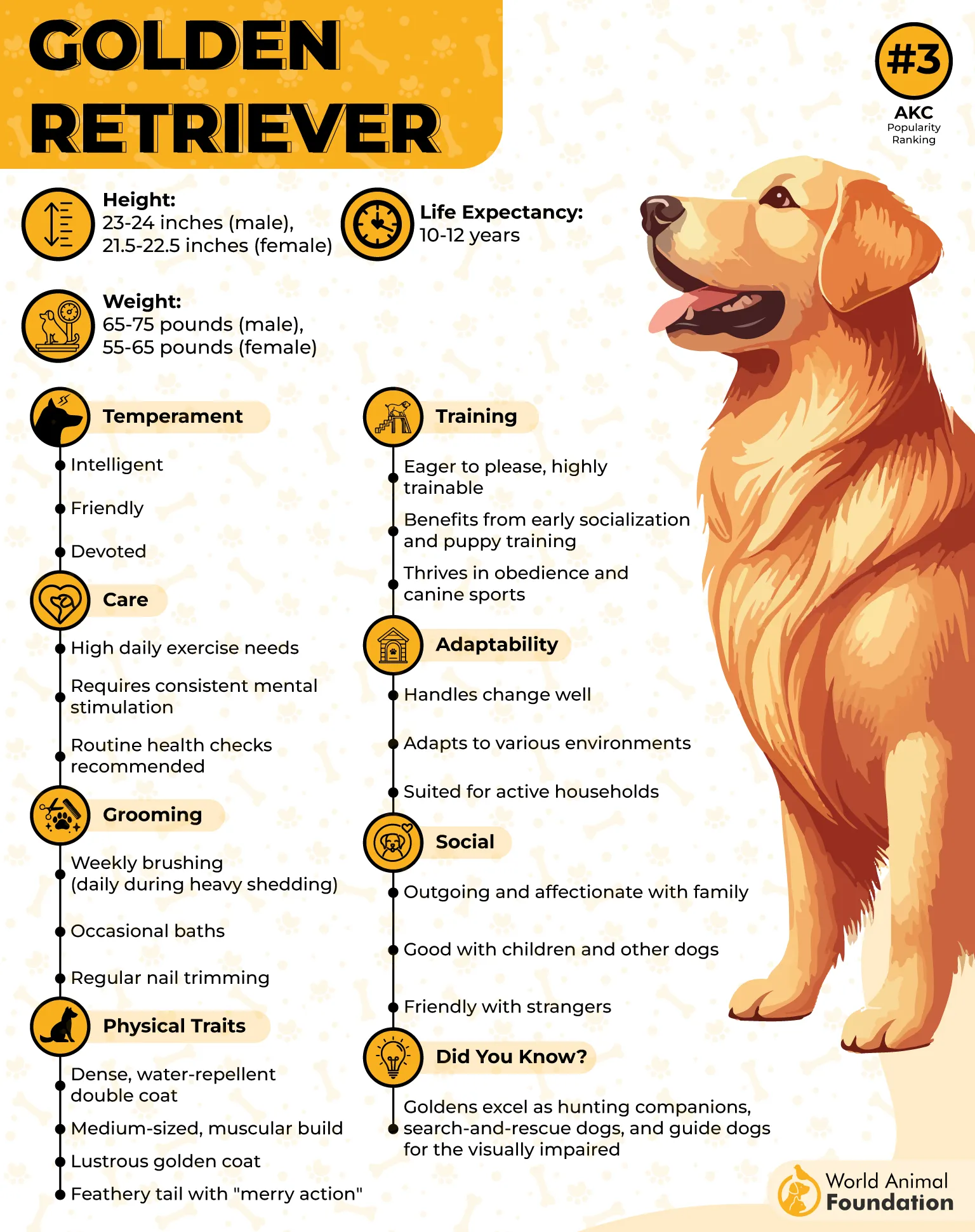
Its gentle temperament also helped shift its role toward family life, while search-and-rescue teams, service work, and police K9 units still use the breed today.
A Spectrum of Gold
It has a double coat with feathering, and its color can range from a pale yellow cream through rich gold to deeper reddish-gold shades.
Breed standards recognize light, standard, and dark golden colors, while very pale ivory and intensely red coats fall outside that standard range.

Their color range reveals three recognized shades:
Light golden: soft yellow with low-medium red intensity
Golden: rich, saturated yellow pigment
Dark golden: deeper yellow with rusty or orange tones
A Social Household Dog
Golden Retrievers enjoy being involved in everyday family activities and can live happily with cats and other furry pets when introduced to them as a puppy. Its gentle disposition also makes regular interaction an important part of its daily routine.
2. Vizsla
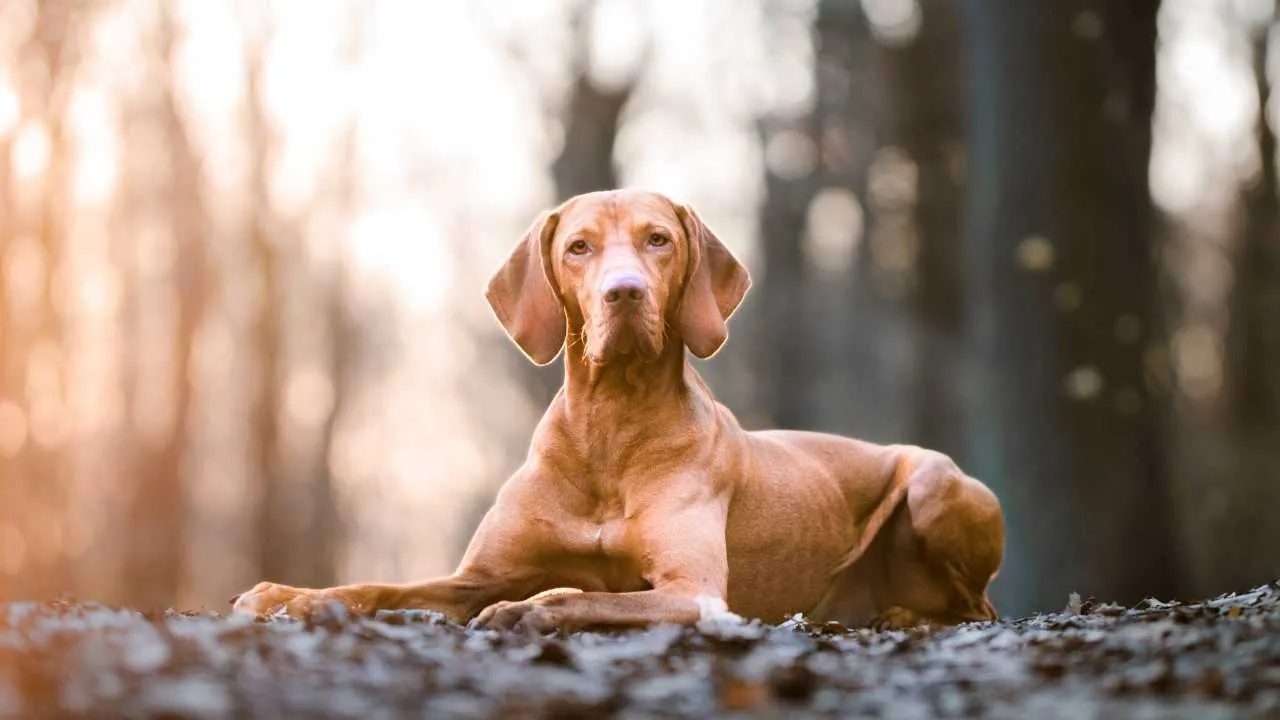
Vizsla’s story reaches back more than 1,000 years to the early Magyar tribes who settled in what is now Hungary. Hunters and warriors prized these dogs for their keen hunting skills and loyal nature, building a strong connection with fieldwork that remains part of the breed’s identity today.
Golden-Rust Standard
Vizsla has one of the most precisely described color palettes, with golden rust considered ideal and lighter golden or semmelgelb shades also accepted. The breed’s short, smooth coat can also reveal lighter shading along the neck and shoulders, known as a permissible saddle.
These color details make the standard especially specific:
Pale yellow is considered undesirable
Dark mahogany is not preferred
Small white chest spots are permitted
Sleek Field Coat
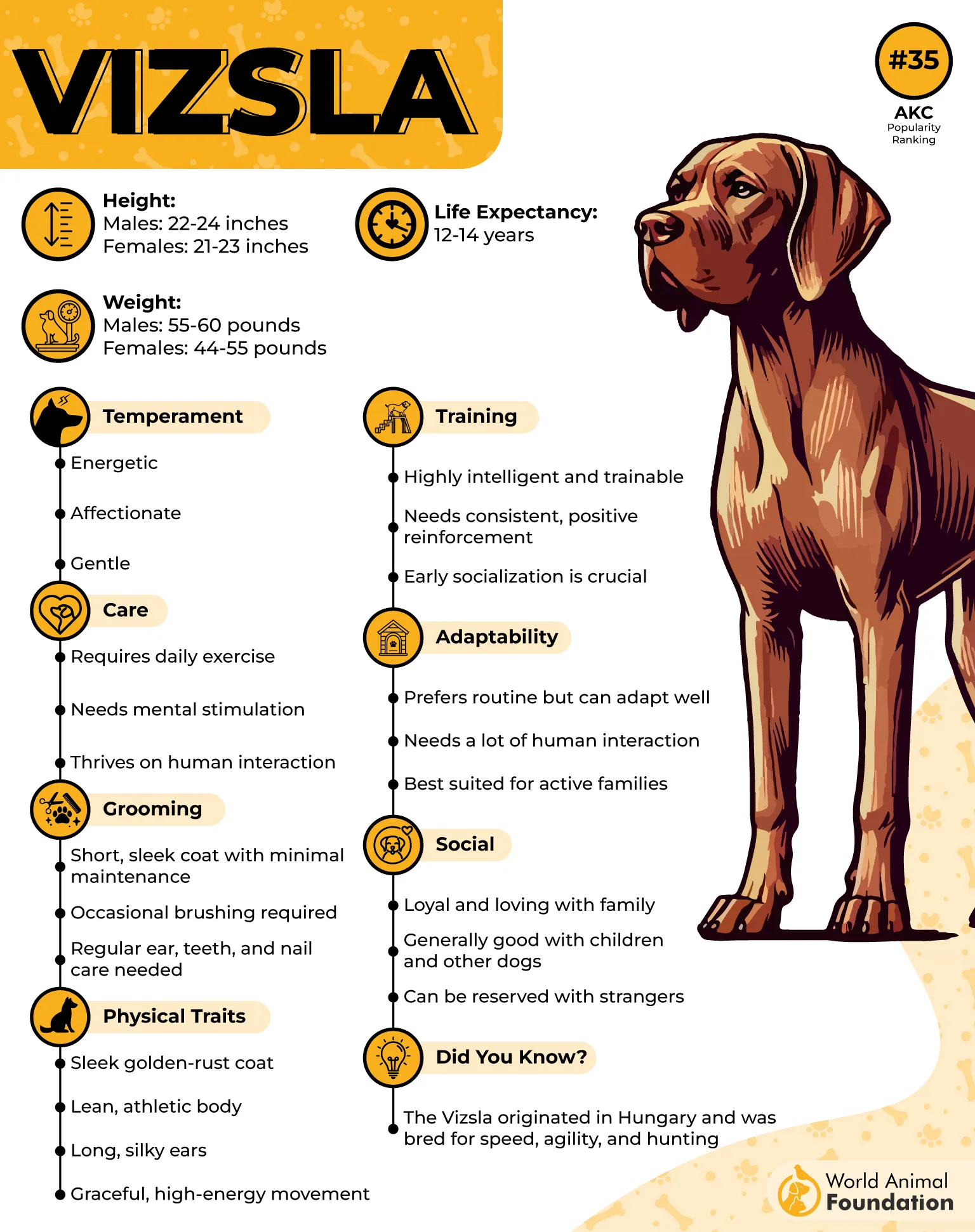
The short coat of this popular breed lies close against its athletic frame, a structure suited to working through dense brush and thick brambles. Its coloring is self-based, with the eyes, nose, lips, eye rims, toenails, and foot pads blending closely with the coat, as Showsight Magazine reported.
3. Tibetan Spaniel
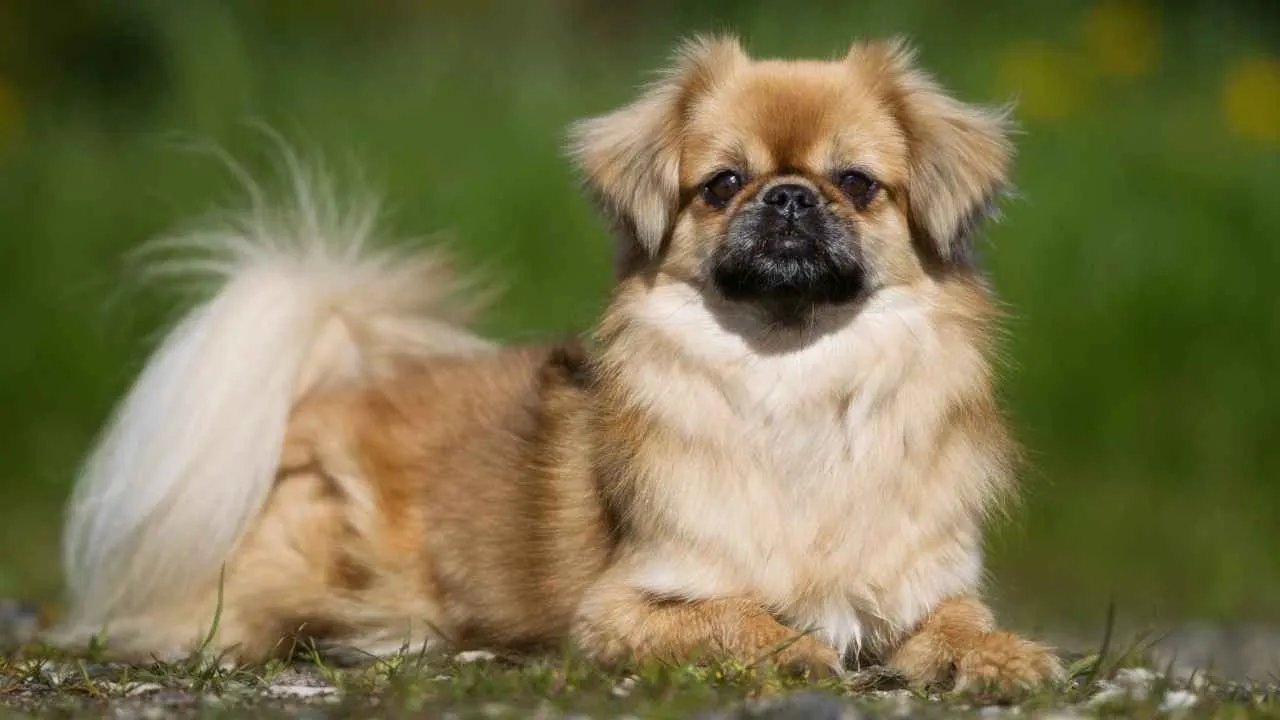
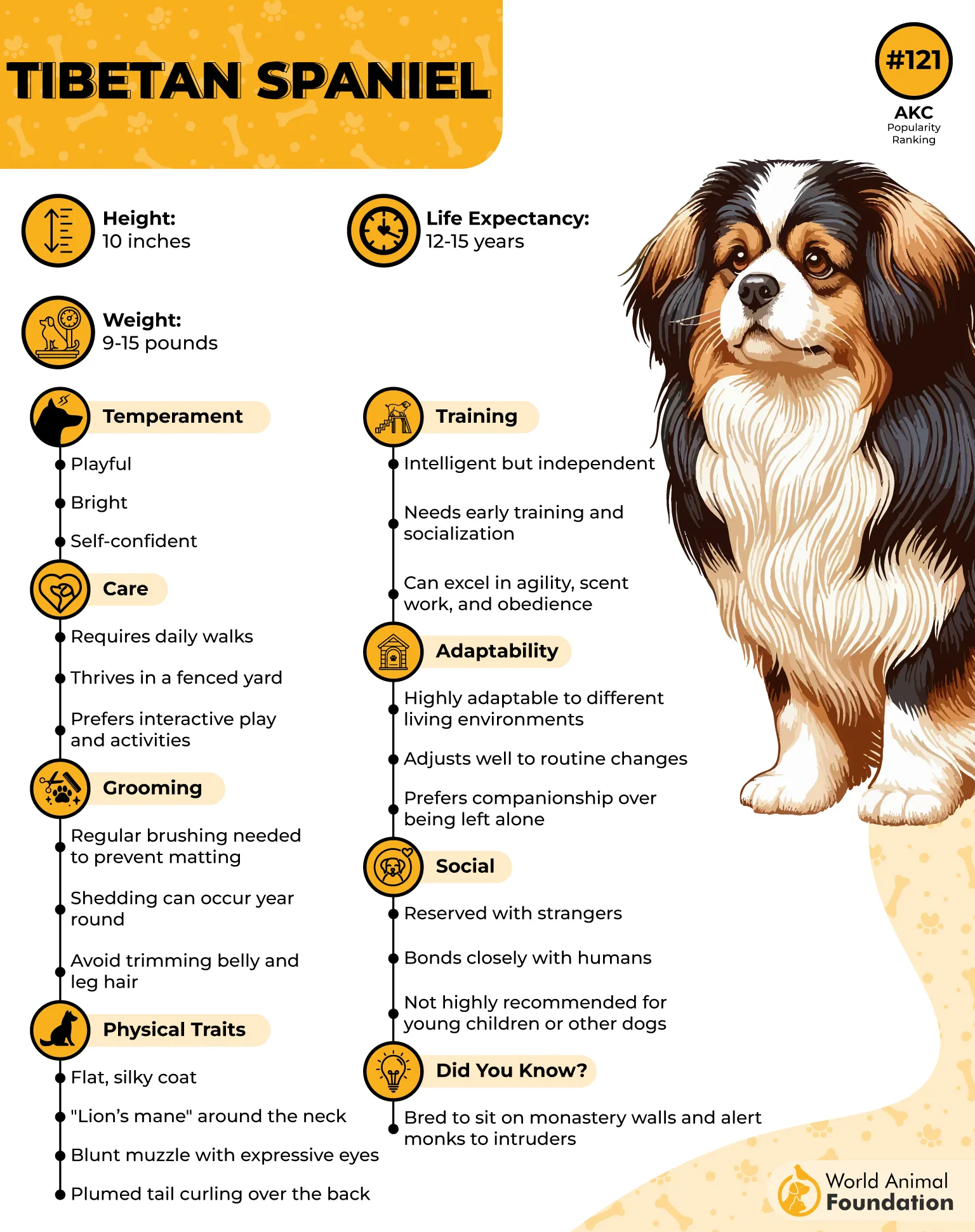
Tibetan Spaniel comes from the Himalayan mountains of Tibet and has been associated with Buddhist monks for more than 2,000 years. These small dogs served as monastery lookouts, watching from high walls and alerting monks and Tibetan Mastiffs when something suspicious appeared.
A Coat Full of Detail
These spaniels have a moderate-length double coat with a silky texture, flatter across the body and longer around the ears, tail, and hindquarters. Gold, fawn, red, cream, sable, black, and several combinations are accepted, with black masks and dark-tipped hairs especially common.
The coat includes several details worth noticing:
Males generally have a fuller neck mane
Feathering can extend beyond the toes
Gold and fawn coats may have black-tipped hairs
A Stubborn Streak
Tibetan Spaniel can be sensitive to people’s moods and affectionate with familiar companions, yet training may require patience because this breed can resist commands.
Off-leash exercise in an unfenced area is specifically discouraged, while its enjoyment of cold and snow adds another interesting side to its character.
4. English Cocker Spaniel

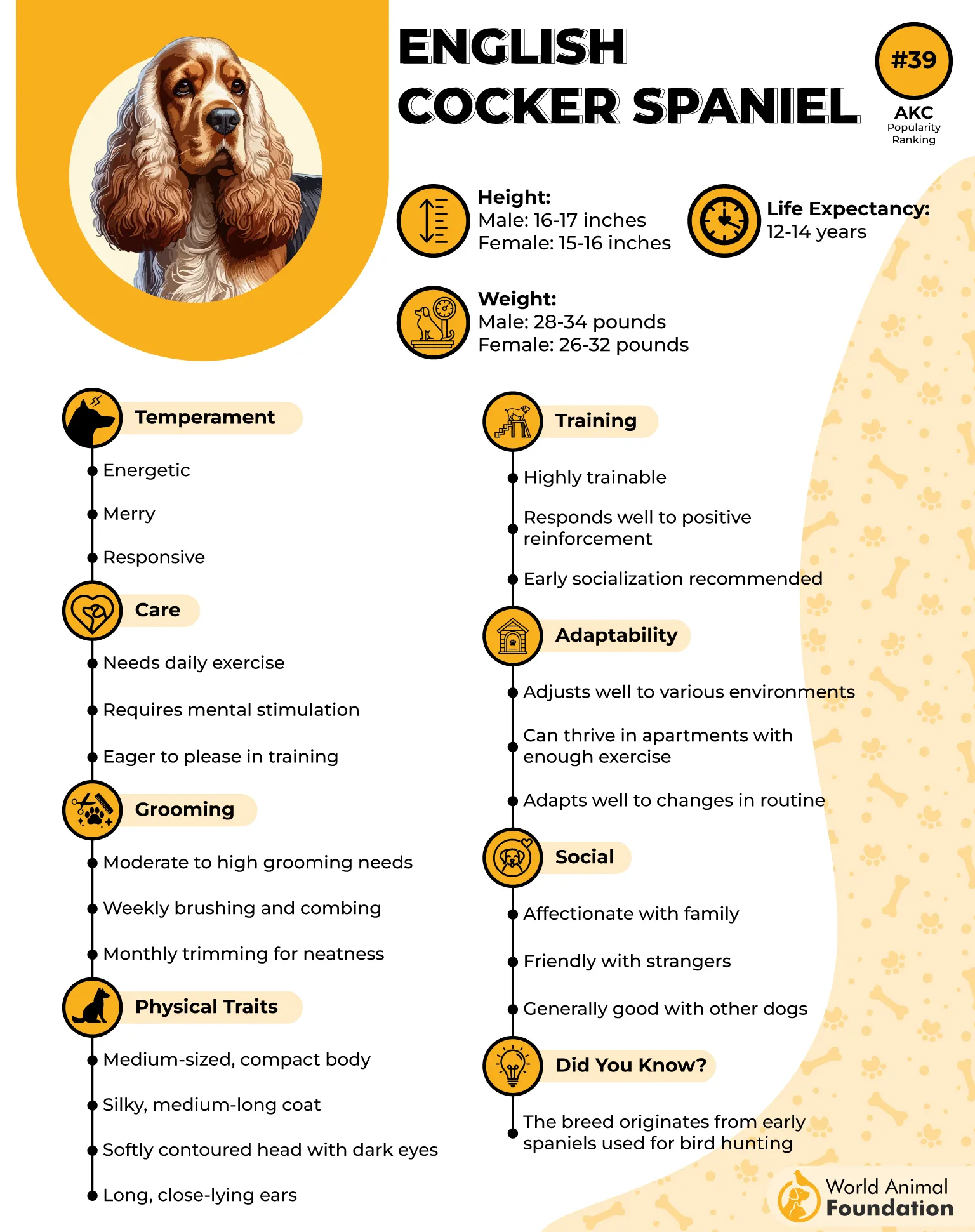
English Cocker Spaniel was originally bred in the British Isles as a hunting companion used to flush and retrieve birds from dense undergrowth. Its name comes from the woodcock, while its smaller size eventually separated it from the larger spaniels used for different field work.
A Remarkable Palette
It has a silky, medium-length coat that lies flat against the body, with slight waves permitted and feathering along the chest, belly, legs, and ears. Its color range is unusually broad, including golden, red, lemon roan, blue roan, liver roan, black, and numerous white-and-tan combinations.
The breed also has some fascinating color details:
Sable is considered an uncommon solid color
Roan patterns can include tan points
Parti-colored coats come in several combinations
A Social Companion
English Cocker Spaniel has a cheerful, affectionate nature and enjoys being involved in family activities, as the AKC describes. Its eagerness to participate makes it well suited to households with children, while its friendly disposition can also work well alongside other household animals.
5. Chow Chow
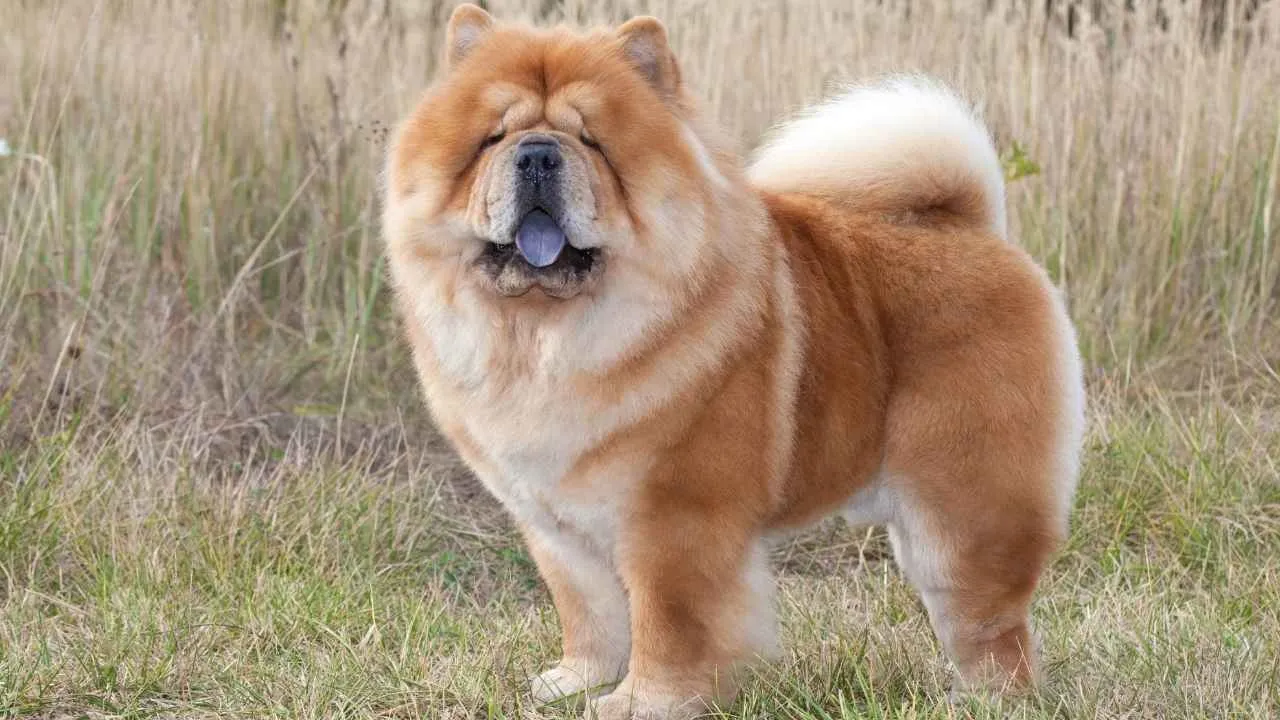
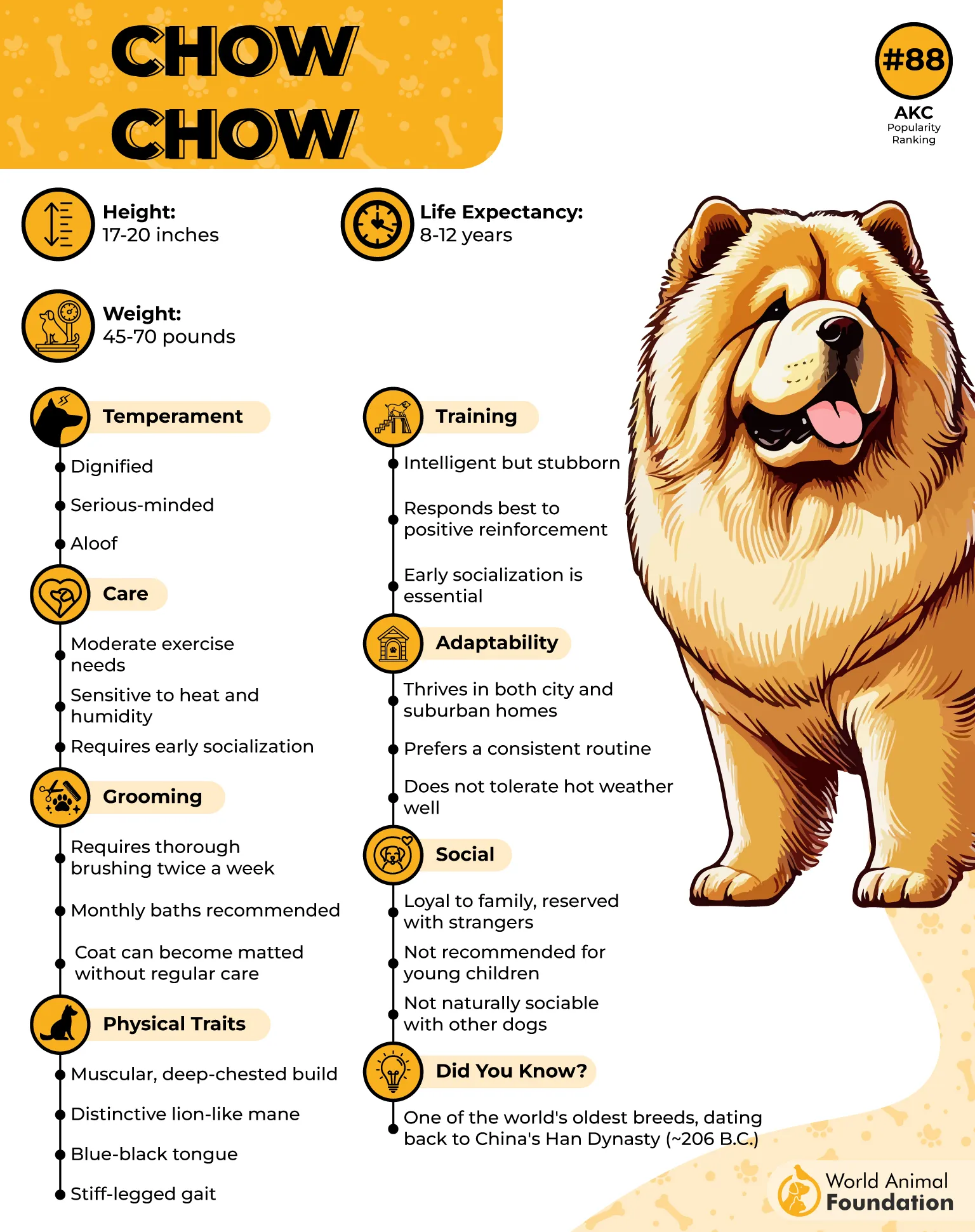
Chow Chow has a long association with China, where the breed was used for guarding, herding, and hunting before reaching Britain in the 18th century. It later became an attraction at the London Zoological Gardens, adding an unusual chapter to its early European story.
Golden Shades
This breed can have red coloring that ranges from warm orange to cream, while sable coats may shift from light golden tones to deep mahogany. Some dogs also have countershading, with softer color along the underbody, lower legs, chest, and face.
These coat details make those shades easier to distinguish:
Black-based sable can reach mahogany red
Blue-based sable can appear fawn or cinnamon
Recessive red can produce cream-colored coats
More Than a Fluffy Coat
Chow Chow has a dense mane-like coat that can make its sturdy frame appear considerably larger than it really is. The breed also has a distinctive blue-black tongue, an unusual feature that separates its appearance from the familiar pink-tongued dog.
6. Pharaoh Hound
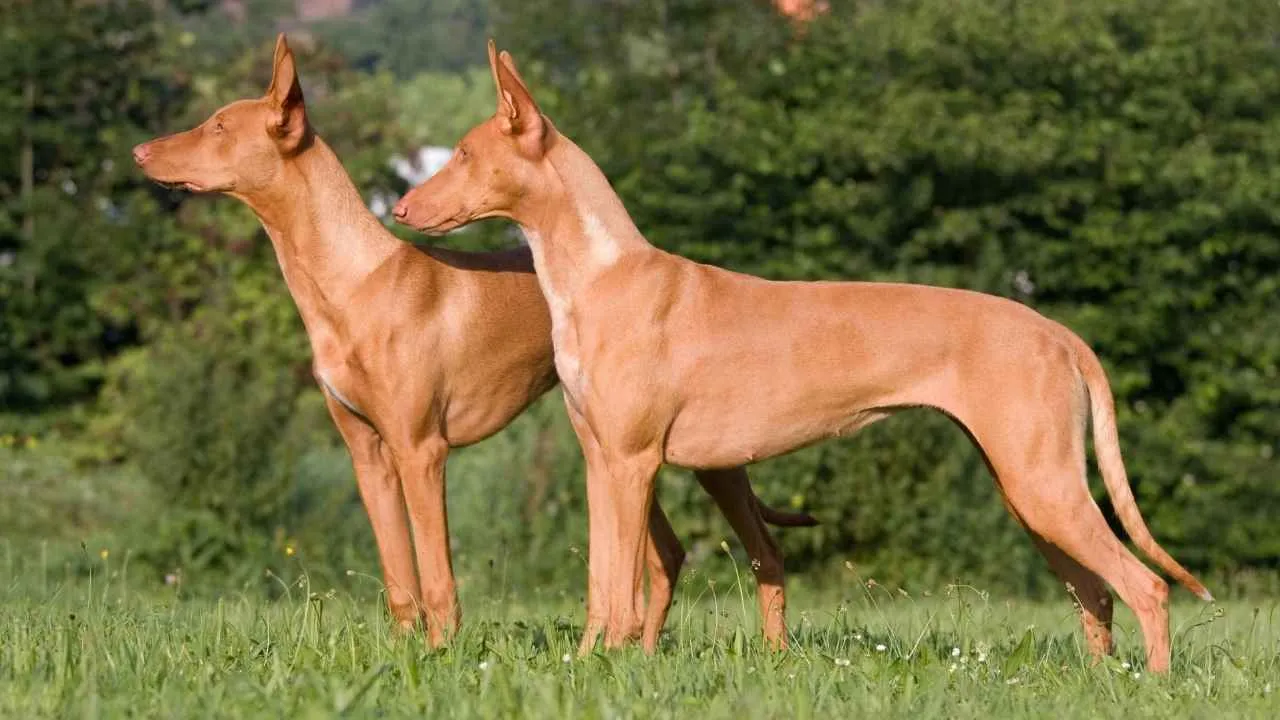
Pharaoh Hound is closely associated with Malta, where this ancient coursing hound was bred to chase small game across rocky, demanding terrain. Its sleek build, quick pace, and strong scenting ability suited a job that required both speed and persistence in open country.
Four Shades of Brown
Pharaoh Hound has a surprisingly narrow color range, with four brown classifications shaped by differences in tone and the B and E genes. White markings are possible on the feet, neck, and belly, but the recessive pattern makes them less common.
The color categories include:
Chestnut: The darkest, richest brown shade
Red golden: Noticeably deeper red pigmentation
White markings: Linked to two recessive traits
The Blushing Hound
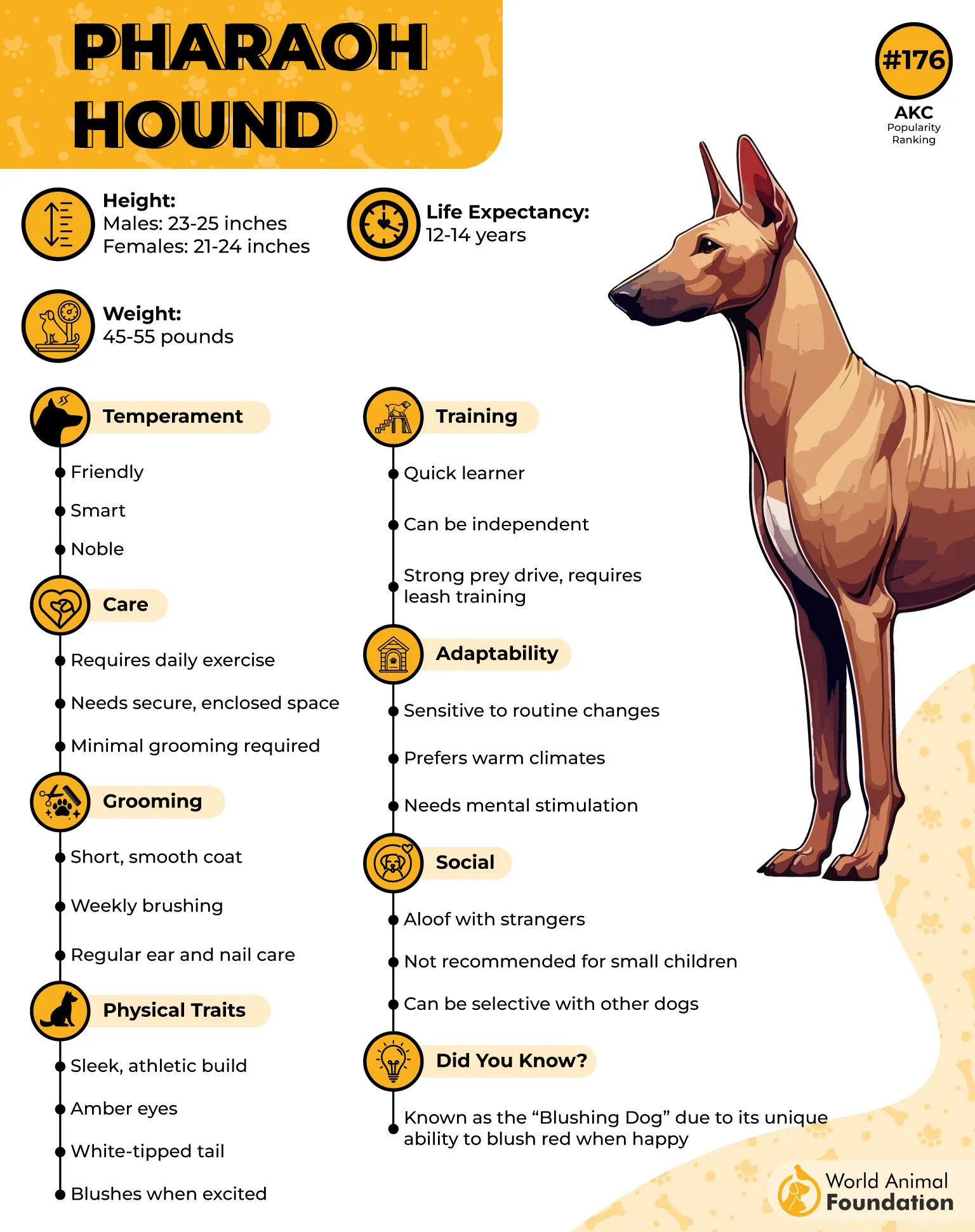
Pharaoh Hound has amber eyes, a leather-colored nose and eye rims, and a white-tipped tail, along with an unusual ability to blush when excited or happy.
Regular running also matters for this athletic breed, with a secure six-foot fence and a 50-by-50-foot area recommended for dogs that exercise themselves.
7. Nova Scotia Duck Tolling Retriever

Nova Scotia Duck Tolling Retriever started working along the coastal regions of Nova Scotia in the early 19th century, helping hunters bring waterfowl within range, as noted by Britannica. Its name comes from “tolling,” a hunting technique where the dog playfully darted along the shoreline to attract curious ducks.
Fox-Like Colors
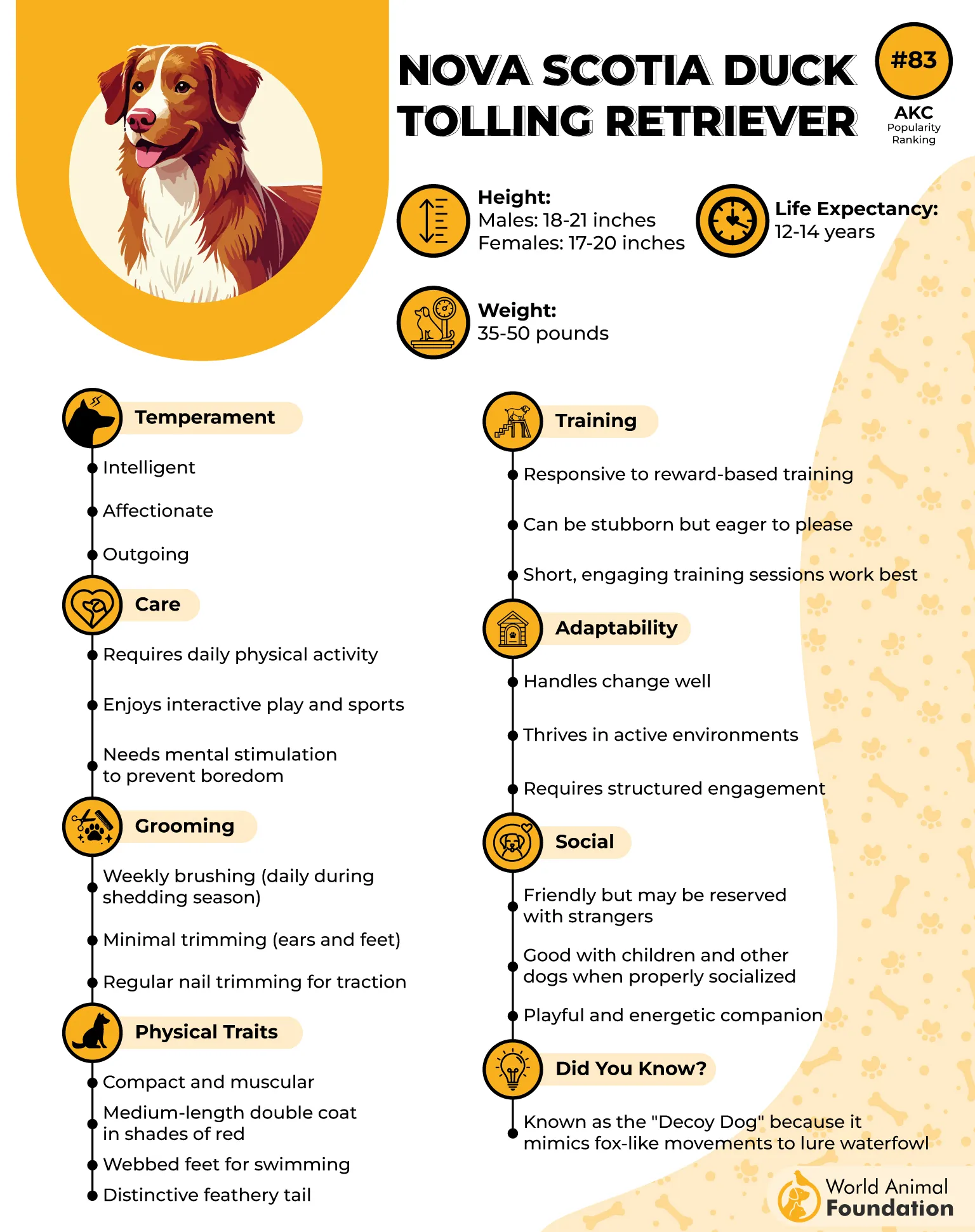
Its coat ranges from golden red to deep coppery red, with specific white markings allowed on the blaze, chest, feet, and tail tip. The medium-length outer layer repels water, while a dense undercoat provides insulation in cold, wet conditions.
A few coat details are easy to miss:
White feet cannot extend above the pasterns
Brown, black, and buff hairs are not permitted
Leg feathering forms distinctive “pantaloons”
Always Ready to Work
Nova Scotia Duck Tolling Retriever is highly attentive and eager to learn, with retrieving on land and in water among its favorite pursuits. Its intelligence comes with an independent streak, so distractions can occasionally pull its attention toward something more interesting.
Conclusion
A beautiful golden coat can catch your eye, but choosing a dog based on color alone can leave out some important details. These popular dog breeds bring different personalities, exercise needs, grooming routines, and working abilities to the table.
Some are energetic partners that want to spend the day outdoors, making them great choices for active families, while others are happier sharing quieter moments at home. Early socialization can also help them become confident and great companions in everyday life.
The best match comes from looking at the whole dog rather than its coloring. That way, you can enjoy both a beautiful appearance and a companion that suits your daily life.
