




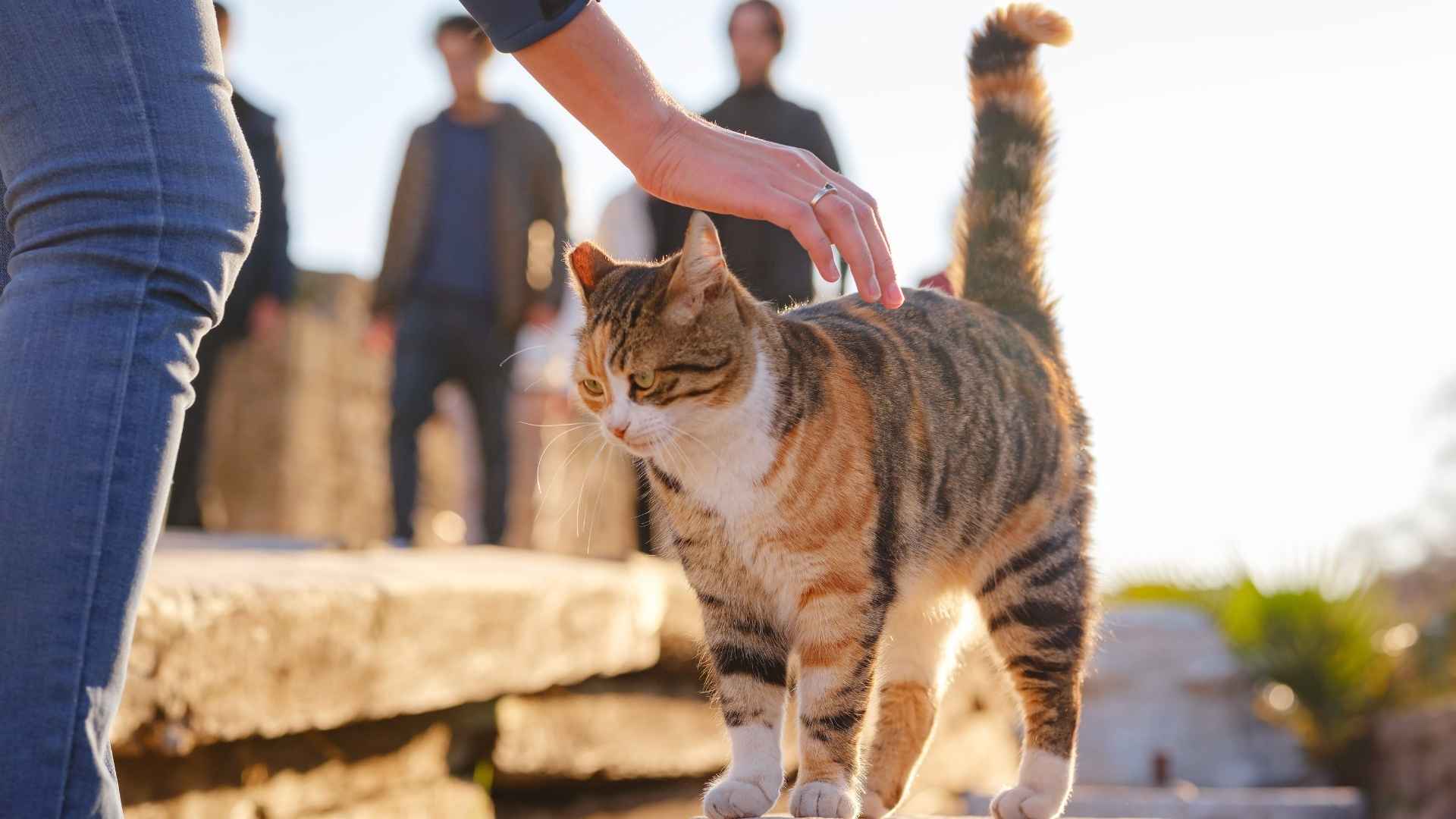
Cats are complex creatures. While some are affectionate, curling up on your lap, others prefer to keep their distance. Many cats have an affectionate personality, but if you’re someone who enjoys a cat with a bit more independence, antisocial cat breeds might be your perfect match.
No cat is inherently “antisocial,” but certain breeds are known for more solitary or aloof natures. These cats may not always be the cuddly companions you dream of, but they offer a unique experience. It’s important to note that properly socialized cats, regardless of breed, can still form strong bonds with their owners. However, some breeds, due to selective breeding, naturally lean toward independence.
In this blog, we’ll explore some of the most well-known antisocial cat breeds and what makes them a good (or not-so-good) fit for different cat owners. Based on personal experience, these breeds thrive in environments where they have space and aren’t forced into constant interaction.
Antisocial Cat Breeds
1. Korat
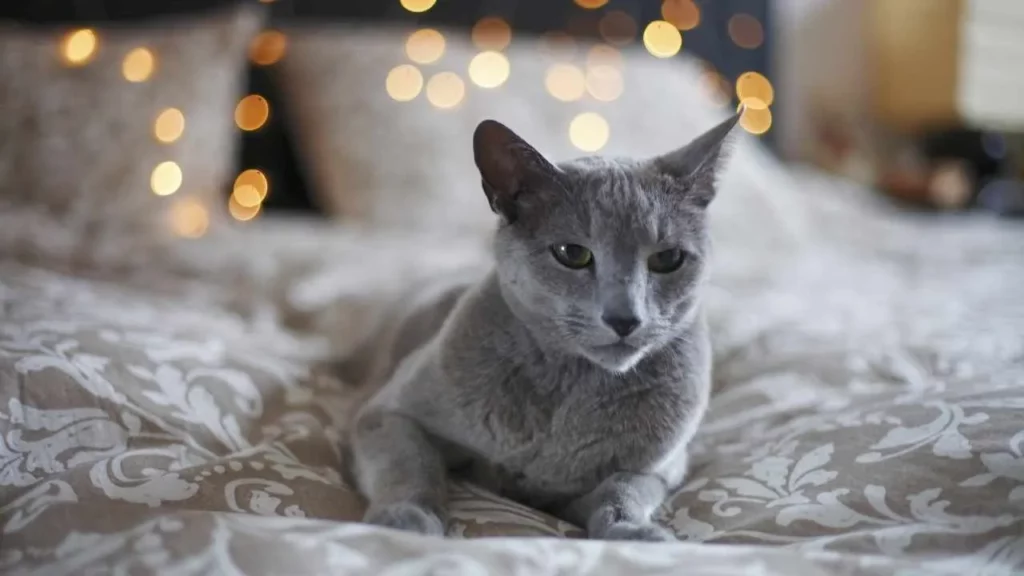
The Korat is an ancient breed from Thailand, with a history that dates back to the 16th century. Known for its striking silver-blue coat and large, round eyes, this breed is often regarded as a symbol of good luck in Thai culture. Despite its beauty, the Korat has an independent and selective personality.
Korat cats can be shy, especially around strangers, and tend to form a strong bond with just one or two people. They’re often more comfortable in quieter homes without a lot of hustle and bustle. The Korat is not the type to immediately warm up to guests, but it will show affection toward its owner when it feels safe.
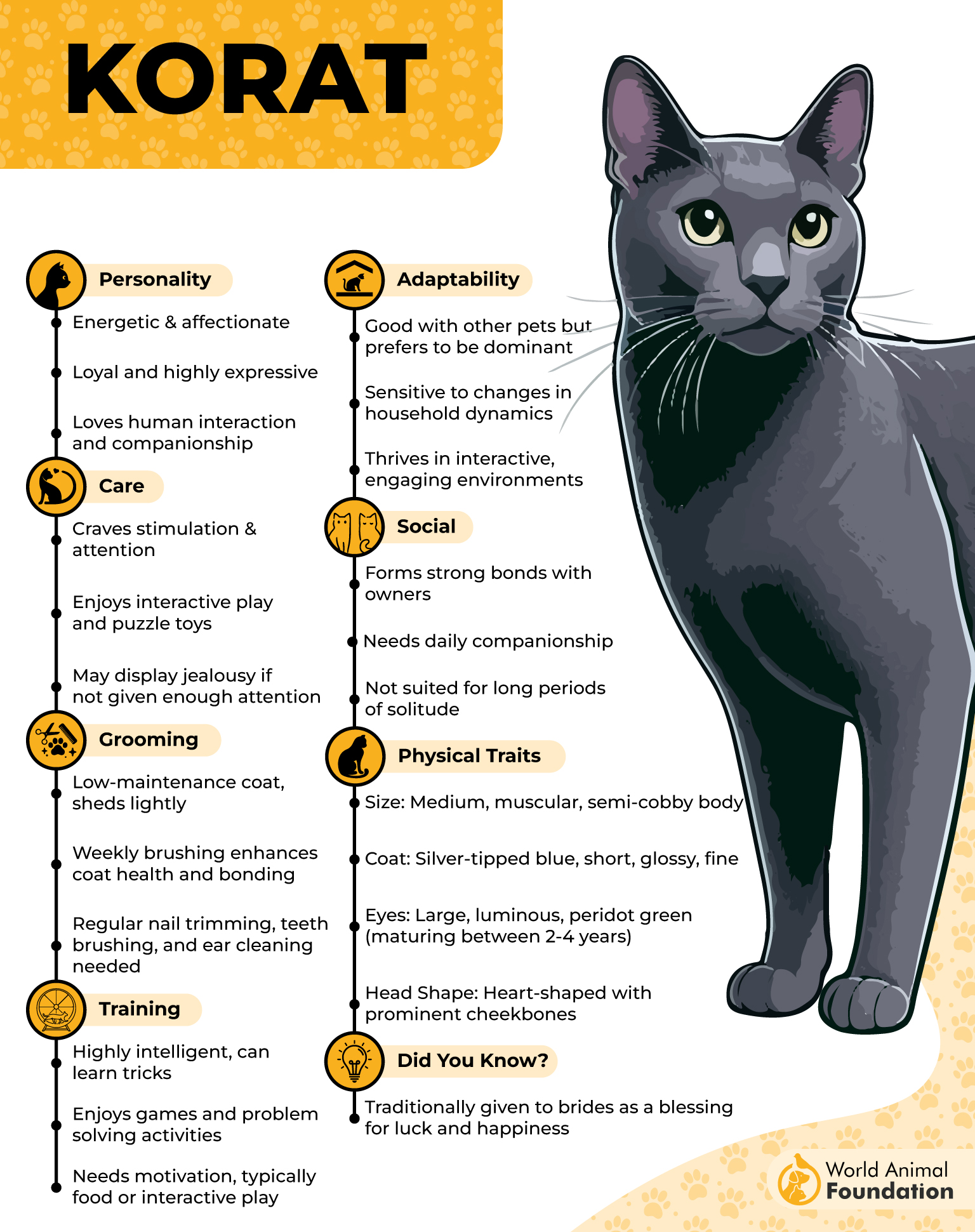
According to PetMD, in terms of physical characteristics, Korats are medium-sized cats, typically weighing between 6 to 10 pounds. They have a long lifespan of around 10 to 15 years, making them a long-term companion. Their grooming needs are minimal due to their short coat, but they do enjoy a bit of attention from their owners.
Korat cats are highly intelligent and curious. They enjoy exploring their environment but may prefer to do so in private. If you’re someone who enjoys the company of a cat that values its personal space but can be loving when it chooses to be, the Korat might be the right fit for you.
However, it’s crucial to socialize Korats early on if you want them to be more open to visitors and new experiences. They’re not necessarily aggressive; they just prefer to keep to themselves. A Korat will let you know when it’s time for a cuddle, but on its own terms.
2. Singapura
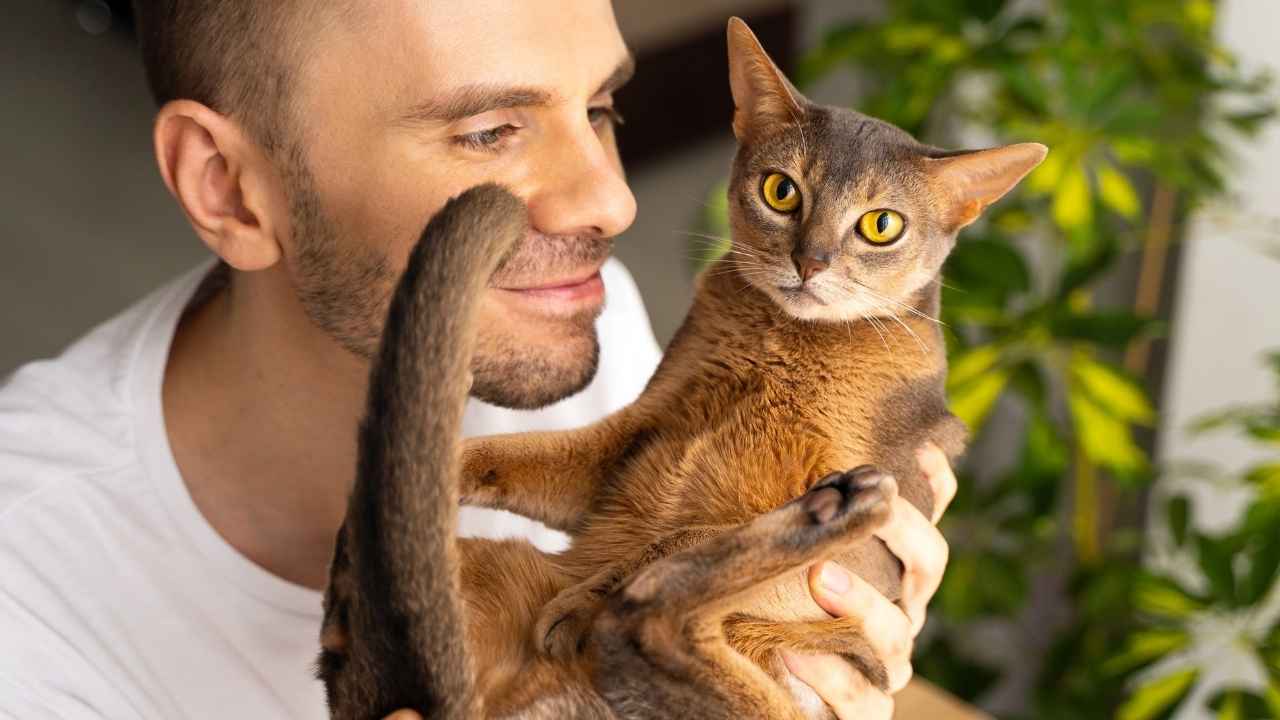
The Singapura is another breed with a fascinating history. It’s one of the smallest cat breeds in the world and hails from Singapore. Singapura cats were initially found living in the streets of Singapore, where they were adored for their compact size and playful nature. Despite their playful attitude, they can be a bit antisocial at times.
Singapura cats are known for being an affectionate cat breed with their owners but reserved around strangers. These cats tend to bond deeply with their human family and are more likely to hide or observe new people from a distance. They may take some time to warm up to outsiders, so if you’re looking for a cat that will instantly greet your guests, this breed might not be ideal.

This breed typically weighs between 5 to 8 pounds, making them one of the smallest domesticated cats. Their lifespan ranges from 12 to 15 years. Singapura cats are generally low maintenance in terms of grooming due to their short coat, but they do enjoy interactive play to keep them mentally stimulated.
This cat’s behavior is usually on the playful side, but usually prefers quiet and calm environments. They don’t need constant attention and are happy to keep themselves entertained. However, once they bond with their owner, they can be incredibly affectionate and will follow you around the house, always curious about what you’re up to.
Although not the most outgoing breed, the Singapura is a good choice for someone looking for an independent cat that is affectionate but not overwhelmingly so. Their antisocial tendencies are more about their cautious nature than any form of aggression.
3. Scottish Fold
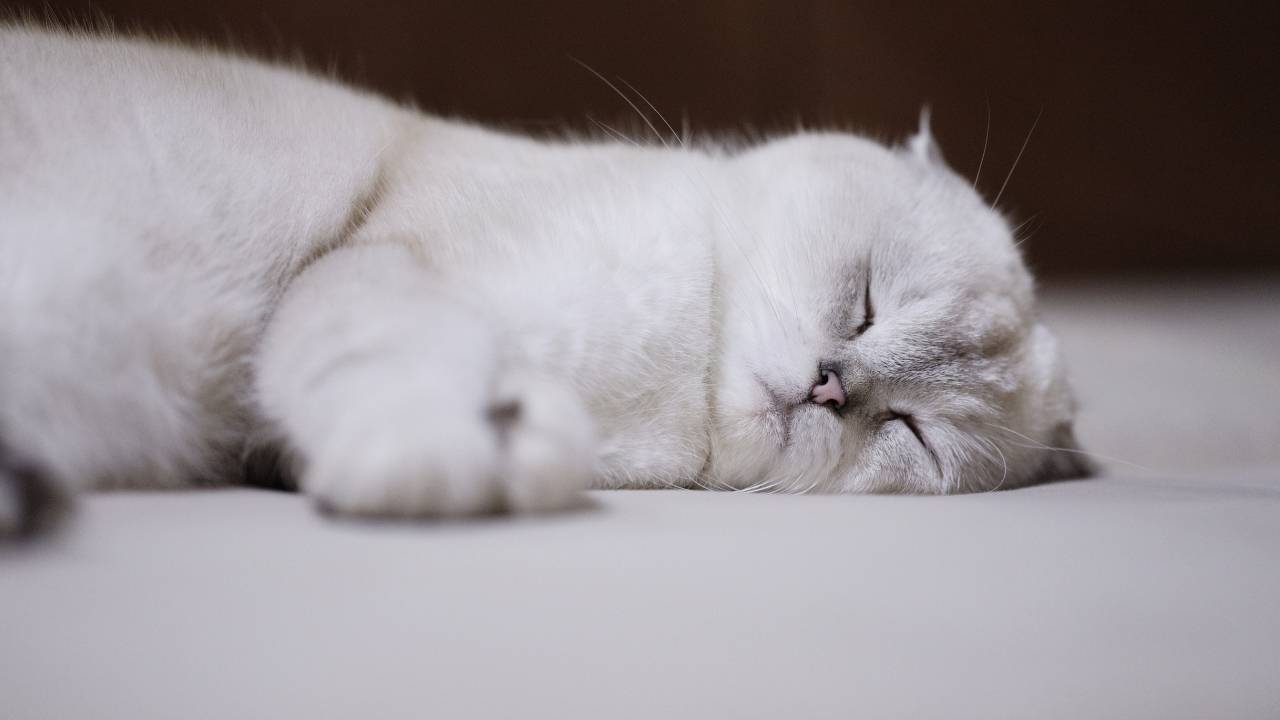
Scottish Folds are easily recognized by their unique, folded ears, which give them a quirky and adorable appearance. This breed originated in Scotland in the 1960s when a cat with naturally folded ears was discovered. The breed’s popularity skyrocketed thanks to its endearing looks and calm temperament, but their behavior can sometimes lean towards the antisocial side.
Scottish Fold cats are affectionate but on their own terms. They are known to bond closely with their families, often becoming very attached to one or two people. However, they tend to be aloof around strangers and may take a while to warm up to anyone outside of their inner circle.
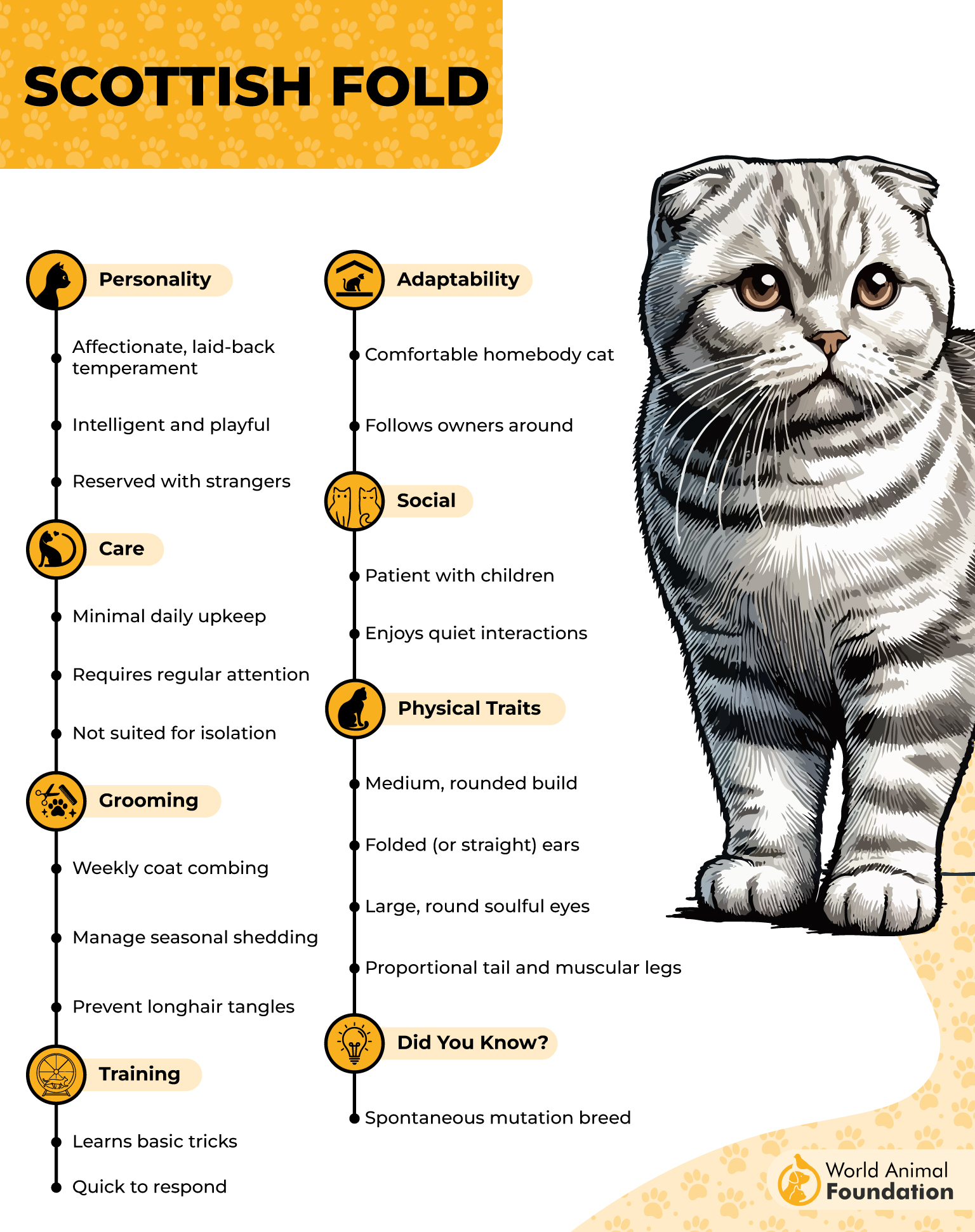
Physically, Scottish Folds are medium-sized cats, weighing between 6 to 13 pounds. Their coat can be short or long, depending on whether they are a longhaired or shorthaired variety. Their lifespan is generally 12 to 15 years.
One thing to note about this breed is that they can have health issues, particularly with their cartilage, which causes their ears to fold. Regular vet checkups are essential to monitor their health.
While Scottish Folds enjoy time with their owners, they are not overly demanding of attention. They have more of an independent nature. They will happily sit beside you or curl up nearby, but they might not jump onto your lap for a snuggle unless it’s on their terms. They do well in quieter households and don’t like being overstimulated or surrounded by too much commotion.
If you want a cat that’s loving but doesn’t require constant attention, the Scottish Fold could be the ideal companion. They’re not antisocial, but they certainly prefer their space and time alone.
4. Russian Blue

The Russian Blue is a regal and mysterious breed known for its silvery-blue coat and striking green eyes. With origins in Russia, this breed is known for being reserved, independent, and somewhat aloof. The Russian Blue doesn’t easily warm up to strangers and can be quite shy in new environments.
Although the Russian Blue is selective about its social interactions, it is deeply affectionate with its family members. Once a bond is formed, this breed becomes incredibly loyal and will shower its owner with attention. However, they’re not the type to jump on visitors or be overly social with people outside their family circle.

As per Purina, this breed is medium-sized, weighing between 6 to 15 pounds, and has a lifespan of 10 to 15 years. The Russian Blue is generally a healthy breed, but they can be prone to certain health issues, including kidney problems. Regular vet visits are essential to ensure their long-term health and well-being.
One of the Russian Blue’s most appealing traits is its low-maintenance coat. Their short fur doesn’t require a lot of grooming, which makes them an excellent choice for people looking for a low-maintenance cat. However, they still appreciate attention and care from their owners.
Russian Blues prefer quiet environments and enjoy having time to themselves. If you’re an owner who enjoys a calm, loving cat with a bit of an independent streak, this breed might be your perfect fit.
5. Chartreux
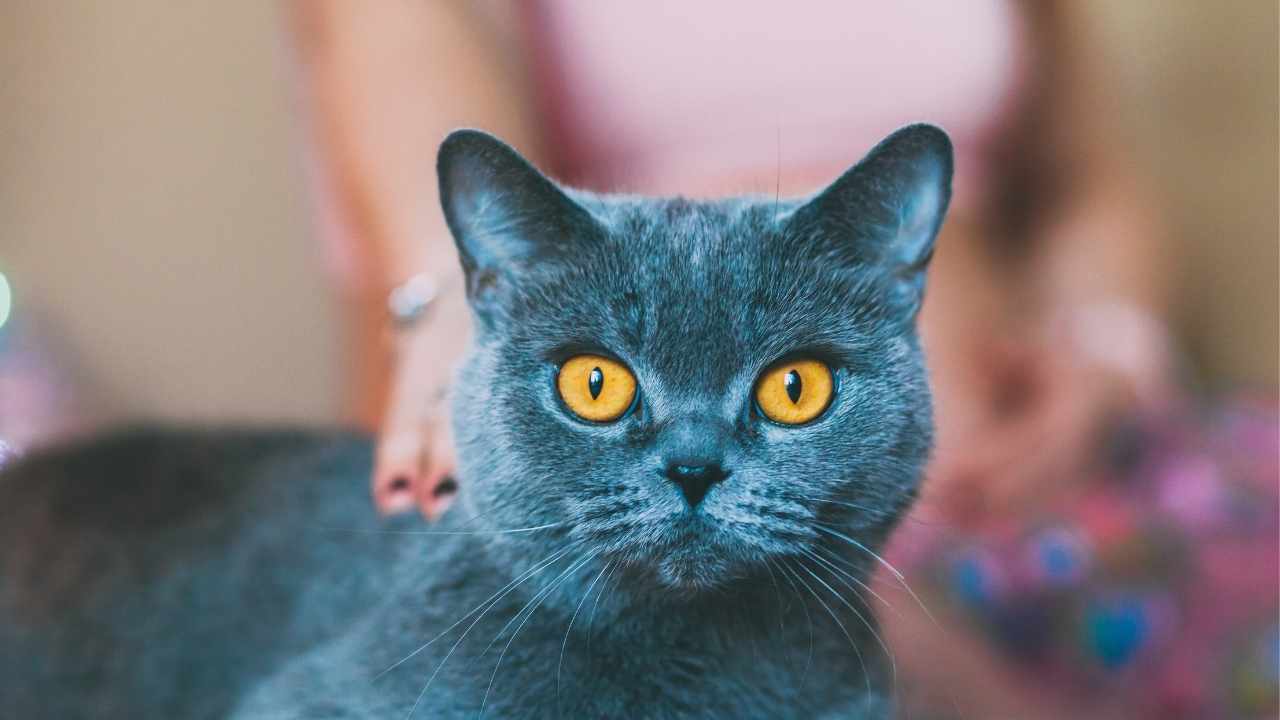
The Chartreux is an ancient French breed known for its sturdy build, blue-gray coat, and expressive eyes. This breed has a history that dates back hundreds of years and is often associated with French monasteries. Chartreux cats are known for their reserved nature and tend to be more independent than other breeds.
They have an independent nature, meaning they are not overly social, Chartreux cats can be deeply affectionate with their families. They form strong bonds with their owners but may not be as overtly affectionate as other breeds. They are known to show their love in more subtle ways, such as sitting next to you or following you around the house.
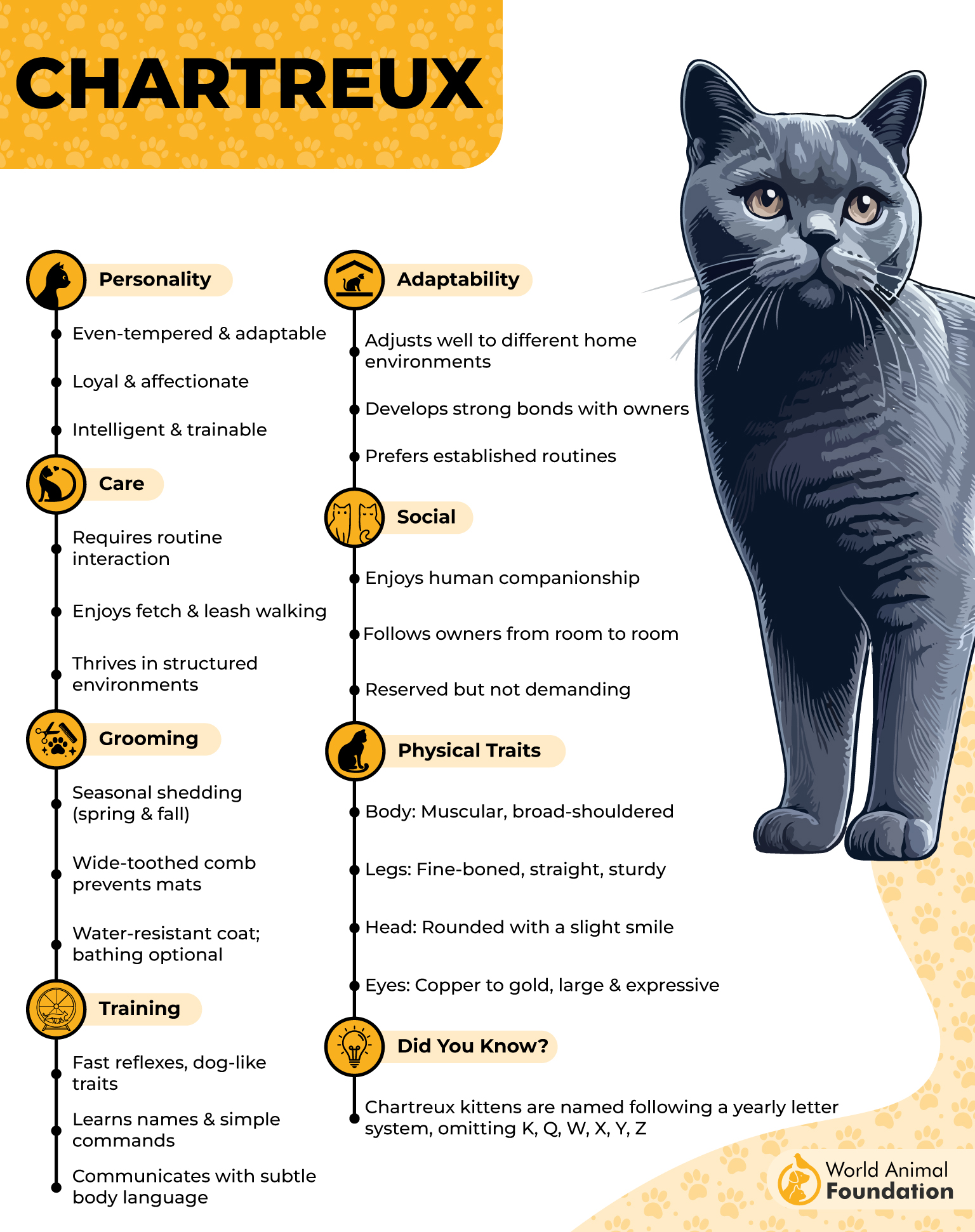
This breed weighs between 6 to 12 pounds and has a lifespan of 12 to 15 years. The Chartreux is a relatively low-maintenance breed in terms of grooming due to its short, dense coat. However, they do benefit from regular play and interaction to keep them mentally and physically stimulated.
Chartreux cats are calm and quiet, making them ideal for families looking for a laid-back companion. They’re also independent, which makes them suitable for people with busy lifestyles. However, they’re not a good fit for homes with too much noise or chaos, as they prefer peaceful environments.
If you’re looking for a cat that’s affectionate but not overly demanding, the Chartreux could be the ideal breed for you. Their independent nature combined with their subtle affection makes them a wonderful, low-maintenance companion.
6. Turkish Van
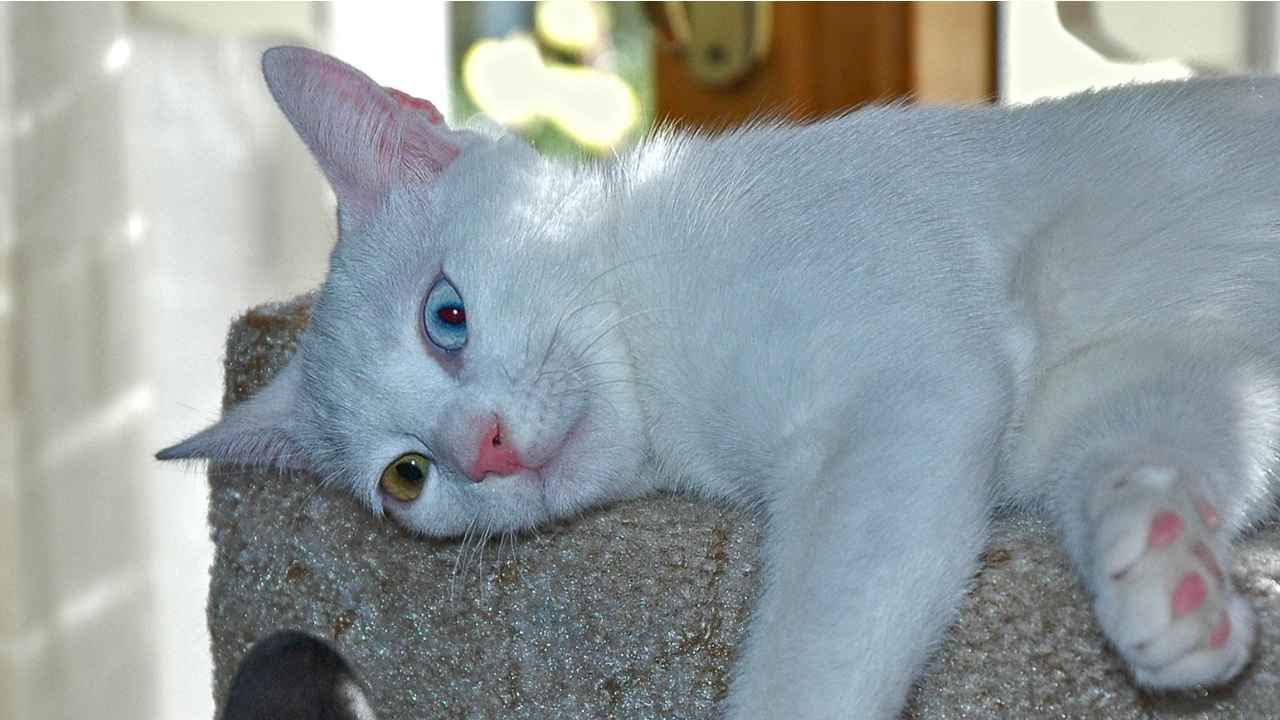
The Turkish Van is a unique breed known for its love of water. These cats are active, curious, and independent, and they often have a quirky personality that sets them apart from other breeds. Although not strictly antisocial, Turkish Vans can be aloof with strangers and prefer to interact with their family members rather than guests.
Originally from Turkey, the Turkish Van has a long history, dating back to ancient times. They were bred to survive in harsh climates and are known for their love of swimming, making them one of the most interesting breeds in the cat world. Turkish Vans are active and enjoy exploring their environment, so they may not be the best choice for people looking for a more sedentary companion.
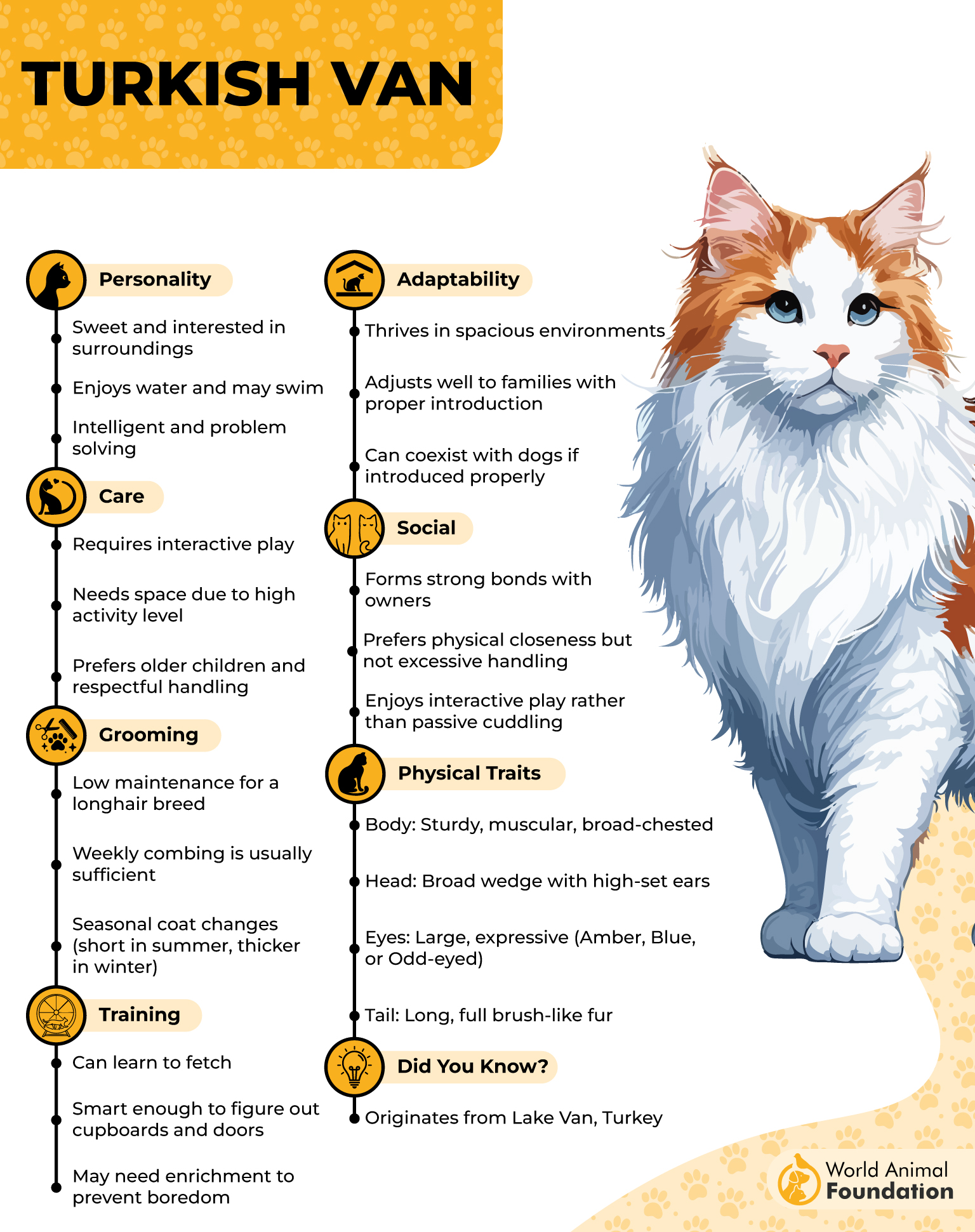
Turkish Vans typically weigh between 10 to 15 pounds and have a lifespan of 12 to 17 years. They have semi-long coats that require regular grooming to prevent matting. Despite their striking appearance and playful personality, Turkish Vans are independent and may prefer their alone time over constant attention.
These cats are intelligent and curious, which makes them a lot of fun to interact with. However, they are also independent, which means they might not seek out constant affection. They can be standoffish around strangers but will happily bond with their owner and show affection in their own way.
If you’re an active person looking for a quirky, independent cat that isn’t too needy, the Turkish Van could be a great choice. Their unique behavior and love for water make them a fascinating breed to own.
7. Norwegian Forest Cat
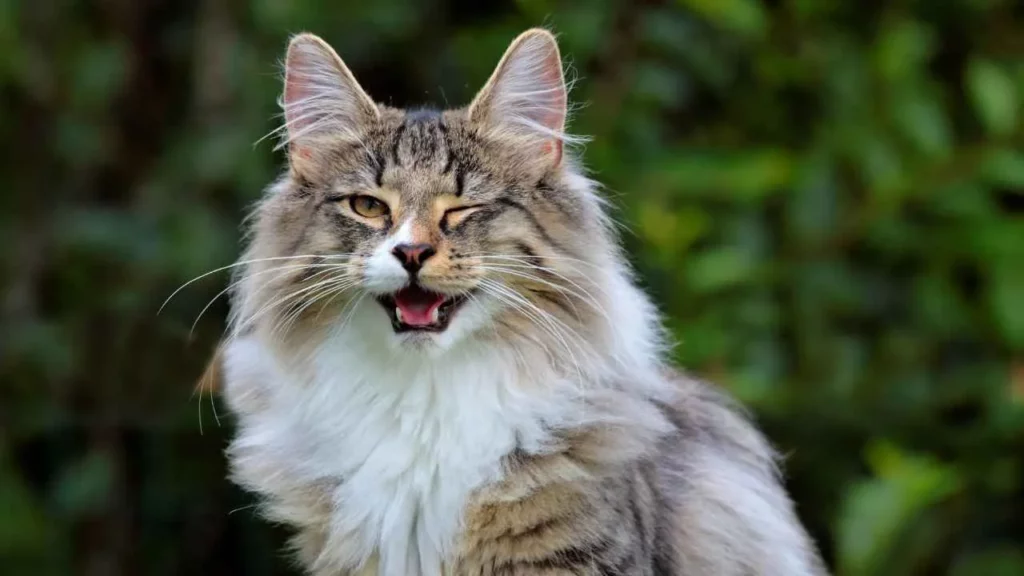
The Norwegian Forest Cat, often referred to as the “Wegie,” is a large, majestic breed that hails from Norway. This ancient breed is believed to have existed for over a thousand years, surviving in the harsh climates of Scandinavia. Known for their thick, water-resistant coat and tufted ears, these cats were originally bred to be skilled hunters and companions on farms.
Despite their stunning appearance, these cats are not overly social with strangers. While they are affectionate with their families, they tend to keep their distance from visitors. Their independent nature means they can be more aloof compared to other breeds. However, once they trust you, they are deeply loyal and will show affection in their own way.
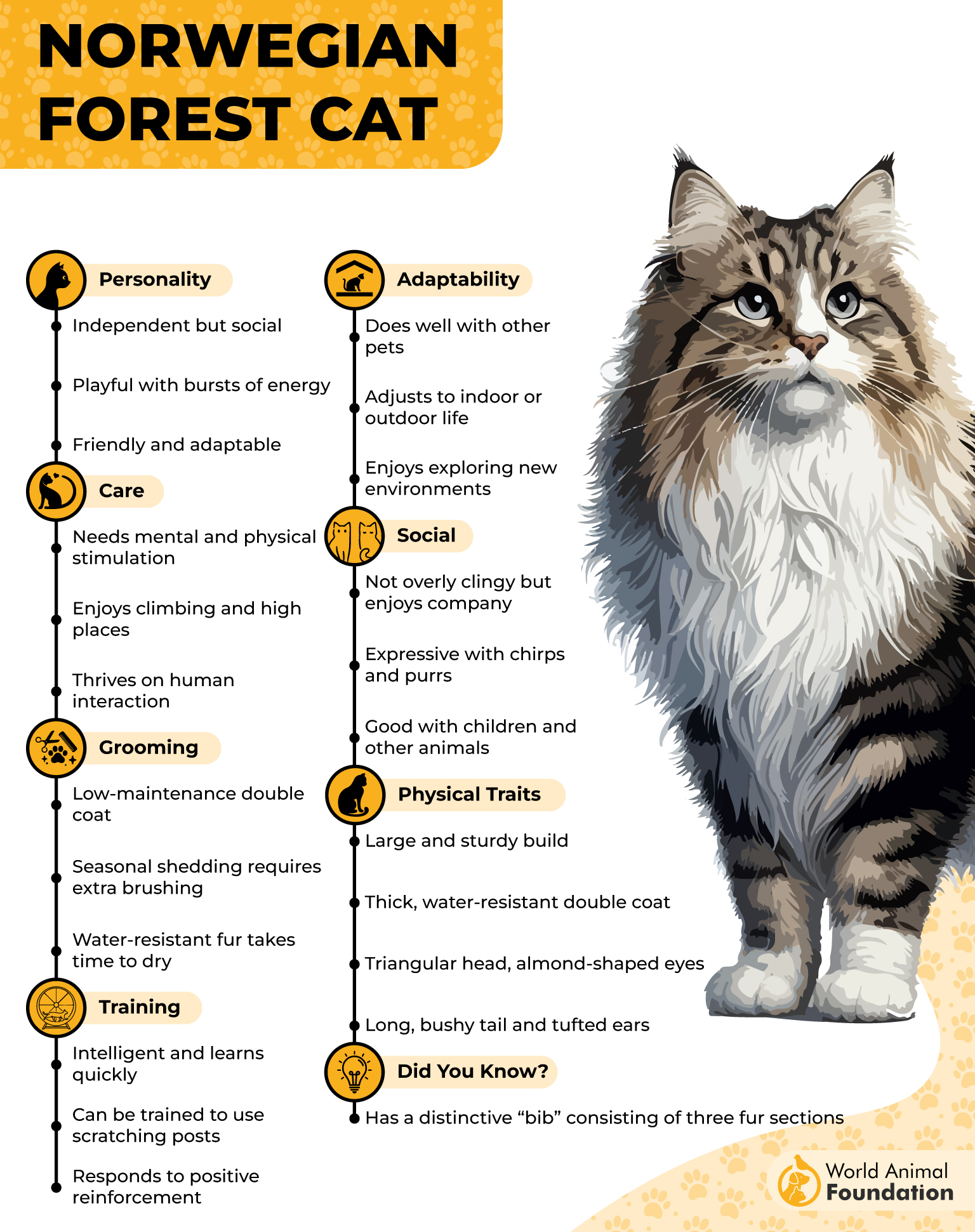
As per WebMD, these cats are large, muscular felines, with males typically weighing between 12 to 16 pounds and females between 9 to 12 pounds. Their long, dense coats require regular grooming to avoid matting. Norwegian Forest Cats are generally healthy and have a lifespan of 16 years. Their thick coat helps them stay warm in cold climates, but in warmer regions, they may shed heavily during seasonal changes.
They are also known for their playful, active personalities. They love to climb, explore, and engage in interactive play, which makes them excellent companions for active families. However, they are not overly demanding of attention and can entertain themselves for long periods, making them well-suited for people with busy lifestyles.
If you’re looking for a cat that’s a bit more independent and doesn’t require constant cuddling, the Norwegian Forest Cat could be a great choice. Their aloofness around strangers and quiet affection towards their owners make them an ideal fit for people who enjoy a calm, peaceful pet without the need for constant interaction.
Conclusion
Antisocial cat breeds offer a unique type of companionship. While they may not be the cuddle machines that some other breeds are, their independence and charm make them perfect for certain households. Breeds like the Korat and Turkish Van, known for their reserved yet loving nature, offer something special.
According to the International Cat Association, these breeds tend to be more independent, making them less likely to seek constant attention from other cats. If you prefer a cat that doesn’t demand constant affection, these breeds might be ideal.
With the right environment and care, like providing a cat tree for entertainment, these cats can develop strong bonds. Though their behavior can be more reserved, they can become loyal companions once they feel comfortable in their space.
