




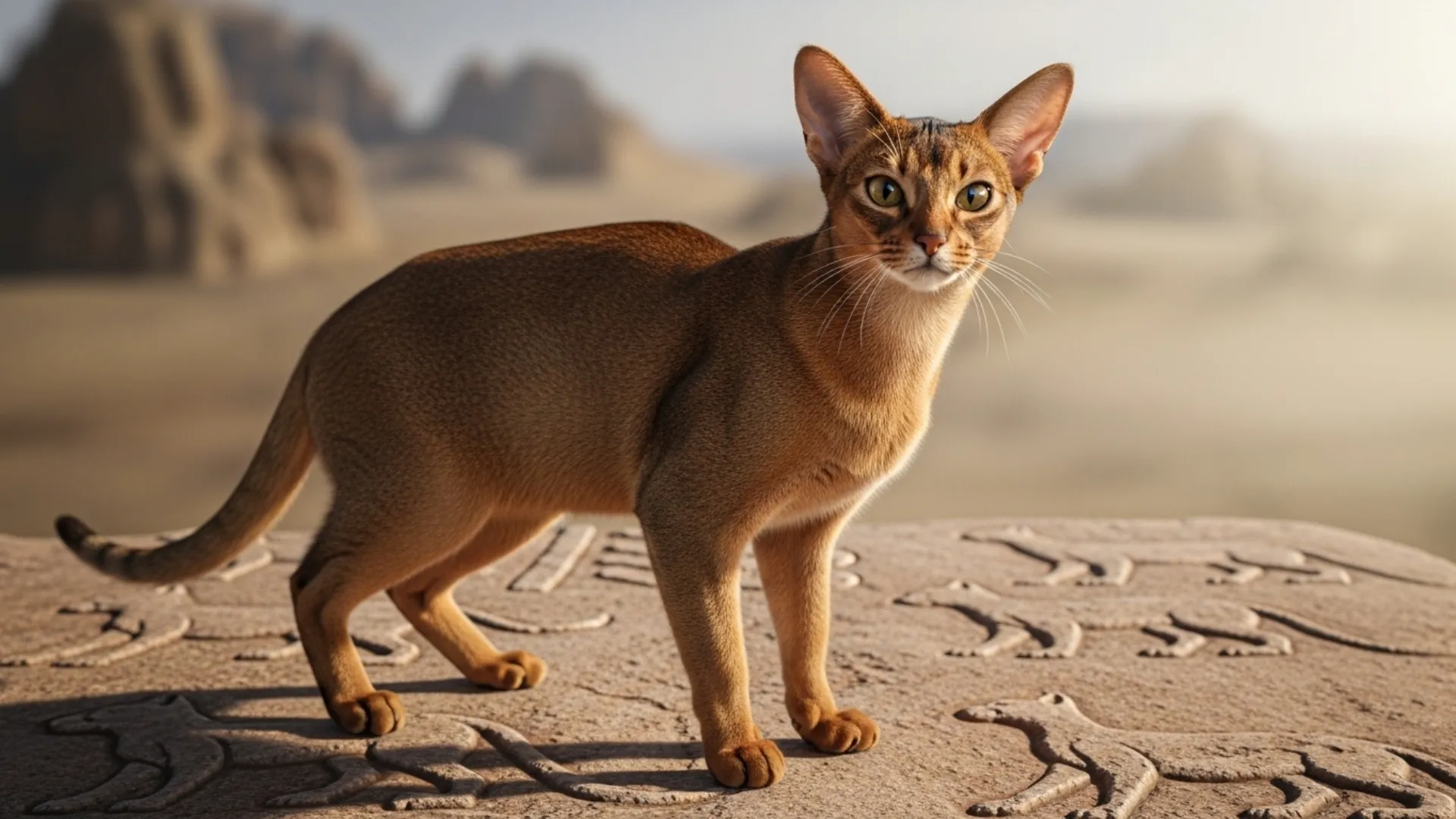
Cats have shared our world for thousands of years, quietly shaping their identities alongside human civilization. From stealthy wild hunters to cherished companions curled up by the hearth, feline evolution is a story of adaptation, survival, and selective breeding.
Over time, both domestic and wild cats developed traits that allowed them to thrive in diverse landscapes—from deserts and forests to temples, farms, and royal courts—each leaving behind a unique genetic and cultural footprint.
Understanding how cats evolved into the species we know today reveals why certain breeds look and behave the way they do. Ancient wild cats contributed physical strength, keen instincts, and resilience, while early domestication favored sociability, intelligence, and a tolerance for human life. This blend of wild ancestry and human influence created the remarkable diversity seen across modern cat breeds.
In this article, we explore cats with fascinating evolutionary histories, tracing their origins through time. From breeds shaped by ancient civilizations to those influenced by recent hybridization, each cat tells a story rooted in nature, history, and the enduring bond between humans and felines.
Cats That Have a Fascinating Evolutionary History
1. Bengal
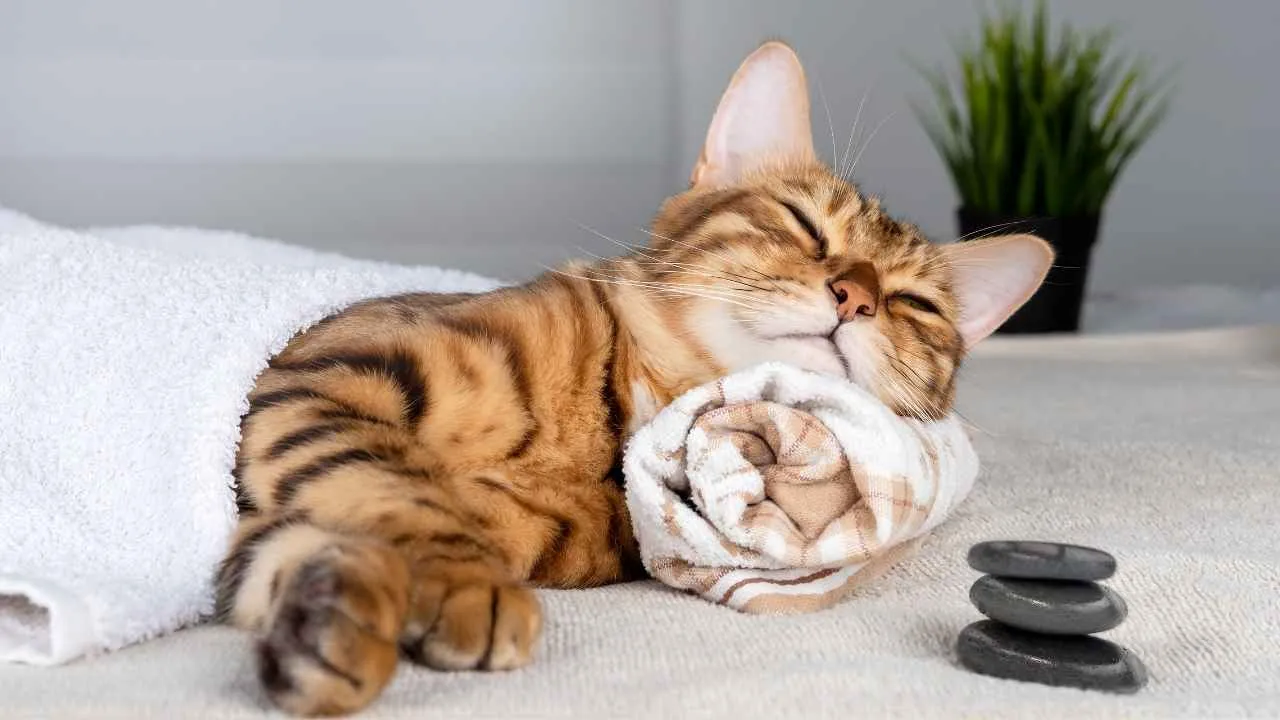
According to Britannica, the Bengal cat is a short-haired domestic breed that was developed in the United States during the 1970s and 1980s through the crossbreeding of an Asian leopard cat and a domesticated tabby cat.
The Bengal, sometimes called the Leopardette, is a modern hybrid breed developed to mirror the look of a wild cat while living as a domestic companion. Its ancestry traces directly to the Asian leopard cat, giving Bengals their striking rosetted or marbled coats and athletic build.
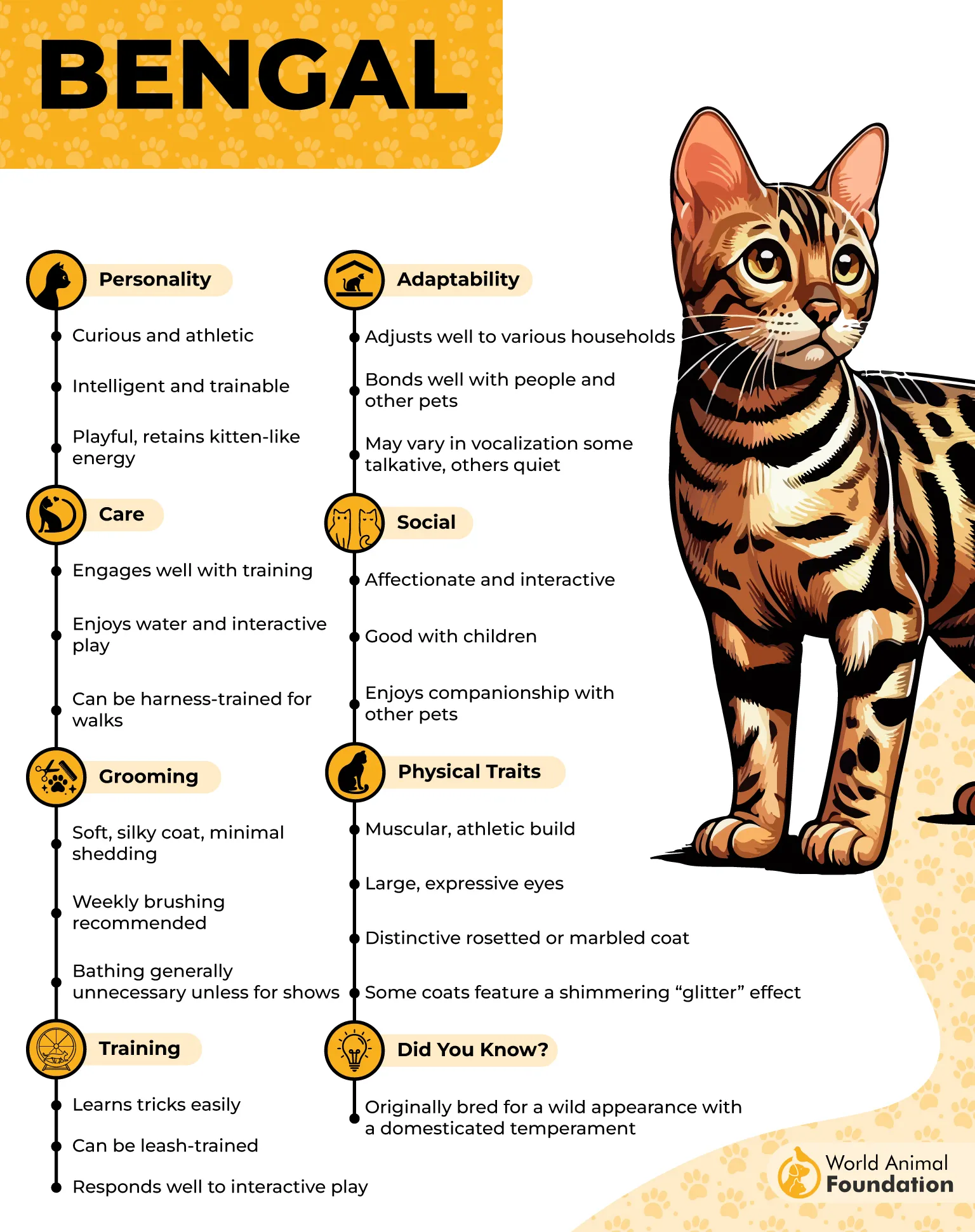
This breed’s evolutionary story began in the 1960s when careful crossbreeding aimed to preserve wild aesthetics without sacrificing a stable temperament. Early generations highlighted the balance between natural selection and human-guided refinement, shaping Bengals into energetic yet people-oriented cats.
Over time, selective breeding introduced domestic bloodlines like the Abyssinian and Egyptian Mau, softening behavior while retaining keen intelligence and curiosity. These influences explain why Bengals remain highly active, vocal, and mentally sharp, reflecting instincts inherited from their wild roots.
Today’s Bengals represent a successful blend of nature and design, combining exotic looks with adaptability to home life.
Fact: The International Cat Association granted the Bengal full championship recognition in 1991, cementing its place in modern cat history.
2. Abyssinian
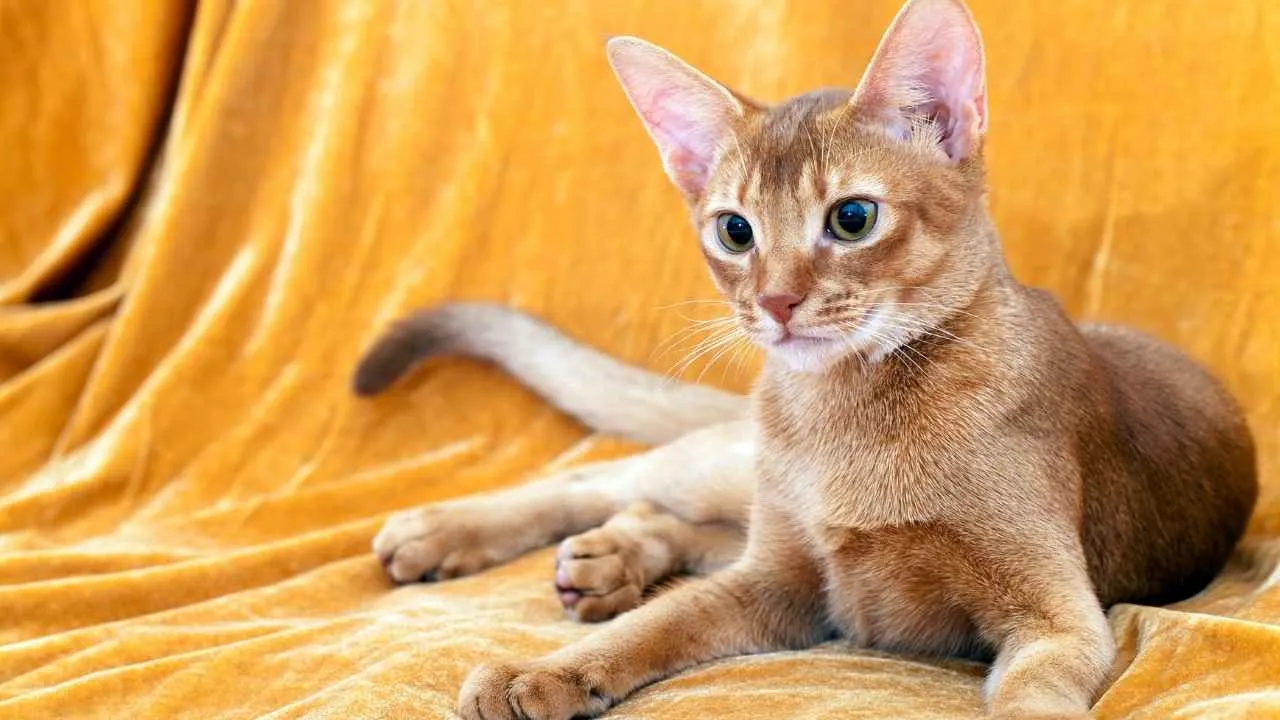
According to PetMD, Abyssinian cats, commonly referred to as Abys, closely resemble the cats illustrated in ancient Egyptian murals.
The Abyssinian, often called the “Aby,” is a medium-sized, short-haired cat with a lean, athletic build and an alert expression. Its ticked coat and graceful posture give it a striking resemblance to cats seen in ancient artwork, hinting at a long evolutionary past.
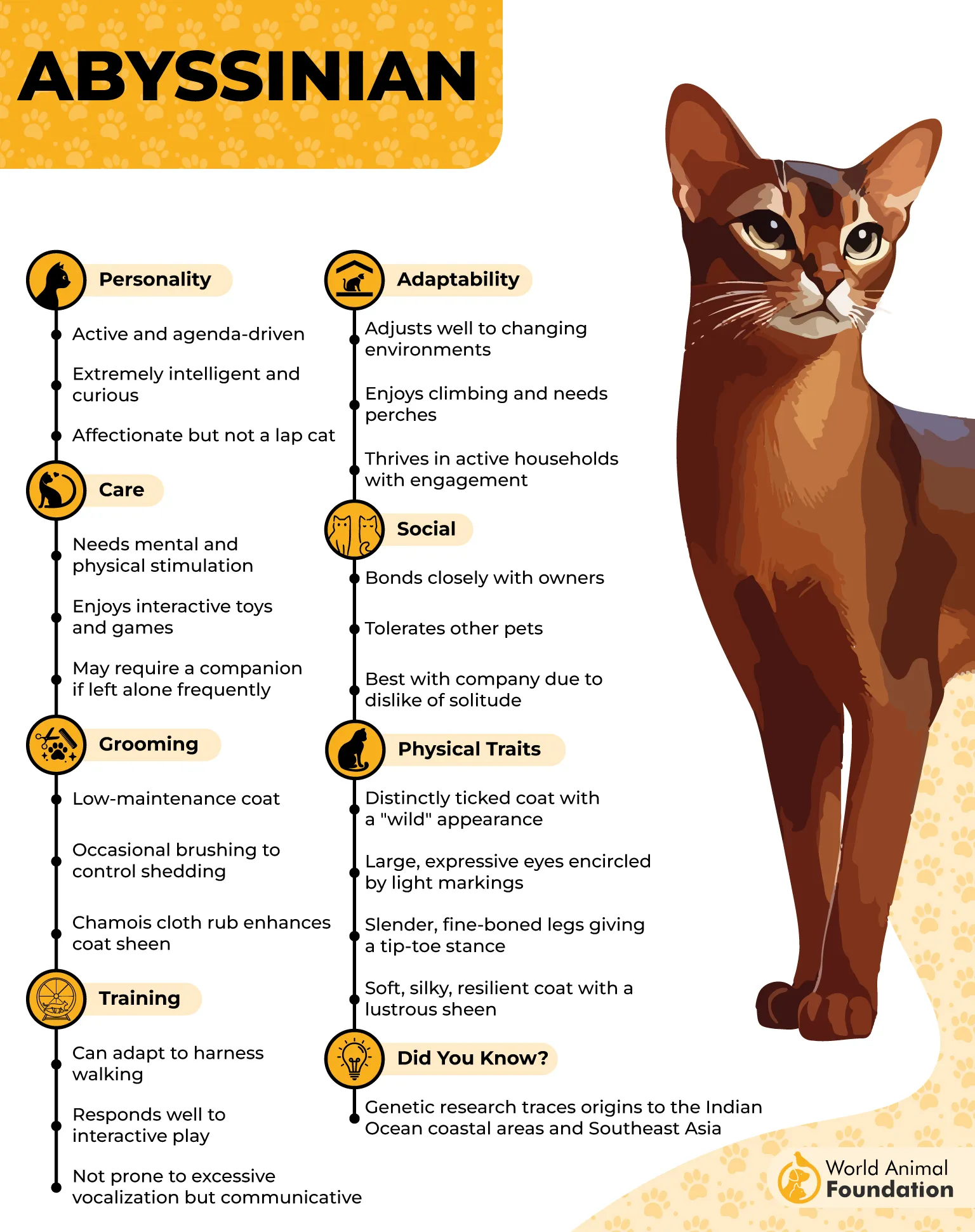
Many historians believe the Abyssinian is among the oldest cat types still around today. Although its name suggests Ethiopian roots, genetic research points to origins along the Indian Ocean coastal regions, where early cats adapted to warm climates and active hunting lifestyles.
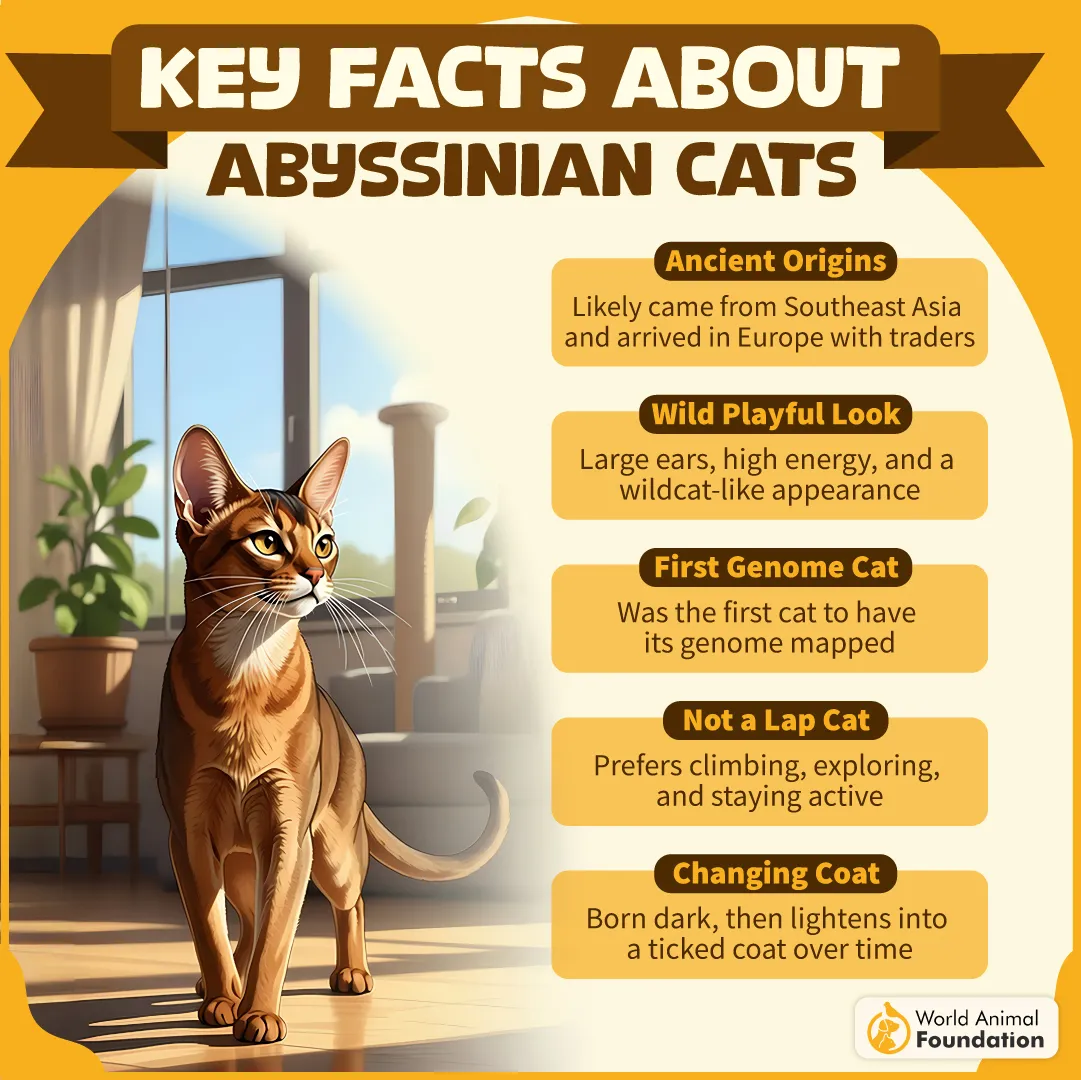
This breed’s evolution favored speed, intelligence, and constant movement. Abyssinians are energetic climbers and problem solvers, traits that likely helped their ancestors survive by navigating complex terrain and pursuing prey with precision.
Their distinctive ticked coat—each hair banded with multiple colors—adds to their wild look and reflects ancient feline genetics.
Fact: The Abyssinian was first recorded in Britain in 1868 after a cat named Zula was brought back from Abyssinia following the Abyssinian War.
3. Norwegian Forest Cat
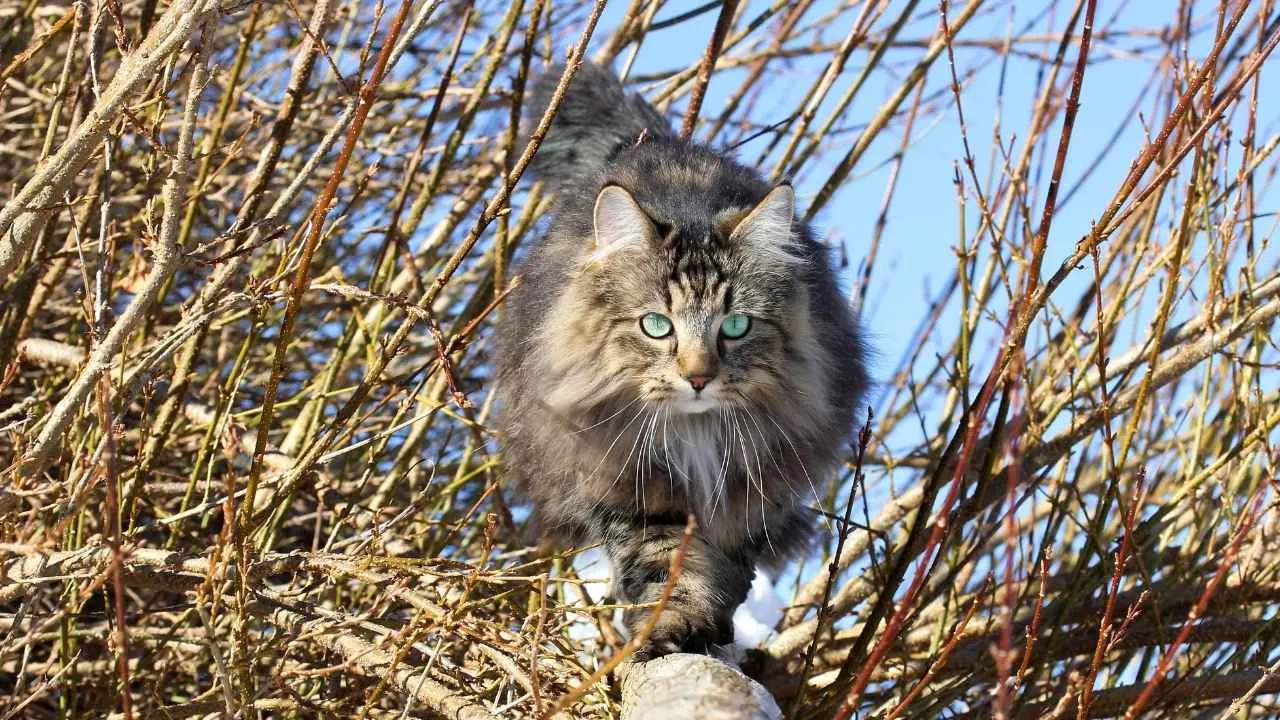
According to WebMD, Norwegian Forest Cats are described as sociable and playful cats that can adapt well to a wide range of environments.
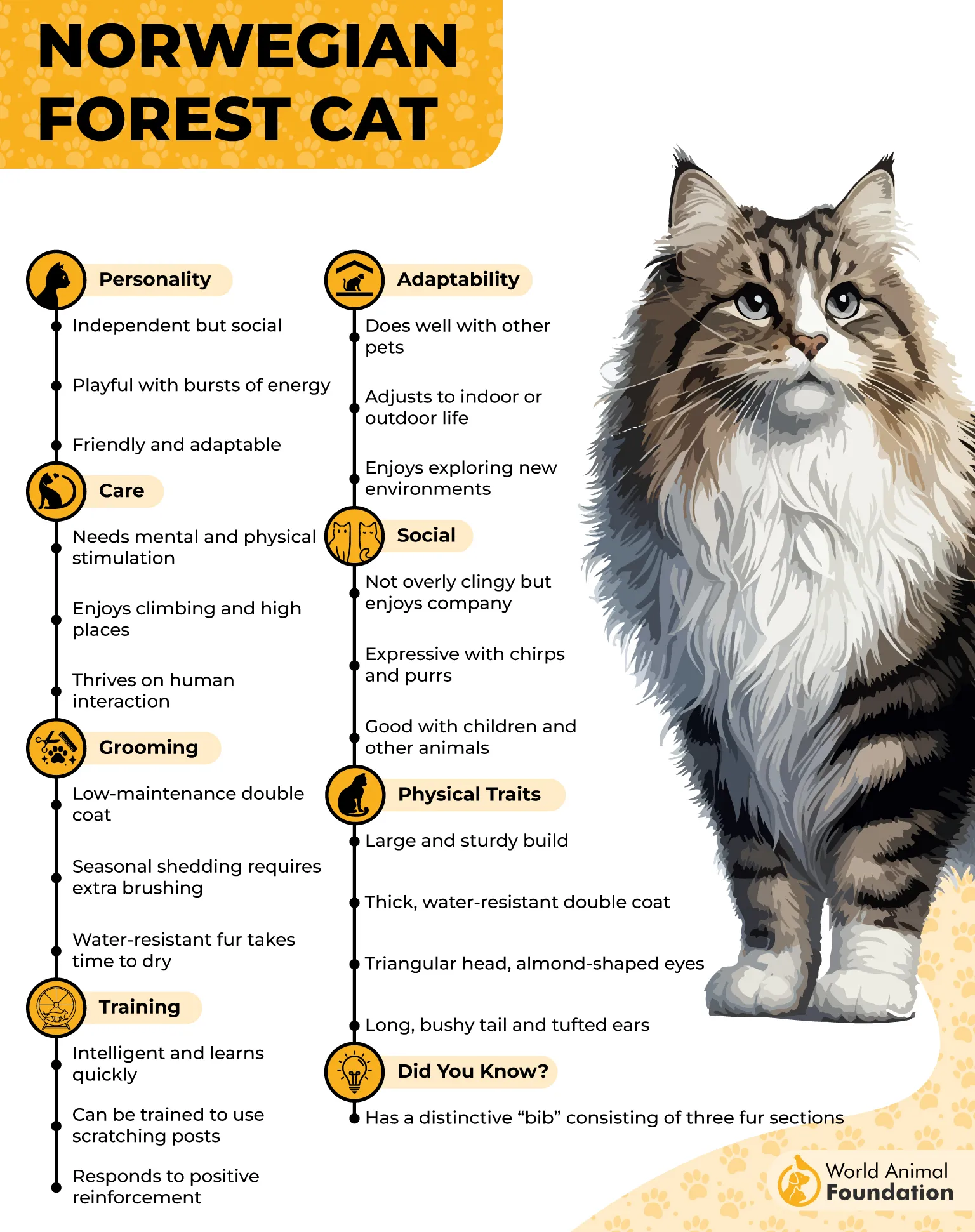
Often called the Wegie or skogkatt (meaning “forest cat”), the Norwegian Forest Cat is a large, rugged breed shaped by centuries of survival in Scandinavia. With a powerful build, tufted ears, and a thick coat, this cat reflects its deep evolutionary roots.
This breed’s history is closely tied to ancient Norse culture, where it likely descended from wildcats adapted to cold forests. Viking explorers relied on these cats as ship companions, valuing their hunting skills and resilience during long sea voyages.
Natural selection played a major role in the Wegie’s development. Its water-resistant double coat, strong claws, and muscular body evolved to handle snow, steep terrain, and harsh winters, making it an efficient and enduring hunter.
Despite their wild ancestry, Norwegian Forest Cats adapted well to domestic life over time. They remain independent yet social, preferring freedom of movement and elevated spaces rather than constant lap time.
Fact: The Norwegian Forest Cat nearly went extinct after World War II, but was saved through dedicated breeding efforts.
4. Scottish Fold
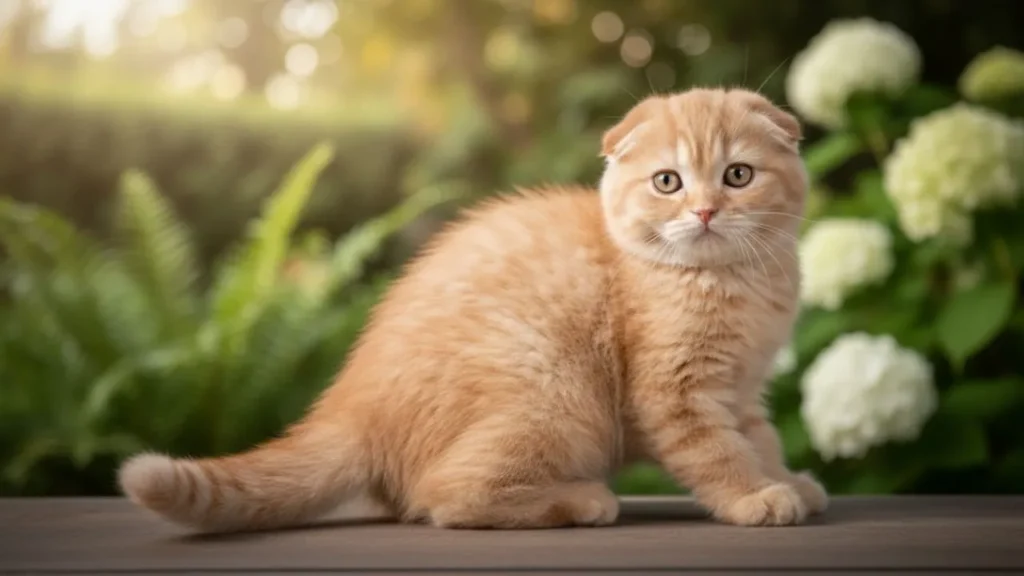
The Scottish Fold, sometimes called the “Folded Ear Cat,” is instantly recognizable for its owl-like appearance and round face. This breed traces its modern origins to Scotland and gained official registry recognition in 1974, quickly earning global admiration for its gentle charm.

From an evolutionary standpoint, the Scottish Fold’s defining feature comes from a spontaneous genetic mutation affecting cartilage. This mutation led to folded ears and a compact, sturdy build, traits that helped the breed adapt well to cooler, rugged environments when paired with British and American Shorthair bloodlines.
Beyond appearance, Scottish Folds developed behavioral traits suited to stable domestic life rather than roaming. Their quiet nature, balanced energy levels, and intelligence reflect selective breeding that favored calm companionship over survival-driven instincts, marking a clear shift from wild ancestry.
These cats are affectionate without being demanding and show strong social awareness, often following humans quietly through the home.
Fact: The Scottish Fold breed began in 1961 when a shepherd discovered a white barn cat named Susie with naturally folded ears.
5. Sphynx
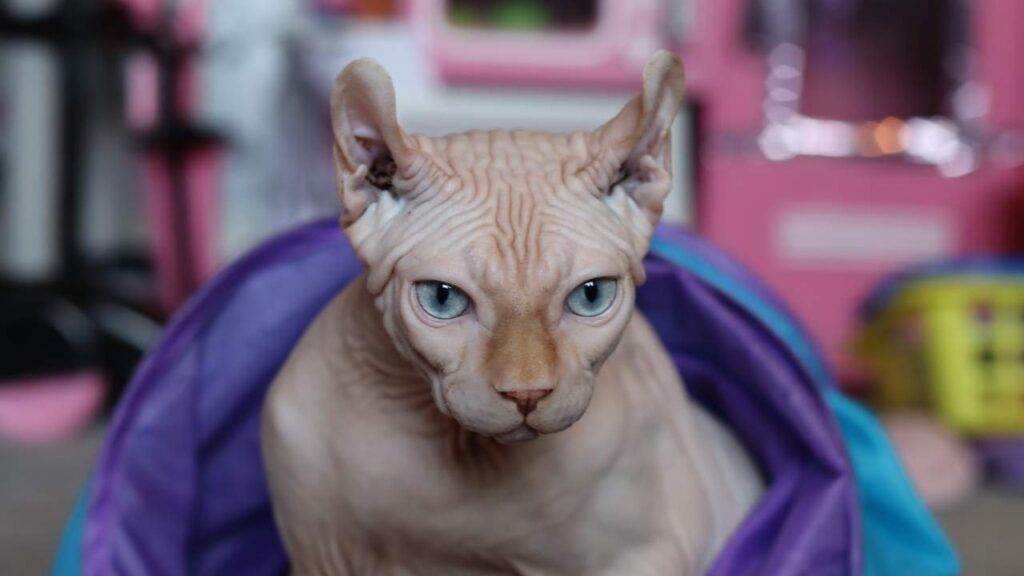
The Sphynx, sometimes called the Canadian Hairless, is instantly recognizable for its nearly fur-free body, oversized ears, and wrinkled skin. Though often linked to ancient Egypt due to its resemblance to temple cats and the Great Sphinx, the modern breed is a product of deliberate human involvement and selective breeding.
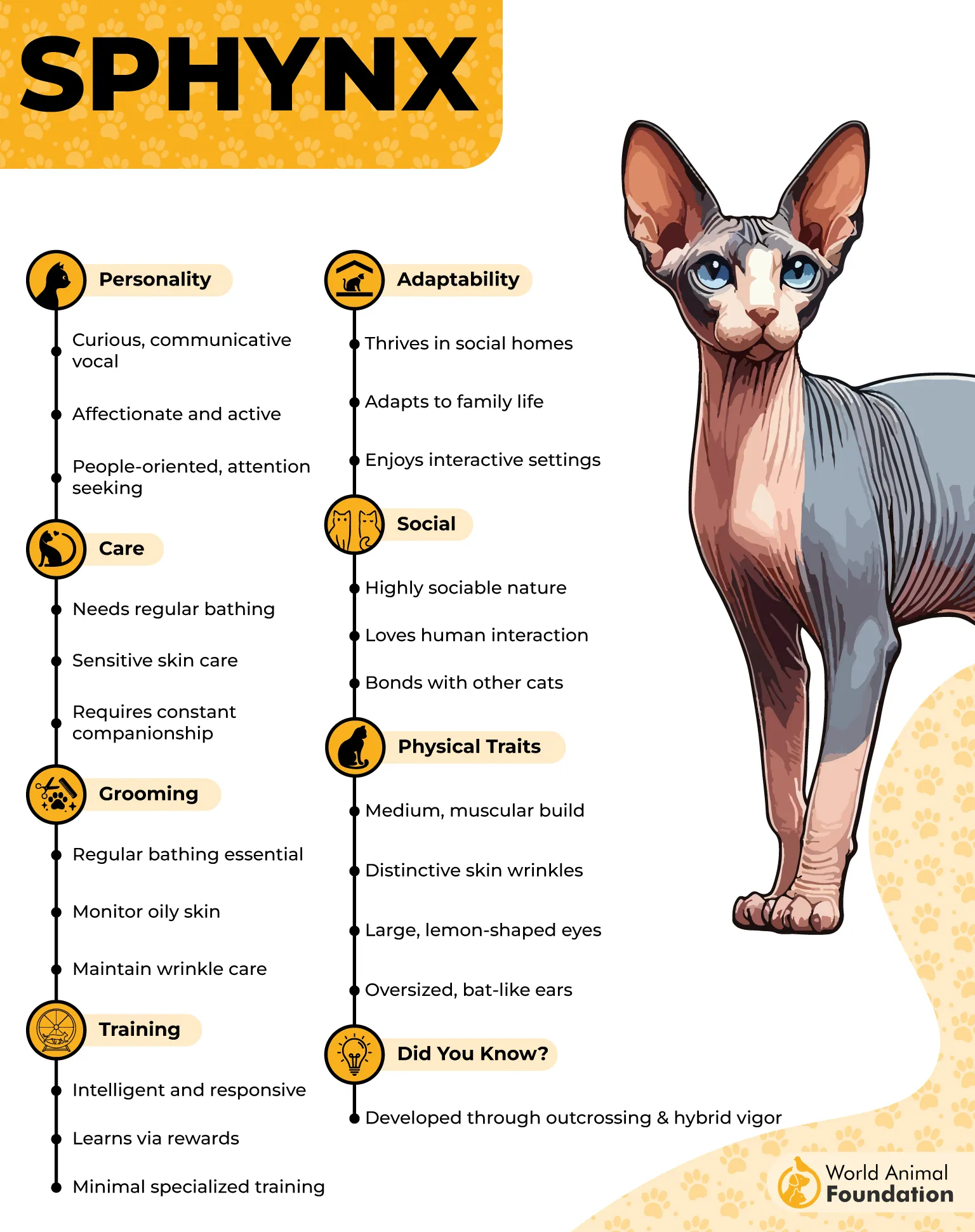
Historically, hairless cats were admired in ancient cultures, especially in Egypt, where similar-looking felines appeared in art and mythology. While those cats aren’t direct ancestors, they shaped the mystique that later surrounded the Sphynx and influenced how humans perceived and preserved the breed’s unusual look.
The modern Sphynx emerged in 1966 in Toronto, Canada, after a domestic cat gave birth to a hairless kitten due to a natural genetic mutation. Breeders recognized the significance of this event and carefully developed the breed by crossing hairless cats with American Shorthairs and Devon Rexes to strengthen genetics.
Beyond appearance, the Sphynx reflects human-guided evolution through its social, affectionate nature and high metabolism, traits encouraged through generations of selective breeding.
Fact: The first modern Sphynx kitten, named Prune, was born in Toronto in 1966 due to a spontaneous genetic mutation.
6. Siamese
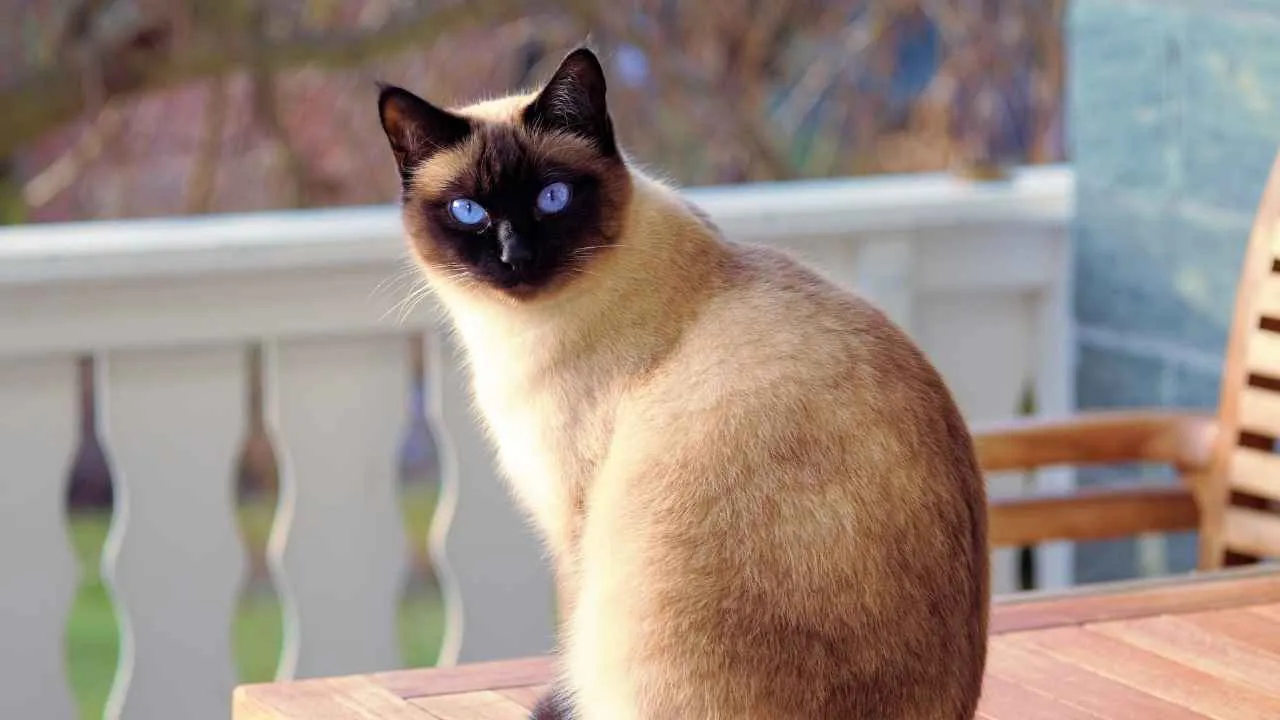
The Siamese, also known as the Royal Cat of Siam or Wichien Maat, is one of the oldest and most recognizable cat breeds in the world. Originating in modern-day Thailand, this elegant breed was once reserved for royalty and temple life.
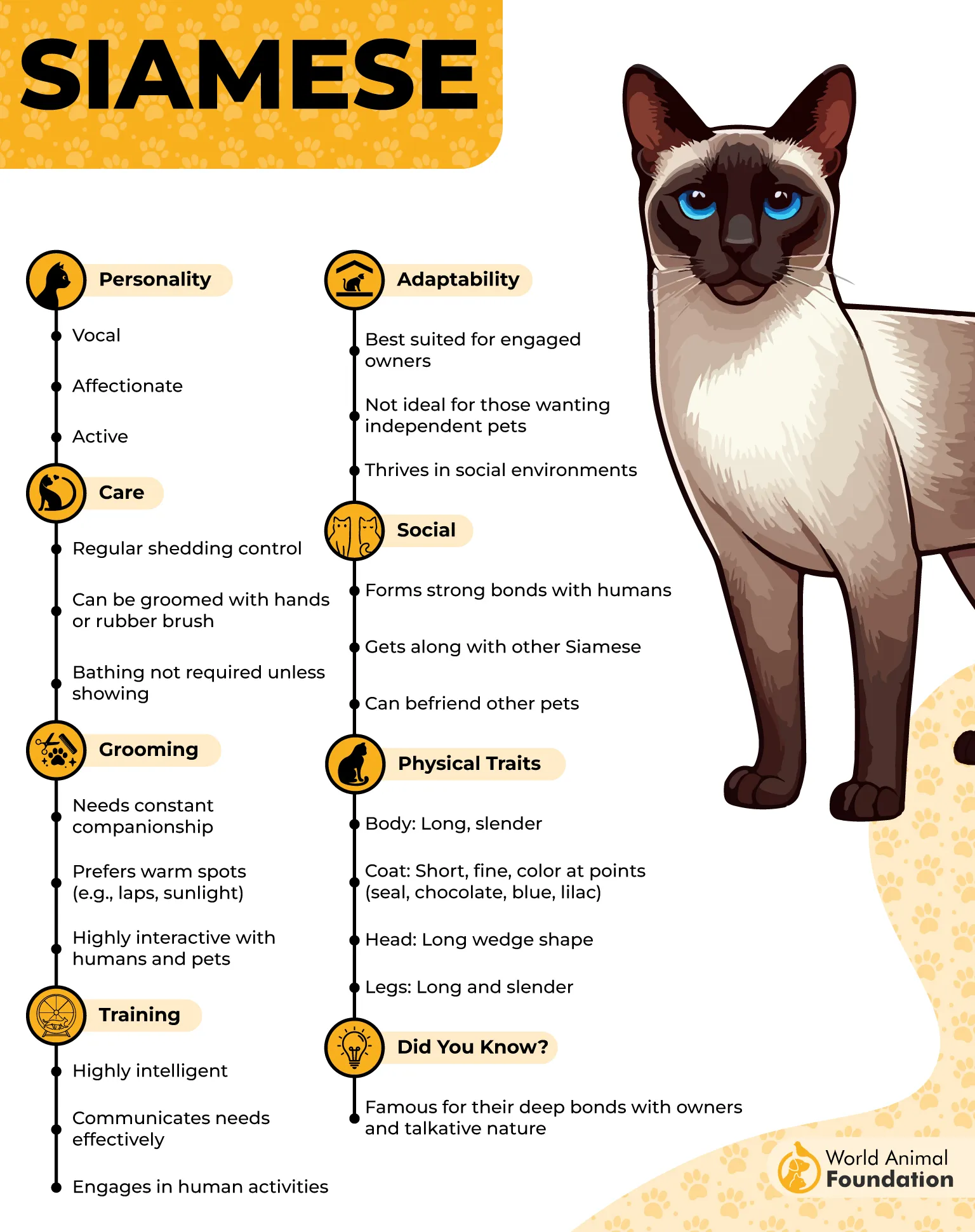
What makes the Siamese evolutionarily fascinating is its temperature-sensitive color-point coat. This unique genetic trait causes darker coloring on cooler body parts like the ears, face, paws, and tail—an adaptation still clearly visible today.
Their sleek, muscular build, almond-shaped blue eyes, and elongated body reflect centuries of natural selection favoring agility, communication, and close human interaction. These traits helped Siamese cats thrive as both guardians and companions in ancient societies.
Beyond looks, their vocal nature and intelligence are also evolutionary holdovers. Siamese cats remain highly social, alert, and people-focused, mirroring their historical role in royal households and temples.
Fact: Thai manuscripts referencing Siamese cats date back to before the 14th century, confirming their ancient lineage.
7. Siberian
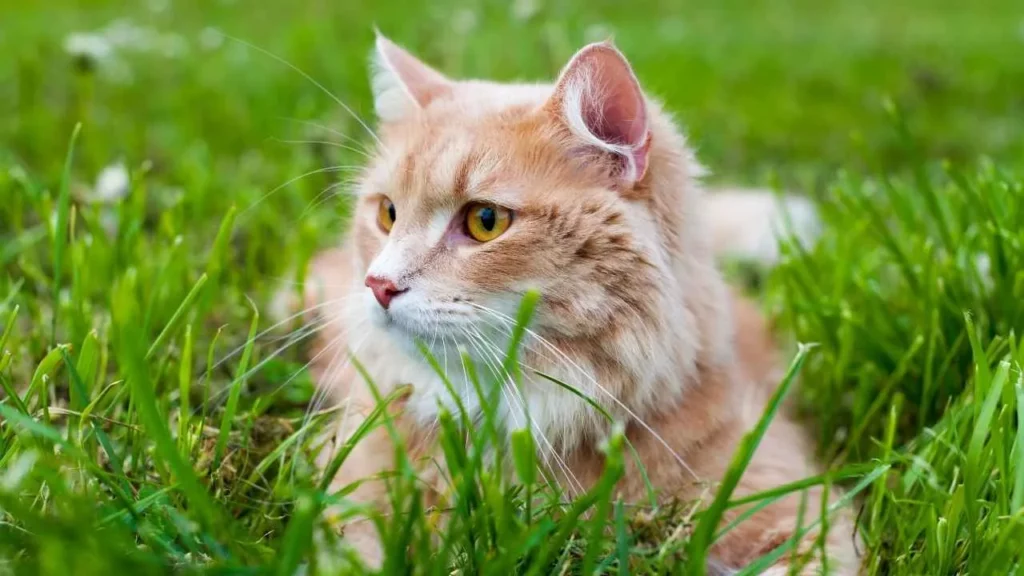
The Siberian, also known as the Siberian Forest Cat, is an ancient natural breed that developed long before formal pedigrees existed. Originating in Russia, these “fluffy cats” evolved through isolation and harsh climates, shaping a resilient and distinctive lineage.
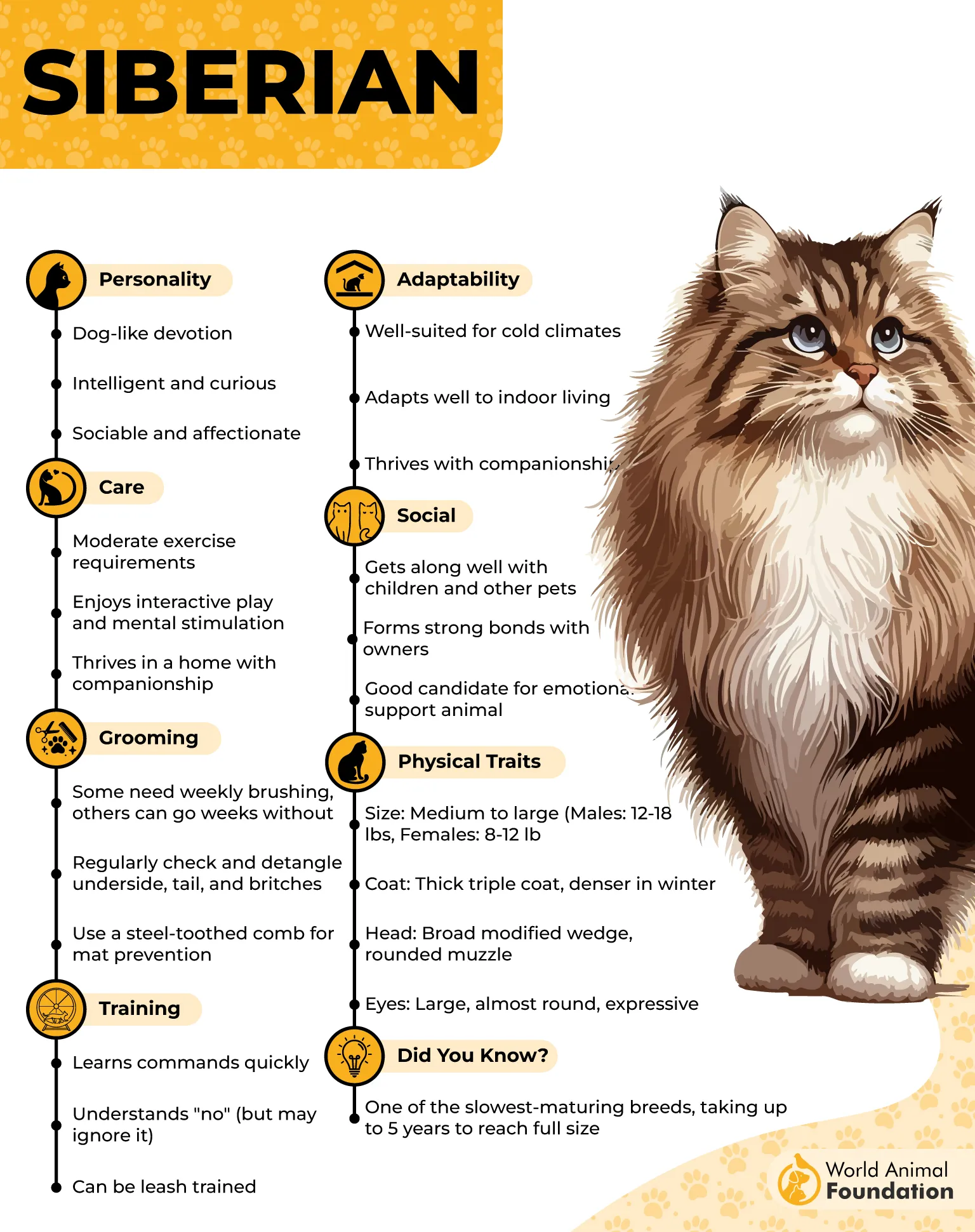
Long before modern cat shows, Siberians thrived as landrace cats, adapting naturally to cold, snowy environments. Their evolutionary path is closely linked to other northern long-haired cats, though the Siberian developed unique traits through centuries of survival and natural selection.
A defining evolutionary feature is their triple-layered coat, designed to repel moisture and insulate against extreme cold. This physical adaptation allowed Siberians to outlast other cats in severe weather, reinforcing their reputation as one of the oldest foundations of long-haired breeds.
Their role in folklore and rural life further shaped their genetics, as only the strongest hunters and most adaptable cats survived. This blend of natural selection and human coexistence preserved their ancient lineage
fact: The Siberian is officially recognized today as the national cat of Russia.
8. Savannah
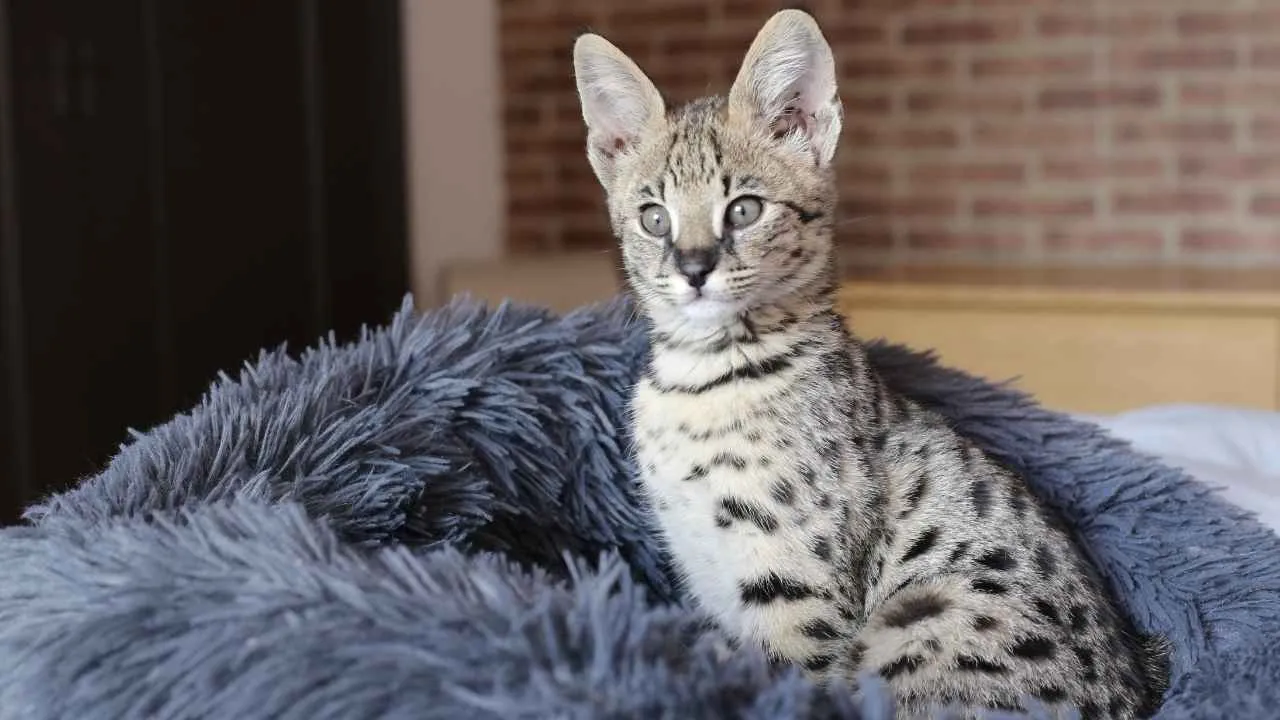
The Savannah cat, sometimes called a Serval hybrid or Savannah Feline, is a striking breed born from crossing an African serval with a domestic cat. Its tall frame, large ears, and spotted coat highlight its rare blend of wild ancestry and domestic lineage.
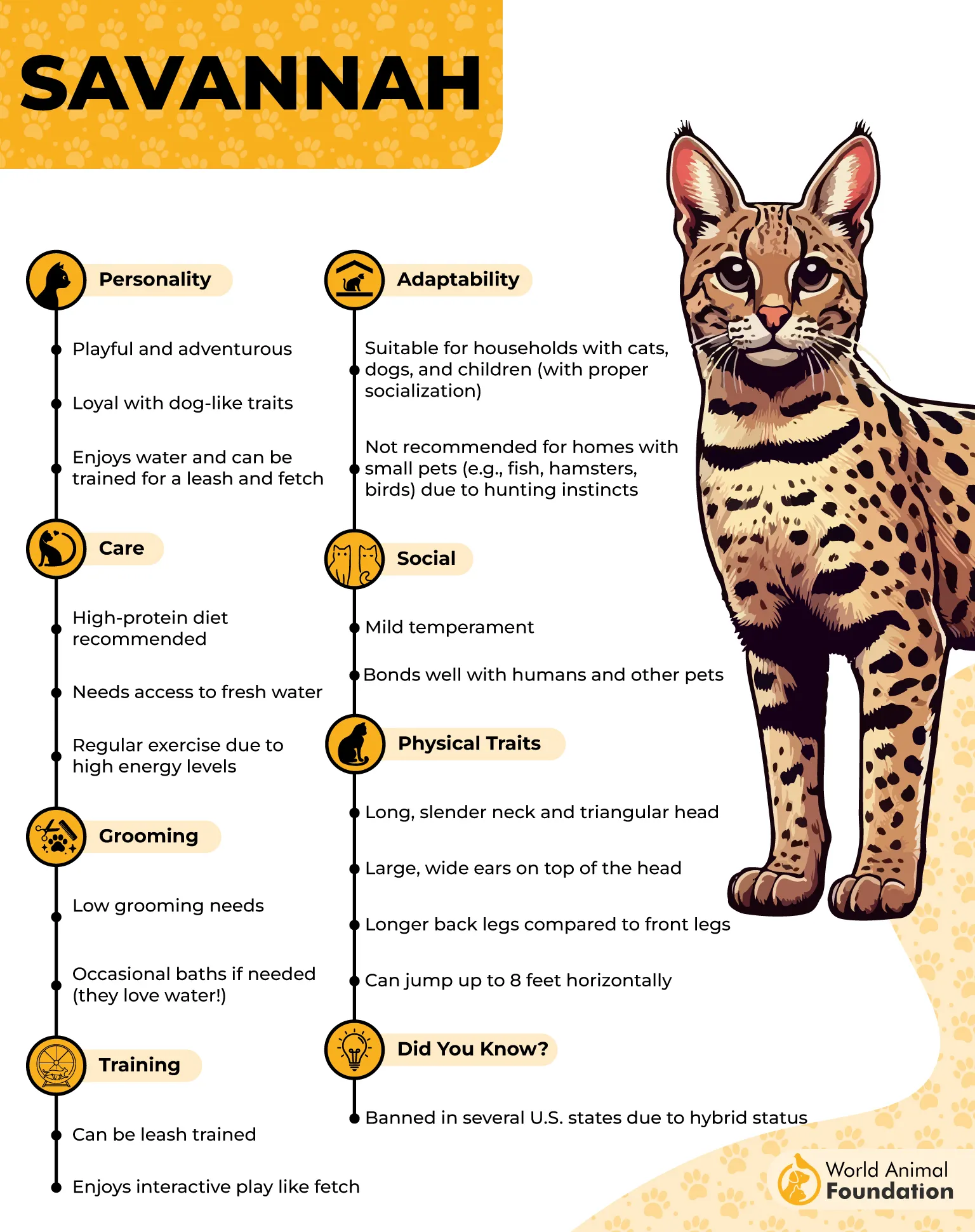
This breed’s evolutionary story is relatively recent, beginning in the late 1980s through intentional hybridization. Careful breeding refined those early traits, preserving the serval’s athletic build while gradually stabilizing temperament and behavior suitable for life with humans.
Savannah cats showcase how unique genetic mutations can endure when guided by selective breeding. Their elongated legs, alert posture, and keen intelligence reflect survival traits borrowed from wild predecessors, demonstrating how evolution can merge adaptability with companionship.
Over generations, Savannahs became more domestic while retaining their exotic edge, eventually earning recognition from The International Cat Association.
Fact: Savannah cats achieved TICA Championship status once they reached later generations bred entirely from Savannah-to-Savannah pairings.
9. Egyptian Mau
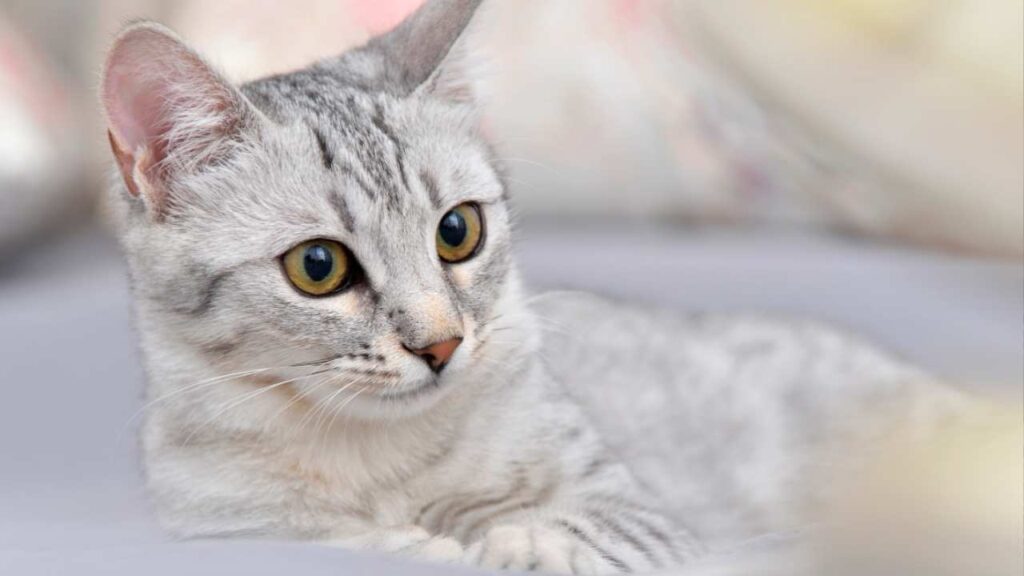
The Egyptian Mau, sometimes simply called the Mau, is a naturally spotted cat celebrated for its elegance and ancient roots. With a sleek, muscular body and expressive almond-shaped eyes, this breed closely resembles the cats depicted in early Egyptian art.
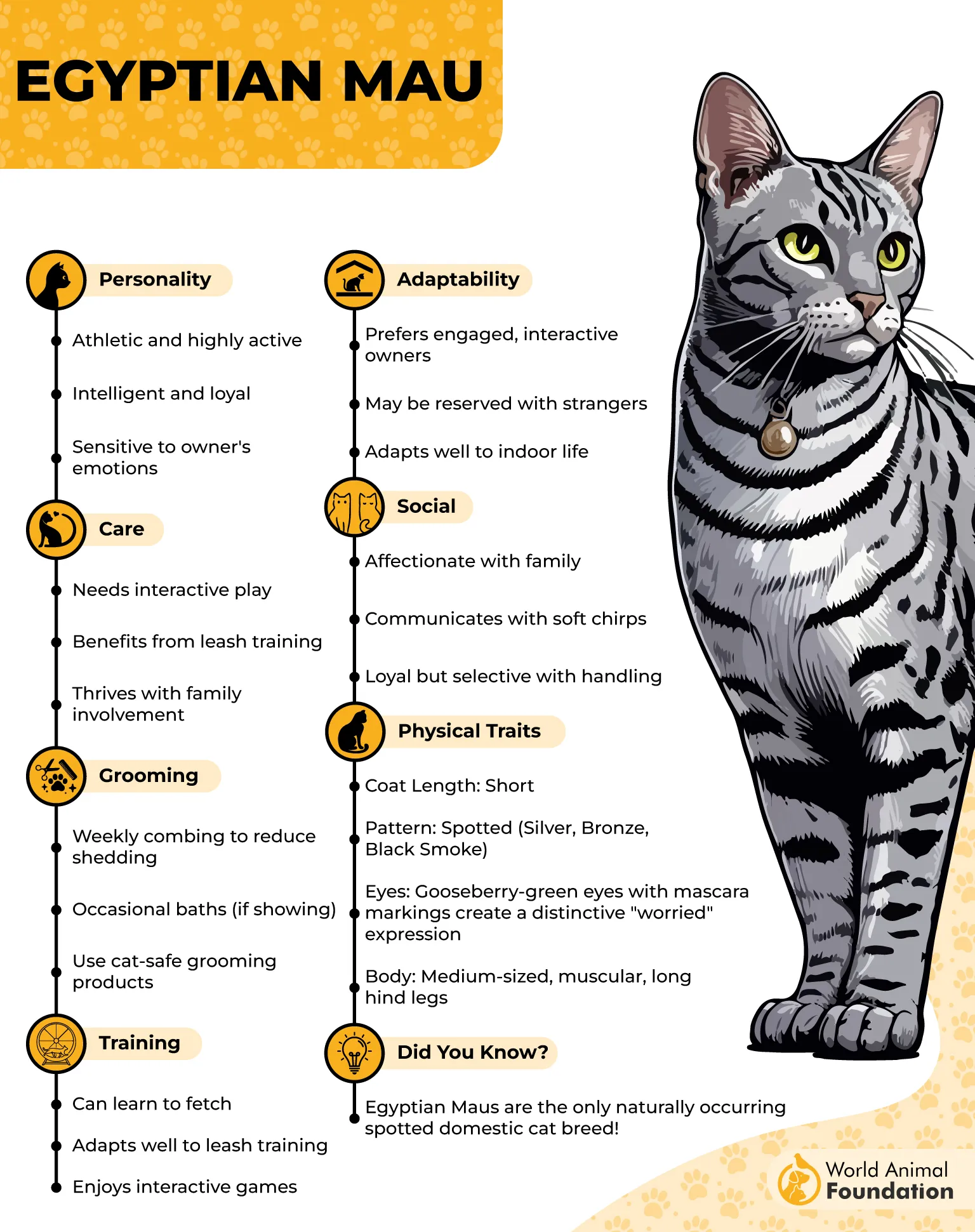
Tracing back more than 3,000 years, the Egyptian Mau is deeply tied to ancient Egyptian civilization. These cats were revered as sacred companions, often associated with protection and agility, and were commonly kept by nobility and temple priests.
Distinctive spots, not created by selective breeding but occurring naturally, highlight the Mau’s evolutionary uniqueness. Their athletic build and powerful hind legs reflect a lineage shaped by survival along the Nile, where speed and precision were essential for hunting.
Despite centuries of change, the Egyptian Mau has retained its historic traits while adapting well to modern homes. Its intelligence, affectionate nature, and alert demeanor mirror its past as both a hunter and a revered cultural symbol.
Fact: Egyptian Maus can sprint up to 30 miles per hour, making them the fastest of all domestic cat breeds.
Conclusion
The evolutionary journey of the cat species is a story shaped by survival, adaptation, and a shared common ancestor within the Felidae family. From wild ancestors like the African wildcat and Felis silvestris to European wildcats, ancestral cats once lived a nomadic lifestyle across different environments.
Cat domestication occurred around 10,000 years ago in the Fertile Crescent and Middle East, when cats lived near human settlements, controlling rodent populations. Revered as sacred animals with sacred status—linked even to Goddess Bastet—these true cats retained retractable claws, sharp teeth, and traits of apex predators despite becoming domesticated cats.
Years ago, through selective breeding, small cats evolved into the modern house cat, Felis catus, now found in many households and American households alike. While big cats like lions and tigers hunted large prey, house cats adapted their physical appearance, coat colors, and daily lives to coexist with humans.
Cats today remain close relatives of their wild counterparts, balancing instincts with life as beloved household companions, sharing homes, cat food, cat litter, and space—even alongside dogs—while still reflecting a million years ago legacy.
