




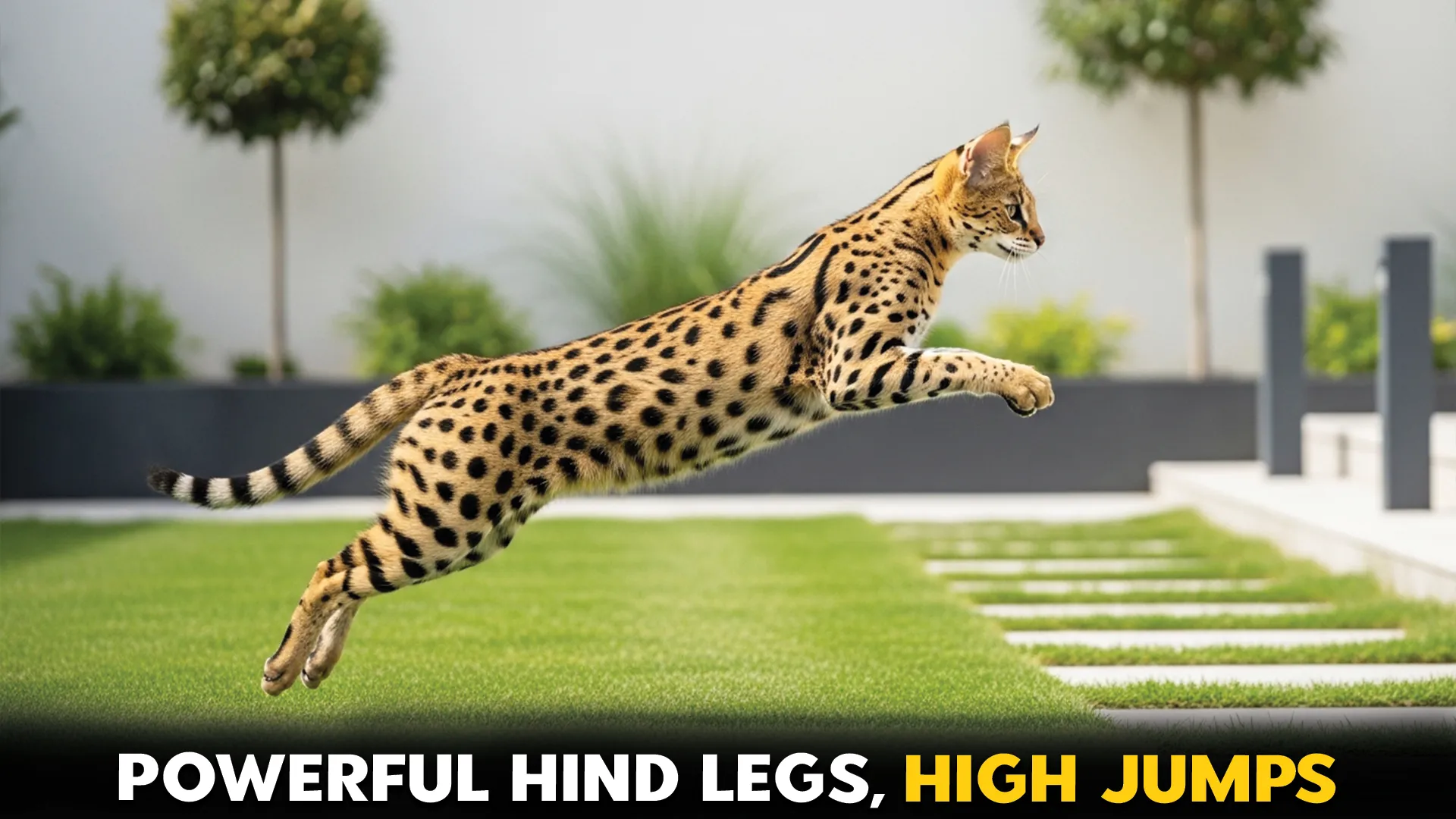
Cats may look sleek and effortless in motion, but behind every graceful leap is a surprising amount of raw power—especially in their hind legs. From scaling furniture to launching themselves onto high shelves, some breeds are built to jump higher, sprint faster, and land with precision.
So, what makes a cat’s hind legs so powerful? It all comes down to anatomy and instinct. Cats are natural hunters, and their back legs are engineered for explosive movement. Thick muscles, flexible joints, and strong tendons work together to store and release energy, allowing cats to leap several times their body length in a single bound.
While all cats share this foundation, some breeds, like energetic, muscular types known for climbing and chasing, excel at jumping and sprinting. Selective breeding, body structure, and temperament play a huge role in amplifying that power, creating feline athletes that are as strong as they are stunning.
In this article, we’re diving into seven cat breeds with powerful hind legs and exploring what truly sets their athletic abilities apart from the rest.
Cat breeds with powerful hind legs
1. Bengal
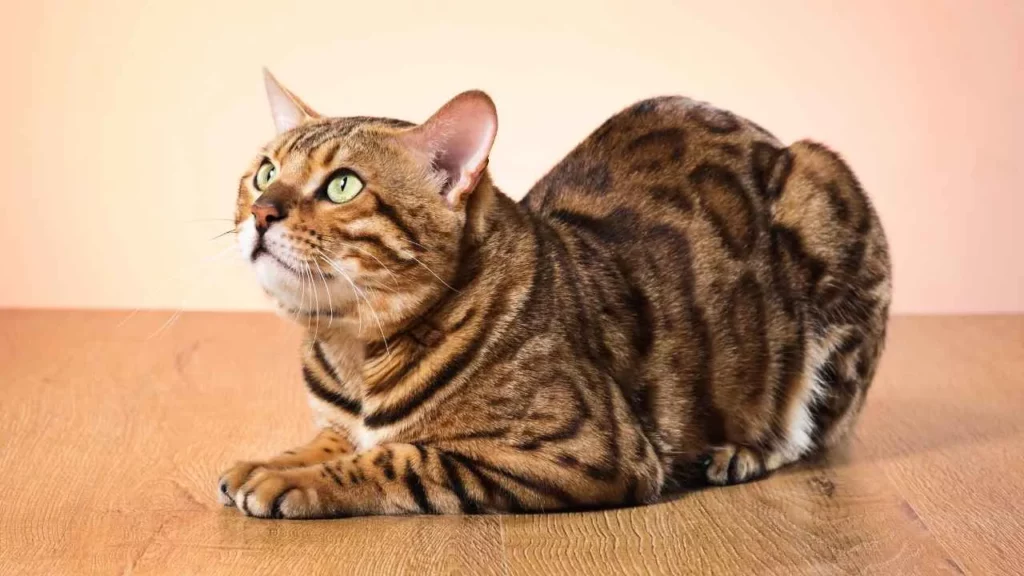
The Bengal, also known as the Bengal cat, is an exotic hybrid breed admired for its wild, leopard-like appearance and high-energy nature.
According to Britannica, the Bengal cat is a short-haired domestic breed that was developed in the United States. This breed combines a striking coat with a sleek, muscular frame that immediately hints at athletic power.
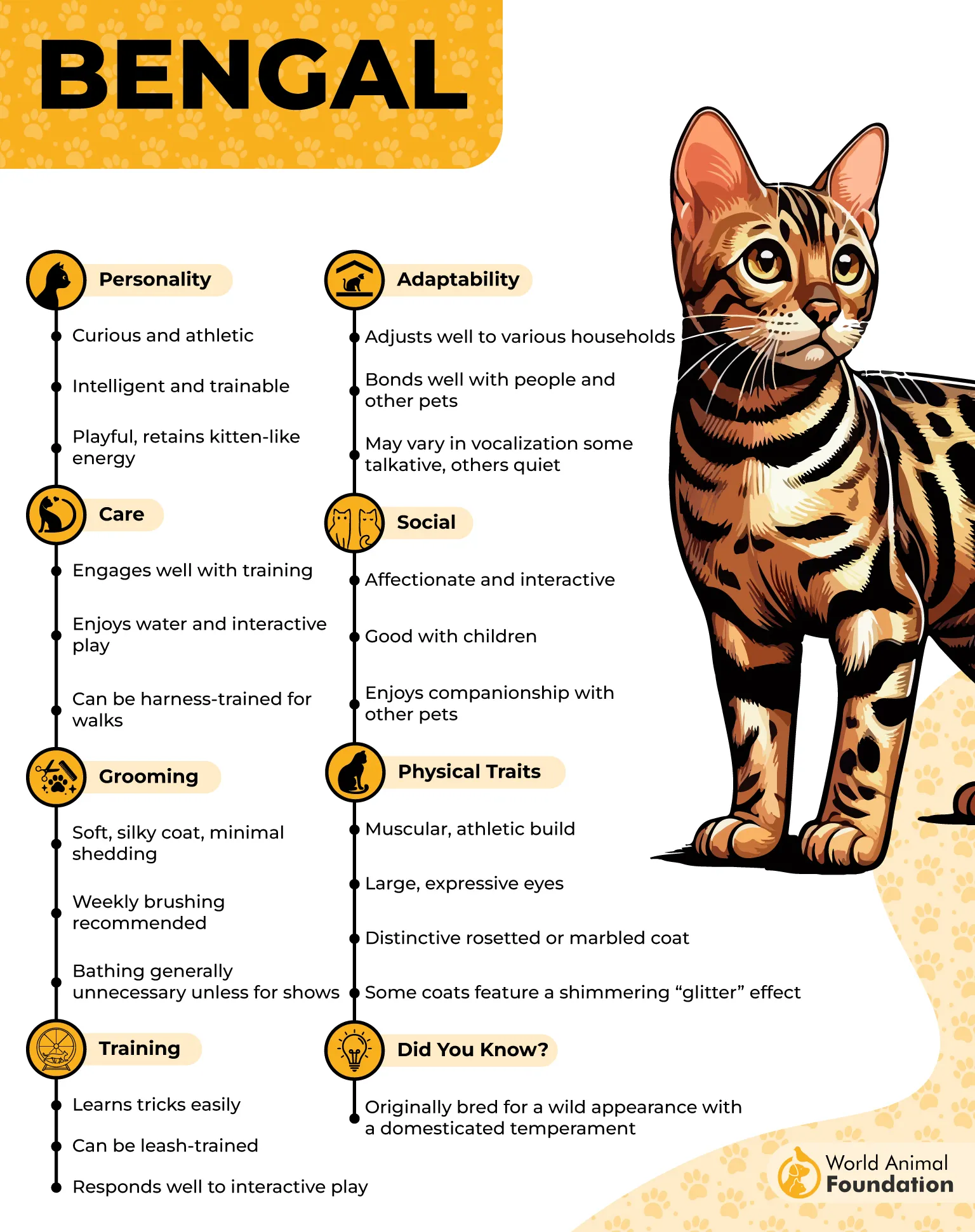
What truly sets Bengals apart in this list is their powerful hind legs, built for stamina and explosive movement. Their back legs are slightly longer than their front legs, giving them exceptional push-off strength for leaping and rapid sprints. This structure allows Bengals to clear impressive heights with ease, making vertical spaces a necessity in their environment.
Bengals are tireless movers, especially in earlier generations known for peak endurance and physical strength. Their strong hindquarters support constant climbing, jumping, and fast-paced play, reflecting their hunting ancestry. They rarely stay grounded for long and instinctively seek elevated vantage points.
Fact: Bengals are famously fascinated with water and may happily splash in sinks or bathtubs, a trait uncommon in most domestic cat breeds.
2. Savannah
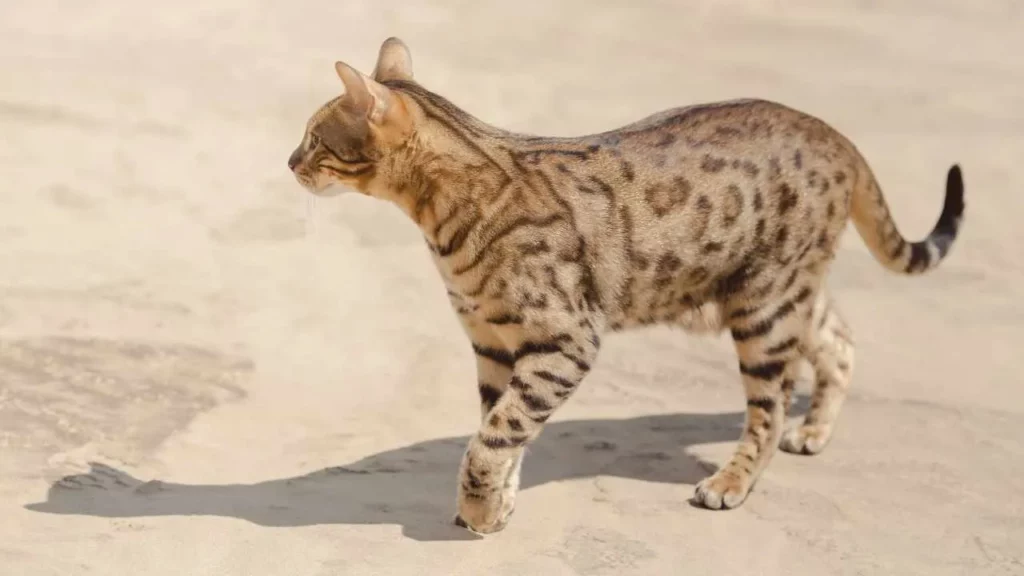
The Savannah Cat, often simply called the Savannah, is a striking hybrid known for its wild-inspired appearance and athletic build. According to PetMD, the Savannah house cat originates from a hybrid cross between a domestic cat and a wild African serval.
Tall, slim, and long-legged, this breed stands out with spotted or marbled coats, large cupped ears with eye-like markings, and an alert, confident expression that hints at its high-energy nature.
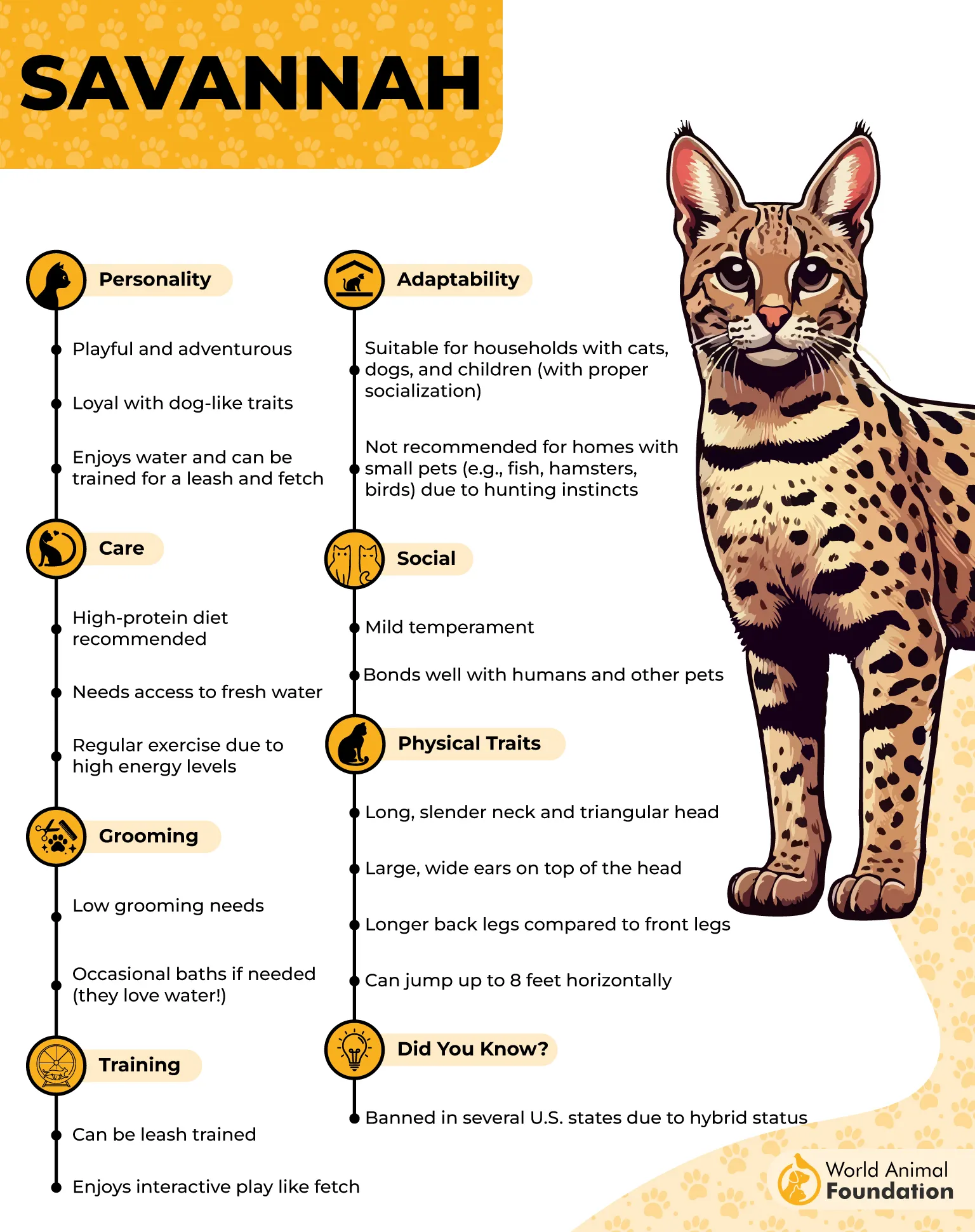
Those long hind legs are the engine behind the Savannah’s explosive movement. Built for speed and lift, their powerful back legs allow them to leap onto high surfaces, sprint across rooms, and climb with ease. Early-generation Savannahs, in particular, tend to show even more strength due to their larger frames and longer limbs.
Agility is where this breed truly shines. Savannahs combine muscle and intelligence, using their hind legs to launch surprise pounces, scale tall furniture, and perform impressive jumps that keep owners on their toes. Their prank-loving behavior is often fueled by this athletic ability and constant need for stimulation.
A notable fact about the Savannah Cat is that, unlike most cats, it genuinely enjoys playing in water, making fountains, sinks, and even ponds especially tempting.
3. Abyssinian
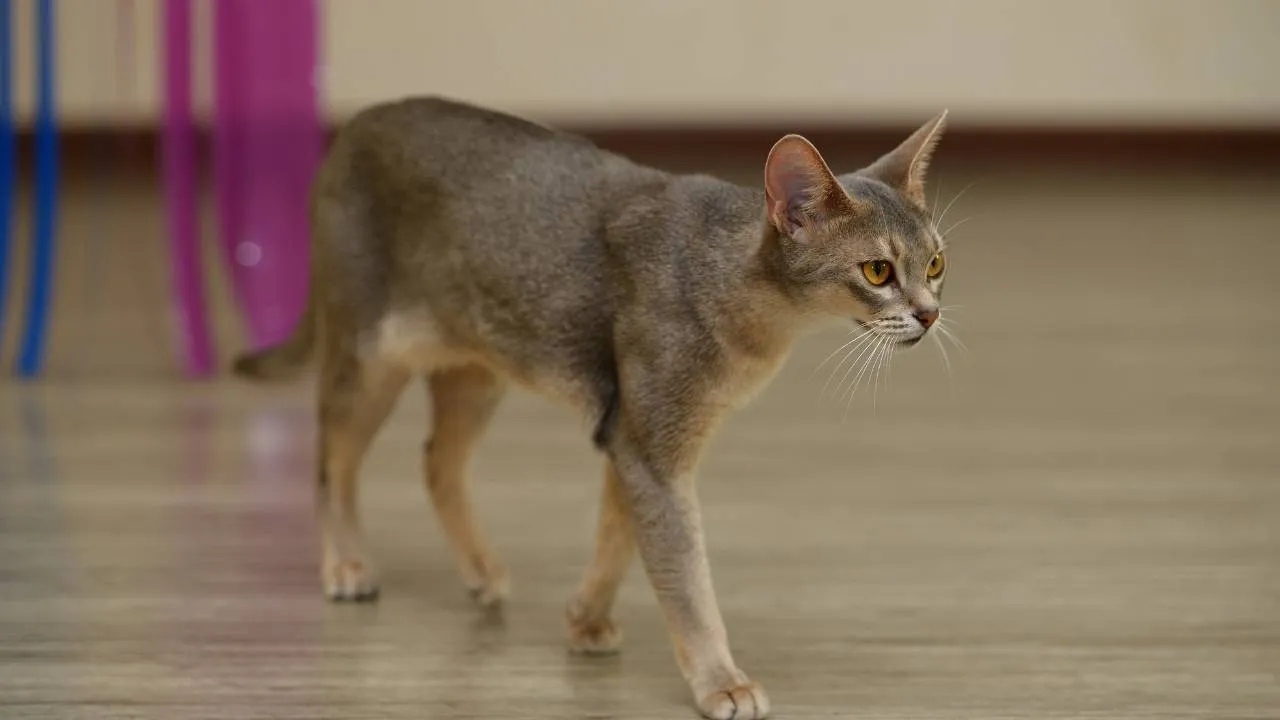
The Abyssinian, sometimes called the Abby, is a medium-sized cat with a long, lean body and a visibly athletic build. Known for its short-ticked coat and alert expression, this ancient-looking breed originated in Southeast Asia despite long-standing myths linking it to ancient Egypt.
According to Purina, the Abyssinian has a distinctly wild appearance, giving the impression of a highly athletic cat that looks as though it has emerged straight from the jungle.
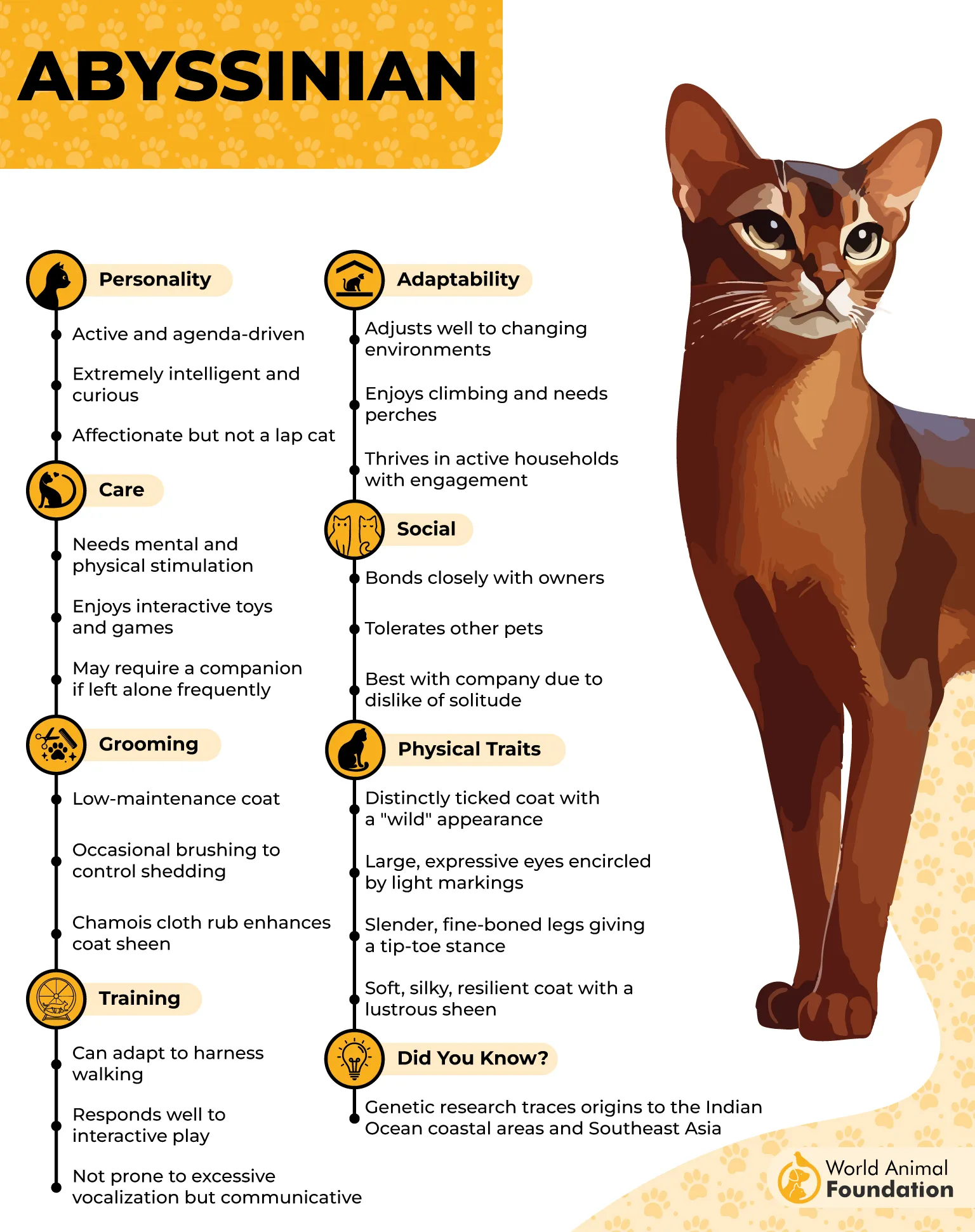
Muscular hind legs are a major reason the Abyssinian excels in jumping and climbing. Their well-defined back muscles generate explosive push-off power, allowing them to spring onto shelves, cabinets, and cat trees with effortless precision.
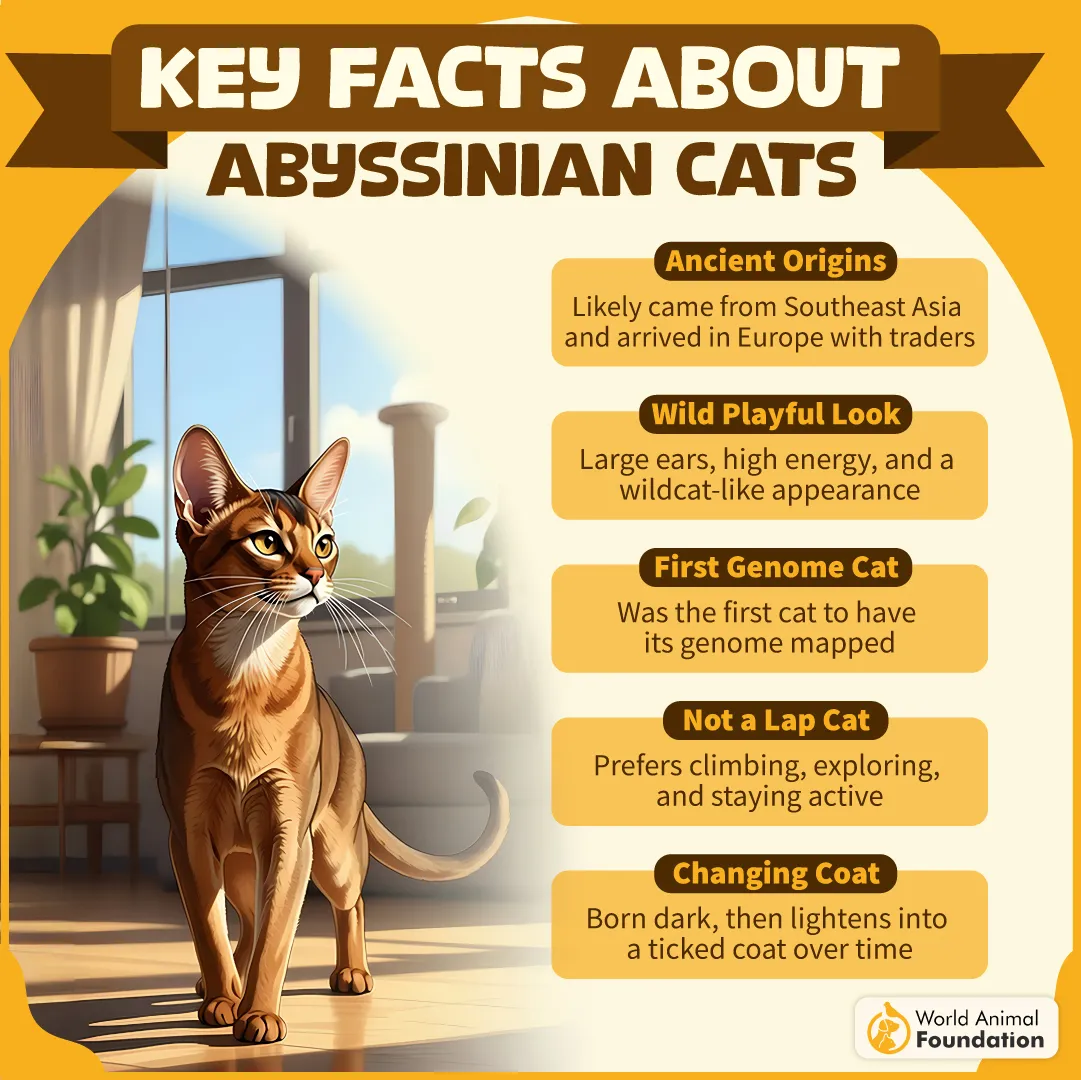
Speed and strength define how this breed moves. Abyssinians rarely stay still, using their powerful hind legs to sprint across rooms, leap between surfaces, and launch vertical climbs that highlight their natural athleticism.
That energy demands an outlet, which is why climbing structures and interactive play are essential for this breed. Genetic evidence confirms its ancestors came from Southeast Asia and the Indian Ocean coastal regions.
4. Egyptian Mau
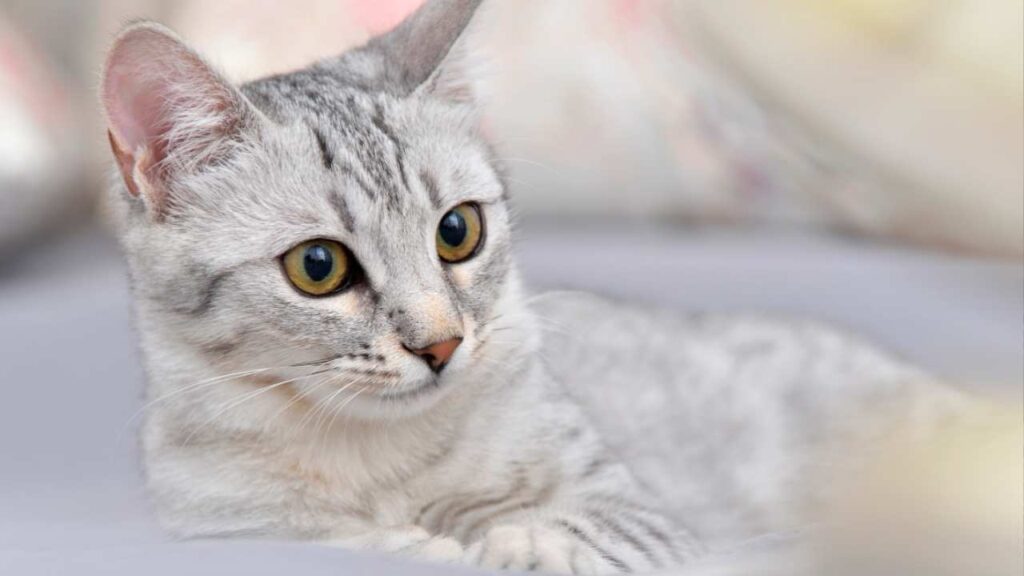
The Egyptian Mau, often simply called the Mau, is an ancient breed celebrated for its naturally spotted coat, gooseberry-green eyes, and sleek, athletic frame. With roots in ancient Egypt, this elegant cat is deeply loyal, people-oriented, and known for forming strong bonds with a chosen human.
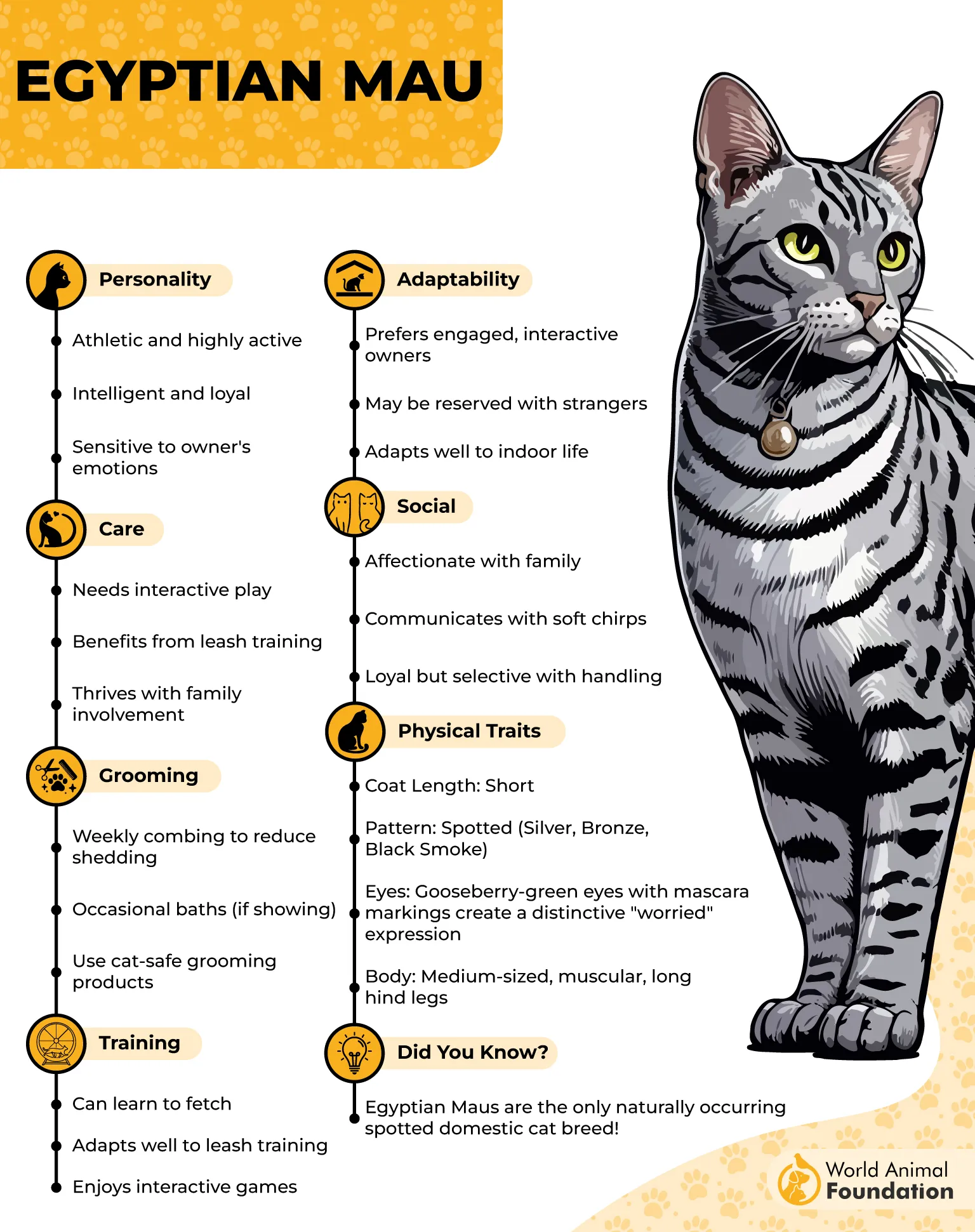
Long hind legs are central to the Mau’s athletic reputation. Its back legs are slightly longer than the front, giving the cat a poised, tiptoe stance that’s ideal for launching upward. This unique structure makes vertical jumps look effortless and incredibly precise.
Speed and jumping power go hand in hand for this breed. The Mau’s muscular body and arched posture allow it to explode into motion, whether sprinting across a room or leaping onto tall perches. These cats thrive in homes with vertical space that lets them fully use their rear-leg strength.
Highly alert and playful, Egyptian Maus rely on daily activity to burn energy and stay balanced. A standout fact about the breed is that it’s considered the fastest domestic cat, capable of jumping up to six feet from a standstill.
5. Ocicat
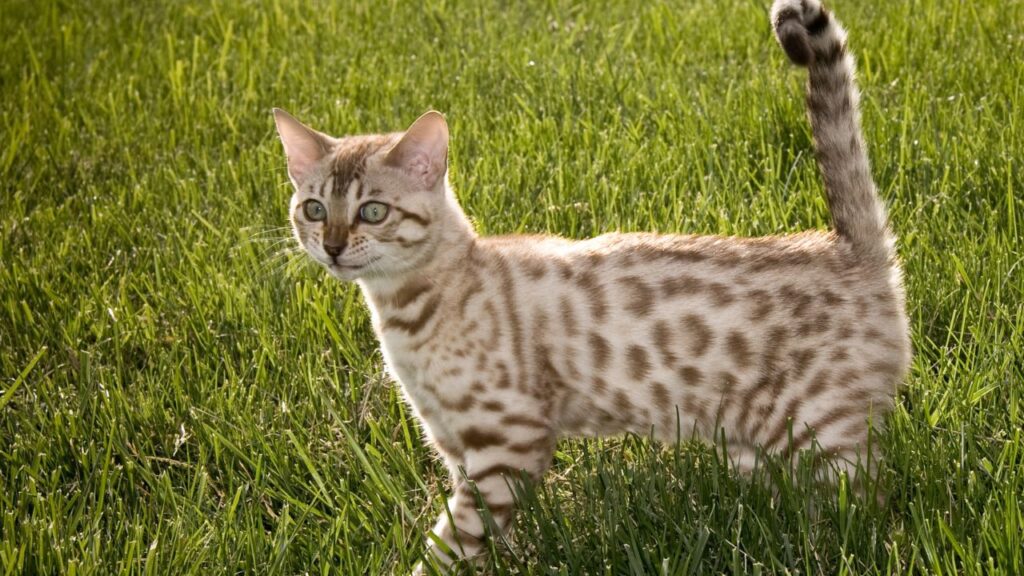
The Ocicat, sometimes nicknamed the “wild-looking domestic,” is a purebred cat developed in the United States that mimics the appearance of a wild feline without any recent wild DNA. Medium to large in size, it features a clear spotted coat, a deep chest, a long tail, and a muscular, well-balanced frame.
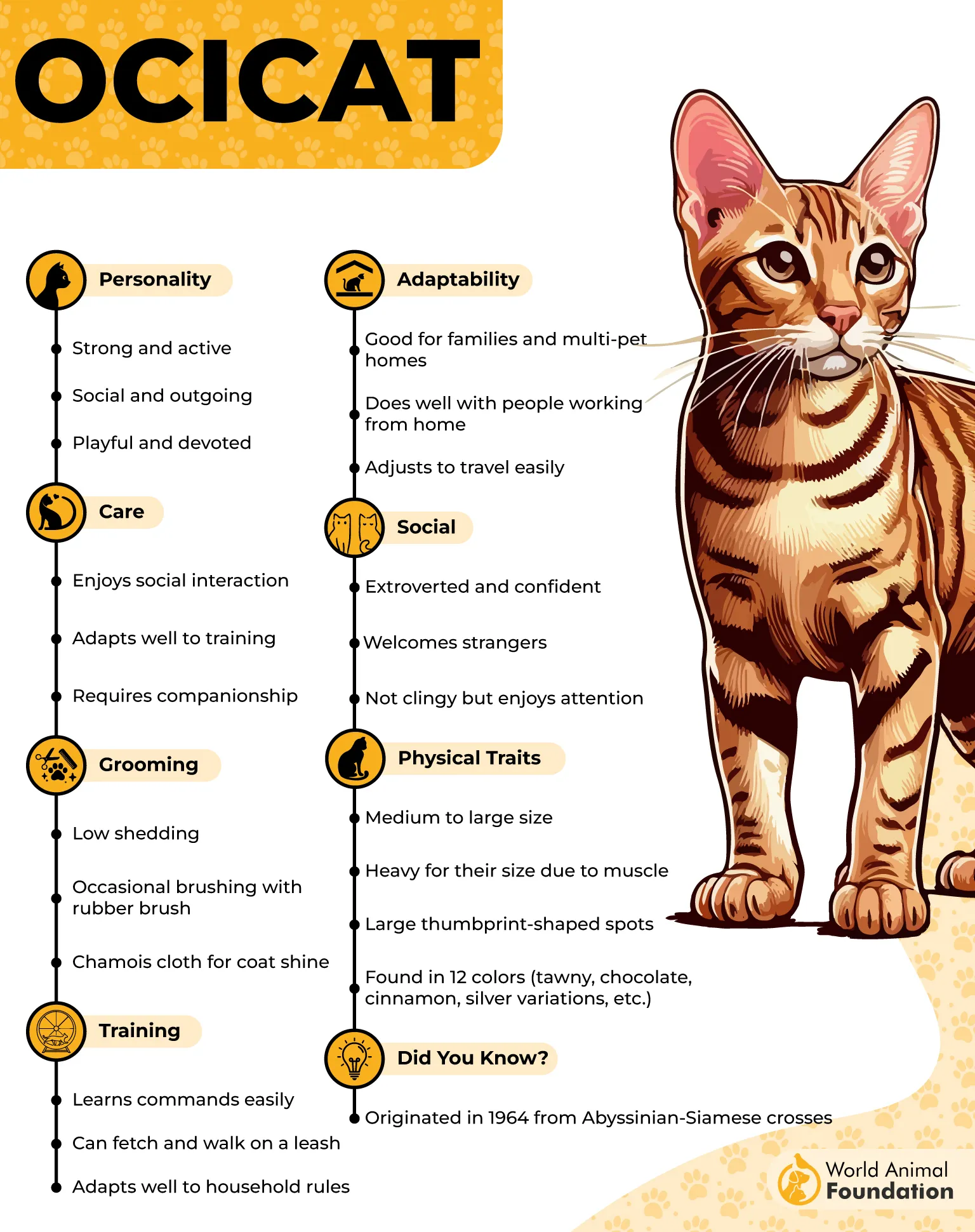
Its compact body is supported by strong rear muscles that drive powerful movement. The slightly sloped back line and sturdy bone structure give the Ocicat excellent push-off strength, making its hind legs especially effective for jumping and rapid acceleration.
Breed #5 truly shines in athletic ability, as the Ocicat’s powerful back legs are built for speed and control. Those mid-long legs with oval paws allow it to sprint, climb, and leap with precision while maintaining balance and agility in tight spaces.
This breed’s physical strength pairs with natural feline mechanics, including a flexible spine and robust shoulder and back muscles that enhance propulsion. A notable fact is that the Ocicat was first created in 1964 from Siamese and Abyssinian crosses and later earned championship status from major cat associations.
6. Maine Coon
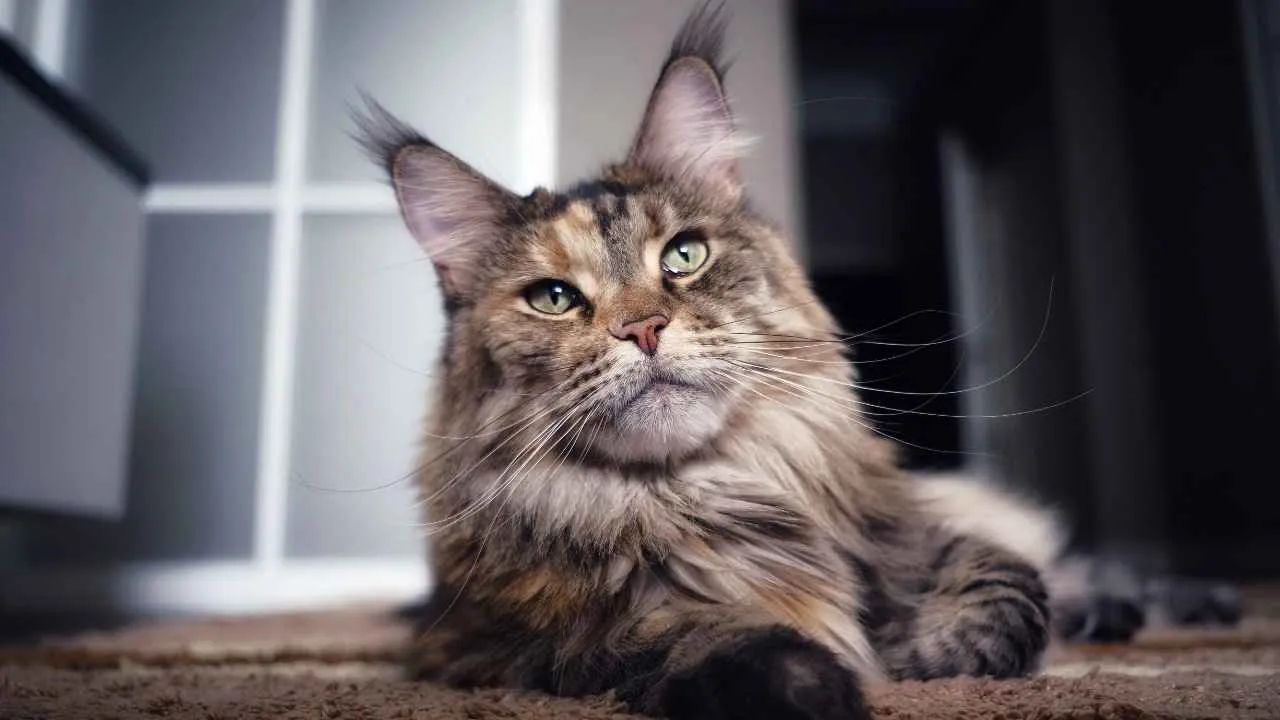
The Maine Coon, sometimes called the “Gentle Giant” or the American Longhair, is a naturally large cat breed that originated in New England. Known for its shaggy coat, bushy tail, and friendly intelligence, this sociable cat has become a favorite family companion around the world.
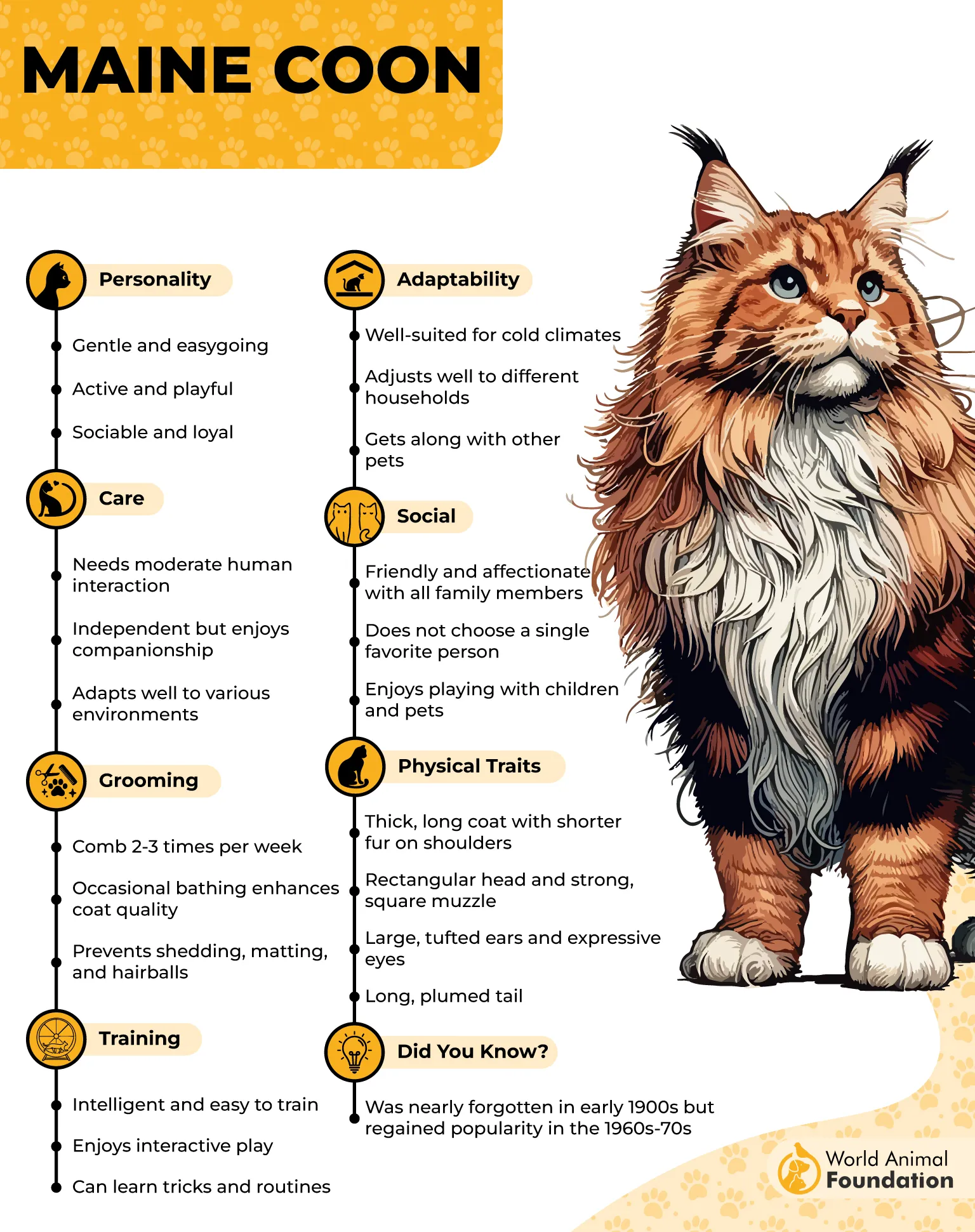
That impressive size plays a major role in the Maine Coon’s powerful hind legs. The breed developed a strong, muscular rear build to move efficiently through rough terrain, making its back legs well-suited for strength-driven motion rather than quick bursts alone.
Endurance is where this breed truly stands out. Maine Coons were shaped by harsh winters and demanding work as barn and ship cats, using their hind legs for sustained movement, climbing, and steady hunting rather than constant sprinting.
Their power is controlled and deliberate, allowing them to jump with confidence and maintain balance despite their size. It originated in Maine, where natural selection helped it survive severe winters and establish exceptional physical resilience.
7. Norwegian Forest Cat
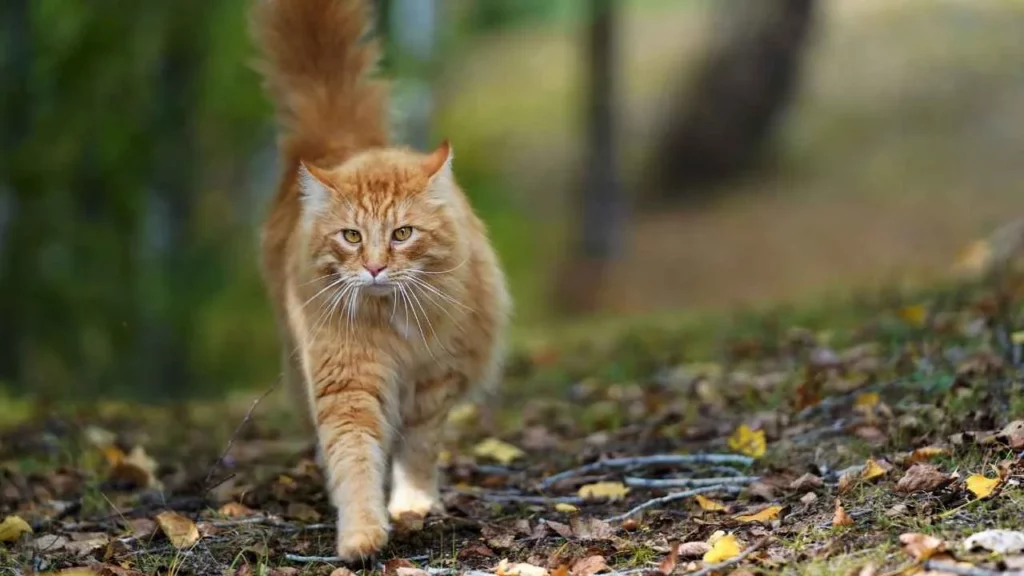
The Norwegian Forest Cat, also called the Wegie or Norsk Skogkatt, is a large, hardy breed from Northern Europe with a gentle but independent nature. Known for its bushy tail, long ruff, and semi-long weatherproof coat, it combines wild beauty with a friendly temperament.
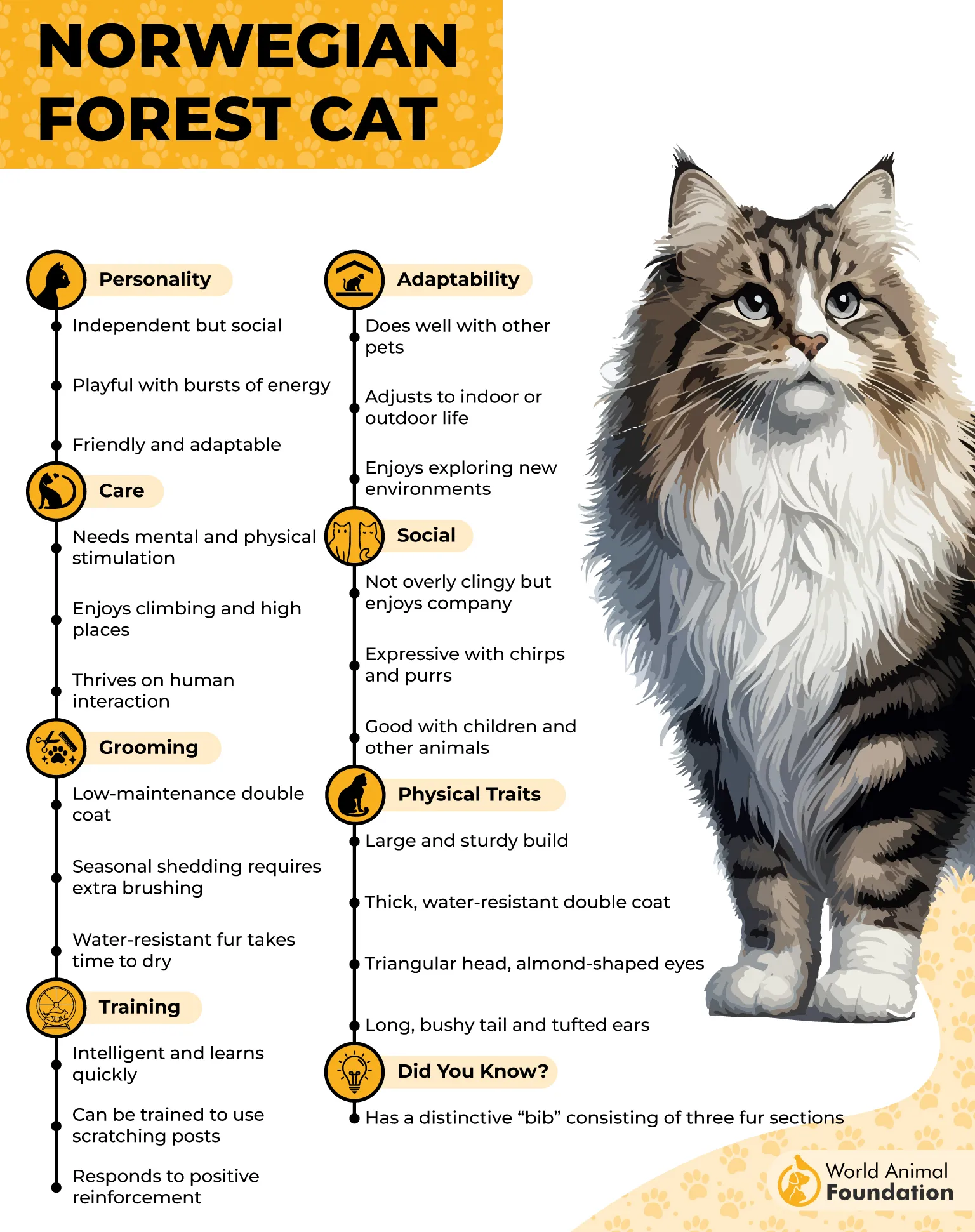
Graceful yet strong, this breed’s powerful hind legs play a major role in its athleticism. The back legs are longer than the front, giving the Norwegian Forest Cat extra lift for jumping and climbing, while its solid frame supports a weight of about 12–16 pounds and a height of 9–12 inches.
Built to survive harsh climates, these cats use their strength to scale tall cat trees, leap onto sturdy surfaces, and descend with control. Their durable claws and broad, tufted paws enhance traction, making them exceptional climbers with impressive balance and agility.
That natural hunting build also fuels energetic play, from pouncing on feather toys to patrolling their surroundings with confidence. Its front legs are shorter than its hind legs, a feature that directly supports its powerful jumping ability.
Conclusion
Powerful hind legs are what transform certain cats from graceful loungers into true feline athletes. Whether it’s explosive jumps, fast sprints, or confident climbs, these breeds showcase how anatomy, strength, and instinct work together.
From the muscular cat build of wild-inspired breeds to gentle giants with a plush coat or silky coat, strong back legs enhance climbing ability and overall agility, traits that continue to fascinate cat lovers.
Some resemble a wild cat in movement, while others stand out for unique traits like a curly coat or results of a genetic mutation. No matter the look, their athletic power proves that beauty and strength go paw in paw.
