




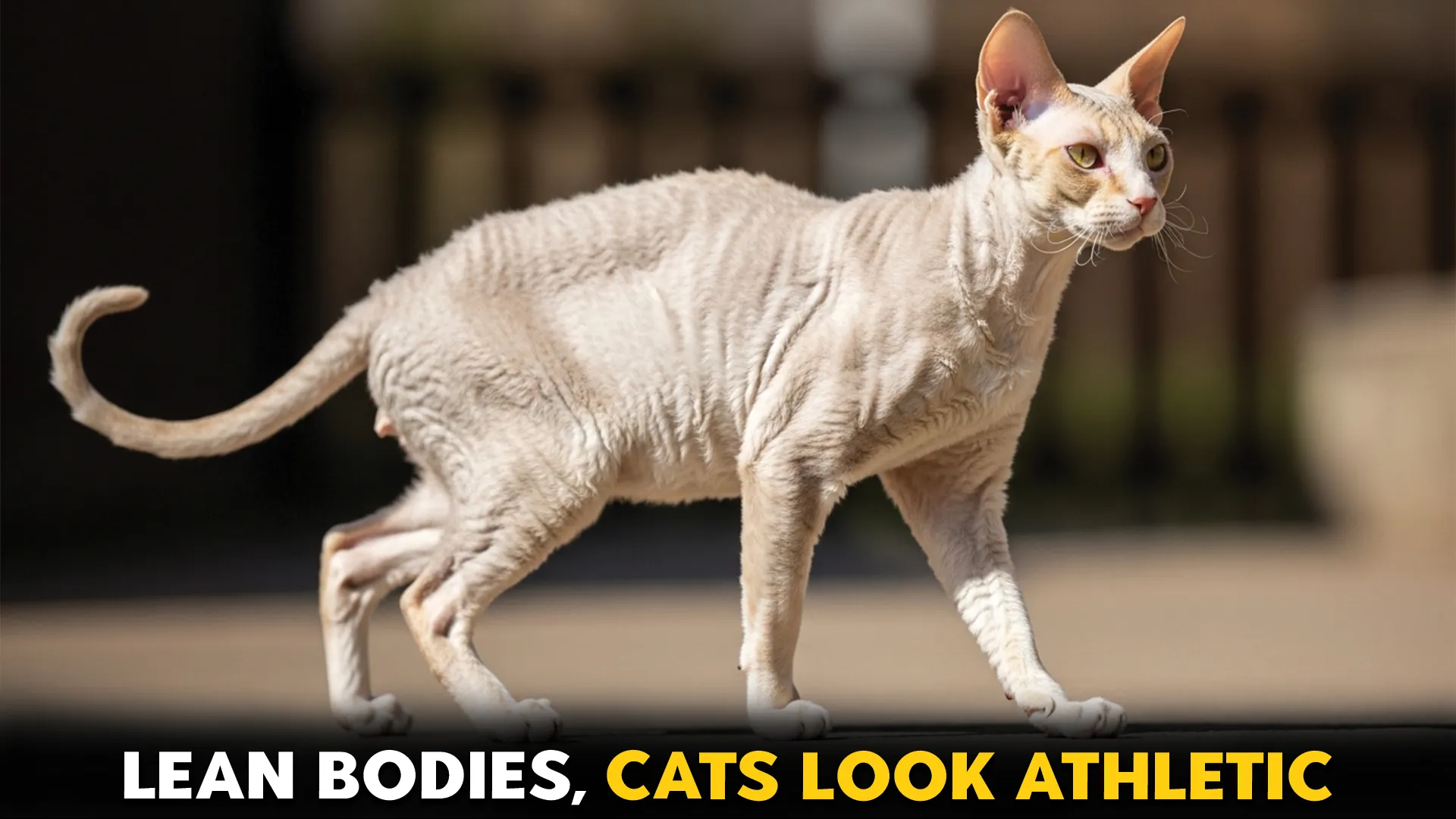
Choosing the right cat often comes down to understanding body type, and some breeds naturally stand out for their lean, low-fat physiques. Unlike bulkier cats, these felines have slim frames that reflect a lighter build and minimal fat storage, giving them a refined, athletic appearance. This natural leanness isn’t about being underweight—it’s a breed-specific trait shaped by genetics and structure.
Low body fat in cats often enhances agility, allowing for quicker movements, higher jumps, and more precise coordination. Breeds with slender bodies tend to move with fluid grace, using their lightweight frames to climb, sprint, and explore with ease. Their physical design supports active lifestyles, making them especially engaging companions for interactive households.
Balanced nutrition, regular activity, and routine health checks ensure these healthy cats stay fit without becoming too thin. Understanding how to support a lean-bodied cat helps preserve both their elegant look and overall well-being.
Cat Breeds with Naturally Low Body Fat
1. Abyssinian
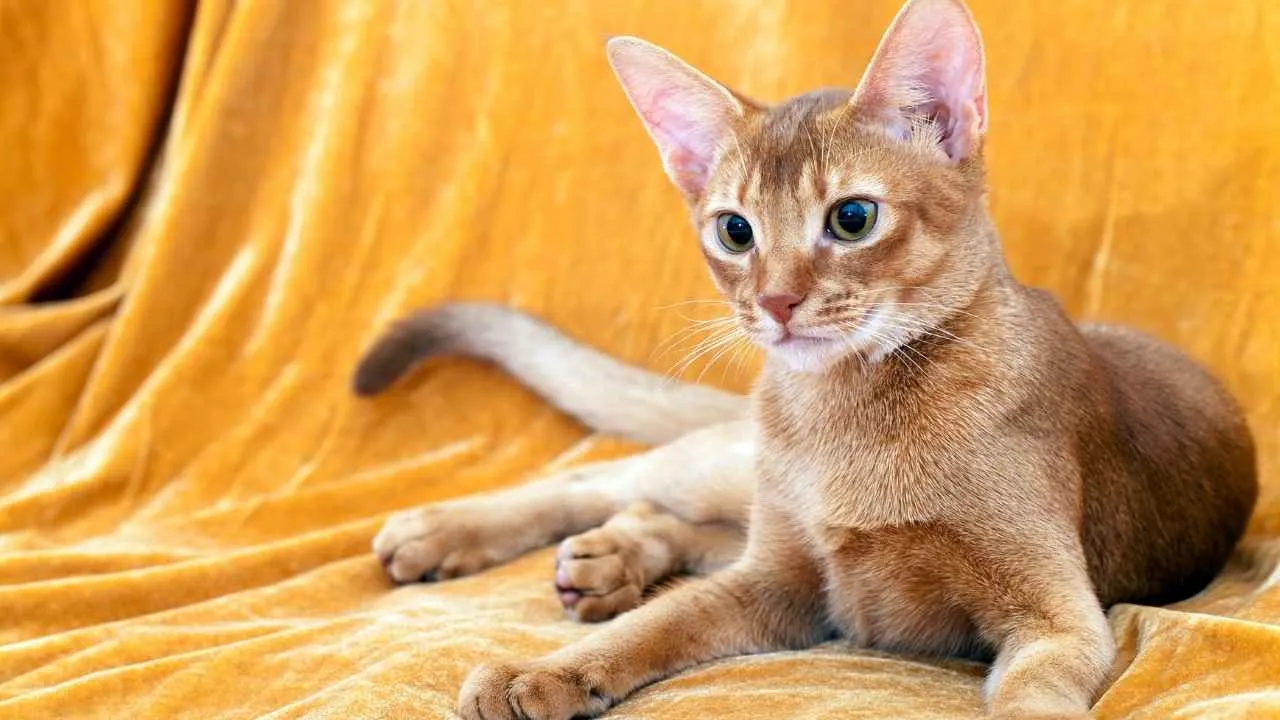
The Abyssinian, often called the “Aby,” is one of the oldest known domesticated cat breeds, admired for its wild, puma-like appearance and expressive almond-shaped eyes.
With large ears, a sleek frame, and a distinctive ticked coat, this breed combines elegance with a naturally athletic build. According to Britannica, the Abyssinian is affectionate and quiet, though it can be shy around strangers.
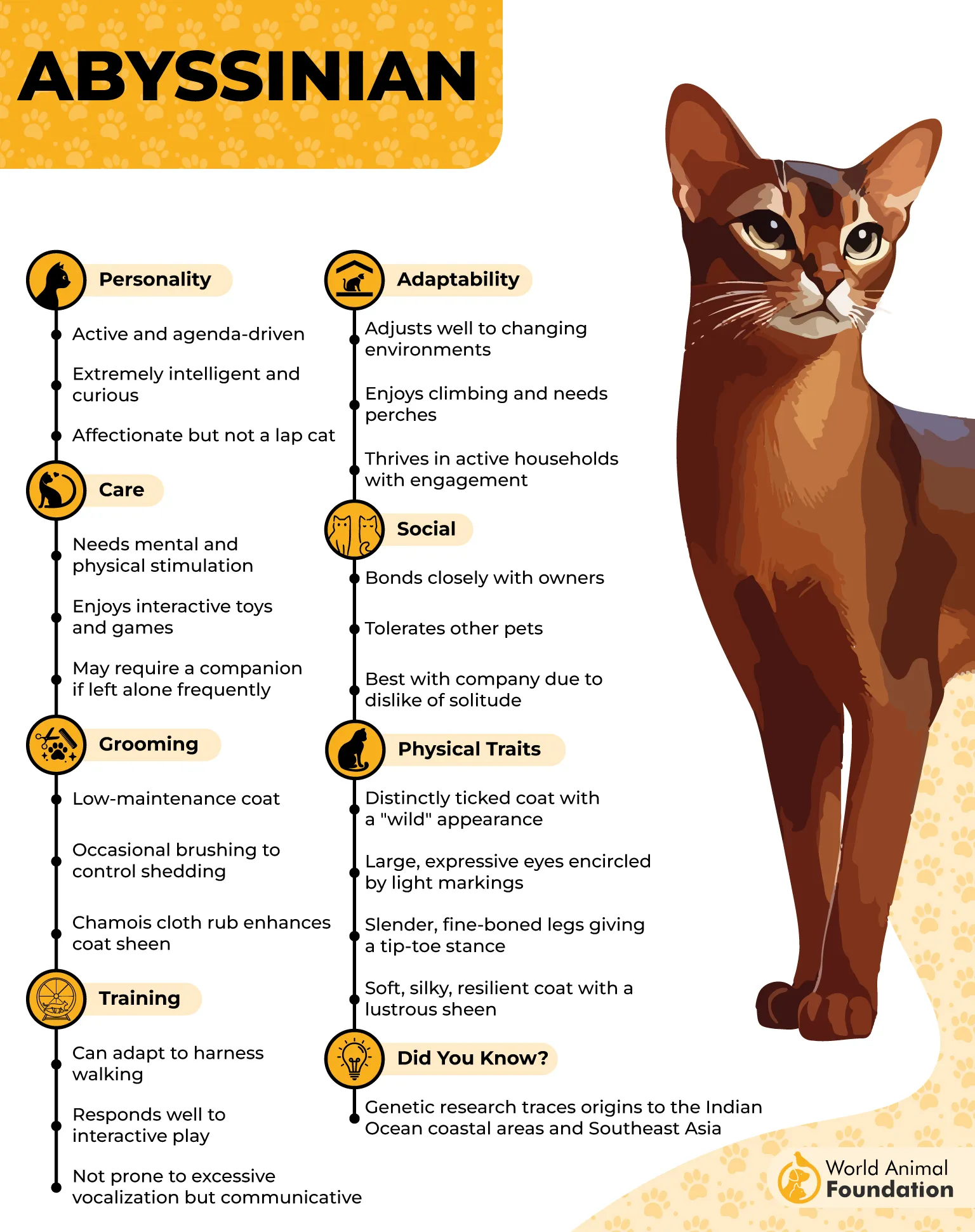
The Lean Feline with a Naturally Slim Build
The Abyssinian’s long, streamlined body and minimal fat coverage give it a naturally slim, defined silhouette. Its fast metabolism and constant activity prevent excess weight, allowing muscles to remain visible beneath its fine coat.
This breed’s structure supports agility, with long, slender legs and a slightly arched posture that enhances jumping ability. Their lean frame isn’t fragile—it’s balanced with well-developed muscle, creating a fit, lightweight body ideal for movement.
Highly energetic and curious, Abyssinians rarely stay still, which further maintains their low body fat. Their active lifestyle, combined with a naturally efficient physique, keeps them in a consistently toned condition without bulk.
Fact: The Abyssinian’s unique ticked coat features multiple color bands on each hair, creating a shimmering effect.
2. Siamese
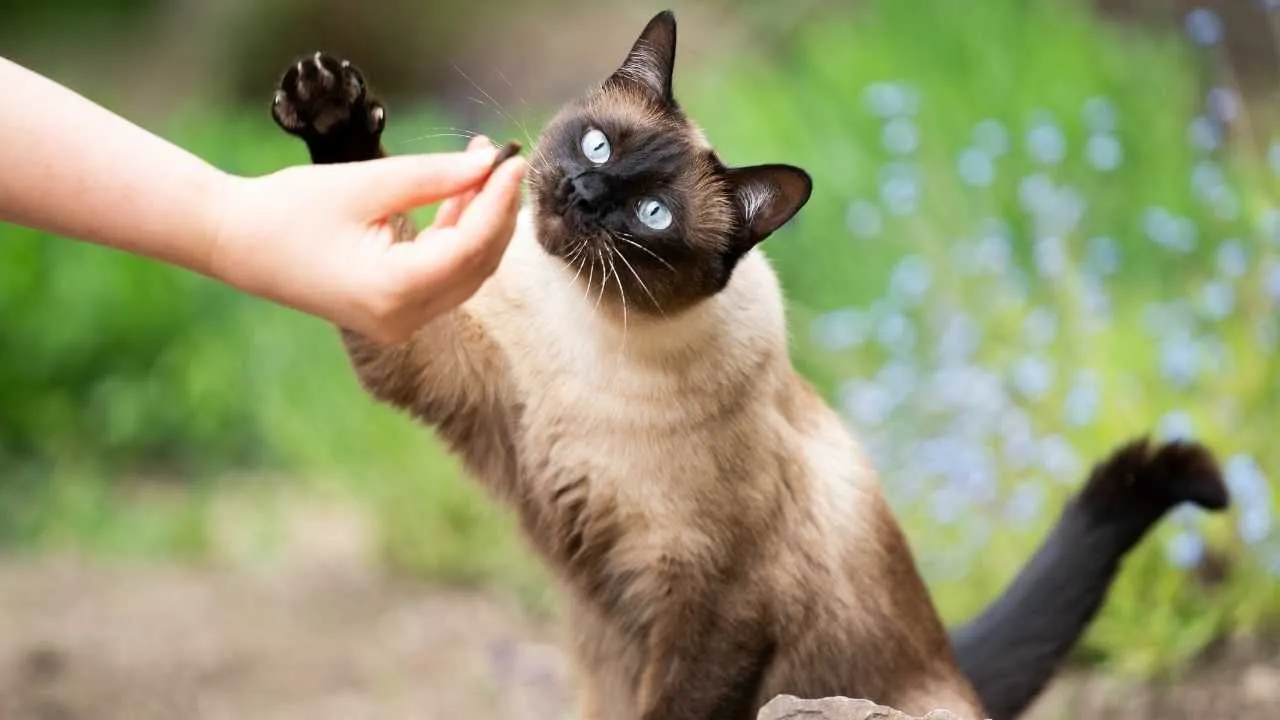
The Siamese, also known as the Thai or Wichien Maat, is one of the oldest and most recognizable cat breeds, originating from Thailand.
With its striking blue eyes, pointed coat pattern, and elongated body, this breed is admired for its refined, elegant appearance and highly social nature. According to Hill’s Pet, Siamese cats are not only beautiful but also highly intelligent and can even be trained to walk on a leash.
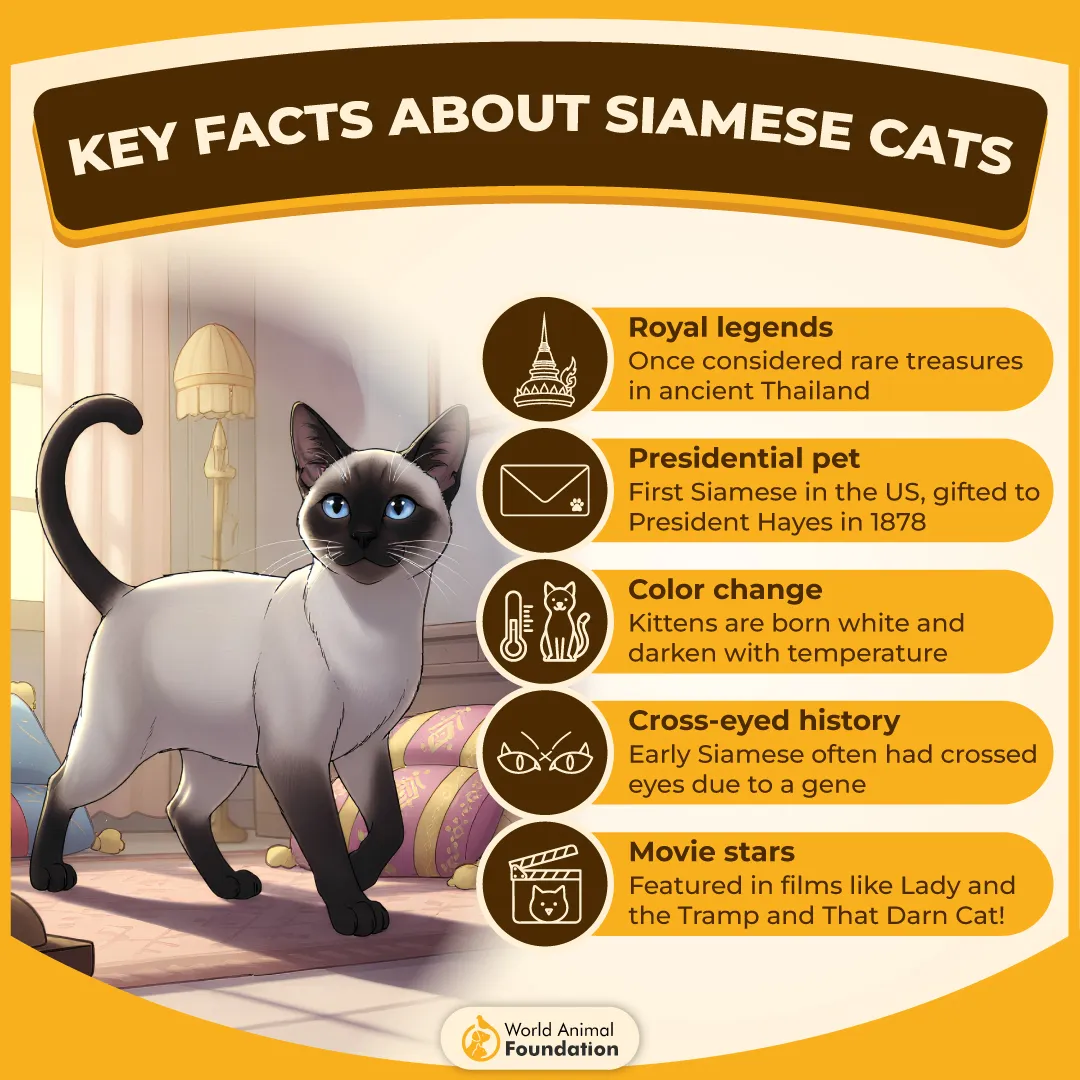
A Sleek Cat Known for Its Low Body Fat Composition
The Siamese is naturally slim, with a long, angular frame that highlights its low body fat and defined musculature. Rather than appearing bulky, its body is fine-boned yet firm, giving it a sleek and lightweight silhouette.
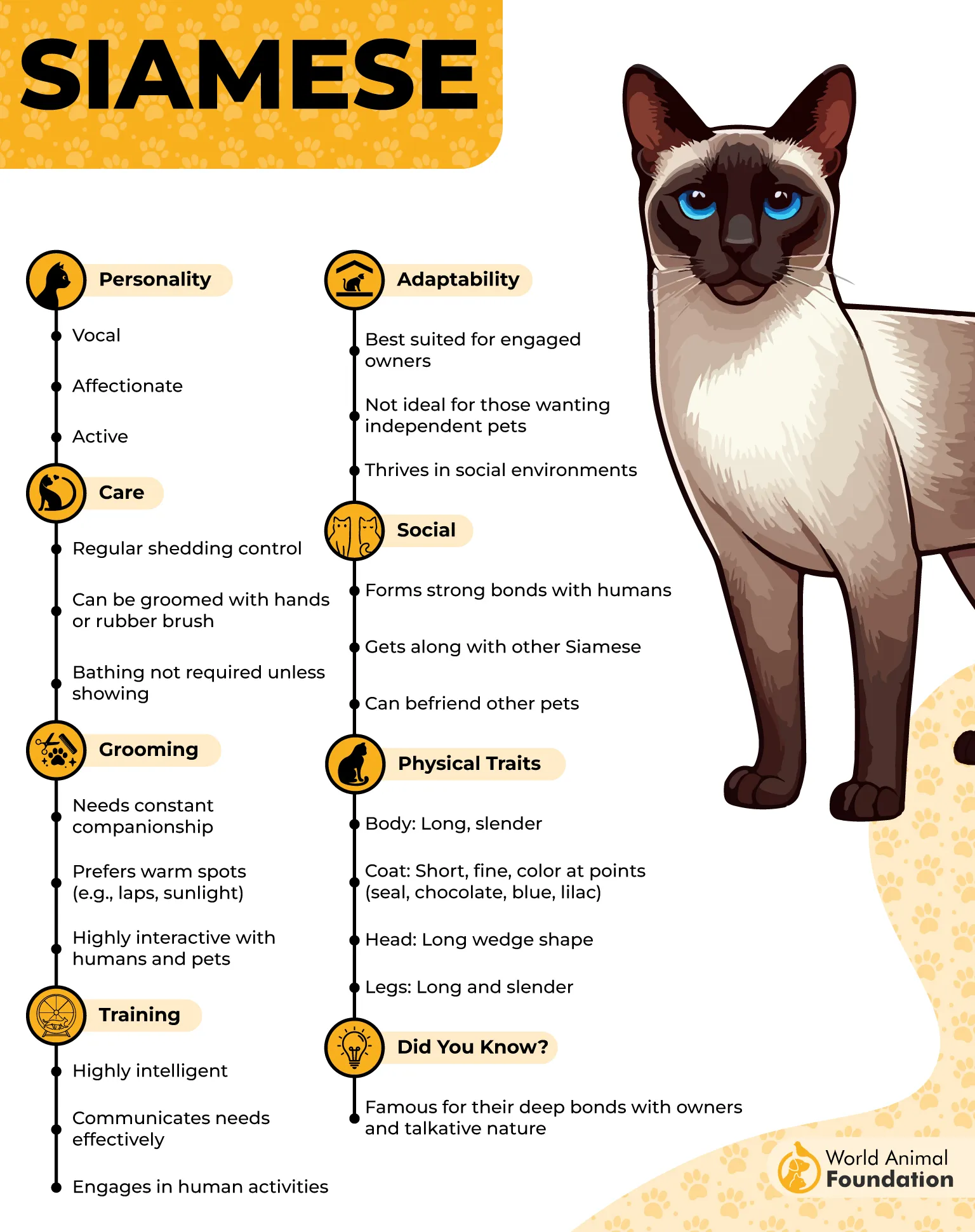
This lean build supports fluid movement and agility, allowing the breed to move with precision and grace. Their visible waistline and easily felt ribs are normal indicators of their naturally low fat composition rather than signs of being underweight.
Maintaining this physique depends heavily on proper nutrition, with a diet rich in animal protein and controlled fat intake. Excess fats or carbohydrates can quickly disrupt their balanced body condition, leading to unwanted weight gain despite their naturally slender form.
Fact: Siamese cats are naturally lean, and their ribs and waist are best assessed by touch rather than relying only on visual appearance.
3. Oriental Shorthair
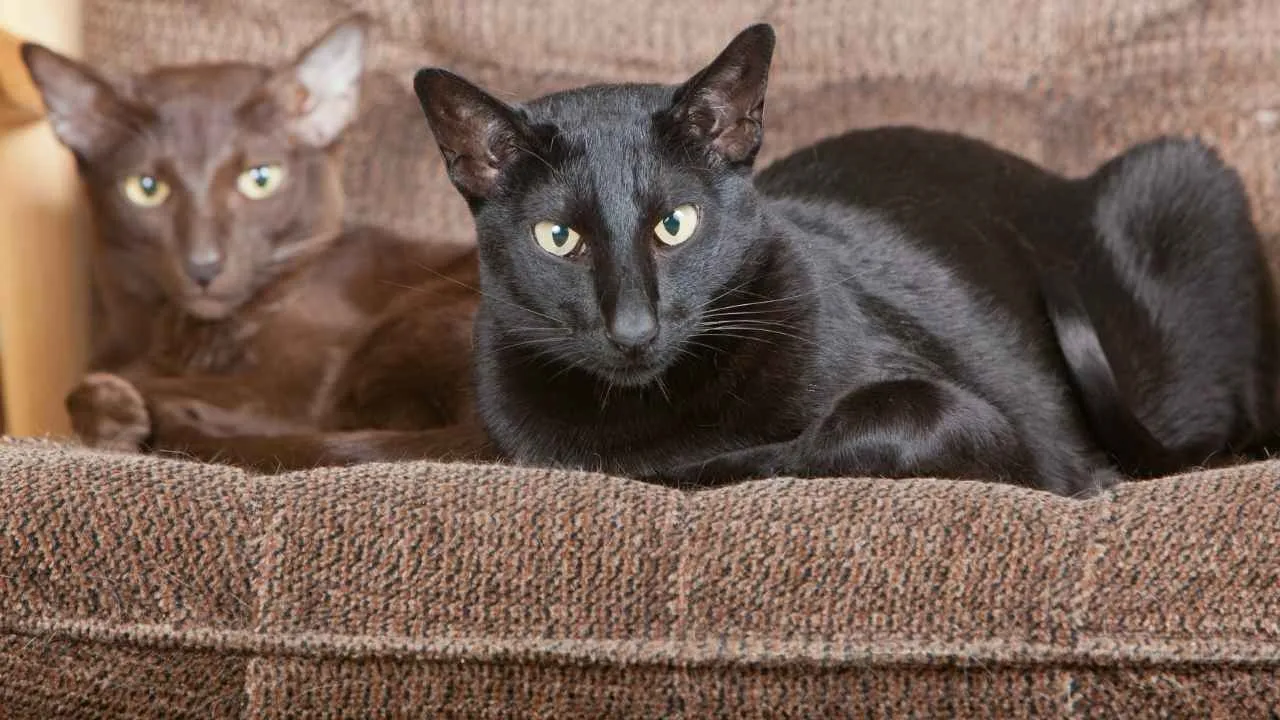
The Oriental Shorthair, sometimes simply called the Oriental, is closely related to the Siamese but stands out with its striking green eyes.
Developed through crosses with breeds like the American Shorthair and Russian Blue, it features a sleek, tubular body, large ears, and a sharply defined, wedge-shaped face. According to Purina, the Oriental Shorthair has a very short, fine, glossy coat that lies close to the body.
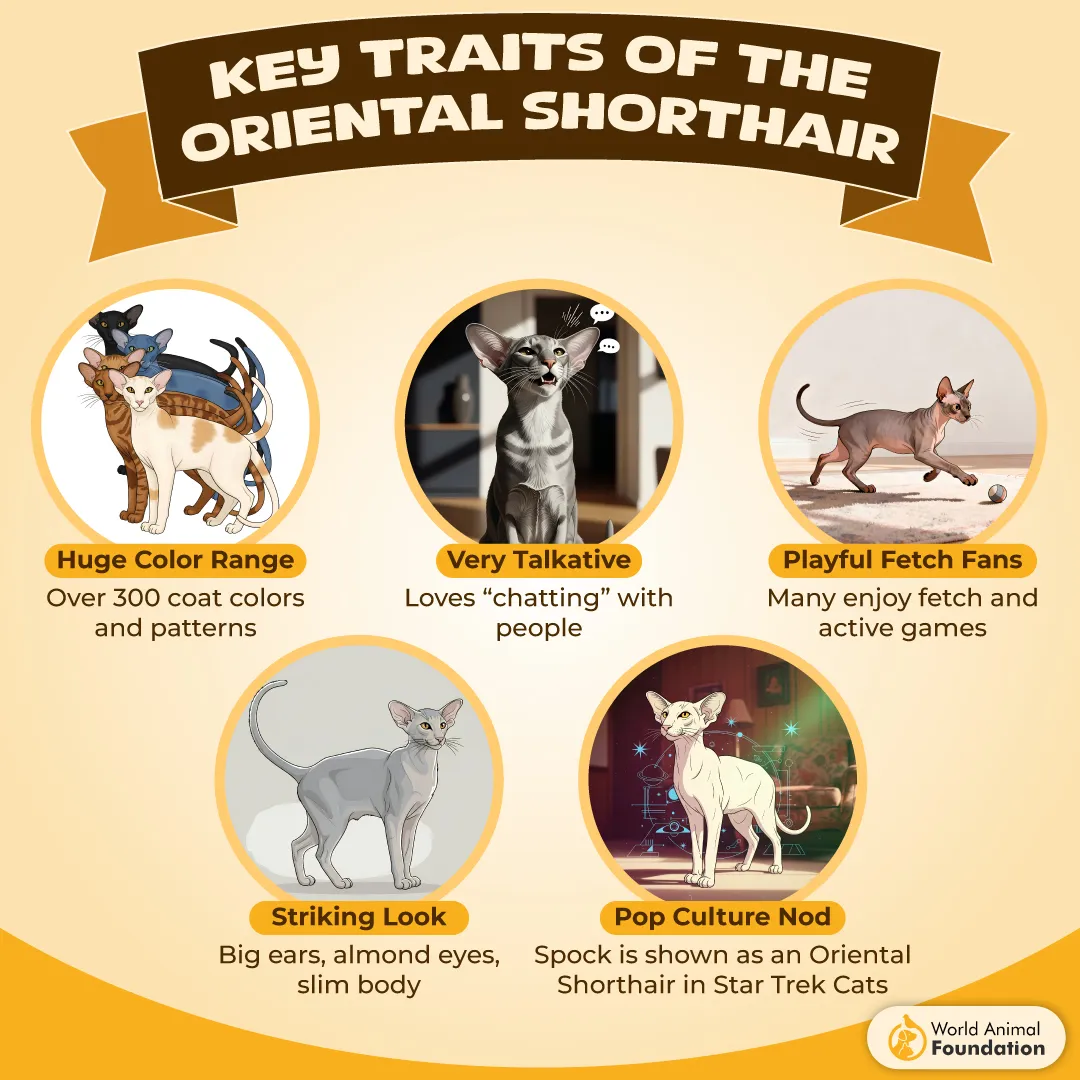
The Athletic Companion with a Light Frame
The Oriental Shorthair is naturally lean, with a long, slender body that reflects very low body fat. Its fine-boned structure is paired with firm, visible muscles, giving it a lightweight yet athletic appearance.
Its body design enhances agility, with long legs—especially slightly longer hind legs—that support quick movement and effortless jumps. The close-lying, glossy coat further emphasizes its slim physique, making every movement appear smooth and precise.
Highly active and constantly engaged, this breed maintains its lean condition through play and exploration. Their energetic nature, combined with a fast metabolism, helps prevent fat accumulation while preserving a toned, streamlined form.
Fact: The Oriental Shorthair was developed by crossing Siamese cats with other breeds to introduce a wide variety of colors and patterns.
4. Cornish Rex
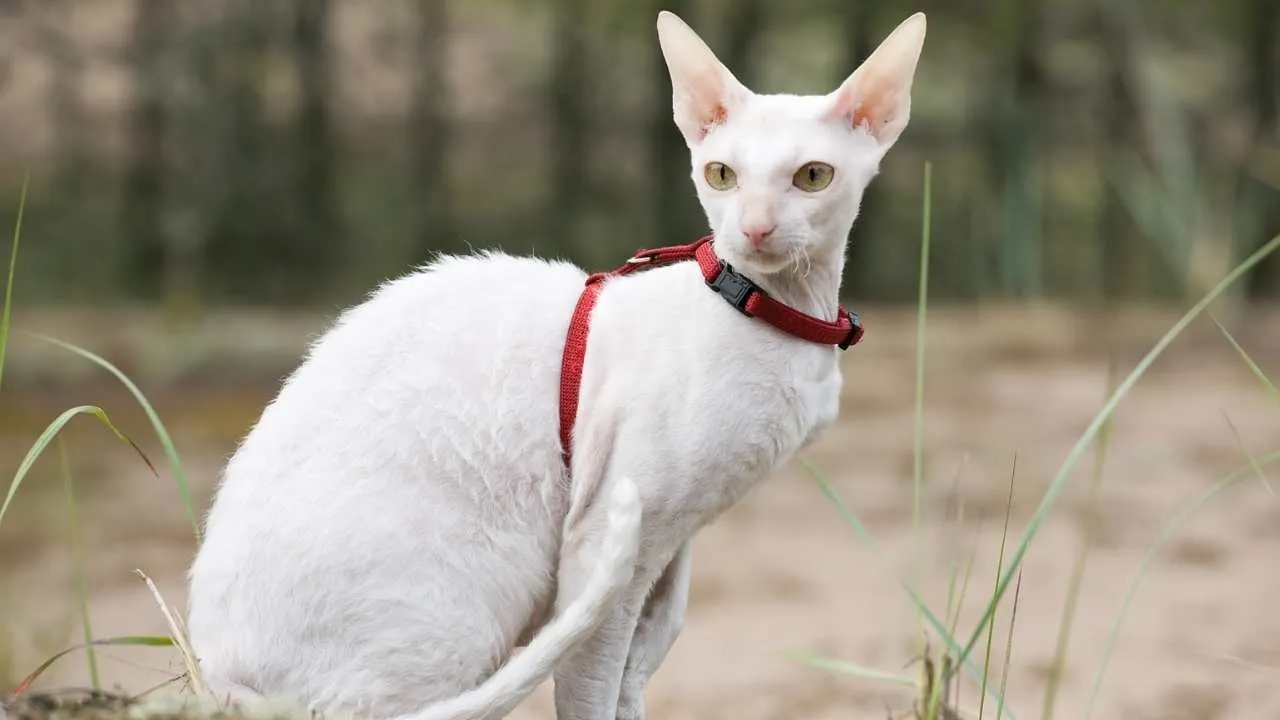
The Cornish Rex, sometimes nicknamed the “Rex cat” due to its unique coat, is instantly recognizable for its soft, wavy fur and oversized ears. Originating from a natural mutation in the 1950s, this breed has a delicate, almost sculpted appearance, with a slim body and distinctive curly whiskers that set it apart.
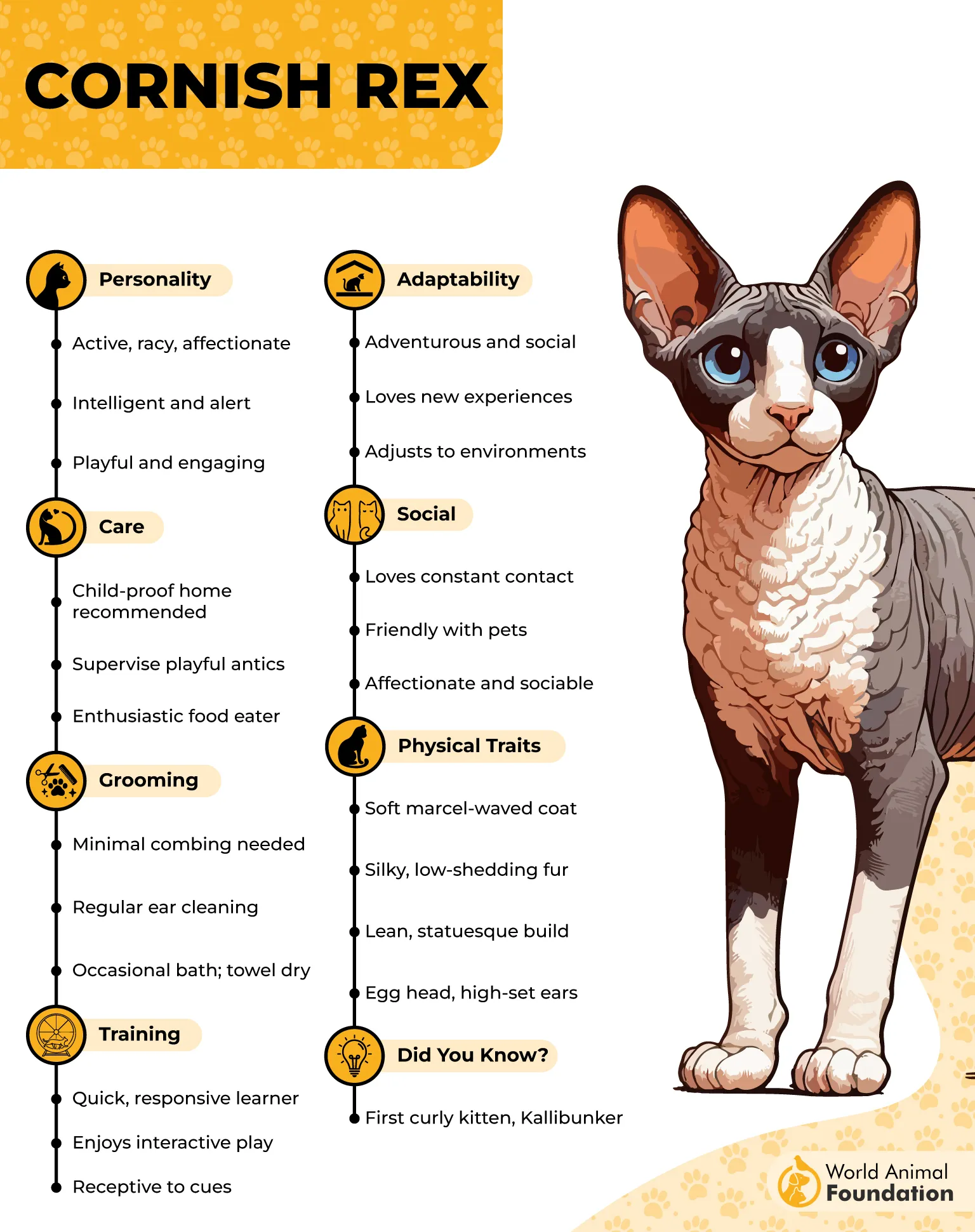
A Graceful Breed with Minimal Body Fat
The Cornish Rex is exceptionally lean, with very little body fat covering its long, slender frame. Its fine-boned structure and visible muscle definition create a lightweight, almost aerodynamic physique.
Its arched back, long limbs, and narrow waist enhance its graceful movement, allowing it to jump, climb, and twist with remarkable agility. The thin, close coat further highlights its body contours, making its lean build even more noticeable.
Highly energetic and playful, this breed stays in constant motion, which helps maintain its low body fat. Their active lifestyle, combined with a naturally fast metabolism, keeps them toned and prevents unnecessary weight gain.
Fact: The Cornish Rex’s signature curly coat is the result of a natural genetic mutation discovered in the 1950s.
5. Devon Rex
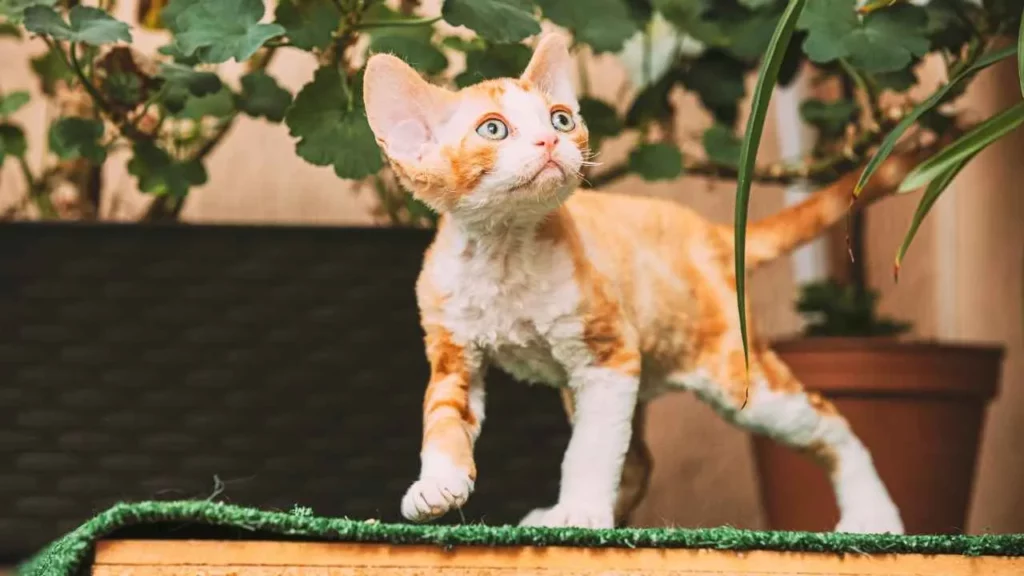
The Devon Rex, often nicknamed the “Poodle of cats,” is a distinctive breed known for its soft, curly coat, oversized ears, and pixie-like facial features. Originating in England, this breed stands out with its slim frame, high cheekbones, and playful, affectionate personality.
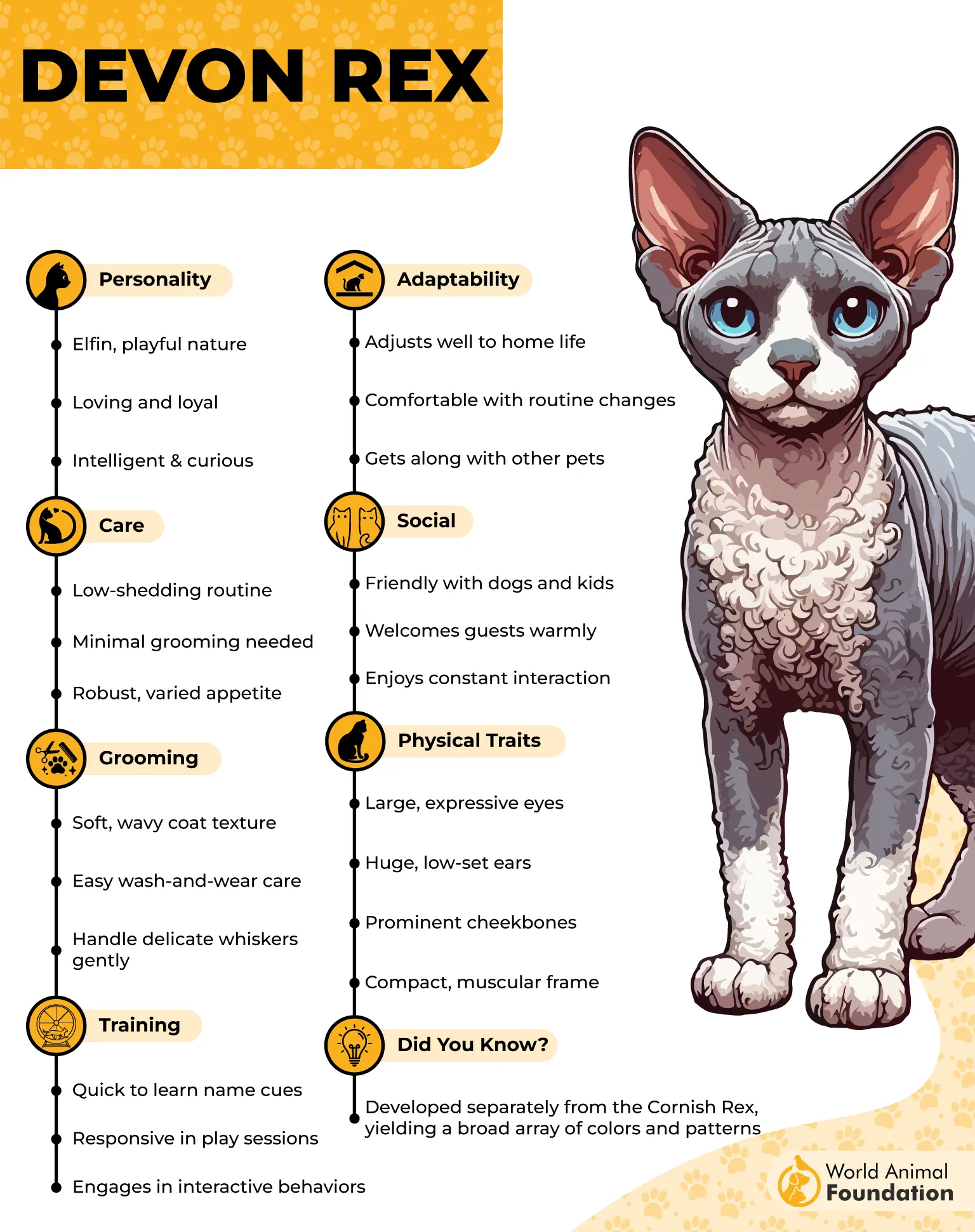
The Agile Cat Built for Speed and Flexibility
The Devon Rex has a naturally lean body with minimal fat, allowing its fine muscles to remain visible beneath its soft, wavy coat. Its slender build and light frame contribute to a flexible, almost spring-like physique.
Long legs and a narrow body structure enhance agility, making this breed an excellent jumper and climber. Their lightweight form allows quick, precise movements, giving them an effortless ability to leap to high surfaces.
Highly intelligent and energetic, Devon Rex cats stay active through constant play and exploration, which helps maintain their low body fat. Their social nature also keeps them engaged, preventing inactivity that could lead to weight gain.
Fact: All Devon Rex cats trace back to a single curly-coated cat named Kirlee, the foundation of the breed.
6. Lykoi
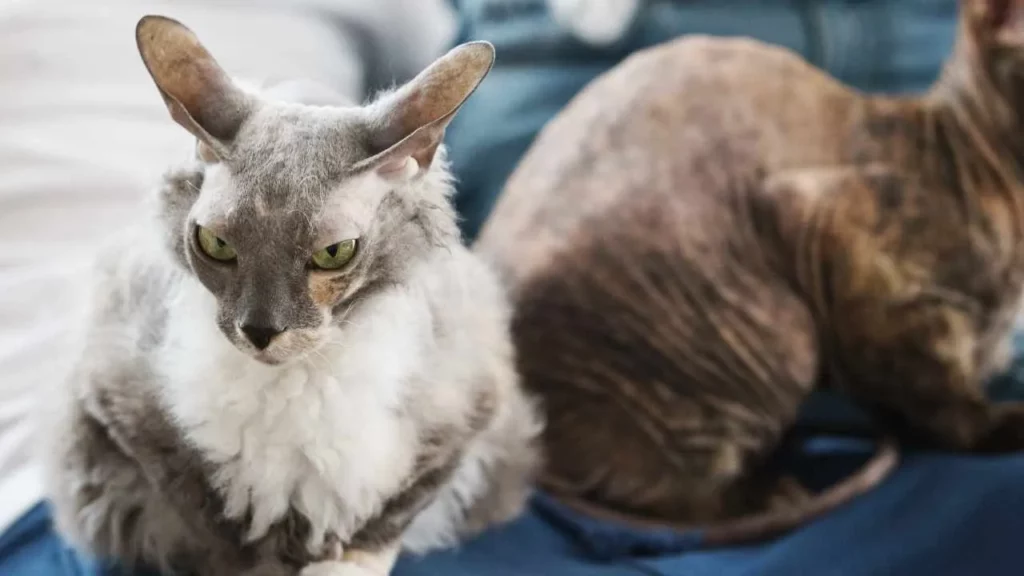
The Lykoi, often called the “Werewolf Cat,” is a rare breed known for its unusual, partially hairless coat and striking roan pattern. Originating from a natural mutation, this breed features sparse fur, a hairless facial mask, and a lean, muscular body that gives it a truly distinctive appearance.

A Refined Feline with a Naturally Trim Physique
The Lykoi’s lack of undercoat and sparse fur naturally emphasize its low body fat, making its slim frame and muscle tone clearly visible. Its body is elegant yet firm, combining lightness with surprising strength.
Its medium-length legs and flexible build support agile, quick movements, while the minimal coat allows its physique to remain visibly defined. This creates a refined, almost sculpted look that sets it apart from fuller-coated breeds.
Active and intelligent, the Lykoi maintains its lean condition through play and exploration. Their high energy levels and strong prey drive keep them constantly engaged, helping preserve their naturally trim and athletic form.
Fact: The Lykoi’s unique roan coat, made of mixed white and colored hairs, is not found in any other cat breed.
7. Peterbald

The Peterbald, sometimes referred to as the Russian hairless cat, is a rare and elegant breed developed in St. Petersburg. Known for its long, slender body, oversized ears, and unique coat variations, from completely bald to soft peach fuzz, this breed combines striking looks with an affectionate, people-oriented personality.
The Slender Companion with Efficient Body Structure
The Peterbald’s naturally low body fat is highlighted by its elongated, fine-boned frame and smooth, visible musculature. Its lean physique gives it a refined, almost sculptural appearance without excess bulk.
With long limbs and a flexible body, this breed moves with fluid grace and efficiency. The minimal or absent coat further reveals its slim contours, making its streamlined structure especially noticeable.
Highly active and social, Peterbalds stay lean through constant interaction and play. Their energetic nature and need for engagement help maintain their light, balanced build while preventing unnecessary fat accumulation.
Fact: The Peterbald was created by crossing a Donskoy with an Oriental Shorthair, resulting in a breed with multiple coat types that can even change over time.
Conclusion
The healthiest cat breeds with naturally low body fat showcase a unique blend of elegance, agility, and efficiency in movement. Breeds like the Abyssinian, Siamese, and Oriental Shorthair highlight how a lean physique supports speed, flexibility, and endurance, while others like the Cornish Rex and Devon Rex emphasize how minimal fat enhances visible muscle definition and graceful motion.
These cats are not underweight by nature—their slim build is a result of genetics, active lifestyles, and fast metabolisms. Features like long limbs, fine bone structure, and close-lying coats all contribute to their streamlined appearance. Even rare breeds like the Lykoi and Peterbald demonstrate how reduced coat density further reveals their naturally trim physiques.
Maintaining their health requires balanced nutrition, controlled fat intake, and regular activity. When properly cared for, these lean-bodied felines remain energetic, strong, and beautifully proportioned companions.
