




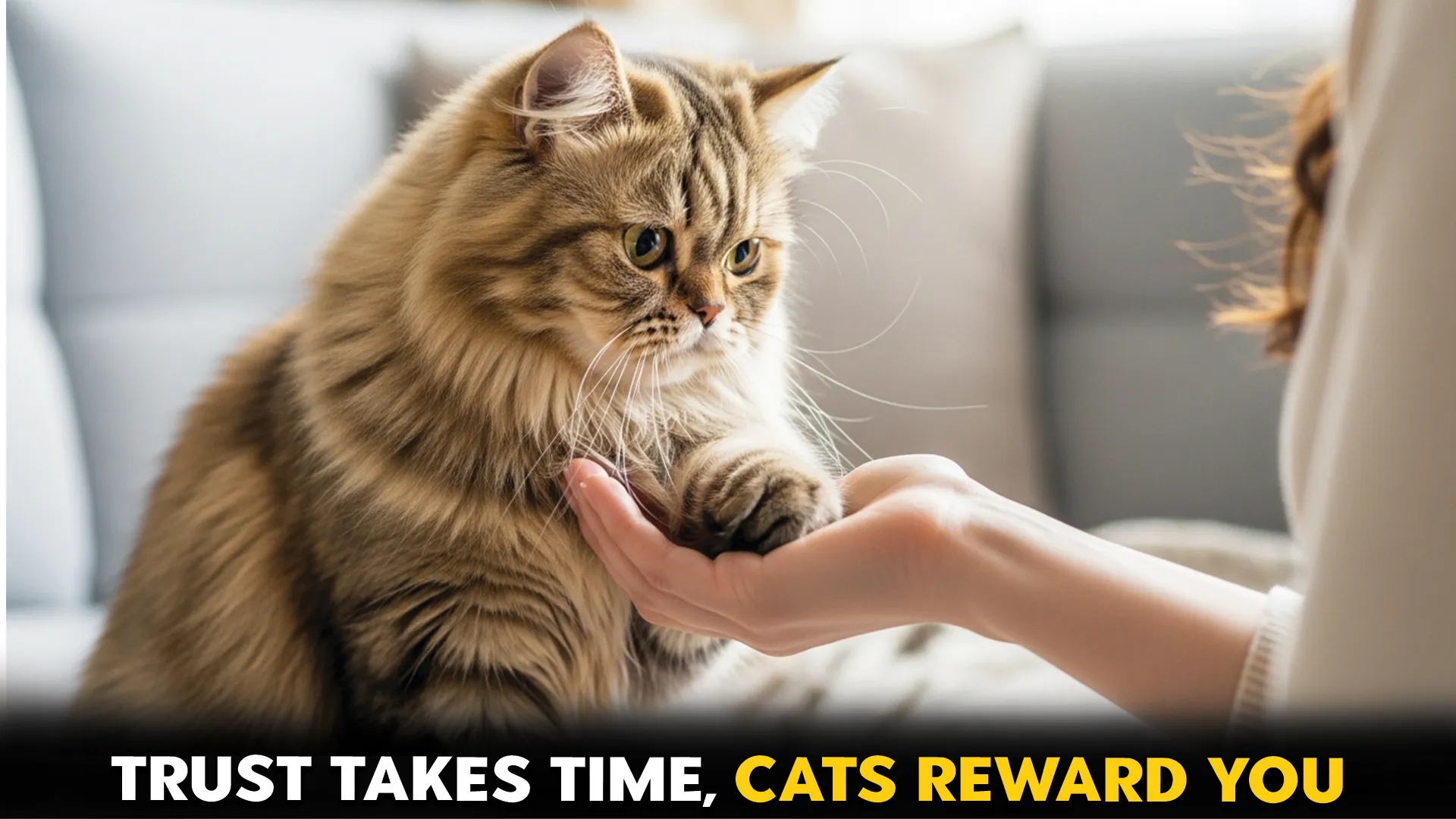
Some cats stroll into your life like instant best friends. Others prefer to circle the room, judge your furniture, and decide later.
If you are used to eager greetings and wagging tails, a slow-to-warm-up cat can feel puzzling at first. These breeds are not unfriendly. They are thoughtful, observant, and loyal once trust is earned.
Understanding their pace helps set the right expectations and builds a calmer bond for everyone involved. In this guide, we look at cat breeds that need a little extra time, what that behavior really means, and how patience pays off in purrs.
Fun Fact
Cats experience the world largely through scent, not sight. When a cautious cat rubs against furniture or sniffs your shoes before approaching you, it is quietly gathering information and deciding whether you belong in its inner circle.
Cat Breeds That Take Time to Warm Up
1. British Shorthair
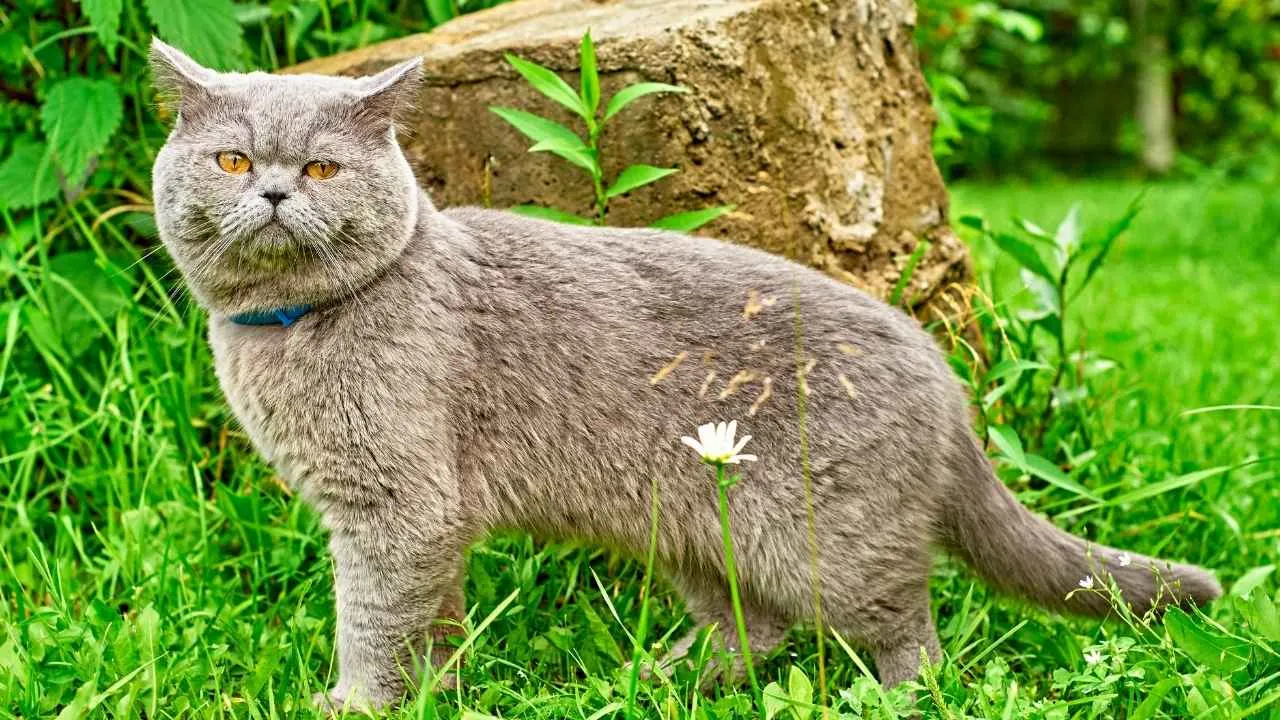
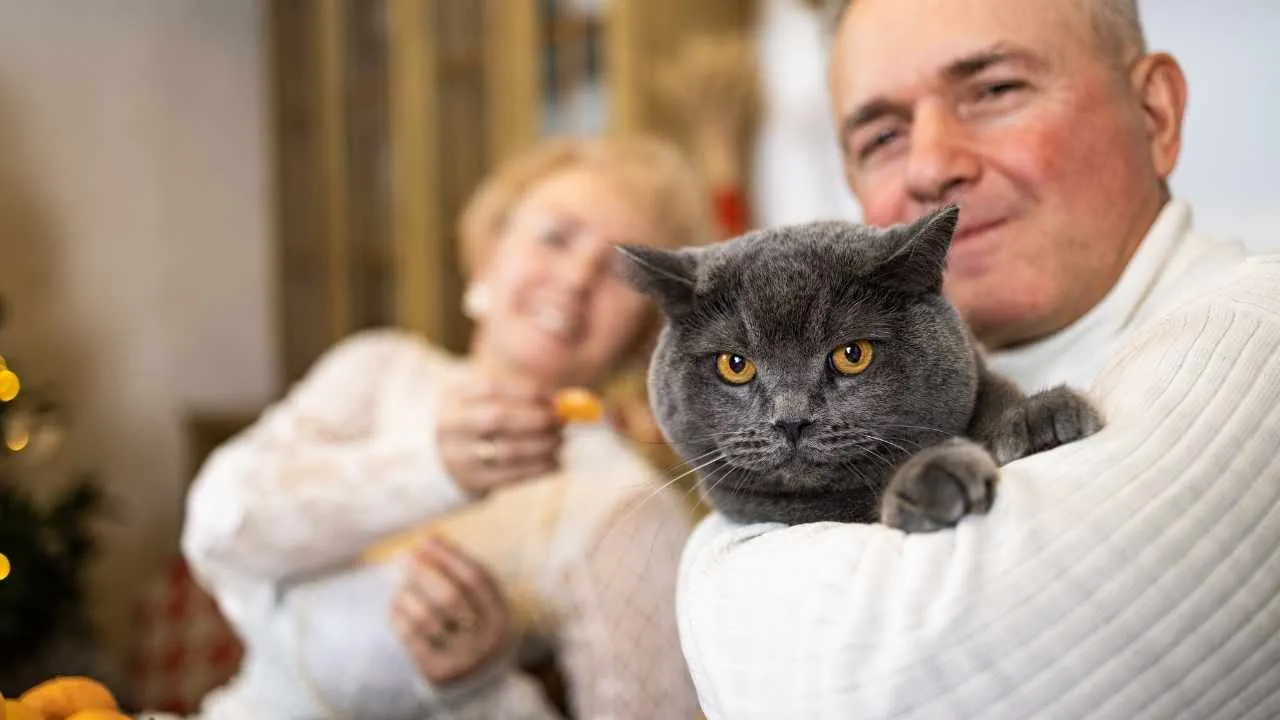
The British Shorthair is known for a calm, thoughtful personality that favors quiet companionship over constant interaction. Many enjoy sitting close or curling up on a lap, yet they usually prefer keeping all four paws on the ground instead of being picked up.
Affection comes in gentle, steady ways, paired with an independent streak that suits a wide range of households.
Inside the home, this breed keeps things relaxed and predictable. Short play sessions, toy chasing, and long lounging breaks match their low-key energy, signaling a cat that enjoys balance rather than chaos. With proper introductions, they settle comfortably alongside other pets and handle shared spaces with ease.
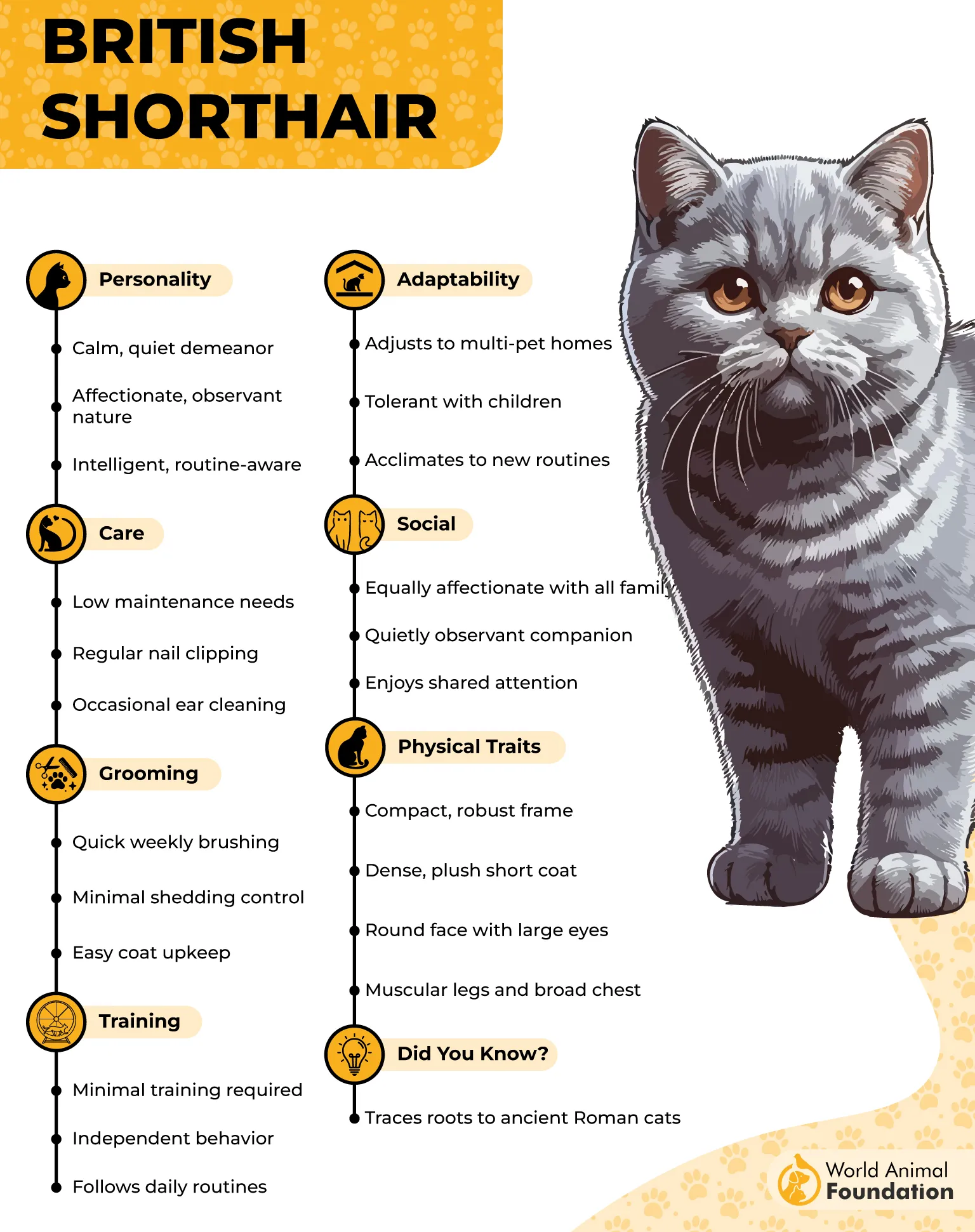
Their plush, dense coat feels as soft as it looks and appears in many colors, including the well-known British blue. According to PetMD, regular brushing helps manage the British Shorthair’s dense, short coat by reducing shedding and preventing matting, keeping the coat healthy, plush, and comfortable with minimal grooming effort.
Fun Fact
British Shorthairs mature slowly. Many keep a kitten-like attitude for several years. This gradual development shapes their steady, thoughtful behavior.
2. Russian Blue
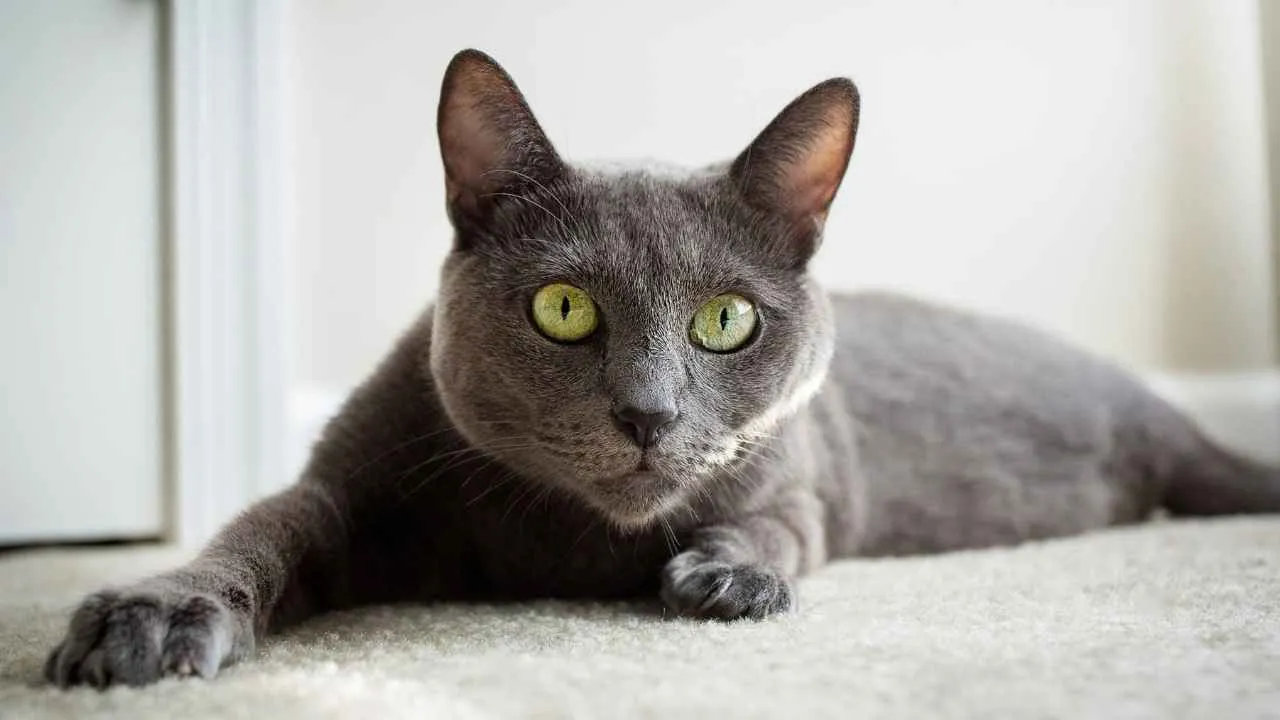
The Russian Blue often leaves a quiet first impression that lingers. With a fine boned, agile build and a plush blue coat tipped in silver, this breed carries itself with a refined, almost reserved elegance. Its striking green eyes and smooth movements tend to catch attention, even when the cat itself prefers to stay on the sidelines at first.
Around unfamiliar people, Russian Blues are known to be cautious and observant. They may retreat to a favorite perch or another room when visitors arrive, choosing to watch rather than participate. Once a sense of familiarity develops, their confidence grows, and they may quietly rejoin the space on their own terms.
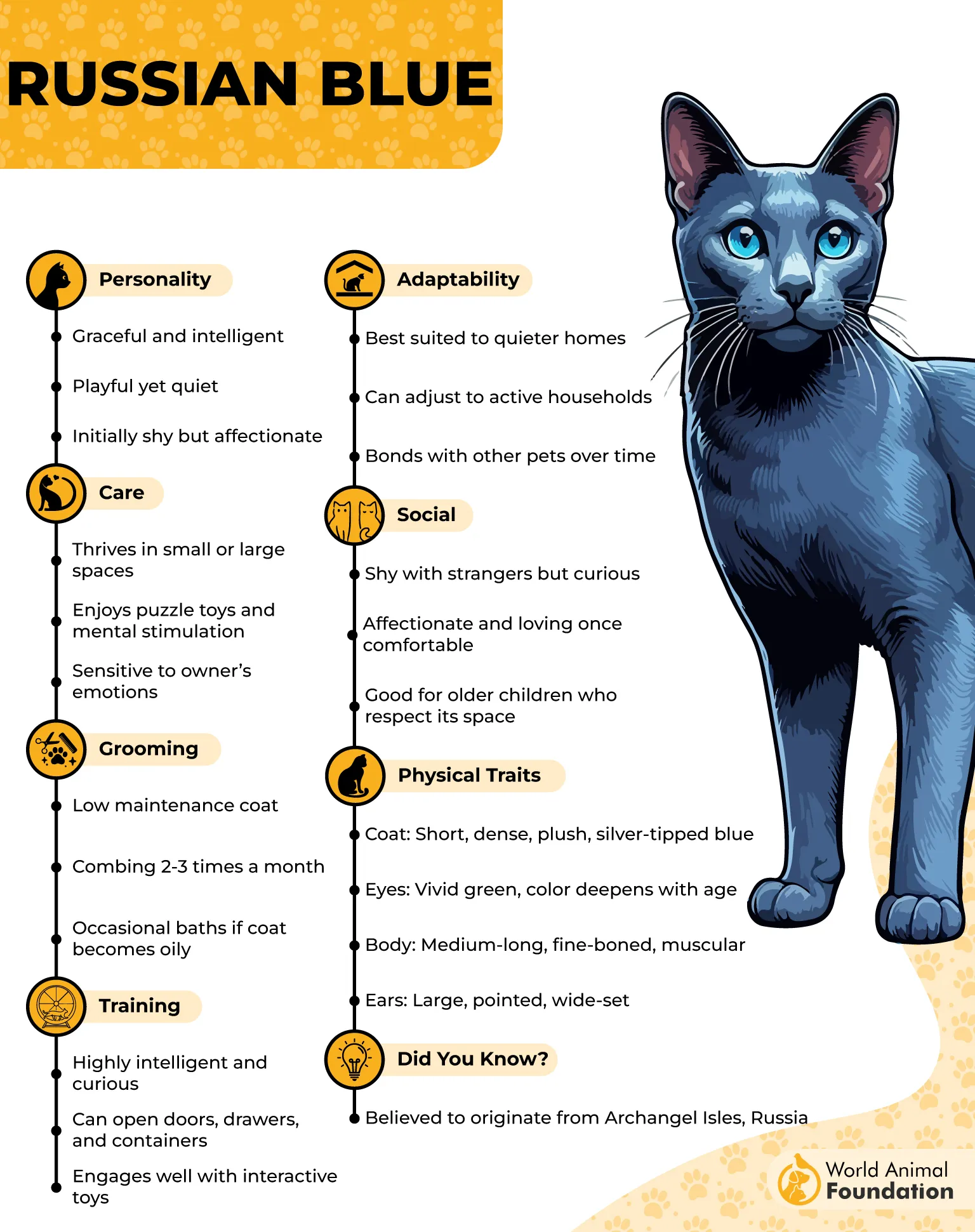
Personality-wise, the Russian Blue blends intelligence with independence. These cats form strong bonds with their chosen humans, often following them from room to room while maintaining a respectful distance.
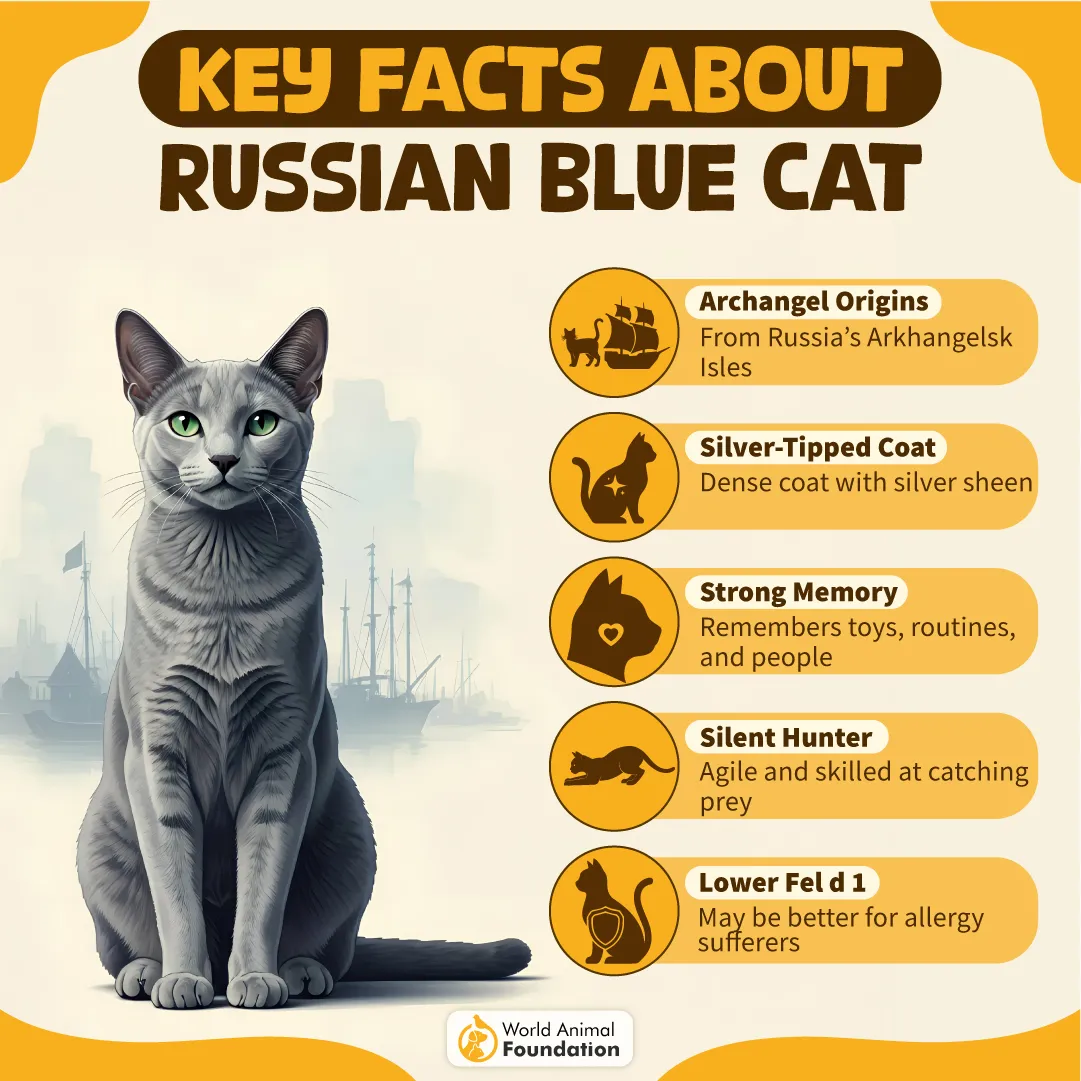
They enjoy routine, calm environments, and meaningful interaction without constant handling, making their trust feel earned and deeply rewarding.
Fun Fact
Russian Blues are known for memorizing daily routines. Many learn meal times, favorite chairs, and household patterns so well that changes to the schedule rarely go unnoticed.
3. Persian
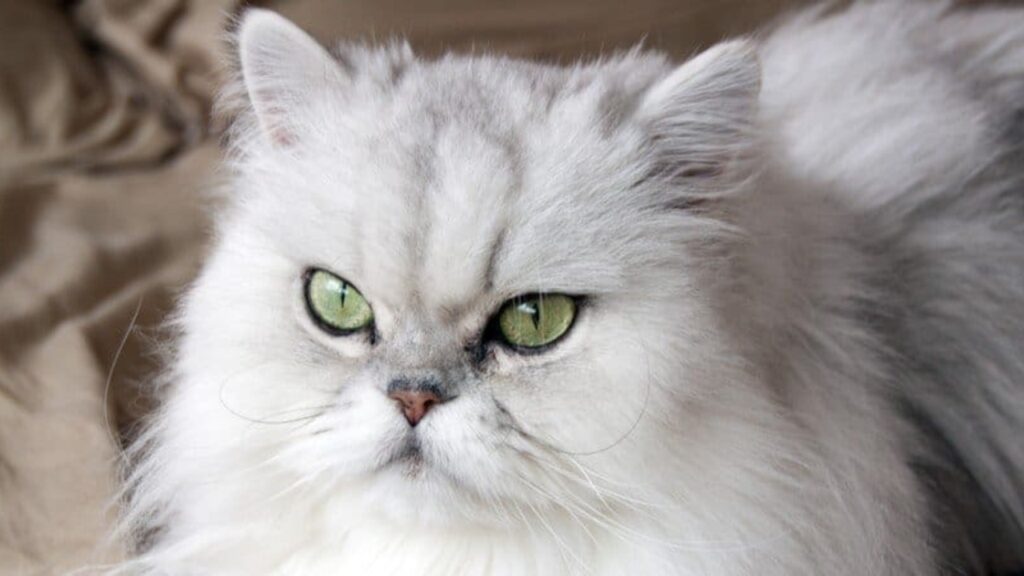
Few cat breeds carry a sense of old-world elegance quite like the Persian. With roots tracing back centuries, this breed has long been associated with quiet companionship, refined habits, and a preference for calm surroundings.
Their expressive eyes, flowing coats, and relaxed presence give the impression of a cat that values comfort, familiarity, and unhurried living above all else.
Persians tend to thrive in apartment living where noise and activity stay at a manageable level. They have a laid-back nature and are not known for high-energy antics or a need for vertical climbing, making smaller spaces feel perfectly sufficient.
Sunny windowsills, soft bedding, and predictable routines suit them far better than busy, constantly changing environments.
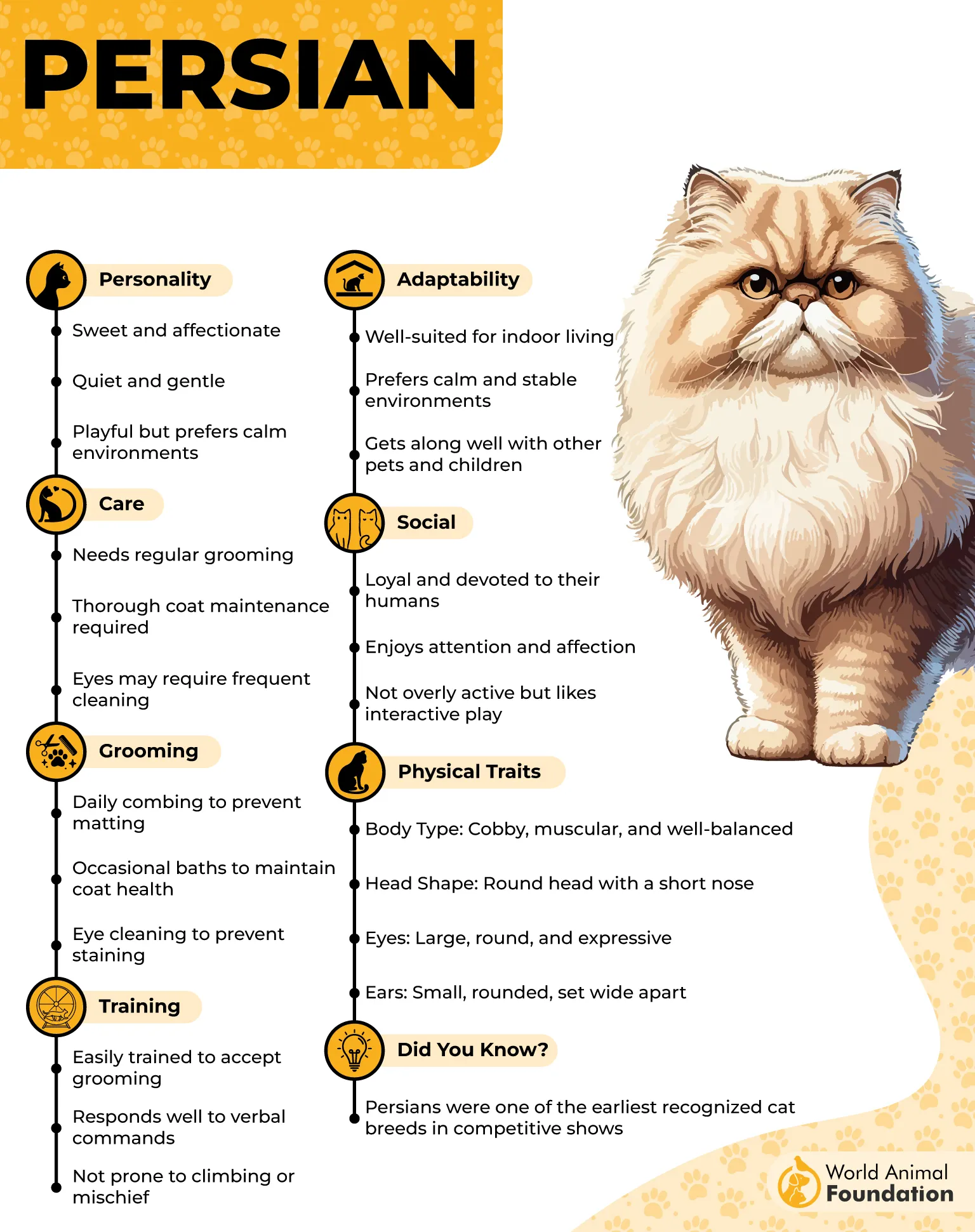
When it comes to sharing space with other animals, Persians generally prefer polite company. They can coexist peacefully with other cats and gentle dogs that respect personal space and avoid rough play. Slow, careful introductions help them feel secure, allowing their relaxed and affectionate nature to emerge over time.
Fun Fact
Persian cats were among the first breeds showcased at organized cat shows. Their appearance helped shape early standards for pedigree cats and influenced how modern cat shows are judged today.
4. Chartreux
Stories surrounding the Chartreux often begin with legend rather than looks. Long associated with France, these blue cats gained a reputation for quiet presence and subtle communication, creating an impression of thoughtfulness from the very start.
Their tendency to observe before engaging makes their trust feel intentional, forming connections that unfold at an unhurried pace.
Energy in the Chartreux comes in focused bursts rather than constant motion. They are playful and quick, showing lightning-fast reflexes when toys appear, then happily settling once interest fades. Many enjoy interactive games, following routines, and even retrieving toys, blending athletic ability with a strong appreciation for familiar rituals.
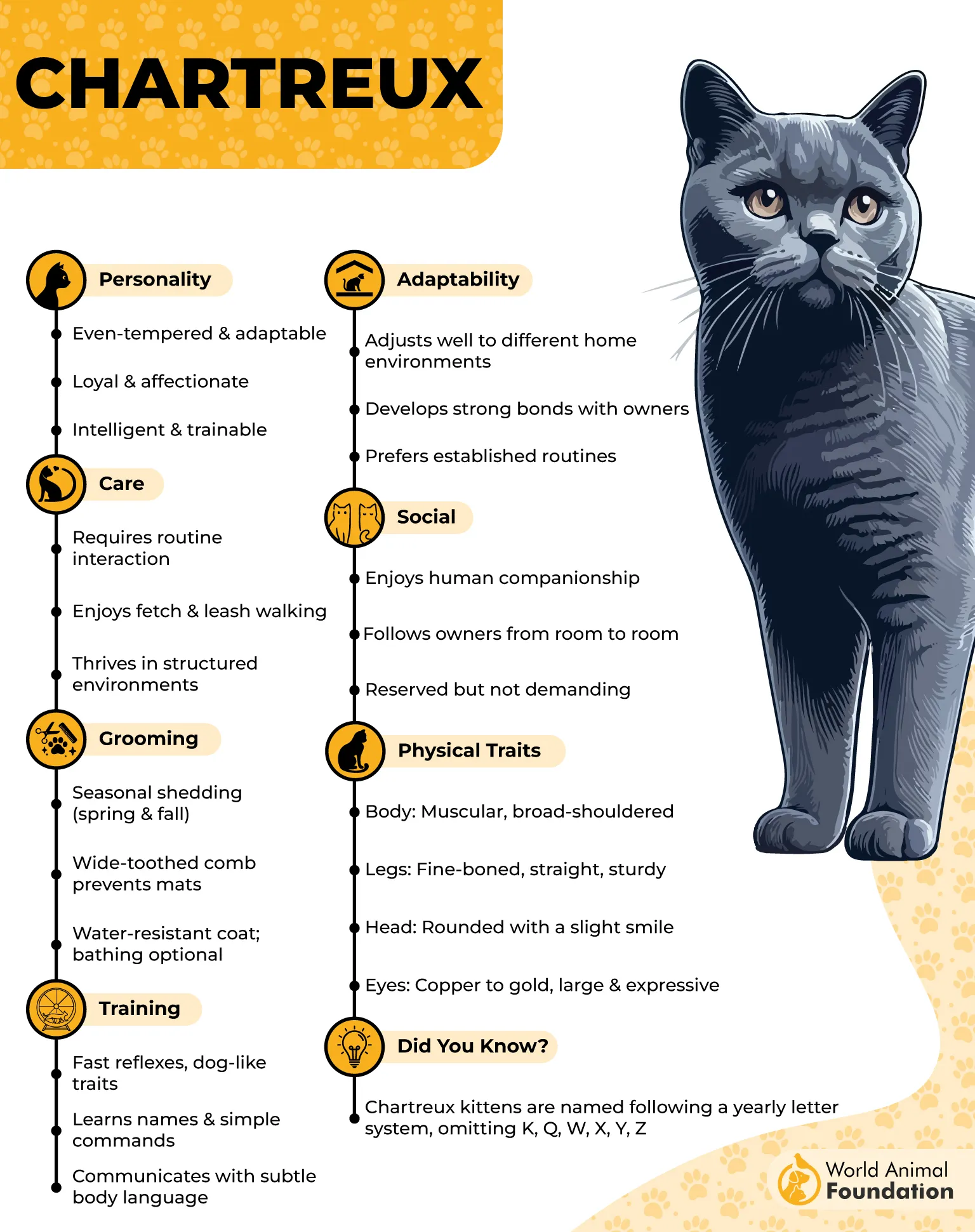
As per Purina, the Chartreux is typically a sturdy, muscular breed, though weight gain may occur with age. Some cats experience patellar luxation, which usually has minimal impact when properly monitored by a veterinarian.
Fun Fact
Chartreux breeders follow a naming tradition where kittens born in the same year share a starting letter. Only 20 letters are used, skipping several to preserve the custom.
5. Birman
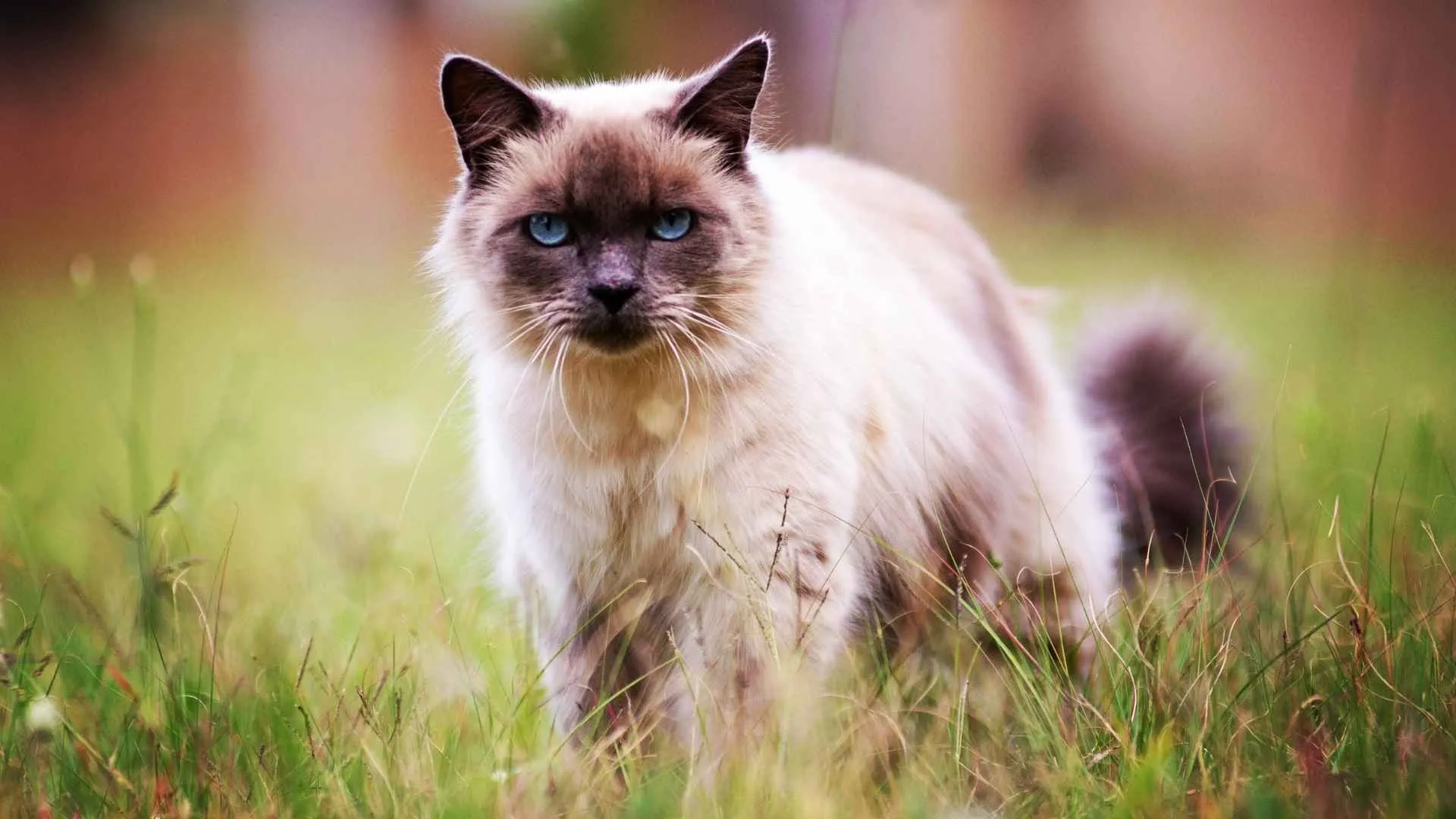
The Birman carries an air of quiet mystique that sets it apart the moment it enters a room. Often associated with legend and spiritual symbolism, this breed draws attention through presence rather than movement, with striking blue eyes and carefully balanced markings that feel almost ceremonial.
Their calm pacing and thoughtful awareness make them a cat that reveals itself gradually, rewarding patience with genuine connection.
By nature, the Birman is deeply people-oriented and emotionally attuned to its household. These cats seek companionship, preferring to stay near their humans and participate in everyday moments without demanding constant activity.
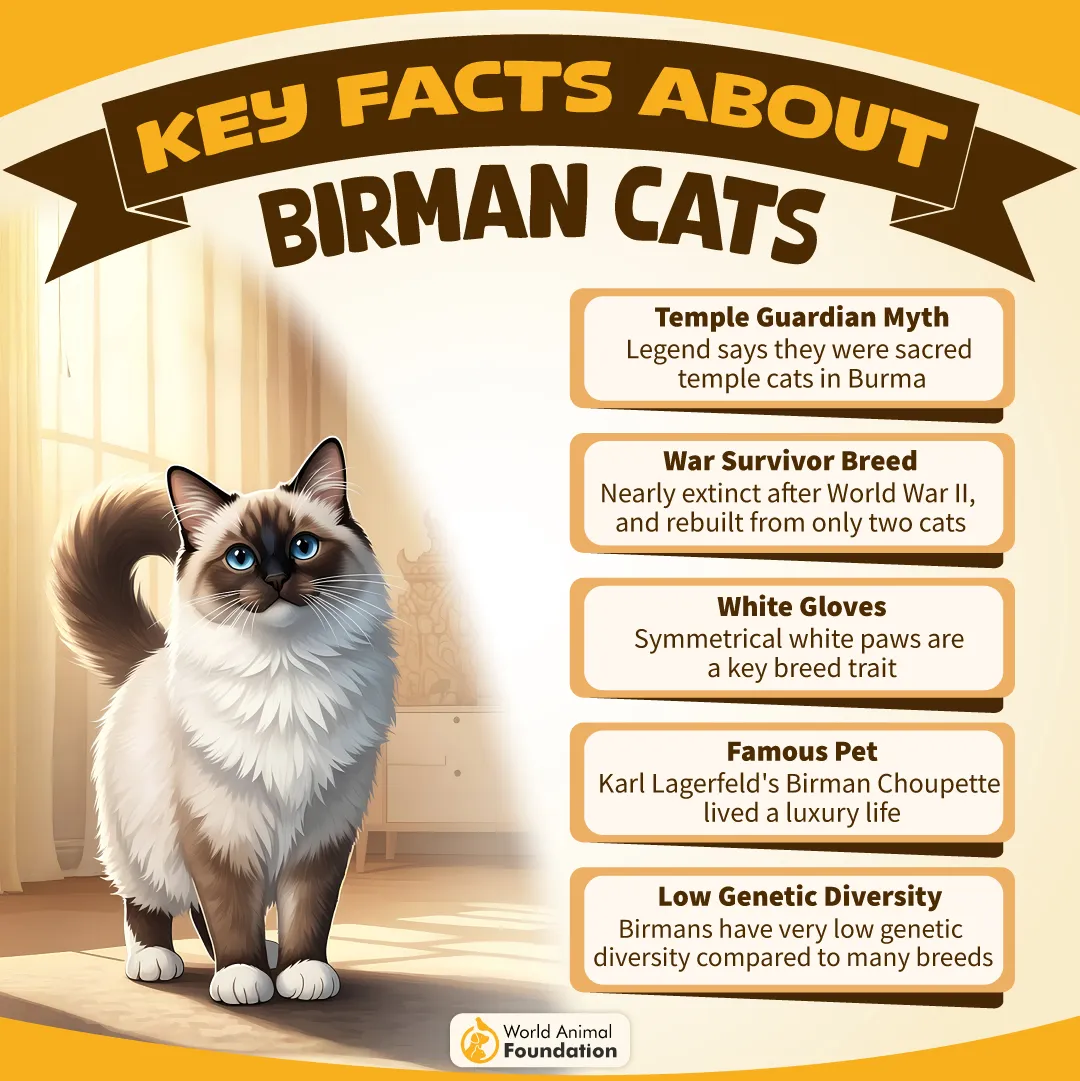
Their even-tempered, tolerant attitude allows them to blend smoothly into family life, including homes with children and other pets.
Training a Birman is often a pleasant experience thanks to its intelligence and eagerness to engage. Many respond well to gentle cues and positive reinforcement, enjoying the mental stimulation that comes with learning. Their cooperative mindset and steady focus make training sessions feel more like shared time than structured lessons.

Fun Fact
The Birman was officially accepted for CFA registration in 1967. Its rise in popularity helped introduce color-pointed cats with white gloves to a wider global audience.
6. Nebelung

The Nebelung feels like a cat discovered rather than introduced. With its long, silky blue-gray coat and softly shimmering silver tips, this breed often blends into the background until movement catches the eye. Quiet by nature and selective with attention, the Nebelung prefers to watch its surroundings before deciding when to engage.
Living with other pets is usually manageable for a Nebelung when the household atmosphere stays calm. They can share space with cats and even dogs that respect boundaries and avoid rough play. Gentle introductions and steady routines help them grow comfortable and maintain harmony over time.
WebMD notes that Nebelung cats are generally healthy, with common concerns mirroring those of other breeds, including vomiting, asthma, kidney issues, and digestive problems, making routine veterinary checkups essential for long-term well-being throughout their lives and adulthood.
Fun Fact
The Nebelung’s name comes from the German word “Nebel,” meaning mist. It reflects the breed’s dreamy appearance and the soft, fog-like sheen of its coat.
7. Norwegian Forest Cat
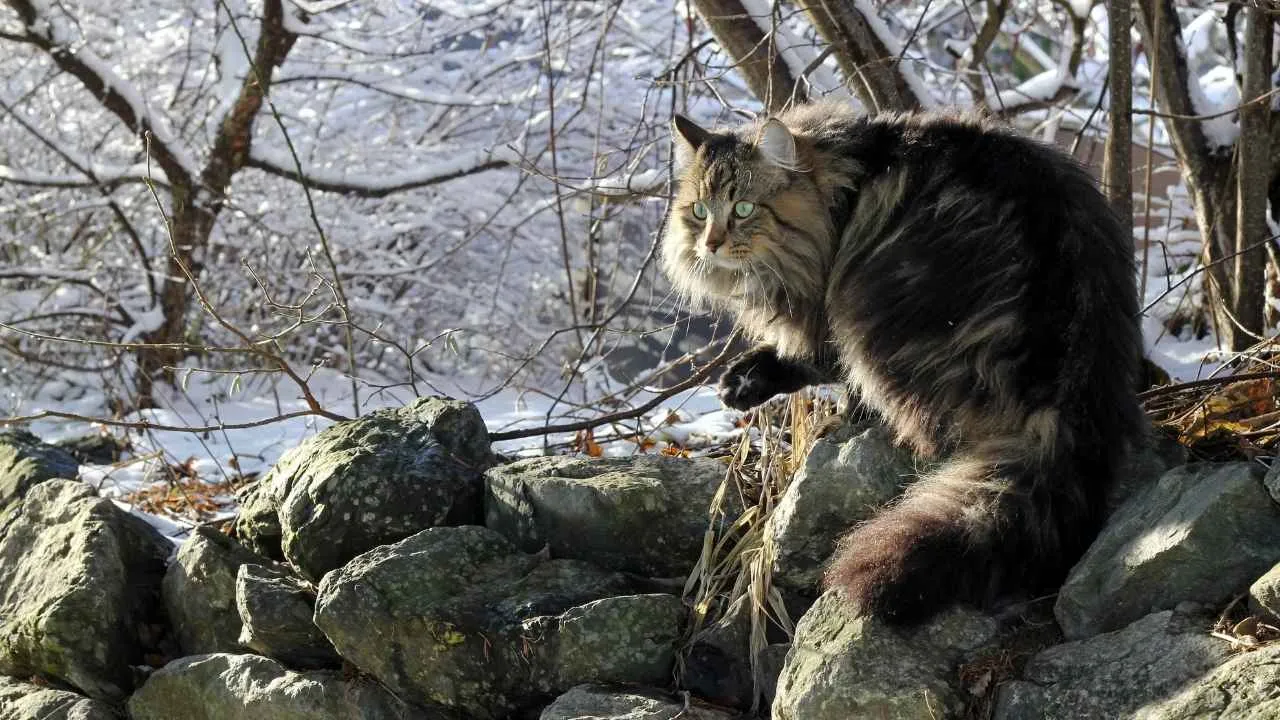
Built for rugged landscapes and long winters, the Norwegian Forest Cat is a gentle giant and a pedigree breed of a domestic cat.
Its history is steeped in folklore and function, from Viking ships to forest legends, shaping a thoughtful, observant approach to new situations. They tend to assess their surroundings carefully, easing into relationships once they feel secure.
Exercise is an important part of life for this powerful climber. Strong hind legs and natural agility make jumping, pouncing, and scaling tall spaces especially satisfying activities. Play that mimics hunting, such as feather wands or mouse-style toys, helps channel their instincts while keeping them physically engaged.
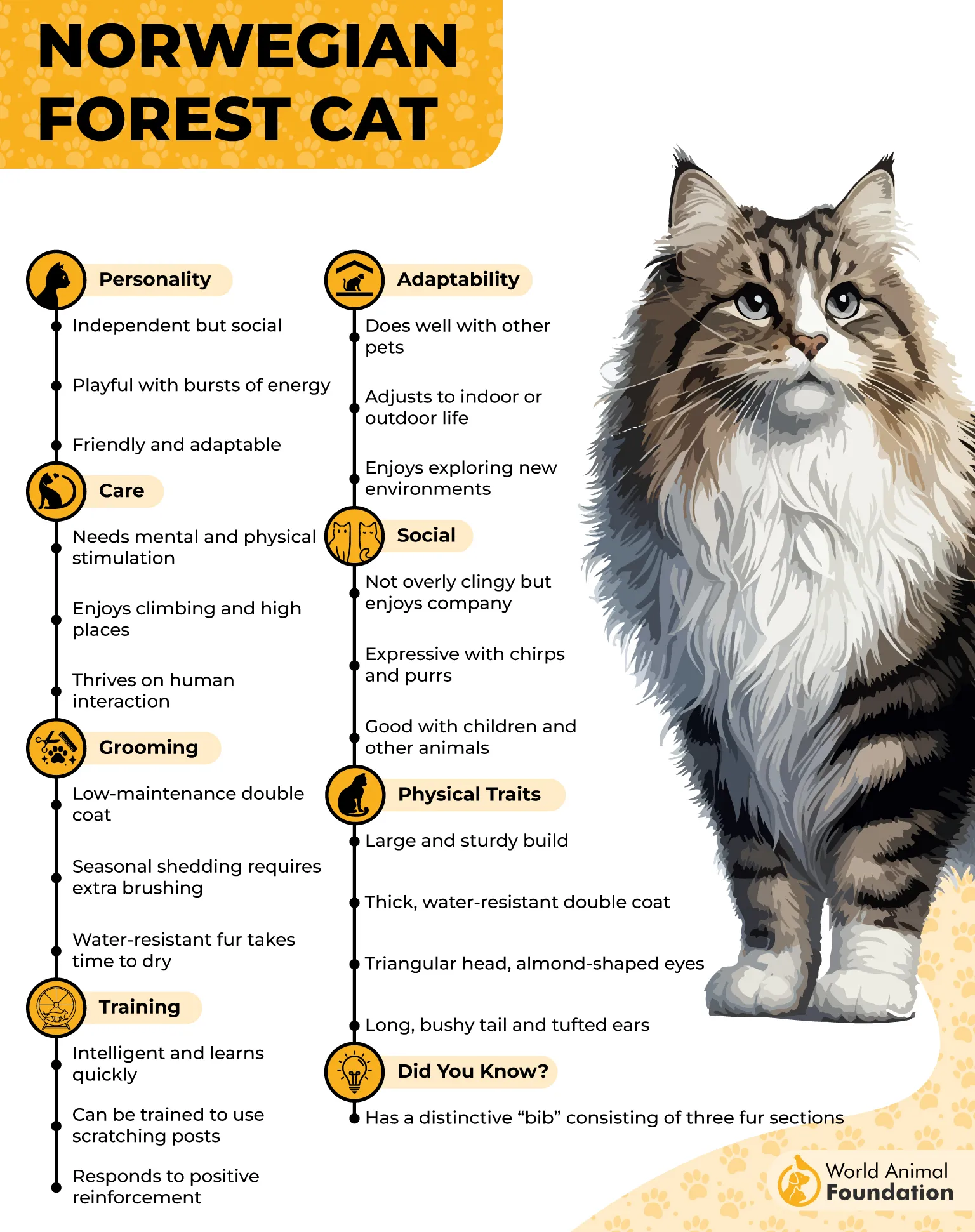
Enrichment matters just as much as movement for this large cat. Tall cat trees, sturdy shelves, and interactive toys give them outlets for curiosity and problem-solving. They appreciate attention and family time, yet also value independence, choosing when to join in and when to retreat to a favorite perch.
Fun Fact
In Norse mythology, the goddess Freyja rode a chariot pulled by massive cats believed to resemble Norwegian Forest Cats. Their strength and climbing skills helped inspire these ancient legends.
Conclusion
Not every cat is an instant companion, and that is part of the charm. Breeds that take time to warm up often offer something deeper than quick affection. With patience, consistency, and respect for boundaries, these cats build trust in ways that feel meaningful and lasting.
Some of the most popular cat breeds that take time to warm up were mentioned above. Choosing the right breed comes down to matching personalities and lifestyles, not the speed of bonding.
If you value calm companionship, quiet moments, and relationships that grow naturally, one of these thoughtful felines may be the perfect fit for your home.
If you want to further explore such wonderful cats, some other cat breeds you can also look up include Exotic Shorthair, Scottish Fold, Maine Coon, American Shorthair, Selkirk Rex, Ragdoll, and Siamese.
