




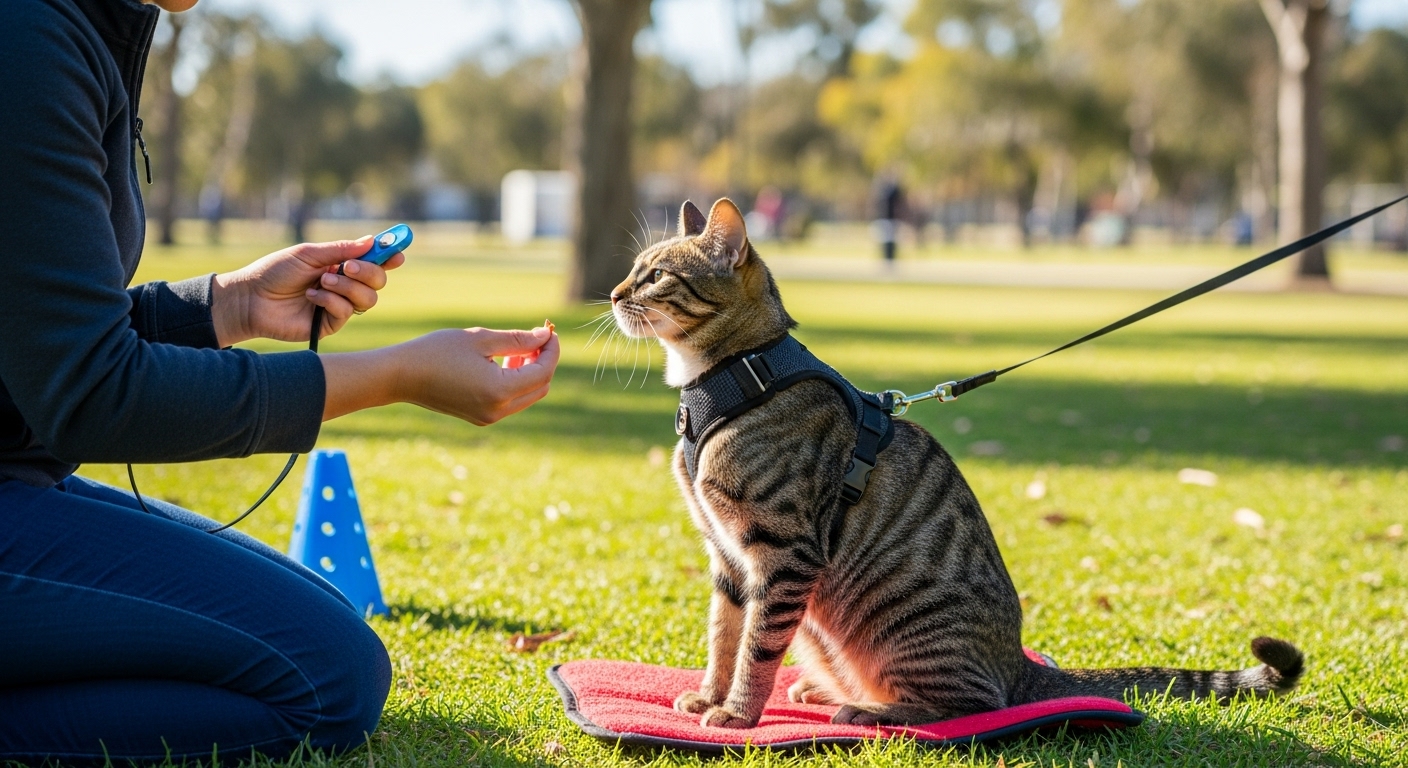
Some cats are naturally easier to live with and seem perfectly content doing their own thing with very little guidance. If the idea of complicated routines, endless corrections, or constant supervision sounds exhausting, you are not alone. Certain cat breeds naturally lean toward independence, adaptability, and easygoing habits that fit smoothly into busy households.
These cats tend to settle in quickly and handle daily life with minimal fuss, offering companionship without constant instruction or extra effort, so let’s go ahead and meet these wonderful breeds that make living with a cat feel easy and rewarding.
Fun Fact
Many cats instinctively use a litter box without training. This behavior comes from their natural desire to bury waste, which helps hide their presence from predators.
Cat Breeds That Require Minimal Training
1. British Shorthair
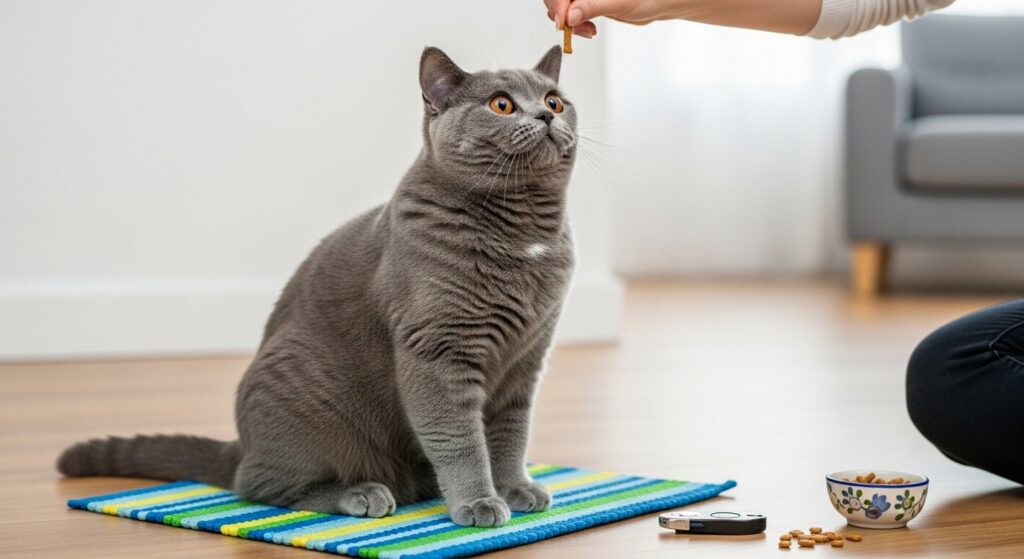
Living with a British Shorthair often feels calm and pleasantly predictable. These cats enjoy being part of the household without needing to be the center of attention, offering affection in quiet, reassuring ways. They are content to share space, often nearby but never intrusive.
PetMD notes that the British Shorthair enjoys pleasing their pet parents, making reward-based training effective. Early socialization, careful introductions, and a stimulating home environment help reduce unwanted behaviors while supporting this breed’s calm, adaptable temperament.
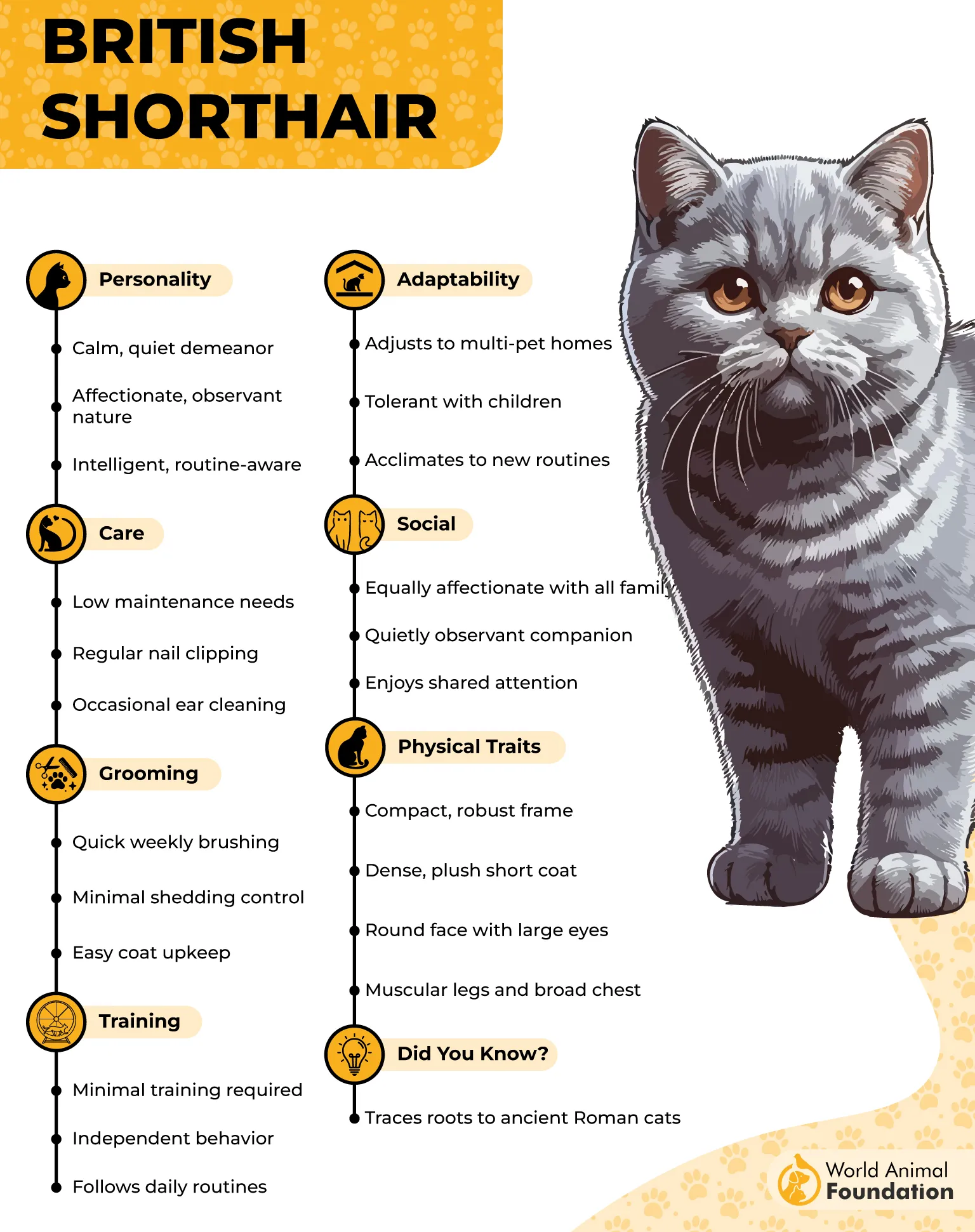
Day-to-day care stays manageable thanks to their short coat and balanced energy level. Minimal grooming helps keep shedding under control, while brief play sessions satisfy their curiosity. A stable routine and familiar environment support a sense of security and confidence.
Fun Fact
The British Shorthair is considered one of the oldest cat breeds in Great Britain. Early examples helped shape what people recognize today as the classic domestic cat.
2. Ragdoll
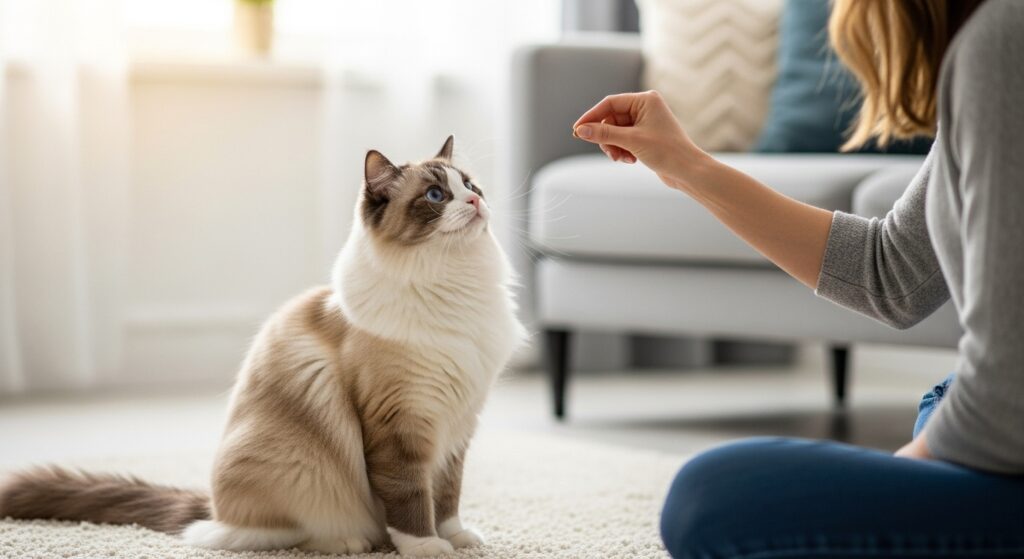
Ragdolls have plush coats and striking blue eyes that give them a soft yet commanding presence. Their sturdy build is matched by a famously gentle personality, making them affectionate companions who enjoy close, relaxed time with their favorite people.
Ragdoll cats have minimal exercise needs, enjoying gentle play and plenty of lounging. They may learn to play fetch and simple cat tricks, but they usually stay grounded and prefer calm activities over adventurous jumping.
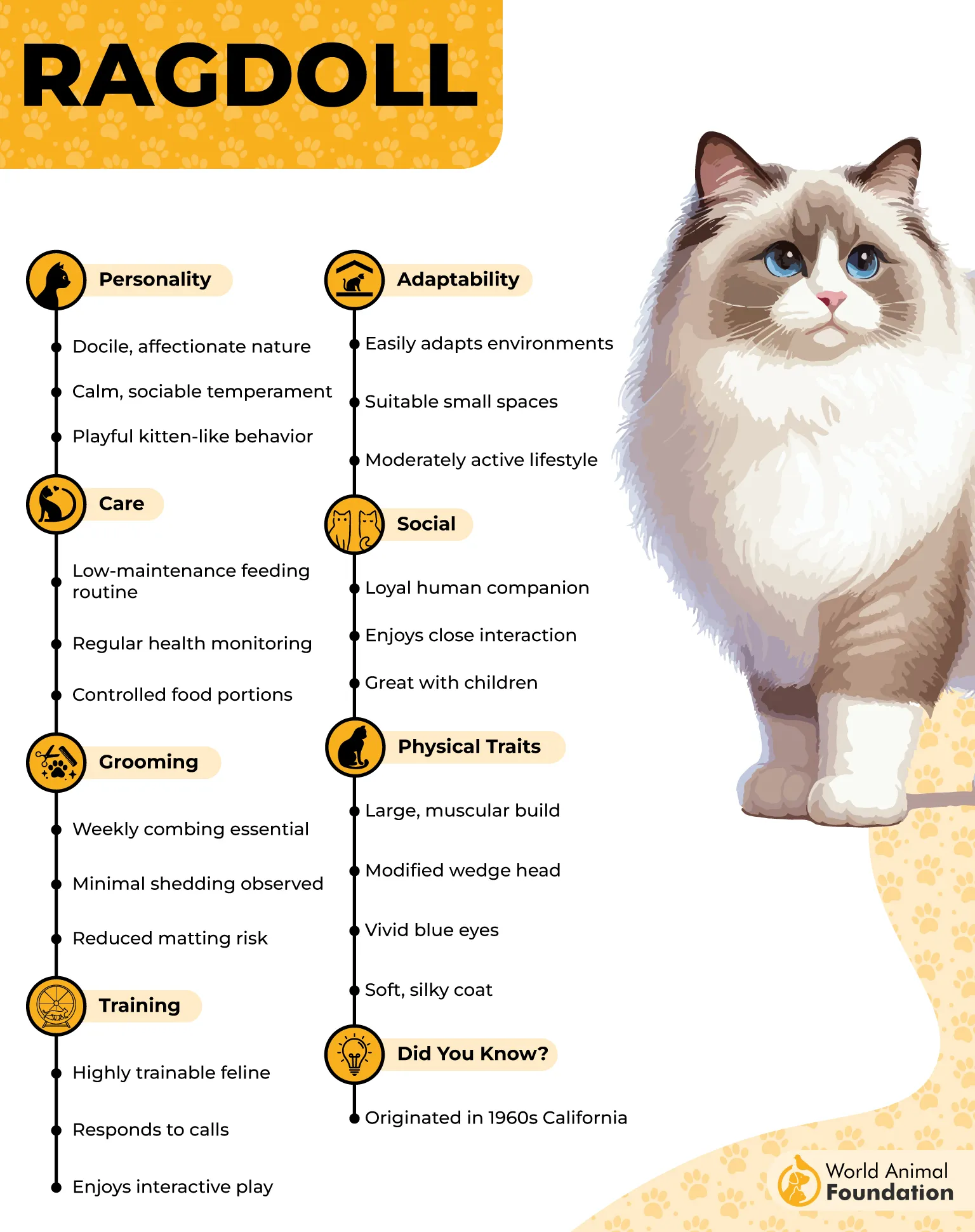
Emotional well-being plays a big role in how this breed thrives. They are most comfortable in homes where someone is around regularly, as long periods alone can lead to stress. Consistency, reassurance, and shared time help them feel at ease.
Fun Fact
Ragdolls are named for their tendency to relax fully when held. This response helped set them apart early in their development as a distinct breed.
3. Persian
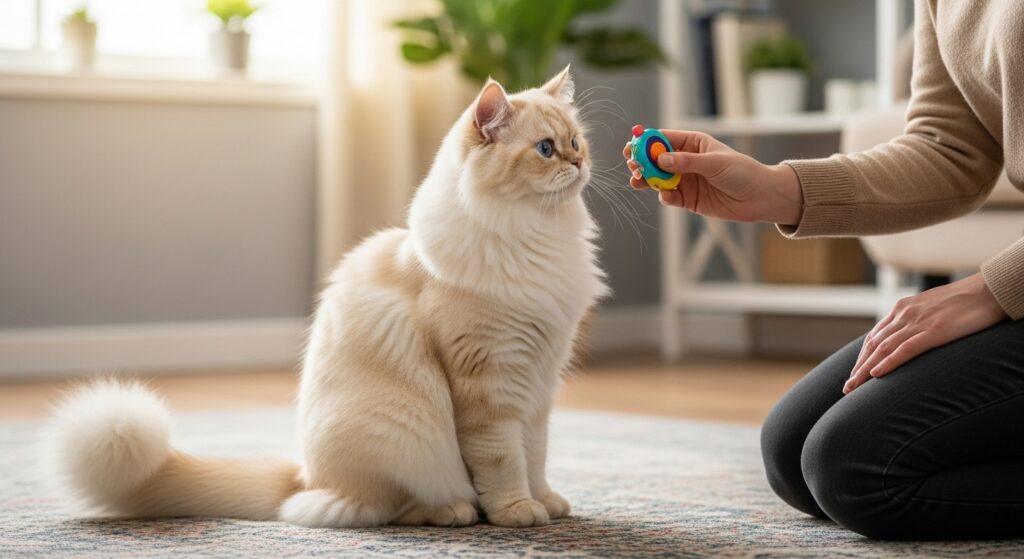
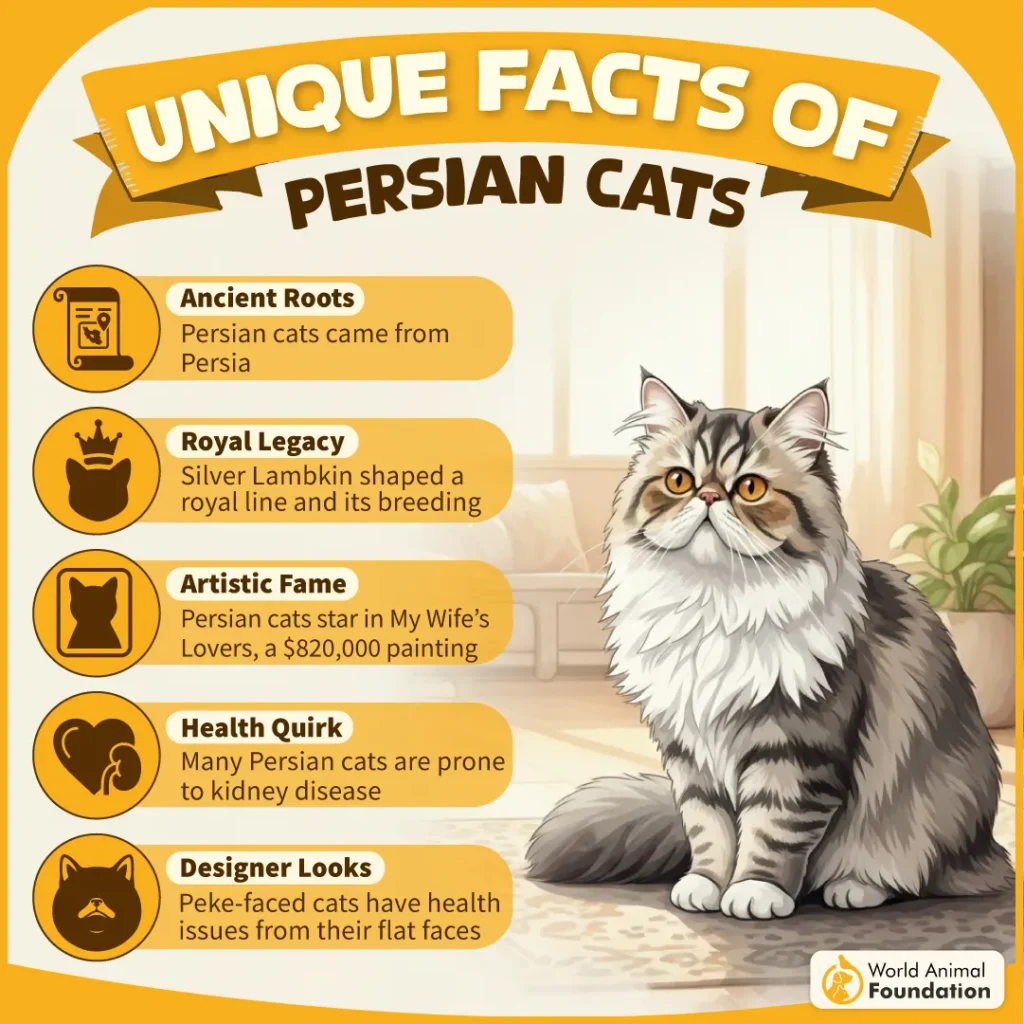
Persians bring a quiet elegance into the home, favoring gentle routines and peaceful settings. They are affectionate in subtle ways, often showing closeness by sitting nearby, and their calm, receptive nature makes them relatively easy to train.
Start litter box training by picking a quiet, easy-to-reach spot and keeping the box clean each day. Gently lead your cat there after meals or naps, and try not to move it around so the routine stays familiar and relaxed.
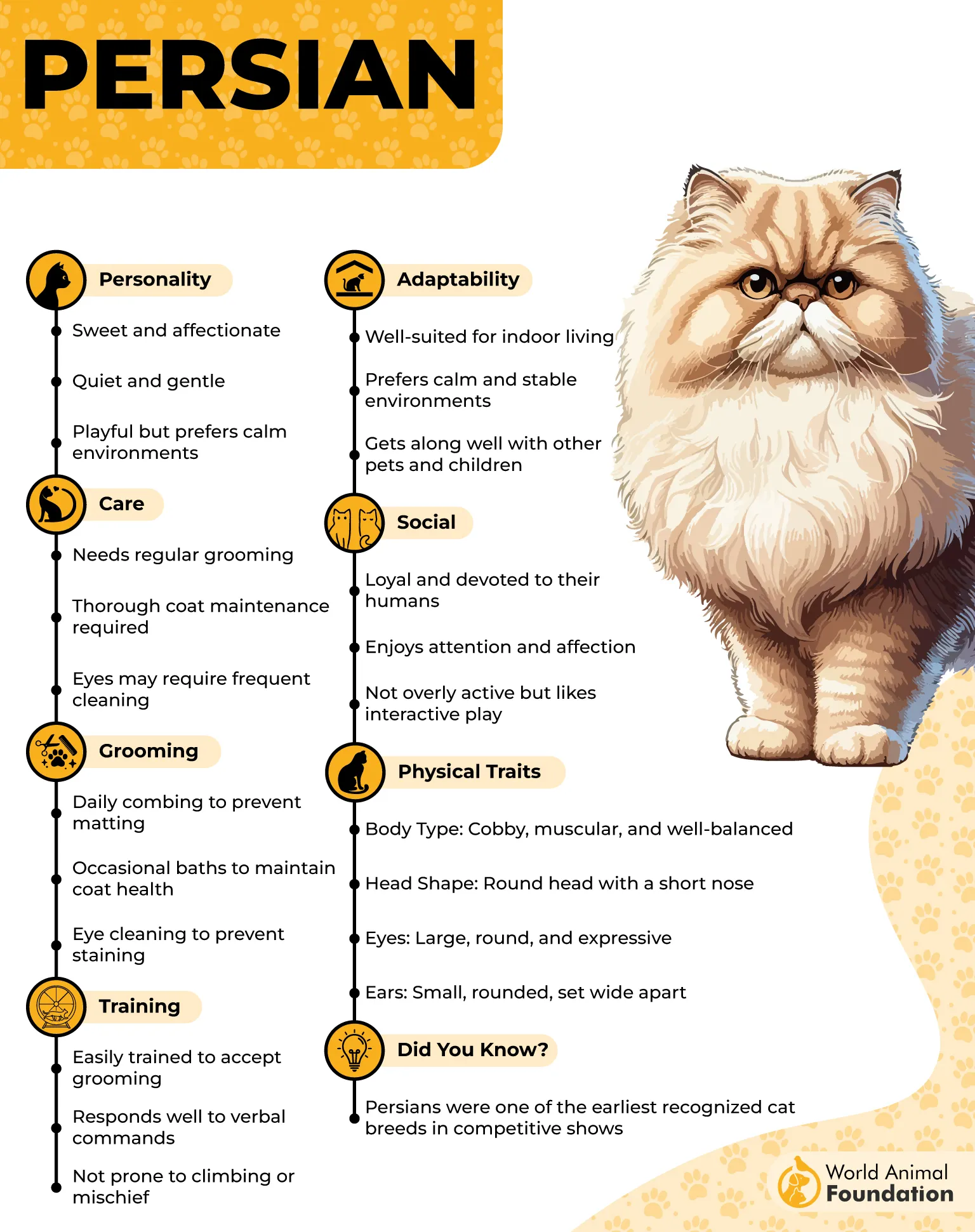
Most Persians prefer lounging, sunbathing, and observing their surroundings over energetic play. They respond best to calm voices and steady handling. Homes with a relaxed rhythm allow their reserved yet warm personality to feel most comfortable.
Fun Fact
Persian cats were once favored companions of royalty and travelers. Their distinctive appearance helped them gain admiration across different cultures and regions.
4. Scottish Fold
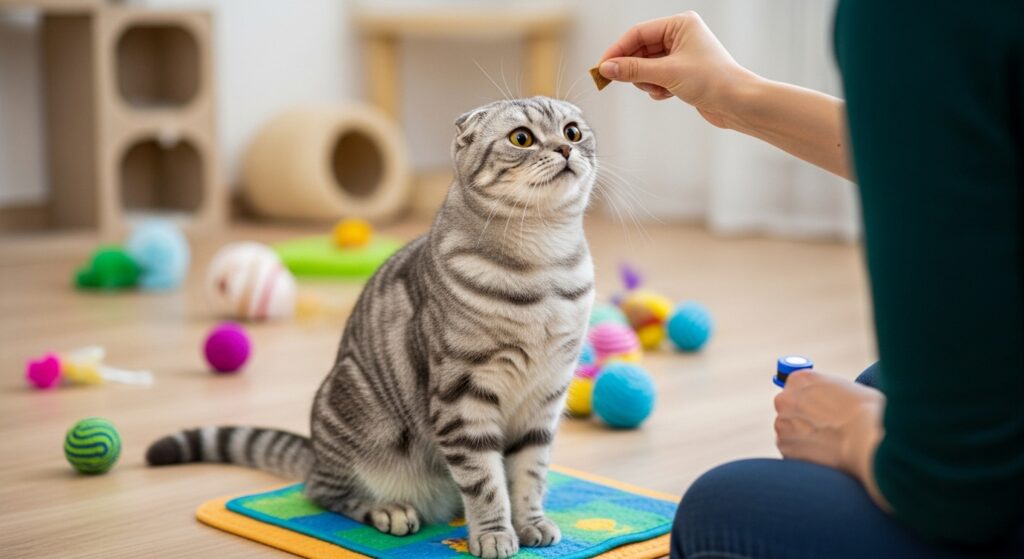
With their round faces, wide eyes, and signature folded ears, Scottish Folds have a look that instantly draws people in. Their expressions often appear curious and sweet, matching a temperament that feels gentle and inviting. Many settle easily into home life, enjoying closeness without constantly demanding attention.
According to Purina, the Scottish Fold is intelligent and thrives on activities that keep the mind engaged. This breed enjoys close human companionship, adapts well to other pets, and is well known for its endearing, unusual sitting positions.

Movement for these cats is usually calm and measured rather than high-energy. They enjoy interactive toys, brief play sessions on a cat tree, and exploring familiar spaces at their own pace. Gentle activity supports comfort while helping them stay active without strain.
Fun Fact
Scottish Folds get their distinctive ears from a natural genetic mutation. This feature is what makes the breed instantly recognizable around the world.
5. Russian Blue
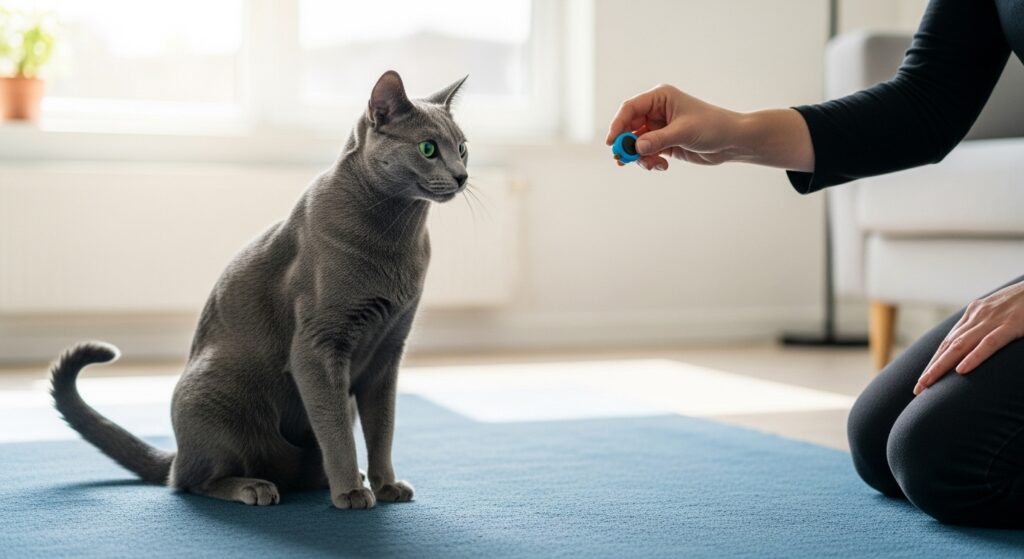
The Russian Blue stands out with a look that feels almost polished, from its shimmering blue-gray coat to its vivid green eyes. There is an elegance to the way this breed moves and observes its surroundings, often taking a moment to assess before engaging.
According to WebMD, cats may avoid dirty litter boxes, so remove waste daily and clean weekly. Clumping litter lasts longer, but avoid strongly scented cleaners, especially lemon scents, since cats are highly sensitive to strong smells.
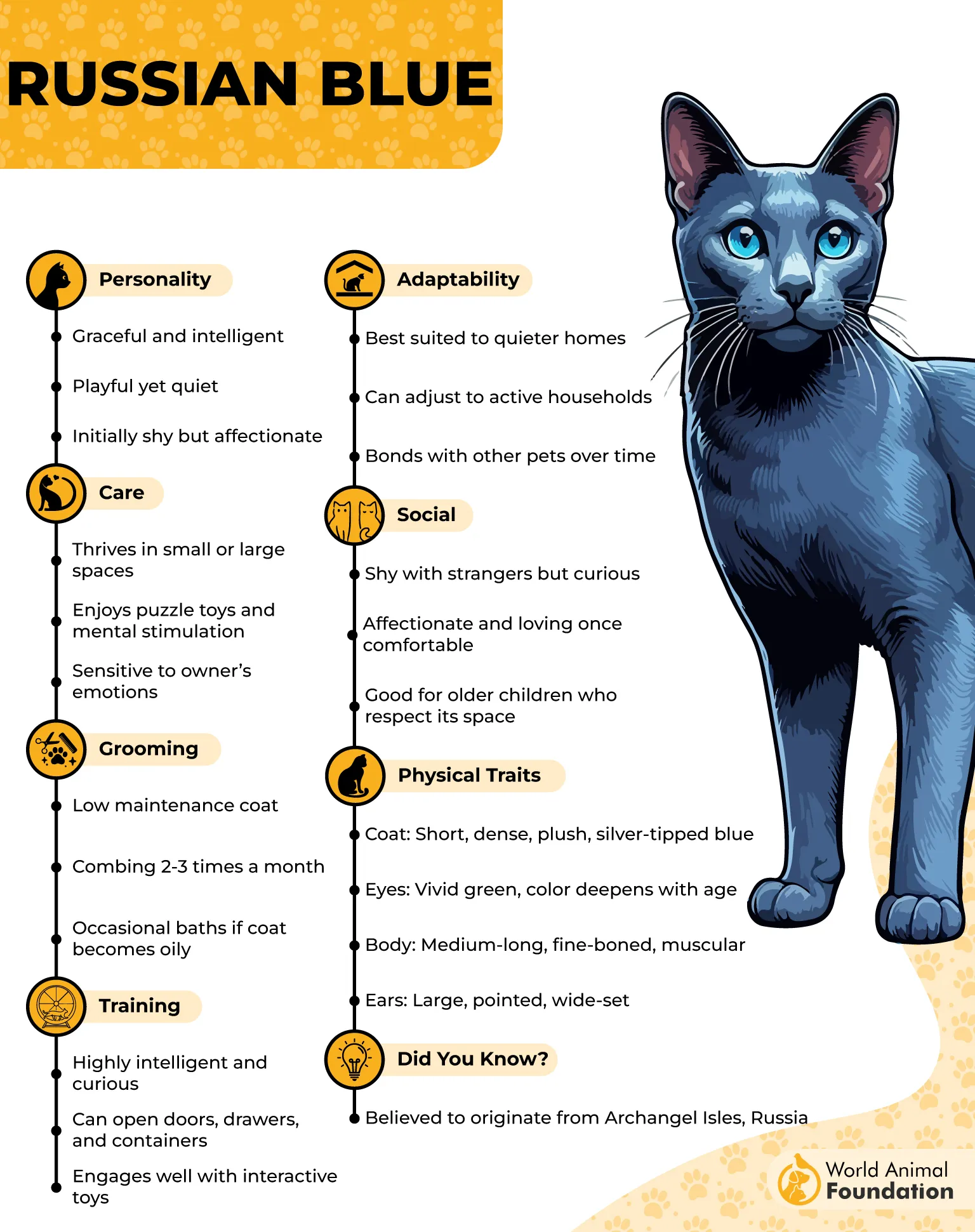
Their strong prey drive shows up through curiosity and focus, especially during play. This instinct works well with training, as they enjoy learning cues and figuring out patterns when rewards are involved. Calm, consistent guidance allows them to channel that alertness into positive habits while maintaining their independent streak.
Fun Fact
Russian Blues are known for figuring out how to open doors and containers. Their problem-solving skills often surprise owners who underestimate just how observant this breed can be.
6. American Shorthair
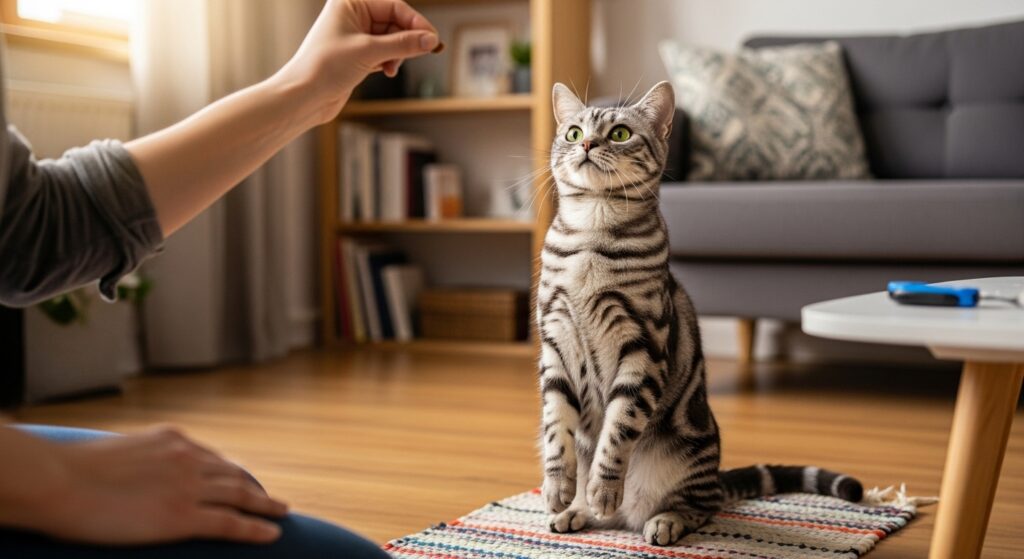
The American Shorthair traces its roots to early working cats brought to North America for pest control. Over time, this capable hunter became a dependable companion, valued for strength, resilience, and a steady, approachable personality.
American Shorthairs are friendly, relaxed cats that fit well into family life. When properly socialized, they tend to get along easily with other animals, including friendly dogs, adapting well to shared spaces and multi-pet households
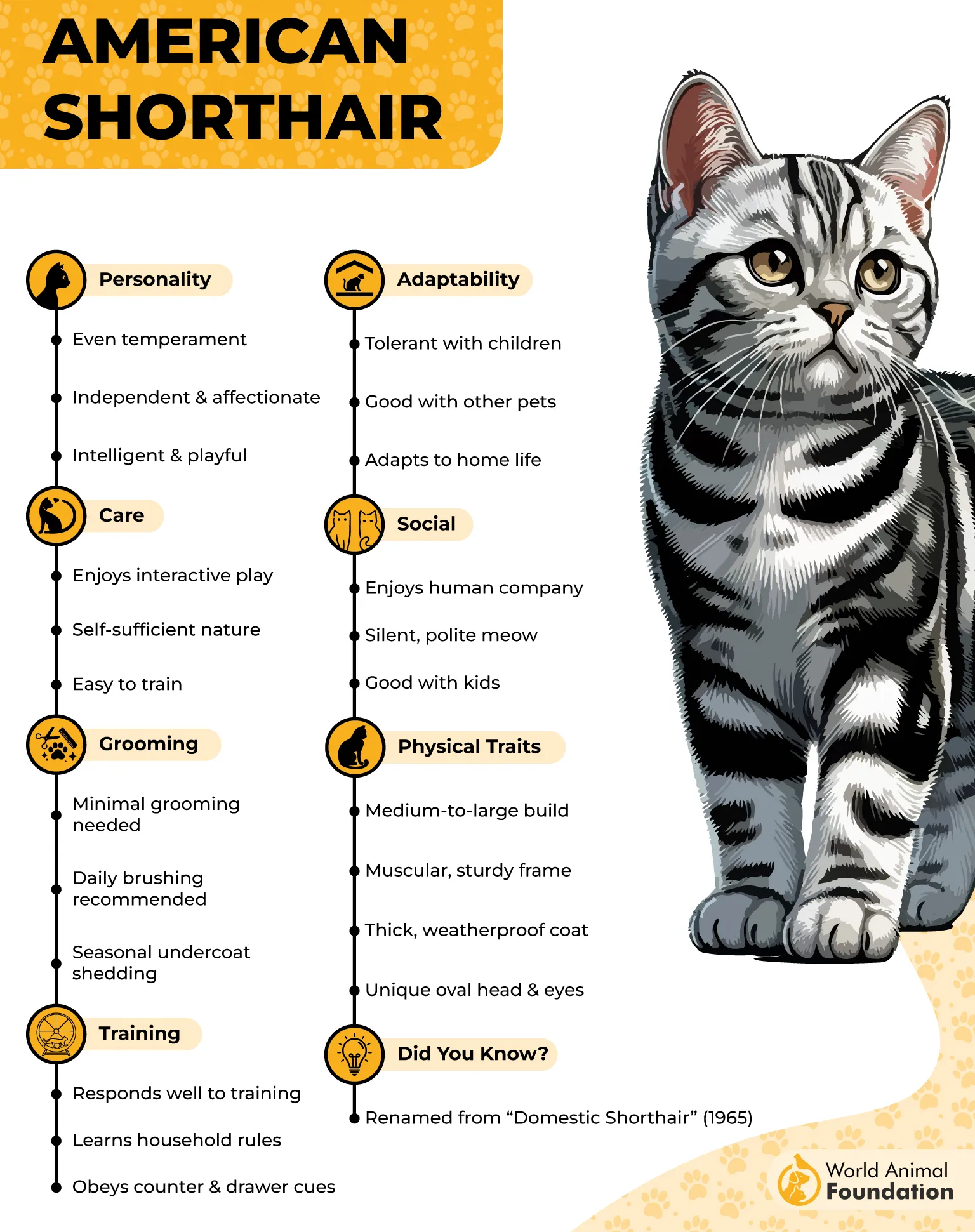
Grooming needs remain refreshingly simple for this breed. Their short coat sheds lightly and benefits from an occasional brushing that removes loose hair and supports skin health. These low-key grooming sessions also offer easy bonding moments, keeping care routines stress-free and manageable.
Fun Fact
American Shorthairs have an exceptionally expressive face, making their moods easy to read. Many owners say these cats communicate just as much through looks and body language as they do through sound.
7. Maine Coon
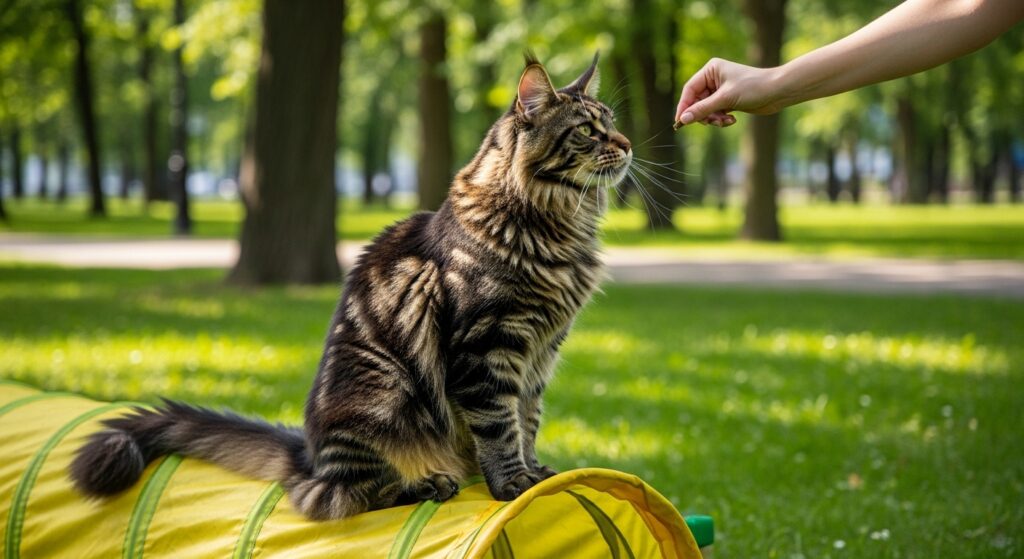
Maine Coons carry an air of rugged charm that feels straight out of a legend, with roots tied to colder regions where strength and resilience mattered. Their large size, tufted features, and expressive faces give them a wild yet welcoming look. That striking appearance makes them one of the most beautiful breeds in the cat world.
They tend to shine when learning feels interactive and rewarding rather than rigid. Treats, praise, and playful challenges keep them mentally engaged and eager to participate. With consistency and patience, they can master cues, games, and routines that deepen their bond with their humans.
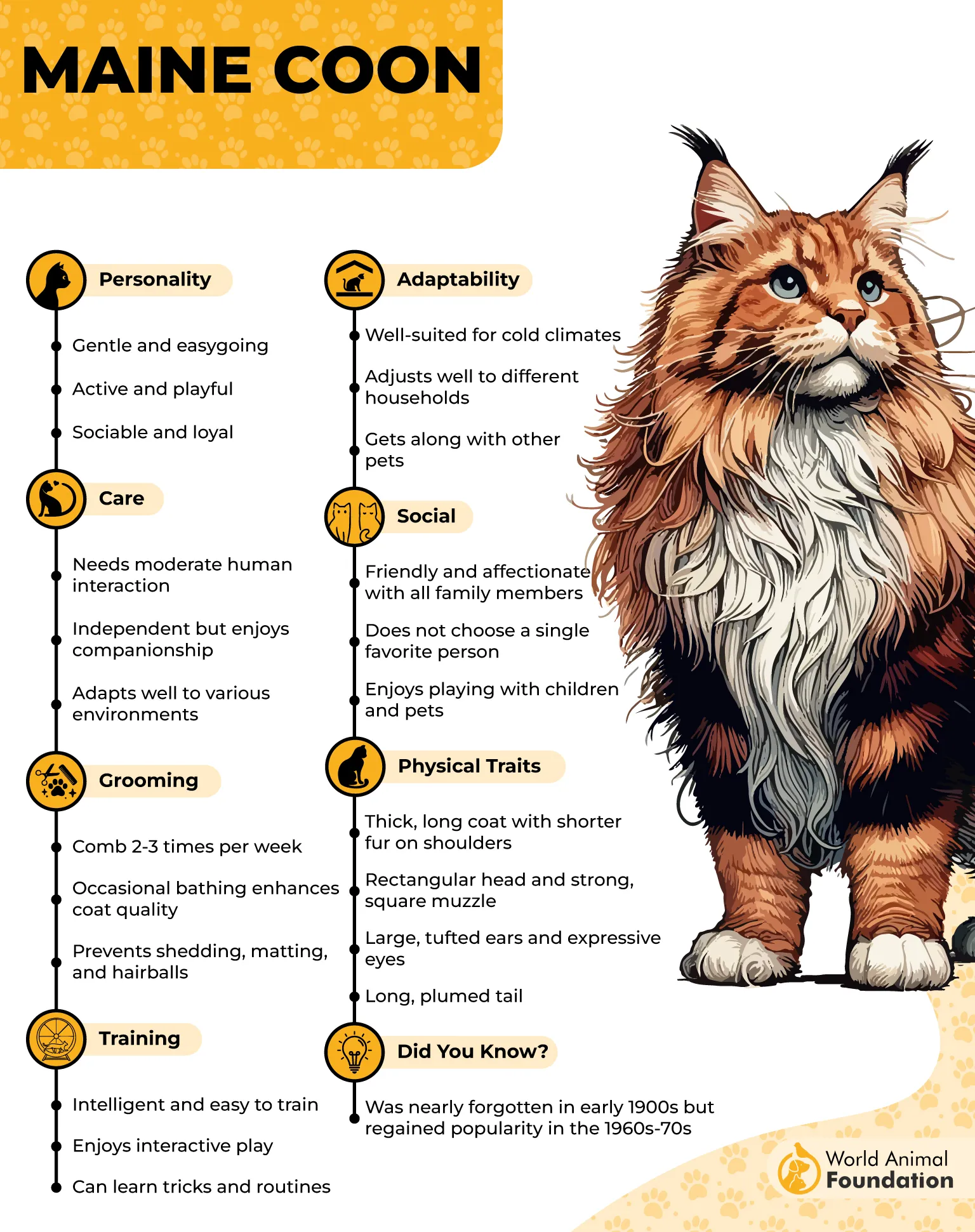
Health for this breed is closely connected to lifestyle and movement. Limited activity can lead to weight concerns, while aging may bring joint or mobility challenges. Balanced exercise, thoughtful feeding, and regular monitoring help support comfort and long-term vitality.
Fun Fact
Maine Coons are famous for making soft chirping and trilling sounds instead of typical meows. Owners often describe these vocalizations as part of the breed’s friendly, conversational personality.
Conclusion
Finding a cat that fits your lifestyle can make everyday life more enjoyable and far less stressful. Some breeds naturally adapt with ease, requiring less guidance while still offering companionship and personality. Taking time to understand temperament, care needs, and long-term comfort, even in the most trainable cat breeds, helps set expectations that feel realistic and rewarding.
When the match feels right, daily routines become smoother, and the bond grows effortlessly. With the right information in hand, it becomes easier to move forward confidently and welcome a cat that truly complements your home and the way you live.
If you are further interested in such wonderful cats, you can also look up the Norwegian Forest Cat, Asian Leopard Cat, and Siamese.
Minimal Training Cat Breeds: Can You Score 5/5? 🐱
Which cat breed is known for a calm, predictable nature?
Which breed is famous for relaxing completely when held?
Which breed prefers lounging over energetic play?
Which cat is instantly recognized for folded ears?
Which breed is known for problem-solving and curiosity?
