




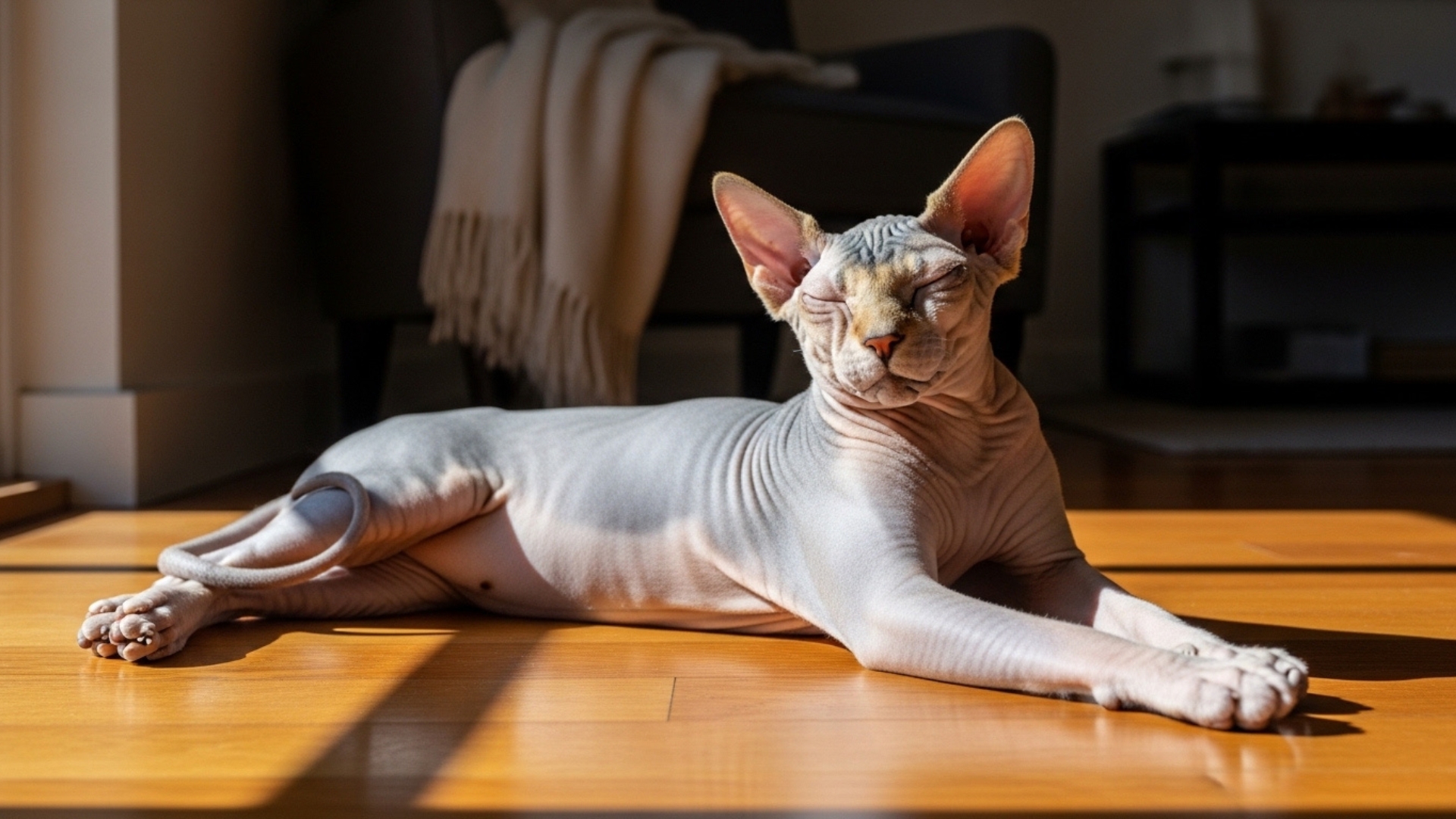
For some cats, a house isn’t a home unless it has a literal “hot spot.” While most felines enjoy a good sunbeam, there are certain breeds that treat a heated floor like a high-end spa and a warm radiator like a long-lost friend.
This isn’t just a quirky habit; it’s a biological calling. Carrying the DNA of desert-dwelling ancestors and sporting higher resting body temperatures than our own, these “feline heaters” are built to thrive where the mercury rises.
If you’ve ever found your cat “melting” into the kitchen tile or acting like a permanent shadow to your heating vents, you likely have a breed that considers warmth its primary love language. Let’s dive into the most sun-loving, floor-lounging breeds that turn every warm corner into a tropical getaway.
Cat Breeds That Prefer Warm Floors
1. Sphynx
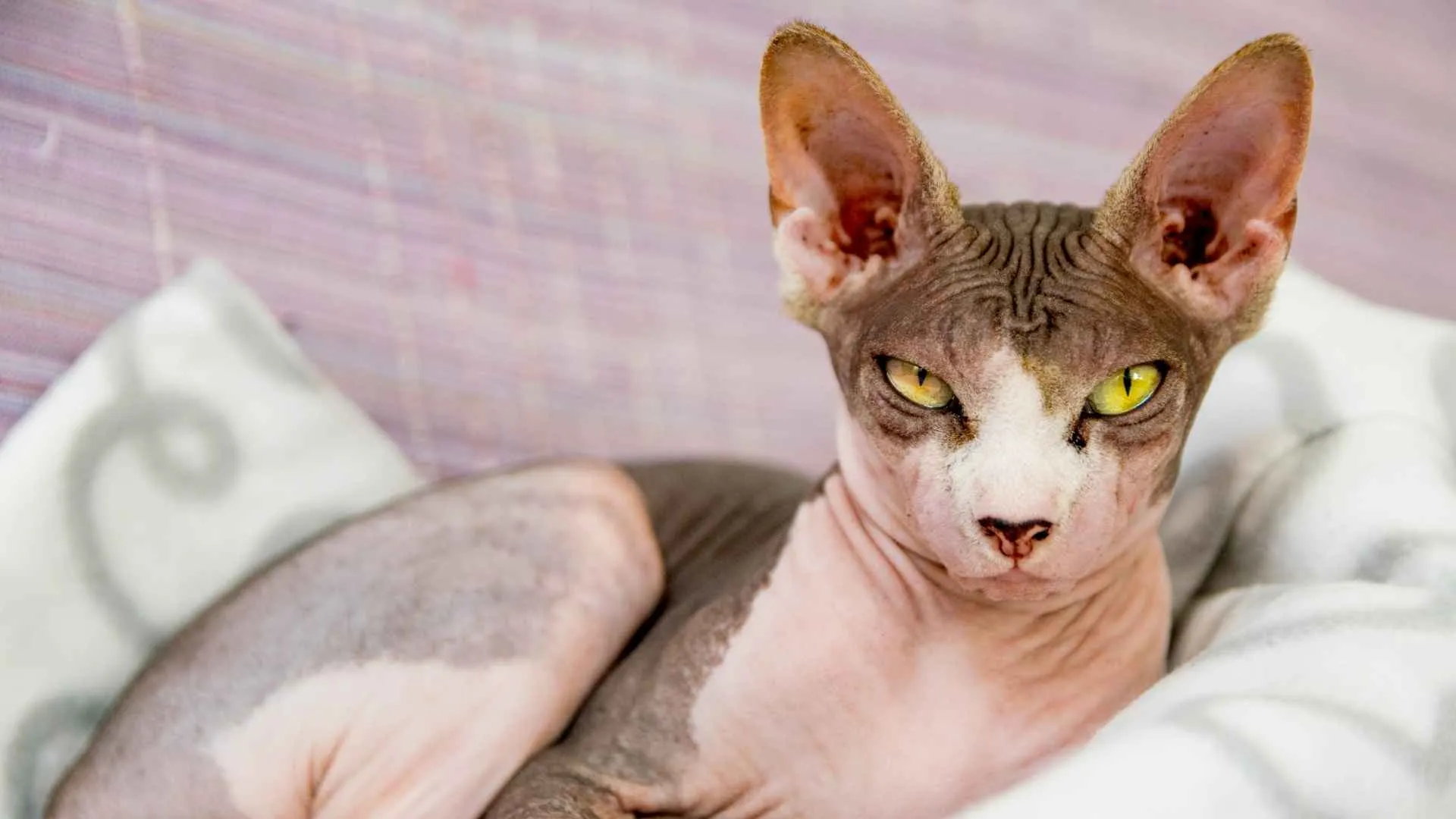
Wrinkly skin and peach fuzz make this hairless feline iconic, yet they lack natural insulation. Without fur, these cats hunt for external warmth to maintain their internal temperature. They love sprawling across sun-drenched floors to stay cozy in indoor environments.
This cat breed acts like a living heating pad and views your lap as a thermal sanctuary. A Sphynx thrives on physical contact, napping with other pets to soak up collective body heat. Their social nature is driven by a practical need to stay warm.
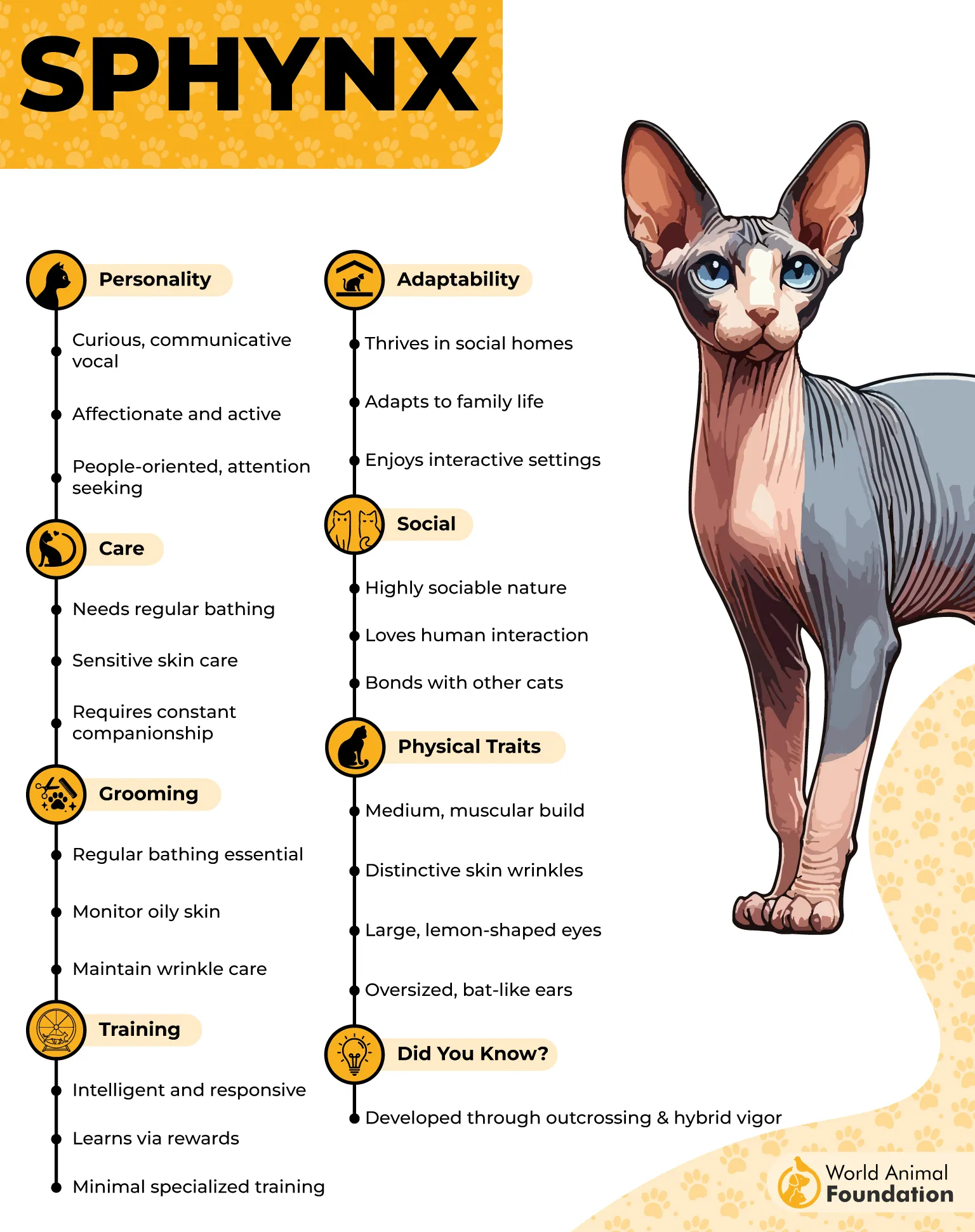
Owning this breed requires a quality diet and regular grooming for skin health, as mentioned by Pawlicy Advisor. Since the Sphynx has no fur to absorb oils, they rely on you to prevent irritation. Warm Climates help keep their skin supple and metabolism balanced.
Once playtime ends, these energetic explorers seek a place to recharge. If a lap isn’t free, a Sphynx will unfailingly locate a sunny spot or radiator. Their devotion to heat makes them the best indoor cat breeds.
Do you know? Even though Sphynx cats have no fur, their skin still shows different colors and patterns. You can see tabby, tortoiseshell, and other familiar markings, just like in fluffy cat breeds.
2. Peterbald
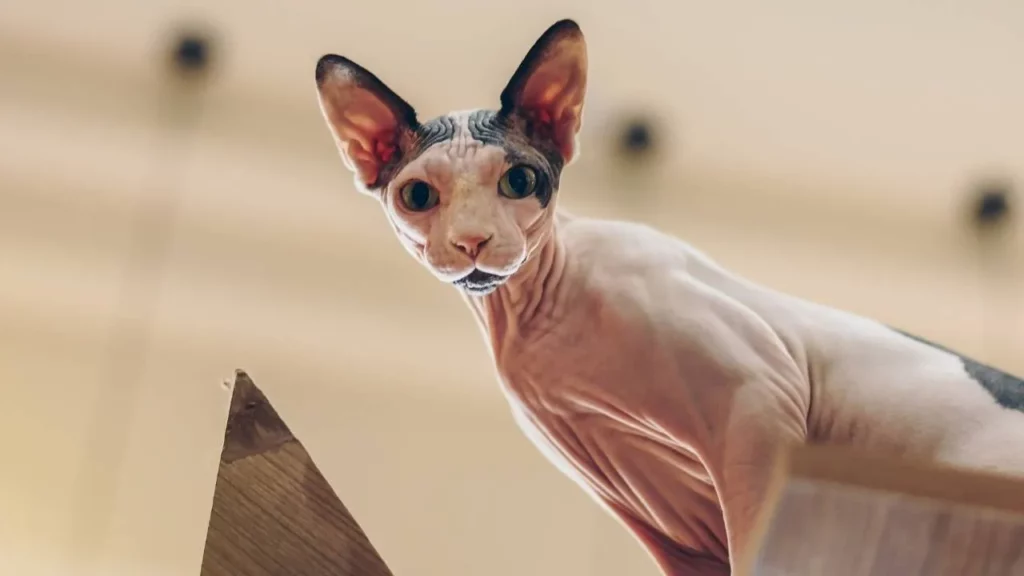
Often described as “dog-like” for their loyalty, these cats are highly sensitive to floor temperatures. The Peterbald expresses affection by following you, searching for the warmest place to settle. They are incredibly attached and hate feeling a chill or being left alone for long periods.
Coat variations mean some are born bald, while others have a fuzzy texture. Regardless of hair type, a Peterbald struggles to retain heat without help. These felines are biologically designed to seek out any available high-heat source.
High metabolisms help them compensate for heat loss, requiring extra calories and cozy spots. You can support a Peterbald by offering heated beds or sun-drenched rugs. Most prefer the direct warmth of a heated floor, as they are well-suited to homes that prioritize comfort.
Choosing this breed changes your perspective on feline companionship due to their interactive nature. WebMD reports that the Peterbald is excellent for allergy sufferers since minimal hair, which reduces dander. A warm environment is all this elegant breed needs.
Do you know? They have webbed, oval-shaped paws that work almost like little hands, giving them impressive dexterity.
3. Elf Cat
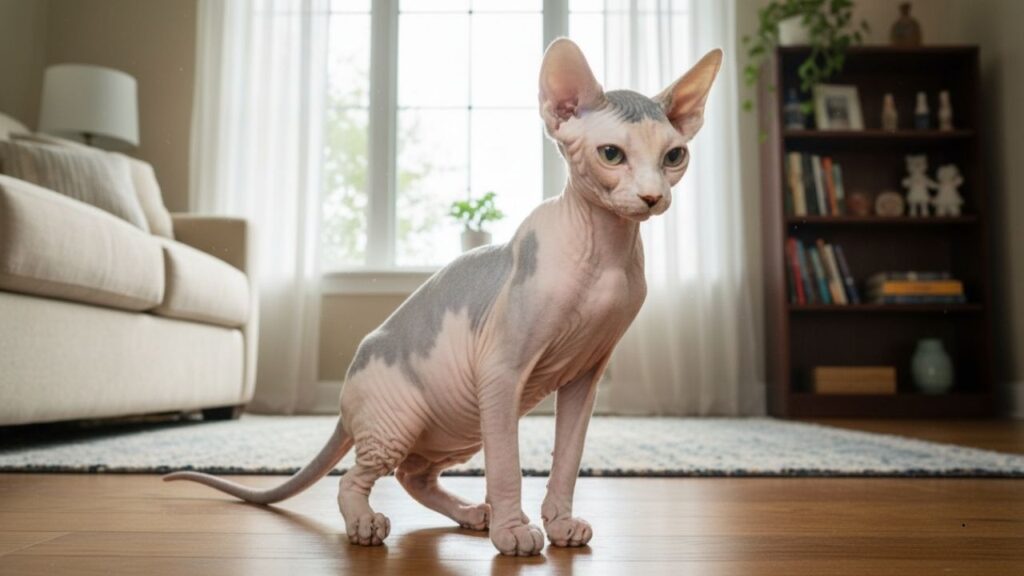
This rare hybrid combines curled ears with a hairless body. Such a striking appearance means the Elf Cat has skin sensitive to ambient temperatures. They move gracefully with their slender bodies while scanning for the most inviting heat source in the room.
With prominent cheekbones, these cats have a look that is truly out of this world. The large eyes of the Elf Cat add to their mystical and enchanting presence. They are incredibly gentle and deeply attached to their owners, possessing a different temperament than the American Shorthair.
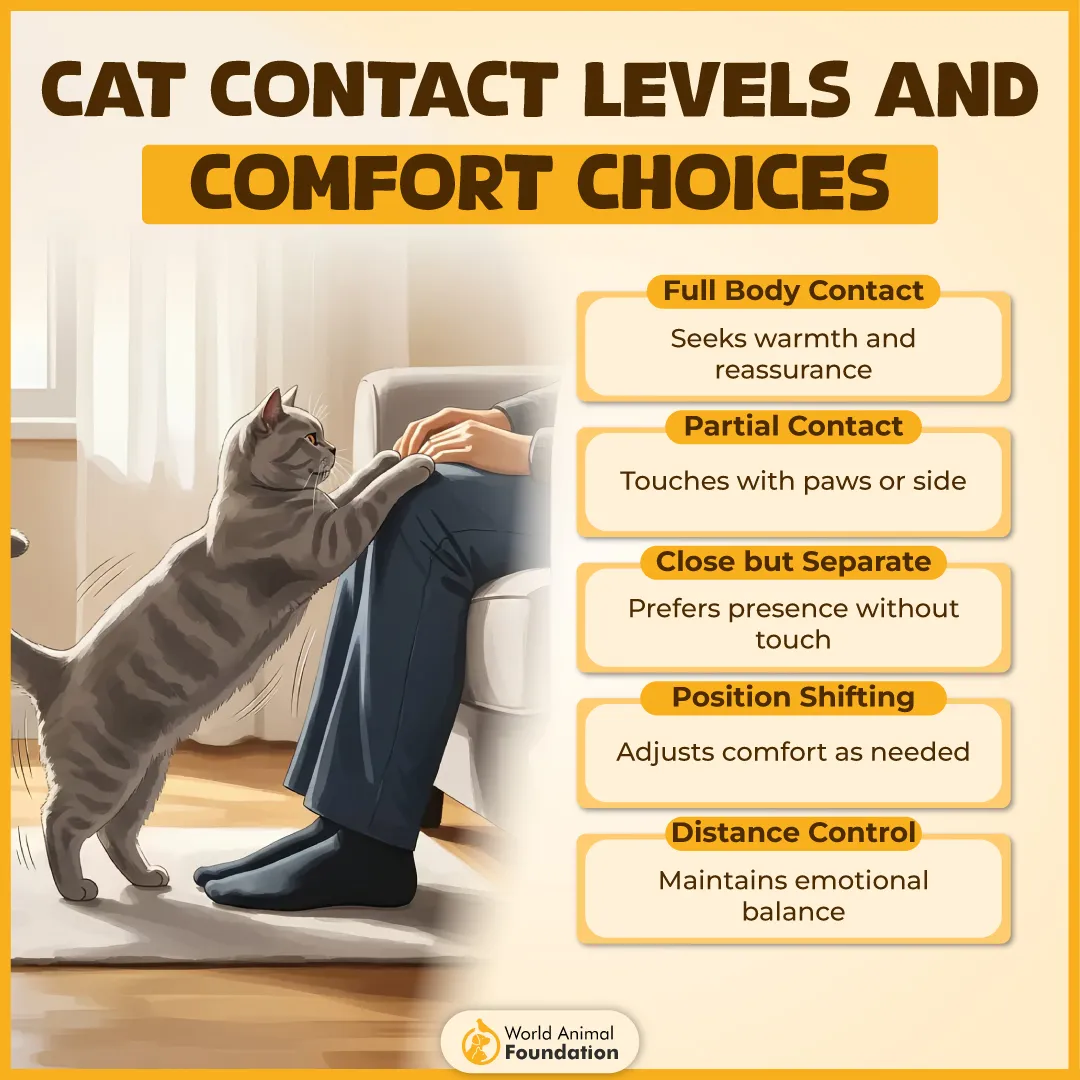
Without a coat, these kitties are susceptible to hypothermia in chilly rooms. An Elf Cat relies on external sources like radiators or heated tiling to stay safe. They view a warm floor in the right environment as a vital survival necessity.
These felines have a naturally higher body temperature than humans. A room that feels comfortable to you might feel quite brisk to an Elf Cat. They spend their day seeking “hot spots” to stay comfortable.
Do you know? Their signature feature is the “elf” ears, wide at the base and tapering to outward-pointing tips.
4. Bambino
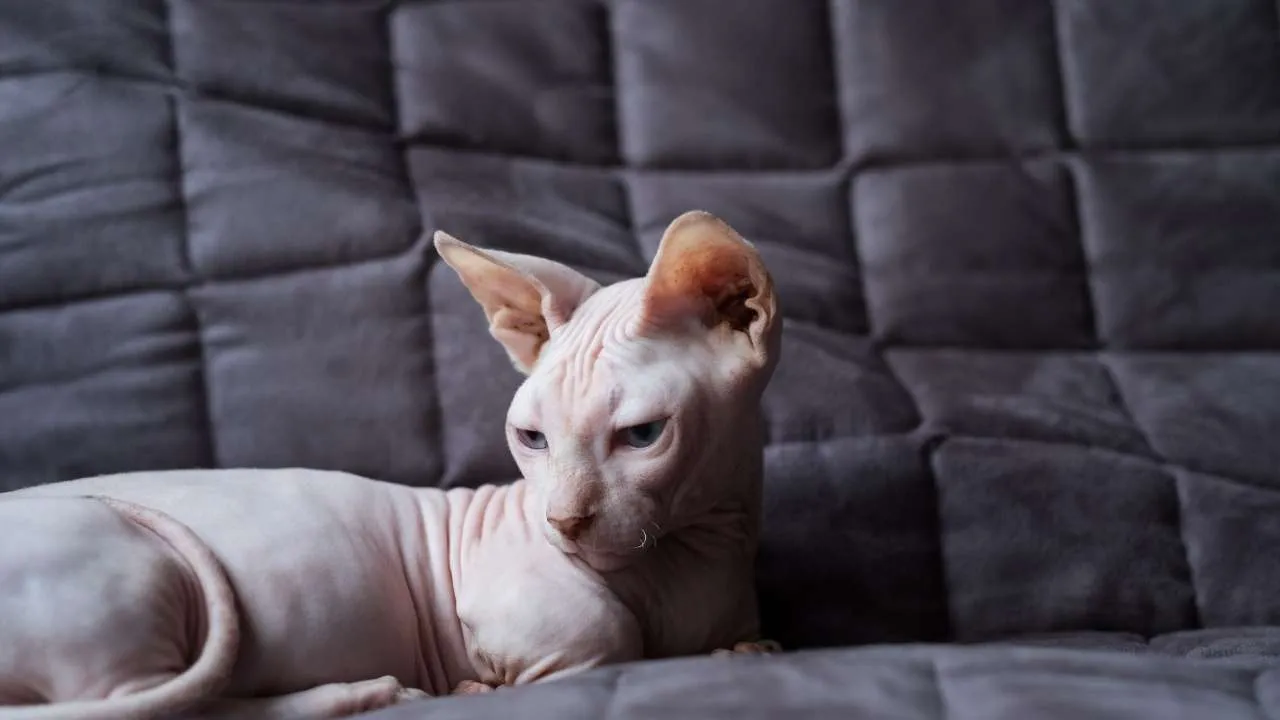
Recognized by short legs and hairless skin, these felines carry a rare mutation. Their low stature means they are close to the ground, making floor temperature a priority. A Bambino requires a warm environment and access to fresh water to stay healthy.
These cats are full of character and hate being left alone for long. A Bambino is affectionate and prefers playing in short bursts before resting, showing a unique low-energy cycle. They follow owners to stay within a constant circle of warmth.
Protecting these cats means being aware of their sensitive skin. Since the Bambino lacks fur, it can get chilled easily on cold surfaces. Providing a safe environment with plenty of blankets is essential for their well-being, especially for apartment dwellers.
Short-legged wonders thrive in warm environments to protect their vital organs. You will often find a Bambino burrowed under bedding or on a sun-warmed carpet. They need a high level of care to stay snug.
Do you know? The name “Bambino,” meaning “baby” in Italian, perfectly suits these small, short cats.
5. Devon Rex
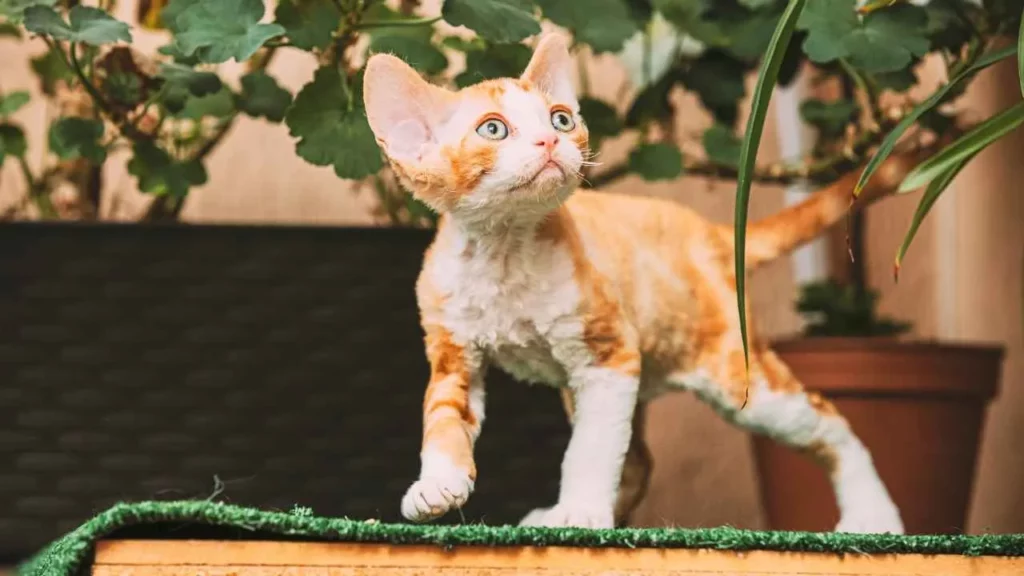
Famous for “pixie” expressions, these agile cats have muscular bodies and light bones. Despite their energy, the thin coat of the Devon Rex provides little insulation. They are frequent heat-seekers that find the warmest nook available, occasionally retreating to shaded areas if they overheat.
These social butterflies crave interaction and form powerful bonds with human families. A Devon Rex prefers to be right in the middle of your daily activities. Their search for warmth leads them directly to your shoulders.
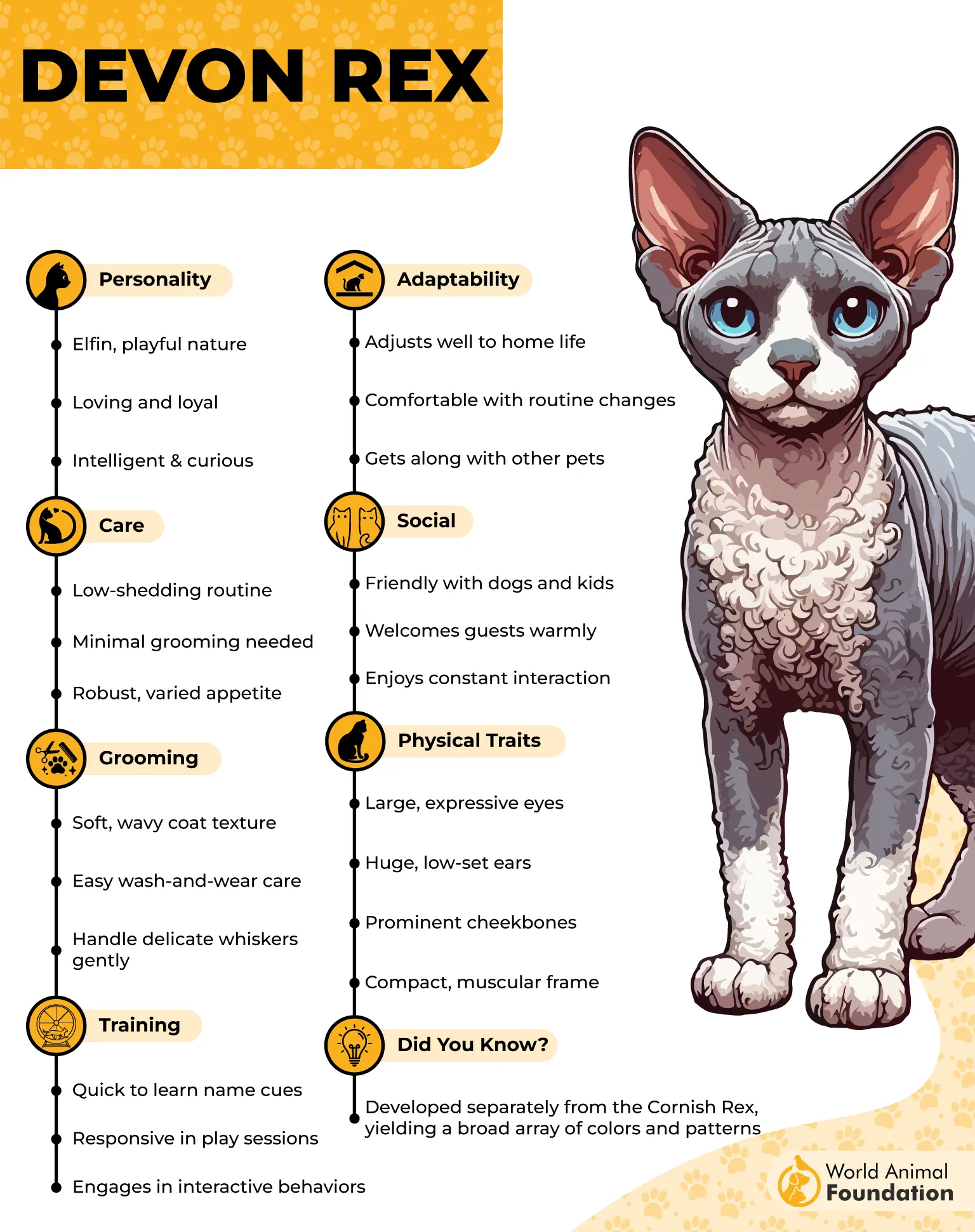
They often feel like warm water bottles because their coat doesn’t trap heat. This lack of insulation means a Devon Rex loses body heat rapidly and basks in windows. While not entirely low maintenance, they are notorious for sitting on warm electronics.
Caring for them is simple because their wavy fur rarely sheds and dries instantly. Keep the large ears of the Devon Rex clean for the best health. These “wash-and-wear” cats stay happy on a toasty floor.
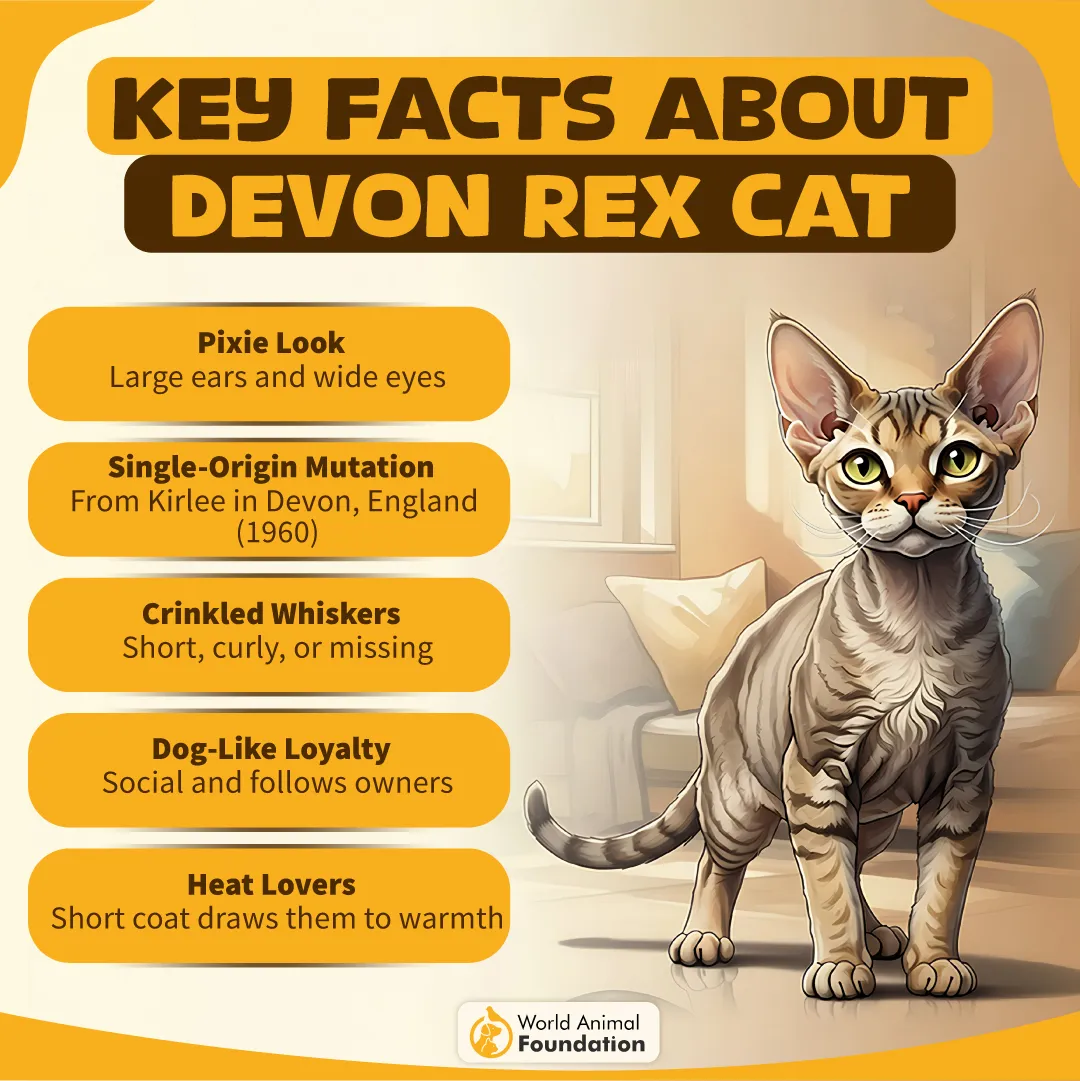
Do you know? Though especially popular in the US, they ranked among the top five cat breeds in 2024, according to the Cat Fanciers’ Association.
6. Cornish Rex
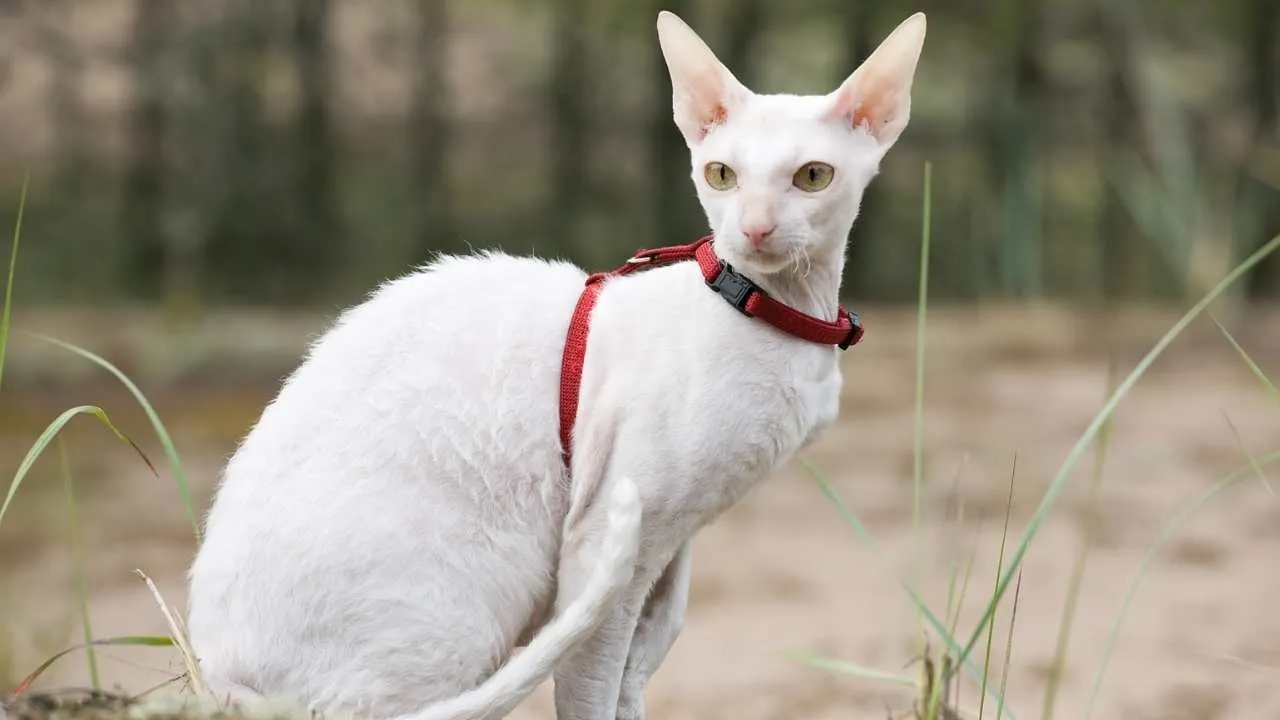
Possessing a coat of only soft downy hair, these cats feel the cold intensely. The Cornish Rex lacks guard hairs, leaving them with a velvet-like texture. Unlike breeds with folded ears, this trait makes them move toward heat as the temperature drops.
These cats are bundles of energy, but are equally happy lounging on a lap. The loving temperament of the Cornish Rex makes them part of every household activity. They are heat magnets that find the sunniest floor spots.
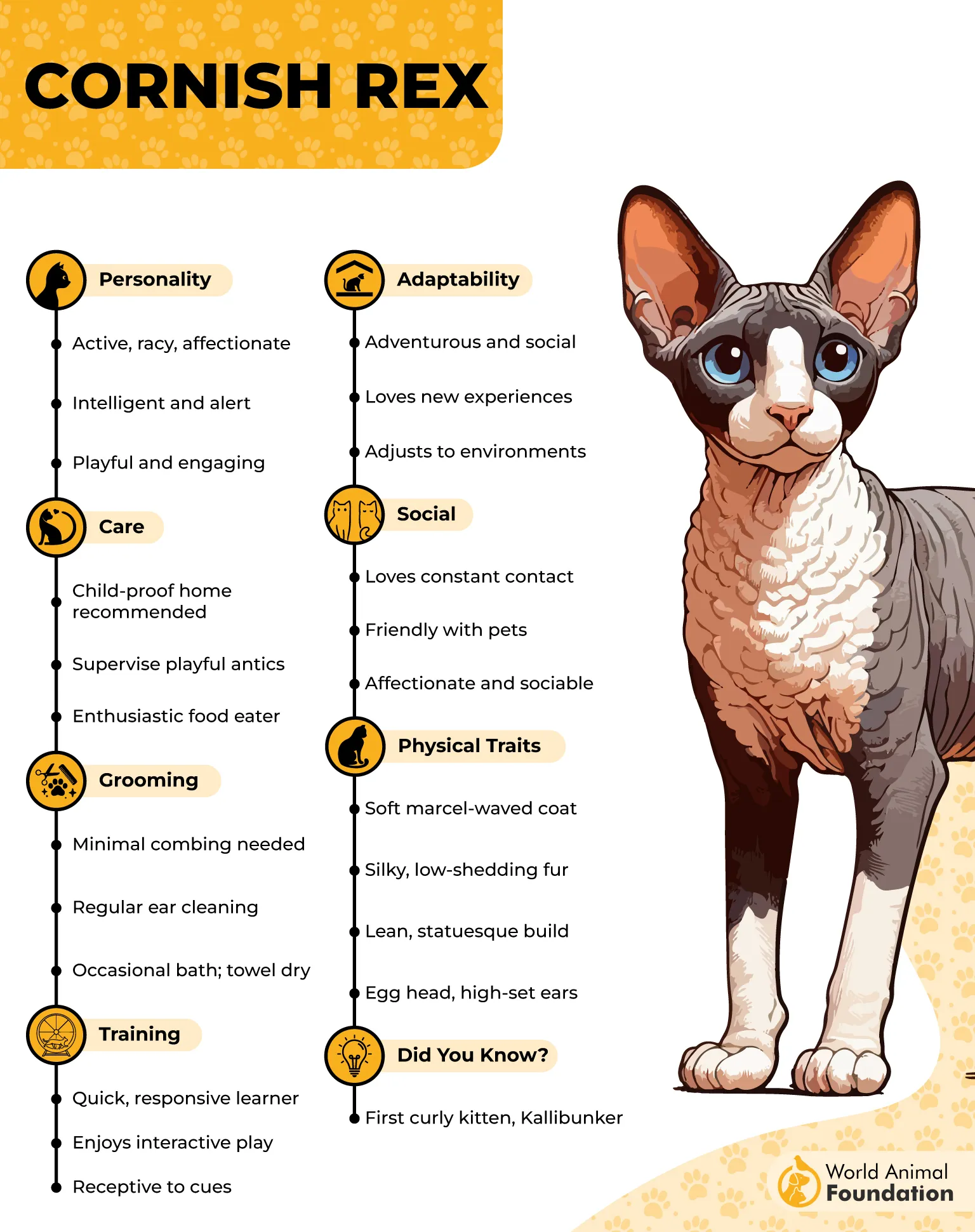
The easygoing nature of this breed makes them ideal for active families. A Cornish Rex is always game for a new challenge or game of fetch. They fit into any home that provides a warm retreat and monitors for specific health issues.
Some are vocal and will let you know if they feel a chill. This communicative trait makes the Cornish Rex an expressive companion. Their high intelligence allows them to excel in various environments and therapy work.
Do you know? The first Cornish Rex wasn’t bred intentionally. The first Cornish Rex was a male kitten named Kallibunker
7. Siamese
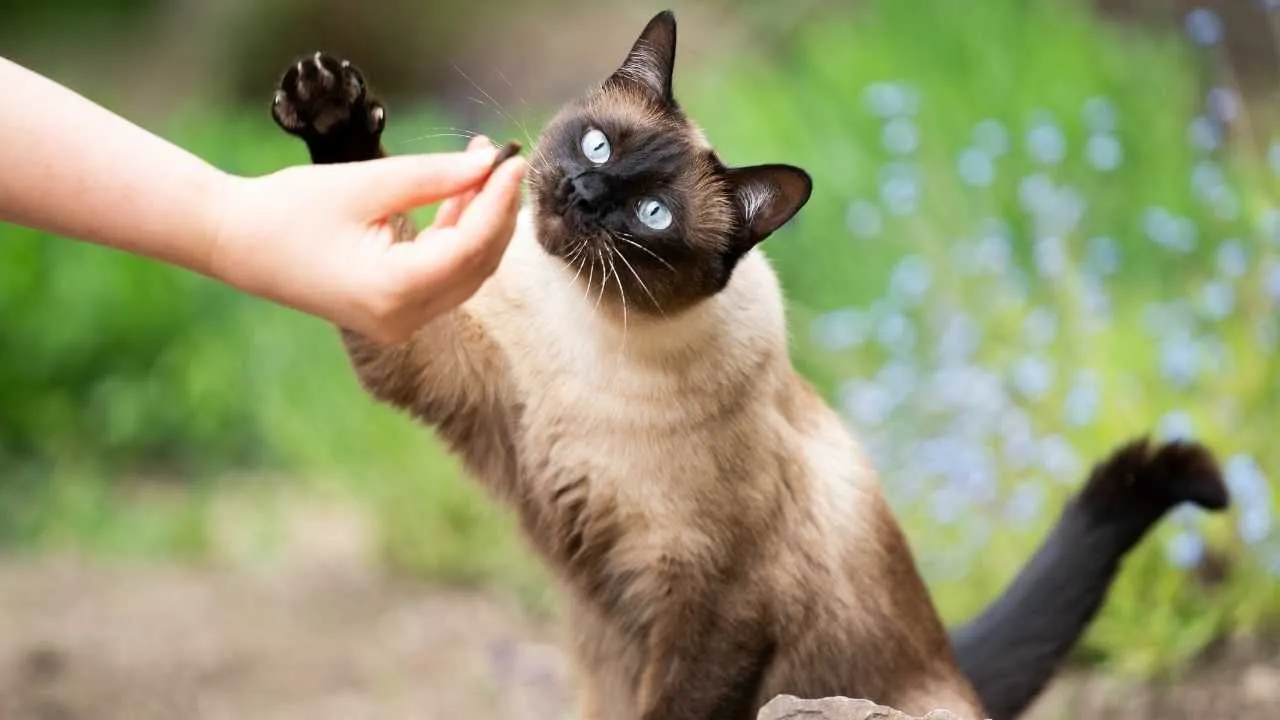
Originating from tropical Thailand, these elegant cats are naturally drawn to warm corners. With lithe frames, the Siamese has a sophisticated appearance celebrated for centuries. Because they have very short hair, they rely on external heat and rarely need to stay cool.
Highly intelligent and playful, these felines can get into mischief without toys. A Siamese becomes a shadow, staying close to owners for companionship and physical heat. Expect your vocal friend to be right beside you.
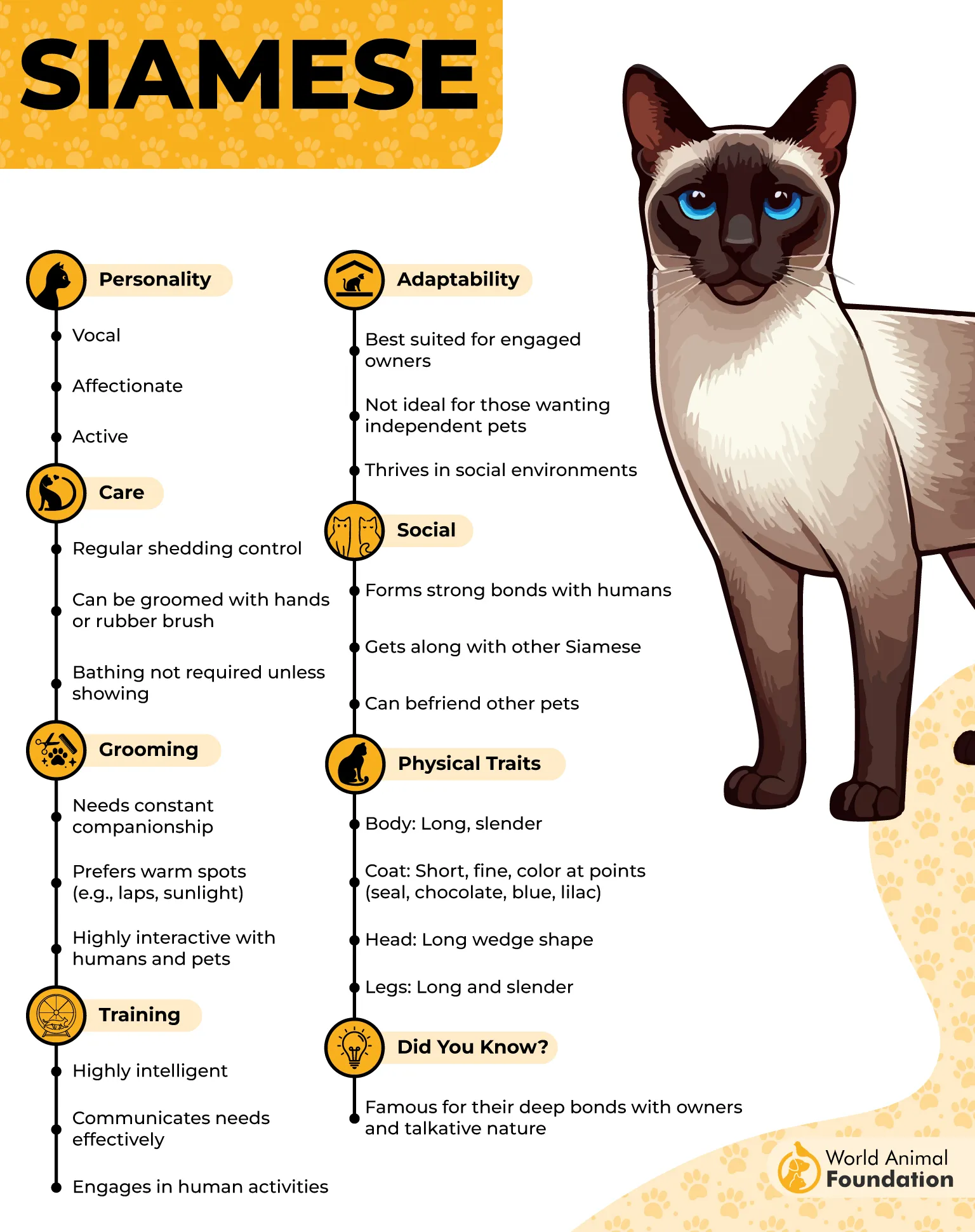
These cats are often found “helping” with chores to stay near warmth. At night, a Siamese is famous for snuggling under the covers with family. They view a sunny window as the perfect place for a siesta.
Coat color is determined by a genetic mutation related to temperature. Fur grows darker in cooler areas, while the core of the Siamese stays lighter. Their appearance is a map of how they seek warmth, making them one of those certain breeds that prioritize heat.
Do you know? Although now celebrated as one of the world’s most beautiful breeds, Siamese cats were once seen as “ugly” in Western society.
Conclusion
Cats that love warm places are not being dramatic; they are following instinct and comfort. Heat helps regulate body temperature, relax muscles, and create a sense of safety. For many breeds, especially hairless or short-coated ones, warmth is essential for daily well-being.
Cozy apartment living makes a huge difference. Sunny floors, heated tiles, soft blankets, and warm laps quickly become favorite spots. These simple comforts reduce stress, encourage bonding, and support healthy routines like sleep and play throughout the day.
When you notice your cat seeking warmth, take pride. A warm home keeps cats calm, affectionate, and deeply bonded.
