




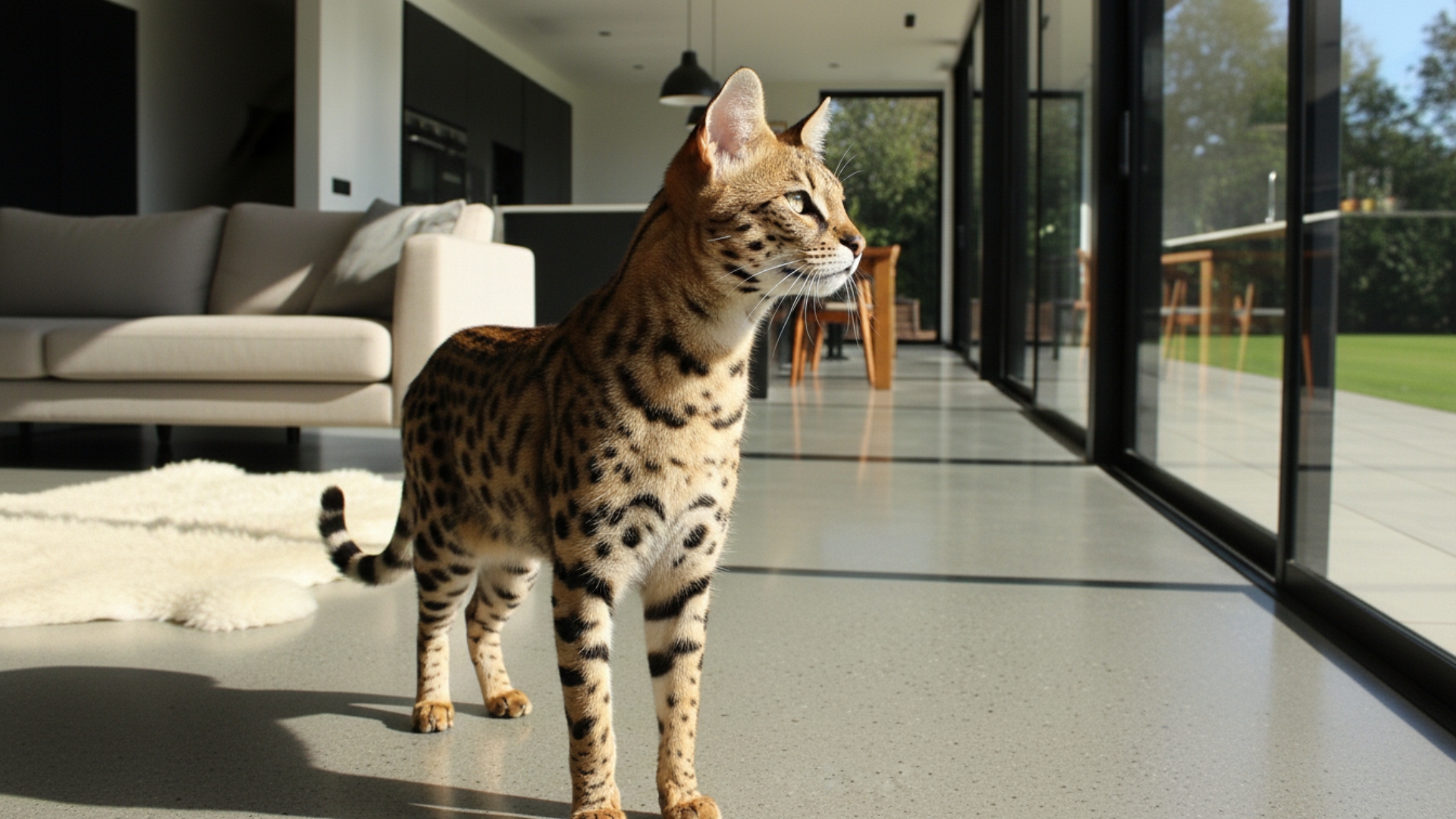
Open floor plans aren’t just a trend for people—they can make a big difference in how comfortable and confident a cat feels at home. Some cat breeds naturally thrive in wide, connected living spaces where they can move freely, observe their surroundings, and stay involved in household activity.
Instead of feeling confined by tight corners and closed doors, these cats flourish when rooms flow together and offer clear sightlines.
Cats that prefer open layouts often enjoy roaming, patrolling, and choosing their favorite spot to lounge without obstacles in the way. Their behavior is shaped by both personality and physical traits, including size, energy level, and curiosity.
Larger breeds, in particular, benefit from extra room to stretch out, while active cats love having uninterrupted space to chase toys or follow their humans from room to room.
In this article, we’ll explore cat breeds that love room to roam and explain why open floor plans can bring out their most relaxed, confident, and playful sides.
Cat Breeds That Prefer Open Floor Plans
1. Bengal
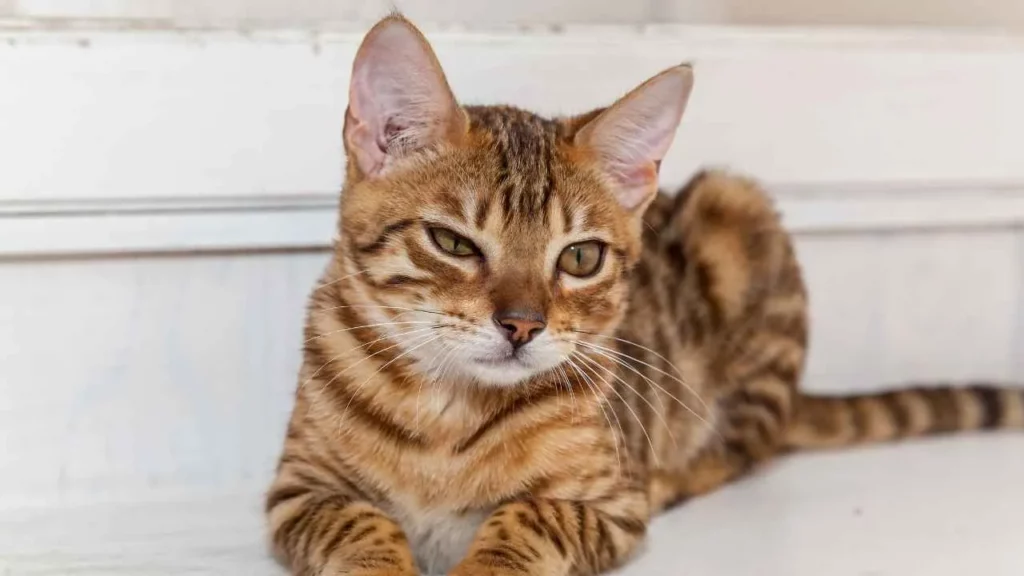
The Bengal, sometimes called the Leopard Cat hybrid due to its ancestry, is instantly recognizable for its wild look, rosetted or marbled coat, and sleek, athletic build. This muscular cat is built for movement, not lounging in tight spaces.
According to Britannica, the Bengal is a short-haired domestic cat breed created in the United States during the 1970s and 1980s through the crossbreeding of an Asian leopard cat and a domestic tabby.
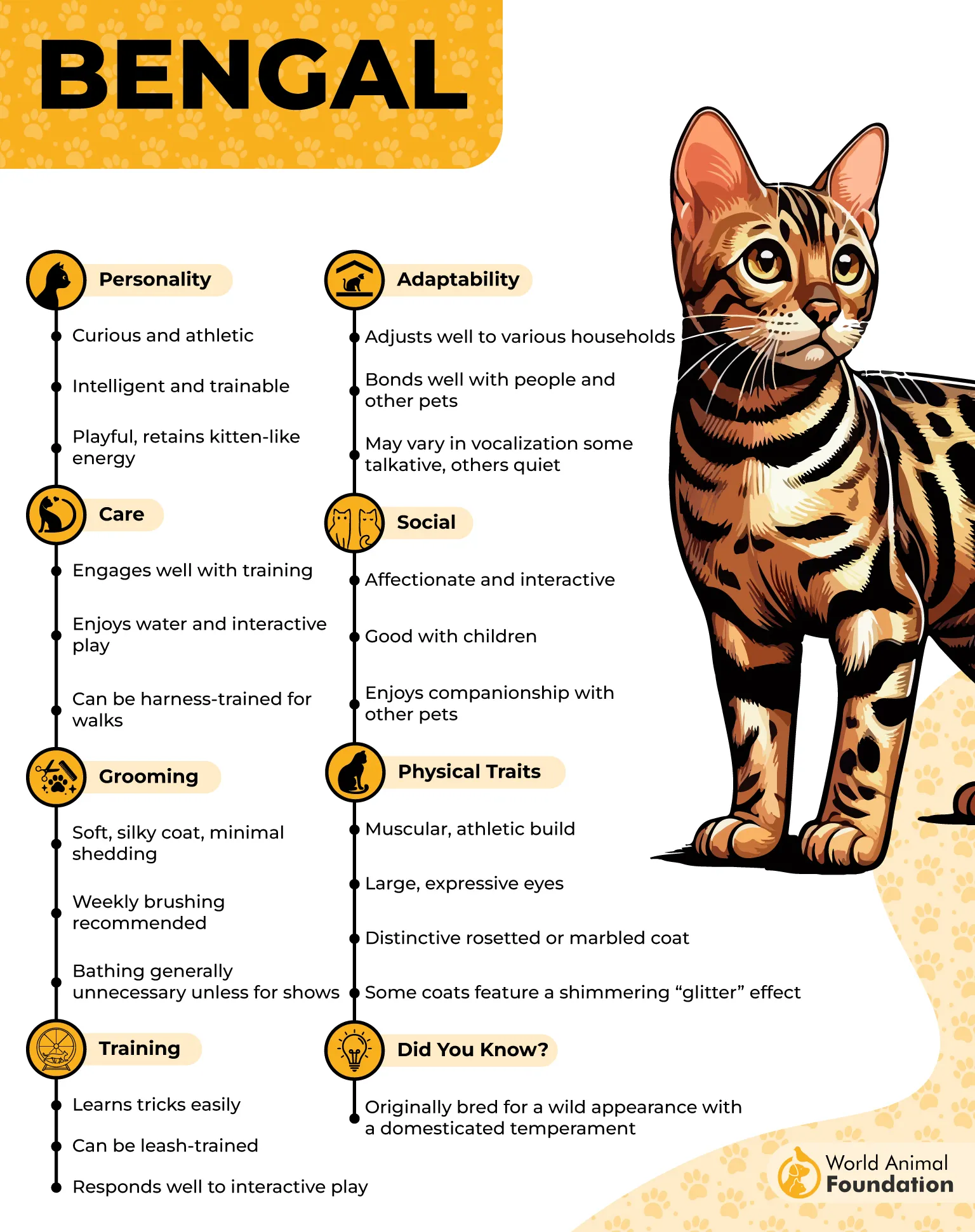
As a natural explorer, the Bengal thrives in homes with open floor plans that allow uninterrupted running, jumping, and patrolling. Wide layouts give them room to burn off energy and reduce boredom, which can otherwise lead to destructive behavior in confined environments.
Open spaces also suit their sharp intelligence and curiosity. Bengals enjoy chasing toys across long stretches of floor, scanning multiple rooms at once, and moving freely between activity zones without barriers slowing them down.
Because of their strong hunting instincts, open layouts pair well with puzzle feeders and interactive play areas spread throughout the home.
Fact: Bengals are known to become bored and potentially aggressive if they don’t get enough physical and mental exercise.
2. Savannah
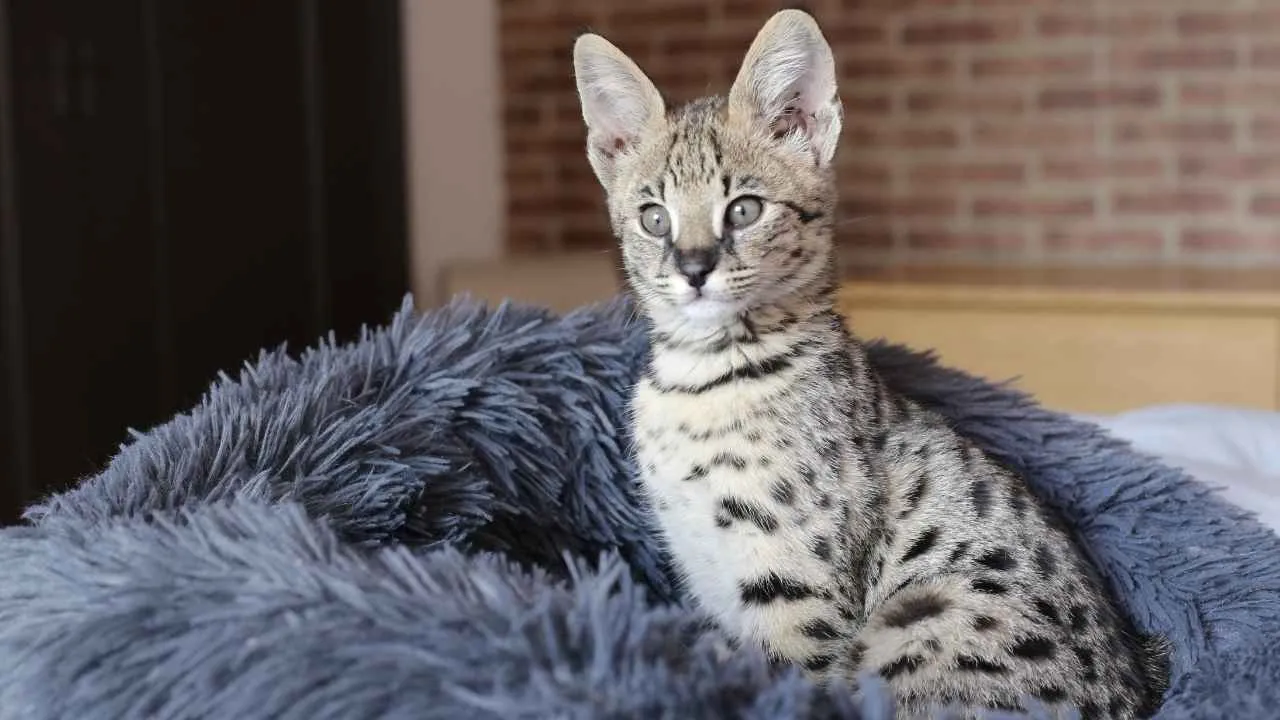
The Savannah cat, sometimes called the Serval hybrid, is a striking blend of an African Serval and a domestic cat. Known for its tall ears, spotted coat, and long legs, this elegant breed has a lean, athletic build designed for movement and space.
According to PetMD, the Savannah house cat originates from a hybrid cross between a domestic cat and the wild African serval.
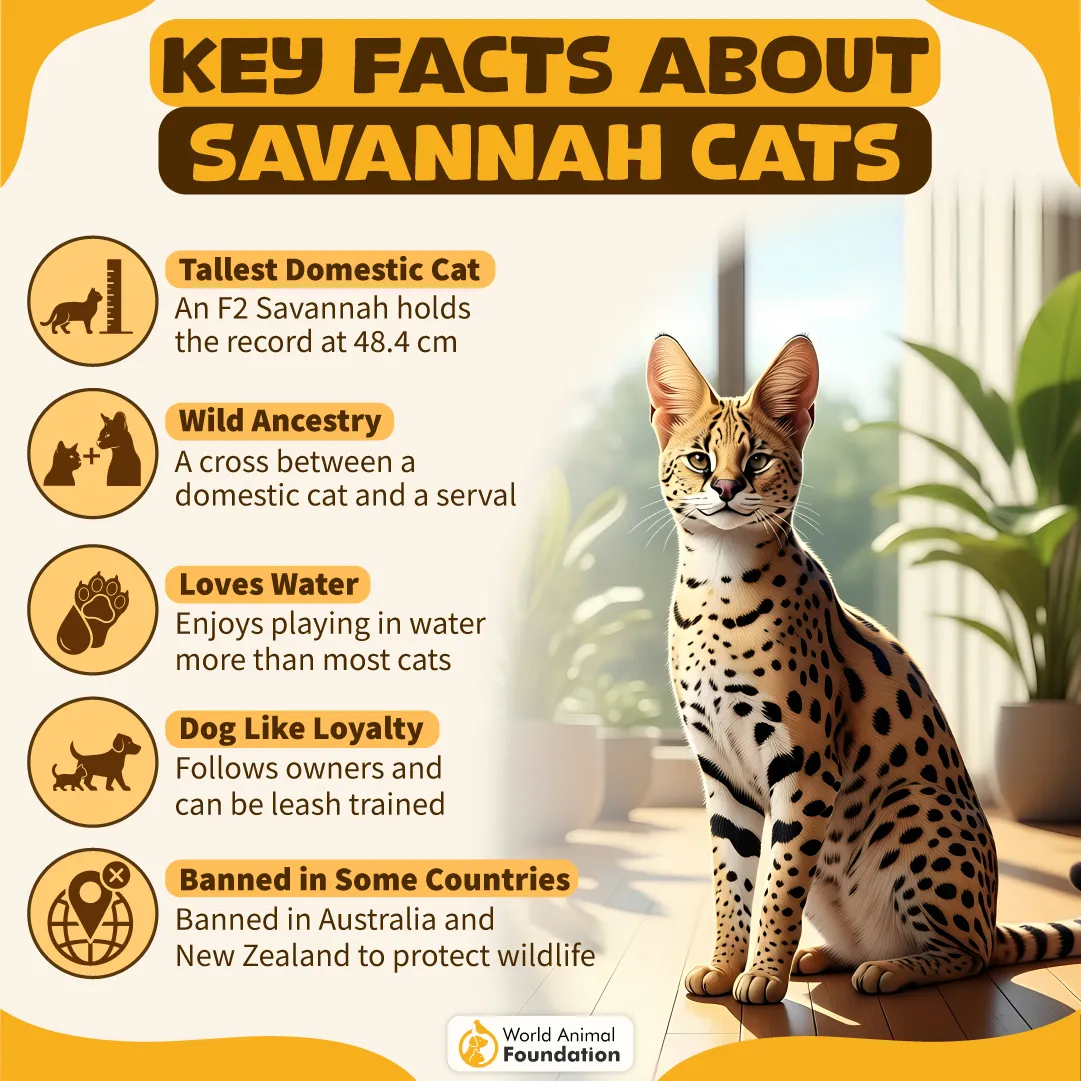
Open floor plans suit the Savannah perfectly, giving them room to sprint, leap, and patrol their surroundings. Their long legs and powerful jumps—reaching impressive heights—mean cramped layouts can feel restrictive and frustrating for them.
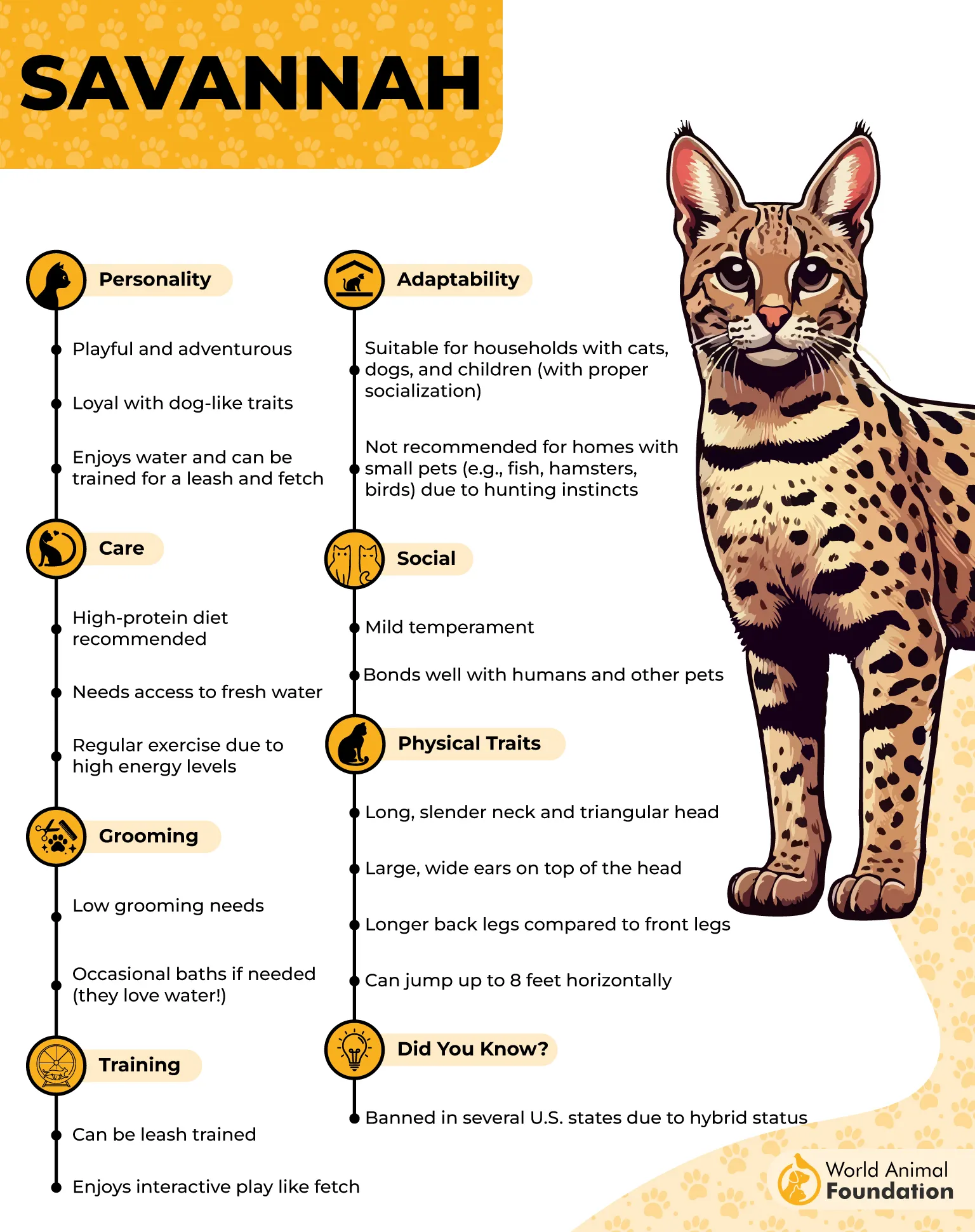
These cats are highly intelligent and inquisitive, thriving in homes where enrichment is spread across wide areas. Large rooms allow for interactive play, simulated hunting games, and freedom to move between zones without obstacles breaking their flow.
Because of their wild ancestry, Savannahs need constant stimulation and supervision, making spacious layouts easier to manage safely.
Fact: A Savannah cat named Scarlett’s Magic holds the Guinness World Record for the world’s tallest domestic cat.
3. Abyssinian

Also known as the Aby, the Abyssinian is a medium-sized, short-haired cat with a lean, athletic frame and a distinctive ticked coat. Originating from regions near the Indian Ocean, this breed is admired for its elegance, alert expression, and endlessly curious personality.
According to Purina, the Abyssinian has a strikingly wild appearance, giving the impression of a highly athletic cat that looks as though it has just come from the jungle.
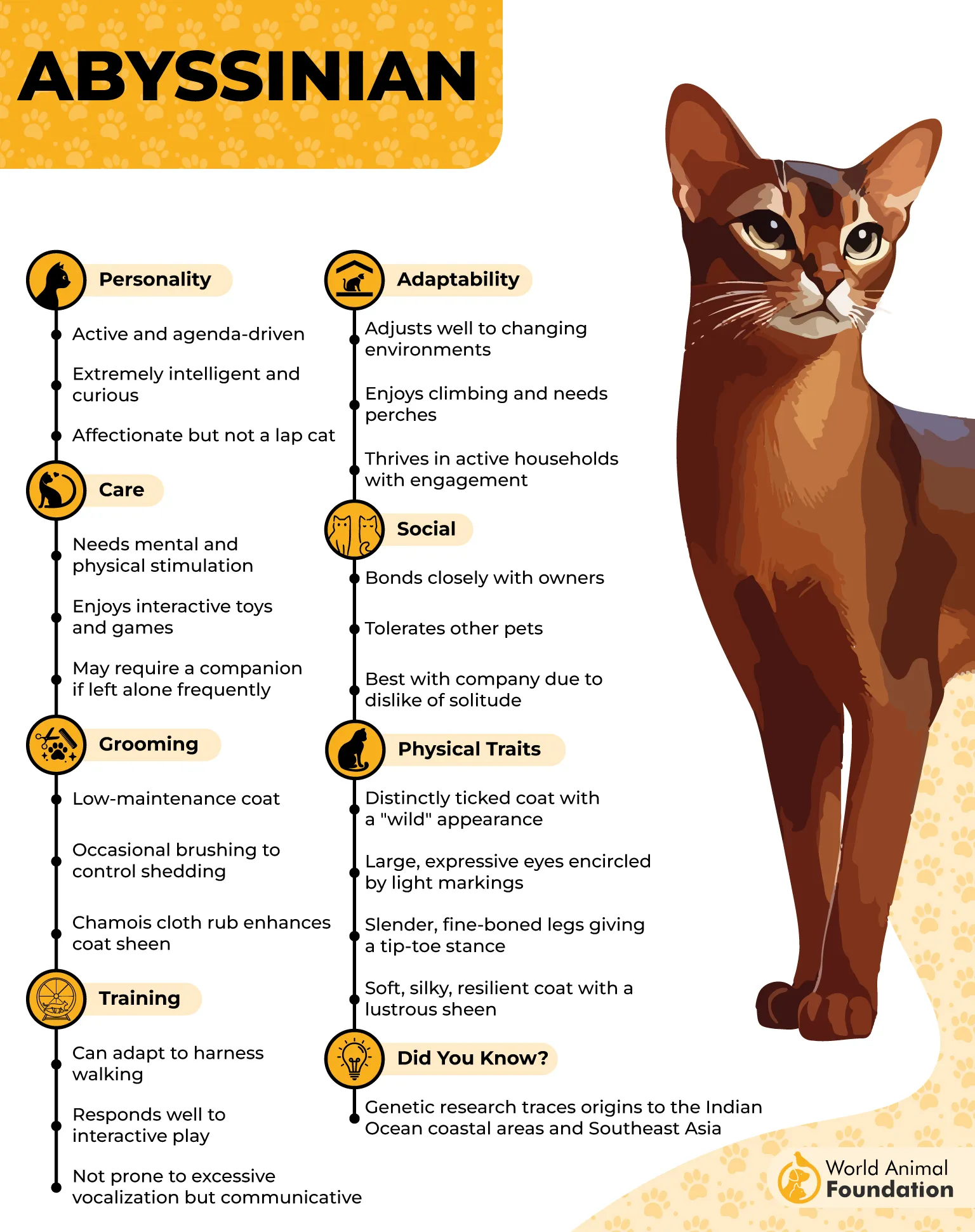
Abyssinians are famously high-energy cats that flourish in open floor plans where they can run, leap, and explore freely. Wide, uncluttered spaces allow them to move continuously between climbing spots, toys, and vantage points without feeling confined.
Because they love being involved in everything their humans do, open layouts suit their need to supervise household activity. These cats dislike isolation and boredom, so homes with flowing spaces help keep their minds engaged and their bodies active throughout the day.
Their muscular build, reaching up to 12 pounds, is designed for speed and agility rather than lounging.
Interesting fact: Abyssinians are not lap cats, but they are intensely loyal and prefer staying close to their people, often following them from room to room.
4. Norwegian Forest Cat
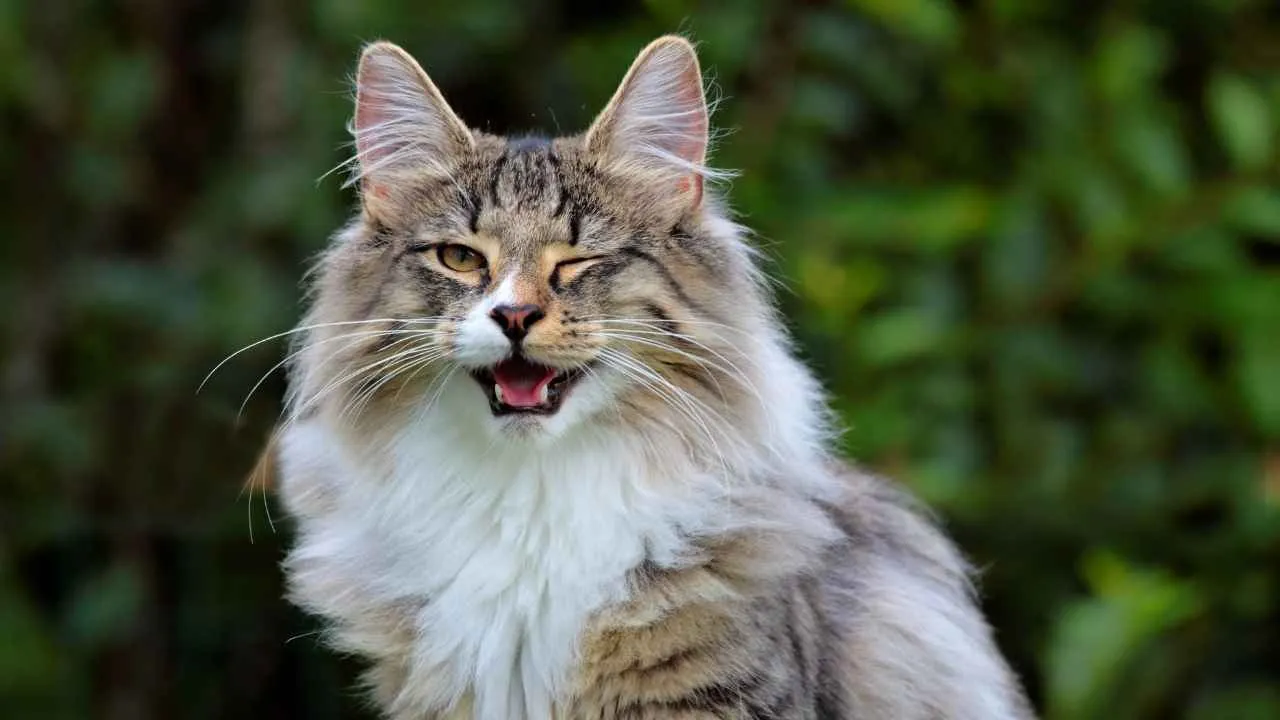
Also known as the Wegie, the Norwegian Forest Cat is a large, long-haired breed from Norway, recognized for its muscular build, wide-set eyes, and thick double coat. Friendly yet independent, this intelligent cat balances social curiosity with a love of personal freedom.
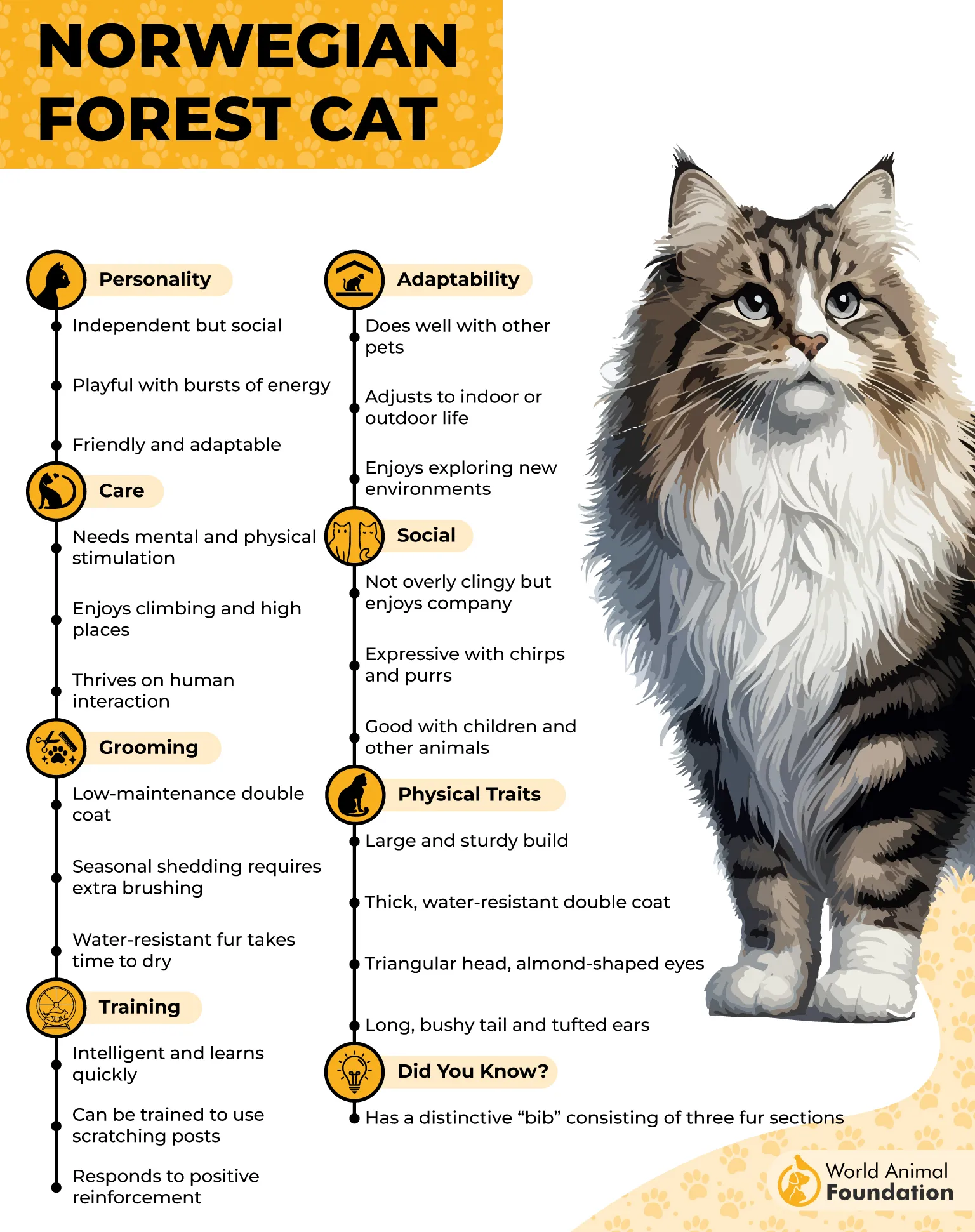
As a social cat that enjoys wide views, the Norwegian Forest Cat thrives in open floor plans where it can move freely and observe its surroundings. Spacious layouts allow this breed to patrol calmly, keeping sightlines clear without feeling confined or overstimulated.
These natural climbers appreciate homes with room for tall cat trees, open walkways, and secure shelving. Open spaces support their moderate energy level and encourage healthy movement, which is important for managing weight in a breed that can reach 9–16 pounds.
While affectionate with family, Wegies prefer choosing when to interact rather than being confined to laps. An open layout supports this independence while still keeping them socially connected.
Interesting fact: Norwegian Forest Cats were originally bred in Norway and may have descended from crosses between domestic and wild cats.
5. Oriental Shorthair
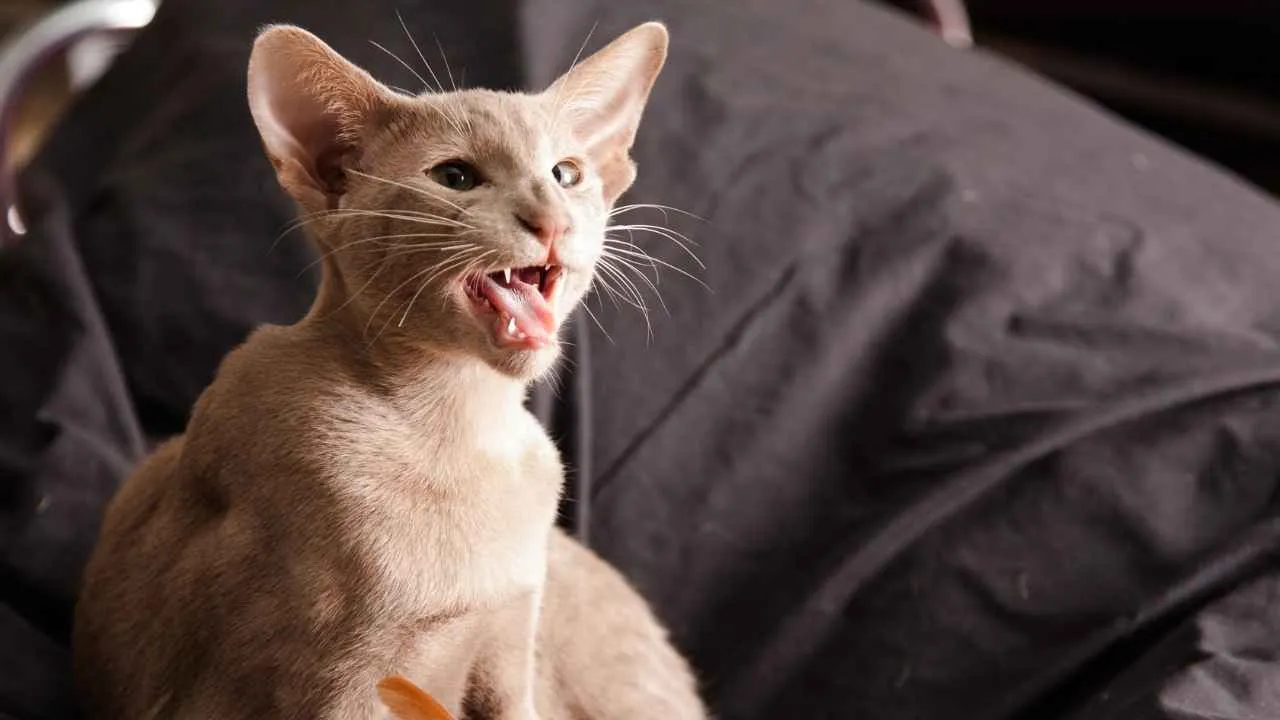
Also known simply as the Oriental, the Oriental Shorthair descends from Siamese lines and is admired for its slender frame, oversized ears, and sleek, glossy coat in dozens of colors and patterns. This intelligent, people-focused breed is energetic, curious, and deeply attached to its household.
Open floor plans suit the Oriental Shorthair perfectly. With an athletic build, they love having wide spaces to run, pivot, and supervise daily activity without feeling confined.
Large, open rooms allow this breed to satisfy its need for movement, climbing, and mental engagement. They enjoy jumping between furniture, perching high, and following family members from space to space, which is far easier in homes without tight corridors or closed-off rooms.
Because they crave stimulation and visibility, open layouts help prevent boredom and frustration in this highly social cat.
Interesting fact: Oriental Shorthairs are so intelligent and people-oriented that many can be trained to walk on a leash using positive reinforcement.
6. Ocicat
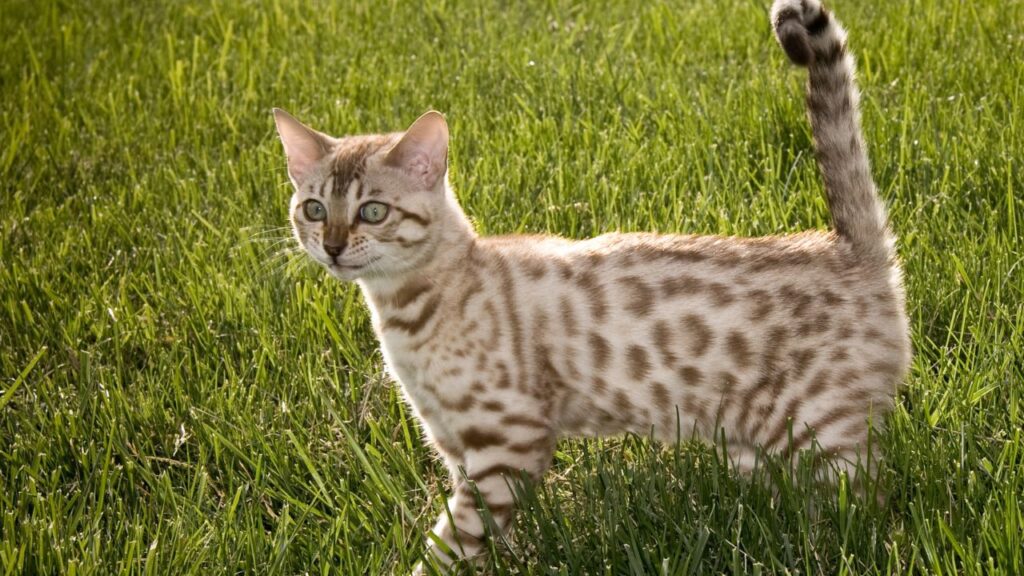
Also known simply as the spotted Ocicat, this striking breed was developed in the United States and designed to resemble a wild ocelot while remaining fully domestic. With a muscular build, bold spots, and a confident expression, the Ocicat stands out as both athletic and people-oriented.
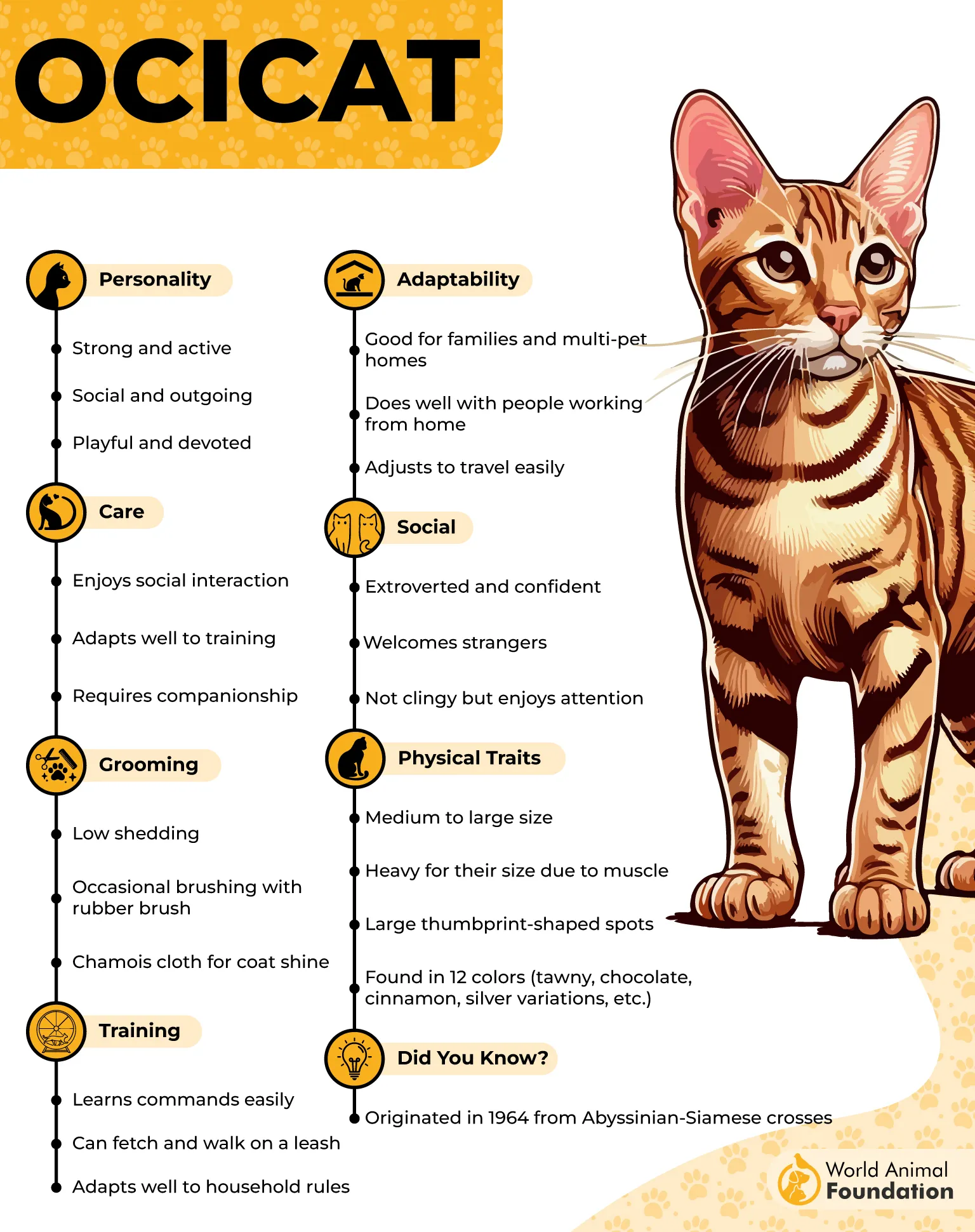
Naturally curious and fearless, Ocicats thrive in homes with open floor plans where they can move freely and stay visually connected to their surroundings. Wide spaces allow them to patrol, explore, and interact without feeling confined, which suits their confident temperament.
These cats love being part of household activity and often follow their humans from room to room. Open layouts give them room to play, climb, and observe from elevated perches, supporting their energetic yet balanced nature.
Because they dislike being isolated, spacious environments help them remain engaged and content throughout the day.
Interesting fact: The Ocicat was created by accident in the 1960s while breeders were attempting to combine Siamese and Abyssinian traits.
7. Turkish Van
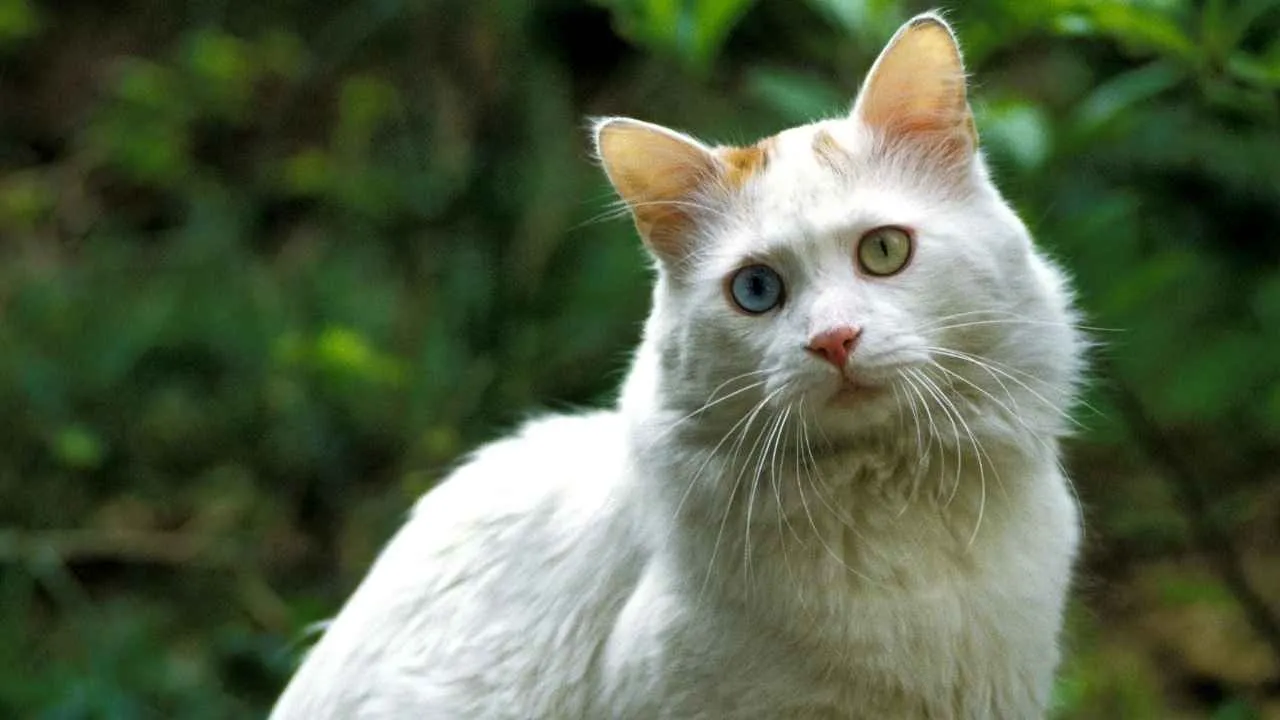
Also known as the “Swimming Cat,” the Turkish Van is a natural breed from the Middle East, instantly recognizable for its white coat with color limited to the head and tail. Large-bodied and athletic, this cat is adventurous, playful, and built for movement rather than lounging.
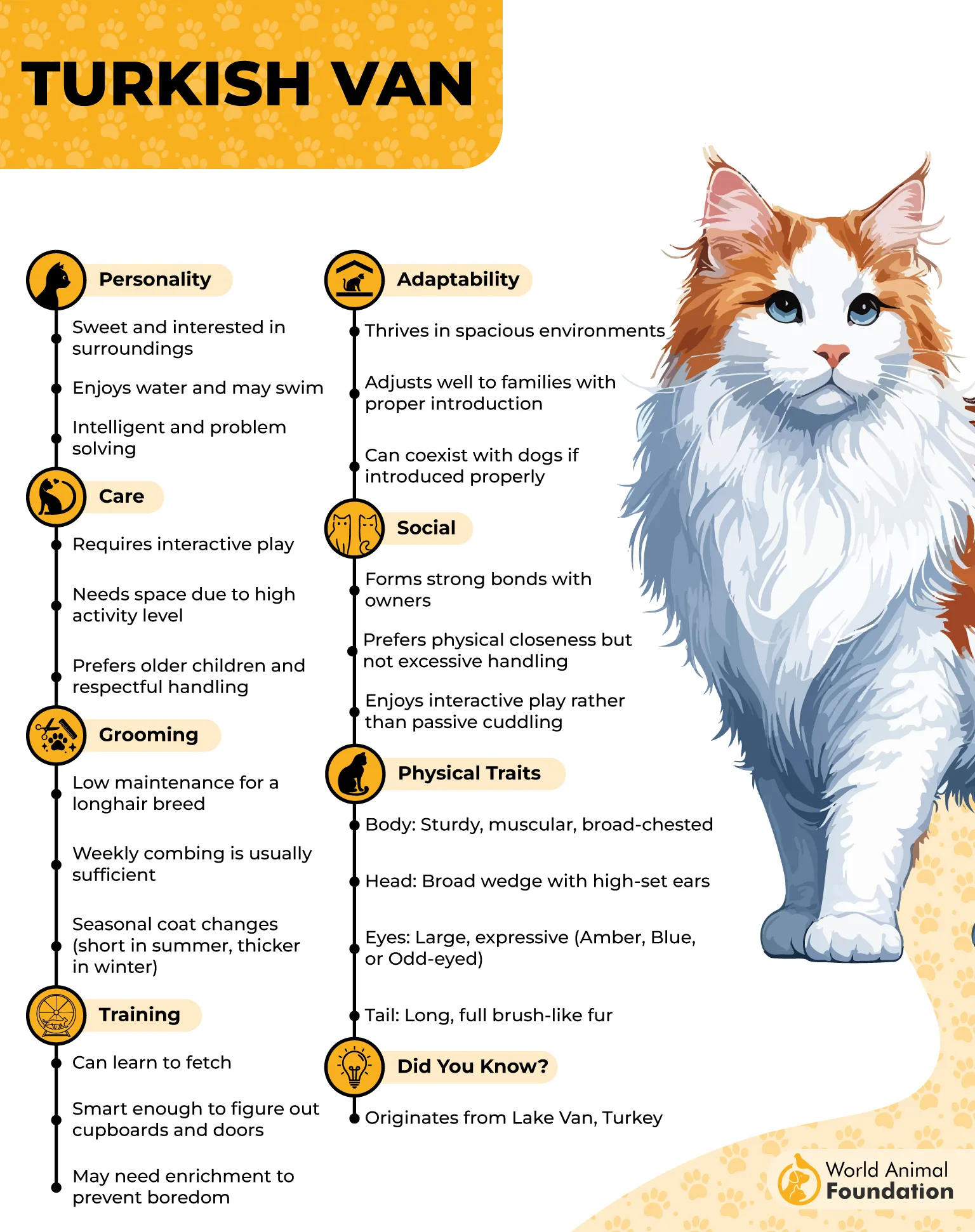
Open floor plans suit the Turkish Van perfectly, as this breed loves uninterrupted space to roam, chase, and explore. Wide layouts allow them to follow household activity without feeling confined, supporting their curious and energetic personality.
Rather than settling in one spot, Turkish Vans prefer fluid environments where they can move freely between rooms, climb, and survey their surroundings. An open flow helps reduce frustration and keeps their active minds engaged throughout the day.
With strong legs and a love of jumping, they thrive in homes that combine open spaces with vertical features like shelves or cat trees.
Interesting fact: Turkish Vans are famous for enjoying water and have earned the nickname “swimming cat” for their unusual fondness for splashing and bathing.
8. Egyptian Mau

Also known simply as the Mau, the Egyptian Mau is an ancient, naturally spotted breed with roots tracing back to Egypt. Recognized for its green eyes, sleek athletic build, and dramatic “mascara” facial markings, this cat combines elegance with power.
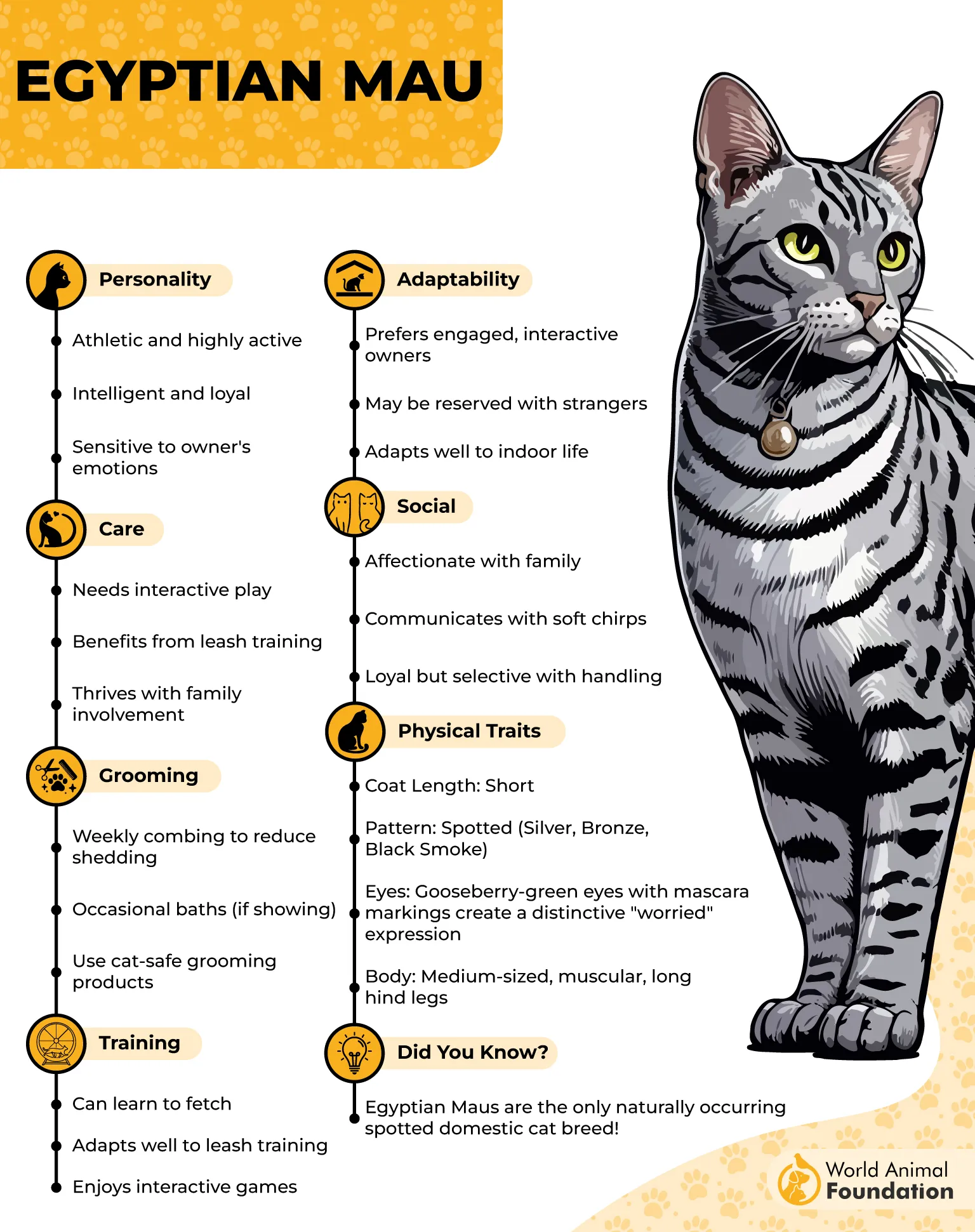
Playful and energetic by nature, the Egyptian Mau thrives in homes with open floor plans where it can sprint, leap, and explore freely. Wide, unobstructed spaces allow this fast-moving breed to fully express its athletic abilities without feeling confined.
Spacious layouts also support their curious and alert personality. Maus enjoy tracking movement across rooms, engaging in chase-style play, and interacting with family members from a distance—something open areas make much easier and more stimulating.
Because they are intelligent and active, open floor plans help prevent boredom and restlessness while strengthening their bond with owners through interactive play.
Interesting fact: The Egyptian Mau is one of the fastest domestic cat breeds, capable of running up to 30 miles per hour.
9. Siberian
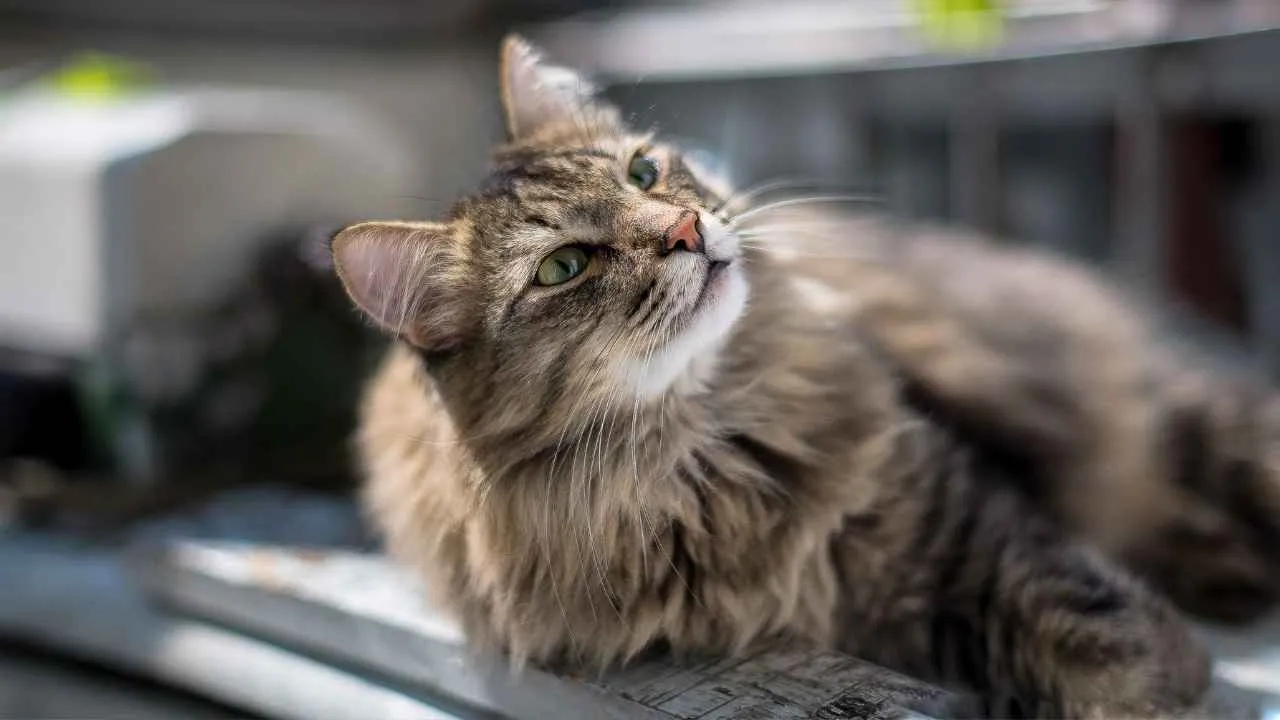
Also known as the Siberian Forest Cat, the Siberian is an ancient breed from Russia, prized for its powerful build, luxurious triple coat, and hardy nature. Developed in harsh climates, this large, semi-longhaired cat is intelligent, affectionate, and surprisingly gentle indoors.
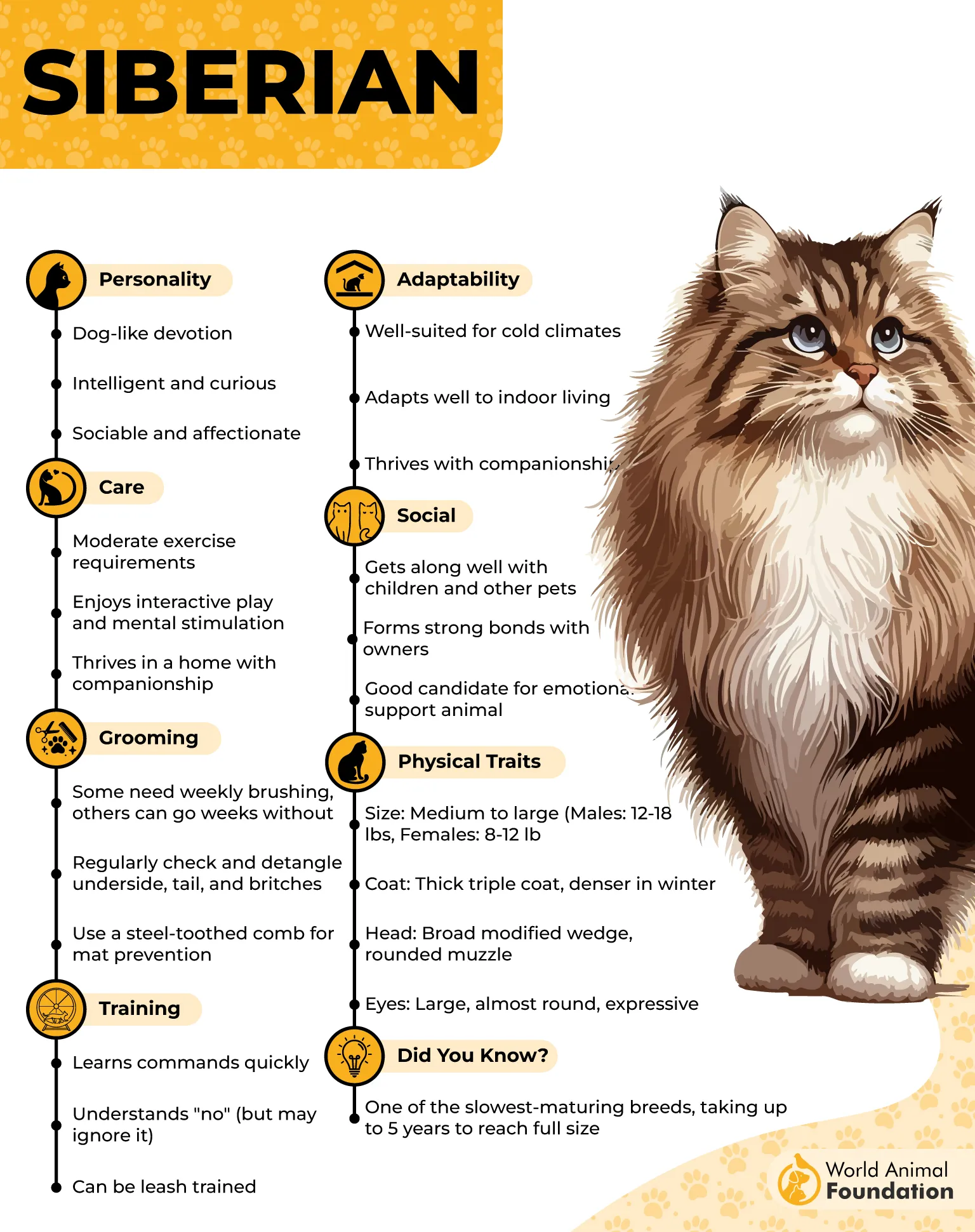
With a bold, curious personality, the Siberian fits the idea of Breed #9: A Big Personality That Needs Big Space? perfectly. Open floor plans allow them to move freely, patrol their territory, and stay connected to household activity without feeling confined.
These cats enjoy exploring wide areas, leaping across rooms, and choosing elevated viewpoints, making spacious layouts ideal for both exercise and mental engagement. Their medium energy level thrives when they can roam, observe, and play without obstacles breaking up their flow.
While affectionate and friendly, Siberians also value autonomy and appreciate room to retreat when needed.
Interesting fact: Siberian cats are considered hypoallergenic and developed their dense triple coats to survive Russia’s long, severe winters.
Conclusion
Open floor plans can make a real difference for cats that love movement, visibility, and freedom. Many large or athletic breeds tend to thrive in layouts where they can roam from room to room without barriers.
For these cats, open spaces support daily play, exploration, and a sense of adventure, especially for breeds with dense coats or energetic personalities that enjoy staying active indoors.
While most cats appreciate cozy corners, some also benefit from open layouts when shared with other cats, pets, or even a playful kid.
Open homes allow cats with more dog-like traits to play fetch, track food routines, and move comfortably around animals and people. When designed thoughtfully, these spaces create a calm yet engaging environment where curious cats can explore, rest, and truly feel at home.
