




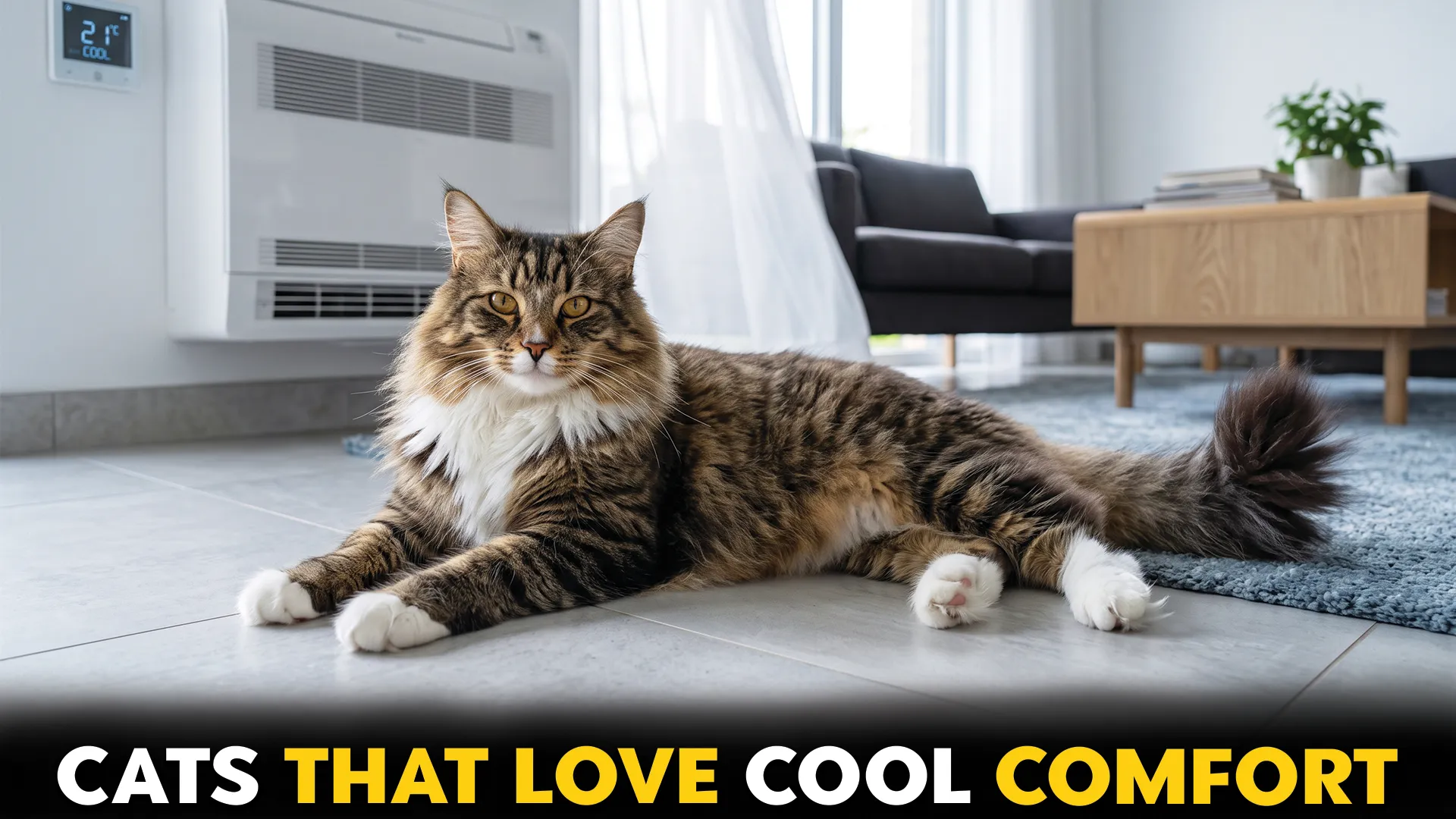
If your home feels noticeably warmer during summer, your cat feels it too. Unlike people, cats cannot simply switch on a fan, lower the thermostat, or tell you when the heat has become uncomfortable.
Some continue lounging near sunny windows without complaint, while others immediately search for the coolest corner they can find. Their reaction often depends on their coat, body type, and how well they handle rising indoor temperatures.
For certain cats, an air-conditioned home is more than a pleasant place to nap. It helps them stay comfortable, active, and less likely to struggle with prolonged heat indoors. Knowing which breeds naturally prefer cooler living spaces can make a real difference before bringing one home.
Here, you’ll find cat breeds that prefer air-conditioned homes, plus simple ways to keep them comfortable when temperatures rise.
Key Takeaways
A sunny window may be a cat’s favorite nap spot, until the summer heat starts making that cozy corner too warm and affecting its body temperature.
Persian and Himalayan cats are two breeds that benefit greatly from a cool cat room with good airflow, especially with their thick coats and flatter faces.
Maine Coon and Siberian cats bring even more fur into the picture, while their playful nature still calls for plenty of indoor activity during moderate temperatures.
The rest of the list reveals which cats are happiest when the indoor temperature stays comfortably cool.
Cat Breeds That Prefer Air-Conditioned Homes
1. Persian
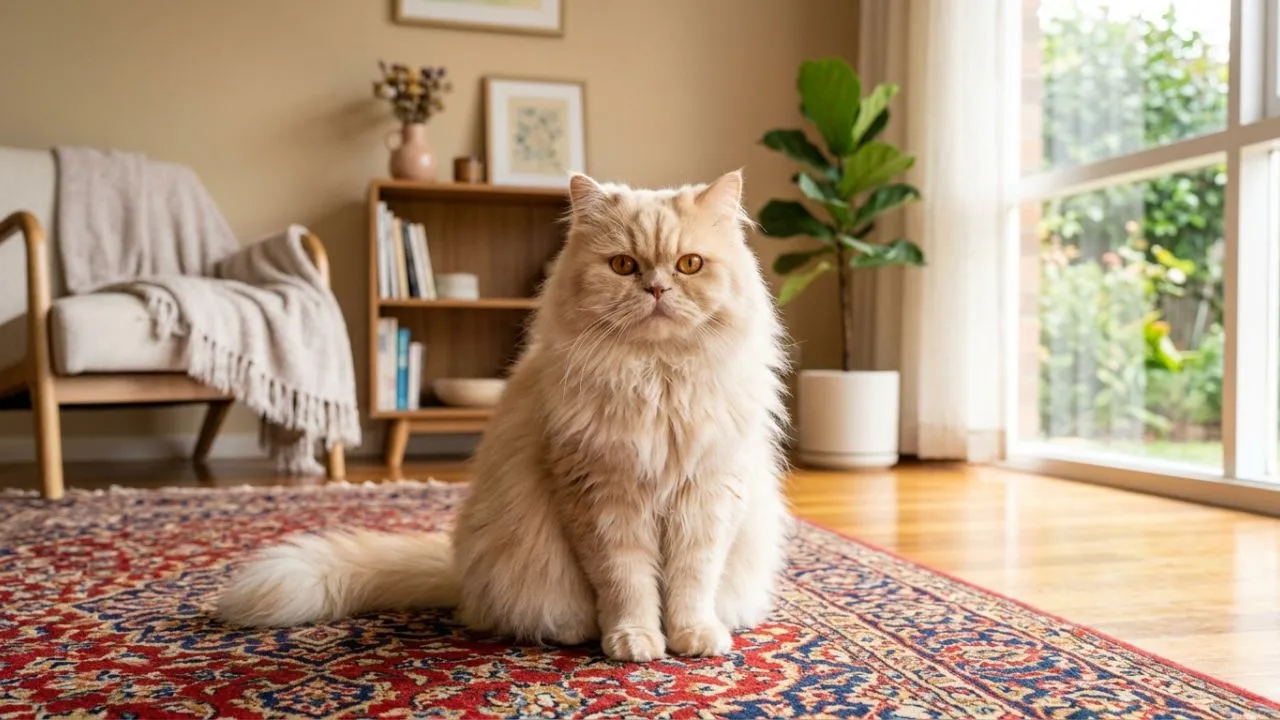
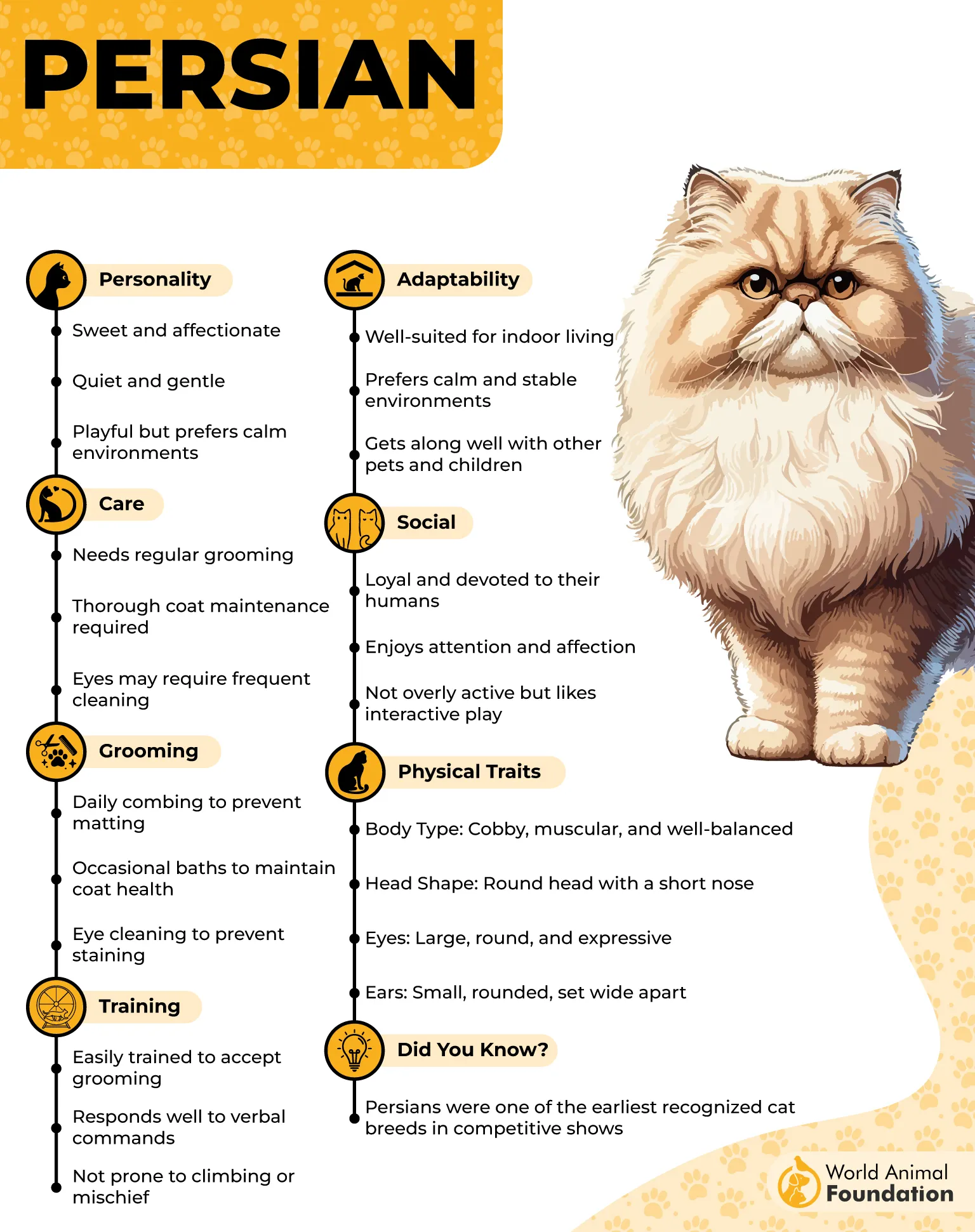
Persian cat was developed in Persia, now known as Iran, before finding lasting popularity among cat enthusiasts across the world. Its graceful appearance, rounded face, and flowing coat helped place this breed among the most familiar names in the cat fancy for generations.
Heat Needs Extra Care
A thick double coat and a flat-faced structure make warm indoor conditions much harder for this breed to handle. Keeping rooms between 22–25°C (72–78°F) helps reduce the risk of overheating, while cool tile floors offer a comfortable place to rest.
Some practical details make a noticeable difference:
Multiple bowls of cool, fresh water encourage hydration
Regular brushing reduces trapped heat from matted fur
Pet water fountains can increase daily water intake
Calm by Choice
Persian cat prefers a peaceful routine and is happiest in a quiet home where long naps are part of the day. Gentle affection, brief play sessions with interactive toys, and relaxed companionship suit this breed far better than constant activity or noisy surroundings, as Four Seasons reported.
2. Himalayan
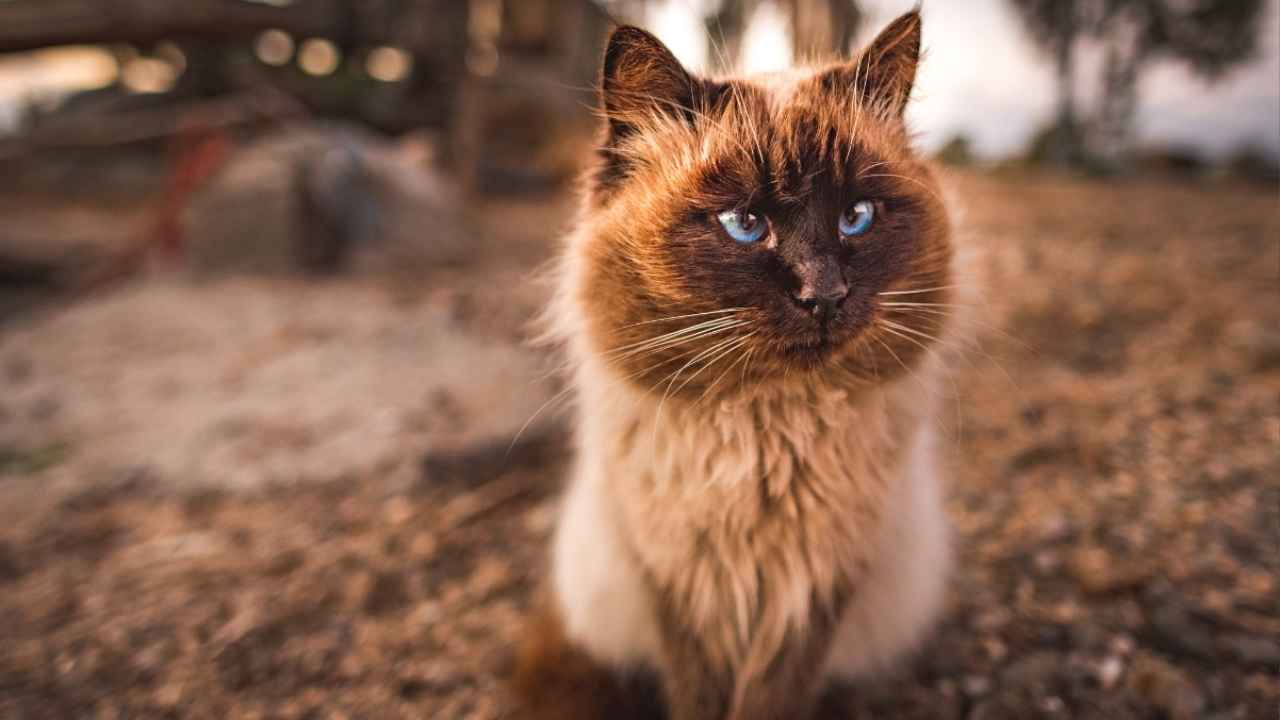
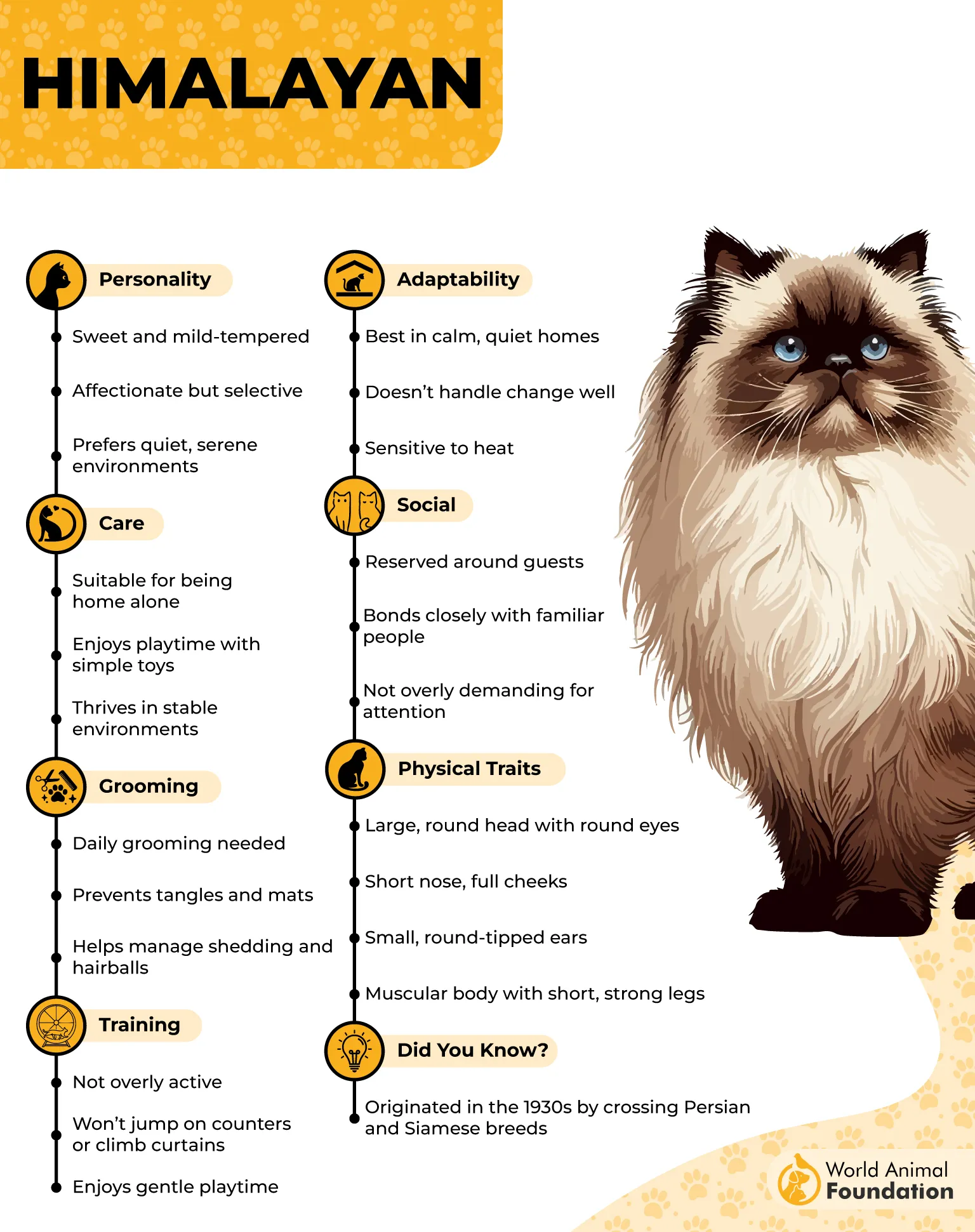
Himalayan first appeared through the pairing of Persian and Siamese cats, bringing together two very different feline lines in a single breed. The long flowing coat came from the Persian side, while the dark points and vivid blue eyes reflect its Siamese ancestry.
Built for Cooler Rooms
With a soft, downy undercoat beneath longer protective hairs, the dense double coat is designed for warmth rather than heat. Keeping the room cool, offering cool flooring, and ensuring fresh water is always available can help prevent overheating in warmer months.
The details below tell more:
Daily grooming helps prevent matting
Flatter faces may increase heat sensitivity
Tile or wood floors offer cooler resting spots
Calm Household Fit
Himalayan fits comfortably into homes with respectful children, other cats, and cat-friendly dogs because of its easygoing temperament. This medium-to-large breed also enjoys affectionate interaction, making petting, lap time, and family companionship part of its everyday routine.
3. Maine Coon
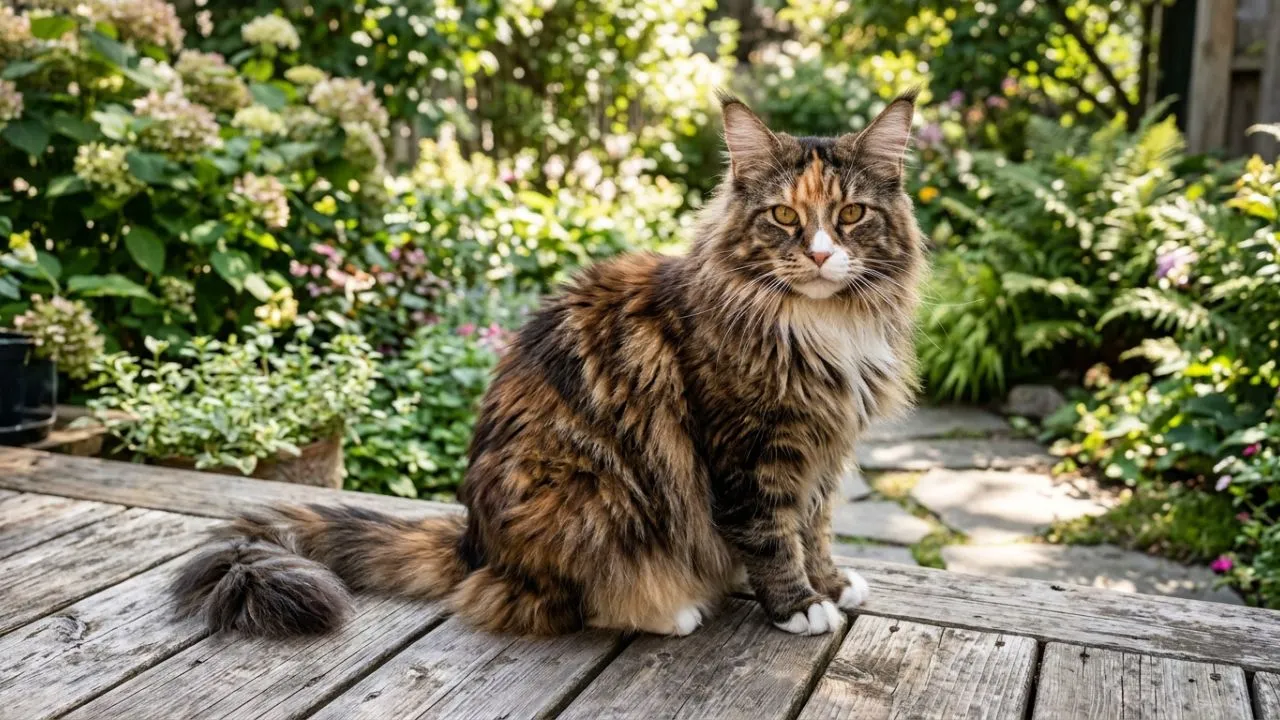
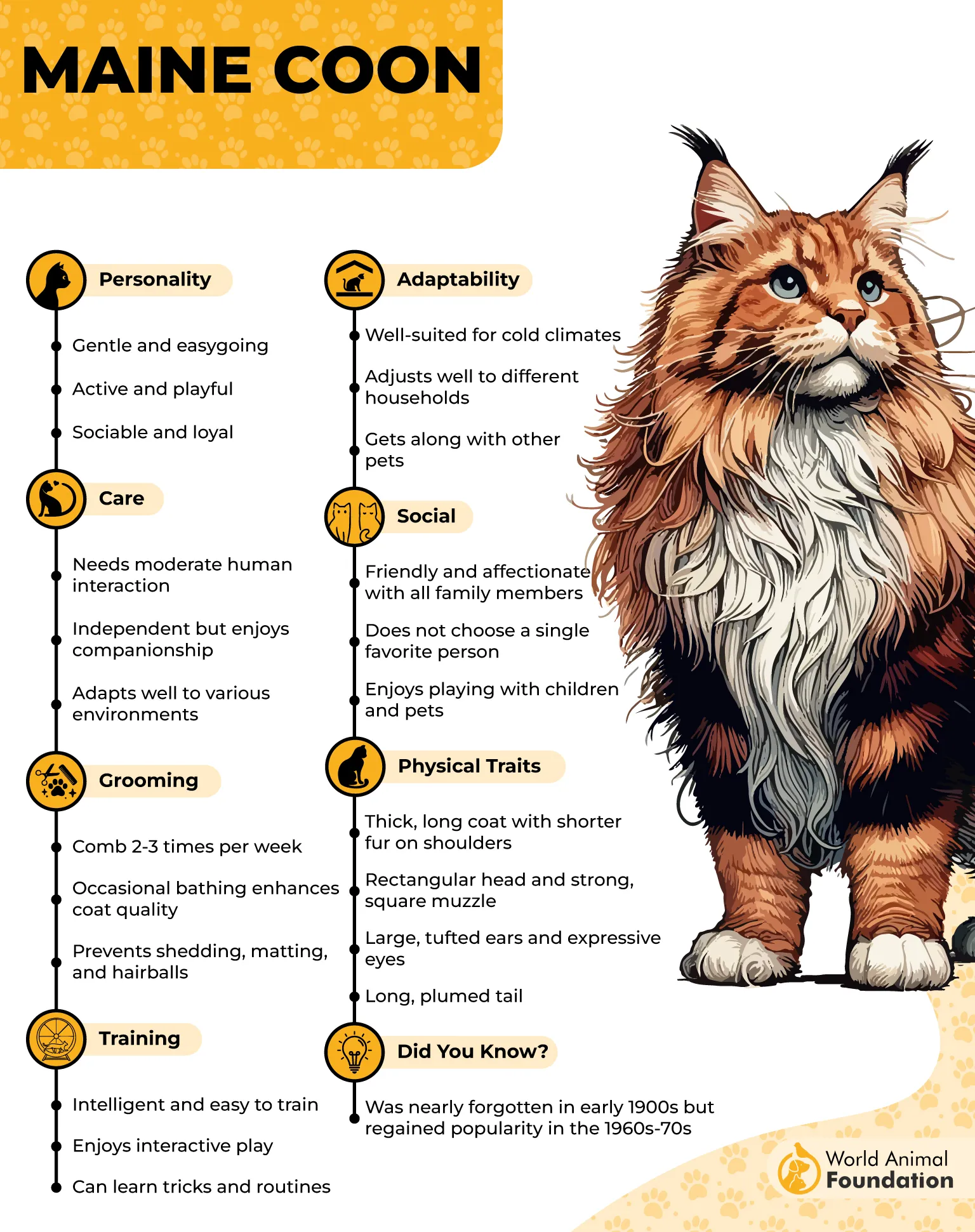
Maine Coon descended from long-haired cats brought to Maine by European seafarers during the 1850s, where they mixed with local shorthair cats. Their offspring grew into large, sturdy felines with semi-long coats and full, brush-like tails that inspired the breed’s familiar name.
Cooler Comfort
Built for harsh weather, the thick, water-repellent coat can also make it easier for body heat to build up in warm conditions. Air-conditioned rooms help reduce overheating, limit excess moisture in the fur, and lower the chance of painful matting in the dense coat.
These home adjustments can make a noticeable difference indoors:
Place a cat tree beside a window
Add climbing shelves and scratching posts
Use food puzzles during play sessions
Indoor Routine
Maine Coon still enjoys interactive games such as fetch, wand toys, and laser pointers that keep daily routines engaging. Combining play sessions with puzzle feeders adds another challenge while helping this energetic cat remain active inside a comfortably cooled home, as Untamed noted.
4. Norwegian Forest Cat
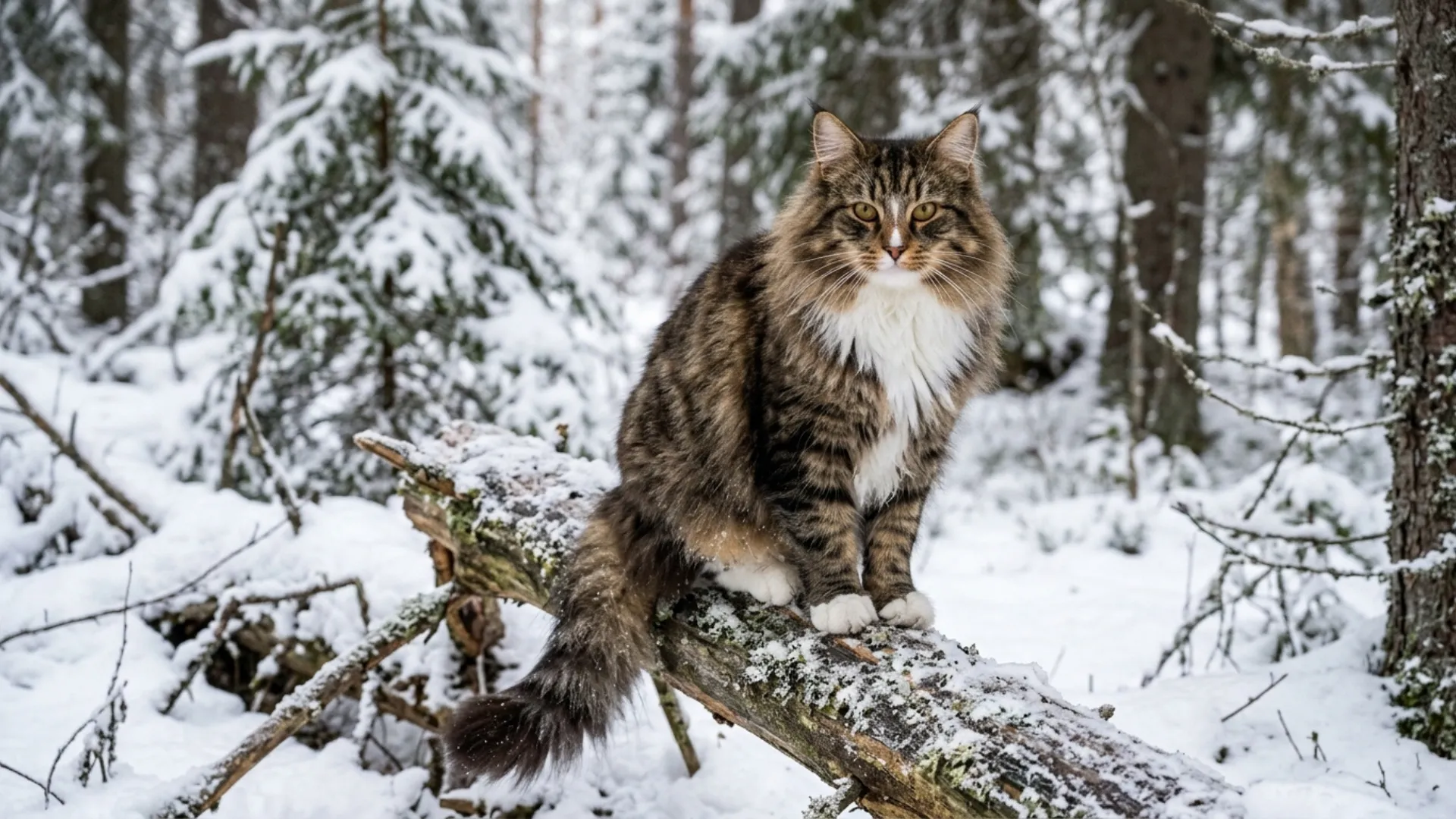
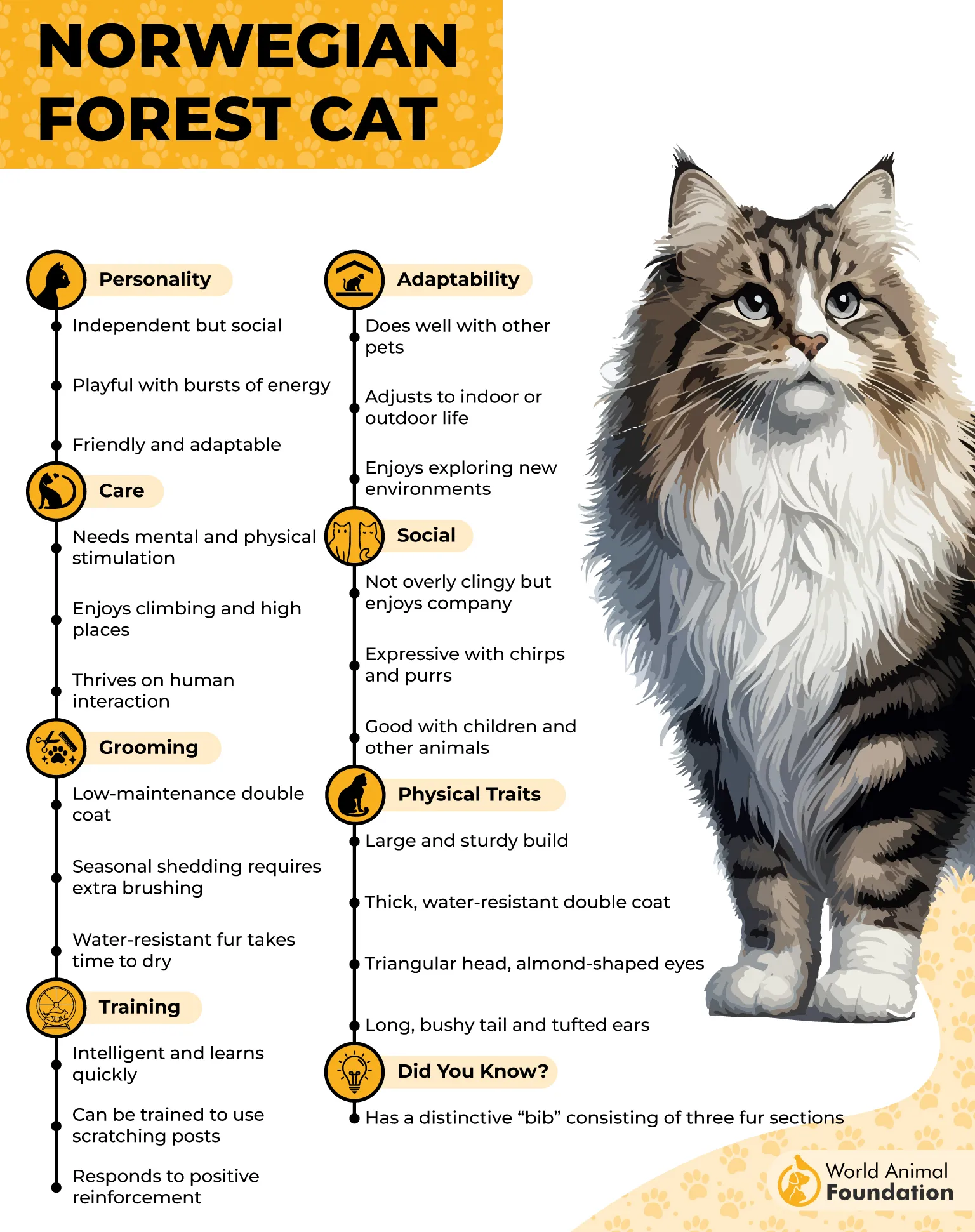
Norwegian Forest Cat first took shape among the rugged forests of Scandinavia, where freezing weather and damp surroundings shaped its distinctive appearance over countless generations. The nickname “Wegie” is now widely used by enthusiasts, reflecting the breed’s enduring connection to its Nordic roots.
Cooler Comfort
According to Purina, cooler indoor spaces can feel especially comfortable with a thick, water-repellent double coat, particularly during warm weather. When summers turn hot or humid, air-conditioned rooms, shade, and good airflow give this heavily coated cat a more comfortable place to relax.
Several details help complete the picture:
Woolly undercoat beneath glossy guard hairs
Bushy tail nearly matching body length
Tufted ears and paws for extra insulation
Built for Exploration
Norwegian Forest Cat combines a muscular frame with sharp climbing ability, making tall cat trees and climbing shelves far more rewarding than limited floor space alone. Interactive games and puzzle toys also provide meaningful ways to satisfy its curious and playful nature.
5. Siberian
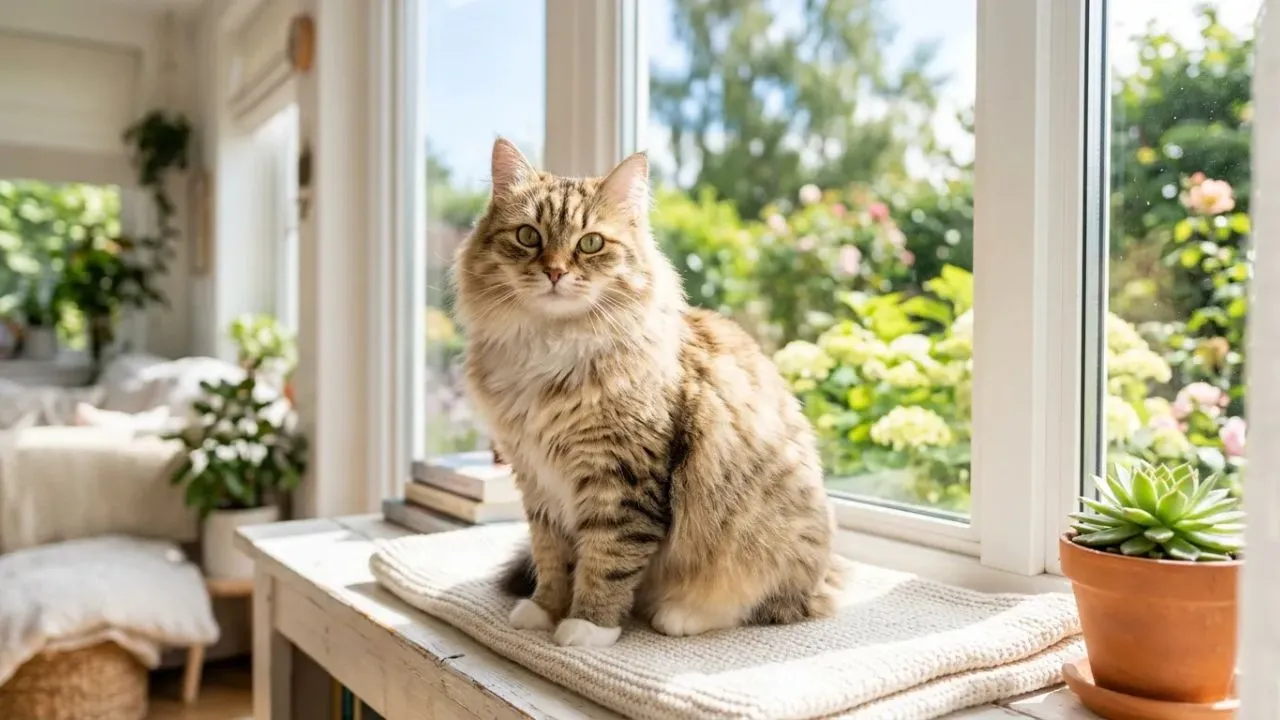
Siberian comes from the forested regions of Russia, where generations of natural adaptation shaped a cat capable of handling long, unforgiving winters.
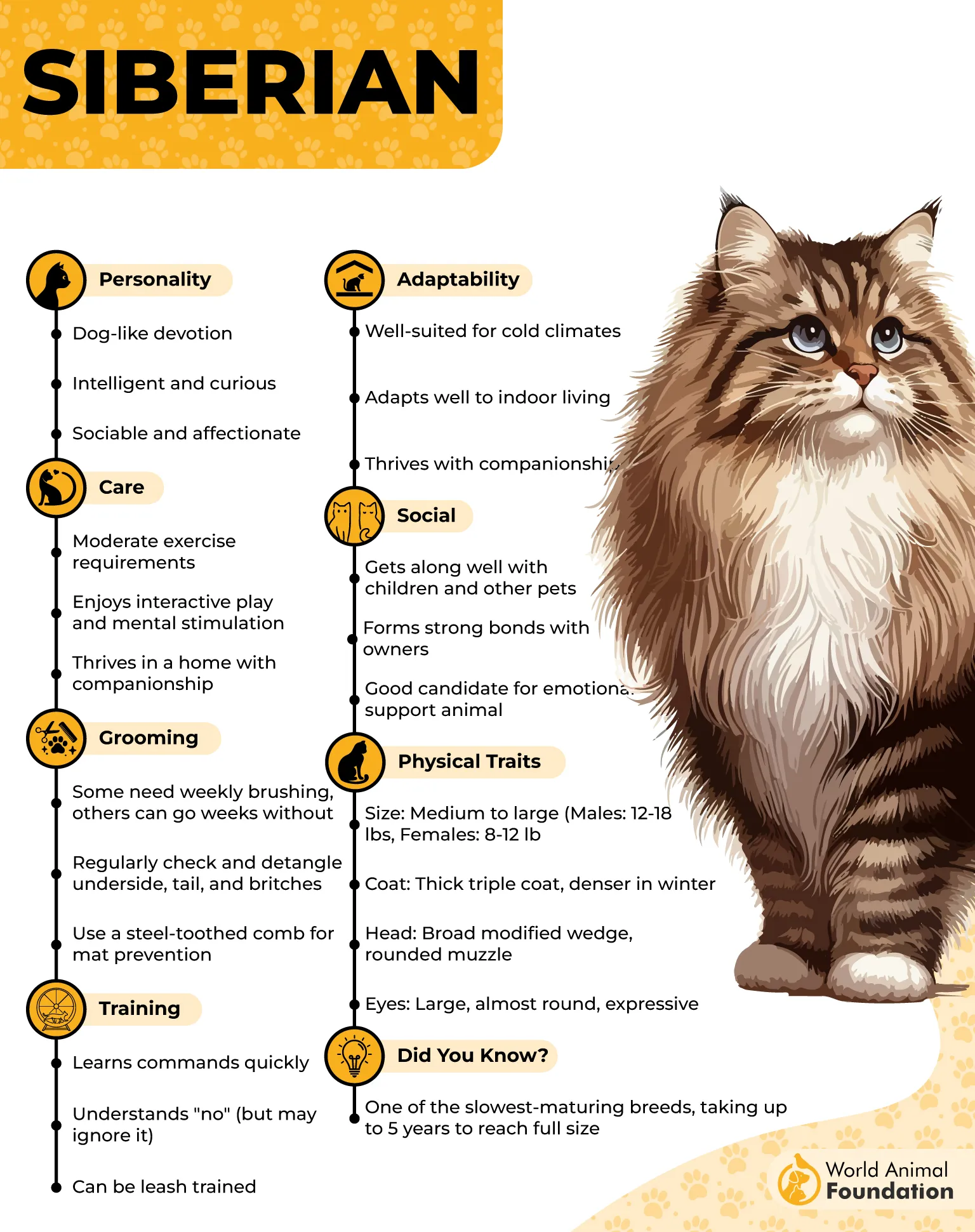
Its powerful frame and remarkable triple-layered coat have made it one of the oldest feline breeds still recognized today, as well as Russia’s national cat.
Keeping Cool
Their impressive coat needs thoughtful indoor care once temperatures climb, making a cool home especially helpful during hotter months. Rooms below 24°C (75°F), steady airflow, and access to cool tile or wooden floors allow this breed to rest more comfortably throughout the day.
A closer look reveals even more:
Fresh, cold water available at all times
Ceiling fans improve cool air circulation
Thick rugs replaced with tile or hardwood access
Curious Every Day
Siberian enjoys climbing, exploring high places, and turning everyday spaces into opportunities for play and discovery. This breed also reaches full maturity at around five years of age, so its playful, kitten-like behavior lasts much longer than many other cats.
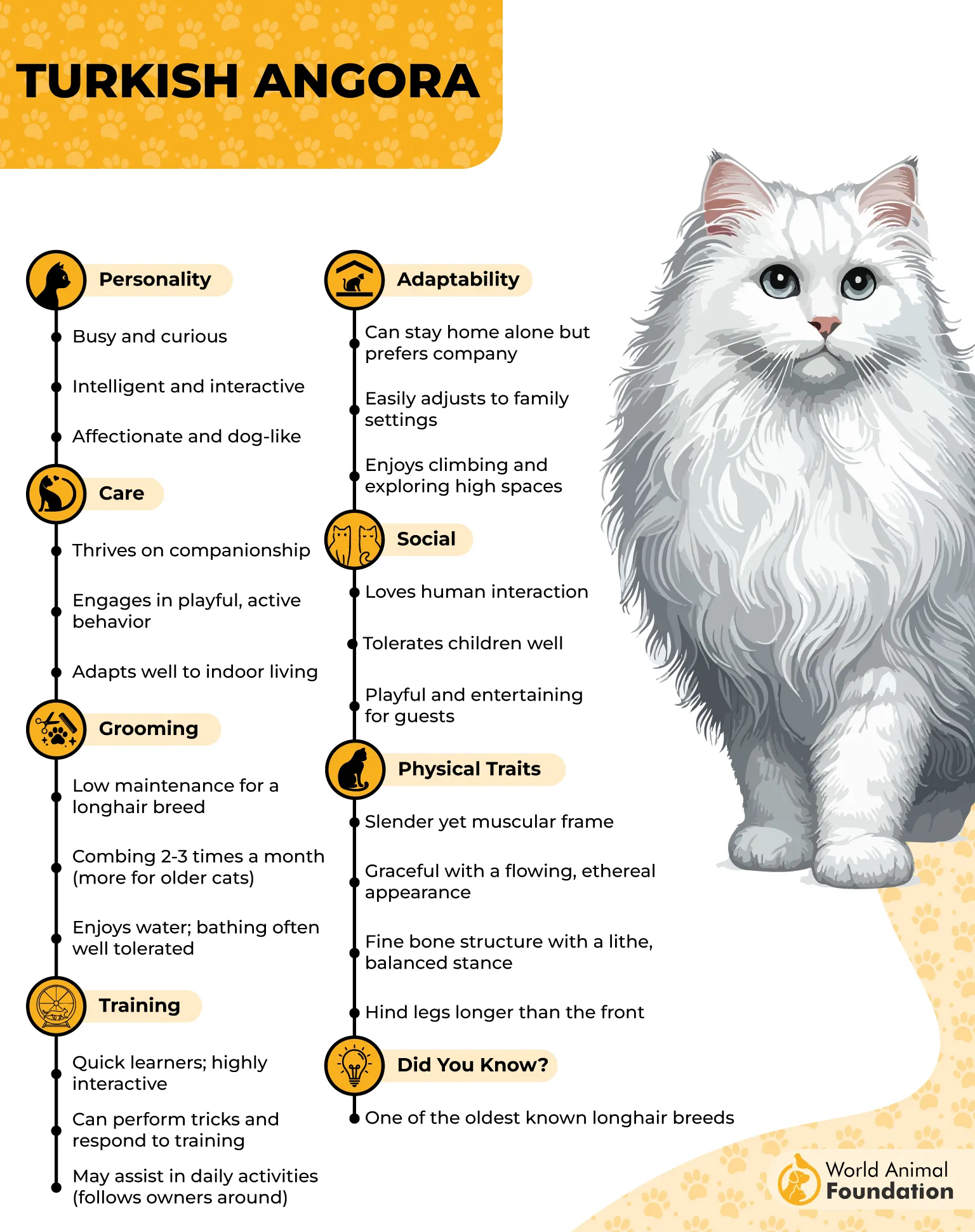
6. Turkish Angora
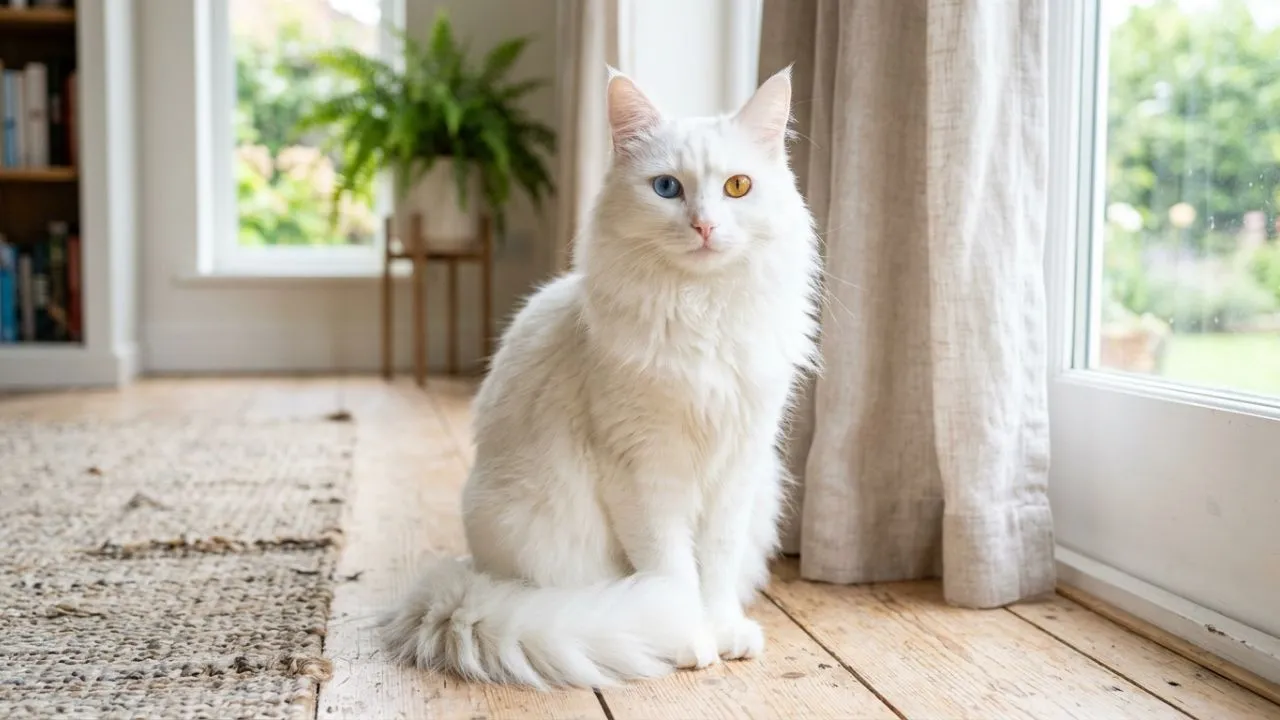
Turkish Angora came close to disappearing in the early 1900s after extensive crossbreeding influenced its numbers. Turkey responded by protecting the breed through a dedicated program at the Ankara Zoo, and the first cats reached the Americas in 1962.
Better in Cool Comfort
A fine, silky coat with almost no undercoat makes warm, humid weather less comfortable than a cool indoor environment. Air conditioners are a better fit, although resting spots should be placed away from direct vents to avoid unnecessary stiffness or respiratory irritation.
There’s plenty more worth knowing:
Weekly combing helps remove seasonal loose hairs
Summer shedding can shift slightly in cooled indoor environments
Need occasional baths
Full of Character
Turkish Angora enjoys greeting visitors and usually joins household activity instead of watching from a distance. Time with people, interactive toys, and playful games hold its attention far longer than sitting quietly on someone’s lap for extended periods.
7. Cymric
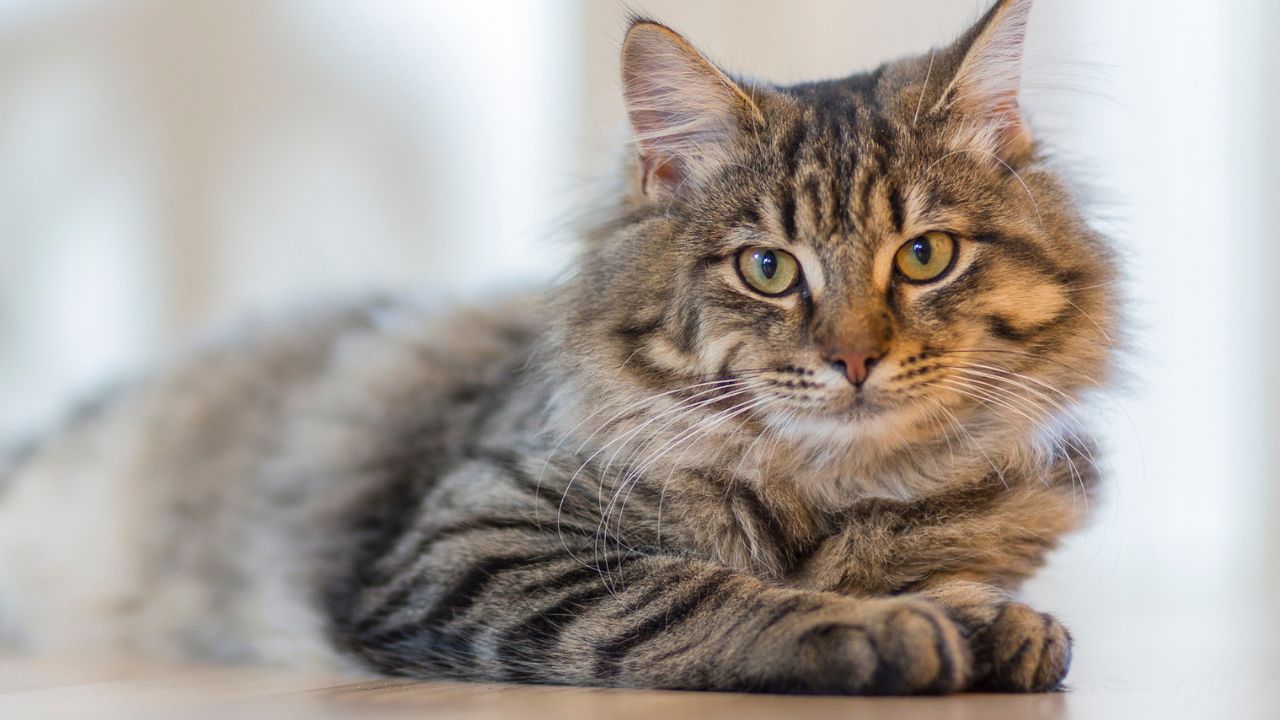
Cymric first appeared when semi-longhaired kittens were born within Manx litters on the Isle of Man, long before breeders in Canada focused on them during the 1960s.
Wider recognition followed in the 1970s, although some cat registries continued grouping them with the Manx instead of listing them separately.
Cool Indoor Comfort
Cymric’s thick double coat feels more comfortable in an air-conditioned home when the temperature remains between 70°F and 78°F (21°C to 25°C). Indoor humidity around 40% to 60% also helps prevent the coat from becoming overly dry while reducing static in the fur.
The following extra details make daily care easier:
Keep beds away from direct AC vents
Brush 2–3 times weekly, daily during shedding
Place fresh water bowls in several rooms
Gentle Company
Cymric enjoys spending time with people and communicates with a soft, pleasant voice instead of loud, demanding calls. Playful moments come naturally, although adult cats often need extra encouragement to remain active through games and food-dispensing toys.
Conclusion
Finding the right feline companion involves more than appearance alone. Everyday comfort, activity level, grooming needs, and how well a cat handles warmer temperatures all deserve equal attention before making a decision. Providing fresh air and keeping your cat cool during hot weather helps them dissipate heat more comfortably while reducing the risk of heat exhaustion.
Combined with fresh water, regular brushing, engaging indoor activities, and attention to nighttime temperatures, those small choices help create a healthier living environment throughout the hottest months, even for breeds that naturally prefer cold weather.
Selecting with those needs in mind often leads to a rewarding relationship built around comfort, consistency, and lasting companionship.
