




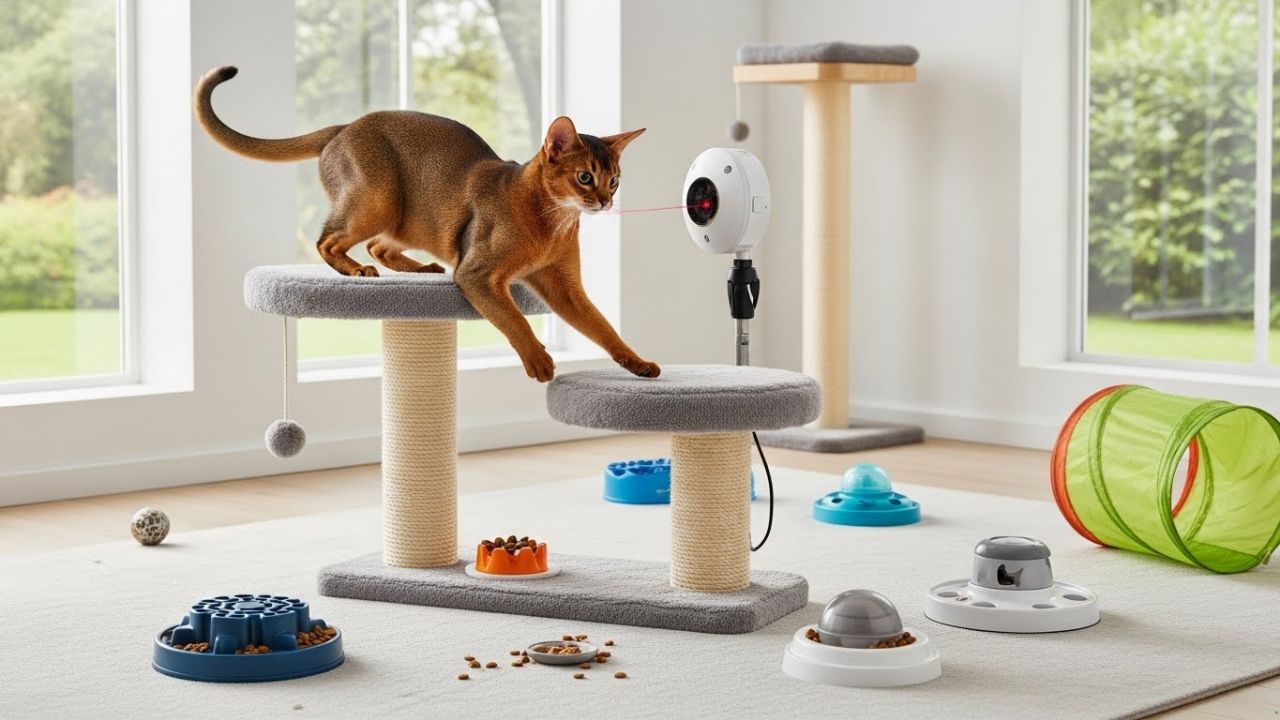
Some cats seem to pick things up almost instantly, whether it is learning a routine, figuring out a puzzle toy, or responding to training. While every cat is an individual, many owners notice that certain cats are especially curious, attentive, and eager to engage with their environment.
These qualities often make learning feel faster and more natural. In this article, we look at cats that are often described as quick learners and explore what sets them apart in everyday life. From playful problem solvers to highly interactive companions, these cats tend to enjoy mental challenges and human interaction.
Understanding these traits can help you better support your cat’s learning style and build a stronger bond together.
Cat Breeds That Can Learn the Fastest
1. Bengal
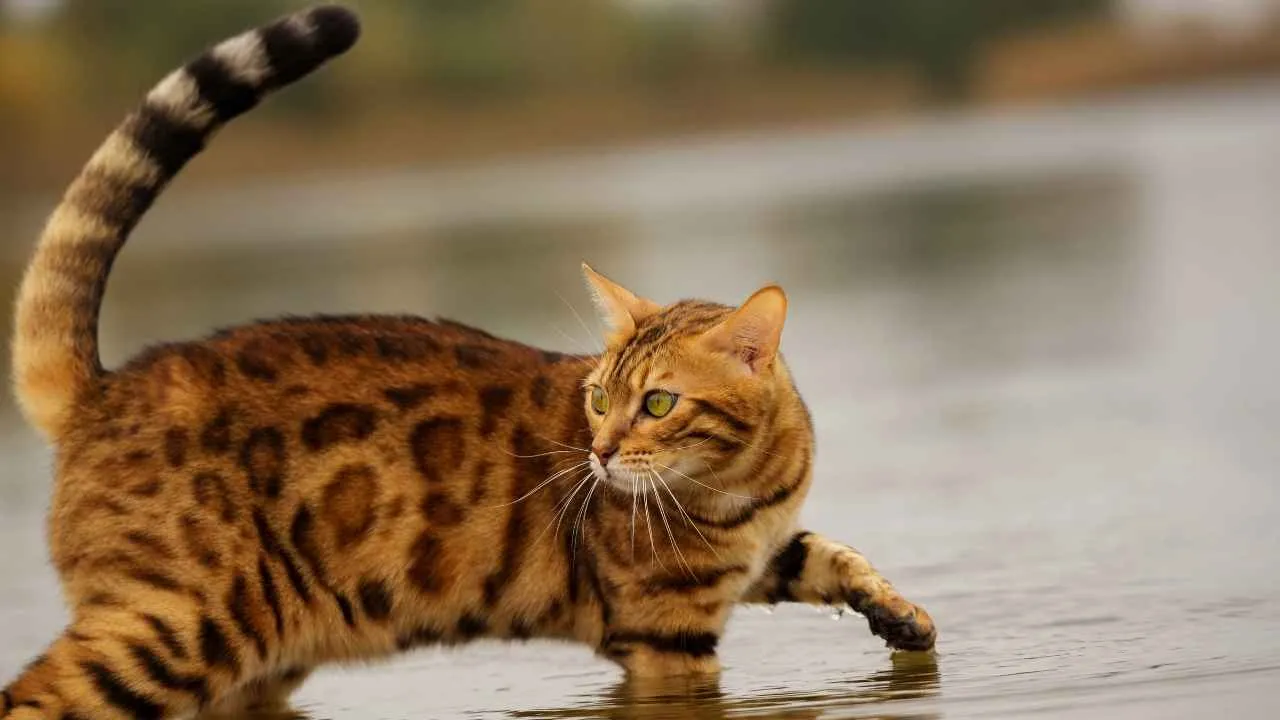
The Bengal is a sleek, muscular cat with a wild look, known for bold marbling or spots on a thick, luxurious coat. It has an athletic, well-balanced build, with smallish ears, a wedge-shaped head, and neat paws. This breed is also described as highly active and inquisitive, and it tends to do best with an experienced owner.
Purina states that this is a cat that needs a high level of enrichment, including simulated hunting games and interactive play. Bengals are often described as super smart and very curious, so learning new tricks and skills can become a favorite pastime. Without enough to do, they can easily turn their energy toward whatever is most interesting in the room.
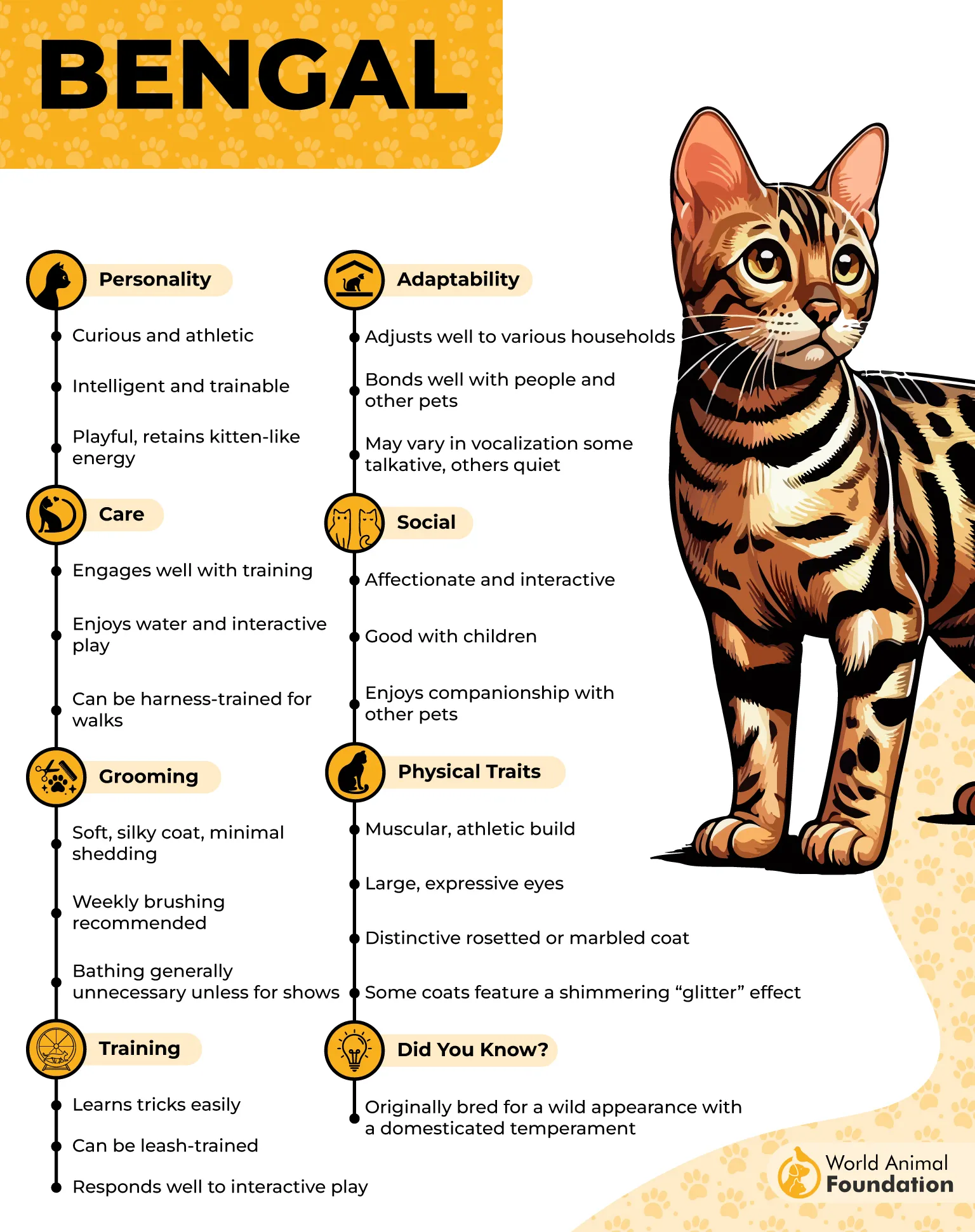
Bengals are frequently described as intelligent and active, and their background includes “F” generations, with later generations tending to be more similar in personality to domestic cats while keeping the spotted look. In some places there can be restrictions, so checking local and state rules matters before bringing one home. When a Bengal’s brain and body are kept busy, training time can feel like play instead of work.
Why This Cat Is a Good Fit
Works well for families who want a cat that stays engaged with games, puzzles, and new cues.
A strong match for confident, hands-on owners who enjoy interactive training sessions.
Great for homes that can provide daily indoor enrichment to channel curiosity.
2. Abyssinian
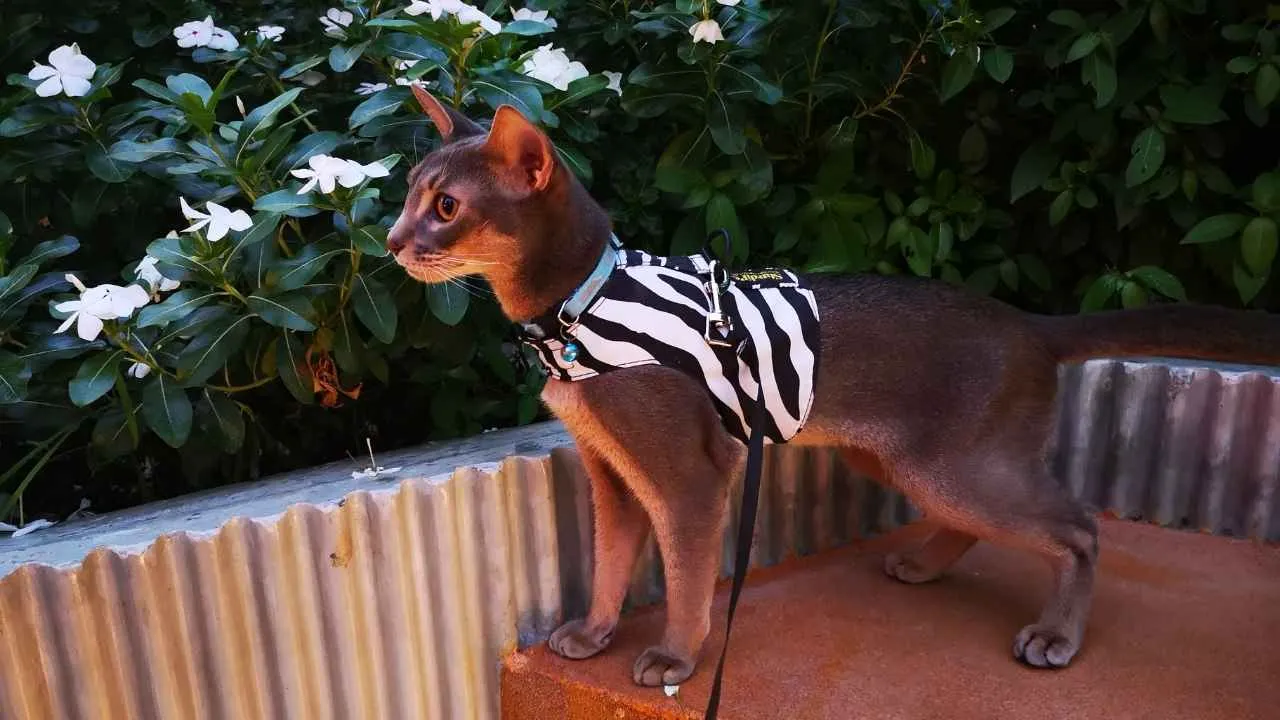
The Abyssinian is a short-haired cat with a ticked coat, shown in colors like ruddy, cinnamon, blue, and fawn. The breed is considered one of the oldest, with earlier beliefs tying its look to cats in ancient Egyptian art, while genetic research points to origins around the Indian Ocean and Southeast Asia. It has a lithe but muscular feel, a beautifully arched neck, large cupped ears, and expressive almond-shaped eyes.
This breed is often described as sociable, super-inquisitive, and extremely active and playful. If it is not given enough acceptable toys, it may devise its own, which says a lot about how quickly it problem-solves. It is also described as high energy and intelligent, and it can get bored easily without stimulation, so training can provide a brain workout.
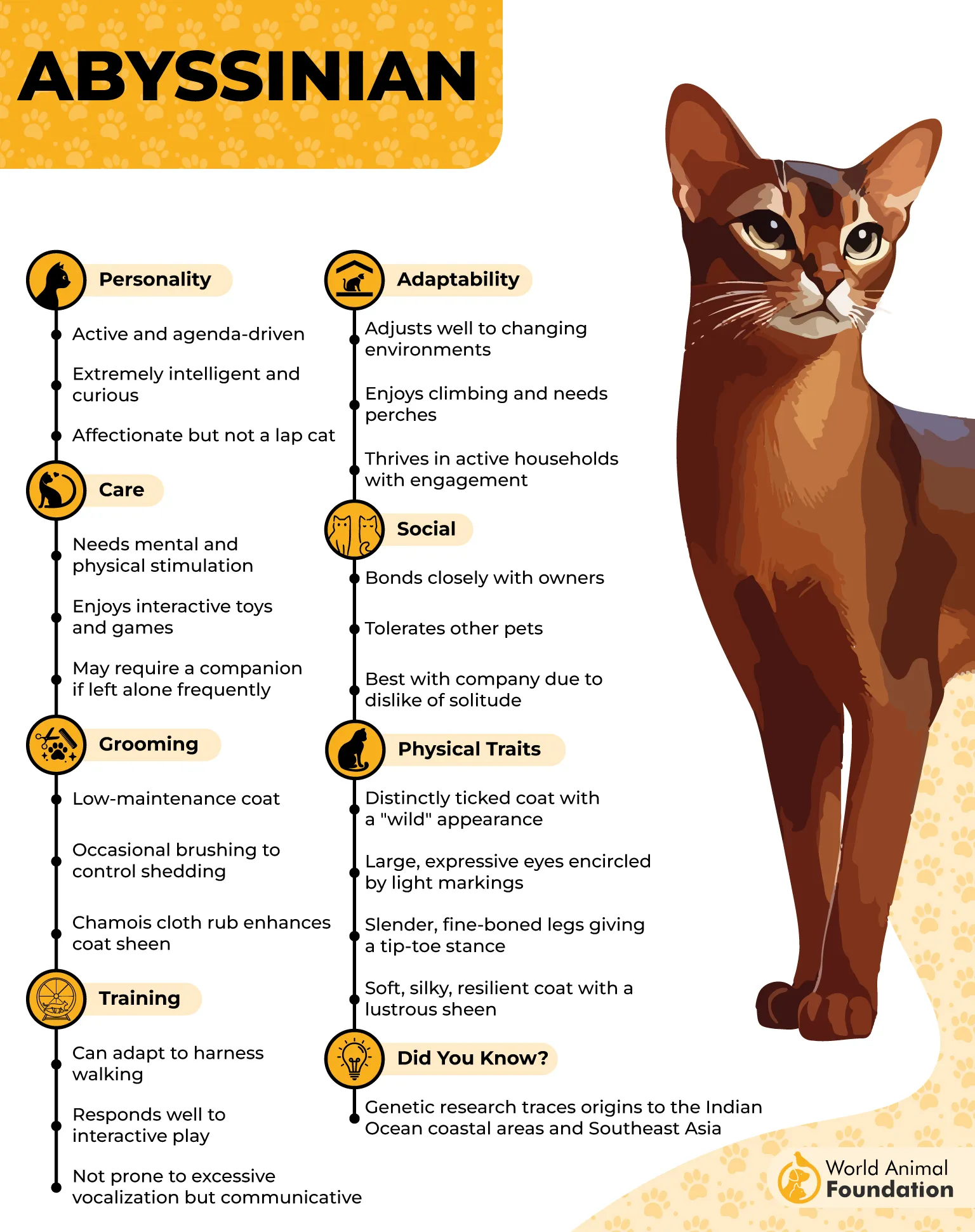
In day-to-day life, the Aby tends to be affectionate but not a long-term lap sitter. Its constant curiosity often shows up as exploring, climbing, and wanting to be part of whatever you are doing, as noted by CFA. For people who like teaching skills through play, this cat’s busy mind can make learning feel natural.
Why This Cat Is a Good Fit
Ideal for families who want an energetic cat that enjoys “brain games” and training time.
Helpful for first-time trainers who plan to use toys and short sessions to prevent boredom.
Good for homes that can offer climbing spots and interactive indoor activities.
3. Siamese
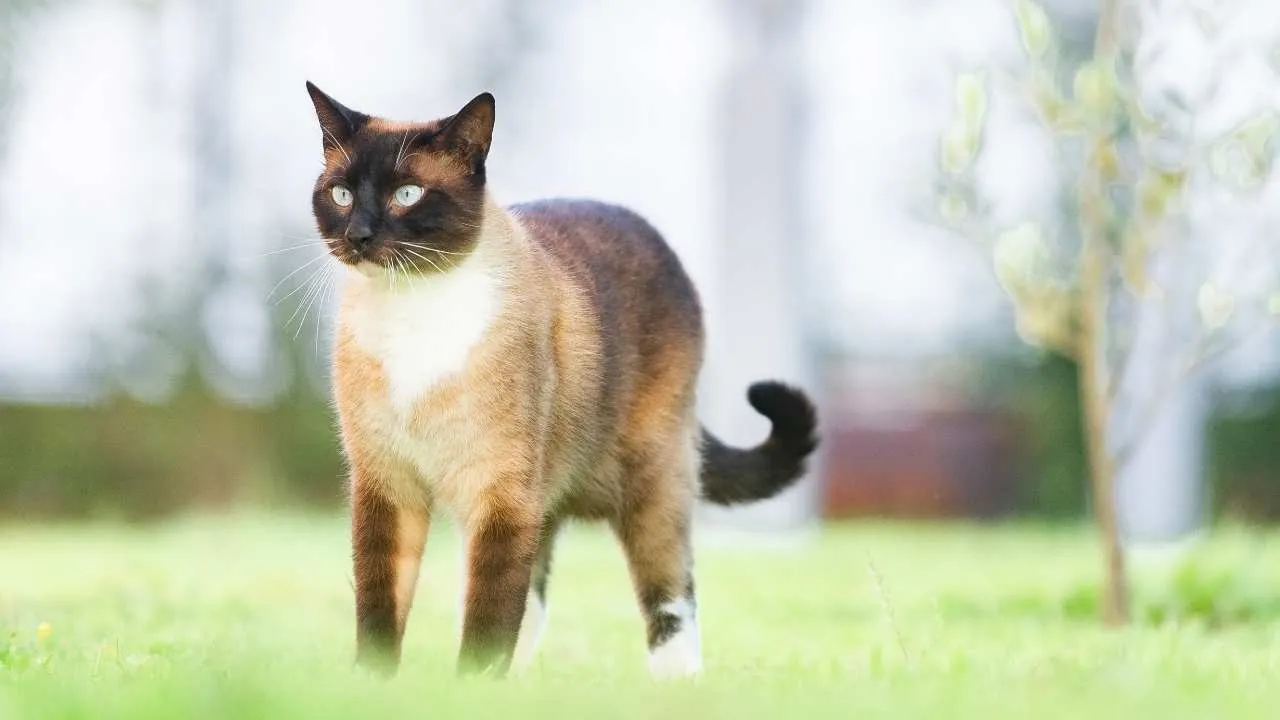
The Siamese is a short-haired breed originally from Thailand, which was officially known as Siam until 1939. It has a lithe, long body, slim legs, a long, slim tail, a long wedge-shaped head, and blue eyes. The breed was exported to the United States in 1878 and to the United Kingdom in 1884.
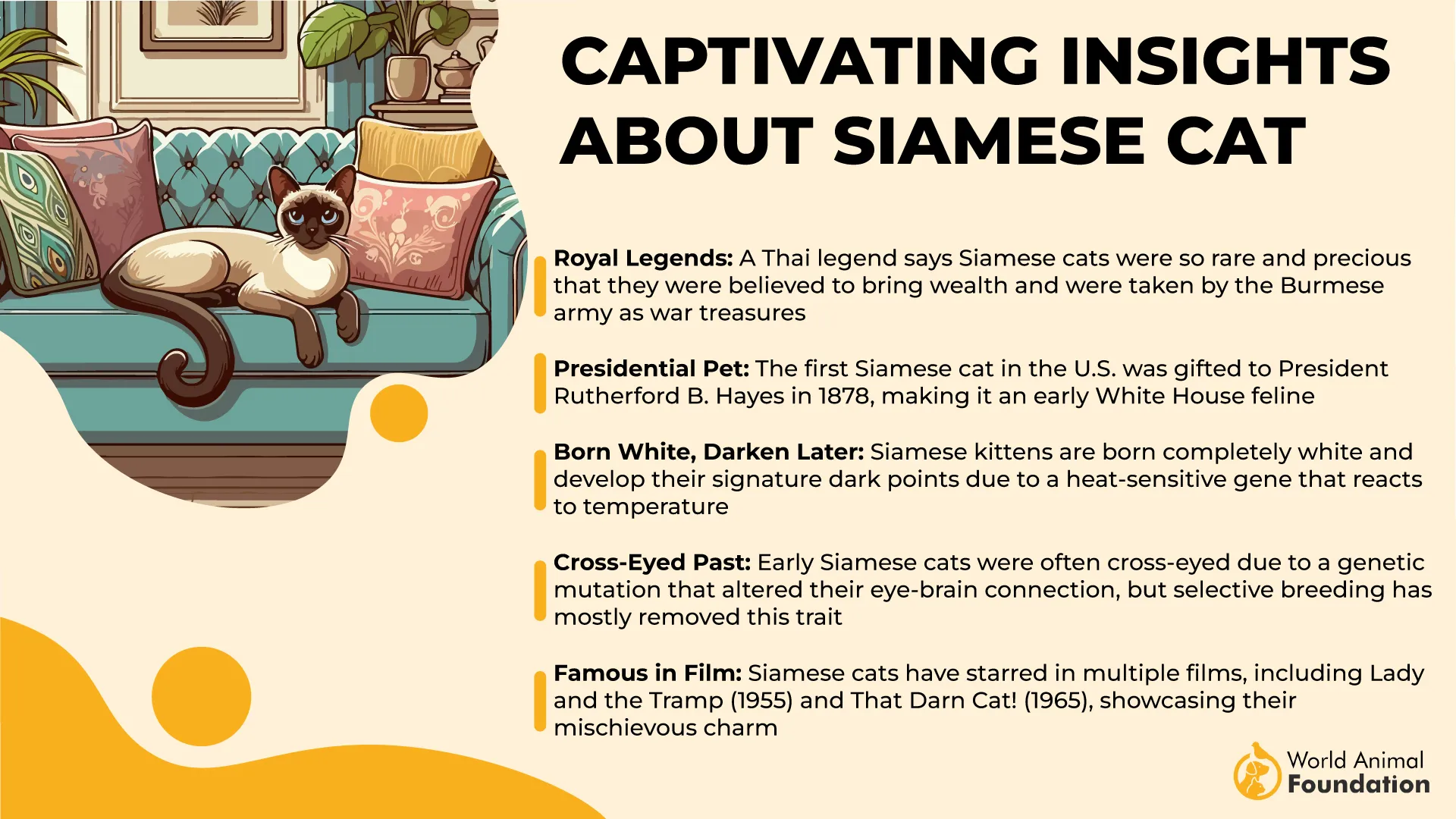
Siamese cats are often described as curious, which can make them easier to train because they are ready to learn something new. They also tend to thrive on affection and attention, and they can be very vocal when they feel left out or simply want to “chat.” In a home where people are around often, that social energy can be channeled into cooperative activities.
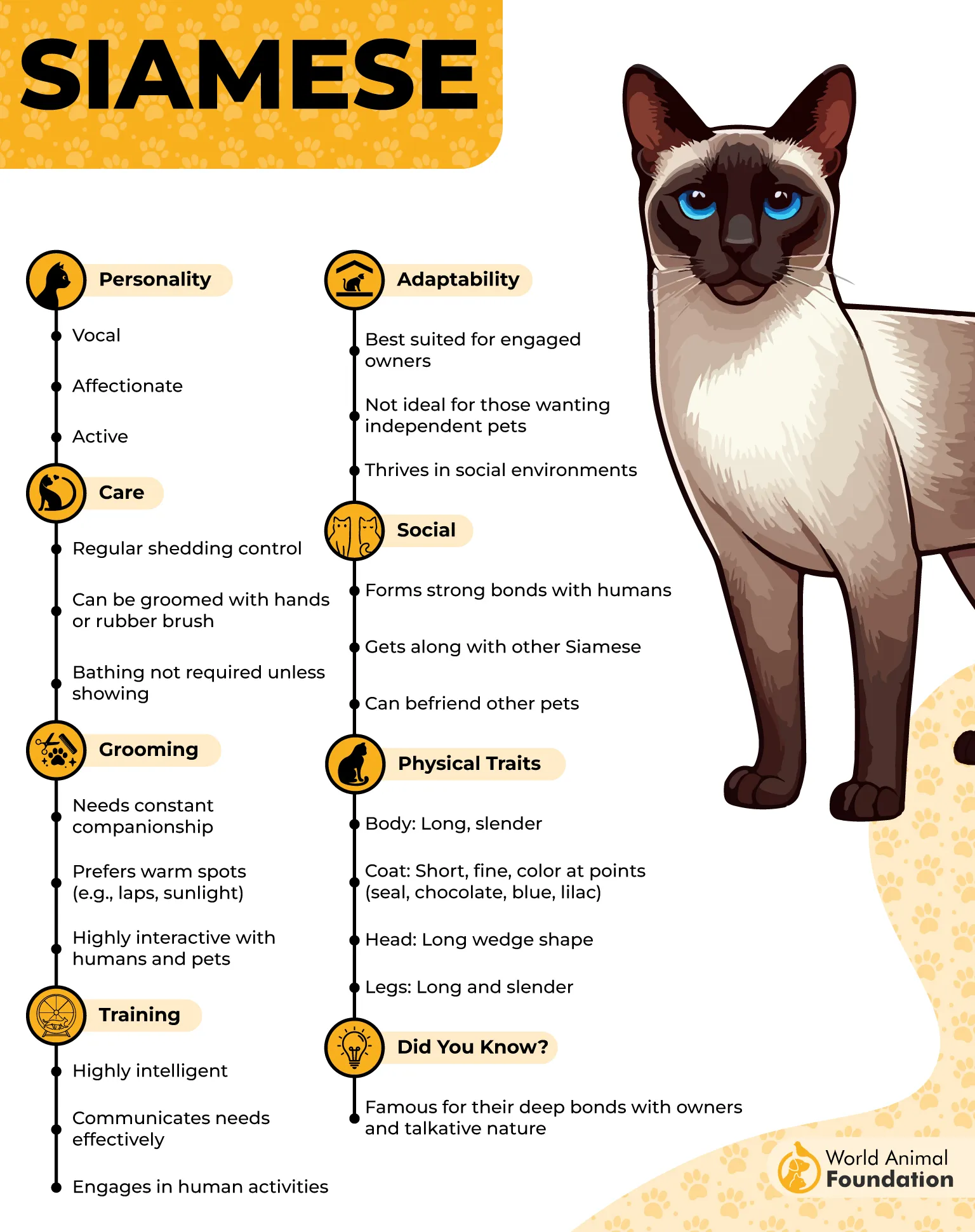
As per Britannica, they are commonly described as responding best to positive reinforcement training. They are also often mentioned as good candidates for harness and leash training, high fives, and other tricks, along with clicker training and puzzle feeders as fun options. If you like a cat that learns with you, not away from you, the Siamese often fits that style.
Why This Cat Is a Good Fit
Great for families who want a people-focused cat that can learn tricks through attention and praise.
Works well for owners interested in leash training and interactive indoor activities.
A solid choice for first-time trainers who can keep sessions upbeat and consistent.
4. Savannah
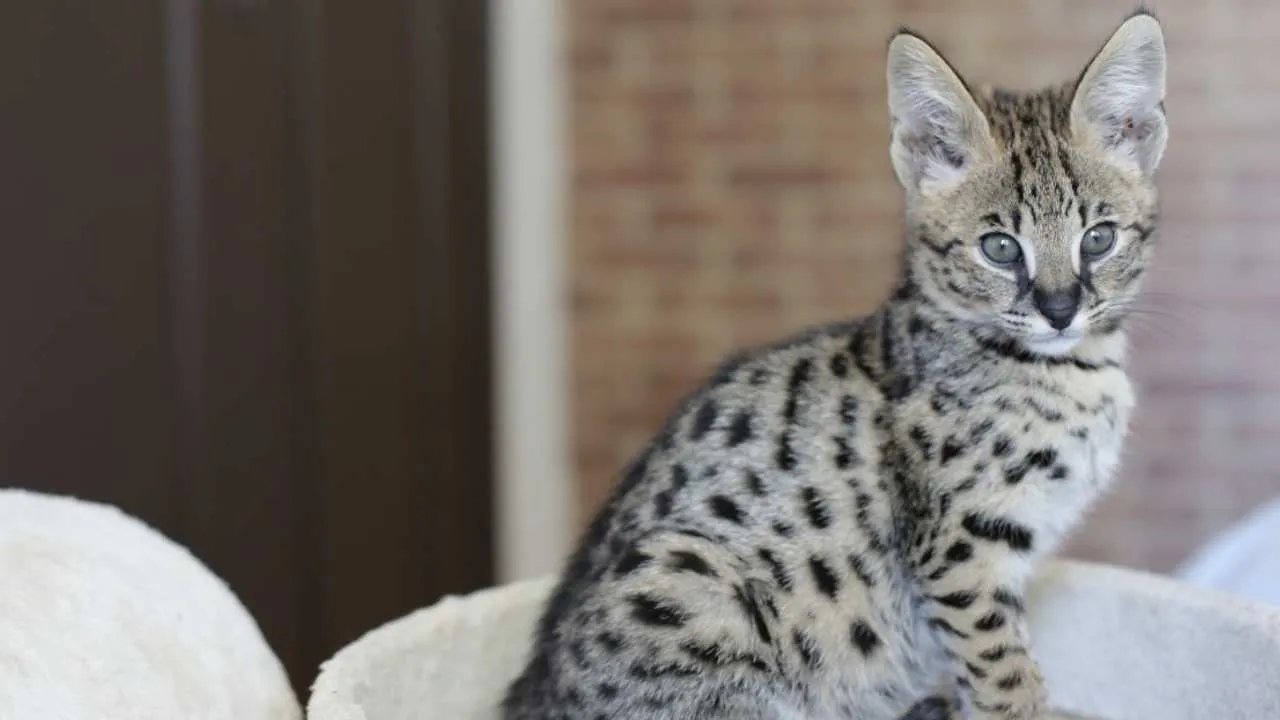
The Savannah descends from a hybrid of the domestic cat and a wild African Serval. The look is often described as exotic, with jungle cat-like coats, and many are sweet-natured and family-oriented when properly socialized. In certain areas, restrictions can apply, so checking state and local regulations matters before bringing one home.
Savannah cats are often described as bursting with energy and having a high need for mental stimulation. They should be kept indoors unless on a leash and harness or inside a secure catio, due to their agility and desire to roam. With the right setup, they can suit apartment life when play, exercise, and environmental enrichment are provided.
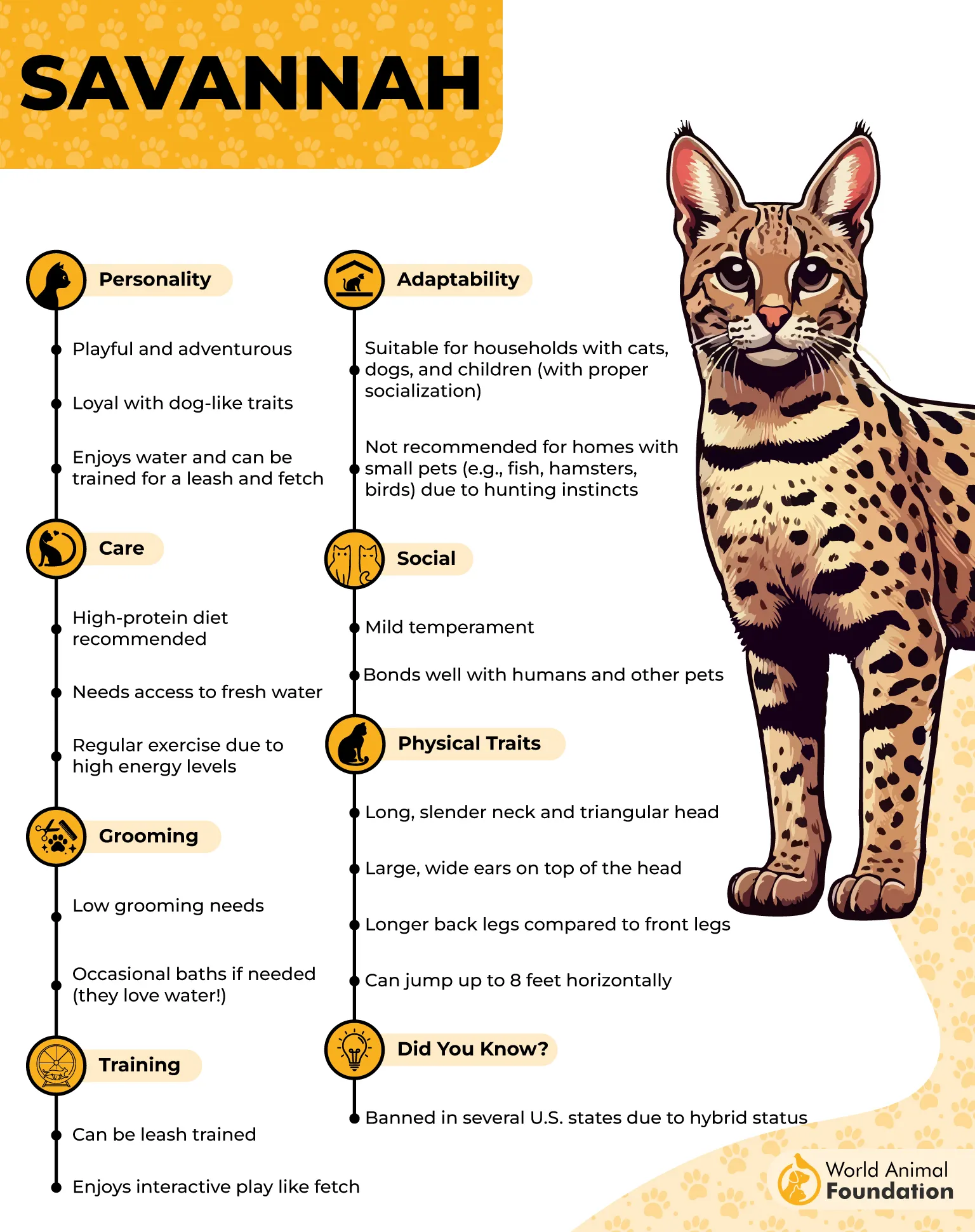
Personalities and temperaments can vary by generation, and higher generations, typically F3 or higher, are often suggested for people seeking a smaller and more docile Savannah. In practical terms, that means learning and behavior can depend on the individual cat’s background. When their need for activity is met, training becomes a productive way to focus that drive and keep the household calmer.
Why This Cat Is a Good Fit
Best for active families who can offer daily mental challenges and structured play.
A good match for owners who like training that includes movement, including safe outdoor time on a harness.
Works for dedicated first-time owners only if they are ready for high enrichment needs.
5. Persian
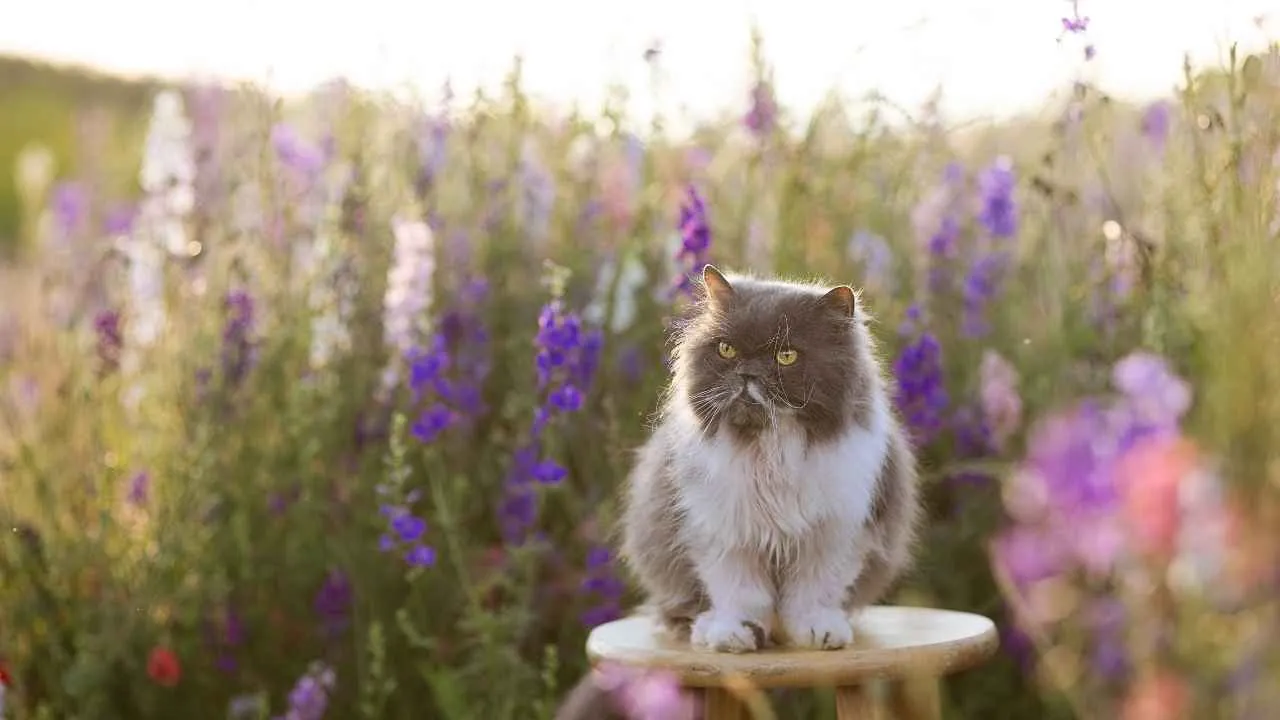
Persians aren’t usually highly active cats and may have occasional bursts of energy rather than regular ones. They do not tend to be particularly vocal, and you may not find them climbing onto your lap, but they enjoy your attention when they have it. You are more likely to see a Persian curled up in a favorite spot than climbing over furniture.
They can be intelligent in their own ways, including strong social awareness that helps them pick up on their humans’ emotions. The breed also has a long history dating back to at least the 1500s and has been around people for a very long time. It is often included among breeds with a reputation for being especially smart.
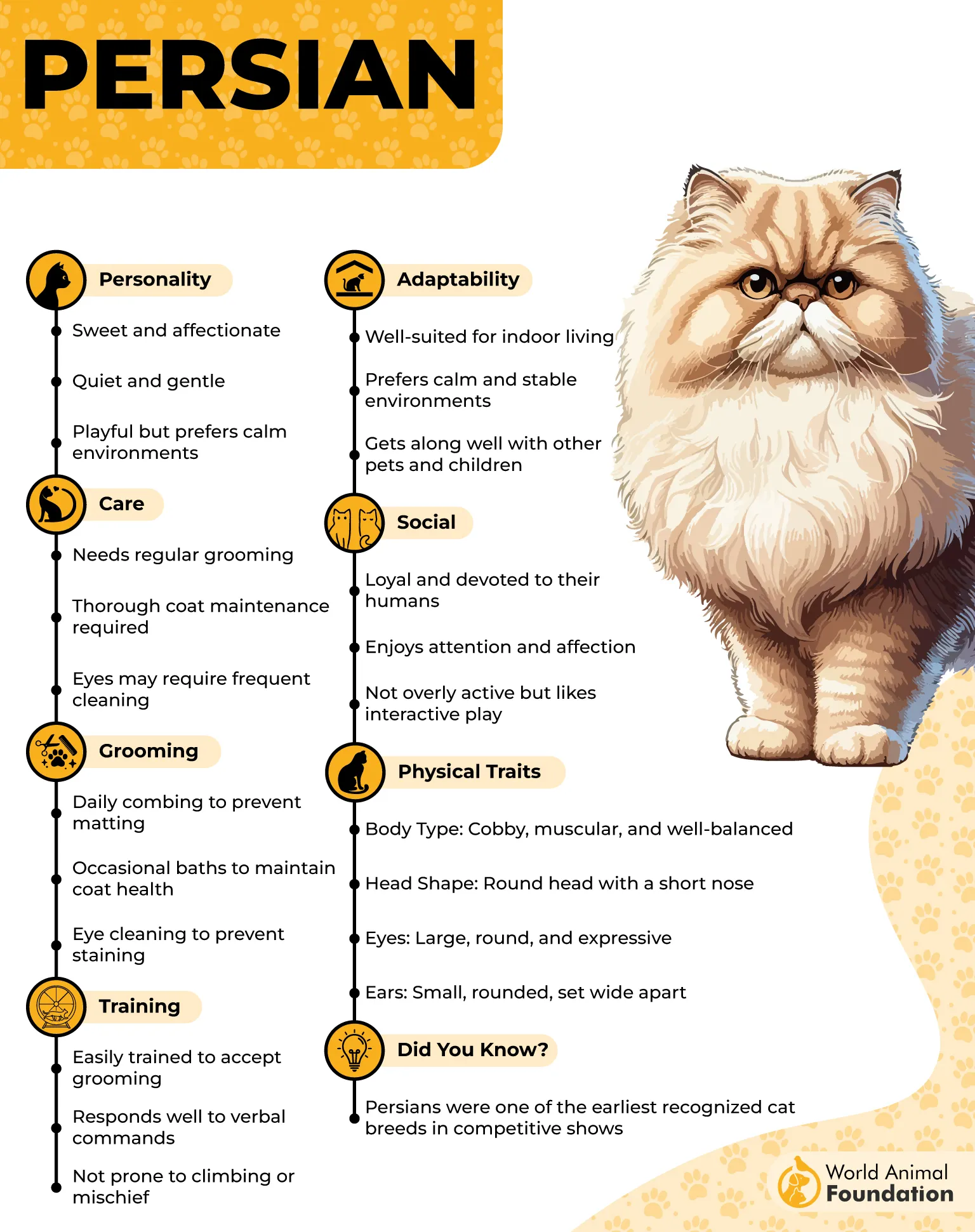
They can be prone to several health problems, including polycystic kidney disease, progressive retinal atrophy, and brachycephalic airway syndrome. For many owners, that means daily life may focus less on high-energy trick training and more on gentle routines, handling, and calm cooperation.
A Persian that trusts you and feels comfortable can still “learn fast” in the ways that matter most at home, like adapting to predictable care and reading your cues.
Why This Cat Is a Good Fit
Good for families who want a quieter cat that can learn household routines and respond to gentle handling.
Nice for first-time owners who prefer calm, simple training goals over high-energy tricks.
Works well for indoor homes where a relaxed, people-aware companion is the priority.
6. Turkish Van
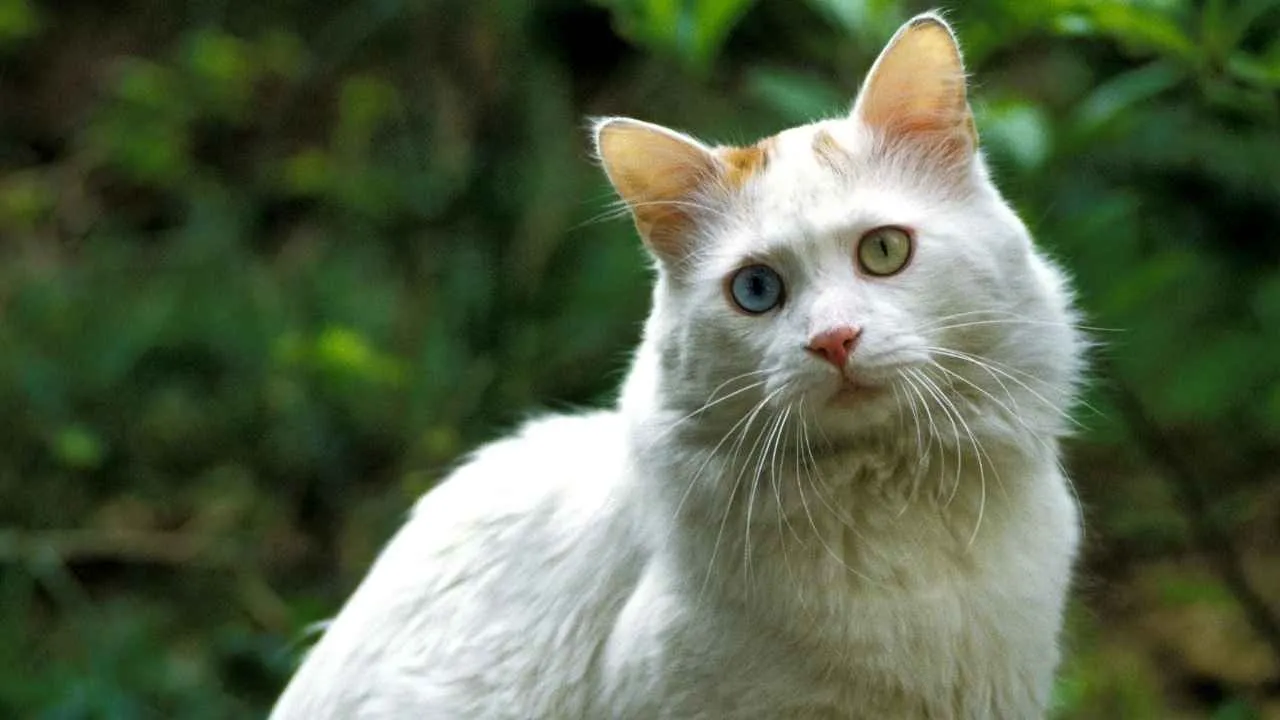
The Turkish Van developed in Turkey’s Lake Van region and is often mixed up with the Turkish Angora, even though the two differ a lot in size, bone, and coat. It’s a large, strong cat with soft, cashmere-like fur and the classic “Van” pattern, where most color is on the head and tail. The breed is slow to mature and may keep growing until about age five.
This cat has an unusual reputation for loving water, and some kittens will even swim voluntarily. Turkish Vans are loyal, brainy problem-solvers and can get very creative about reaching things they want, like food cupboards. They also enjoy games like fetch and often prefer toys with natural textures, such as feathers or fur.
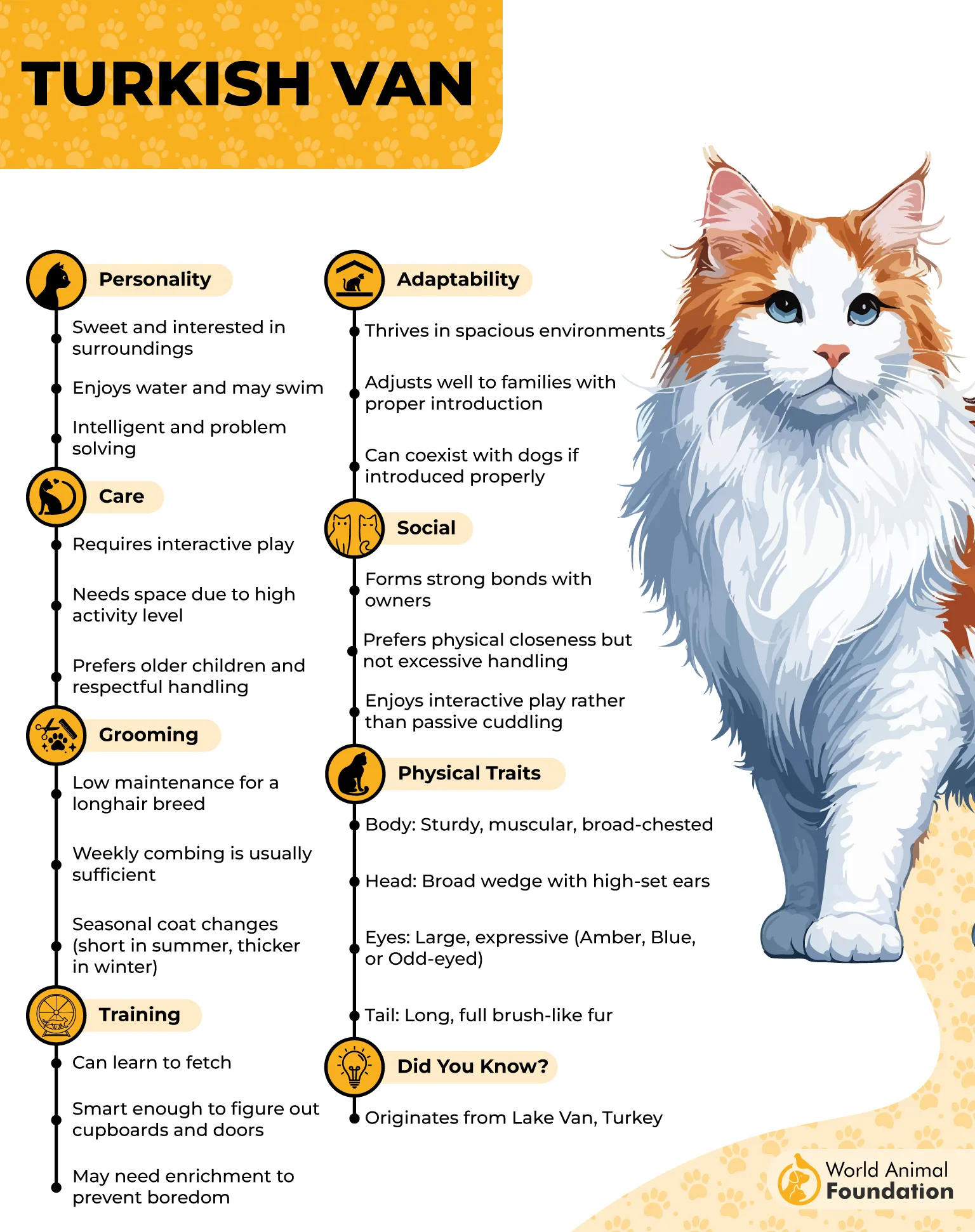
They tend not to enjoy being held or carried, but they still seek closeness and may settle right beside you, or climb into your lap when they feel like it. Their voices aren’t loud, yet they can be quite talkative. Grooming is typically straightforward for a longhaired cat because the coat lacks an undercoat that mats easily.
Why This Cat Is a Good Fit
Fits busy family homes that want a playful cat who learns through games and attention.
Works for owners who can respect “no pick-ups” while still offering lots of bonding time.
A strong indoor match when you can provide space and daily interactive play.
7. Scottish Fold
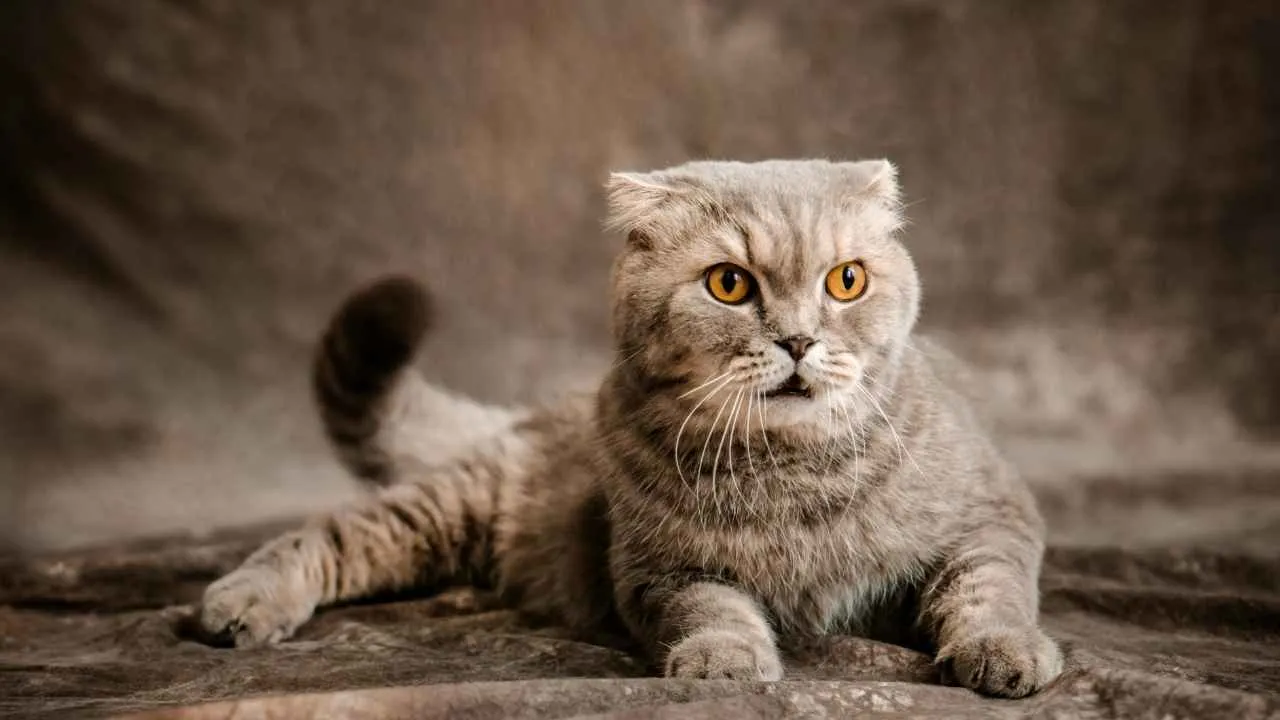
The Scottish Fold is a medium-sized, very round-looking cat, with a round head and bright, round eyes that match the breed’s soft expression. The folded ears create its signature look, and the short coat is often described as easy to care for. One important handling note is that the tail should be treated gently, since some individuals can develop stiffness that may be painful if mishandled.
Personality-wise, this is often called an easy cat to live with, affectionate, and comfortable with different family members. Even with a laid-back vibe, it’s described as very smart and likely to enjoy puzzles, wand play, and other interactive toys. Adding cat trees and perches can help keep it engaged and give it a place to watch the room.

The modern Scottish Fold traces back to a kitten born in 1961 in Scotland, and responsible breeding avoids pairing two folded-ear cats due to risks for the kittens. Because this breed is not as active as some others, interactive play helps with overall condition and keeps boredom away. For learning-focused owners, a calm cat that still enjoys mental games can be a nice balance.
Why This Cat Is a Good Fit
Great for families who want a gentle cat that can still pick up new routines and games.
A solid choice for first-time trainers who prefer low-key, toy-based learning.
Suits indoor living when you can offer enrichment without needing nonstop high-energy play.
8. Burmese
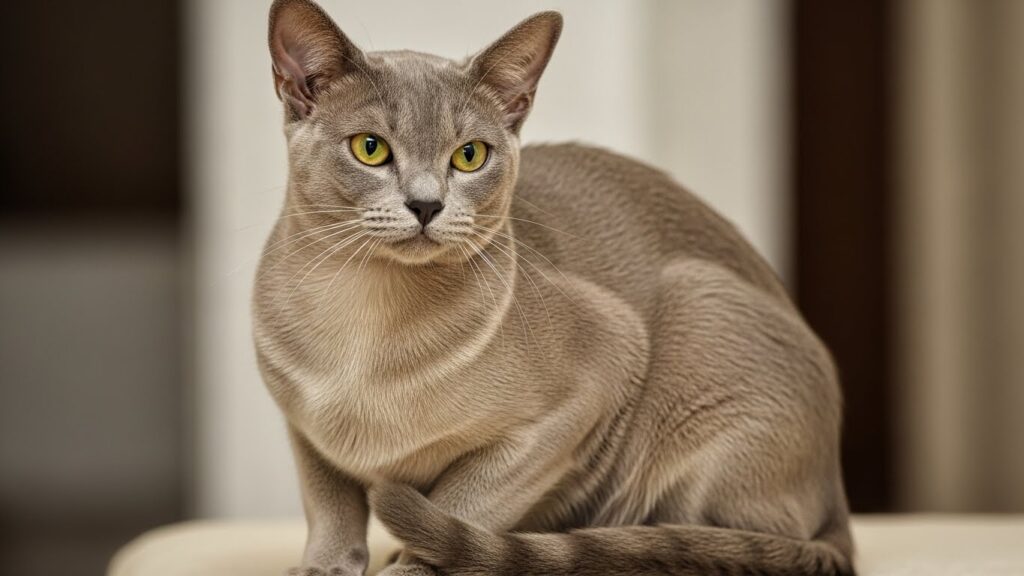
The Burmese became established in the U.S. when solid brown cats bred true, and the breed began being registered in 1936 before reaching championship status in 1959. Today, they’re shown in colors including sable, champagne, platinum, and blue. Physically, the Burmese is medium-sized with substantial bone, strong muscle, and a surprising weight for its size, paired with a short, glossy coat.
These cats are extremely people-oriented and often trail their humans from room to room, looking for warm laps and gentle petting. They’re usually soft-spoken, but they can speak up clearly when something seems off. Many act like they run the household, which can make them fun, busy companions.
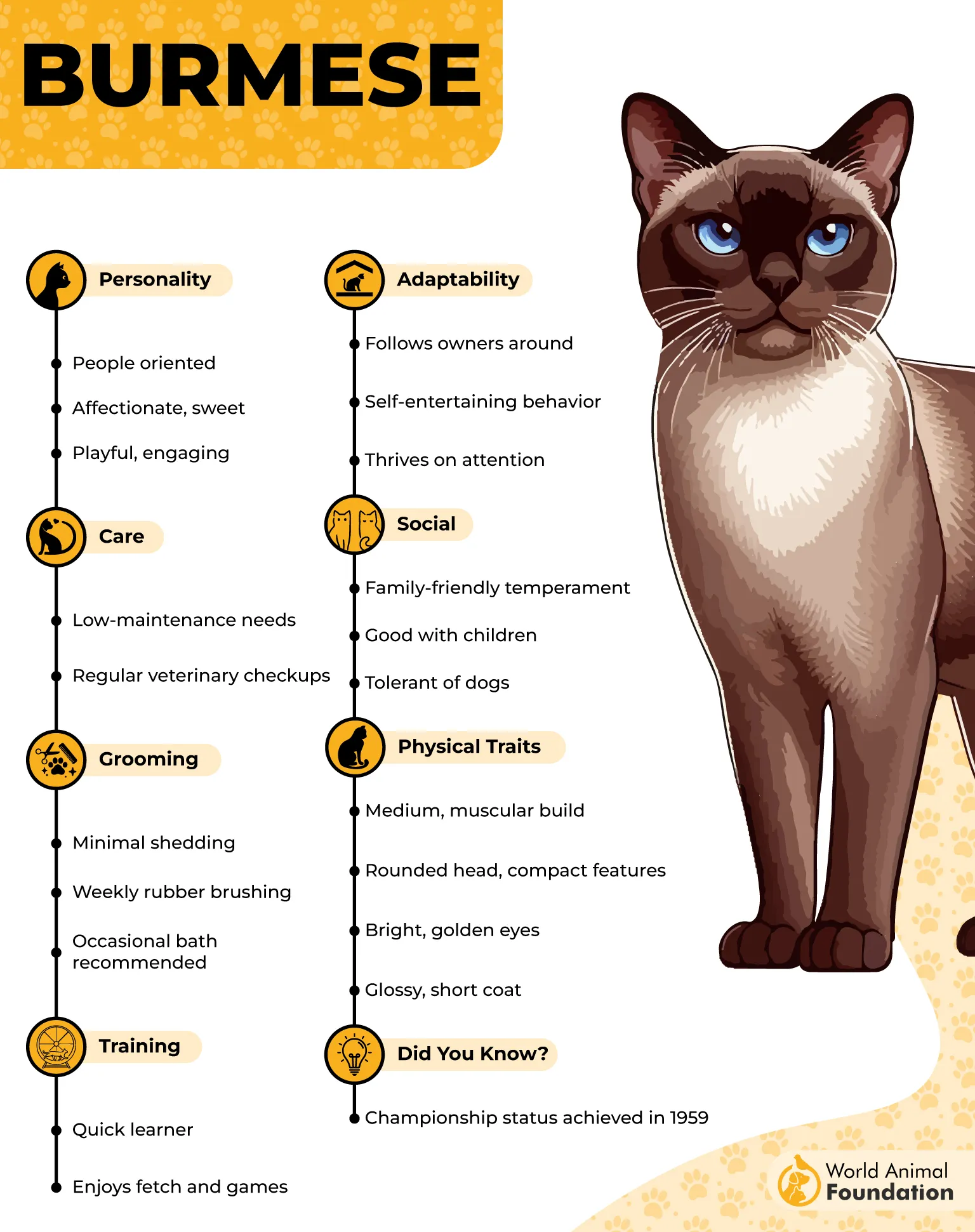
They’re also described as clever, adaptable, playful, and trainable, learning both commands and activities like fetching or walking on a leash. Early conditioning can make car rides and vet visits easier. They thrive on socialization and prefer company, including other animals, since boredom can lead to mischief. If you want a cat that learns best through interaction, the Burmese often leans into that style.
Why This Cat Is a Good Fit
Excellent for families who want a close-by companion that enjoys learning with people.
Helpful for first-time owners who like clear, reward-based training and routines.
Works well indoors when you can provide companionship and regular play to prevent boredom.
9. Korat
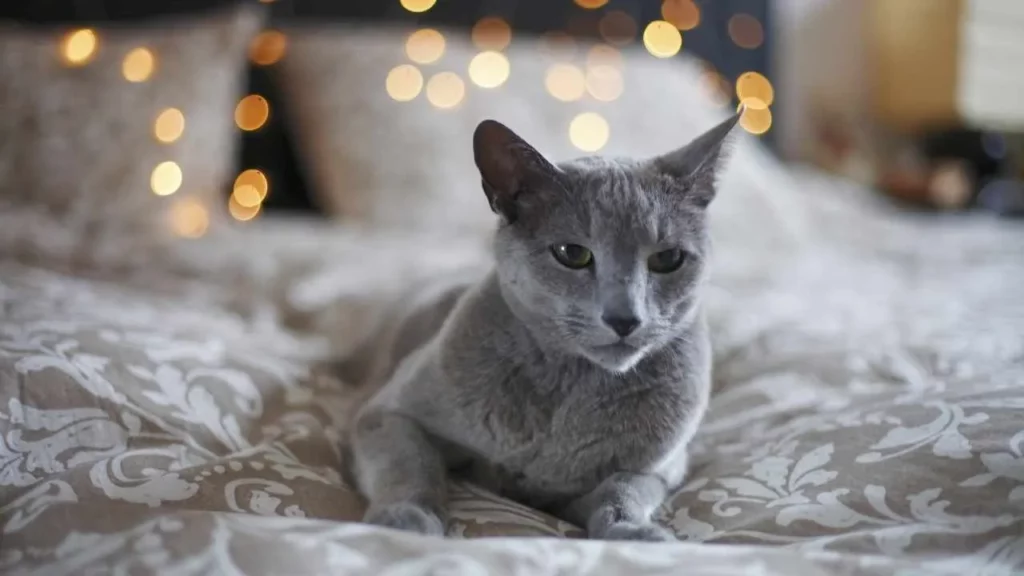
The Korat comes from Thailand’s northeastern plateau, and its grayish-blue coat helped it blend into the local granite landscape. In Thai culture, it has been valued as a symbol of prosperity, health, and good luck, and it has traditionally been given as a gift, including as a wedding present. Korats arrived in the U.S. in 1959 and are still considered rare.
This breed is described as brilliant and attentive to what’s going on around them. Korats are moderately energetic and enjoy interactive games, but they also love settling in for naps. With praise or treats, they can learn household rules, and they’re also noted as able to learn tricks like fetch and walking on a leash.
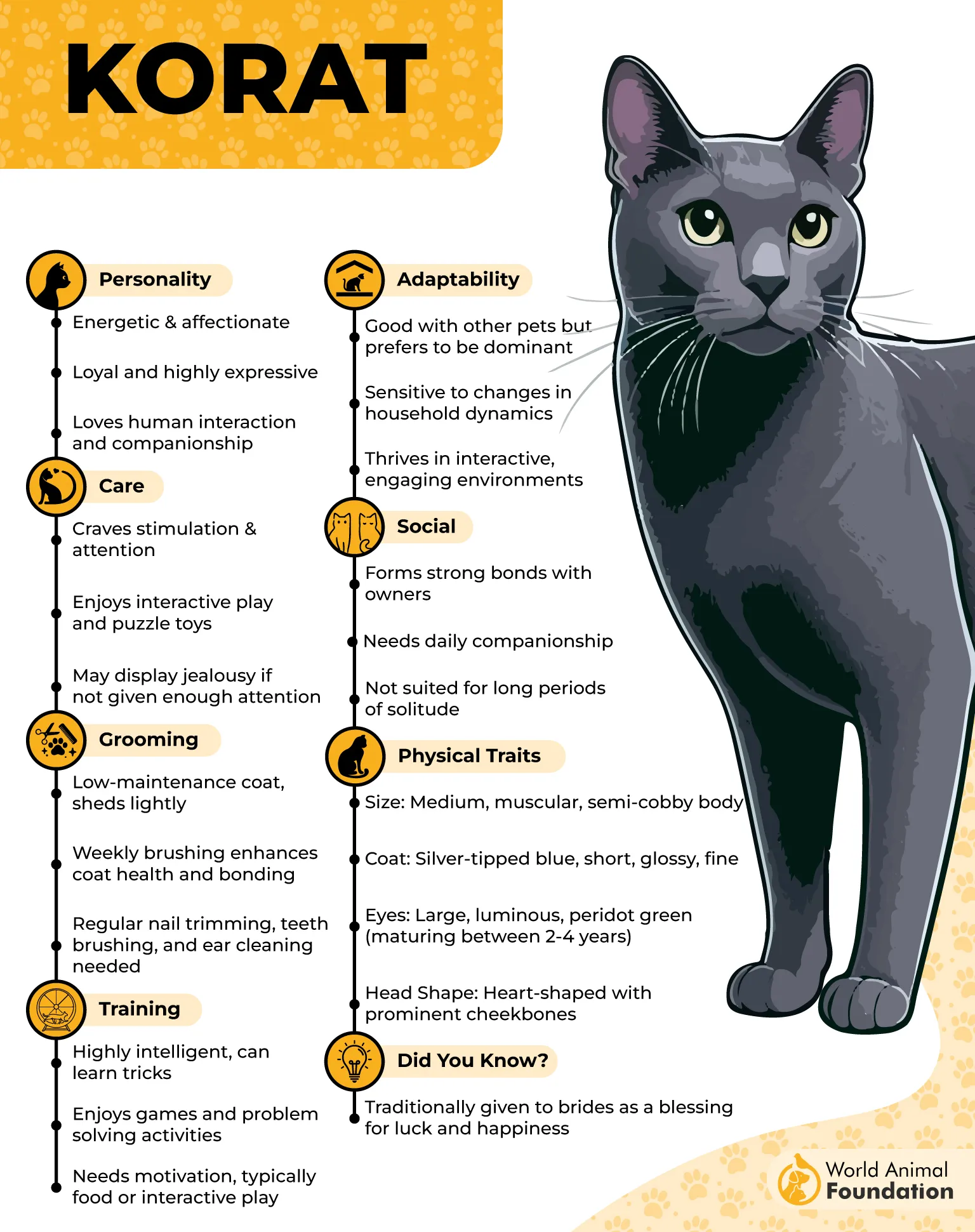
Korats tend to love attention from their humans, including being held. Their small gene pool and limited availability are part of why they remain uncommon. Health-wise, screening for GM1 gangliosidosis is important, and dental care is emphasized as a practical routine. For owners who like a cat that learns quickly while staying strongly people-focused, the Korat brings a thoughtful, engaged vibe.
Why This Cat Is a Good Fit
Great for families who want a smart cat that bonds through shared play and training.
A nice option for indoor homes that can offer interactive time without needing nonstop activity.
Friendly for first-time trainers who use praise, treats, and clear “house rules.”
10. Oriental Shorthair
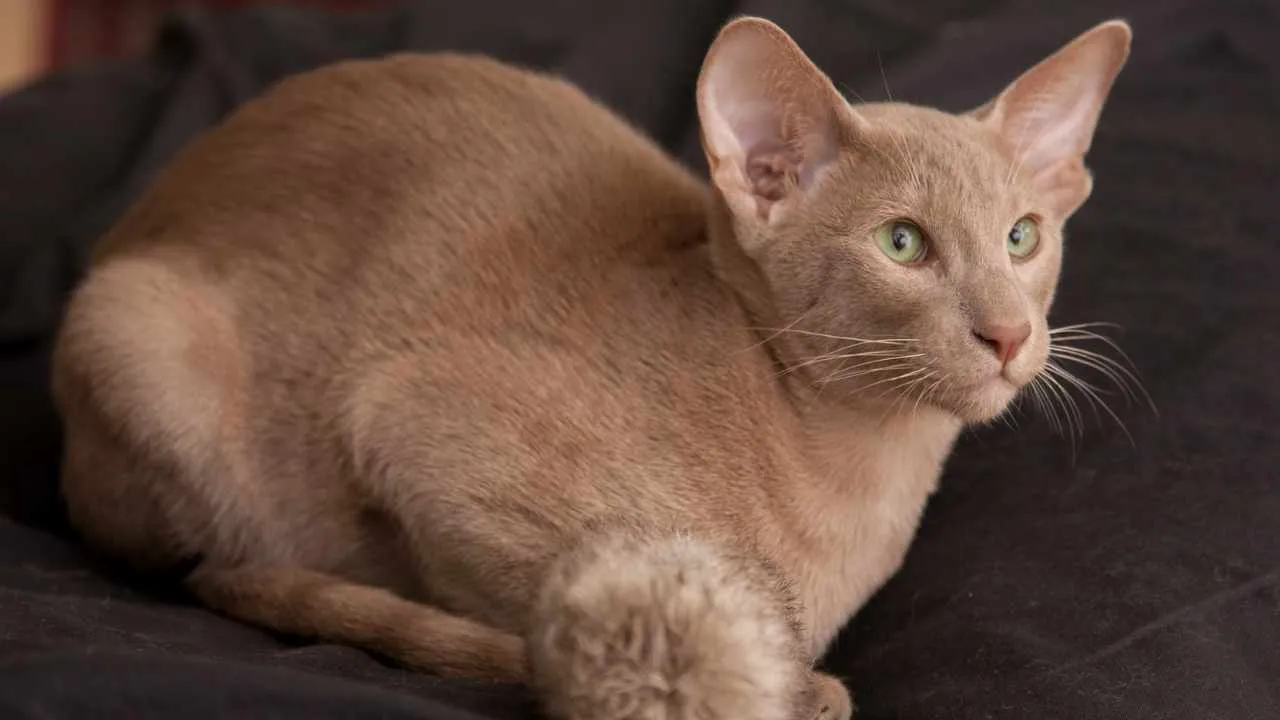
The Oriental is a long, elegant, medium-sized cat with a nicely muscled build and a very distinctive look, including a long, triangular head, tall ears, and long, slender legs. The breed’s background ties closely to the Siamese, with breeders seeking solid colors, leading to what became known as the Oriental.
Oriental Shorthairs are also described as slender, with comically large ears and sweet, almond-shaped eyes, and they come in a huge range of colors and combinations.
This is a highly intelligent cat with strong opinions, and it can learn skills like walking on a lead. It’s also described as very intelligent and active, so regular training sessions help keep it occupied. Curious behavior can look like mischief, but it often comes from wanting to explore and investigate everything around them.
They’re deeply affectionate and crave human companionship, sometimes refusing to be ignored. They can be very vocal, even making a distinctive “honk”-like sound, and they tend to form strong bonds by staying close. Because they need frequent attention and stimulation, interactive play and positive reinforcement training are a natural fit.
Why This Cat Is a Good Fit
Best for families who want a super interactive cat that enjoys learning and being included.
Works for first-time owners who can commit to daily attention, play, and short training sessions.
A strong indoor companion when you provide enrichment and don’t mind a chatty personality.
Conclusion
In the cat world, learning speed looks different from one feline companion to the next. Some cats enjoy short bursts of training, others prefer quiet one-on-one time, and a few cats surprise you with how quickly they pick up routines around family life, the litter box, or a scratching post. High energy levels can help, but quality time and patience matter just as much, especially in homes with other cats, dogs, or busy schedules.
If you want to begin training, focus on what fits your kitty’s personality and daily rhythm. Other breeds, such as the Maine Coon, an ancient breed known for its people-friendly nature, along with the Russian Blue, Egyptian Mau, Japanese Bobtail, and American Shorthair, may also shine when given attention and encouragement.
