





If you live where winters are long, snowy, or simply chilly most of the year, choosing a cat that can handle lower temperatures makes life easier for both of you. Some breeds have thick, insulating coats, sturdy bodies, and weather-ready features that help them stay comfortable when it is cold outside and cozy inside.
Understanding which cats are best suited to cold climates can guide your decisions about grooming, indoor heating, and safe outdoor time.
In this guide, we will look at breeds that naturally cope well with cooler weather and talk about how to keep any cat warm, healthy, and relaxed when the temperature drops.
Cat Breeds That Are Best for Cold Climates
1. Norwegian Forest Cat
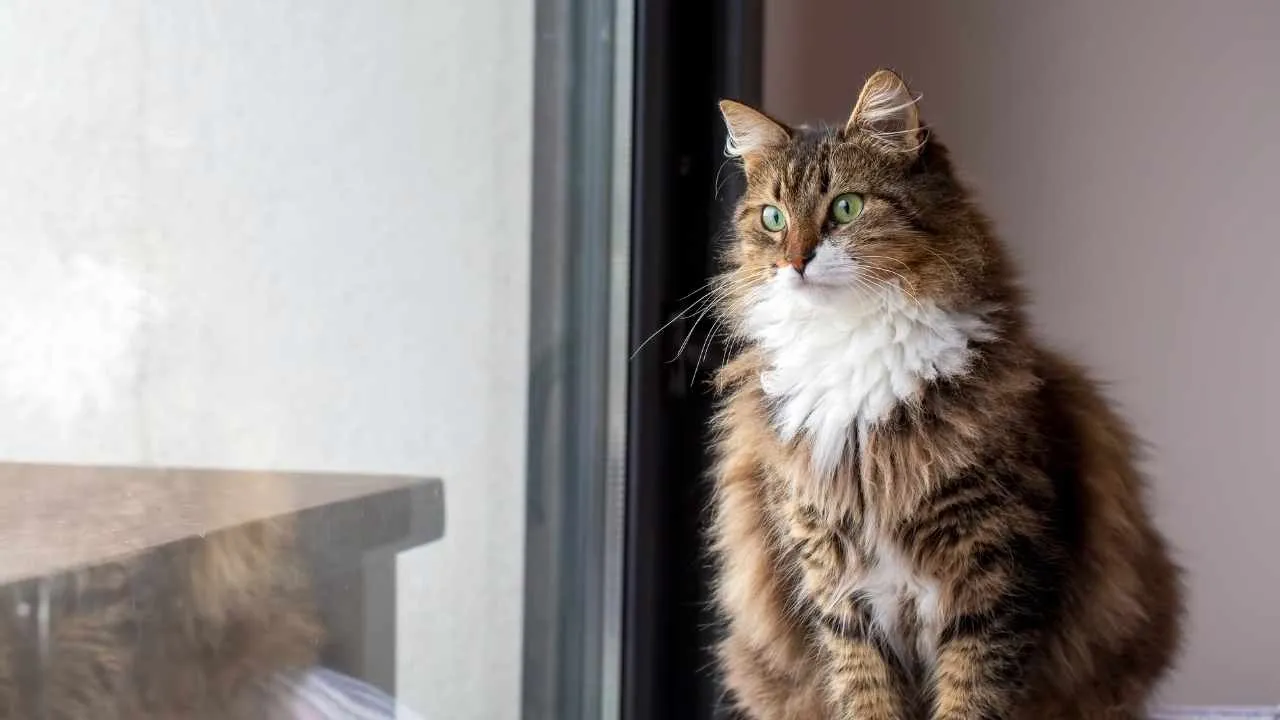
As per CFA, the Norwegian Forest Cat is a large, sturdy cat with a long, heavy coat and a striking triangular head. It developed as a natural breed in the forests of Norway, where a dense outer coat and full ruff around the neck helped it cope with harsh weather. Stocky build and strong bones give this cat a solid, powerful look without taking away from its calm expression.
This breed carries a thick double coat that includes a woolly underlayer and longer guard hairs that can shed water and snow. Tufted ears, a bushy tail, and fur between the toes provide extra insulation when the temperature drops. Regular brushing is helpful to keep the coat free of tangles and to manage seasonal shedding.
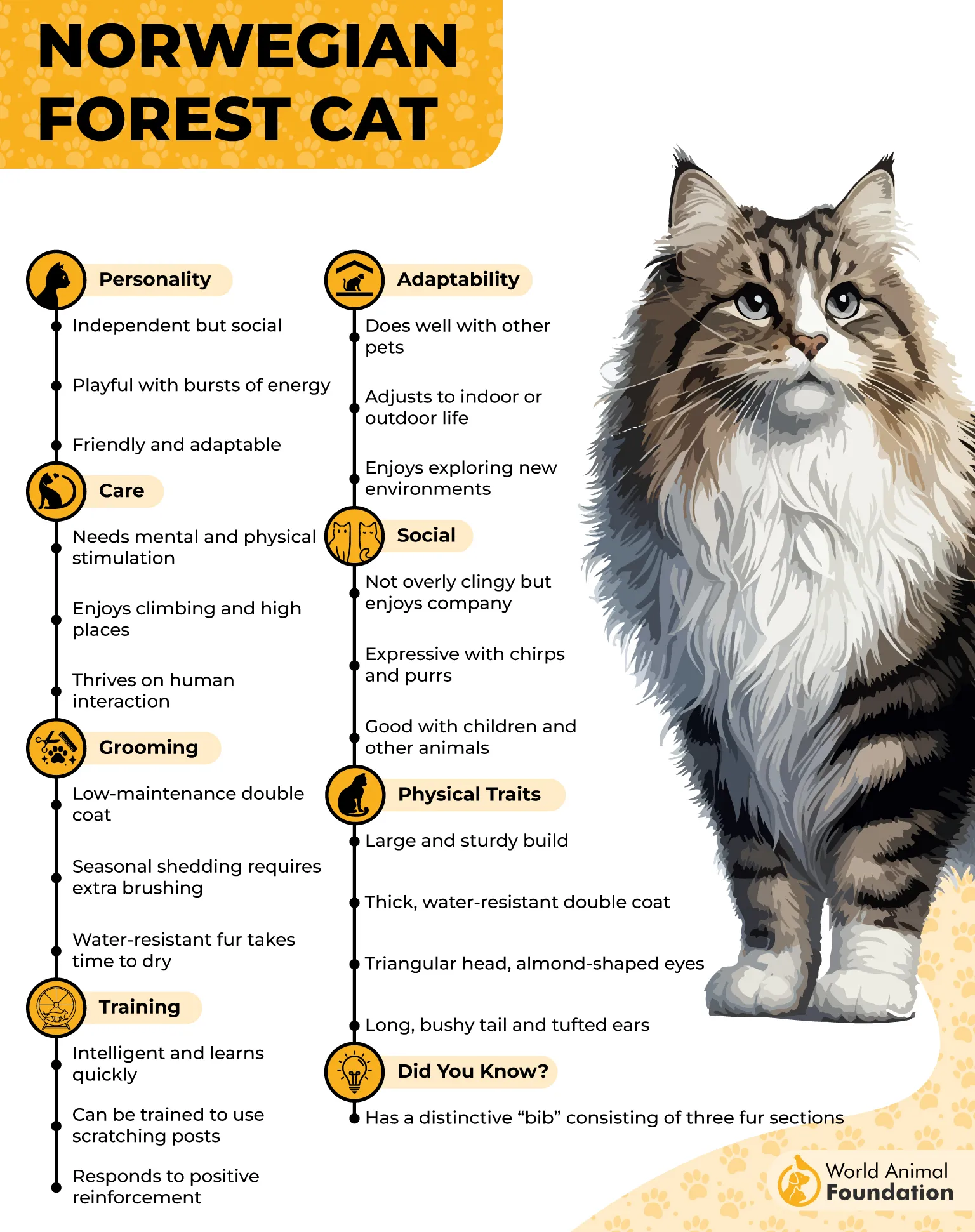
Known for being active yet sweet, the Norwegian Forest Cat often enjoys climbing and surveying the room from high places. Many settle happily into family life, appreciating attention while still keeping an independent streak. Their weather-hardy coat means they can be more comfortable than many cats in cooler homes, as long as they have a warm indoor base.
Why This Cat Is a Good Fit
Thick, water-resistant coat, neck ruff, and tail help this cat stay comfortable in drafty homes or long winter seasons.
Strong body and sturdy claws suit safe, supervised exploring on snowy decks, porches, or wooded paths.
Independent yet people-friendly temperament works well for families who spend cold days indoors but enjoy limited outdoor time together.
2. Maine Coon
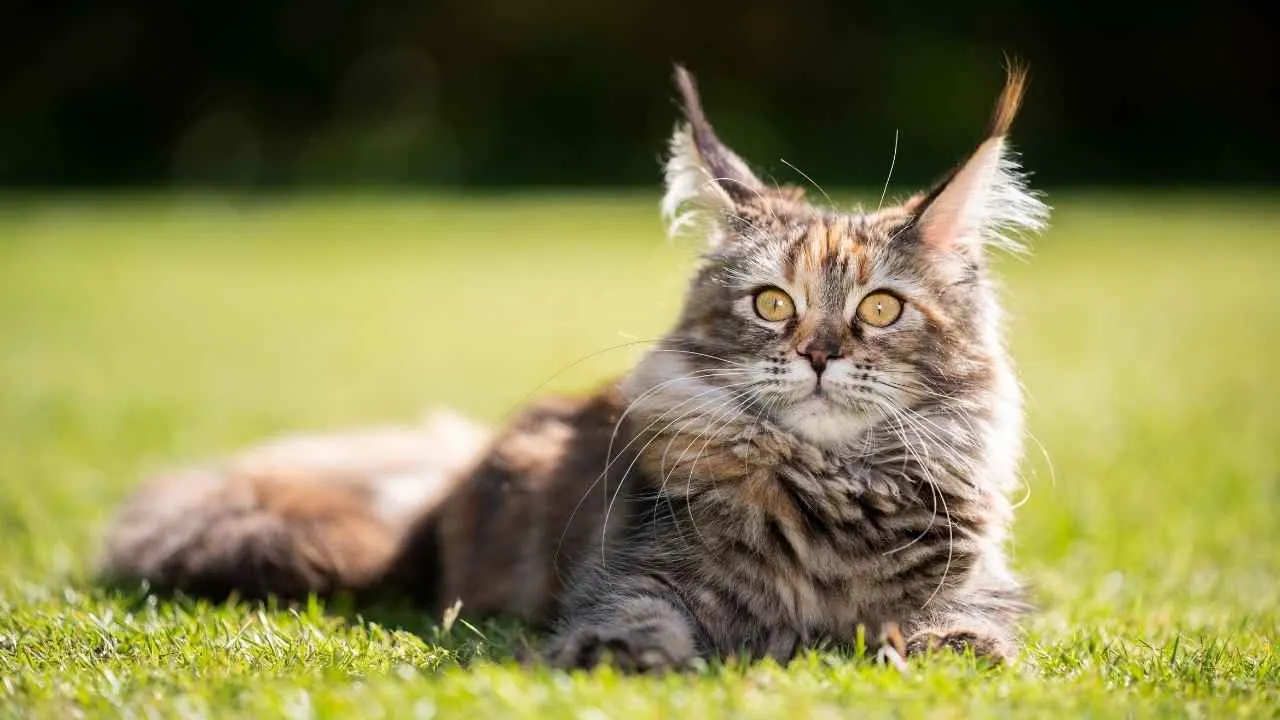
The Maine Coon Cat is a large, rugged cat with a smooth, shaggy coat that is shorter on the shoulders and longer on the stomach. A long, bushy tail, big frame, and prominent ruff give this breed a powerful presence without losing its gentle look. Their big, well-tufted paws are suited for walking on snowy ground, and tufted ears add to their weather-ready appearance.
As per Purina, this breed’s coat is described as semi-water resistant, which helps protect the body when they encounter damp or wintry conditions. The fur sheds moderately and benefits from frequent brushing, something many Maine Coons enjoy because they often love extra attention. Originating in New England, they were naturally shaped to cope with cold winters before becoming cherished house cats.
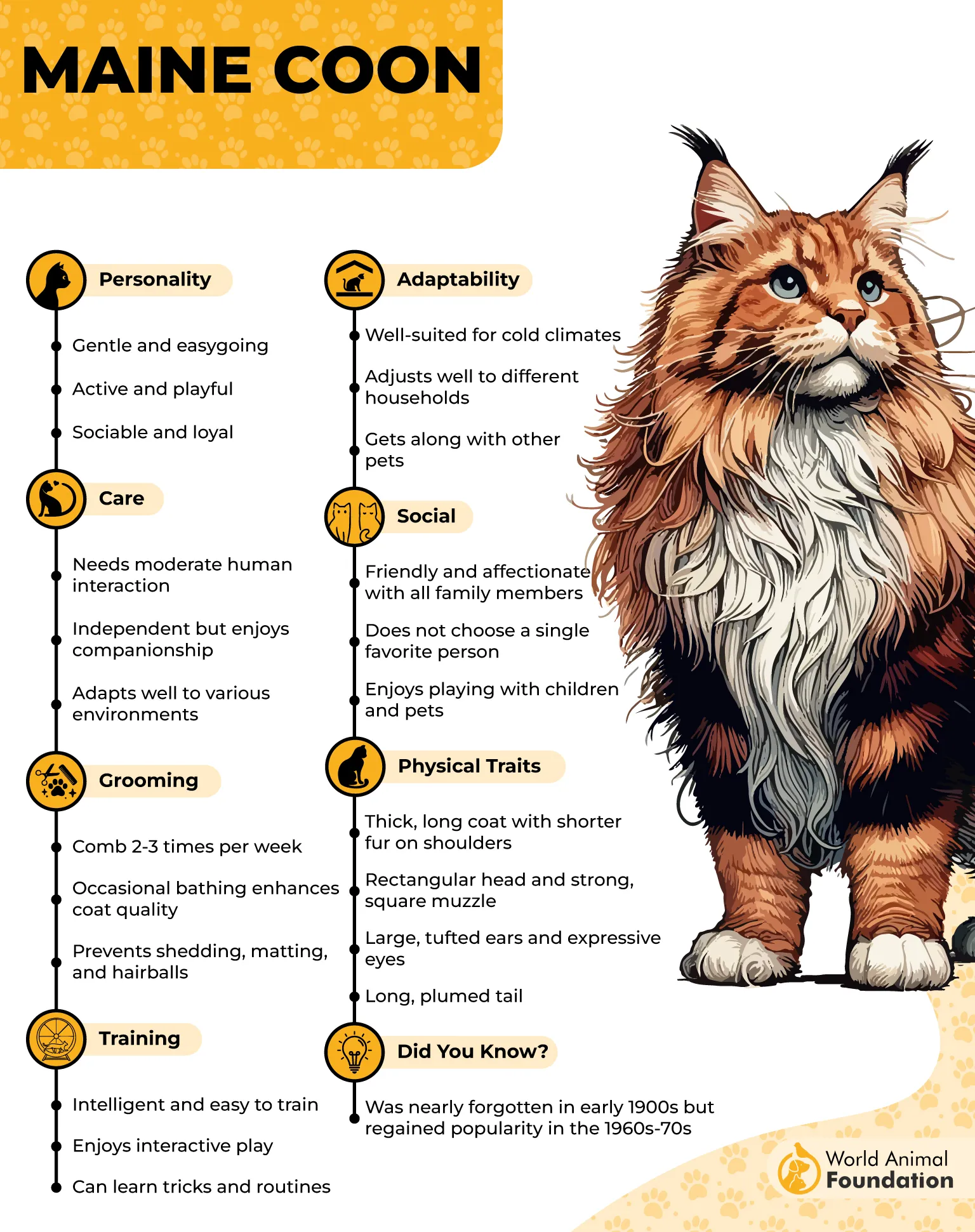
Maine Coons are generally hardy and friendly, often remaining playful and curious well into adulthood. Many are affectionate companions that like to be involved in family life, whether that means watching the snow from a window or curling up by the heat after a short outdoor adventure. Their history of enduring harsh New England winters makes them a natural choice for cat lovers living where the cold season lingers.
Why This Cat Is a Good Fit
Semi water-resistant fur and wide, tufted paws make this breed comfortable padding across icy patios or lightly snow-covered yards.
Background in snowy Maine means many adjust well to climates where winter temperatures stay low for long stretches.
Social, people-oriented nature suits households that want a cold-weather companion who still enjoys cozy indoor family time.
3. Siberian
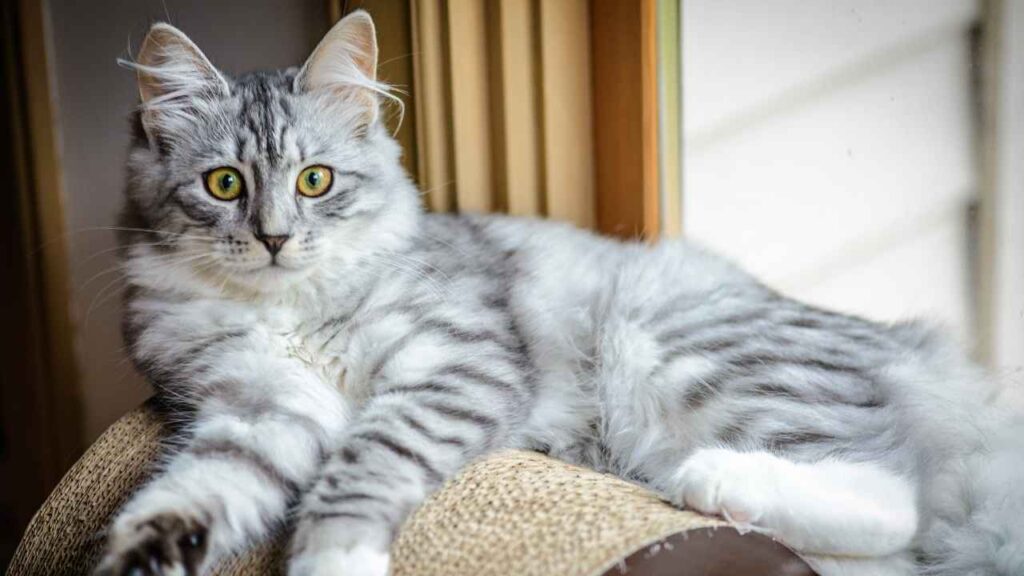
The Siberian cat is a big, sturdy cat with a dense triple coat that was designed to handle the bitter winters of its Russian homeland. A full ruff around the neck, tufted ears, and a bushy tail add to the impression of a powerful, weather-ready forest cat. Large, round paws with fur between the toes help protect the feet when they move across cold surfaces.
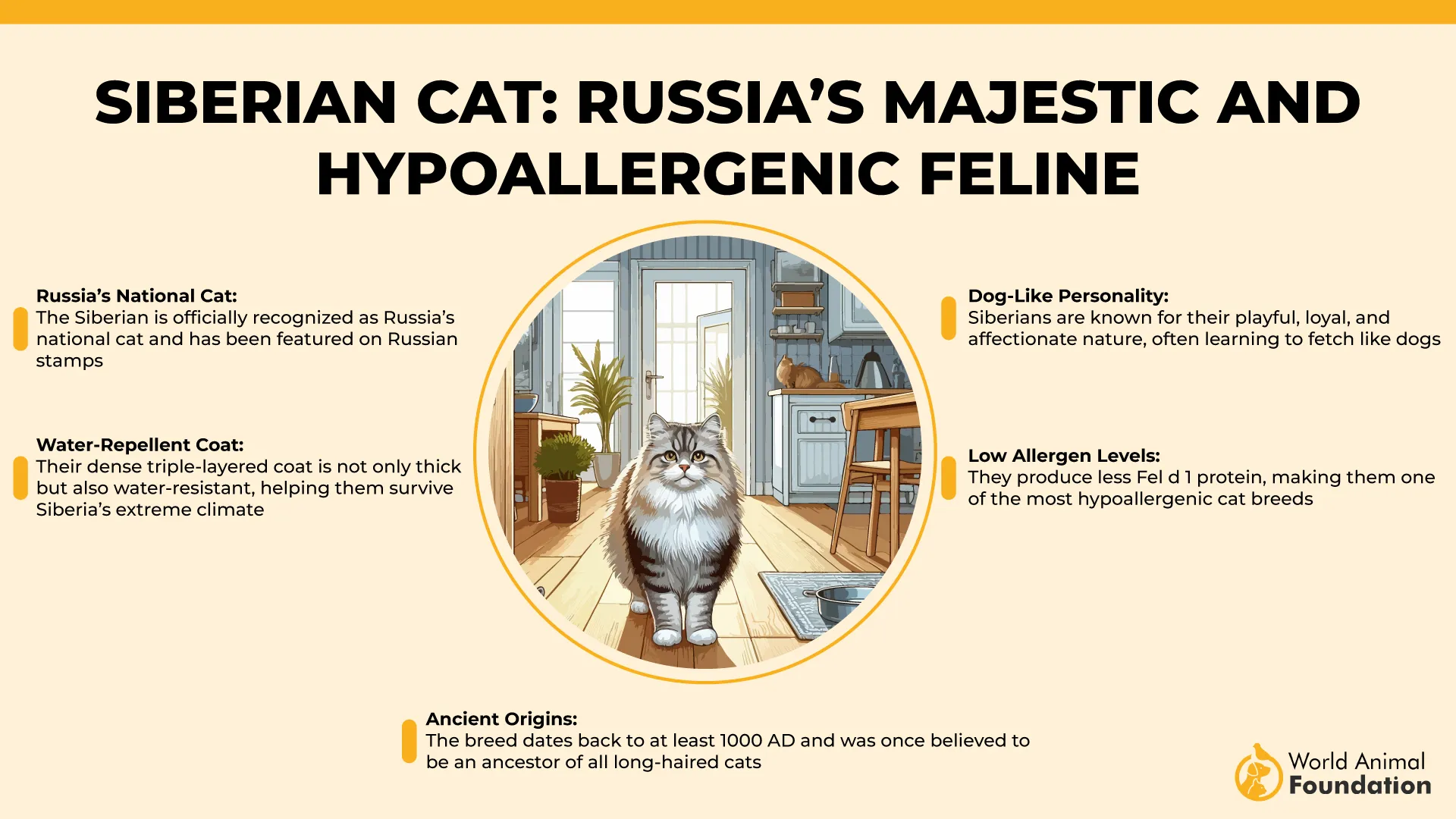
Underneath all that fur is an agile and athletic body that enjoys jumping to high spots and carefully observing the room. Siberians are described as confident, intelligent problem solvers who often learn how to open doors or figure out new challenges around the home. Many are gentle with children and other pets, enjoying company without being easily rattled.
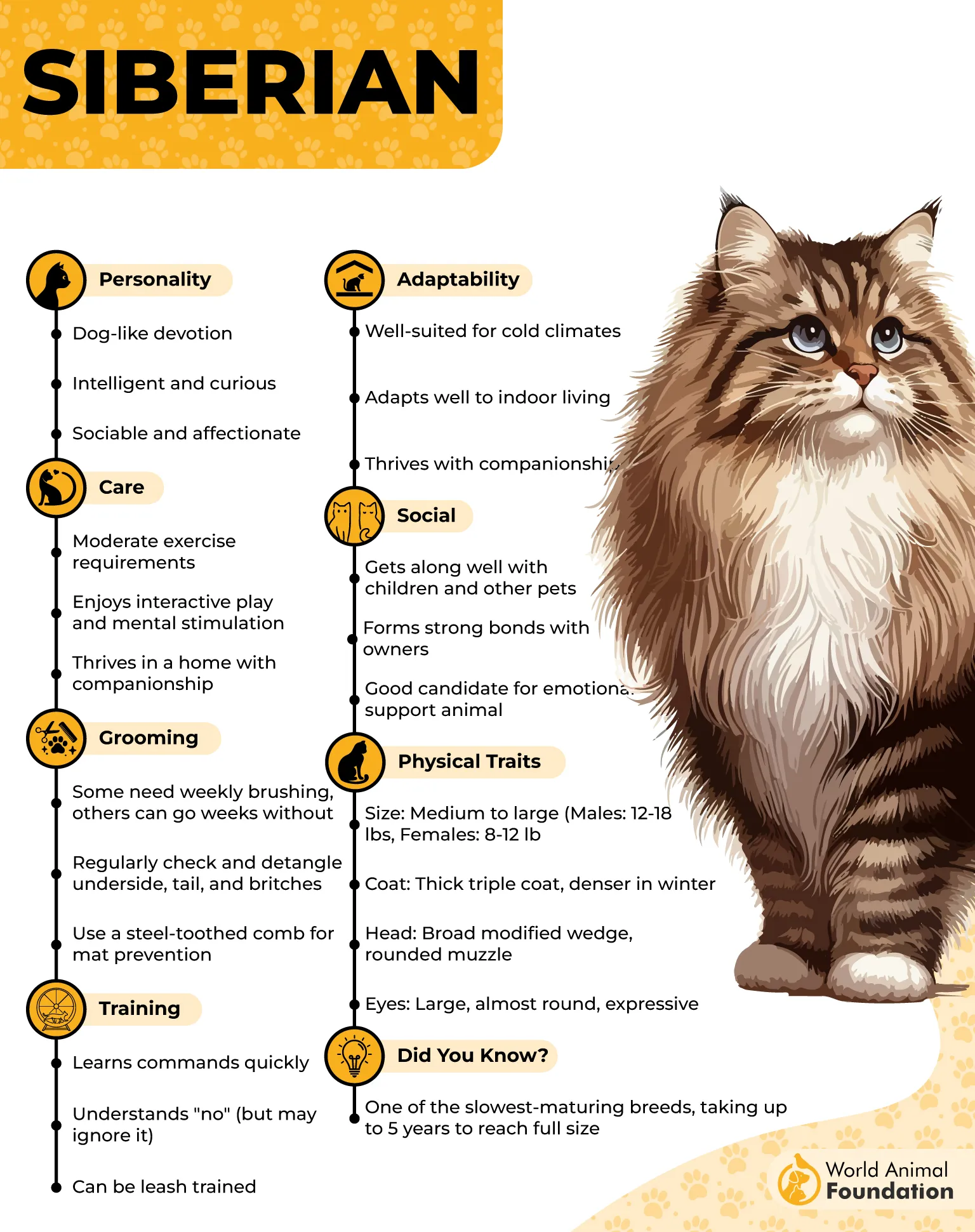
Despite the thick coat, grooming is usually straightforward, with weekly brushing enough for most of the year and extra care during heavy shedding seasons. Many Siberians are sweet-natured companions that enjoy relaxing close to their people after bursts of energetic play. Their combination of solid build, weatherproof fur, and affectionate nature makes them a popular option for households in regions with long, snowy winters.
Why This Cat Is a Good Fit
Triple coat offers serious insulation, helping this breed stay comfortable in cooler rooms or homes that are hard to heat evenly.
Big, tufted paws and a muscular body match well with supervised play in snowy gardens, catios, or enclosed balconies.
An affectionate, people-focused attitude fits owners who spend long winter evenings indoors and enjoy close company from their cat.
4. Chartreux
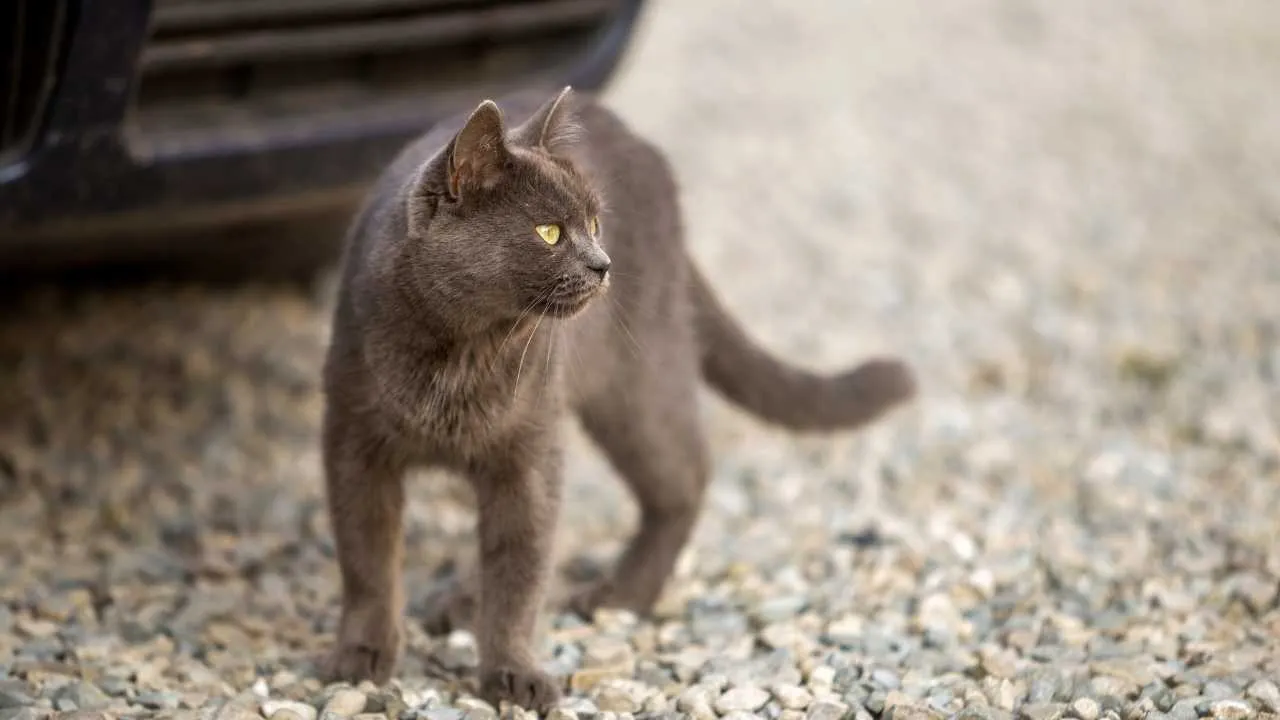
The Chartreux is a medium to large cat with a thick, muscular body, broad chest, and powerful neck. Its woolly blue coat is dense and somewhat firm in texture, forming a plush layer that becomes longer and thicker in winter. This coat was originally useful for a working cat that needed protection while keeping barns and houses free of rodents.
Under the rounded, smiling face is a calm and observant personality. Chartreux cats are often described as quiet, loyal companions that bond closely with their families without demanding constant attention. Their sturdy bodies on comparatively slender legs have even inspired a humorous nickname, yet they still move with a soft, graceful step.
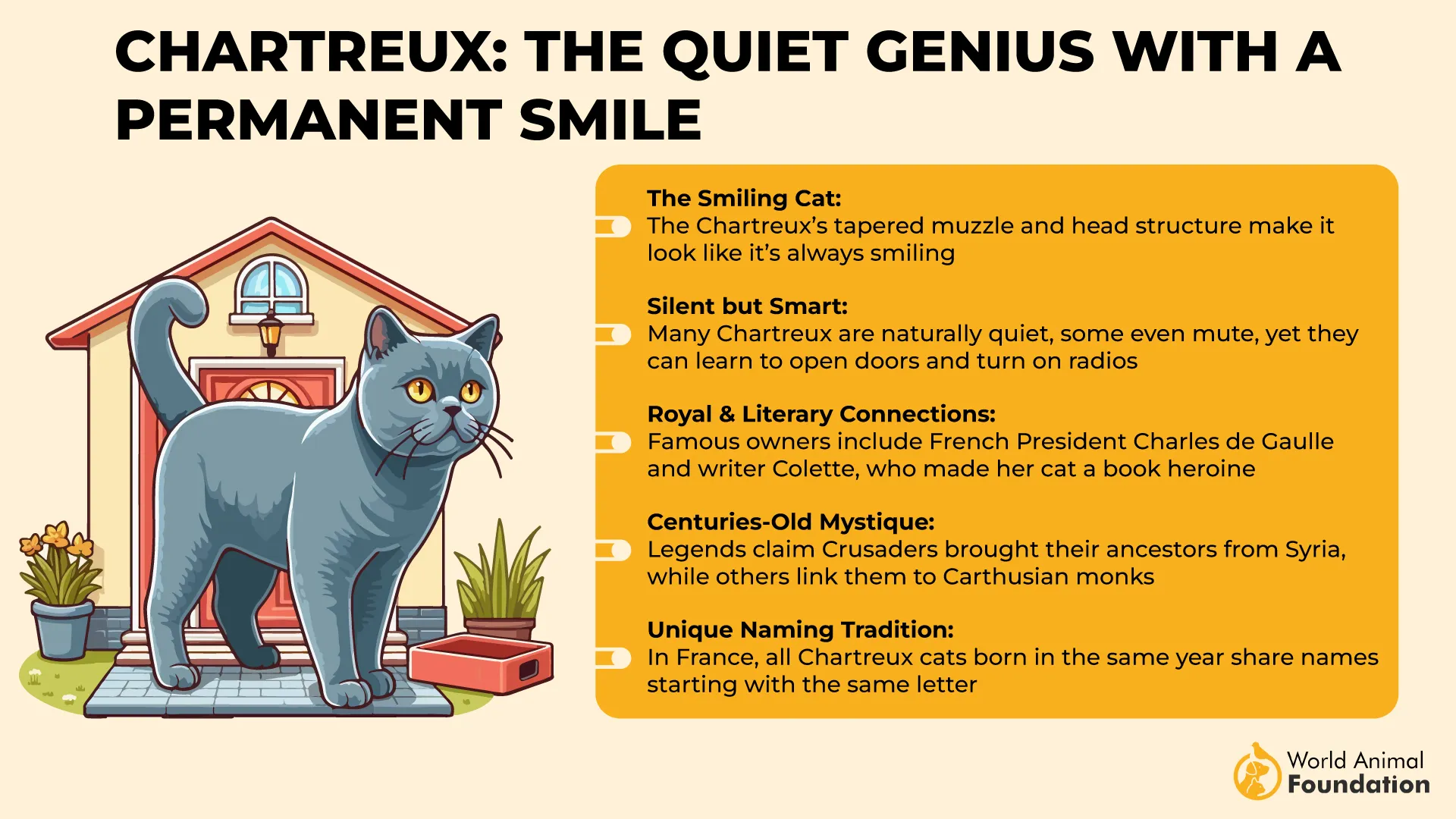
Because the coat is so dense, daily brushing is recommended, especially during seasonal changes when shedding increases. With a solid frame, strong legs, and an insulating coat that was developed in cooler regions, Chartreux cats can adapt well to households in colder climates while still preferring the comfort of a warm, cozy home. Regular interactive play helps keep this powerful cat fit while it spends most winter days indoors.
Why This Cat Is a Good Fit
Thick, woolly coat that grows heavier in winter suit homes located in regions with long, damp, or chilly seasons.
Easygoing, undemanding personality makes this breed happy to stay inside when ice and snow limit outdoor activity.
Muscular, barn cat heritage means they are comfortable living in older, cooler houses with stone or wooden floors that stay cold.
5. Scottish Fold
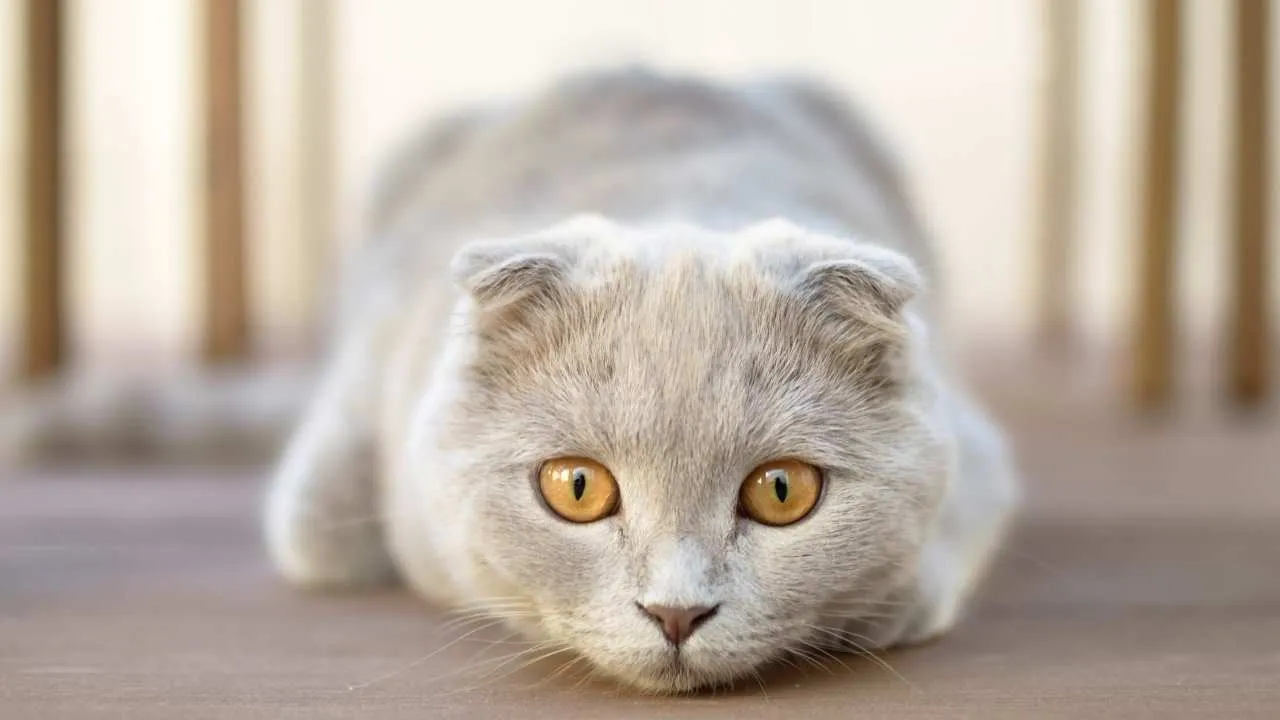
The Scottish Fold is a medium-sized cat with a round head, softly curved body, and the famous folded ears that tilt forward and down. Their eyes, legs, and tail all add to a rounded outline, giving them a teddy bear look. Coats can be short, medium, or long, with a dense texture that keeps them feeling plush.
This breed started with a barn cat in Scotland and retains a sturdy frame beneath the padding. Their plush fur can come in many colors and patterns, and the tail needs gentle handling because some cats may develop stiffness or discomfort if it is pulled or twisted. Regular brushing, especially for longhaired Folds, keeps the coat tidy and comfortable.

Scottish Folds are described as sweet, easy companions who like being with their people without constant demands. They enjoy interactive play but are not usually as high-energy as some other breeds. Calm and affectionate, they fit well into homes that can offer steady company and a cozy place to watch winter weather from indoors.
Why This Cat Is a Good Fit
Plush, dense fur helps them stay snug in homes where cold and damp weather lasts for many months.
Steady, undemanding nature matches households that spend long, quiet evenings inside during icy seasons.
Compact build and love of human company make them well-suited to warm window seats and radiator-side beds in chilly climates.
6. Manx
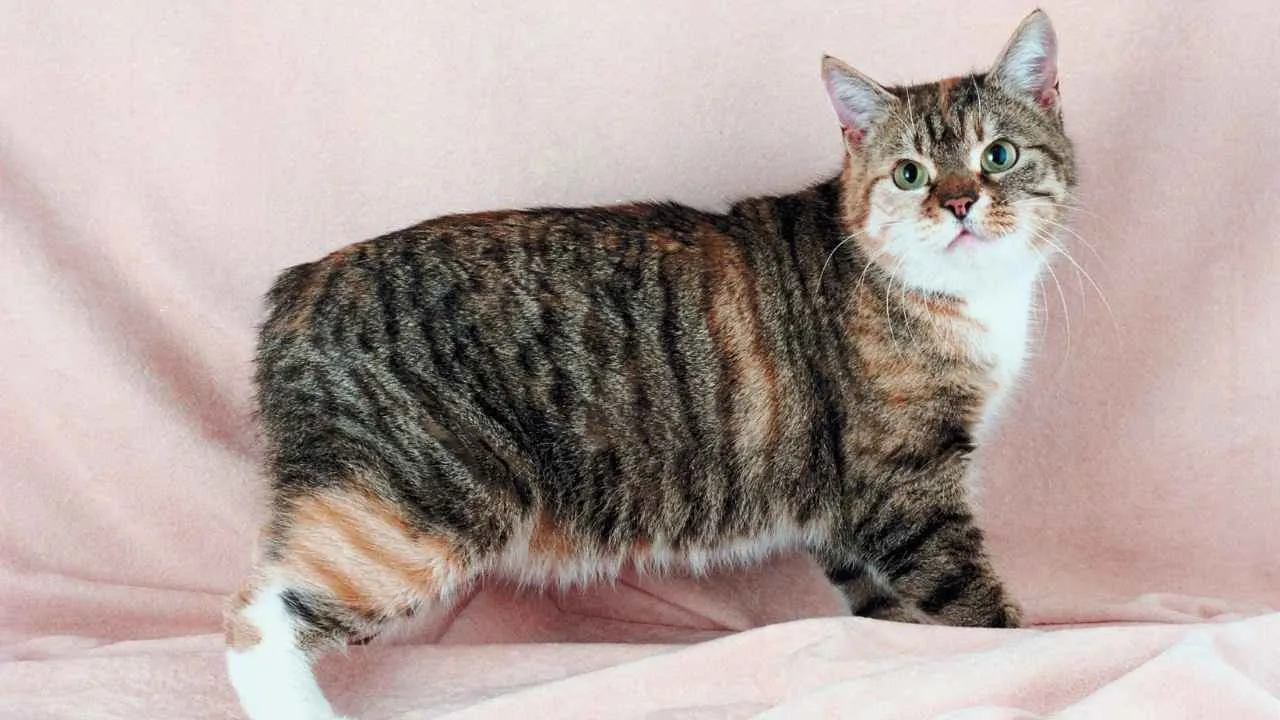
The Manx is known for its tailless look, but beneath that feature is a solid, rounded body and thick double coat. They may appear small at first glance, yet their build is surprisingly substantial. Their short fur needs regular grooming to remove loose undercoat and keep the skin healthy.
Manx cats have a playful, people-focused personality and often like to follow their owners from room to room. They are usually not very loud, preferring quieter voices, and many enjoy relaxing on laps when their humans settle down. Although they are not seen climbing constantly, they can jump to impressive heights when motivated.
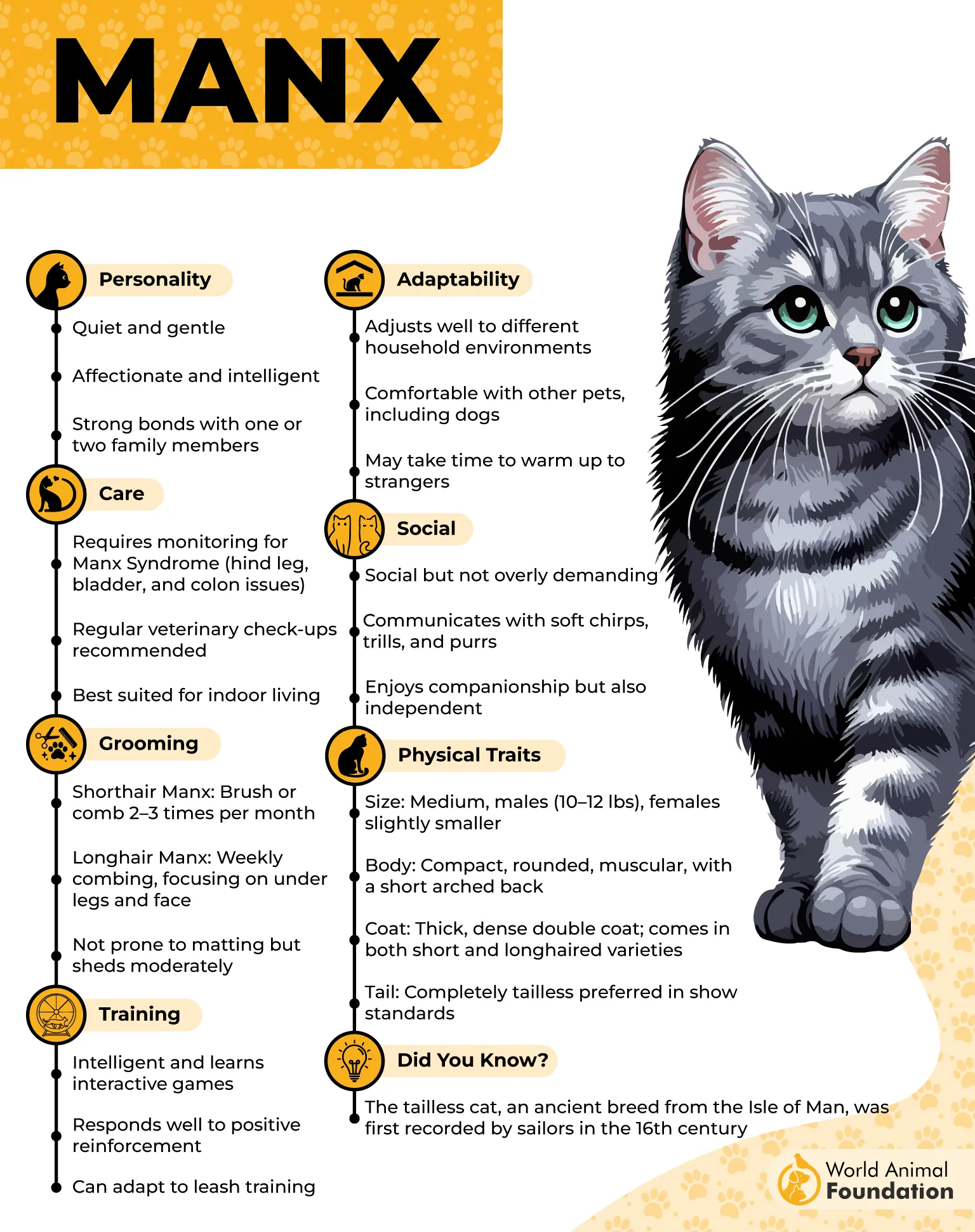
Originating on the Isle of Man, where the climate is cool, wet, and windy, they developed into hardy cats that handle chill and damp better than many breeds. Their thick coat and sturdy build helped them work as mousers in rough coastal weather. Today, that same resilience makes them comfortable in modern homes that still face long, blustery winters.
Why This Cat Is a Good Fit
Dense double coat and robust body give extra protection in drafty houses or regions with frequent cold rain.
A loyal, family-oriented attitude means they happily spend stormy days indoors, staying close to their people.
Natural hunter roots suit rural or coastal areas where winters are damp, while they still enjoy a warm fire or heater at night.
7. Russian Blue
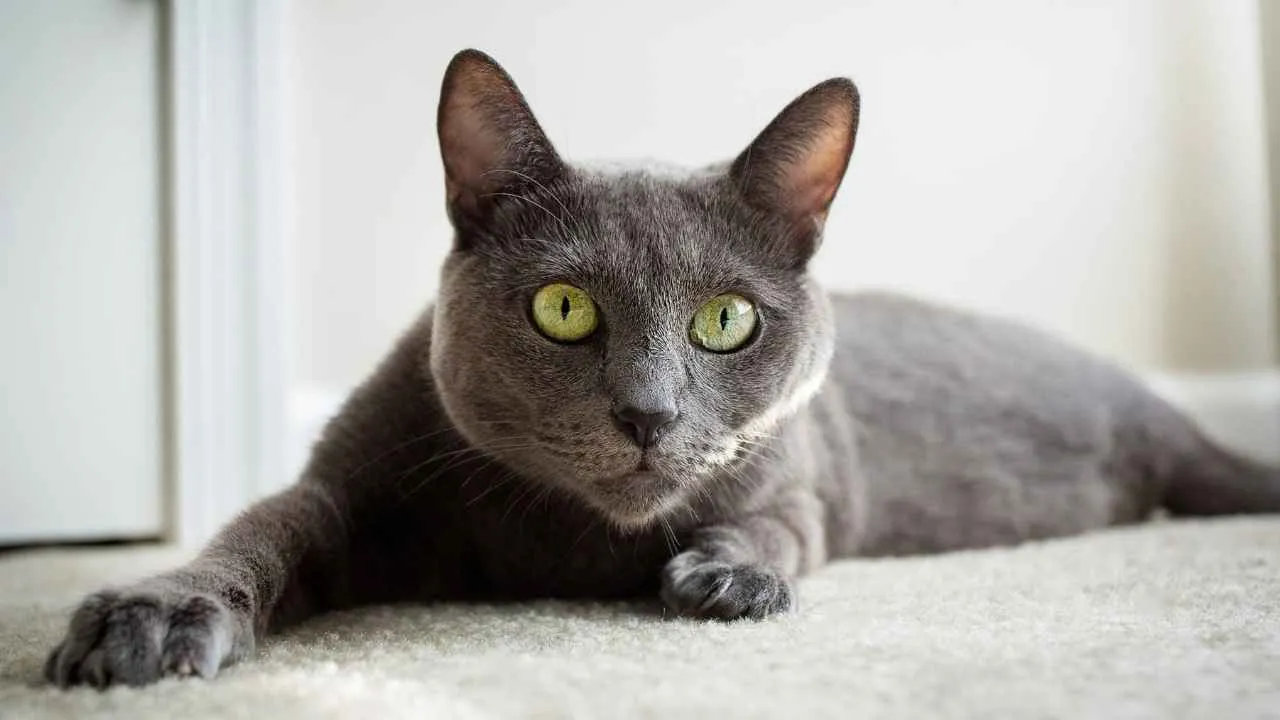
The Russian Blue is a graceful, medium-sized cat with fine bones and an elegant outline. Its hallmark feature is a short, dense double coat in a single color: a deep blue grey with silver tipping that gives a shimmering look when the cat moves. The coat is low-maintenance and sheds relatively little compared with many other breeds.
Russian Blues are independent yet affectionate with their chosen people. They are often reserved with strangers, preferring calm, predictable surroundings over noisy or chaotic homes. Intelligent and observant, they like having high perches where they can quietly watch everything going on.
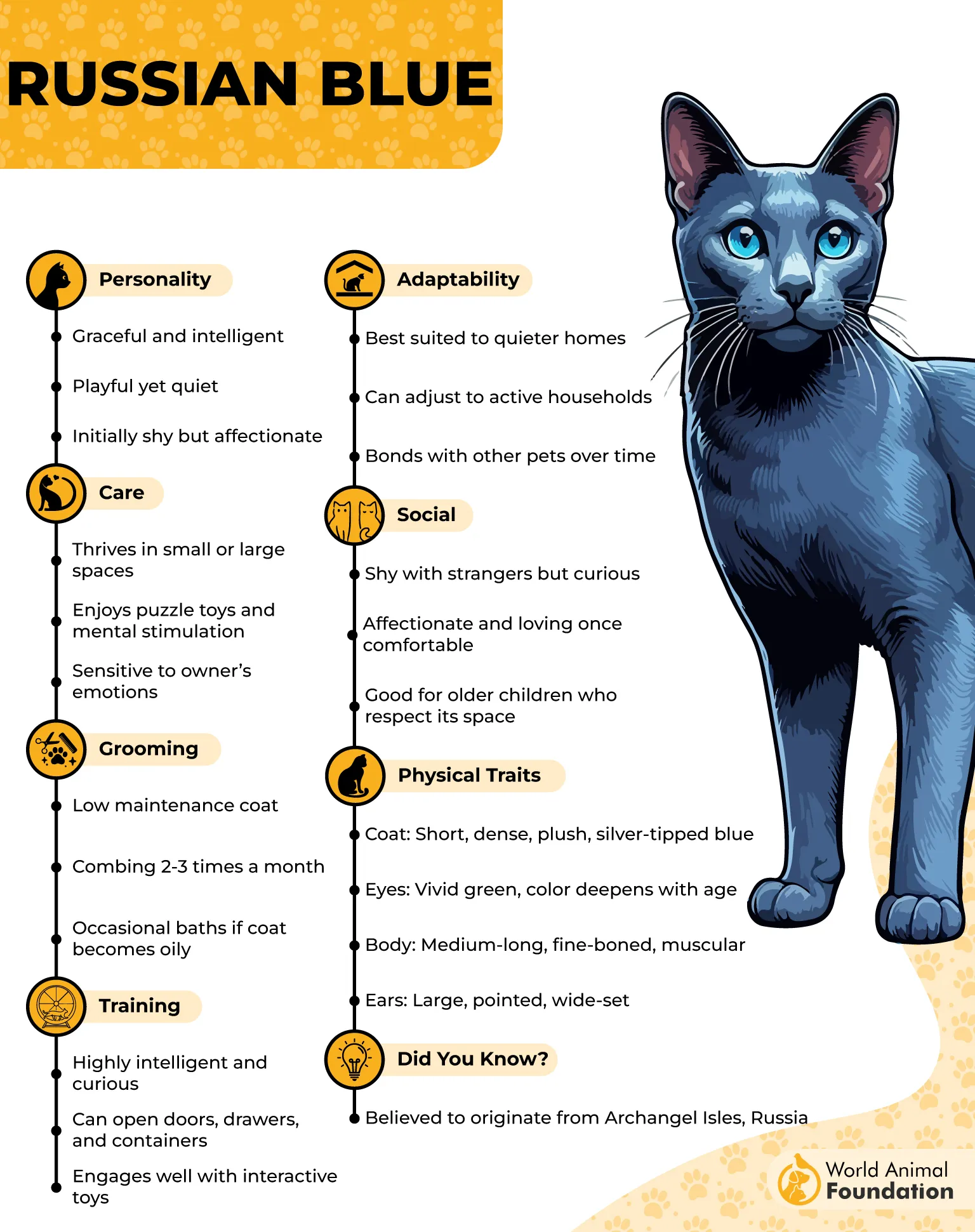
This breed’s origins lie in northern Russia, including areas close to the Arctic Circle, where a dense coat helped protect against bitter weather. Modern Russian Blues still benefit from that insulating fur, which keeps them comfortable when temperatures drop indoors. Combined with a generally robust constitution and easy grooming needs, they suit owners who live in colder regions but keep their cats safely inside.
Why This Cat Is a Good Fit
Thick, short double coat offers warmth without the heavy grooming workload many long-haired winter breeds require.
A preference for quiet, steady routines matches homes that stay closed up and cozy during long, cold seasons.
Origin in frosty northern climates makes them a natural choice for indoor life in snowy or subzero regions.
Conclusion
Cold-weather cat breeds are a joy to share life with, from fluffy cats to quieter, chill cats who prefer watching freezing winters from the window. Their physical traits, like long hair and sturdy bodies, help them stay warm in cold temperatures, while you focus on good food, dry litter, and keeping moisture and frostbite at bay. Cold-weather cats still need safe indoor time, chances to cuddle, and room to hunt toys.
If you love spending time outside in colder months, remember that even excellent hunters and outdoor cats should not stay out in freezing conditions.
Other breeds, such as Himalayan cats, can also thrive in chilly temperatures.
