




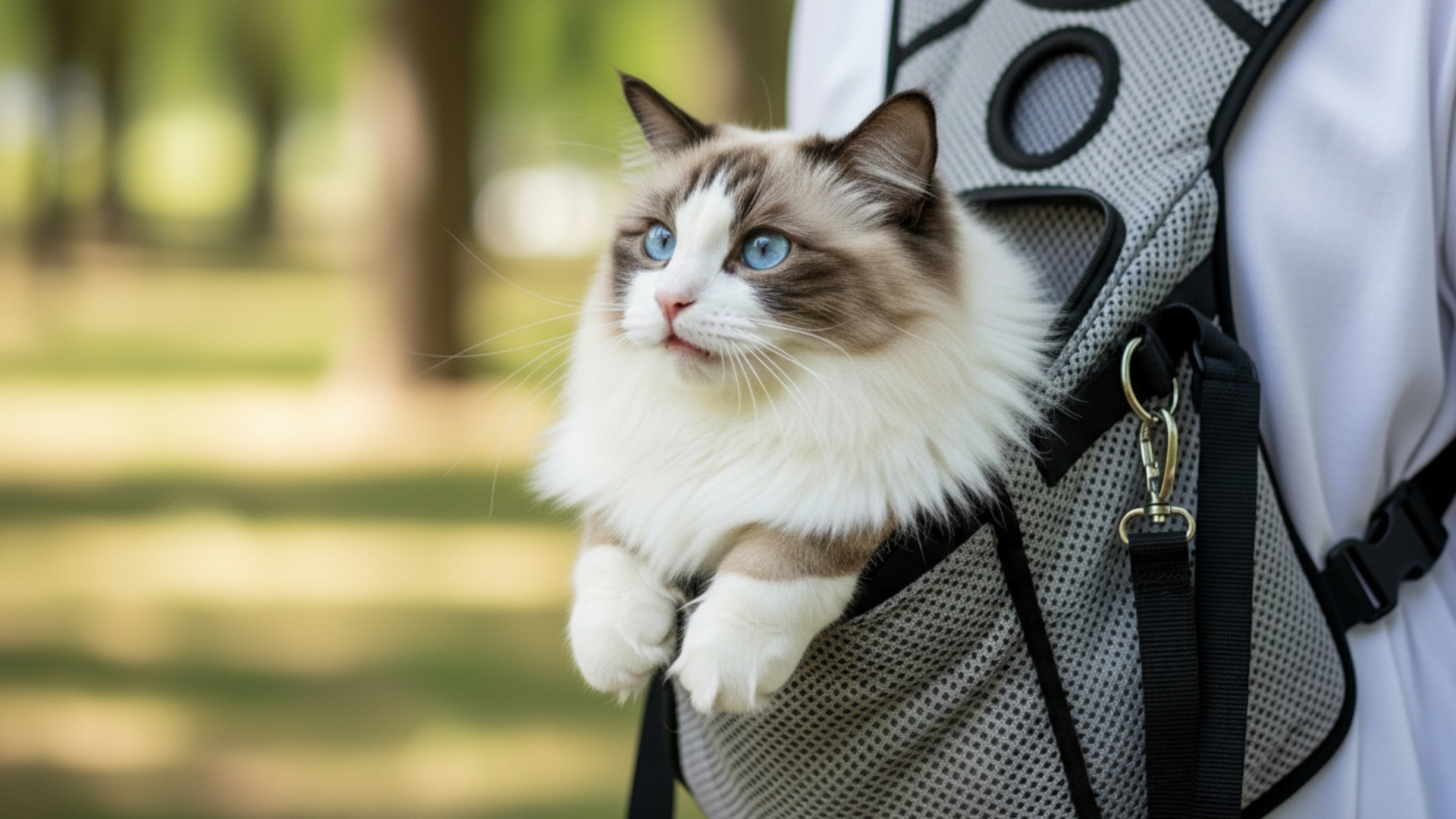
Can cats really become adventure companions? While many people assume felines dislike travel or resist training, the truth is quite the opposite. With patience and the right approach, many cats can learn to explore the world safely—especially when introduced to tools like harness backpacks.
Confident, curious cats with steady nerves are more likely to accept wearing a harness and walking outdoors. Key personality traits for adventure-ready cats include intelligence, sociability, playfulness, and a strong bond with their owner.
A harness backpack is designed to keep your cat secure while allowing them to observe their surroundings. Some styles function like wearable carriers, while others pair a fitted harness with a transparent or ventilated backpack. When introduced gradually, this gear can transform an ordinary house cat into a safe and enthusiastic travel buddy.
In this guide, we’ll highlight seven cat breeds that adapt particularly well to life on the go.
Cat Breeds That Adapt Well to Harness Backpacks
1. Maine Coon
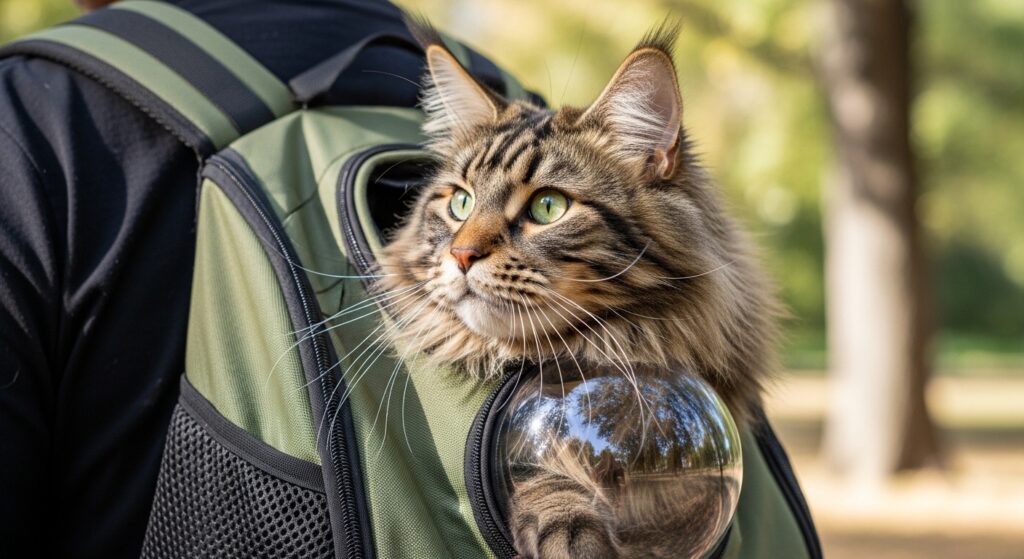
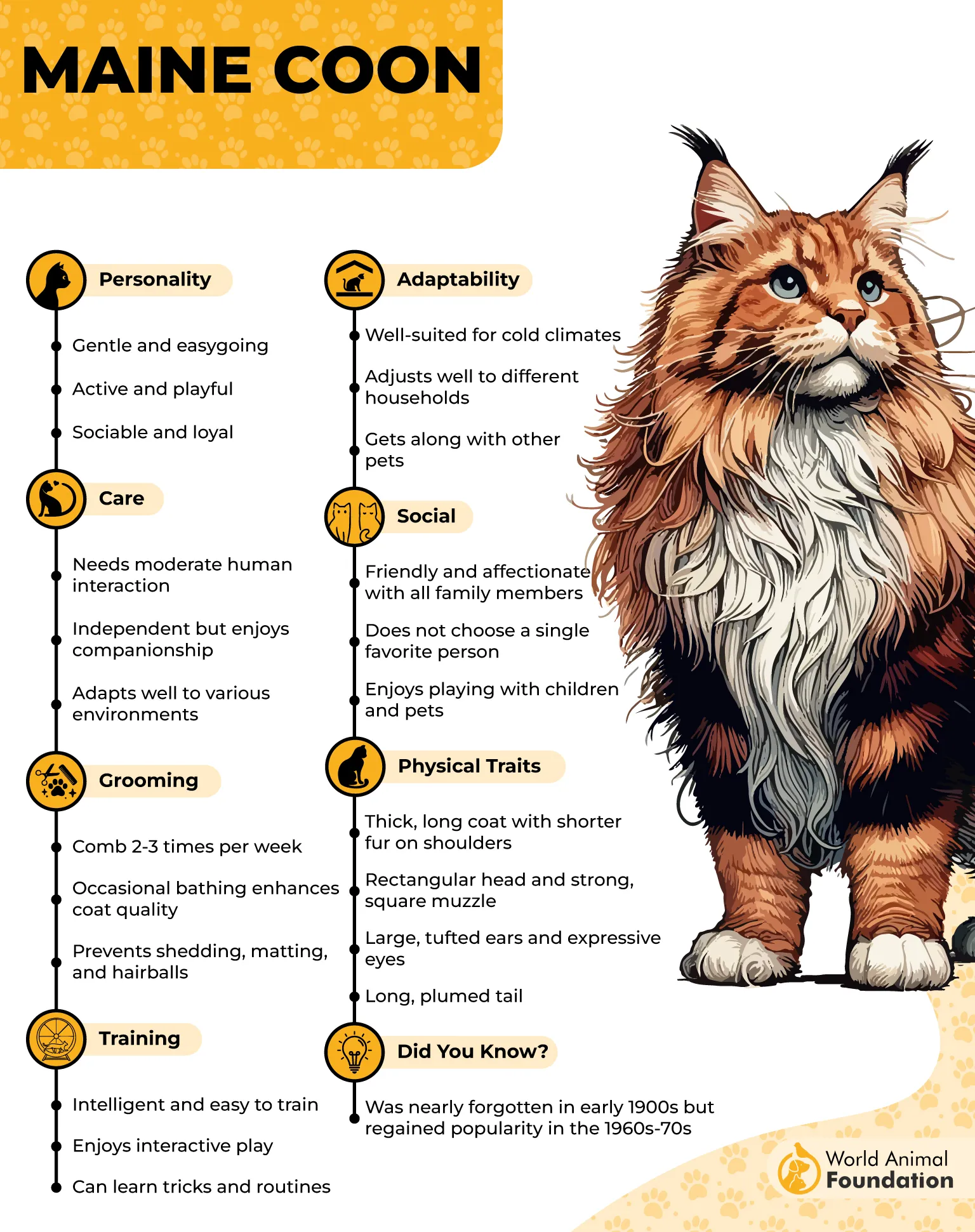
The Maine Coon, famously nicknamed the “Gentle Giant,” originated in Maine, USA, and is the largest domesticated cat breed. Recognized for its shaggy coat, tufted ears, and affectionate, dog-like loyalty, this striking feline combines impressive size with a warm, playful personality.
Purina notes that Maine Coon cats are known for their gentle temperament and friendly personality, which makes them wonderful companions.
Naturally curious and confident, Maine Coons often respond well to harness and leash training. Their intelligence and eagerness to learn make them surprisingly adaptable to outdoor adventures, from casual park strolls to camping trips.
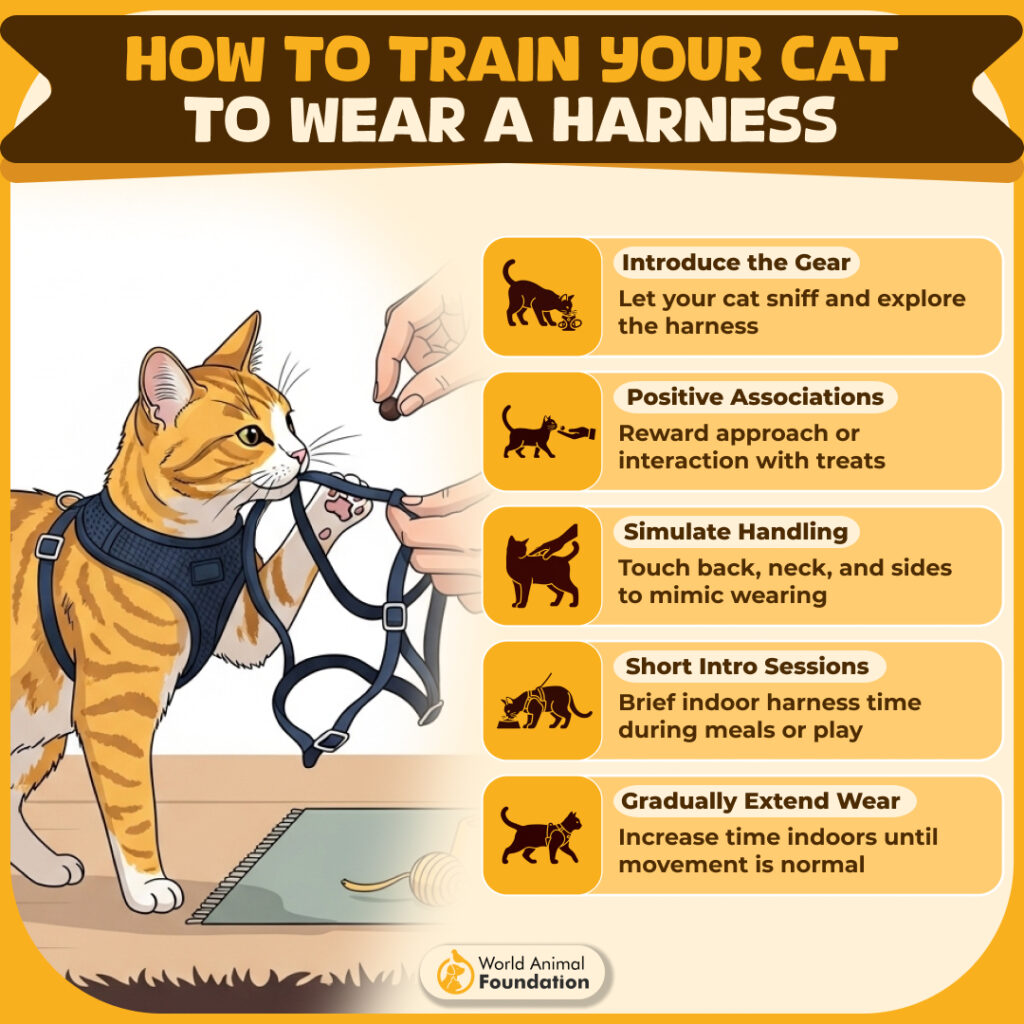
They thrive on attention and interactive play, which makes travel an exciting outlet rather than a stressful disruption. Loyal and attentive, they tend to stay close to their human companion, a valuable trait when adjusting to a harness backpack.
Although their larger frame can make backpack travel slightly more challenging than with smaller breeds, their calm, trainable nature helps smooth the process. Notably, Maine Coons are considered lifelong learners who grasp new skills quickly and enthusiastically.
2. Chartreux
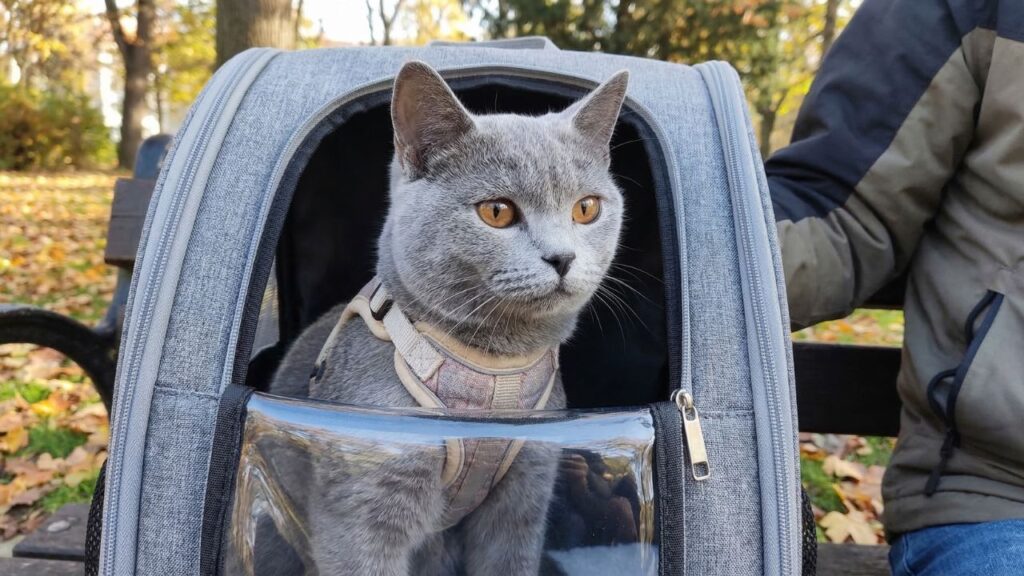
The Chartreux, often considered the unofficial cat of France, is a solid blue-gray feline known for its woolly-textured coat and striking copper eyes. With roots linked to France and nearby regions, this muscular yet gentle breed has long been admired for its calm and pleasant demeanor.
PetMD highlights that the Chartreux cat’s calm temperament and quiet personality make it one of the sweetest short-haired breeds, making it a wonderful companion for a wide variety of households.
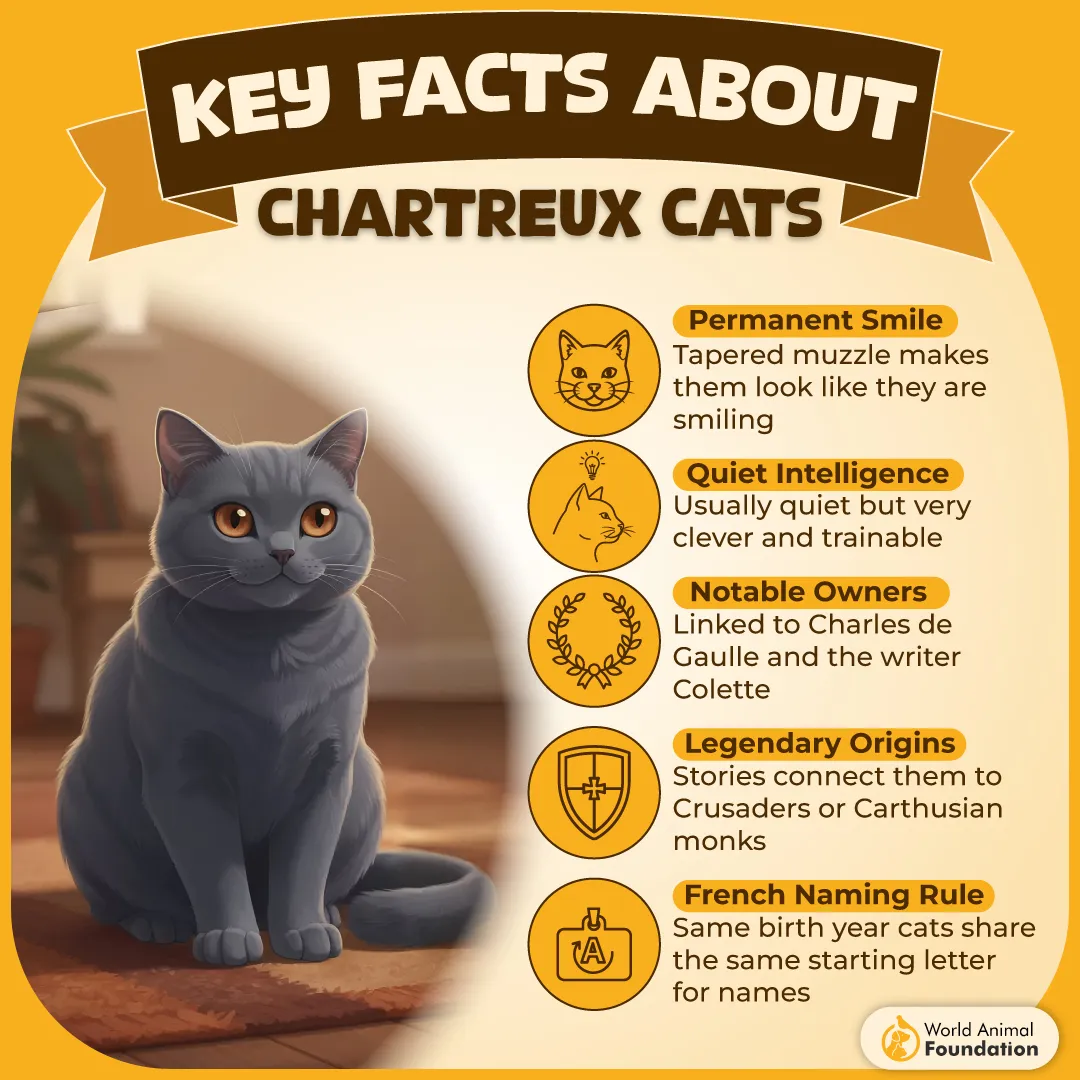
Energetic and outdoor-oriented, the Chartreux adapts well to new surroundings when introduced thoughtfully. Though generally relaxed, this intelligent cat handles carriers and travel routines with surprising ease, whether riding in a car or accompanying its owner on longer journeys.
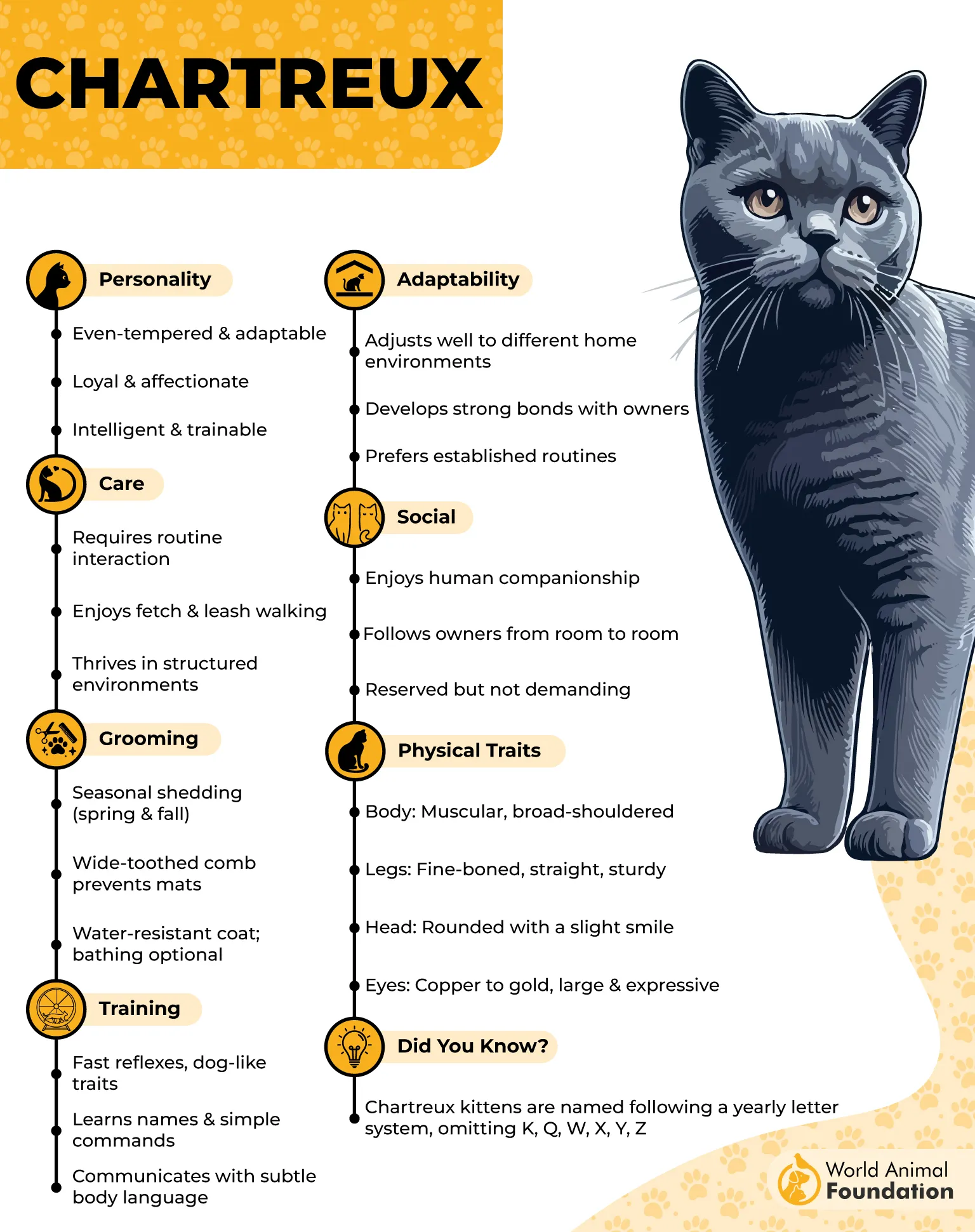
Originally valued as a skilled mouser, the Chartreux possesses quiet confidence and alertness. These traits make harness training manageable, especially since the breed tends to stay close and bond deeply with one favorite person.
While playful in short bursts, the Chartreux is equally content resting between adventures, making it a balanced travel companion. Interestingly, legend says French Carthusian monks once relied on Chartreux cats for rodent control in monasteries.
3. Bengal
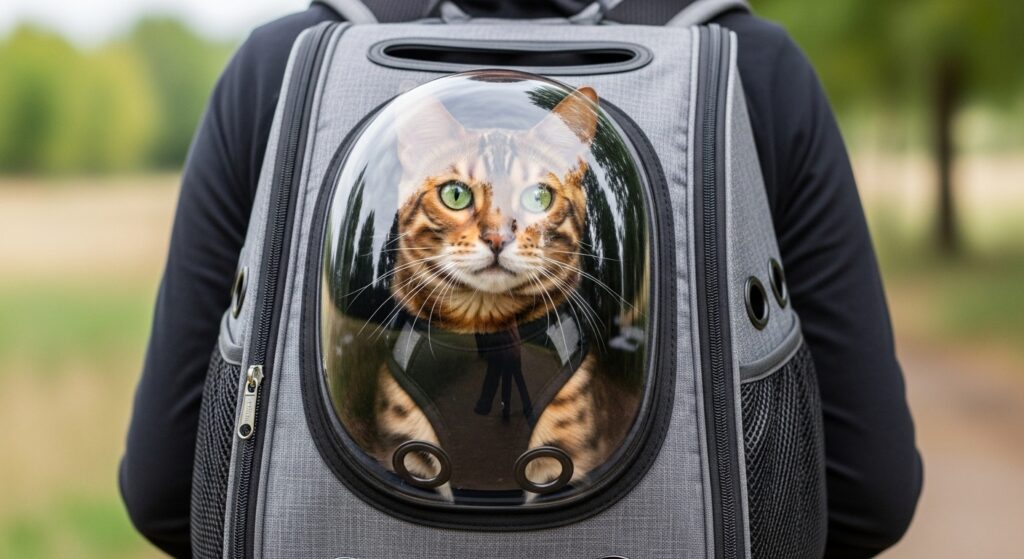
The Bengal, sometimes described as a Leopard Cat hybrid, was developed from crossings with the Asian Leopard Cat. Recognized for its glittering marble or spotted coat and athletic build, this striking breed combines wild looks with an affectionate, family-oriented personality.
Petplan explains that Bengals are highly intelligent and full of boundless energy, often showing a playful and slightly mischievous side.
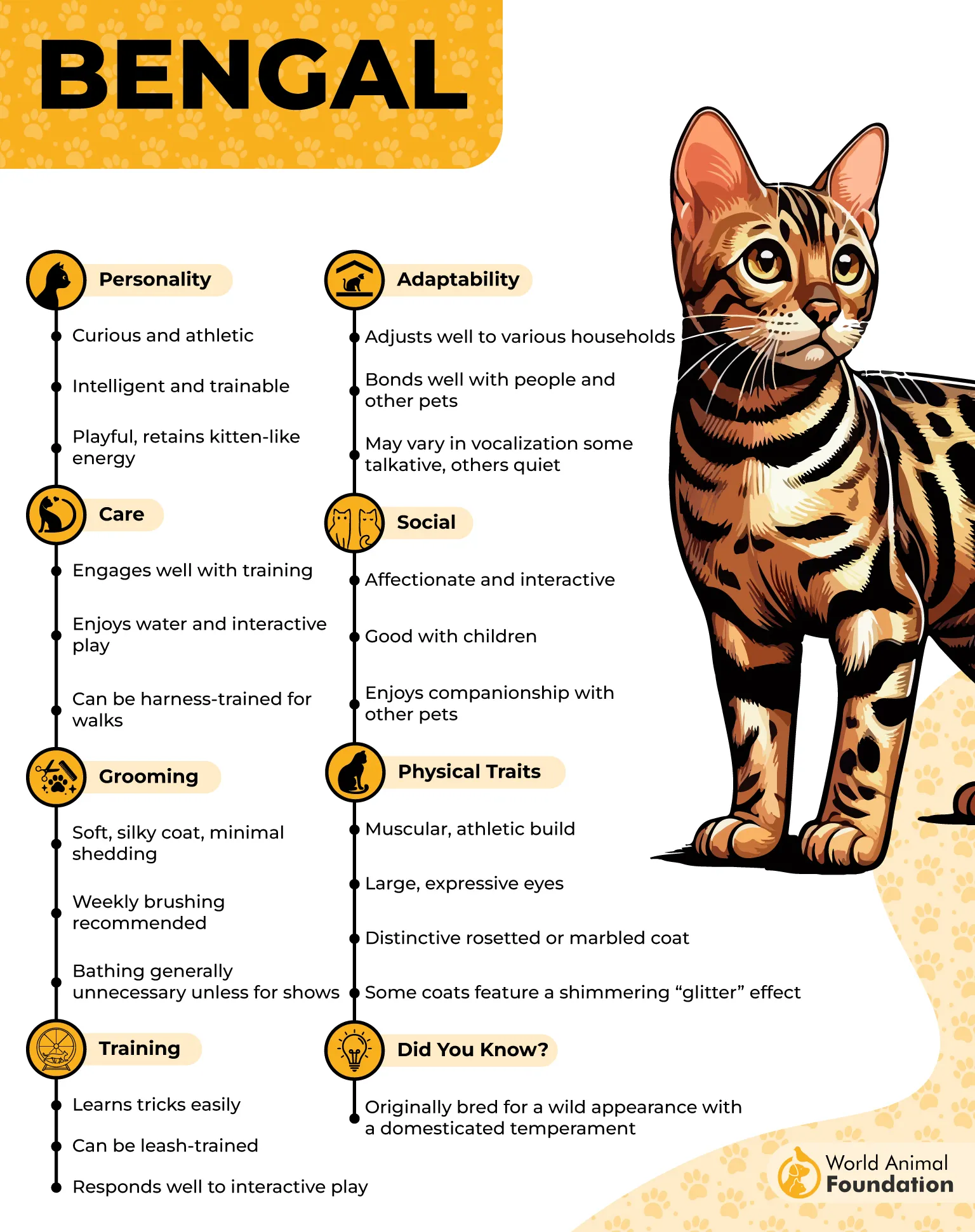
Highly intelligent and naturally curious, Bengals tend to adapt quickly to harness and backpack training. Their confidence and eagerness to explore make outdoor walks, hikes, and travel adventures especially appealing.
Energetic and agile, they thrive on activity and mental stimulation, which makes them enthusiastic participants in leash outings. Many even enjoy water, and their stamina allows them to handle varied terrains with ease.
Despite their exotic appearance, Bengals are interactive and loving, often forming strong bonds with their humans. Interestingly, many Bengals learn tricks easily and are known to enjoy going for walks with a harness and leash.
4. Abyssinian
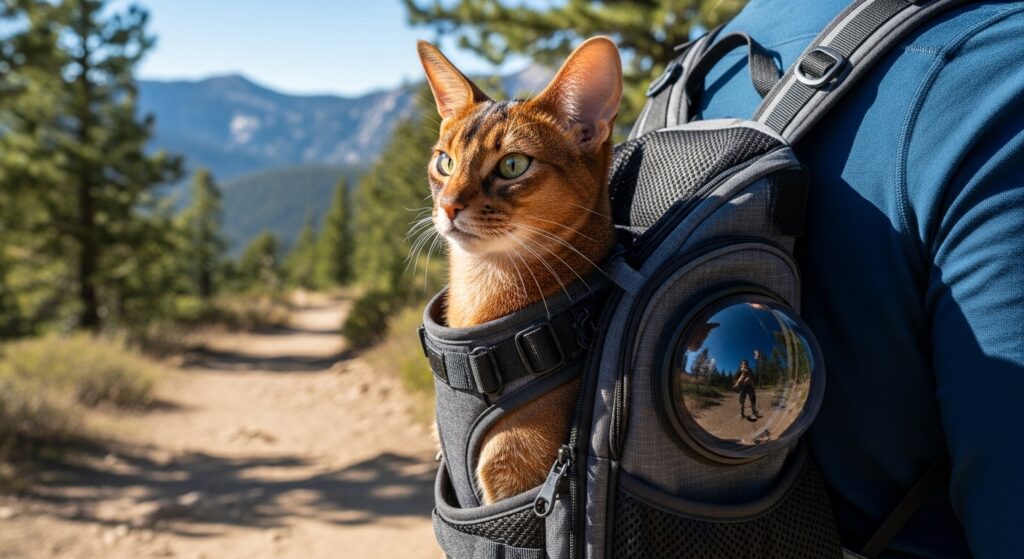
The Abyssinian, sometimes simply called the Aby, is a sleek, short-haired breed admired for its ticked coat and athletic build. Often described as the “clown” of the cat world, this lively feline is known for its curiosity, intelligence, and playful, dog-like devotion.
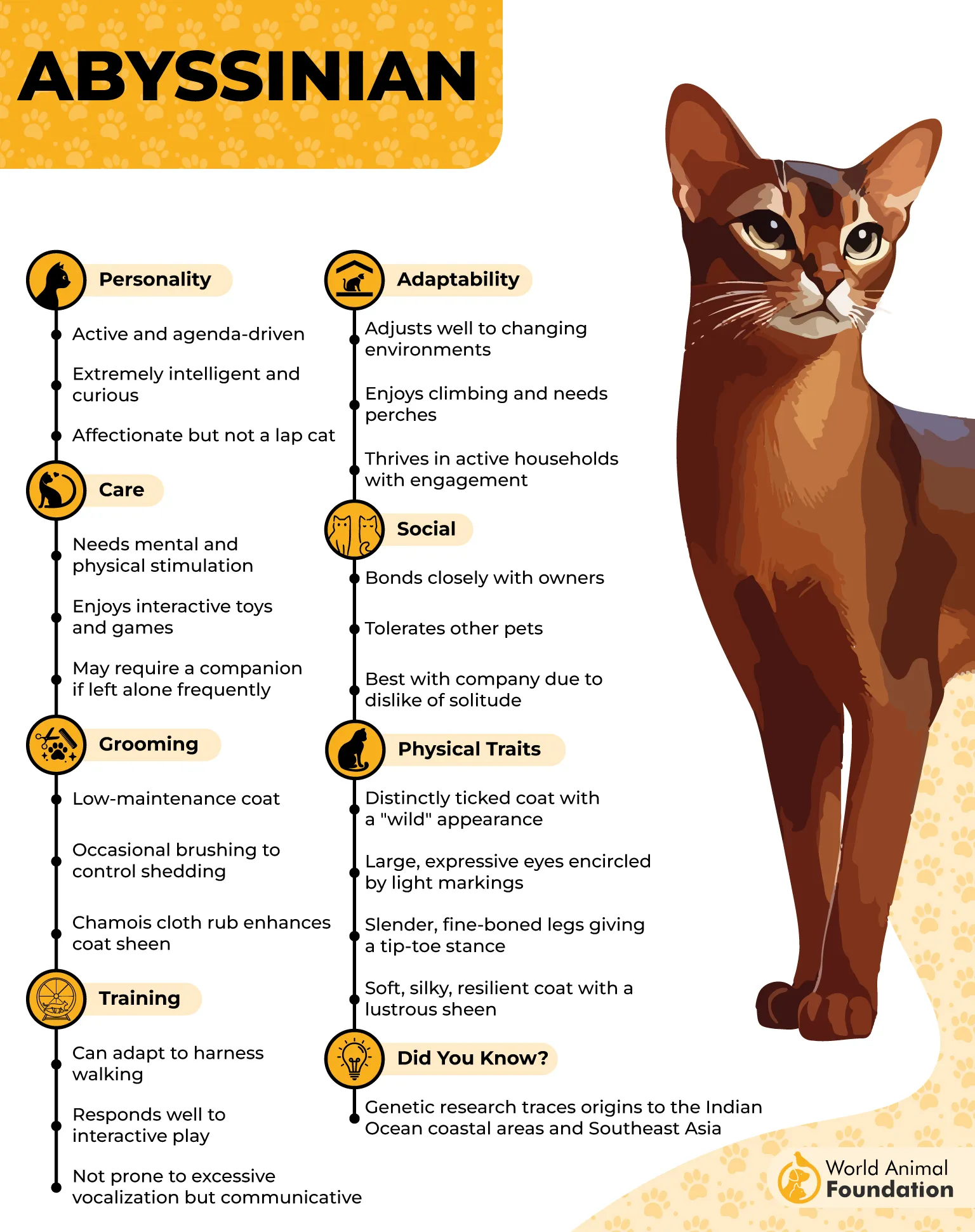
While energetic at heart, the Abyssinian adapts surprisingly well to harness training when introduced with positive reinforcement. Their sharp minds and eagerness to learn make leash walks and backpack outings an engaging challenge rather than a chore.
Naturally inquisitive, they enjoy exploring unfamiliar surroundings and tend to stay close to their human companion. Because they thrive on interaction and stimulation, travel adventures can provide the climbing, jumping, and mental exercise they crave.
Their short, low-maintenance coat is especially convenient for owners on the move, requiring minimal grooming. Notably, Abyssinians respond well to praise-based training and can even learn tricks like walking on a leash or playing fetch.
5. Ragdoll
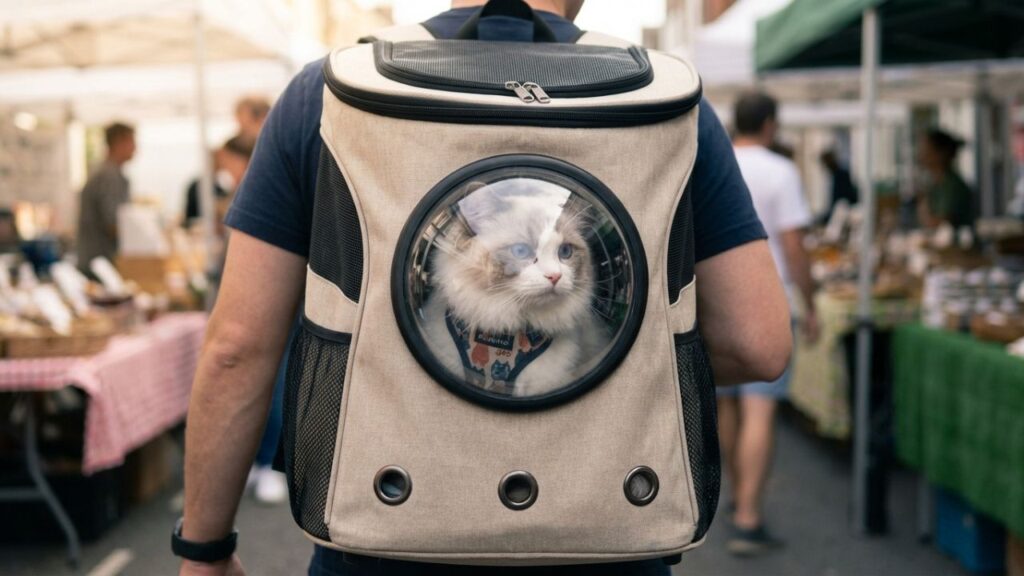
The Ragdoll, sometimes simply called a Rag doll cat, is a large, semi–long-haired breed admired for its silky coat and striking blue eyes. Known for going limp when held, this affectionate feline has earned a reputation for its relaxed, people-oriented temperament.
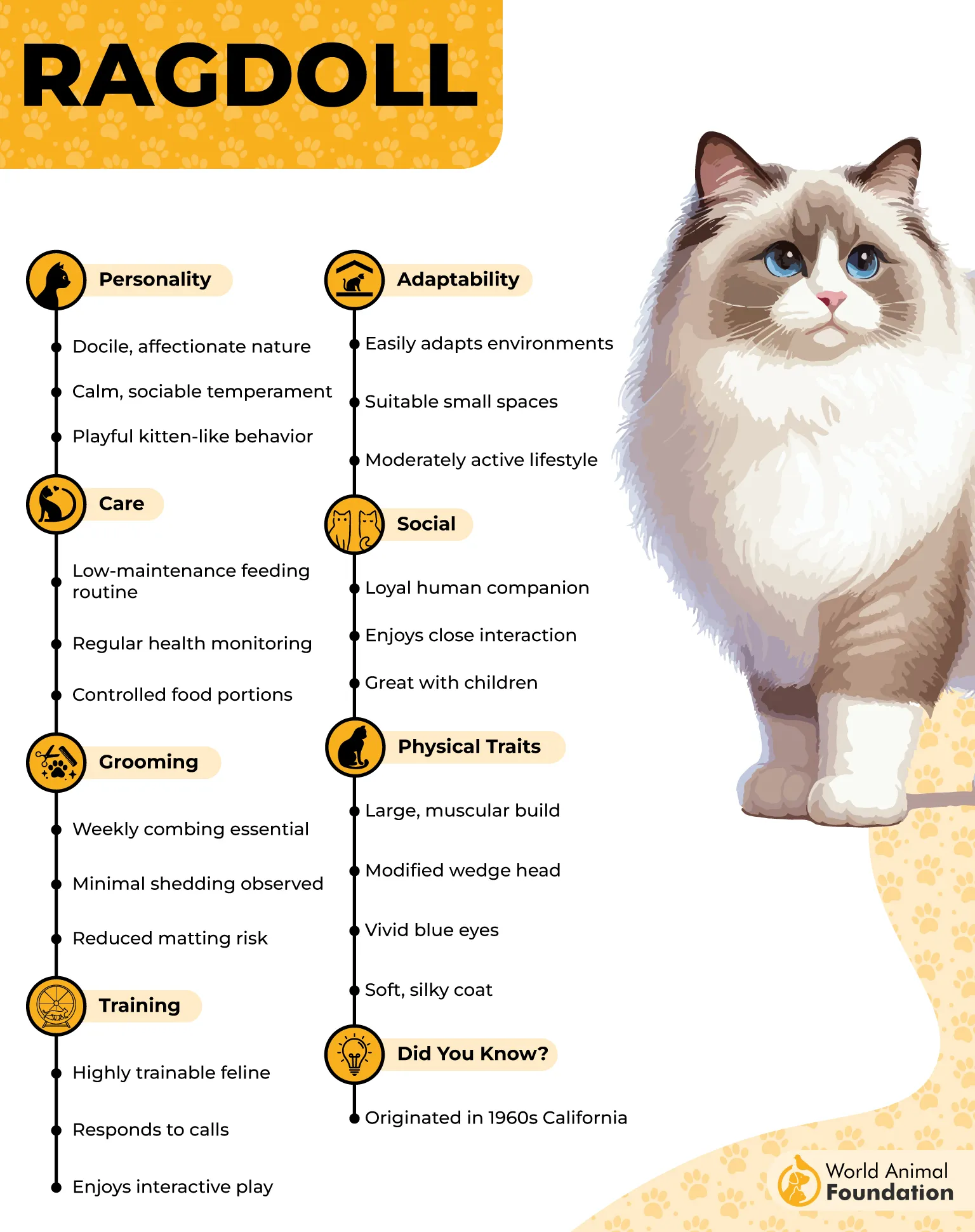
Ragdolls are famously devoted to their humans, often following them from room to room and seeking companionship. Their trusting and adaptable nature makes them more open to new experiences, including gradual harness and backpack training.
Calm and steady, they tend to remain composed in different environments, which is helpful when introducing outdoor strolls or travel routines. While not overly hyper, they enjoy interactive play and thrive when included in family activities.
Their easygoing personality, combined with empathy toward their owners, makes them comforting adventure partners. Notably, Ragdolls are considered one of the most laid-back and adaptable cat breeds, often well-suited to a wide range of living situations.
6. Norwegian Forest Cat
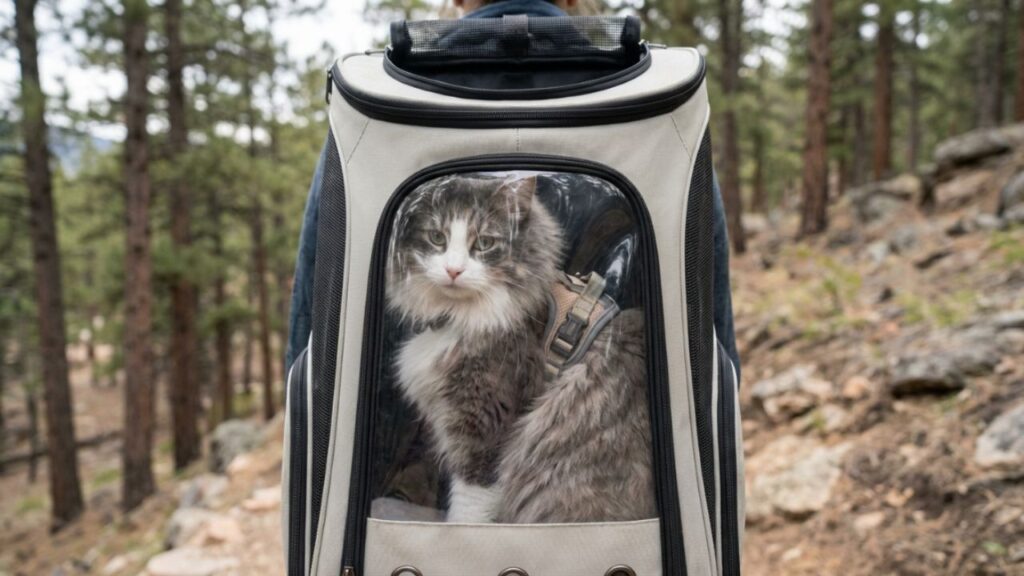
The Norwegian Forest Cat, often nicknamed the “Wegie” or “Skogkatt,” is a natural Northern European breed once favored in Norse legend. With its semi-long water-repellent coat, full ruff, and plumed tail, this sturdy, athletic feline was shaped by cold Scandinavian climates.
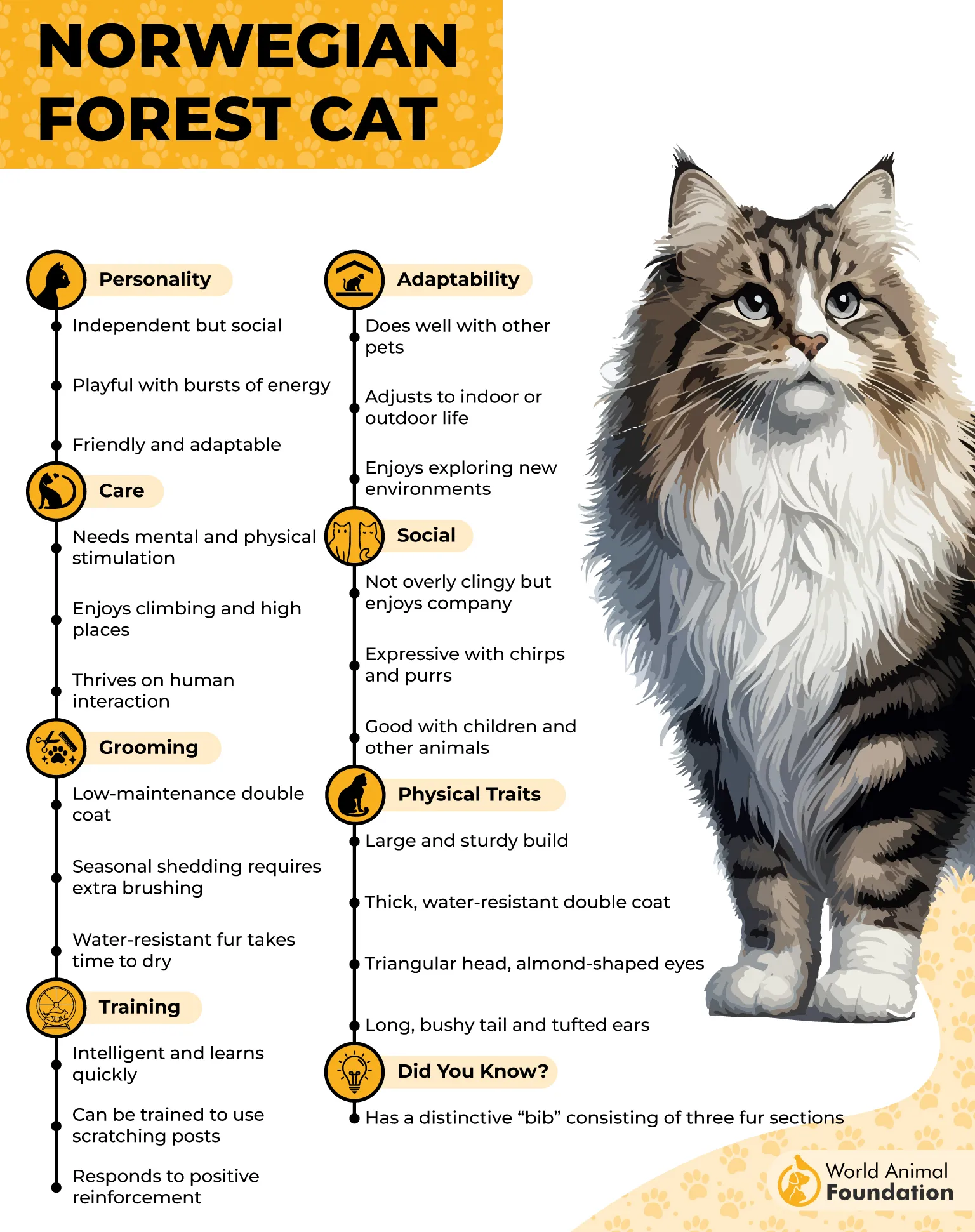
Athletic and built for exploration, the Wegie thrives on movement and vertical space. Known for impressive climbing skills, it can even descend trees headfirst thanks to its distinctive toe-out stance and powerful build.
Sociable yet independent, this breed adapts well to harness training when introduced gradually. Intelligent and resourceful, it enjoys interactive play and new environments, making supervised outdoor adventures or backpack outings a stimulating experience.
Though loyal—often bonding closely with one family member—the Norwegian Forest Cat remains friendly with children and other pets. Interestingly, King Olaf V of Norway once named this remarkable climber the official cat of Norway.
7. American Shorthair
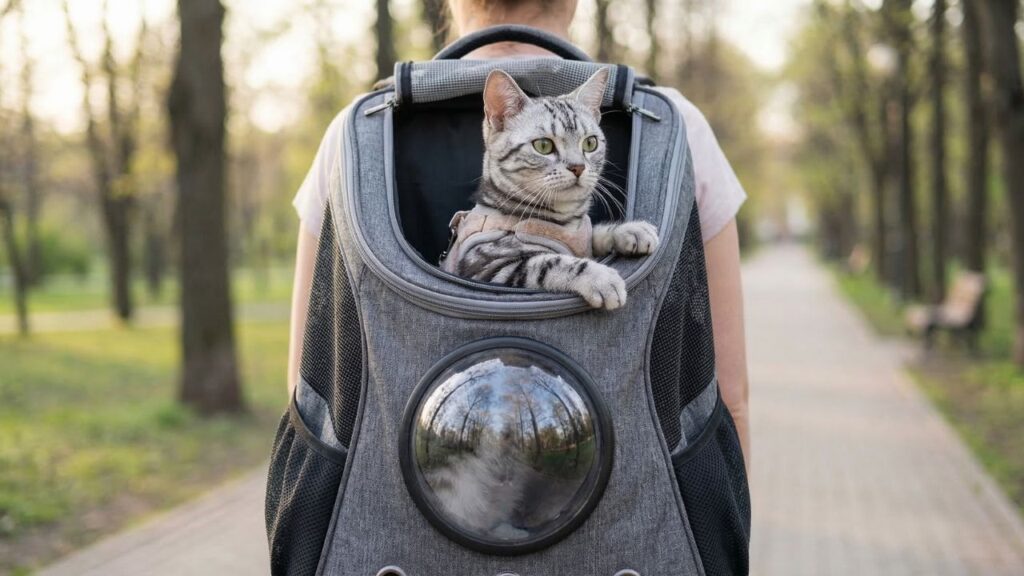
The American Shorthair, once known as the Domestic Shorthair, is one of the most recognizable and popular breeds in the United States. Admired for its sturdy build, classic good looks, and easygoing charm, this adaptable cat fits comfortably into a wide range of households.
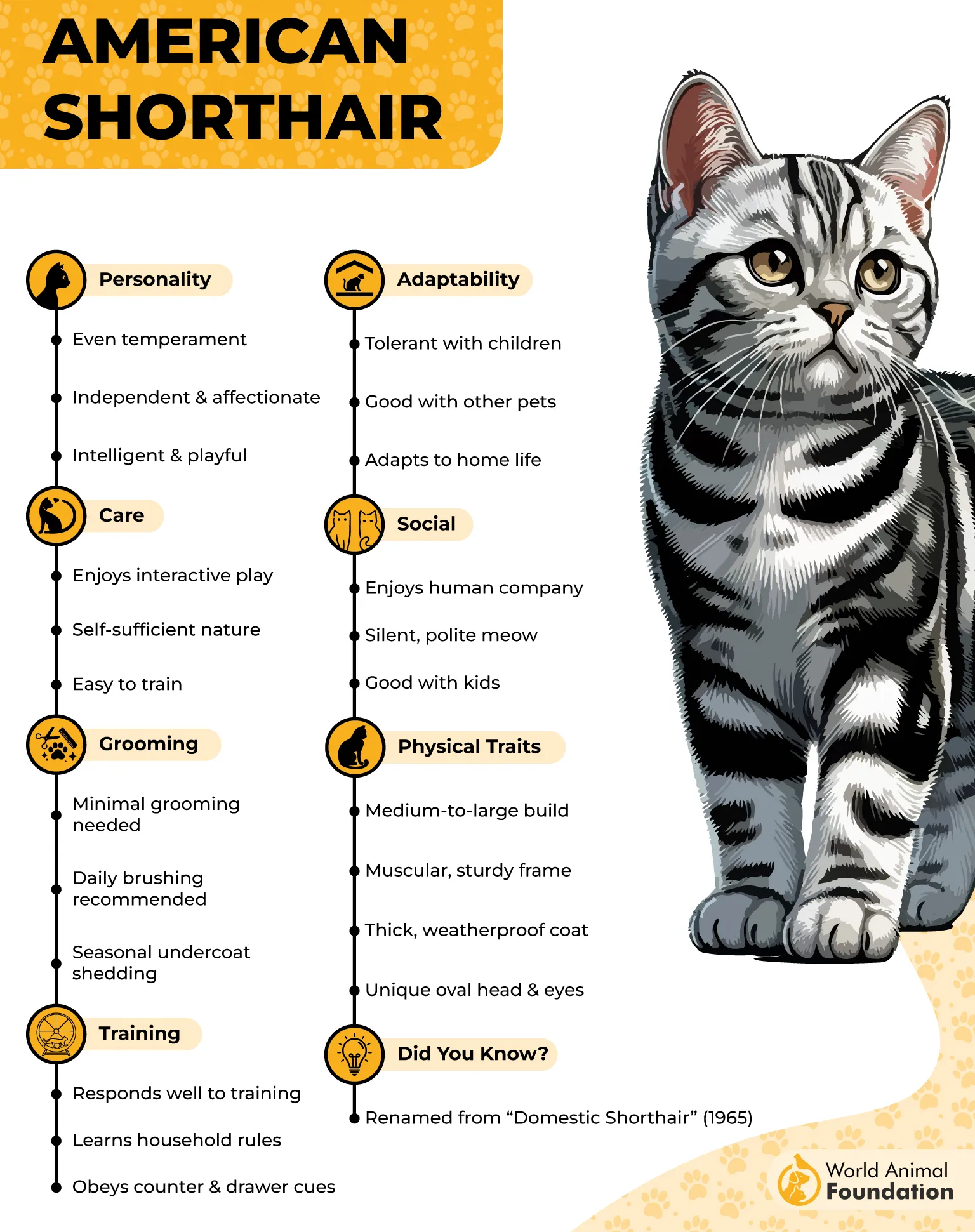
Social and stimulated by new experiences, the American Shorthair often adjusts smoothly to harness and backpack training. Naturally curious and intelligent, this breed tends to approach new environments with steady confidence rather than fear.
An independent explorer at heart, it also remains strongly people-oriented, frequently following its favorite human from room to room. That balance of curiosity and loyalty makes outdoor strolls or travel outings both manageable and enjoyable.
Early socialization helps this breed thrive in busy settings, encouraging comfort around strangers and other pets. Notably, American Shorthairs are known for adapting quickly to new environments and displaying impressive agility and endurance.
Conclusion
Exploring the outdoor world with an adventure cat is becoming increasingly popular among cat lovers. While not all cats are suited for travel, certain breeds stand out for their natural curiosity and confidence.
From the Maine Coon cat to the Bengal cat, these travel-prone felines are intelligent and quick learners who adjust well to a cat harness. The best cat breeds for outings share adaptable temperaments rather than strictly breed-related characteristics.
A playful and curious feline with a quiet and composed nature can become the perfect cat breed for car trips, long and tiring trips, or even a beach swimming adventure.
Bengal kitties and the Ocicat cat may have a somewhat wild appearance, while a Persian cat may charm with a fancy cashmere-like coat, but all require early training and fun activities regularly.
With guidance from dedicated cat parents, indoor cats can grow into adventure enthusiasts—furry travel companions who keep you good company beyond the litter box and cat tree.
Are You Ready to Take Your Cat Outdoors? Quiz 😺
Which trait is most important for a cat to adapt well to harness backpacks?
What is a key feature of a harness backpack for cats?
Which cat breed is nicknamed the “Gentle Giant” and adapts well to outdoor adventures?
What makes the Chartreux cat a good companion for travel?
According to the article, what is a common factor among the best cat breeds for outings?
