




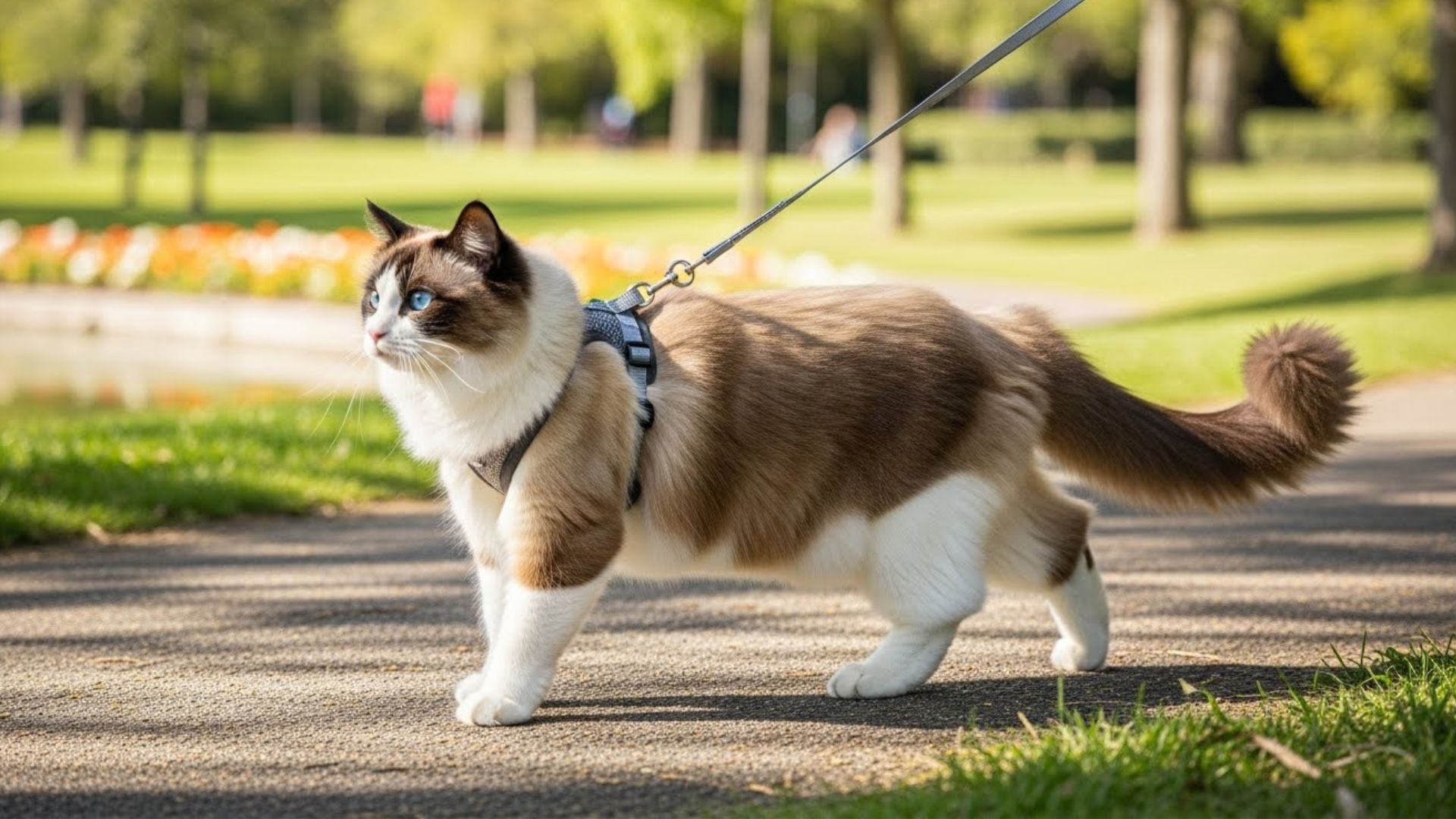
Leash training a cat can open up a world of enrichment beyond the living room, turning outdoor time into a safe and shared adventure for both of you. While not every feline will take to a harness and leash, many cats adjust remarkably well when training is patient and positive.
The right approach can help your curious companion explore grass, scents, and sunshine without wandering too far. Understanding which cats are more receptive to these walks helps you set realistic expectations and build a rewarding routine.
Whether you live in a bustling city or a quiet neighborhood, teaching your cat to walk calmly on a leash can strengthen your bond and give your furry friend a taste of life beyond the home in a way that feels secure and fun.
Cat Breeds That Adapt to Leash Training
1. Ragdoll
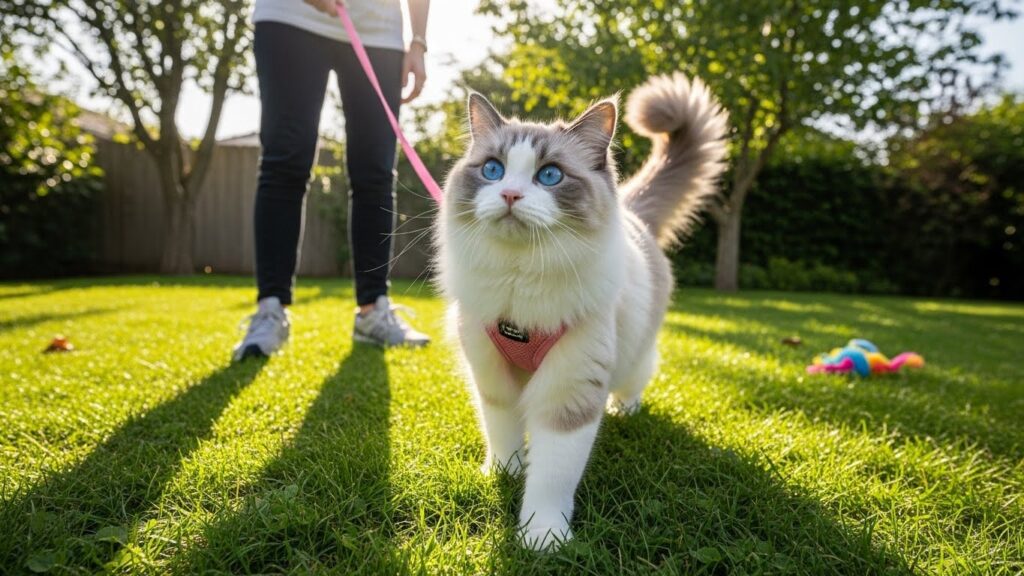
According to PetPlan, Ragdolls are known for their relaxed attitude, affectionate nature, and easygoing response to new experiences. This breed tends to stay calm when introduced to unfamiliar routines, which helps during early harness training. Their trusting nature allows them to accept guidance without becoming stressed.
Because Ragdolls enjoy being close to their people, leash time often feels like an extension of togetherness rather than a challenge. They usually move slowly and prefer a gentle pace, taking time to observe rather than rush ahead. This makes walks feel more controlled and predictable.
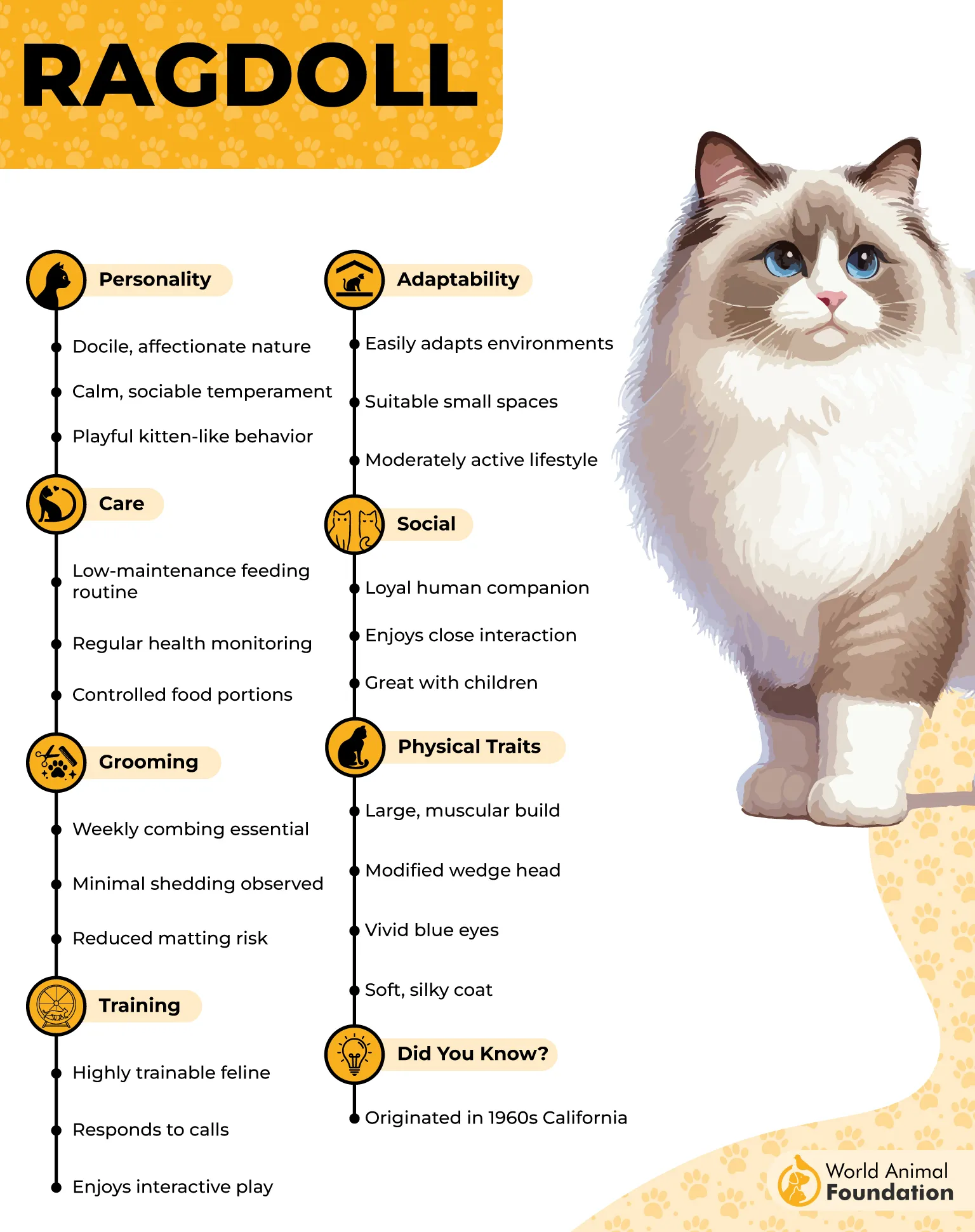
Patience works especially well with this breed. Ragdolls respond best when training is gradual and positive, with plenty of praise and comfort. Their willingness to follow rather than lead helps turn leash walking into a relaxed shared activity instead of a tug of war.
Why This Cat Is a Good Fit
A calm personality supports slow, steady leash training
Enjoys staying close to their person during walks
Well-suited for quiet neighborhoods and short outings
2. Abyssinian
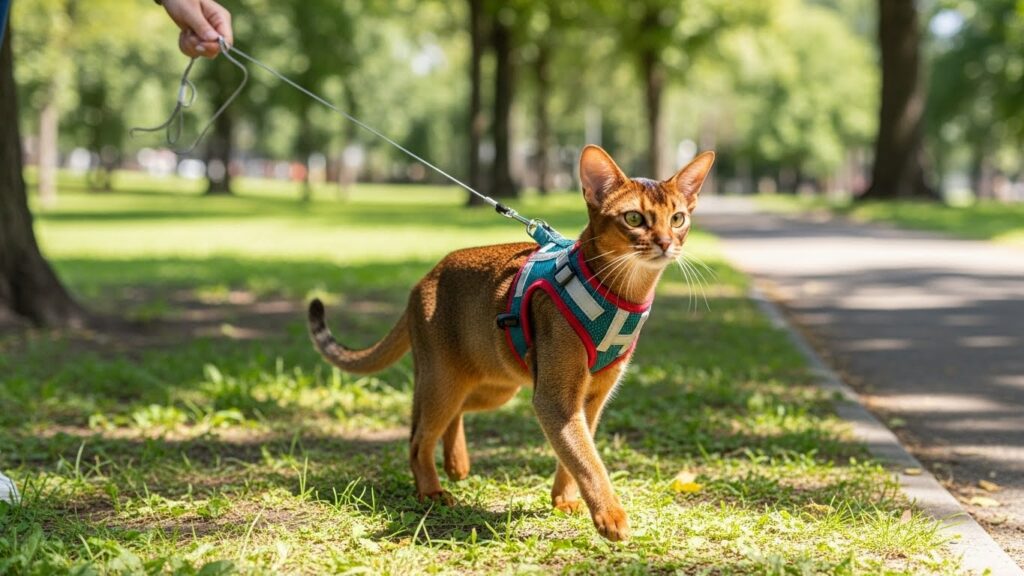
The Abyssinian is alert, athletic, and naturally curious about its surroundings. This breed enjoys exploration and often wants to see what lies beyond the window. That curiosity can be helpful when introducing outdoor experiences.
As per CFA, Abyssinians prefer movement and engagement. On a leash, they may show enthusiasm for walking and investigating new scents. Their confidence and playful energy help them adapt to changes in the environment more quickly.
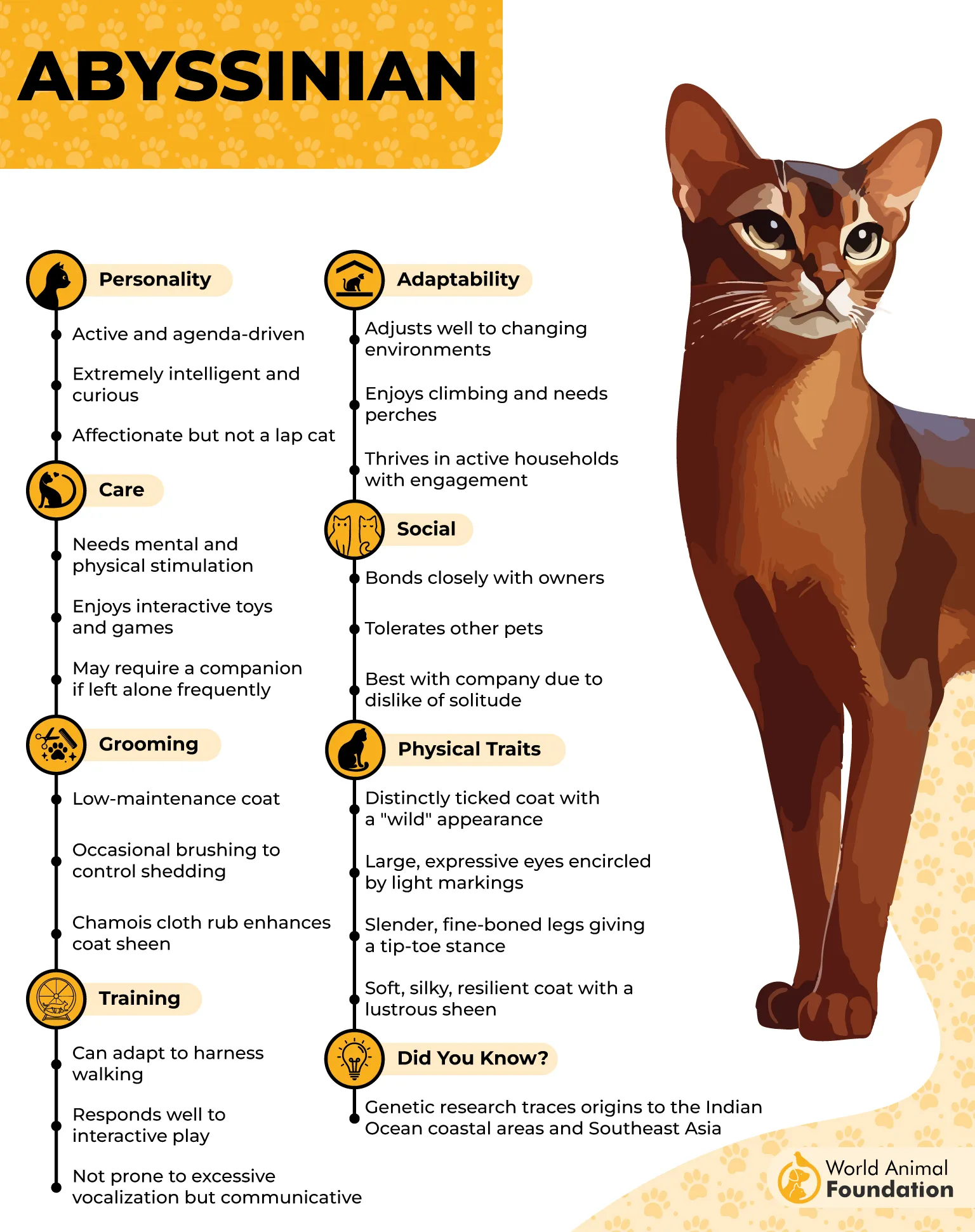
Because they are intelligent, Abyssinians benefit from structured training. Short, frequent sessions help keep their attention focused. When guided properly, their curiosity turns into purposeful walking rather than darting in every direction.
Why This Cat Is a Good Fit
A curious mindset encourages interest in outdoor walks
Active nature supports controlled exploration
Good match for owners who enjoy interactive training
3. Bengal
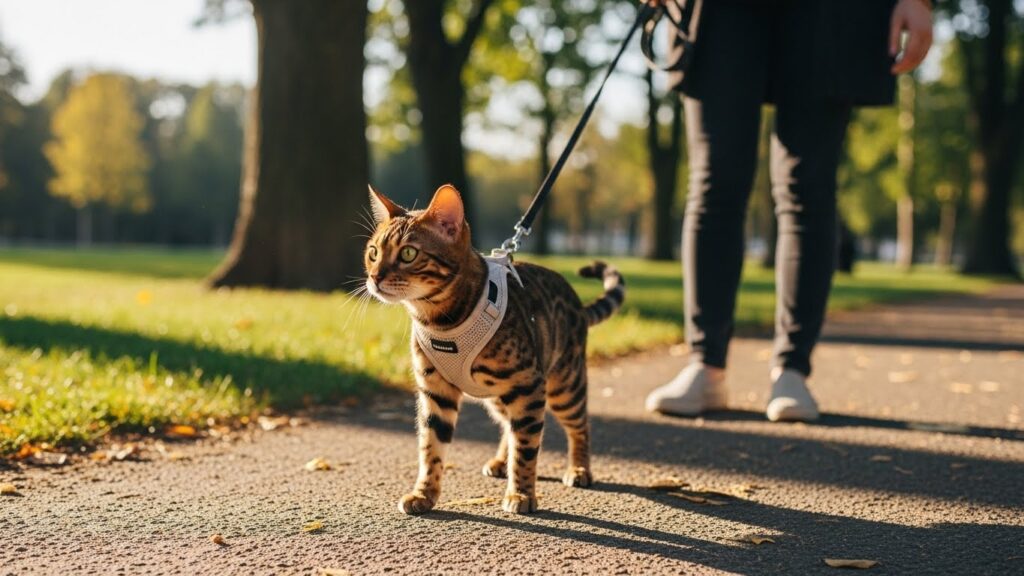
Bengals are energetic, smart, confident, and highly alert to their surroundings. They often show strong interest in the outdoors, watching birds and movement closely. This awareness makes leash training appealing rather than intimidating.
On a leash, Bengal cats tend to walk with purpose and enthusiasm. Purina states that they enjoy exploring and can quickly learn boundaries when training is consistent. Their intelligence allows them to understand routines faster than many breeds.
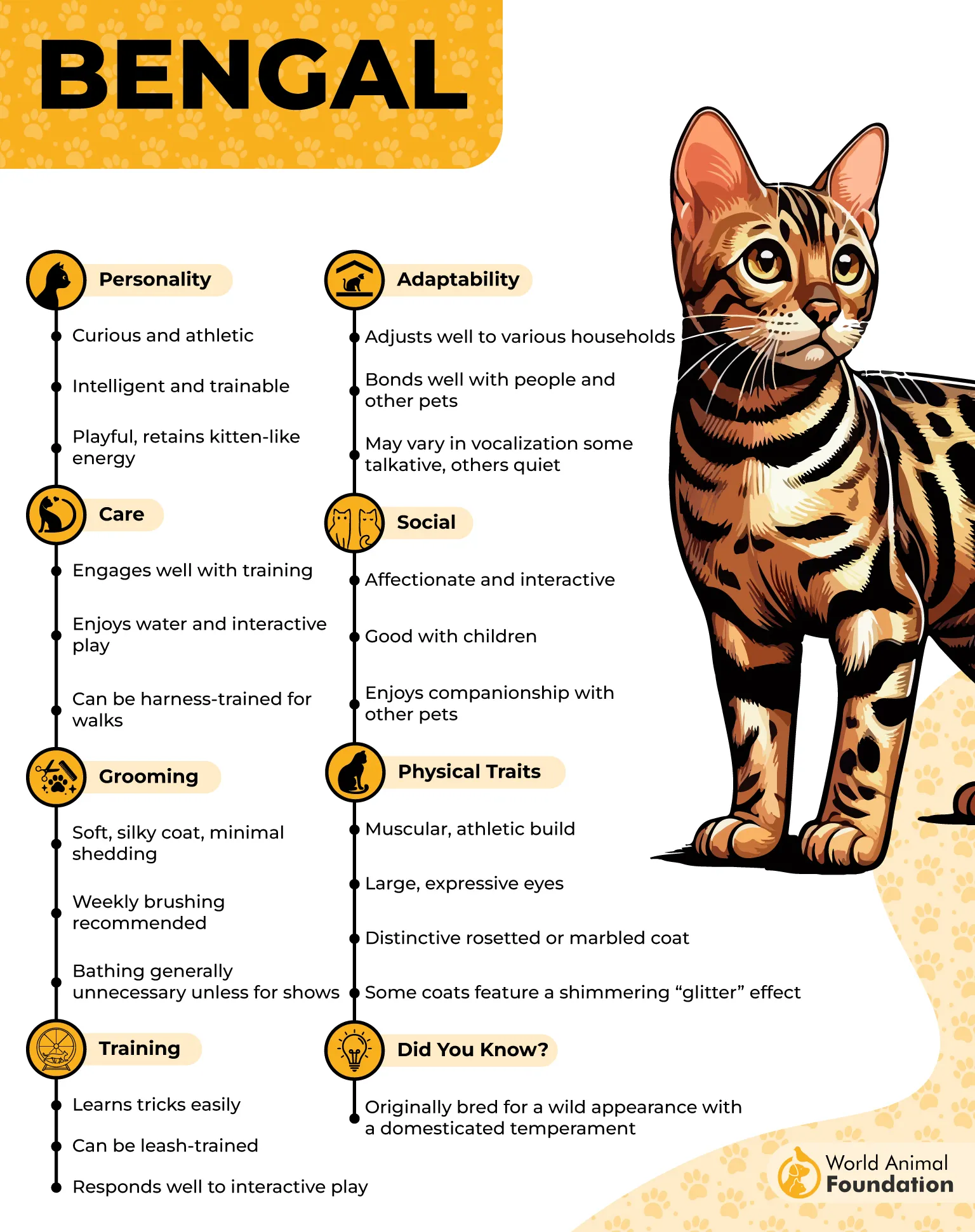
Because of their energy, Bengals need clear guidance. Structured walks help channel their drive in a positive way. Without direction, they may try to lead, but with practice, leash walking becomes a focused activity.
Why This Cat Is a Good Fit
Strong interest in outdoor sights and sounds
Learns leash routines quickly with consistency
Ideal for active owners who enjoy exploration
4. Siamese
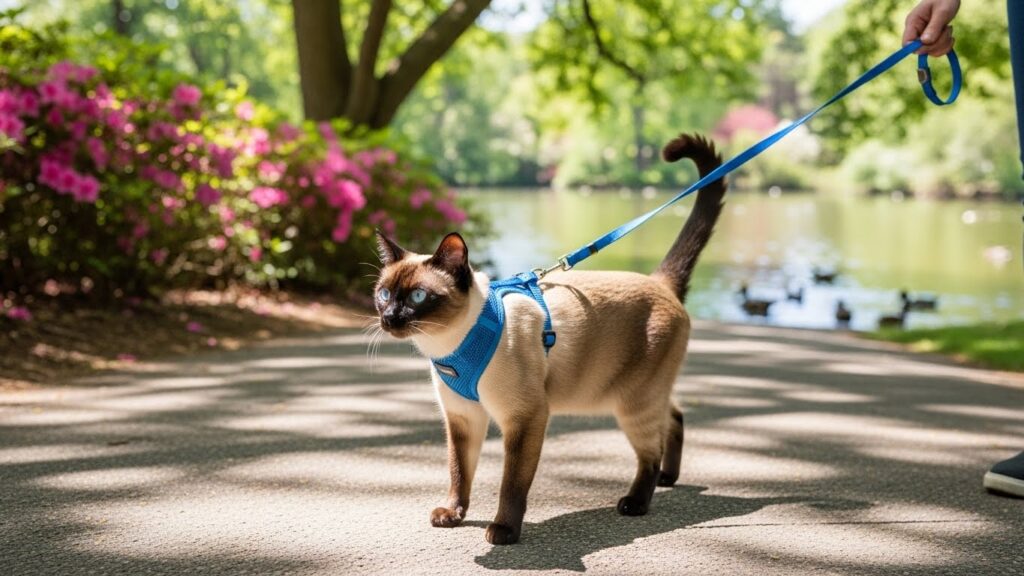
Siamese cats are social, attentive, and deeply connected to their people. They often want to be involved in whatever their owner is doing, including outdoor activities. This desire for participation helps during leash training.
When walking on a leash, Siamese cats tend to stay engaged with their handler. They may pause often to observe and communicate, making walks interactive. Their confidence helps them remain curious instead of fearful.
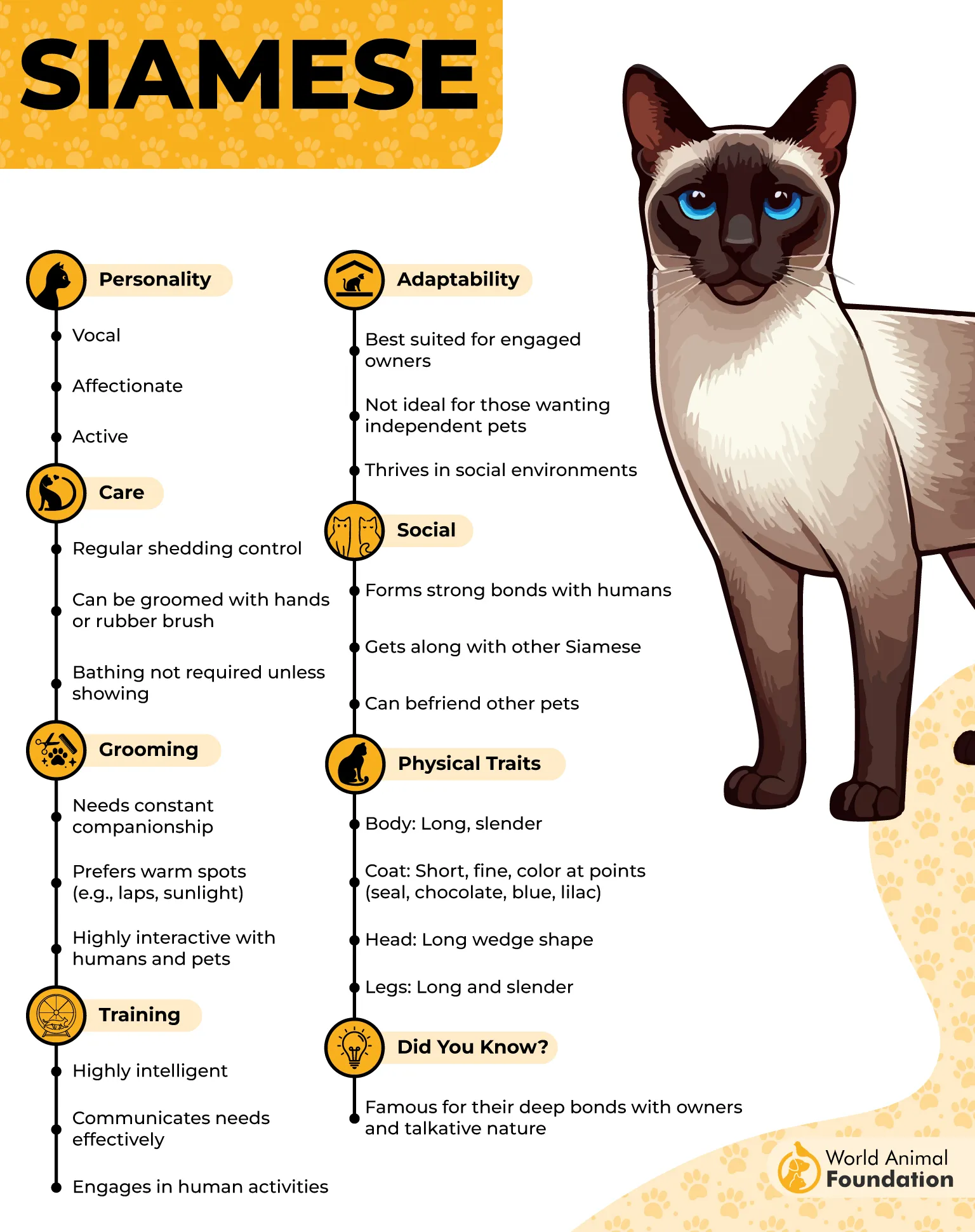
Because they thrive on attention, Siamese cats respond well to encouragement. Gentle guidance and reassurance keep them comfortable. Leash training becomes another way to strengthen an already strong bond.
Why This Cat Is a Good Fit
People-focused nature supports cooperative walking
A confident attitude helps with new environments
Enjoys shared activities beyond the home
5. Maine Coon
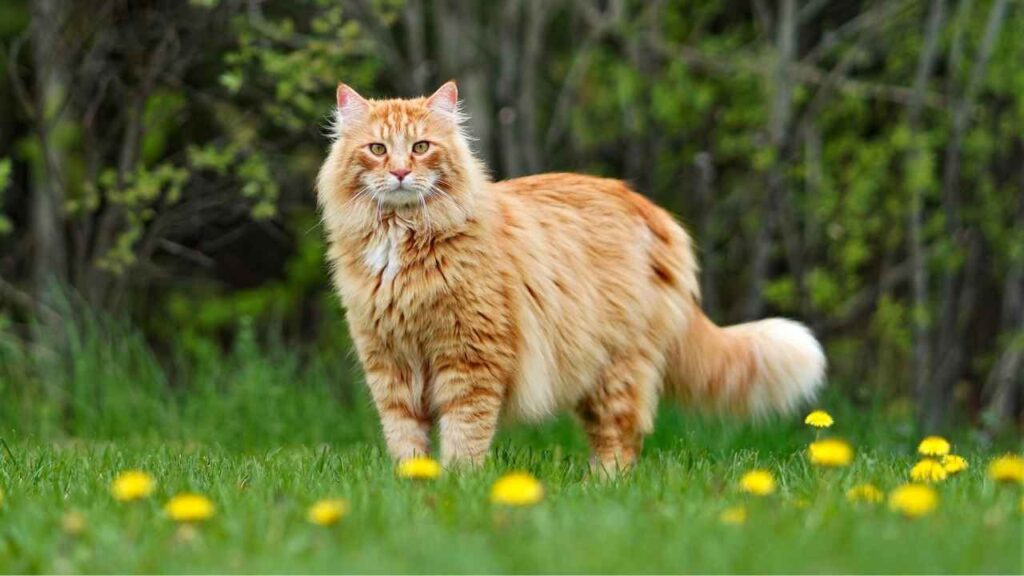
Maine Coons are large, gentle, and surprisingly adaptable to new routines. They often approach unfamiliar experiences with calm curiosity rather than fear. This steady temperament supports leash training.
On a leash, Maine Coons usually move at a relaxed pace. They enjoy observing their surroundings and tend not to panic when exposed to new sounds. Their size often pairs with patience rather than impulsive behavior.
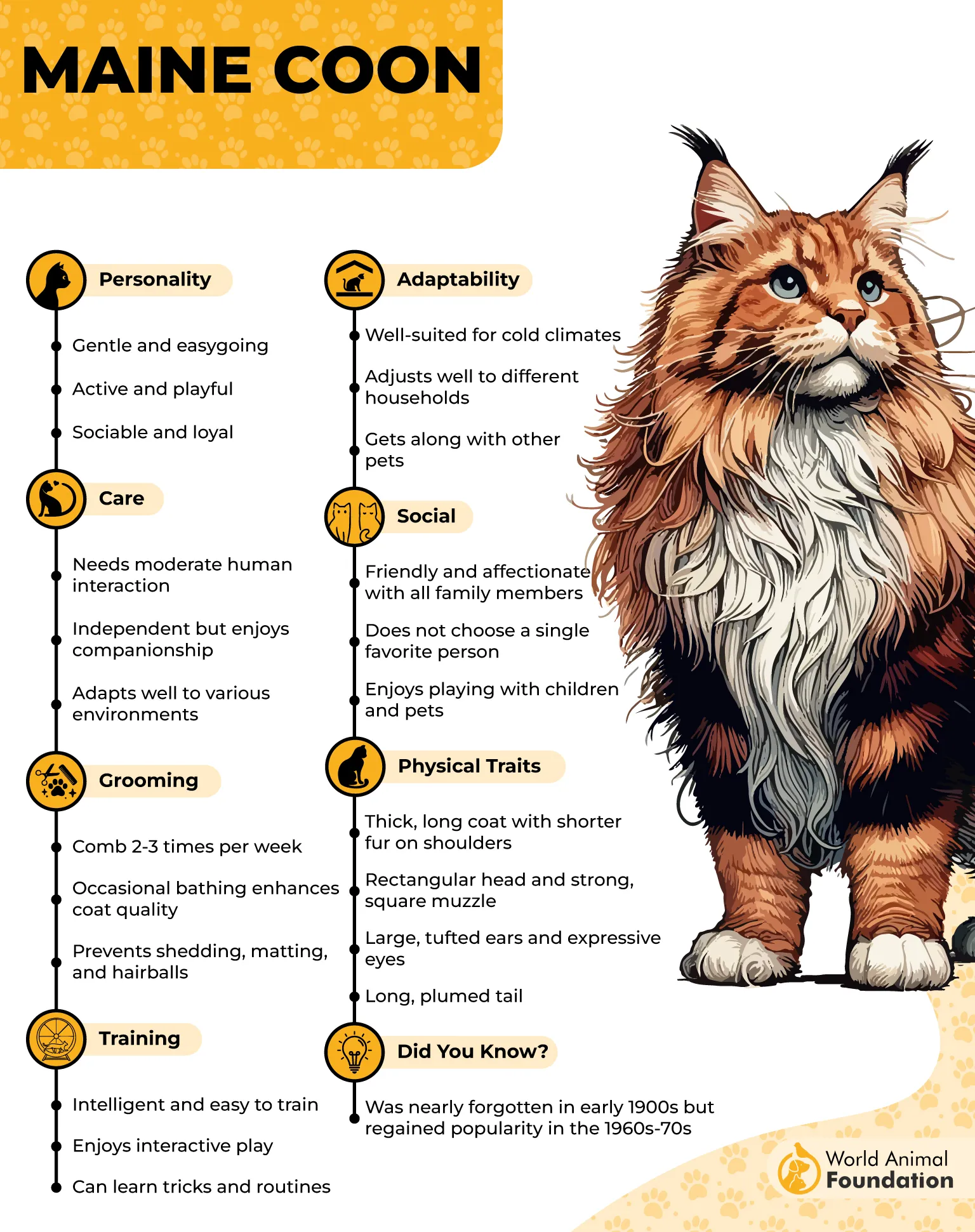
Because they are intelligent and even-tempered, Maine Coons respond well to consistent training. Walks feel more like leisurely strolls than high-energy adventures. Their calm presence makes outdoor time manageable and enjoyable.
Why This Cat Is a Good Fit
Calm demeanor helps reduce leash stress
Comfortable exploring without rushing
Great choice for relaxed outdoor walks
6. British Shorthair
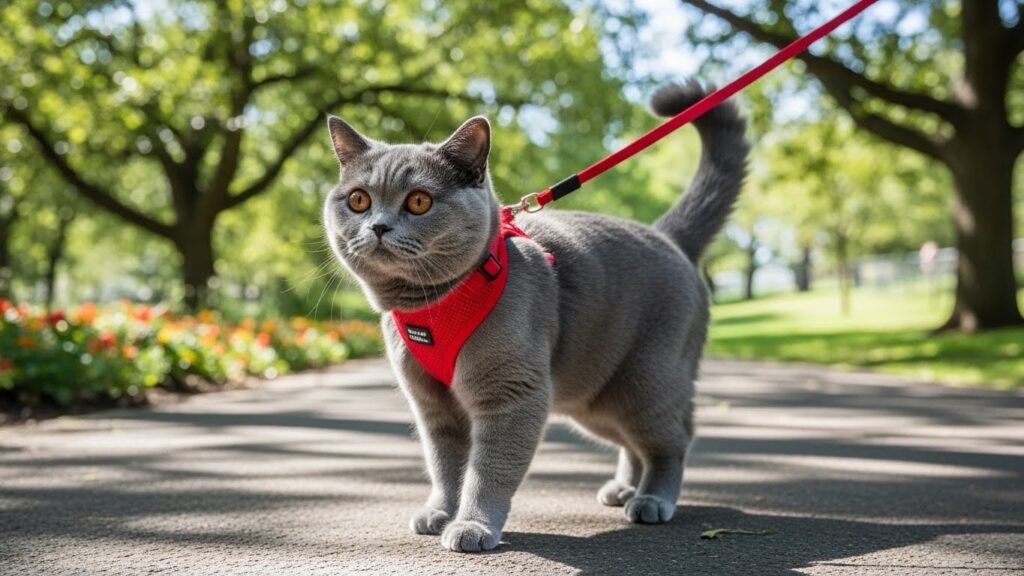
The British Shorthair is calm, steady, and not easily rattled by change. This breed tends to approach new situations with quiet curiosity rather than excitement. Its relaxed nature helps reduce stress during training.
On a leash, British Shorthairs usually prefer short, unhurried walks. They like standing still to observe their surroundings before moving forward. This thoughtful pace keeps outings manageable and predictable.
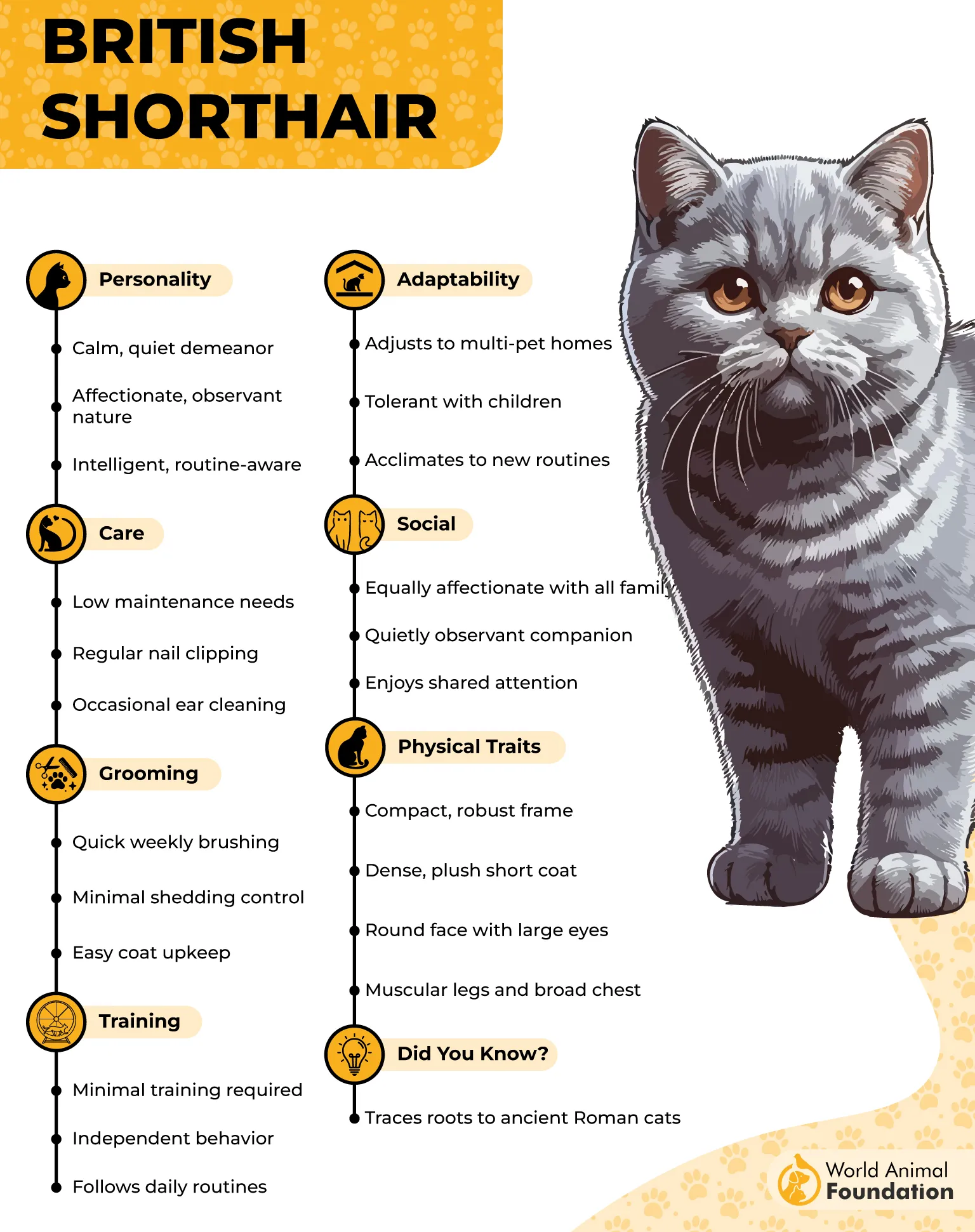
Because they are not overly reactive, British Shorthairs adjust well to harness training when introduced slowly. They benefit from patience and repetition rather than pressure. Leash walking suits their composed personality when expectations stay simple.
Why This Cat Is a Good Fit
Calm demeanor supports low-stress leash training
Prefers steady, relaxed outdoor time
Good match for quiet neighborhoods
7. Savannah
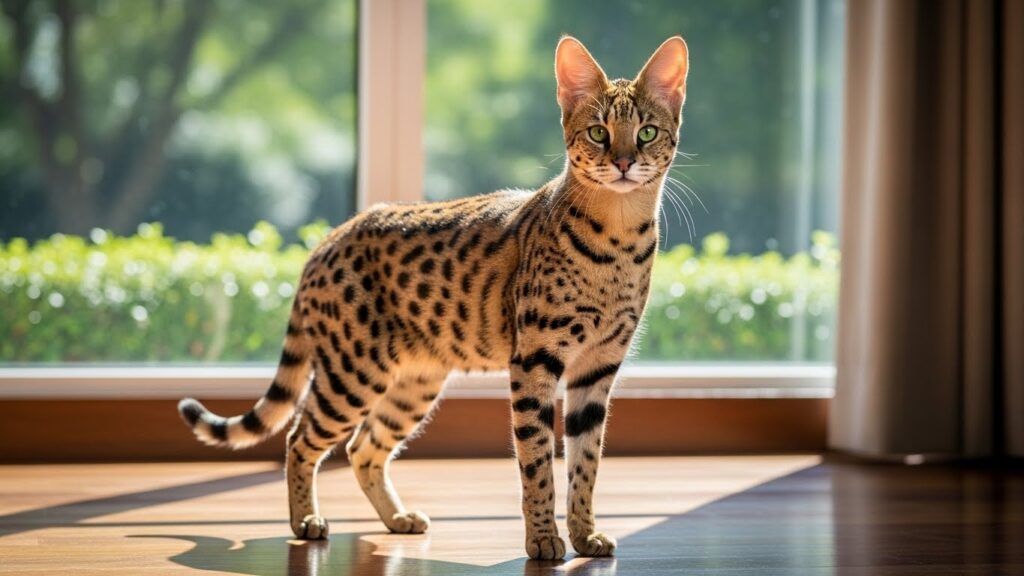
Savannah cats are confident, athletic, and highly aware of their environment. They show a strong interest in outdoor sights and movement. This natural curiosity makes leash training appealing rather than intimidating.
When walking on a leash, Savannahs tend to move with purpose and focus. They enjoy exploring and testing boundaries while remaining alert to guidance. Their intelligence helps them learn patterns quickly.
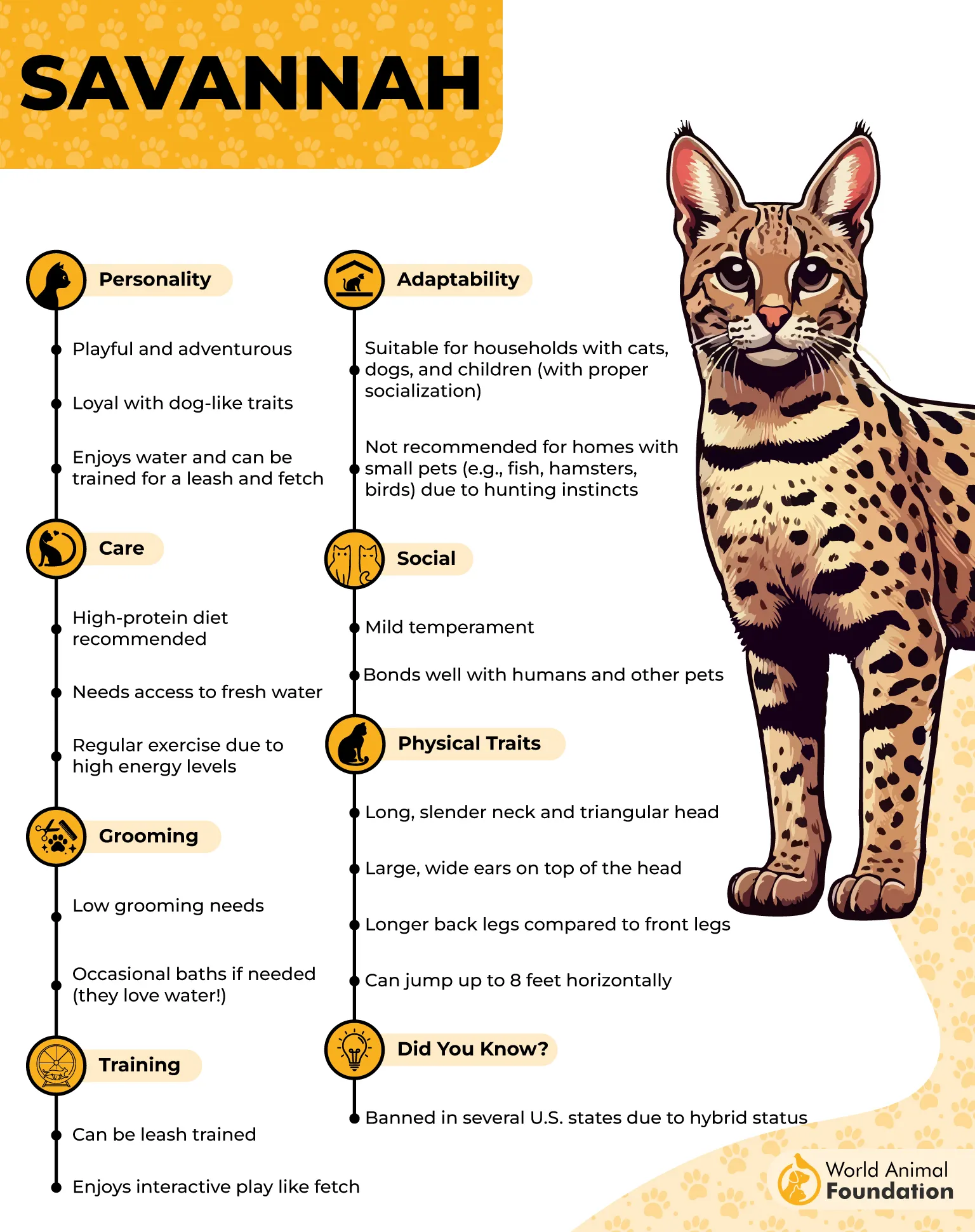
Because of their energy, structure is important. Clear routines help turn excitement into controlled movement. With consistency, leash walks become an engaging outlet for both mind and body.
Why This Cat Is a Good Fit
Thrives with structured outdoor exploration
Learns boundaries quickly with practice
Ideal for confident, active owners
8. Turkish Van
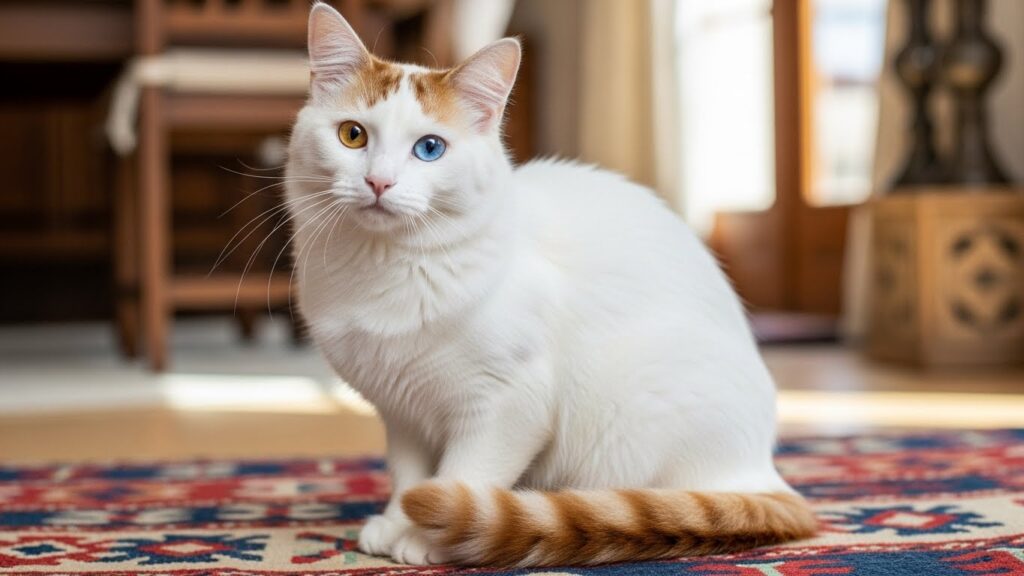
The Turkish Van is independent, curious, and comfortable investigating new environments. It often prefers exploration on its own terms. This confidence supports gradual leash introduction.
On a leash, Turkish Vans may pause often to observe before moving forward. They enjoy surveying their surroundings and choosing when to continue. This thoughtful approach keeps walks calm and controlled.
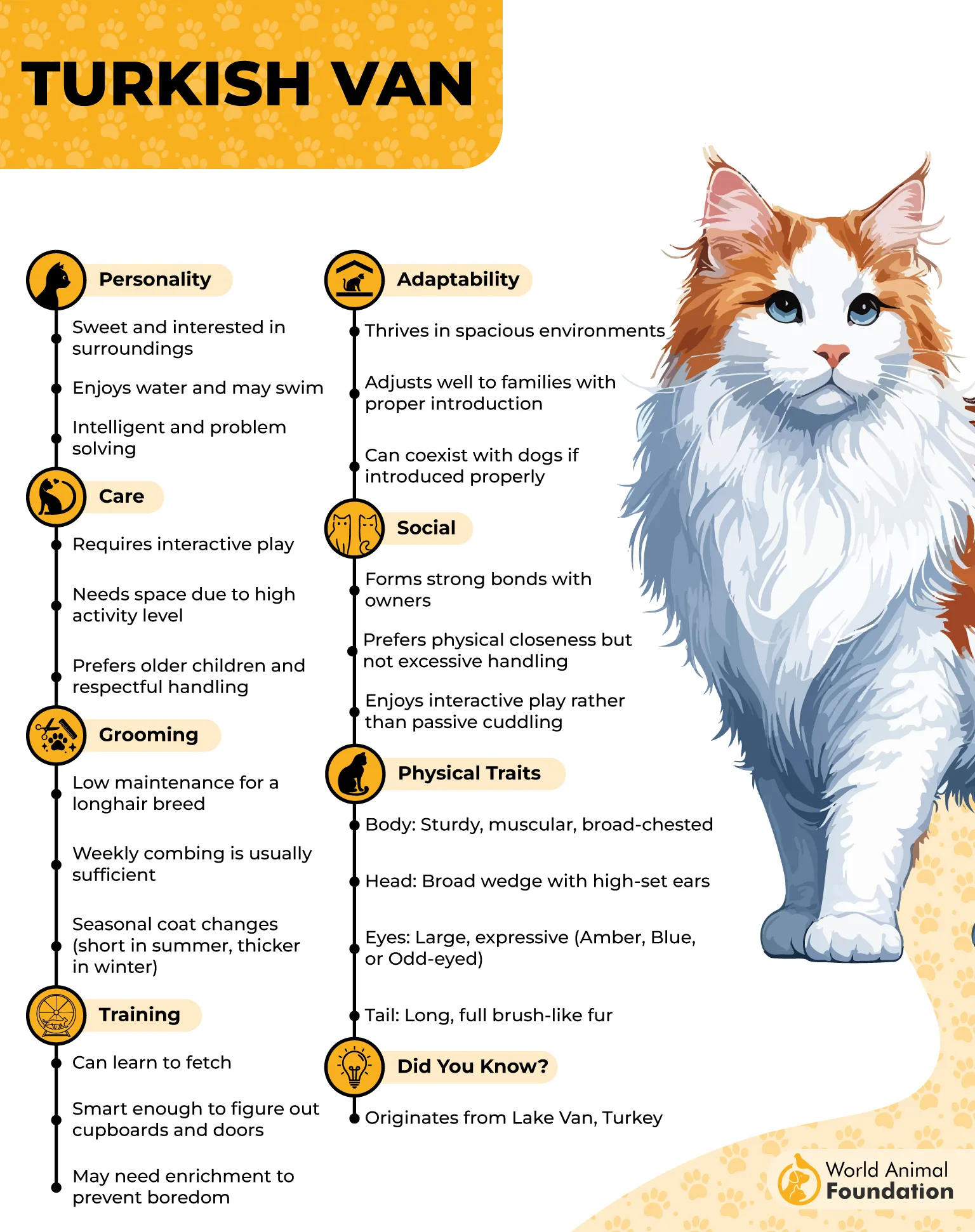
Training works best when patience is emphasized. Turkish Vans respond better when allowed to progress at their own pace. Leash walking becomes a cooperative experience rather than a forced one.
Why This Cat Is a Good Fit
Confident explorer without panic responses
Enjoys observing new environments calmly
Best for the patient, flexible handlers
9. Bombay
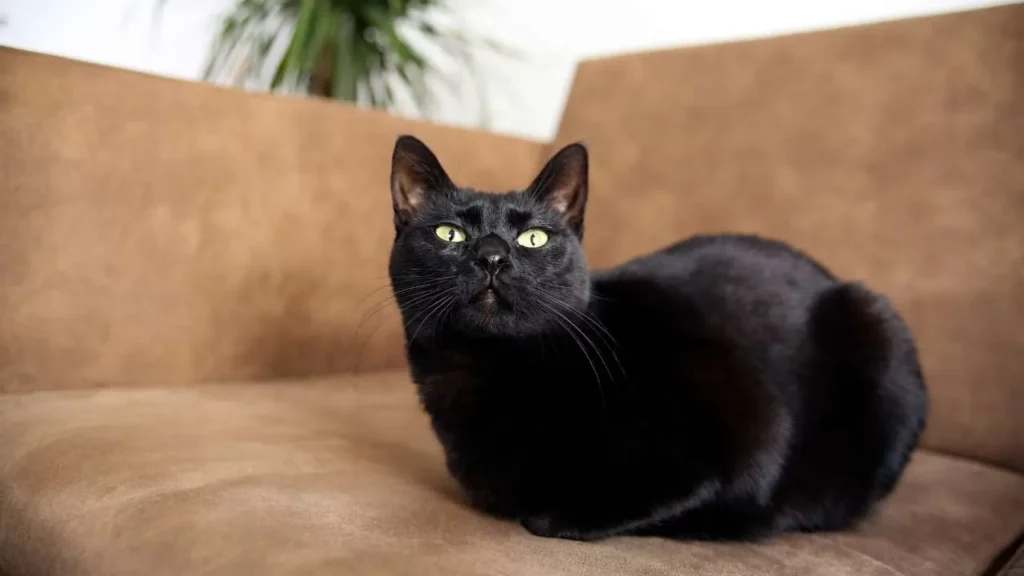
Bombay cats are social, attentive, and strongly bonded to their people. They enjoy staying close and often follow their owners around the home. This attachment helps during new activities like leash training.
On a leash, Bombays usually stay nearby rather than pulling ahead. They enjoy moving together and remain attentive to direction. Their calm focus supports steady progress.
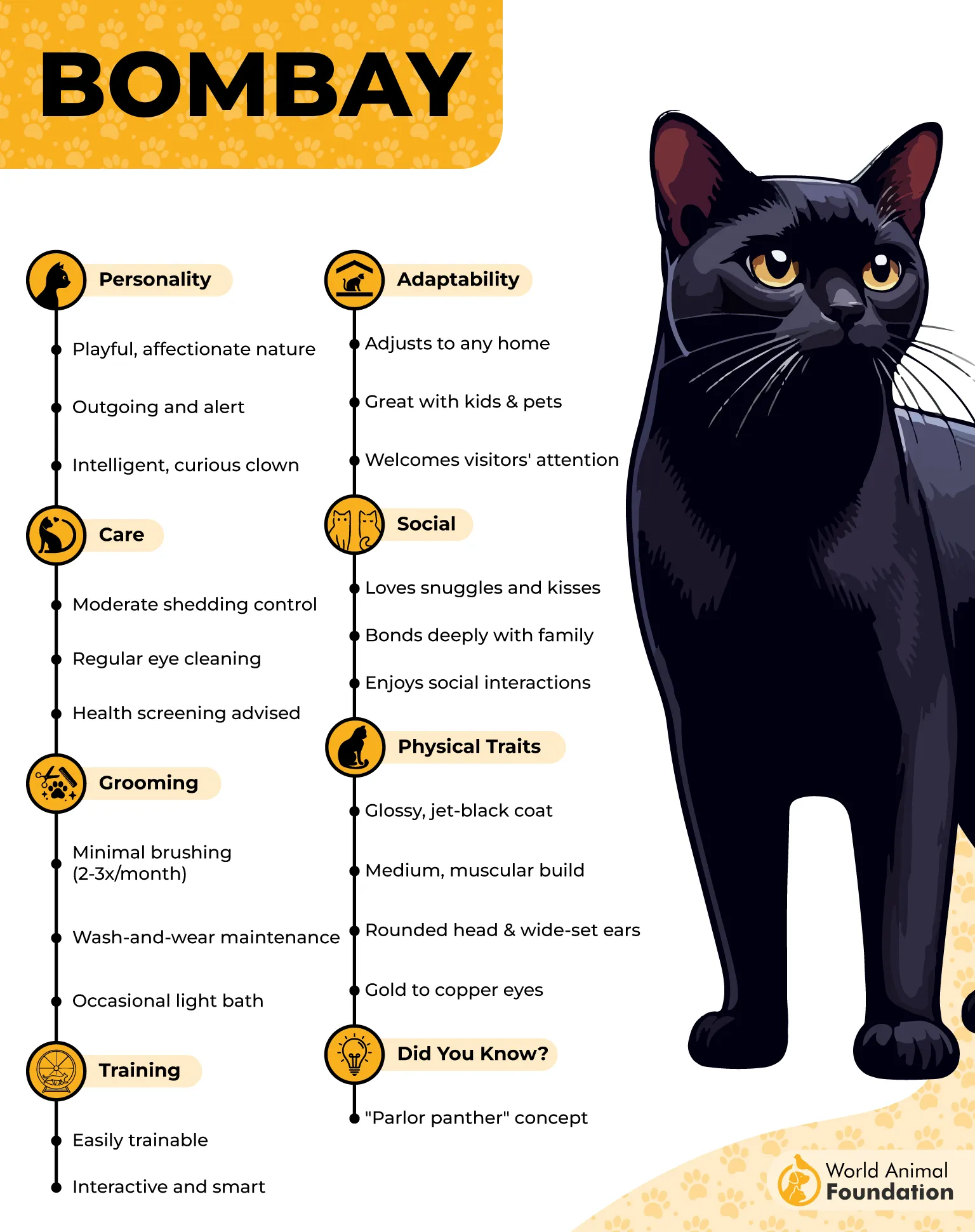
Because they seek companionship, Bombays respond well to reassurance and praise. Leash walks feel like shared outings rather than independent adventures. With trust, outdoor time becomes an extension of daily bonding.
Why This Cat Is a Good Fit
Prefers staying close during walks
Responds well to reassurance and praise
Great for owners who want shared outings
Conclusion
Leash training can turn a curious cat into a confident feline companion who enjoys safe outdoor time alongside family members. For many owners, the key is patience, gradual introduction, and gradually increasing comfort with new sights and sounds.
While not every cat will enjoy walks, certain breeds adapt well and become excellent companions during short adventures. Leash time offers mental stimulation, gentle exercise, and a chance to explore without risk from dogs and other animals. Whether you have a new cat or an older cat, building trust helps turn training into a positive routine that fits easily into daily life.
Other breeds, such as American shorthair and cats with wild ancestors, can also be a solid choice for leash training when treated as a companion animal, especially when owners focus on consistency, comfort, and shared time with their pets.
