




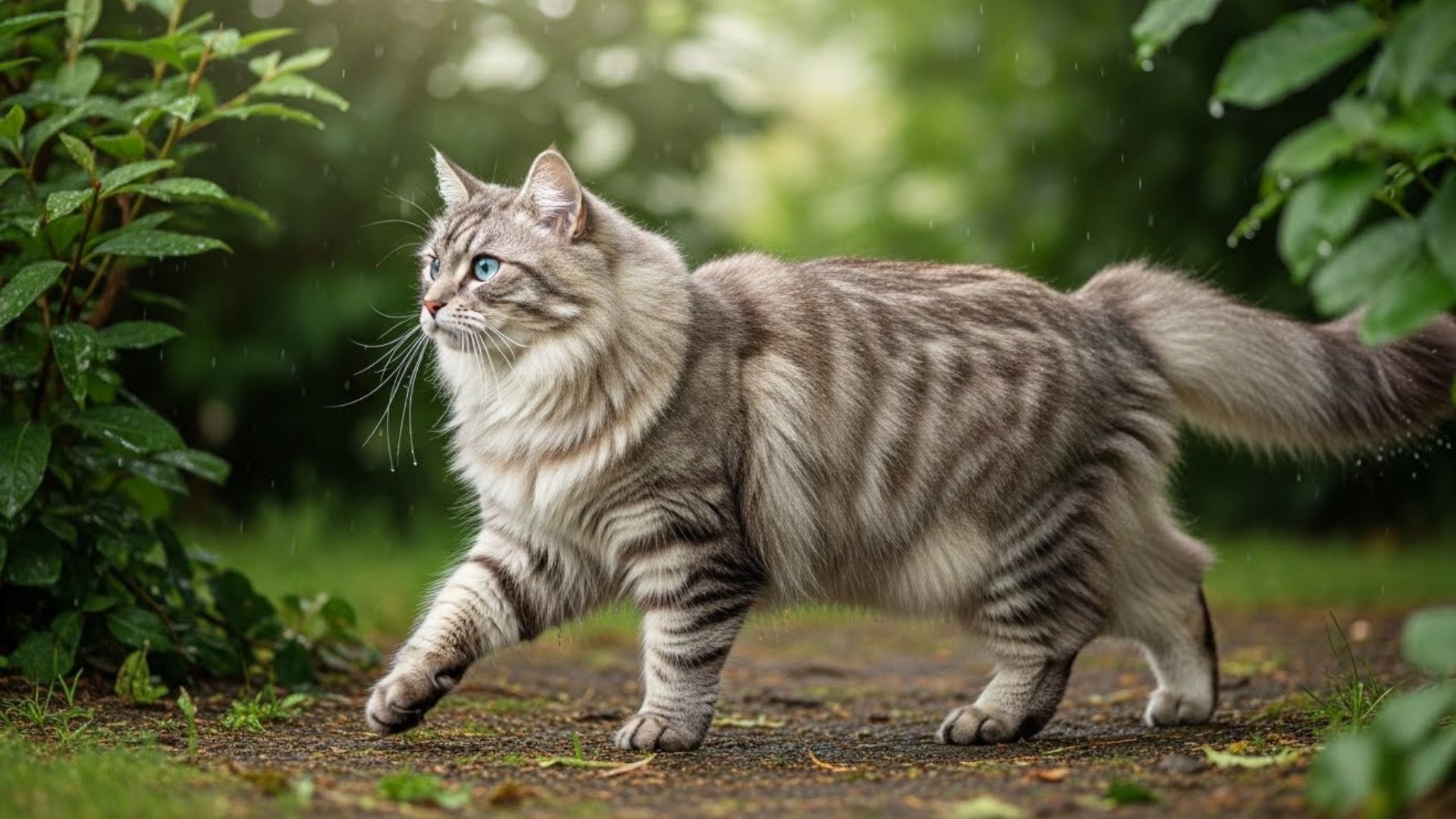
Rainy weather and cats don’t usually go hand in hand. Most felines will dodge puddles, glare at dripping windows, and sprint away from a running faucet. Still, not all cats follow that rule. Some breeds are far more tolerant of wet conditions—and a few even seem to enjoy them.
For homes in damp, rainy climates, choosing a cat that’s comfortable around moisture can make everyday life noticeably easier.
Certain cat breeds are better equipped for frequent rain thanks to their coat type, natural curiosity, or unexpected fondness for water. These cats may be less stressed by wet fur, muddy paws, or humid environments, and some are even known to play near sinks, showers, or outdoor puddles. Of course, personality always matters, and every individual cat will have its own preferences.
In this article, we’ll explore cat breeds that adapt well to rainy climates and water-heavy environments. Whether you live somewhere with constant drizzle or simply want a feline companion that won’t panic at every drop, these breeds may surprise you with their comfort, resilience, and sometimes playful relationship with rain and water.
Cat Breeds Suitable for Rainy Climates
1. Maine Coon
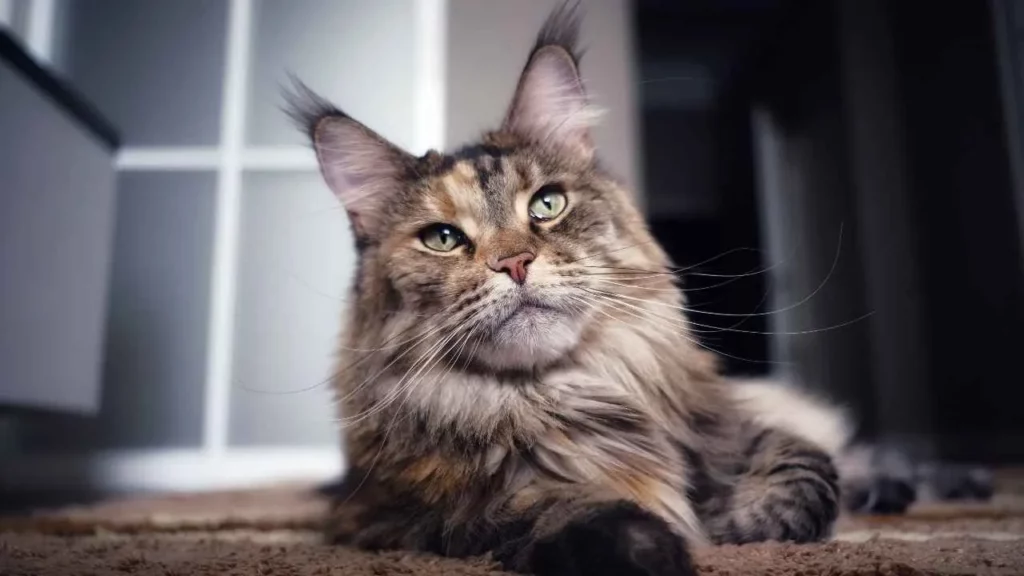
Often called the “gentle giant” or known by its reputation as America’s native longhair, the Maine Coon is one of the most recognizable domestic cats. With its large frame, tufted ears, and flowing tail, this breed was shaped by rugged environments and naturally adapted to challenging weather.
According to Britannica, they are excellent at catching mice and are recognized for being gentle, intelligent, and good-natured, with a temperament that often suits households with children and dogs.
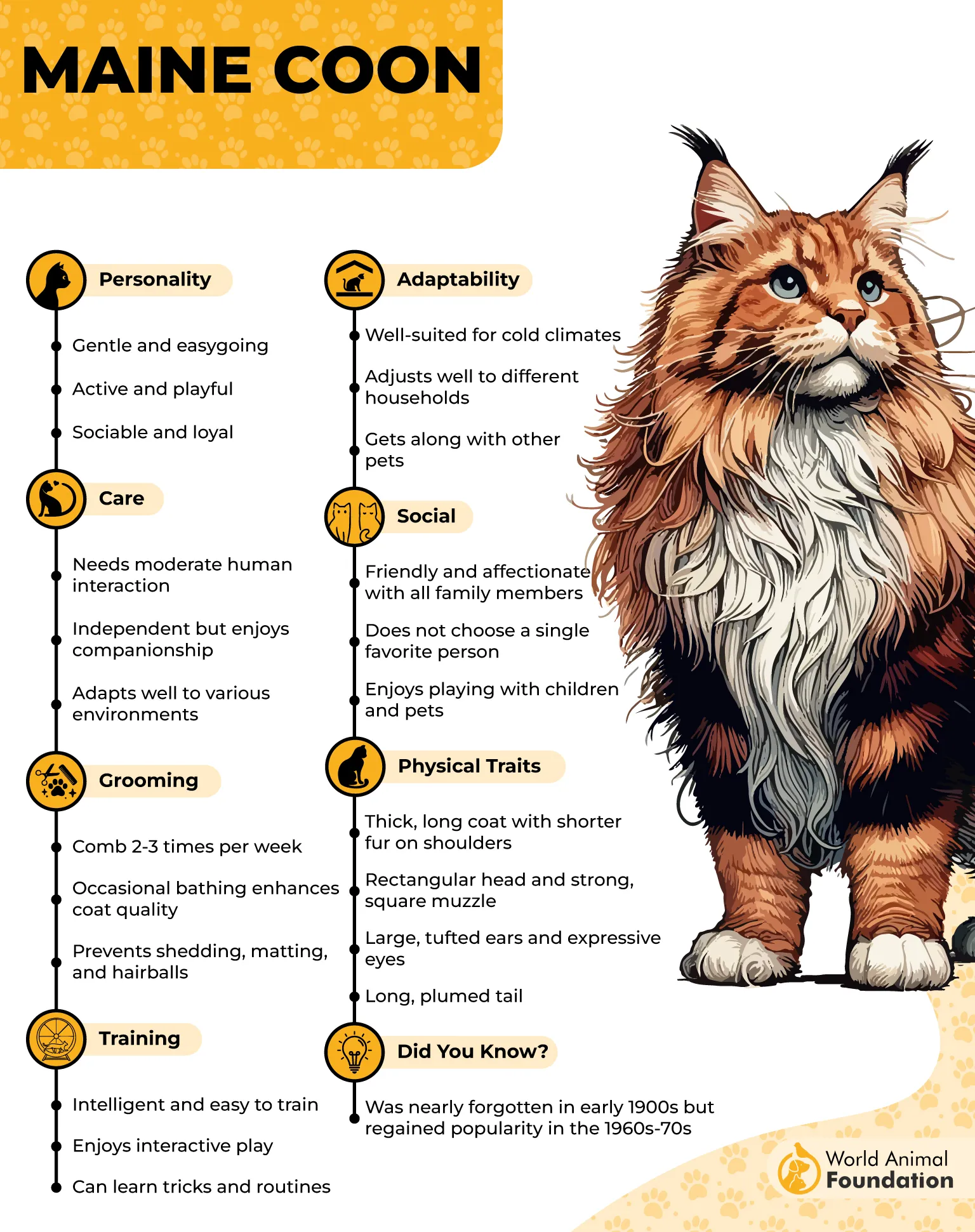
What truly makes the Maine Coon suitable for rainy climates is its dense, double-layered coat. This fur is naturally water-resistant, helping repel moisture and dirt during damp conditions. While most Maine Coons won’t willingly swim, many enjoy batting at running water or playing near sinks without discomfort.
Their thick coat also provides excellent insulation, keeping them warm and dry in wet, cool weather while remaining breathable enough for milder seasons. Regular brushing keeps the coat manageable and prevents tangles, even in humid environments common to rainy regions.
Beyond their coat, Maine Coons are resilient, adaptable cats that thrive indoors when outdoor conditions are unpleasant. Bred in harsh climates, they possess large paws, sturdy bodies, and calm temperaments that suit wet, unpredictable weather.
Fact: Maine Coons developed through natural selection in harsh New England climates, resulting in water-resistant fur and snowshoe-like paws.
2. Norwegian Forest Cat
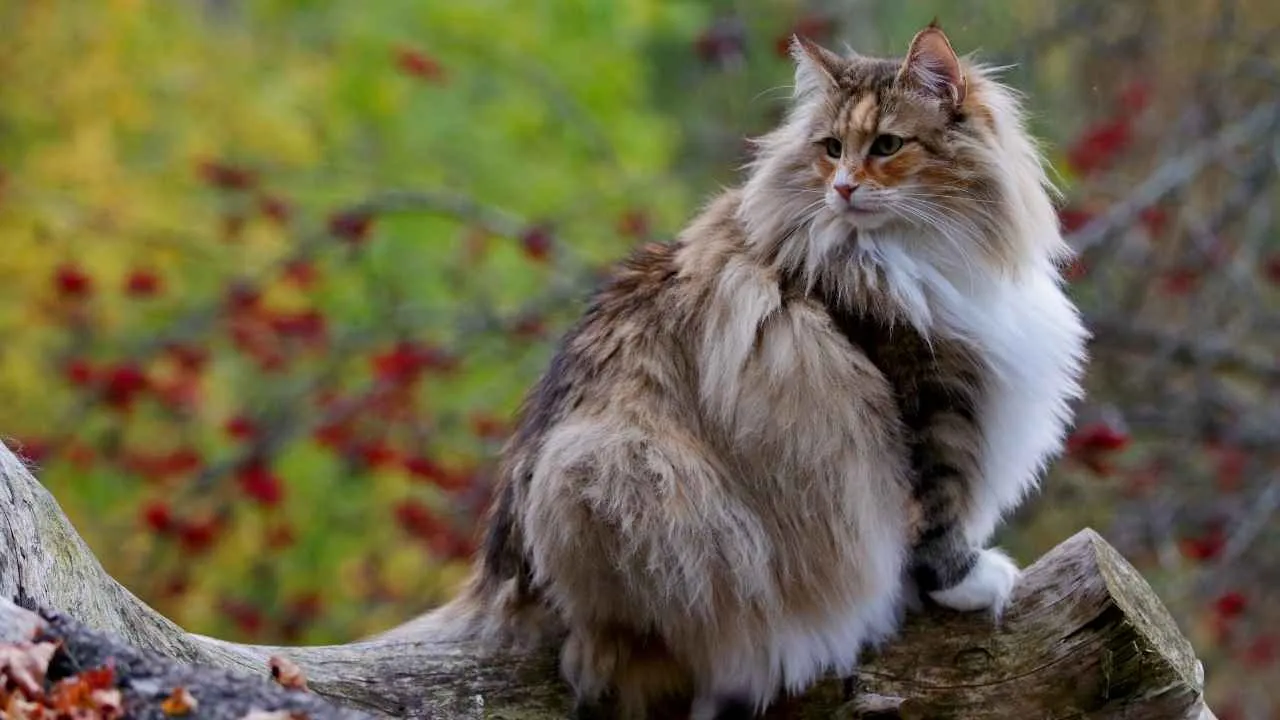
Also known as the Wegie, the Norwegian Forest Cat is a large, naturally developed breed from Scandinavia. According to PetMD, the Norwegian Forest Cat is a playful and friendly breed with a large, muscular build.
With tufted ears, a bushy tail, and a thick double coat, this breed was shaped by harsh northern environments.
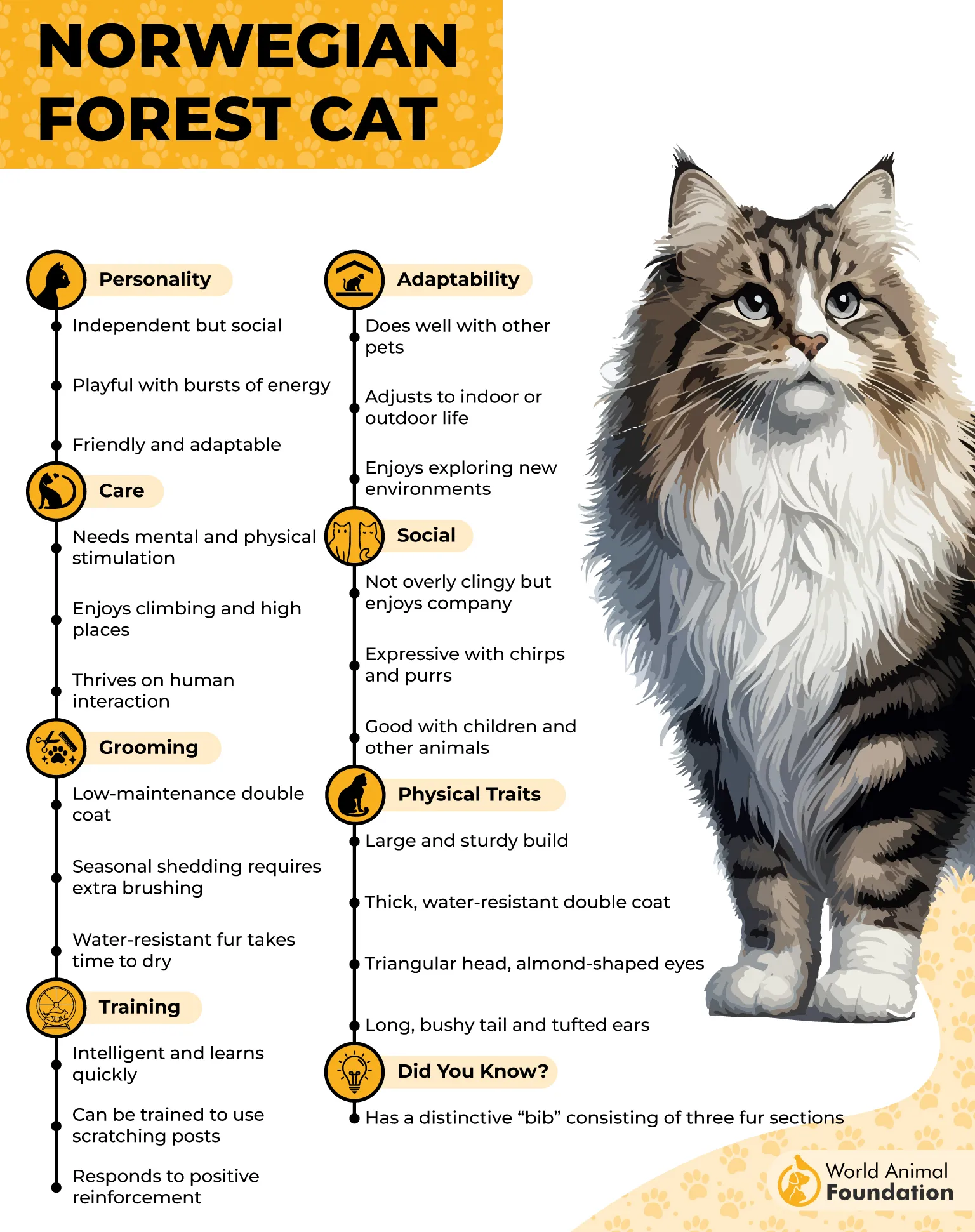
Built for rain and cold, the Norwegian Forest Cat’s dense, water-resistant fur helps it stay dry and comfortable in damp climates. Their sturdy paws provide traction on wet surfaces, making them confident explorers even during rainy weather.
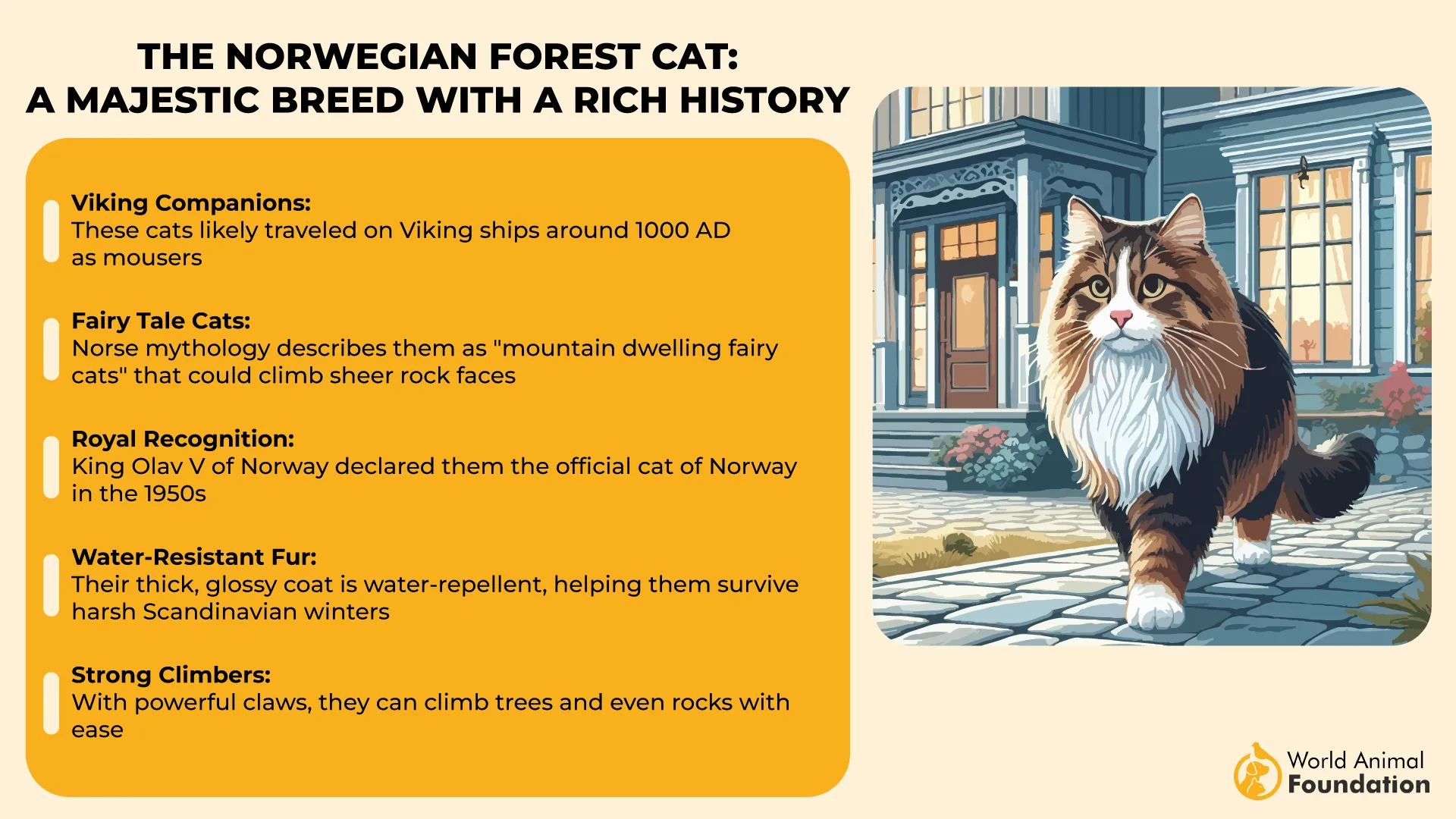
Despite their outdoor-ready features, Wegies are calm, friendly cats that adapt well to indoor life. They enjoy human company and other pets but value independence, often choosing to sit nearby rather than constantly seeking attention.
This balanced temperament makes them ideal indoor companions in rainy regions, especially for families who respect their need for space. They bond deeply with their owners while maintaining a relaxed, self-sufficient nature.
Fact: Norwegian Forest Cats once traveled on Viking ships, where they helped control rodents and grew comfortable around large bodies of water.
3. Siberian
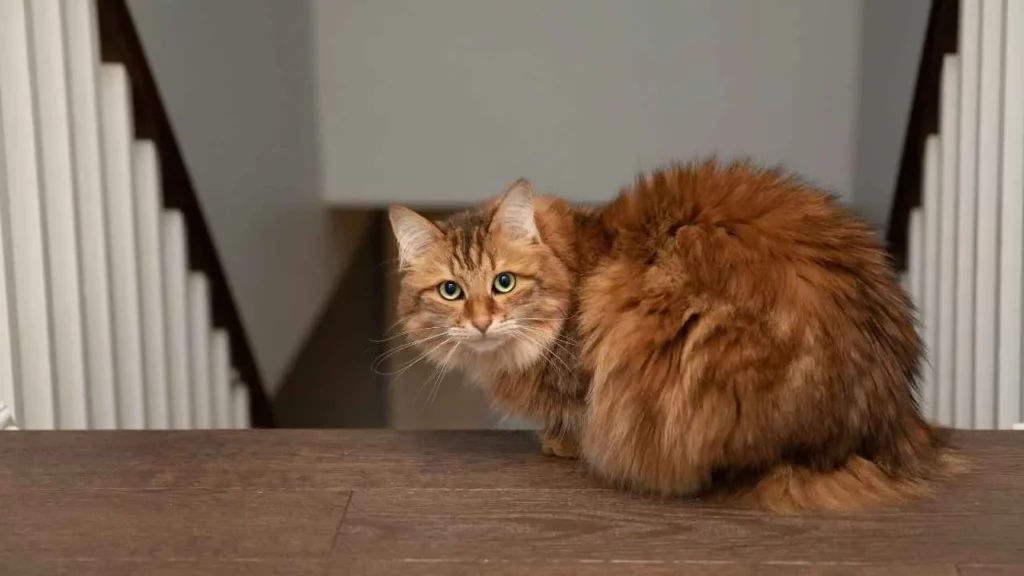
Also known as the Siberian Forest Cat, this ancient breed hails from Russia and is instantly recognizable for its dense, triple-layered coat and sturdy build.
According to WebMD, these cats are a notably large and attractive breed. Developed naturally in harsh climates, the Siberian is well adapted to cold, wet environments.
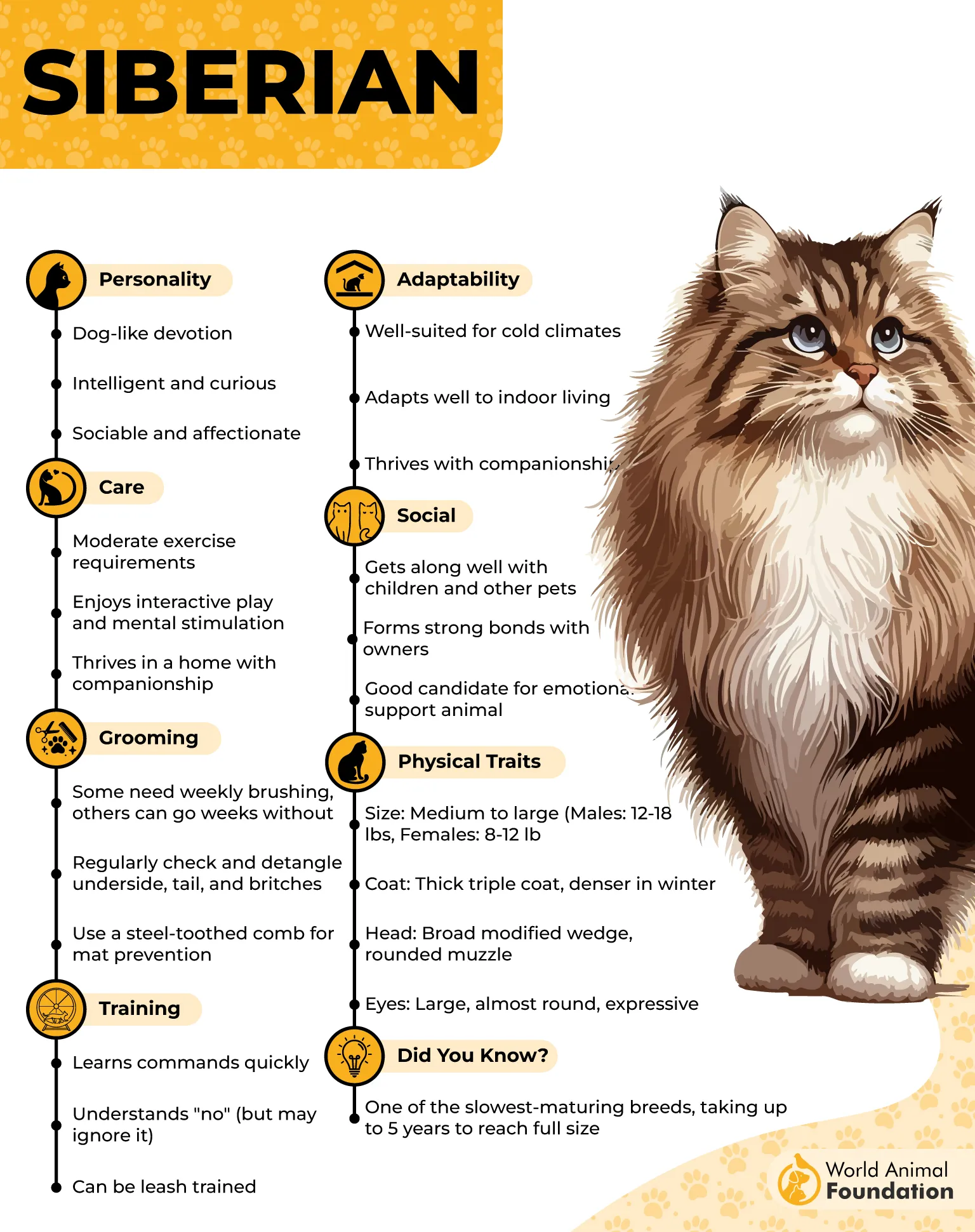
That thick coat isn’t just for warmth—it’s also water-resistant, which helps explain why Siberians tolerate rain far better than many other cats. In wet environments, their long hair acts as insulation rather than a burden, making them more comfortable than short-haired cats during damp weather.
Siberians are active and intelligent, thriving in rainy climates where indoor play becomes essential. They’re known to bat at running faucets, hop into damp tubs, and investigate water with curiosity, showing how well their natural traits suit moisture-heavy surroundings.
Compared to short-haired cats, Siberians handle humidity and rain with ease, as their coat dries efficiently and protects the skin underneath. With enough mental stimulation and space to explore, they adapt beautifully to rainy regions and indoor-focused routines.
Fact: The Siberian is believed to be one of the oldest long-haired cat breeds, possibly the earliest source of the long-hair mutation.
4. British Shorthair
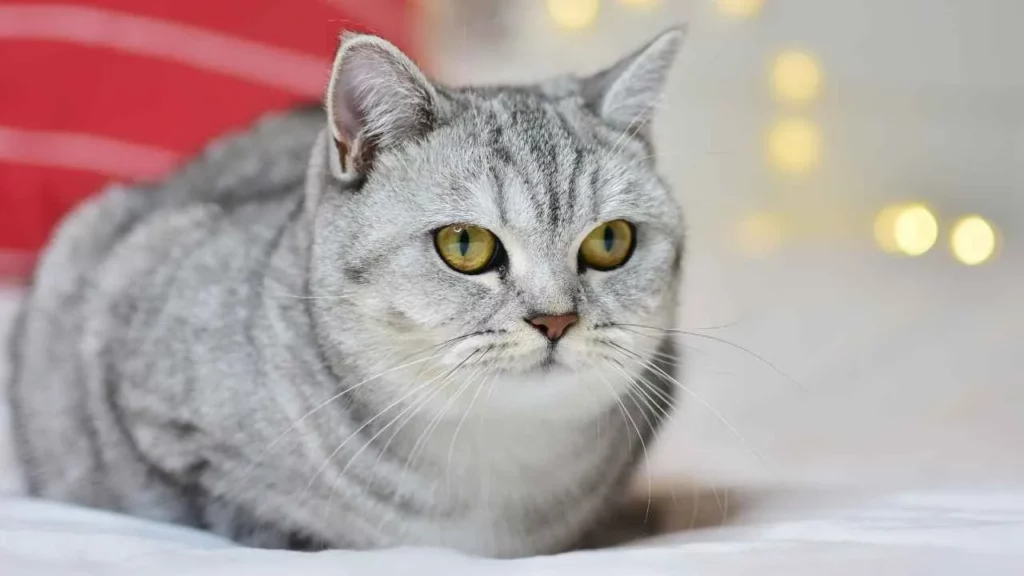
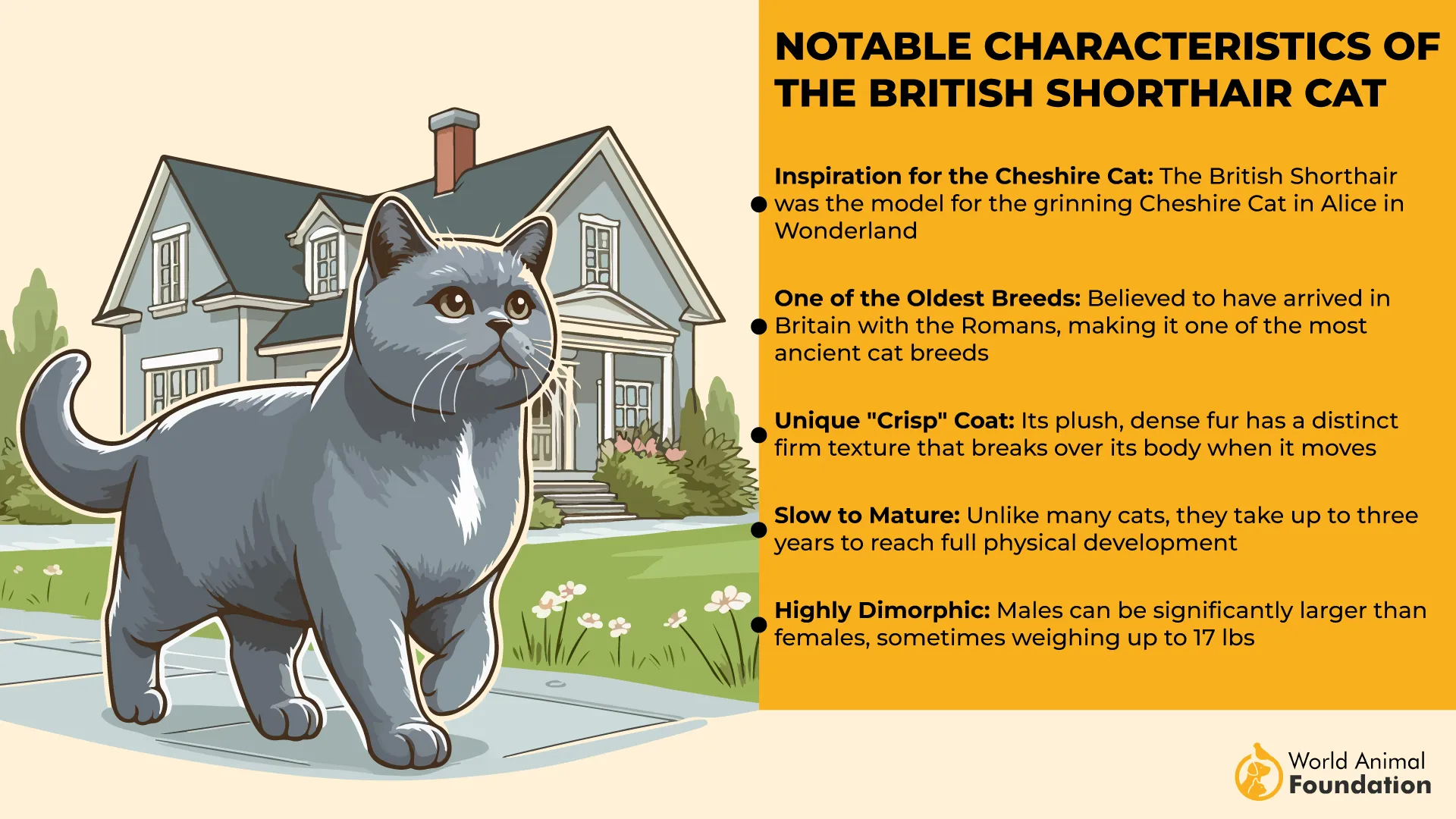
Also known simply as the British Blue in its classic gray form, the British Shorthair is a sturdy, even-tempered breed developed in the United Kingdom. With a round face, stocky build, and famously plush coat, this breed is well-suited to cooler, wetter environments.
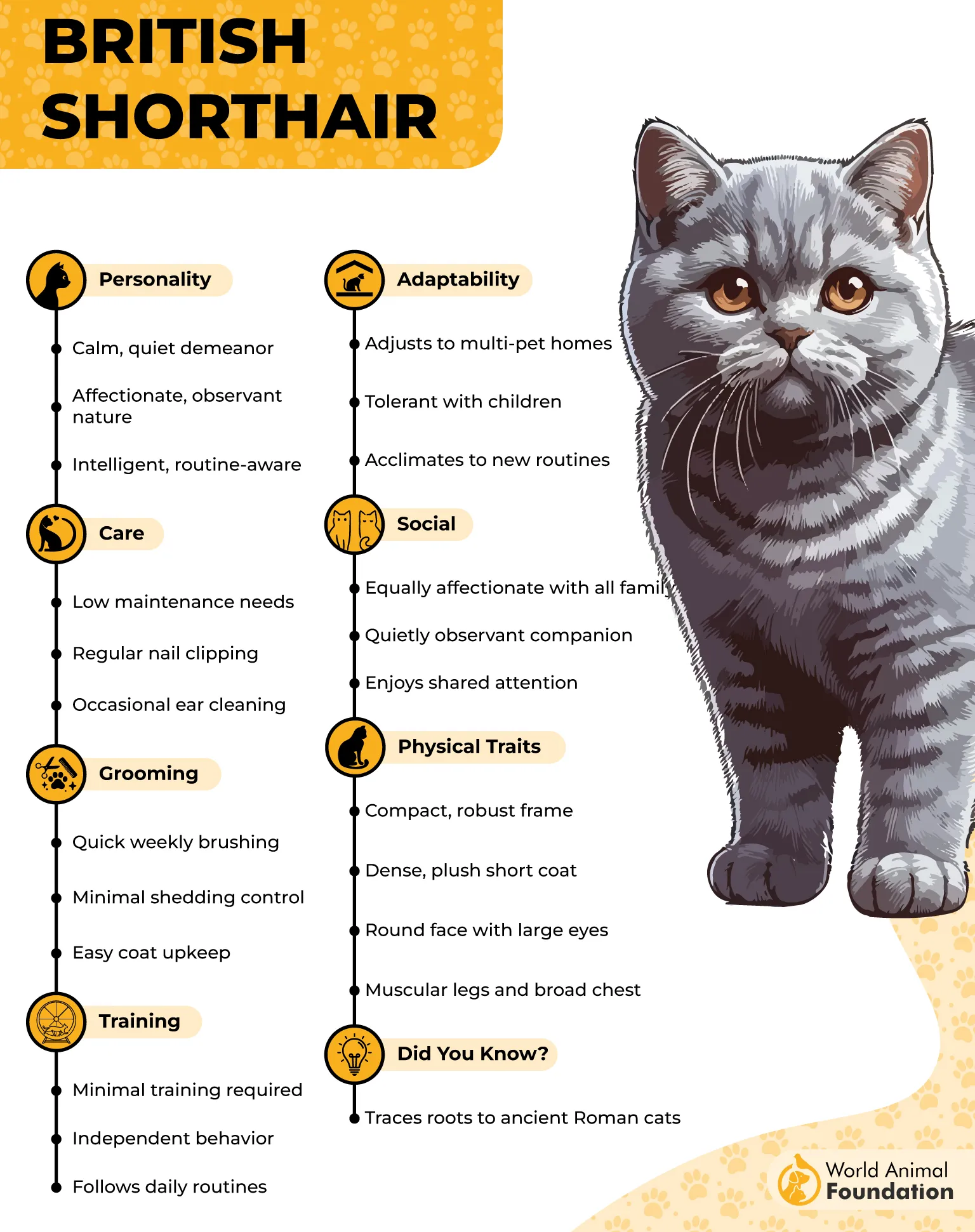
For rainy climates, their dense, thick coat acts as natural insulation, helping them stay comfortable during damp, chilly days. Unlike some cats that dislike gloomy weather, British Shorthairs tend to embrace slow, cozy routines and remain calm when storms roll in.
Their easygoing personality also means they handle atmospheric changes well, showing little stress when humidity rises or pressure drops before rain. This emotional stability is especially helpful in regions with frequent storms or long stretches of gray weather.
From a health perspective, their water-resistant undercoat offers protection against moisture, reducing chill-related discomfort. While generally healthy, they benefit from regular grooming in humid areas to keep the coat dry and clean and to support skin health.
Fact: British Shorthairs are considered a robust breed with relatively few common genetic health issues.
5. Turkish Van
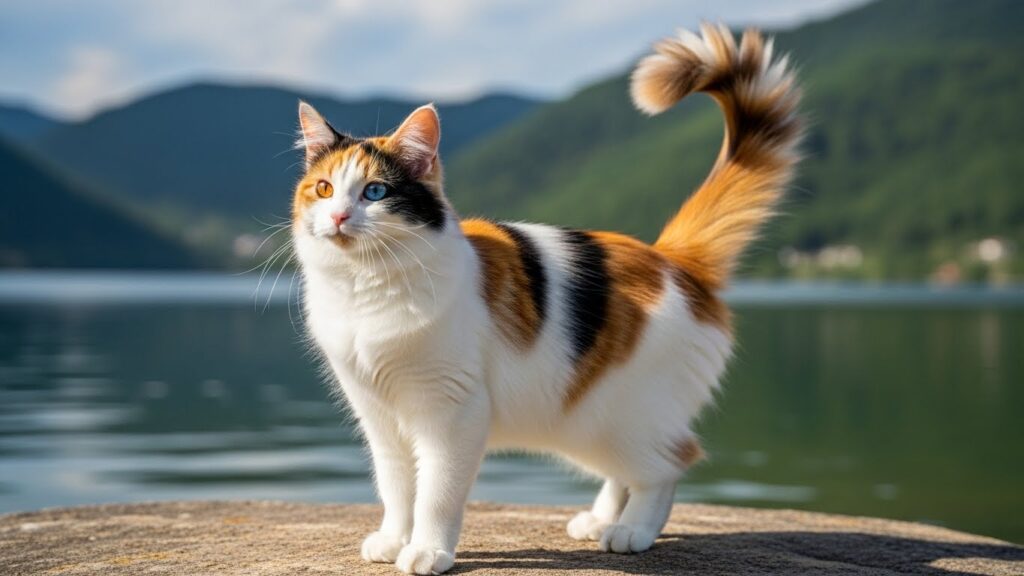
The Turkish Van, often called the “Swimming Cat,” is a striking, semi-longhaired breed originating near Lake Van in southeastern Turkey. Known for its strong build and distinctive color pattern, this cat stands out for an unusual trait—an authentic love of water.
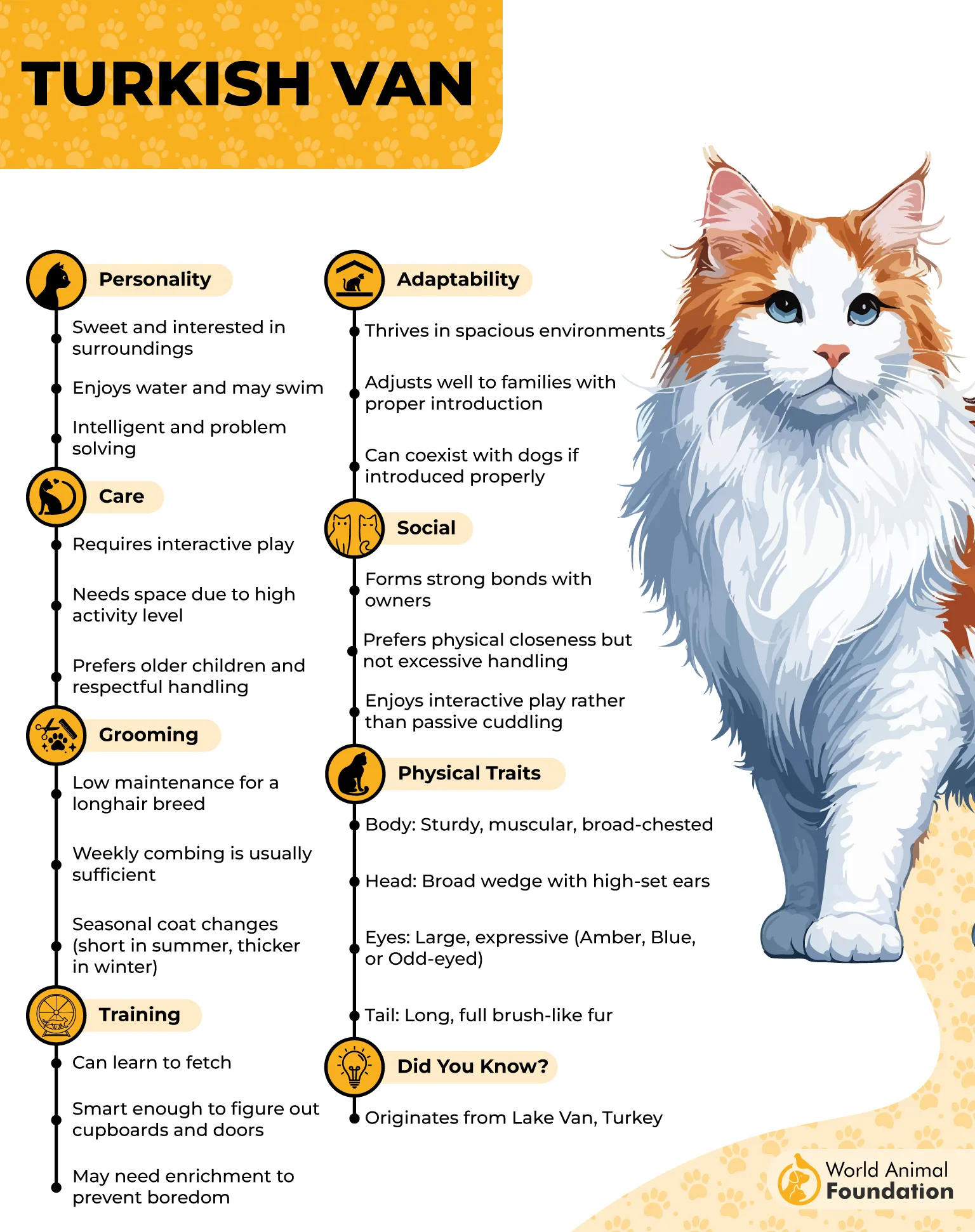
This natural comfort around moisture makes the Turkish Van especially suitable for rainy climates. Unlike most cats, it may splash in bowls, follow owners near water, or even swim, showing confidence where damp conditions are unavoidable. That bold attitude helps reduce stress in wet environments.
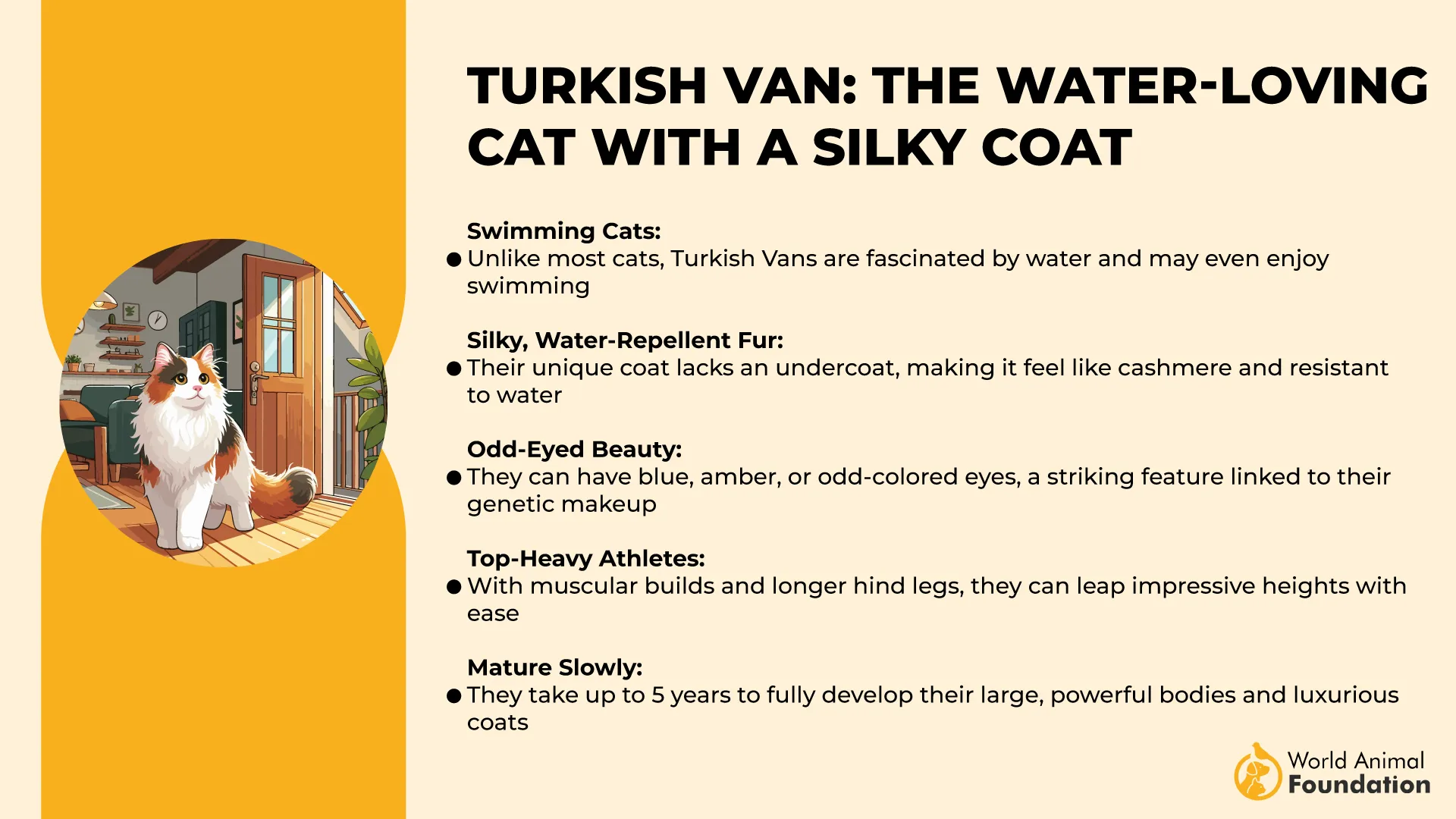
A key advantage in high-moisture regions is the Turkish Van’s unique coat. Its fur is naturally water-repellent, meaning rain and humidity are less likely to soak through or cause chill. This adaptation allows the coat to dry faster than many other semi-longhaired breeds.
Despite this benefit, regular grooming is essential in rainy areas. Daily brushing helps prevent tangles and allows owners to check for skin issues caused by constant dampness.
Fact: The Turkish Van’s coat is so water-resistant that bathing one can be surprisingly difficult.
6. Manx
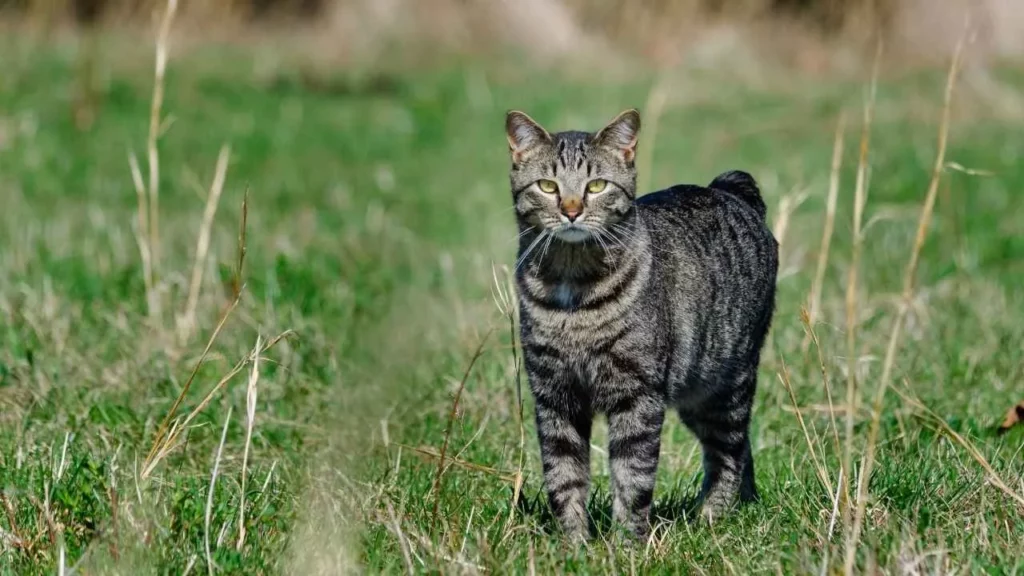
Also known as the Kayt Manninagh or bob-tailed cat, the Manx originates from the Isle of Man, a place famous for its damp, unpredictable weather. This tailless (or short-tailed) breed stands out for its rounded body, strong hind legs, and dense double coat designed to handle rain and wind.
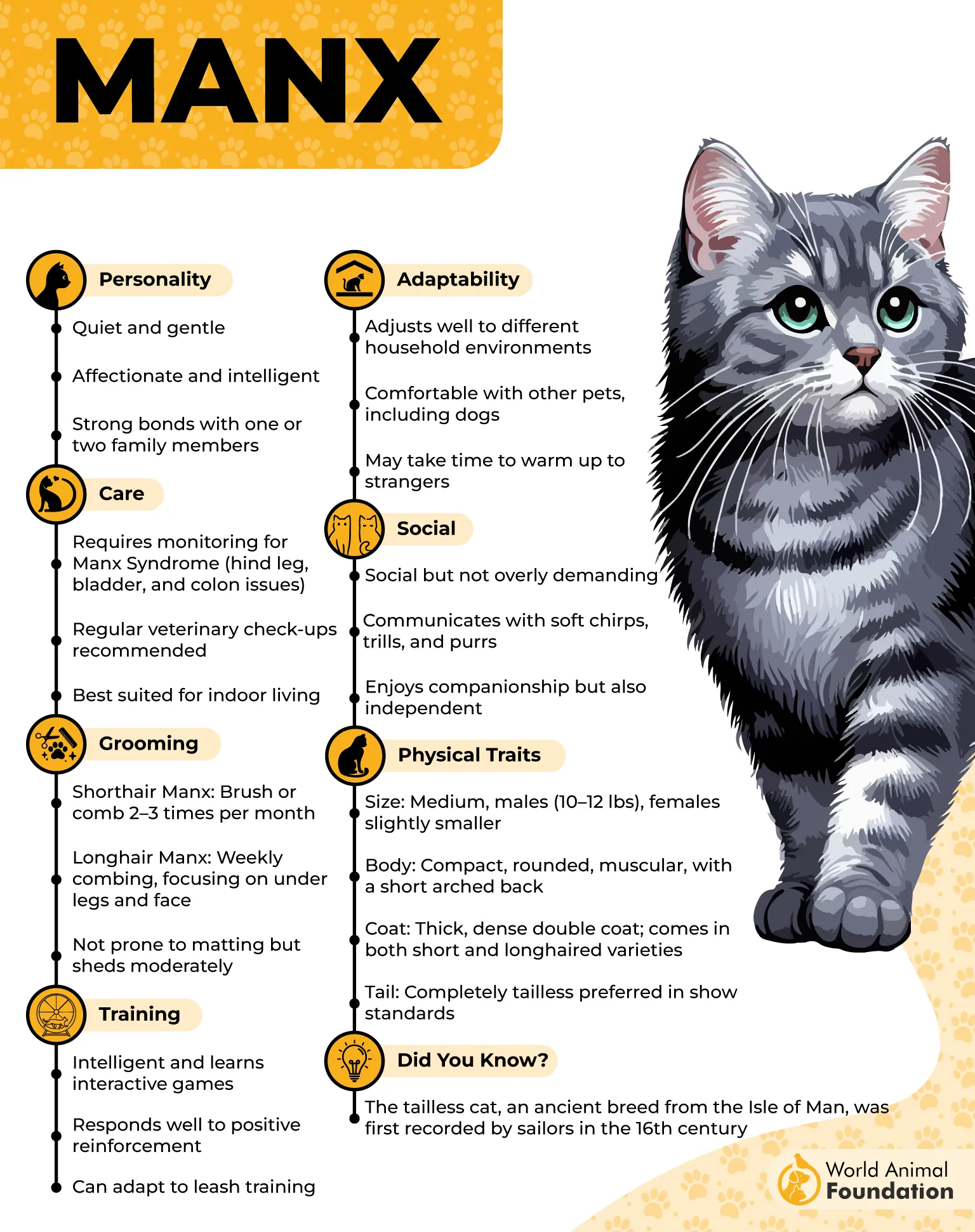
That weather-ready coat makes the Manx well-suited for rainy climates, as it offers natural insulation against moisture and chilly air. When outdoor adventures are limited by storms, these cats remain calm and adaptable indoors, rarely stressed by gloomy conditions.
Indoor enrichment becomes especially important during wet seasons, and the Manx excels here thanks to its intelligence and playful instincts. Puzzle toys, climbing shelves, and interactive games help channel their hunting drive when rain keeps them inside.
Their loyal, dog-like personality means they often stay close to their humans during storms, turning rainy days into bonding opportunities. Strong jumpers with sharp minds, Manx cats thrive when given engaging activities indoors rather than braving wet weather.
Fact: The Manx’s tailless trait comes from a spontaneous genetic mutation that became common on the Isle of Man.
7. Chartreux
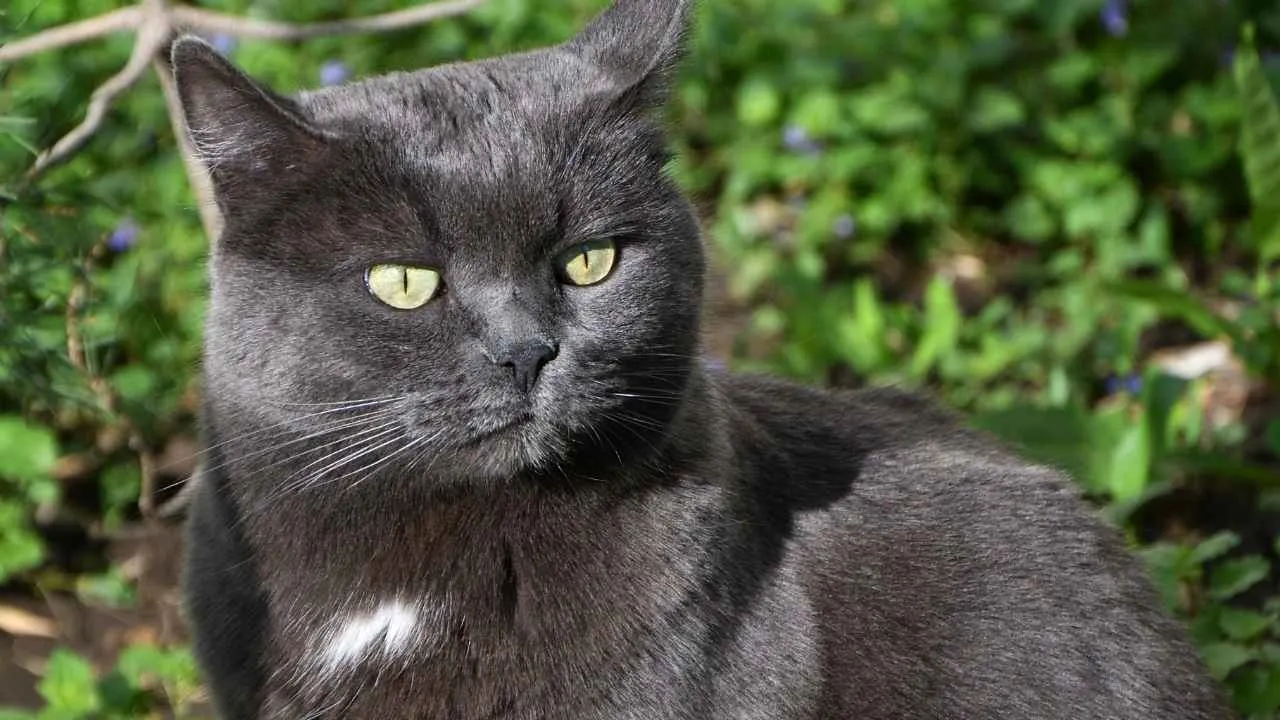
The Chartreux, sometimes linked to the legendary Carthusian Cat, is a blue-gray French breed known for its dense coat and quiet demeanor.
With roots tracing back to France and possibly the French Alps, this breed developed as a hardy, adaptable cat shaped by centuries of outdoor living.
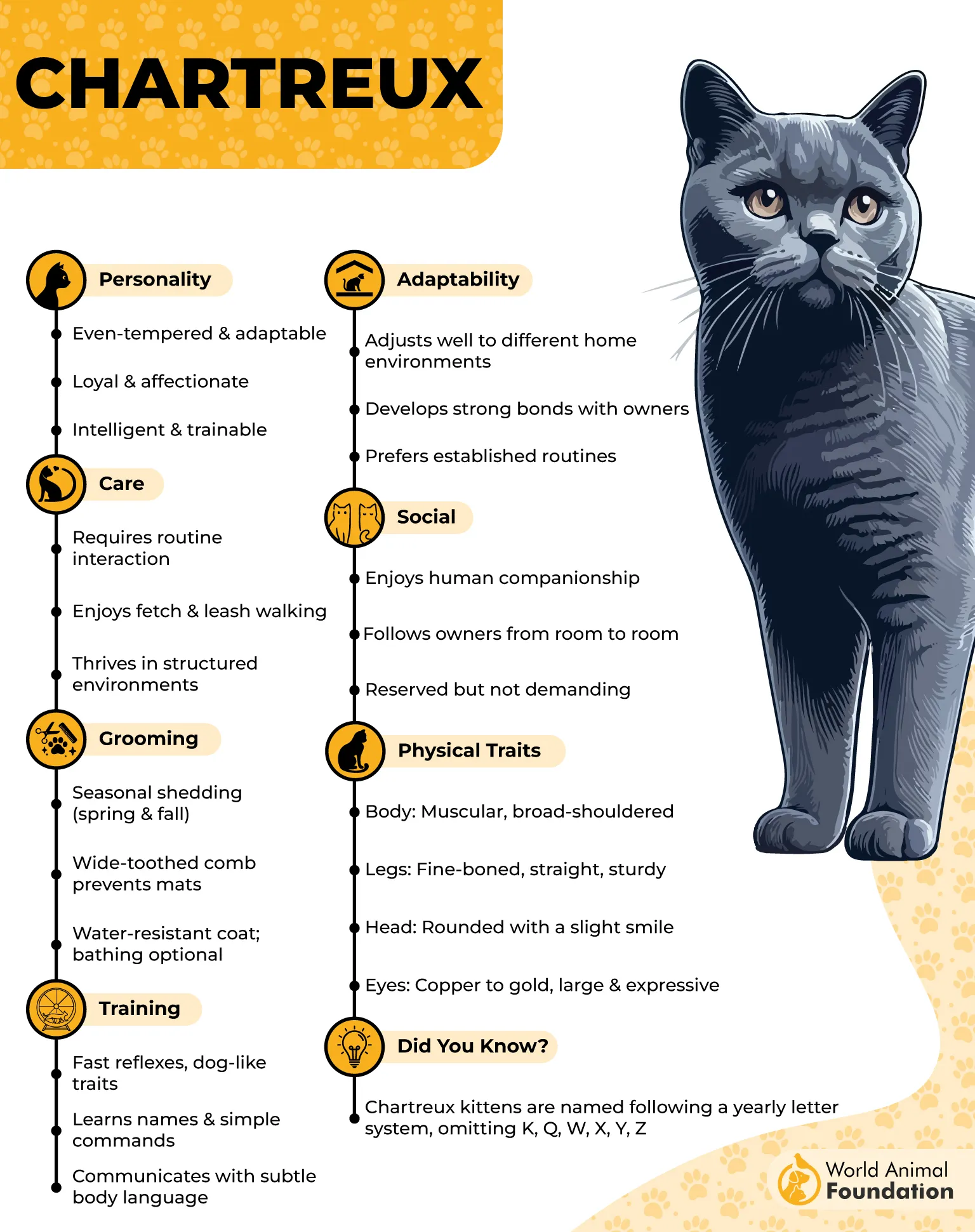
That rugged background makes the Chartreux well-suited for rainy climates. Its thick, woolly coat offers natural insulation against damp weather, helping the cat stay warm and comfortable in cool, wet conditions. Unlike finer coats, this plush fur dries relatively well and provides protection in humid environments.
Chartreux cats also tend to be calm and observant indoors, an advantage for rain-prone homes where outdoor time may be limited. They adapt easily to routine changes caused by weather and remain content with interactive play, window watching, and indoor hunting games during long rainy days.
When choosing a cat for a wet climate, temperament matters as much as coat type. The Chartreux’s quiet nature, intelligence, and resilience make it a practical and comforting companion for consistently damp regions.
Fact: Chartreux cats are known for their tiny meows but powerful, rumbling purrs when content.
Conclusion
Choosing cat breeds suitable for rainy climates means understanding how different feline friends respond to moisture, cold, and damp environments. While most people believe cats hate water, certain breeds of cats adapt surprisingly well.
From Siberian cats with dense coats to curious Bengal cats influenced by the African serval, some water cat breeds tolerate rain, puddles, and even situations where cats swim—sometimes near a swimming pool or other water bodies.
For pet parents, it’s important to remember that not all cat breeds thrive in wet conditions. Outdoor cats, barn cats, and even semi-feral or shelter cats may adapt differently from an indoor cat or a fully domesticated cat.
Breeds like British Shorthair cats, Siamese cats, or even Egyptian Mau—a nod to ancient Egypt—can coexist with rain when properly cared for. With sharp claws, hunting instincts to hunt rodents, and the right environment, these furry friends and other animals can enjoy a balanced outdoor life while staying safe and dry.
With early exposure, warm water, and access to clean water bowls, these beautiful cats can live a comfortable, healthy life indoors or out.
