




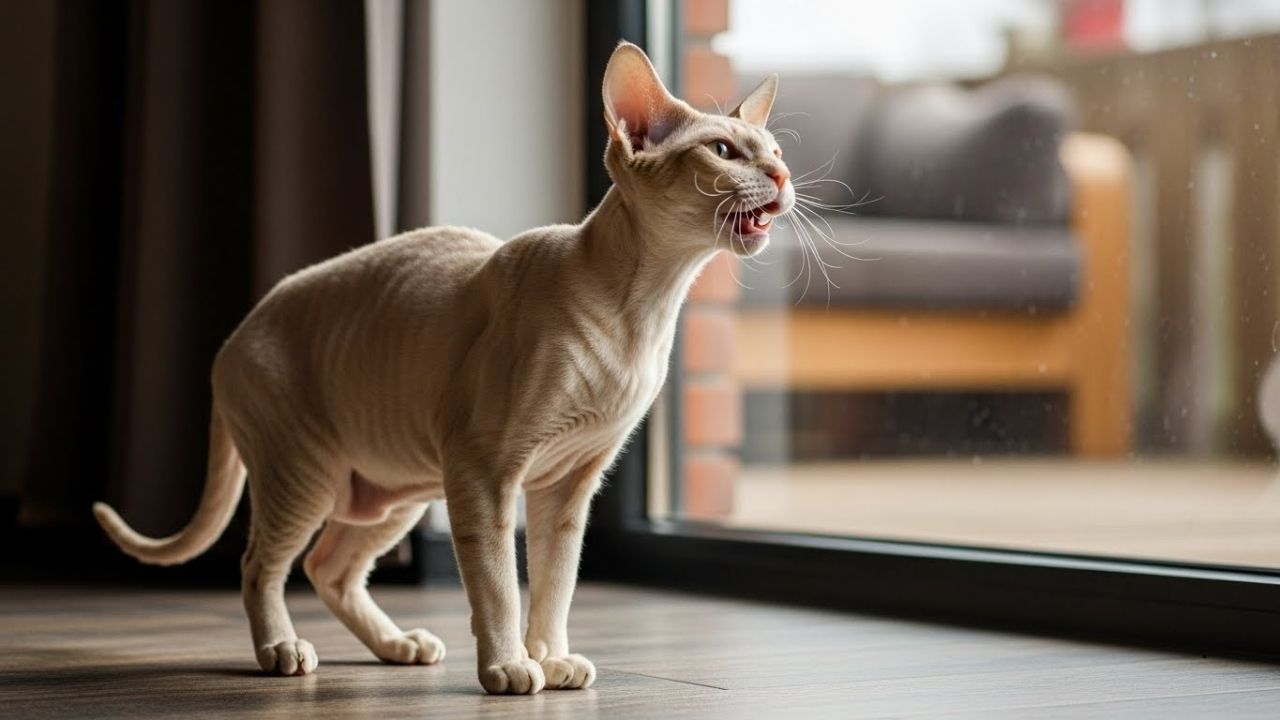
Cats may not roar like their wild relatives, but many domestic breeds have perfected the art of vocal communication. From soft chirps and trills to loud yowls and persistent meows, some cats make their presence known the moment they want attention.
For these expressive felines, silence is rarely the preferred option—especially when they’re hungry, bored, or simply eager to be heard.
While all cats can be vocal at times, certain breeds are famous for turning everyday interactions into full conversations. Over time, domestic cats have learned that sound is an effective way to communicate with humans, often using different tones and volumes to convey specific needs or emotions.
These cats don’t just meow randomly; they “talk” with purpose, responding to voices, following their owners from room to room, and commenting on daily routines.
In this article, we’ll explore 10 cat breeds known for their vocal personalities and what makes each one such a memorable conversationalist.
Cat Breeds Known For Vocal Personalities
1. Siamese
Also known as the Thai cat, the Siamese is one of the oldest recognized cat breeds. According to Britannica, the Siamese is a popular short-haired domestic cat breed that originated in Thailand, which was officially called Siam until 1939.
Its sleek body, striking blue eyes, and temperature-sensitive pointed coat make it instantly recognizable.
The Talkative Companion by nature, Siamese cats are famous for expressing themselves loudly and often. They use a wide range of sounds—meows, yowls, chirps, and trills—to comment on everything happening around them.
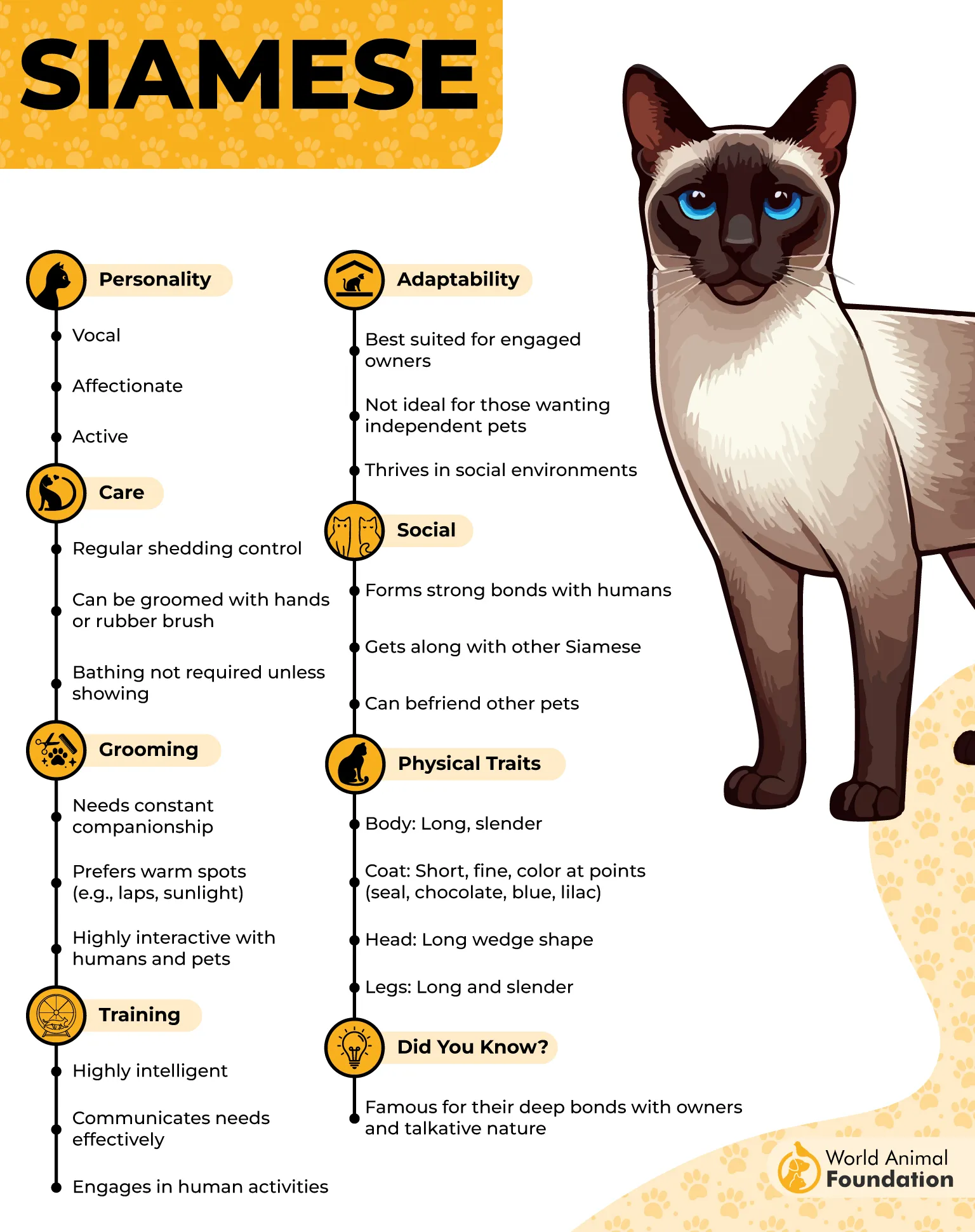
Highly social and intelligent, this breed thrives on human interaction and rarely stays quiet when attention is desired. Siamese cats will happily “talk” about food, playtime, or simply follow their owners while narrating the day.
Their vocal habits are closely tied to their deep need for connection, making silence a rarity in Siamese households.
Fun fact: Siamese cats are widely considered the most vocal cat breed, with their talkative nature believed to be genetically linked.
2. Oriental
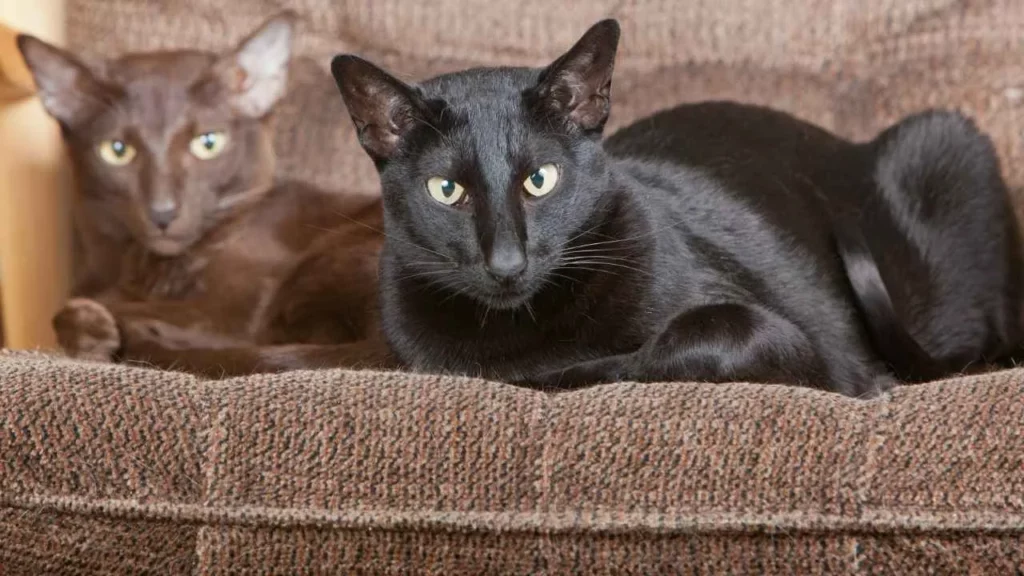
Also known as the Oriental Shorthair or Oriental Longhair, this breed is part of the Siamese family and was developed in Britain after World War II. Its slender body, large ears, and nearly 300 coat color variations make it instantly recognizable.
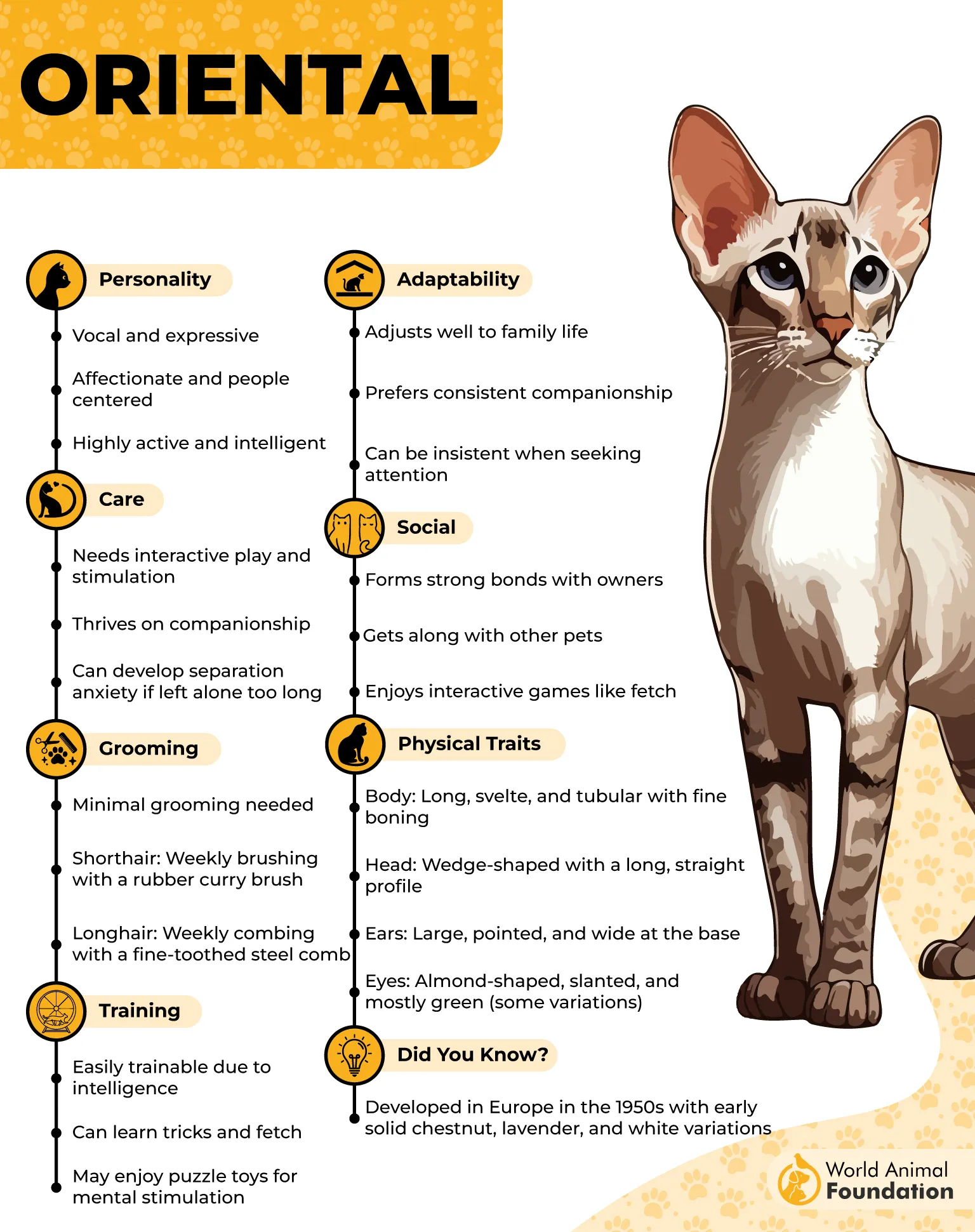
The Oriental is famously vocal and expressive. Much like its Siamese relatives, it uses loud, persistent meows to demand attention, comment on daily events, and respond to human voices.
Highly social and people-oriented, Orientals dislike being left alone for long periods. When bored or ignored, they’ll raise their voice to make sure their presence is noticed, often following owners from room to room while chatting nonstop.
Their intelligence and curiosity fuel both their talkative nature and their need for interaction.
Fun fact: The Oriental Shorthair is often ranked as the second most vocal cat breed, largely because it shares its chatty personality with the Siamese.
3. Bengal
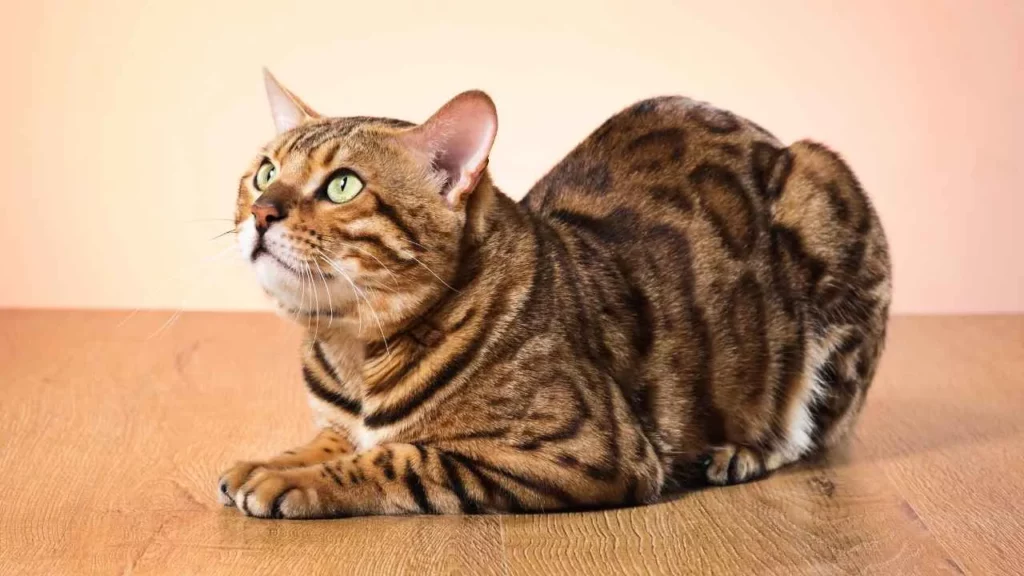
Also known simply as the Bengal cat, this hybrid breed was developed in the United States by crossing domestic cats with the Asian leopard cat.
Purina states that the Bengal is a sleek cat with a wild look, made even more striking by the bold marbling and spots on its thick, luxurious coat.
Bengals are highly expressive communicators. They rely on chirps, trills, meows, and occasional yowls to stay connected with their humans, often “talking” throughout the day to demand attention or initiate play.
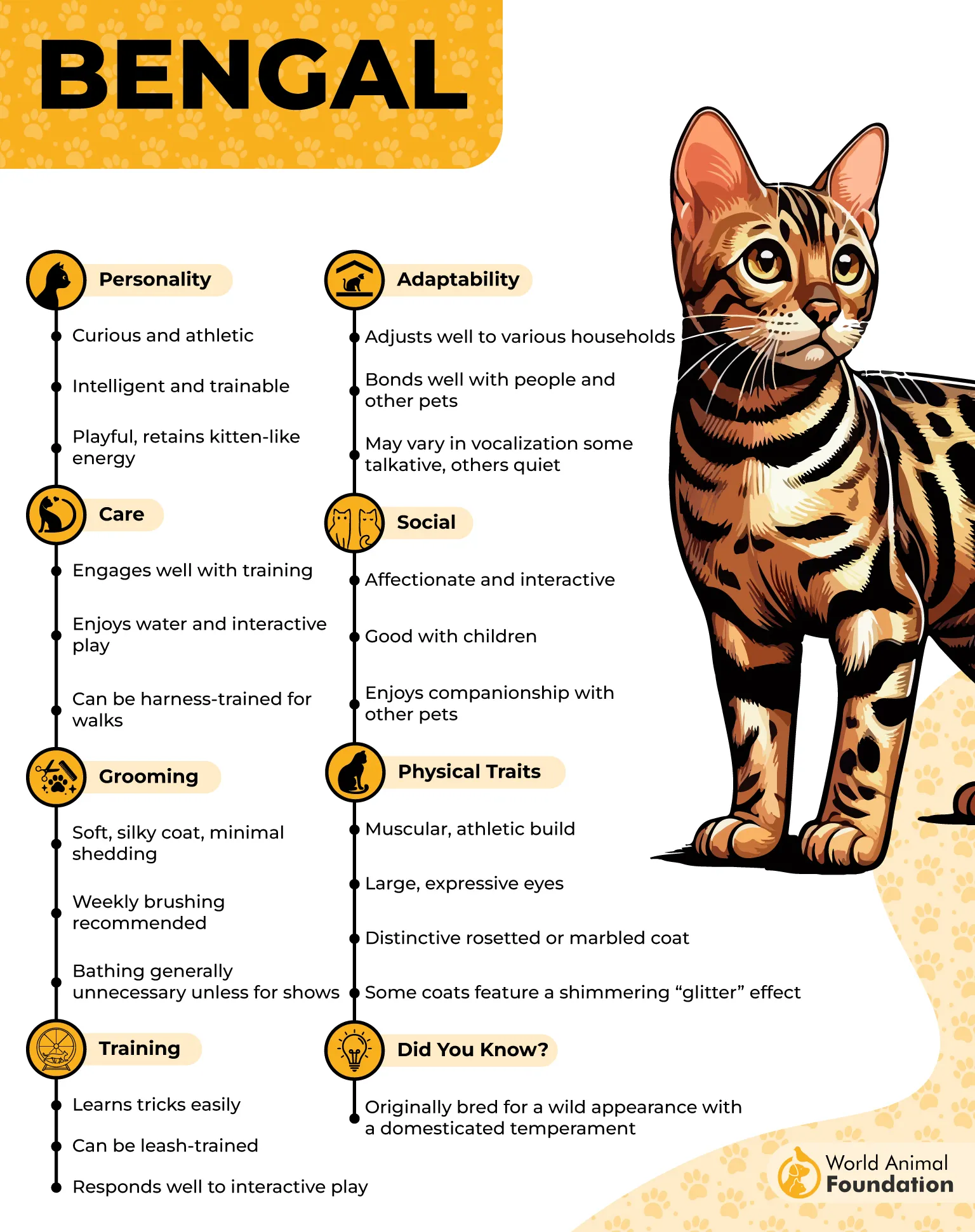
Rather than long cuddle sessions, Bengals show affection through constant interaction. They prefer following their owners, climbing nearby perches, and vocalizing from above, using sound as a way to maintain closeness and engagement.
Their strong attachment can even lead to attention-seeking behaviors when left alone.
Fun fact: Owner perception studies suggest Bengals may experience higher rates of separation anxiety compared to many other cat breeds, reinforcing their vocal and interactive nature.
4. Tonkinese
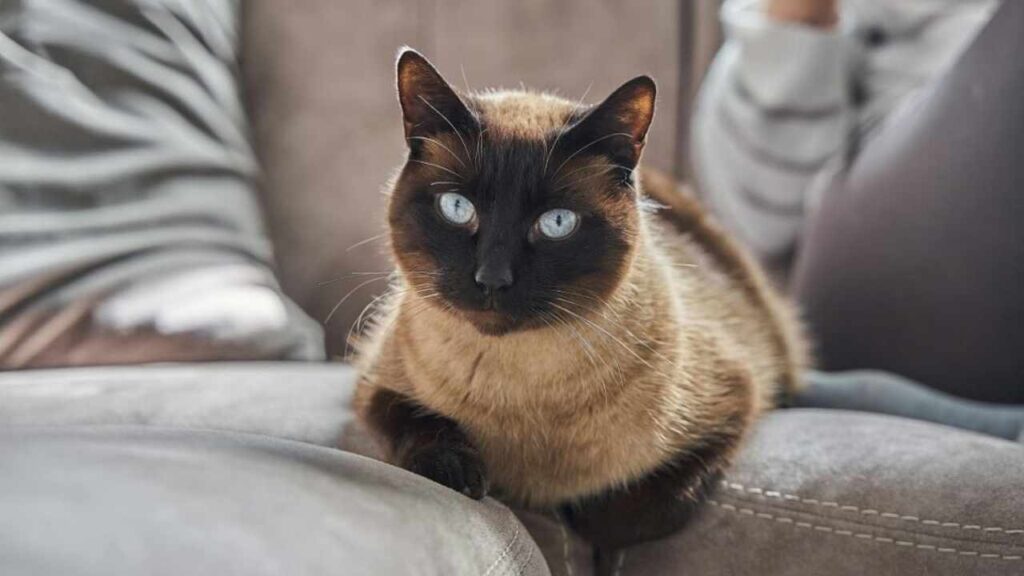
Also known simply as the Tonk, the Tonkinese is a hybrid breed developed from Siamese and Burmese cats.
This blend gives them a balanced build, expressive aqua eyes, and an engaging, people-focused personality. PetMD notes that Tonkinese cats are social, intelligent, and deeply curious.
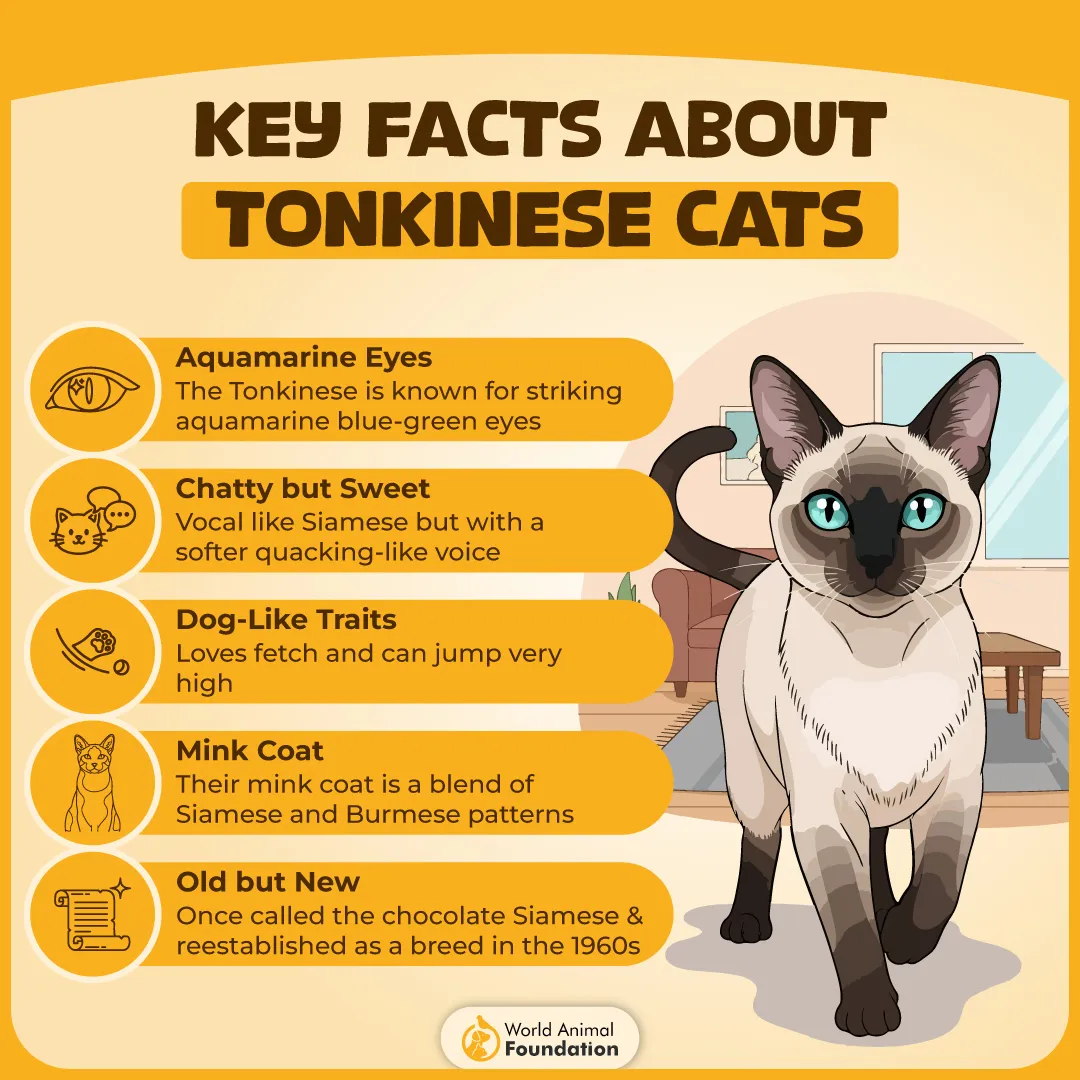
While not as loud as their Siamese relatives, they are reliably talkative, responding with meows, chirps, and trills whenever spoken to.
Their curiosity keeps the conversation going. Tonkinese cats love interactive games like fetch, tag, and hide-and-seek, often vocalizing excitement as they play and staying close to their humans throughout the day.
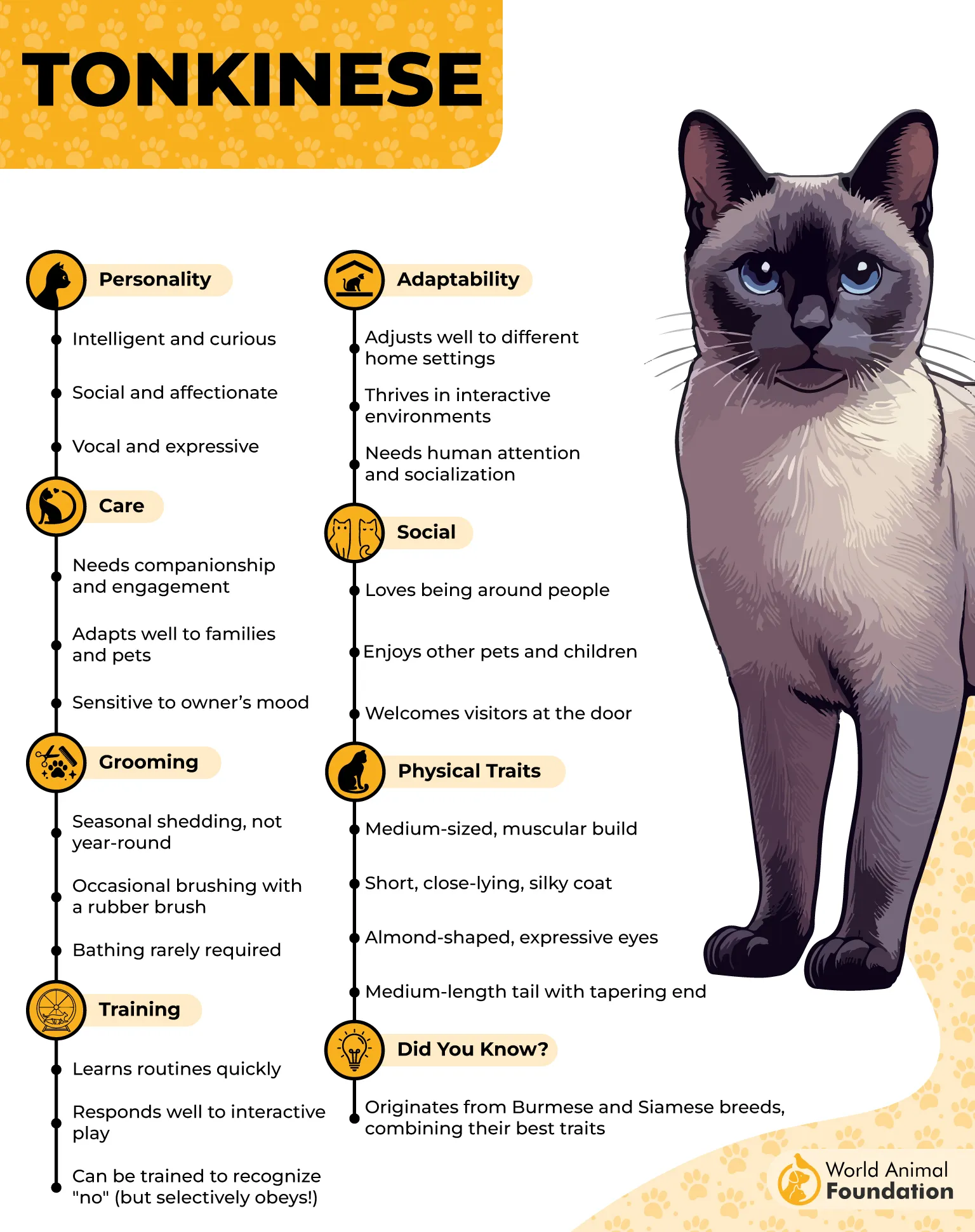
Affectionate and social, they enjoy lap time and companionship but can also settle into quieter moments.
Fun fact: The Tonkinese inherited its chatty nature from both the Siamese and Burmese, making it conversational without being overwhelming.
5. Burmese
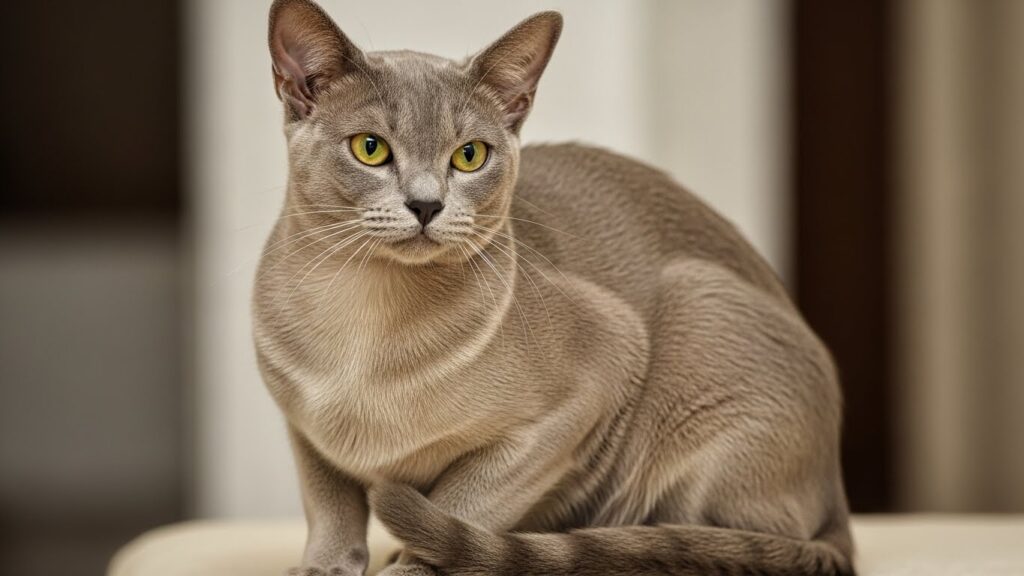
Also known simply as the Burmese cat, this breed is compact, muscular, and famously people-oriented. Originating from Southeast Asia, Burmese cats are known for their expressive eyes, sleek coats, and constant desire to engage with those around them.
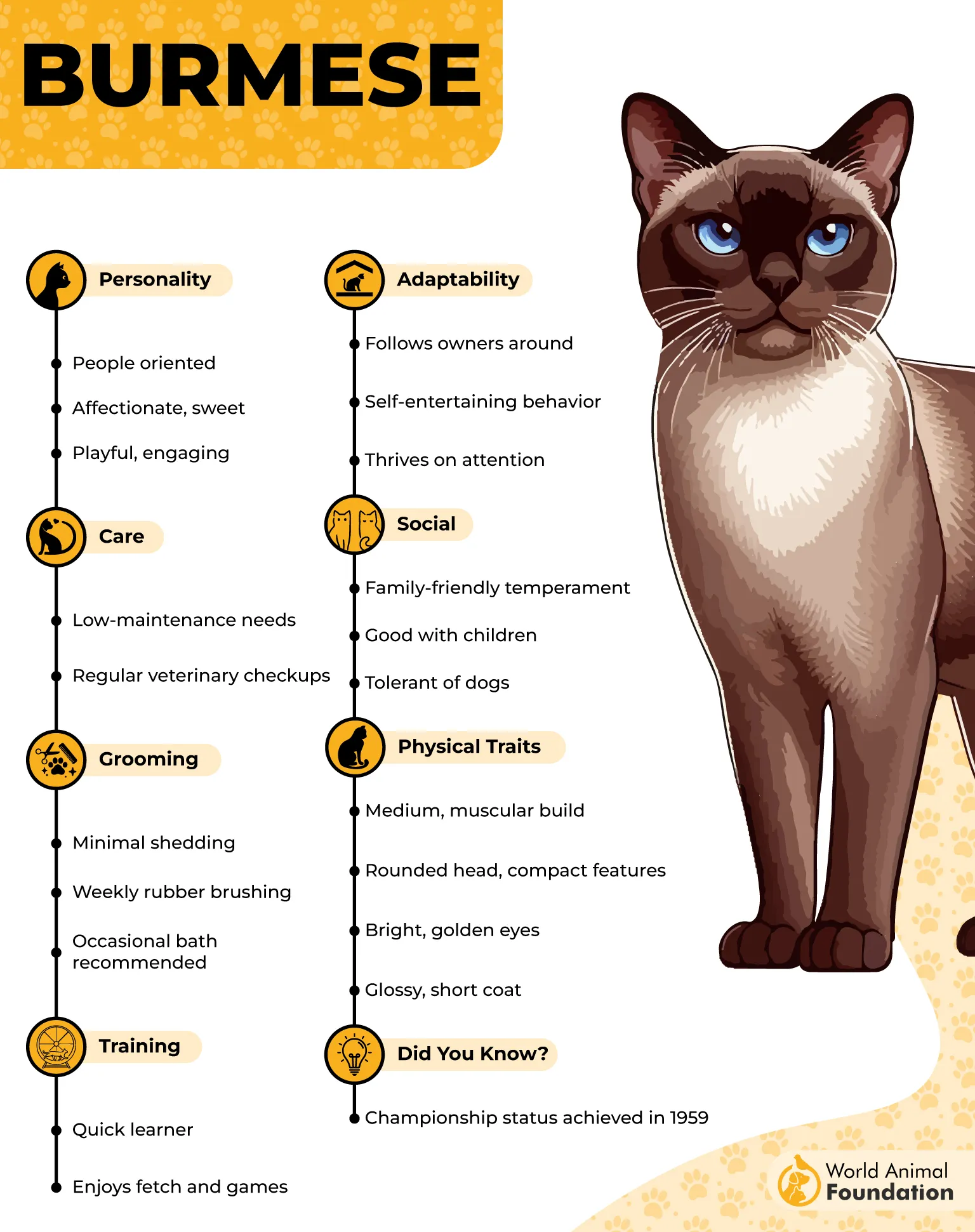
Burmese cats communicate frequently but with a gentler tone than some louder breeds. Their voices are often described as sweet and conversational, making their chatter feel charming rather than overwhelming.
These social felines use chirps, trills, and soft meows to bond with humans and other cats. Vocal exchanges may sound like conversations, especially in multi-cat households, and are a normal sign of comfort, curiosity, and connection.
Burmese cats rarely stay silent when attention is desired, often “talking” during play or cuddle time.
Fun fact: Chirping is a common vocalization in Burmese cats and is typically a playful or social form of communication rather than a sign of distress.
6. Peterbald
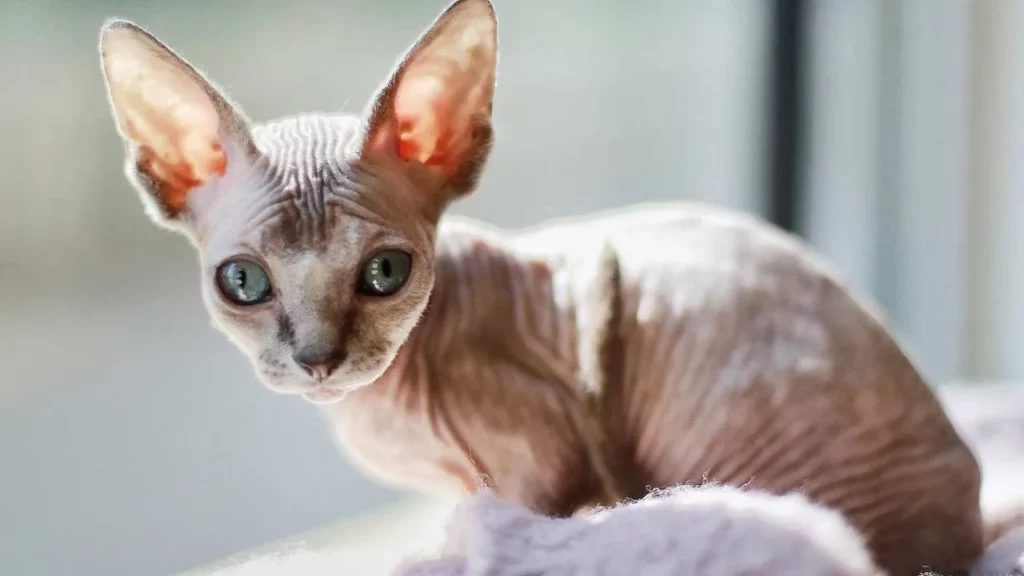
Also known as the St. Petersburg Peterbald, this striking breed originated in Russia from a cross between the Donskoy and Oriental Shorthair. Its slender, muscular body, large ears, and variable coat—ranging from bald to velvety fuzz—make it instantly recognizable.
The Peterbald thrives on interaction and rarely keeps quiet. These cats use frequent meows and chirps to stay connected, often following their humans and “commenting” on daily activities.
Highly people-oriented, Peterbalds dislike being alone and will vocalize to express boredom or affection. Their intelligence and curiosity fuel constant engagement, turning conversations into a daily routine rather than an occasional event.
Because they bond deeply with both people and other pets, their voices become a key part of communication.
Fun fact: The hairless gene in Peterbalds is dominant, and their talkative nature is inherited from the highly vocal Oriental Shorthair lineage.
7. Sphynx
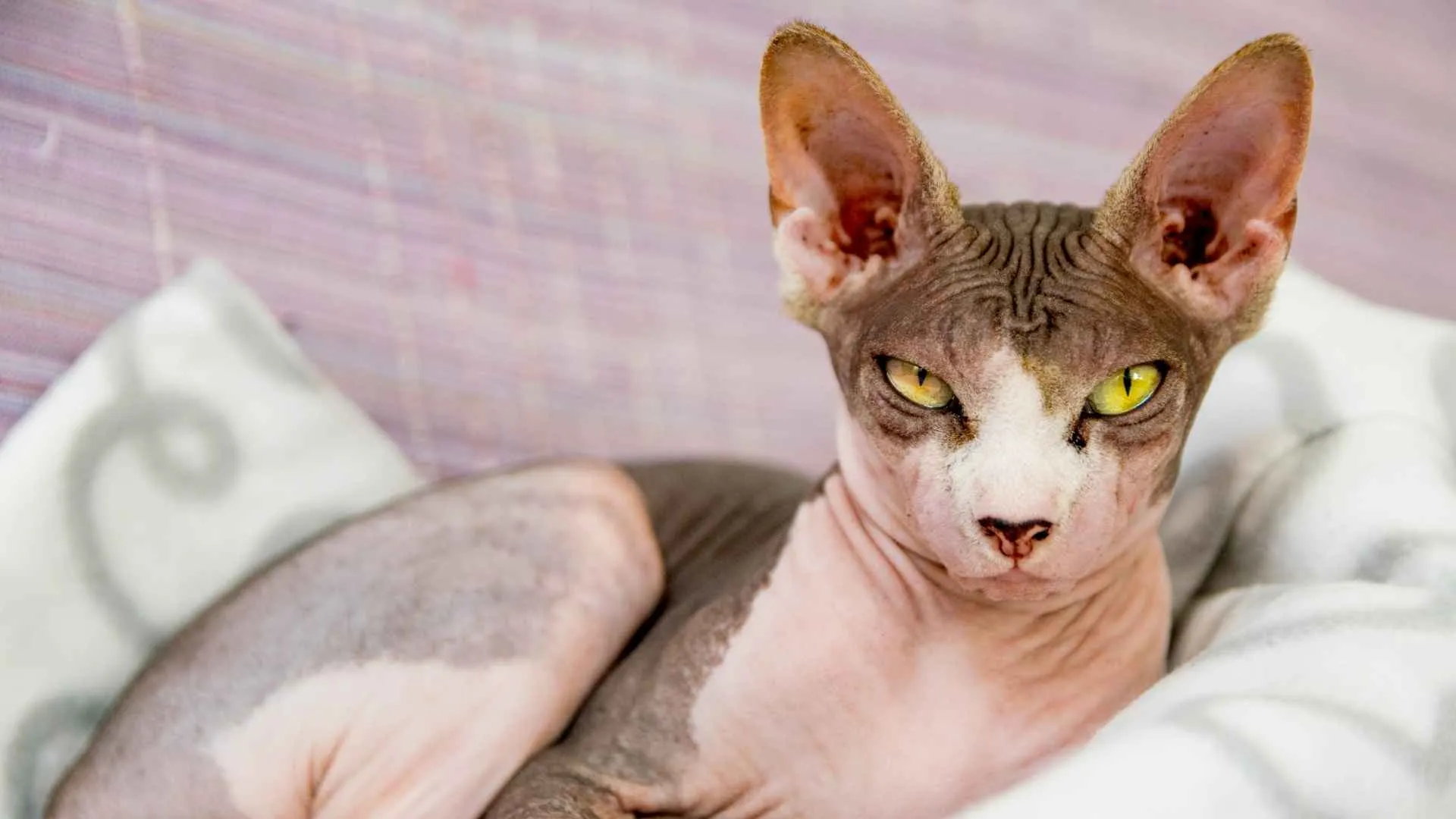
Also called the hairless cat, the Sphynx is instantly recognizable for its wrinkled skin, large ears, and soft peach-fuzz coating. This breed originated from a natural genetic mutation and quickly gained fans for its bold looks.
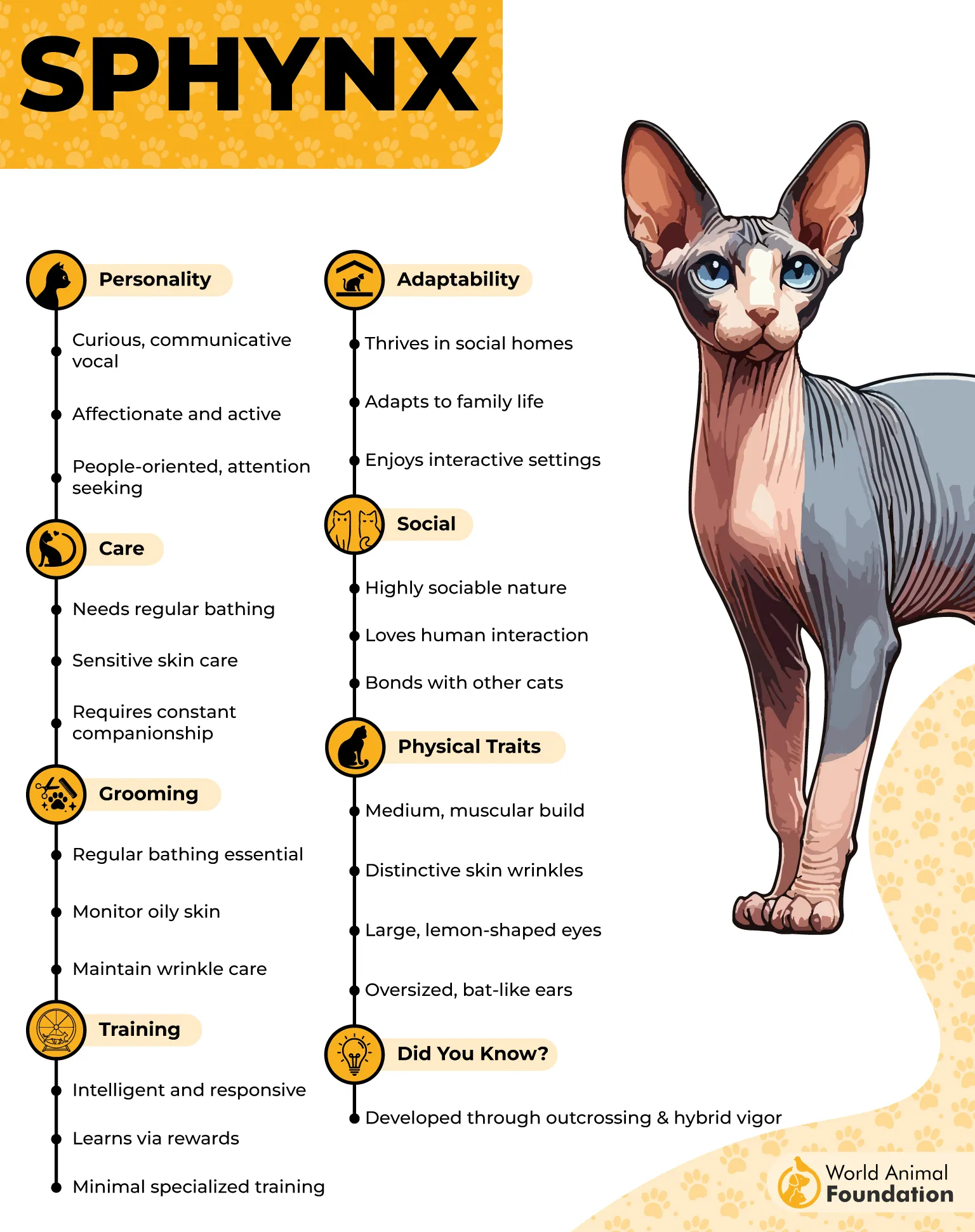
Opinionated and never shy, the Sphynx is one of the most vocal cat breeds you’ll meet. These cats freely express their needs through meows, chirps, trills, and yowls, especially when they want attention or warmth.
Deeply social and affectionate, Sphynx cats crave constant interaction with their humans and other pets. Their strong attachment often earns them the nickname “Velcro cats,” as they follow their people and talk throughout the day.
Their talkative nature is closely tied to their playful, dog-like personality and desire to be involved in everything happening at home.
Fun fact: Despite being hairless, Sphynx cats are not hypoallergenic and require regular grooming due to skin oil buildup.
8. American Bobtail

Also known simply as the Bobtail, the American Bobtail is a distinctive breed developed in the United States during the 1960s. Its naturally short tail, sturdy build, and alert expression give it a slightly wild look paired with a warm, people-focused personality.
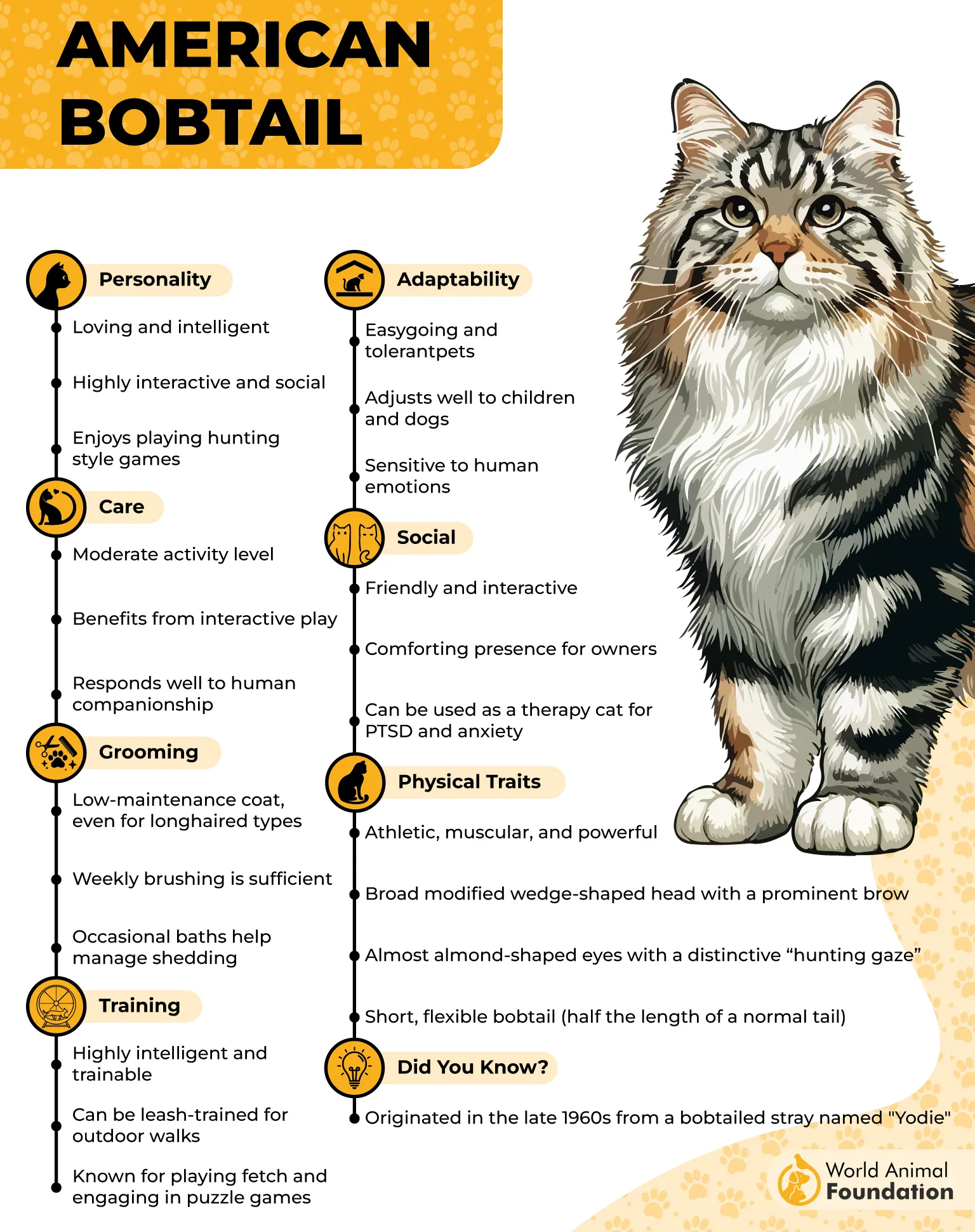
This breed is far from quiet. American Bobtails communicate using trills, chirps, clicks, and soft meows, often “talking” during play or when seeking attention from their favorite humans.
Their vocal nature is closely tied to intelligence and interaction. These cats enjoy initiating games, showing off hunting skills indoors, and even learning leash walking, all while maintaining a steady stream of commentary.
Because they bond intensely with their families, American Bobtails use sound to stay connected and engaged throughout the day.
Fun fact: Instead of relying on standard meows, American Bobtails are known for using chirps and trills when excited or playful.
9. Turkish Van
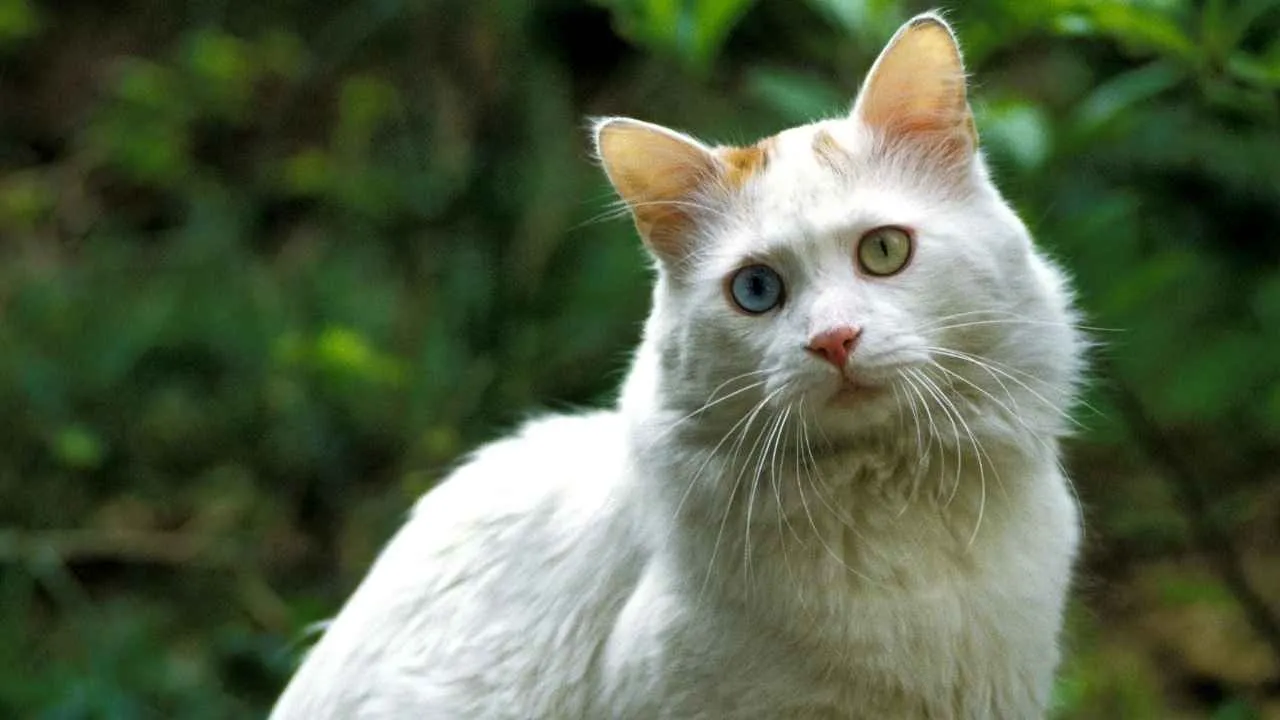
Also known as the Van cat or “Swimming Cat,” the Turkish Van is an ancient and rare breed originating near Lake Van in modern-day Turkey. Its rugged build, striking van-pattern coat, and water-resistant fur make it instantly distinctive.
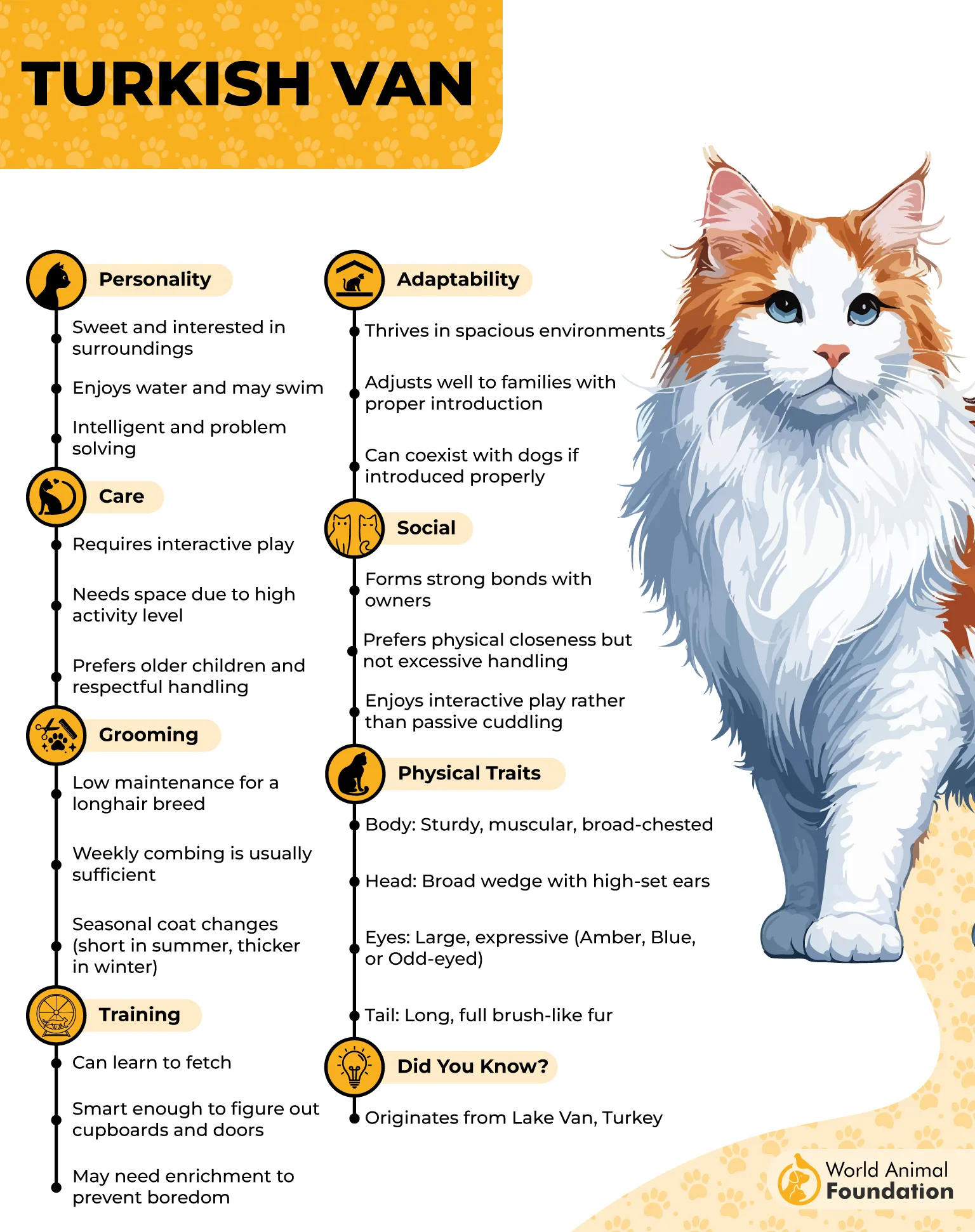
Expressive voices and big personalities define this breed. Turkish Vans are naturally curious and active, often vocalizing as they explore their surroundings, investigate new objects, or seek interaction on their own terms.
Unlike constant chatterers, their communication is purposeful and animated. They use a mix of meows and expressive sounds to announce discoveries, demand attention, or comment on household activity, especially when bored.
Affectionate yet independent, Turkish Vans balance confidence with selective sociability, making their vocal nature feel intentional rather than excessive.
Fun fact: Turkish Vans are nicknamed the “Swimming Cat” because their water-resistant coats often encourage them to play in water.
10. Balinese
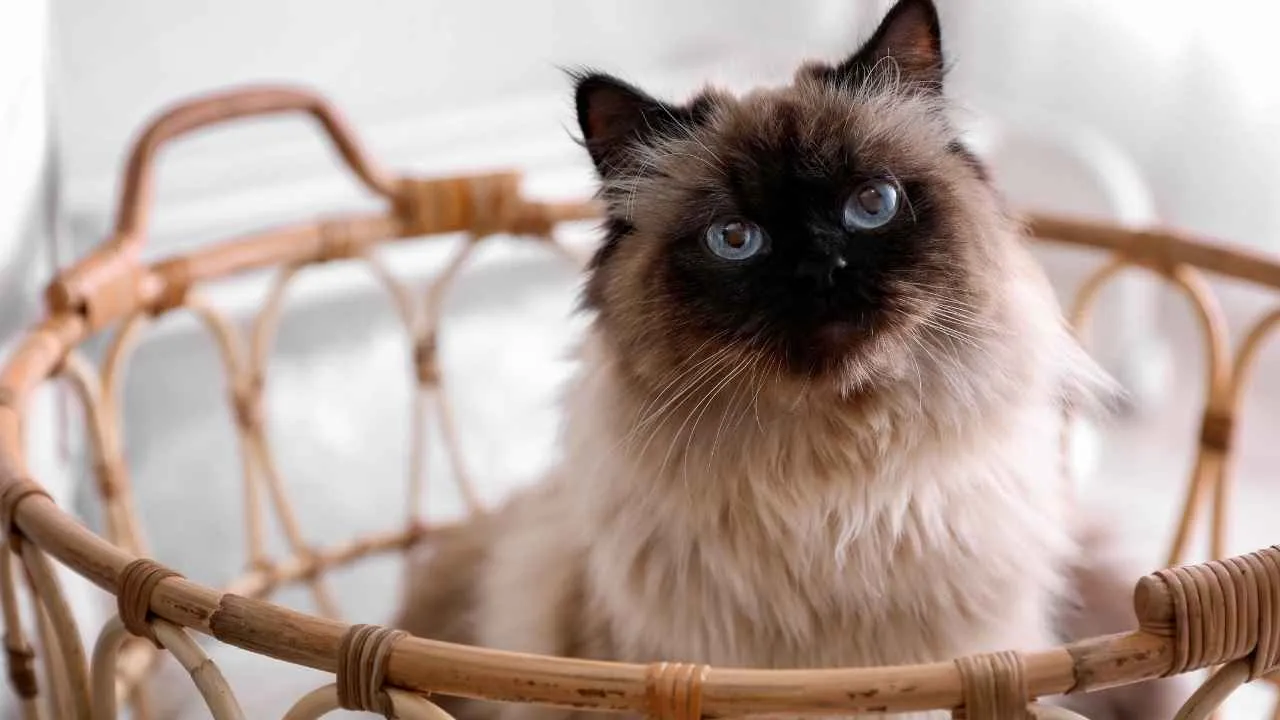
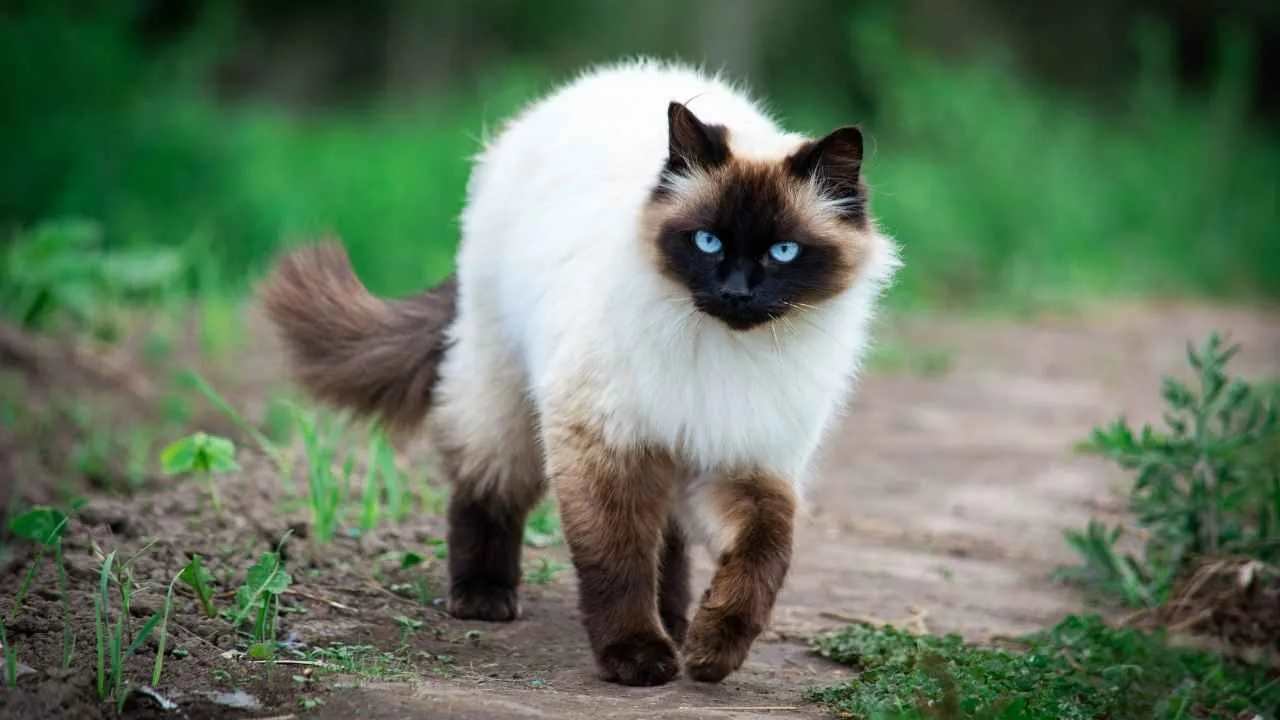
Also known as the long-haired Siamese, the Balinese originated from naturally occurring long-haired Siamese kittens in the 1950s. With their slim build, silky single coat, and elegant movement, they mirror the Siamese in appearance—just with added flair.

The Balinese is unmistakably vocal. While their voice is typically softer and more melodic than the Siamese, they still love to comment on daily life, conversations, and routines.
Highly intelligent and affectionate, Balinese cats thrive on interaction and mental engagement. They frequently follow their humans from room to room, offering opinions, asking for attention, and responding when spoken to. Silence is rarely part of their personality.
Although slightly less demanding than their Siamese relatives, Balinese cats dislike being left alone for long stretches.
Fun fact: The Balinese developed from a genetic mutation in Siamese cats that produced a long, low-shedding coat while preserving their famously talkative nature.
Conclusion
Cat breeds known for vocal personalities bring energy, interaction, and constant conversation into a home. From the unmistakable chatty cat nature of breeds related to the Siamese to others closely related in behavior, these cats use loud meows, chirps, and trills to communicate their needs.
While cats tend to vary by temperament, a true vocal breed thrives on engagement and isn’t shy about expressing opinions. Whether it’s an individual cat narrating daily events or responding directly to humans, these felines turn sound into connection.
For the right household, a talkative feline friend can be endlessly entertaining and emotionally rewarding. Breeds like the Japanese Bobtail, Cornish Rex, Turkish Angora, and even Bengal Bengals show that vocal traits extend across other breeds as well.
Understanding these tendencies supports animal welfare, ensuring owners choose cats whose expressive personalities fit their lifestyle and appreciation for constant communication.
