




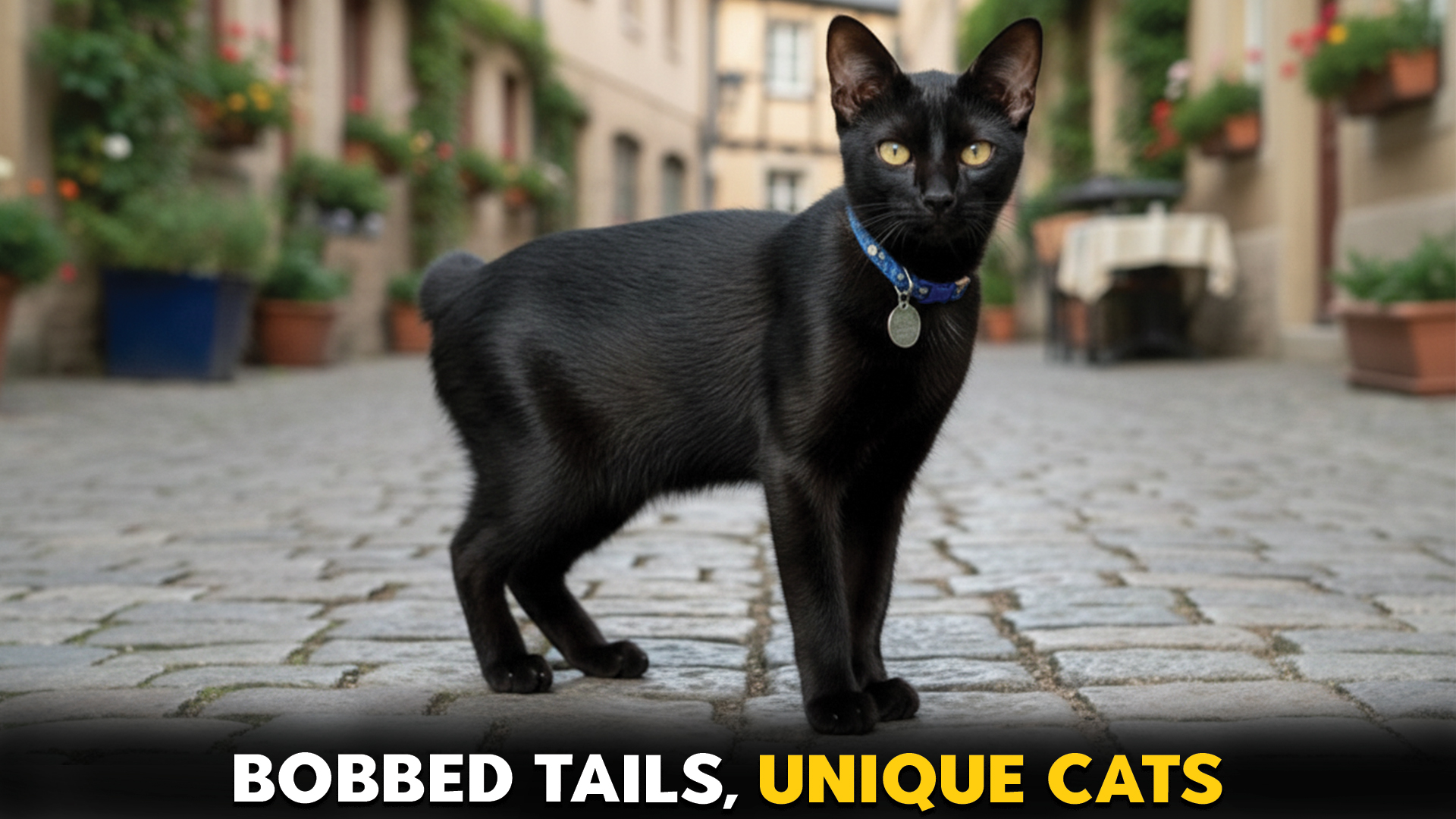
A bobbed tail is one of the most distinctive features a cat can have, instantly setting certain breeds apart from their long-tailed counterparts. These shortened, kinked, or pom-pom-like tails aren’t the result of docking or human intervention, but rather natural genetic traits passed down through generations. Each bobbed tail is uniquely shaped, giving every cat an unmistakable signature and a silhouette that’s both charming and memorable.
Among the most famous examples are breeds with deep cultural roots, particularly those long celebrated in art, folklore, and history. In places like Japan, bobbed-tailed cats were once prized companions of nobility and symbols of good fortune. Their tails, often compared to a rabbit’s, vary in curves, angles, and length, ensuring no two are ever alike. Paired with strong hind legs and agile bodies, these cats are as athletic as they are elegant.
Beyond appearance, cats with bobbed tails are known for their lively, interactive personalities. They tend to be intelligent, affectionate, and constantly in motion. In this article, we’ll explore cat breeds best known for their naturally bobbed tails and what makes them so captivating.
Cat Breeds Known for Their Bobbed Tails
1. Japanese Bobtail
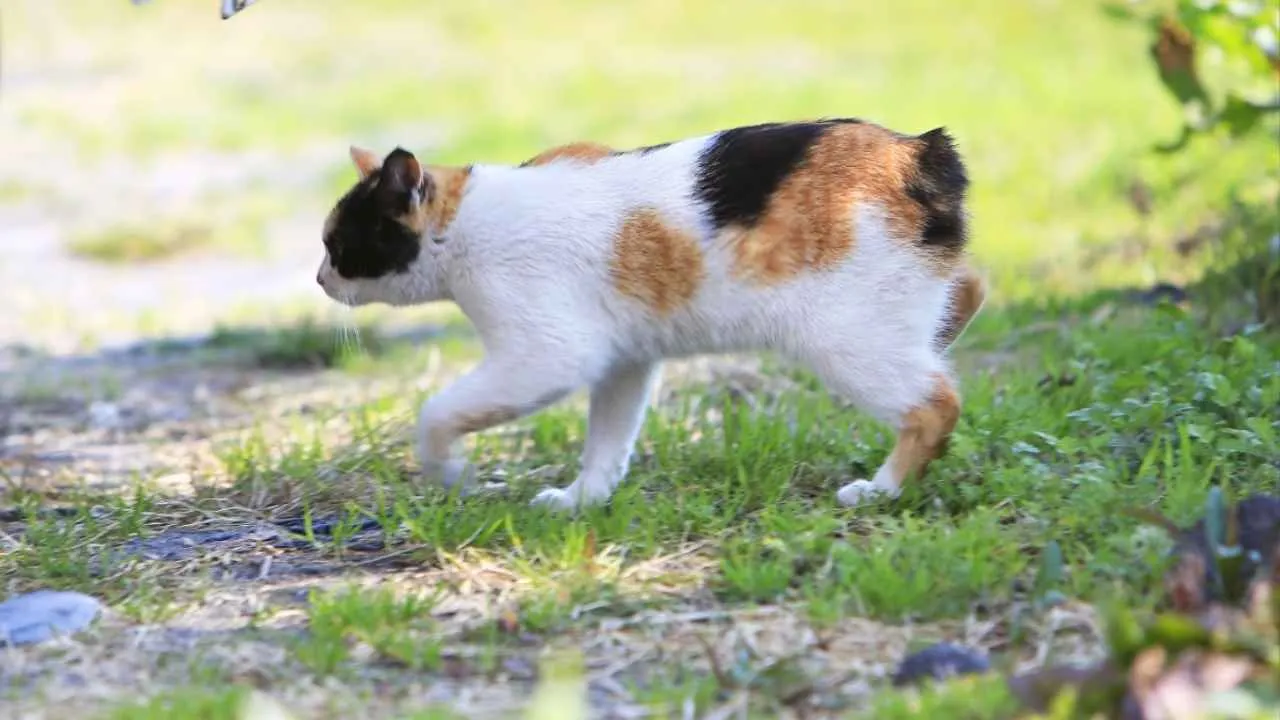
Also known as the Japanīzu Bobuteiru, the Japanese Bobtail is an ancient breed celebrated for its naturally short, kinked tail that resembles a rabbit’s pom-pom. Originating in Japan centuries ago, this elegant cat appears frequently in folklore, art, and cultural symbols of good fortune.
According to Britannica, the Japanese bobtail is a short-haired cat breed known for its powder-puff tail, quirky behavior, and an agile, inquisitive nature.
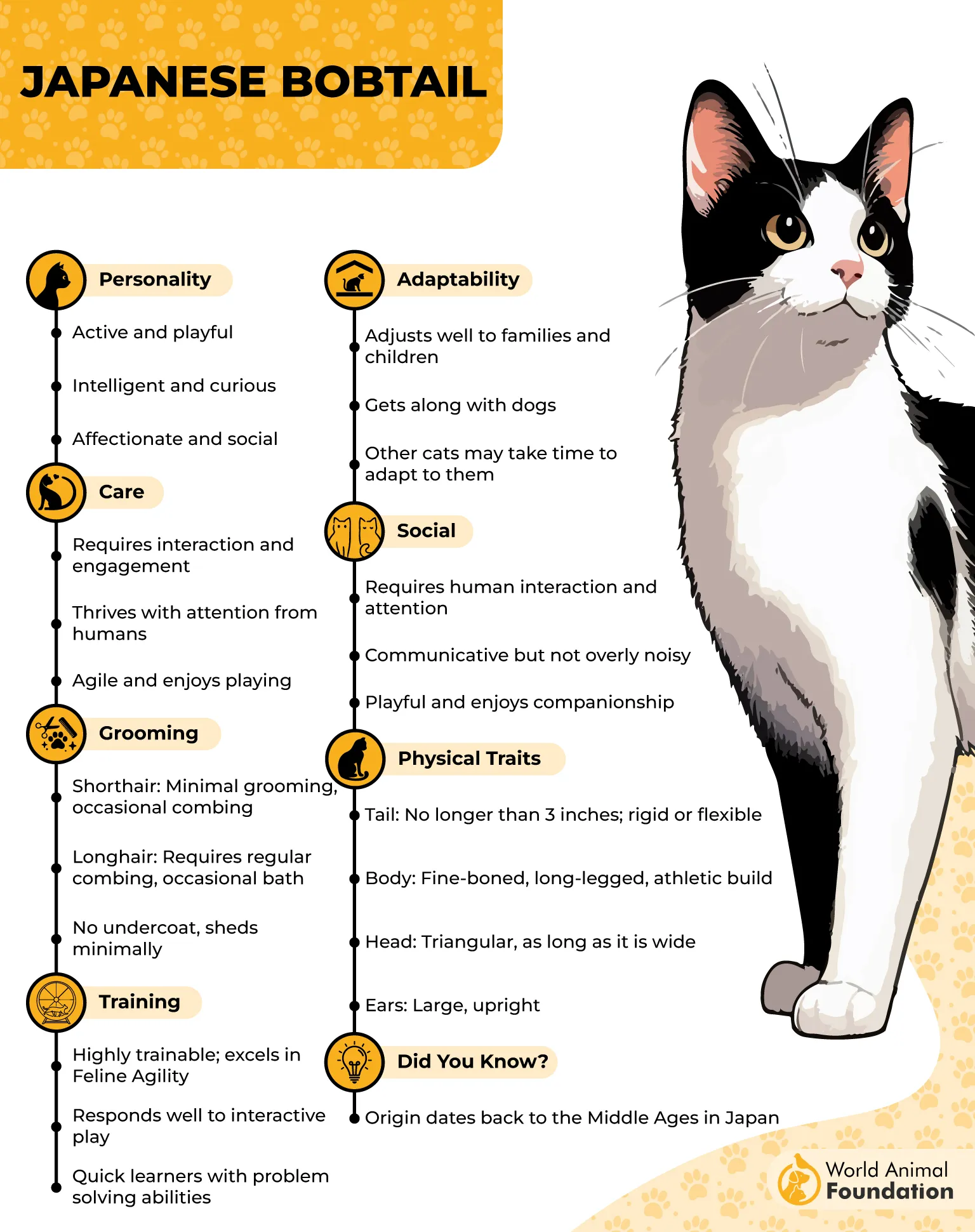
So, what is a bobbed tail? In Japanese Bobtails, it’s the result of a dominant genetic mutation—not docking—that creates tails made of curves, bends, or angles. Each tail is completely unique, functioning almost like a feline fingerprint.
These expressive tails are often in motion, flicking and curling during play or interaction. Combined with powerful hind legs and agile bodies, the bobbed tail enhances balance and communication, especially during jumps, games, or moments of excitement.
Living with a Japanese Bobtail means enjoying a highly interactive companion that uses both voice and tail to communicate.
Fun fact: The bobbed tail trait in Japanese Bobtails has been linked to a mutation in the HES7 gene, shared with kink-tailed cats from Southeast Asia.
2. American Bobtail
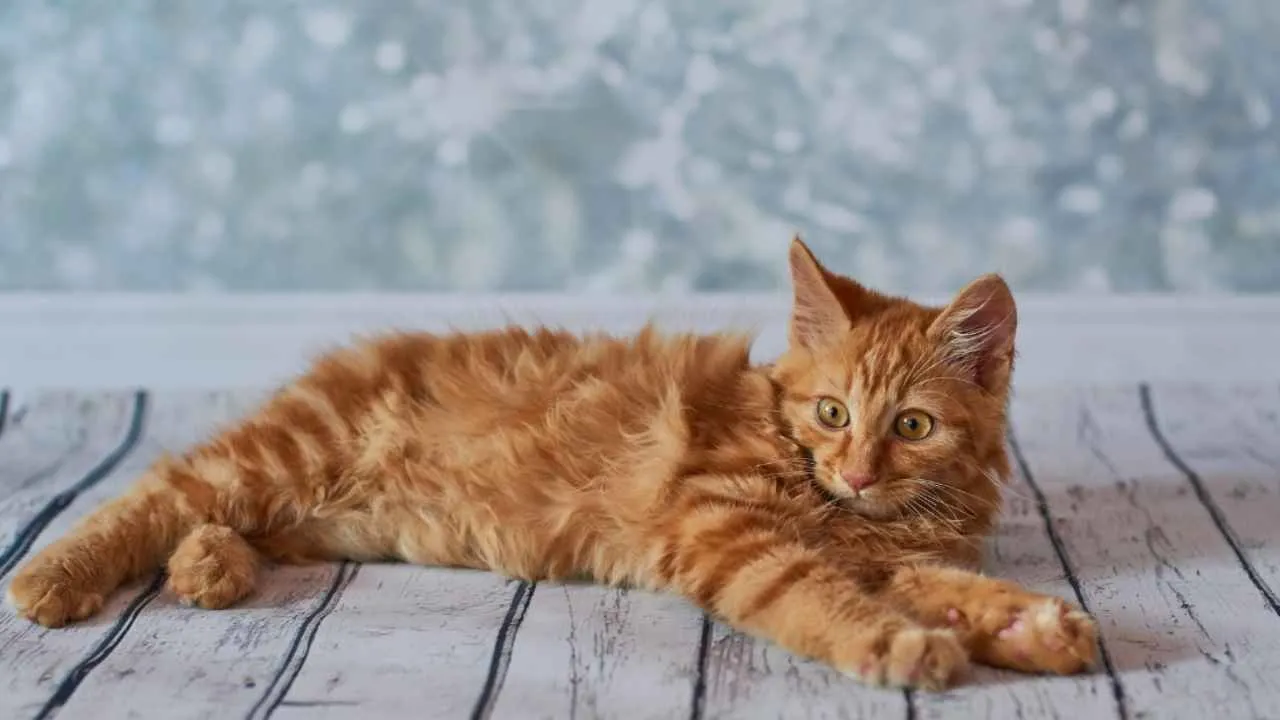
Also known as the American Bobtail Longhair or Shorthair, this breed is instantly recognized by its naturally short and expressive tail\.
According to PetMD, the American Bobtail is a fairly long, well-built cat. Despite old legends linking it to wild bobcats, the American Bobtail is fully domestic and known for its intelligence and adaptability.
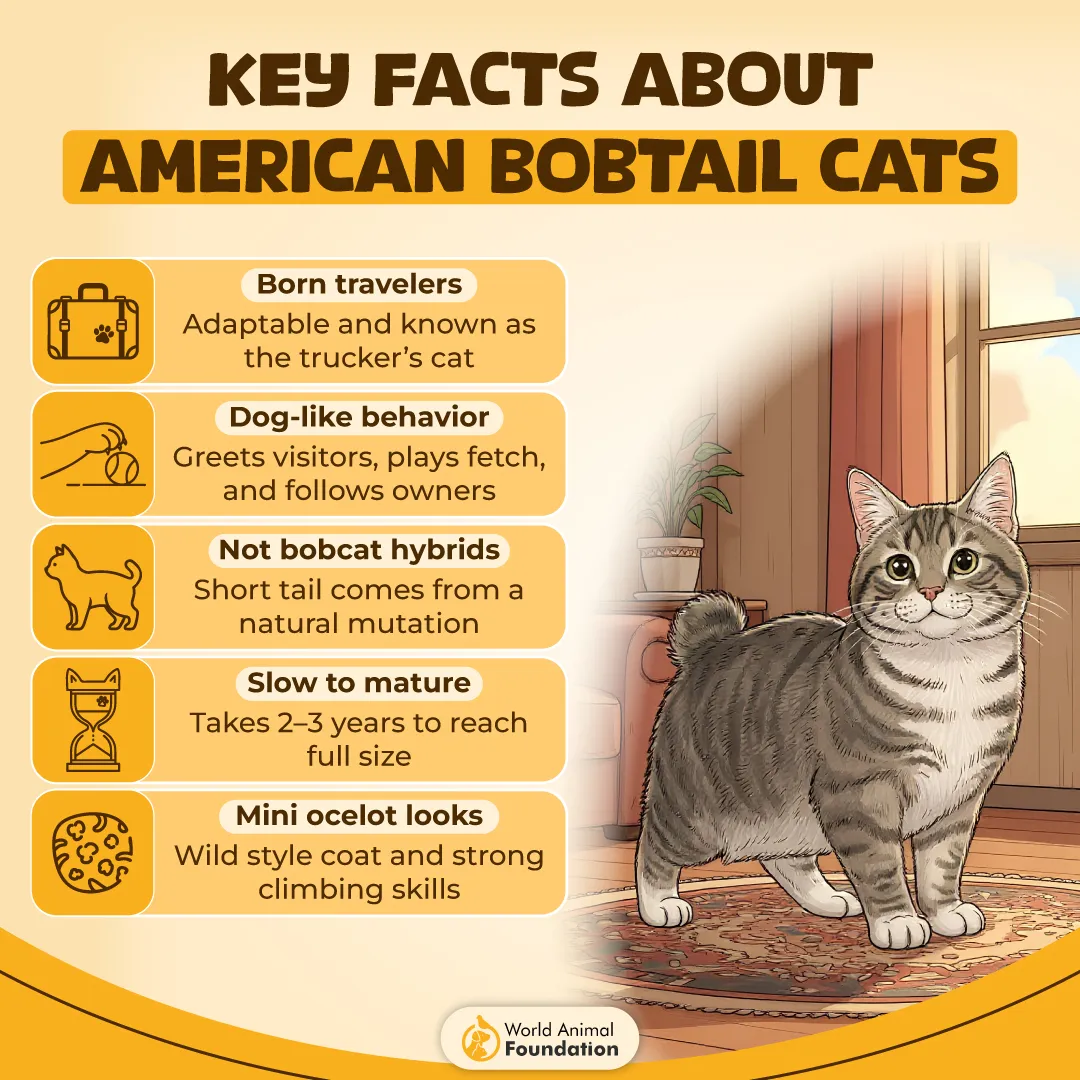
The breed’s bobbed tail is the result of a spontaneous genetic mutation within domestic cats, not docking or human intervention. Each tail varies in length and shape—straight, curved, or slightly knotted—making every American Bobtail visually unique.
Understanding the genetics behind naturally short tails helps explain their diversity. The dominant mutation responsible is sometimes associated with the Manx gene, though American Bobtails retain full mobility and balance, unlike some other short-tailed breeds.
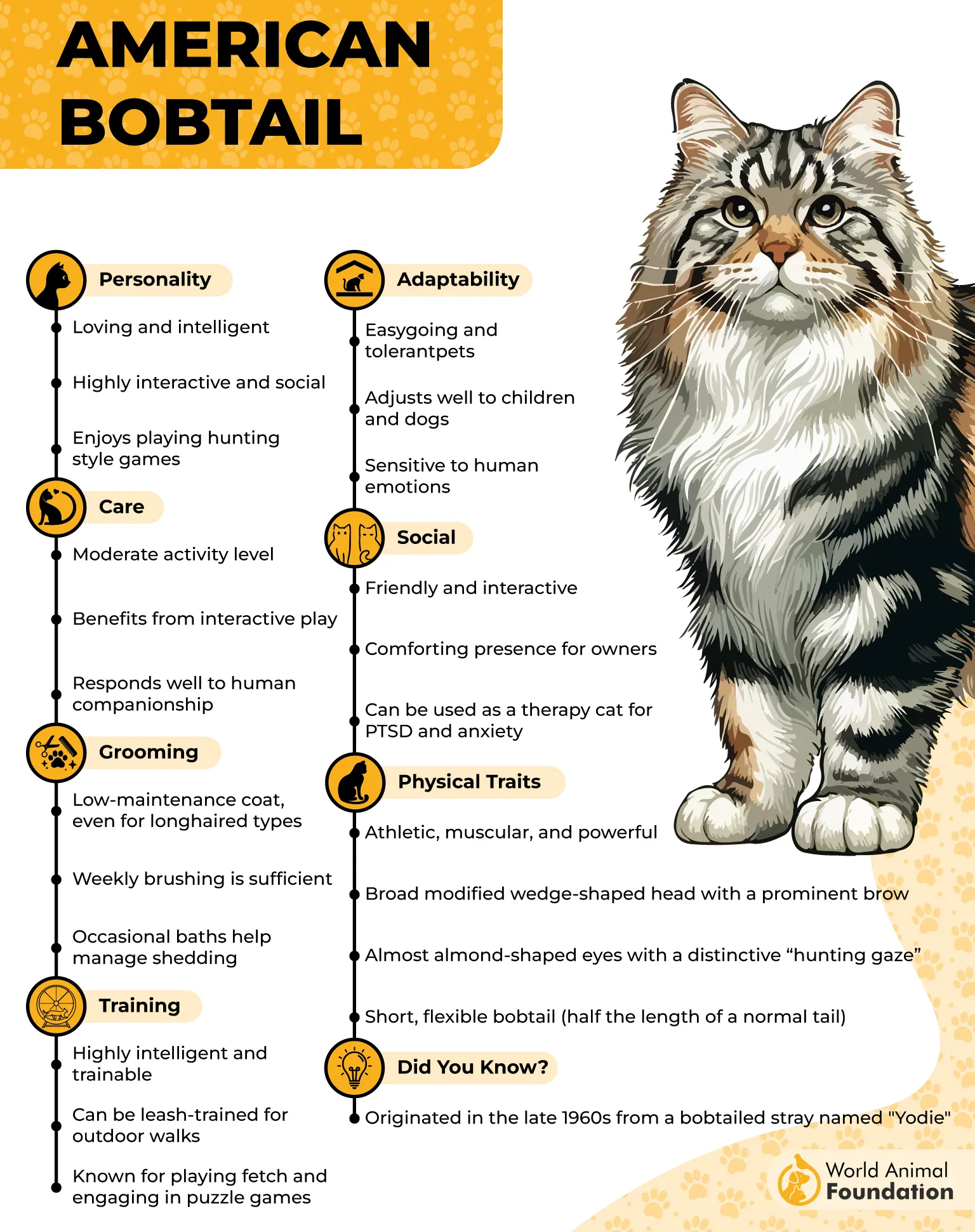
This genetic trait pairs with an engaging personality, as these cats often use tail movements during play and communication.
Fun fact: The American Bobtail breed was officially recognized by The International Cat Association (TICA) in 1989.
3. Kurilian Bobtail
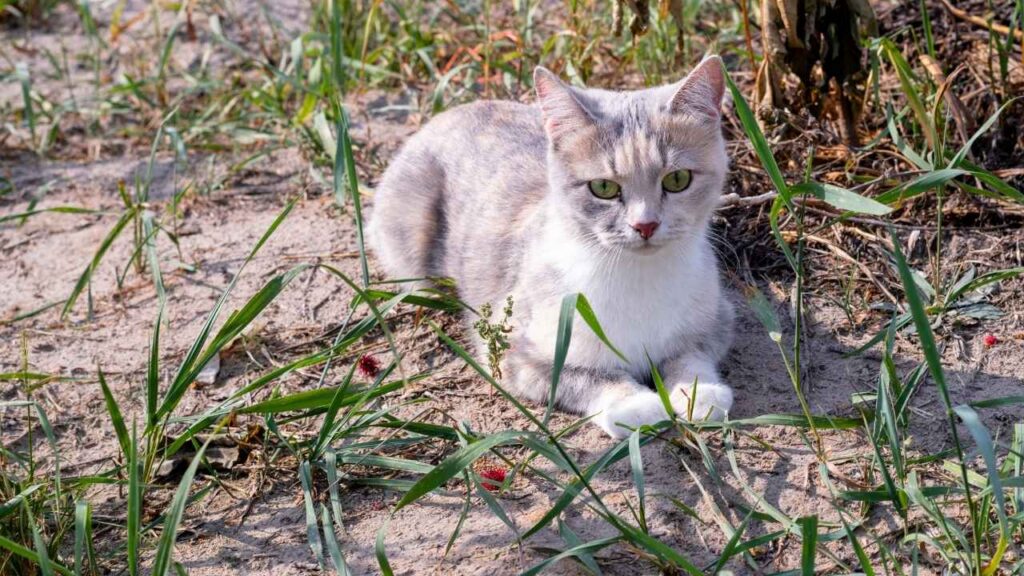
Also known as the Kuril Bobtail, Kuril Islands Bobtail, or Kurilsk Bobtail, this rare Russian breed developed naturally on the Kuril Islands and Kamchatka Peninsula.
According to WebMD, Kurilian Bobtails are gentle and curious cats. It’s instantly recognizable by its fluffy pom-pom tail and sturdy, semi-cobby build that gives it a wildcat look.
The breed’s signature bobbed tail is completely natural and varies in shape and length, with each tail uniquely kinked or curved. These tails move expressively, adding to the Kurilian’s communicative body language and balanced, athletic motion.
Despite their rugged appearance, Kurilian Bobtails are affectionate and mild-mannered. Living with a bobtailed cat like this means enjoying playful energy paired with a calm, sociable temperament that adapts easily to family life.
Often compared to the American Bobtail for its wild looks and gentle nature, the Kurilian offers both beauty and companionship.
Fun fact: The Kurilian Bobtail’s tail typically contains only 2 to 10 vertebrae, giving every cat a one-of-a-kind pom-pom shape.
4. Manx
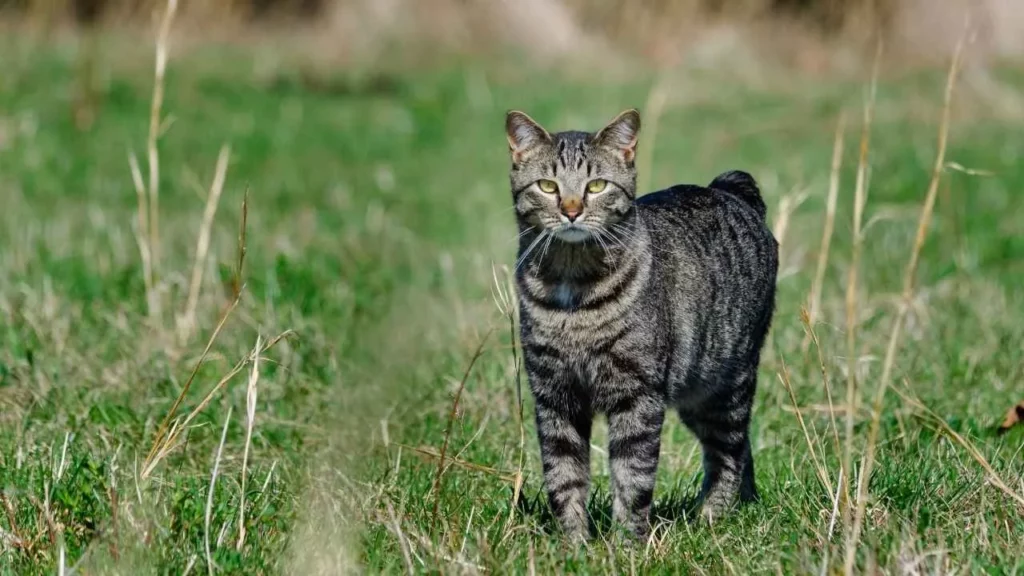
Also known as the Stubbin or Rumpy cat, the Manx originated on the Isle of Man in the early 19th century and is famous for its naturally bobbed or absent tail. This distinctive trait comes from a genetic mutation that spread quickly across the island’s cat population.
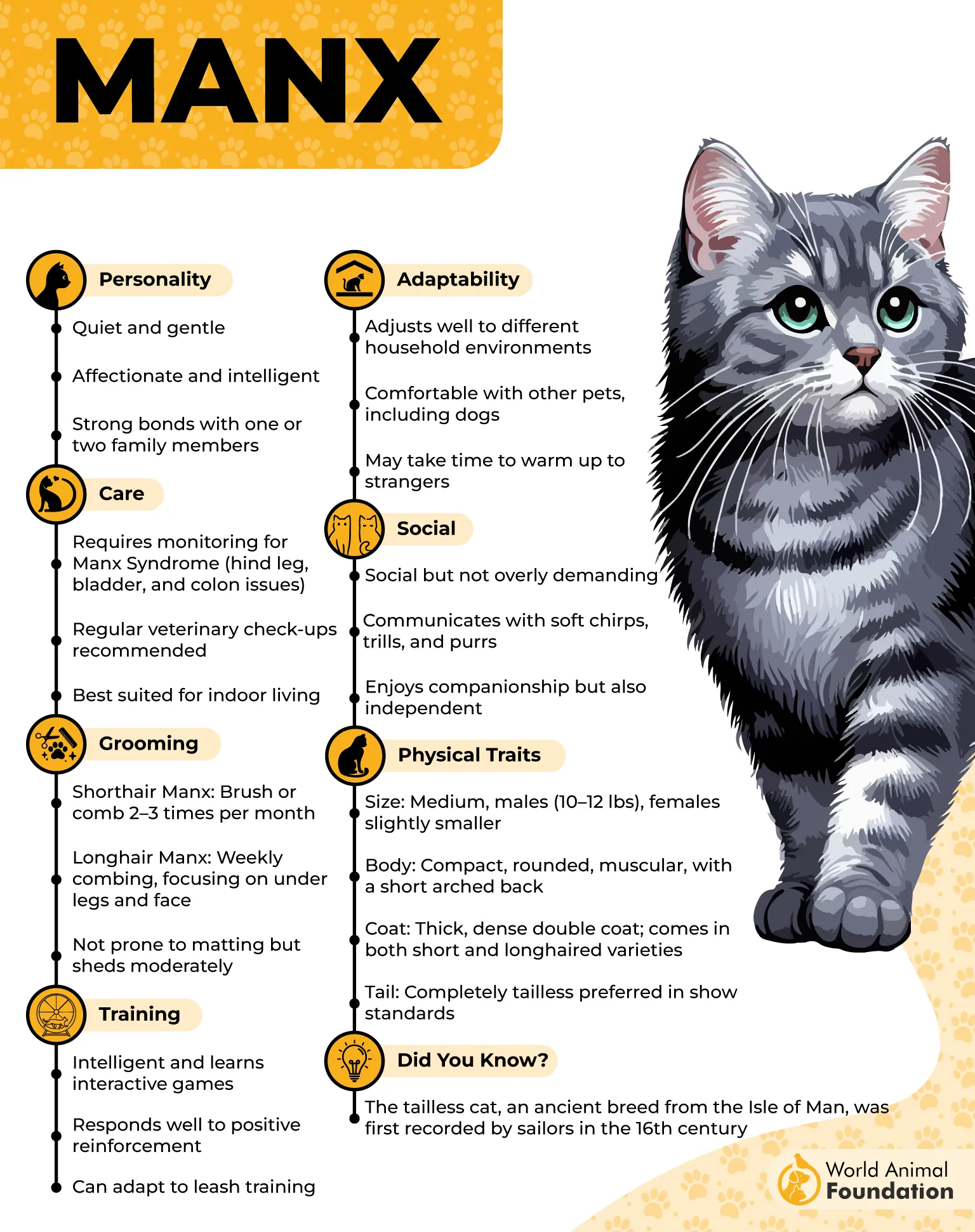
The Manx tail can range from a small stump to being completely tailless, and this variation affects how the cat moves and balances. Their strong hind legs and rounded bodies give them a powerful, hopping gait that highlights their unique silhouette.
Beyond appearance, the Manx is widely admired for its hunting ability, often compared to skilled working cats. Much like other bobtailed hunters, they are alert, energetic, and highly effective at controlling pests, making them valued companions on farms and ships.
Living with a Manx means sharing space with a loyal, communicative cat that bonds deeply with its family.
Fun fact: the same genetic mutation that creates the Manx’s bobbed tail can sometimes affect the spine, which is why responsible breeding and health screening are essential.
5. Pixiebob
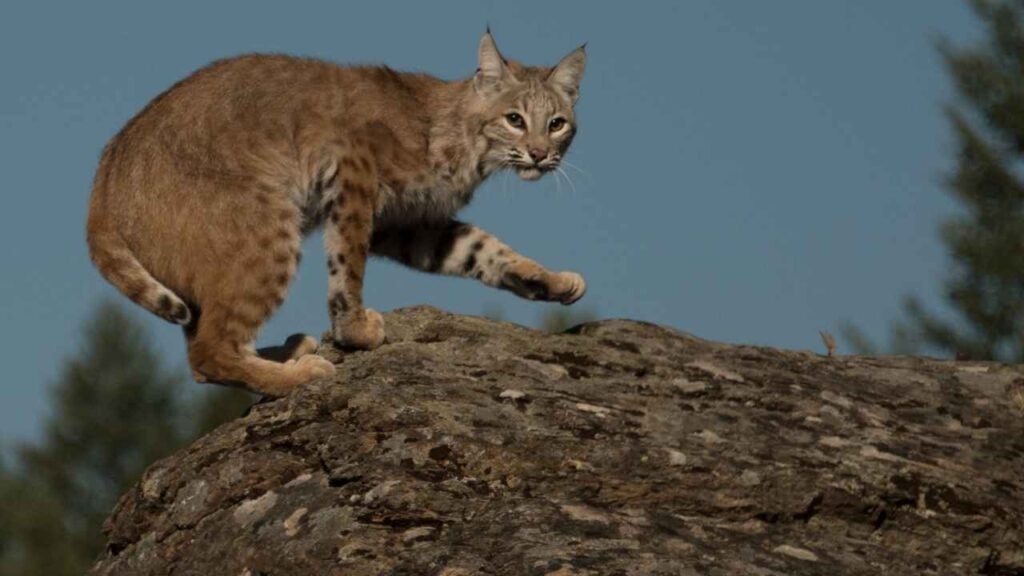
Also known as the Pixiebob cat, this American breed emerged in the mid-1980s and is admired for its naturally bobbed tail, sturdy build, and spotted tabby coat. With a wild, bobcat-like appearance and fully domestic temperament, the Pixiebob stands out among bobbed-tail breeds.
The short tail is a defining trait and varies in length and shape, reinforcing that bobbing is genetic rather than man-made. Combined with features like polydactyl paws and a muscular frame, the Pixiebob’s tail contributes to its balanced movement and strong, grounded posture.
When considering bobbed-tail cats, health awareness is essential. Pixiebobs are generally robust but benefit from weight management and regular activity to reduce strain on joints, which can be more noticeable in stockier, short-tailed breeds.
Routine veterinary care helps address breed-related concerns early and supports long-term well-being.
Fact: Pixiebobs typically weigh between 8 and 17 pounds and were recognized by The International Cat Association (TICA) for exhibition status in 1993.
6. Mekong Bobtail
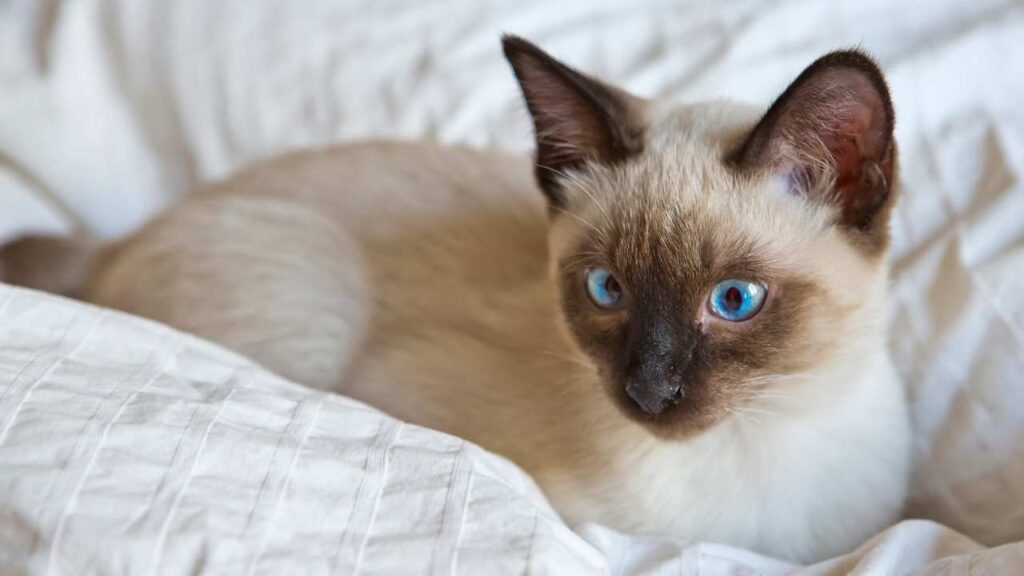
Also known previously as the Thai Bobtail, the Mekong Bobtail is a distinctive breed recognized for its naturally kinked, bobbed tail and elegant Southeast Asian heritage. Developed and refined in Russia, this cat’s short tail varies in curves and angles, making each one unique.
Like many bobtail breeds, the Mekong Bobtail is highly intelligent and thrives on interaction. These cats are mentally active and curious, often following their owners from room to room and using their expressive tails to signal excitement, impatience, or interest.
Bobtail breeds are rarely quiet observers, and the Mekong is no exception. Vocal, playful, and eager for engagement, they enjoy puzzle toys, trick training, and interactive games that challenge both mind and body, reflecting the alert nature common among bobtailed cats.
Social by temperament, Mekong Bobtails typically bond closely with people and other pets, preferring busy households over solitude.
Fun fact: in the 19th century, cats with kinked tails resembling today’s Mekong Bobtail were gifted to Russian emperor Nicholas II by the king of Siam.
7. Cymric Cat
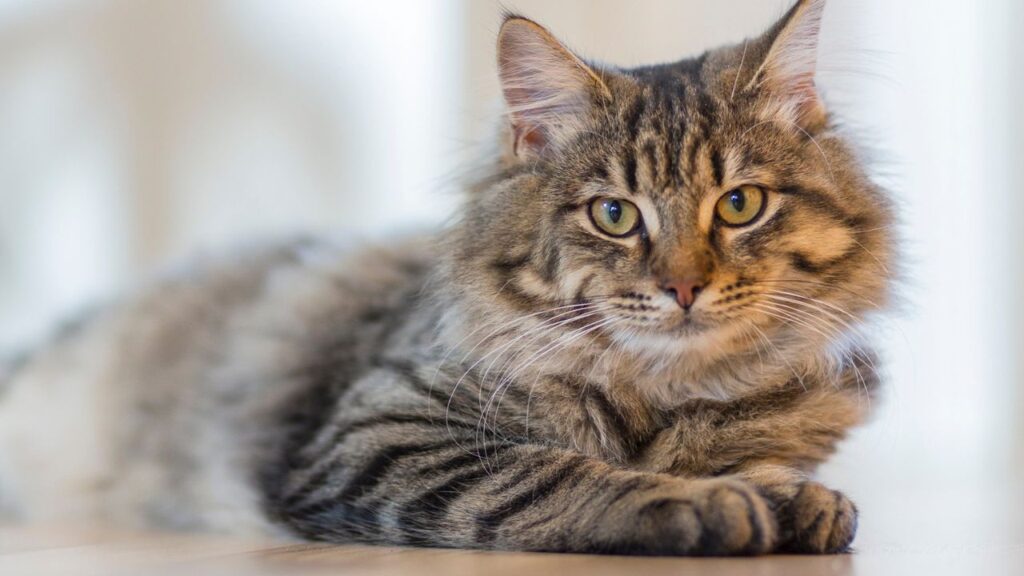
Also known as the Longhaired Manx, the Cymric cat is recognized for its compact build, round features, and plush semi-long coat. Originating from the Isle of Man lineage, this breed is defined by its naturally bobbed or entirely absent tail, a genetic trait rather than human alteration.
Cymric cats display several tail variations, ranging from completely tailless “rumpy” types to short, stubby versions. These shortened tails influence how they move, often giving them a rabbit-like hop due to longer hind legs, which owners quickly learn to accommodate at home.
Caring for cats with short or no tails involves supporting their active yet balanced lifestyle. Cymrics are playful, intelligent, and attentive, benefiting from interactive toys, gentle exercise, and environments that allow safe jumping without strain on their spine.
Their dense double coat also requires consistent grooming to prevent matting and maintain comfort. Fun
fact: the Cymric is essentially the longhaired version of the Manx, and many are born completely tailless due to a dominant genetic mutation.
Conclusion
Cat breeds known for their bobbed tails showcase how a naturally occurring genetic mutation can create some of the most unique features in the cat world. Unlike a normal cat’s tail or a full length tail, these breeds display a distinctive short tail, complete lack thereof, or varied tail types such as the rumpy riser.
From natural bobtails that are typically harmless to lines shaped through selective breeding, this tail mutation has produced cats with a somewhat wild appearance, diverse coat color, and striking looks like curled ears.
Whether seen in highlander cats, the long haired version of Manx, or breeds influenced by the desert lynx or highland lynx, these cats form strong bonds with human families.
Some are highly affectionate, enjoy games like play fetch, and coexist peacefully with small animals. While conditions like Manx syndrome require awareness, proper care and grooming needs ensure these remarkable cats thrive.
