




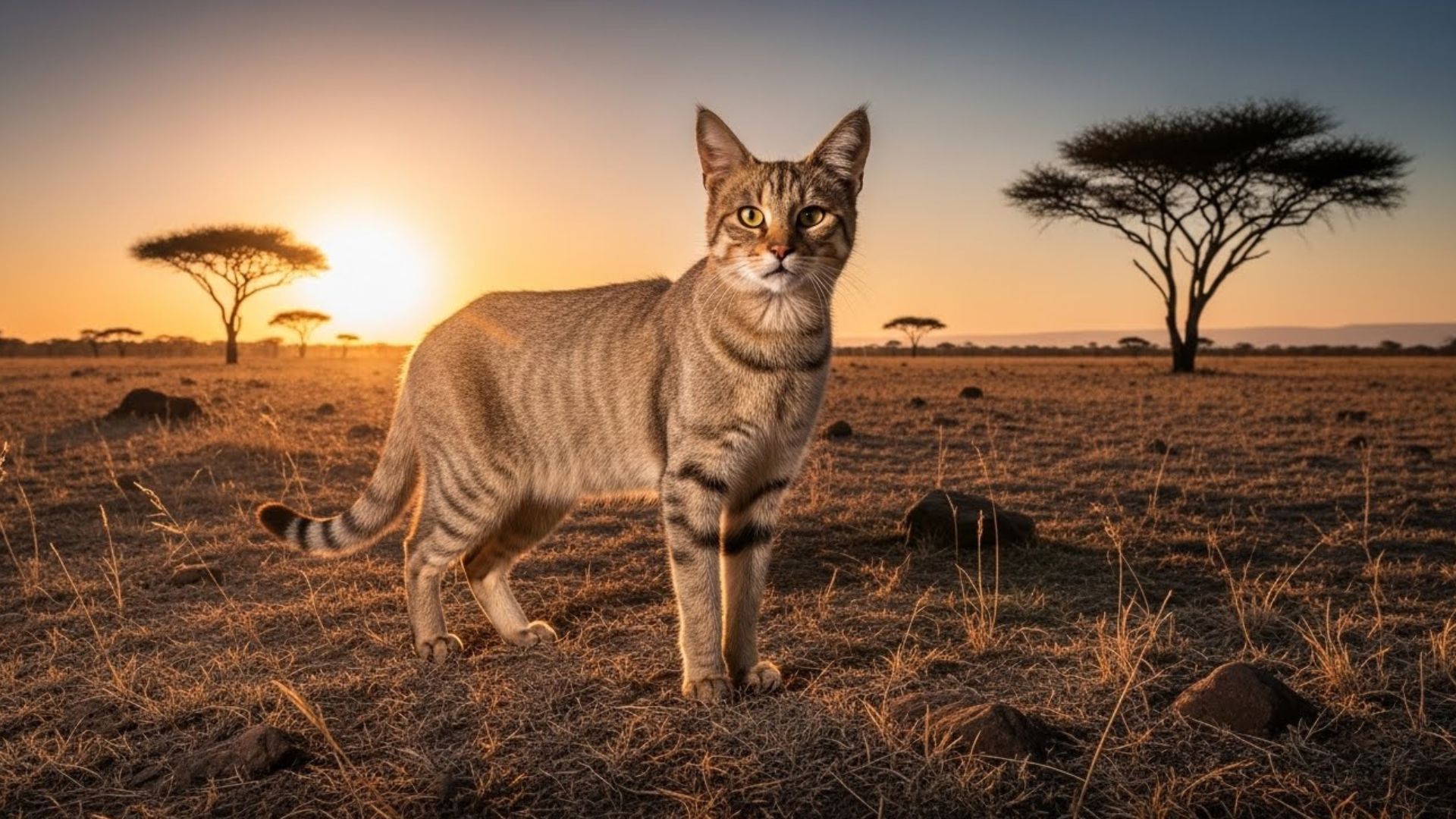
Africa’s diverse landscapes—from vast savannas to dense forests and arid deserts—have produced some of the most unique and fascinating cat breeds in the world. African cats are often agile, intelligent, and built for survival in challenging environments.
Many breeds developed hunting skills, strong instincts, and muscular physiques to thrive alongside wildlife and harsh climates. These cats often carry traits of resilience, adaptability, and intelligence, making them both captivating companions and extraordinary hunters.
While their appearance may hint at wild ancestry, many African cat breeds are affectionate and loyal in homes, offering a perfect mix of exotic charm and companionship.
Here, we’ll explore African cat breeds, uncovering their origins, distinctive features, and what makes them such intriguing and beloved feline companions worldwide.
Fun Fact: Breeds like the Egyptian Mau and Abyssinian originated in Africa. Their spotted or sleek coats helped them camouflage while hunting in savannas, and their agile, athletic builds make them excellent hunters.
Cat Breeds from Africa
1. Egyptian Mau
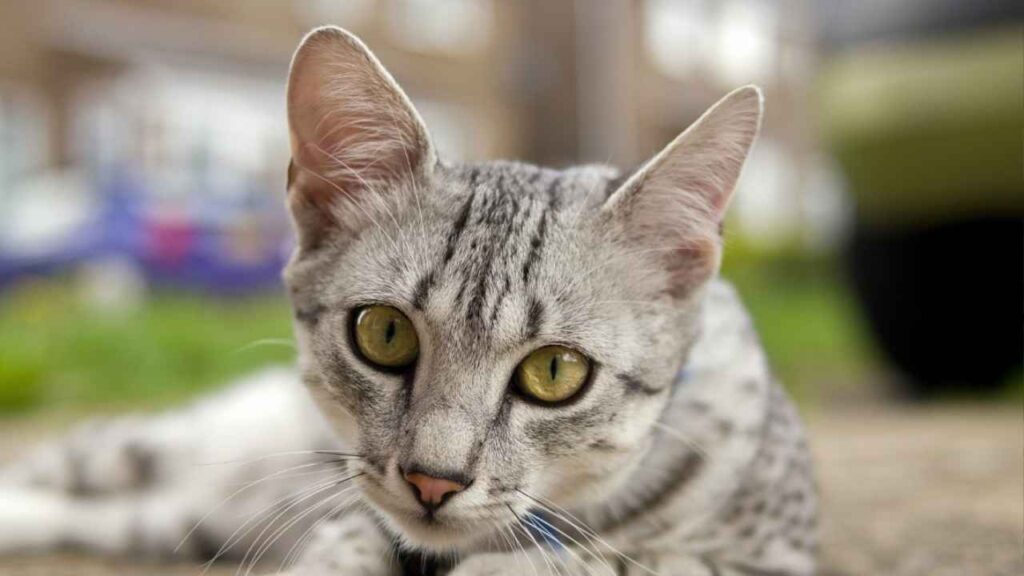
The Egyptian Mau is a cat that seems to have stepped right out of an ancient pharaoh’s palace and into your living room. WebMD says the name “Mau” means cat or sun in ancient Egyptian, so owning one is basically like having a tiny, graceful sun god as a roommate.
Their history alone is enough to make any cat lover swoon—these cats were treasured, admired, and even worshipped by royalty thousands of years ago. What really makes the Egyptian Mau unforgettable is its stunning spotted coat.
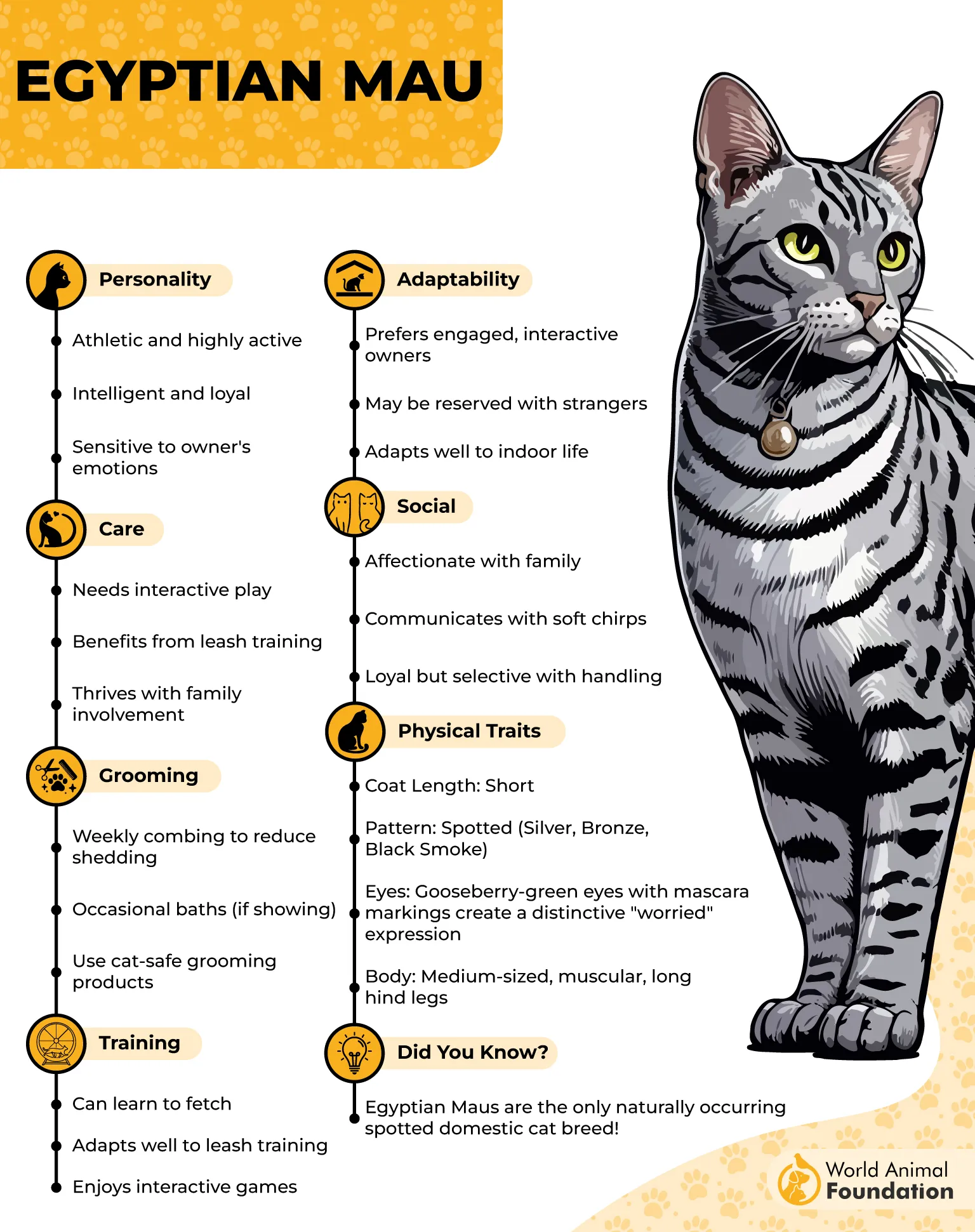
Each Mau’s pattern is completely unique, coming in shades like silver, bronze, black, or even blue-silver and smoky blue. It’s like wearing a designer outfit designed by nature itself—except this one walks, leaps, and occasionally pounces on your toes for fun.
When it comes to personality, Maus are a delightful mix of cautious and fearless. Around strangers, they might appear shy or skeptical, but once they feel comfortable, they become playful acrobats who can sprint across the room faster than you can blink.
Unique spotted coats: Each Mau is a living piece of art.
Personality with flair: Shy at first, then fearless, playful, and full of energy.
Devoted companion: Often forms a special bond with one lucky human.
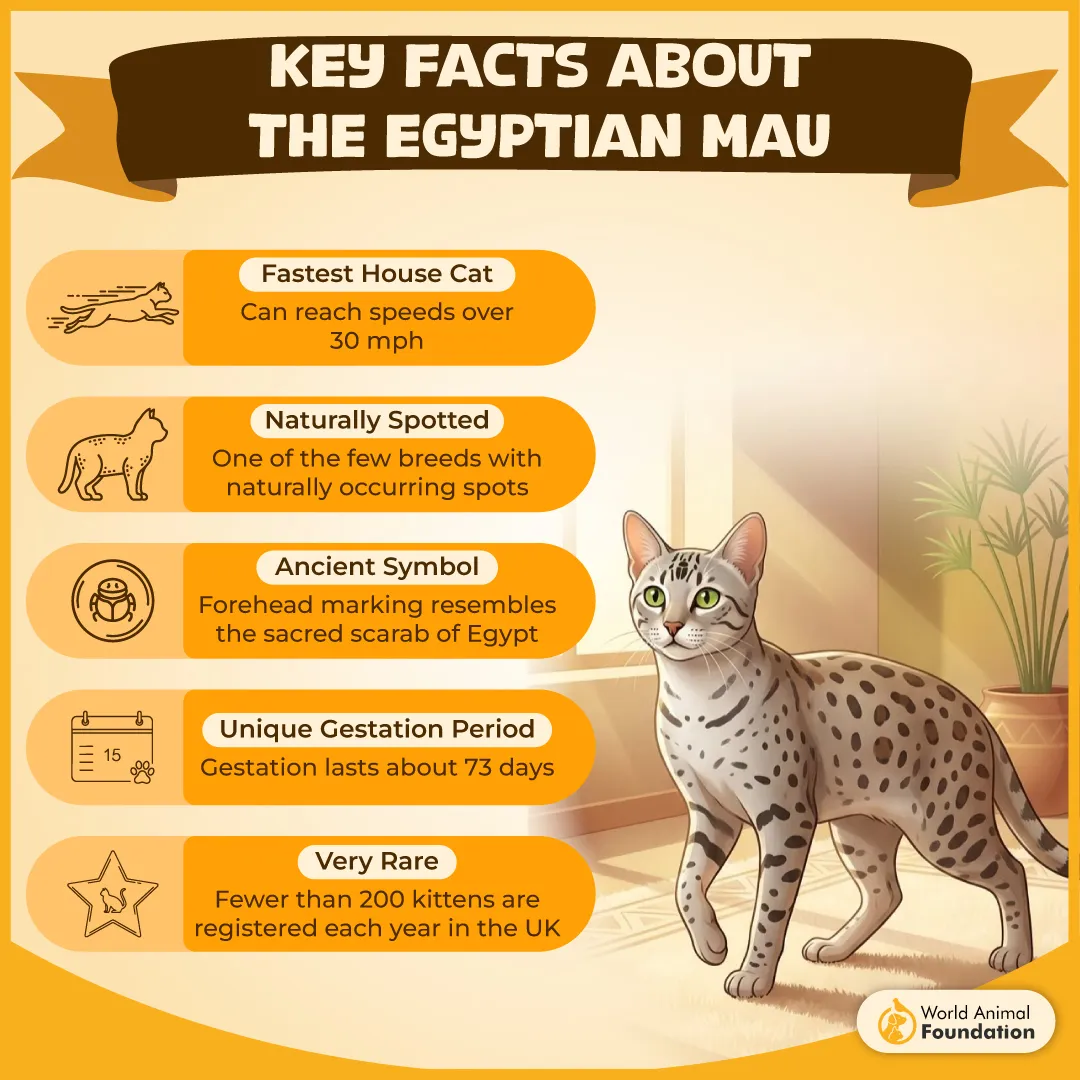
Despite their independent streak, they are incredibly loyal—often choosing one special person to adore and follow around, showering them with affection and gentle reminders of who really rules the household.
In short, the Egyptian Mau isn’t just a cat—it’s a royal, agile, and affectionate bundle of personality, blending centuries of history with the energy and charm of a modern feline friend.
2. Abyssinian
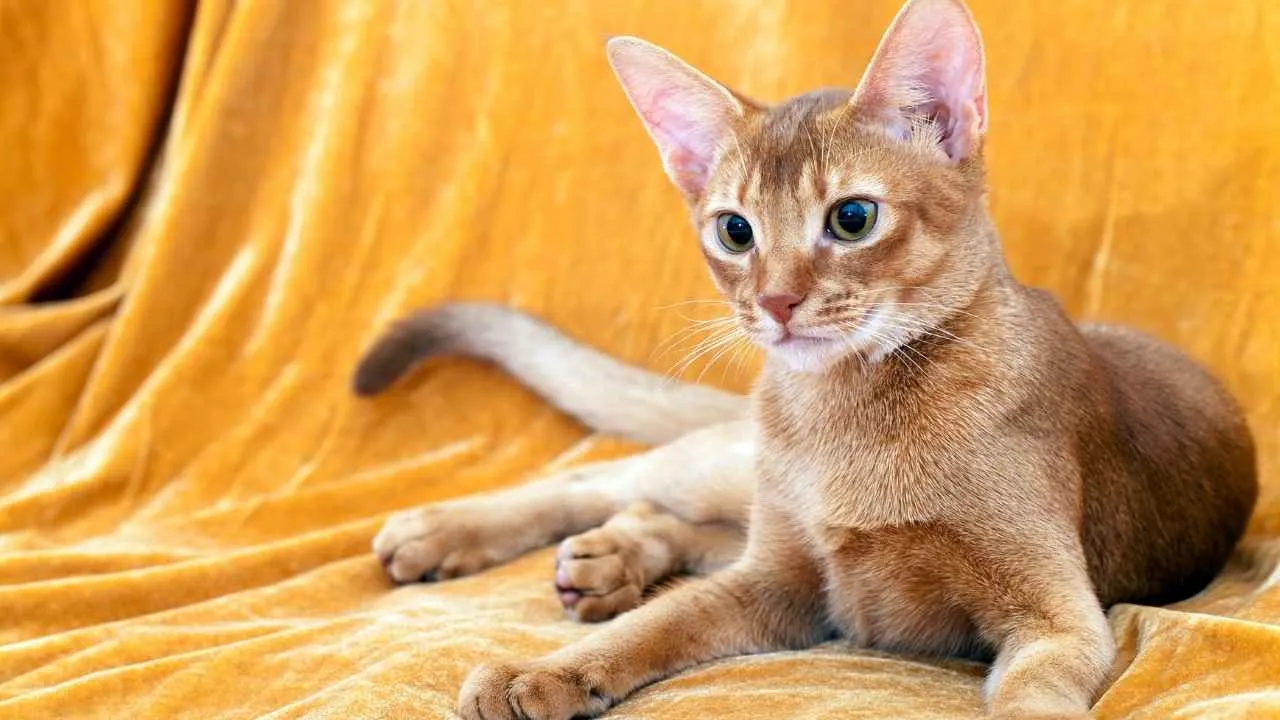
The Abyssinian is like the gymnast of the cat world—graceful, athletic, and endlessly curious. Legend has it that this breed hails from the ancient kingdom of Abyssinia (modern-day Ethiopia), giving it a history as rich as its striking coat.
With its slender, muscular build and large, expressive eyes, the Abyssinian seems to always be ready for action… or plotting the next household adventure. One of the most captivating features of the Abyssinian is its “ticked” coat. Unlike solid-colored cats, each hair has multiple bands of color, giving the fur a glowing, sun-kissed appearance.
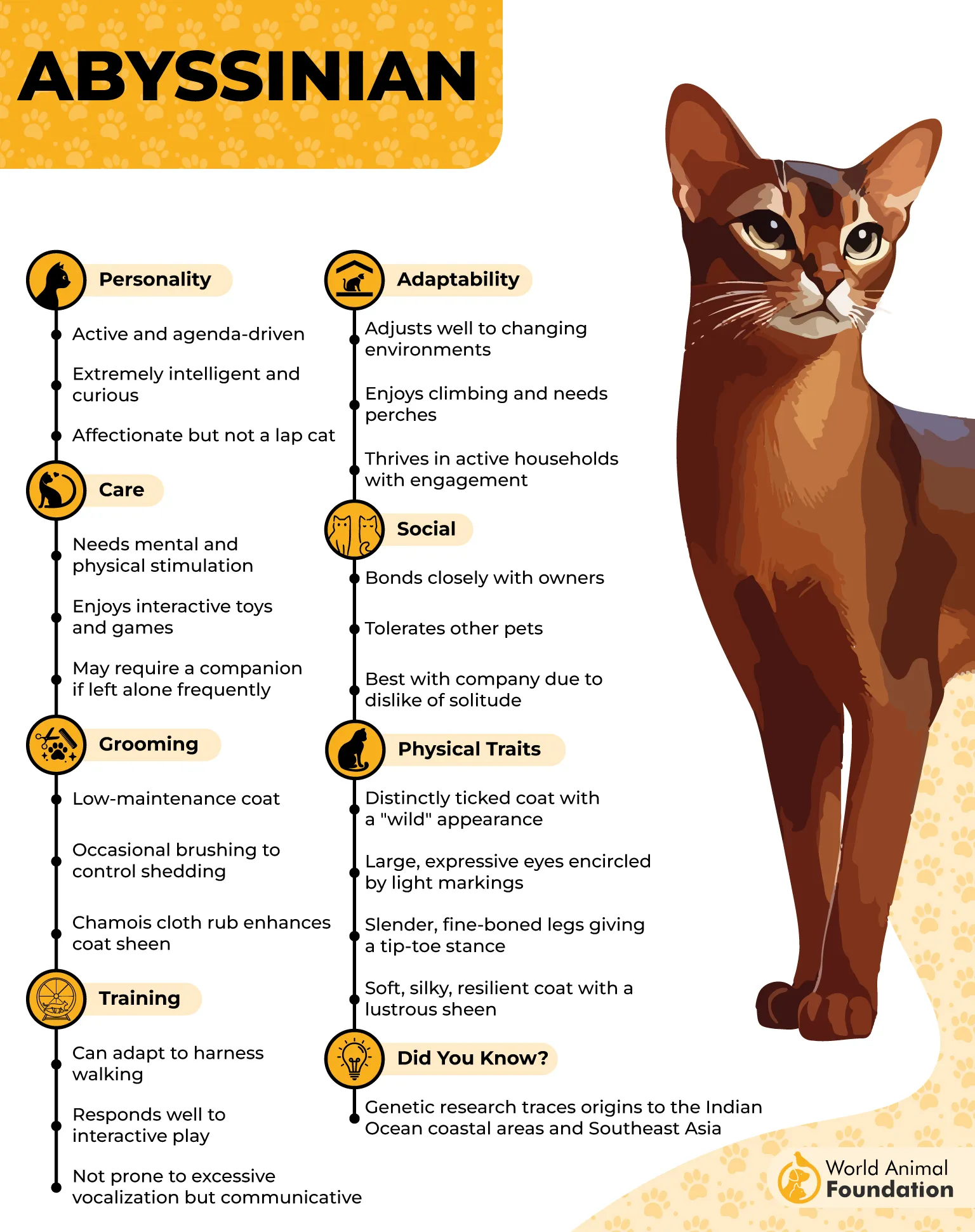
Shades range from ruddy and red to fawn and blue, making them look like a tiny sunrise on four legs. It’s elegant, exotic, and almost hypnotic to watch them move.
Abyssinians are known for their boundless energy and curiosity. They’re the kind of cats that might climb your bookshelves just to see the world from a new angle—or attempt to “help” you with whatever you’re doing, whether it’s cooking, typing, or yoga.
Ticked coat brilliance: Each hair is multicolored, creating a glowing, sun-kissed look.
Curious and playful: A natural explorer who turns your home into a playground.
Social but independent: Loves family interaction but keeps its graceful, agile independence.
Despite their high-octane personalities, Abyssinians are affectionate and social, forming strong bonds with all family members. They’re not usually lap cats, but they will happily follow you around, chirp at you, and make themselves a part of every daily adventure.
In short, the Abyssinian is a beautiful, intelligent, and endlessly entertaining cat—part athlete, part explorer, and all heart. Bring one home, and you’ll quickly realize life is never dull with this little acrobat around.
3. Somali
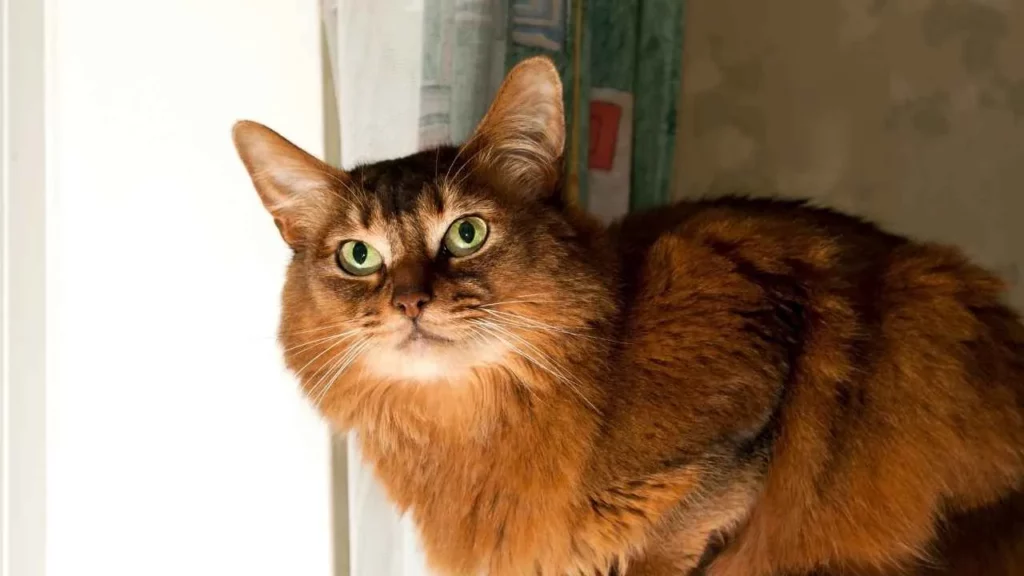
The Somali cat is basically what happens when an Abyssinian decides to go glamorous—long-haired, graceful, and impossibly striking. First appearing in Australian cat shows in 1965 as “long-haired Abyssinians,” Somalis quickly stole the spotlight with their glowing, ticked coats.
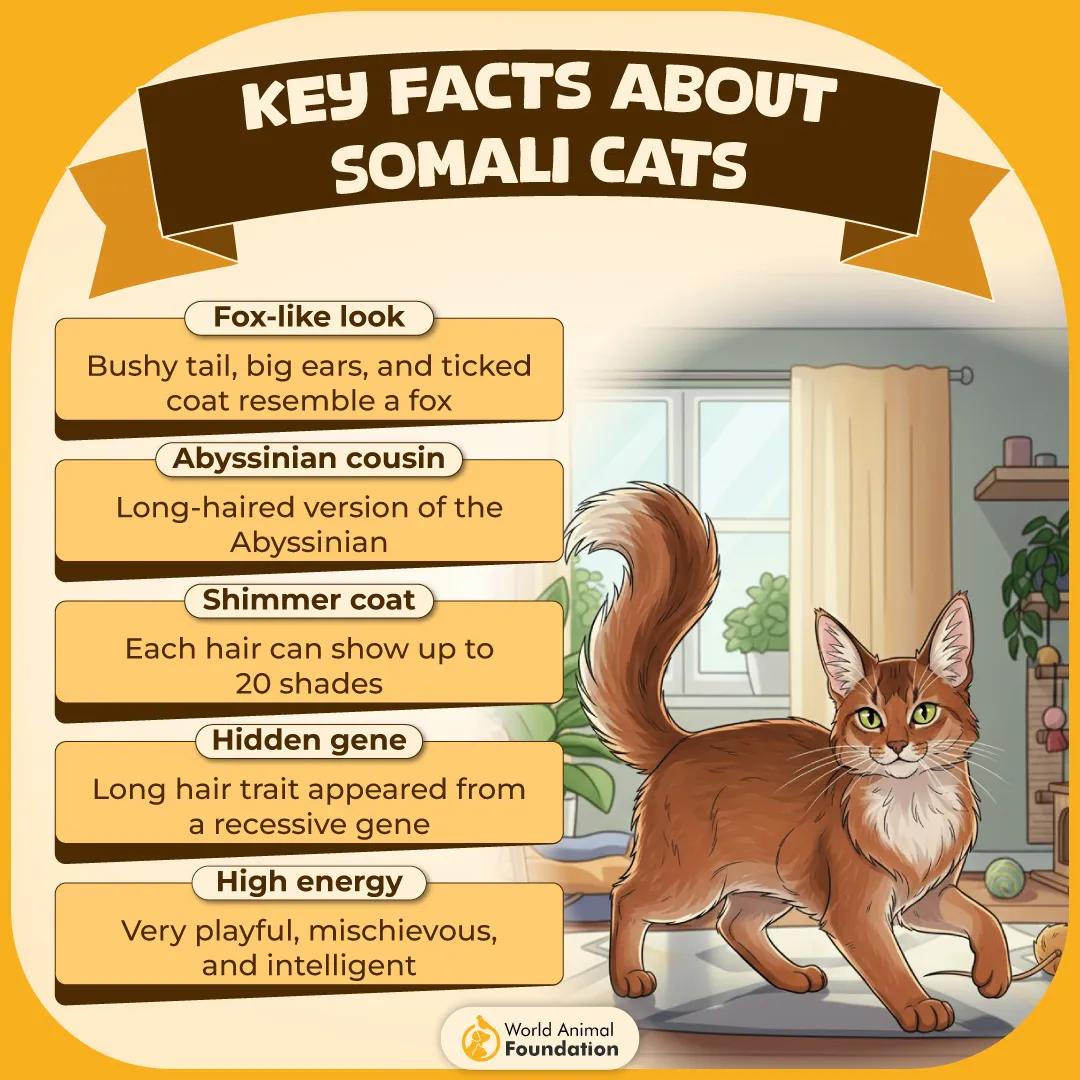
With their fluffy tails and fox-like appearance, it’s easy to see why they’re often called “the little fox of the cat world.” PetMD noted Somalis are social butterflies with a high-energy streak. They want to be involved in everything you do—but on their terms.
You might find them perched elegantly on a shelf, zipping across the room chasing a toy, or casually hanging out on your shoulder while you cook. While they’re not typically lap cats, they insist on being close by, always keeping a curious eye on family activities.
Glowing, ticked coat: Shades of ruddy, cinnamon, blue, fawn, chocolate, or lilac—like a tiny fox in your home.
Social and high-energy: Always involved, curious, and sometimes hilariously persistent.
Playful and intelligent: Needs daily interaction and stimulation—catnip alone won’t satisfy them.
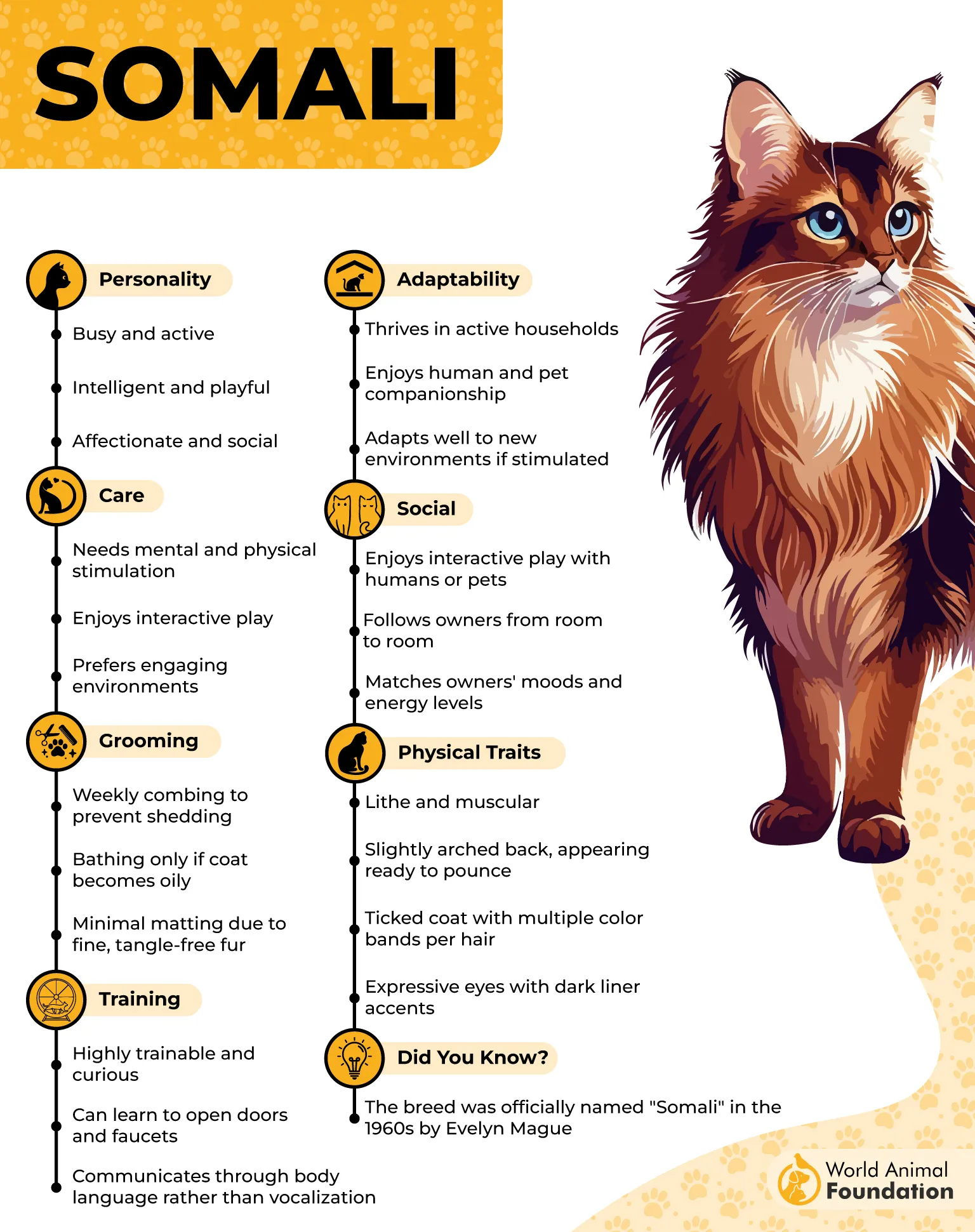
These cats are inquisitive, intelligent, and playful, and they require plenty of mental and physical stimulation to stay happy. A few catnip toys won’t cut it—Somalis want interaction, games, and adventures every day.
If you’re ready to engage with a feline friend who’s full of personality, energy, and a touch of mischievous charm, a Somali is the perfect companion.
4. African Wild Cat
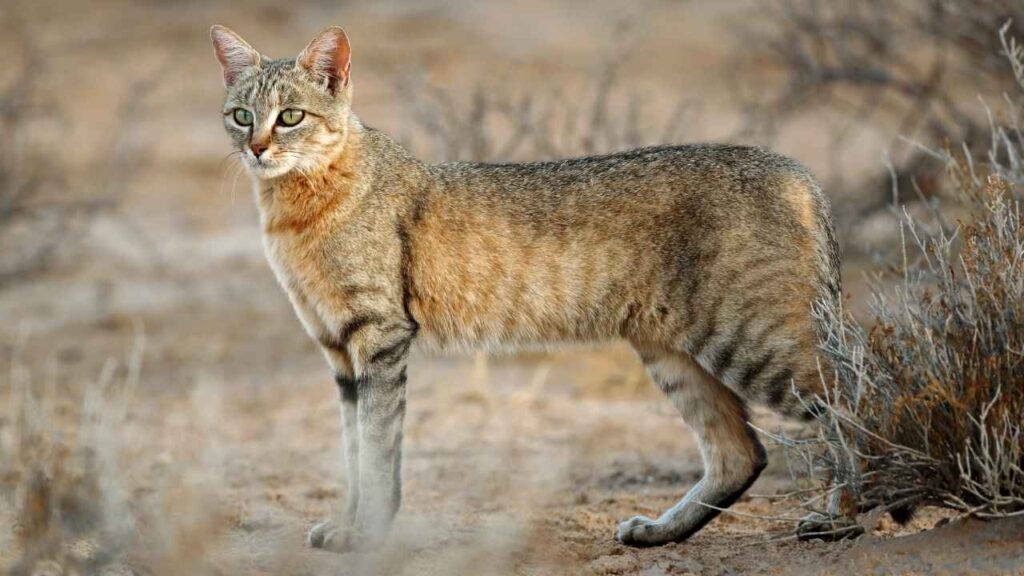
Before there were Egyptian Maus or Abyssinians, there was the African Wild Cat—the original feline of the savannas. These cats, often striped or spotted in sandy colors, live across most of Africa and are incredibly adaptable and independent.
While they might look like your typical house cat at first glance, they are wild through and through, with sharp instincts, keen senses, and a mysterious aura that hints at their ancient lineage.
Interestingly, the African Wild Cat is believed to be the ancestor of almost all domestic cats today. So when your house cat stares at you with those calculating eyes, remember—they come from a line of skilled hunters who survived in the wild for thousands of years.
Ancestral roots: The African Wild Cat is the ancestor of almost all modern domestic cats.
Adaptable and independent: Thrives in deserts, savannas, and semi-arid regions.
Skilled hunter: Uses stealth and agility to catch prey like rodents and birds.
The African Wildcat is a solitary, nocturnal hunter, prowling the savannas and semi-arid regions under the cover of darkness. Preferring to hunt alone, it relies on its keen senses of sight and hearing to locate prey, which mainly includes small mammals like mice and rats, as well as birds.
5. Serval
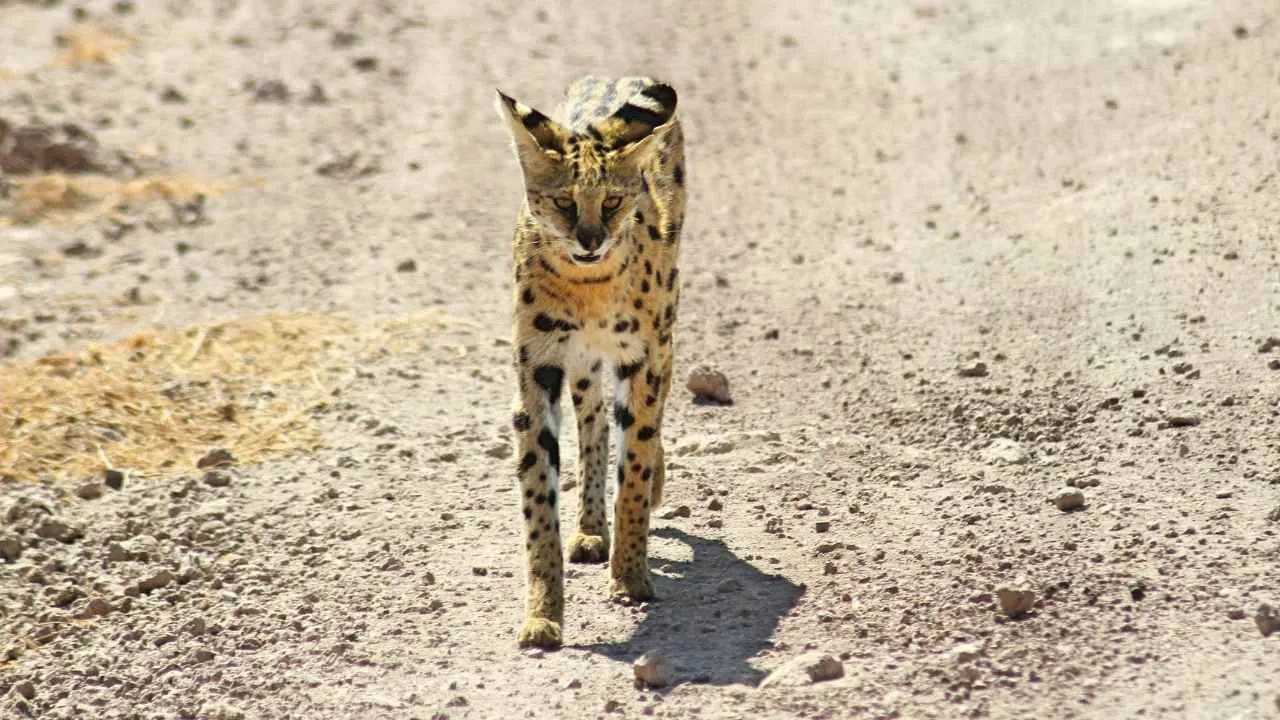
The Serval is one of Africa’s most striking medium-sized to big cats, instantly recognizable by its long, slender legs, spotted golden coat, and enormous, rounded ears. Those big ears aren’t just for show—they give the serval superb hearing, letting it detect even the faintest rustle of a mouse in tall grass or the flutter of a bird overhead.
Servals are master hunters and acrobats. They can leap up to 10 feet in the air to pounce on prey, and their agility allows them to catch birds mid-flight or snatch small mammals with pinpoint precision.
They are opportunistic feeders, which means they’ll eat whatever they can catch, including rodents, birds, frogs, insects, and even small reptiles. Their hunting skills are so refined that some researchers call the serval the “long-legged cat with a built-in jump boost.”
Long legs and huge ears: Built for stealth, detection, and precise hunting.
Habitat masters: Thrive in wetlands, grasslands, and tall savanna grasses.
Solitary but curious: Intelligent and alert, they carefully observe their surroundings.
In the wild, servals prefer wetlands, savannas, and tall grasslands, where they can use cover to stalk their prey and blend perfectly with their surroundings.
They are mostly solitary creatures, enjoying a wide roaming territory, but they are intelligent and curious, observant of everything happening around them. In protected areas like the Serengeti, you can watch these elegant hunters moving with confidence and grace, a true symbol of African wildlife.
The serval isn’t just a wild cat—it’s a living testament to agility, precision, and beauty. Watching one move is like witnessing a perfectly choreographed dance of predator instincts and raw athleticism.
6. Sand Cat
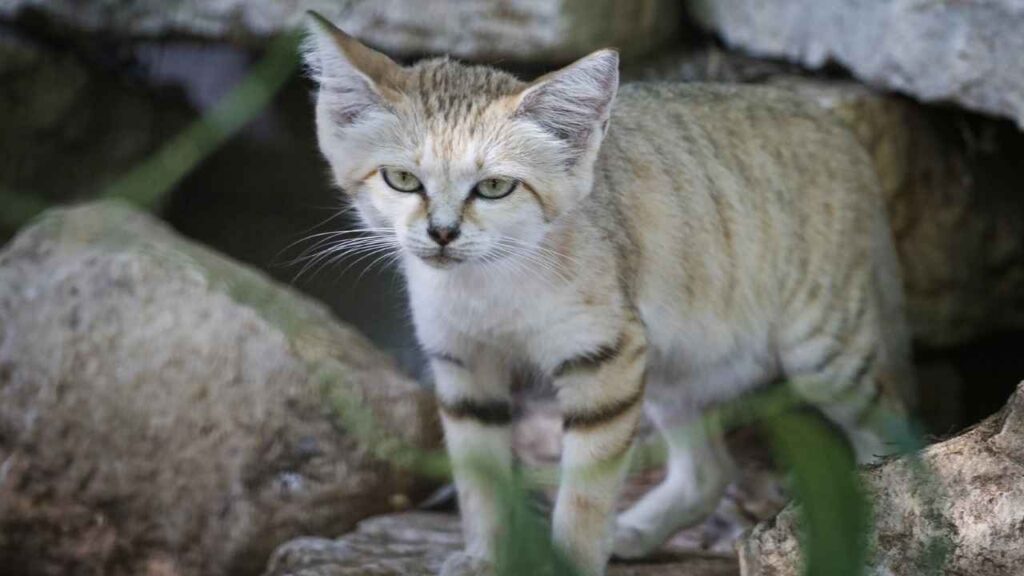
According to Wikipedia, first discovered in 1858 in the Algerian Sahara, sand cats have since been recorded across the deserts of North Africa, the Arabian Peninsula, and Central Asia, including the Karakum Desert. Despite their wide range, these elusive cats are rarely seen, making encounters with them a rare treat for researchers and wildlife enthusiasts.
The Sand Cat (Felis margarita) is a true desert specialist, often called the “ghost of the sands” for its ability to vanish into the dunes and go unnoticed. With sandy to light grey fur, it blends perfectly into the desert environment, making it nearly invisible to both predators and prey.
These small wild cats are compact and perfectly adapted to harsh desert life: their head-and-body, and short, low-set ears that help detect even the tiniest underground movements.
One of the most fascinating adaptations of the sand cat is its padded, fur-covered paws, which insulate against the scorching desert sand and keep it comfortable while moving stealthily across the dunes.
Desert camouflage: Sandy to light grey fur blends perfectly with dunes and stony deserts.
Adapted for harsh climates: Fur on paw soles protects against extreme sand temperatures; low-set ears detect underground prey.
Small but tough: Compact size and independent survival skills allow them to thrive far from water.
Unlike most cats, sand cats can survive far from water sources, getting most of their hydration from the prey they catch, which includes rodents, insects, and lizards.
In short, the Sand Cat is a tiny, resilient desert specialist, perfectly designed for life where few other mammals dare to roam. Silent, elusive, and incredibly well-camouflaged, it’s the ultimate feline desert ghost.
7. Black-Footed Cat
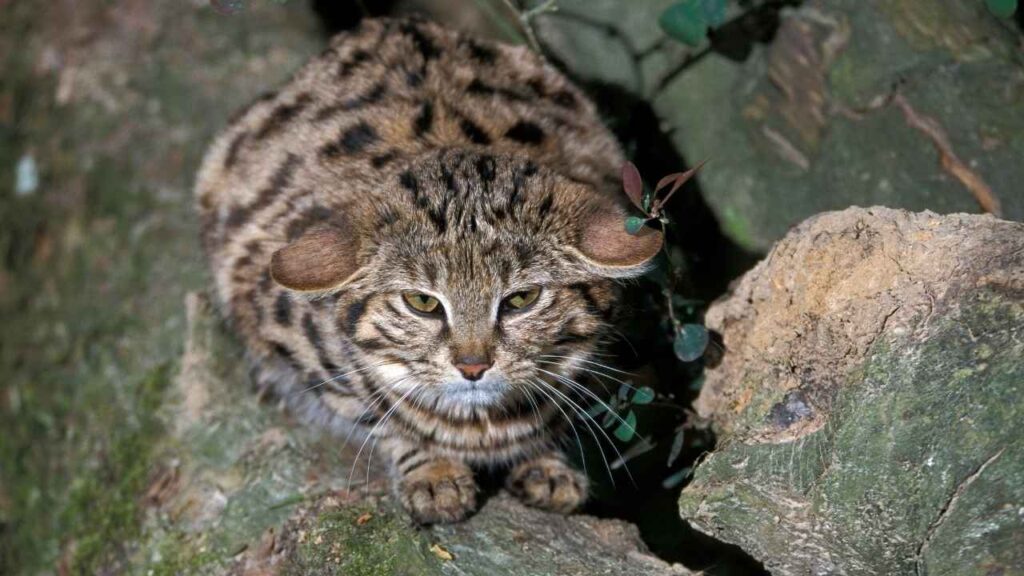
Don’t let its size fool you—the Black-Footed Cat is a pint-sized predator with the heart of a lion. Native to southern Africa, this little cat weighs about the size of a rabbit, but its hunting skills are nothing short of legendary. Under the cover of night, it transforms into a stealthy, almost unstoppable hunter, taking down prey much larger than itself.
These cats are nocturnal ninjas, relying on sharp night vision, acute hearing, and absolute stealth to stalk small mammals, birds, and insects. A single black-footed cat can make 10 to 14 kills per night, earning it a reputation as one of the most efficient hunters in the animal kingdom.
Their hunting style is a combination of patience, speed, and ferocity, making them true marvels of natural adaptation. Black-footed cats thrive in dry, open savannas and grasslands of southern African countries such as Namibia, Botswana, and South Africa, where they expertly blend into their surroundings despite their tiny size.
Tiny but mighty: Weighs only 3–5 pounds, about the size of a rabbit, yet incredibly deadly.
Nighttime predator: Hunts mainly at night, making 10–14 kills per evening.
Savanna specialist: Found in dry grasslands and open savannas of southern Africa.
In the wild, they are solitary, highly territorial, and fiercely independent—but watching them hunt reveals a masterclass in feline skill. The Black-Footed Cat is a small cat with an enormous appetite for hunting, proving that sometimes, the fiercest predators come in the tiniest packages.
Conclusion
Africa is home to a remarkable diversity of cats, ranging from jungle cats and small spotted cats to apex predators like the African lion (Panthera leo) and African leopard. Across West and Central Africa, southern lions and northern lions roam natural habitats, while reed cats and sand cat kittens inhabit desert habitats in northern Africa and the Middle East.
These felids, including the European wildcat and Felis silvestris lybica, are closely related to domestic cousins and contributed to the fully domesticated domestic stock in ancient Egypt.
Known for their solitary nature, agile hunting, excellent night vision, and ability to climb trees, the African cat species hunt small mammals and small rodents with incredible skill, making them some of Africa’s most successful hunters. While some species are of least concern, others face threats from habitat loss and bushmeat hunting, with a few critically endangered.
