




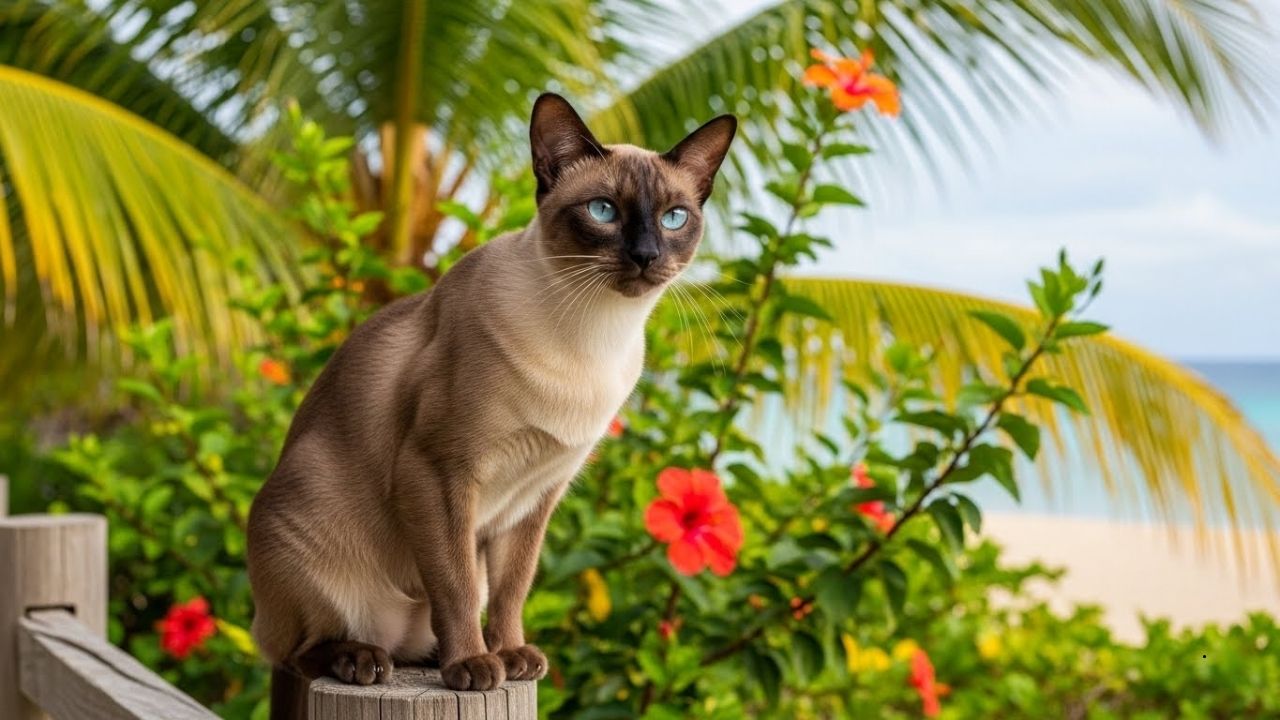
Warm weather can be a big factor when choosing the right feline companion, especially if you live in tropical or consistently hot regions. Cats that come from or are well-adapted to warmer climates often have sleek coats, lean bodies, and personalities that fit sunny homes and active lifestyles.
In this article, you will meet a variety of breeds that not only tolerate heat but seem to thrive in it, offering loving companionship without the discomfort that some long-haired breeds experience in the heat.
Whether you’re in the tropics or just enjoy sunshine year-round, these cats are well-suited to warmer living.
Cat Breeds Adapted to Tropical Climates
1. Siamese
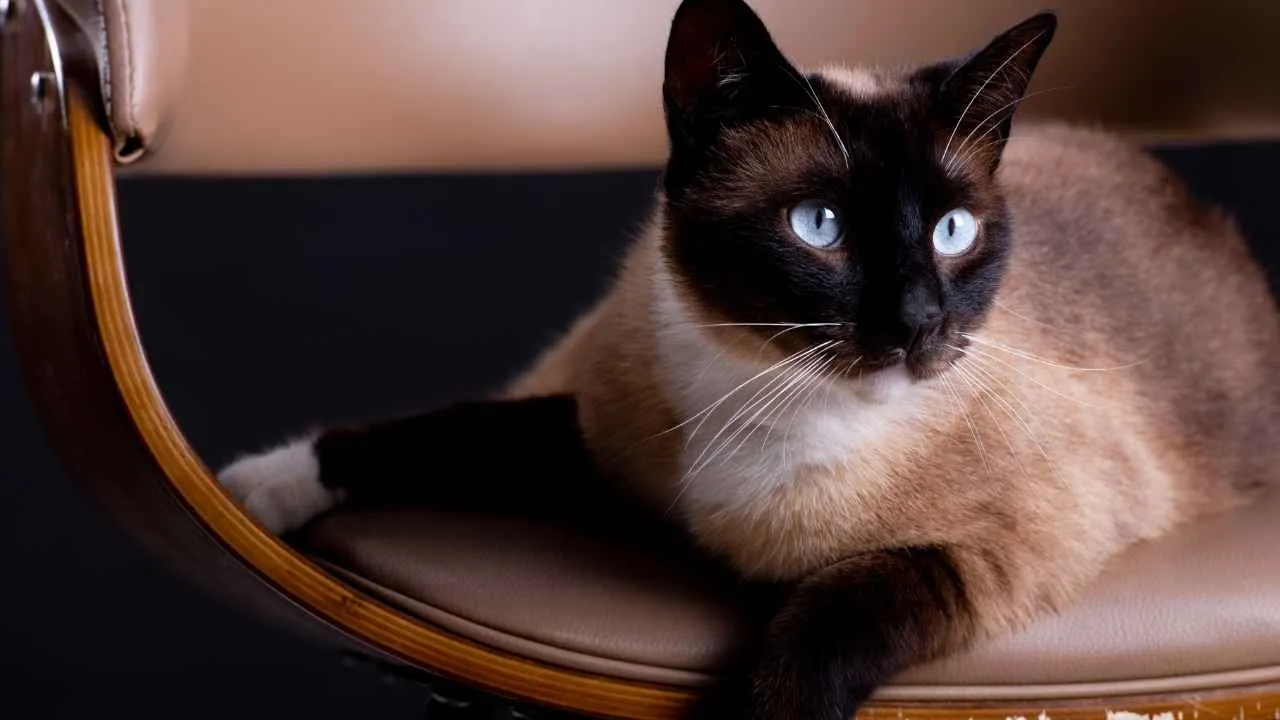
With bright blue eyes and a sleek body, the Siamese is famous for its short coat and darker “points” on the face, ears, legs, and tail. As per Britannica, the breed traces back to Thailand (formerly Siam) and has been admired for its striking look and elegant build.
This is a social cat that prefers a front-row seat to your daily life. Siamese cats are known for being vocal and expressive, often “talking” to their people with a wide range of sounds. They tend to bond closely and may follow you from room to room like a confident little supervisor.
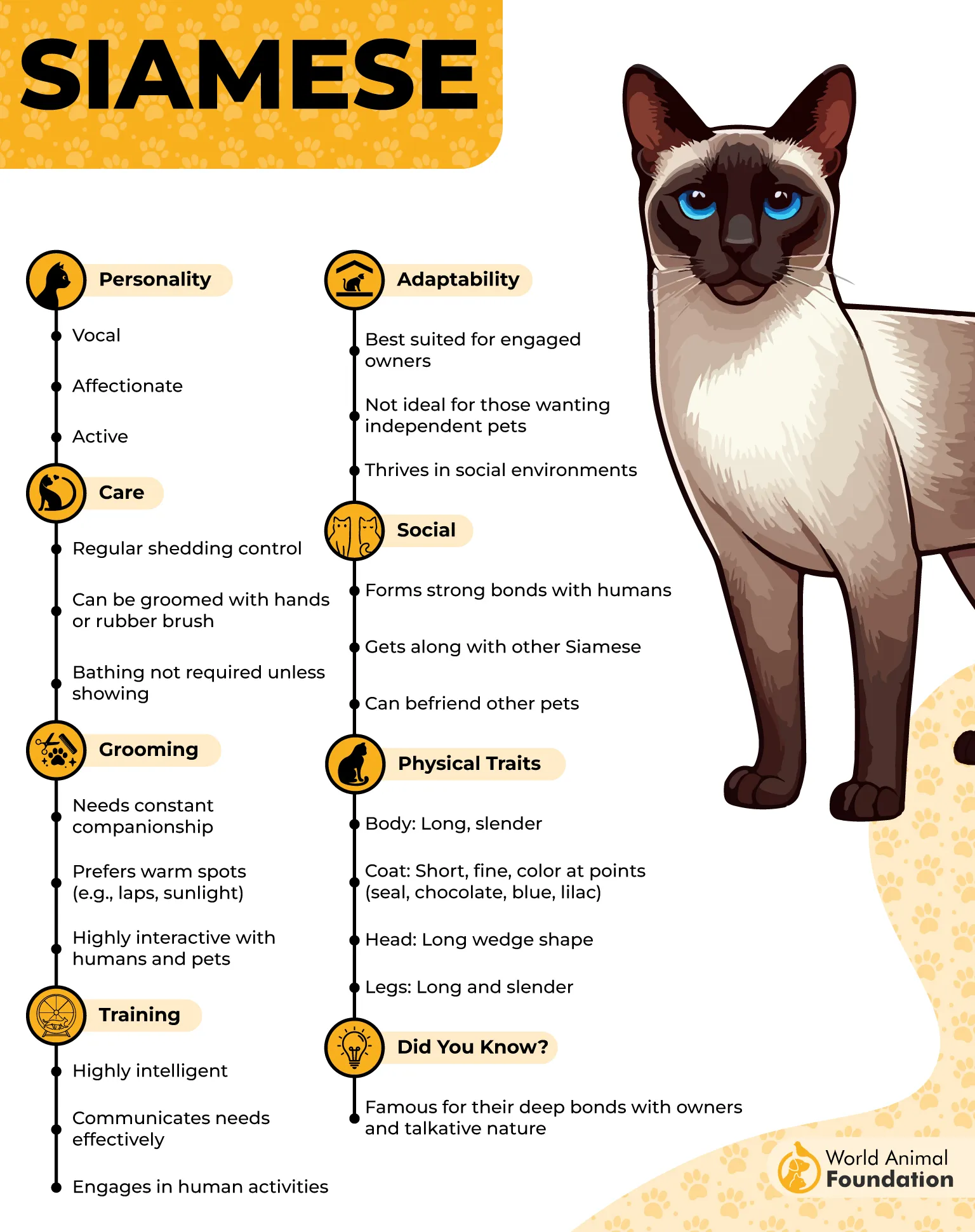
Coat care is simple since the fur is short and lies close to the body, so a quick brush now and then usually does the trick. Their point coloring can shift with temperature, which can make them look a bit different over time. Keep them busy with play and attention, and they’ll reward you with nonstop companionship.
Why This Cat Is a Good Fit
A short coat can feel more comfortable in warm, humid homes.
High-energy play helps them stay happy even when it’s too hot for long outdoor adventures.
A people-loving nature fits households where someone is often around to interact.
2. Oriental Shorthair
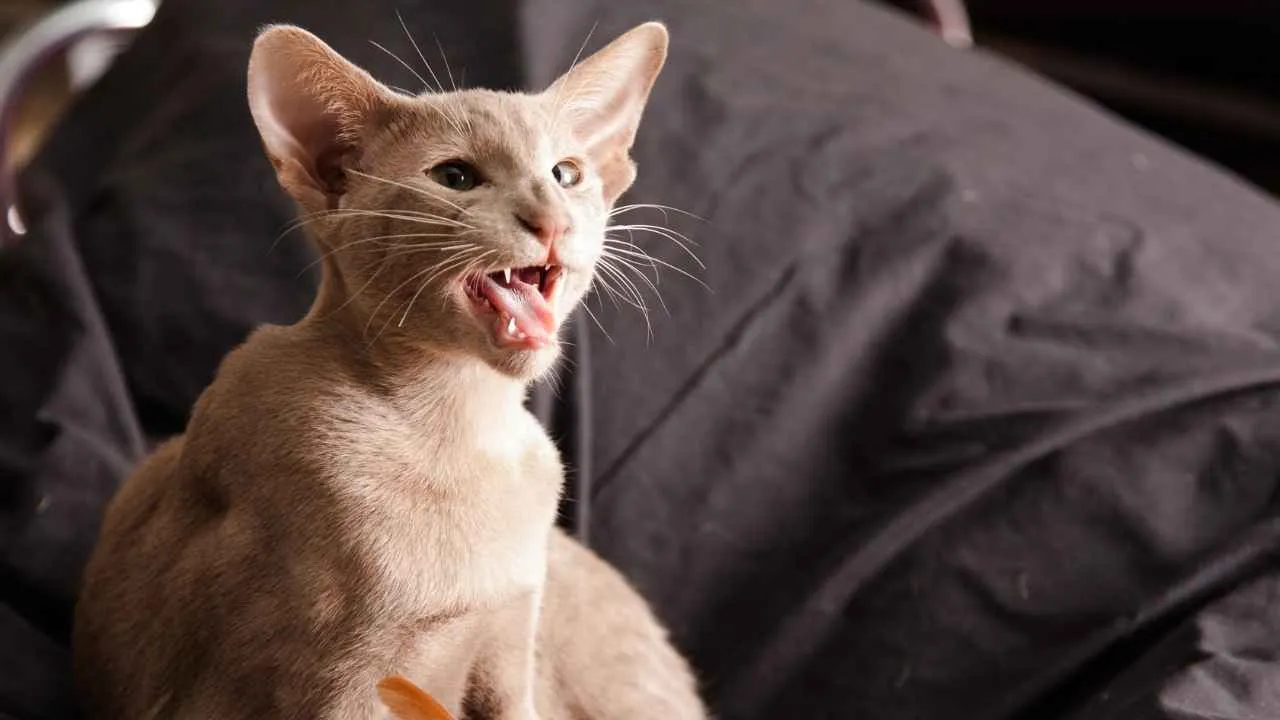
The Oriental Shorthair is a sleek, long-bodied cat with a fine short coat and a standout face, especially those big ears. They come in many coat colors and patterns, offering lots of variety while keeping that same elegant, streamlined look.
According to PetPlan, these cats are lively, affectionate, and usually want to be involved in whatever you’re doing. They’re also known for being vocal, so expect commentary during meals, work calls, and basically any moment you thought was private. Many form strong attachments and can be happiest in homes where they get plenty of attention.
Their coat is low-maintenance and typically needs only light grooming to stay neat. Because they’re smart and active, they do best with toys, climbing spaces, and games that keep their minds busy. They may not love being left alone for long periods, so a home with regular company can make a big difference.
Why This Cat Is a Good Fit
The short, fine coat is a practical match for hot-weather living.
Active indoor play is a great outlet when the sun is blazing outside.
A social personality suits owners who want a cat that truly hangs out.
3. Burmese
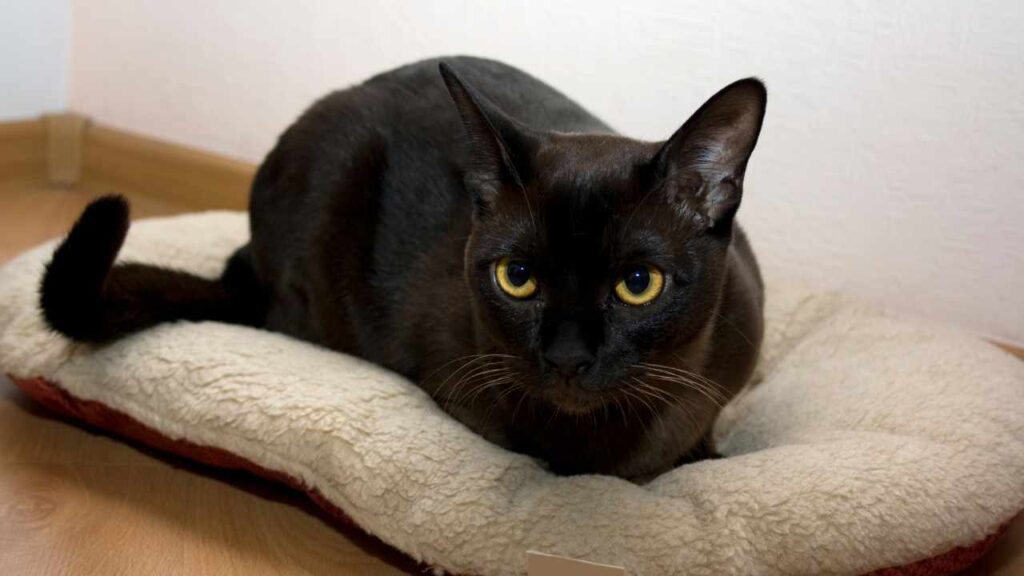
The Burmese is compact, muscular, and wrapped in a short, glossy coat that feels smooth to the touch. They’re often described as affectionate companions with a playful side that sticks around well past kittenhood.
These cats usually enjoy being near their humans and can act like a friendly little sidekick. Their temperament is often described as gentle and people-focused, which can make them a comfortable fit in busy homes. They may also do well with other pets when introduced thoughtfully, especially in households that keep interaction positive and routine.
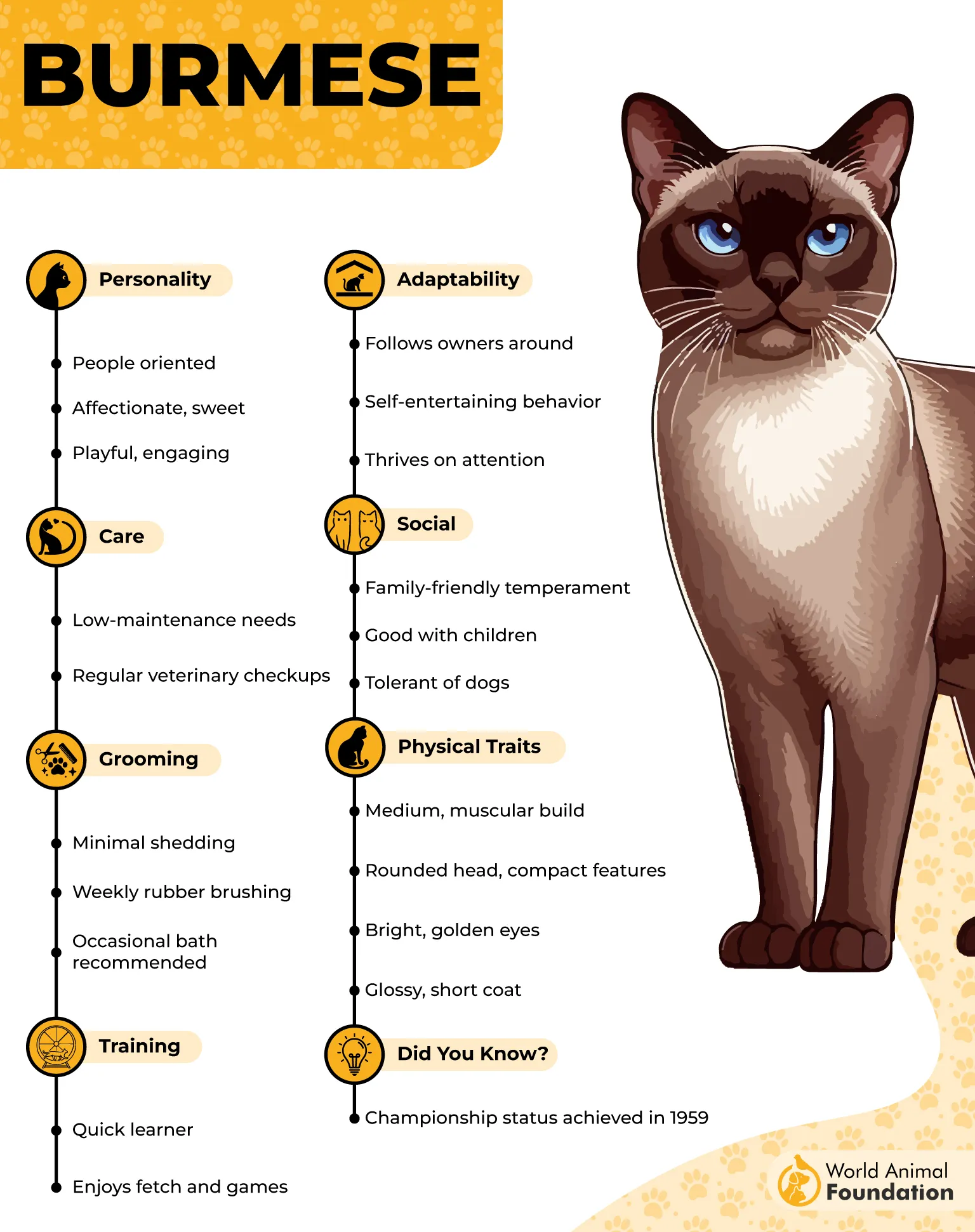
The coat is easy to care for and doesn’t demand complicated grooming sessions. Burmese tend to be curious and smart, and many enjoy learning games like fetch or trying out a harness for supervised adventures. They don’t like being ignored, so a home that offers daily attention and playtime can help prevent lonely, clingy behavior.
Why This Cat Is a Good Fit
Low-effort grooming is a bonus when warm weather already feels like extra work.
Friendly, interactive behavior can fit families who want a social pet.
Indoor enrichment keeps them entertained during the hottest parts of the day.
4. Egyptian Mau
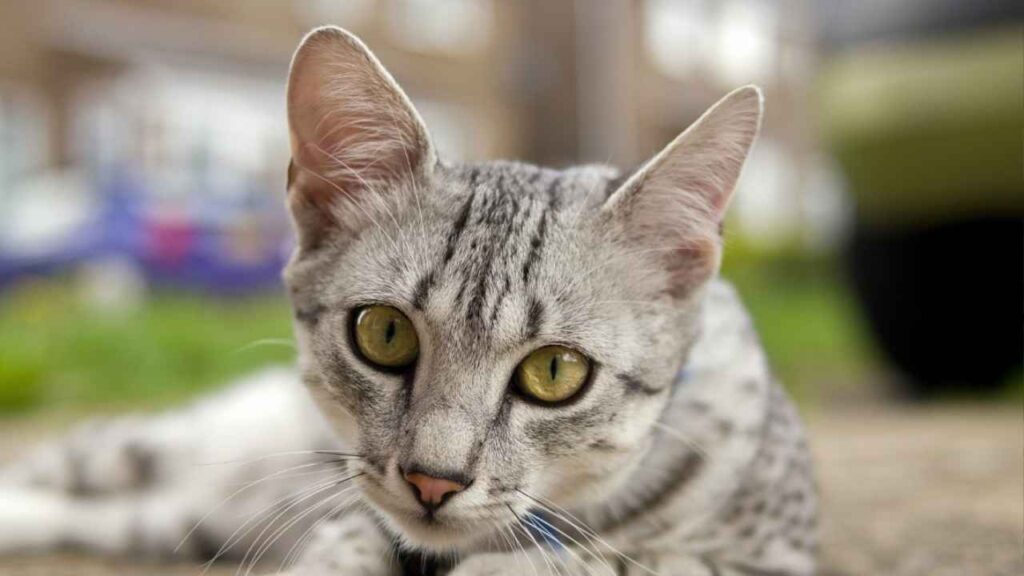
The Egyptian Mau is known for its naturally spotted coat and athletic build, with a sleek look that’s hard to miss. Their spots tend to appear more like distinct dots rather than blended rosettes, giving them a crisp, patterned style.
They’re loyal and playful, often forming strong bonds with their family while staying a bit cautious around strangers. Many are intelligent and enjoy interactive games that let them show off quick reflexes and agility. Their voice can be on the quieter side, with softer, pleasant sounds instead of nonstop chatter.
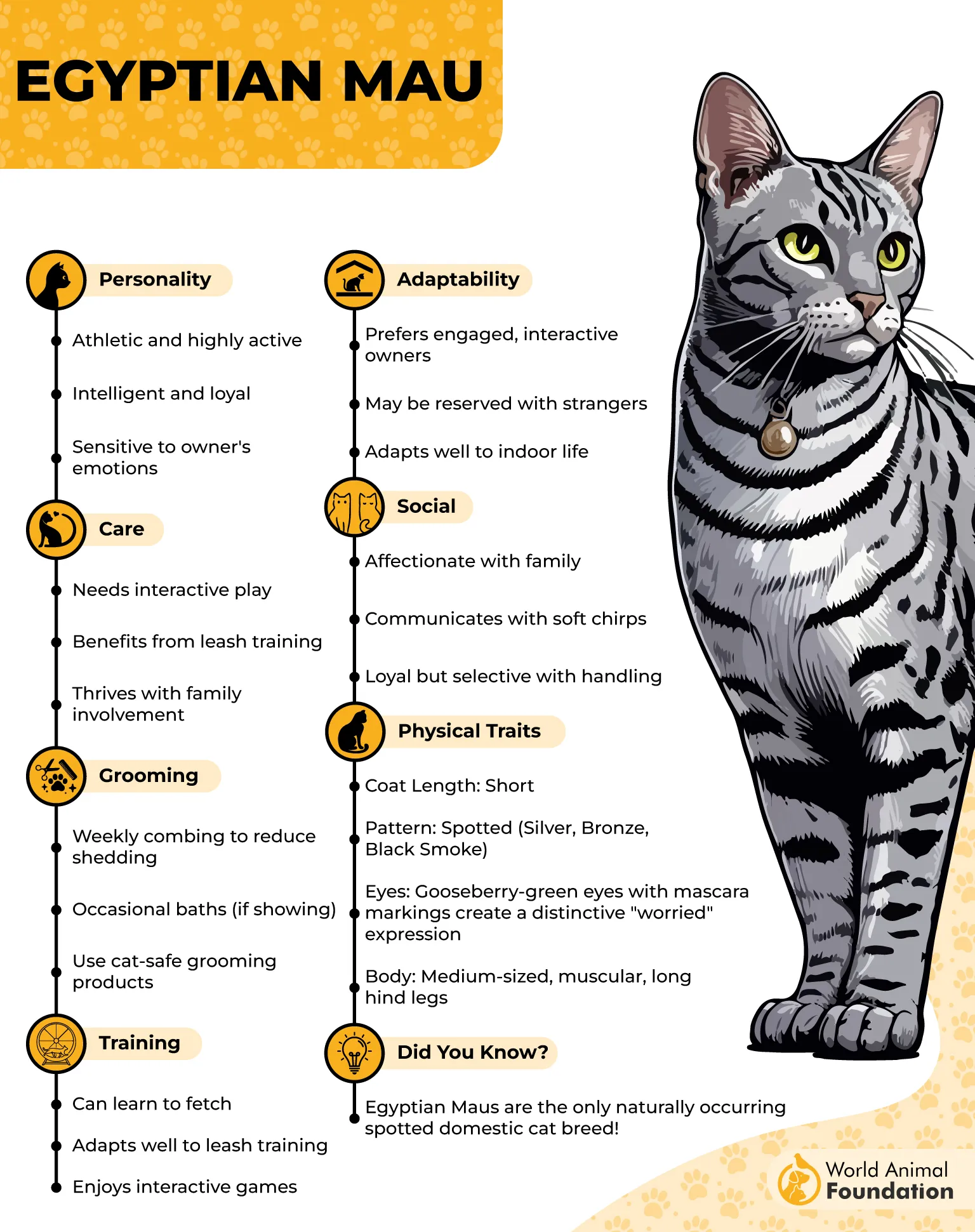
As stated by CFA, their coat is short and fine, so grooming is generally straightforward with occasional brushing. Many enjoy active engagement, and some can be encouraged into activities like fetch or supervised harness walks. Give them space, structure, and fun play outlets, and they often settle into a confident, devoted companion.
Why This Cat Is a Good Fit
A short, silky coat can be easier to manage in tropical-style heat.
Athletic energy pairs well with indoor play when it’s too warm outdoors.
A balanced personality offers affection without needing constant attention every minute.
5. Singapura
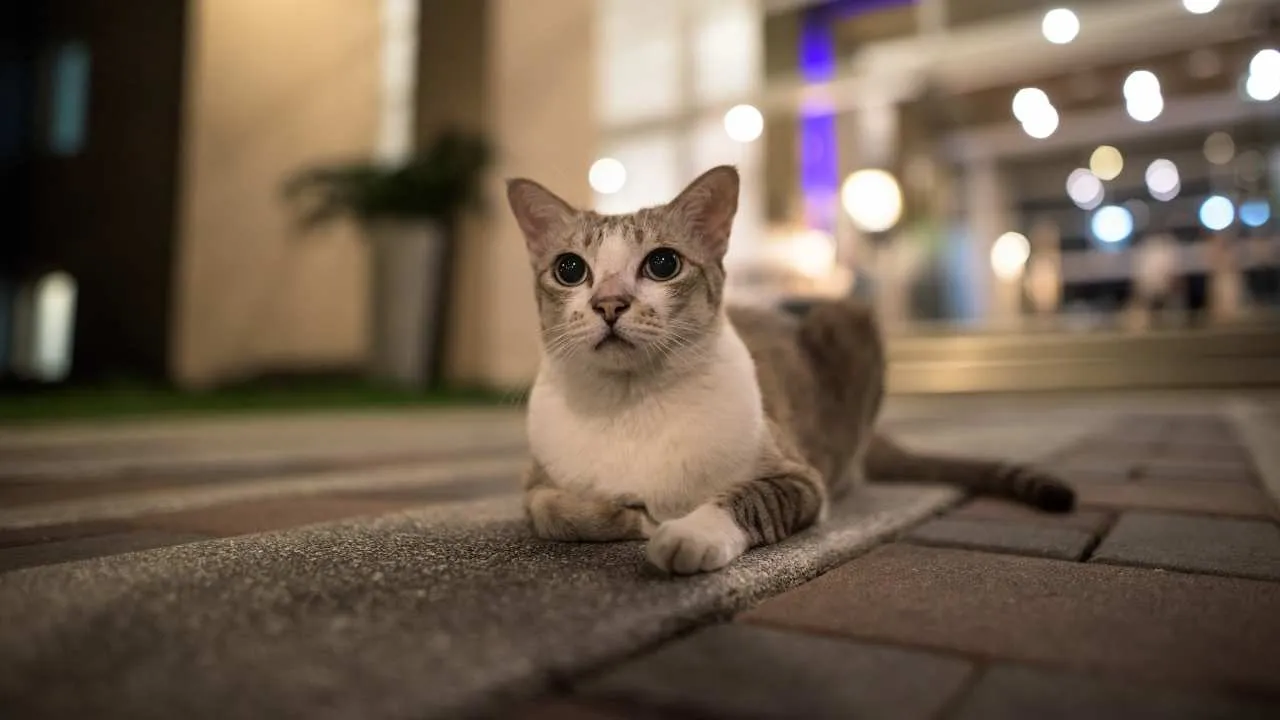
Small in size but not in attitude, the Singapura is known for a petite yet muscular build and an alert, expressive face.
It has a short, fine coat in a warm sepia agouti shade, with darker shading along the back, tail, and legs, and lighter areas on the face, chest, and belly. Large almond-shaped eyes can be hazel, green, or yellow, and the prominent ears give it a permanently curious look.
This breed is often described as impish, the kind of cat that “helps” around the house by sitting on your laptop like it pays rent. Friendly and affectionate with family and familiar friends, it can be a bit aloof with strangers at first. It’s playful, energetic, and sensitive, so noisy, chaotic environments can be stressful.
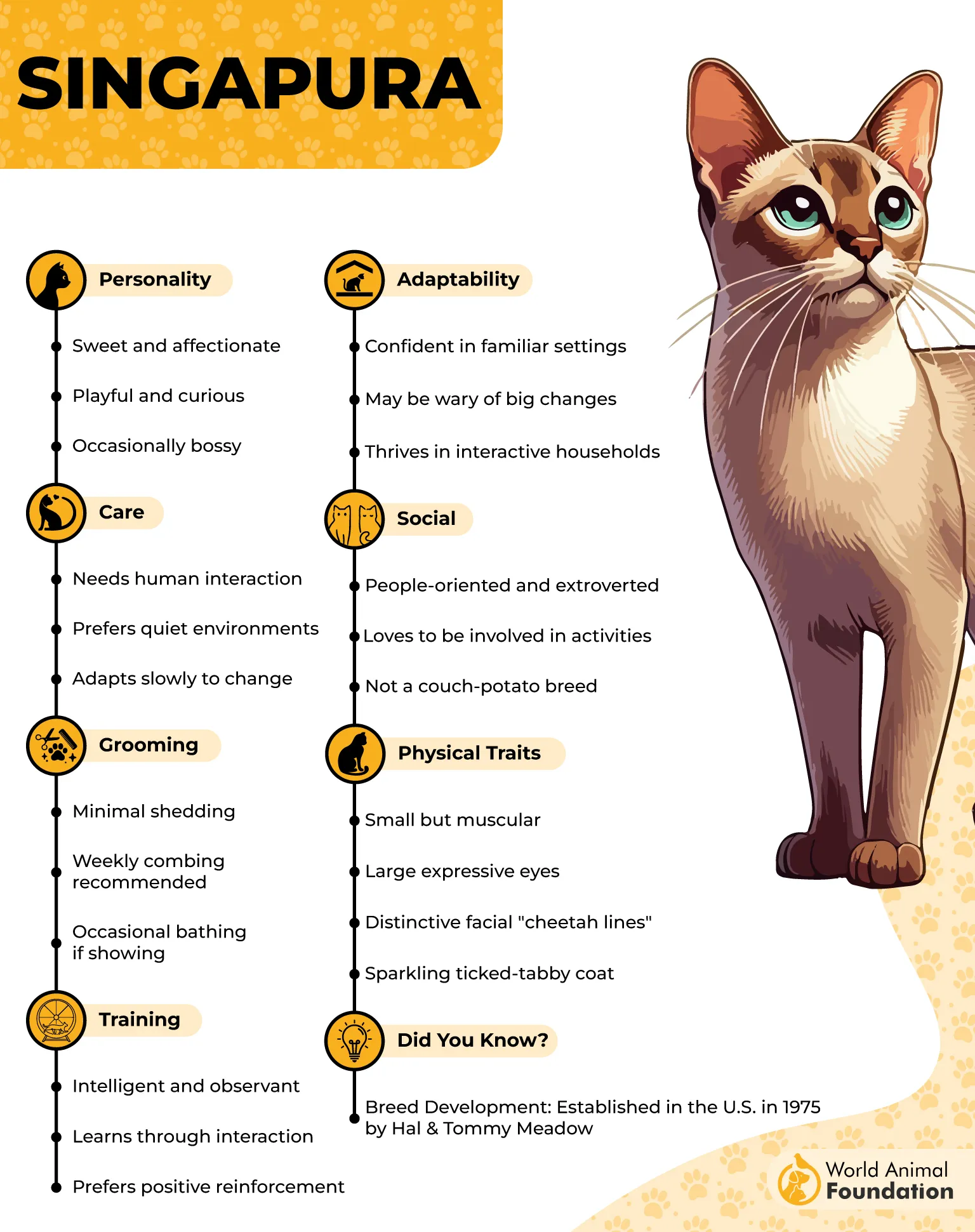
A tidy coat means grooming stays simple, and a weekly comb-through is usually enough while doubling as bonding time. Singapuras love climbing, perching, and exploring small spaces like tunnels, tubes, and boxes. They can be left alone for a few hours, but they do best when someone is home most of the time and when indoor life includes plenty of stimulation.
Why This Cat Is a Good Fit
A short, neat coat is easy to manage in warm, humid weather.
Lively personality pairs well with indoor enrichment on extra-hot days.
Compact size can be a plus for smaller homes in warm climates.
6. Tonkinese
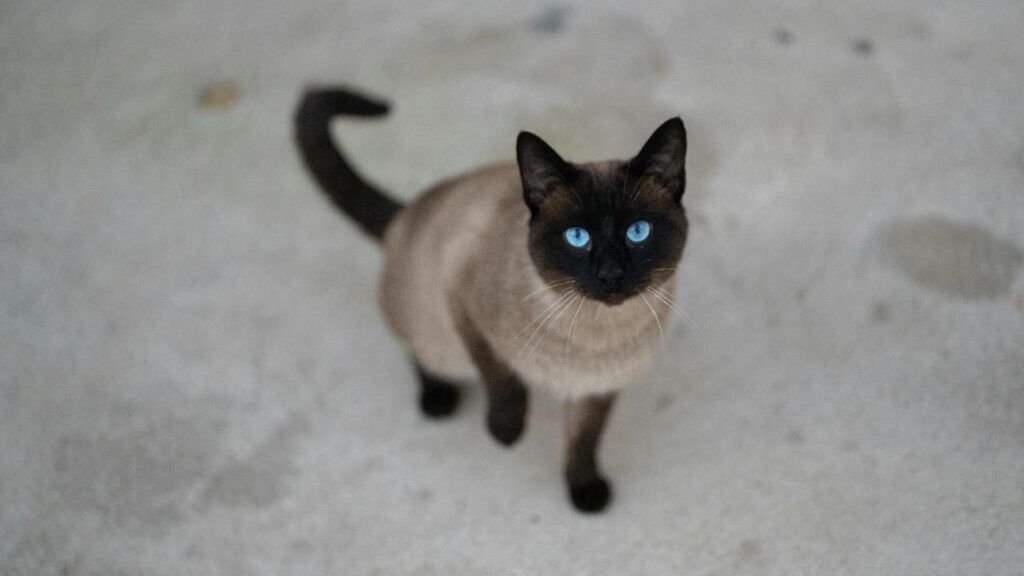
The Tonkinese, often nicknamed the “Tonk,” is a cross between Siamese and Burmese cats with a balanced look and medium size. It’s described as having a rounded head with ears that sit lower and more to the sides than many breeds.
Their coat can appear in three patterns: pointed, mink, and sepia, and it’s known for a silky texture, eye-catching sheen, and low shedding.
Temperament tends to be the big selling point: an even, friendly personality that’s happy to play and also happy to curl up for a nap. Many have a curious streak, sharp intelligence, and a tendency for the zoomies, which is adorable until it happens at bedtime. A single Tonk kitten left alone too long can get bored and into trouble, so the fit is best for households that can offer company and play.
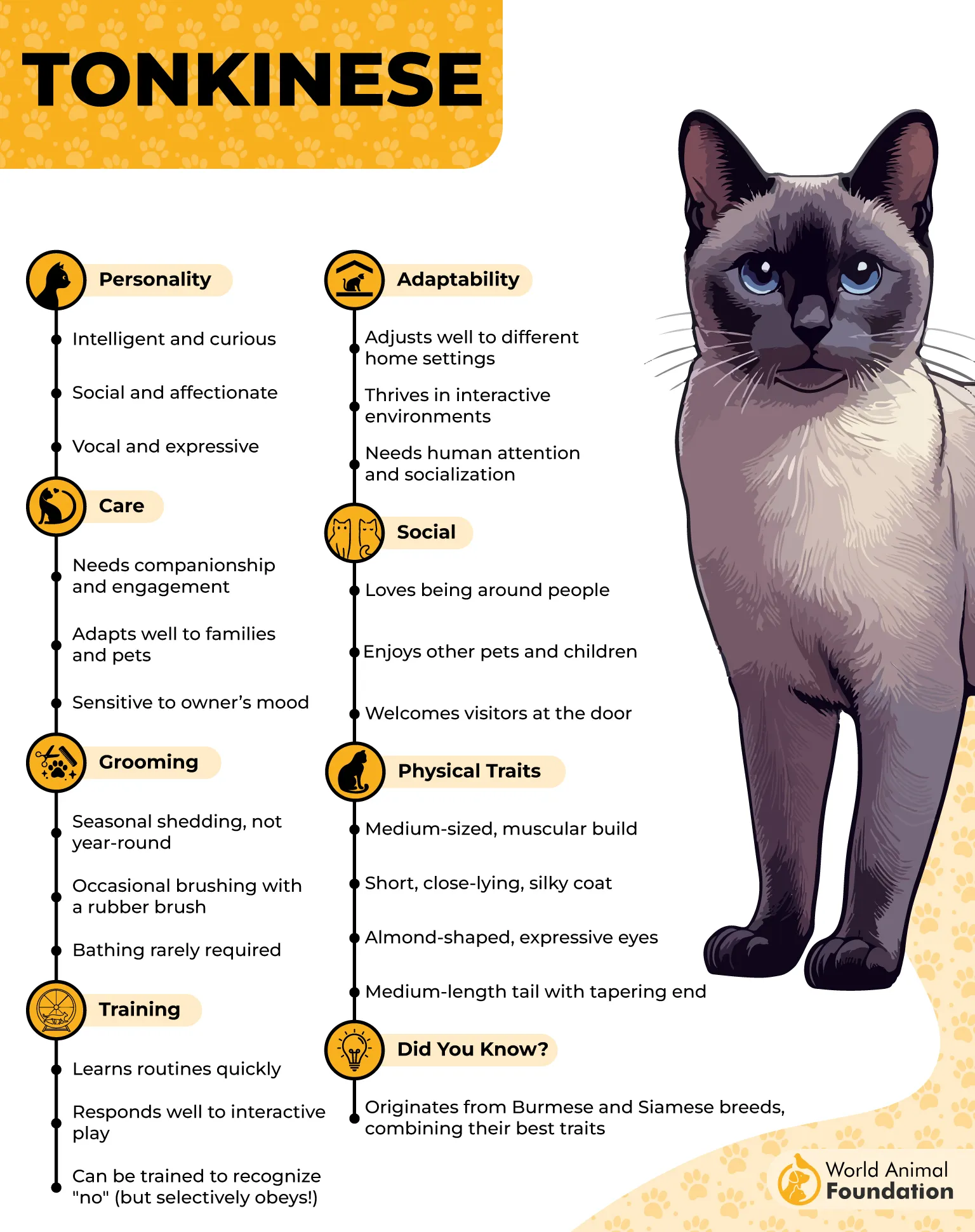
Grooming is relatively low-maintenance, with weekly brushing recommended to keep fur in check. Tonkinese are described as medium activity level cats that mostly want to be with you, so they often thrive when included in daily routines. For busier homes, a calmer adult Tonkinese can be an easier match than a high-energy kitten.
Why This Cat Is a Good Fit
A low-shedding, silky coat can be more comfortable during hot seasons.
Enjoys active play indoors when outdoor heat makes everyone sluggish.
A people-focused nature suits homes where the cat won’t be left alone all day.
7. Korat
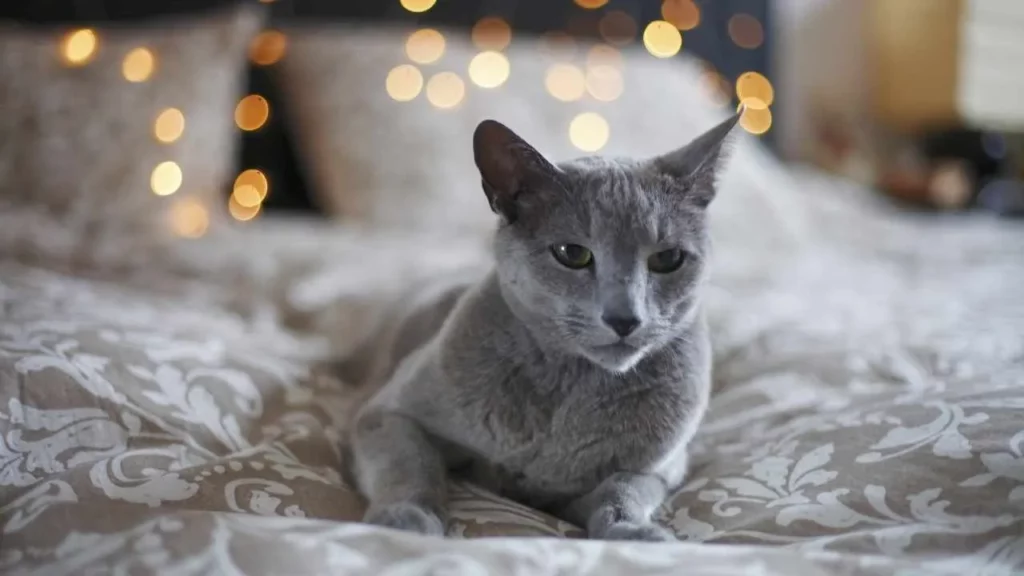
The Korat is a Thai “good luck” cat with a short, silver-tipped blue coat that can look like it shimmers in sunlight. The body is medium-sized, muscular, and surprisingly hefty, and the breed may take two to four years to fully mature.
This is an intelligent cat that can learn tricks, but only if it agrees to the idea first. Korats crave stimulation and tend to demand attention, forming strong bonds and taking a keen interest in everything their humans do.
They can be energetic without being hyperactive, and they’re not shy about using a wide range of noises to get your focus back where it belongs.
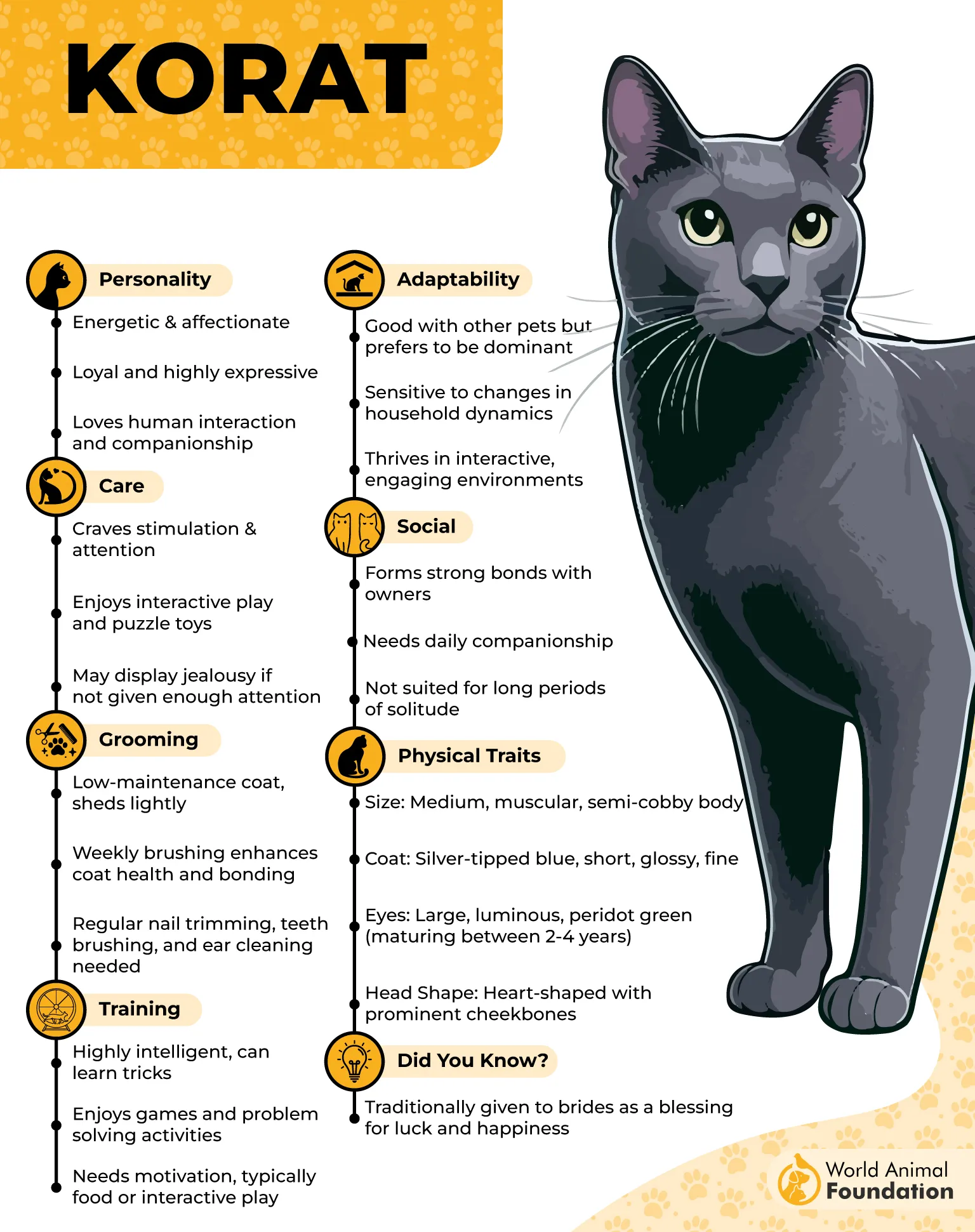
Their shiny single coat sheds lightly, and weekly brushing is usually enough to keep it looking good and strengthen the bond with their caregiver. They generally interact well with other household pets, but they like feeling important, so big changes should come with extra reassurance. With the right mix of play, attention, and routine, a Korat can be both affectionate and entertaining.
Why This Cat Is a Good Fit
Short coat supports comfort in warmer regions and seasons.
Energetic but not wild, making indoor play manageable even in the heat.
Strong human bonding fits families who want a truly interactive companion.
Conclusion
Choosing a cat for warm temperatures means thinking about more than looks. Coat type, body temperature regulation, and daily habits all play a role in how comfortable a cat feels in warm environments. Many breeds from Southeast Asia are well-suited to indoor living in hot climates, especially those with a short or less dense coat that does not trap heat. Even cats with a thicker coat can thrive indoors when given shade, airflow, and proper care.
Along with heat tolerance, an affectionate nature matters just as much for happy indoor environments. While this guide focused on specific breeds, other breeds, such as the Asian leopard cat, which influenced the Bengal cat and its wild ancestry connections, are also often discussed in conversations about hot climates and indoor comfort.
