




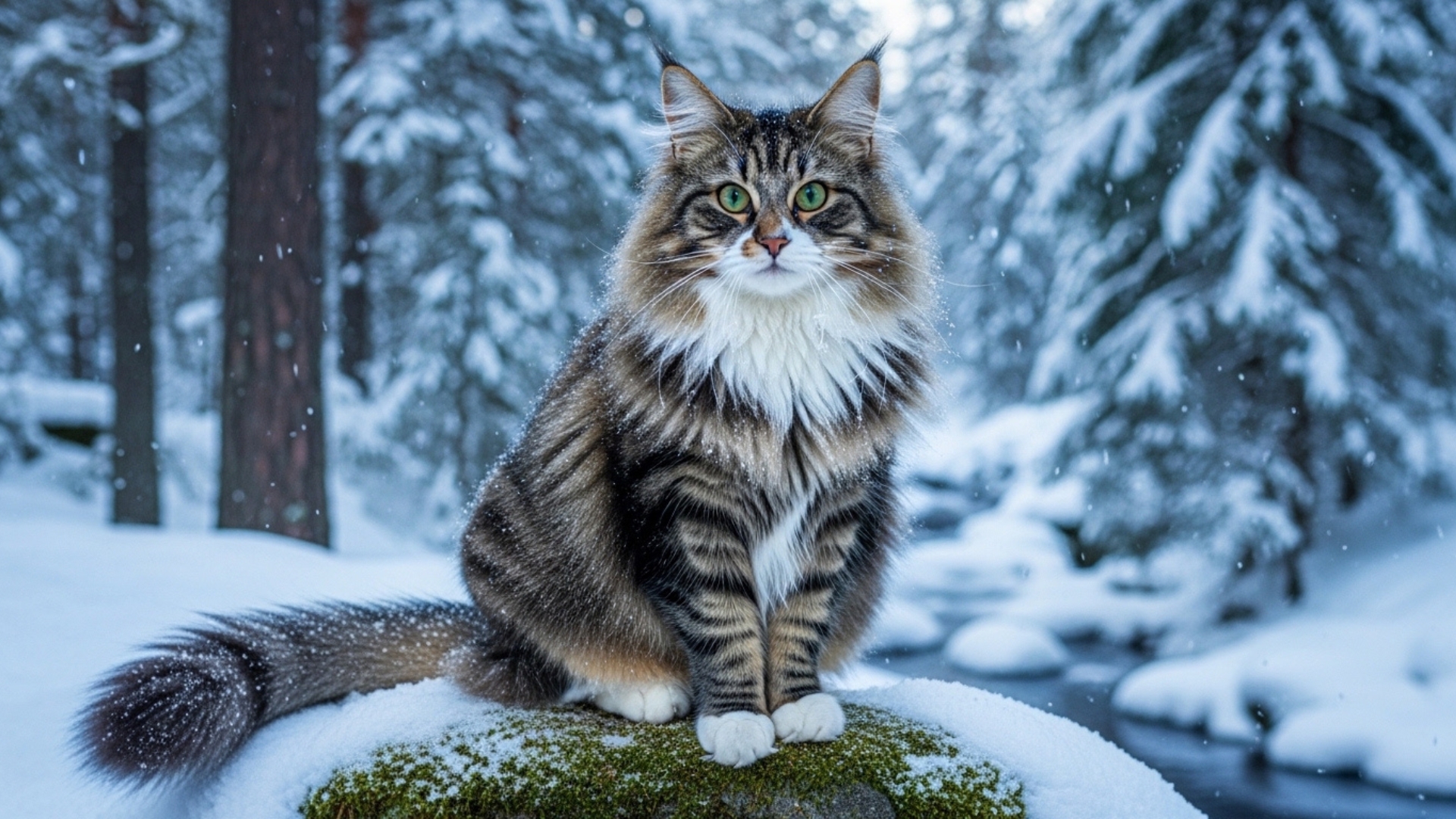
Cats have long balanced lives between home and wilderness, but not every feline is equally prepared for the challenges of the outdoors. Some breeds possess physical traits, instincts, and behaviors that make them far better equipped for life beyond four walls.
From keen hunting abilities to weather-resistant coats, these cats are naturally built to navigate open spaces, changing climates, and unpredictable environments with confidence. Strong prey drive, heightened awareness, agility, and independence all play a role.
Cats that thrive outdoors often have sharp instincts passed down through generations, allowing them to hunt, avoid danger, and establish territory. Their natural curiosity is paired with caution, helping them explore without unnecessary risk. Many also have sturdy builds and coats designed to handle rough terrain and cooler temperatures.
In this article, we explore nine cat breeds adapted to outdoor survival—cats whose instincts and resilience help them truly thrive in the great outdoors.
Cat breeds adapted to outdoor survival
1. Norwegian Forest Cat
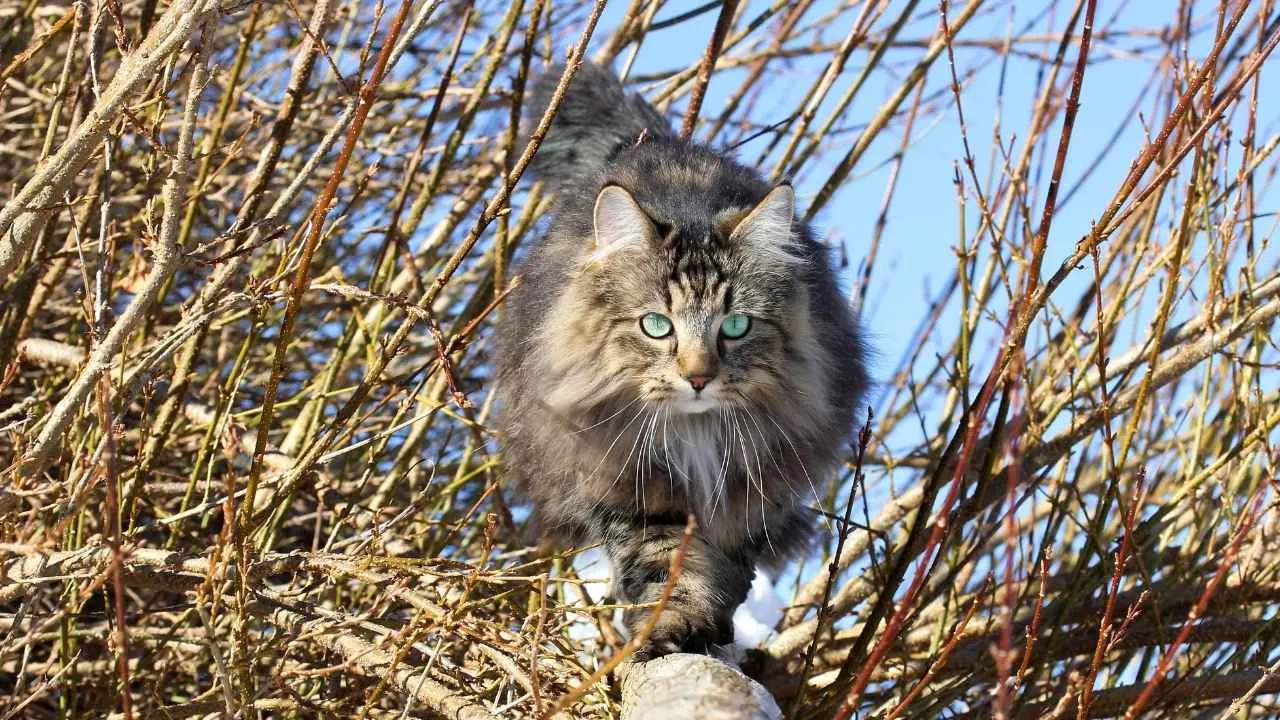
It is often also called the Wegie. According to Britannica, the Norwegian Forest Cat originated in Norway, where it is called a skogkatt (“forest cat”). Its triangular head, tufted ears, and long, bushy tail give it a distinctly wild, outdoors-ready look.
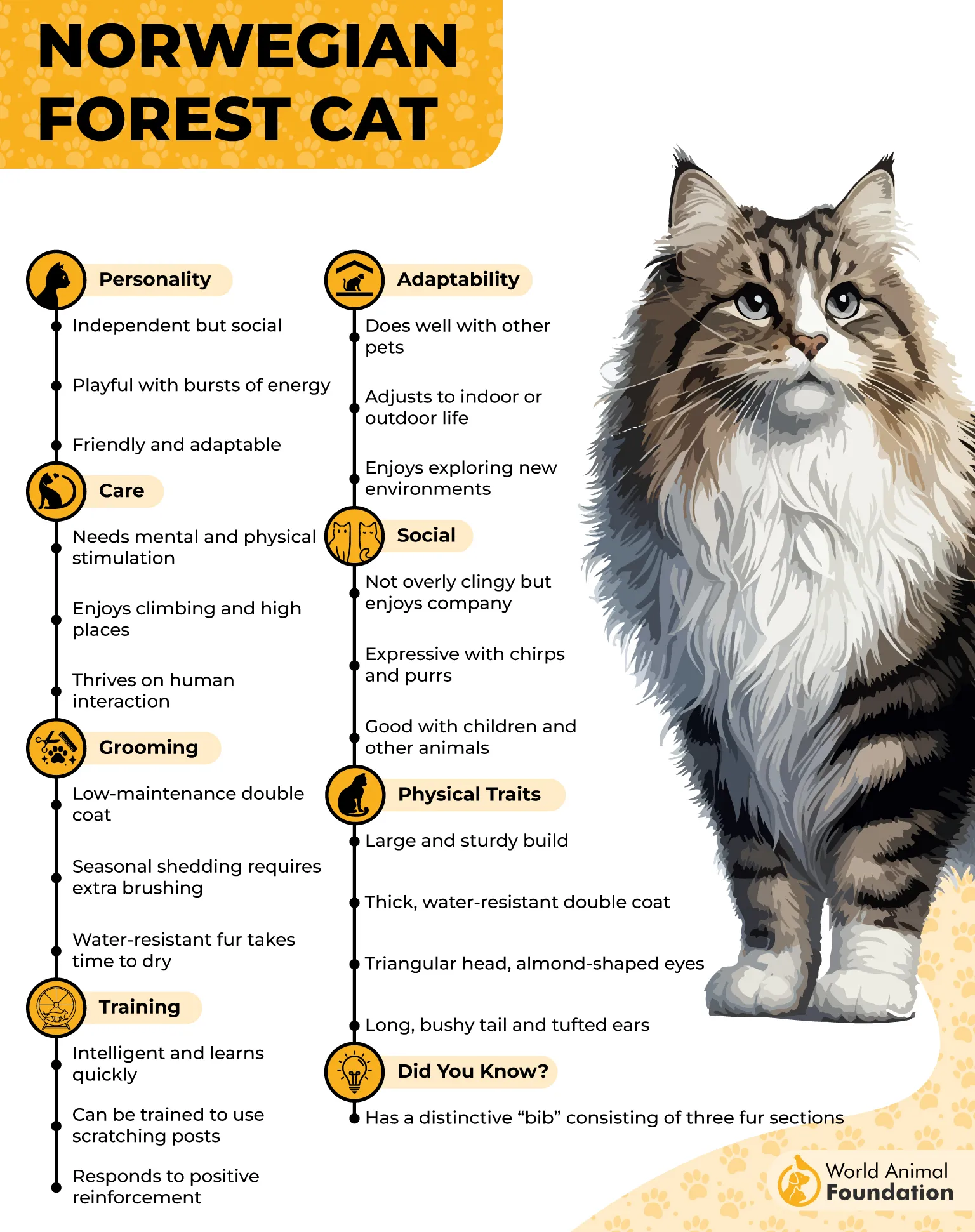
Built for harsh climates, this breed’s thick, water-repellent double coat and powerful frame allow it to withstand snow, wind, and rain with ease. Strong claws and large, fur-tufted paws make navigating forests, rocks, and trees feel effortless.
Exceptional climbing ability sets this cat apart, including the rare skill of descending trees headfirst. Intelligent and resourceful, it thrives outdoors while still remaining calm, adaptable, and gentle when interacting with people or other animals.
Despite its rugged survival instincts, the Norwegian Forest Cat is affectionate without being demanding and enjoys interactive play.
Fact: This breed developed naturally through centuries of selection in the harsh Scandinavian climate, resulting in its distinctive weather-resistant coat and hardy nature.
2. Siberian
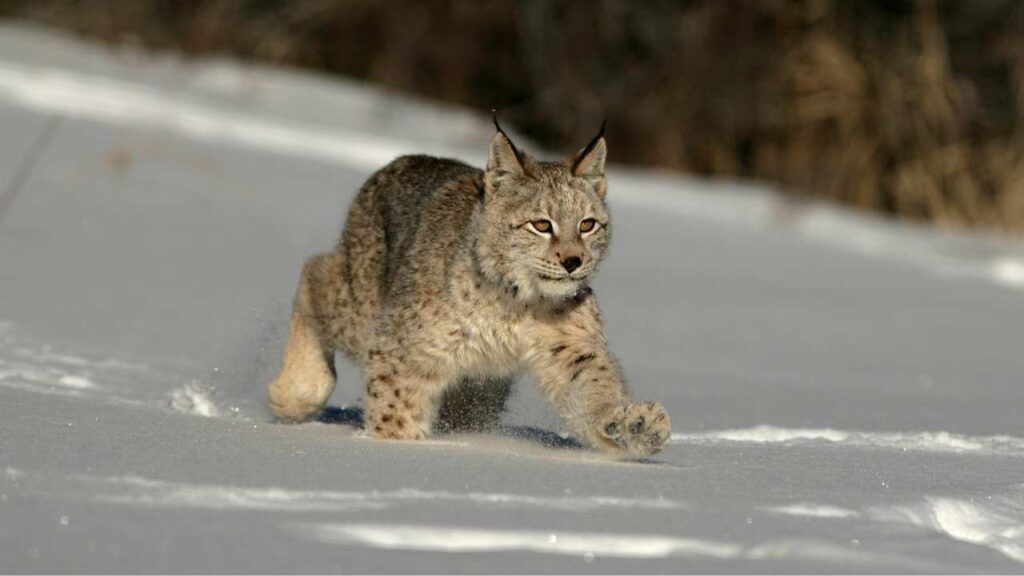
Also known as the Siberian Forest Cat, this ancient breed developed in Russia’s harsh wilderness, where survival depended on strength, awareness, and adaptability. Its rugged build and natural resilience reflect centuries of living alongside forests, snow, and predators.
According to PetMD, the Siberian cat’s fluffy tail, distinctive triple-layer coat, and prominent neck ruff make it easy to picture the breed enduring harsh winters in its homeland, yet today Russia’s national cat is known as a loving, affectionate pet in many types of homes.
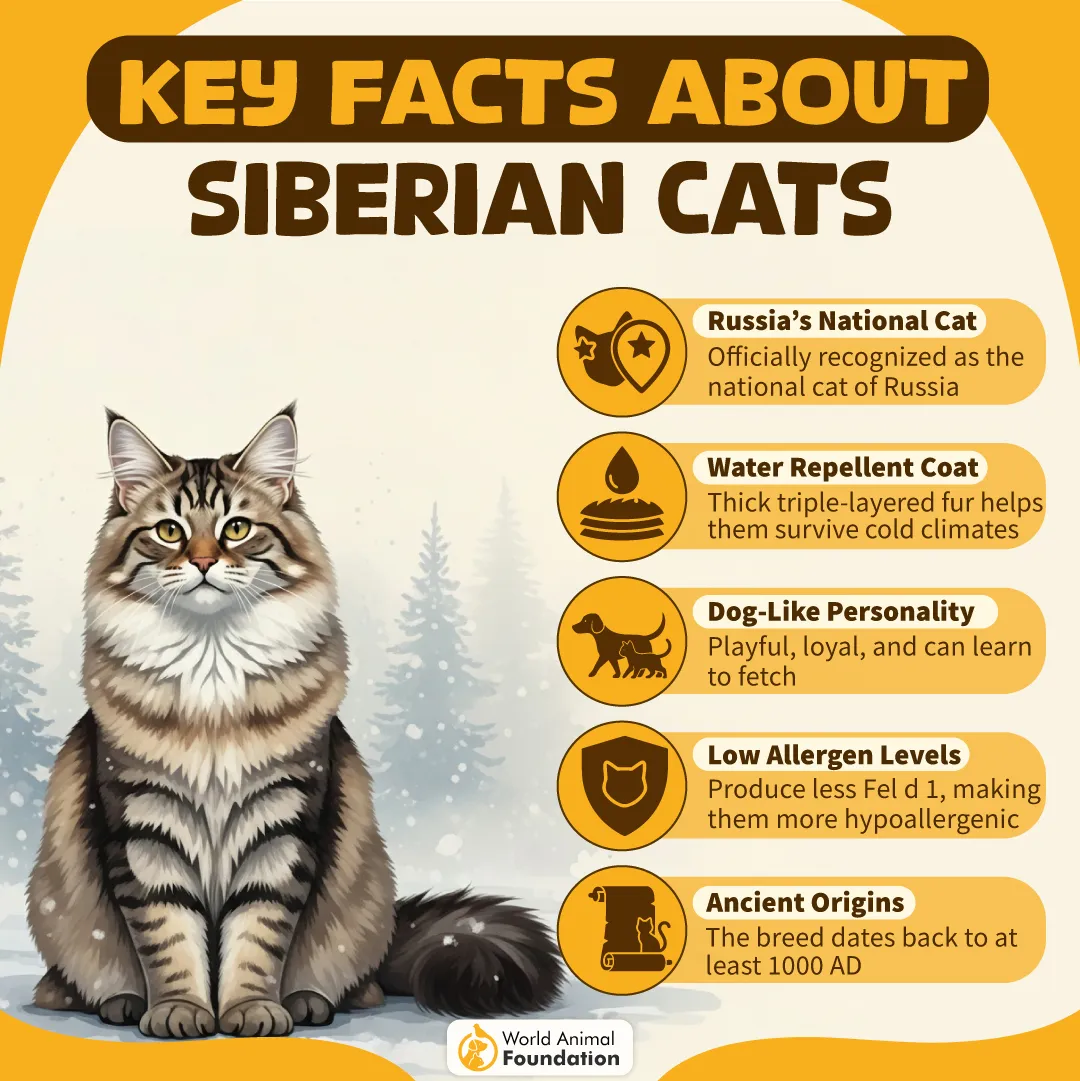
Siberians excel outdoors thanks to sharp hunting instincts and exceptional tracking ability. Their alert senses help them detect movement quickly, while strong paws and agile bodies allow them to navigate uneven terrain, deep snow, and wooded areas with confidence.
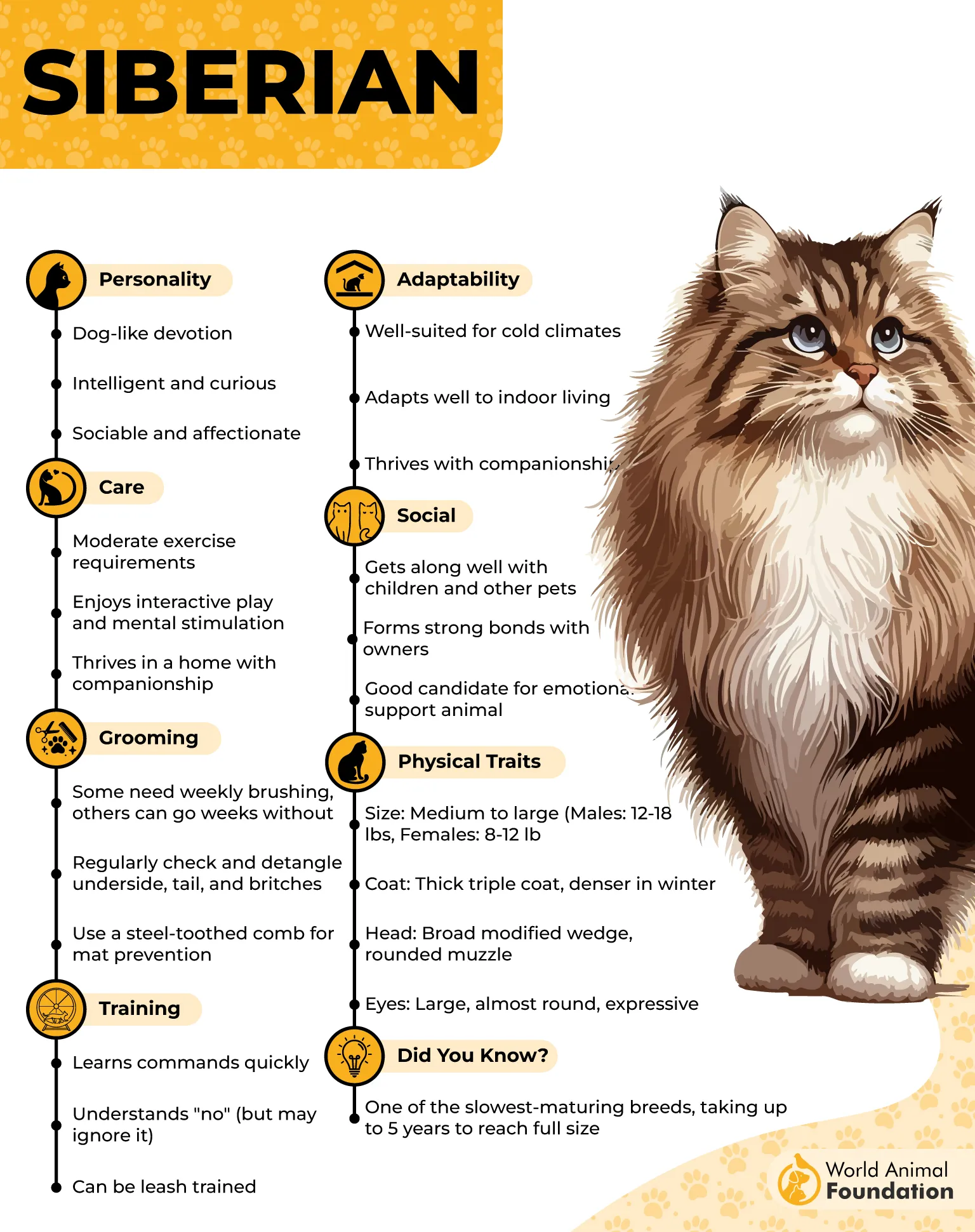
A dense, weather-resistant triple coat protects them from freezing temperatures and moisture, making cold climates far less challenging. This natural insulation supports extended outdoor activity, whether stalking prey or patrolling territory during winter months.
Beyond physical traits, Siberians are intelligent and observant, learning patterns in their environment and adjusting their behavior to stay safe. Their curiosity drives exploration, while instinct keeps them cautious—an ideal balance for outdoor survival.
Fact: Siberian cats are known for their thick triple-layered coat that enables them to play comfortably in snowy conditions.
3. Maine Coon
Often called the Gentle Giant, the Maine Coon is one of the oldest natural cat breeds in North America and the official state cat of Maine. According to WebMD, Maine Coon cats are a larger breed that’s affectionate and friendly.
Instantly recognizable for its large frame, tufted ears, and shaggy appearance, this New England native is also known for its social, dog-like personality and strong bond with humans.
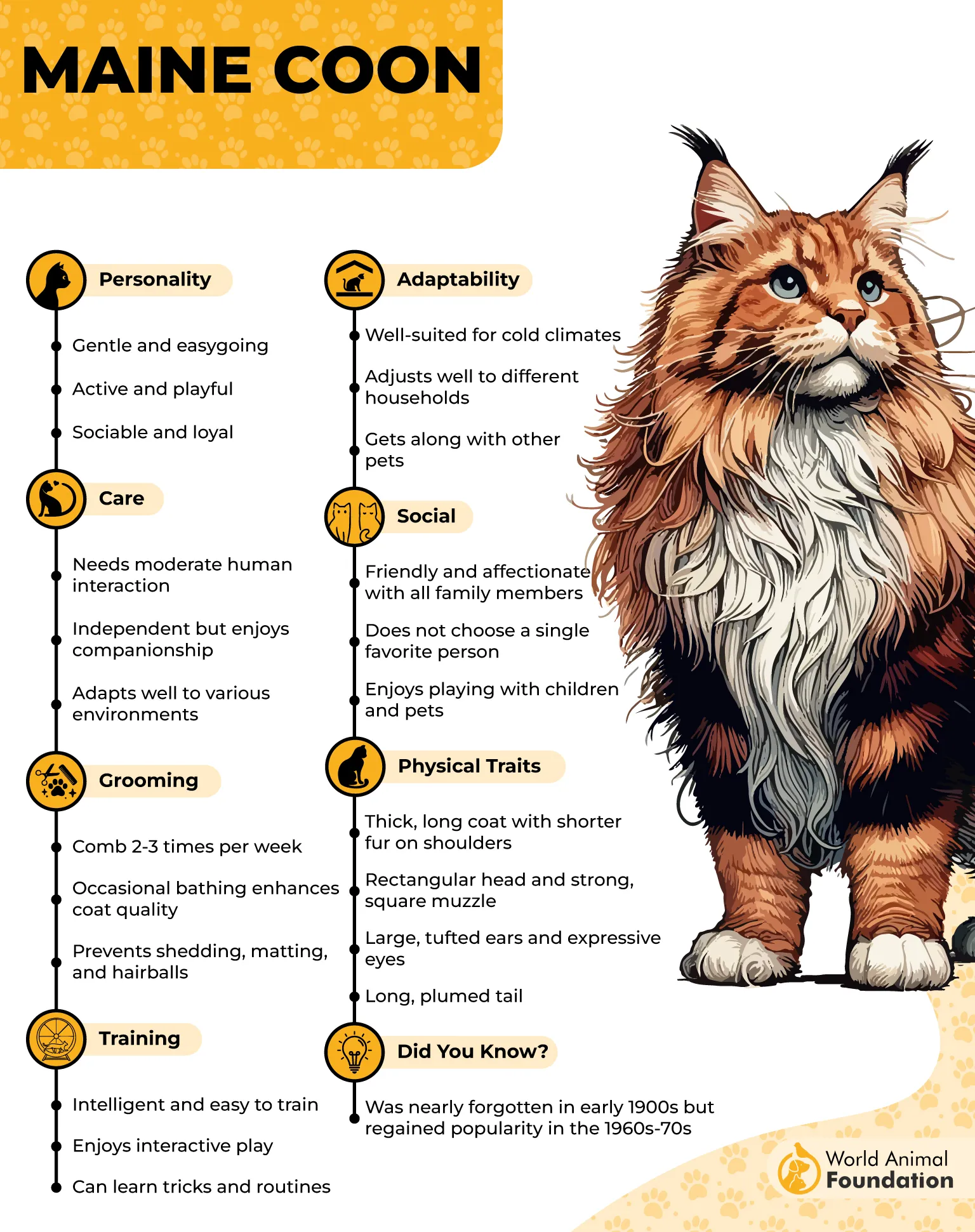
Bred in a region known for long, unforgiving winters, Maine Coons are exceptionally suited to outdoor survival. Their thick, water-resistant fur and bushy tails provide insulation against cold temperatures, allowing them to remain active even in harsh climates. This natural adaptation makes them resilient explorers rather than fragile house cats.
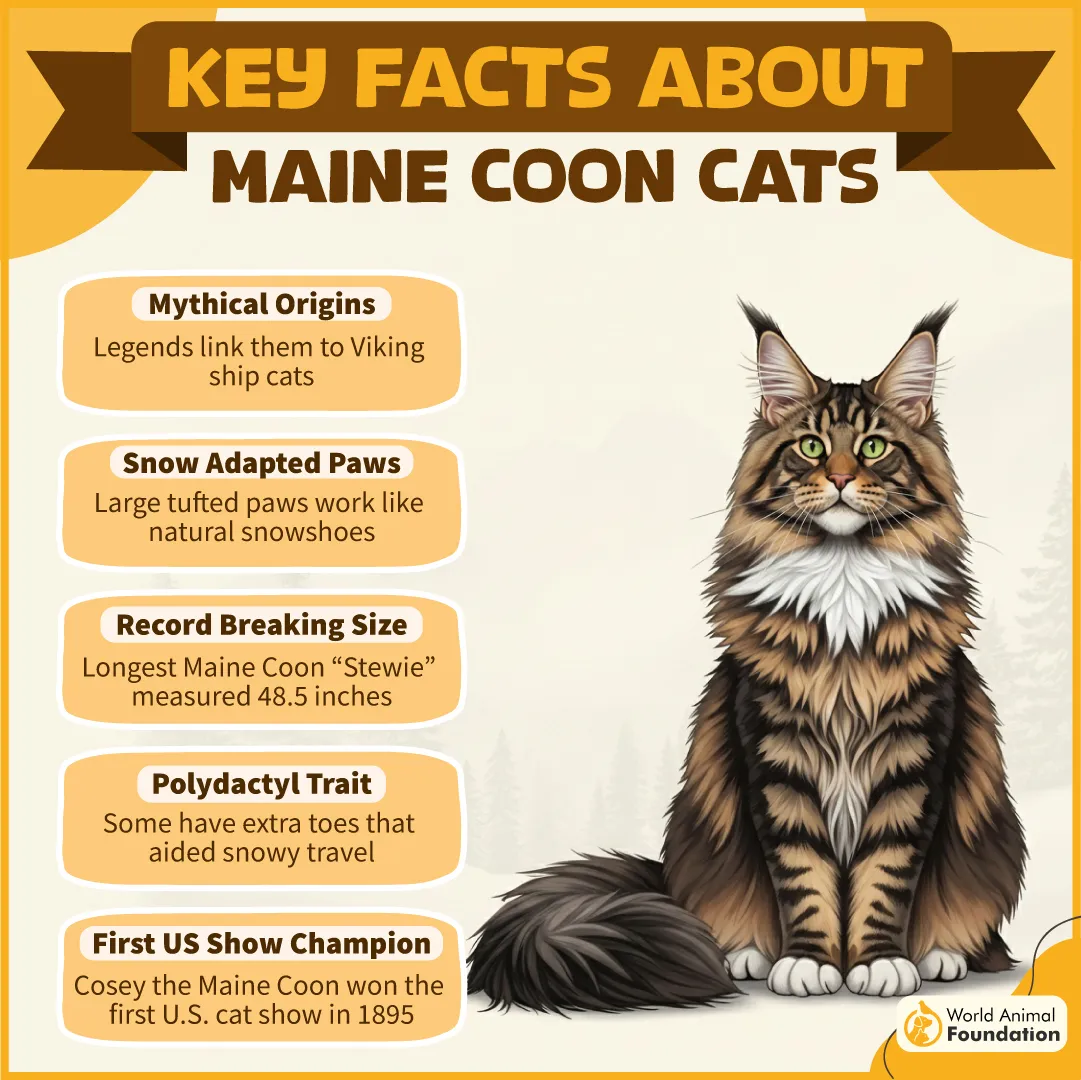
Intelligence further supports their ability to cope outdoors. Maine Coons learn quickly, adapt to new environments with ease, and can problem-solve when faced with unfamiliar situations. Their curiosity and love for exploration mean they navigate outdoor spaces confidently while staying attentive to their human companions.
Despite their rugged build, they remain affectionate and gentle, balancing toughness with loyalty.
Fact: The Maine Coon is the second-largest cat breed in the world, surpassed only by the Savannah.
4. Abyssinian
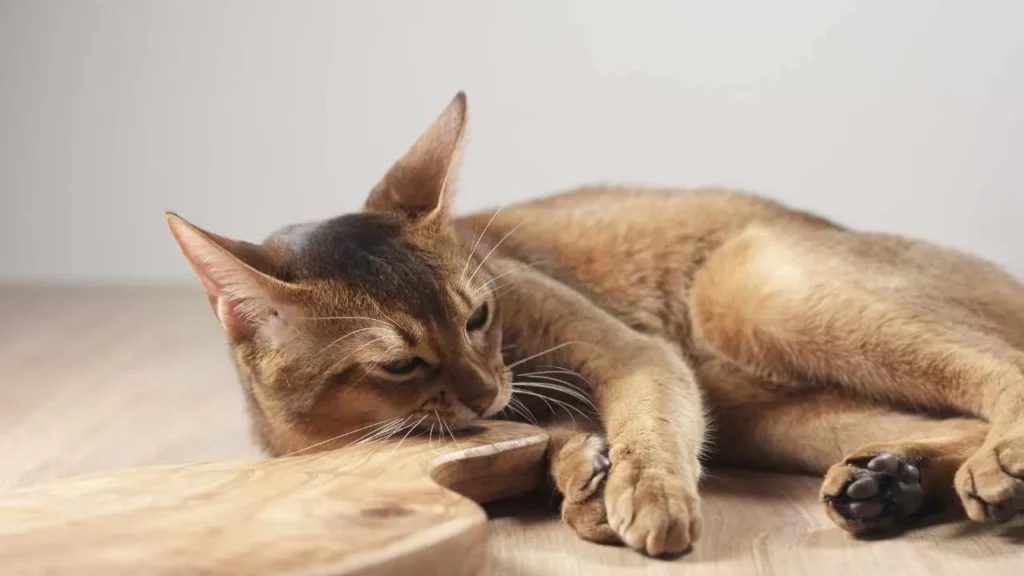
Often called the Aby, Abyss, or even the “Bunny Cat” due to its ticked coat and alert posture, the Abyssinian is one of the oldest known cat breeds, with roots traced to regions near the Nile River. This medium-sized cat is recognized for its lean, athletic frame and constantly curious expression.
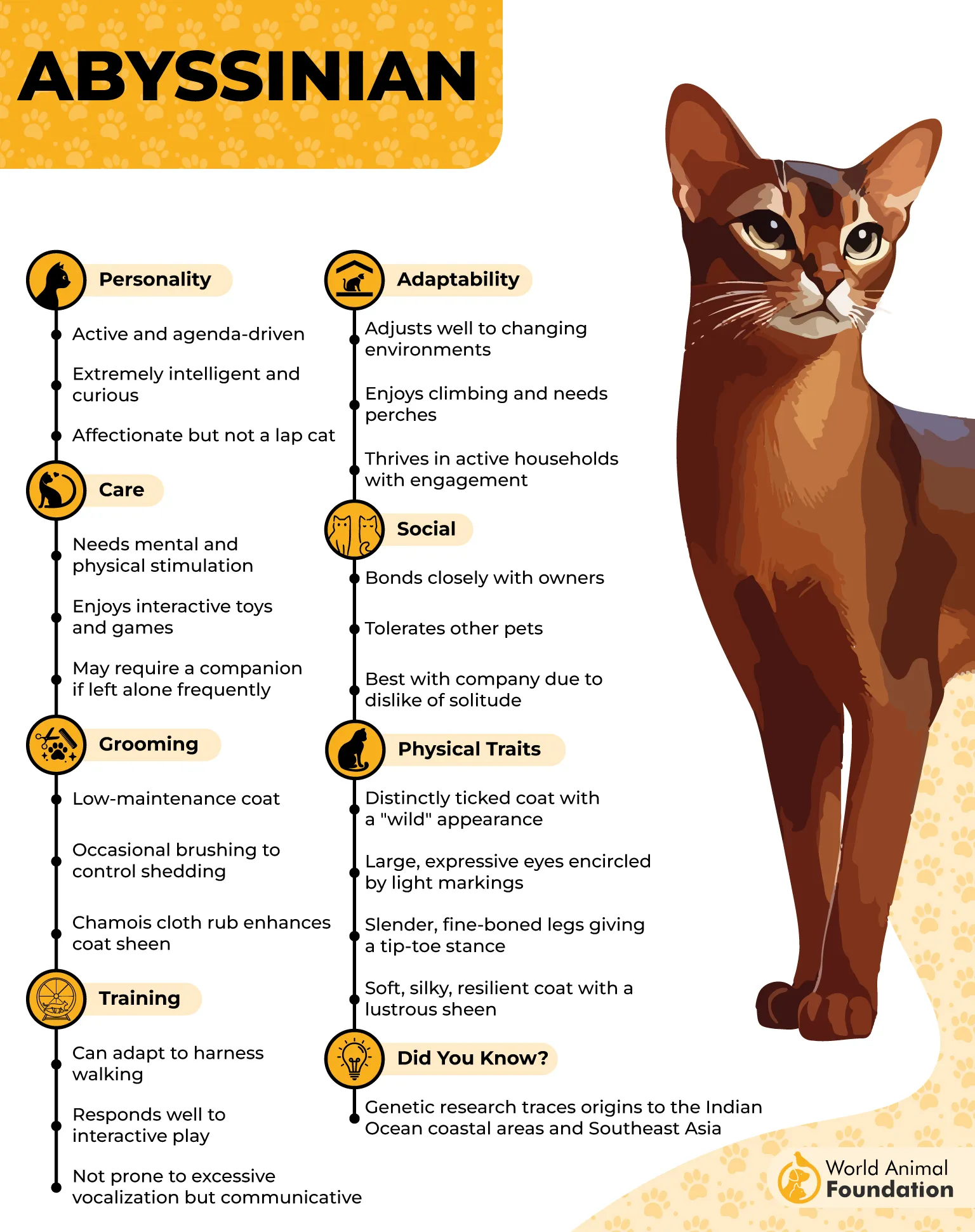
Naturally built for outdoor survival, Abyssinians excel as agile climbers, using their muscular bodies to scale trees, fences, and high perches with ease. Their powerful legs and balanced movement allow them to leap great distances, making elevated environments feel like second nature.
As skilled escape artists, Abyssinians rely on sharp intelligence and awareness of their surroundings. They quickly learn pathways, observe patterns, and exploit small openings, traits that would benefit them greatly in outdoor settings where adaptability is key.
Their boundless energy and love for exploration push them to patrol territory, investigate new areas, and stay mentally alert—essential traits for surviving outside.
Fact: Abyssinians are known for their high energy levels and need constant activity to stay happy.
5. Turkish Van
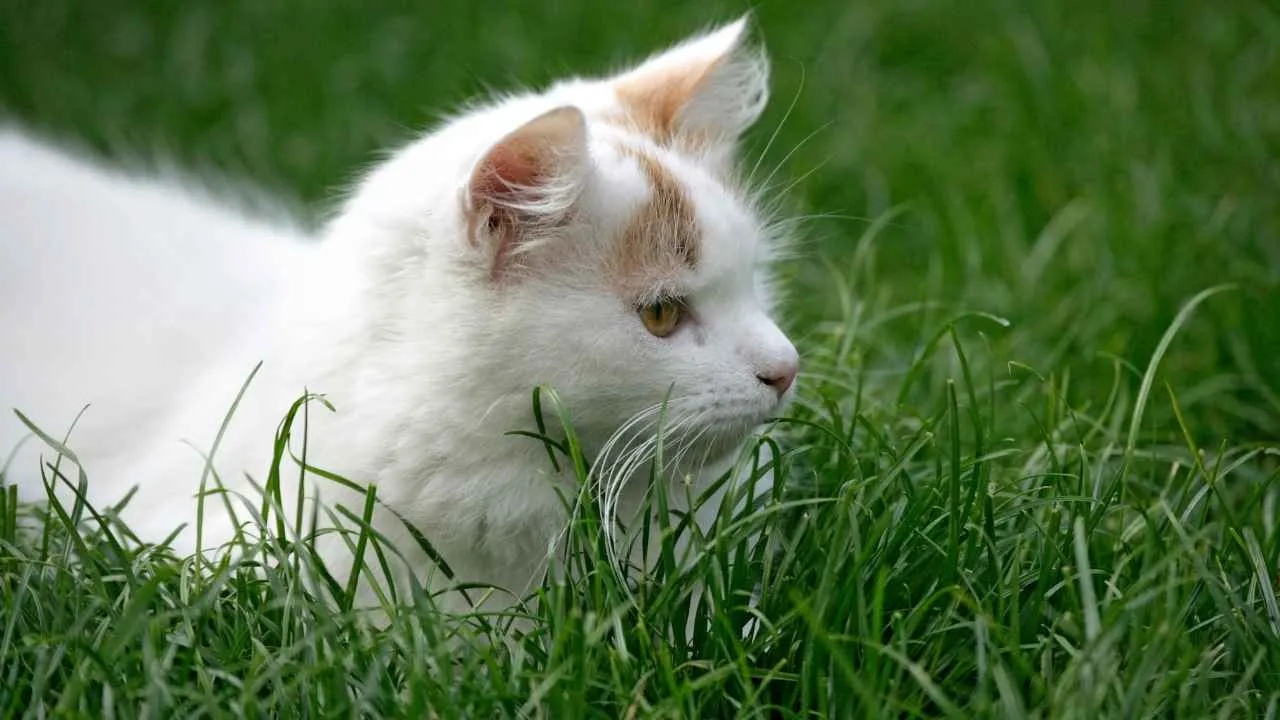
Turkish Van (also called the Swimming Cat) is a striking, ancient breed known for its semi-long, cashmere-like coat and bold personality. Often mistaken for the Turkish Angora, this breed developed separately and is larger, more rugged, and built for harsher environments.
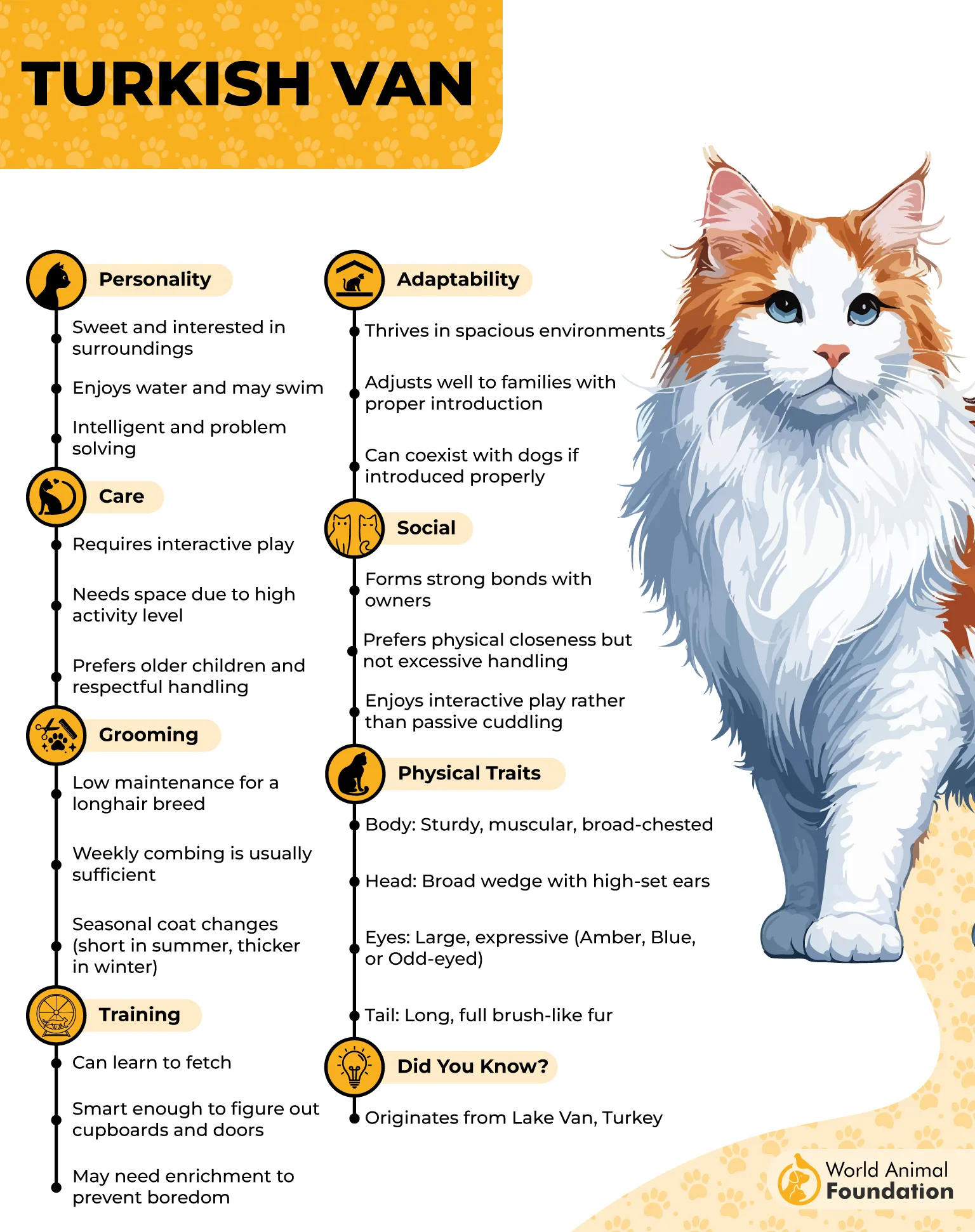
Bred in a region with extreme seasonal changes, the Turkish Van is naturally suited to outdoor survival. Its coat thickens in winter for insulation and becomes lighter in warmer months, allowing it to adapt easily to fluctuating climates while remaining low-maintenance.
Unlike most cats, this breed is famously comfortable around water, making it ideal for coastal or lakeside settings. Agile, energetic, and highly independent, Turkish Vans enjoy climbing, exploring, and choosing elevated resting spots, traits that support self-reliance outdoors.
Their intelligence and sociable nature also make them resilient companions for travel and open environments. Loyal yet self-directed, they thrive when given stimulation and space to roam, and a notable
Fact: Turkish Van cats are one of the few breeds that genuinely enjoy swimming.
6. Bengal
Often nicknamed the “miniature leopard,” the Bengal—sometimes called the Leopard Cat hybrid—stands out for its wild-patterned coat and alert expression. Developed from domestic cats crossed with Asian leopard cats, this breed carries a distinctly untamed look paired with modern companionship.
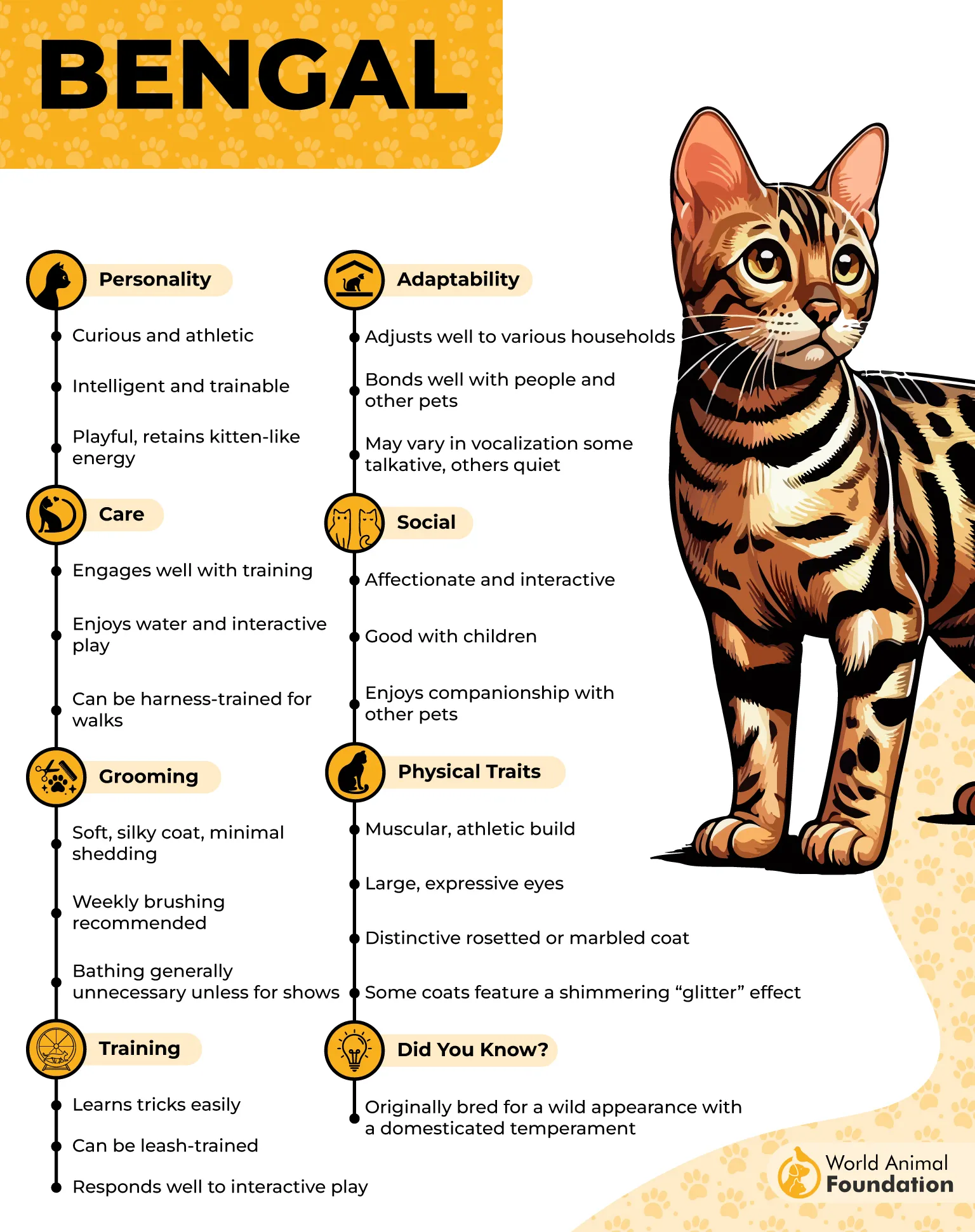
Built for action, Bengals fit the idea of strong, muscular, and fearless cats that handle outdoor challenges well. Their athletic frames and sharp reflexes help them climb, leap, and navigate uneven terrain with ease, making them naturally suited to roaming environments.
Curiosity fuels their survival instincts. Bengals constantly investigate sounds, movement, and new spaces, traits that translate into strong situational awareness outdoors. Unlike many breeds, they adapt quickly to changing surroundings and remain confident explorers rather than cautious observers.
Mental stimulation is essential for this breed, especially when outdoor access is limited. High climbing spots, interactive play, and space to move keep their instincts sharp and prevent boredom-driven stress.
Fact: Bengals are one of the few cat breeds known to enjoy playing in water, an uncommon trait among felines.
7. Sokoke
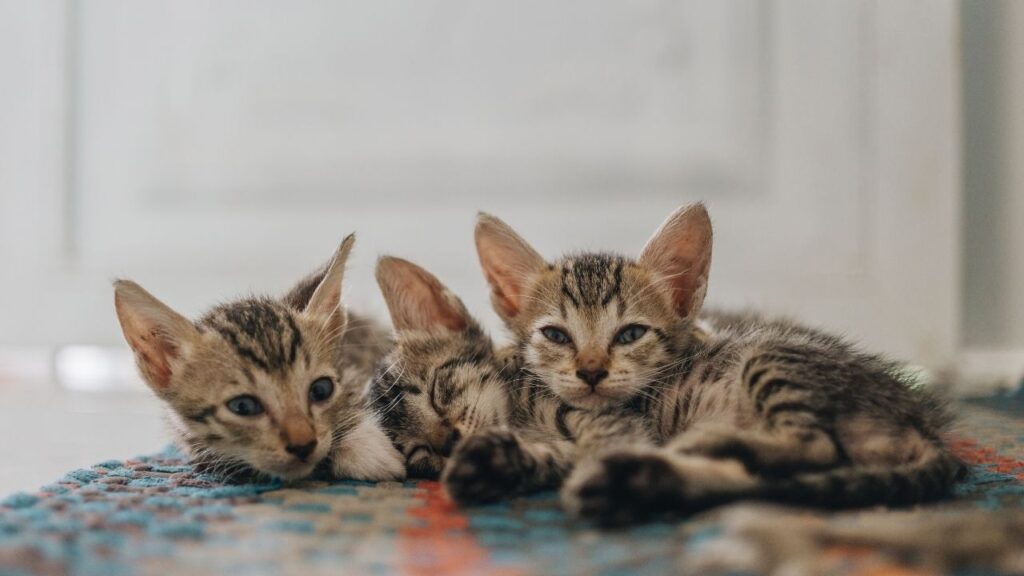
Also known as the Kadzonzo—meaning “looks like tree bark”—the Sokoke is a rare, naturally occurring cat from coastal Kenya’s Arabuko-Sokoke Forest. This lean, shorthaired breed stands out for its see-through ticked tabby coat, large upright ears, and alert, graceful posture shaped by life in the wild.
Adapted to a hot, dry forest environment, the Sokoke handles heat exceptionally well. Its very short, close-lying coat with minimal undercoat helps release warmth efficiently, while its slender, leggy build promotes airflow during movement, making it well-suited for outdoor survival in desert-like or tropical climates.
Camouflage is another survival advantage. The muted, bark-like tabby pattern blends seamlessly into natural surroundings, offering protection while exploring or hunting outdoors. Even the tail tip carries ticking, enhancing the overall disguise in sun-dappled terrain.
Highly intelligent and keenly aware, the Sokoke thrives in active outdoor settings where it can explore, climb, and patrol territory. Its characteristic “tip-toe” rear gait aids silent movement, a trait rooted in its forest-born instincts.
Fact: The Sokoke is considered the rarest domestic cat breed in the world.
8. Egyptian Mau
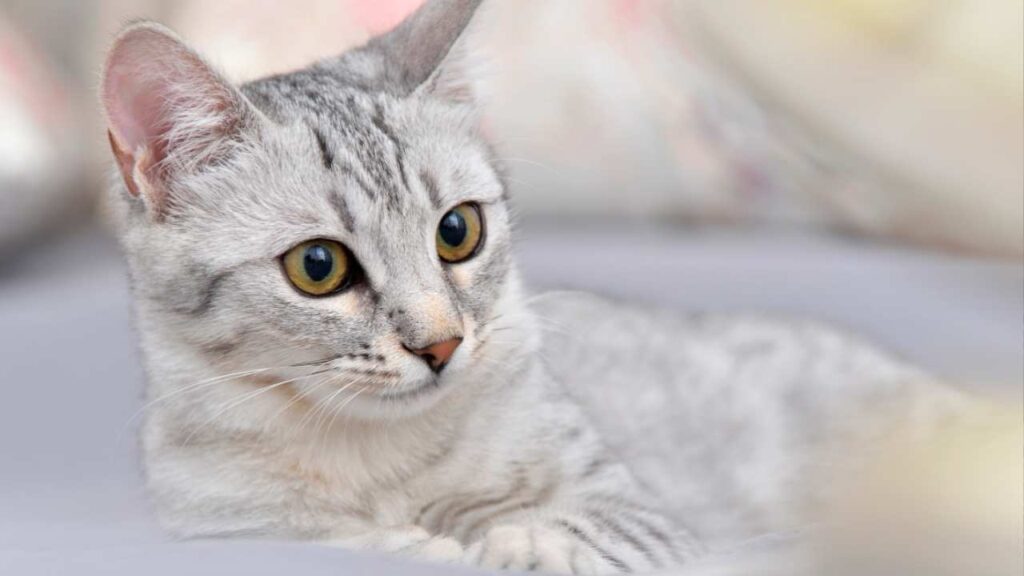
The Egyptian Mau, often simply called the Mau—the ancient Egyptian word for “cat”—is a naturally spotted breed revered since antiquity. Recognized for its vivid green eyes and sleek, athletic frame, this cat blends wild elegance with a deeply loyal temperament.
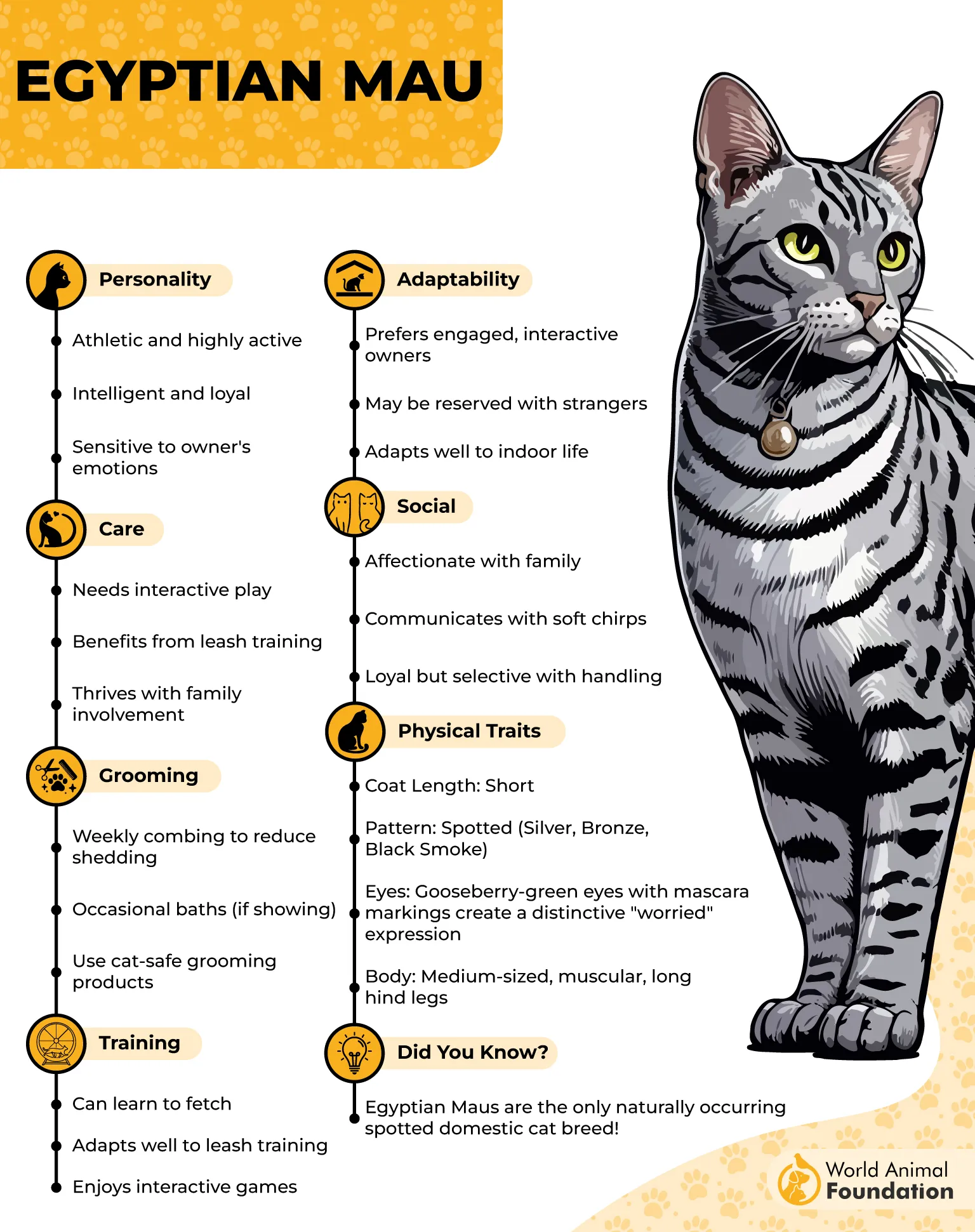
Built for life beyond the sofa, the Egyptian Mau excels outdoors thanks to remarkable speed, sharp reflexes, and keen awareness. Its powerful hind legs and flexible body allow sudden bursts of motion, giving it an edge when navigating open terrain or chasing prey.
For Breed #8: Water-Resistant Coats and Tough Paws, the Mau fits well with its close-lying, silky coat that repels light moisture and debris. The dense paw pads and strong toes provide traction and durability on rough or uneven ground, supporting confident exploration.
Curious by nature, this breed thrives in stimulating outdoor environments where it can patrol, observe, and hunt.
Fact: The Egyptian Mau is considered one of the fastest domestic cat breeds, capable of impressive sprinting speed.
9. European Shorthair

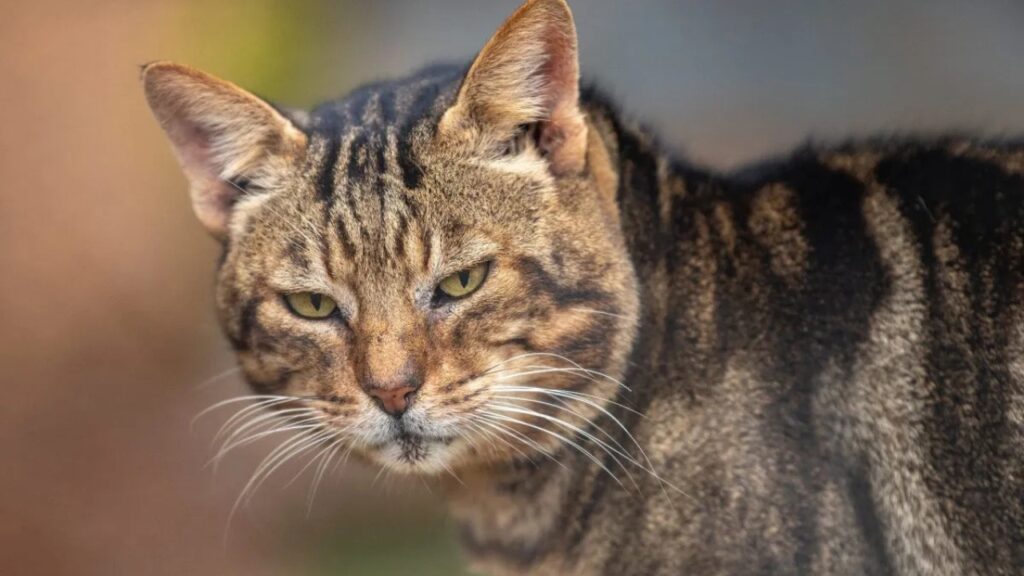
Also known simply as the European or European Domestic Shorthair, the European Shorthair is a pedigree cat that closely resembles the classic farm cat of Europe. With a muscular, balanced build and a short tabby coat often seen in gray, this breed reflects centuries of natural selection rather than deliberate design.
Renowned for its sharp hunting instincts, the European Shorthair thrives outdoors by keeping gardens and homes free of pests. Its medium energy level, curiosity, and strong prey drive make it especially capable of navigating open environments while staying mentally and physically engaged.
Adaptability is another survival asset of this breed. European Shorthairs adjust well to new territories and climates, a trait rooted in their development across Europe’s varied landscapes. Their cautious attitude toward strangers adds an extra layer of outdoor awareness, helping them avoid unnecessary risks.
Bred through nature rather than fashion, these cats are hardy and largely free from known hereditary diseases.
Fun fact: The European Shorthair was officially recognized as a distinct breed in 1982, preserving a lineage that dates back to ancient Roman times.
Conclusion
Cat breeds adapted to outdoor survival reflect the instincts of their wild ancestors, blending athletic body types, active nature, and sharp intelligence. From the oldest breeds linked to ancient Egypt to modern outdoor adventure cat companions, these feline friends thrive on fresh air, outdoor exploration, and independence.
Unlike indoor cats that rely on a litter box their entire life, an outdoor cat benefits from space, outdoor adventures, and a quiet place to retreat when needed—something pet parents should always consider. Some breeds are often counted among the best cat breeds for adventure cat lifestyles due to traits such as long legs, wild looks, spotted coat, and being extremely smart or highly trainable.
Many cats love to play fetch, enjoy interactive toys, love climbing, and easily adapt to new settings. Whether adopted from a local shelter or raised as people-oriented companions, these highly active, highly adaptable cats prove that domesticated cats can still honor their roots.
