




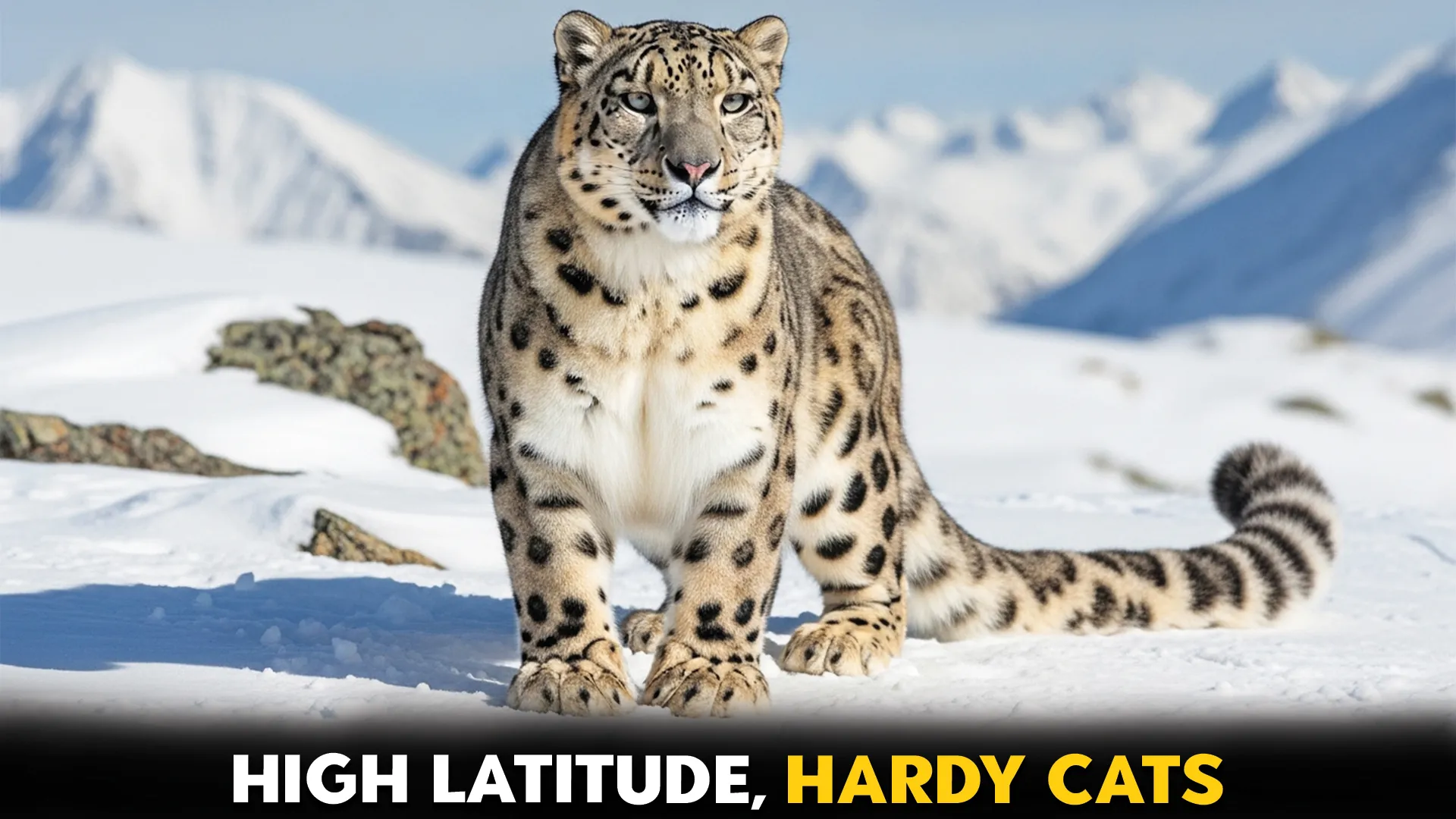
Life at high elevation is no easy feat—even for cats. Thin air, colder temperatures, rugged terrain, and intense sun exposure all shape how animals survive, move, and hunt. Yet some cat breeds have evolved remarkable traits that allow them to thrive where others would struggle.
High-altitude environments influence everything from body structure to behavior. Cats adapted to elevation often develop strong chests for efficient oxygen intake, muscular builds for navigating steep landscapes, and thick fur to protect against cold winds.
Balance, agility, and endurance also become essential traits, helping them traverse rocky ground while conserving energy in oxygen-poor conditions.
While wild cats from mountainous regions inspired many of these adaptations, select domestic and semi-domestic breeds carry similar traits. In this article, we’ll explore seven cat breeds uniquely suited for life at elevation and uncover the physical characteristics that help them flourish high above sea level.
Cat breeds adapted to high altitudes
1. Snow Leopard
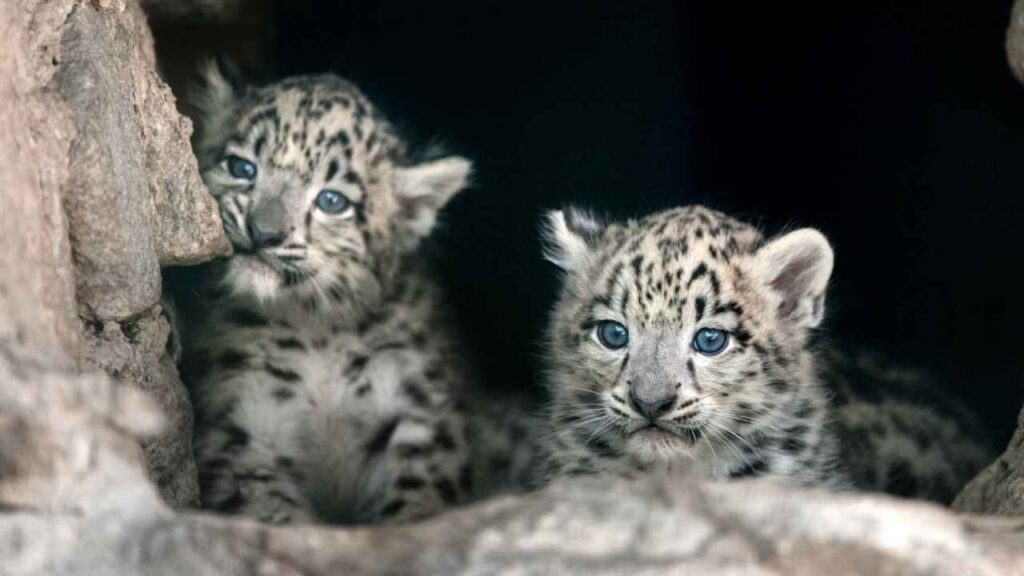
Often called the Ghost of the Mountains or Ounce, the Snow Leopard is an iconic big cat native to Central and South Asia, instantly recognized by its smoky-gray coat and shadowy presence.
According to Britannica, the snow leopard is a large, long-haired cat native to Asia and is classified within the Felidae family as either Panthera uncia or Uncia uncia. This elusive feline is not a domestic breed but a high-altitude specialist perfectly shaped by extreme environments.
Built to survive thin air, the Snow Leopard has an enlarged nasal cavity and powerful lungs that help it function at elevations reaching nearly 18,000 feet. Its thick, insulating fur protects against freezing temperatures, while a compact, muscular body conserves heat in cold climates.
Movement across steep, icy terrain is effortless thanks to wide, fur-covered paws that act like natural snowshoes. An exceptionally long, plush tail provides balance during dramatic leaps and doubles as a warm wrap when resting in harsh alpine conditions.
As an apex alpine hunter, this cat can leap up to six times its body length, navigating cliffs with unmatched agility and stealth.
Fact: Snow leopards inhabit mountainous regions across 12 countries, with up to 60% of their habitat located in China.
2. Andean Mountain Cat
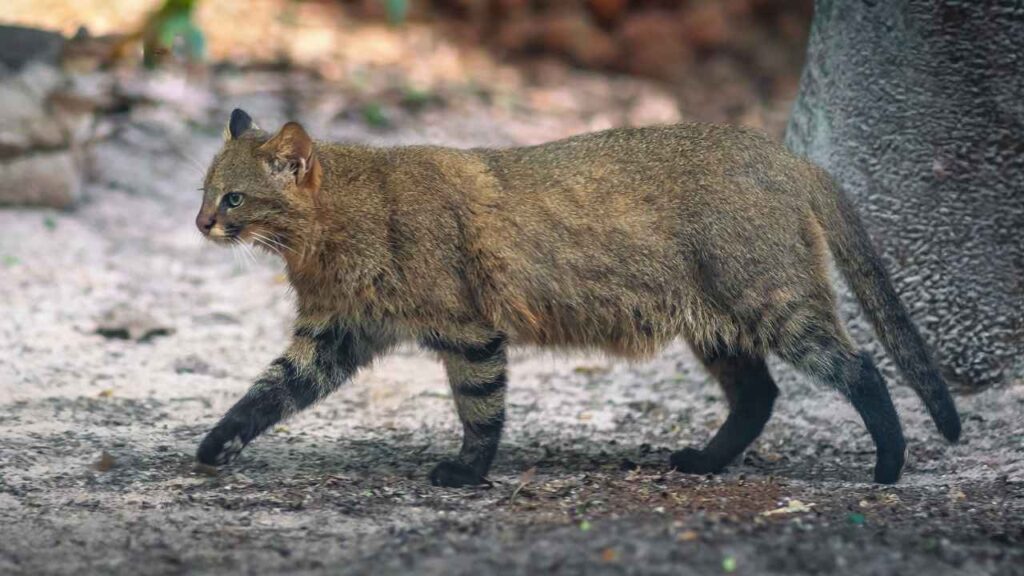
The Andean Mountain Cat, also known as Leopardus jacobita, is one of the rarest wild cats in the world. Native to the high Andes, it is a small, elusive feline uniquely shaped by life at extreme elevations.
According to One Earth, the Andean mountain cat has ashy-gray fur with a gray head, ears, and face, along with brown, patch-like stripes running horizontally across its back, a long bushy tail marked by six to nine dark brown to black rings, and juveniles displaying darker and smaller markings than adults.
Living above 12,000 feet, this cat thrives where oxygen is scarce and temperatures plunge. Its dense, silver-gray fur and thick undercoat provide critical insulation against freezing nights and fierce mountain winds.
A long, striped tail plays a vital role in balance, helping the cat move confidently across steep cliffs and rocky ledges. Strong lungs and a compact, muscular body support endurance in thin air and rugged terrain.
Highly specialized, the Andean Mountain Cat relies on small mountain mammals like chinchillas for survival. Revered by Indigenous Andean communities as a spiritual symbol, it is rarer than the snow leopard and remains one of the least-seen high-altitude cats on Earth.
3. Pallas’s Cat
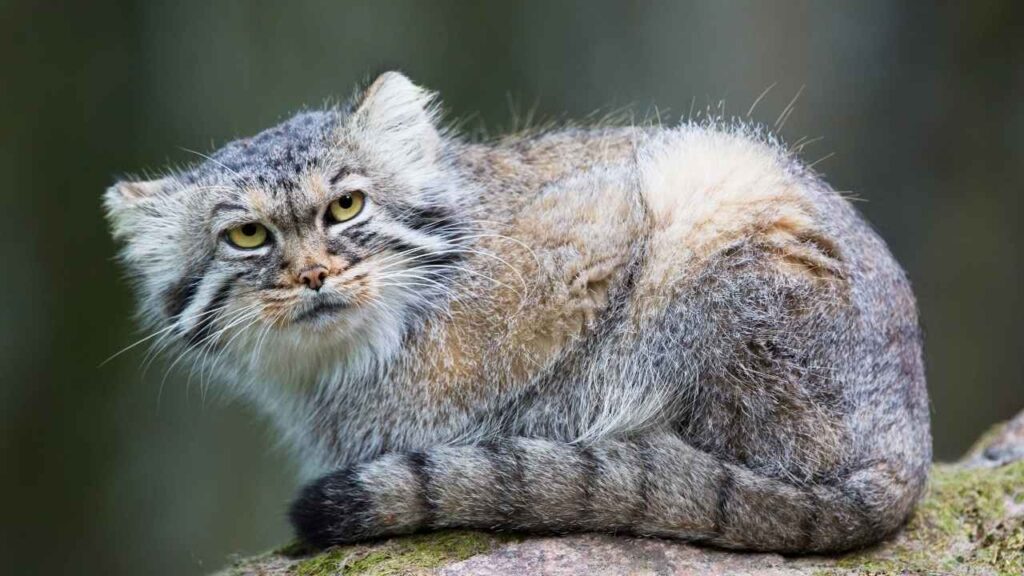
Pallas’s Cat, also known as the Manul, is a small wild feline named after the Prussian zoologist Peter Simon Pallas.
According to the Conservation of Pallas’s Cat, the Pallas’s cat is a small wild feline that is well adapted to the harsh environmental conditions of its habitat and is known for its secretive nature, making it rarely observed and relatively little studied.
Native to the rocky steppes and high mountains of Central Asia, this species is perfectly adapted to extreme altitudes. Its exceptionally dense, long fur insulates against snow, icy winds, and freezing temperatures common in regions like Mongolia, Tibet, and the Himalayas.
Unlike most cats, Pallas’s cats have round pupils instead of vertical slits, an adaptation that improves vision across open, treeless landscapes. They conserve energy in thin air by moving slowly and relying on stealth rather than speed when hunting.
Primarily nocturnal, they shelter in caves and crevices by day and hunt small mammals like pikas at night, even at elevations near Mount Everest.
Fact: Pallas’s cats have the densest fur of any feline, with nearly 9,000 hairs per square centimeter.
4. Chinese Mountain Cat
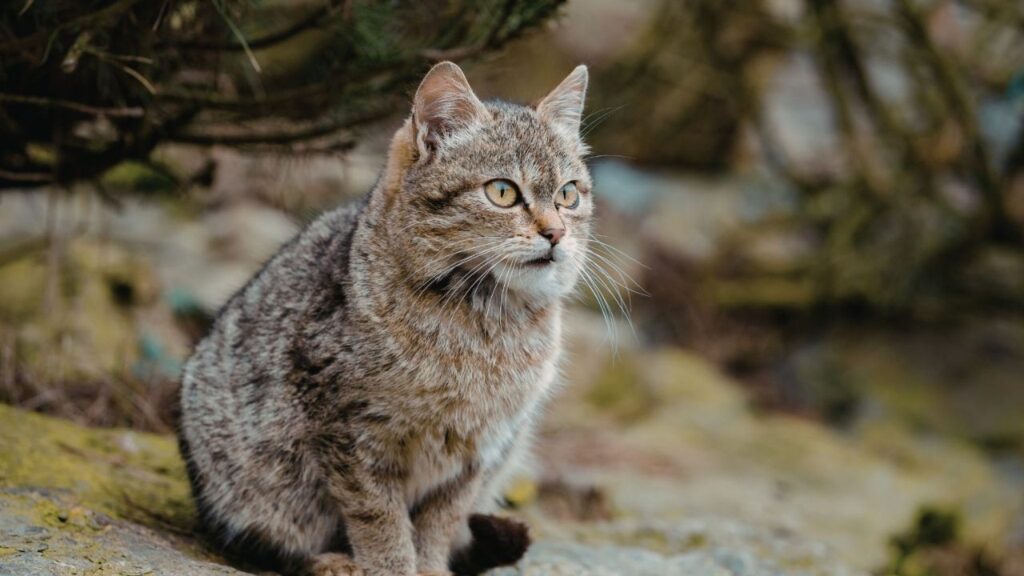
The Chinese Mountain Cat, also known as Felis bieti, is a rare wild feline native to China’s remote high-altitude plateaus. Found only in regions like Tibet and western China, this elusive species is perfectly built for life in rugged mountain landscapes.
Adapted to elevation, its sandy-gray coat blends seamlessly with rocky grasslands while providing insulation against harsh winds. A compact, stocky body and bushy tail help conserve heat, making survival possible in cold, thin-air environments where few predators roam.
This cat’s rounded, oversized paws offer excellent traction on snow and loose rock, allowing it to move confidently across steep slopes. Its short but powerful legs and muscular frame support agile climbing and silent stalking in terrain shaped by altitude and exposure.
Primarily nocturnal, the Chinese Mountain Cat relies on sharp senses and efficient movement to hunt rodents like pikas in hard-to-reach areas.
Fact: It was so secretive that it wasn’t photographed in the wild until 2007, highlighting just how rare and mysterious this high-altitude specialist truly is.
5. Eurasian Lynx
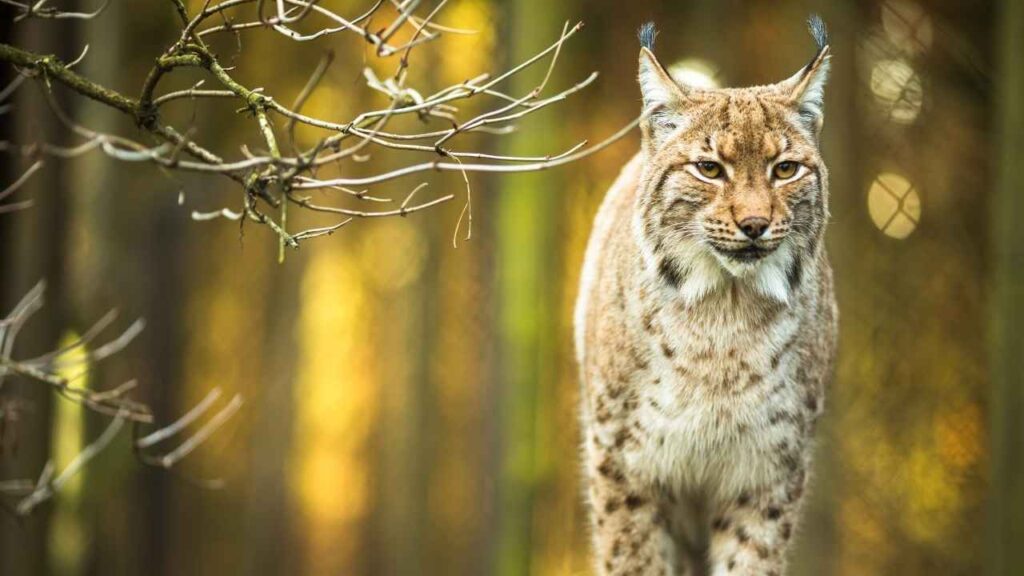
The Eurasian Lynx, also known simply as the Northern Lynx, is one of the largest wild cats adapted to mountainous regions across Europe and Asia. Recognized for its tufted ears, short bobbed tail, and powerful build, this elusive feline is perfectly shaped for life at high elevations.
Living in cold, forested mountains, the Eurasian Lynx relies on its thick seasonal coat to withstand harsh winters. Its fur becomes denser and paler in winter, helping with insulation and camouflage against snowy landscapes, while the beard-like ruff shields the throat from icy winds.
Endurance and strength define this high-altitude hunter. Broad, fur-covered paws act like natural snowshoes, allowing the lynx to move effortlessly across deep snow while tracking prey. Exceptional hearing and sharp eyesight help it detect movement beneath snow layers.
Built for rugged terrain, the Eurasian Lynx can overpower prey far larger than itself, showcasing remarkable stamina and agility in thin mountain air.
Fact: Some Eurasian lynx inhabiting the Altai Mountains have been reported to weigh over 70 pounds, making them the largest of all lynx species.
6. Clouded Leopard
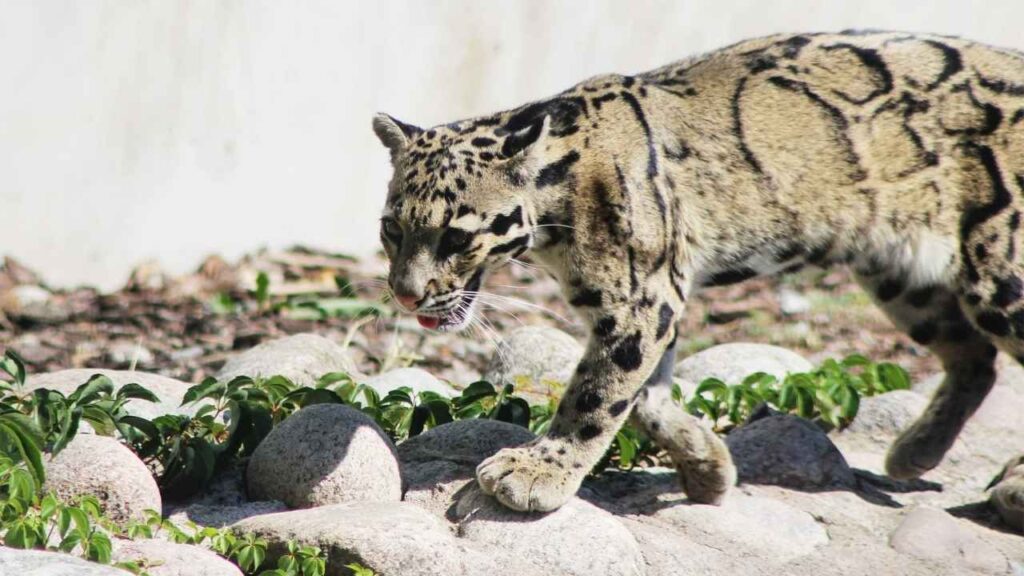
The Clouded Leopard, also known as the Mainland Clouded Leopard or Sunda Clouded Leopard, depending on region, is a medium-sized wild cat instantly recognized by its smoky, cloud-shaped markings. Native to Southeast Asia, this rare feline is built for rugged, elevated landscapes where forests meet hills and mountains.
Perfectly adapted to life above sea level, the Clouded Leopard relies on short yet powerful legs and an exceptionally flexible body to navigate steep terrain. Its strong limbs allow it to leap between branches and traverse narrow ridgelines, a skill especially valuable in mountainous rainforests.
Unlike many cats, this breed is highly arboreal, spending much of its time in trees. Flexible ankles enable it to climb down trunks headfirst, while its long tail helps maintain balance in uneven, high-altitude environments where agility is essential.
Despite its relatively compact size, the Clouded Leopard is a dominant predator, aided by unusually long canine teeth reminiscent of saber-toothed cats.
Fact: Camera-trap studies show Clouded Leopards are most often detected along narrow ridges rather than flat terrain, highlighting their preference for elevated landscapes.
7. Bobcat
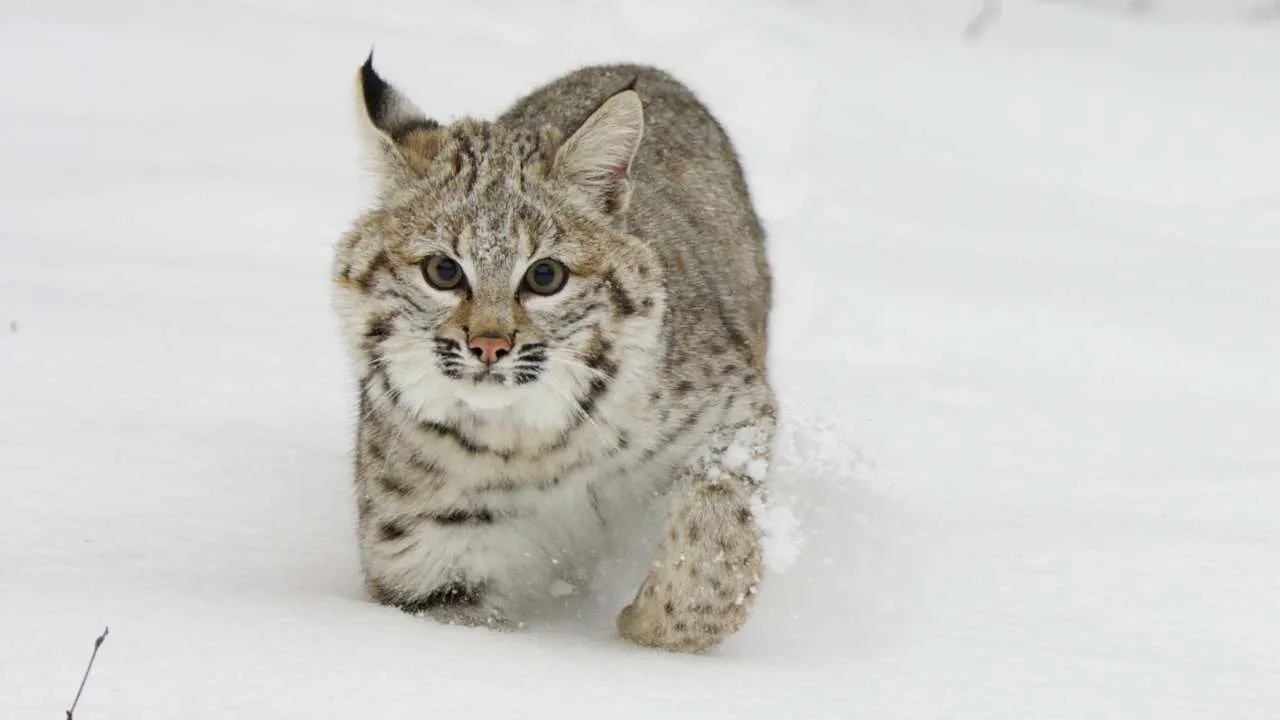
The Bobcat, also known as the red lynx, is a wild feline native to North America and a true specialist of rugged, high-altitude terrain. Roughly twice the size of a domestic cat, this stocky predator is instantly recognizable by its stubby tail, tufted ears, and alert, piercing gaze.
Built for survival in harsh elevations, bobcats thrive in rocky hills, dense forests, and mountainous regions. Their compact, muscular bodies help conserve heat, while strong lungs and endurance allow them to function efficiently in thin mountain air.
A spotted, orange-tan coat provides excellent camouflage among boulders, snow, and forest shadows. Specialized paw pads offer grip on slippery rock and icy ground, making steep climbs and sudden leaps second nature in uneven terrain.
Bobcats are solitary, territorial hunters with sharp instincts, most active at dawn and dusk. Their keen eyesight can detect prey from impressive distances, even in low mountain light.
Fact: An adult bobcat typically weighs around 20 pounds and can spot small prey from nearly 100 feet away in mountainous environments.
Conclusion
Cats adapted to high altitudes showcase how evolution equips a wild cat species to survive thin air and rugged terrain. These felines share traits like large paws, a thick tail, rounded ears, and an elongated body that support balance, warmth, and agility in the Andes Mountains and other elevated regions.
Unlike a typical house cat or leopard cat, these specialists are primarily active hunters, relying on stealth to catch small rodents and small birds among rocks and cliffs.
However, many of these high-altitude hunters face serious threats. Habitat loss, habitat destruction, and the illegal wildlife trade continue to endanger populations, prompting conservation efforts.
With distinctive markings like dark rings and powerful builds, these cats remind us how fragile mountain ecosystems are—and why protecting them matters for the future of these remarkable survivors.
