




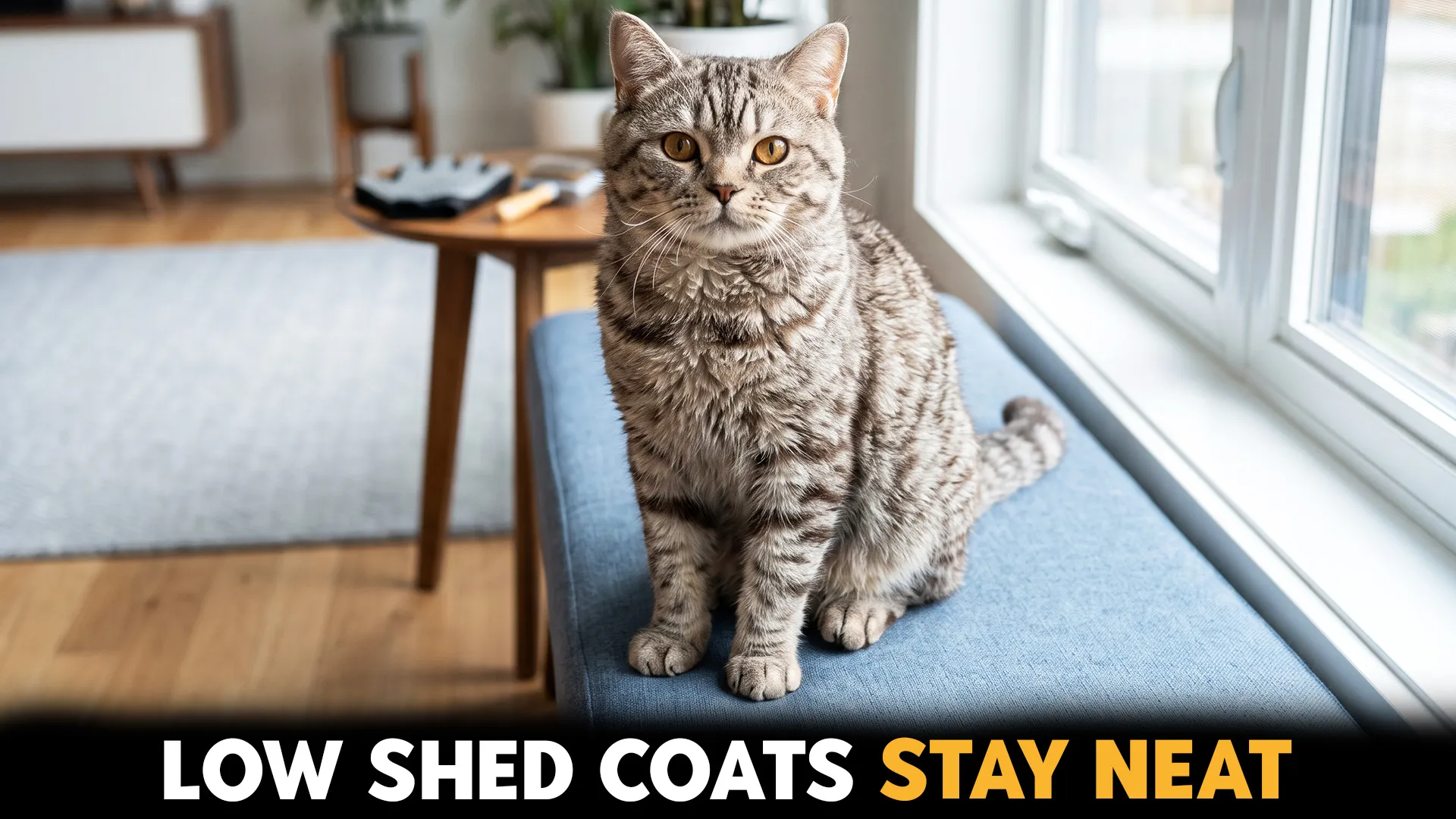
Cats bring comfort and companionship, but loose fur on furniture, clothing, and floors can make pet ownership more challenging. Shedding is a natural process that varies depending on a cat’s coat type, genetics, and growth cycle.
Although no cat is completely shed-free, some breeds typically leave less hair around the house than others. They can be appealing to owners who prefer easier coat maintenance, though individual grooming needs still vary, and low shedding does not guarantee fewer allergy symptoms.
Explore seven low-shedding cat breeds and discover their distinctive coats, personalities, and care requirements before choosing your next feline friend.
Best Low-Shedding Cat Breeds
1. Cornish Rex
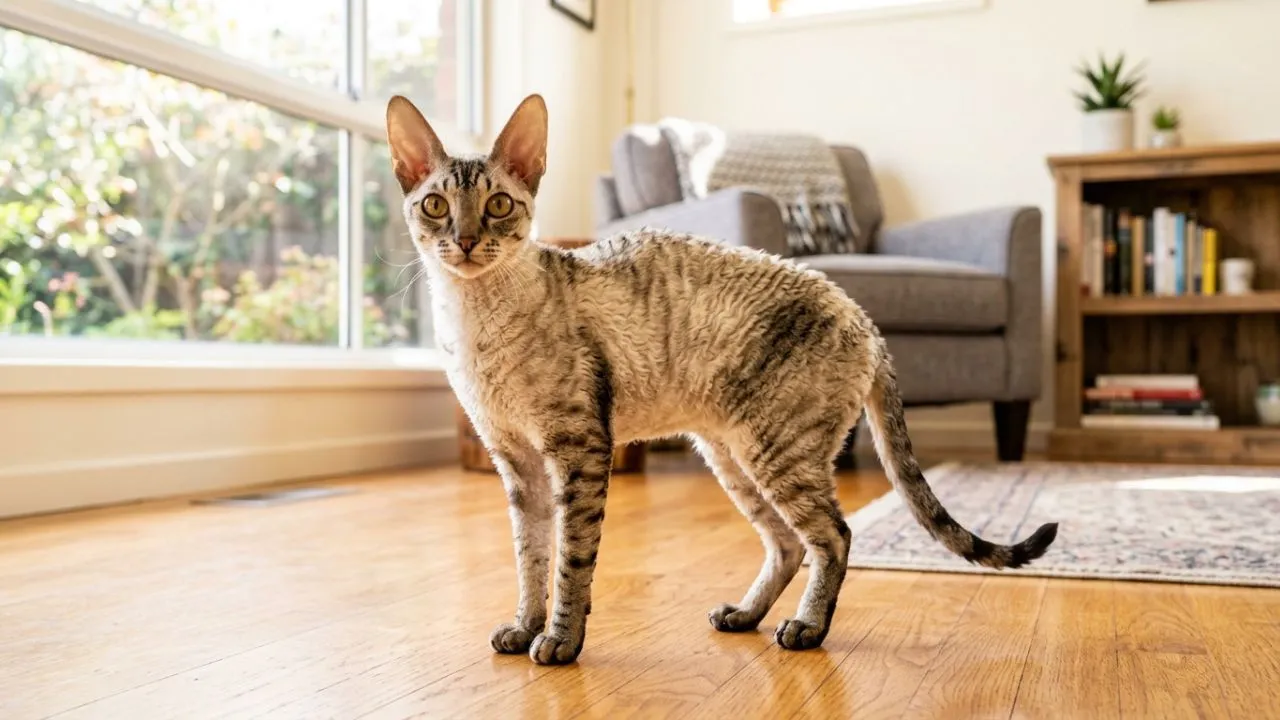
The Cornish Rex is a great choice for people who prefer less cat hair around their homes. Although not hairless, this breed has a short, close-fitting curly coat that typically sheds less than the fur of many other cats.
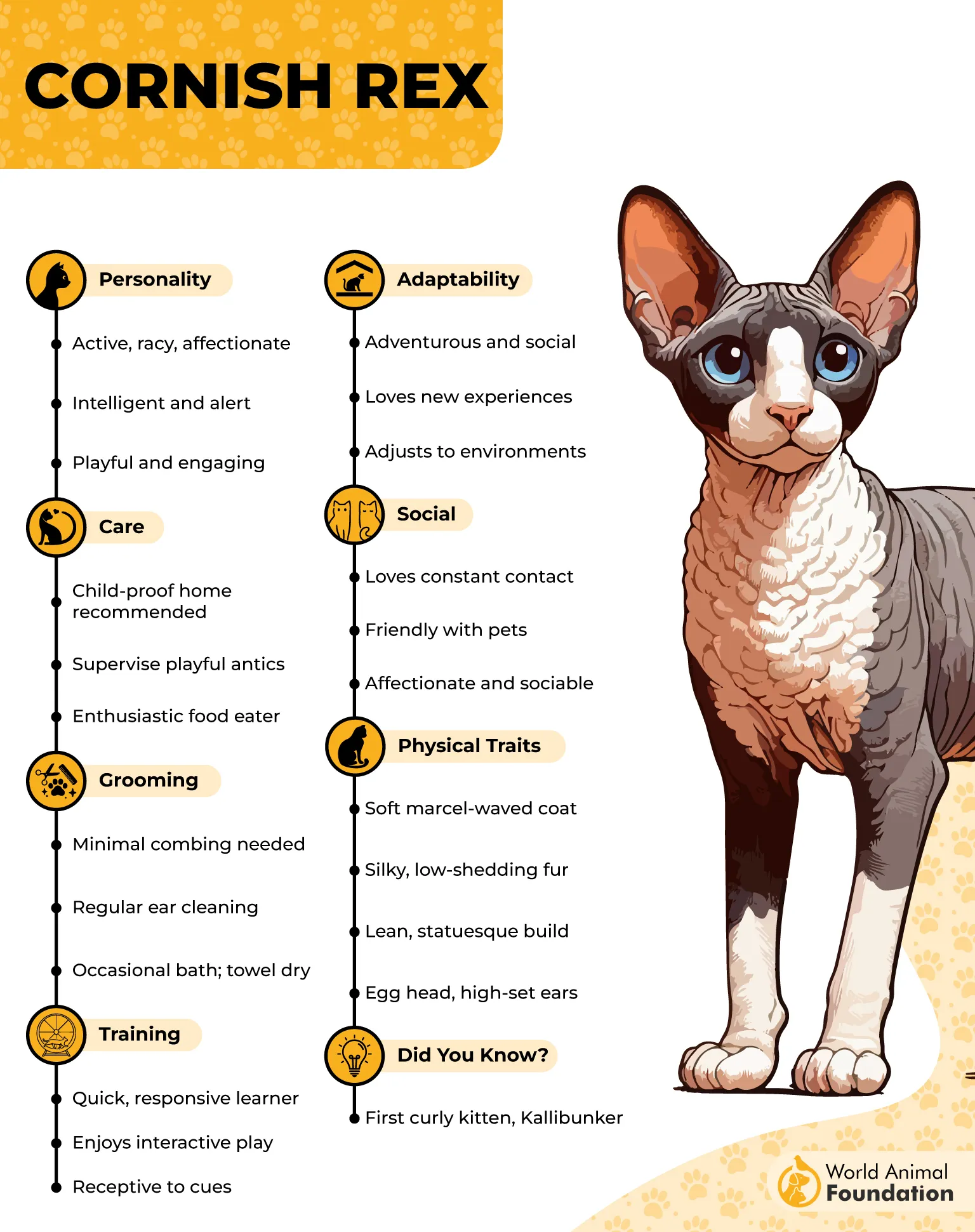
Its velvety undercoat feels remarkably soft and gives the breed its signature rippled appearance. With large ears and a slender frame, the Cornish Rex has an unusual look that makes it easy to recognize.
Beyond its distinctive fur, this cat is energetic, playful, and eager for interaction. Owners should be prepared to provide regular play sessions and stimulating activities to keep this lively companion engaged.
According to PetMD, Cornish Rex cats can keep themselves occupied with solo play but especially enjoy interactive games and activities with their owners.
How This Breed Stands Out
Soft, rippled coat with no guard hairs: Its fine, curly fur consists primarily of an undercoat, contributing to its distinctive texture and relatively low shedding.
Curly whiskers and arched back: Naturally curled whiskers and an elegantly curved back add to this breed’s unusual appearance.
2. Abyssinian

Abyssinians are an excellent option for owners seeking a cat that leaves relatively little loose fur around the house. Their short, fine coat has a distinctive ticked pattern, with multiple shades on individual hairs creating a beautiful, shimmering effect.
According to PDSA, these cats can amuse themselves with toys but also appreciate spending time and playing with their human companions.
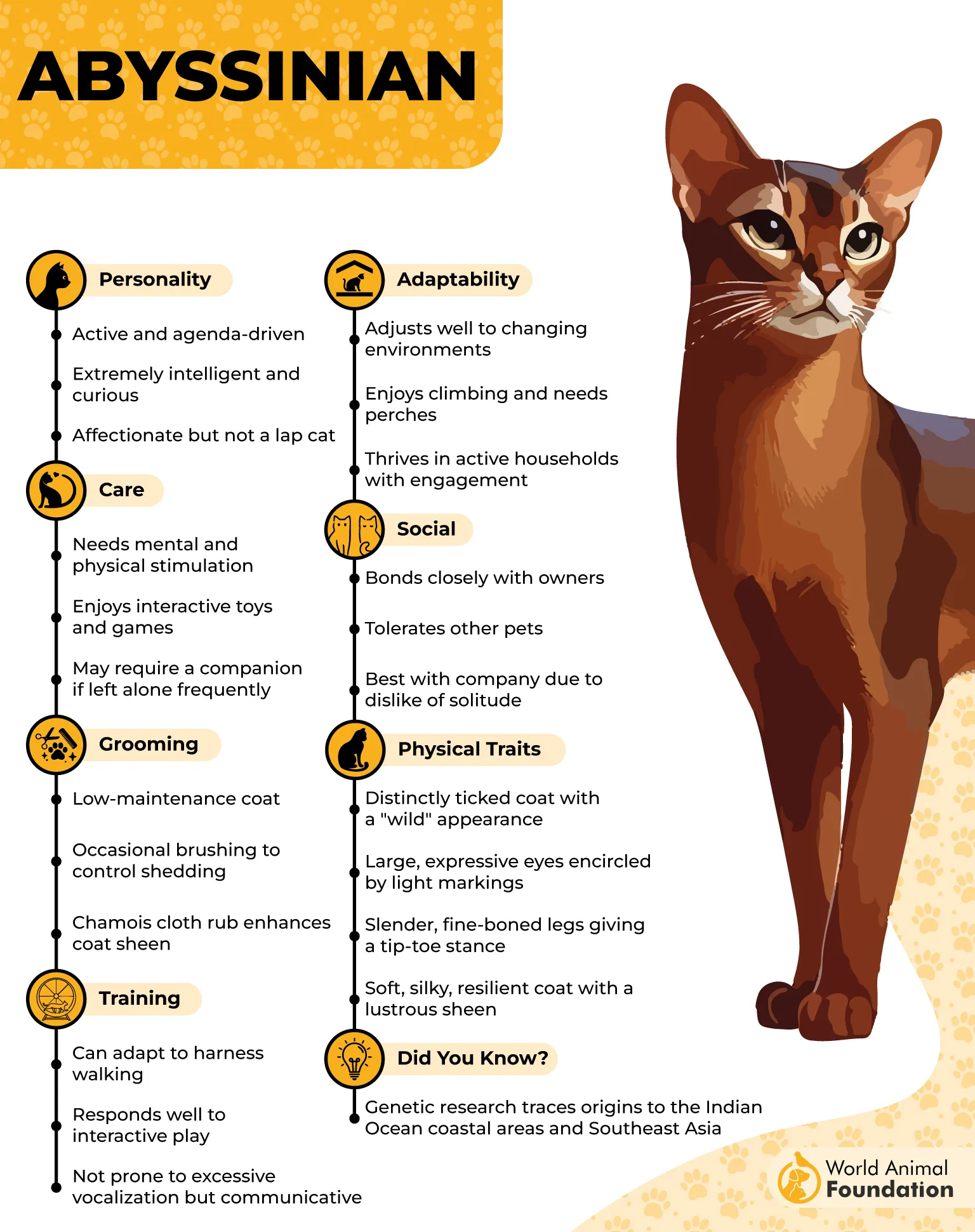
Grooming is straightforward, as occasional brushing helps remove loose hairs and maintain the coat’s silky texture. Their fur appears in several colors, including ruddy, cinnamon, blue, and fawn, giving each cat a distinctive look.
These intelligent felines are constantly exploring, jumping, and climbing. Their slim, muscular bodies support an athletic lifestyle, while puzzle toys and climbing structures provide valuable mental and physical stimulation.
How This Breed Stands Out
Short, ticked coat with a shimmering finish: Each hair features contrasting color bands, creating a lustrous appearance with minimal shedding.
Agile, athletic build: Their lean, muscular bodies and fine-boned legs make them skilled climbers and energetic explorers.
3. American Wirehair
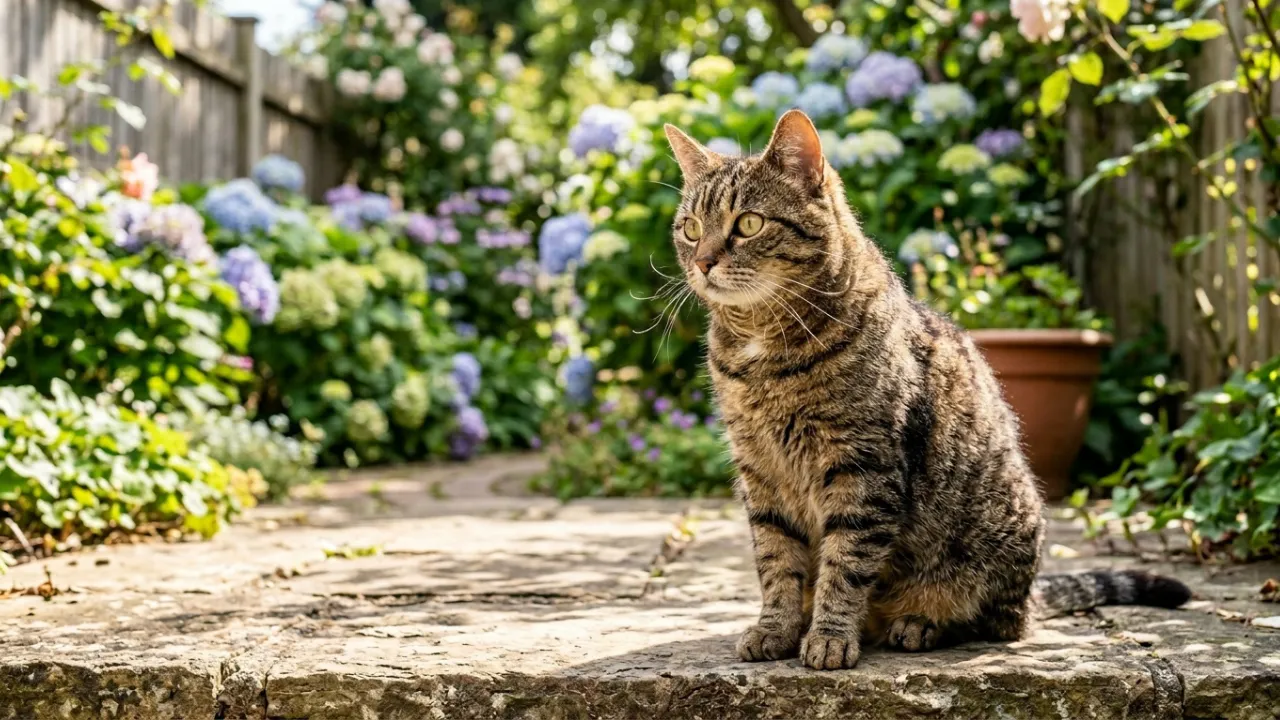
The American Wirehair stands out for its unusual, coarse coat, which feels different from the smooth fur of many other cats. Its crimped hairs can trap loose strands within the coat, helping reduce the amount of fur scattered around the home.
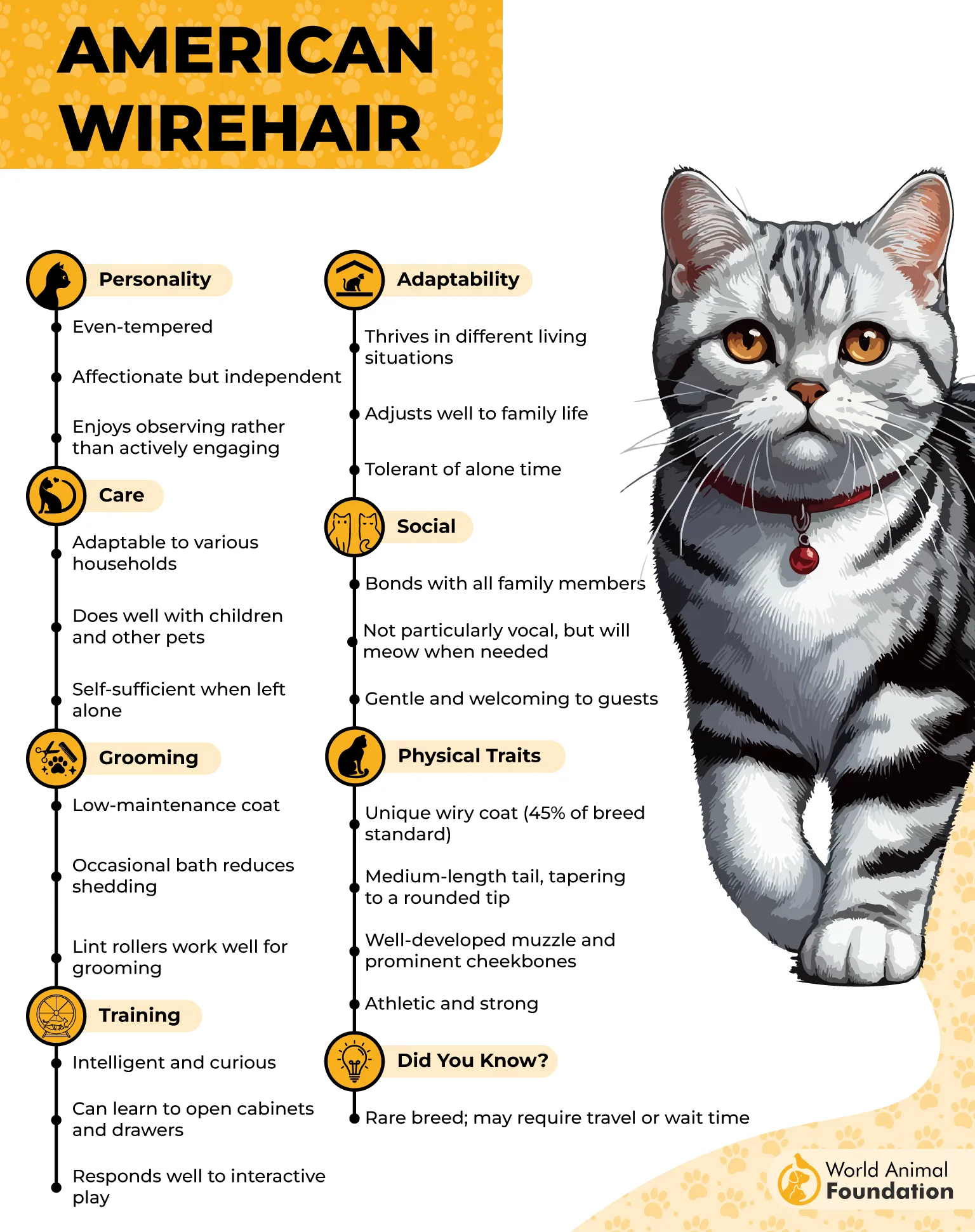
Despite its rugged appearance, this domestic breed is generally affectionate, adaptable, and relaxed. American Wirehairs enjoy playful activities and family company but can also appreciate independent downtime, making them versatile household companions.
Their distinctive fur needs gentle care to prevent tangles and remove trapped loose hairs. Avoid excessive brushing, as their unusual coat can be delicate; occasional bathing may help clear away shedding fur when necessary.
According to WebMD, these cats are easy to train and often enjoy games like fetch. Short, relaxed training sessions work best because they also love cuddling and spending quiet time with their owners.
How This Breed Stands Out
Springy, crimped coat texture: Its coarse, bent hairs create a naturally wiry appearance that helps retain loose fur within the coat.
Distinctive wiry whiskers: The whiskers can also appear crimped or bent, adding another unusual feature to this breed’s appearance.
4. Bengal
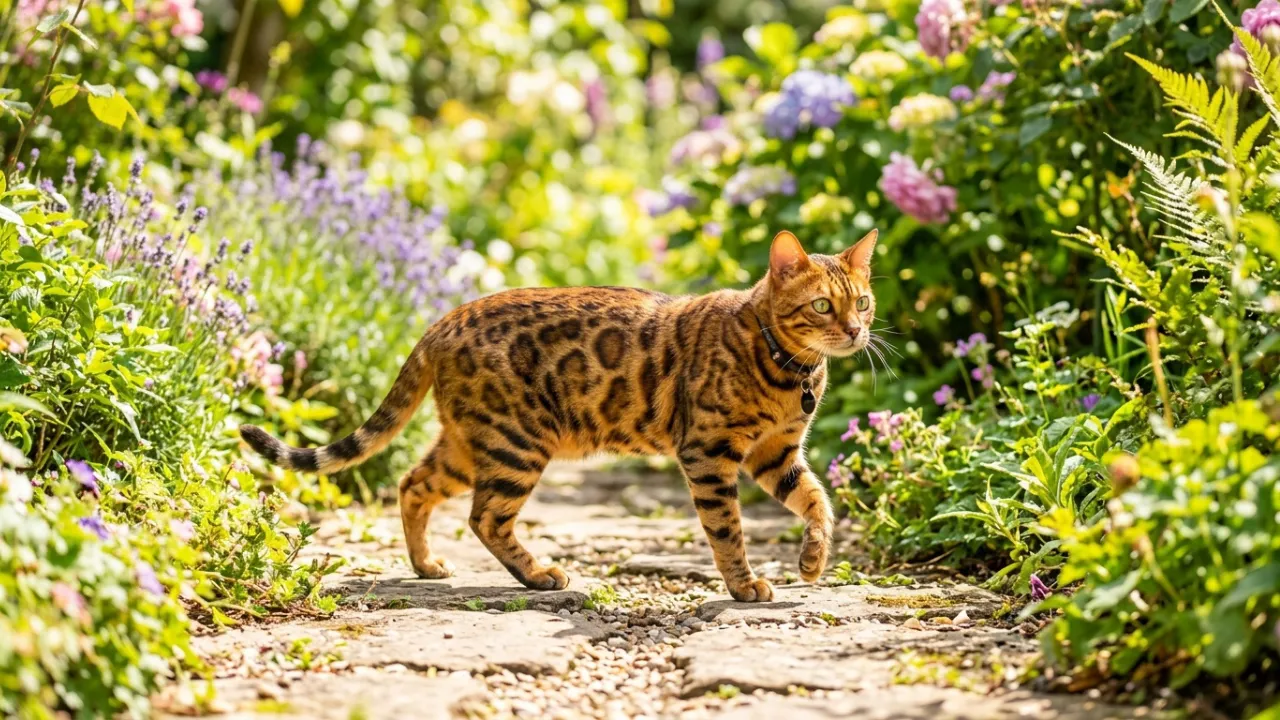
Bengal cats are admired for their big appearance and relatively low-shedding coats. Their short, fine fur lies close to the body, making routine grooming simple and helping reduce loose hair around the home.
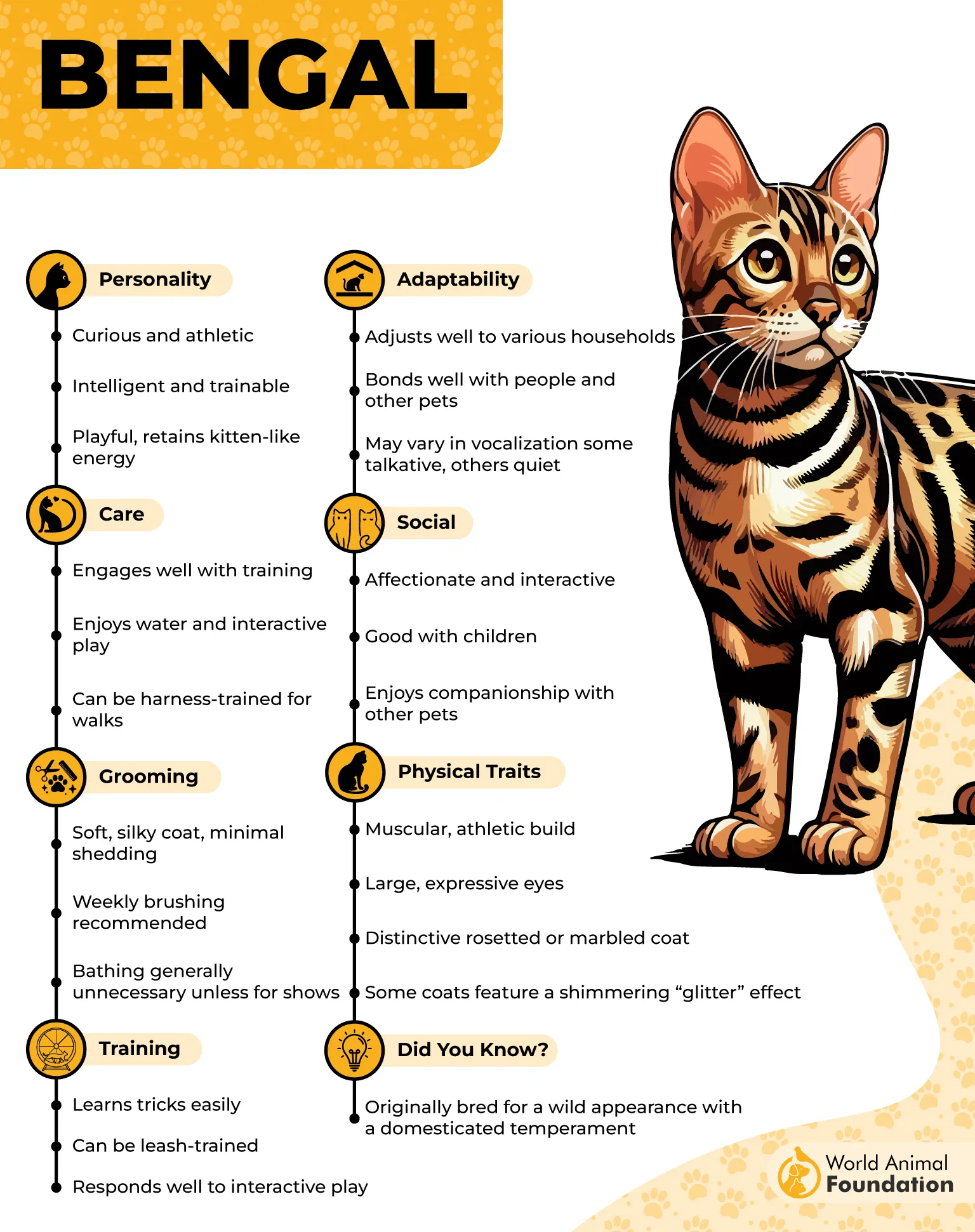
Their striking coats feature spotted or marbled patterns, with some Bengals displaying rosette markings reminiscent of wild leopards. Certain cats also have a shimmering effect in their fur that catches the light beautifully.
Beneath this glossy coat is a lean, muscular body built for agility. Bengals are energetic, curious, and playful, so climbing structures, interactive toys, and regular activity help satisfy their need for stimulation.
How This Breed Stands Out
Glossy coat with leopard-like markings: Their sleek fur showcases distinctive spots, marbling, or rosettes, creating a wild-inspired appearance.
Sleek, muscular physique: Their athletic build supports impressive jumping, climbing, and energetic play.
5. Russian Blue
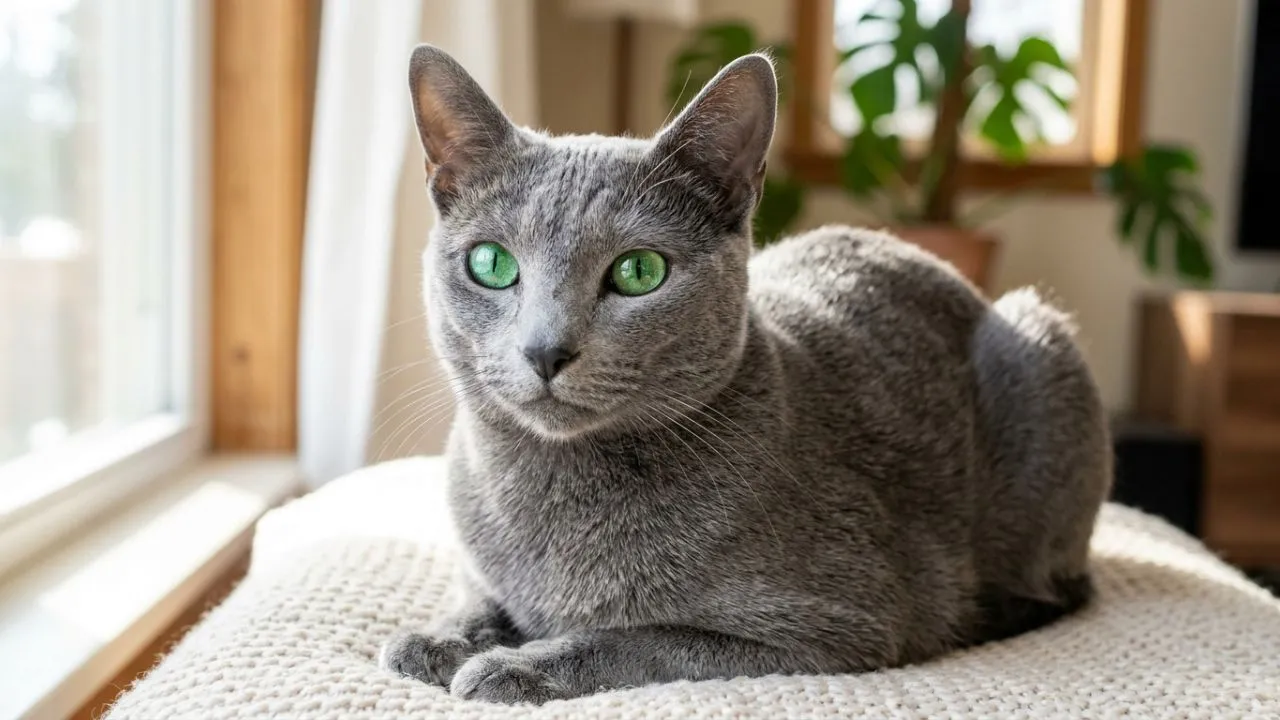
Russian Blues are a popular choice for owners who prefer a cat that leaves relatively little fur around the house. Their dense, plush coat sheds minimally through much of the year, although seasonal shedding may increase during spring and fall.
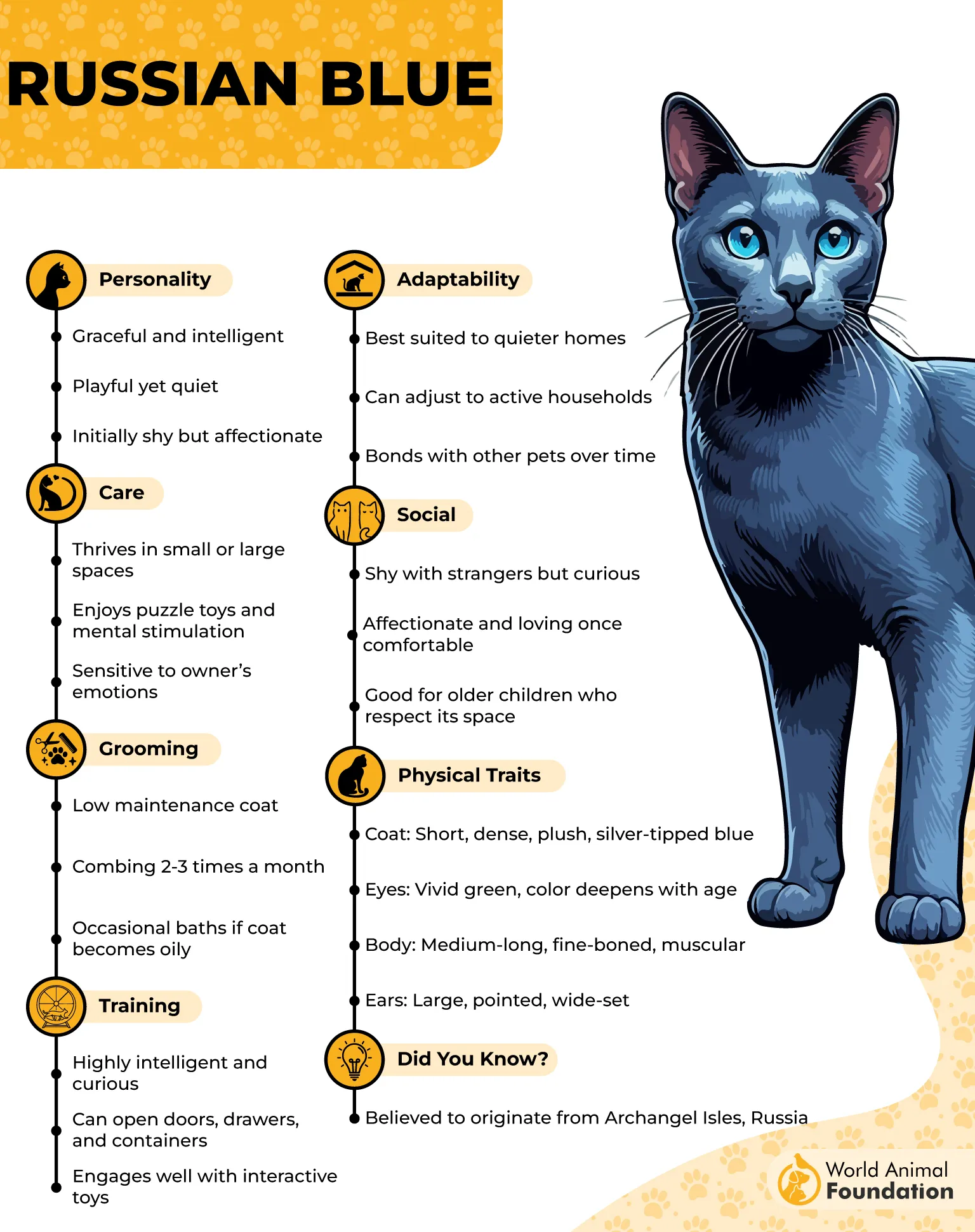
The breed’s blue-gray fur has delicate silver tips that create a beautiful shimmer. Beneath the smooth outer layer sits a soft, thick undercoat, giving the coat its characteristic plush texture and helping retain loose hairs close to the body.
Naturally clean and attentive to their own grooming, Russian Blues need only occasional brushing to keep their fur neat. Their striking green eyes and graceful features further distinguish these quiet, observant cats.
How This Breed Stands Out
Dense, silver-tipped blue-gray fur: The subtle silver coloring gives their short coat a distinctive sheen.
Plush double coat: A soft undercoat beneath the outer fur creates a thick, velvety feel while helping keep loose hairs contained.
6. Sphynx

The Sphynx is an excellent option for people seeking a cat that leaves virtually no loose fur around the home. Although commonly described as hairless, its skin is usually covered in a delicate layer of fine fuzz that gives it a soft, suede-like feel.
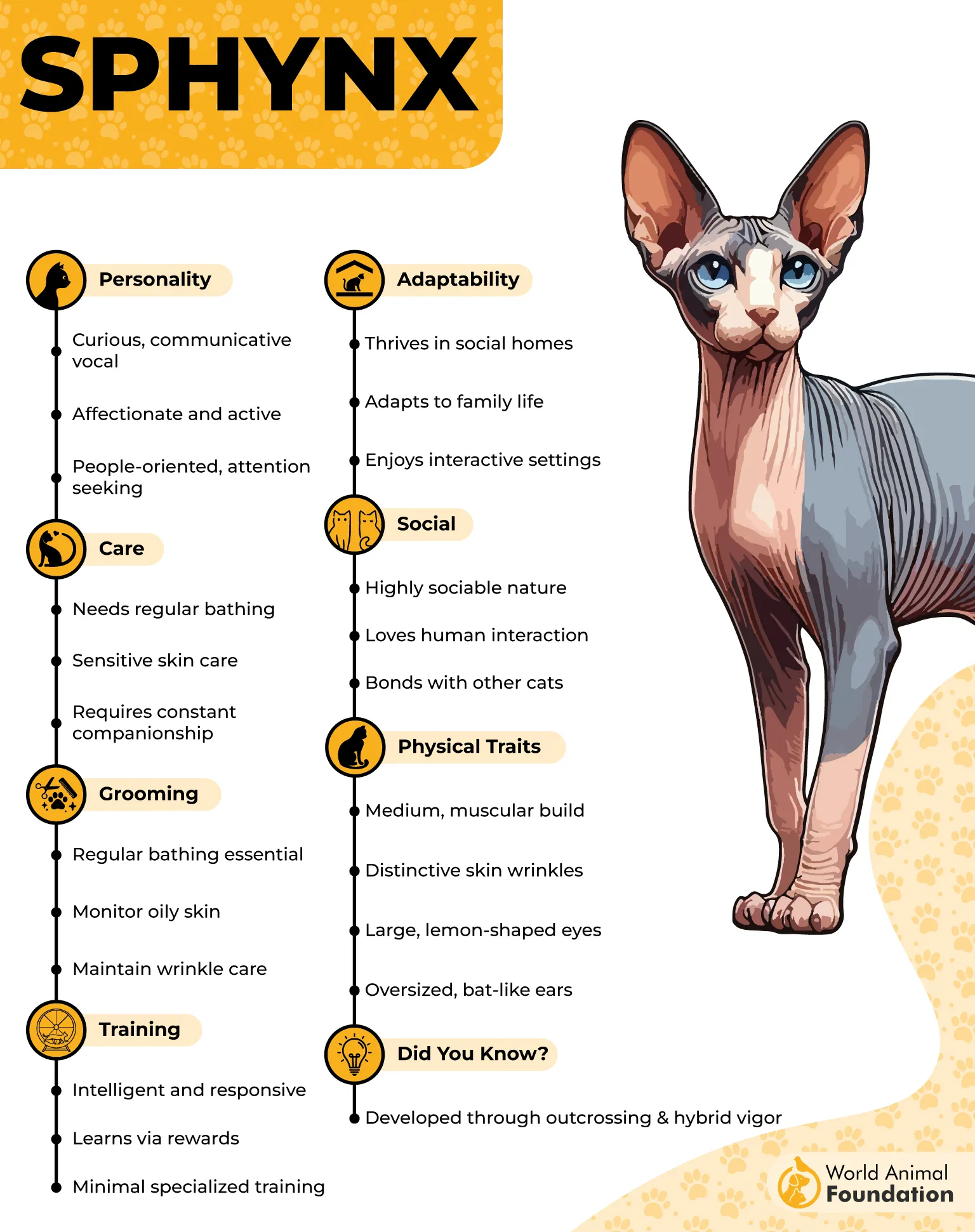
Without a thick coat, this breed needs special attention to stay comfortable. Sphynx cats can be sensitive to cold and direct sunlight, so warm resting spots and appropriate sun protection are important.
Their skin naturally accumulates oils, making occasional baths and gentle cleaning necessary to maintain skin health. While brushing is generally unnecessary, regular skin care remains an essential part of their routine.
How This Breed Stands Out
Nearly hairless, suede-like skin: A thin layer of soft fuzz creates the breed’s distinctive texture while leaving very little hair to shed.
Prominent cheekbones and oversized ears: Their striking facial structure and unusually large ears contribute to their unmistakable appearance.
7. Devon Rex
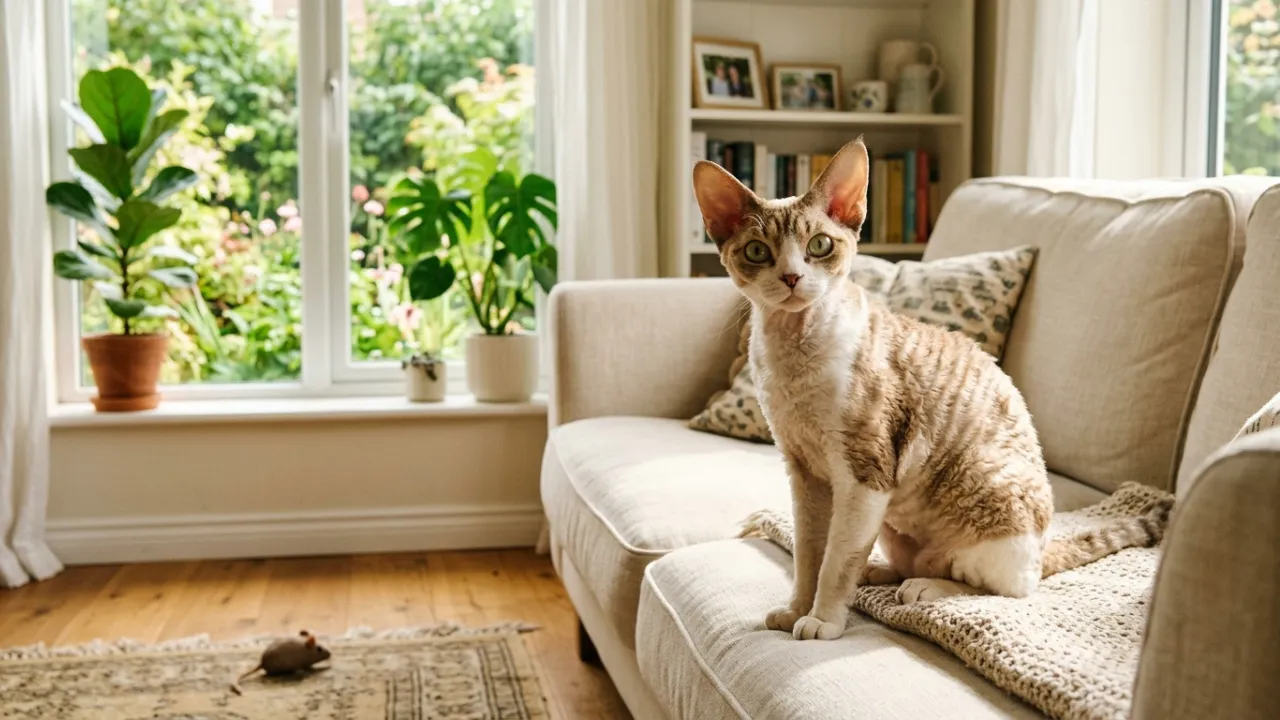
The Devon Rex has a short, delicate coat with soft waves and curls that typically leaves less noticeable fur around the home. Although shedding can increase during seasonal changes, its fine hairs are usually less conspicuous than those of longer-haired cats.
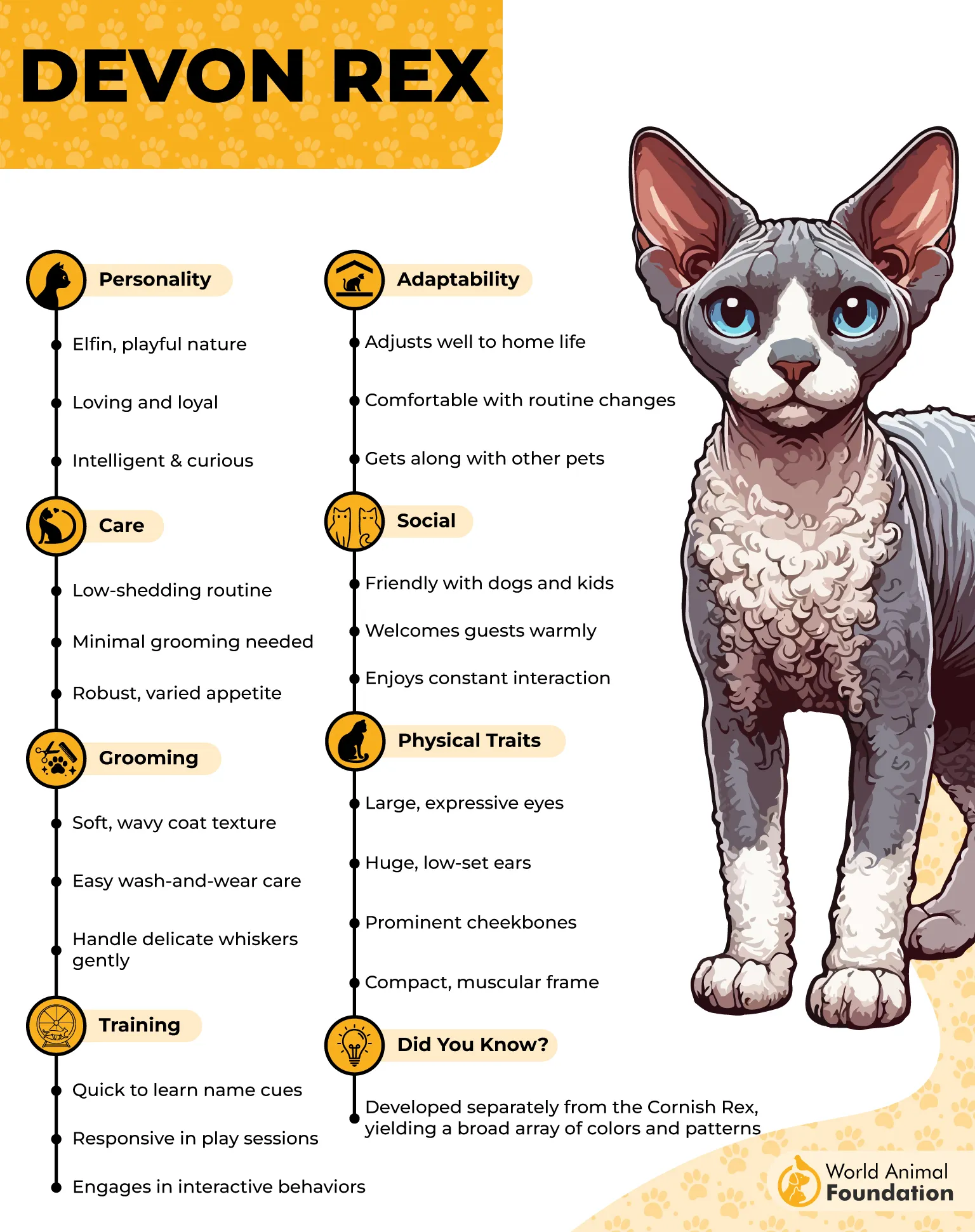
Its coat may look tousled or feel like soft suede, complementing a distinctive appearance featuring high cheekbones, large eyes, and oversized ears. Because the fur is fragile, gentle handling and infrequent brushing are preferable to vigorous grooming.
Beyond its unusual looks, the Devon Rex is affectionate, clever, and highly people-oriented. This playful breed thrives on attention and companionship, so it may struggle in households where everyone spends long periods away.
How This Breed Stands Out
Fine, wavy coat with sparse guard hairs: Its delicate, curly fur requires gentle care to preserve its texture.
Pixie-like face and oversized ears: Large ears, prominent cheekbones, and expressive eyes give this cat an elfin appearance.
Conclusion
Choosing a cat for a home with dogs involves finding a personality that complements your canine companion. Maine Coons and Ragdolls are sociable, affectionate breeds that can enjoy sharing family life with other pets.
Siberian cats bring confidence and athleticism, while Birmans offer gentle companionship and playful curiosity. Norwegian Forest Cats appreciate climbing spaces where they can retreat when they need a break from household activity.
Tonkinese cats are outgoing and enjoy interactive play, which can help encourage positive interactions with canine housemates. However, every cat has an individual temperament, so breed characteristics should guide rather than guarantee compatibility.
Successful introductions require patience, supervision, and separate spaces for eating, resting, and retreating. By respecting each animal’s boundaries and allowing relationships to develop gradually, owners can create a comfortable home where cats and dogs coexist peacefully.
