




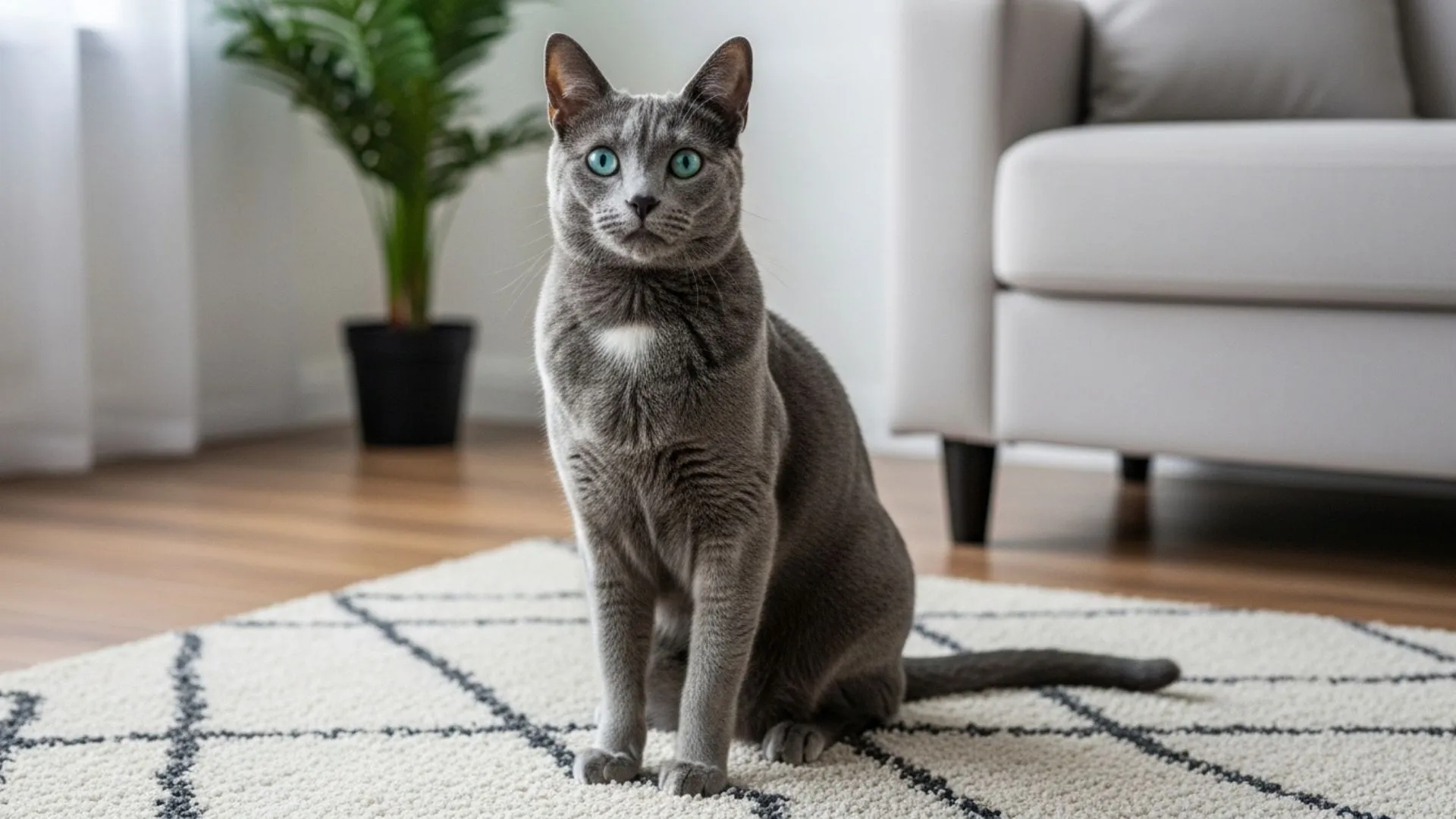
Living with cats while managing allergies may seem challenging, but certain breeds make it far more achievable. Some cats naturally produce fewer allergens or shed less, making them more suitable for sensitive individuals. Understanding why these breeds are different can help you enjoy feline companionship without constant discomfort.
Cat allergies are not caused by fur itself but by a protein called Fel d one, found in cats’ saliva, skin flakes, and other secretions. When cats groom, this protein spreads onto their coat and into the environment. Breeds often labeled as hypoallergenic are not completely allergen-free, but they tend to release lower amounts, which can make a noticeable difference.
Choosing the right cat is only part of the solution. Keeping living spaces clean, bedding regularly, reducing loose dander, and maintaining a consistent care routine can greatly improve comfort. With the right approach, it’s entirely possible to share your home with a cat while keeping allergy symptoms under control.
Best cat breeds for people with allergies
1. Siberian
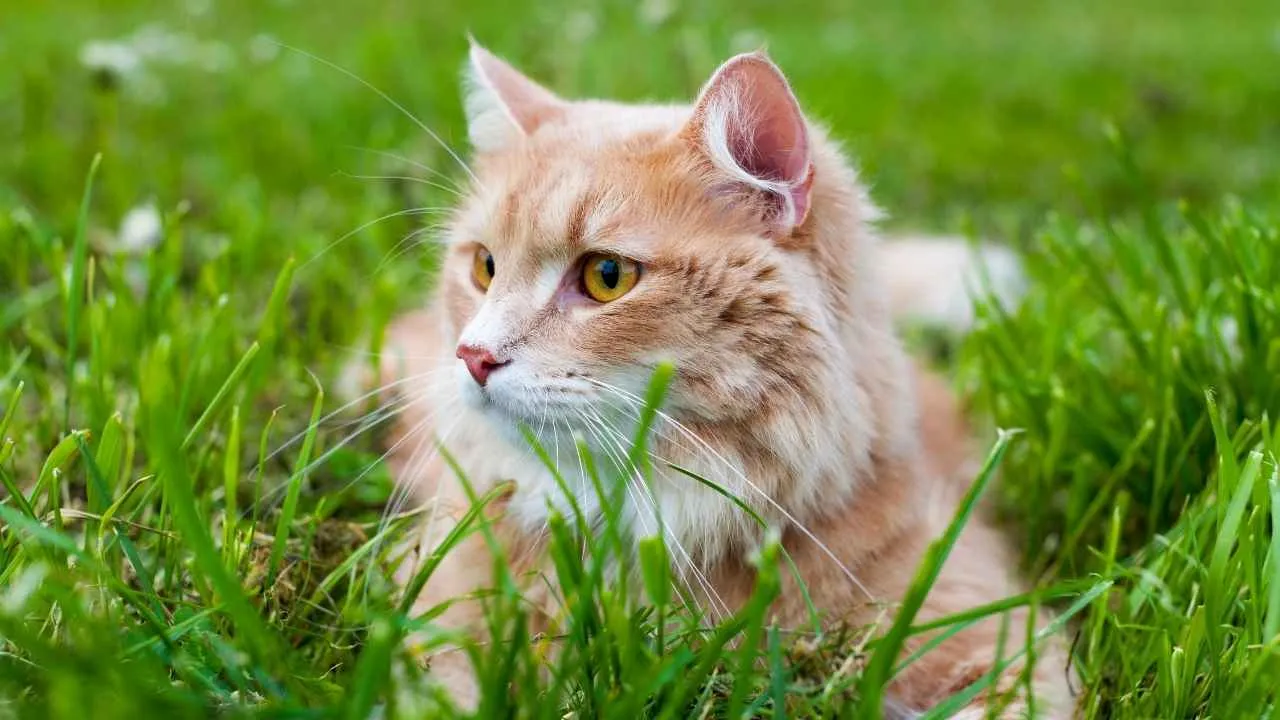
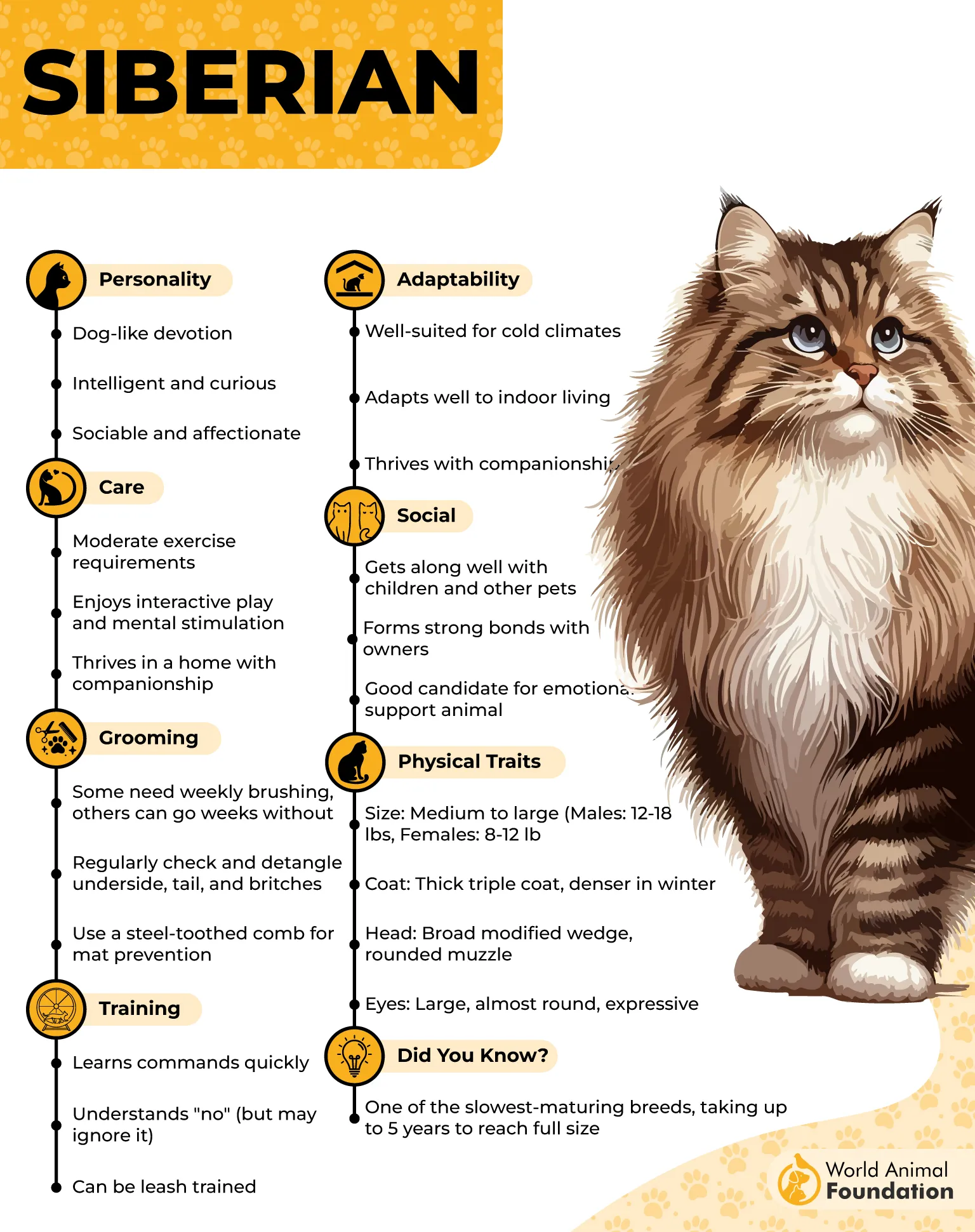
The Siberian, sometimes called the Siberian Forest Cat, is a large, fluffier-haired breed known for its thick triple coat and strong, muscular build. Despite its rugged appearance, it is a gentle and affectionate companion.
According to Royal Canin, there are no hypoallergenic cat breeds, though Siberians may trigger fewer allergic reactions, possibly due to lower levels of allergen-producing proteins—an area still being studied.
The Low-Allergen Companion with Minimal Dander
Siberians are often considered a good choice for allergy sufferers because they tend to produce lower levels of allergen proteins compared to many other breeds. This can make living with them more manageable for sensitive owners.
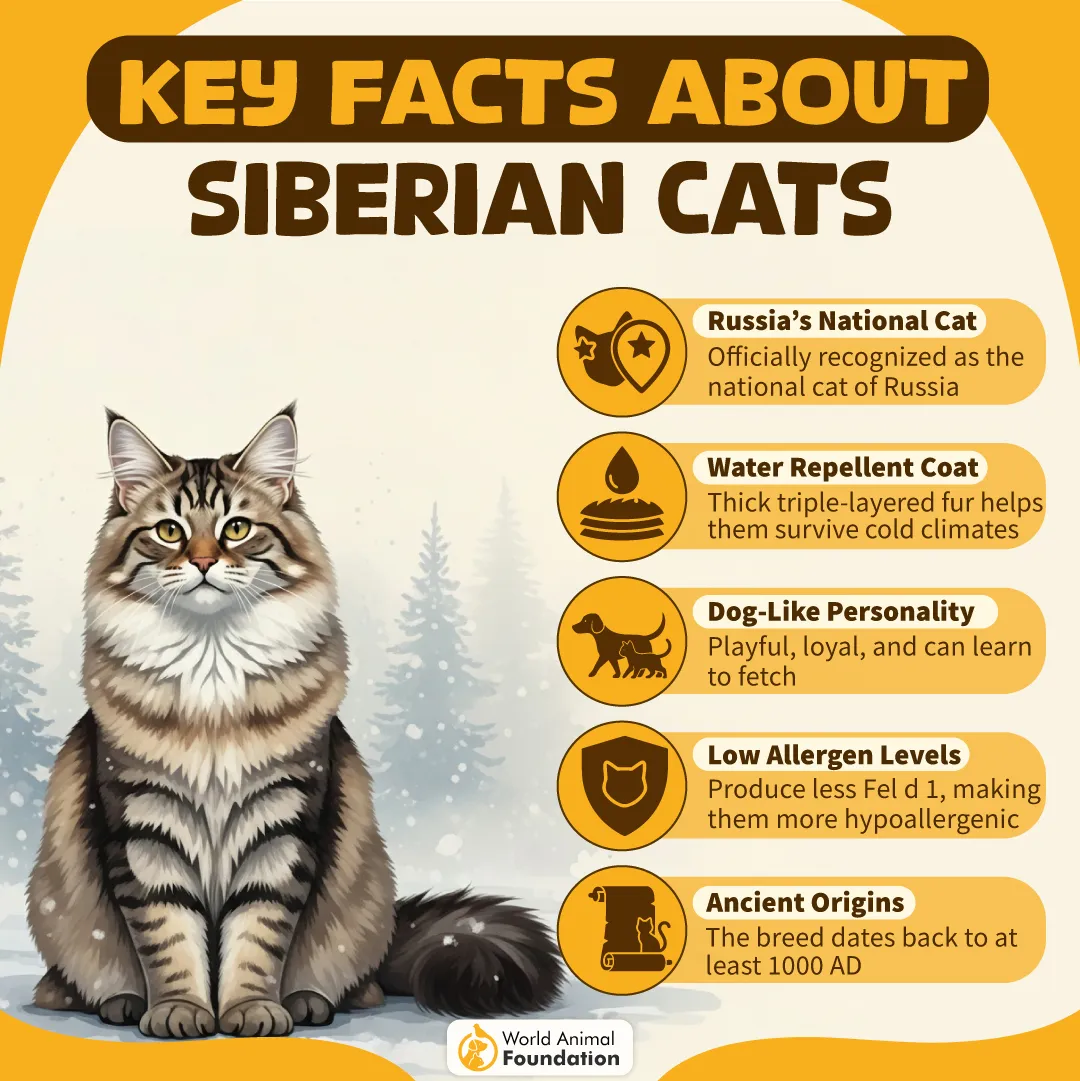
Even with their dense, fluffy coat, they do not shed allergens as heavily as expected, which adds to their appeal. Regular brushing helps keep loose fur under control and further reduces the spread of pet dander in the home.
Beyond their allergy-friendly qualities, Siberians are friendly, intelligent, and adaptable cats that enjoy both playtime and quiet moments. They bond closely with their families while still maintaining a balanced and easygoing nature.
Fact: Siberian cats are known to produce lower levels of the allergen protein than many other breeds.
2. Siamese
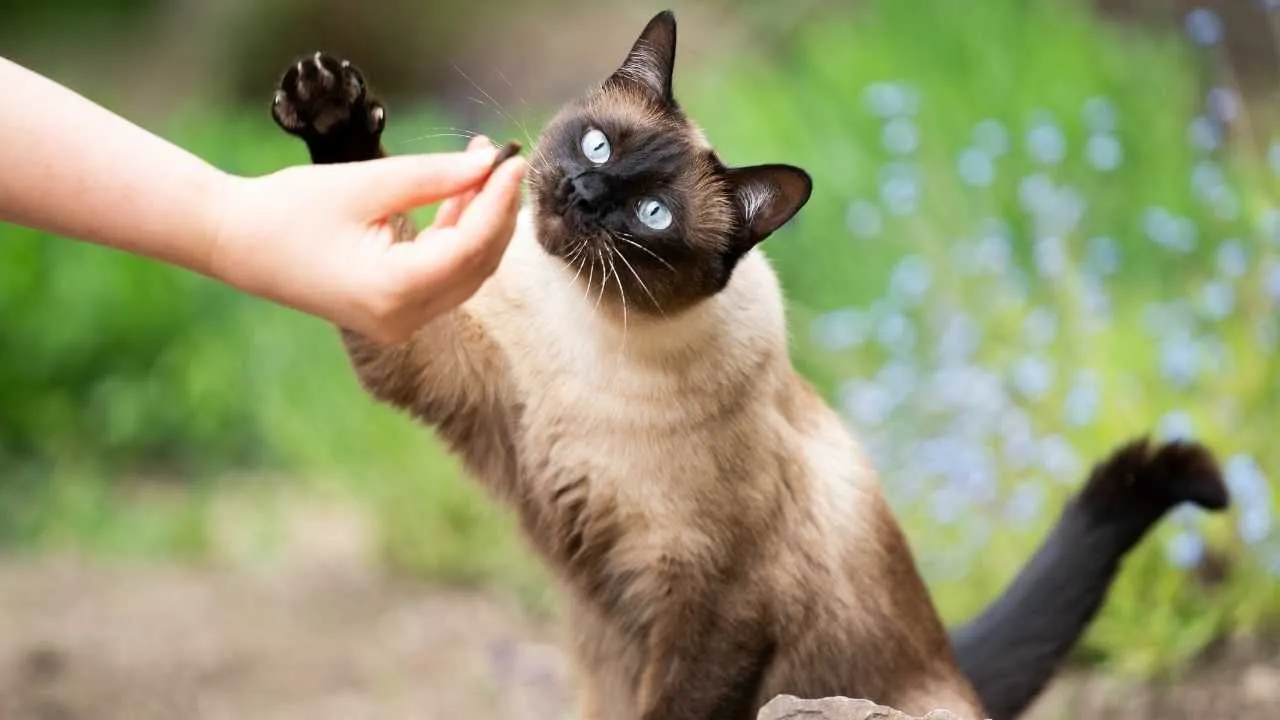
The Siamese, sometimes referred to as the Thai cat, is a sleek and elegant breed known for its striking blue eyes, pointed coat pattern, and vocal personality. With its slender body and fine features, it remains one of the most recognizable cats.
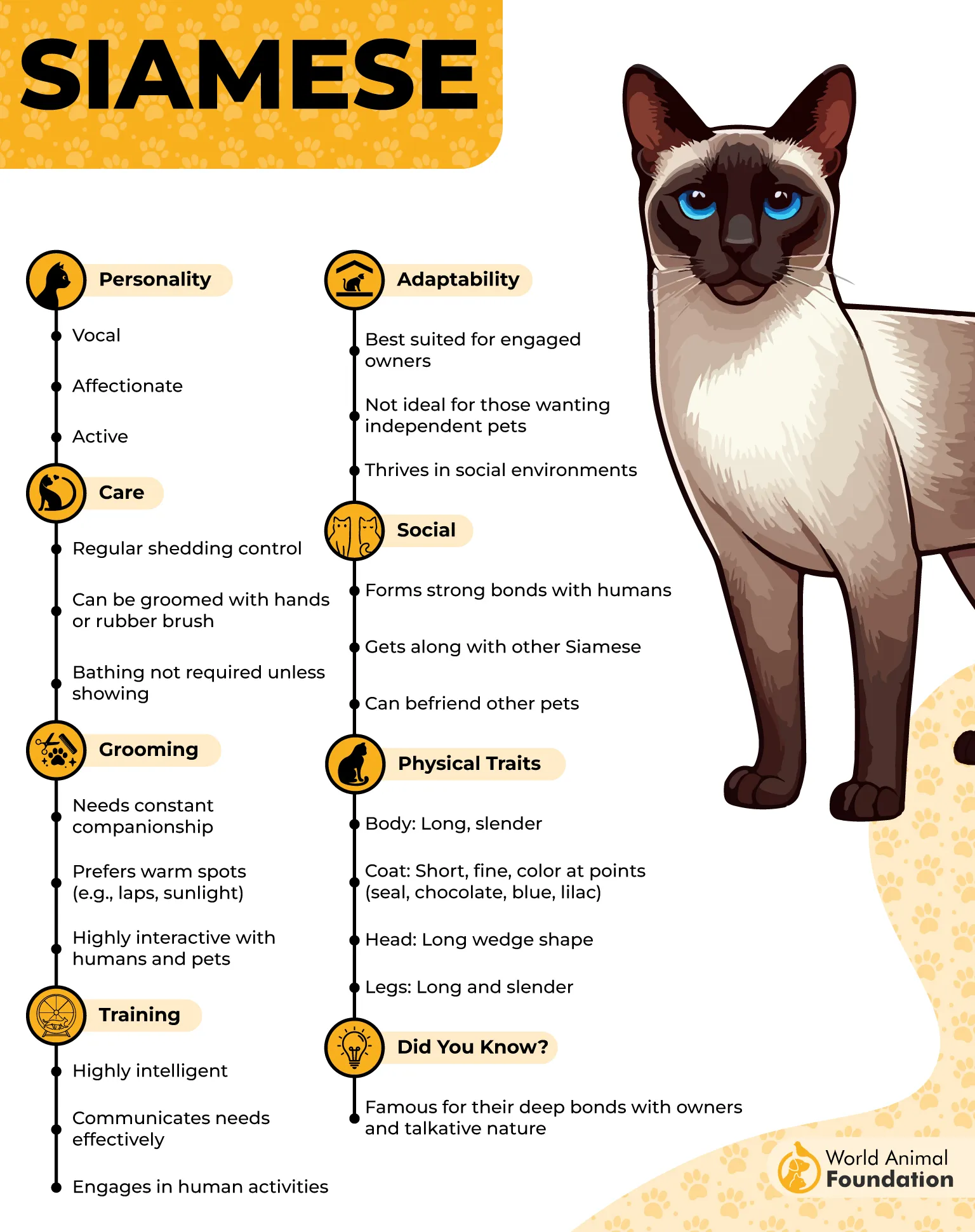
A Clean-Coated Cat Known for Reduced Allergic Reactions
Siamese cats have short, fine coats that shed less compared to many other breeds, which can help reduce the spread of allergens in the home. Their low-shedding fur makes them a more manageable option for people with sensitivities.
Because their coat lies close to the body, it requires minimal upkeep and doesn’t trap as much loose hair. This helps limit dander buildup, contributing to a cleaner living environment for allergy-prone owners.
While affectionate and deeply attached to their humans, Siamese cats do crave attention and interaction. They are best suited to homes where they receive regular companionship, as they prefer not to be left alone for long periods.
Fact: Siamese cats are known for their distinctive color-point coats, where darker shades appear on the face, ears, paws, and tail.
3. Bengal
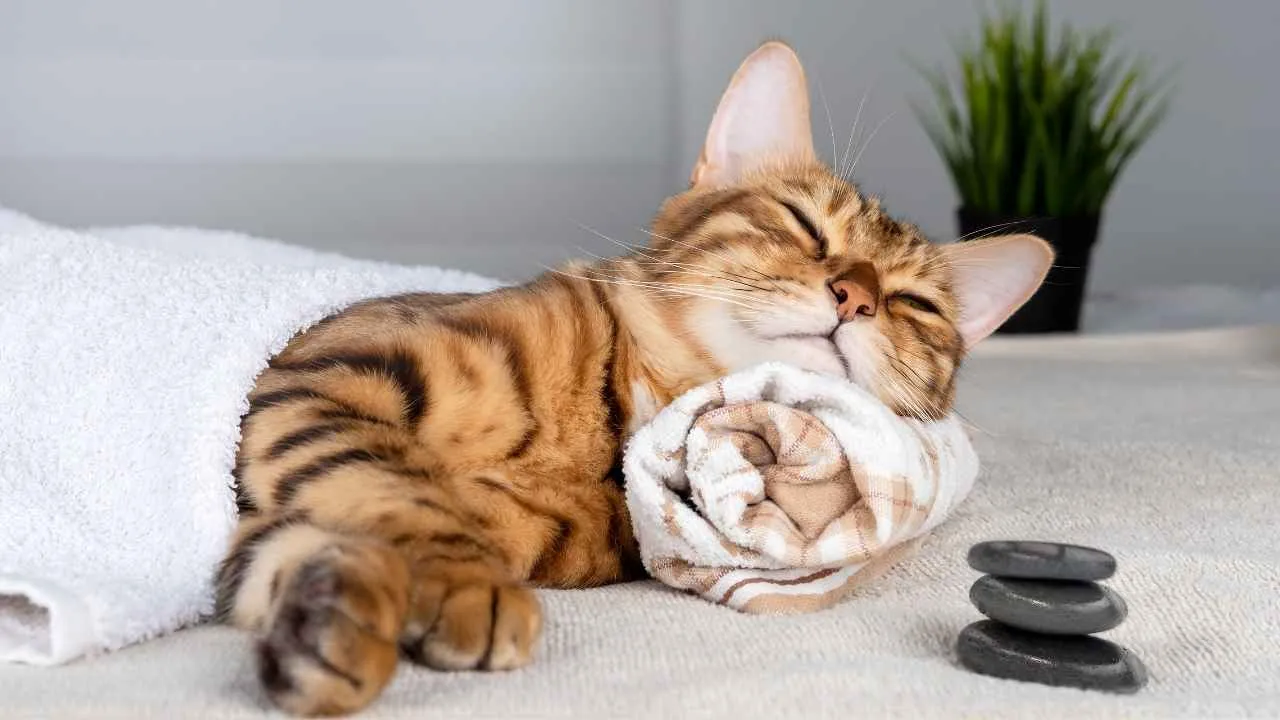
The Bengal, sometimes called the Leopard Cat hybrid, is a striking breed known for its wild appearance and muscular, athletic build. With origins linked to the Asian leopard cat, it combines exotic looks with a lively domestic personality.
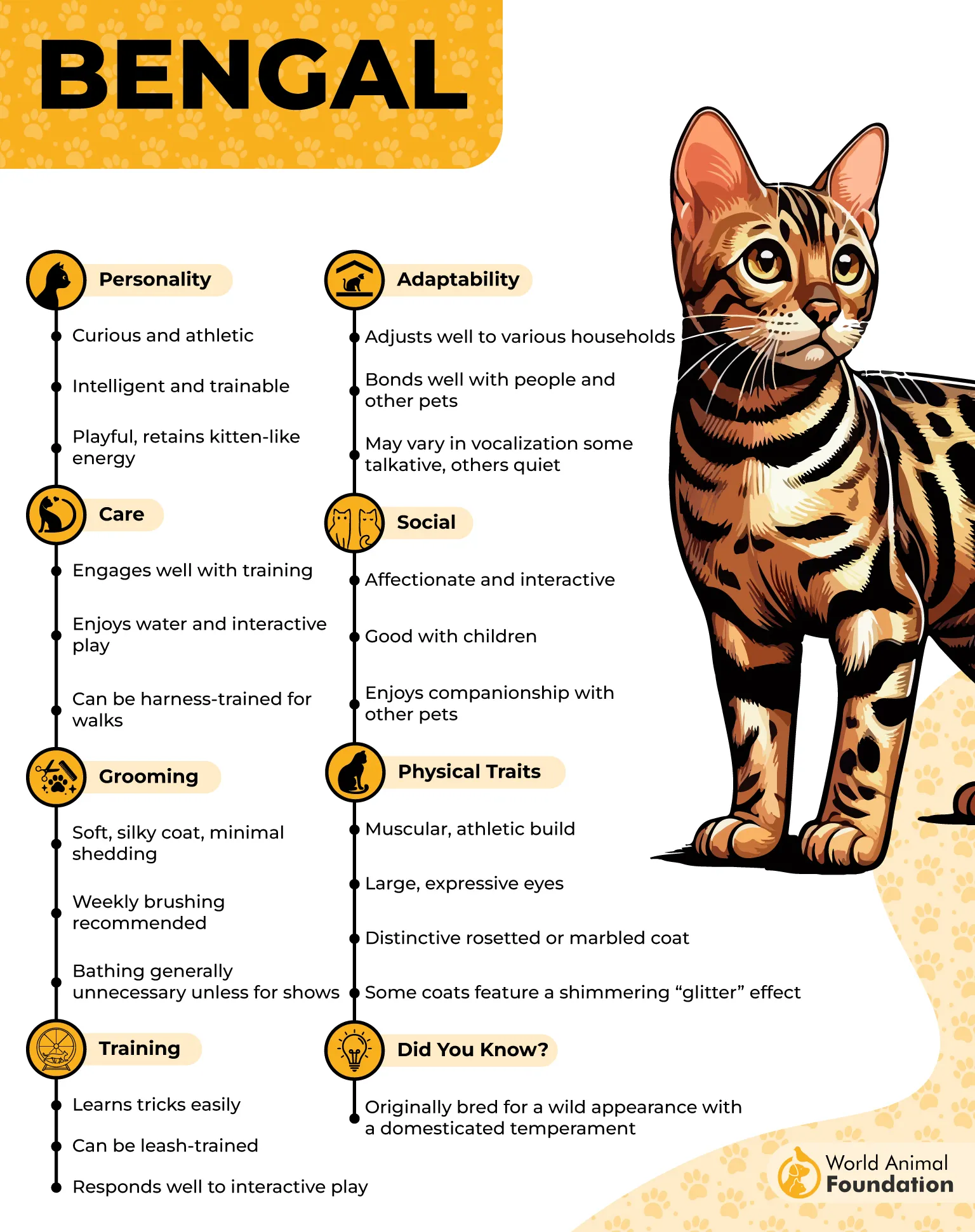
The Sleek Feline That Produces Fewer Allergens
Bengals have short, dense coats that shed less than many other breeds, which can help reduce the amount of allergens in the home. Their naturally clean habits also contribute to lower dander levels.
Because their coat lies close to the body, it requires minimal upkeep and doesn’t trap as much loose hair. This makes them a practical option for allergy-sensitive owners seeking a low-shedding companion.
Highly active and intelligent, Bengals enjoy playtime and interaction, making them great for families with children and other pets. However, their energetic nature means they need stimulation to stay happy and engaged.
Fact: The Bengal’s distinctive spotted coat comes from its ancestry with the Asian leopard cat, giving it a wild, exotic look.
4. Russian Blue
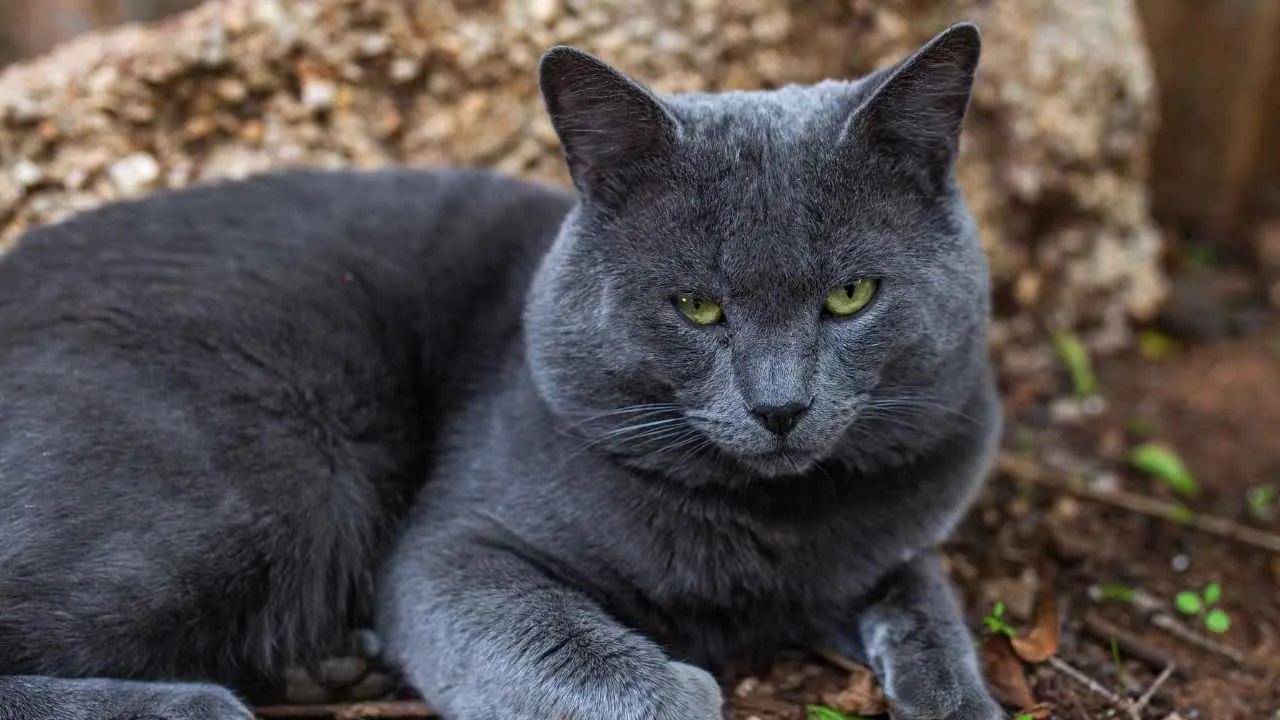
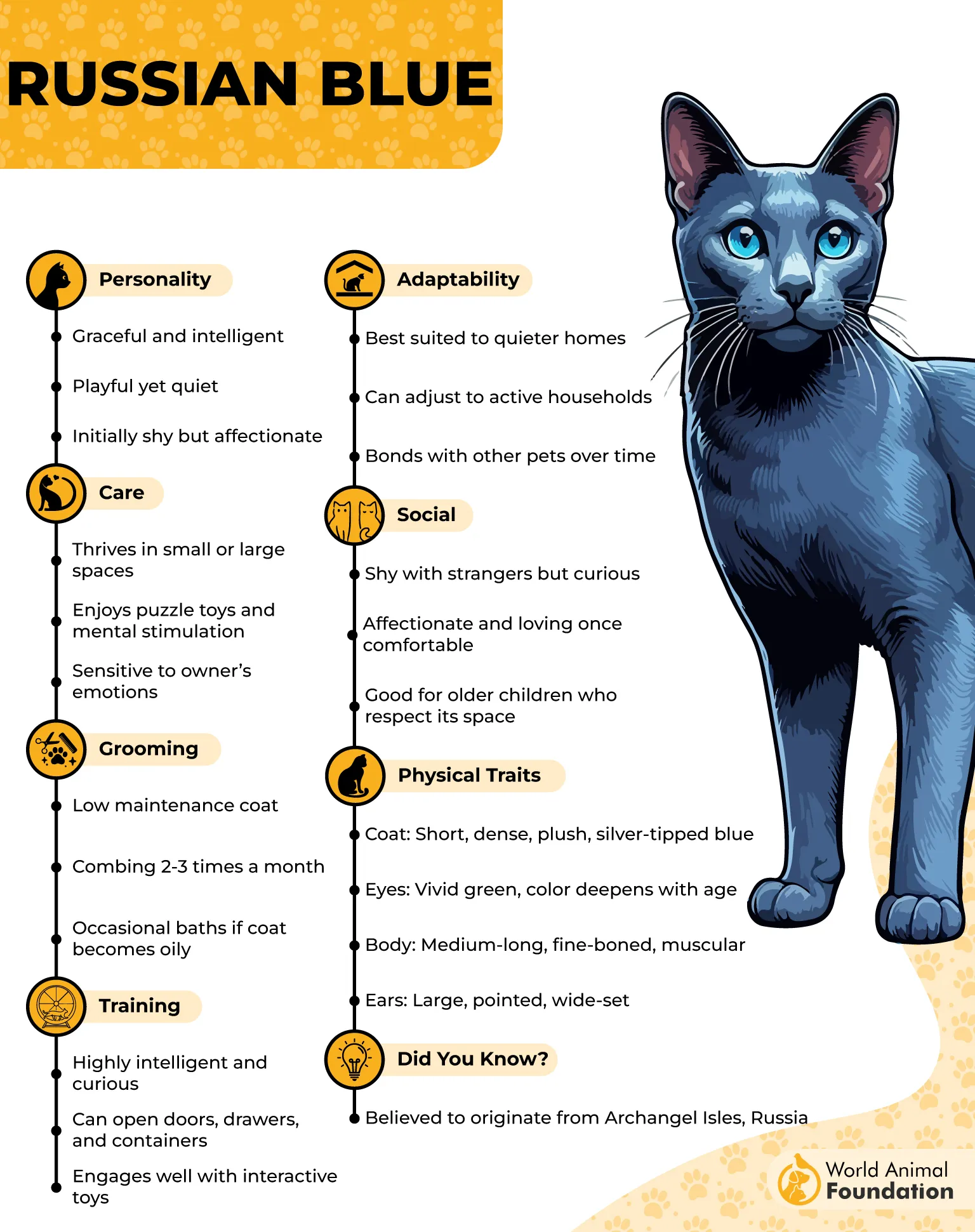
The Russian Blue, sometimes called the Archangel Blue, is a refined, luxurious, low-shedding cat breed admired for its shimmering blue-gray coat and striking green eyes. Known for its quiet nature and graceful appearance, it combines elegance with a gentle personality.
A Low-Shedding Cat Ideal for Sensitive Owners
Although there are no hypoallergenic cats, this silky-coated breed is often recommended for allergy-sensitive households due to its dense double coat that sheds minimally. It also produces lower levels of common allergens, making it more comfortable to live with.
The short, plush, silky coat lies close to the body, so these graceful, active cats have minimal cleaning and grooming commitment, requiring only occasional brushing to stay neat. Because it doesn’t release much loose hair, it helps keep indoor environments cleaner and easier to manage.
Russian Blues are calm, affectionate, and intelligent, though they may be reserved around unfamiliar people. Once bonded, they enjoy companionship and can even learn to open doors or interact with objects.
Fact: The Russian Blue is frequently ranked among the top cat breeds suitable for people with allergies due to its reduced allergen levels.
5. Sphynx
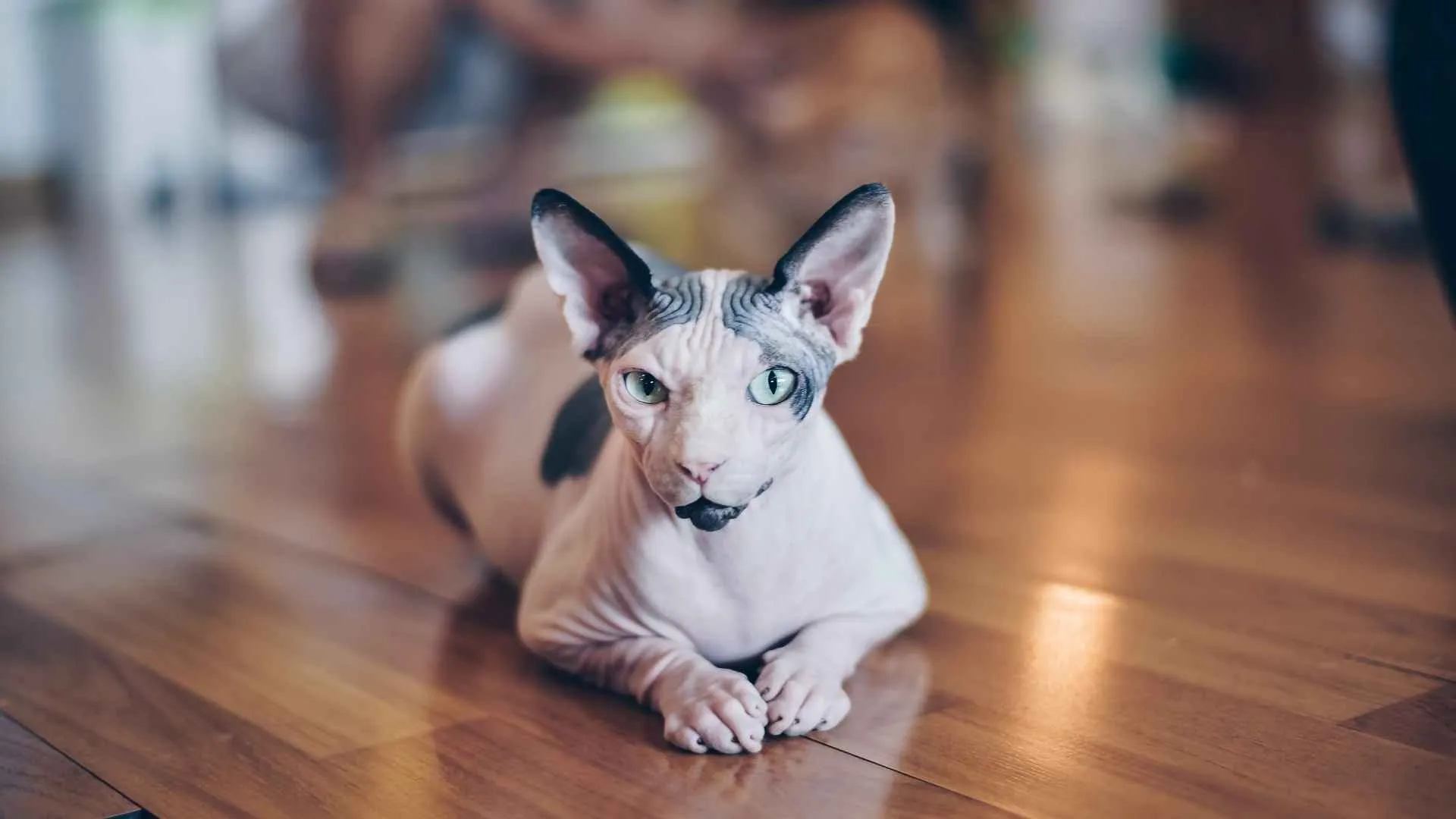
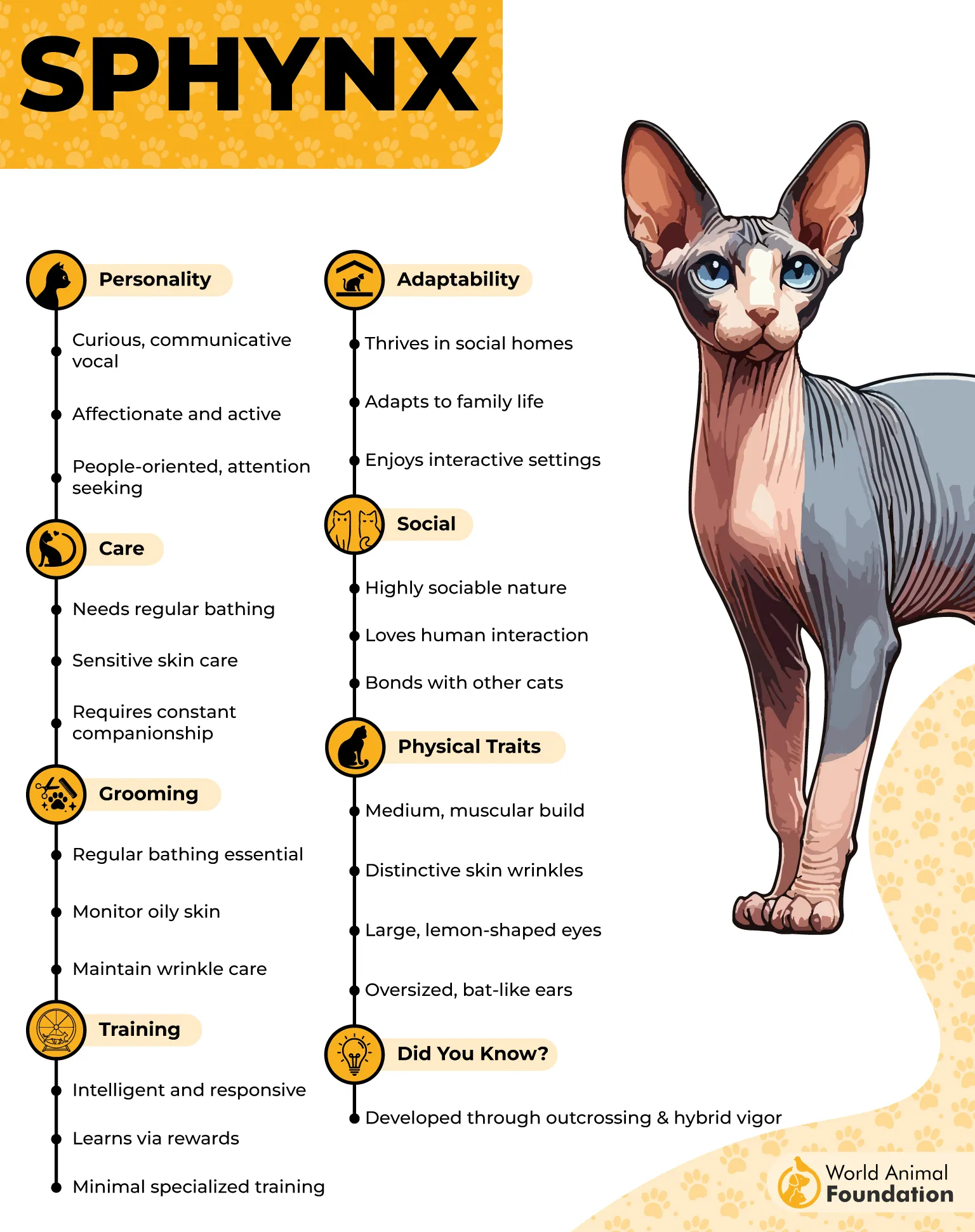
The Sphynx cat, often referred to as the hairless cat, is instantly recognizable for its fine, downy, sparse peach-fuzz textured skin. With its wrinkled body, large ears, and expressive eyes, this cat breed stands out both in appearance and personality.
The Allergy-Friendly Companion with Minimal grooming needs
Due to its minimal coat, the Sphynx spreads far less dander-coated hair into the environment, considered a hypoallergenic cat, making it a more suitable option for people with severe allergies. Its lack of thick fur significantly reduces airborne triggers.
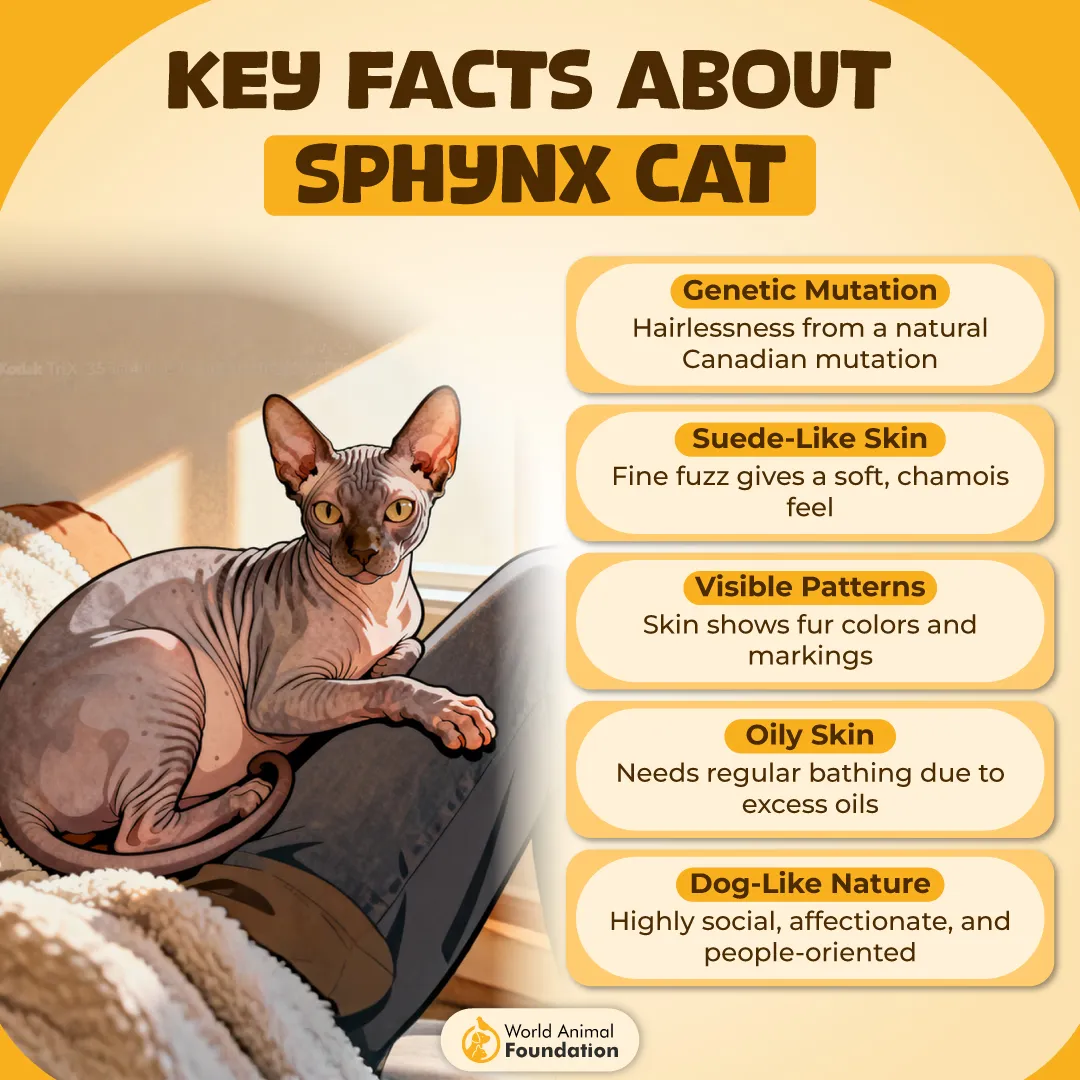
Despite being a hairless breed, skin care is essential, as natural oils build up without fur to absorb them. Regular baths and basic upkeep help maintain healthy skin, while protective measures like warmth and sun care are important.
Highly social and energetic, this breed enjoys constant interaction and often follows its owners from room to room. Its engaging and vocal nature makes it a lively companion that thrives on attention.
Fact: The Sphynx produces fewer airborne allergens because it lacks a full coat to spread dander.
6. Devon Rex
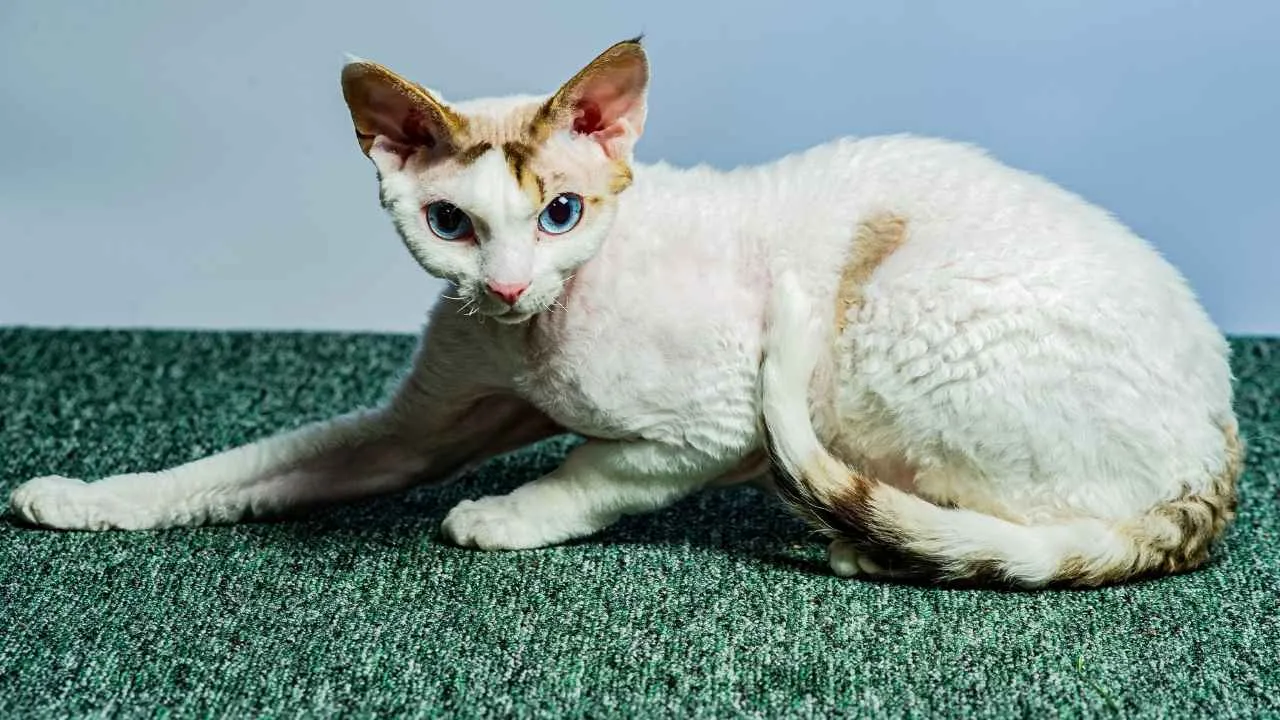
The Devon Rex, sometimes called the “pixie cat” and ”low shedding beauty” due to its elfin face and oversized ears, is known for its soft, wavy coat and playful charm. Its unusual appearance and lively personality make it a standout among short-coated breeds.
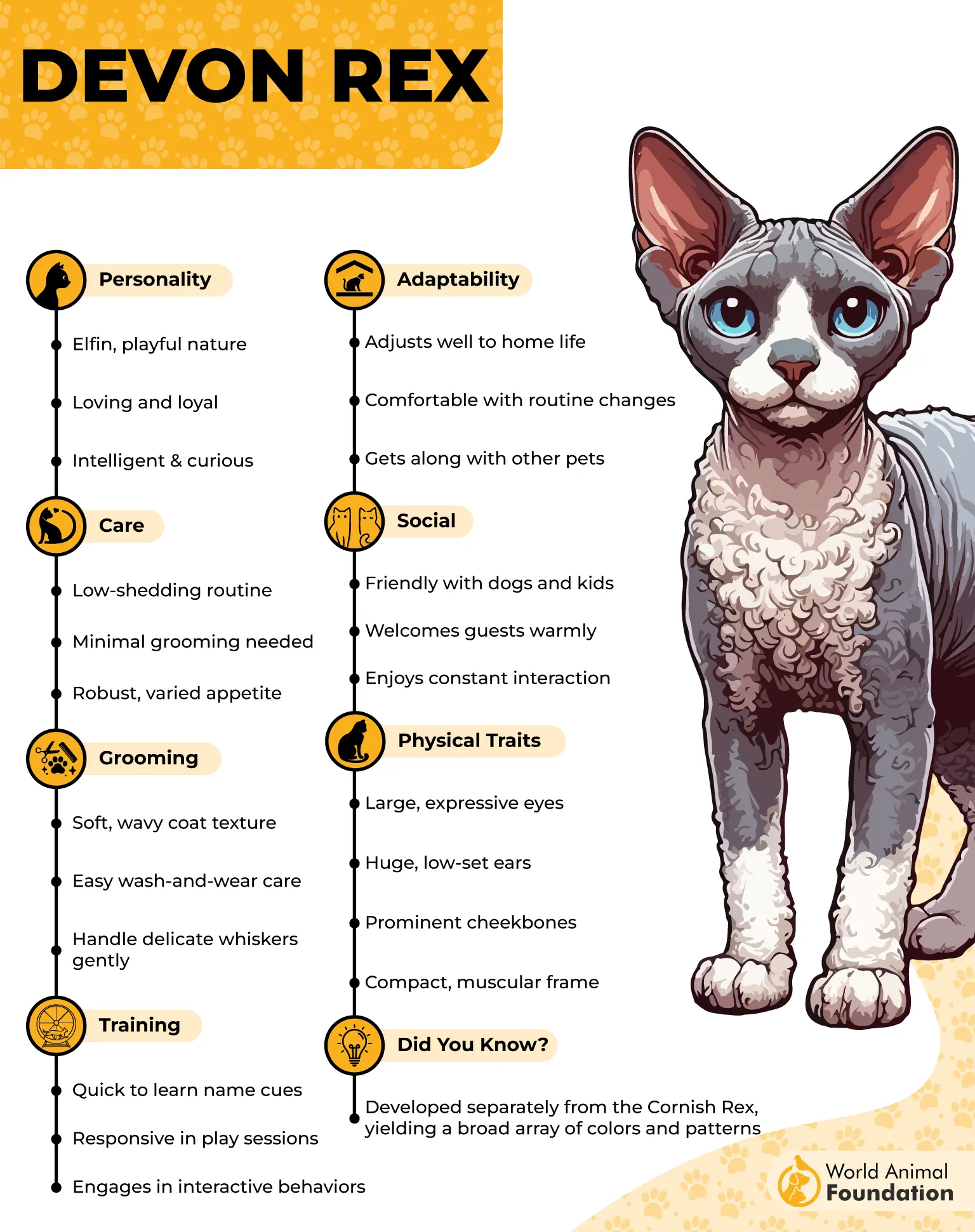
A Neat and Tidy Cat with Lower Dander Levels
This breed’s short, curly coat sheds less than typical fur types, which helps reduce the spread of allergens in the home. The lighter hair structure means fewer particles are released into the air.
It’s fine, silky waves require only light upkeep, as the coat doesn’t trap as much loose hair or debris. This makes it easier to maintain a cleaner living space compared to heavier-coated breeds.
Devon Rex cats are highly interactive, intelligent, and known for their quirky, clown-like behaviour. They thrive on attention and enjoy engaging with their owners, often learning tricks and responding to their names.
Fact: The Devon Rex’s wavy coat is lighter and sheds less, which helps limit the amount of allergens circulating indoors.
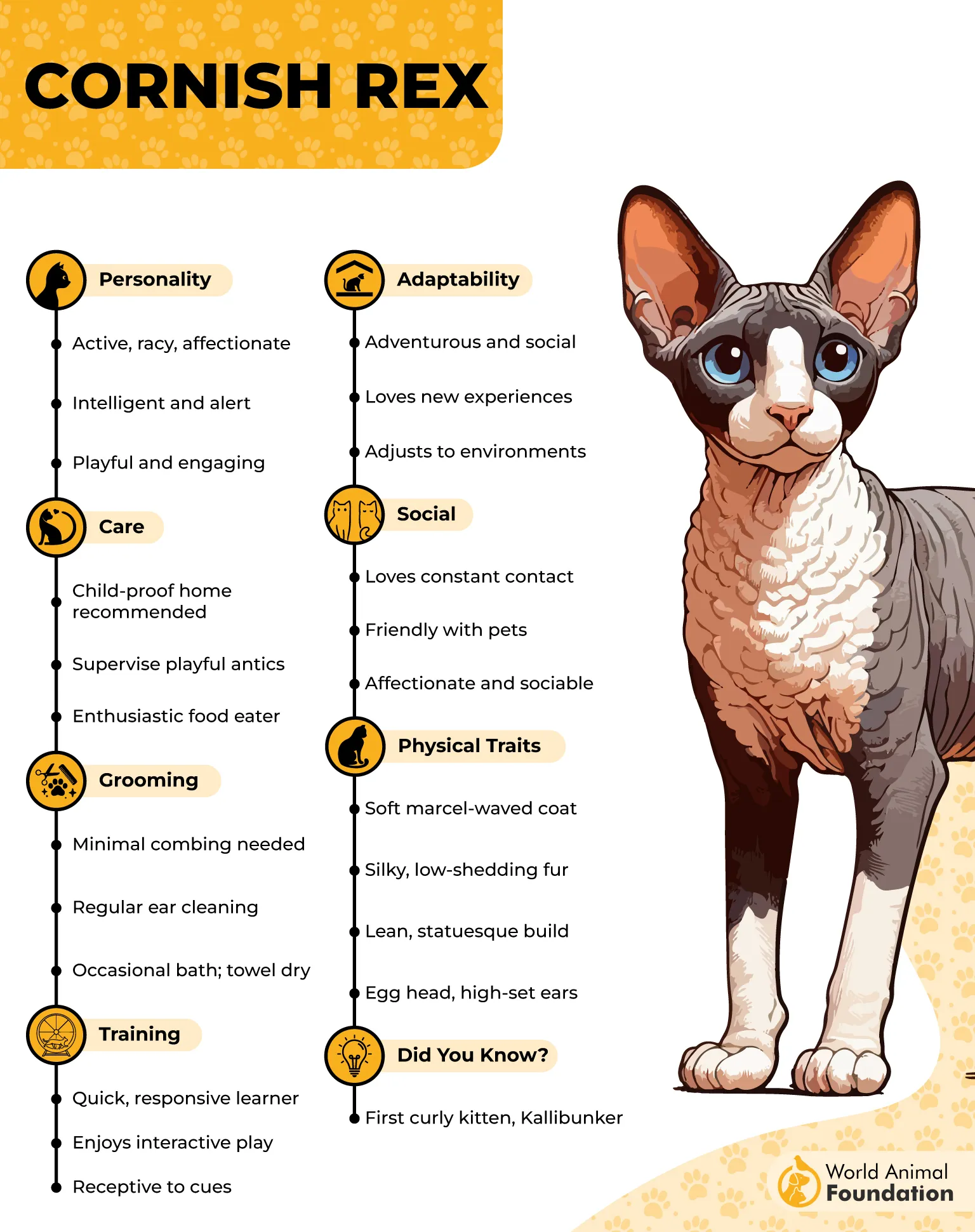
7. Cornish Rex
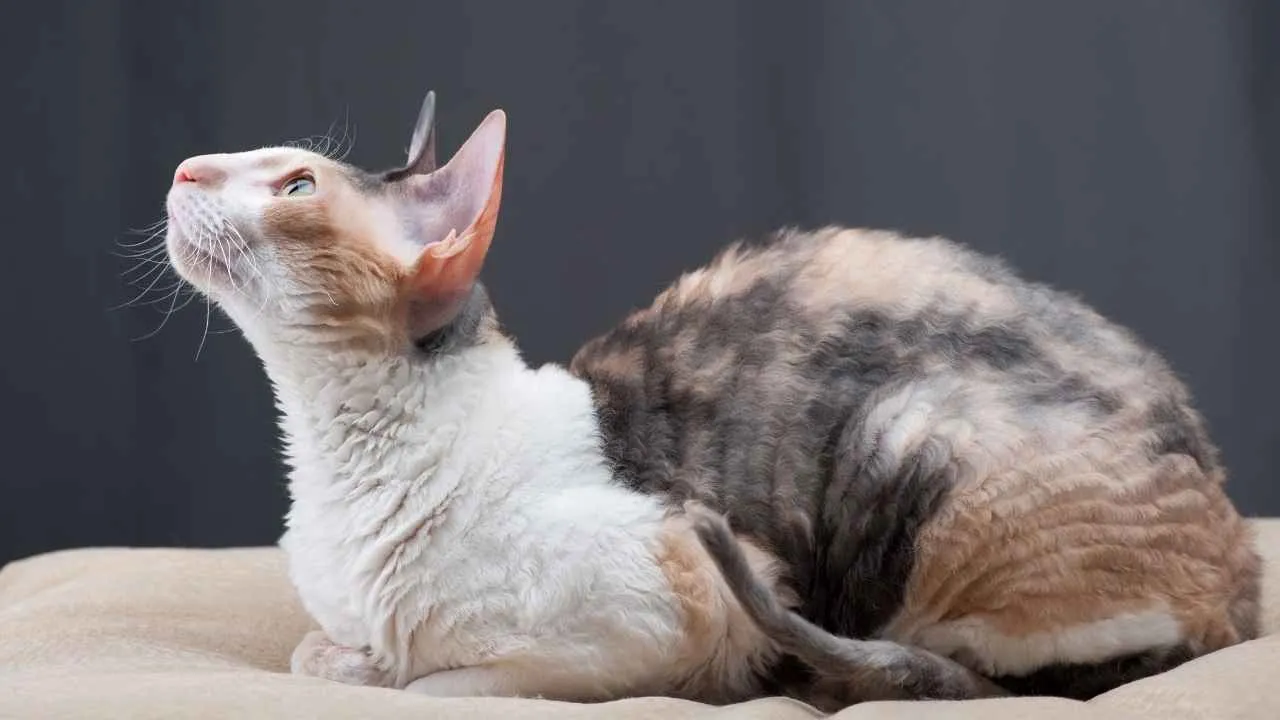
The Cornish Rex, sometimes nicknamed the “greyhound of cats” for its slender build, is easily recognized by its soft, curly coat and large ears. Its unique appearance and energetic personality set it apart from traditional short-haired breeds.
According to WebMD, Cornish Rex cats have short, smooth fur and shed less, but they are not truly hypoallergenic. However, some people with allergies may find them easier to tolerate than long-haired breeds.
The Gentle Feline That’s Easier on Allergic Pet Lovers
With its tightly curled fur and reduced shedding, this breed of cats releases fewer allergen particles into the environment. This makes it a more manageable option for individuals sensitive to cat dander.
Unlike heavier-coated breeds, its fine coat lacks bulky outer layers, helping limit loose hair around the home. However, occasional care is still needed to keep the delicate curls in good condition.
This breed has an active and outgoing personality, is affectionate, and thrives on interaction, often seeking attention and playtime throughout the day. Its lively nature means it enjoys climbing, running, and staying engaged with its surroundings.
Fact: The Cornish Rex has a unique curly coat with reduced shedding, which helps minimize the spread of allergens indoors.
Conclusion
For allergy sufferers, choosing the right breeds of cats can make a noticeable difference in comfort and daily life. The breeds highlighted in this list are known for producing fewer allergens or having coat types that reduce dander spread, making them more manageable for sensitive pet parents. Their grooming habits and lower shedding levels also play a key role in minimizing allergic reactions.
That said, no cat is completely hypoallergenic. Regular cleaning, proper grooming, and maintaining a tidy living space are essential to keeping symptoms under control. With the right combination of breed choice and care routine, many people with allergies can still enjoy the companionship, affection, and joy that cats bring into a home.
