




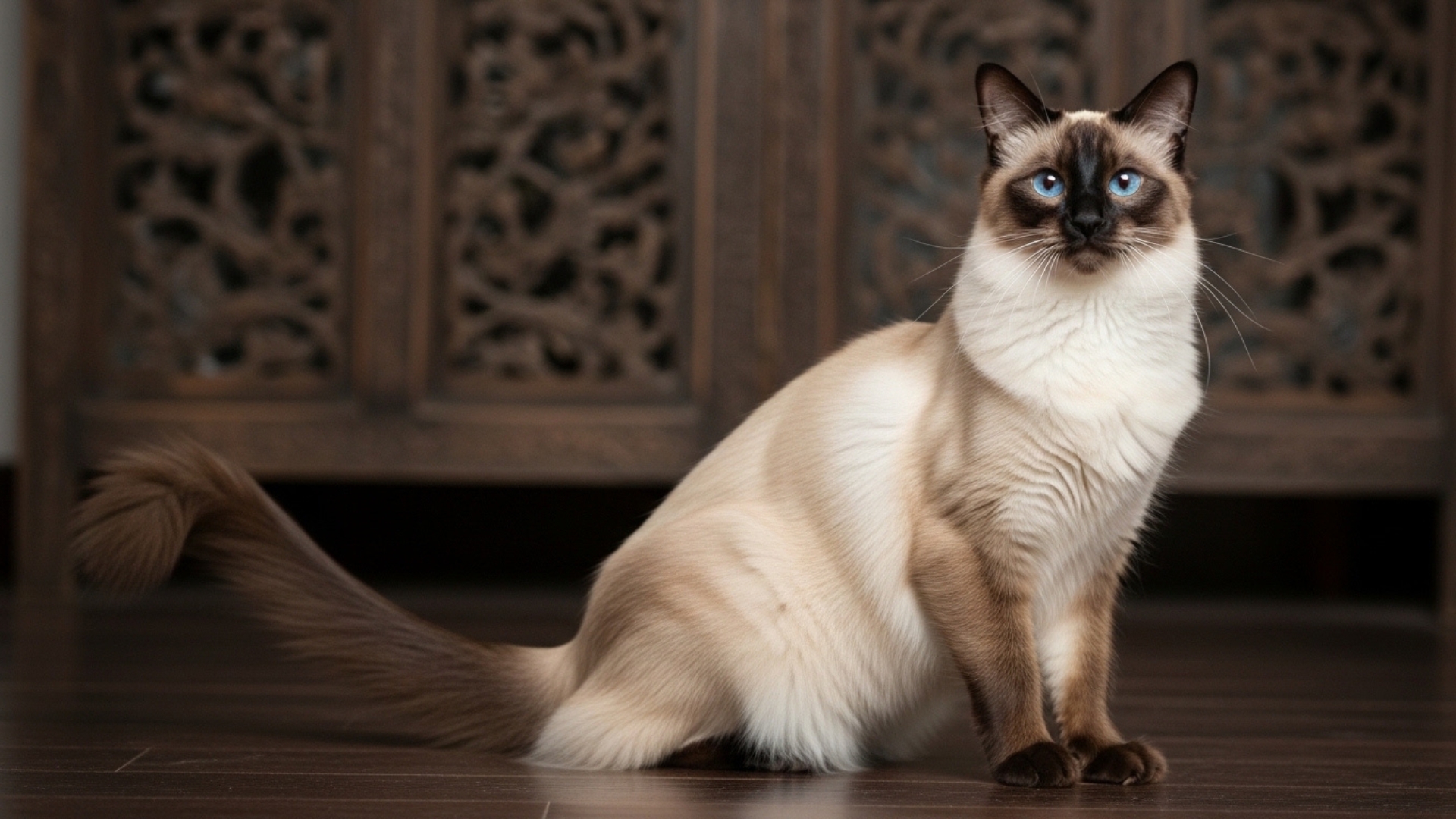
Cats are known for their elegance and balance, but few features capture attention quite like an exceptionally long tail. In some breeds, the tail isn’t just an accessory—it’s a defining trait that adds drama to every movement.
Certain breeds have been selectively shaped by genetics and environment to carry tails that are longer, bushier, or more expressive than average.
A long tail helps with balance, agility, and sharp turns, especially in larger or more athletic breeds. It also plays a key role in communication, allowing cats to signal confidence, curiosity, or caution with subtle movements.
In this article, we’ll explore cat breeds where long tails aren’t unusual, but a standout feature rooted in purpose and design.
Cat Breeds with Long Tails
1. Maine Coon
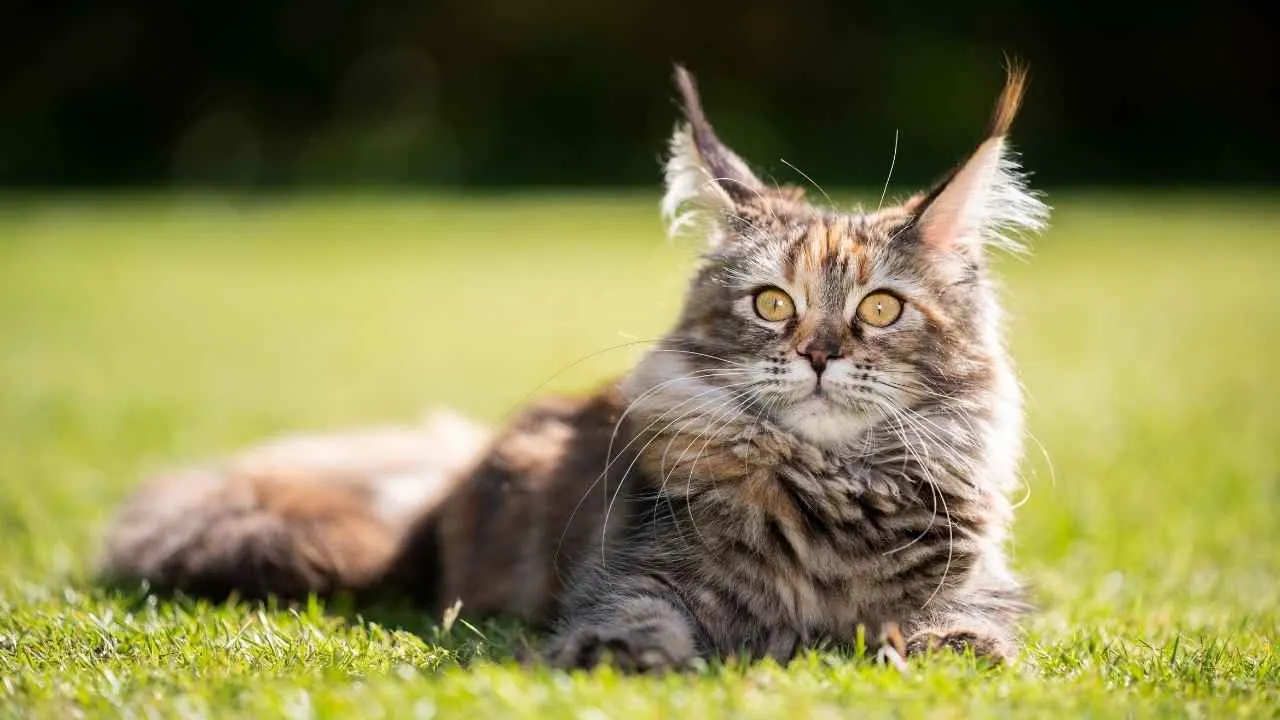
The Maine Coon, often called the “gentle giant” or America’s native longhair, is one of the largest and most recognizable domestic cat breeds.
According to Purina, the Maine Coon is a very large cat with a strong, muscular, and athletic body that matches its impressive size. Known for its shaggy coat, tufted paws, and impressively long, flowing tail, this breed has a commanding yet friendly presence.
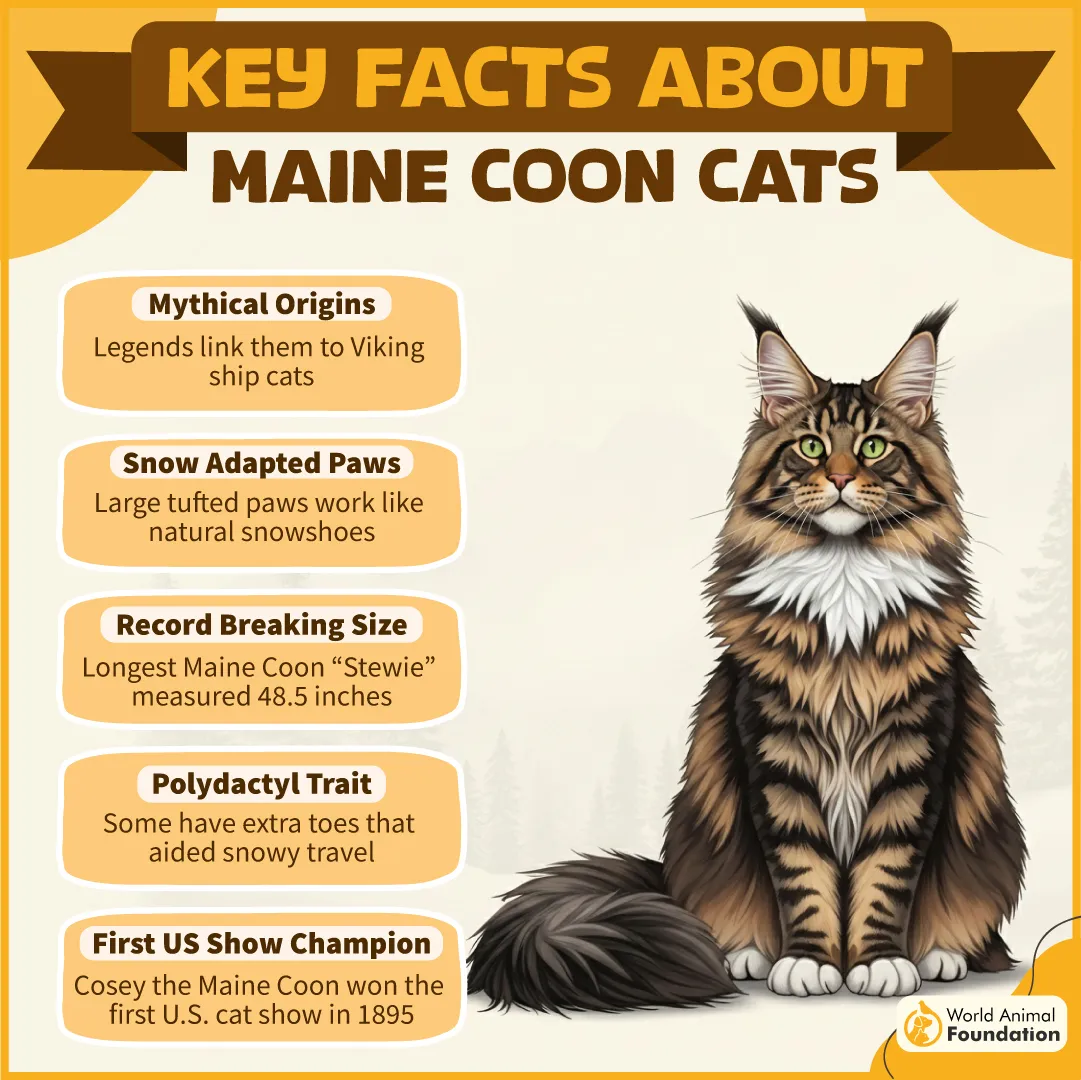
That extra-long tail isn’t just for show. In Maine Coons, it adds balance and elegance to their already graceful movements, trailing behind them like a plume as they walk or climb. The tail also reflects the breed’s adaptation to cold climates, where it once helped provide warmth and stability.
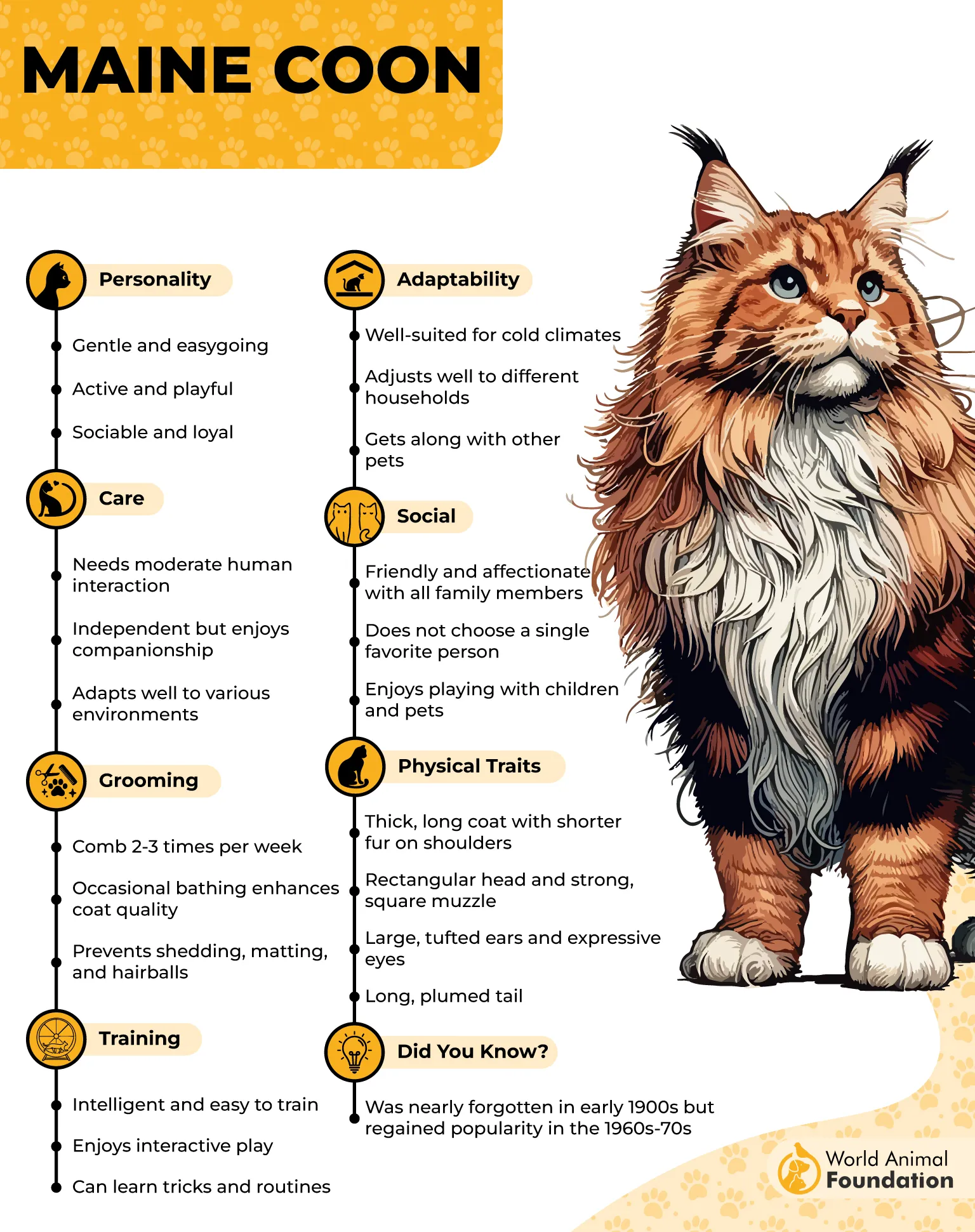
Despite their size, Maine Coons are mellow and sociable. They move with an easy confidence, using their long tails as natural counterweights during play, exploration, or sudden turns. This combination of strength and fluid motion makes them stand out among long-tailed breeds.
Their intelligence and curiosity mean they often use their tails expressively when interacting with people or other pets, enhancing their graceful reputation.
2. Norwegian Forest Cat
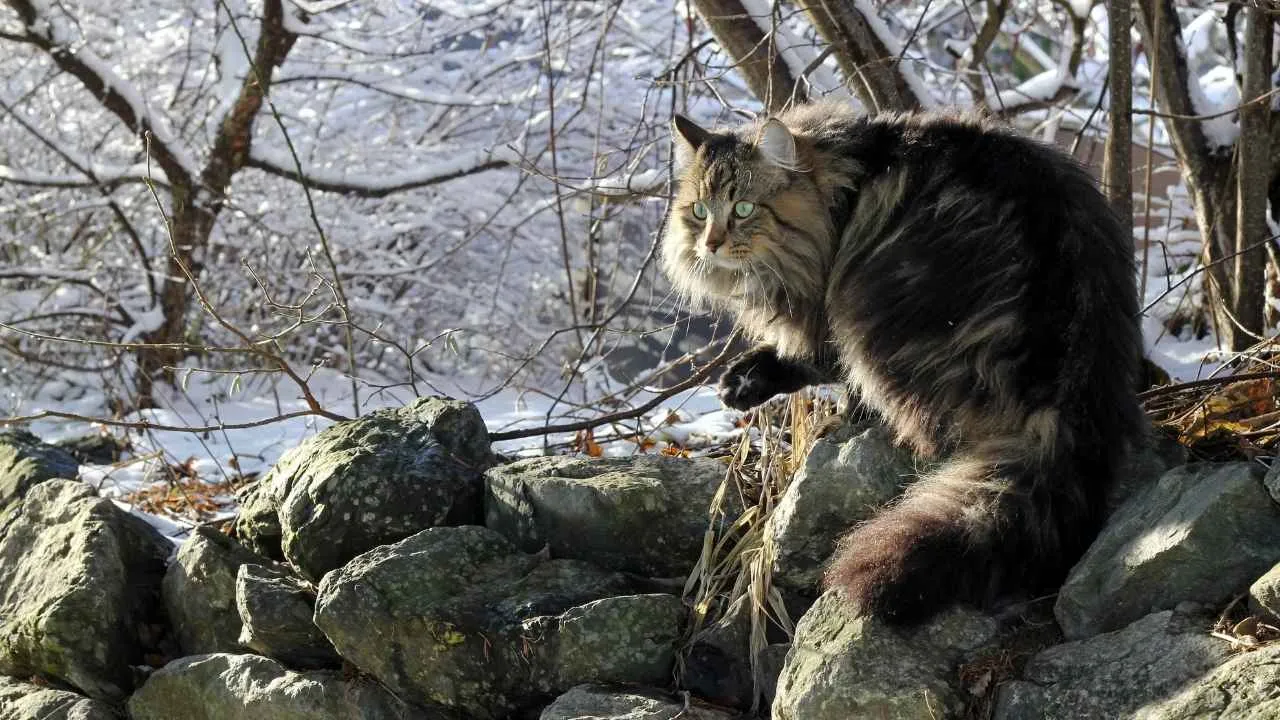
Often called the Wegie or skogkatt (“forest cat”), the Norwegian Forest Cat is a large, slow-maturing breed built for survival.
According to Petplan, these cats—affectionately called “Wegies”—are known for their love of climbing and hunting. Its sleek body is paired with a famously long, bushy tail that mirrors its ancient Scandinavian roots.
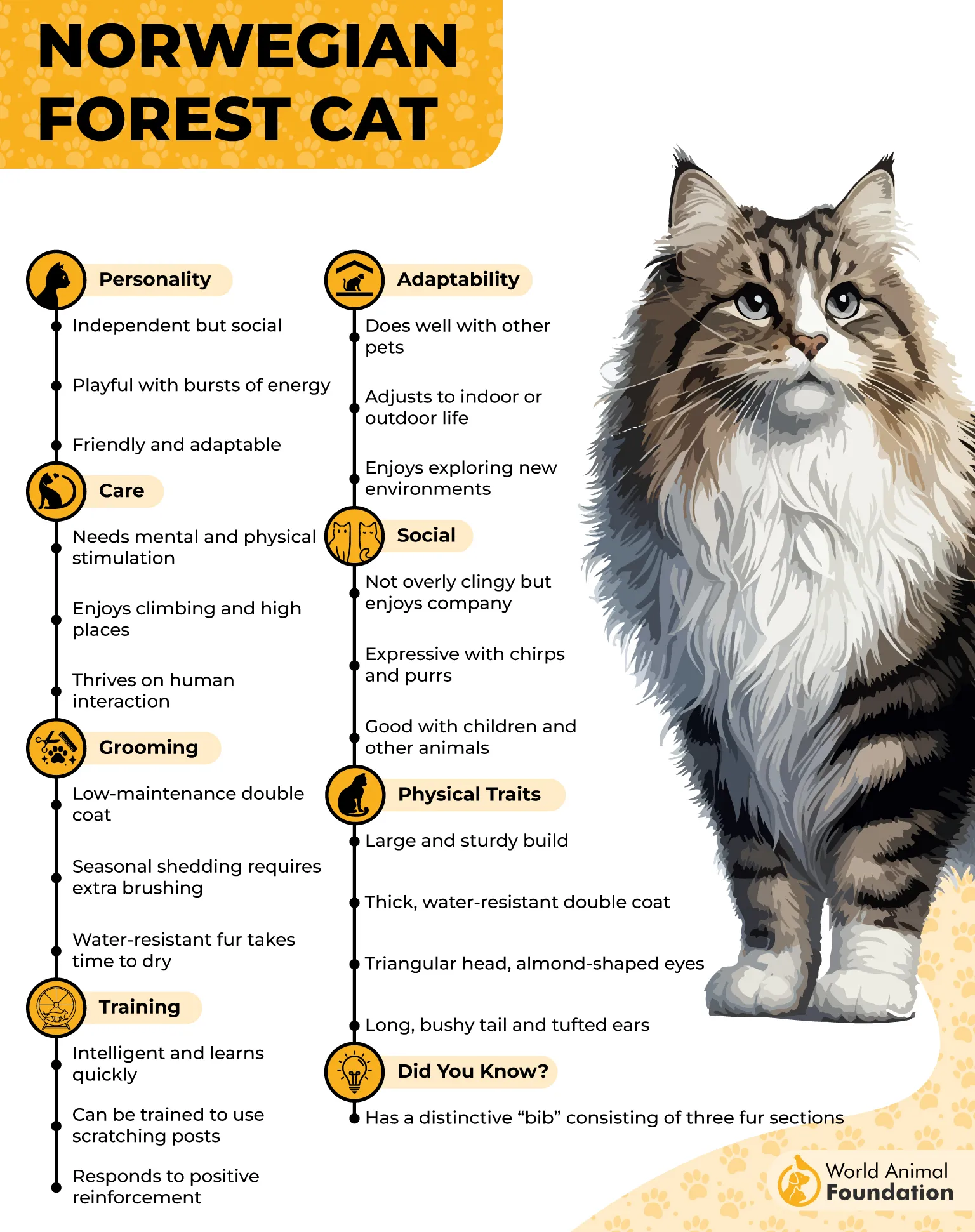
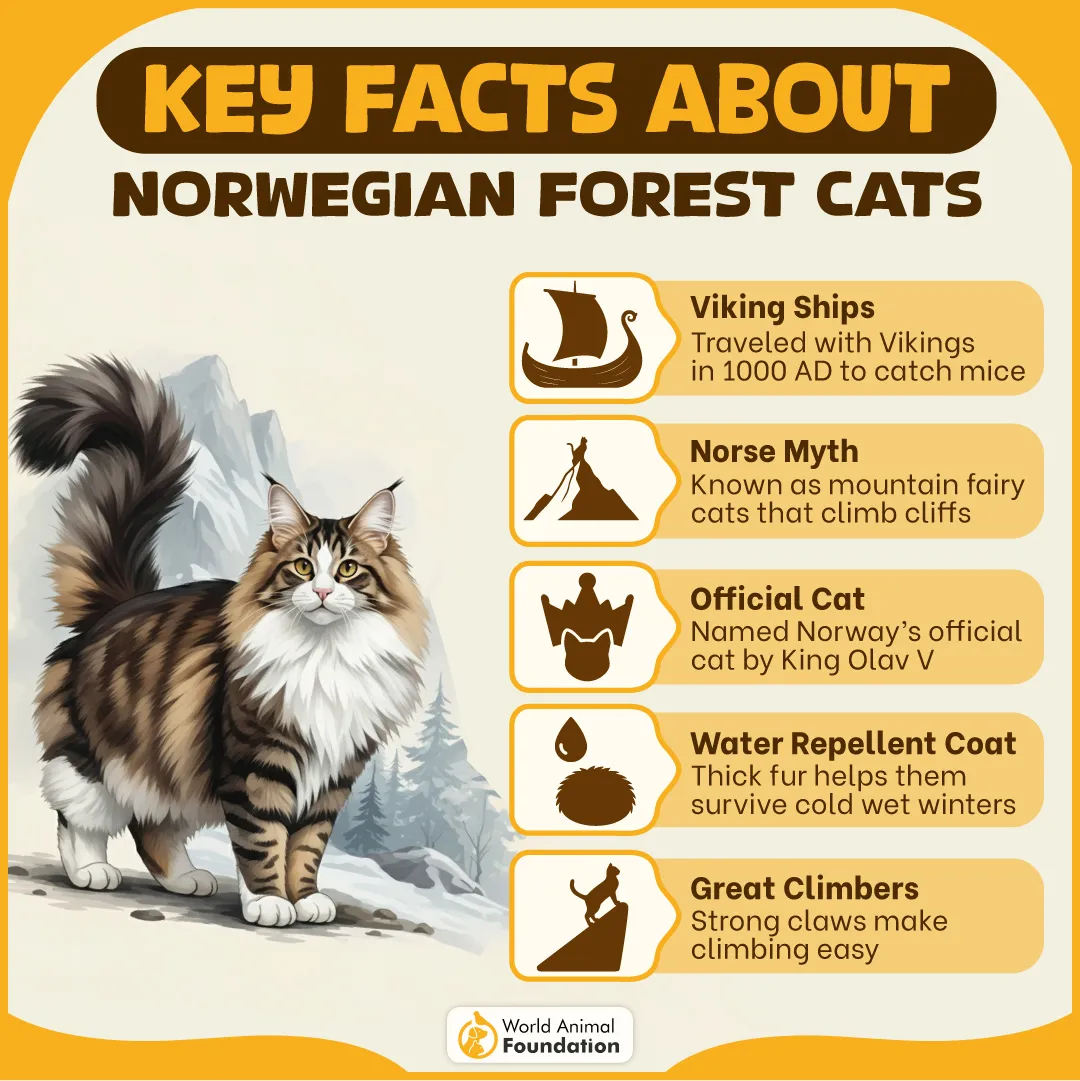
That elegant tail plays a practical role, acting as a counterbalance when climbing and moving with agility. When viewed from the side, the breed’s straight profile and triangular head give it a refined outline despite its rugged, wild look.
Adapted to harsh winters, Norwegian Forest Cats have a dense double coat and a tail thick enough to wrap around their bodies for warmth. Even indoors, their tails remain expressive and well-used during play and exploration.
Though powerful hunters outdoors, they adjust well to home life and carry themselves with calm confidence. Their long tail enhances balance, grace, and quiet athleticism in everyday movement.
3. Balinese
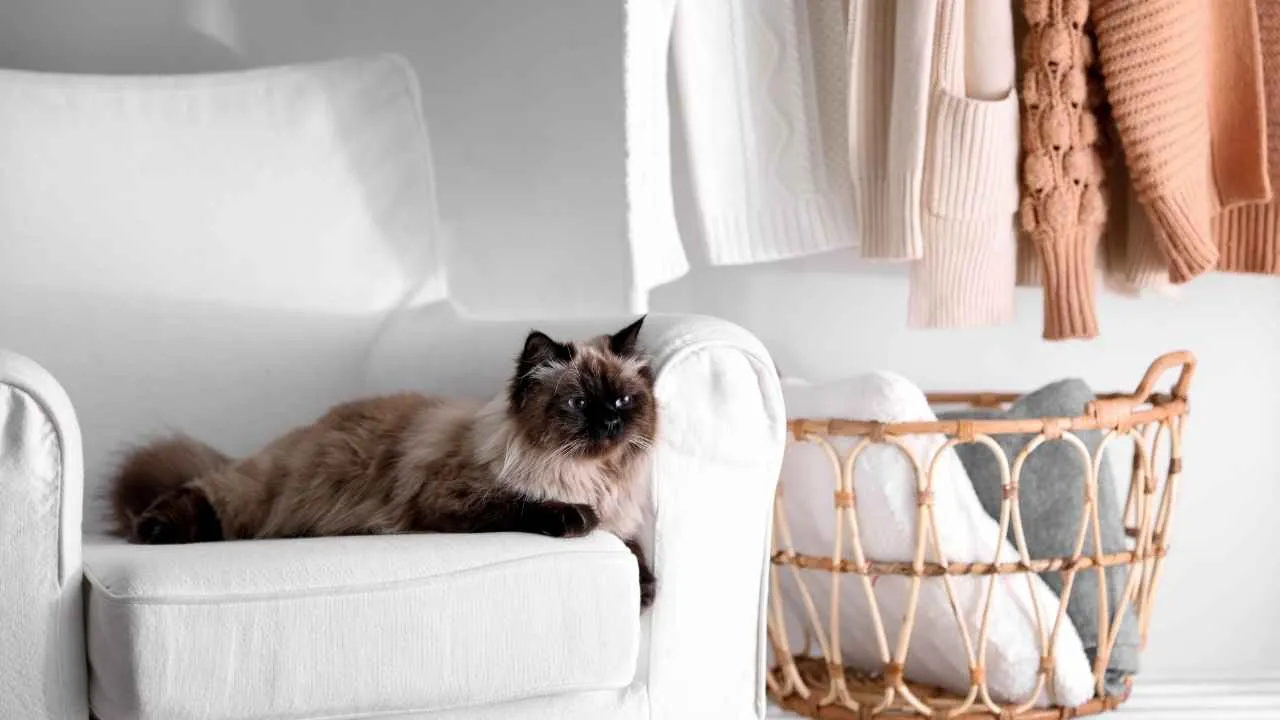
The Balinese, often called the Longhaired Siamese or simply “Bal,” is a refined, medium-sized cat known for its slim build, silky coat, and striking blue eyes.
According to PetMD, Balinese cats are admired for their cheerful temperament, gentle nature, and high energy levels. Named after the graceful dancers of Bali, this breed is instantly recognizable by its long, plumed tail and elegant silhouette.

That flowing tail plays a key role in balance, complementing the Balinese’s light, athletic frame and smooth, dance-like movement. As the cat darts, turns, or leaps, the tail acts as a counterweight, enhancing agility and control during motion.
Closely related to the Siamese, the Balinese shares the same colorpoint pattern, with darker shading on the ears, face, legs, and tail. The lack of a heavy undercoat allows the long tail hair to fall flat and feathered, emphasizing length rather than bulk.
Highly social and curious, Balinese cats move constantly, often weaving through rooms with their tails held high. Their expressive tails also signal mood and engagement, making them captivating companions to watch.
4. Turkish Angora
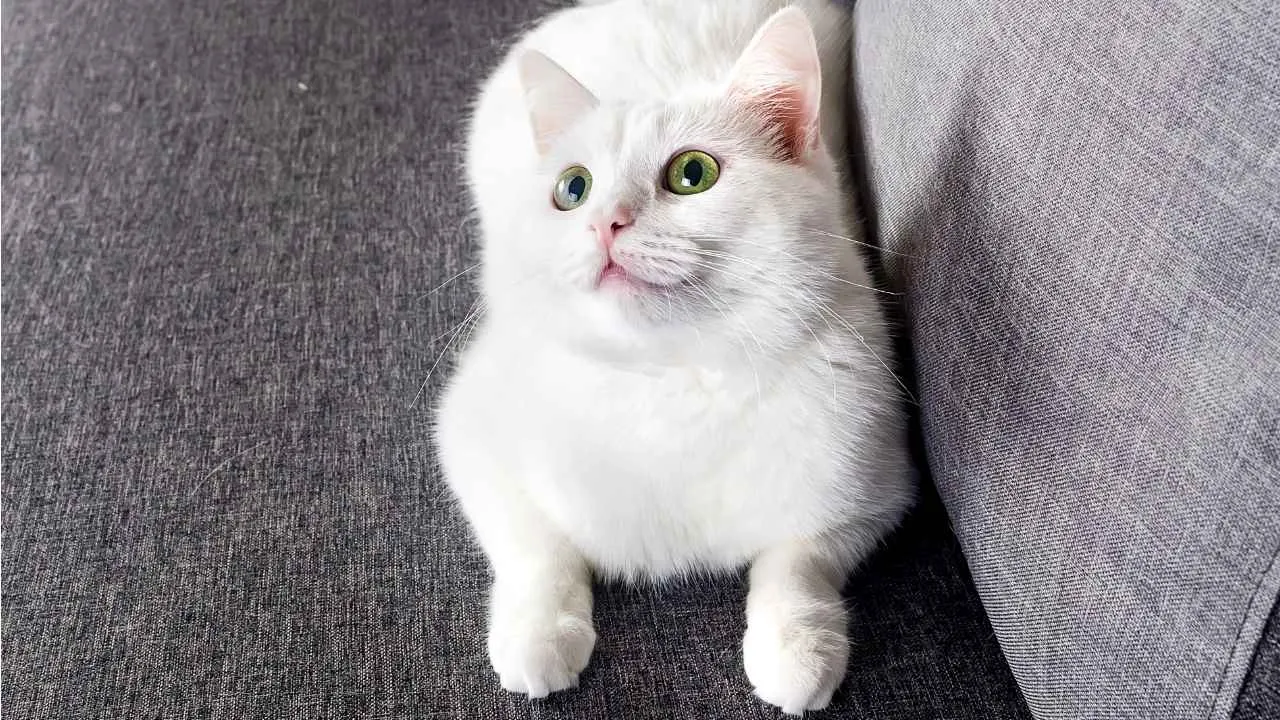
The Turkish Angora, also known as the Ankara kedisi, is an ancient, naturally occurring breed from Turkey admired for its refined build and elegant movement. Small to medium in size, this cat is instantly recognized by its silky single-layer coat, long legs, and a dramatic, plume-like tail that flows behind it.
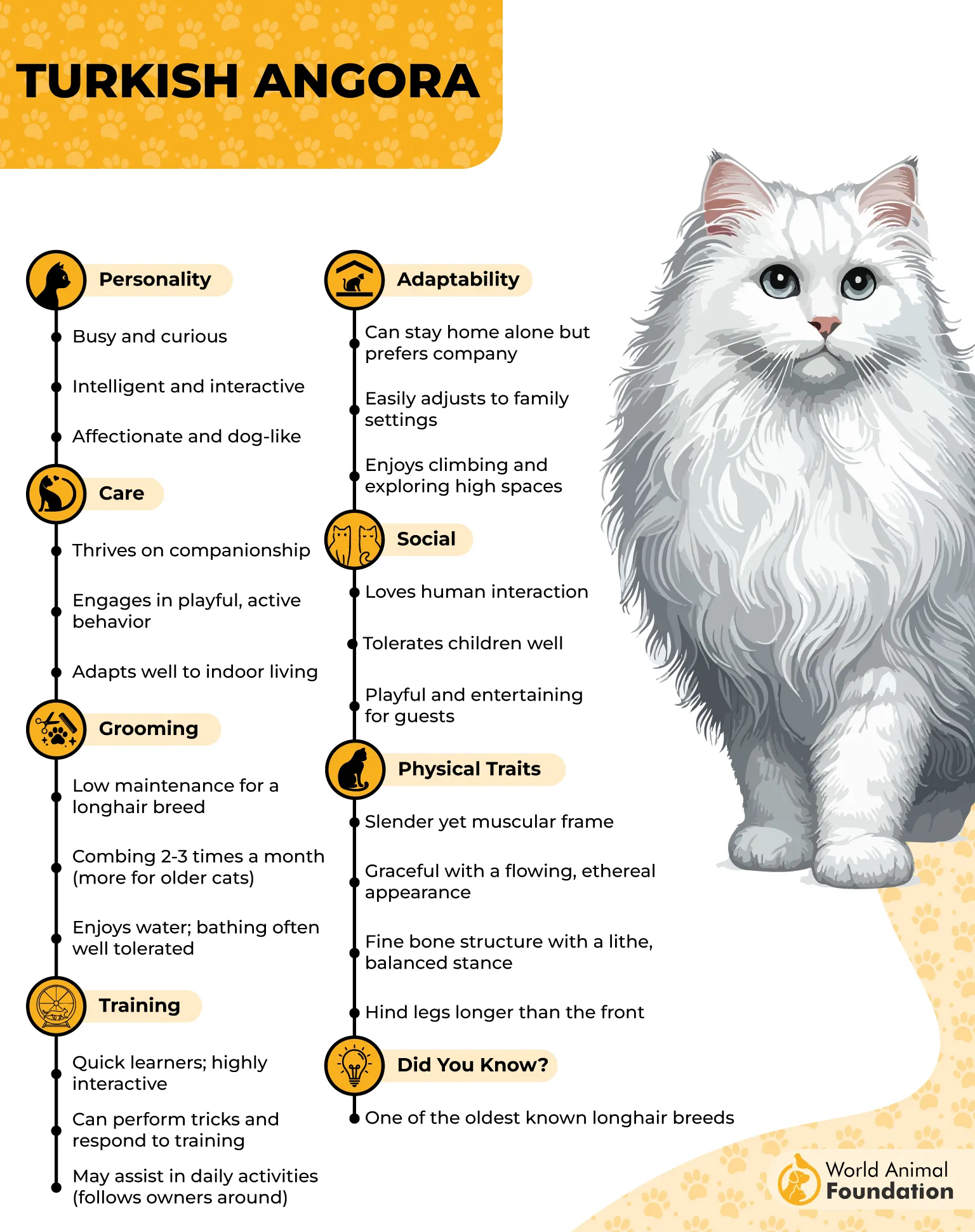
That feather-light tail is a defining feature. Long, bushy, and expressive, it enhances the Angora’s graceful balance and gives the breed a floating, ballerina-like presence as it walks, jumps, or turns. The lack of an undercoat allows the fur—and especially the tail—to move freely and smoothly.
Highly intelligent and people-oriented, Turkish Angoras enjoy active homes where they can show off their agility. Their long tails act as natural stabilizers during quick movements, climbing, and playful bursts, making them especially striking during motion.
Confident and affectionate without being clingy, they prefer staying close to their humans, often choosing high vantage points where their elegant tail can drape effortlessly.
5. Oriental Shorthair
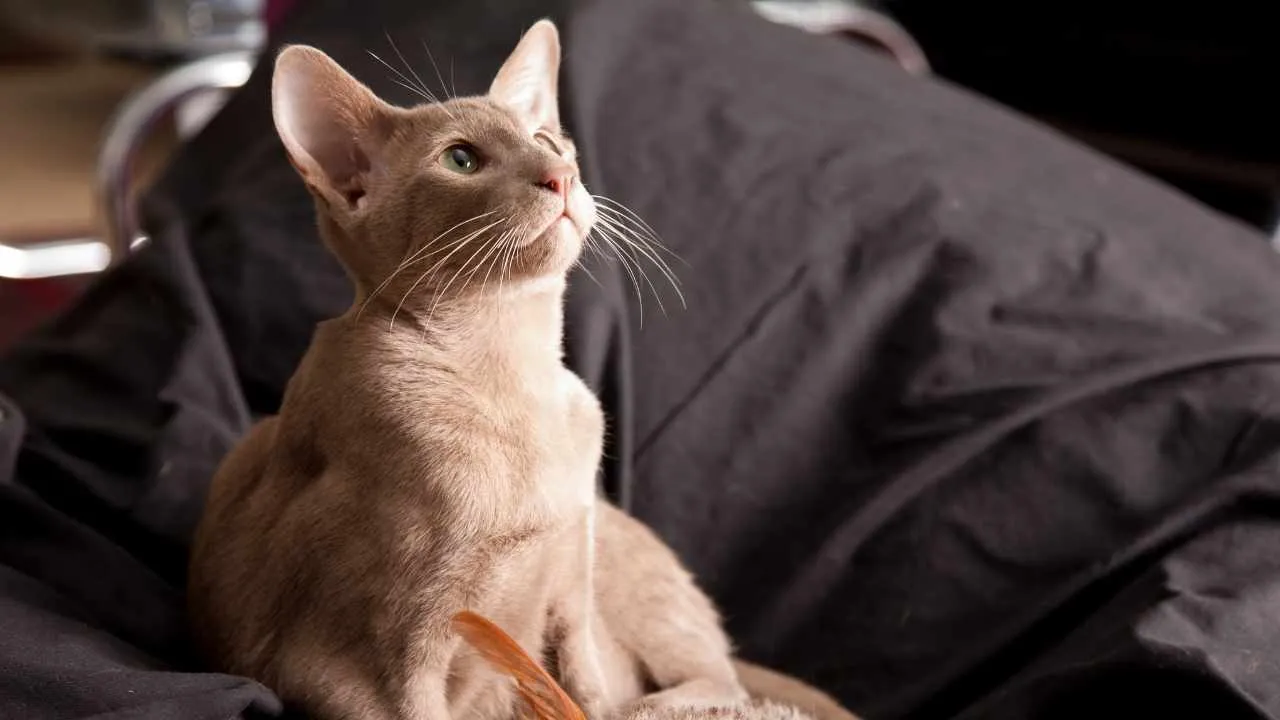
The Oriental Shorthair, sometimes called the “rainbow cat,” is closely related to the Siamese and instantly recognizable for its oversized ears, wedge-shaped head, and ultra-sleek body. This breed’s long, whip-like tail perfectly matches its elegant, fine-boned frame.
That dramatic tail is one of the Oriental Shorthair’s most striking features. Long, thin, and tapering smoothly to the tip, it enhances the breed’s wild, sculpted look and adds fluidity to every movement, from casual walks to energetic play sessions.
Built for agility, Oriental Shorthairs use their extended tails for balance and expression. Their hind legs are slightly longer than the front, giving them a poised stance, while the tail acts as a counterweight during sharp turns, leaps, and quick sprints around the home.
Highly expressive and people-focused, these cats often “talk” with both their voices and their tails, making their dramatic silhouette even more noticeable.
6. Ragdoll
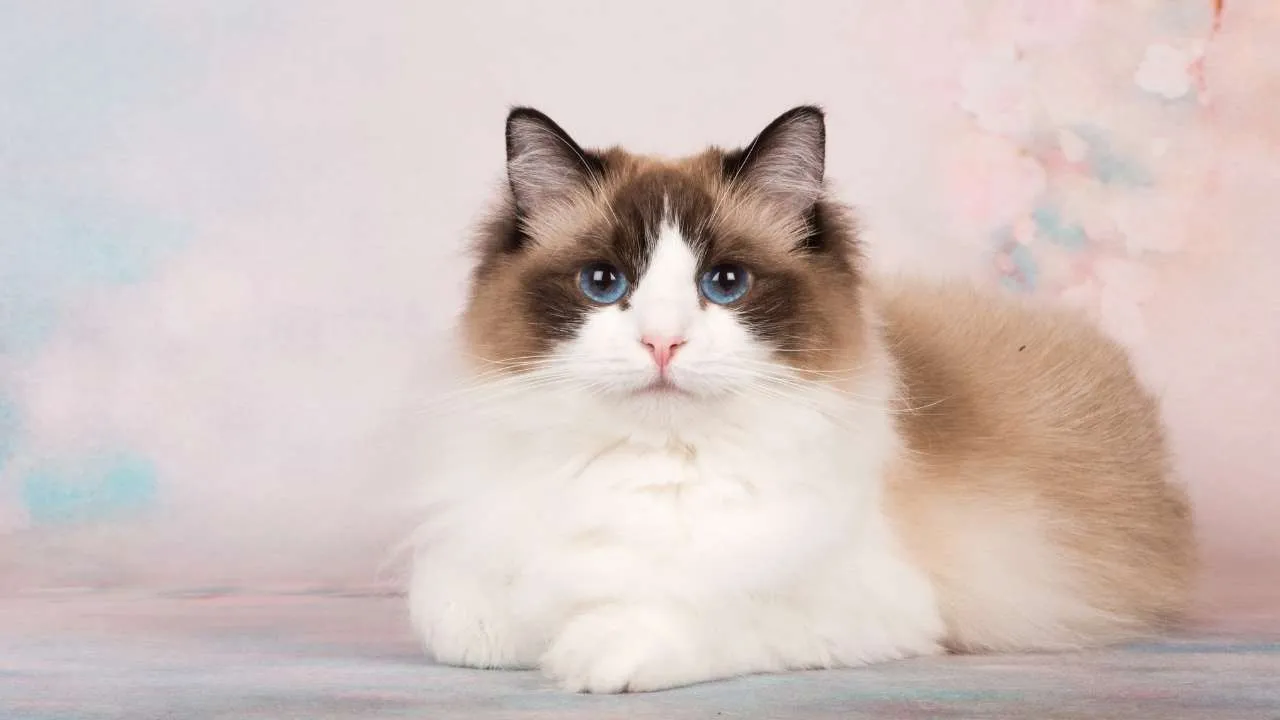
The Ragdoll, sometimes called the “puppy cat” for its devoted nature, is a large, silky-coated breed known for its relaxed temperament and strikingly long, fluffy tail. With soft colorpoint markings and gentle blue eyes, it’s instantly recognizable.
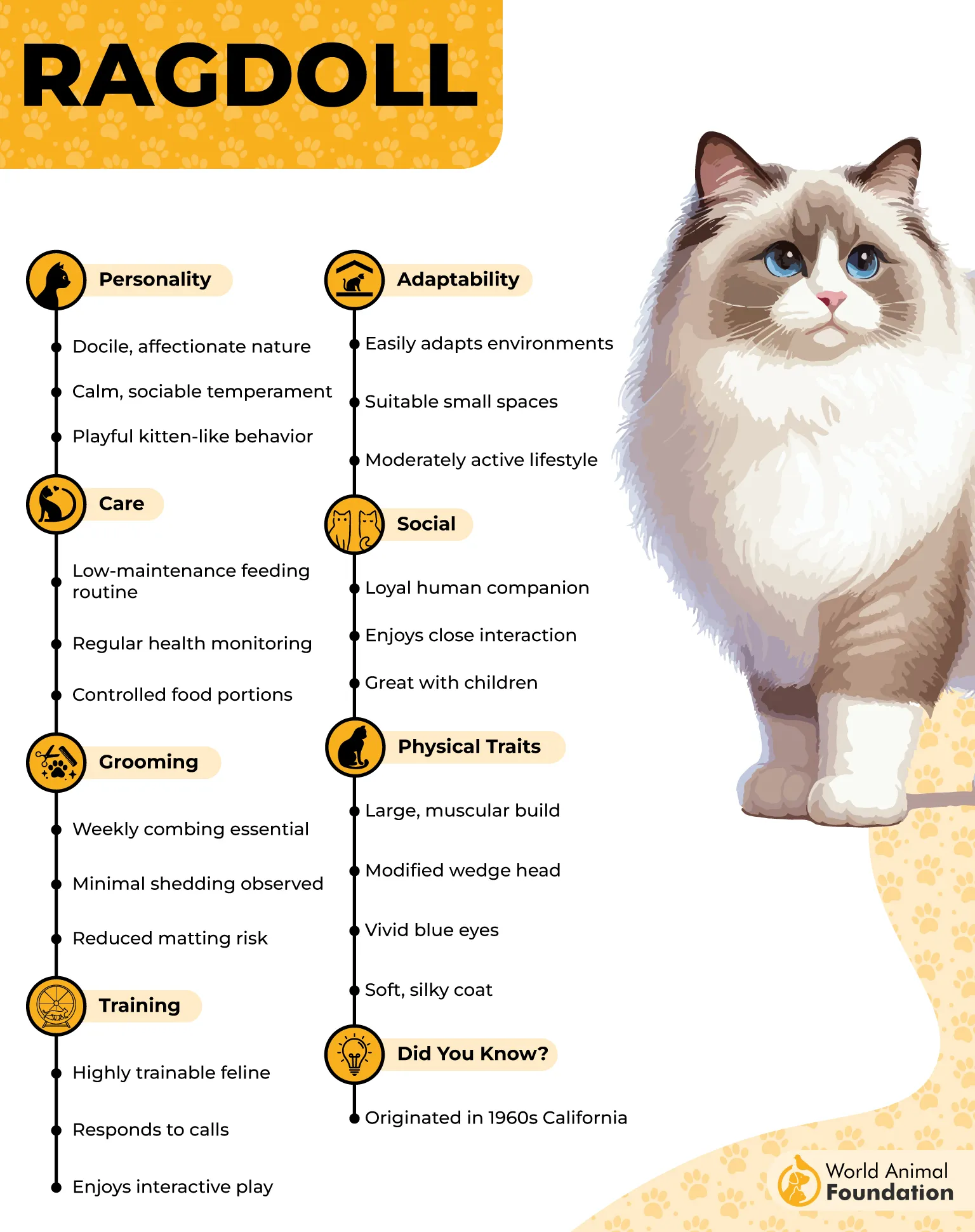
That plume-like tail is a defining feature. Long, bushy, and well-proportioned, it adds to the Ragdoll’s elegant outline and flows smoothly as the cat moves, helping with balance during turns or playful stretches around the home.
Despite their size, Ragdolls move with a loose, flexible grace. Their tail often mirrors their mood—relaxed and trailing when calm, lifted and expressive during play—making it a central part of how they communicate and interact.
Affectionate and people-focused, Ragdolls happily follow family members from room to room, their long tails swishing behind them. They adapt well to indoor life, enjoying cat trees and floor play without needing outdoor adventures.
7. Somali
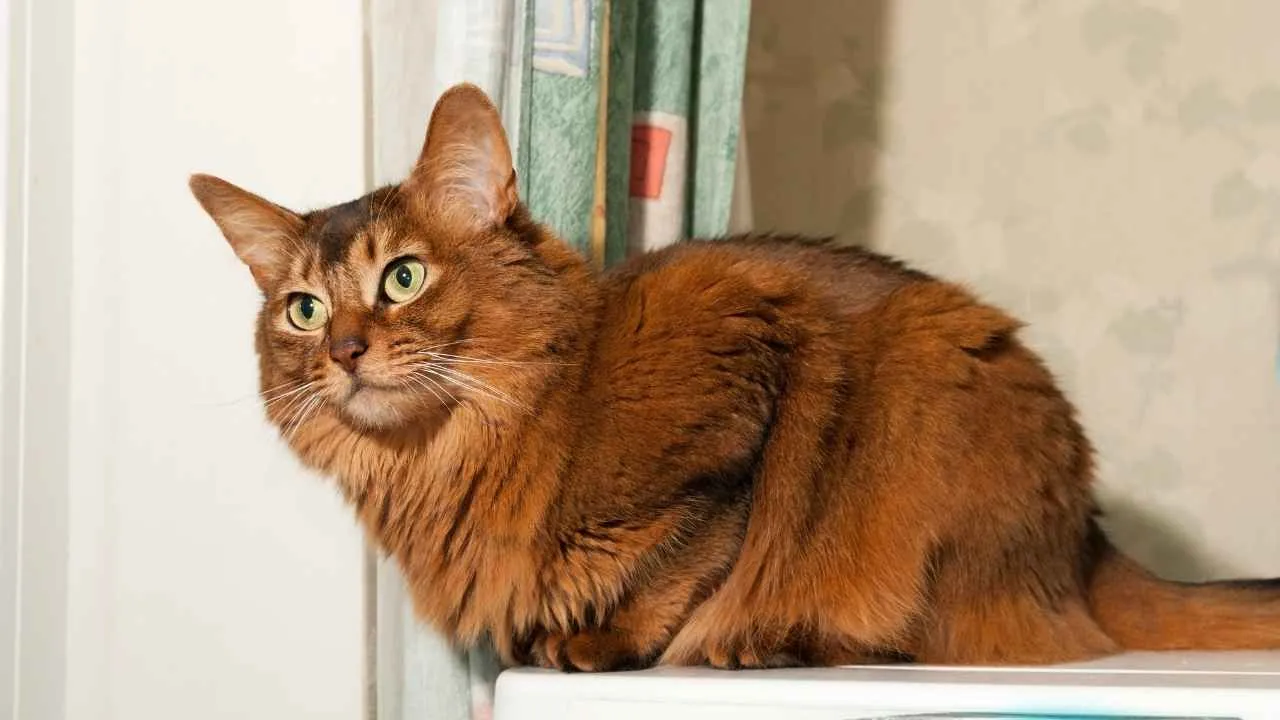
The Somali cat, often described as the long-haired Abyssinian, is a lean, athletic breed with a striking ticked coat and an especially plumed tail. First shown in Australia in the 1960s, Somalis are admired for their fox-like appearance and alert expression.
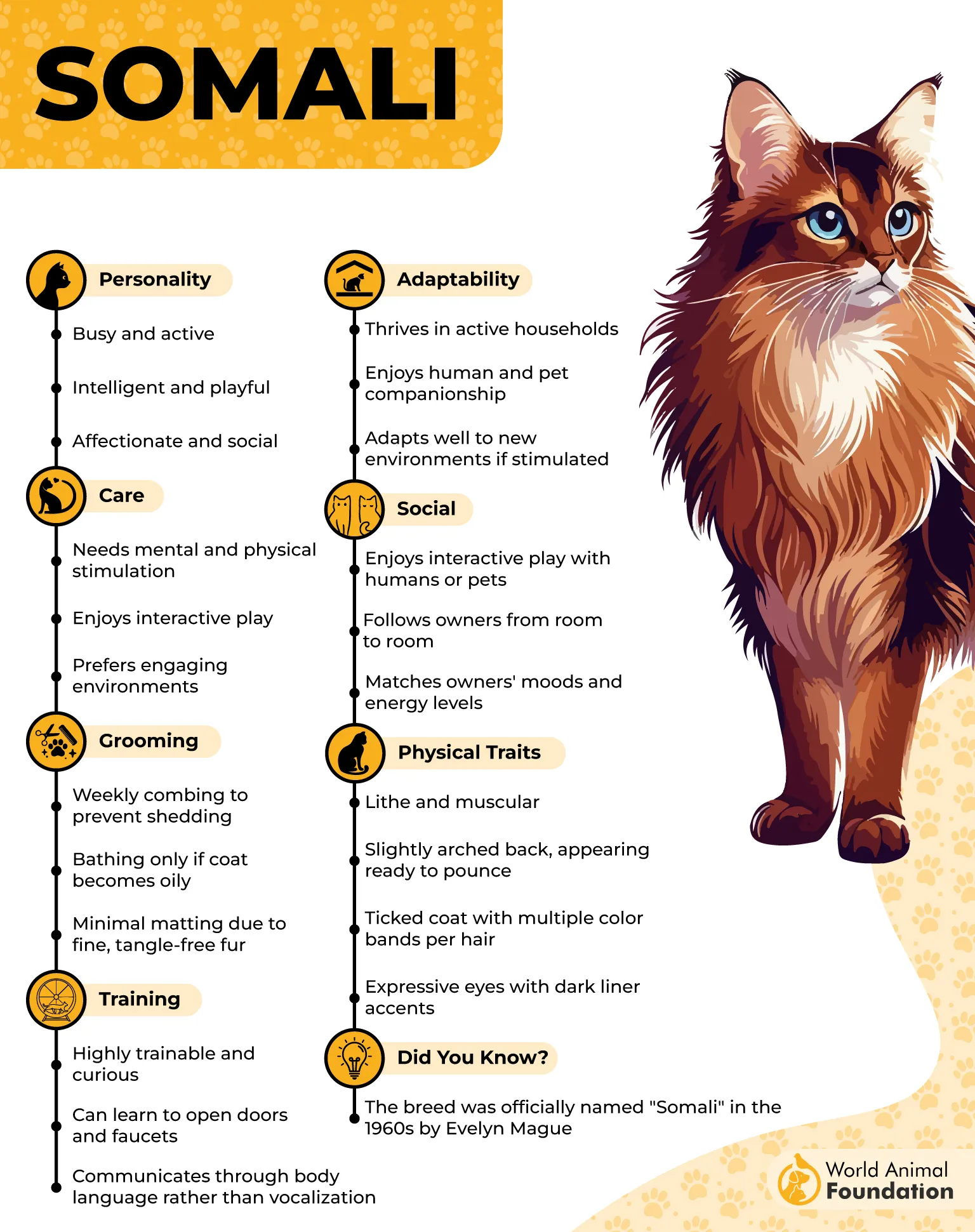
That dramatic, bushy tail is one of the longest and most eye-catching in the cat world. Held high as they move, it adds balance and flair to their quick, tiptoe gait, perfectly matching their energetic and curious nature.
Somalis are highly interactive and thrive on movement, making full use of their long tails during play and sudden turns. While they’re not typical lap cats, they prefer staying close to their humans, often perching nearby to observe everything happening around them.
Their silky coat and flowing tail aren’t prone to heavy matting, but weekly brushing helps keep them sleek and reduces shedding.
Conclusion
Cat breeds with long tails highlight just how functional and beautiful a cat’s tail can be. From a fluffy cat breed with thick fur and ear tufts to a sleek longhaired cat with a water-resistant coat, these traits support balance, communication, and agility.
Pet parents often notice how a cat’s tail helps signal mood, especially around other cats, dogs, and busy households.
Most cats love using their tails to navigate space, interact, and stay confident, making these cats with long features especially memorable companions.
