




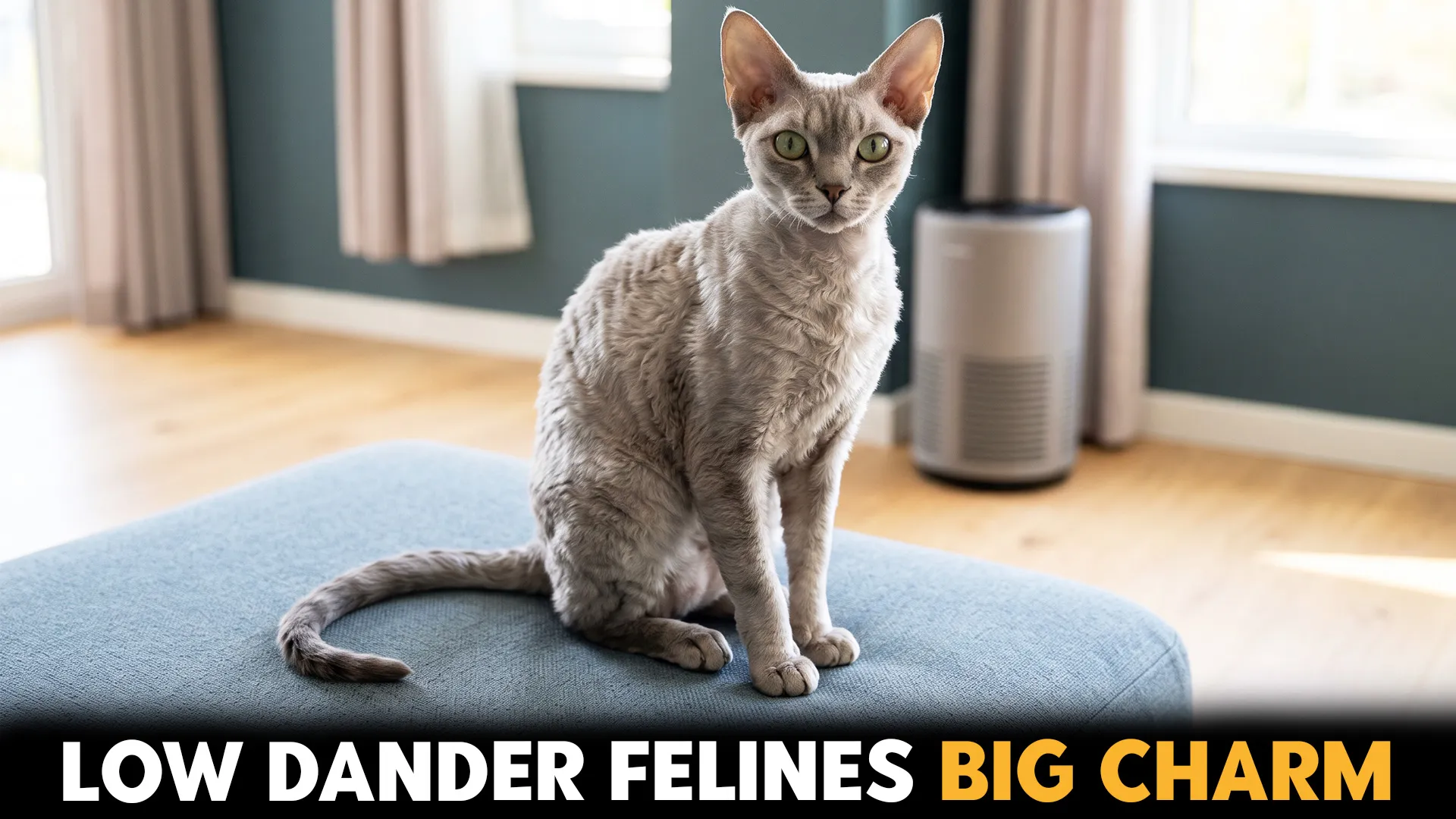
For cat lovers with allergies, welcoming a feline companion can feel challenging. Sneezing, itchy eyes, and other reactions may occur when exposed to proteins found in cats’ saliva, skin flakes, and other secretions.
Although no cat breed is completely hypoallergenic, some cats may trigger fewer symptoms in certain people. However, allergen levels vary between individual cats, so coat type and shedding alone cannot guarantee a comfortable match.
Explore cat breeds often considered more suitable for allergy-sensitive households, along with practical considerations to help you make an informed adoption decision.
Best Cat Breeds That Produce Less Dander
1. Siberian
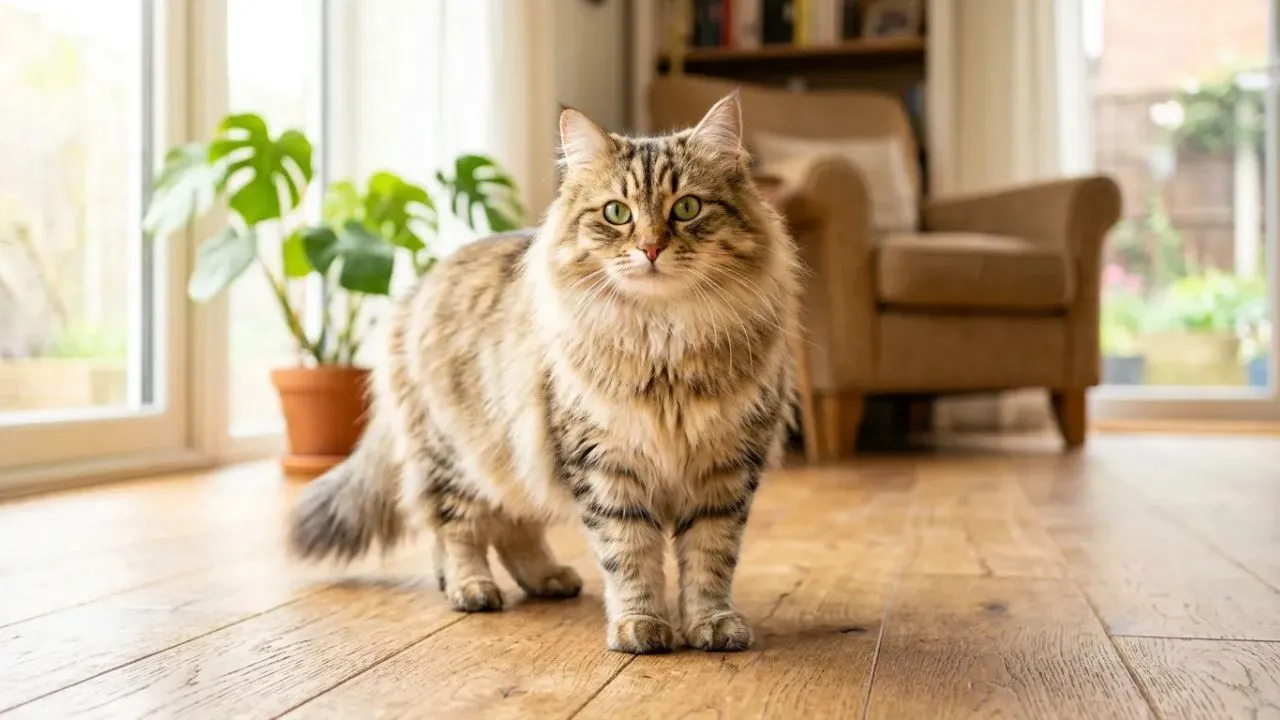
The Siberian may surprise allergy-sensitive cat lovers, as it can appeal to these households despite its thick coat and reputation for producing lower levels of certain allergy-triggering proteins.
Although no cat is completely hypoallergenic, despite its thick coat, some Siberians may produce lower levels of Fel d 1 and be more manageable for people who experience allergic reactions.
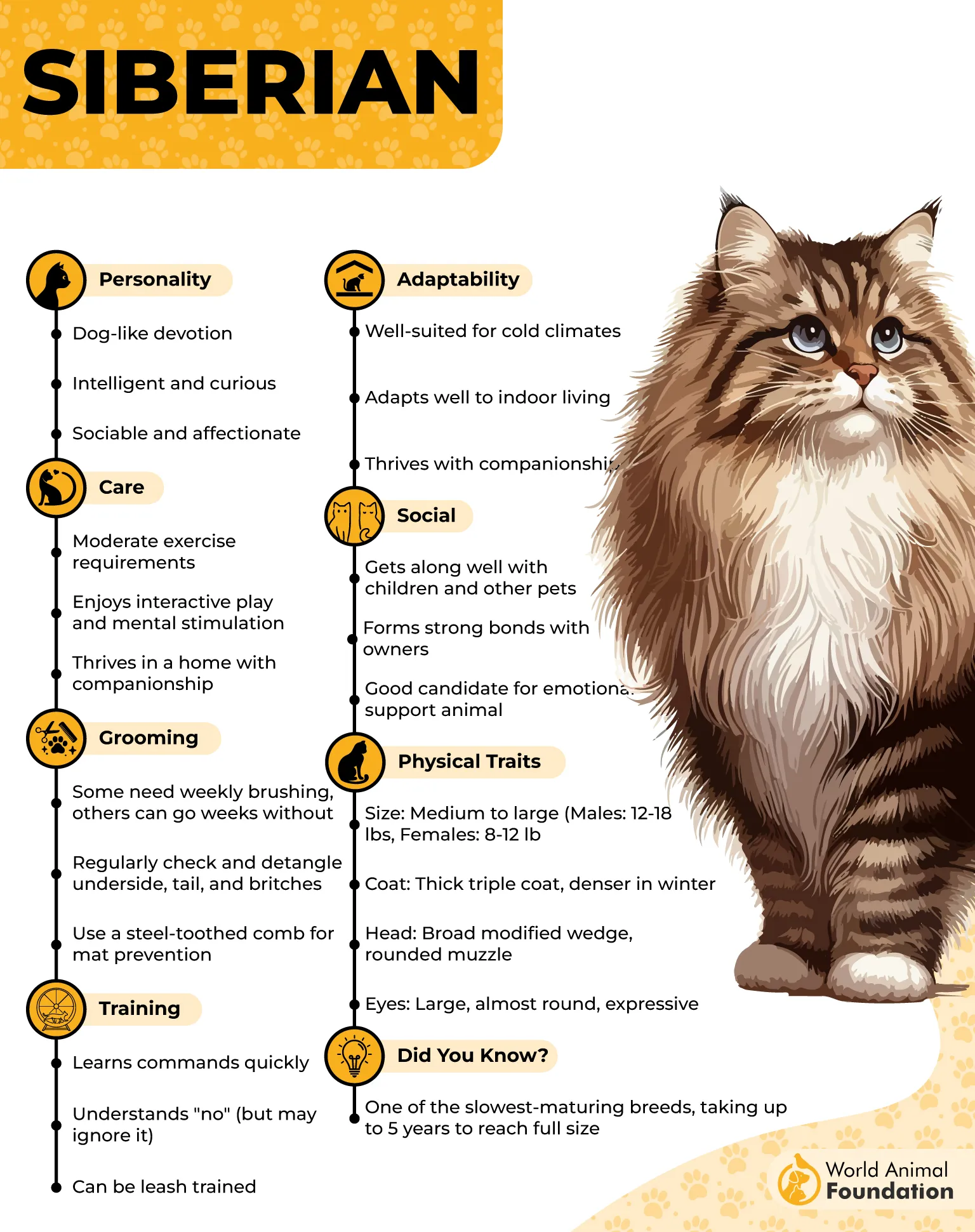
Unlike breeds with simpler coats, Siberians have a dense, triple-layered covering that helps protect them from harsh climates. Their abundant fur needs regular care, and weekly combing can help control loose hair, reduce tangles, and keep the coat in good condition.
Beyond their impressive appearance, Siberians are known for being affectionate, friendly companions that often fit well into family life. Individual cats vary in how much Fel d 1 they produce, so allergy sufferers should spend time with the individual cat before bringing one home.
How This Breed Stands Out
Some individuals produce lower levels of Fel d 1: This allergen protein may be present at lower levels in certain Siberians, though production varies between cats.
Thick triple-layered coat: Their dense coat gives them a plush appearance and requires consistent grooming to stay healthy.
2. Balinese
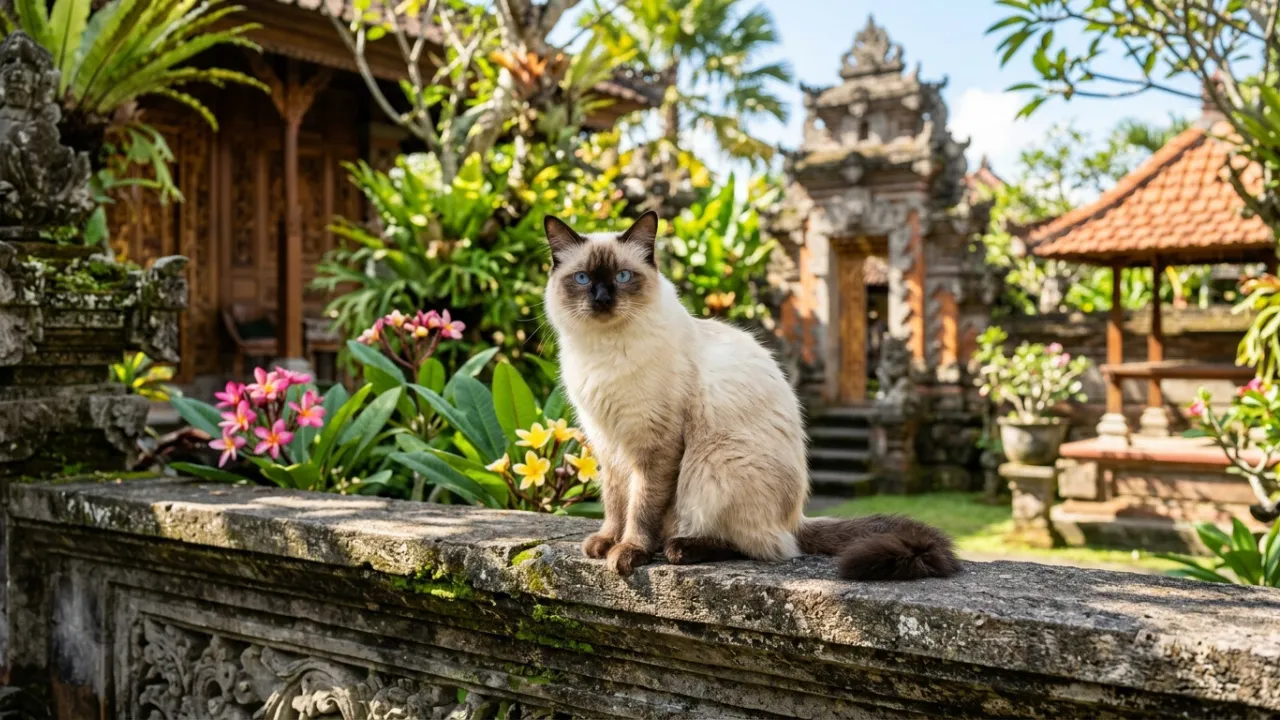
Closely related to the Siamese, the Balinese is a graceful, long-haired cat—often called the long-haired Siamese—known for its silky coat and elegant appearance. Its fine fur forms a flowing outline, while the plumed tail adds extra softness without the dense undercoat seen in some long-haired breeds.
The Balinese is often discussed among cats that may suit allergy-sensitive households because it is believed to produce fewer allergens.

Its silky coat may also shed less than expected, though individual cats vary and this breed is not completely hypoallergenic. Spending time with a Balinese before adoption can help potential owners assess their reactions.
Intelligent and affectionate, Balinese cats enjoy interacting with their families, including children. Their quick minds make them receptive to clicker training, and they can learn tricks through positive reinforcement.
How This Breed Stands Out
Plumed tail with silky feathering: Long, fine hair creates a soft, flowing tail that enhances the breed’s graceful silhouette.
Color-point coat and striking blue eyes: Darker coloring on the face, ears, paws, and tail contrasts with a lighter body, while vivid blue eyes complete its distinctive look.
3. Devon Rex

With its unusual wavy coat and mischievous expression, the Devon Rex stands apart from other cat breeds. Its short, delicate fur sheds relatively little, making it a potential option for people exploring cats that may trigger fewer allergy symptoms.
Unlike heavily coated breeds, the Devon Rex has a fine undercoat that generally requires minimal brushing. However, natural oils can accumulate on its skin because of its sparse fur, so regular grooming helps limit loose fur and allergen buildup and may help keep its coat fresh.
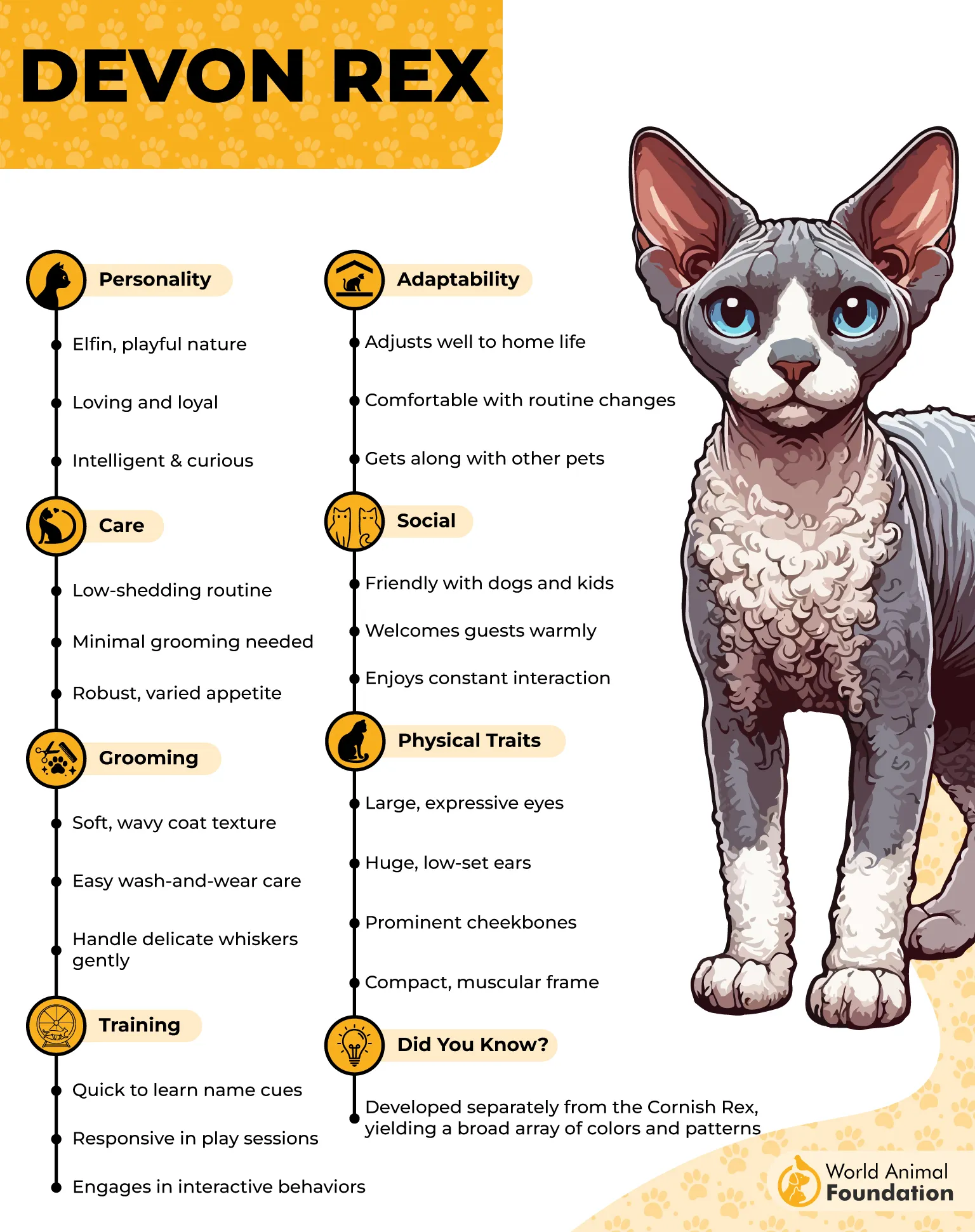
Beyond its distinctive appearance, this intelligent, outgoing cat thrives on human interaction. Devon Rex cats enjoy staying close to their families and can become unhappy when left alone for extended periods.
Although lower shedding may help some households, no cat is completely hypoallergenic, and individual allergic reactions can vary, with some people experiencing mild symptoms depending on personal tolerance.
How This Breed Stands Out
Short, fine coat sheds relatively little: Its delicate, wavy fur produces less loose hair than many thicker coats, though shedding varies between individuals.
Oversized ears and pixie-like facial features: Large ears, prominent eyes, and a short, expressive face give the Devon Rex its distinctive, playful appearance.
4. Cornish Rex
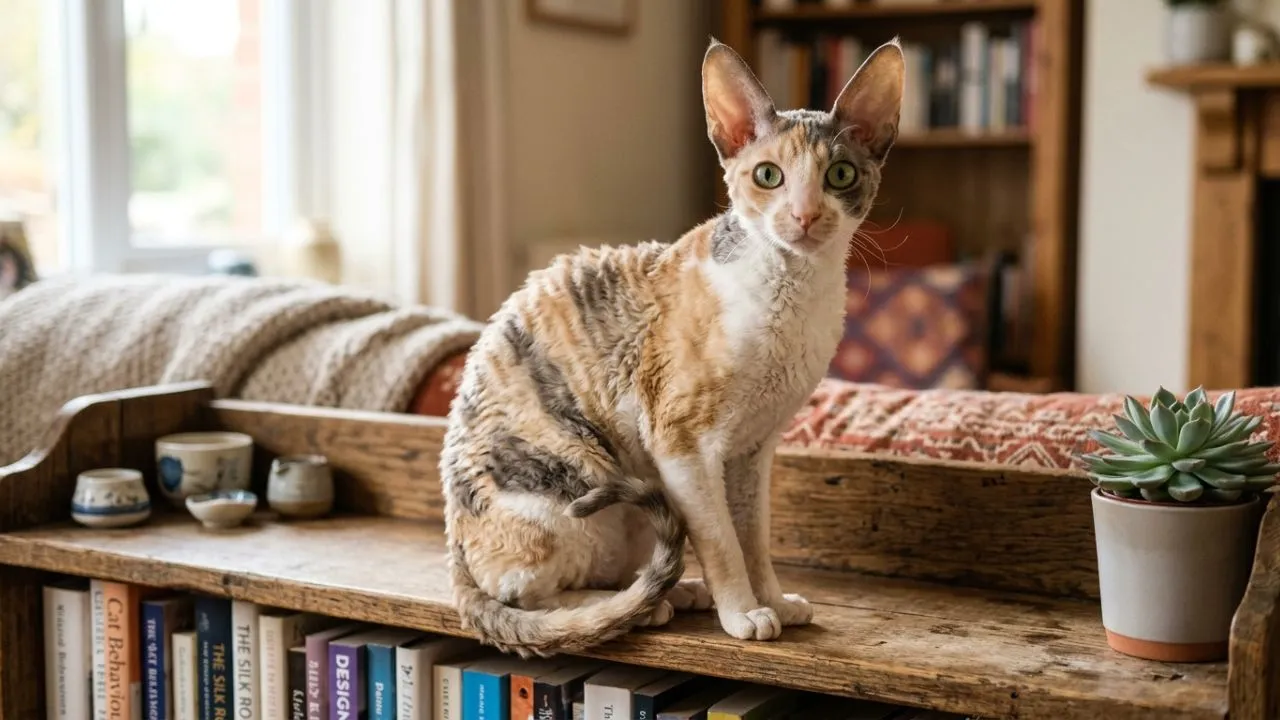
The Cornish Rex is instantly recognizable for its rippling, velvet-soft coat. Unlike most cats, which have several layers of fur, this breed has a fine, downy undercoat with very little guard hair, giving its coat a delicate texture and reducing visible shedding.
According to WebMD, Cornish Rex cats are admired for their charming temperaments and unusual appearance, with their distinctive coat being one of their most recognizable traits.
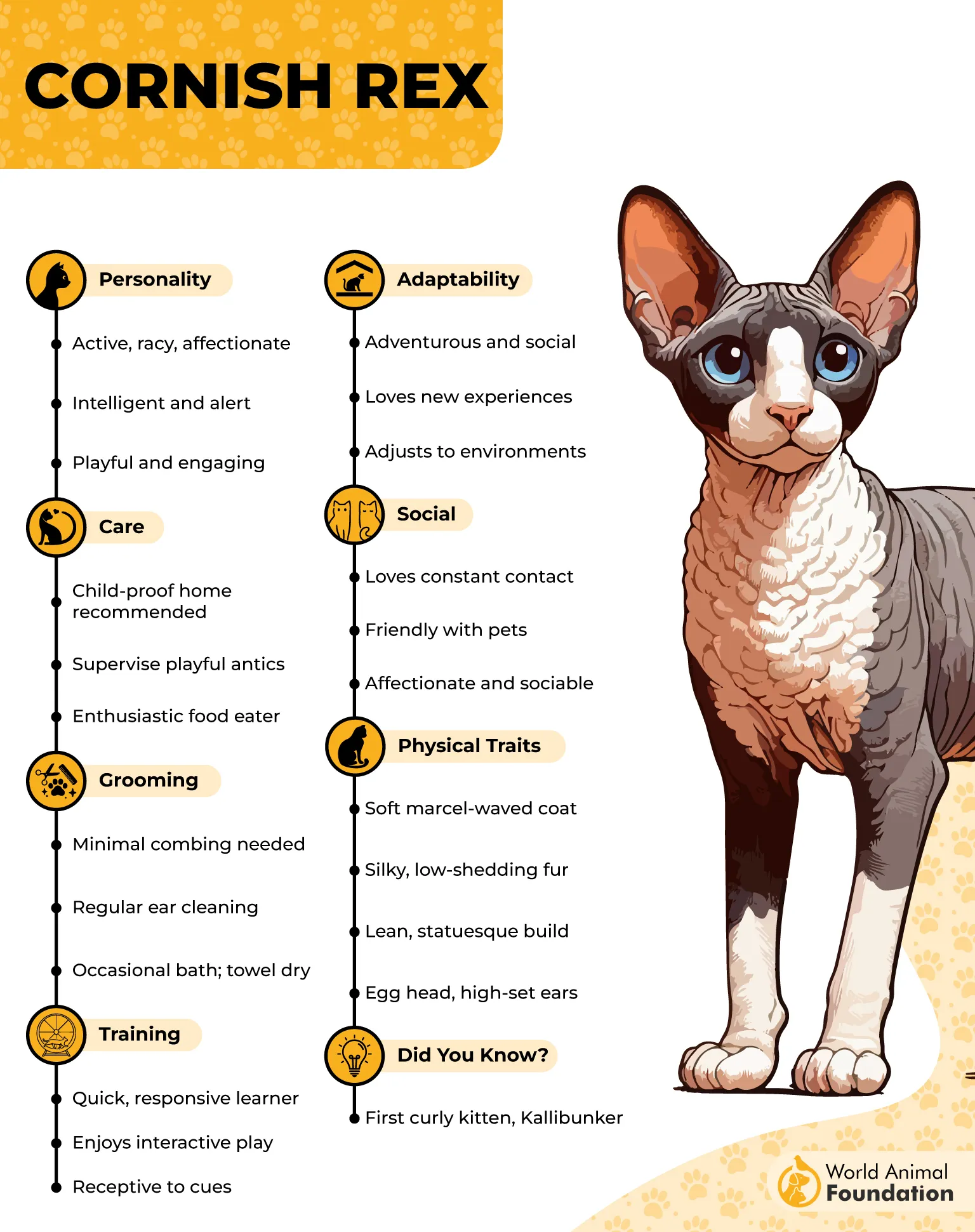
That matters because hair length alone does not determine allergy risk, and even short-haired cats can differ in how much they shed or spread allergens.
Although its short curls need little brushing, the coat generally requires less maintenance than heavier-coated breeds, though the skin may still need occasional attention to manage natural oil buildup. This breed also has an energetic nature, so interactive play and daily activity are important parts of its care routine.
Cornish Rex cats are affectionate, people-oriented companions that often enjoy being around children and joining family activities. Their lower-shedding coat may appeal to some allergy-sensitive owners, but shedding less does not guarantee fewer symptoms because allergens can also come from saliva and skin secretions.
How This Breed Stands Out
Soft, wavy coat with minimal guard hairs: Its single, fine layer creates distinctive ripples and a plush, suede-like feel.
Slender, athletic body with long legs: Long limbs and a lean frame give the Cornish Rex an agile appearance suited to climbing, jumping, and energetic play.
5. Sphynx

The Sphynx is famous for its nearly hairless body, which sets it apart from fluffy cat breeds. As one of the better-known hairless breeds, it may have a fine layer of peach-like fuzz, but most lack a conventional coat that would otherwise collect loose hair and dander.
According to Purina, Sphynx cats are best known for their hairless appearance, although the amount of fine fuzz varies, with some having a soft, peach-like covering across their bodies and others showing light fuzz mainly on their extremities.
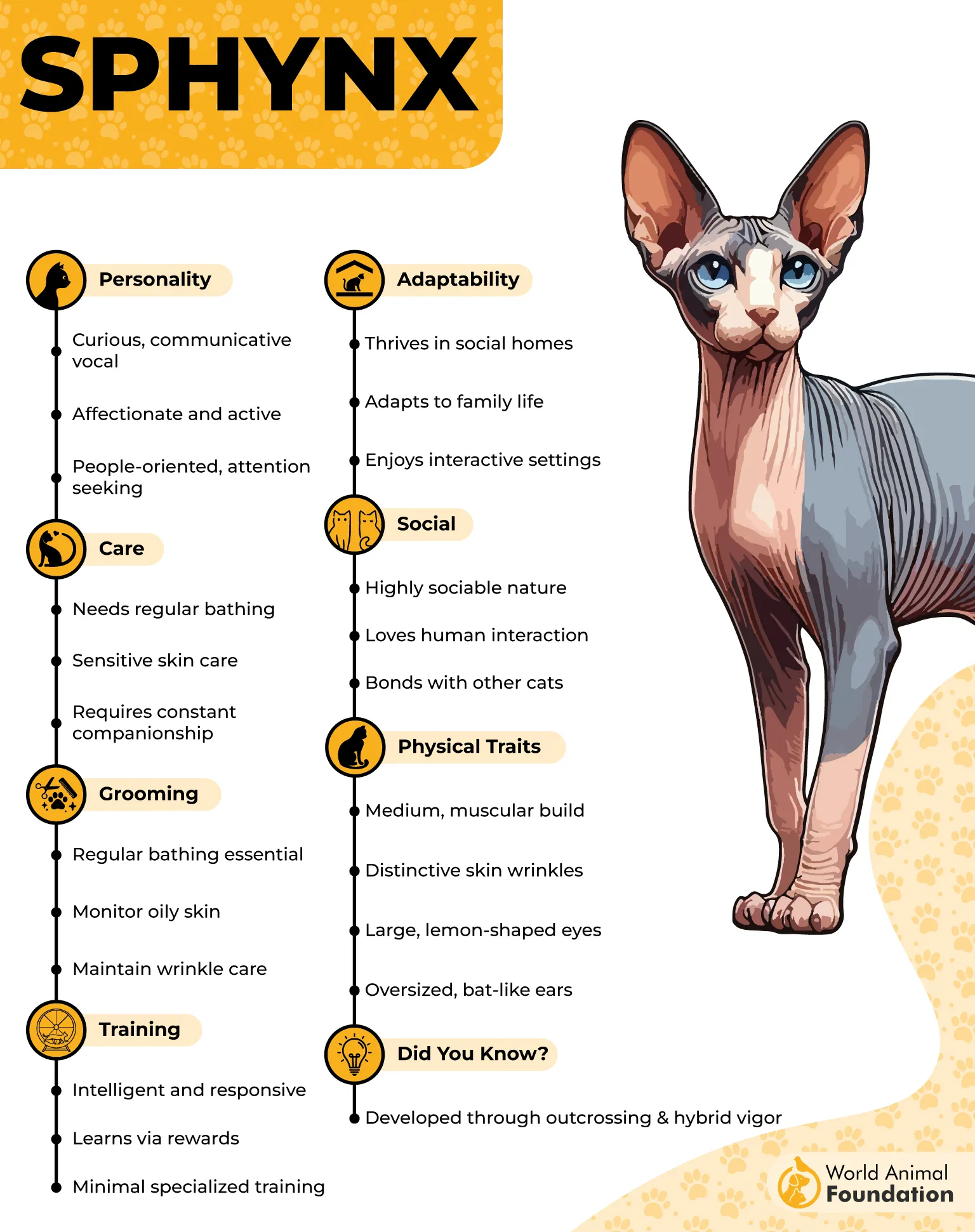
Despite their bare appearance, Sphynx cats still need regular grooming. Natural oils can accumulate on their skin without fur to absorb them, so gentle, routine baths with cat-safe shampoo help keep their skin clean. They may also need protection from direct sunlight and extra warmth in cooler weather.
Although the Sphynx may appeal to people seeking a cat with minimal shedding, it is not completely hypoallergenic. Allergy-triggering proteins can occur in saliva and skin secretions, so the breed still produces allergens and is not completely allergen-free, meaning these cats can still cause reactions in sensitive individuals.
How This Breed Stands Out
Little to no conventional fur: Its nearly hairless skin means there is very little shedding compared with coated breeds.
Requires regular skin cleaning to remove oil buildup: Routine bathing helps manage excess oils and maintain healthy skin.
6. Russian Blue
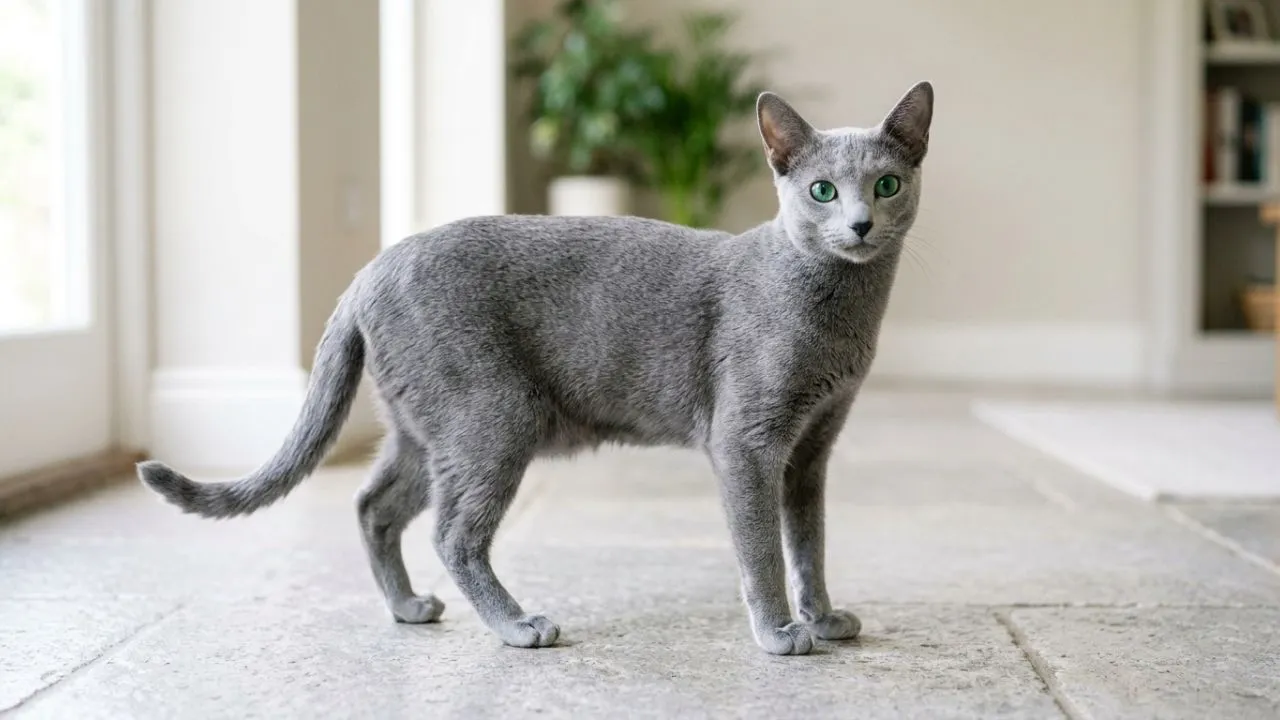
The Russian Blue is admired for its elegant appearance, quiet temperament, and dense blue-gray coat. Its short, plush fur has a soft, velvety texture, with silvery tips that catch the light and give the coat a subtle shimmer.
According to Petplan, Russian Blue cats are easily identified by their silky, smoky blue-gray coats, slender bodies, pointed ears, and striking, vivid eyes.
Although Russian Blues are often described as allergy-friendly, individual cats vary in the amount of Fel d 1 they produce.
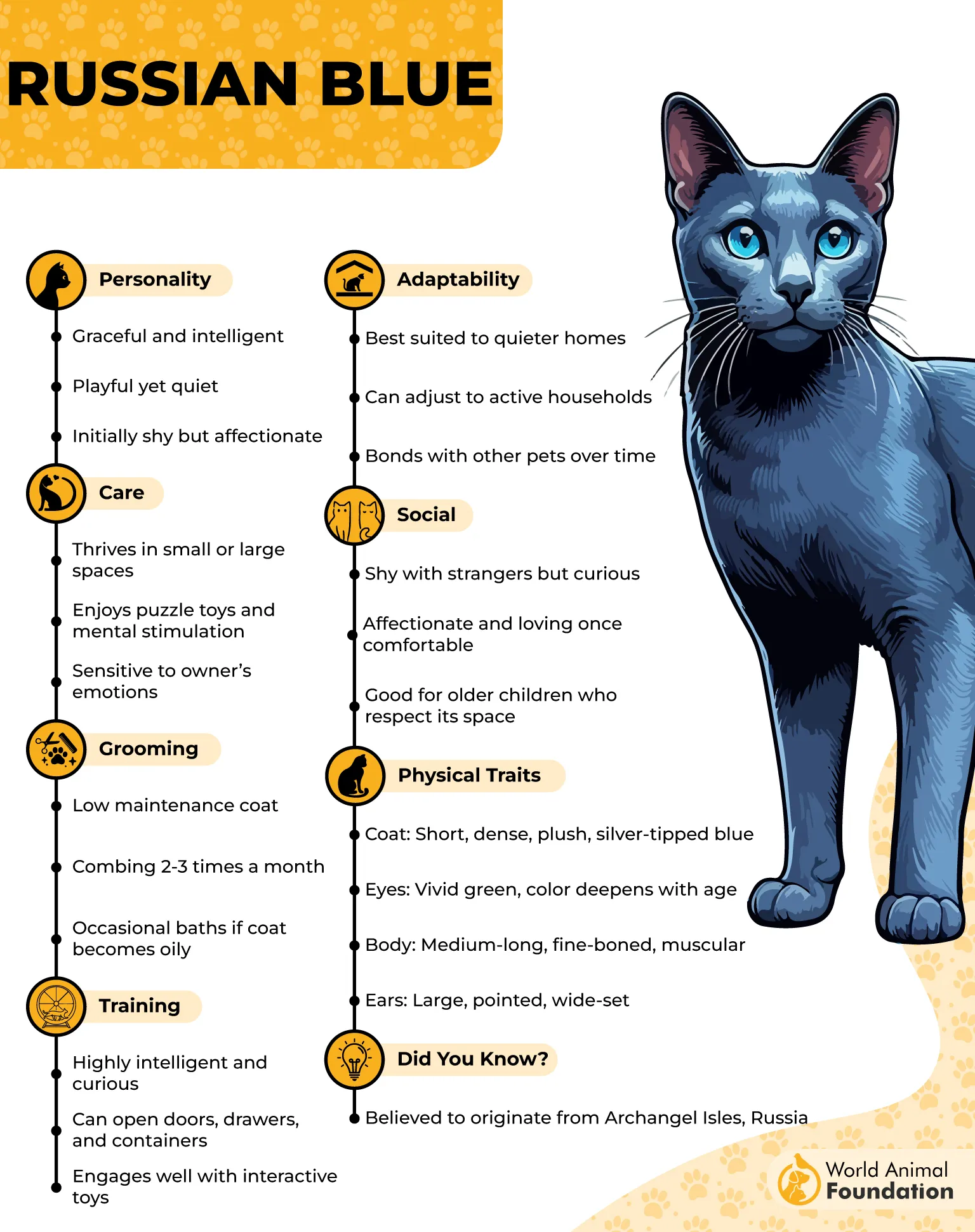
Some may produce lower levels of this allergy-triggering protein, but the breed is not guaranteed to prevent allergic reactions. Occasional brushing helps remove loose hairs and maintain the coat’s appearance.
Calm and affectionate, Russian Blues often prefer a peaceful home and may be reserved around unfamiliar people. Their quiet, loyal nature can make them a favorite in calm households. They typically take time to warm up to strangers but form close bonds with their families. Their slightly upturned mouths also create the gentle expression often described as a natural smile.
How This Breed Stands Out
Dense, plush blue-gray coat: Its thick, short fur creates a smooth, luxurious appearance without requiring intensive grooming.
Silver-tipped fur creates a shimmering appearance: Pale tips reflect the light, adding a silvery sheen to the breed’s distinctive blue-gray coat.
7. Bengal

With its sleek coat and dramatic markings, the Bengal has an exotic appearance reminiscent of its wild ancestors. Its short, close-fitting fur lies smoothly against the body, creating a glossy finish without the heavy fluff of long-haired breeds.
Because Bengals generally shed relatively little, they may be easier to groom than cats with dense, lengthy coats. They may also reduce exposure to loose dander in some homes, but that does not guarantee fewer allergens, since allergy-triggering proteins can still be present in saliva and skin secretions.
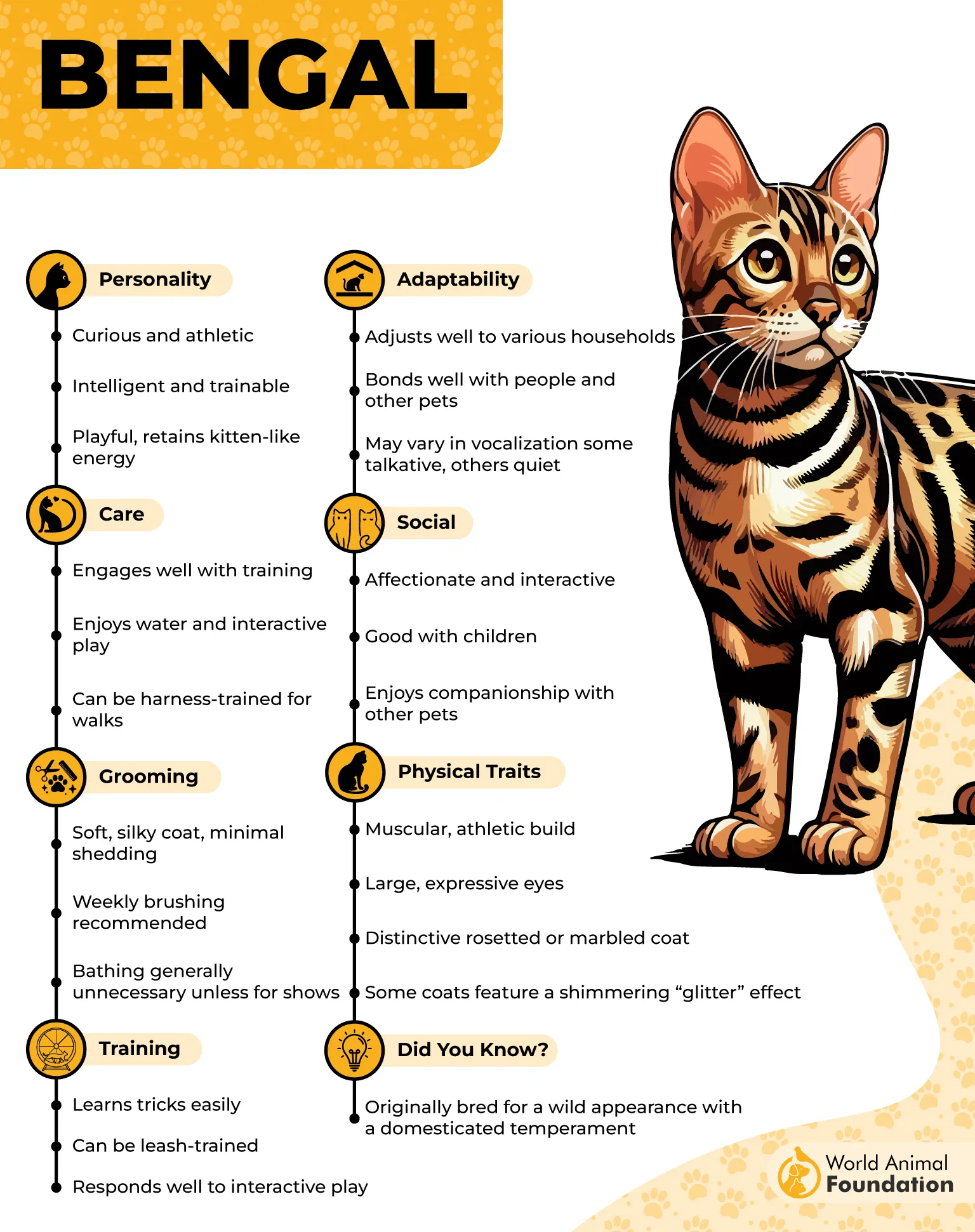
Beneath their striking appearance, Bengals are highly intelligent, energetic cats that need plenty of play, climbing opportunities, and mental stimulation. They can become demanding without sufficient activity, making an engaging environment important for their well-being.
How This Breed Stands Out
Short, close-lying coat with relatively low shedding: The sleek fur usually needs minimal grooming and leaves less loose hair around the home.
Leopard-like spots or marbled markings: Bold rosettes, spots, or swirling patterns create the Bengal’s distinctive, wild-inspired appearance.
Conclusion
Choosing a cat that produces less dander can make exploring life with a feline companion easier for some allergy-sensitive households. Breeds such as the Siberian, Balinese, and Russian Blue may be worth considering because of their reported allergen levels or coat characteristics.
Some cats may produce fewer allergens or shed less, but there is no such thing as a completely allergy-free cat.
Cats like the Devon Rex and Cornish Rex have distinctive, low-shedding coats, while the Sphynx has very little conventional fur but needs regular skin care. Bengals offer sleek coats and striking markings, paired with high energy levels.
Remember that no cat breed is completely hypoallergenic. Allergen production varies between individual cats, and even hairless or low-shedding cats can trigger symptoms.
Before adopting, spend time around your preferred breed to see how you react. Living with cat allergies is often possible with careful planning, managing allergies through daily habits and maintaining realistic expectations.
Using HEPA air purifiers captures airborne allergens, vacuuming with HEPA filters removes allergens from carpets, and designating pet-free zones reduces allergen exposure. Consider its grooming needs, temperament, activity level, and the care required to keep it healthy and comfortable.
You can also ask a healthcare provider about medications and a veterinarian or other professional for guidance-level advice on grooming and ongoing care.
