




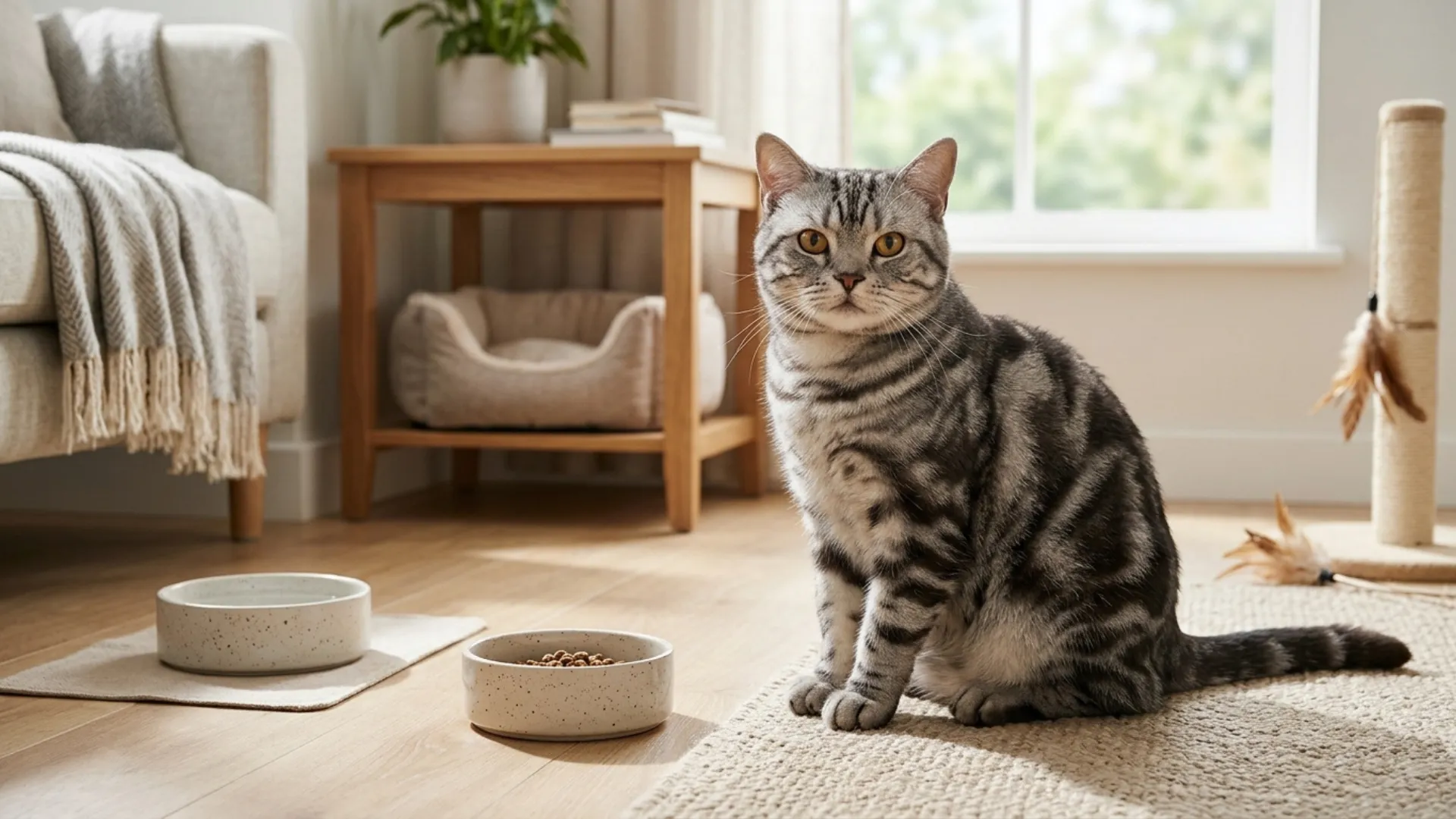
A cat that settles comfortably into your daily routine can make life at home feel more harmonious. Whether you follow regular work hours, maintain consistent mealtimes, or prefer peaceful evenings, some felines adjust well to predictable patterns and familiar surroundings.
Certain breeds are known for their adaptable personalities, steady energy levels, and ability to enjoy companionship without constant attention. However, every cat is different, and consistency, patience, enrichment, and positive interactions help any feline feel secure.
Explore cat breeds that may fit structured lifestyles and learn which qualities can make everyday life together easier and more enjoyable.
Best Cat Breeds That Adapt to Routines
1. British Shorthair
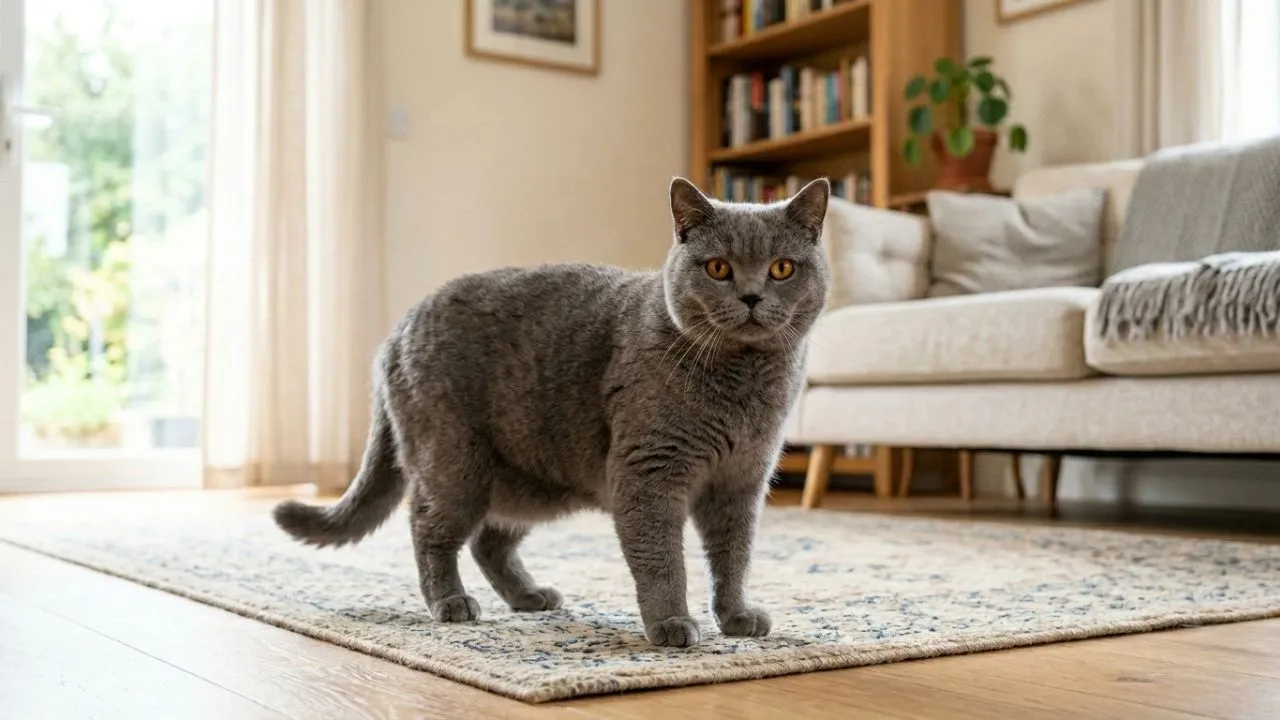
With a plush coat, rounded cheeks, and expressive eyes, the British Shorthair has a teddy-bear appearance and a composed personality. This British breed is known for being adaptable, easy to care for, and comfortable in different living environments.
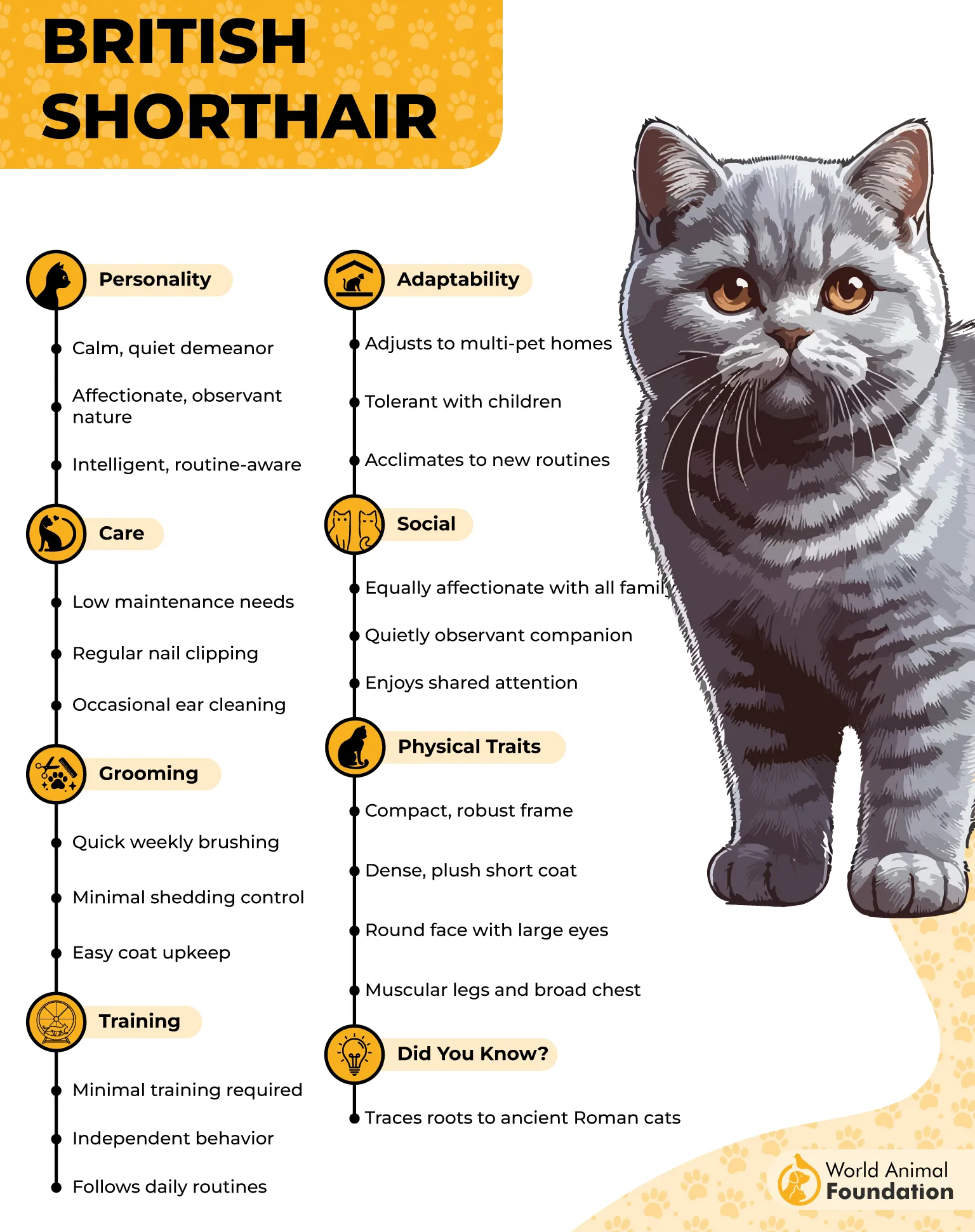
Unlike highly demanding cats, British Shorthairs tend to value their independence and prefer affection on their own terms. They enjoy spending time with their owners but can also entertain themselves, making them suitable for households with predictable daily schedules.
Generally quiet and even-tempered, these short-haired cats appreciate a peaceful home where feeding, playtime, and rest follow familiar patterns.
Although they enjoy interactive play, they usually balance activity with plenty of relaxed downtime, and their grooming needs are modest, though they can shed seasonally, especially when changing from a thicker winter coat in warmer years.
How This Breed Stands Out
Their self-sufficient nature helps them settle into consistent feeding times and everyday household schedules.
Their calm temperament suits peaceful homes where familiar activities and a steady environment provide reassurance.
2. American Shorthair
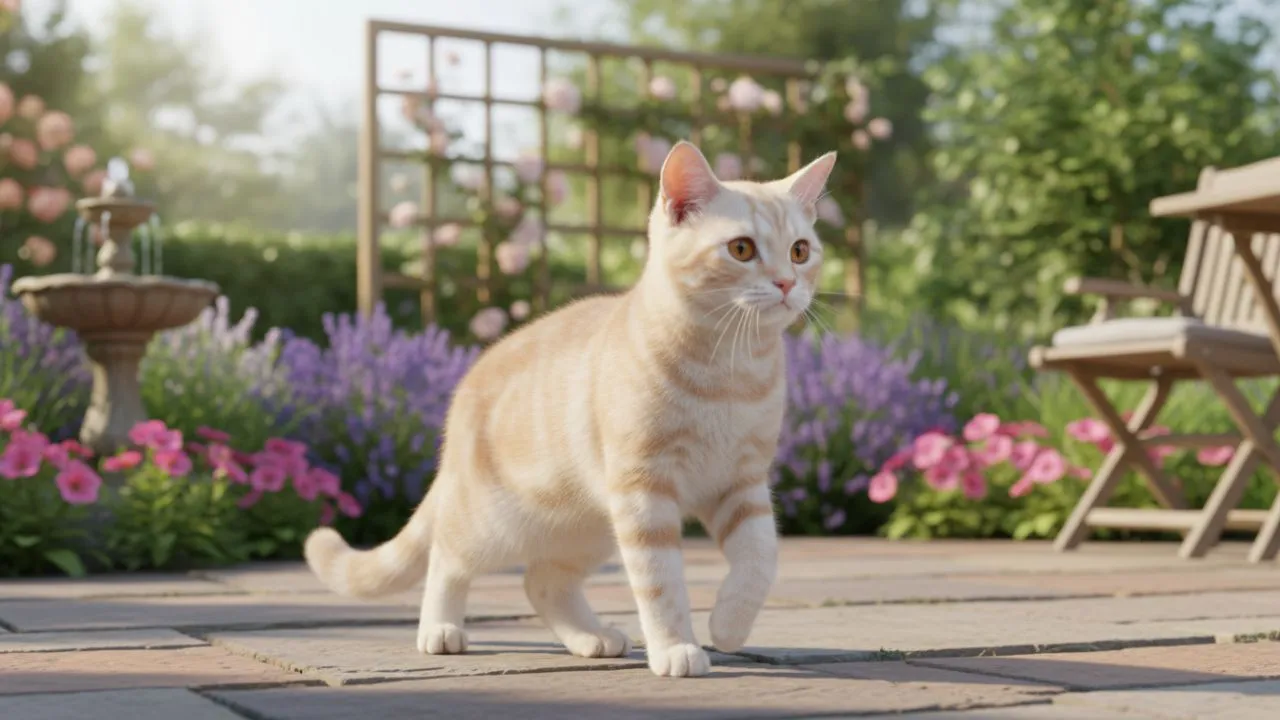
American Shorthairs are easygoing, confident cats that adjust well to different households, from quiet apartments to lively family homes, and they’re often a suitable choice for families with children when the cat’s individual temperament fits the home.
Their balanced temperament and ability to learn through positive reinforcement make them responsive companions without requiring constant attention.
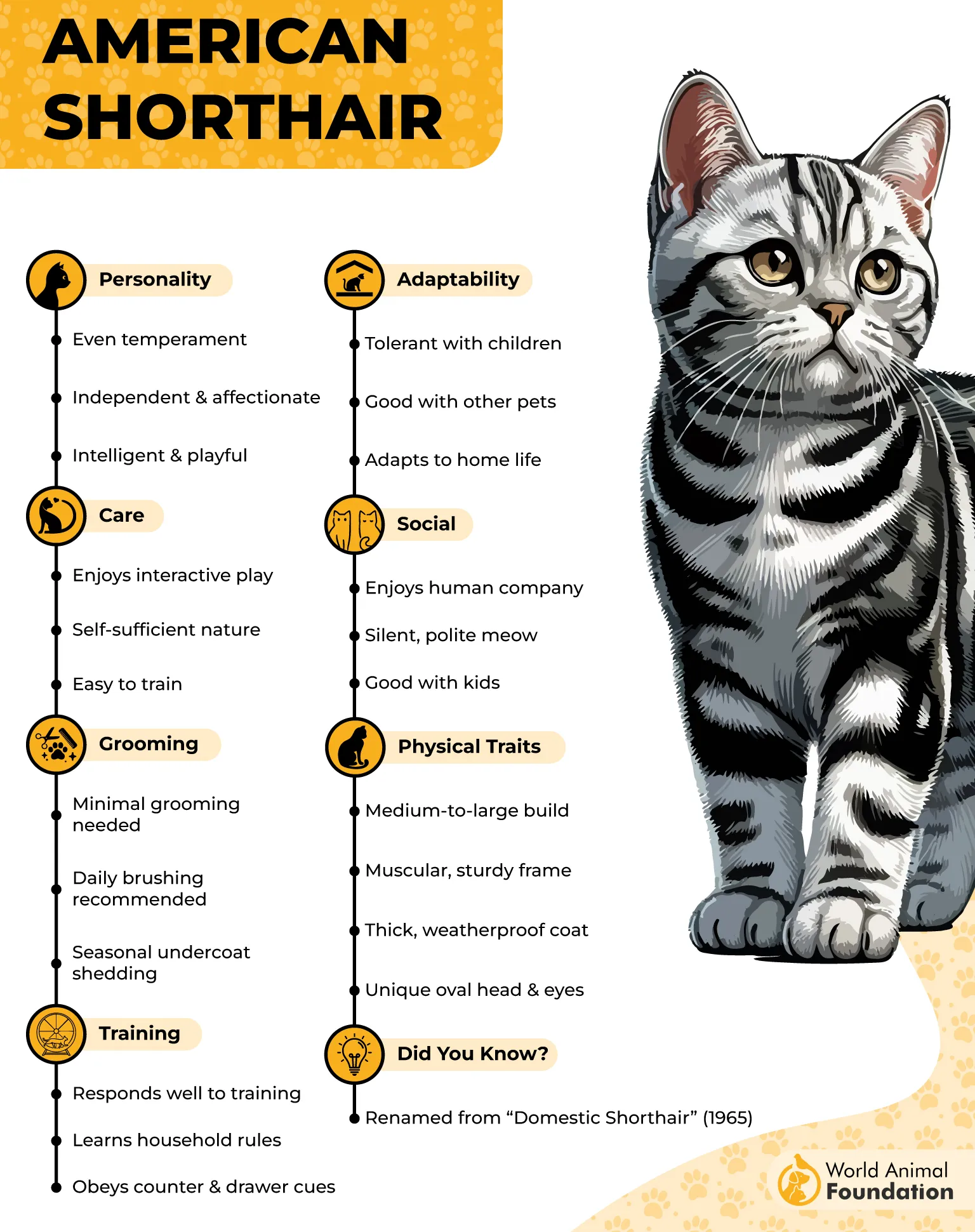
These cats appreciate human company but are equally comfortable entertaining themselves. They may follow household activities from a favorite perch rather than staying close at every moment, making them well suited to owners who maintain regular daily schedules.
Adopting an adult American Shorthair can make it easier to assess temperament and energy level before bringing the cat home.
Playful without being overly energetic, American Shorthairs enjoy puzzle toys, chasing games, and short bursts of activity before settling down to relax. Keeping playtime consistent and monitoring their food intake can also help prevent excess weight gain.
How This Breed Stands Out
Their flexible temperament helps them settle into homes with different activity levels and familiar daily routines.
They enjoy interactive games but are equally content lounging nearby, fitting naturally into a predictable schedule.
3. Ragdoll
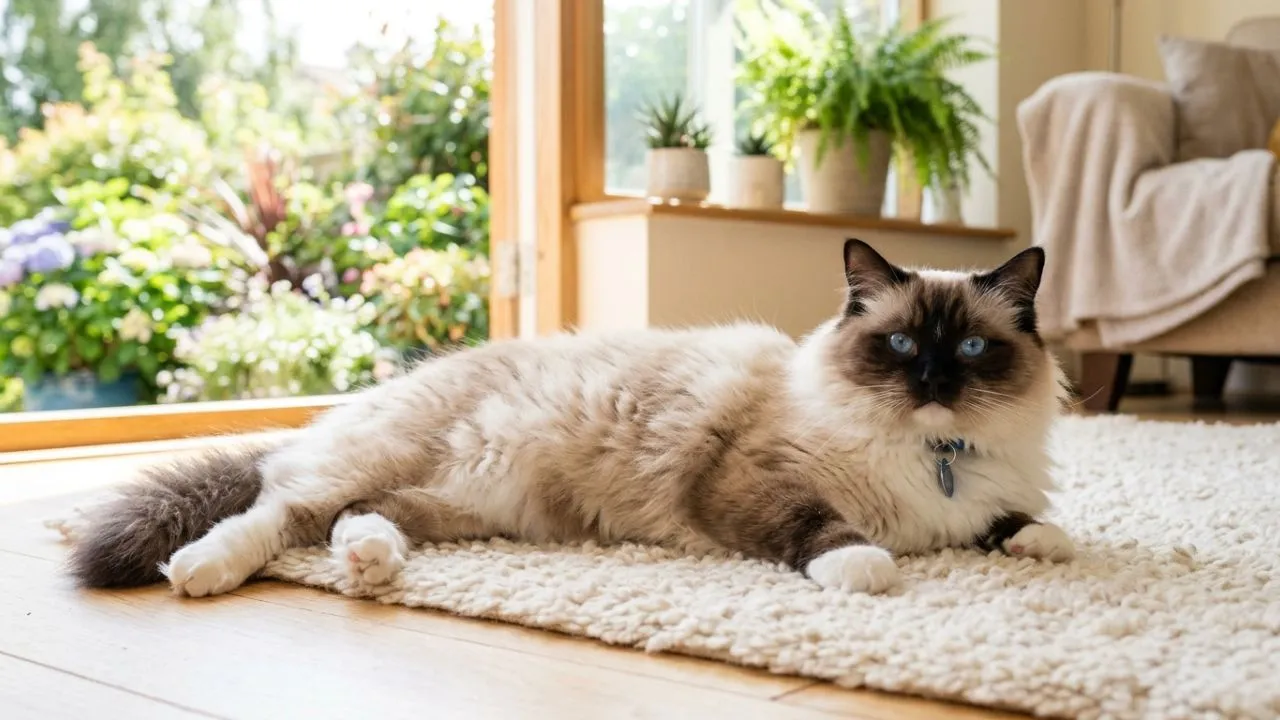
Ragdolls are affectionate, blue-eyed cats with soft, semi-long coats, large eyes, and a notably gentle disposition. Often described as puppy-like, they enjoy staying close to their favorite people and following familiar household activities throughout the day, and they’re also known for their calm demeanor and adaptability.
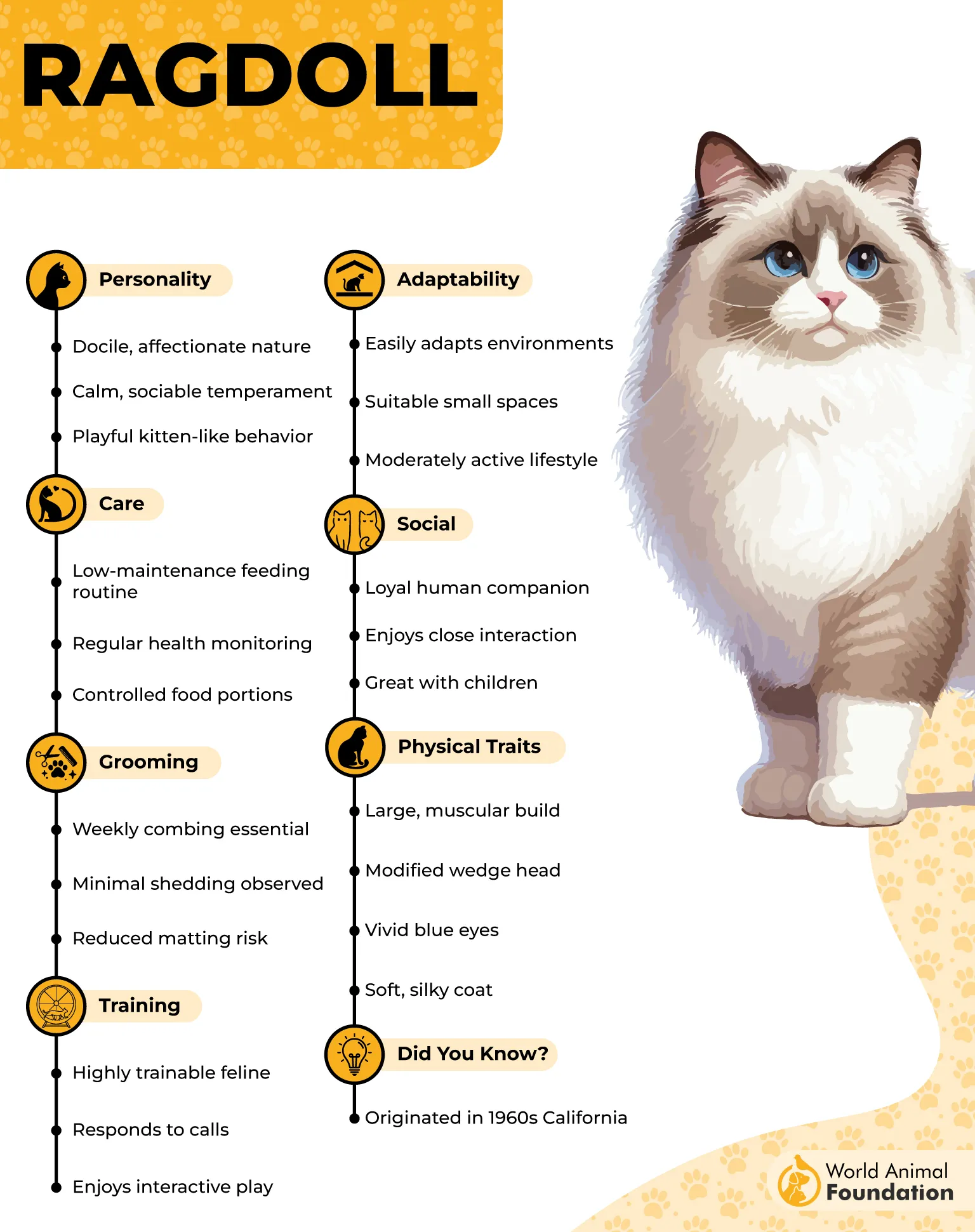
These sociable cats thrive on companionship and often seek out laps for relaxing cuddle sessions. Their affectionate nature helps them form a close bond with family members, and their preference for human interaction makes them well suited to owners who can provide regular attention alongside consistent feeding, grooming, and playtime.
Although generally calm, Ragdolls still benefit from daily interaction and a predictable environment. Brushing their coats several times a week helps prevent tangles, while scheduled play sessions provide stimulation without overwhelming their relaxed nature. Understanding their body language can help meet their needs and strengthen that bond.
How This Breed Stands Out
Ragdolls often appreciate curling up beside their owners or settling onto a lap during quiet moments.
Their tendency to follow family members and seek companionship helps them become familiar with recurring household routines.
4. Russian Blue
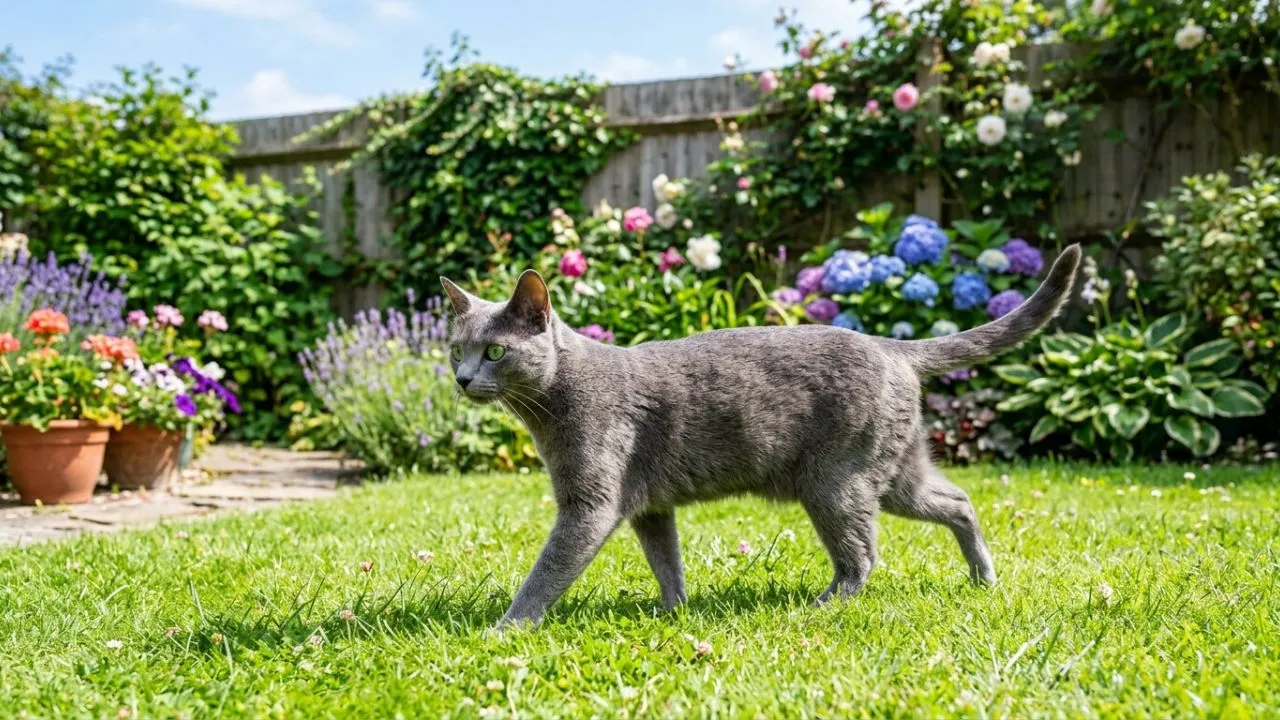
With a shimmering blue-gray coat and vivid green eyes, the Russian Blue combines elegant looks with an intelligent, composed personality. These domestic cats often form strong bonds with their favorite people while remaining cautious around unfamiliar visitors.
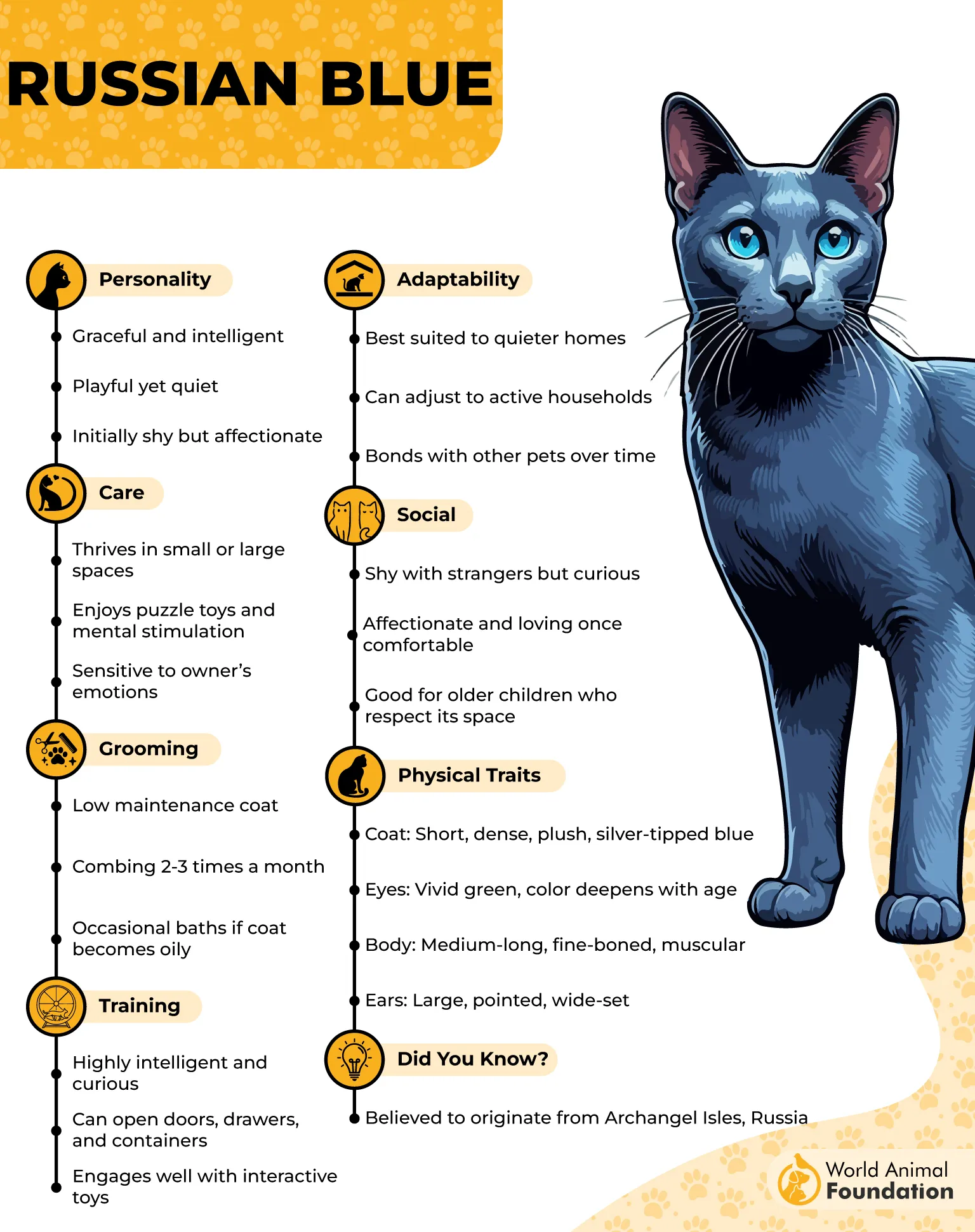
Russian Blues tend to feel most comfortable when everyday activities follow a familiar pattern. Consistent mealtimes, quiet resting spots, and predictable interactions can help them feel secure, particularly in peaceful households where sudden changes are limited.
Although they enjoy relaxing near a sunny window or observing their surroundings from a high perch, these cats still need regular mental stimulation. Feather toys and climbing trees provide opportunities to exercise their hunting instincts while fitting neatly into a daily play schedule.
How This Breed Stands Out
Familiar feeding times and recurring activities help these cats settle comfortably into everyday life.
Their quiet, cautious nature often suits calm homes where they can observe new situations before joining in.
5. Persian
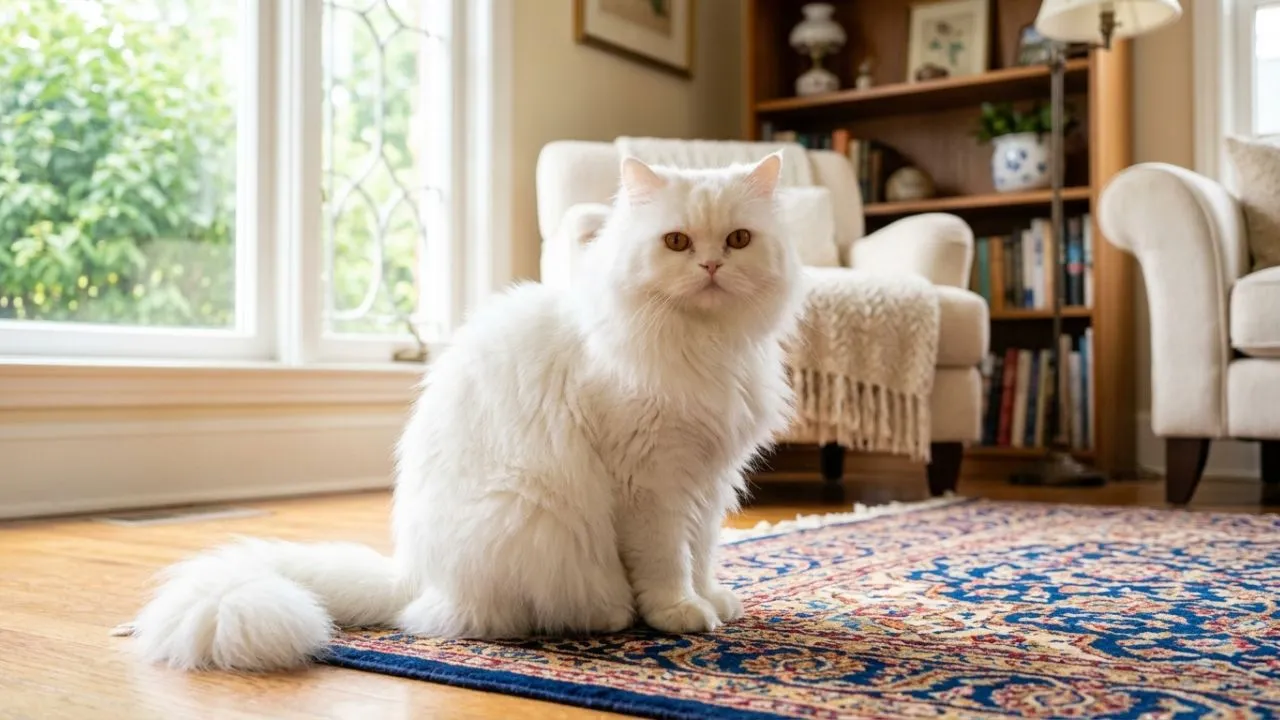
Persian cats are recognizable by their round faces, expressive eyes, and luxurious long coats. Beneath their glamorous appearance lies a gentle, affectionate personality that suits households where calm surroundings and familiar activities are part of everyday life.
According to Purina, Persian cats enjoy gentle play but are equally happy relaxing on furniture instead of climbing high surfaces. Their calm temperament also helps them get along with well-behaved children and relaxed dogs.
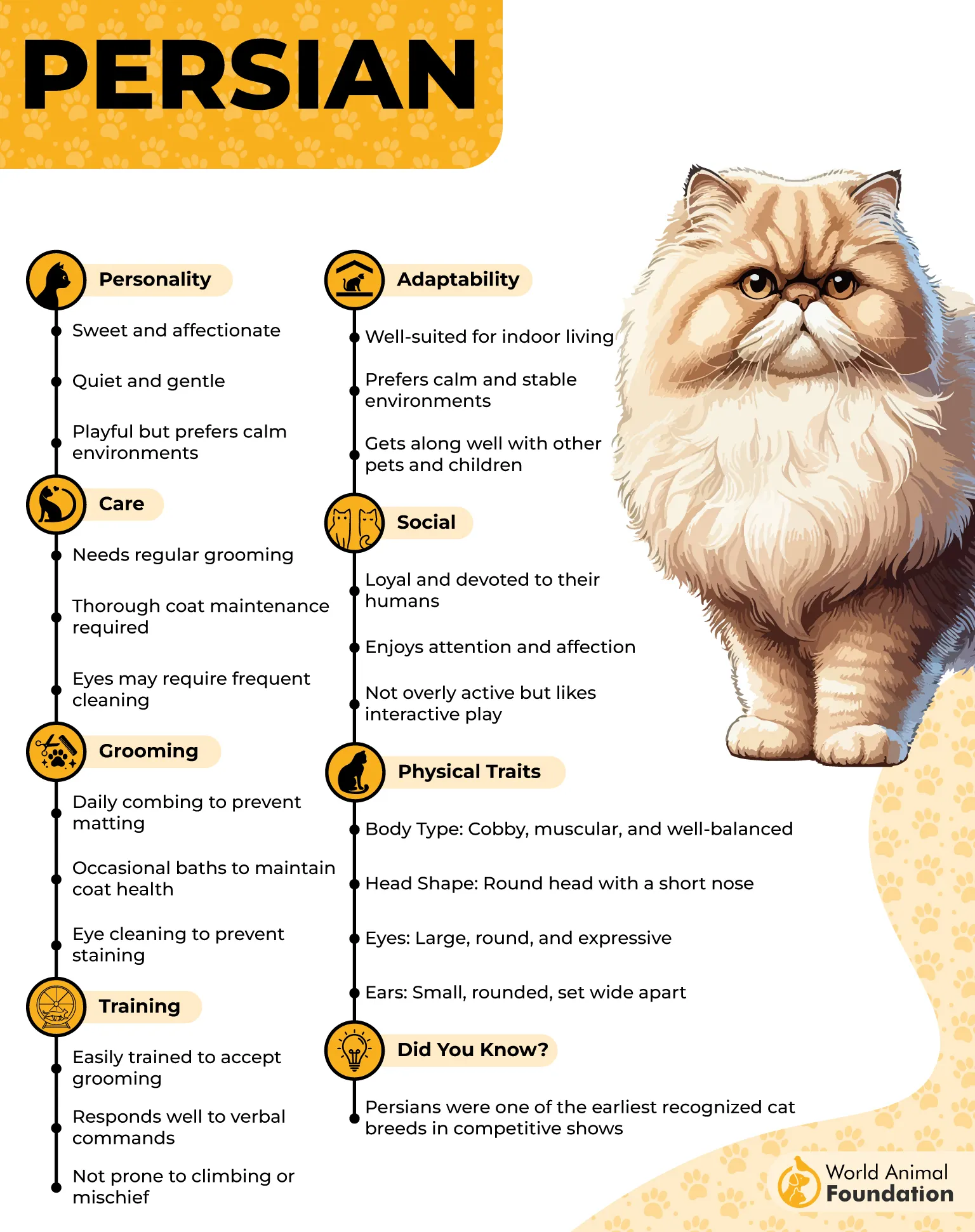
These relaxed felines are more laid-back than adventurous and often prefer lounging beside their owners to energetic outings. They appreciate quiet companionship and can settle comfortably into predictable routines involving meals, rest, and gentle interaction, making them appealing companions for people who enjoy a peaceful home.
Their flowing fur, however, needs consistent attention to remain healthy and free from tangles. Regular brushing and gentle facial cleaning are especially important, while routine veterinary care helps monitor concerns associated with their flat-faced features. Owners should also note the risks of letting a pedigree cat roam outdoors.
How This Breed Stands Out
Their unhurried temperament makes them comfortable with quiet days, familiar surroundings, and regular rest periods.
Frequent brushing helps prevent mats and keeps their long coat in good condition.
6. Burmese
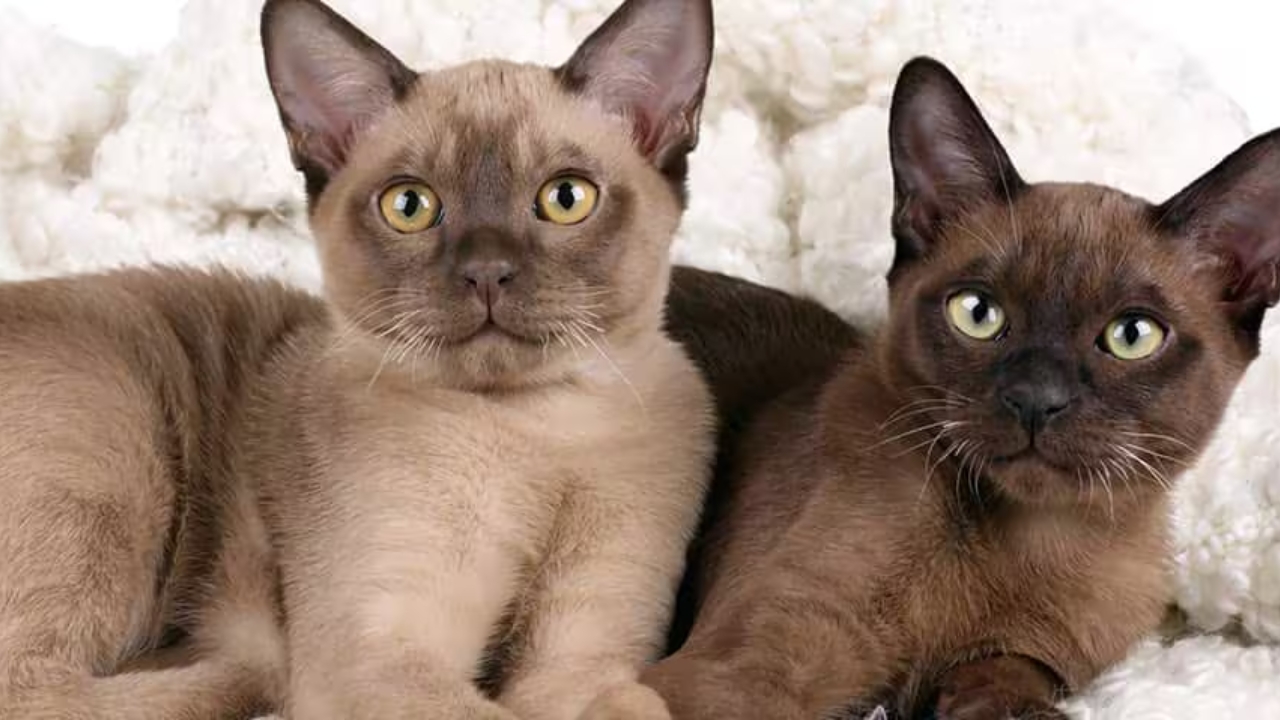
Burmese cats have sleek, glossy coats, expressive golden eyes, and muscular bodies, but their most distinctive quality is their sociable personality. These affectionate felines enjoy staying close to their favorite people and often follow them from room to room.
According to WebMD, Burmese cats range from medium to large in size, with males generally bigger than females. Their solid, muscular build can make them feel heavier than their body size suggests.
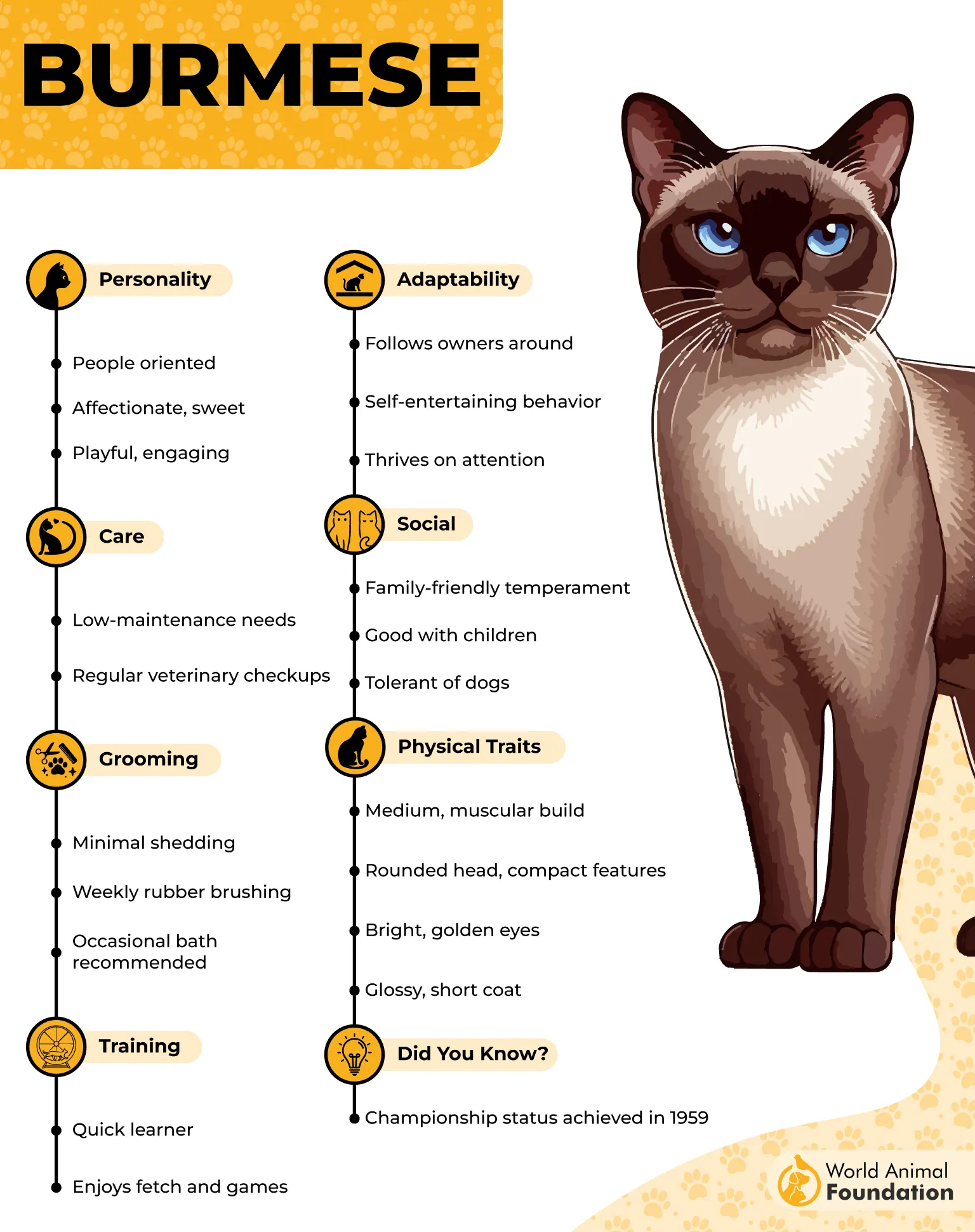
Because they thrive on companionship, Burmese cats benefit from households where daily interaction is part of the routine. They can become lonely when left alone for extended periods, and many stay playful well into adulthood, so regular attention and engaging activities help them remain content.
Their playful, vocal nature brings plenty of energy to everyday life. Interactive toys, short play sessions, and puzzle feeders provide mental stimulation, while pet parents should also offer regular enrichment to keep them engaged; their low-maintenance coats need only weekly brushing to stay smooth and shiny.
How This Breed Stands Out
Burmese cats form strong bonds with their families and appreciate regular companionship throughout the day.
Their curious, energetic behavior makes scheduled playtime and interactive activities valuable parts of their daily routine.
7. Maine Coon
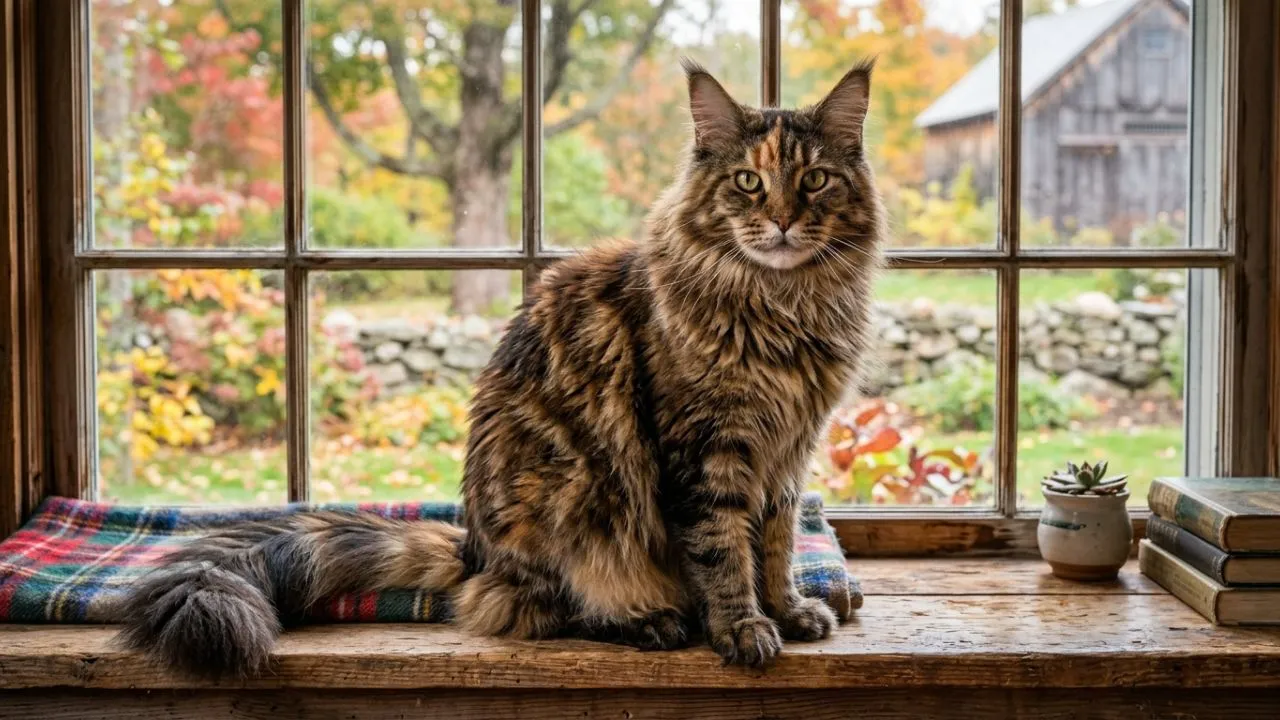
Known as gentle giants, Maine Coons combine an impressive size with a friendly, intelligent personality. These sociable cats are known for adaptable personalities as well as a gentle nature, and they often adapt well to households where daily activities follow familiar patterns.
According to PetMD, Maine Coons are large cats, with adult males weighing up to 25 pounds and females typically ranging from 10 to 14 pounds.

Despite their independent streak, Maine Coons appreciate spending time with their people. They may follow family members around the house or settle nearby while everyone goes about their usual tasks, and their temperament can make them relatively easy to train with consistent positive reinforcement, making them comfortable companions for consistent household routines.
Their playful, curious nature means they need more than quiet companionship. Regular interactive sessions with puzzle toys, chase games, and the right type of climbing structures help keep them mentally stimulated, and they need enough space to move, play, and explore. Their long, thick coats also benefit from frequent brushing to prevent tangles.
How This Breed Stands Out
Their sociable nature helps them become familiar with regular mealtimes, family interactions, and everyday household habits.
Intelligent and energetic, Maine Coons enjoy engaging games that provide exercise and mental stimulation.
Conclusion
Choosing a cat that adapts to routines can make everyday life more enjoyable for both pets and their owners. Ultimately, every cat has an individual personality, even within a particular breed, so the right match can be a wonderful fit when it suits your household’s pace and preferences. Households with children should match a cat’s temperament to the home and teach respectful handling.
A simple guide for a new cat is the 3-3-3 adjustment timeline: many cats stay timid for the first three days, grow more comfortable over three weeks, and begin to feel at home by three months. Consistent feeding times, regular play sessions, comfortable resting places, and gentle attention help cats find security and settle into daily life.
