




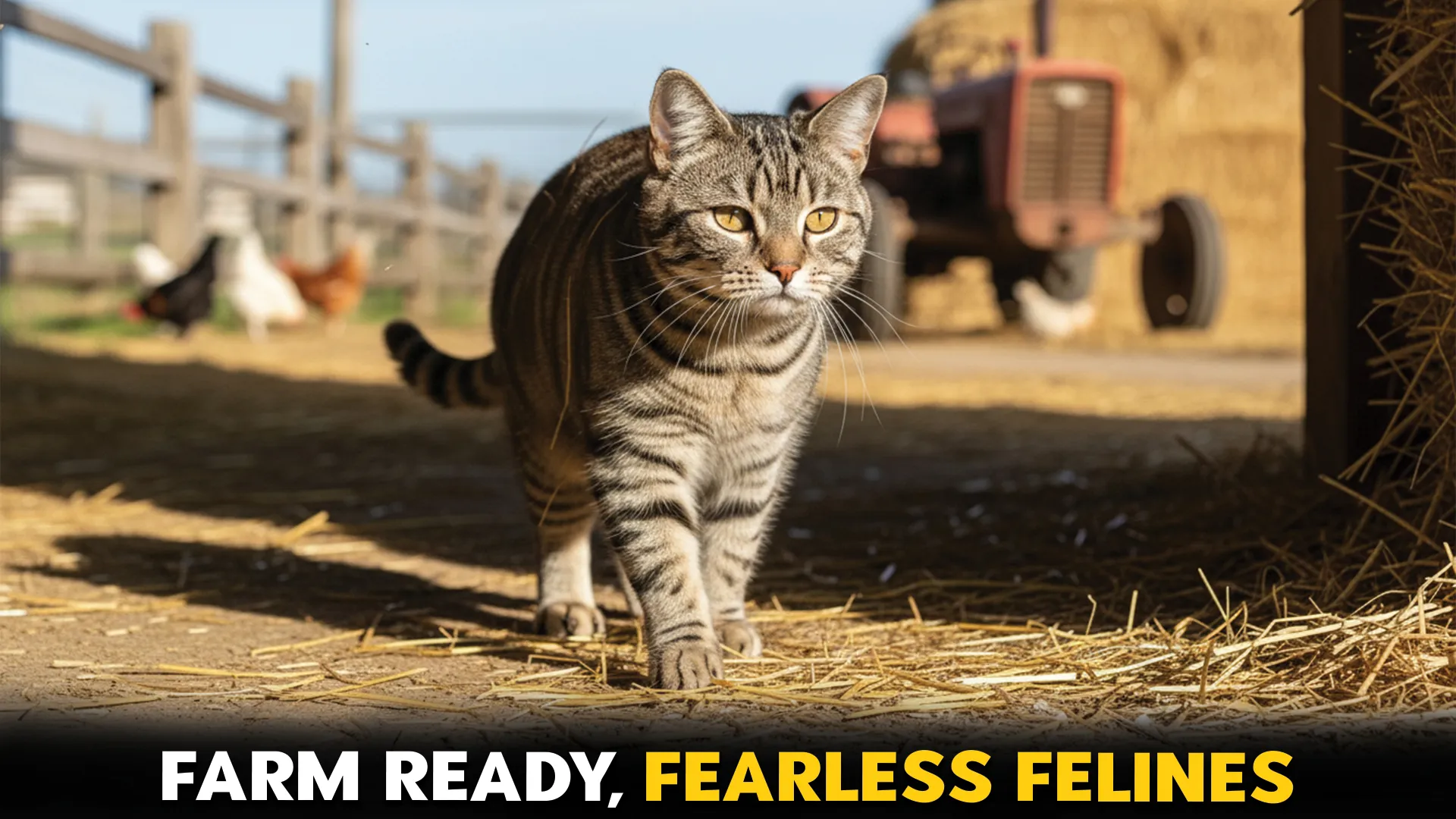
Life on a farm demands more from a cat than cozy naps and food bowls. Farm cats, often called barn or working cats, thrive in open spaces where instinct, independence, and resilience matter most.
These cats play a vital role in keeping rodents and pests under control, continuing a partnership between humans and felines that dates back thousands of years. Unlike typical house pets, farm-adapted cats are valued for their self-sufficiency, sharp senses, and ability to navigate unpredictable outdoor environments.
Strong hunting instincts, muscular builds, keen awareness, and weather tolerance help certain breeds excel in rural settings. Many of these cats are naturally alert, cautious around strangers, and comfortable roaming large territories without constant human supervision.
Understanding what makes a great farm cat is essential before choosing one. This guide explores cat breeds best suited for farm life, highlighting the traits that allow them to work effectively while staying healthy, balanced, and well-adapted to the demands of rural living.
Cat Breeds Adapted To Farm Life
1. Maine Coon
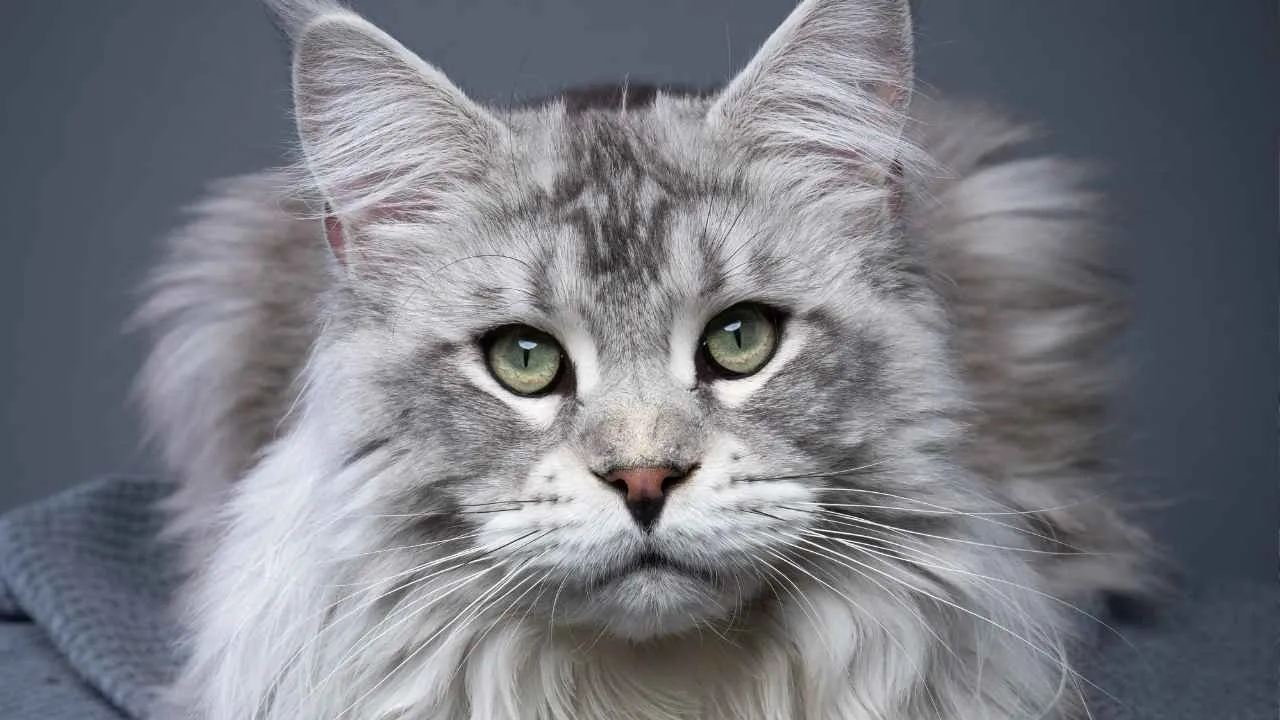
Often called the Gentle Giant or American Longhair, the Maine Coon is a large, rugged breed that has long been valued on farms.
According to Britannica, the Maine Coon is North America’s only native breed of long-haired domestic cat. With roots in cold regions of the United States, this breed is known for its size, thick coat, and calm but capable nature.
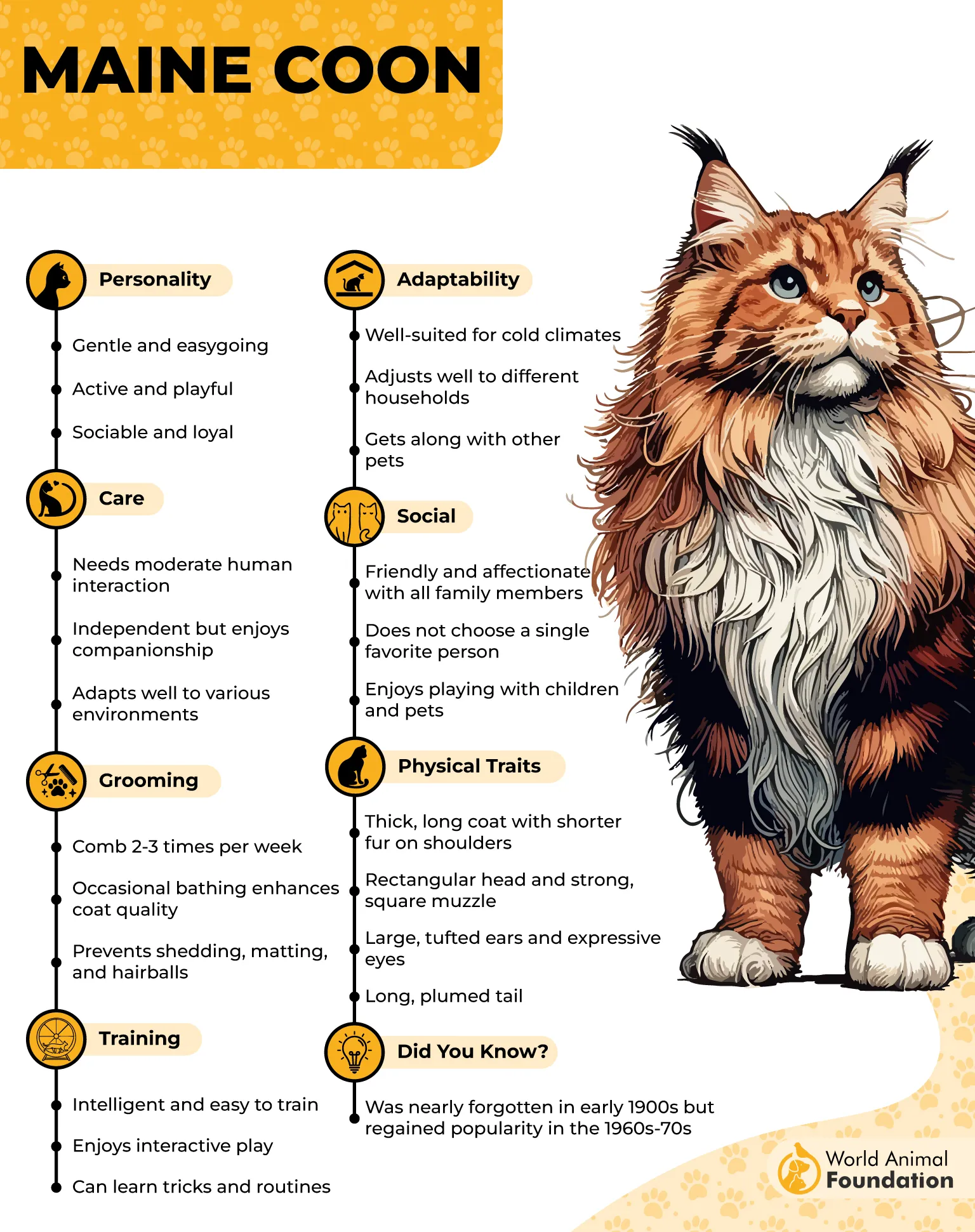
As a farm cat, the Maine Coon excels as a natural mouser with strong instincts. It can work independently for hours, hunting rats and other pests while remaining alert and efficient around barns and storage areas.
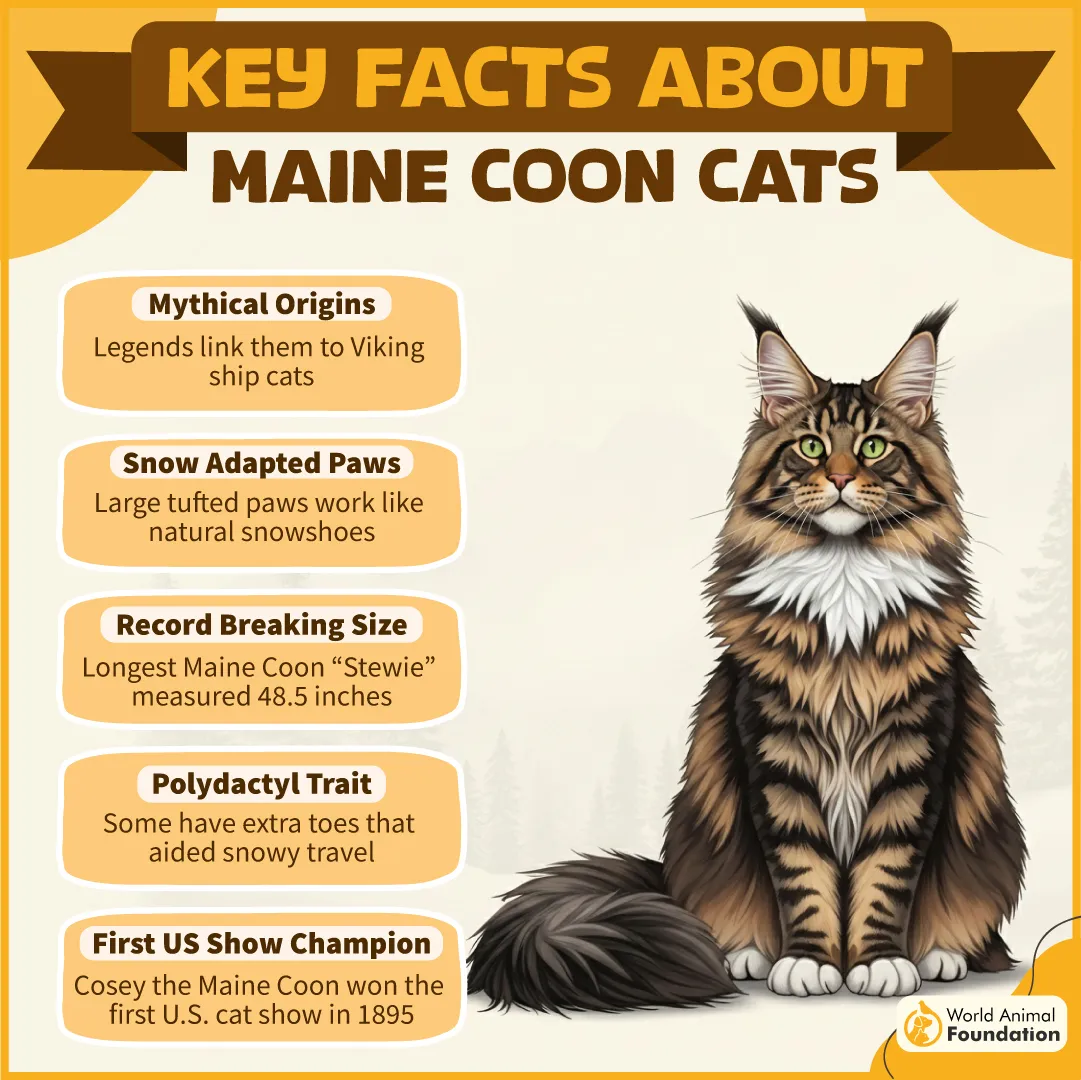
Physically, this breed is built for outdoor life. Its long, plush coat offers protection in cold environments, while the powerful body underneath supports endurance and strength needed for farm duties. Despite their fluffy appearance, these cats are muscular and athletic.
Temperament-wise, Maine Coons balance independence with sociability. They coexist well with other animals, enjoy human company when it suits them, and adapt easily between barn life and indoor living.
2. American Shorthair

Often called the Domestic Shorthair in casual settings, the American Shorthair is a classic working cat with deep roots in rural life. Originally brought from Europe to North America, this breed quickly earned a reputation as a dependable barn and farm companion.
According to PetMD, American Shorthair cats are generally easygoing in temperament and tend to interact well with children, dogs, and other household pets.
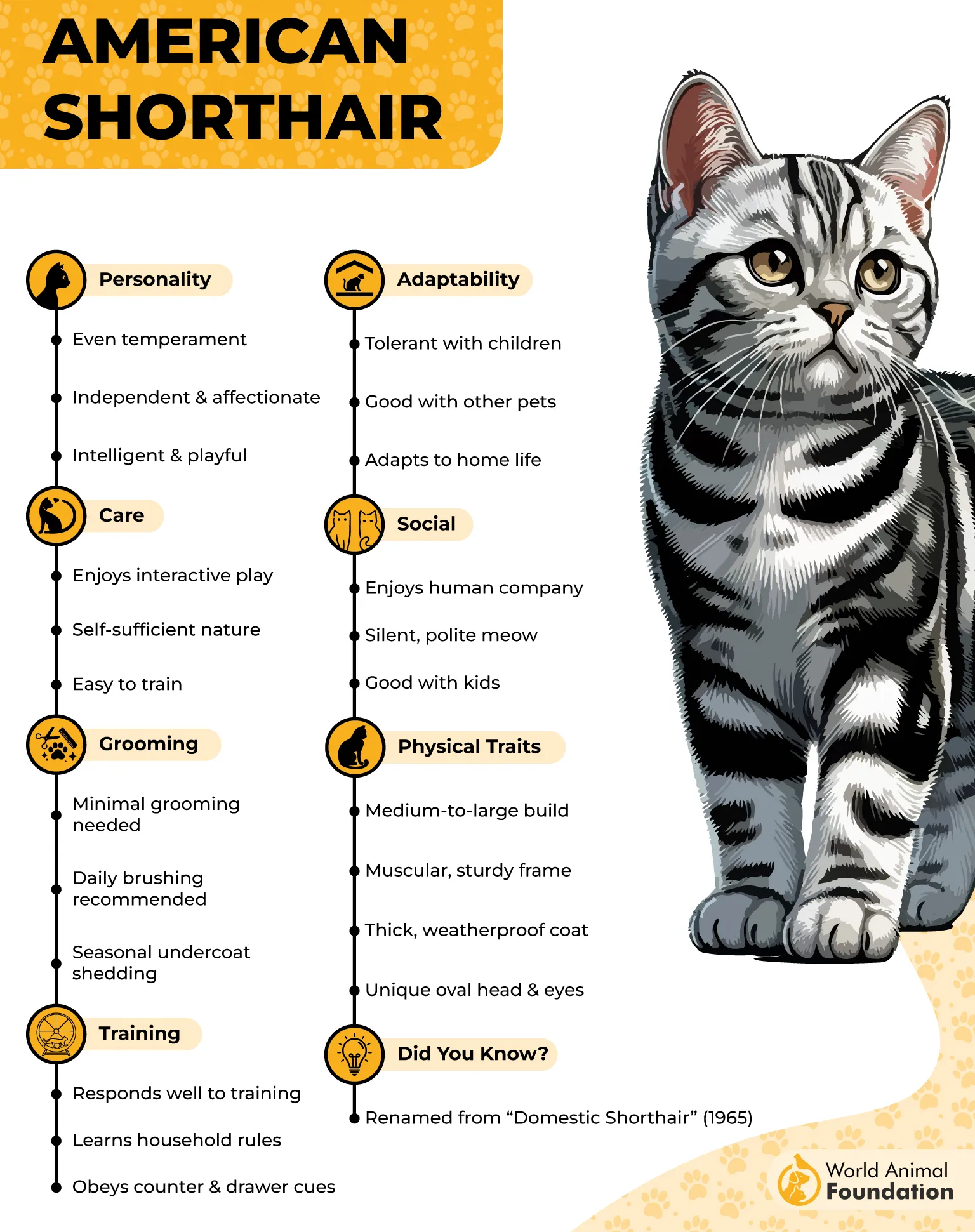
The American Shorthair thrives in barns, sheds, and outbuildings. Their muscular frame, strong legs, and sharp instincts make them relentless mousers that require little supervision to stay productive.
This breed adapts easily to changing climates thanks to its short, dense coat and resilient build. Low grooming needs and natural self-sufficiency allow them to roam freely while still tolerating regular human presence around the farm.
Temperament-wise, American Shorthairs strike a balance between social tolerance and independence. They coexist well with people and other animals but prefer not to be handled constantly, focusing instead on patrol and hunting duties.
3. Siberian
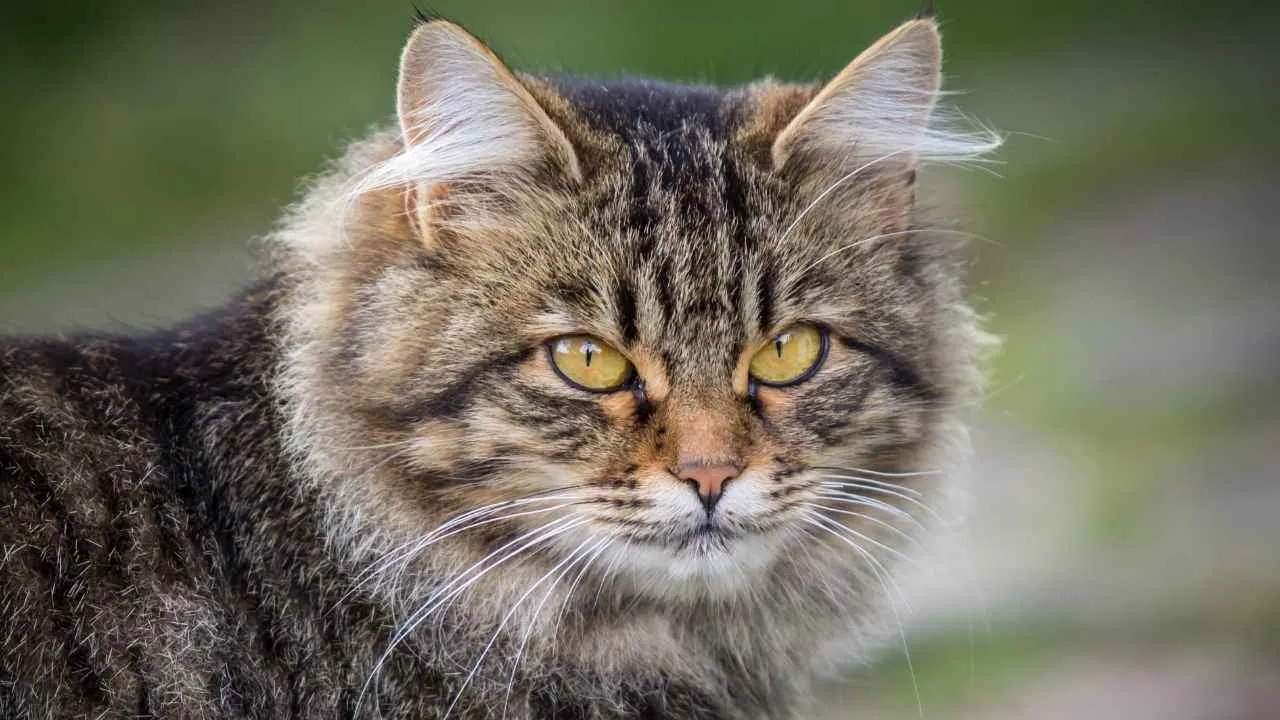
The Siberian is a hardy, semi-longhaired breed that originated in Russia. According to WebMD, they are also commonly referred to as Siberian forest cats and Moscow longhairs.
Built for harsh outdoor conditions, this cat is large, strong, and naturally equipped for life beyond the house.
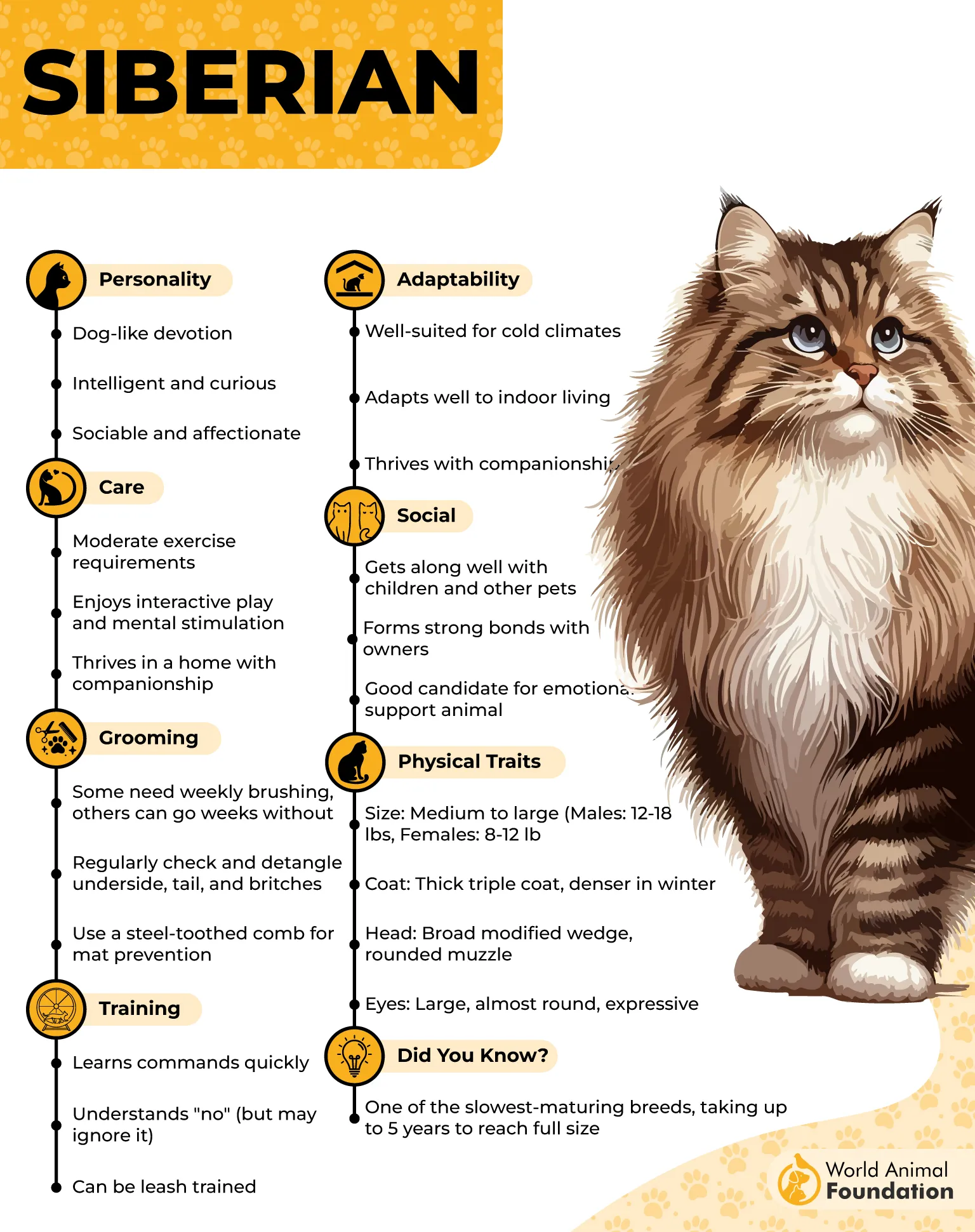
As a farm cat, the Siberian balances friendliness with a strong working edge. Its instincts remain sharp, making it a capable vermin hunter, yet it stays calm and dependable around livestock and familiar animals.
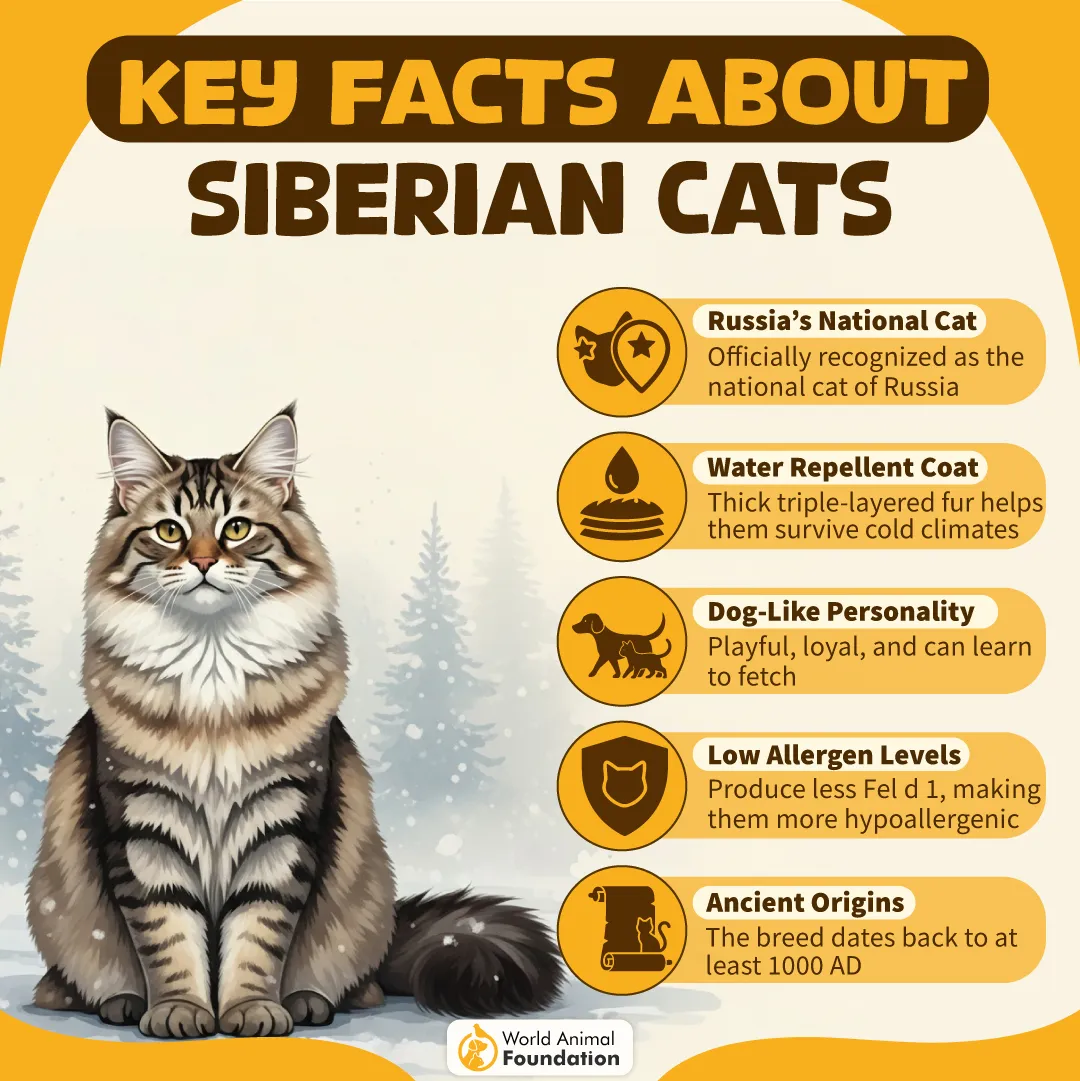
A dense, waterproof triple coat allows Siberians to thrive in cold, wet environments common on farms. Their muscular bodies and agility help them patrol barns, sheds, and fields efficiently without constant supervision.
Despite their independence, Siberians enjoy human company and are often described as dog-like in loyalty. They can work alone yet return to their people with ease, fitting well into active rural households.
4. Norwegian Forest Cat
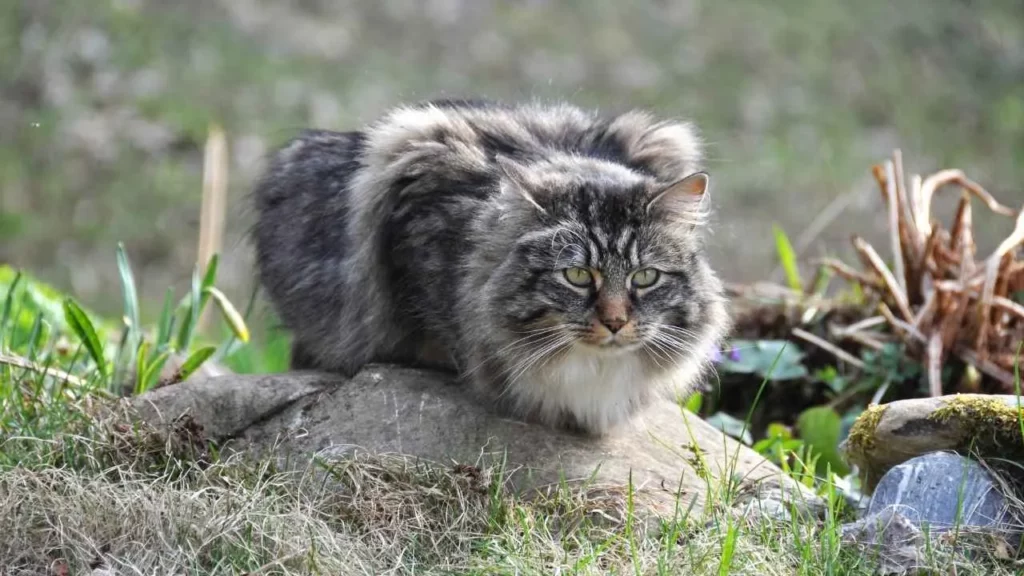
Often called the Wegie, the Norwegian Forest Cat is a rugged, ancient breed with deep roots in Scandinavian farm life. Revered in Norse lore and valued by Viking farmers, this large, long-haired cat was shaped by harsh rural environments and demanding outdoor work.
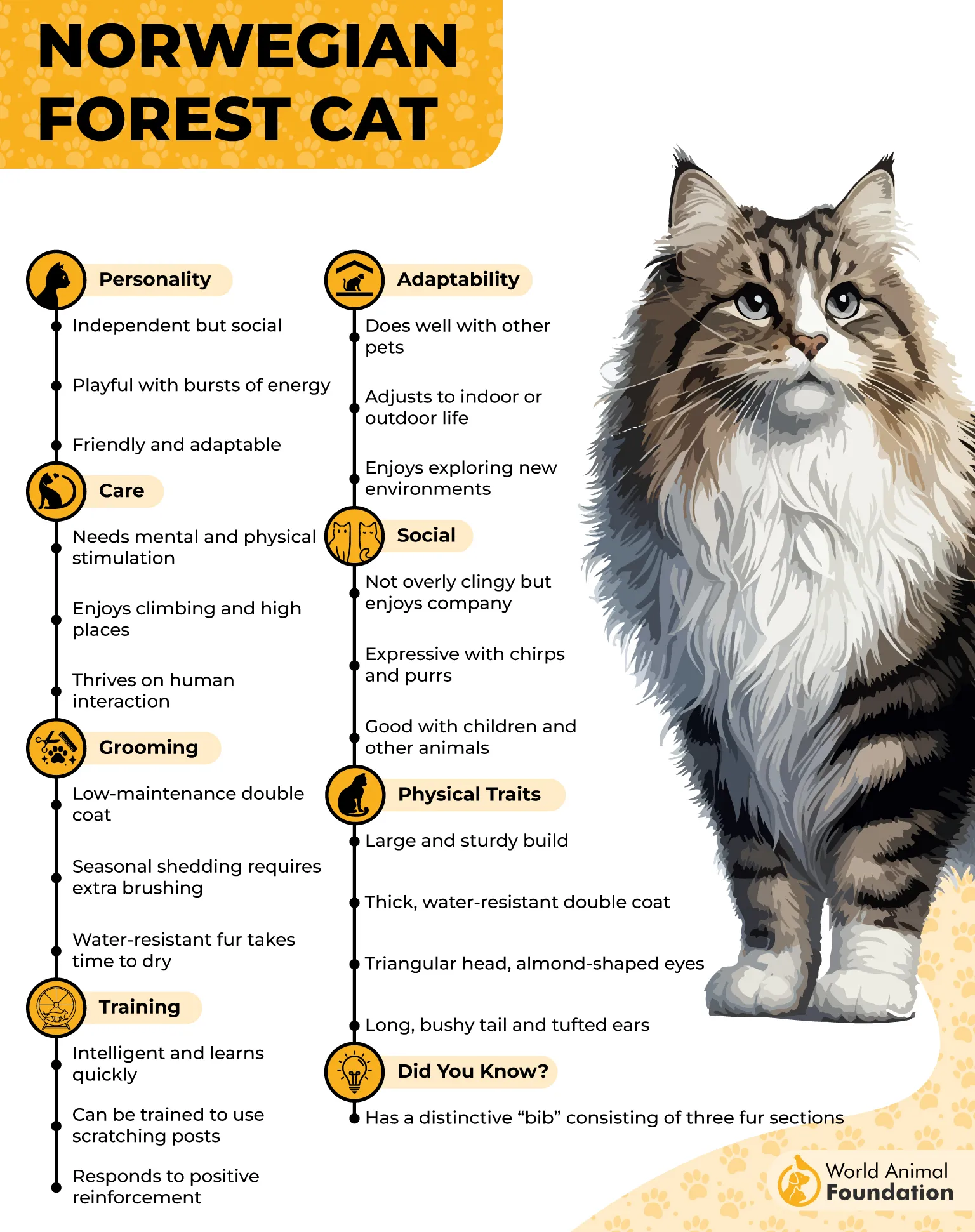
As a farm cat, the Norwegian Forest Cat excels as an agile hunter built for open spaces. Its powerful body, sharp instincts, and natural climbing ability allow it to chase rodents through barns, trees, and snowy terrain with ease, making it highly effective at pest control.
A dense, water-repellent double coat and heavily tufted ears and paws protect the breed from cold, wind, and moisture. These physical traits let them work comfortably outdoors year-round, even during long winters on exposed farmland.
Despite their wild appearance, Norwegian Forest Cats are intelligent and people-friendly. They balance independence with loyalty, bonding well with farm families while still thriving as free-roaming working cats.
Fact: Norwegian Forest Cats were first exhibited publicly in Oslo in 1938 and are known for their distinctive high-pitched “chirping” vocalizations.
5. Manx
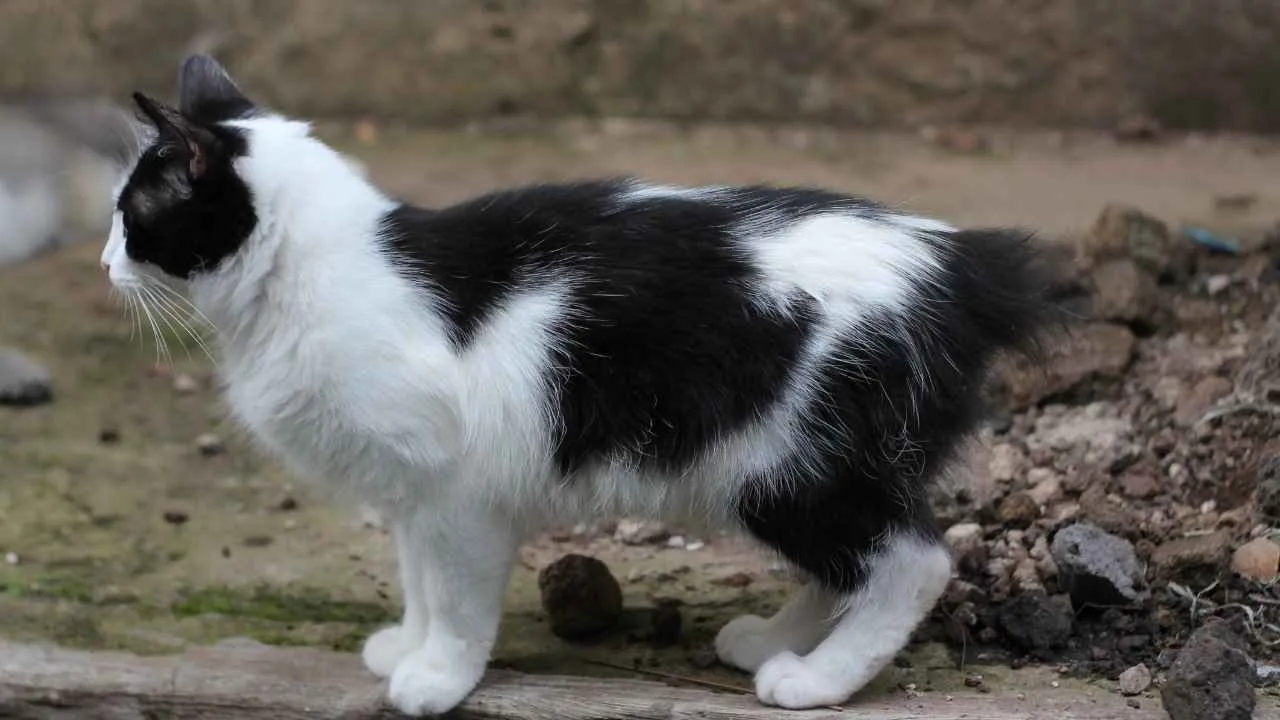
Often called Manks, Rumpy, or Stubbin, the Manx cat hails from the Isle of Man and is instantly recognized by its tailless look. Historically used as both shipboard and farm cats, they became valued for their practicality and resilience.
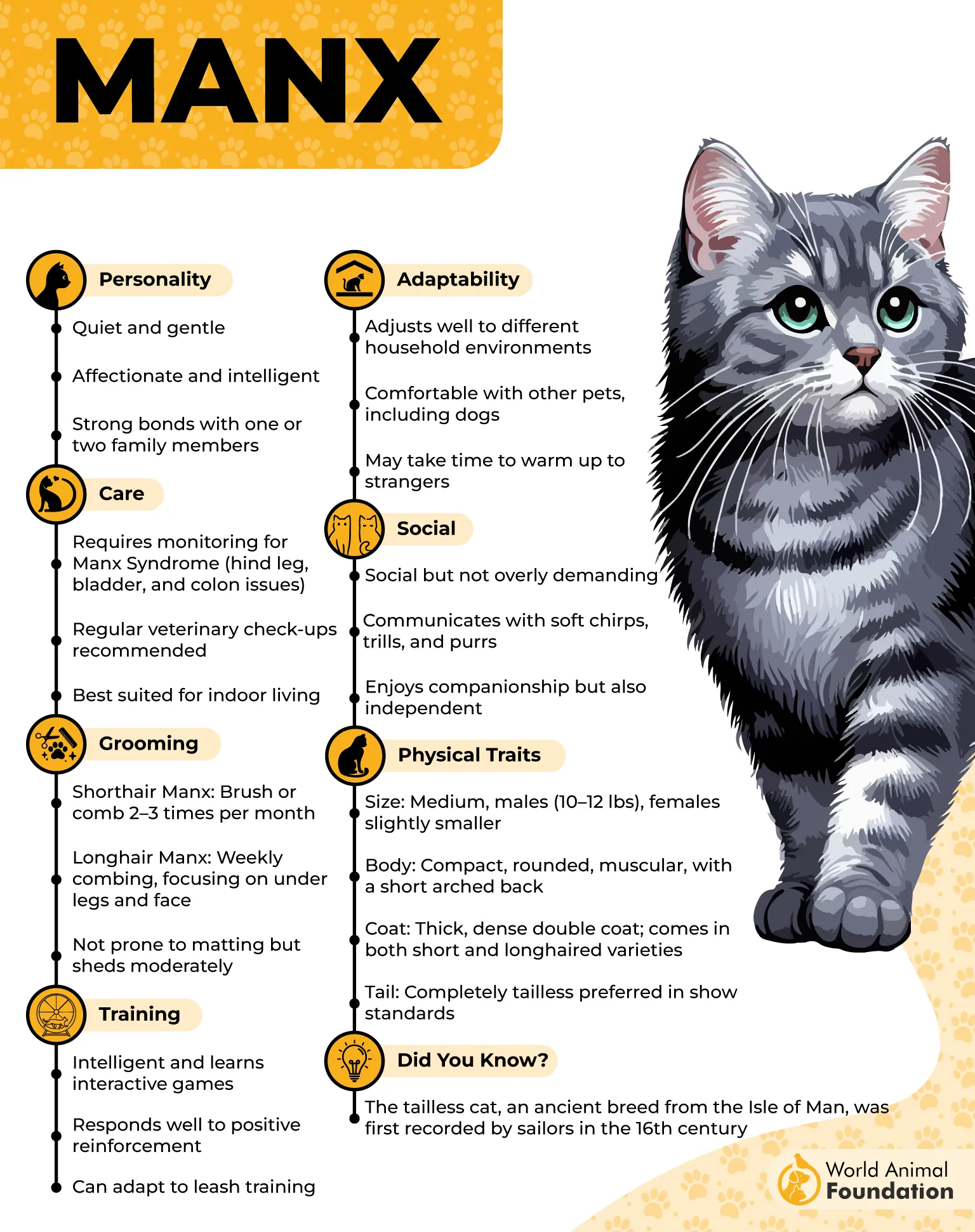
As farm companions, Manx cats excel due to their strong prey drive and impressive agility. Their powerful hind legs—developed to compensate for the missing tail—allow them to leap high and cover ground quickly when hunting barn pests.
Their compact, stocky bodies and dense double coats make them well-suited for outdoor life, especially in rough or changing weather. Unlike many farm cats, they balance independence with intelligence, often figuring out clever ways to access hiding rodents.
Manx cats are also low-maintenance, requiring minimal grooming compared to long-haired breeds, while remaining loyal and adaptable around people and other animals.
6. Turkish Van
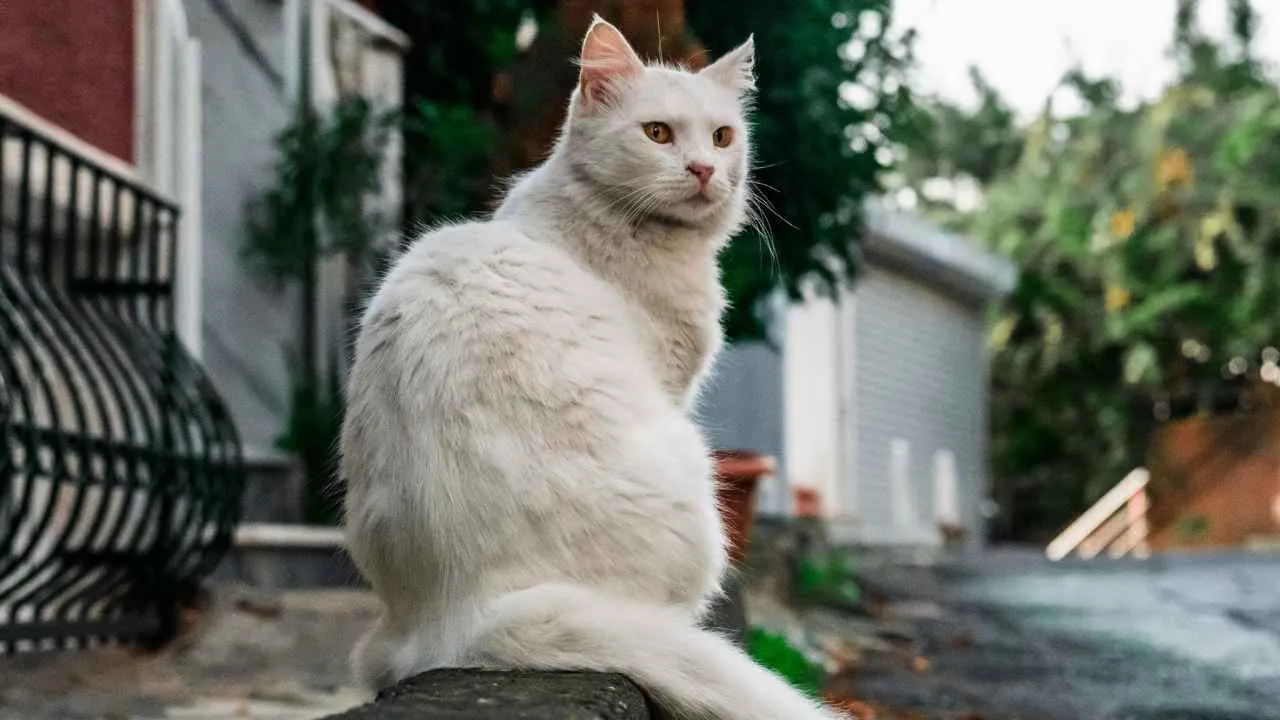
Often called the Swimming Cat or simply Van Cat, the Turkish Van is an ancient breed from the Lake Van region of Eastern Turkey. Known for its striking van pattern, muscular frame, and water-resistant coat, this large cat has a long history tied to rural life.
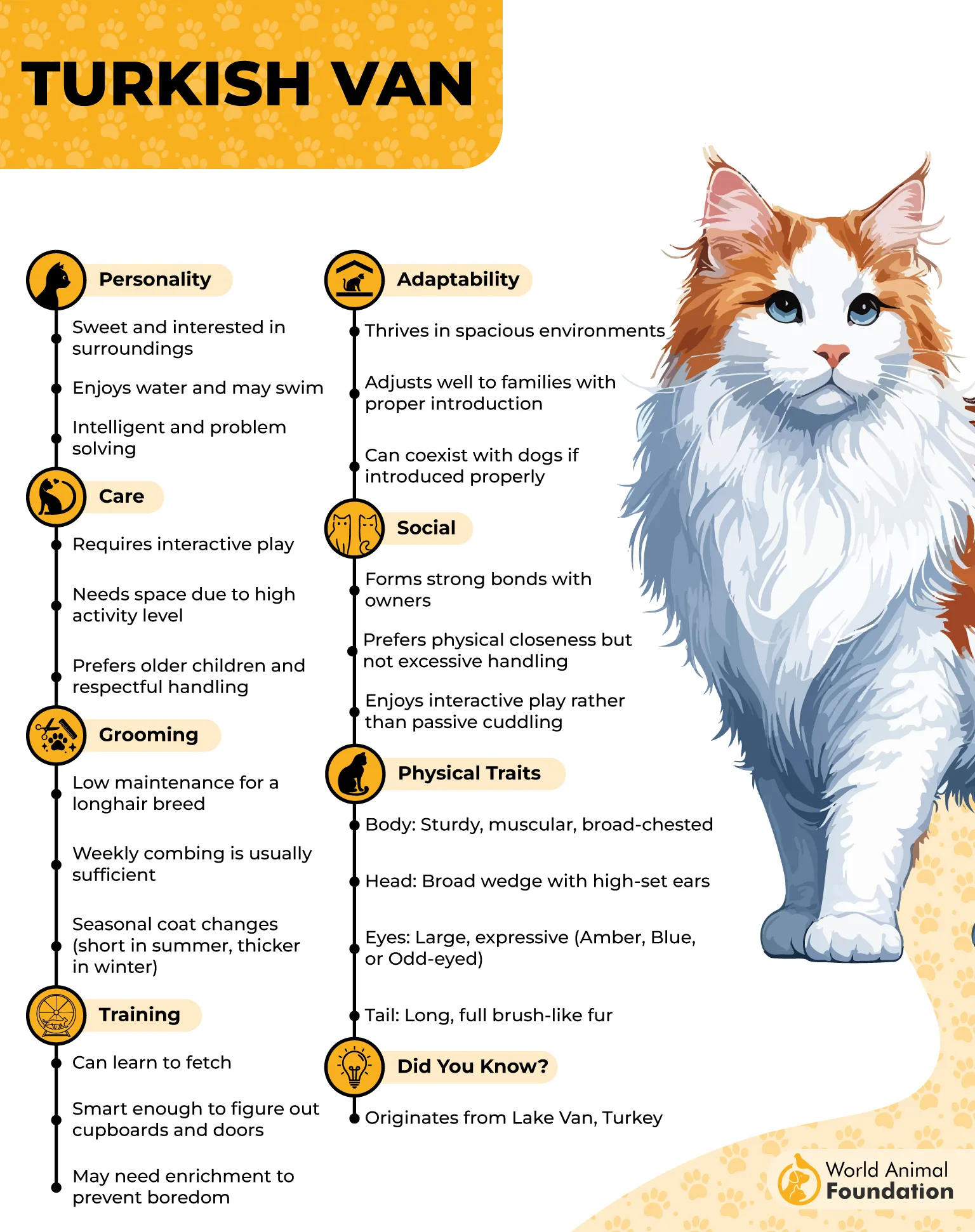
On farms, the Turkish Van stands out for its sharp intelligence and constant alertness around livestock. Naturally curious and confident, this breed keeps a watchful eye on its surroundings and quickly notices changes, making it well-suited to open, active environments.
Strong hunting instincts add to its farm value. Turkish Vans were historically prized for pest control, especially in areas near water, where their comfort with swimming gave them an edge over rodents that might escape other cats.
Physically, their powerful build and semi-long single coat allow them to handle outdoor conditions with ease. They are independent yet loyal, thriving where they have space to roam and tasks to occupy them.
7. British Shorthair

Often called the British Blue or simply the Brit, the British Shorthair is a classic domestic breed that originated in Great Britain during the 19th century. Known for its round face, dense coat, and sturdy build, this breed combines charm with quiet strength.
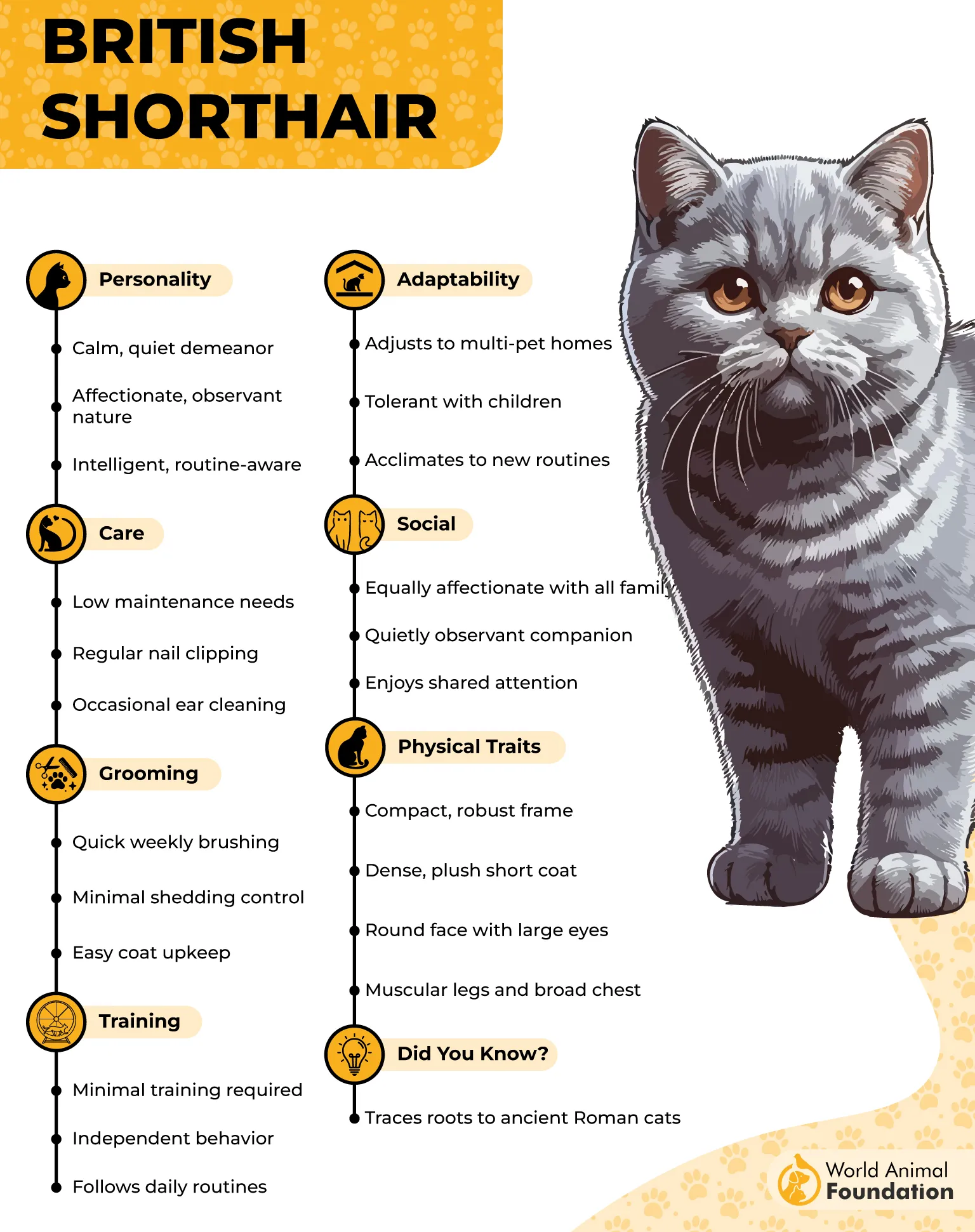
On farms, the British Shorthair can adapt well thanks to its calm confidence and natural independence. While not as high-energy as some working cats, it possesses solid survival instincts and can help manage rodents when given space to roam and observe.
Its compact, muscular body and thick coat provide protection against cooler weather and outdoor conditions. This makes the breed resilient in rural environments, especially when proper shelter and food are consistently available.
Temperament-wise, British Shorthairs are loyal without being clingy, forming bonds with caretakers while remaining self-sufficient. They coexist peacefully with other animals and don’t require constant attention, which suits farm routines well.
Fact: British Shorthairs are known for their dense, plush coats that are easy to maintain with weekly brushing.
Conclusion
Cat breeds adapted to farm life prove that barn cats are more than just outdoor cats—they’re hardworking partners in daily life. From semi-feral cats to a well-socialized domesticated cat, a good barn cat shows an independent streak, strong hunting instincts, and the ability to handle cold and wet weather.
Whether they come from mixed breeds, many shelters, or are among the most popular cat breeds, these strong cats thrive as working animals when properly cared for. With dry shelter, veterinary care, and limited human interaction, they become excellent hunters and good mousers.
The best barn cat breeds help farm workers control pests by catching mice and other pests. While indoor cats may prefer a litter box and close family members, barn cats and community cats often spend time outdoors alongside other pets. When fully feral or semi-feral, motion-activated lights and consistent care help them adjust, making good farm cats invaluable partners on rural properties.
