




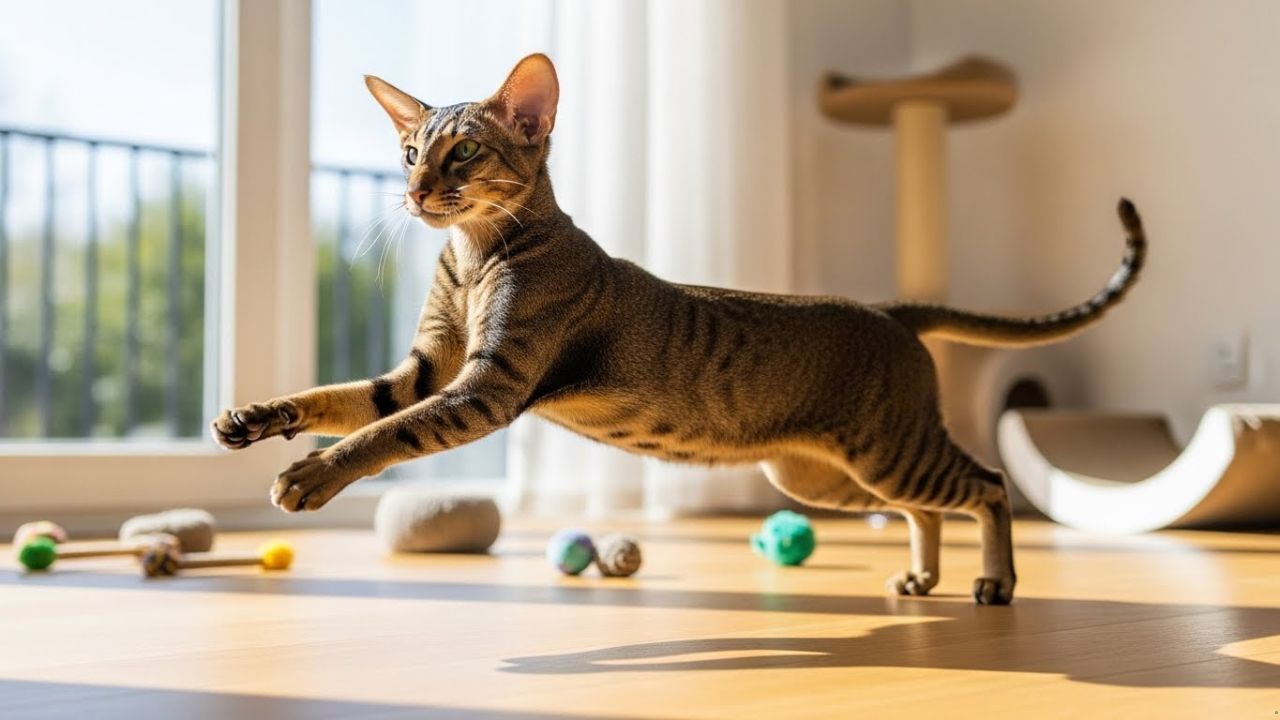
If your idea of the perfect cat involves constant motion and daily play marathons, active breeds might be exactly what you’re looking for. These high-energy felines don’t just nap in sunny windows—they chase, climb, fetch, and insist on being part of whatever you’re doing, from morning coffee to evening wind-down. For busy households, playful kids, or outdoorsy families, they can be endlessly entertaining companions.
But that energy comes with responsibility. Athletic cats need dedicated time for interactive play, plus plenty of ways to stay busy when you’re not around—think climbing trees, puzzle feeders, chase toys, and maybe even a secure catio. Many of these breeds are clever enough to learn tricks, walk on a leash, or even enjoy water, channeling their drive into healthy, enriching activities.
Because of their go-go-go nature, choosing one of these livewire kitties means committing to their mental and physical well-being. In this guide, we’ll spotlight some of the most active cat breeds and share expert-informed tips to help you decide if one of these furry dynamos fits your lifestyle.
Most Active Cat Breeds
1. Abyssinian
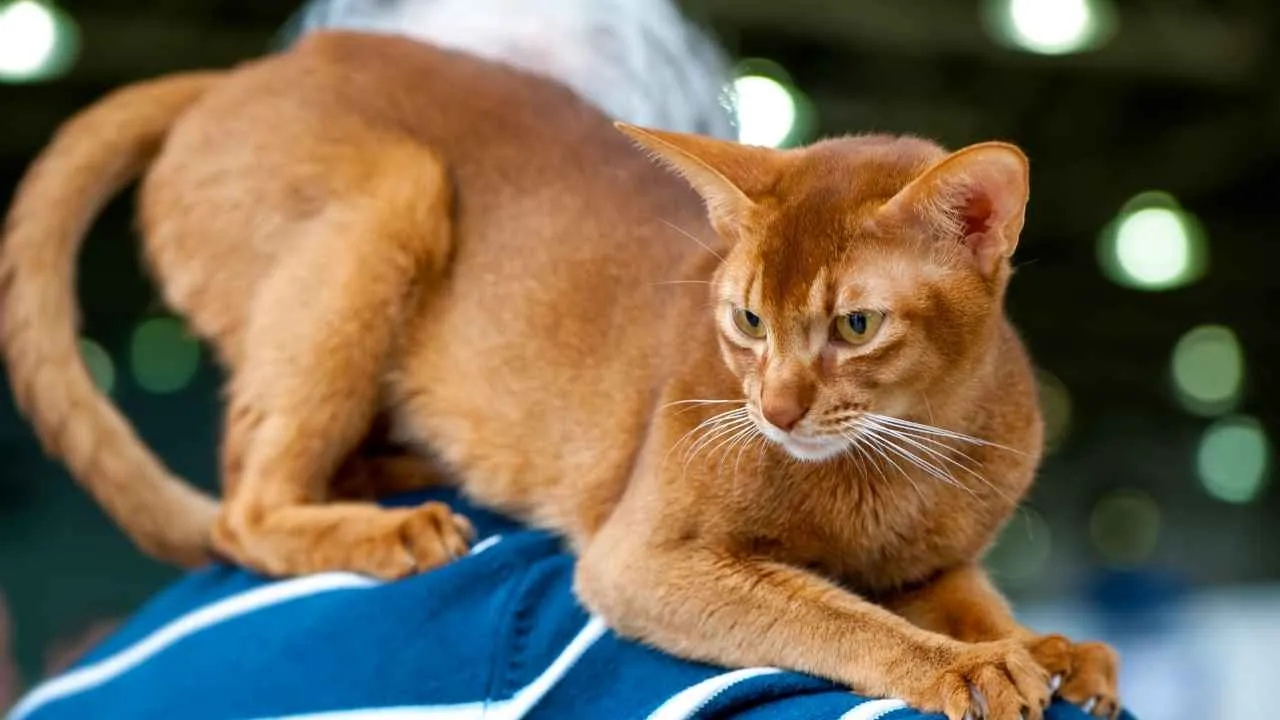
The Abyssinian—often called the Aby—is a sleek, ticked-coat cat. According to Britannica, the Abyssinian is a domestic cat, likely originating in Egypt, and is thought to resemble the sacred cats of ancient Egypt more closely than any other modern feline.
Known for its wildcat-like elegance, large ears, and lean, athletic frame, this breed is one of the most animated companions you can bring home.
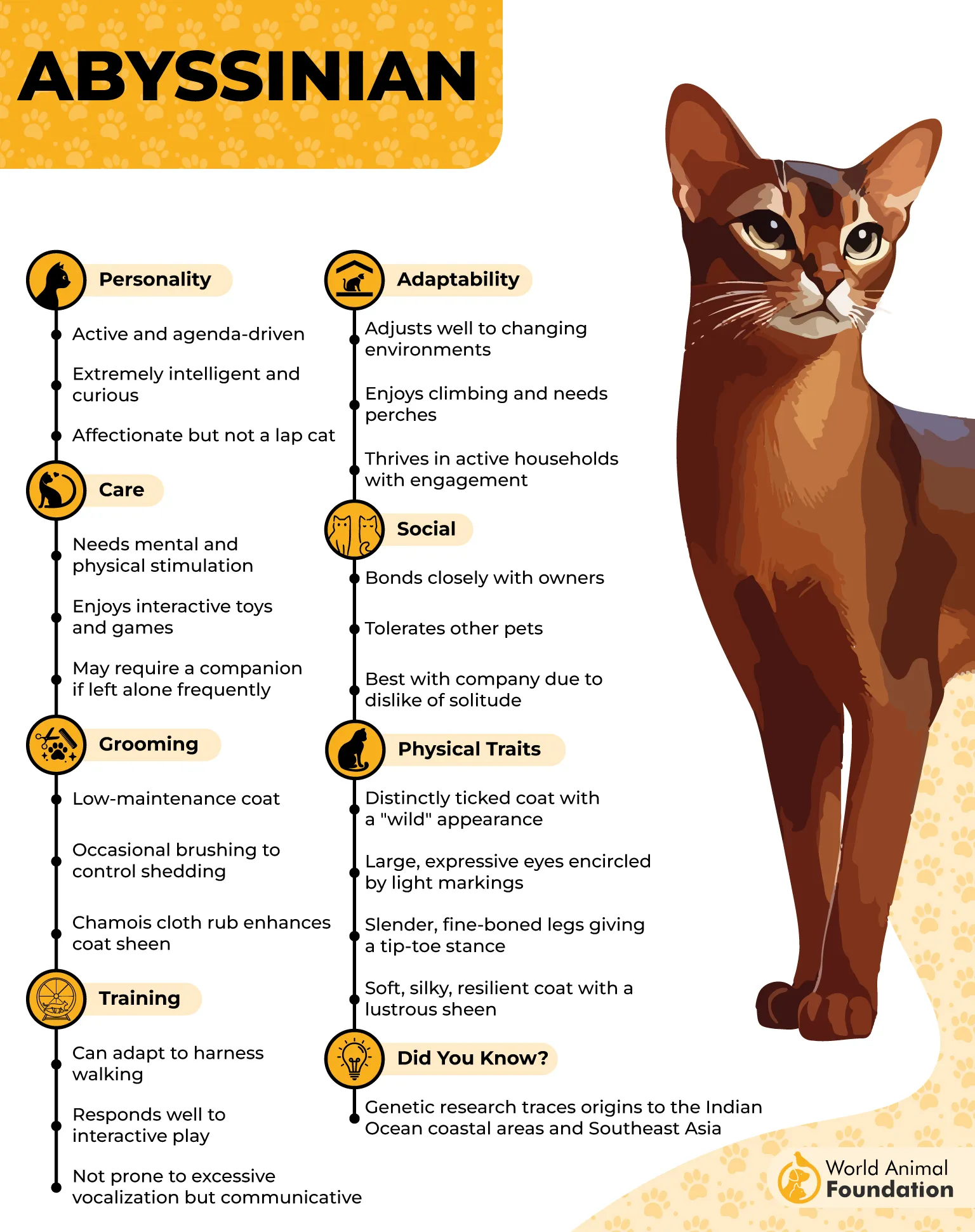
As a textbook example of an active cat, the Abyssinian rarely stays still. Their inquisitive nature drives them to explore cupboards, trail their humans from room to room, and investigate every new sound or movement. This constant curiosity reflects a high baseline energy level that defines truly active breeds.
Physical stimulation alone isn’t enough—Abys thrive when their minds are challenged. Activities like fetch, wand-toy chases, or puzzle feeders help them channel both their intelligence and their boundless drive. Regular opportunities to climb and jump also keep their agile bodies satisfied.
Because an active cat craves interaction, Abyssinians particularly benefit from enrichment woven throughout the day. They’re not lap cats, but they eagerly participate in shared play and even enjoy leash walks.
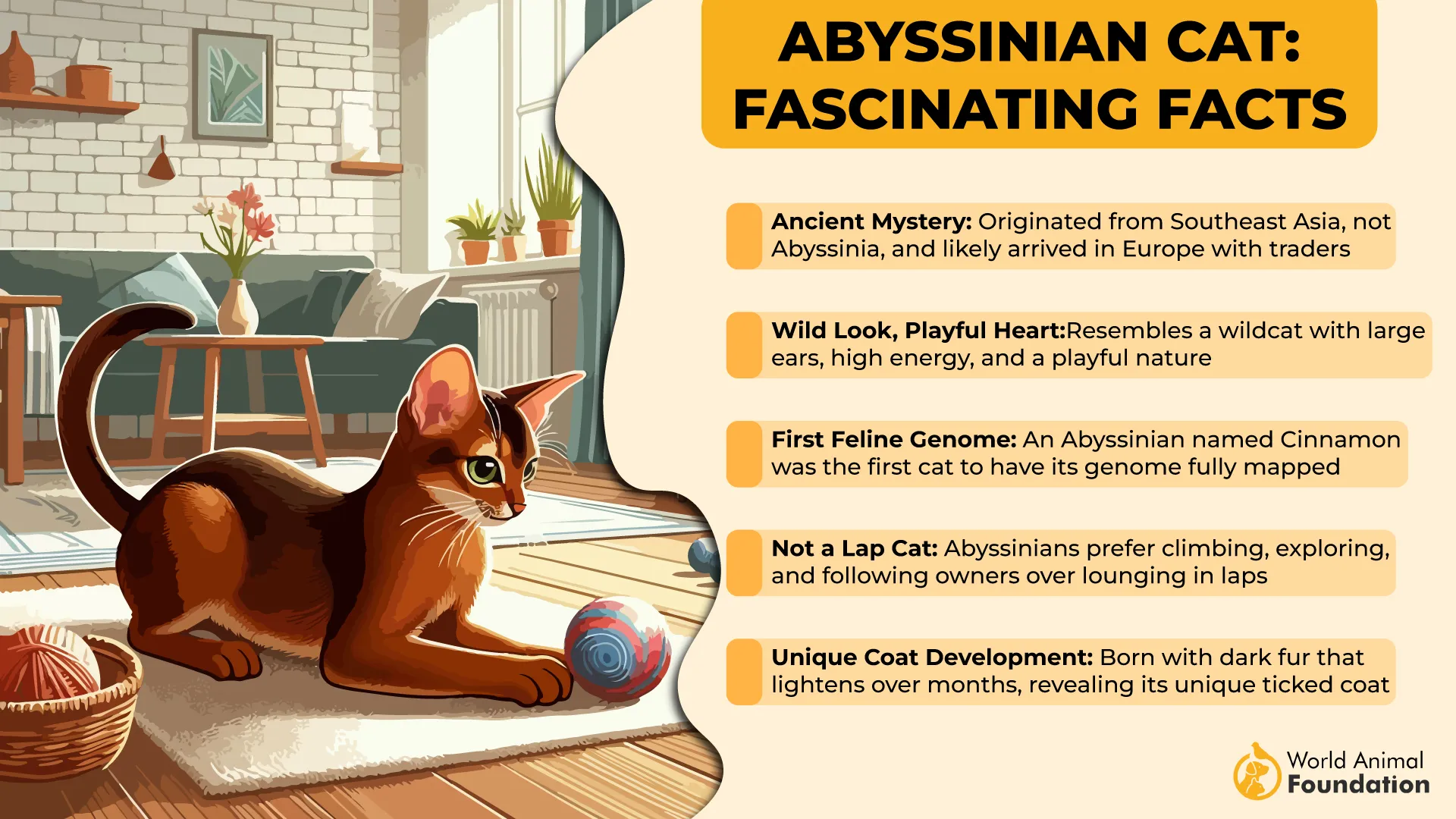
Fun fact: individual Abyssinian hairs are banded with multiple colors, creating their signature ticked coat.
2. Bengal
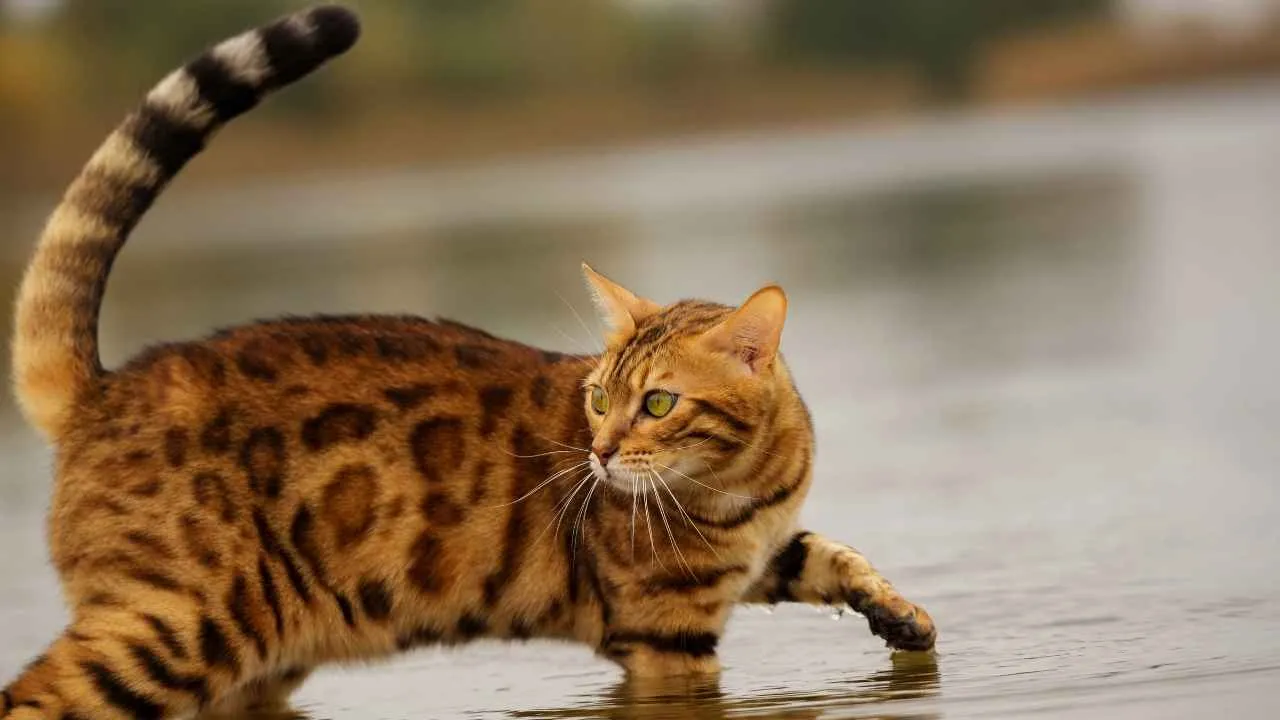
The Bengal—sometimes referred to simply as the “leopard cat” for its wild-looking, spotted coat—is a hybrid breed originally developed from the Asian Leopard Cat and domestic cats.
According to PetMD, a Bengal cat’s appearance is so striking that it can easily be mistaken for a miniature leopard—and this comparison is quite accurate.
Sleek, muscular, and intensely alert, this eye-catching feline brings both beauty and boundless energy into an active household.
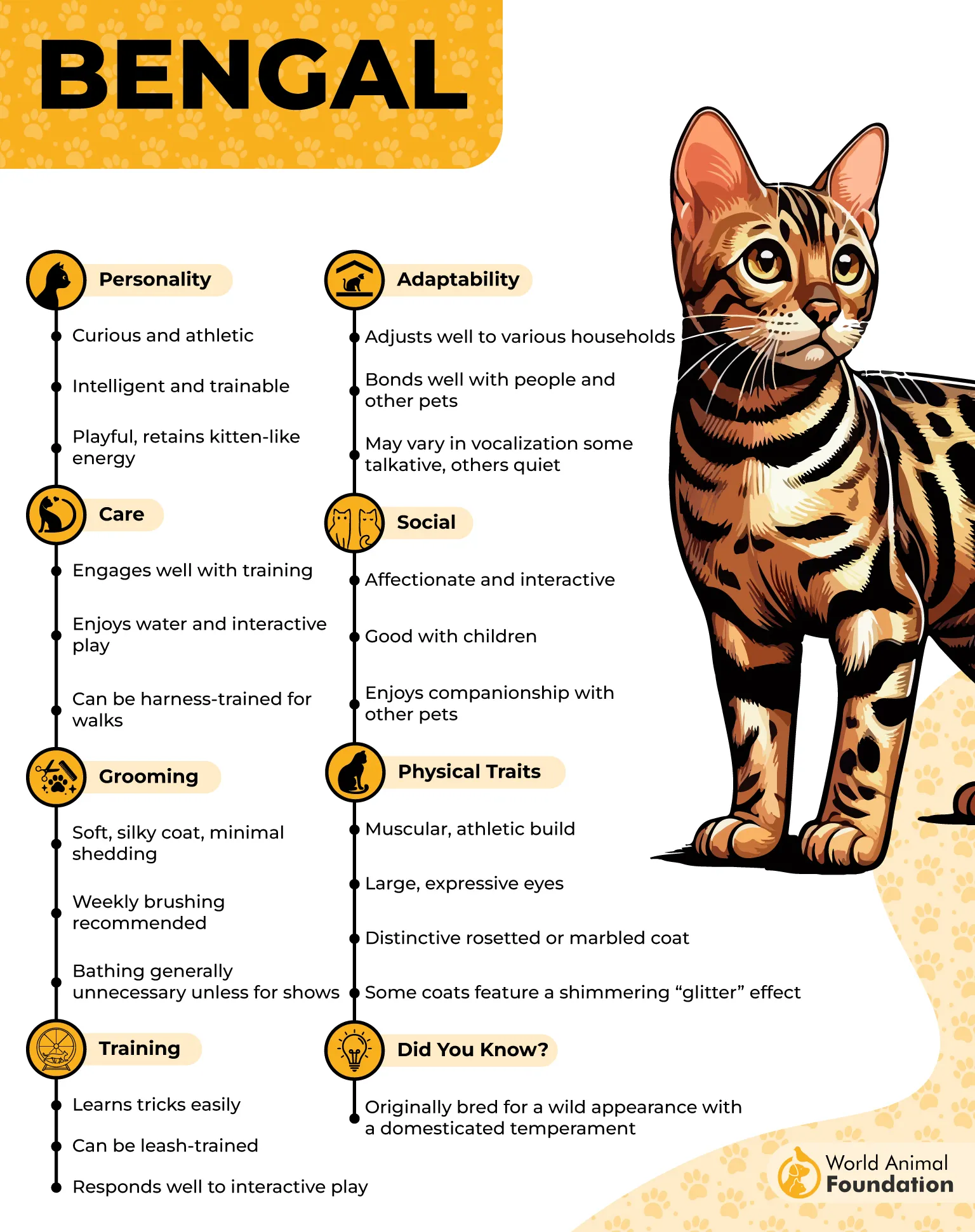
As one of the most high-octane cat breeds, the Bengal thrives when given constant stimulation. Interactive play, climbing structures, and puzzle toys help channel their drive and reduce the mischief that boredom can spark—such as opening cabinets, shredding tissues, or hiding your belongings.
Their athleticism is matched by impressive intelligence, making training a rewarding experience. Bengals often enjoy learning tricks, engaging in fetch, exploring vertical spaces, and even playing with water, all of which provide enriching outlets for their enthusiasm.
For owners who appreciate a companion that keeps them moving, the Bengal offers the benefit of a lively, entertaining presence that turns everyday moments into active engagement. They typically weigh between 8 and 15 pounds, stand around 8–10 inches tall, and are known for being voracious climbers.
3. Siamese
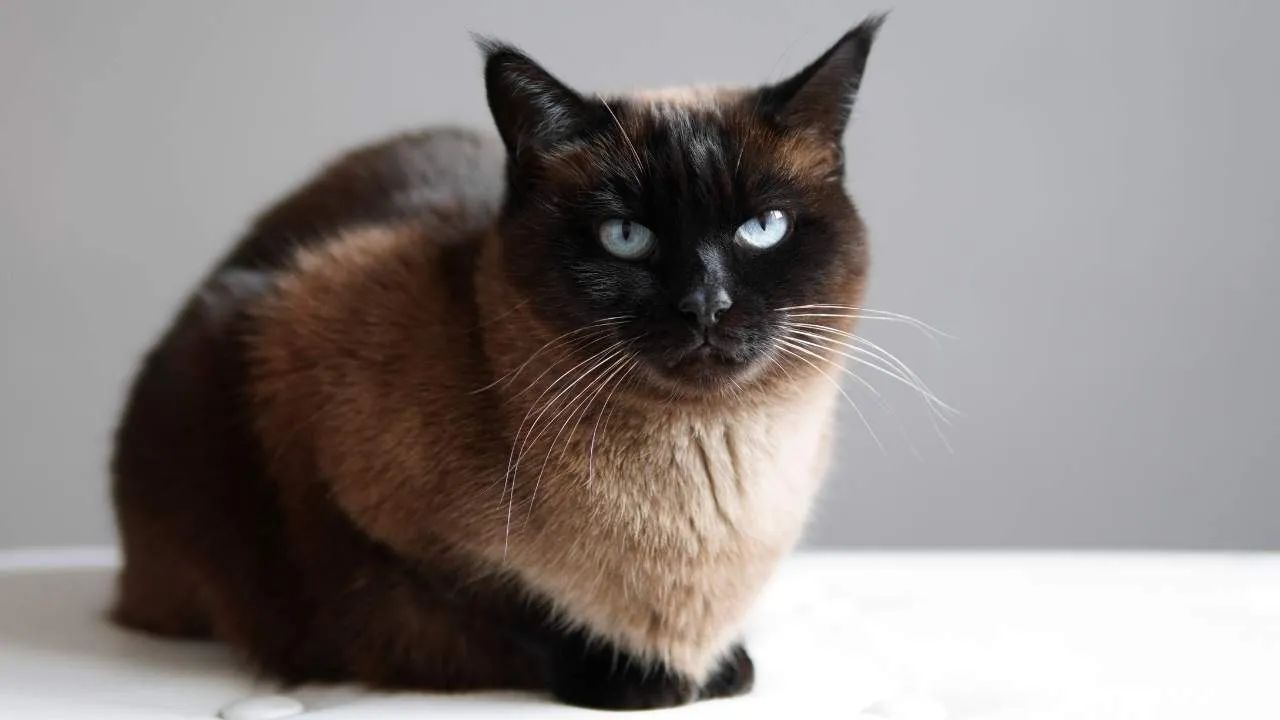
The Siamese—also known as the Thai cat—is a sleek, short-haired breed recognized for its striking color points and expressive blue eyes.
According to WebMD, the Siamese is a breed of cat that originated in Thailand. Highly social and famously vocal, this cat forms deep bonds with its preferred humans and thrives in busy, interactive households.
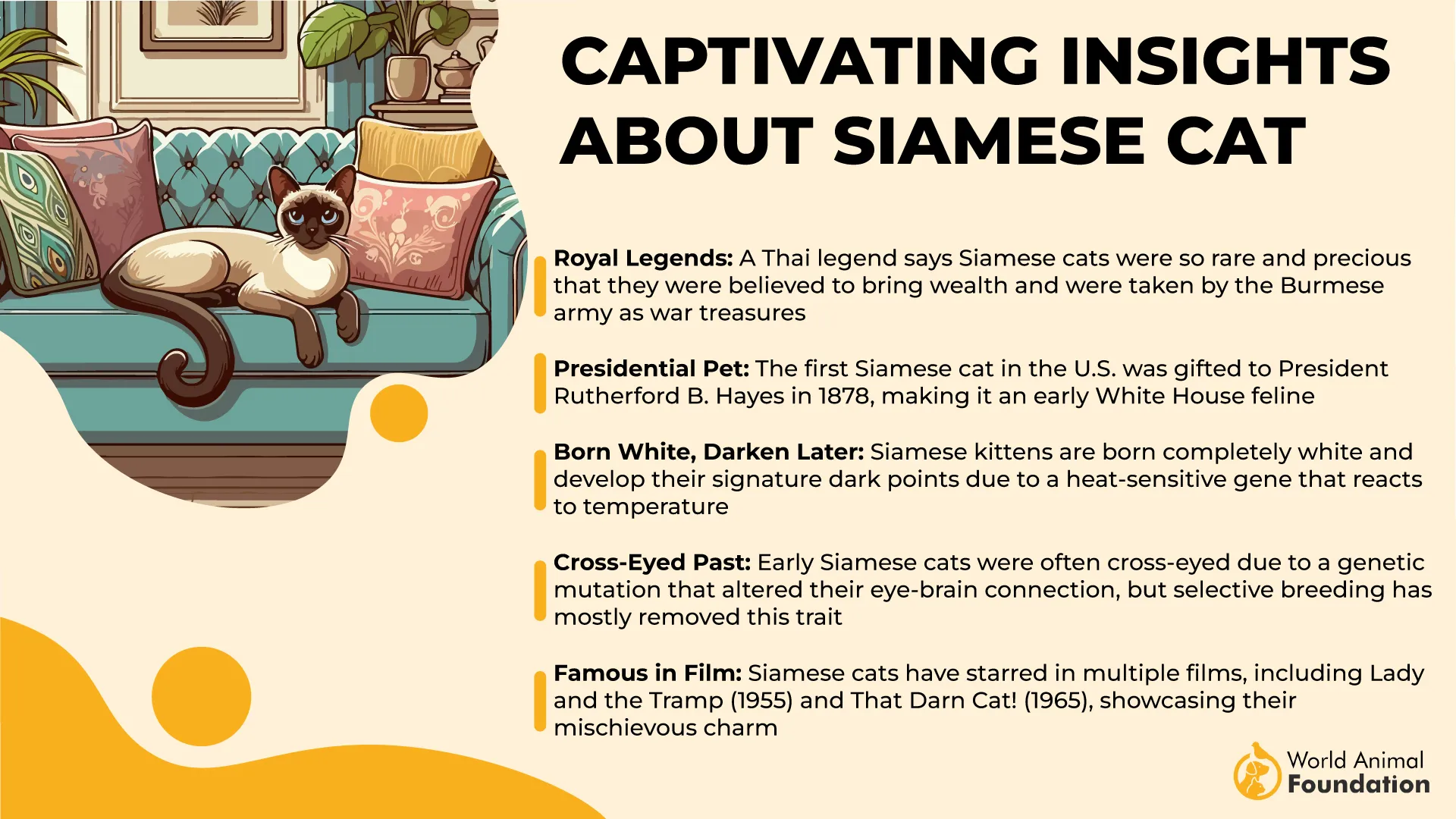
As one of the most active cat breeds, the Siamese needs constant engagement to stay happy. Daily play sessions and tall cat trees help channel their nonstop energy and prevent the frustration that comes from boredom.
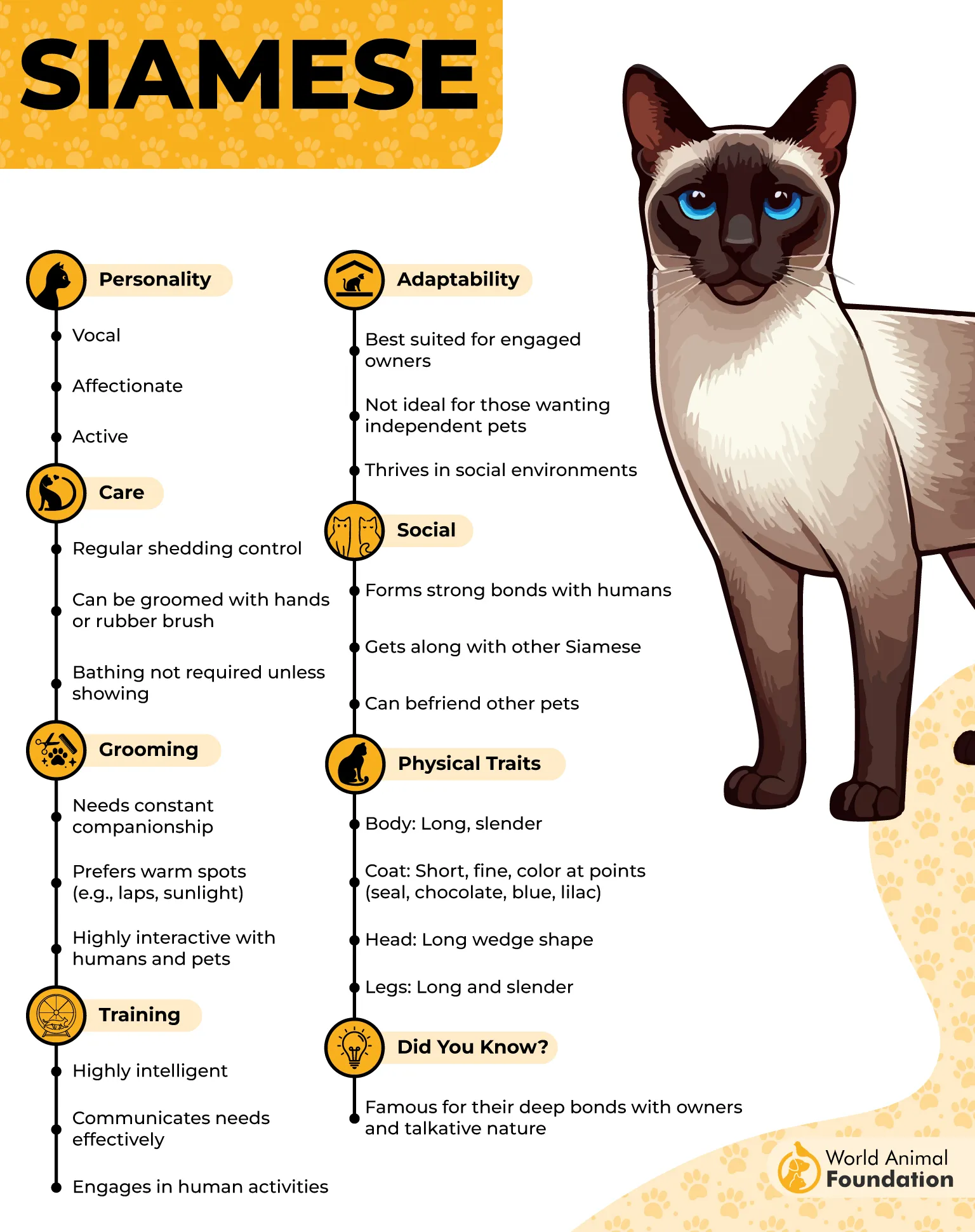
Their intelligence makes them natural candidates for training, whether it’s learning tricks or even mastering leash walks. They flourish in families that enjoy participating in their antics and can match their spirited, inquisitive nature.
This breed’s need for companionship means they rarely want to be left out of any activity—expect a Siamese to follow you room to room and comment loudly along the way.
4. Oriental Shorthair
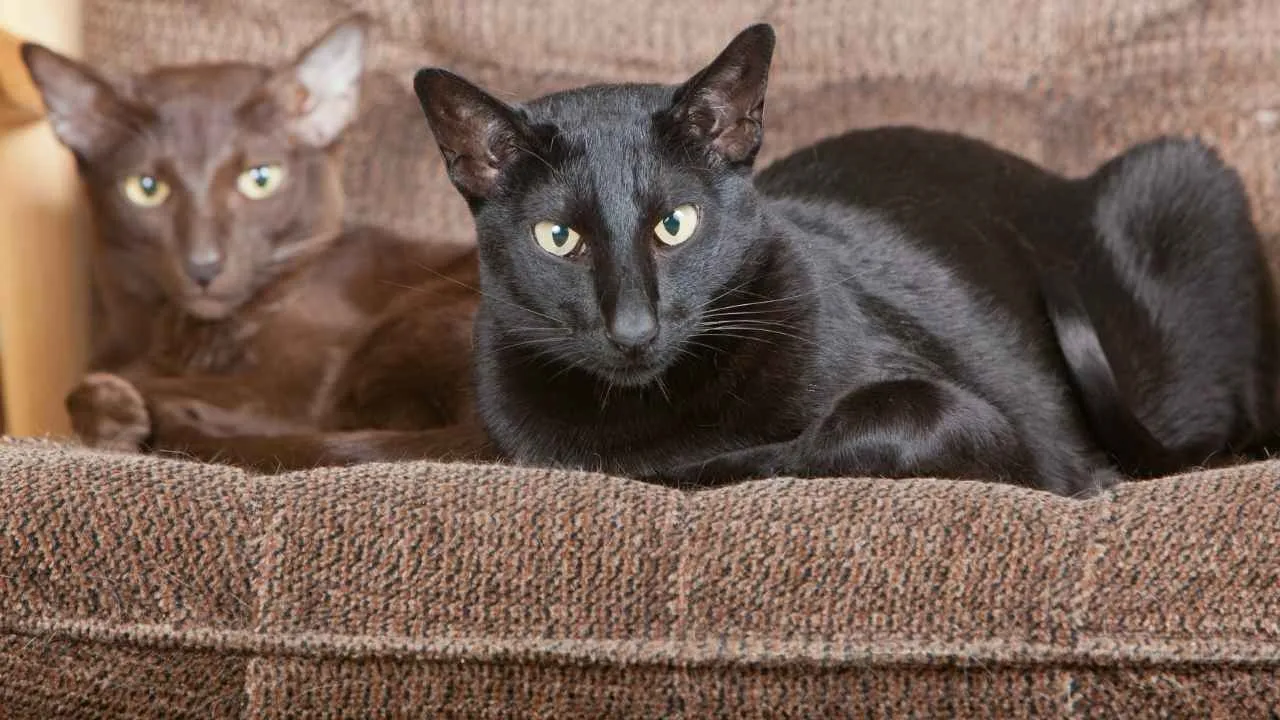
The Oriental Shorthair—also called the “rainbow cat” for its wide range of coat colors and patterns—is a sleek, expressive member of the Siamese family. Known for its big ears, slim build, and nonstop chatter, this agile breed thrives in homes where people are around to engage and interact.
Their boundless energy makes them a standout choice for families with kids. These cats adore learning new games, from fetch to simple tricks, and they eagerly join in any activity that promises attention. An Oriental Shorthair rarely sits still, so children who enjoy playtime will find an enthusiastic partner.
Because they climb and leap with ease, they flourish in enriched environments that let them explore safely. Cat trees, climbing shelves, and a variety of toys help them stay entertained and prevent them from turning household surfaces—like the top of the refrigerator—into their personal lookout points.
Highly social and deeply affectionate, they bond strongly with their families and may become lonely if left alone for long stretches. This talkative companion brings both energy and personality into any home.
Fact: Oriental Shorthairs can learn tricks like sit, fetch, and even spin.
5. Savannah
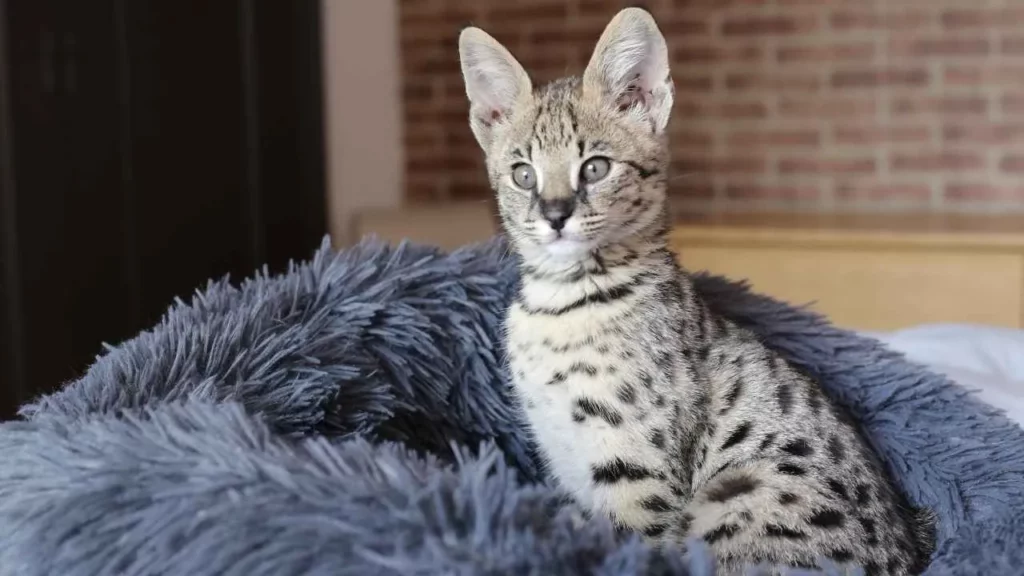
The Savannah cat is a striking hybrid developed from the African serval and domestic breeds like the Oriental Shorthair and Bengal, with long legs, a lean frame, and a bold, spotted coat.
For apartment living, this ultra-active breed needs plenty of vertical territory and safe spaces to explore, climb, and perch. Tall cat trees, shelves, and window viewpoints help channel their restless energy without requiring a huge floor plan.
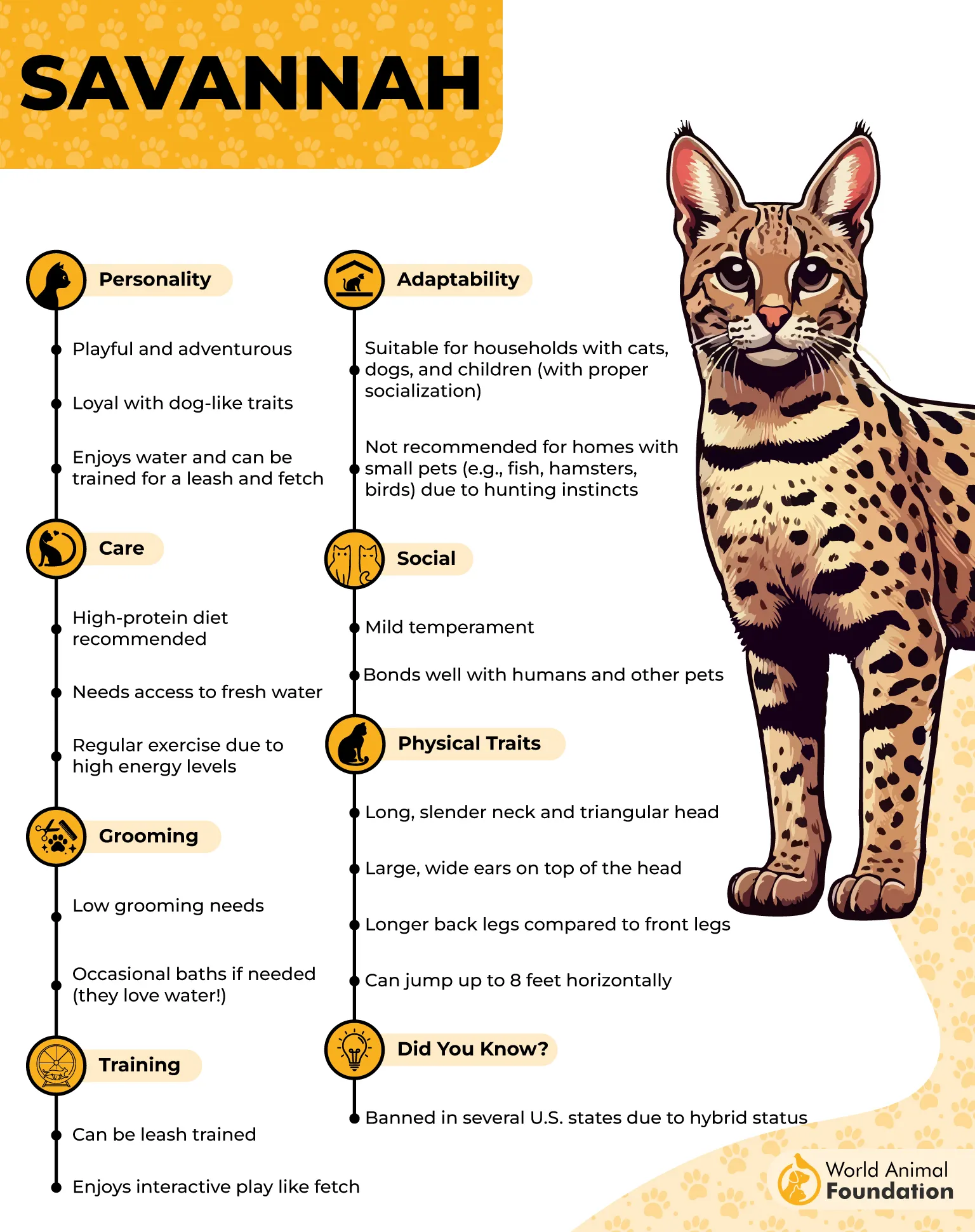
Because Savannahs are “always on,” they thrive when their people schedule vigorous daily play sessions. Wand toys, chase games, and even structured leash walks in secure hallways or outdoor areas keep their bodies and minds engaged.
Highly intelligent and loyal, they often bond strongly with their humans, learn to play fetch, and master puzzle toys with ease. Developed in the mid-1980s by crossing Oriental Shorthairs and Bengals with the African serval, many can leap an astonishing 8 feet into the air.
6. Burmese
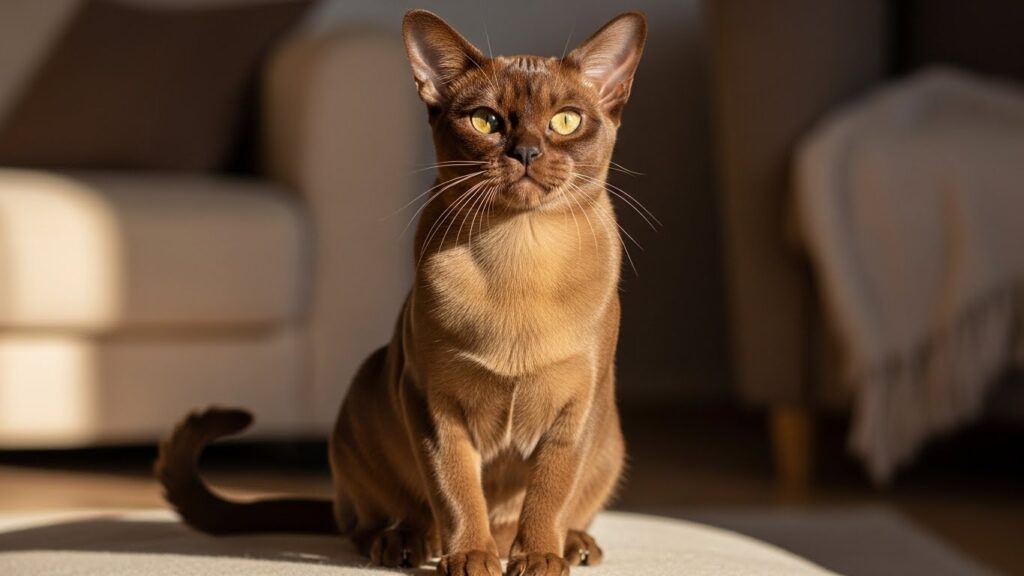
The Burmese, sometimes simply called the Burmese cat, is a compact, muscular breed with roots in Southeast Asia. Wrapped in a sleek short-haired coat that can be sable, champagne, blue, or platinum, this expressive feline brings big personality.
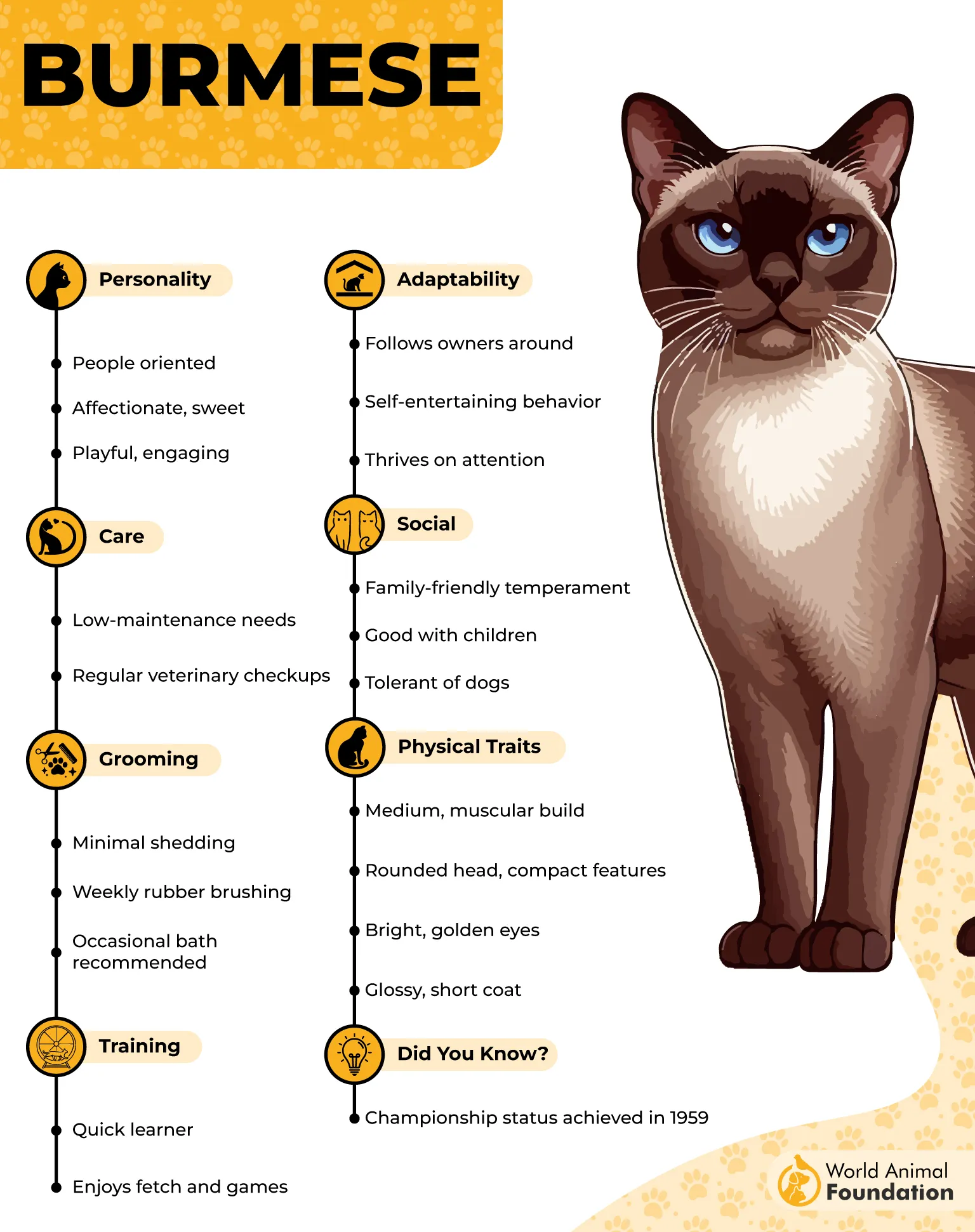
As one of the most people-oriented and energetic breeds, the Burmese needs daily interactive exercise—not just a few minutes of batting at a toy. Expect them to trail you from room to room, joining laundry runs, lap time, and everything in between, so build play into your routine rather than treating it as an occasional extra.
High-energy cats like the Burmese thrive on a mix of mental and physical workouts. Feather wands and regular climbing on cat trees or wall perches help burn off energy and prevent the boredom that can lead to mischief or over-eating.
Because they’re such powerful jumpers and naturally solid in build, keeping them active also protects against obesity as they age. Many Burmese remain kittenish and playful for up to 18 years, happily “go-go-go” until it’s time to recharge and start again.
7. Cornish Rex
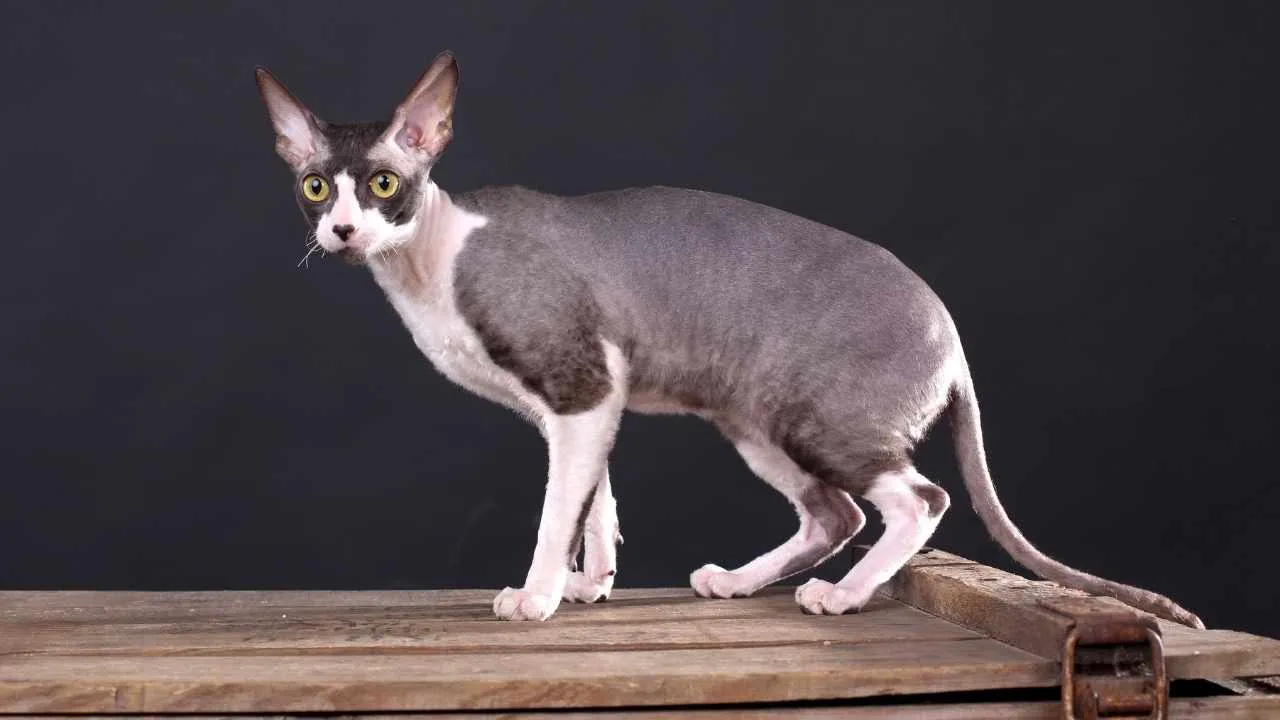
The Cornish Rex, sometimes called the “Greyhound of the cat world,” is a sleek, curly-coated athlete with a nonstop zest for play. Light on their feet at around 6–10 pounds, these elegant cats are all about speed, agility, and interaction.
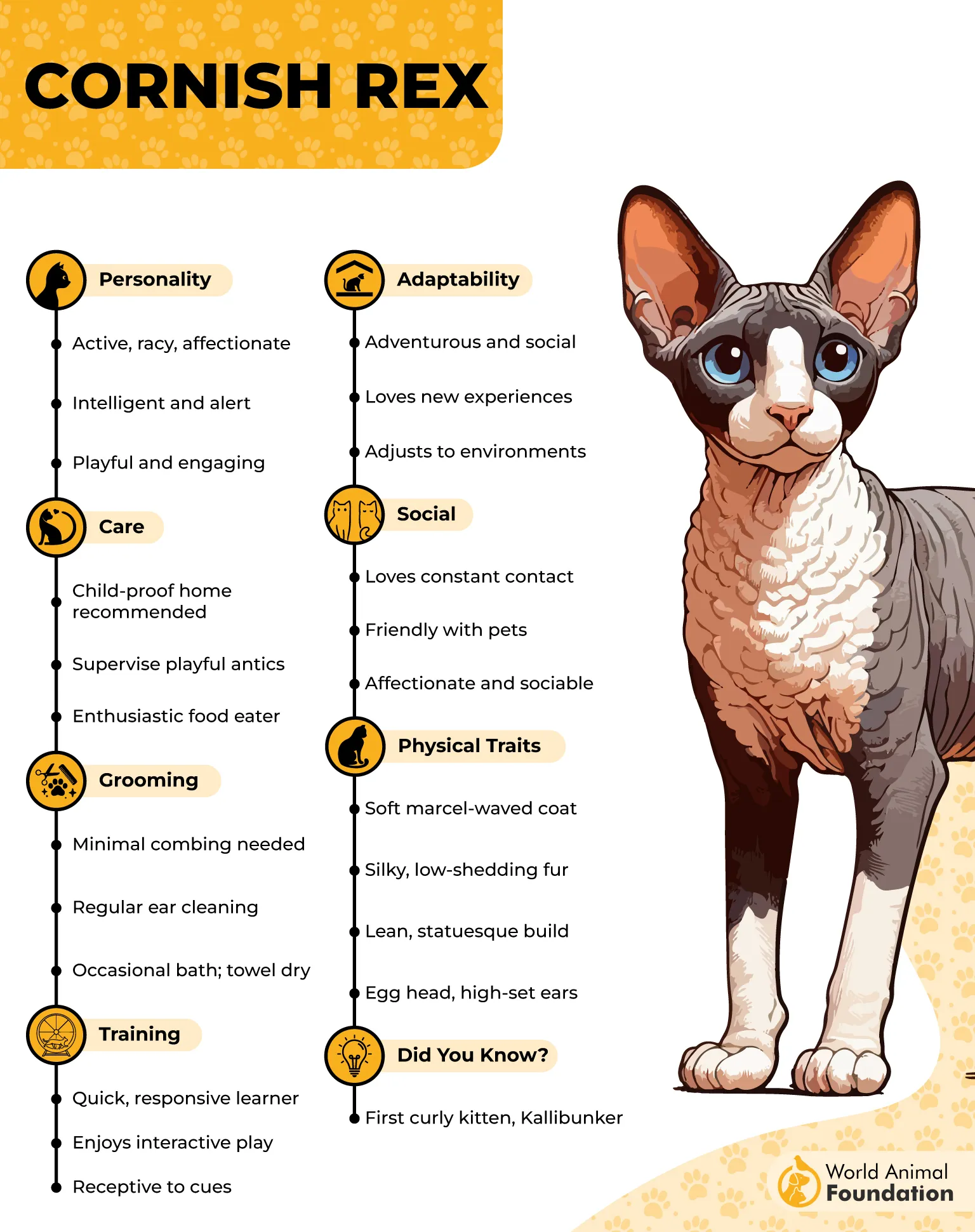
For such a high-energy breed, toys aren’t optional—they’re essential. Wand toys, feather chasers, and fast-moving balls let the Cornish Rex sprint, leap, and pounce, especially when you’re actively involved in the game.
Think vertically when planning enrichment: tall cat trees, wall shelves, and window perches satisfy their love of climbing and keep your shelves safe. Many Cornish Rex cats even enjoy harness training and leash walks, turning their athleticism into daily adventure.
Because they thrive on engagement, rotating toy selections, and frequent family play sessions help keep their sharp minds busy. Some Cornish Rex cats are known for being vocal, which may be an influence of their Siamese ancestry.
8. Sphynx
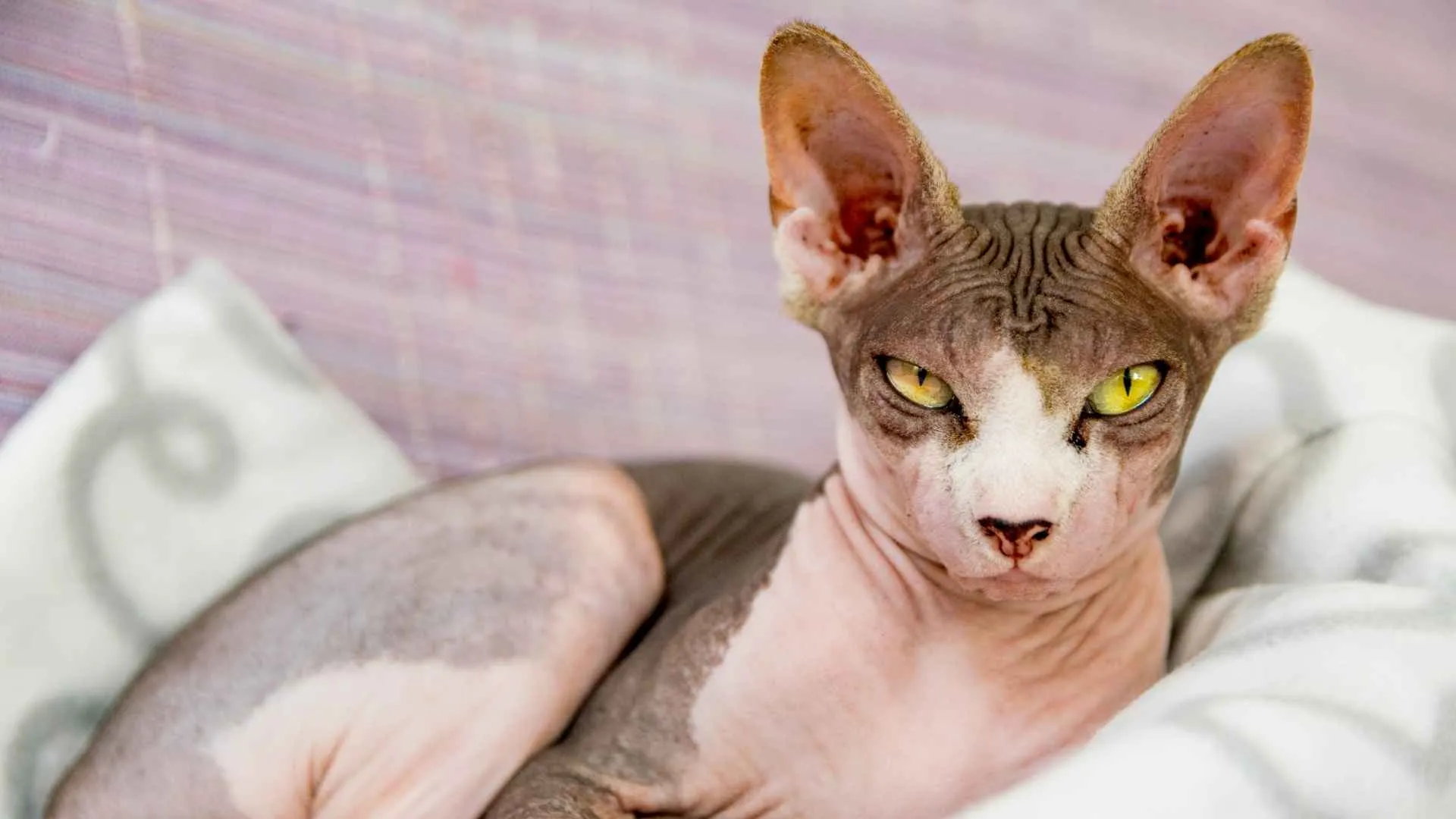
The Sphynx, often referred to as the hairless cat, is instantly recognizable for its nearly bare, wrinkled skin and big, expressive eyes. Compact yet muscular, this social butterfly craves constant interaction and attention.
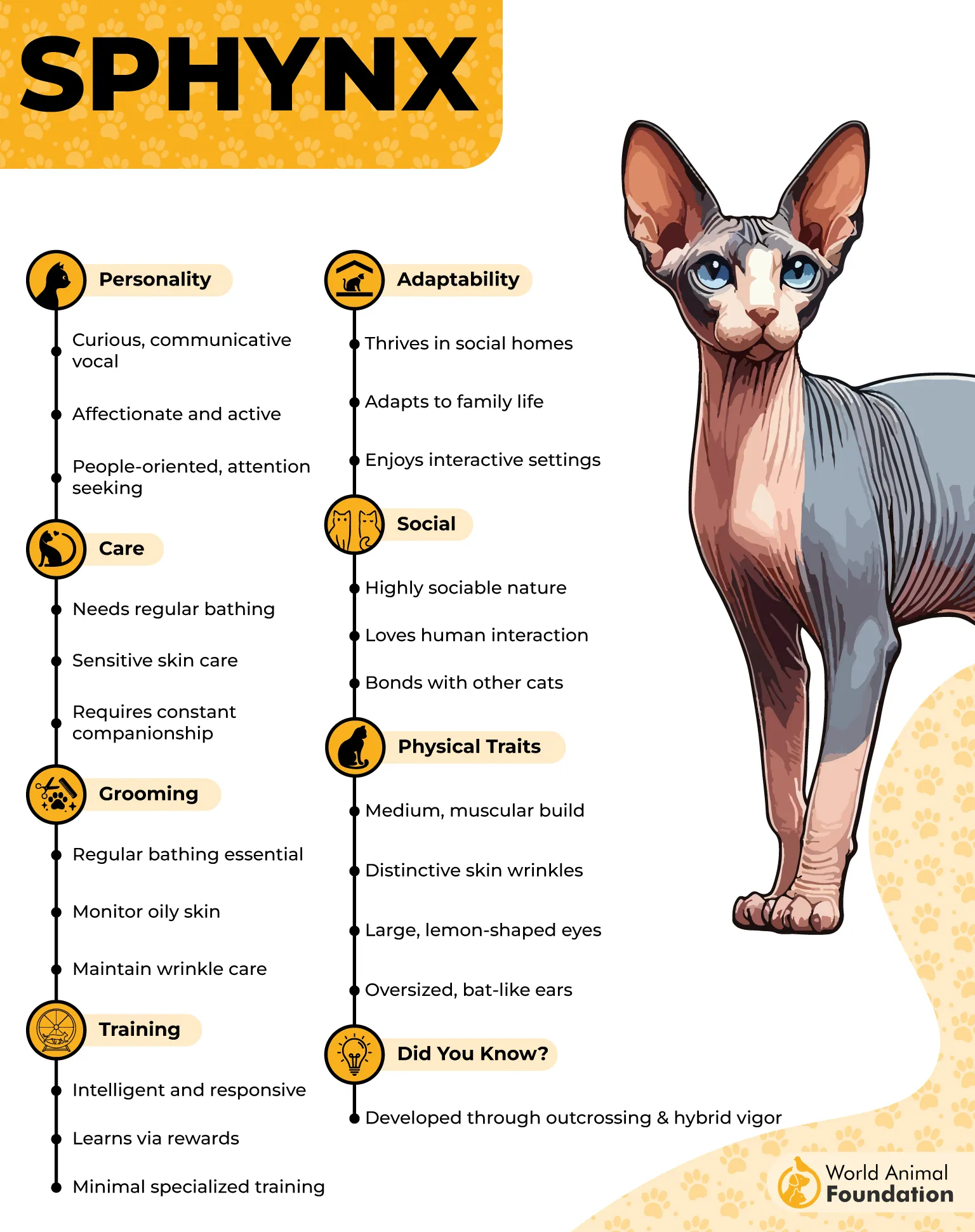
As one of the most energetic cat breeds, the Sphynx rarely sits still, so structured play is essential. Offer climbing trees, wand toys, and chase games throughout the day to channel that non-stop energy into healthy exercise rather than mischief.
Because they’re clever and people-focused, Sphynx cats respond very well to training that feels like play. Short, frequent sessions using treats, praise, and toys can teach them to come when called, play fetch, or tackle puzzle feeders that work both body and brain.
Their chatty, affectionate nature makes them eager partners for trick training, such as sit, high-five, or follow-the-target games.
Fun fact: this outgoing breed was developed from a naturally bald kitten born in Canada in the mid-1960s.
9. Turkish Van
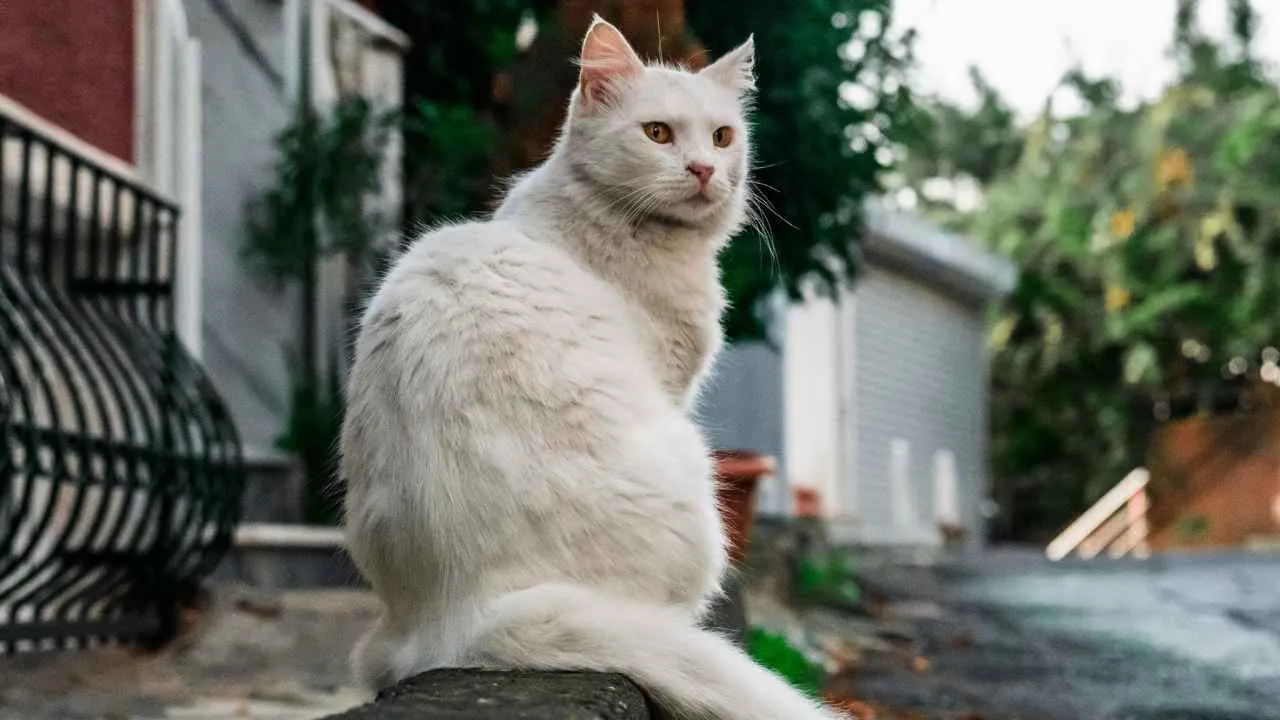
The Turkish Van, also known as the “swimming cat,” hails from Turkey’s Lake Van region and is instantly recognizable by its white body with color on the head and tail. This large, muscular, long-haired cat pairs an exotic look with an energetic personality.
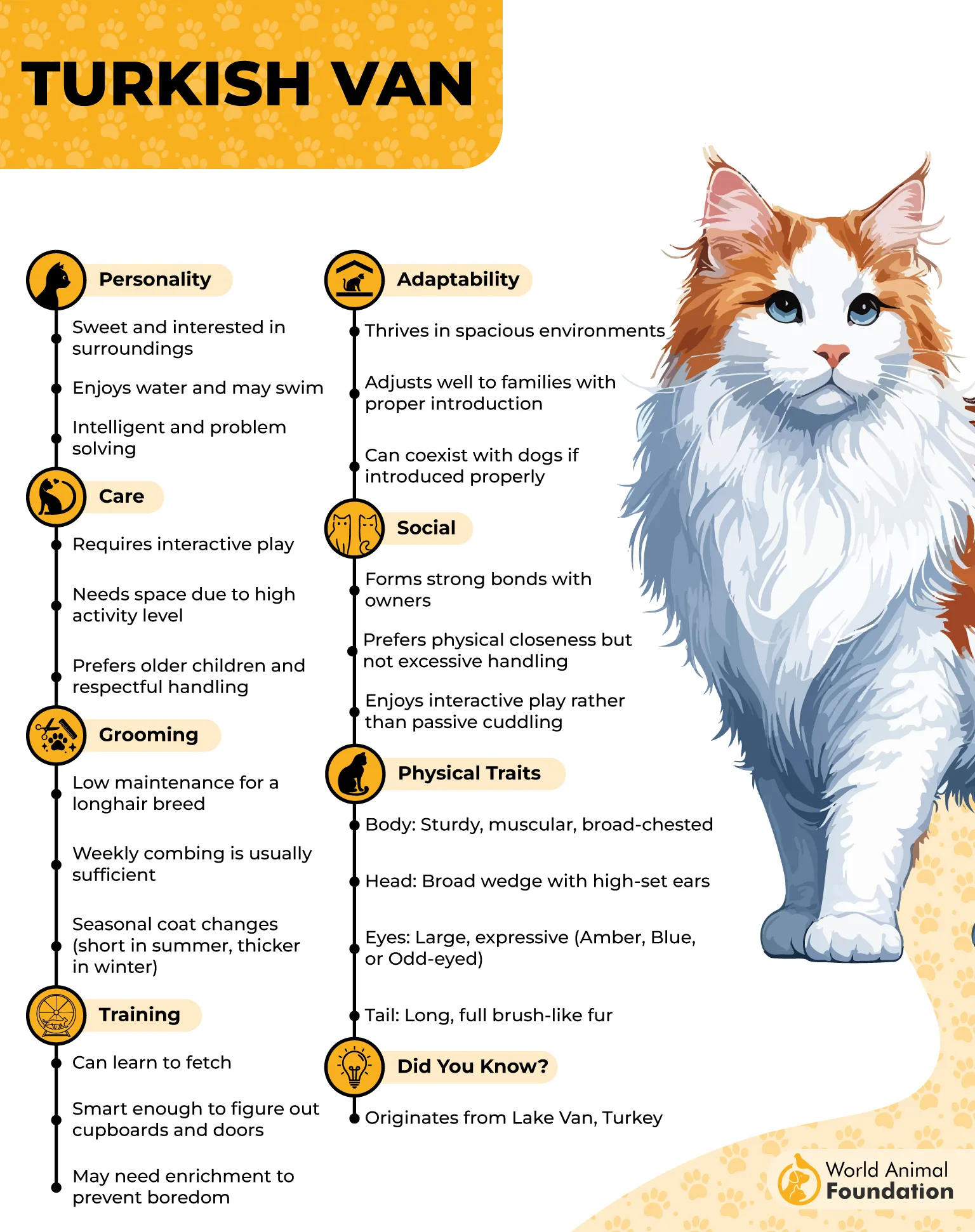
Living with such an active athlete means expecting constant movement, leaping, and exploration—this is not a couch-potato kitty. Their powerful back legs and big paws let them reach high places with ease, so fragile décor and unsecured shelves can be at risk.
Their famous love of water adds another layer of challenge: they may try to join you in the bath, play in sinks, or investigate toilets and aquariums. Because they’re highly intelligent and sometimes less cuddly than other breeds, they often need structured play and even clicker training to stay content.
That plush, semi-long, water-resistant coat requires regular grooming to prevent tangles, even though it lacks a heavy undercoat.
Conclusion
Living with playful cat breeds can be a blast, but the most playful cat breeds also demand real commitment. If you want a cat that’s extremely active, plan on spending time every day on interactive playtime, playing games, and building in plenty of physical activity to support good health—especially for large cats with big energy.
Without enough outlets, boredom can quickly turn into destructive behaviors, so interactive toys, food puzzles, cat trees, and sturdy scratching posts shouldn’t be optional.
Many high-energy cats can be a little dog-like in their enthusiasm and curiosity, and they may even do better in homes with multiple cats, other cats, or other pets (and sometimes other animals) for company.
Whether you love siamese cats or you’re comparing breeds like devon rex (hello wavy coat), japanese bobtail, or even munchkin cats with short legs, the goal is the same: help your playful kitty remain playful in a healthy, happy way—without turning your home into a climbing gym gone rogue.
