




Take a moment to imagine a bird that can look you straight in the eye—or even tower over you. When most of us think of birds, we picture quick flutters, light feathers, and effortless flight.
But the largest birds on the planet completely flip that idea on its head. These giants are built less for soaring and more for strength, speed, and survival on land and sea.
Birds are one of the most diverse animal groups on Earth, with nearly 10,000 living species spread across almost every environment—from icy plains to scorching deserts. Some are so small they can sit on a fingertip, while others can weigh as much as a large mammal.
Size in the bird world isn’t just about being big—it’s about adaptation. Larger birds often evolved powerful legs, massive wings, or sturdy bodies to help them survive without relying on flight.
Their size helps them escape predators, travel long distances, or dominate their habitats. And while many of these giants can’t fly, they more than make up for it in speed, endurance, and sheer presence.
So if you’ve ever wondered how big a bird can really get, you’re in for a treat. From towering heights to jaw-dropping wingspans, let’s explore the largest bird species on the planet—and discover how nature turned feathers into true giants.
Key Takeaways
Meet the giants of the bird world, from the fast ostrich to the fierce cassowary and soaring Andean condor.
See how flightless birds like the emu and penguin survive with speed and strength.
Discover the wandering albatross and its record-breaking wingspan.
Dive into the wild habits and habitats that make these birds truly unique.
Largest Birds on the Planet
1. Common Ostrich
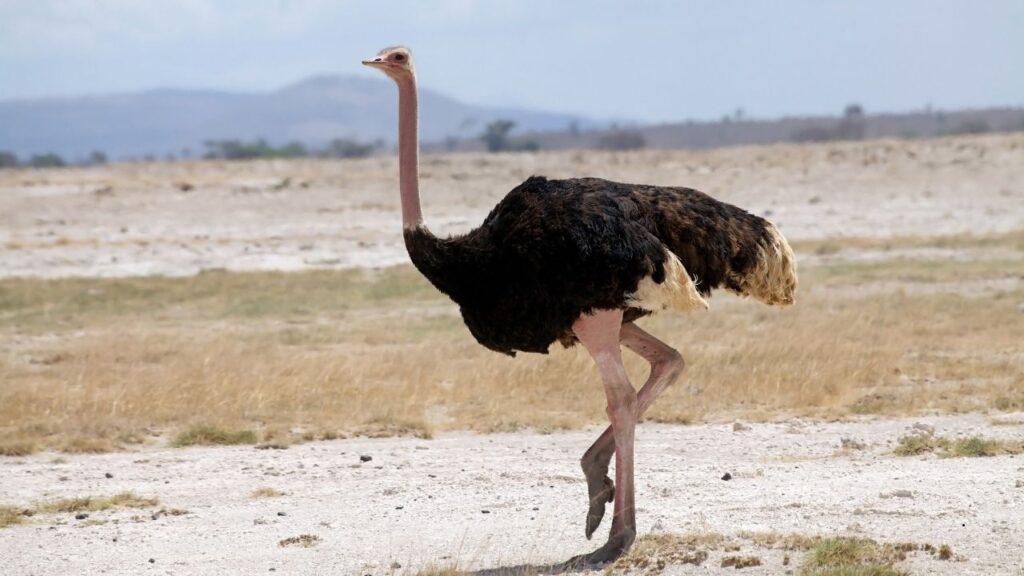
The ostrich is officially the largest extant species on the planet. Native to Africa, these massive birds roam open grasslands, savannahs, and shrublands.
Their unusual look stands out, with long necks, bald heads, and powerful legs made for life on land. Unlike most birds, ostriches are flightless and rely entirely on ground movement.
Instead of flying, ostriches depend on speed to survive. They can run extremely fast, using long strides to escape predators. Speed is their main defense, but if cornered, they can strike back with strong kicks and a sharp talon on their feet, making them dangerous opponents.
Ostriches mostly eat grass, roots, and succulents, along with insects. On rare occasions, they feed on animal carcasses.
According to the National Zoo & Aquarium, Ostrich eggs are the largest of any bird, equal to about two dozen chicken eggs. Ostriches belong to a group of large, flightless birds called ratites, which lack the structure needed for flight muscles.
Quick Facts
Found across Africa, south of the Sahara
Flightless birds that are built for running
Mostly herbivores with occasional insects
Defend themselves with powerful kicks
Lay the largest eggs in the bird world
2. Southern Cassowary
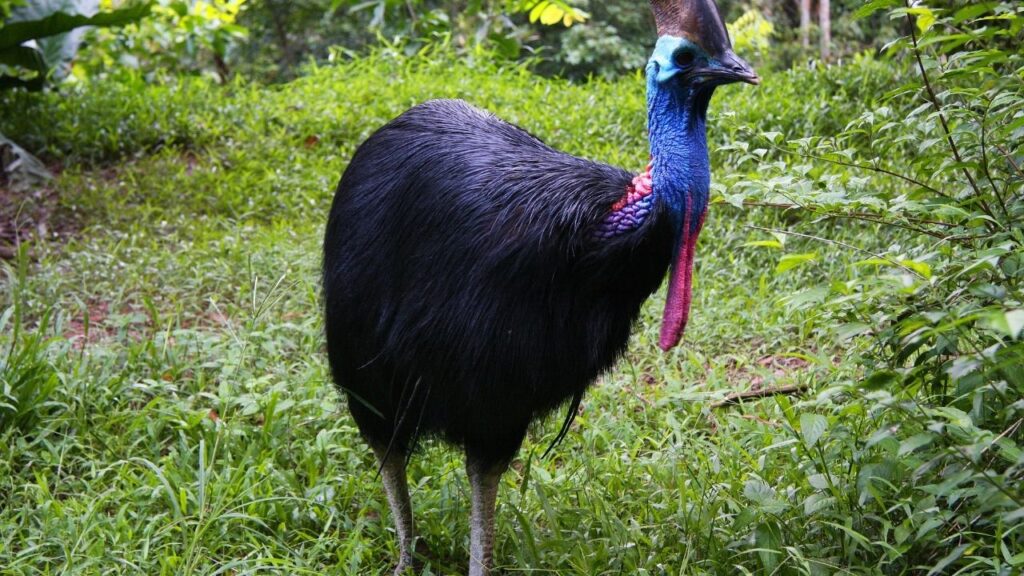
The Southern cassowary is one of the largest birds on the planet and looks like it came straight from the age of dinosaurs.
Found in the rainforests of northeastern Australia, New Guinea, Indonesia, and Papua New Guinea, this flightless bird is rare and unforgettable. Its body is covered in long black feathers, while its head shows bright blue and turquoise skin.
Unlike other giant birds, the cassowary does not rely on speed. Instead, it uses strength and intimidation. It has a hard, horn-like casque on its head made of keratin.
Southern cassowaries eat mainly fruit, fungi, and insects from the forest floor. They may also eat small animals. Living in dense, marshy rainforests, they are strong swimmers. They are often heard before they are seen, thanks to their deep, booming calls that echo through the forest.
Quick Facts
Native to the rainforests of Australia and Southeast Asia
Flightless with a dinosaur-like appearance
Can become aggressive when threatened
Eats fruit, fungi, insects, and small animals
Known for deep, booming calls
3. Emu
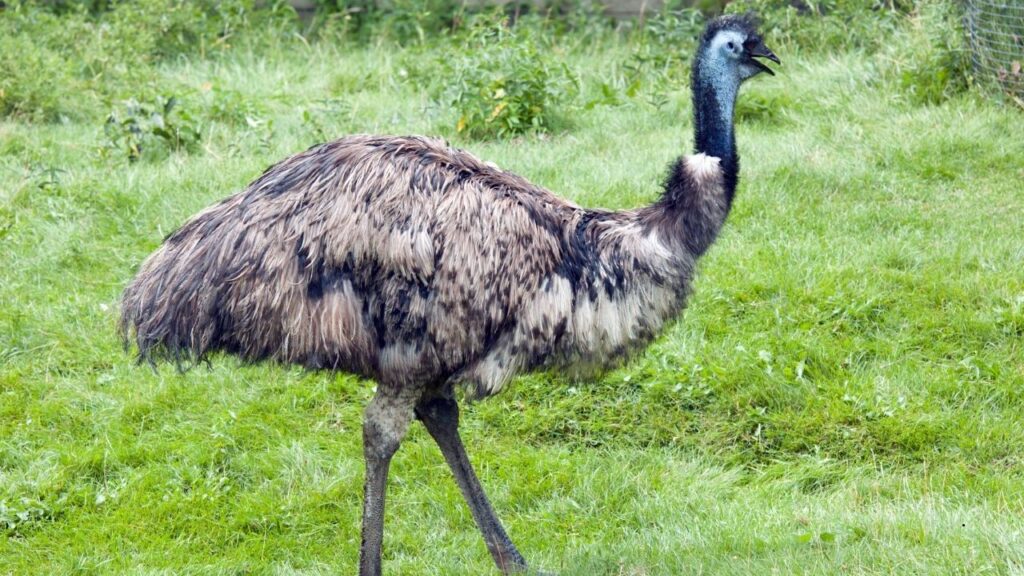
Found only in Australia, the emu is a true symbol of the outback. This flightless bird often stands taller than most birds and even some people. With its long neck, slim body, and long legs, the emu has a build similar to other giant ground birds and is perfectly suited for life on land.
Although emus cannot fly, they make up for it with speed. They are strong runners and can cover long distances across forests, deserts, and scrublands.
Emus are not picky about where they live and adapt easily to different habitats. They are curious by nature and often investigate anything unfamiliar in their surroundings.
Emus mainly eat plant matter, fallen fruit, and insects, but they are also known to feed on crops like wheat and barley. This habit has made them a serious problem for farmers, leading to government-led efforts to control their numbers.
Smithsonian’s National Zoo mentions that Emus need regular access to fresh water and can store fat when food is plentiful. Both males and females make deep, booming sounds that carry across the landscape.
Quick Facts
Native only to Australia
Large, flightless bird built for running
Lives in forests, deserts, and scrublands
Eats plants, insects, and farm crops
Known for curiosity and deep booming calls
4. Northern Cassowary
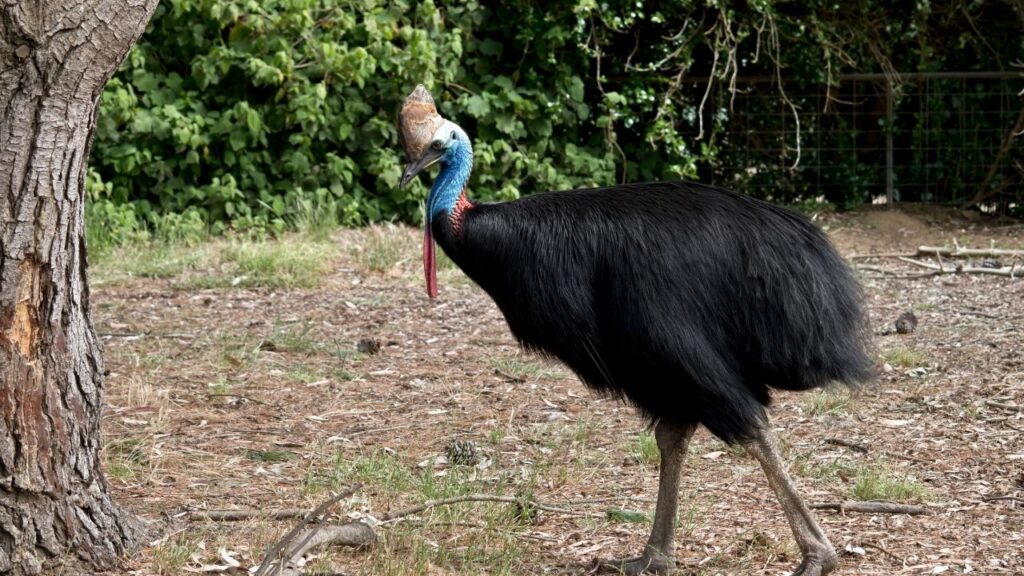
The Northern cassowary, also known as the single-wattled or golden-necked cassowary, is just as striking as its southern relative.
Native to the rainforests of northern New Guinea and nearby Indonesian islands, this flightless bird stands out with its bright blue face and neck, a single red or yellow wattle, and a large, flared casque on its head.
Similar in appearance to other cassowaries, the Northern cassowary is slightly lighter in build and is usually solitary.
It has powerful legs and razor-sharp claws on both feet, making it a bird that few animals want to challenge. Its low-frequency, rattling call echoes through the forest and sounds more like a large boar than a bird.
Northern cassowaries live in lowland rainforests, coastal swamps, and marshy areas. They mainly feed on fruits and seeds, but will also eat small animals.
Quick Facts
Found in New Guinea and nearby Indonesian islands
Flightless bird with a single bright wattle
Known for a deep, rattling call
Feeds on fruit, seeds, and small animals
Most threatened cassowary species
5. Emperor Penguin
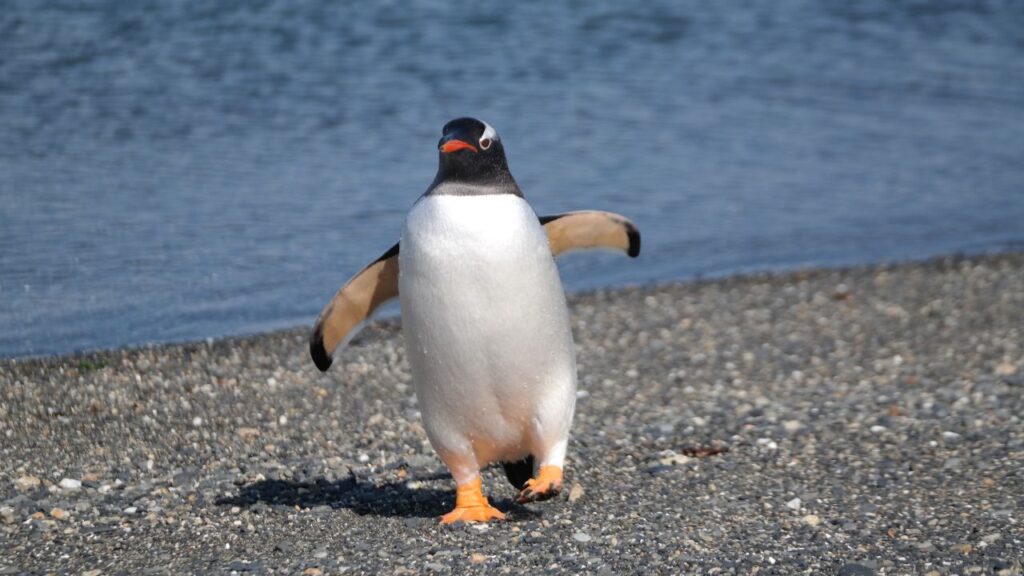
The emperor penguin is the largest penguin and one of the biggest flightless birds on the planet. Living in the harsh, icy environment of Antarctica, these birds stand out with their sturdy build and impressive size. While they can’t fly, emperor penguins are expert swimmers, diving deep into freezing waters to catch fish.
They are famous for their unique way of moving across ice—sliding on their stomachs to travel faster on frozen surfaces. When not sliding, they waddle awkwardly but steadily across the snow. Emperor penguins mostly eat fish, though they sometimes enjoy krill and squid.
These birds survive extreme cold thanks to a thick layer of fat and dense feathers that keep them warm. During harsh winters, males huddle together and fast while guarding their eggs, often losing half their body weight before the females return with food.
Quick Facts
The largest penguin species, native to Antarctica
Flightless but expert swimmers
Travel by sliding on ice or waddling
Eat mainly fish, sometimes krill and squid
Males fast while caring for eggs in winter
6. Greater Rhea
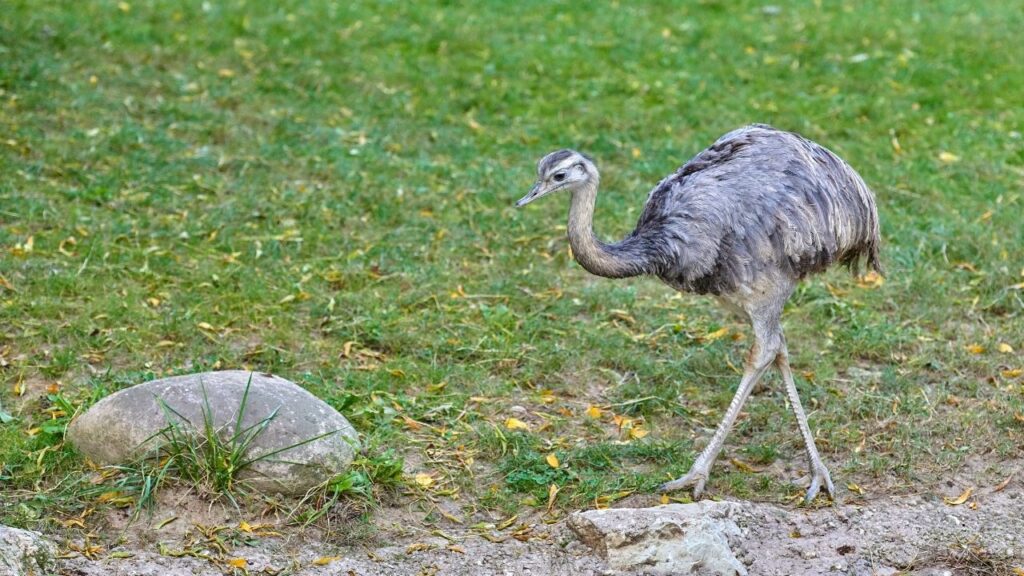
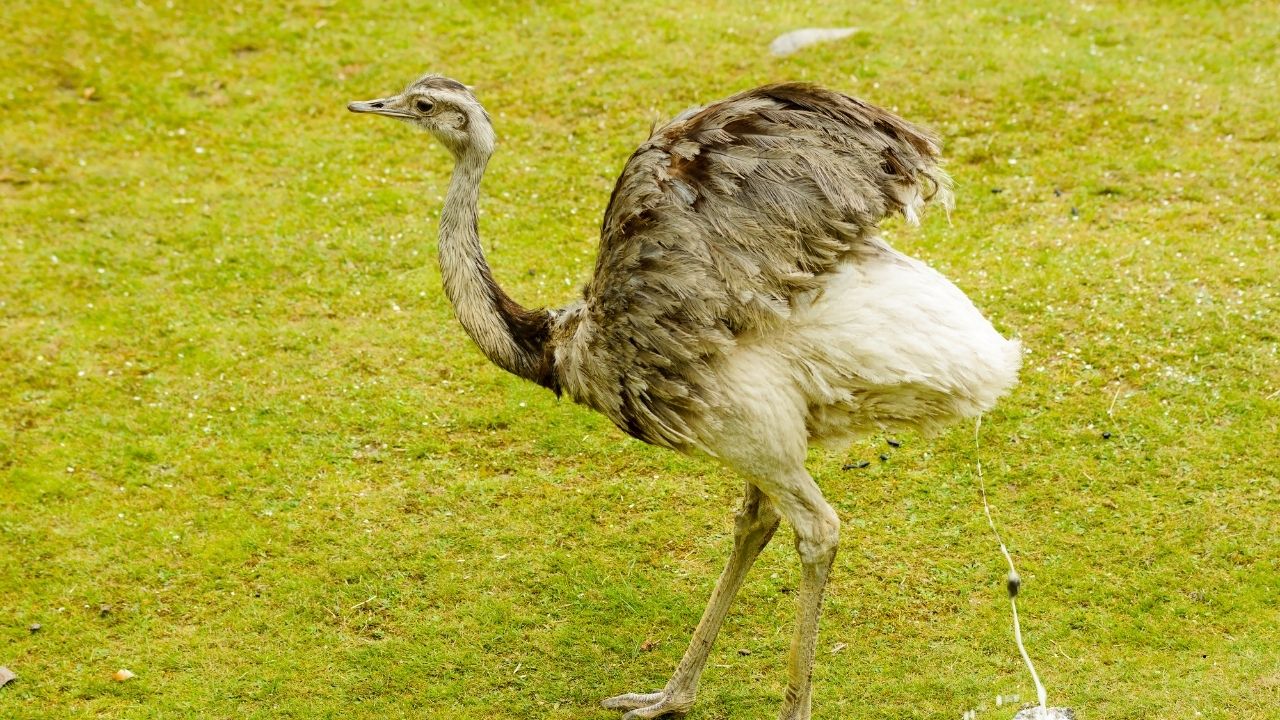
The greater rhea (Rhea Americana) is the largest bird in South America and a close cousin to ostriches, emus, and cassowaries.
Found in countries like Brazil, Argentina, Paraguay, and Uruguay, these flightless birds live mostly in grasslands and open areas with some tall vegetation. Their feathers are a mix of brown and grey, and they have long, pale necks that help them spot danger from afar.
Greater rheas eat a varied diet, including plants, fruits, insects, small rodents, and even other birds. Despite their size, they are surprisingly quiet and move almost silently. This calm nature makes them less intimidating than you might expect, especially since they can grow nearly as tall as some humans.
These birds are social creatures, often found in groups roaming the plains. Known for their speed and endurance, greater rheas use their strong legs to run quickly when threatened. They are truly the largest and most impressive birds native to the Americas.
Quick Facts
Native to South American grasslands and savannahs
Flightless, related to ostriches and emus
Eat plants, fruits, insects, and small animals
Quiet and generally friendly toward humans
Known for fast running and group behavior
7. Kori Bustard
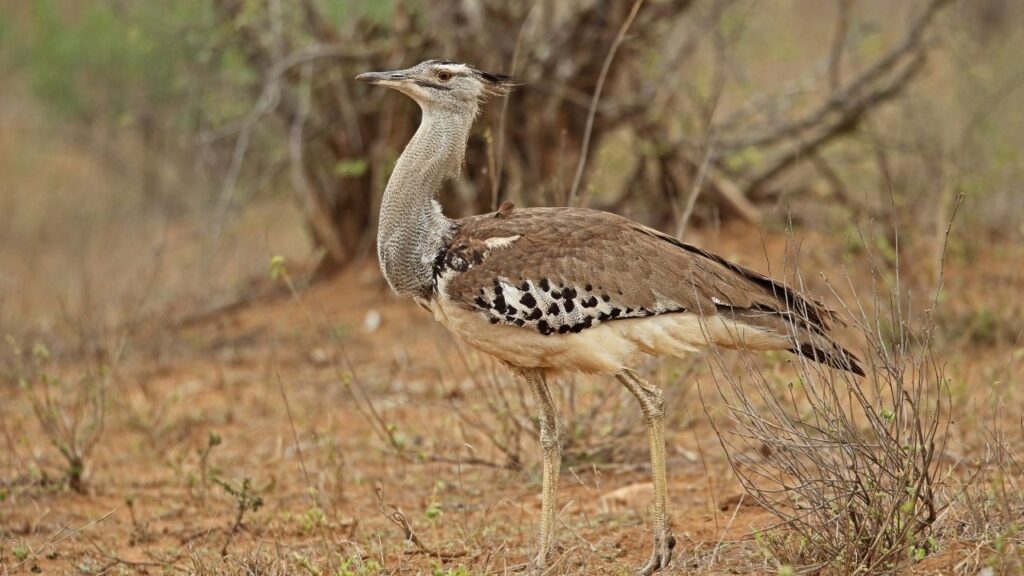
The Kori Bustard holds the title of the second-heaviest bird capable of flight. Native to Africa’s open grasslands and semi-deserts, this impressive bird weighs up to 44 pounds (20 kilograms). It balances great size with the rare ability to fly, making it truly unique among heavy birds.
With grey and brown feathers, marked by black and white patterns under its wings and around its neck, the Kori Bustard is both powerful and elegant. Though it can fly, it spends most of its time on the ground, moving with slow, graceful steps as it searches for food.
Britannica says that Kori Bustards are omnivores, feeding on a mix of plants, seeds, insects, and small animals. Their large size and strong legs allow them to walk long distances while foraging.
During mating displays, males perform an impressive ritual, puffing up their necks and producing booming calls to attract females.
Quick Facts
Native to African grasslands and semi-deserts
Second-heaviest flying bird in the world
Grey and brown plumage with distinct markings
Mostly ground-dwelling but capable of flight
Omnivorous diet and impressive mating displays
8. Wandering Albatross
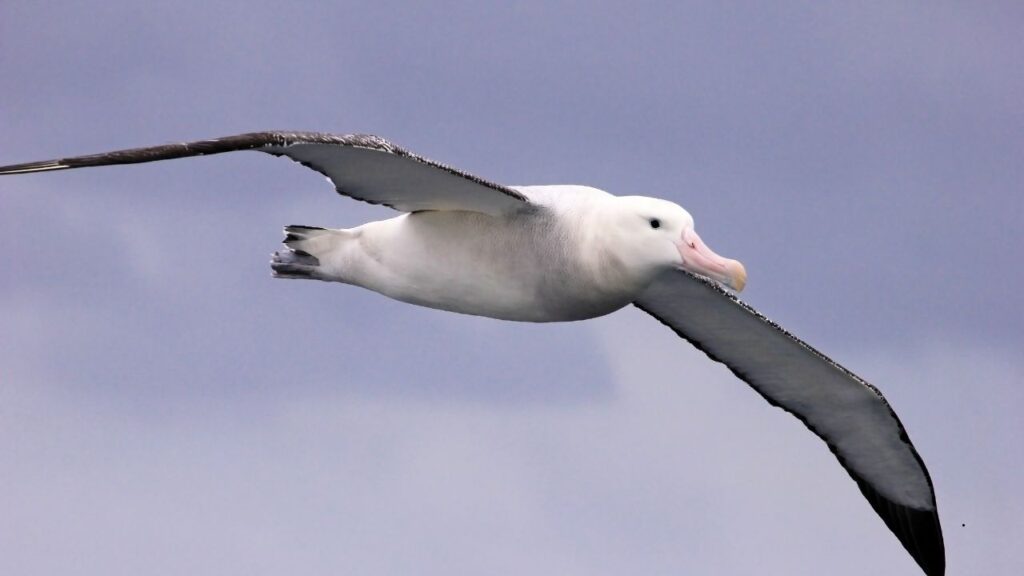
The wandering albatross is famous for its impressive wingspan. Found mainly across the Southern Pacific Ocean near South America, Australia, and Southern Africa, this bird can spread its wings up to an astonishing 11 feet (3.4 meters) from tip to tip.
Weighing around 25 pounds (12 kilograms), the wandering albatross is built for long-distance travel. It can glide effortlessly over the ocean for hours, covering vast distances—sometimes flying over 500 miles in a single day. These birds are true wanderers, with some traveling the length of the Southern Pacific Ocean multiple times in one year.
Their diet mainly consists of fish and squid, which they catch from the ocean’s surface. With their powerful, broad wings and amazing endurance, wandering albatrosses are masters of the skies and seas.
Quick Facts
Found across the Southern Pacific and Southern Ocean
Wingspan measuring up to 11 feet, one of the largest of any bird
Weighs around 25 pounds
Can travel over 500 miles a day
Eats mainly fish and squid
9. Andean Condor
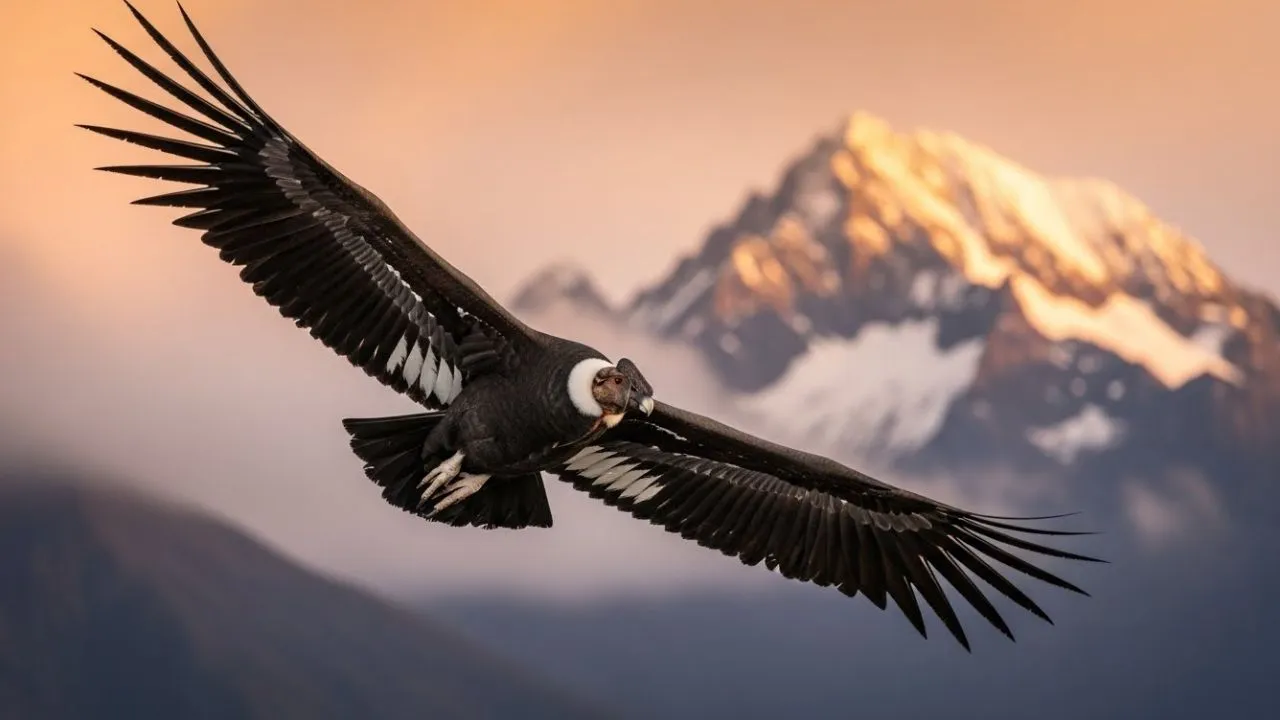
The Andean condor is the biggest bird of prey on Earth. It lives high in the Andes Mountains of South America, where it soars gracefully over vast landscapes. Though not the tallest bird, its enormous wingspan—reaching up to 11 feet—makes it an impressive sight in the sky.
This powerful bird has mostly black feathers, with striking white feathers around its neck and wing tips. Its featherless head shows pinkish-red skin that can change color depending on its mood. The condor is a skilled scavenger, feeding mainly on carrion and playing a crucial role in keeping its ecosystem clean.
Highly respected in South American culture, the Andean condor symbolizes strength and freedom. Weighing up to 33 pounds, it combines power and elegance in flight, truly earning its place among the largest birds on the planet.
Quick Facts
Native to the Andes Mountains in South America
The largest bird of prey with a wingspan of up to 11 feet
Black feathers with white neck and wing markings
Feeds mainly on carrion, an important ecosystem cleaner
Symbol of power and freedom in Andean culture
Conclusion
Elephant birds were among the largest species of birds to ever exist, far surpassing any extant bird in body size. While today’s largest flying birds impress us with their incredible wingspans and grace, the elephant birds remind us that the largest members of the bird family were once truly giant, towering over modern-day species.
Today’s living birds may be smaller compared to those ancient giants, but they share fascinating traits like hollow bones that make flight possible.
From the smallest birds to the tallest species and those with the largest wingspan, all birds are closely related through evolution, showcasing the amazing diversity of avian life across the world.
There are other species as well that are among the largest birds in the world. These include the Harpy Eagle, California Condor, Wild Turkey, Somali Ostrich, Dalmatian Pelican, Marabou Stork, King Penguin, Great Bustard, Eurasian Black Vulture, Mute Swan, Dwarf Cassowary, Domestic Turkey, and Trumpeter Swan.
