




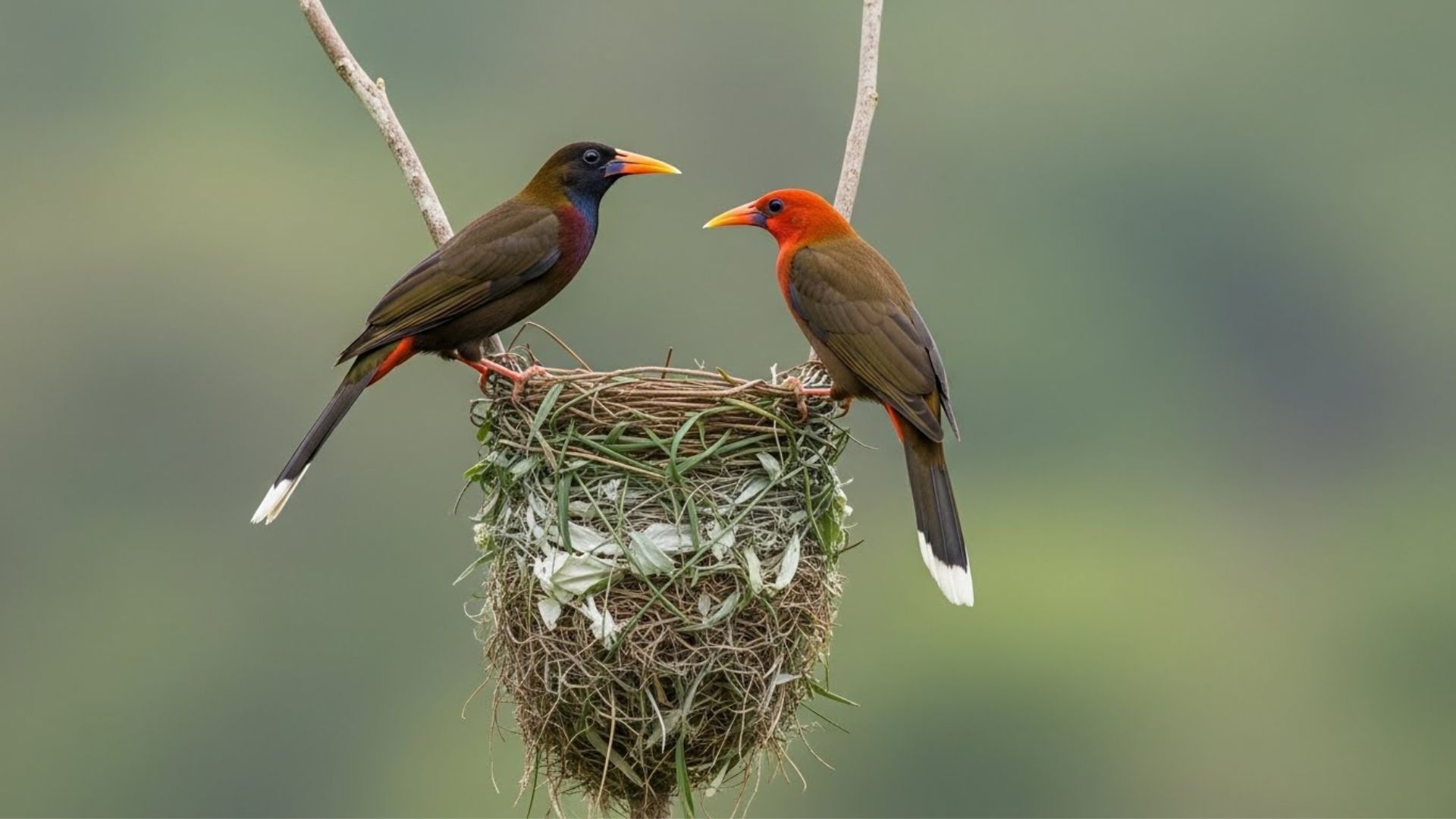
When you think of bird nests, you probably picture simple little cups made of twigs, right? But bird nests are actually some of nature’s coolest and most creative constructions!
From cozy little hideouts to astonishing works of art, birds use all sorts of surprising materials—think spider webs, leaves, mud, and even bits of shiny plastic—to build their homes.
What’s truly amazing is how these nests aren’t just random piles of stuff. They’re carefully designed to keep eggs safe, comfy, and hidden from danger.
Some nests are so cleverly built that they can withstand strong winds or heavy rains, while others are practically masterpieces, decorated and engineered to impress.
So, get ready to discover the wild and wonderful world of bird species with fascinating nesting habits — their homes will definitely surprise and amaze you.
Key Takeaways
Meet sociable weavers and their giant nests that shelter hundreds of birds for decades.
Dive into the colorful world of bowerbirds and their artful, eye-catching displays.
Discover how hornbills seal themselves in, and ospreys build huge, reusable nests.
Uncover the clever tricks birds use to keep their eggs safe and cozy.
Birds That Have Fascinating Nesting Habits
1. Sociable Weaver
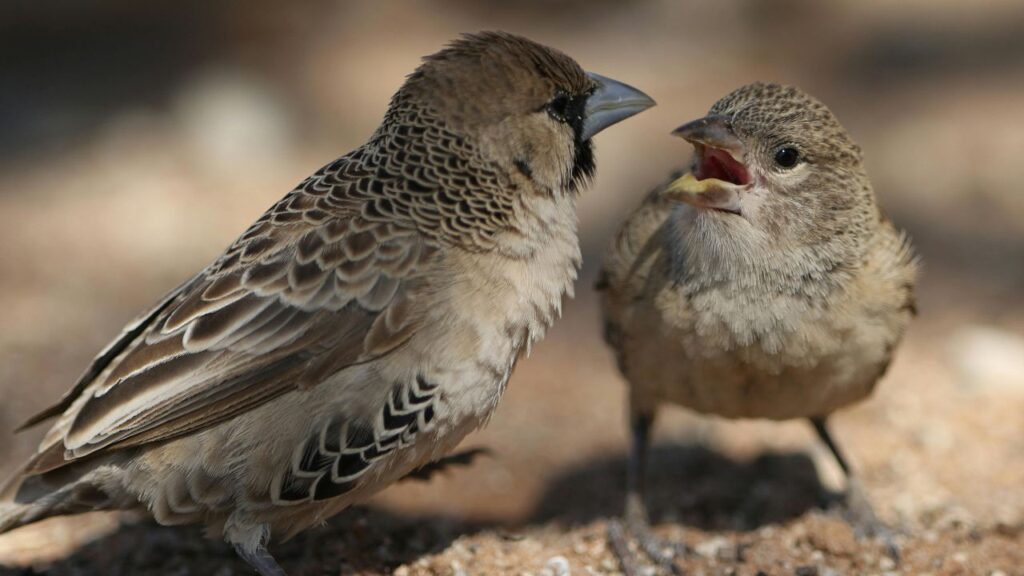
The sociable weaver is a remarkable bird found only in southern Africa and is famous for its extraordinary nesting habits.
Unlike birds that build a single nest, this species creates huge shared homes that look like giant haystacks in trees or on telegraph poles. These nests are permanent structures and are among the most impressive bird-built homes in the world.
What makes these nests truly fascinating is their smart design. Each massive nest contains many separate chambers used for different purposes.
Inner chambers stay warm and are used for sleeping at night.
Outer chambers stay much cooler and offer shelter during hot daytime hours.
The nests are made from twigs, dry grass, and other soft plant material. Sticks are often placed at the entrances to help keep predators away
Sociable Weaver nests are used by hundreds of birds and can last for decades, serving many generations. After the breeding season, other birds like finches, lovebirds, and even falcons may move in for shelter.
These elaborate nests have natural ventilation and insulation, similar to termite mounds. Still, danger remains. Many eggs are lost to snakes and other predators, showing that even the most advanced bird homes aren’t completely safe.
2. Bowerbird

If birds had a home design show, the bowerbird would steal the spotlight. San Diego Zoo mentions that this bird is famous for its fascinating nesting habits, especially the way males build and decorate elaborate structures called bowers. These are not simple nests but carefully arranged displays meant to impress.
Male bowerbirds collect anything colorful they can find.
Natural items: leaves, rocks, shells, feathers, and berries
Man-made items: coins, nails, rifle shells, and small pieces of plastic
They spend hours arranging and rearranging these objects until everything looks just right.
Females then visit and closely inspect each bower before choosing a mate. The most attractive nests win their approval. Males with poorly decorated bowers are ignored, proving that appearance matters greatly in this species.
These nests are not used for raising young. Their only purpose is to attract attention and show off creativity. This makes the bowerbird one of the most unique examples of birds with fascinating nesting habits, where design and decoration matter more than shelter.
3. Montezuma Oropendola
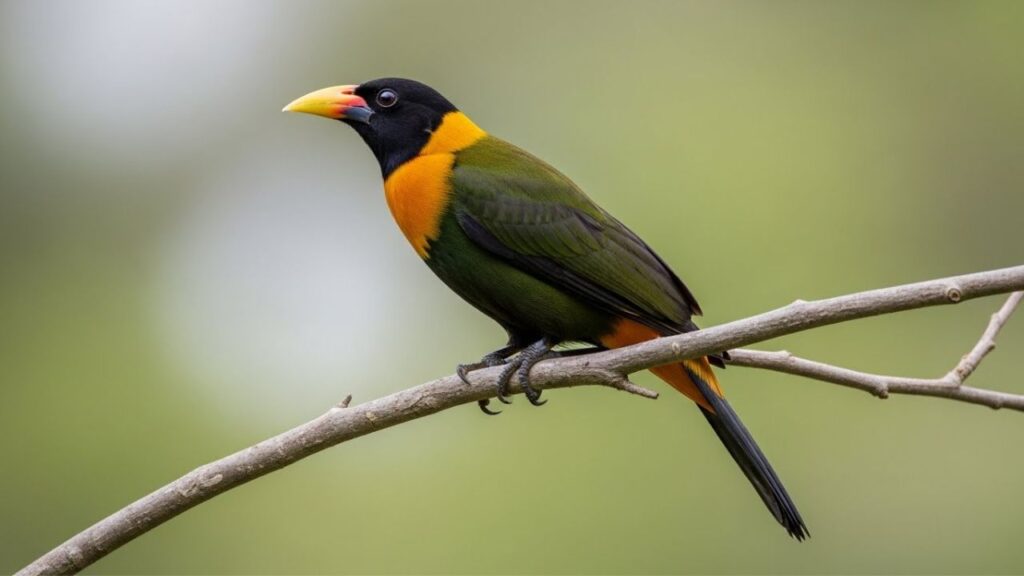
The Montezuma oropendola is a tropical bird found in the lowland areas along the Caribbean coast. It is well known for its fascinating nesting habits and its love for living in large groups.
These birds breed in colonies and choose tall, isolated trees to build their nests, creating a striking sight during the breeding season.
Their nests are long, woven structures made from fibers, vines, sticks, and twigs.
The nests hang down like large baskets or fruit
A single tree may hold 30 to 40 nests
In some cases, more than 100 nests share one tree
The birds often build close to wasps’ nests, which helps scare away predators and keep their eggs safer.
Each colony is ruled by one dominant male who mates with most of the females in the tree, though some smaller males may mate away from the main group. Each female lays two eggs, which hatch after about 15 days. The chicks leave the nest roughly 15 days later.
4. Tailorbird
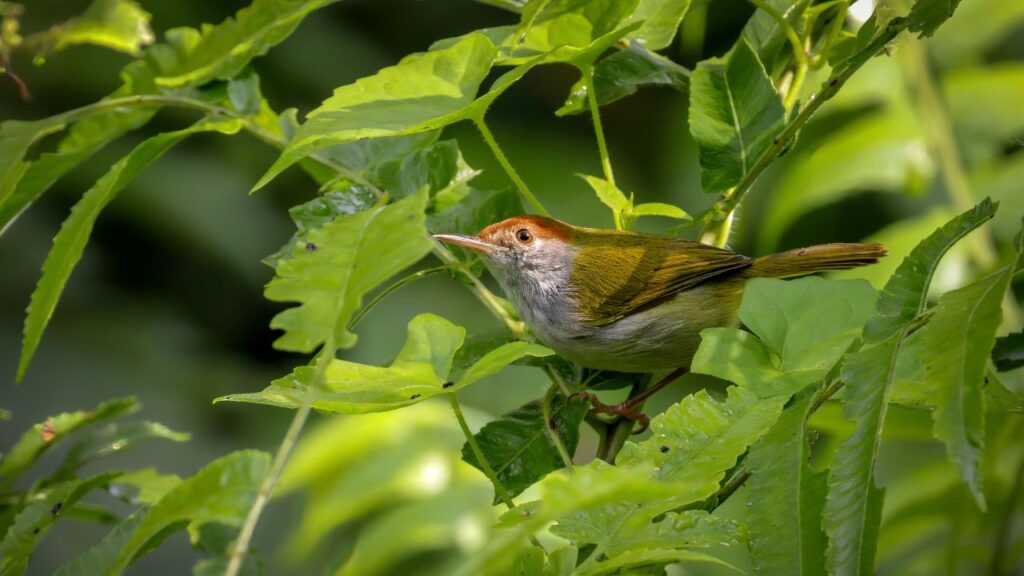
The common tailorbird is a small songbird found across tropical Asia and is famous for its fascinating nesting habits. These birds are shy by nature and often stay hidden in thick vegetation. Even so, their loud calls often give away their location.
What makes the tailorbird special is how it builds its nest.
It uses its beak like a needle
It stitches the edges of a large leaf together
Silk or plant fibers act as thread
The nest is shaped inside the folded leaf and lined with soft foliage. In the late 19th century, Edward Hamilton Aitken even observed tailorbirds happily using cotton when it was available.
The tailorbird’s nesting skill is so iconic that it appears in literature. In The Jungle Book, Rudyard Kipling describes a tailorbird and its mate carefully stitching leaves together and filling the nest with cotton and soft fluff.
This leaf-based nest blends perfectly with the surrounding plants, making it hard for predators to spot. The flexible design also allows the nest to move with the wind instead of breaking.
5. Osprey
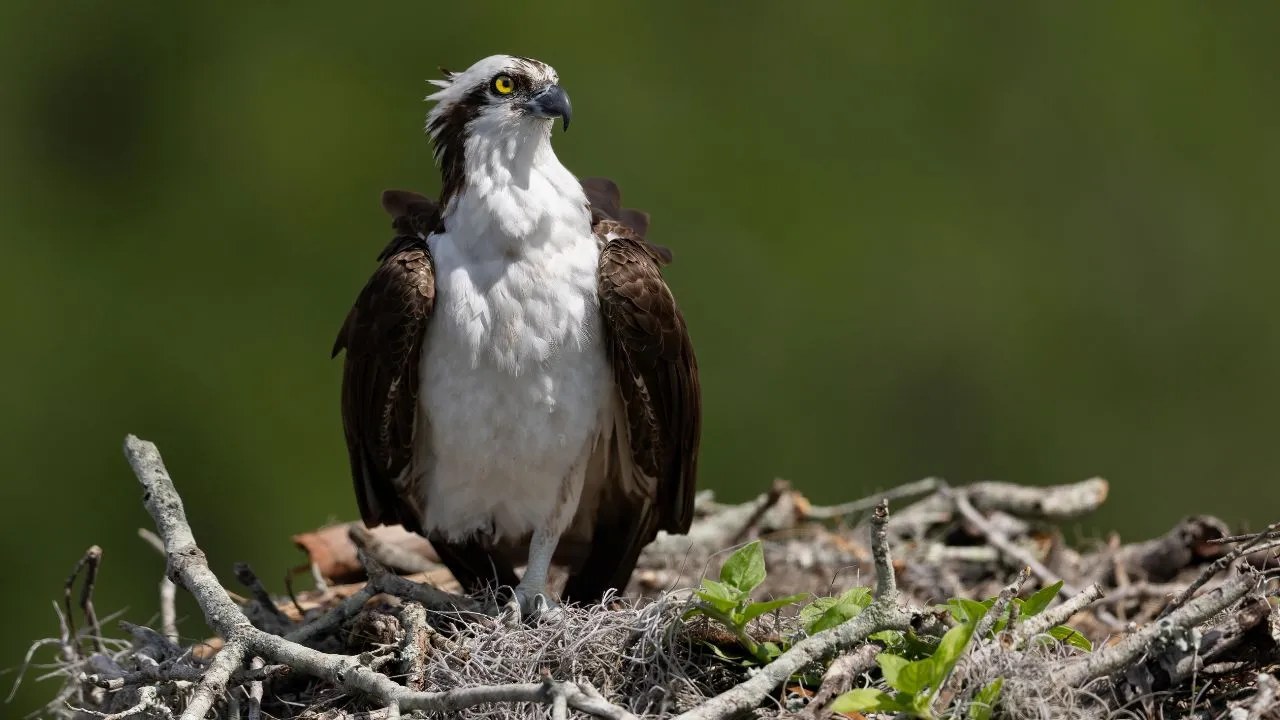
The osprey is a fish-eating bird commonly found near rivers, lakes, and coastal areas. It is well known for its fascinating nesting habits and its strong attachment to its nesting sites.
Once an osprey chooses a location, it often returns to the same spot year after year to raise its young, as mentioned by the Scottish Wildlife Trust.
Ospreys build large nests high above the ground on tall trees, cliffs, poles, or man-made platforms.
The nests are made mainly from thick sticks and branches
Softer materials like grass and bark are added inside
Old nests are reused and expanded every breeding season
Because of this, some nests grow extremely large over time.
Both the male and female work together to build and maintain the nest. Each season, they add more material to strengthen it. The high position keeps the nest safer from ground predators and flooding.
These sturdy nests are built to last and are often used for many years. Their size and durability reflect careful planning and teamwork.
6. Hornbill
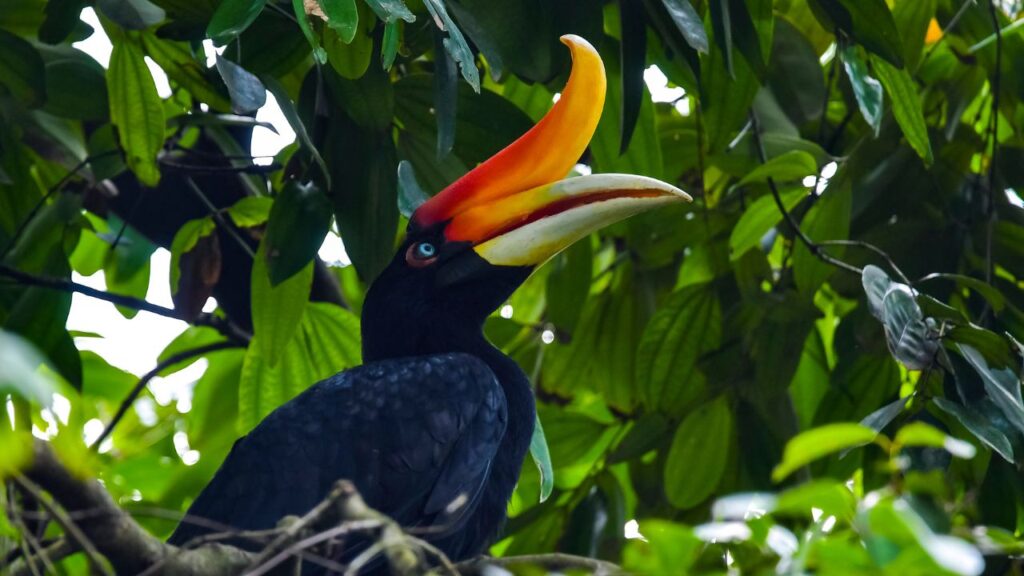
Hornbills are striking birds found in forests across Africa and Asia. They are famous for their unusual and fascinating nesting habits, which help protect their young in a clever way.
When it’s time to nest, the female hornbill finds a natural hollow or cavity in a tree. She then seals herself inside the cavity using a mixture of mud, droppings, and bits of food debris. Only a small slit remains open.
This narrow opening allows the male to pass food inside
It keeps the female, eggs, and chicks safe from predators and harsh weather
The female stays sealed inside throughout the entire incubation period and the first few weeks after the chicks hatch.
During this time, the male works tirelessly to bring food to the nest. He feeds the female and the growing chicks through the small slit in the sealed cavity. When the chicks are strong enough and the female has finished incubating, she breaks out of the nest to help care for her young.
This remarkable nesting behavior is a brilliant survival strategy. It protects the family from snakes, monkeys, and other predators. The hornbill’s sealed sanctuary is a perfect example of how birds adapt their nesting habits to stay safe and raise their young successfully.
7. Frigatebird

Frigatebirds are impressive seabirds known for their amazing flying abilities and fascinating nesting habits. They live near oceans and islands, often nesting in trees or bushes close to the shore. Their choice of nesting spots helps keep their eggs and chicks safe from many ground predators.
Frigatebirds build relatively simple nests compared to some other birds, but these nests are clever in their own way.
They collect sticks, twigs, and sometimes leaves to create loose, platform-like structures
These intricate nests are usually built high up in trees or shrubs, often in colonies where many birds nest close together
Although the nests look fragile and messy, they are effective at keeping eggs and chicks off the ground and away from danger.
Both parents share the responsibility of caring for their young. They take turns guarding the nest and flying out to catch fish and other food to bring back. Since frigatebirds spend much of their time soaring over the ocean, their nests act as safe resting spots during the breeding season.
One interesting fact about frigatebirds is that their chicks take a very long time to mature, according to Britannica.
They stay in the nest for several months, relying on their parents for food and protection until they are ready to fly. This long care period shows how important the nest is as a secure home for these young birds.
Conclusion
Birds have amazing nesting habits that help their eggs hatch safely despite many challenges. Some breeding birds even deal with brood parasites—other bird species that lay eggs in their nests.
To protect their young, birds build new nests, use false entrances, or choose hidden holes. These clever strategies help them survive threats from other animals, insects, and raptors.
However, human development and climate change are making nesting harder for many birds, especially endangered species. Still, during spring and summer, pairs of birds tend to their nests with care.
Multiple females may share nesting areas, and birds adapt by using sand, winter shelter, or other natural materials. Watching these nesting birds shows just how resilient and creative they are in protecting their future generations.
Some other species, like the Bald Eagle, Edible Nest Swiftlet, Cactus Ferruginous Pygmy Owl, Woodpecker, Penduline Tit, and Common Sparrow, also build nests that are worth checking out.
