




Birds have a remarkable ability to adapt, and some have truly mastered city living. Despite the noise, pollution, and busy streets, many bird species have learned to not only survive but thrive in urban environments.
They find food in unexpected places, use buildings as shelter, and even change their behavior to fit the fast pace of city life. This shows just how flexible and smart nature can be—even in the most human-dominated spaces.
These birds are experts at turning challenges into opportunities, proving that wildlife can flourish in places we might never expect. Their presence brings a little bit of wildness and wonder into our daily city routines.
So, next time you hear a bird chirping near your window or see one darting between tall buildings, remember: these creatures are part of a growing urban ecosystem.
They’ve rewritten the rules of survival and found new ways to live alongside us, adding life and color to the concrete jungle. Let’s take a look at how these amazing birds make cities their home!
Key Takeaways
See how Pigeons, Crows, and Mockingbirds thrive in busy city life.
Discover how birds change their songs and homes to fit urban spaces.
Meet urban hunters like the Great Horned Owl and lively Pied Wagtails.
Find out why city birds add wild charm to our concrete jungles.
Birds that Can Live in Urban Environments
1. Feral Pigeon
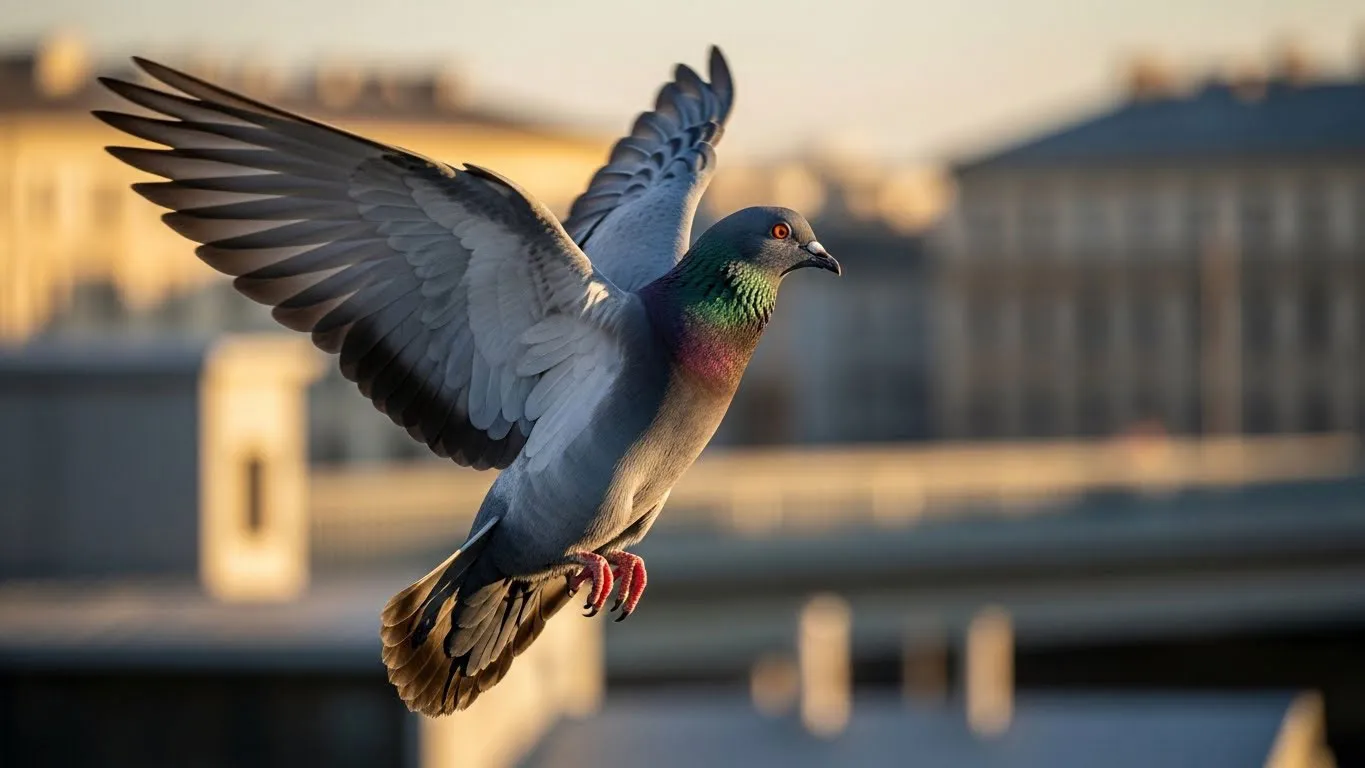
The feral pigeon, also known as the city pigeon or street pigeon, is one of the most familiar birds found in urban environments. These birds come from domestic pigeons, which were originally bred from wild rock doves.
While they have the same shape and size as their wild ancestors, feral pigeons show a much wider variety of colors and feather patterns. Their feathers tend to be darker and less shiny, sometimes appearing in white, brown, or mixed colors without the usual blue, green, or purple iridescence.
Why Are Feral Pigeons So Common in Cities?
Feral pigeons have become a major presence in towns and cities, especially in the UK, but they also appear in rural areas near farms.
Their success in cities is largely due to their close relationship with humans, as they depend heavily on people for food. This reliance has made them a serious pest in some places, where large groups gather and cause damage to buildings and public spaces.
Key Facts About Feral Pigeons
Descended from domestic pigeons that escaped or were released into the wild
Share the same species as wild rock doves and can interbreed freely
Show a wide range of feather colors and patterns, often darker than wild ancestors
Depend on humans for food and shelter, especially in cities
Can be found both in busy urban areas and near rural farms
Considered pests in many cities due to their large populations and habits
2. House Sparrow
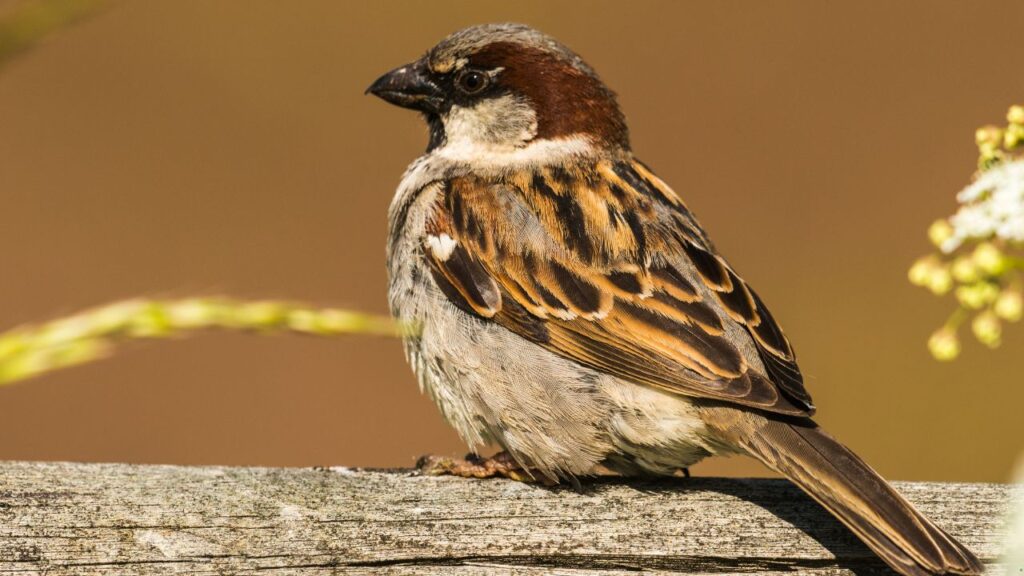
Originally from Europe and the Middle East, the house sparrow has become one of the most common birds in cities around the world. These small, lively birds thrive on food scraps and find shelter in the nooks and crannies of buildings.
Their cheerful chirps are a familiar sound in urban streets, reflecting how well they have adapted to city life. House sparrows are social and often move in flocks, darting effortlessly between cars and people.
Why House Sparrows Thrive in Cities
RSPB says that House sparrows have lived alongside humans for centuries. They originally fed on spilled grain near horse-drawn stables, but have since adapted to modern urban environments.
They eat almost anything—from discarded food to insects and birdseed—and nest in any available cavity, including streetlights and signs. Studies show city sparrows sing at higher pitches to rise above traffic noise and have stronger immune systems to handle pollution better than rural sparrows.
Quick Facts About House Sparrows
Native to the Middle East, now found on six continents
Highly social, often seen in groups
Adapted to urban noise by changing their song pitch
Nest in building crevices, streetlights, and other urban spots
The population declined in parts of the UK, but remains common in many cities
Known for taking advantage of human waste and leftover food
3. Starling
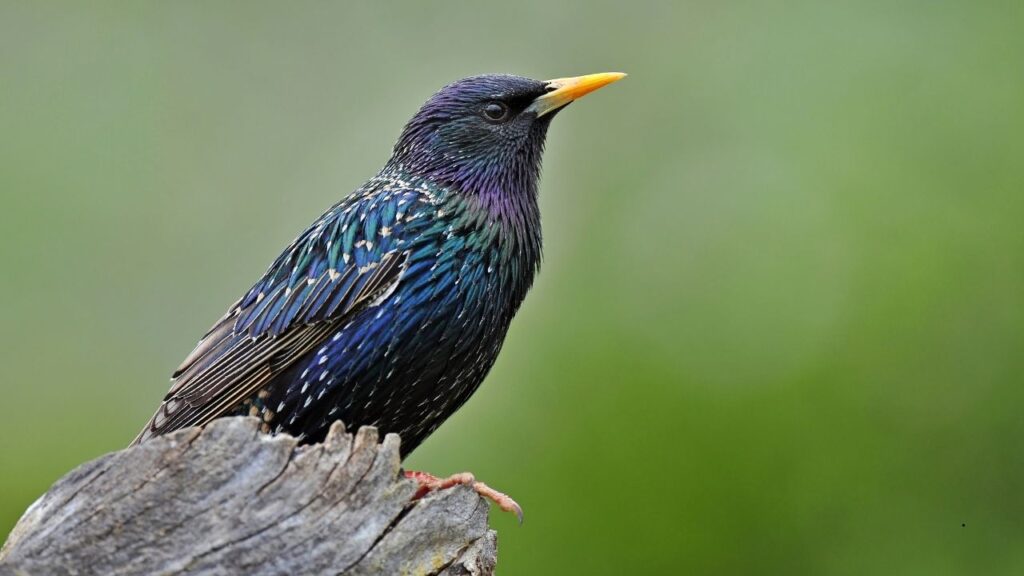
The starling is a social bird often seen in large, noisy groups. Its feathers are mostly black but shine with beautiful purple and green colors during the breeding season.
In winter, its feathers change, showing white tips that give it a speckled look. Starlings are common visitors to gardens all year round, and their numbers increase in winter when birds migrate from mainland Europe.
Why Starlings Thrive in Cities
Starlings are smaller than blackbirds and have a short tail, pointed head, and triangular wings. They fly fast and fly straight, but on the ground, they walk and run confidently.
These birds are excellent mimics, able to copy a wide range of sounds, including other birds and even machines. They often nest in the eaves of houses, filling the city with their varied and impressive songs.
Quick Facts About Starlings
Found in gardens year-round, with winter numbers boosted by migrants
Breeding plumage shines with iridescent purples, greens, and blues
Feed mainly on soil insects but also visit garden feeders
Known for spectacular aerial displays in large flocks during winter
Social and noisy, often seen in large groups
Their mimicry skills make their song unique and interesting
4. American Crow
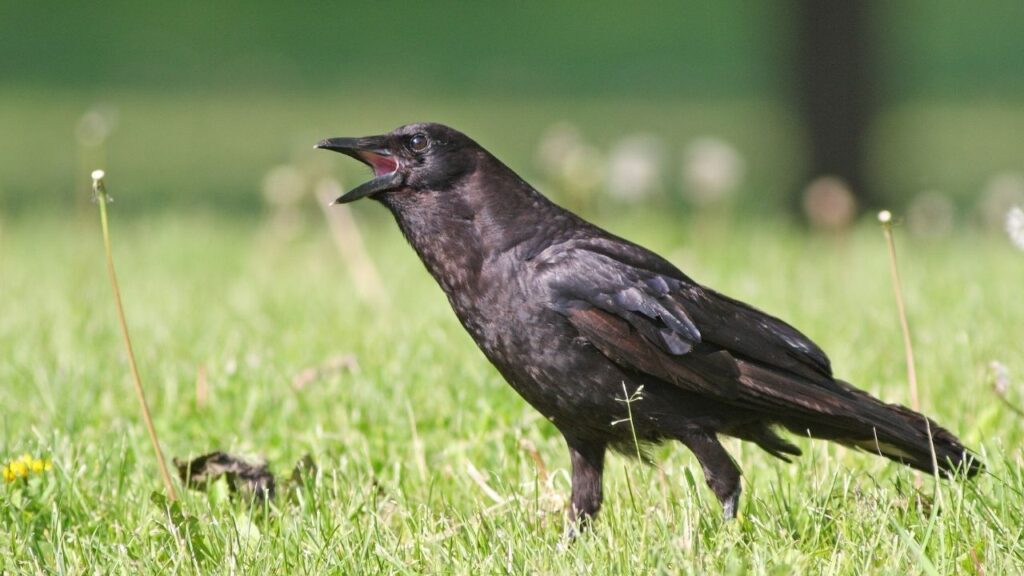
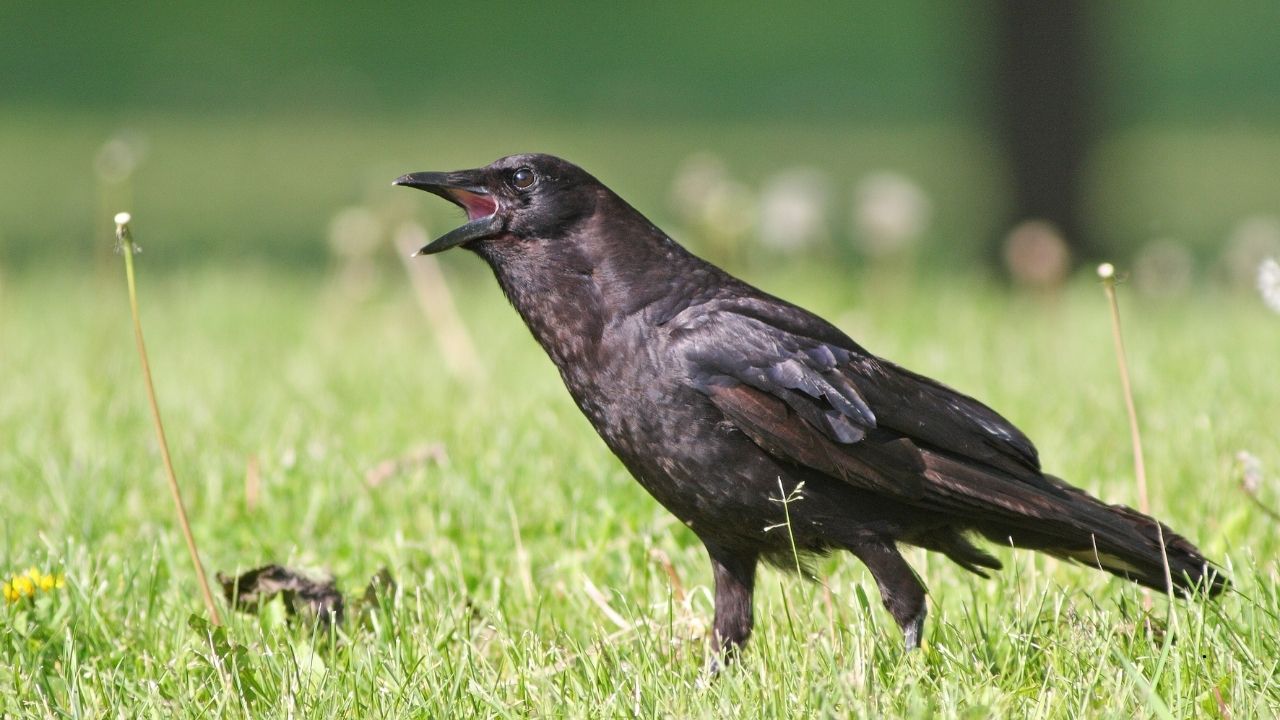
The American crow is a common and familiar sight in cities and towns across North America. These all-black birds are known for their loud, hoarse cawing and striking intelligence.
They have adapted well to urban life, often gathering in large groups and nesting high in city trees. Their ability to solve problems and use tools helps them find food in the most unexpected places.
How American Crows Thrive in Cities
According to the National Audubon Society, American crows are highly intelligent birds. Studies show they can use cars to crack nuts and even recognize human faces, remembering those who have threatened them.
Their diet is flexible, including everything from discarded fast food to small animals and insects. Urban crow populations have been growing steadily, especially in cities where food is plentiful and predators are fewer.
Quick Facts About American Crows
Known for loud, distinctive cawing sounds
Use urban tools and problem-solving skills to find food
Can recognize and remember individual humans
Form large communal roosts, sometimes with thousands of birds
An adaptable diet includes human food, insects, small animals, and garbage
Flight features broad feathers and a rounded tail tip, different from those of ravens
5. Northern Mockingbird
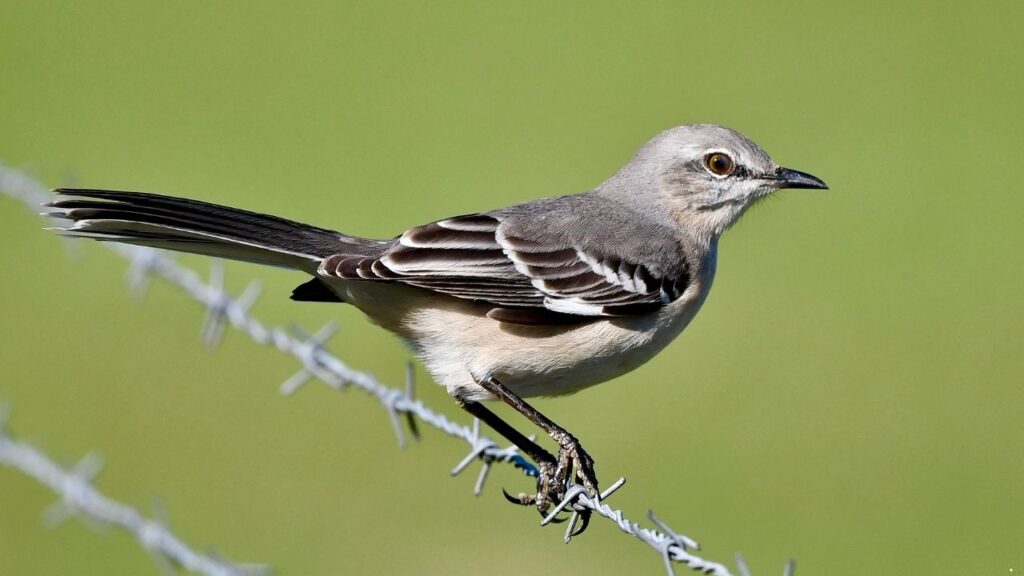
The Northern Mockingbird is a common and bold bird thriving in urban and suburban areas across North America. Known for its remarkable singing ability, a single male can learn over 200 different songs.
These songs include not just bird calls but also urban sounds like car alarms and phone ringtones. This vocal talent helps them stand out and defend their territories in parks, gardens, and city landscapes.
How Northern Mockingbirds Adapt to Urban Life
Northern Mockingbirds are smart and tough. They aggressively defend fruiting trees and shrubs where they build nests, often attacking cats and humans that get too close.
Research shows they can recognize individual people who have disturbed their nests, reacting more strongly to them than to strangers.
They also adapt their diet to city life, eating urban berries and other fruits. In cities, they build nests lower to the ground and sing more often at night, where there is artificial light.
Quick Facts About Northern Mockingbirds
Known for a wide variety of songs, including imitations of urban noises
Defend their territories fiercely year-round
Recognize and respond aggressively to humans who threaten their nests
Urban diet includes insects and city-planted berries
Nest lower in the city vegetation compared to rural areas
Often sing at night in brightly lit urban spaces
6. Great Horned Owl
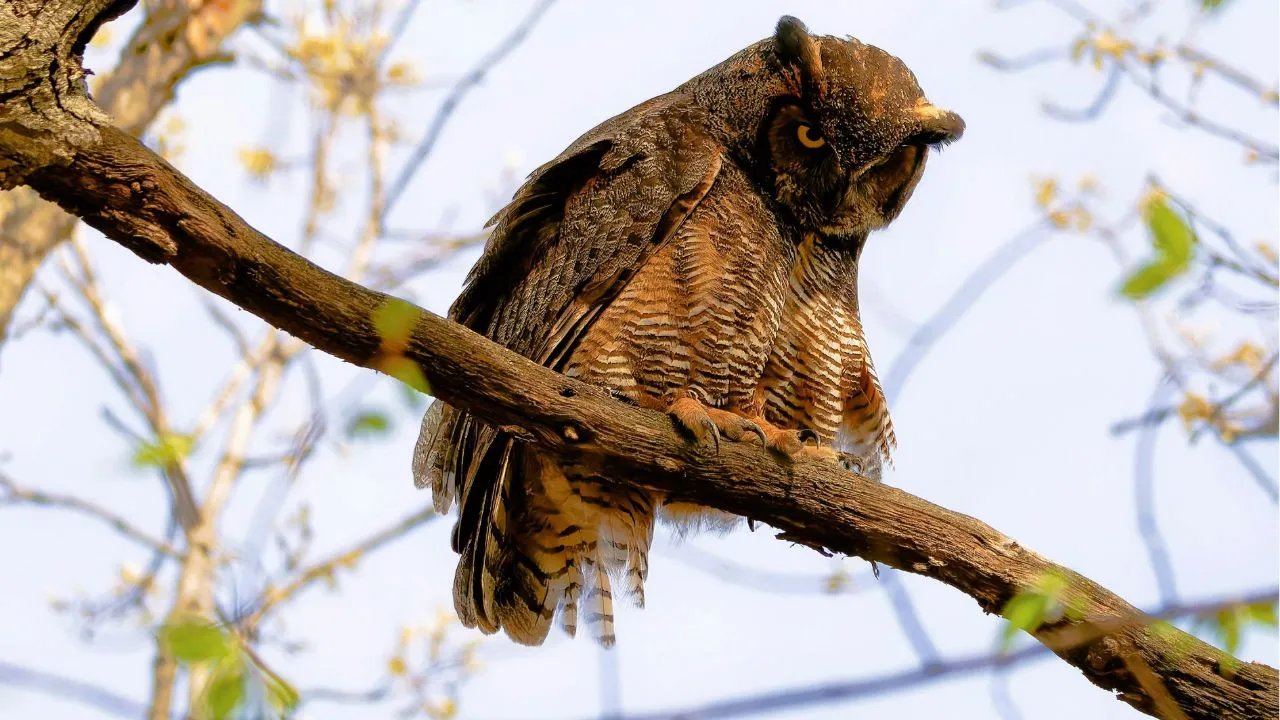
The Great Horned Owl is one of North America’s most powerful and adaptable birds of prey. Known for its wide yellow eyes and distinctive ear tufts, this majestic owl has found a place in city parks, golf courses, and other urban green spaces.
It hunts silently at night, preying on rodents and small animals that thrive in cities. Its deep hooting calls add a mysterious touch to the urban night.
Urban Adaptations and Hunting Success
Despite its reputation as a wilderness hunter, the Great Horned Owl thrives in urban areas by using city parks, cemeteries, and golf courses as hunting grounds. It nests in tall trees but can also use abandoned buildings, electrical substations, and even planter boxes on rooftops.
Birdfy mentions that its serrated feathers allow silent flight, making it an efficient nighttime predator. Studies show that urban populations have increased by about 20% since 2000, with smaller territories, thanks to the abundance of prey.
Quick Facts About Great Horned Owls
Found in many habitats, including forests, deserts, wetlands, and cities
Known for silent flight and powerful hunting skills
Prey ranges from small rodents to larger animals like rabbits and snakes
Nest in mature trees and urban structures
Urban populations are growing, benefiting from abundant prey
Their deep hoots are a familiar sound on winter nights
7. Pied Wagtail
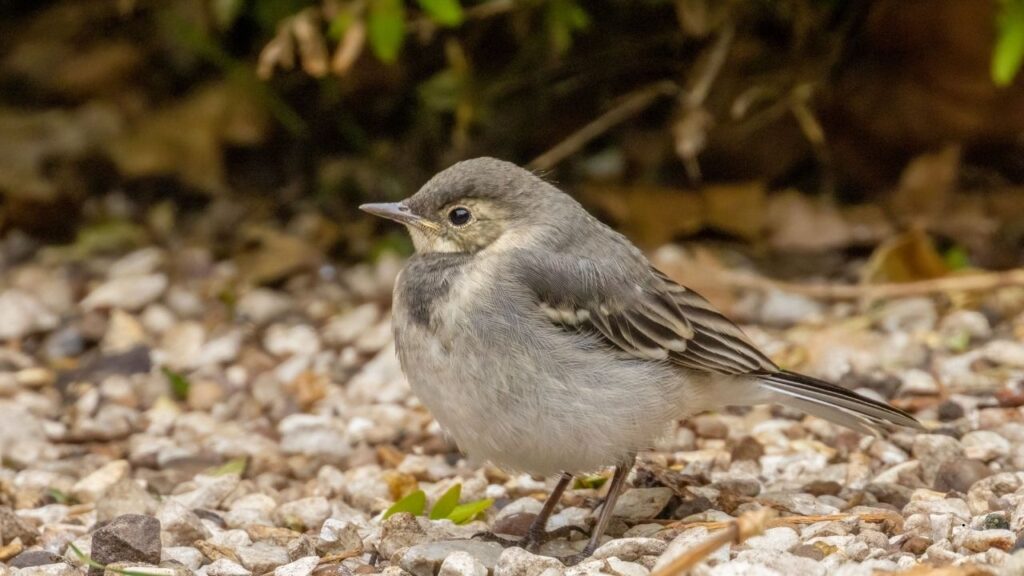
The pied wagtail is a small, lively bird known for its striking black and white plumage and long, wagging tail. Common across the UK and Ireland, this bird loves to live near humans and often stays close to water sources.
It belongs to a subspecies of the white wagtail and is easily recognized by its black crown, white face, and distinctive black bib.
How Pied Wagtails Thrive in Cities
Pied wagtails are confident and active, often seen darting across car parks, pavements, and rooftops in search of insects. They are noisy during flight, calling out as they bounce along.
At dusk, they gather in large groups, forming roosts in city centers. Their adaptability to urban spaces and fearless attitude make them a familiar and charming sight in towns and countryside alike.
Quick Facts About Pied Wagtails
Belongs to a subspecies common in the UK and Ireland
Recognizable by black and white markings and a wagging tail
Often seen near water and human habitation
Active insect hunters, frequently spotted in urban areas
Form large roosts in city centers at dusk
Known for their bouncing flight and distinctive calls
Conclusion
Urban birds play a vital role in shaping urban ecology and supporting urban biodiversity worldwide. More than half of the planet’s population now lives in cities, making green spaces with native vegetation crucial for nesting sites and food for many species.
Researchers and city planners have observed that certain species are attracted to these areas, where their territorial behaviors and nesting habits can be studied. Previous studies show urbanization affects bird sightings and the characteristics of species found in backyards and parks, with some common site species adapting well while others remain rare.
On a global scale, urban birds resemble their rural counterparts but also show unique adaptations to city life. For example, during spring, eggs are laid earlier in some urban locations, linked to environmental cues.
Researchers continue studying these changes to understand how urbanization shapes bird populations and their survival. By protecting suitable habitats, city planners can help many species thrive, making cities vibrant ecosystems where wildlife and people coexist.
