




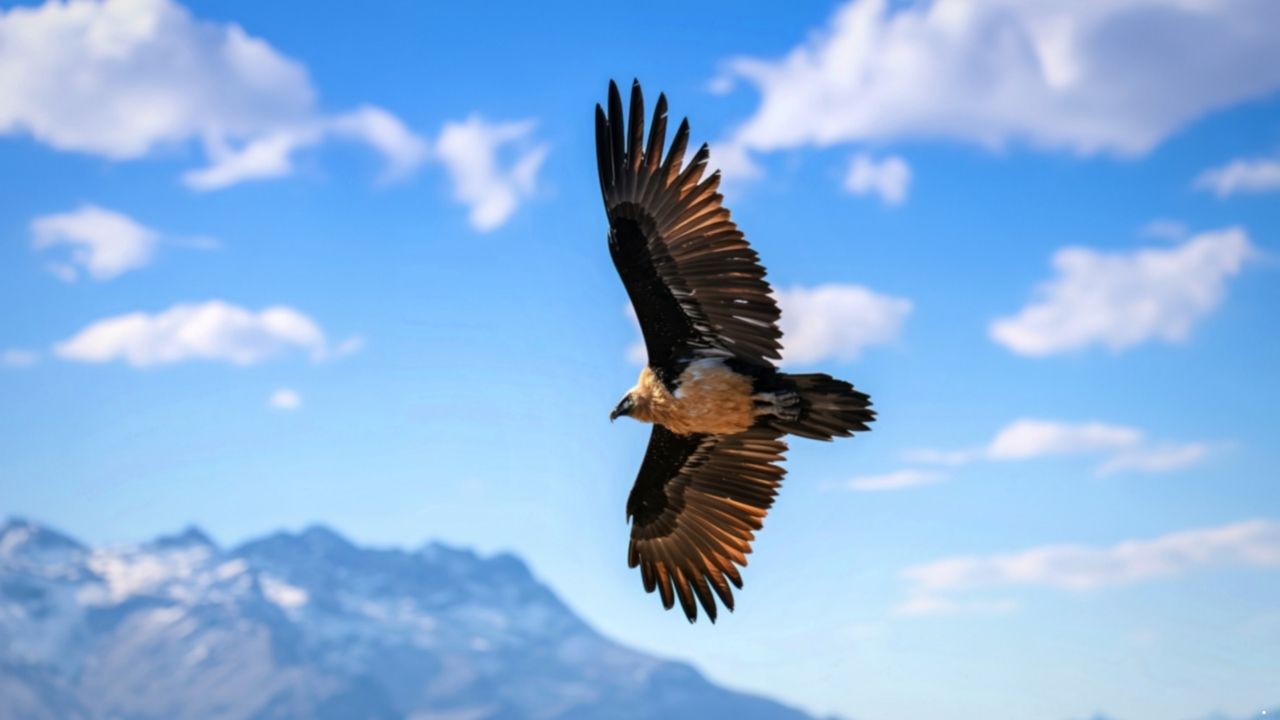
Birds that live and fly at high altitudes are truly some of nature’s most remarkable creatures. They navigate thin air where oxygen is scarce, and temperatures can drop dramatically — places that would challenge almost any other animal.
Yet, these birds don’t just survive; they thrive, showing incredible adaptability and resilience in some of the planet’s toughest environments.
What makes these birds so special is their unique ability to extract oxygen efficiently despite the thin air. They have evolved amazing physical traits like enhanced lung function and powerful muscles that allow them to maintain energy and stamina at heights where most creatures would struggle to breathe.
Beyond their impressive biology, high-altitude birds also display fascinating behaviors and migration patterns that help them make the most of their environment.
In this article, we’ll explore what makes these feathered adventurers so extraordinary and how they’ve adapted to conquer the challenges of life above the clouds.
Key Takeaways
See how the Bar-Headed Goose and Rüppell’s Griffon Vulture push flight to breathtaking limits.
Meet mountain masters like the Himalayan Snowcock and Snow Partridge that vanish into rocky terrain.
Watch the Andean Condor dominate the skies by riding powerful mountain winds.
Discover why the Alpine Chough can live, fly, and nest where few birds dare.
Birds That Can Live at High Altitudes
1. Bar-Headed Goose
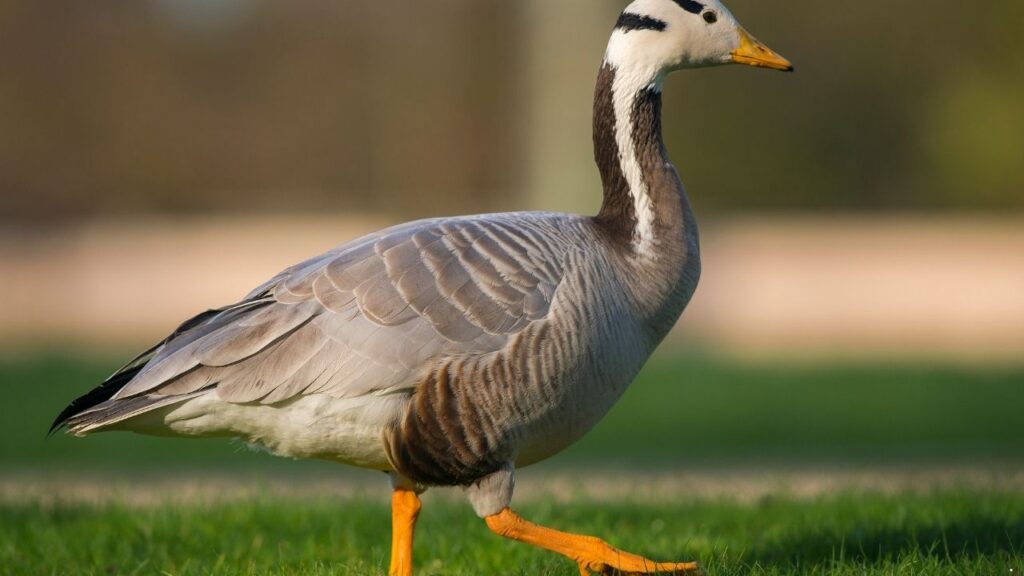
The bar-headed goose is a remarkable bird native to Central Asia. It lives by high-altitude lakes where it feeds on short grasses. This goose is famous for its extraordinary migration across the towering mountain ranges of Asia.
Amazing Flight and Migration
Migrates from Tibet, Mongolia, Russia, and Kazakhstan to South Asia each winter
Usually follows mountain valleys, staying at lower altitudes during most of its journey
Occasionally flies at much higher altitudes, even over some of the tallest peaks
Scientists are still curious why it makes these rare, extreme altitude flights
These geese are built to handle the thin air of the mountains. Their unique flight patterns help them conserve energy while crossing tough terrain.
Special Adaptations for Thin Air
The bar-headed goose has a larger lung capacity than most birds. This allows it to take in more oxygen in low-pressure air.
Its pale grey body, orange beak, and striking black bars on the head make it easy to recognize. Despite their impressive flying skills, these birds don’t look like typical athletes — a fact that surprises many scientists.
2. Himalayan Snowcock
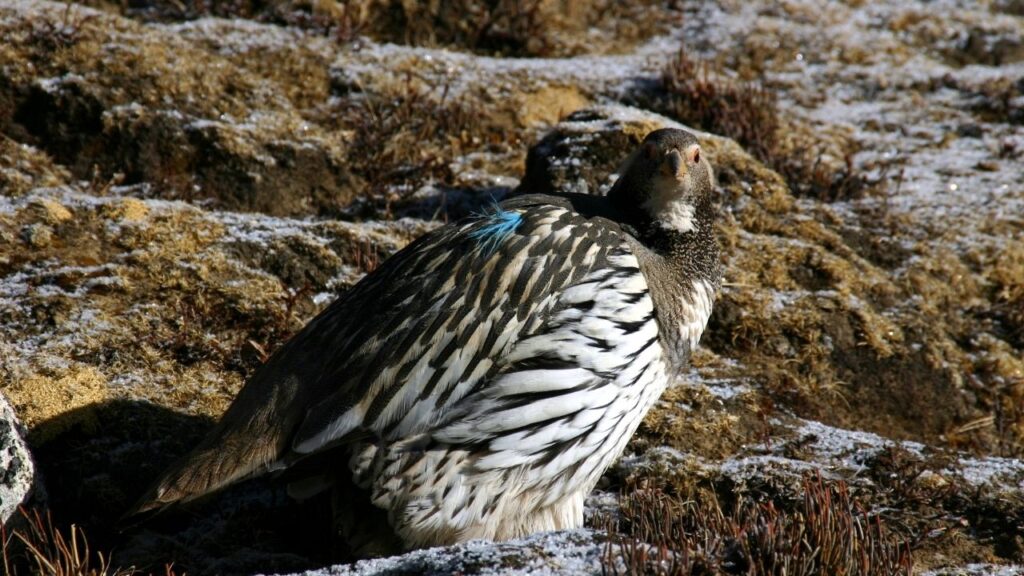
The Himalayan Snowcock is a striking bird native to the high mountain ranges of the Himalayas and the nearby Pamir region.
It lives in rocky alpine pastures and steep cliffs, blending perfectly with its surroundings thanks to its camouflaged feathers. This bird is well adapted to life in rugged, high-altitude environments where few animals can survive.
Unique Features and Behavior
Large game bird with a gray body and white throat
Distinctive brown lines run down its neck
Known for being noisy and vocal in its mountain home
Uses steep slopes and cliff ledges to hide and escape predators
The Himalayan Snowcock’s coloring helps it stay hidden among rocks. It is also known to be somewhat tame in protected areas, sometimes coming close to human settlements like monasteries, especially in winter.
A Bird Beyond Its Native Range
Interestingly, Cornell Lab mentions that this mountain bird was introduced to the Ruby Mountains in Nevada, USA, in the 1960s.
A wild population has since established itself there, proving its ability to adapt to other high-altitude environments beyond its native home. This adaptability makes the Himalayan Snowcock a true champion of life in the mountains.
3. Andean Condor
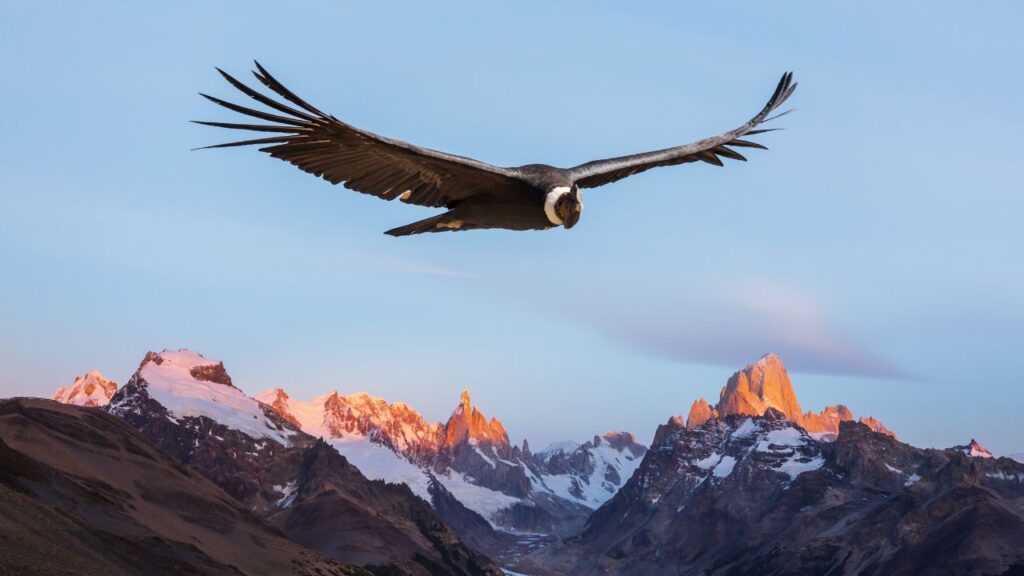
The Andean condor is one of the largest flying birds in the world and a true master of high-altitude flight. It lives in the Andes mountains and along the Pacific coast of South America. Known for its massive wingspan and soaring style, this bird is perfectly built for life in the mountains and open skies.
Adaptations and Habitat
Soars over mountain ridges, coasts, and deserts using strong wind currents
Prefers windy areas where it can glide effortlessly without much flapping
Adults have a distinctive white collar and large white patches on their wings
Often seen alone or in pairs, but can gather in groups at roosts or feeding sites
The Andean condor uses air currents to stay aloft, conserving energy while scanning for food across vast landscapes.
Conservation and Importance
This bird is more than just a symbol of the mountains. Conservation efforts by groups like the Peregrine Fund help protect Andean condor populations across several South American countries.
These programs support research, captive breeding, and community education to ensure this magnificent bird continues to thrive.
4. Bearded Vulture
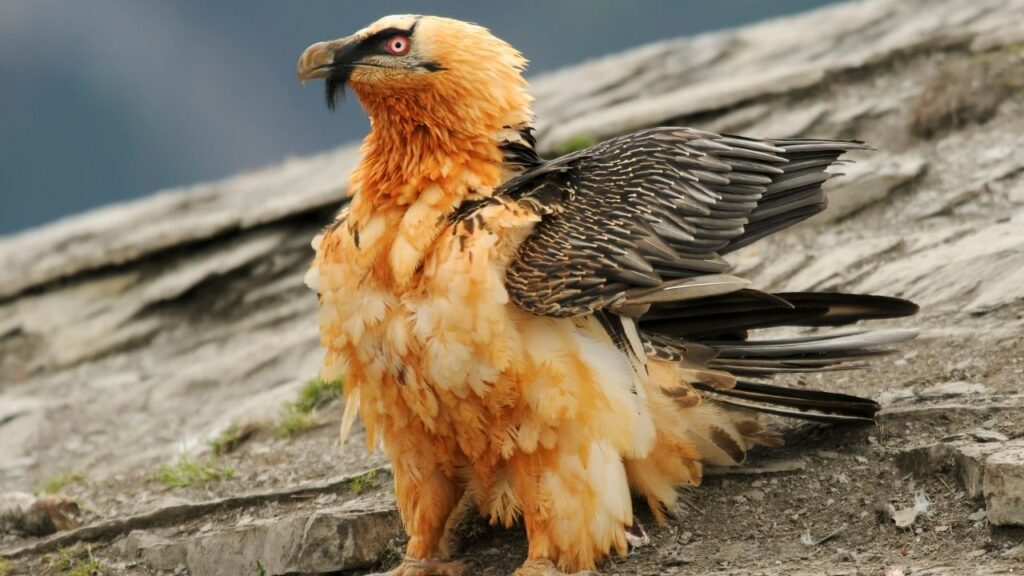
The Bearded Vulture (Gypaetus Barbatus) is a fascinating bird of prey that lives in high mountain ranges across Europe, Asia, and Africa.
It prefers rocky cliffs and ledges where it can soar and search for food. Unlike other vultures, this bird feeds mainly on bones rather than flesh, making it truly unique among scavengers.
Unique Feeding Habits
Eats mostly bones found in animal carcasses
Swallows small bones whole, using strong stomach acid to digest them
Drops large bones from the air to break them into smaller pieces
Feeds on broken bone fragments after smashing them
This remarkable feeding behavior helps the Bearded Vulture survive in harsh mountain environments where food can be scarce.
Conservation and Range
Birda mentions that Bearded Vultures are found across the Himalayas, the Alps, the Pyrenees, and other mountainous regions. They are Europe’s rarest vultures, but are slowly recovering thanks to conservation efforts.
Groups like the Peregrine Fund work to study and protect these birds through research, education, and anti-poisoning programs. These efforts have helped the population to rise in recent years.
5. Snow Partridge
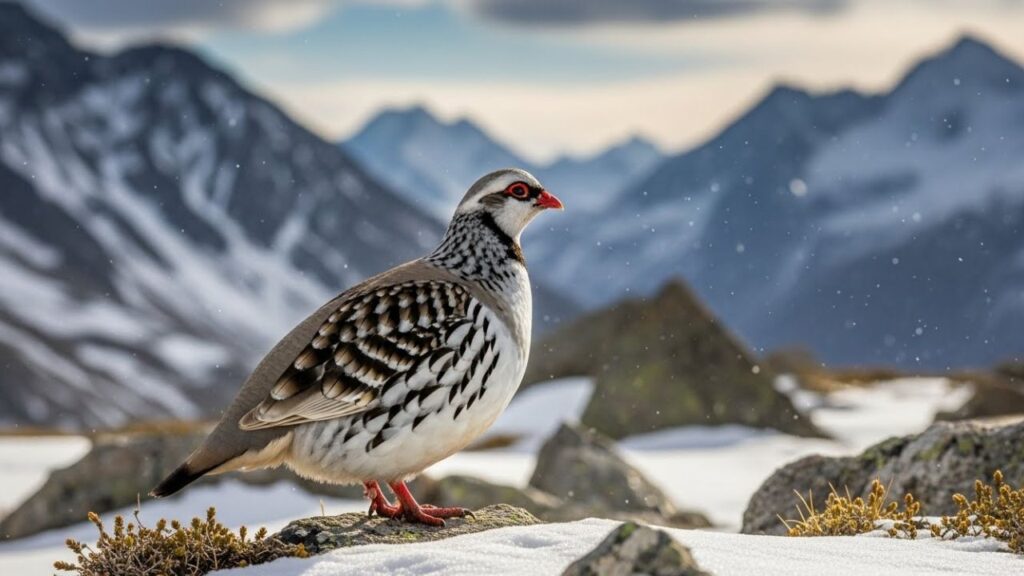
The Snow Partridge is a well-camouflaged bird that lives in high-altitude Himalayan regions across Pakistan, China, India, and Nepal. It favors alpine pastures, mountain ridges, and meadows above the treeline. This bird blends perfectly with the rocky and grassy landscapes it calls home.
Habitat and Behavior
Lives on stony hillsides, open mountain ridges, and alpine meadows
Often seen in small groups foraging in exposed areas like cliffs and rocky ridges
Known for its high-pitched, squeaky song, often sung by multiple birds at once
Males and females look alike, but males have a small spur on their legs
The Snow Partridge is less wary than other mountain birds, making it easier to spot despite its excellent camouflage.
Conservation Status
Although its population is slowly declining due to habitat loss and hunting, the Snow Partridge is still considered a species of Least Concern. Its large range and stable numbers mean it is not currently threatened. Conservation efforts continue to monitor and protect this unique mountain bird.
6. Rüppell’s Griffon Vulture
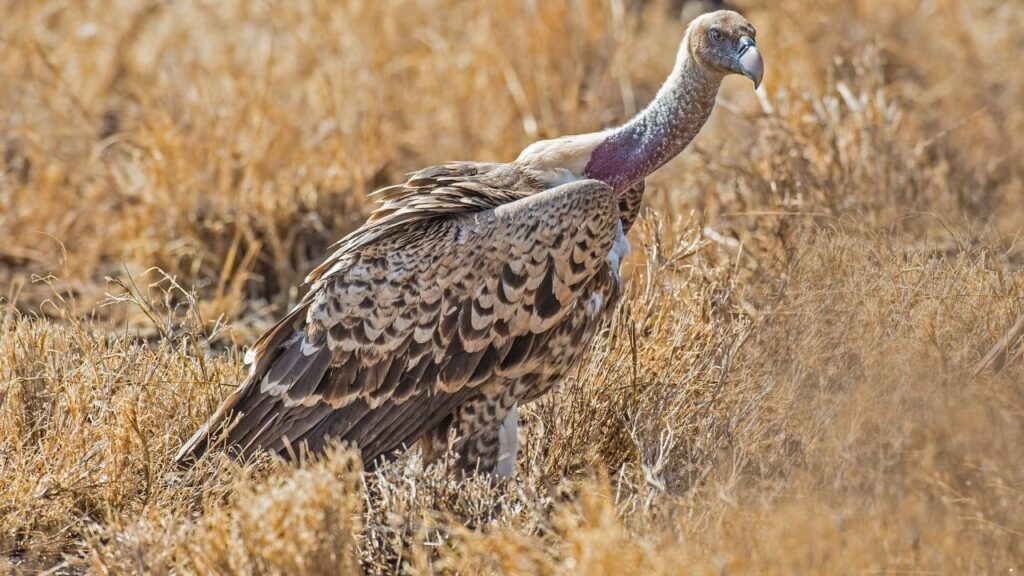
Rüppell’s Vulture is known as the highest-flying bird in the world. It lives mainly in the Sahel region of central Africa. Even in thin air, this powerful vulture can soar with ease, showing how well it is adapted to life at extreme altitudes.
Built for Thin Air
Has a unique hemoglobin that helps absorb oxygen efficiently
Soars silently over grasslands, cliffs, and ridgelines
Uses sharp eyesight to scan the ground from great heights
Nests on cliffs and gathers at carcasses to feed
Adults have dark bodies with pale feather tips that give a scaled look. Juveniles are darker and show pale markings on their wings. Both males and females look similar, with strong, pale beaks and a light collar around the neck.
Conservation Concerns
Sadly, this remarkable bird is now listed as Critically Endangered, as mentioned by BirdLife. Its numbers are falling due to poisoning, habitat loss, hunting, and collisions with power lines.
Conservation groups have been studying this species for decades, using tracking and education programs to protect it. Saving this vulture is vital, as it plays an important role in keeping ecosystems healthy.
7. Alpine Chough
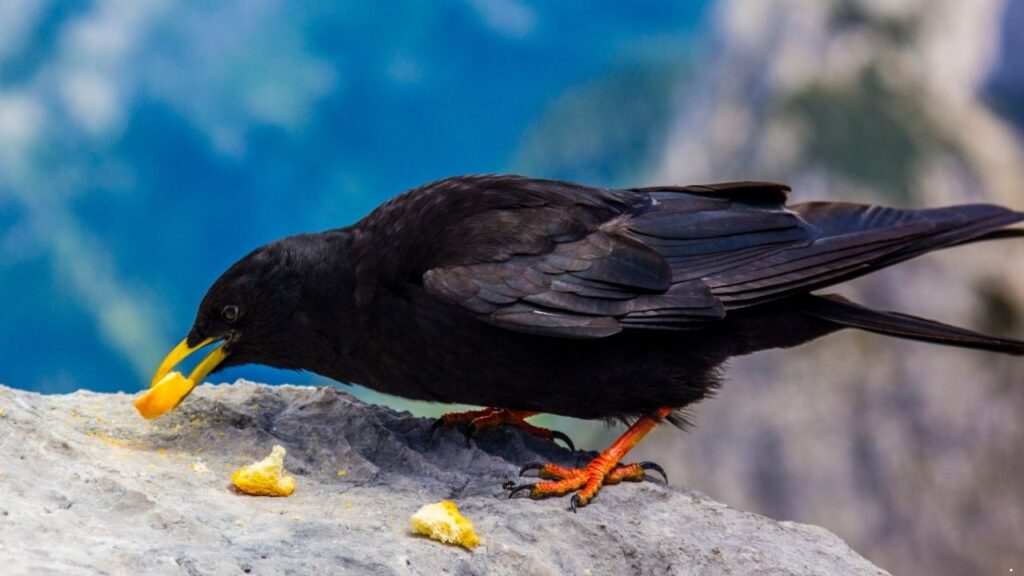
The Alpine Chough (Pyrrhocorax Graculus) is a striking bird from the crow family that thrives in high mountain regions.
It breeds across southern Europe, North Africa, and Central Asia, extending as far as Nepal. Also known as the yellow-billed chough, it is easily recognized by its glossy black feathers, bright yellow bill, and red legs.
Life in Thin Mountain Air
Lives and breeds in some of the world’s highest mountain ranges
Often seen flying over tall peaks, including the Himalayas
Known as the highest-nesting bird in the world
Eggs are specially adapted to low-oxygen conditions
The eggs of the Alpine chough are uniquely designed to survive in thin air. They allow better oxygen intake and reduce water loss, helping chicks develop in extreme environments.
A True High-Altitude Specialist
This bird is one of only two species in its genus. It nests higher than almost any other bird and is perfectly suited to mountain life. Its ability to fly and breed in such harsh conditions makes the Alpine chough a true symbol of survival at high altitudes.
Conclusion
Birds that live and fly at high altitudes showcase incredible physiological adaptations that allow them to thrive where oxygen is thin and solar radiation is intense. Their broad wings and powerful flight muscles help them reach speeds and altitudes that set records—some even soaring near Mount Everest.
With enhanced cardiac output and specialized lungs, these birds efficiently manage the challenges of life far above sea level, making their journeys across rugged trails and mountain ranges truly remarkable.
These high-flying birds play a vital role in the ecosystems they inhabit, from forests to open skies. Many spend hours in flight, hunting prey or traveling in flocks, often guided by radar-like keen eyesight.
Their presence in such extreme environments is an example of nature’s resilience, inspiring awe and reminding us of the diverse wildlife that shares our planet—even in the most challenging places on Earth.
There are other species as well that ly at high elevations. These include the Golden Eagle, Peregrine Falcon, Common Crane, Bar-tailed Godwit, White Stork, and Whooper Swan.
