




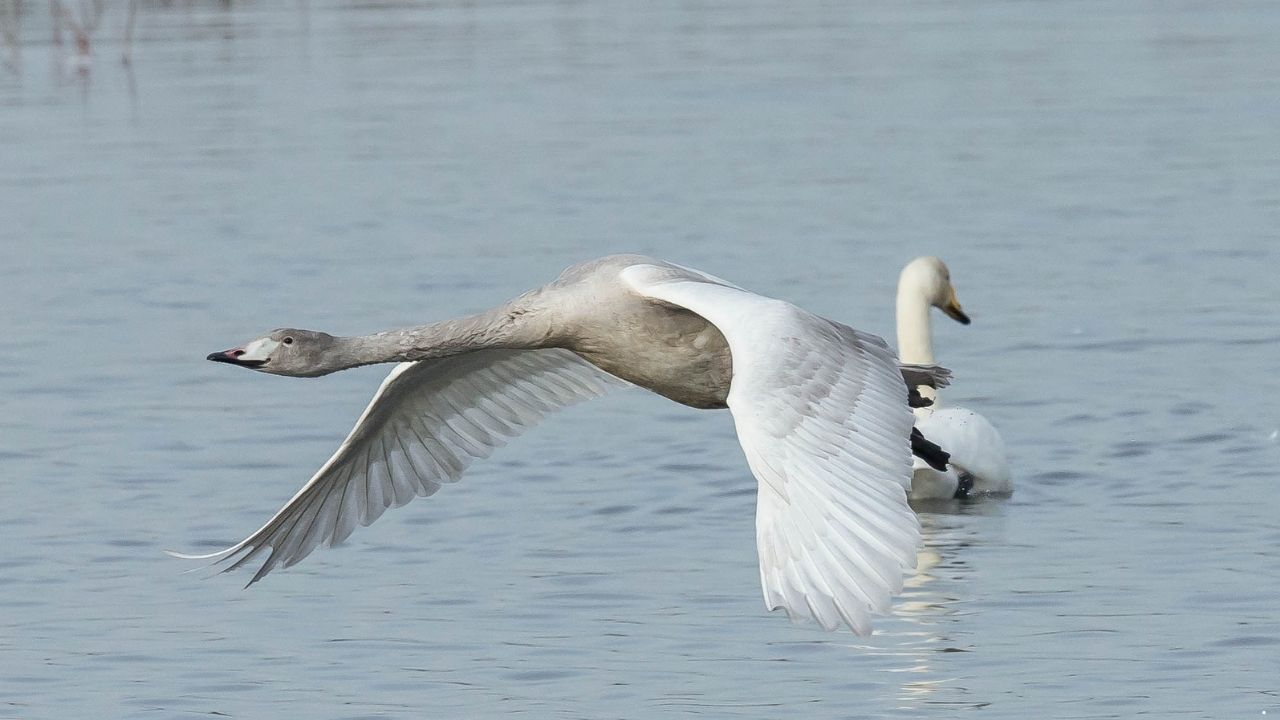
Birds have been mastering the skies for millions of years, evolving incredible wings that let them soar to amazing heights. Some don’t just fly — they glide effortlessly where the air is thin and the temperature drops, reaching altitudes that most of us can hardly imagine.
In fact, one bird has been recorded flying as high as 37,000 feet, which is higher than many commercial airplanes cruise. At these heights, oxygen is scarce, and the air is freezing cold, yet these birds have unique adaptations that allow them to breathe and survive where few others can.
Flying at such extreme altitudes gives these birds advantages — whether it’s catching the best air currents, traveling long distances during migration, or avoiding predators on the ground. Whatever the reason, their incredible journeys high above the earth never fail to inspire wonder.
Let’s take a closer look at the birds that rule the skies from incredible heights and uncover the secrets behind their soaring success.
Key Takeaways
Find out how birds like Rüppell’s vulture and bar-headed goose fly higher than airplanes using amazing natural tricks.
Uncover the epic long-distance flights of cranes and godwits soaring across continents at jaw-dropping heights.
Meet mountain masters like the alpine chough and bearded vulture that thrive where few birds dare to go.
See how white storks and whooper swans use clever teamwork and air currents to fly smarter and farther.
Birds That Can Fly the Highest
1. Ruppell’s Griffon Vulture
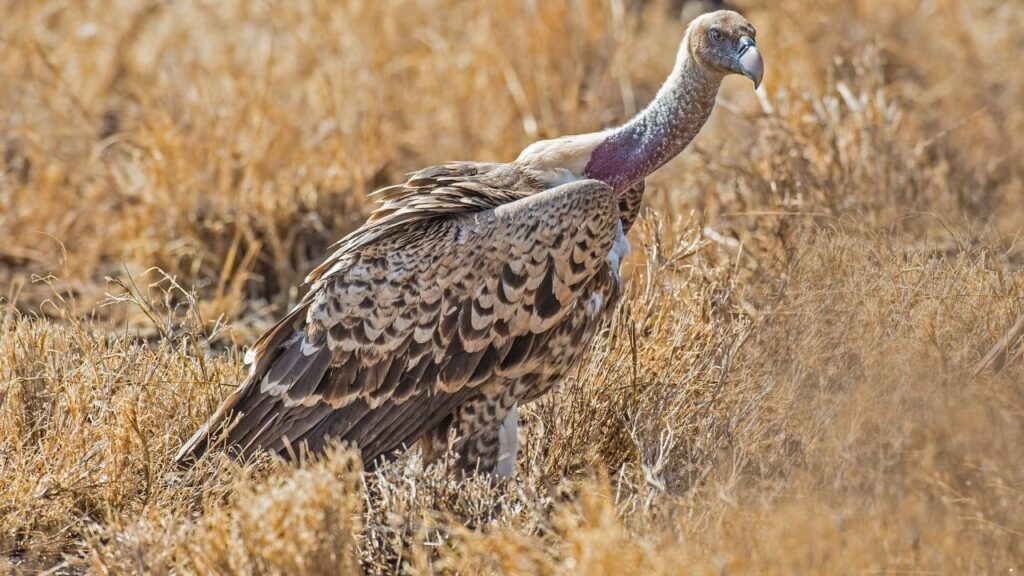
Rüppell’s vulture holds the incredible record for flying higher than any other bird in the world. Found mainly in the Sahel region of central Africa, this bird uses its exceptional eyesight to scan vast areas from extreme heights.
Once it spots a meal, it swoops down swiftly to catch its prey. Its ability to fly so high sets it apart in the bird kingdom.
What Helps It Fly So High?
One of the secrets behind Rüppell’s vulture’s high-altitude flights is its unique hemoglobin. According to The Peregrine Fund, this special blood protein allows the bird to take in oxygen efficiently, even when the air is thin.
At these great heights, the temperature can be freezing cold, yet this vulture is well-adapted to survive and thrive in such harsh conditions.
Key features of Rüppell’s vulture include:
Brown or black feathers with a white underbelly
Fluffy head and neck with a distinct white collar
Amber to yellow eyes
Strong, pale beak designed for tearing food
2. Common Crane
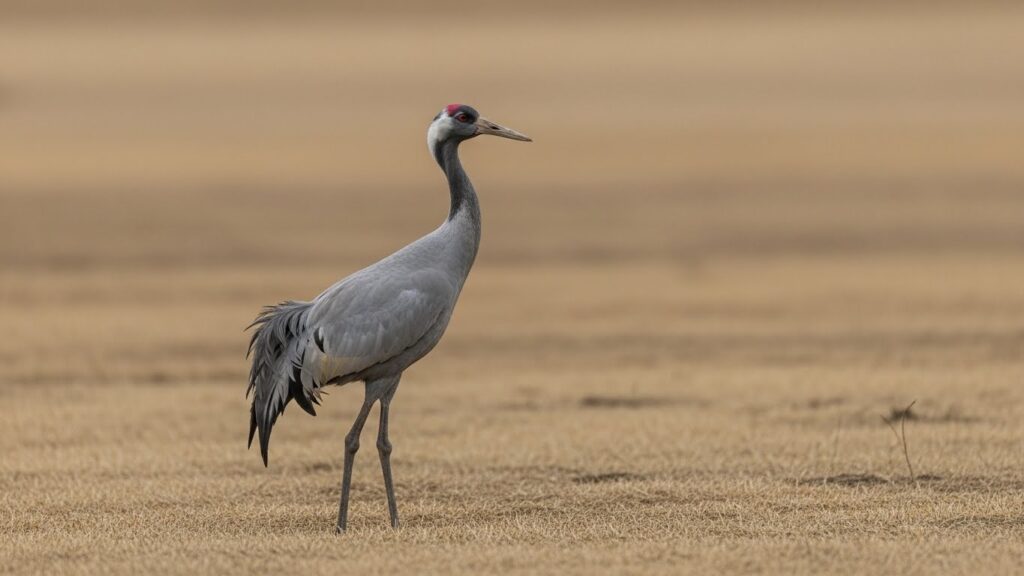
The Common Crane is a large, graceful bird known for its impressive long-distance flights. It breeds in northern Europe and Asia and spends winters mainly in northern Africa, though some groups migrate to southern Europe, the Indian subcontinent, and eastern Asia.
This crane has been spotted flying at incredible heights while crossing the Himalayas. Flying so high helps it avoid predators like eagles during migration.
Appearance and Behavior
This stately bird has mostly grey feathers with a striking red patch on its crown. A white streak runs from its eyes down to its neck and back.
The Common Crane breeds near wetlands, lakeshores, and boggy forests. It flies with its neck stretched out and wings beating steadily, often in groups flying in V-formations. Its loud, rolling calls can carry for miles.
Key facts:
Breeds across Europe and Russia
Winters mainly in northern Africa and parts of Asia
Uses high-altitude flight to avoid predators
Large range and increasing population
3. Bar-Headed Goose
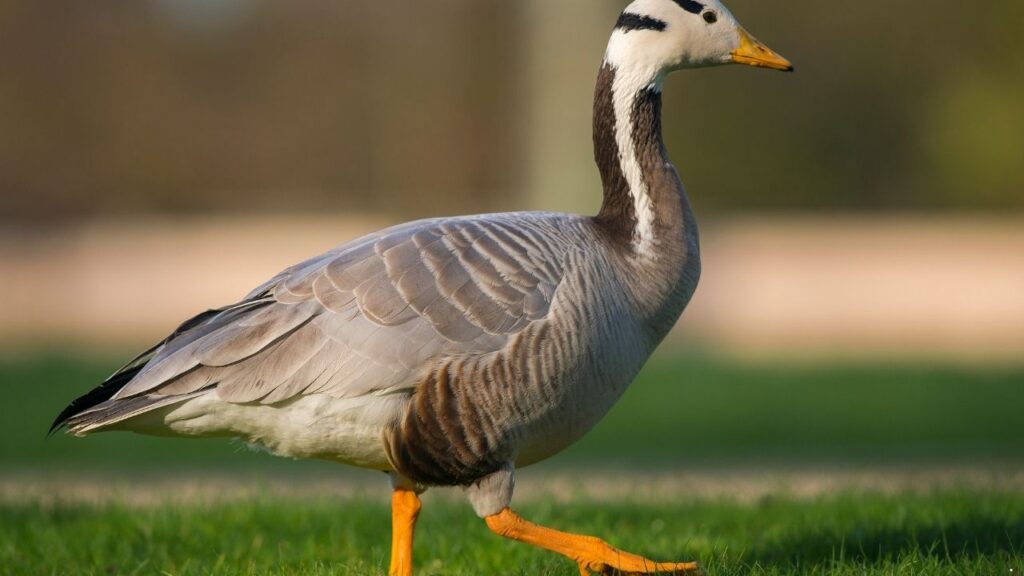
The Bar-headed Goose is famous for its incredible ability to fly over some of the highest mountains on Earth. Native to Central Asia, this bird breeds near high-altitude lakes in regions like Tibet, Mongolia, Russia, and Kazakhstan.
Each winter, it migrates south across the towering Himalayas to the Indian subcontinent, navigating some of the toughest flying conditions in the world.
Remarkable Adaptations for High Flight
What sets the Bar-headed Goose apart is its special ability to survive and thrive in thin mountain air. It has a larger lung capacity compared to other geese, helping it take in more oxygen when flying at extreme altitudes.
These birds have even been spotted flying above Mount Everest, showing just how well they adapt to the harsh environment. Their pale grey feathers, orange beak, and distinctive black bars on their head make them easy to recognize.
Key facts:
Migrates across the Himalayas to winter in South Asia
Has a greater lung capacity for high-altitude flight
Pale grey body with black head markings
Benefits from ongoing conservation programs
4. Whooper Swan
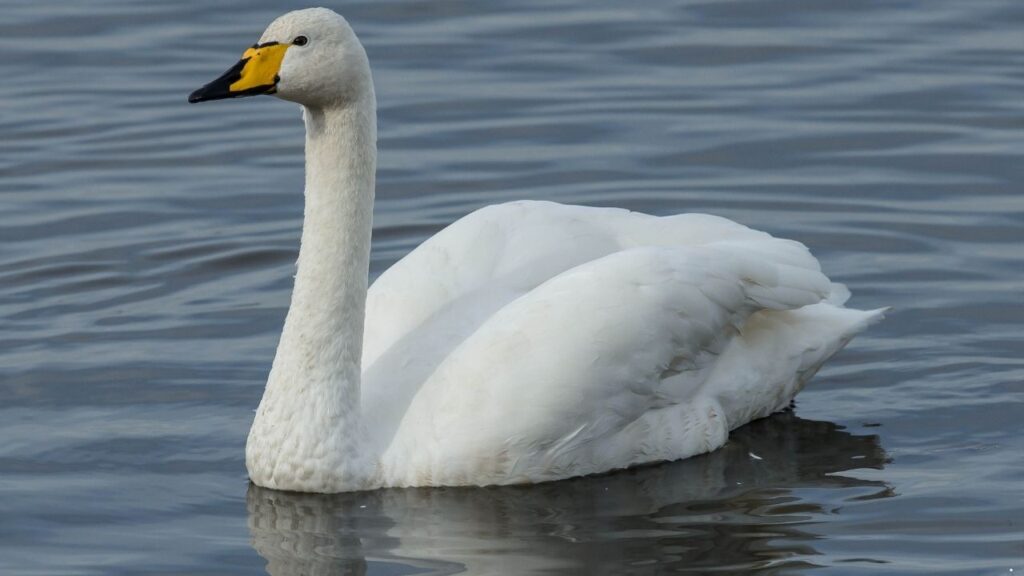
The Whooper Swan is known for its impressive flying abilities and striking appearance. It is mostly white with a long neck and a distinctive yellow and black bill.
These swans breed in subarctic Eurasia and migrate south in winter to places like Germany, Britain, and Denmark. Their loud whooping calls and elegant flight make them easy to spot in wetlands, lakes, and flooded grasslands.
Coordinated Migrators with High Altitude Flights
Bird Buddy mentions that Whooper Swans are social birds that communicate constantly during migration. They fly in flocks, using various signals to stay coordinated on long journeys.
Radar studies have recorded them flying at very high altitudes, showing just how well they handle thin mountain air. Their migration routes cover vast distances across Europe and Asia, sometimes reaching the Indian subcontinent.
Key features include:
Large, white body with a long neck
Yellow and black bill with a large yellow patch
Strong, loud whooping call
Winter visitor to the UK and parts of Europe
Protected species under conservation laws
5. Alpine Chough
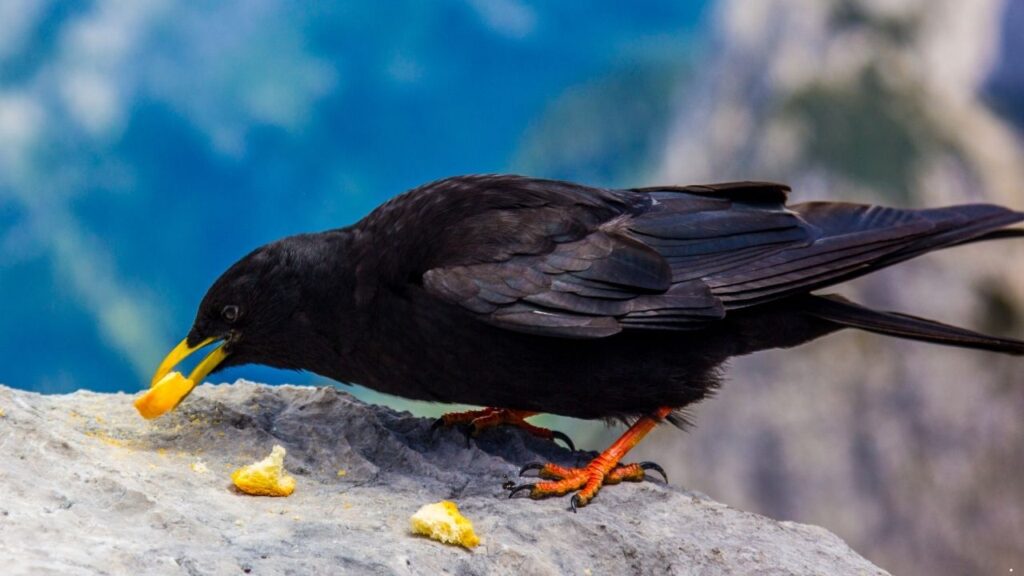
The Alpine Chough, also called the yellow-billed chough, is a striking member of the crow family. It has glossy black feathers, bright red legs, and a distinctive yellow beak. These birds live in some of the highest mountain ranges across Europe and Asia, including Central Asia and Southern Europe.
Masters of Mountain Flight
Birda states that Alpine Choughs are known as the world’s highest nesters. They build their nests high up on rocky cliffs where oxygen is thin, and conditions are tough. These birds have adapted to survive in these extreme environments.
They have even been spotted flying over the tallest Himalayan peaks, including Mount Everest. Their eggs are specially adapted to cope with the low oxygen levels found at these altitudes.
Key Facts and Adaptations
Glossy black plumage with bright red legs
Yellow beak, giving it the name yellow-billed chough
Breeds in high mountains across Europe, northern Africa, and Asia
Builds nests at very high altitudes
Flies over the Himalayan peaks, including Mount Everest
6. Bearded Vulture
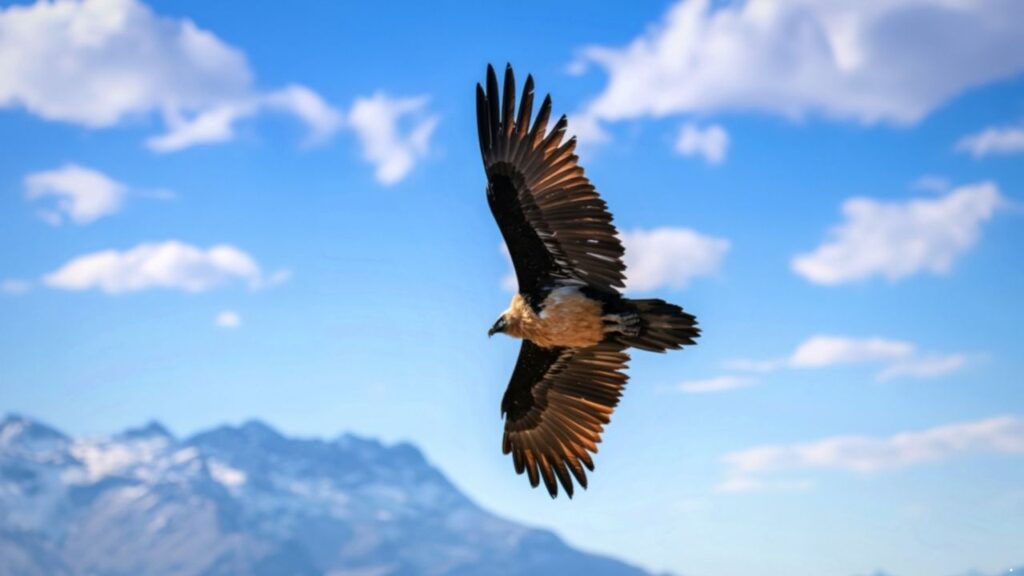
The Bearded Vulture is a striking bird of prey found in high mountain ranges across Europe, Asia, and Africa. Known for its unique diet, this vulture mainly feeds on bones instead of meat.
It lives in rugged regions like the Himalayas, Alps, and Pyrenees, often soaring at high altitudes where few other birds venture.
High-Altitude Habits and Flight
This vulture is rarely seen below the mountainous foothills, preferring to glide and hunt at lofty heights. It has been recorded flying at altitudes up to 24,000 feet, showcasing its ability to navigate thin air and cold temperatures with ease. Its soaring flight and bone-crushing feeding habits make it a fascinating species among high-flying birds.
Key features:
Lives in mountainous regions of Europe, Asia, and Africa
Feeds mostly on bones, a rare diet for birds of prey
Soars at high altitudes, up to 24,000 feet
Conservation efforts are helping stabilize its numbers
7. Bar-Tailed Godwit
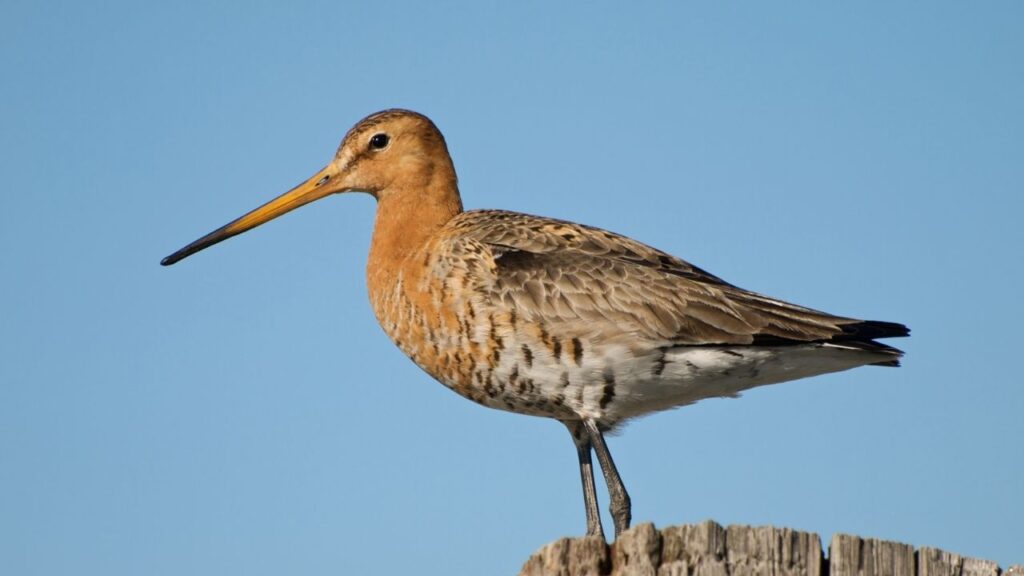
The Bar-tailed Godwit is a remarkable migratory bird known for its incredible endurance. It breeds in the Arctic tundra and the coasts of Europe, Asia, and North America.
During winter, it travels to tropical and temperate regions, including Europe, Africa, Asia, Australia, and New Zealand. This bird holds the record for the longest non-stop migration of any bird species.
Record-Breaking Migration and Flight
What makes the Bar-tailed Godwit unique is its ability to fly thousands of kilometers without stopping to rest or feed. Some of these journeys cover vast distances, such as flying from Alaska all the way to New Zealand or Australia.
During migration, it can soar at high altitudes to take advantage of favorable wind currents, reaching impressive heights that help it conserve energy.
Key Facts and Adaptations
Breeds in Arctic regions, including Siberia and Alaska
Migrates to temperate and tropical coasts worldwide
Holds the record for the longest non-stop migration
Can fly at high altitudes during migration
8. Mallard
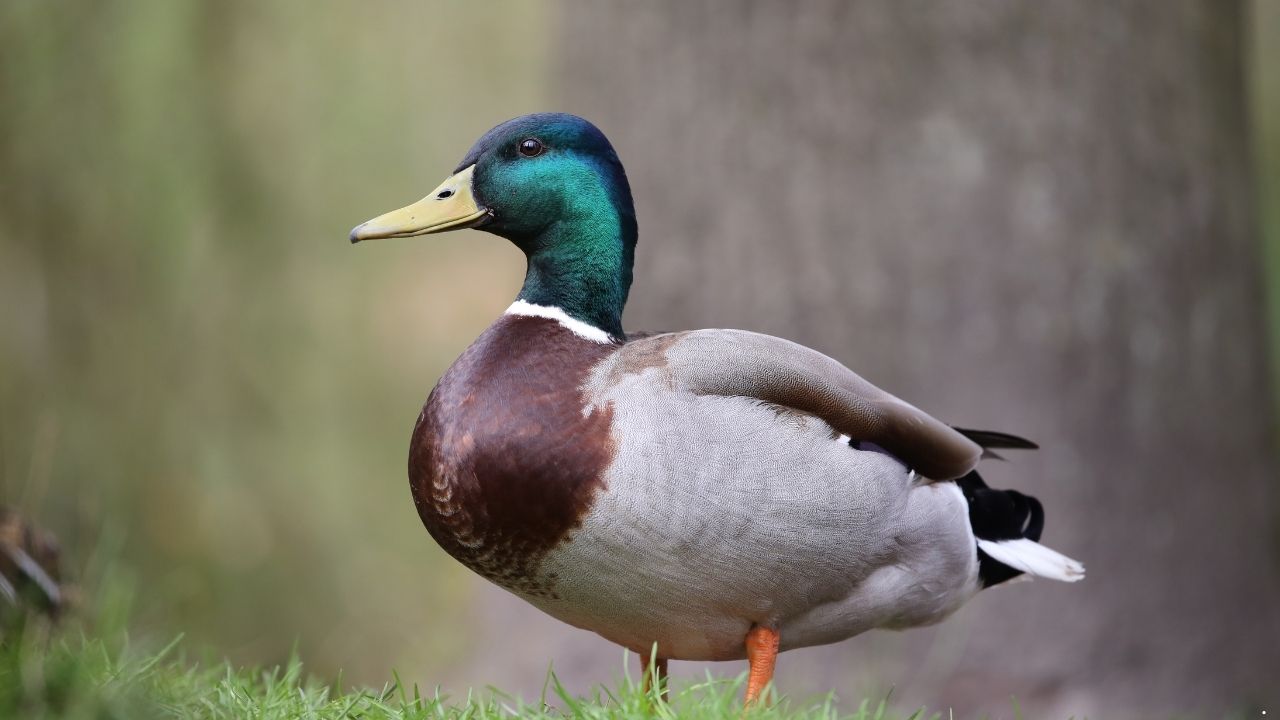
The Mallard is one of the most well-known and widespread ducks in the world. Recognizable by its shiny green head and bright yellow bill, this duck is a common sight in ponds, lakes, and rivers across Europe and North America. Its adaptability makes it a favorite among bird watchers and nature lovers alike.
Soaring to Surprising Heights
Though typically seen close to water, Mallards are capable of impressive flights. They migrate long distances during the colder months, traveling from northern breeding grounds to warmer areas in Mexico, Central America, and the Caribbean.
Remarkably, Mallards have been recorded flying at altitudes where even some planes cruise, showing their surprising ability to handle thin air.
Key Facts and Conservation Tips
Widespread across both Northern and Southern Hemispheres
Migratory behavior in northern populations
Known for its distinctive green head and yellow bill in males
Enjoys habitats like ponds, lakes, and rivers
Prefer feeding on sweetcorn, lettuce, oats, and seeds (avoid bread)
9. White Stork
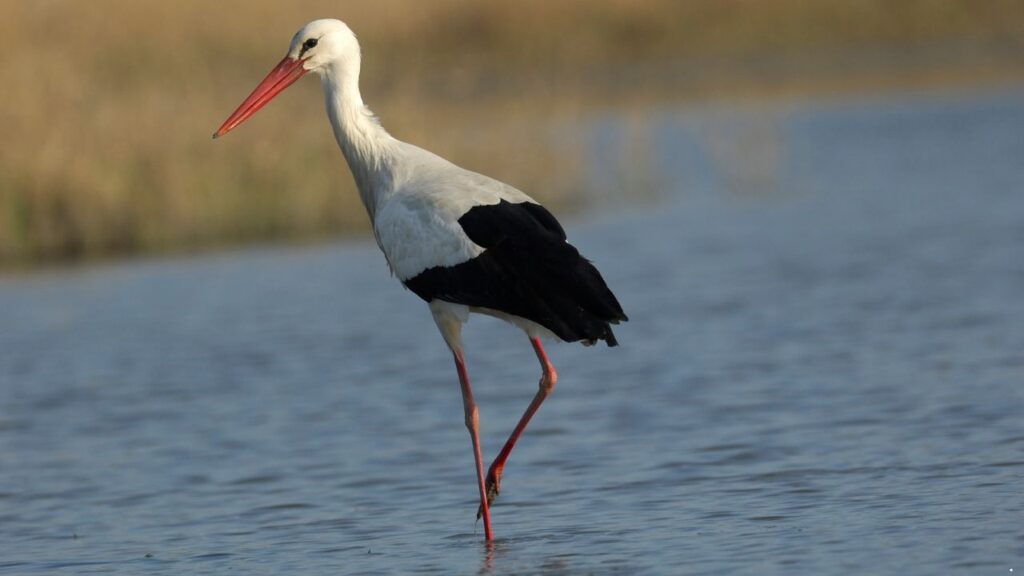
The White Stork is a well-known bird famous for its long migrations from Europe to Africa and Asia. With mostly white feathers and striking black flight feathers, it has a bright red bill that stands out. These birds are often seen near farms and wetlands, where they build large nests in trees or even on rooftops.
Smart Flight Paths and Soaring Skills
White Storks avoid flying over large bodies of water during migration because thermals — rising warm air currents — don’t form there. Instead, they take a longer route via the Levant to save energy by soaring on thermals.
This clever strategy allows them to reach great heights during their journey, sometimes flying as high as 16,000 feet. They travel in flocks during the day, gliding and flapping their wings in strong, steady beats.
Key Facts and Conservation Notes
Breeds across Europe, southwestern Asia, and parts of Africa
Migrates to sub-Saharan Africa, southern Africa, and the Indian subcontinent
Known for soaring on thermals to save energy
Often nests on buildings and near human settlements
Popular but less common than in the past, with strong populations in Spain, Poland, and the Baltic
Conclusion
Birds fly incredible distances, often traveling from one continent to another with ease. Many large species with broad wings can stay aloft for hours, using their powerful bodies to reach speeds that help them cover great distances.
Medium-sized birds and even young birds are adapted to handle changes in air pressure as they soar over high peaks and across grassy plains. Their ability to manage oxygen intake at varying altitudes allows them to survive and thrive in both warmer regions and colder environments, including their wintering grounds.
Long-distance migrants are some of the most impressive travelers in the animal kingdom. These birds take off from sea level and climb to altitudes where air pressure is low, demonstrating strength and endurance few other species can match.
They rely on their skills to hunt prey and navigate many countries, often returning to the same places year after year. Whether flying over mountains or open water, these largest flying birds showcase the remarkable adaptations that make their amazing journeys possible.
