




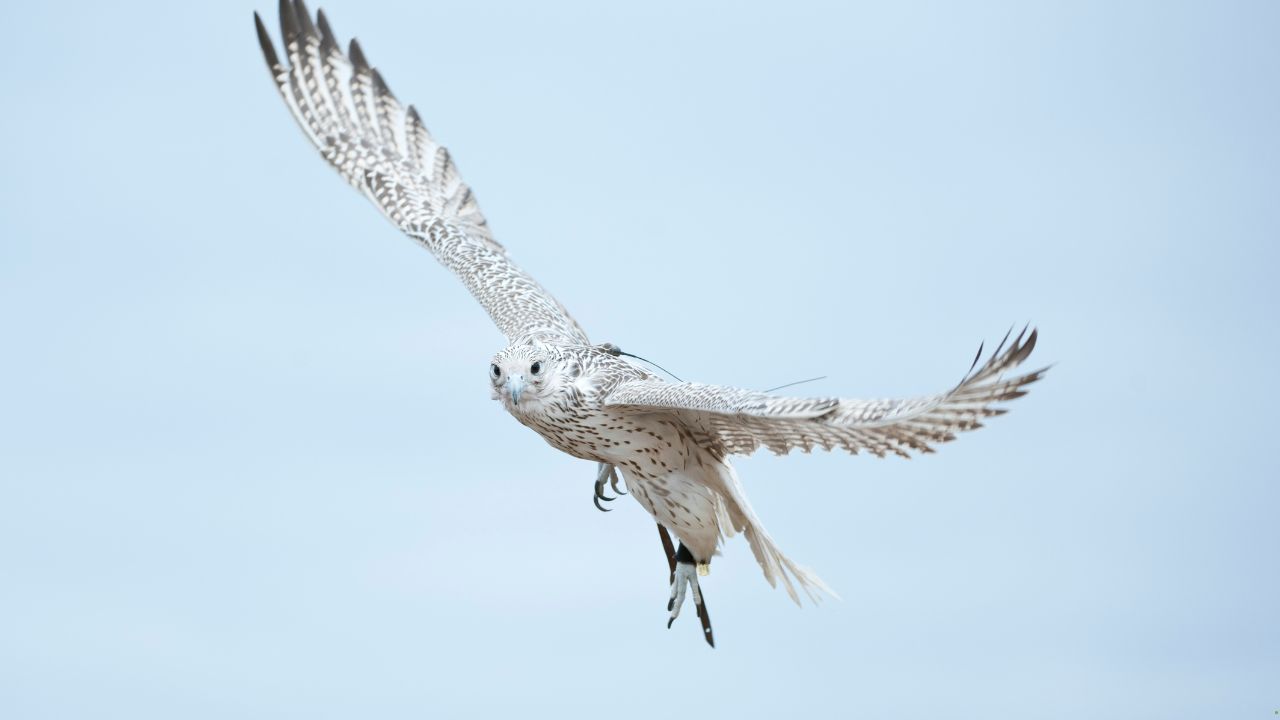
Speed is one of the most amazing talents in the bird world. From soaring high to diving at incredible rates, some birds are built for lightning-fast flight. Their bodies are perfectly designed to slice through the air — lightweight bones, streamlined shapes, and powerful muscles all work together to make them some of the fastest creatures on Earth.
Believe it or not, certain birds can reach speeds that rival racing cars, especially when diving to catch their prey. While humans have developed airplanes and jets to fly fast, these birds have mastered natural flight in ways that still leave scientists amazed.
In this article, we’ll explore the birds known for their incredible speed — uncovering just how fast they can go and what makes them such extraordinary flyers. Get ready to be amazed by nature’s fastest fliers!
Key Takeaways
See how Peregrine and Saker Falcons dive at jaw-dropping speeds to catch their prey.
Explore speedy flyers like the Needletail and Grey-headed Albatross, mastering long flights.
Meet powerful hunters like the Golden and Bald Eagles soaring and diving with precision.
Discover fast waterbirds like the Red-breasted Merganser and Spur-Winged Goose in action.
Birds That Are Known for Their Incredible Speed
1. Peregrine Falcon

The Peregrine Falcon is famous worldwide for its incredible speed and sharp hunting skills. It is a medium-to-large bird of prey, with strong, pointed wings built for fast flight.
This falcon is found almost everywhere, from busy cities to wild coastal areas, showing how well it adapts to different environments.
What truly sets the Peregrine Falcon apart is its hunting dive, known as the stoop. During this high-speed dive, the falcon can reach speeds over 240 miles per hour (386 kilometers per hour), making it the fastest animal on Earth.
Its sleek body, powerful heart, and excellent eyesight help it spot and catch prey mid-air with astonishing precision.
Interesting Facts About the Peregrine Falcon:
Flies at normal speeds of 40-60 mph (64-96 km/h) during everyday flight.
It can dive at speeds up to 242 mph (389 km/h) when hunting.
Has special nostrils that control airflow to protect its lungs during fast dives.
Hunts mainly medium-sized birds, stunning or killing them in mid-air strikes.
Recognizable by its blue-gray feathers, black “mustache” marks on its white face, and barred chest.
2. Golden Eagle
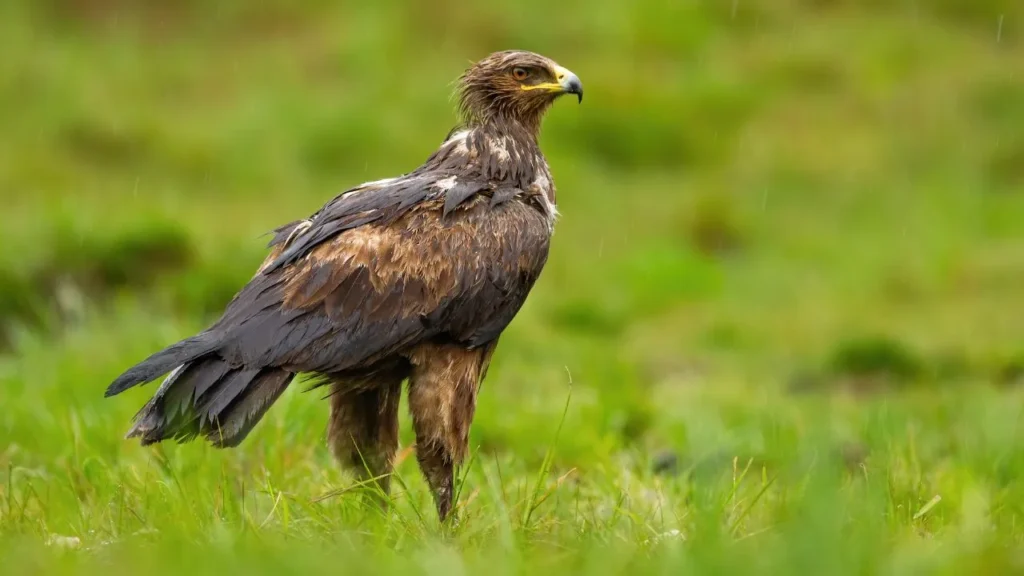
The Golden Eagle is one of the most powerful birds of prey in the Northern Hemisphere. It is known for its dark brown feathers and a stunning golden-brown sheen on the back of its neck.
With broad wings and a long tail, this eagle soars and glides smoothly over mountains, deserts, and open plains, scanning for prey below.
This bird is not just large but incredibly fast and agile. When hunting, the Golden Eagle can dive at speeds up to 200 miles per hour (322 kilometers per hour) to catch animals like rabbits and marmots.
Its sharp talons are strong enough to grip and hold onto prey tightly. The eagle’s excellent vision helps it spot movement from far away and maintain steady speeds while soaring.
Golden Eagle Speed and Facts:
Reaches hunting dive speeds of up to 200 mph (322 kph).
Uses speed and power to capture small mammals, birds, and sometimes larger prey.
Found across North America, Europe, and Asia in diverse habitats.
Known for its striking golden feathers on the back of its head and dark brown body.
Holds cultural significance as a symbol of strength and might.
3. Saker Falcon
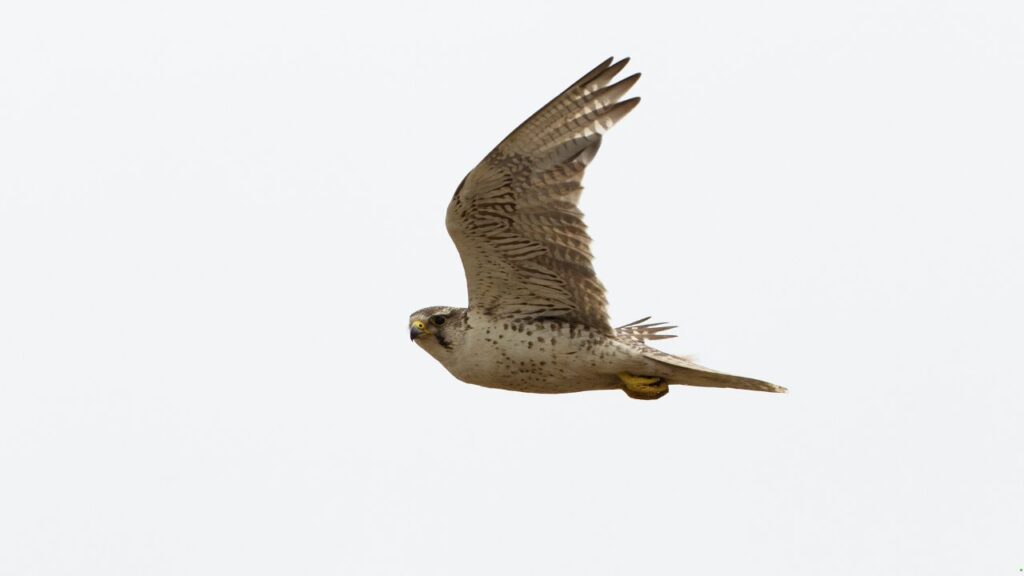
The Saker Falcon is a powerful and fast bird, famous for its ability to dive at incredible speeds to catch large birds midair.
It is one of the fastest falcons in the world, reaching dive speeds up to 200 miles per hour (322 kilometers per hour). Even in normal flight, the Saker Falcon can soar at speeds around 93 mph (150 km/h).
Known for its strength and speed, the Saker Falcon has been used in falconry for thousands of years. This desert falcon prefers wide, open spaces like arid mountains and deserts, where it hunts by swooping low over the ground to surprise its prey.
Some experts say that in horizontal flight, the Saker Falcon could rival or even surpass the Peregrine Falcon in speed.
Key Facts About the Saker Falcon:
Can dive at speeds up to 200 mph (322 km/h).
Soars at speeds up to 93 mph (150 km/h) during normal flight.
The second-largest falcon species in the world.
Currently listed as endangered due to habitat loss, capture for falconry, and other human threats.
Conservation efforts continue worldwide to protect this amazing hunter.
4. Gyrfalcon
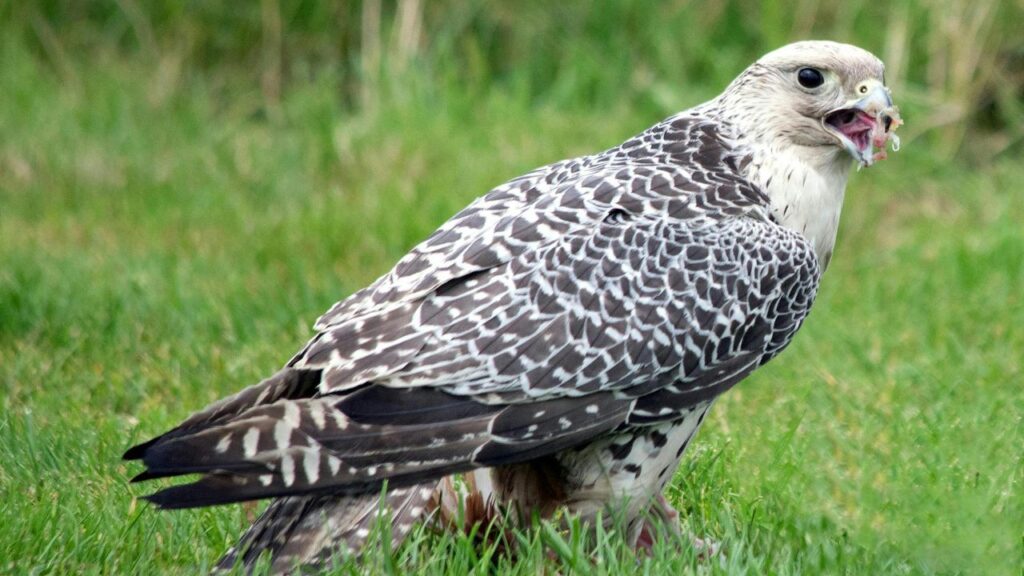
The Gyrfalcon is the world’s largest falcon and one of the fastest birds in the sky. Known for its powerful build and fierce hunting skills, this bird lives in the remote cliffs of Canada and Alaska, as mentioned by the All About Birds. Its colors range from pure white to dark gray, blending perfectly with the snowy environment.
Gyrfalcons can dive at speeds up to 130 mph (209 km/h), making them incredible hunters. In steady flight, they often soar at around 60 mph (96.5 km/h) for long distances. Their strong bodies and long tails help them fly swiftly and pursue prey like ptarmigan and seabirds.
Key Facts About the Gyrfalcon:
The largest falcon species has powerful, pointed wings.
Reaches diving speeds up to 130 mph (209 km/h).
Soars steadily at about 60 mph (96.5 km/h) during long flights.
Preys on birds such as ptarmigan, catching them in mid-air or on the ground.
Faces challenges from climate change but remains a top predator in its habitat.
5. White-Throated Needletail Swift
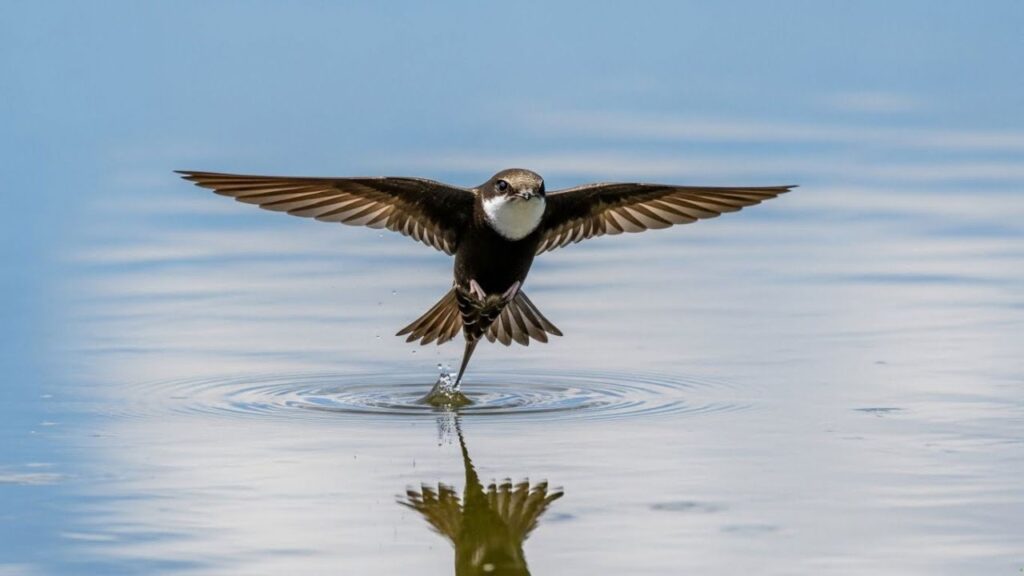
The White-throated Needletail is one of the fastest birds in level flight, known for its incredible speed and endurance.
This swift spends almost its entire life flying, catching insects in the air with its large mouth. Its strong, cigar-shaped body and long, curved wings are built for fast, sustained flight.
Reaching speeds up to 105 mph (169 km/h), the needletail is the fastest bird when it comes to flapping flight. Its tail feathers have sharp, needle-like tips, giving the bird its unique name.
Mostly found in rocky hills and forests across Asia and Australia, it migrates long distances between its breeding and wintering grounds.
Interesting Facts About the White-throated Needletail:
Can fly at speeds up to 105 mph (169 km/h).
Spends most of its life in the air, only landing to breed and roost.
Has very short legs and long wings, so it cannot take off from the ground easily.
Feeds on aerial insects, often called ‘aerial plankton.’
Migrates between eastern Asia and eastern Australia in a figure-eight pattern.
6. Grey-Headed Albatross
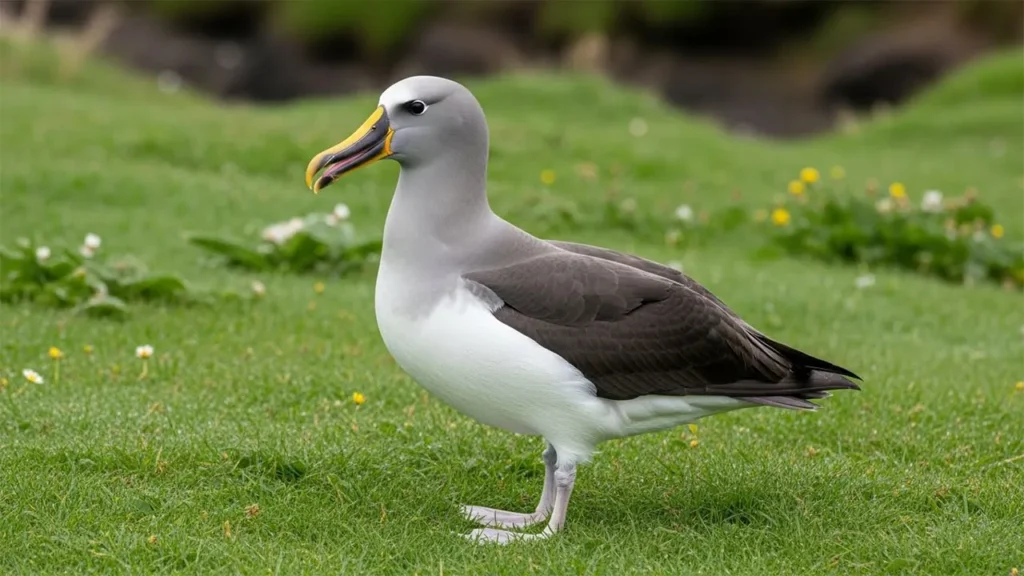
The Grey-headed Albatross is one of the fastest seabirds, known for soaring long distances over the open ocean. These birds spend most of their lives in the air, barely touching the ground. They use strong ocean winds to glide effortlessly, covering thousands of miles without stopping.
This albatross reaches speeds up to 79 mph (127 km/h) by using a technique called dynamic soaring. This allows it to gain speed by riding wind gradients over the waves, using very little energy.
It mainly feeds on squid and fish, often following ships to scavenge scraps. According to Oceanwide Expeditions, Grey-headed Albatrosses breed on remote sub-Antarctic islands like South Georgia and the Diego Ramirez Islands.
Key Facts About the Grey-headed Albatross:
Can fly at speeds up to 79 mph (127 km/h).
Soars for hours without flapping, using ocean winds.
Breeds on isolated sub-Antarctic islands.
Listed as endangered due to threats from fishing bycatch.
Has one of the largest wingspans among seabirds, helping it glide long distances.
7. Red-breasted Merganser
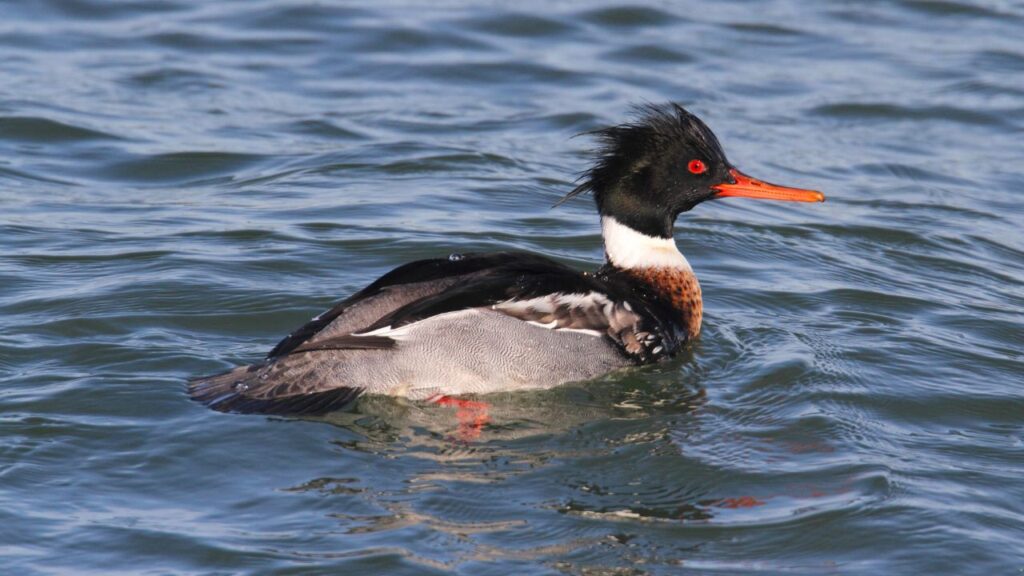
The Red-breasted Merganser is a diving duck known for its impressive speed, reaching up to 81 mph (130 km/h) in flight. With a slender body and rapid wingbeats, it flies swiftly over lakes and coastal waters. Its long, serrated bill and spiky crest make it a skilled hunter of fish.
This duck is a versatile swimmer and flyer. It uses powerful webbed feet to dive and chase prey underwater.
Found across North America and Eurasia, it breeds in freshwater lakes and winters along coastlines. Although its legs make taking off from water tricky, its speed in the air and water helps it escape predators and catch food.
Key Facts About the Red-breasted Merganser:
Can fly at speeds up to 81 mph (130 km/h).
Excellent diver, using webbed feet to swim underwater.
Migrates in structured V-formations for efficiency.
Breeds in freshwater lakes and winters on coastlines.
Fast and agile to dodge predators and catch fish.
8. Eurasian Hobby
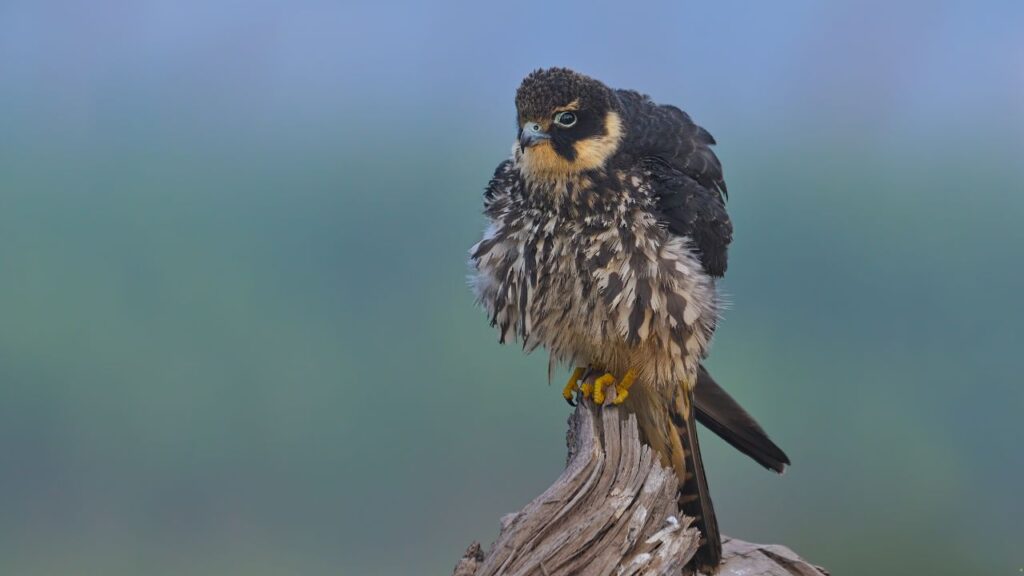
The Eurasian Hobby is a small but mighty falcon known for its incredible speed and aerial agility. It can reach speeds up to 100 mph (160 km/h) and is famous for its acrobatic flight maneuvers. This falcon twists and dives through the air, hunting insects and small birds with sharp precision.
Its sleek body is covered in slate-gray feathers, with distinctive reddish-brown “trousers” on its legs. The hobby often hunts at dusk, catching dragonflies, swifts, swallows, and even bats mid-flight. Found across Europe and Asia, it migrates to Africa and southern Asia during the winter months.
Key Facts About the Eurasian Hobby:
It can reach speeds up to 100 mph (160 km/h).
Master acrobatic flight, diving, and weaving through the air.
Hunts flying insects, small birds, and bats.
Has slate-gray upperparts and reddish legs.
Often hunts during dusk, using insect swarms to its advantage.
9. Spur-Winged Goose
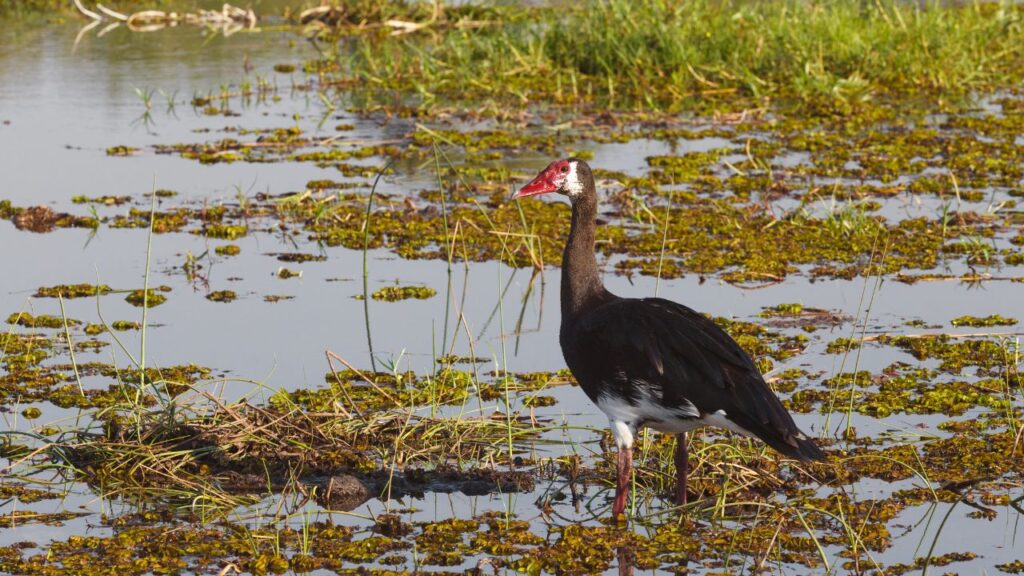
The Spur-Winged Goose is Africa’s largest waterfowl and a surprisingly fast flyer. Despite its size, it can reach speeds up to 88 mph (142 km/h). Its strong wings help it cover long distances while migrating between feeding and breeding areas.
Birdfact mentions that this goose is named for the sharp spurs on its wings, which it uses for defense and to show dominance in territorial disputes.
It has unique adaptations that set it apart from other geese and ducks, making it part of its own special subfamily. Found in wetlands and grasslands, it often forms flocks outside the breeding season.
Key Facts About the Spur-Winged Goose:
Flies at speeds up to 88 mph (142 km/h).
Uses sharp wing spurs for defense.
Has unique traits separating it from other waterfowl.
Feeds on toxic blister beetles, making its flesh poisonous to predators.
Known to run faster than some prey to escape danger.
10. Bald Eagle
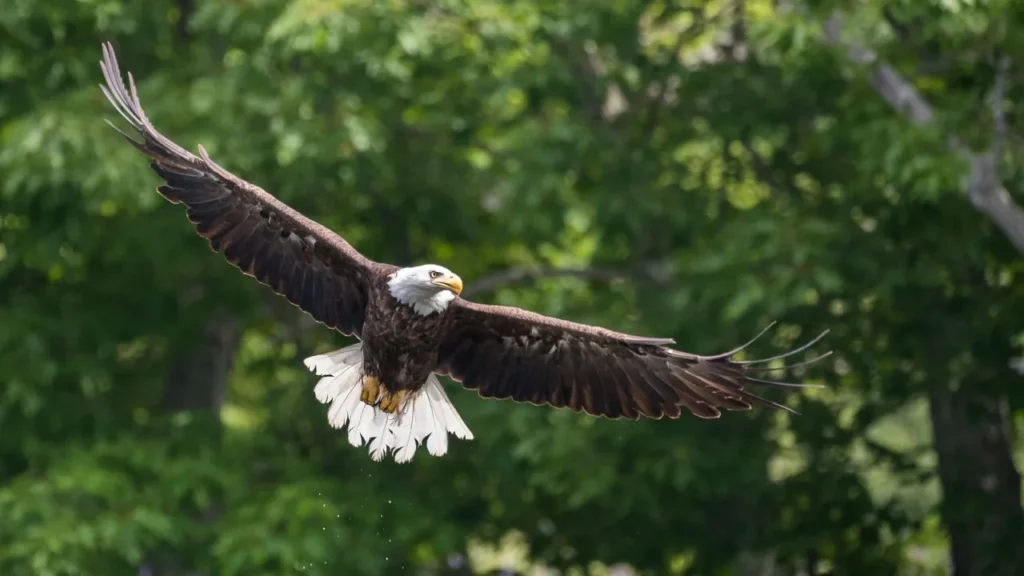
The Bald Eagle is one of the most famous birds in North America. Known for its striking white head and tail contrasted against a dark brown body, it is a powerful predator and a national symbol of the United States.
While it usually soars at a steady pace, the Bald Eagle can dive at speeds up to 99 mph (160 km/h) when hunting fish or defending its territory.
These eagles use their broad wings to glide effortlessly on thermal currents while scanning for prey. They are skilled hunters but also opportunistic feeders, often eating carrion or stealing food from smaller birds like Ospreys.
Thanks to successful conservation efforts, including banning harmful pesticides, Bald Eagle numbers have grown after facing serious declines.
Key Facts About the Bald Eagle:
Can dive at speeds up to 99 mph (160 km/h).
Soars gracefully on thermal updrafts while searching for prey.
Eats fish, small mammals, carrion, and sometimes steals food.
Once endangered, now thriving due to conservation efforts.
Builds massive nests reused year after year.
Conclusion
Flight speed plays a crucial role in the lives of the fastest birds in the world. These agile birds reach extraordinary speeds thanks to their aerodynamic body and powerful wings that enable swift, efficient flight. Many are incredibly fast divers, using their top speed and hunting prowess to catch prey like small fish or other animals in feeding areas.
Their large wings and body weight are perfectly balanced for aerial superiority and unique flight patterns, helping them thrive in diverse environments—from snowy landscapes to tropical and subtropical oceans, and even remote islands and subarctic regions.
These birds also use their flying abilities in courtship displays and to defend territory, showcasing their strength and agility. Their powerful wings enable them to sustain long flights while hunting or migrating between feeding and breeding grounds. Overall, their maximum speed and efficient hunting techniques make them some of the most remarkable and efficient hunters in the animal kingdom.
There are other bird species as well that are known to reach extraordinary speeds. These include the Red-Tailed Hawk, Great Horned Owl, Common Swift, and Magnificent Frigatebird.
