




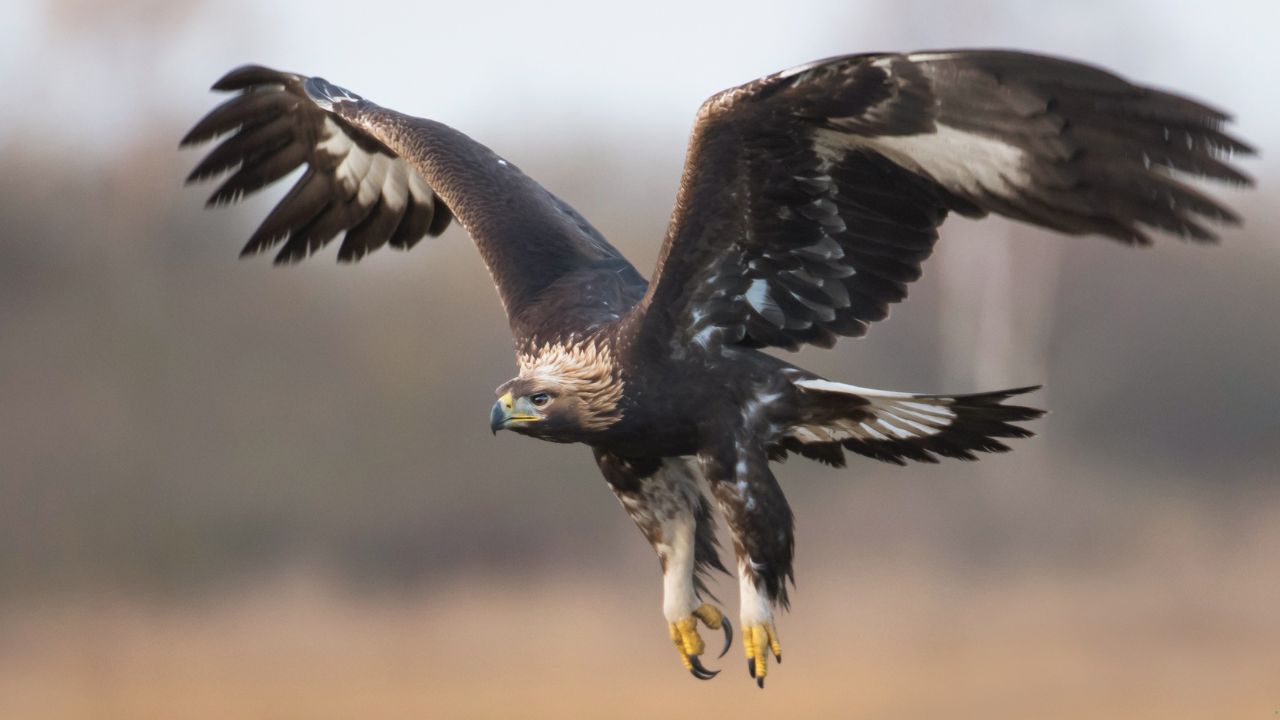
Speed is a crucial skill for birds in the wild. Whether it’s to catch prey, escape from predators, or cover long distances during migration, flying fast can make all the difference between survival and failure.
Birds have evolved incredible adaptations that allow them to reach speeds that leave most other animals—and even some human machines—far behind.
These remarkable speeds are powered by streamlined bodies, powerful muscles, and sharp instincts honed over millions of years. It’s no wonder these birds are among the most impressive flyers on the planet.
In this article, we’ll take a closer look at the birds famous for their amazing speed and agility. From breathtaking dives to rapid wingbeats, their flying abilities are nothing short of spectacular. Get ready to discover some of nature’s fastest aviators and the fascinating ways they rule the skies!
Key Takeaways
See how the Peregrine Falcon and Needletail hit incredible speeds that stun the sky.
Watch the Eurasian Hobby and Gyrfalcon’s epic aerial hunts and fast moves.
Discover the Magnificent Frigatebird’s nonstop ocean flights and wild endurance.
Meet the fastest birds and learn what makes their flying skills truly unique.
Birds Known for Their Amazing Speed in Flight
1. Peregrine Falcon

At the top of the list of birds known for their amazing speed is the Peregrine Falcon (Falco peregrinus). This powerful bird of prey is found almost everywhere in the world, except Antarctica.
It has adapted to many environments, from cities to coastal areas, showing incredible versatility. But what truly makes the Peregrine Falcon stand out is its breathtaking diving speed.
During its hunting dive, the Peregrine Falcon can reach speeds of more than 300 kilometers per hour (186 miles per hour), as mentioned by Britannica. This incredible velocity makes it not only the fastest bird but also the fastest animal on the planet.
Its sleek, aerodynamic body, strong heart, and sharp eyesight all help it achieve these mind-blowing speeds. Plus, specialized nostrils control airflow to protect its lungs, allowing it to dive safely and precisely at full throttle.
Quick facts about the Peregrine Falcon:
Known for catching medium-sized birds in mid-air.
Has blue-gray feathers on top and a black “mustache” mark on its white face.
Its short tail and long, pointed wings make it built for speed.
Often used as a measure of aerial superiority because of its unmatched flying abilities.
2. Golden Eagle
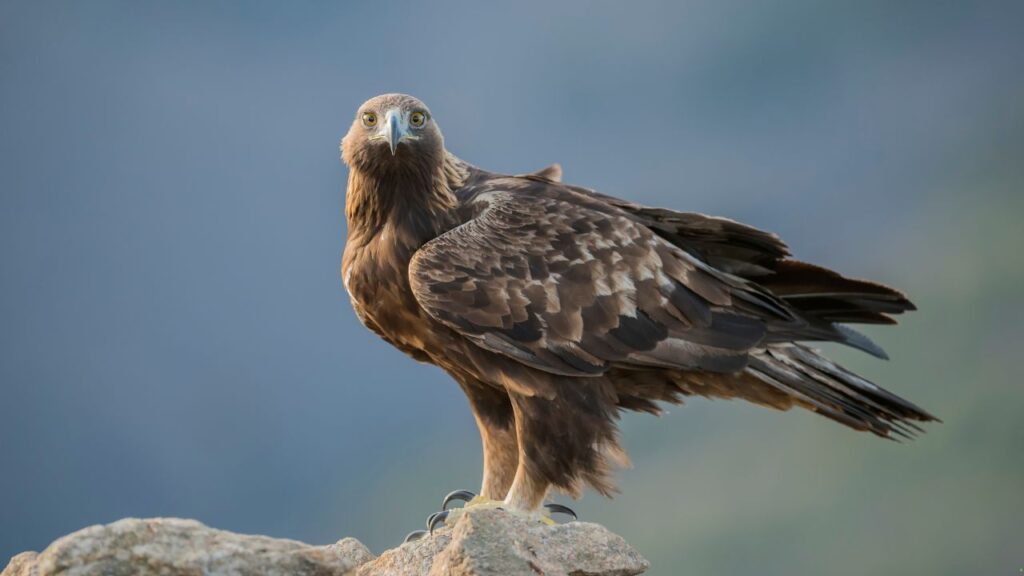
The Golden Eagle (Aquila chrysaetos) is one of North America’s fastest and most agile birds of prey. Known for its strength and hunting skills, this majestic bird has dark brown feathers with striking golden plumage on the back of its head.
Its sharp black talons and strong beak help it catch and hold onto prey, making it a top predator in the wild.
When hunting, the Golden Eagle can reach speeds of up to 200 miles per hour (322 kilometers per hour) in a dive. It uses this speed to catch fast-running mammals like rabbits and marmots.
Its powerful talons can exert immense pressure to capture and kill prey quickly. This eagle is also an expert at soaring and gliding, often seen riding air currents with steady, wide wingbeats.
Golden Eagle Quick Facts:
Has excellent vision, far sharper than human eyesight.
It can rotate its head up to 270 degrees to scan its surroundings.
Uses a clear eyelid to protect its eyes from dust during flight.
Inhabits mountains, deserts, and open plains across the Northern Hemisphere.
3. Gyrfalcon
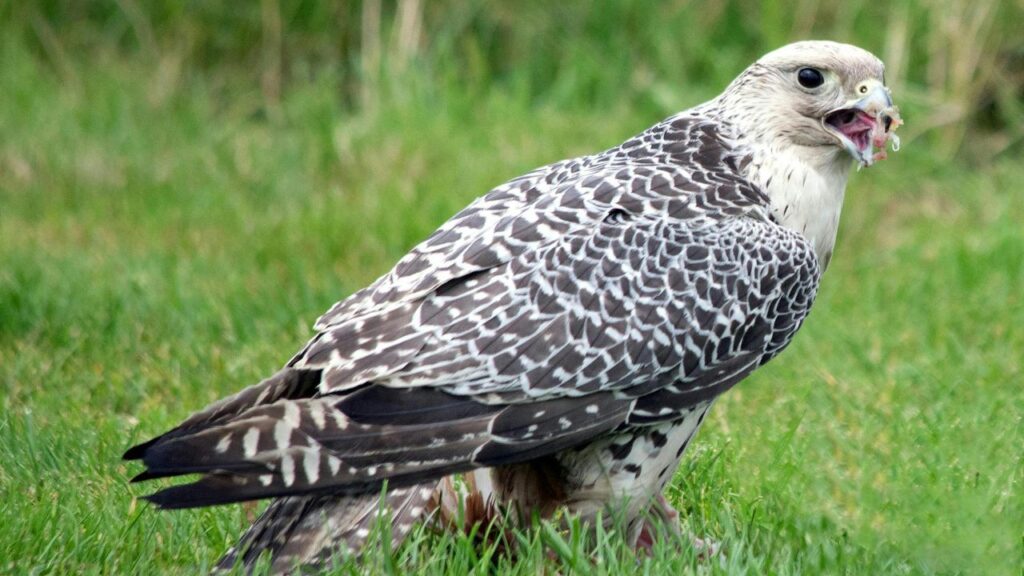
The Gyrfalcon (Falco rusticolus) is the largest falcon in the world and one of the fastest birds in flight. It lives in the Arctic and sub-Arctic regions, where it rules the skies with strength and speed.
These falcons come in a range of colors, from pure white to dark gray and brown, helping them blend into snowy landscapes. Known for their powerful build and endurance, Gyrfalcons are skilled hunters that chase down prey even in harsh conditions.
In level flight, Gyrfalcons can reach speeds up to 90 miles per hour (145 kilometers per hour), and they fly even faster when diving to catch prey. Their main targets include ptarmigan and seabirds, which they capture either in mid-air or on the ground.
These birds play an important role in the Arctic ecosystem as top predators. Historically, they were prized in falconry by nobility because of their hunting skill and rarity.
Gyrfalcon Quick Facts:
The largest falcon species in the world.
Inhabits remote Arctic and sub-Arctic areas.
It can fly up to 90 mph in level flight, faster in stoops.
Comes in various colors from white to dark gray.
Studied extensively by scientists to understand their behavior and population.
4. White-Throated Needletail Swift
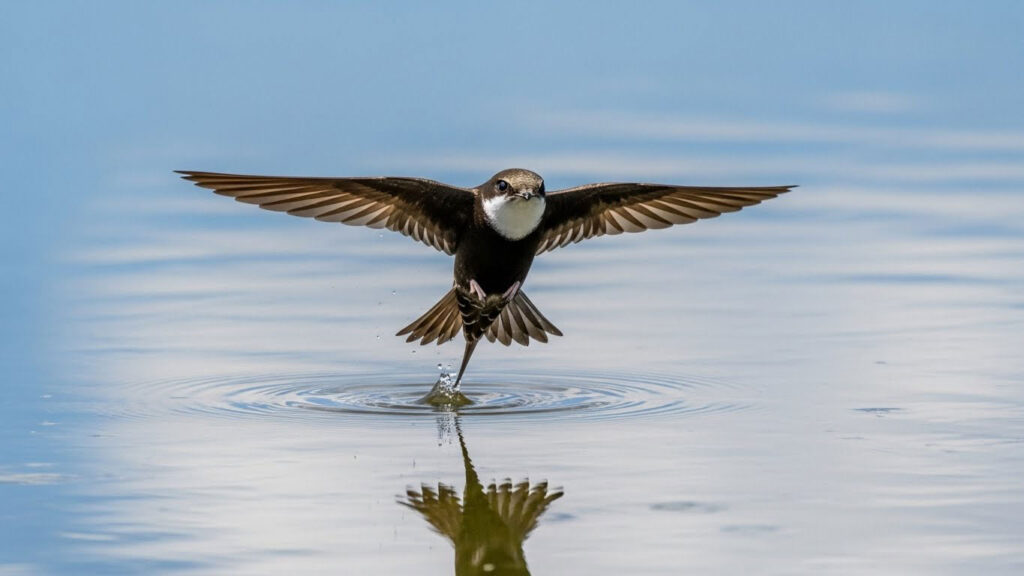
The White-throated Needletail (Hirundapus caudacutus) is one of the fastest birds in level flight, reaching speeds up to 105 miles per hour (169 kilometers per hour). This swift spends almost its entire life flying, catching insects mid-air with its large mouth.
Its body is built for speed with a strong, cigar-shaped form and long, curved wings. The bird gets its name from the sharp, needle-like feathers at the end of its tail, which help it maneuver quickly.
Found in rocky hills and forests across Asia and Australia, the needletail migrates long distances between breeding and wintering areas.
Interestingly, these birds can even sleep while flying, only landing to breed and raise their young. Their legs are so short and wings so long that they cannot take off from the ground, making them true masters of the air.
White-throated Needletail Quick Facts:
Among the fastest birds in steady, level flight.
Known for catching insects while flying.
Has a distinctive white throat and needle-like tail feathers.
Migrates between eastern Asia and eastern Australia.
Rare visitor to Britain and Ireland during spring and summer.
5. Eurasian Hobby
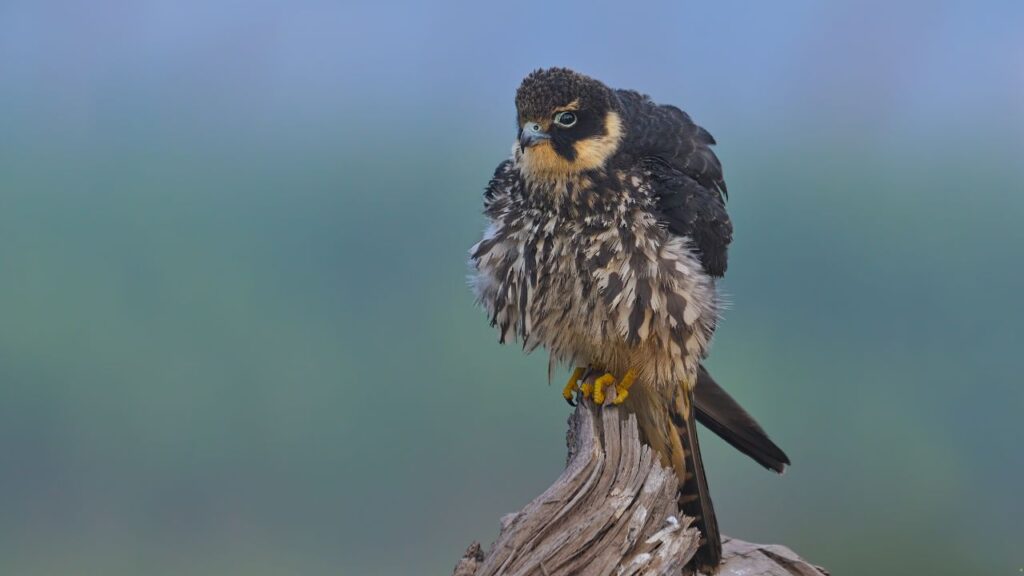
The Eurasian Hobby (Falco subbuteo) is a small but powerful falcon known for its incredible speed and acrobatic flight.
It can reach speeds of up to 100 miles per hour (160 kilometers per hour) while chasing insects and small birds. Its swift and agile movements make it a master of aerial hunting, often catching prey mid-flight with remarkable precision.
This falcon has slate-gray feathers on its back and a white throat with no streaks. Its legs have a reddish-brown color, sometimes called “red trousers,” while the underparts are white with black streaks.
According to the Thai National Parks, the Eurasian Hobby resides across Africa, Europe, and Central and East Asia, and migrates to Central and South Africa and southern Asia during winter. It often hunts at dusk, catching swarms of insects and sometimes chasing swifts and swallows.
Eurasian Hobby Quick Facts:
Known for fast, acrobatic flight reaching 100 mph.
Hunts flying insects, small birds, and even bats.
It can catch prey mid-air and transfer it between its talons and beak.
Migrates between Europe, Asia, Africa, and southern Asia.
Listed as a protected species under wildlife laws
6. Bald Eagle
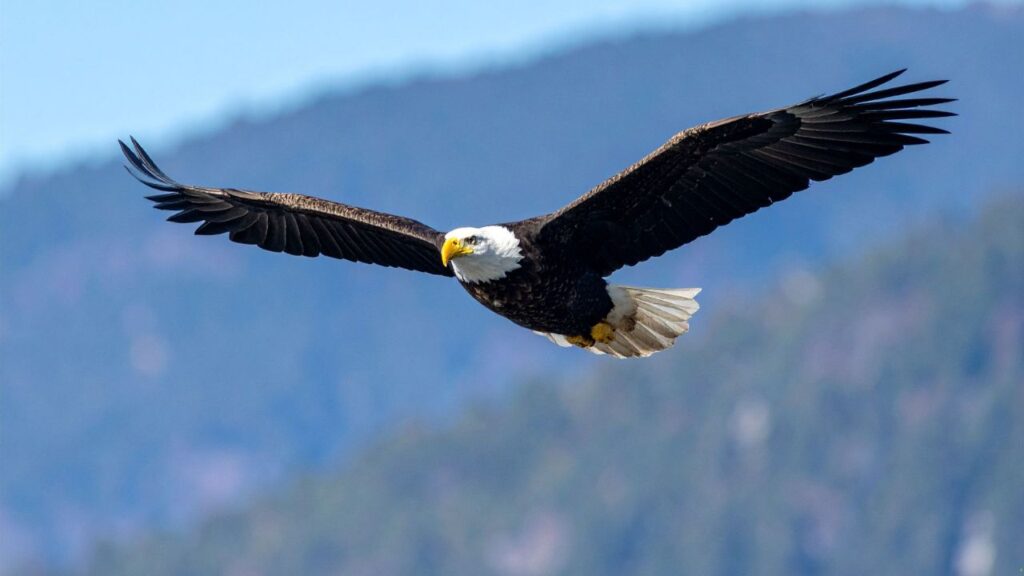
The Bald Eagle (Haliaeetus leucocephalus) is one of North America’s most famous and striking birds. Known for its dark brown body and bright white head and tail, this bird stands out with its yellow legs and beak.
Though it usually flies at a calm pace, the Bald Eagle can dive at speeds up to 99 miles per hour (160 kilometers per hour) when hunting or defending its territory.
This powerful bird soars effortlessly on thermal currents while searching for fish and small mammals. It builds large nests that it reuses and adds to each year.
Once endangered due to hunting, habitat loss, and pesticides, the Bald Eagle has made a strong comeback thanks to conservation efforts like the banning of DDT. Today, it remains a symbol of freedom and strength in the United States.
Bald Eagle Quick Facts:
It can dive at speeds near 100 mph to catch prey.
Soars gracefully on warm air currents.
Often feeds on fish but also scavenges carrion.
Known to steal food from other birds like Ospreys.
The national emblem of the United States since 1782.
7. Frigatebird

The Magnificent Frigatebird (Fregata magnificens) is a remarkable seabird known for its incredible flying endurance and speed. These birds can stay aloft for 2 to 3 weeks nonstop, soaring over tropical and subtropical oceans using warm air currents called thermals.
With speeds reaching up to 95 miles per hour (153 kilometers per hour), they glide effortlessly with very little wing flapping.
One of the most fascinating behaviors of the Magnificent Frigatebird is its skill as a “sky pirate.” It often steals food from other seabirds by chasing them until they drop or regurgitate their catch.
All About Birds mentions that males attract mates by inflating a bright red throat pouch, which looks like a large balloon. Females look different, usually with white chests, making them easy to distinguish from males.
Magnificent Frigatebird Quick Facts:
Can fly nonstop for weeks using ocean thermals.
Reaches speeds up to 95 mph in flight.
Known for stealing food from other birds midair.
Males have a large red throat pouch for courtship displays.
Builds nests only on remote islands like Christmas Island.
Conclusion
Birds known for their impressive flying skills showcase extraordinary flight speed, agility, and hunting prowess. These birds fly using diverse flight patterns that allow them to reach extraordinary speeds, making them some of the fastest creatures in the world.
From sustained flight over long distances to incredibly fast divers pursuing prey, their powerful wings enable them to achieve maximum speed and escape predators with ease.
Among the largest birds and smallest, their ability to navigate different environments—from sea level to feeding areas high above—demonstrates remarkable endurance and control.
These impressive flyers not only catch prey with precision but also show how flight speed and skill are essential for survival. Watching birds fly at such extraordinary speeds reminds us of the incredible adaptations that make them masters of the sky.
There are other fast birds as well. These include the Grey-Headed Albatross, Spur-Winged Goose, Red-Tailed Hawk, Red-Breasted Merganser, Common Swift, and Saker Falcon.
