




Have you ever wondered how some animals survive in the harshest corners of our planet, where water is more precious than gold? From blazing deserts to dry grasslands, certain creatures have developed astonishing survival strategies that allow them to go days, or even weeks, without a single sip of water.
While we humans can barely endure a few days without hydration, these animals have evolved unique adaptations that make them true masters of endurance.
In this article, we’ll explore fascinating species that defy the odds of survival. You’ll discover how camels store more than just fat in their humps, why certain rodents thrive in arid deserts, and which reptiles have perfected the art of extracting moisture from the air or their food.
These adaptations aren’t just interesting facts; they reveal the incredible resilience and resourcefulness of nature itself.
So, if you’ve ever been curious about how life pushes past the limits of survival, you’re in for an eye-opening journey into the animal kingdom’s most water-wise survivors.
Animals That Can Live Without Water For Days
1. Kangaroo Rat

The Kangaroo rat is a tiny but extraordinary rodent perfectly adapted to harsh desert environments, as per Britannica. Unlike most animals, it goes its entire life without ever drinking water directly. Instead, it relies on seeds, which it metabolizes to produce water internally—a process known as metabolic water production.
This small creature has kidneys that filter waste with exceptional precision, creating highly concentrated urine to avoid losing water. Its burrows are another clever survival tool. Underground, humidity remains higher, allowing it to trap moisture while keeping cool and conserving energy.
Kangaroo rats also regulate body temperature by staying inactive during the day, emerging at night when conditions are less extreme. Every detail of their lifestyle showcases their incredibly efficient design for surviving where rainfall is scarce.
Quick facts
- Obtains moisture entirely from seeds rather than drinking water.
- Produces highly concentrated urine to minimize water loss.
- Nocturnal habits reduce exposure to heat and evaporation.
2. West African Lungfish
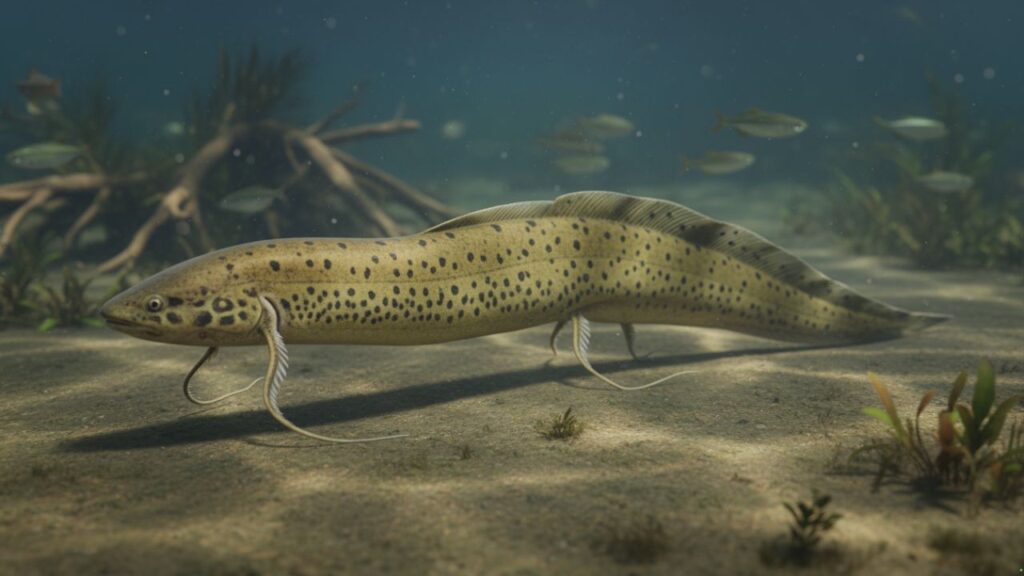
The West African lungfish is an aquatic survivor with one of the most remarkable adaptations in nature. When seasonal rivers dry up, this fish digs into the earth and enters a dormant state. Enclosed in a mucus cocoon, it can withstand dry periods that last not just weeks but sometimes years.
While encased, the lungfish slows its metabolism, reducing oxygen demand and conserving resources. Instead of feeding, it relies on breaking down its own body weight reserves for survival. Nitrogenous waste is stored internally until rain returns, when pools refill, and the fish reawakens to resume normal life.
This strategy demonstrates its extraordinary ability to endure long periods without access to open water—a trait that makes the lungfish a living fossil and a prime example of evolutionary brilliance.
Quick facts
- Survives by secreting a mucus cocoon that prevents dehydration.
- Lowers metabolism dramatically to save energy and oxygen.
- It can persist underground until seasonal rainfall replenishes rivers.
3. Couch’s Spadefoot Toad
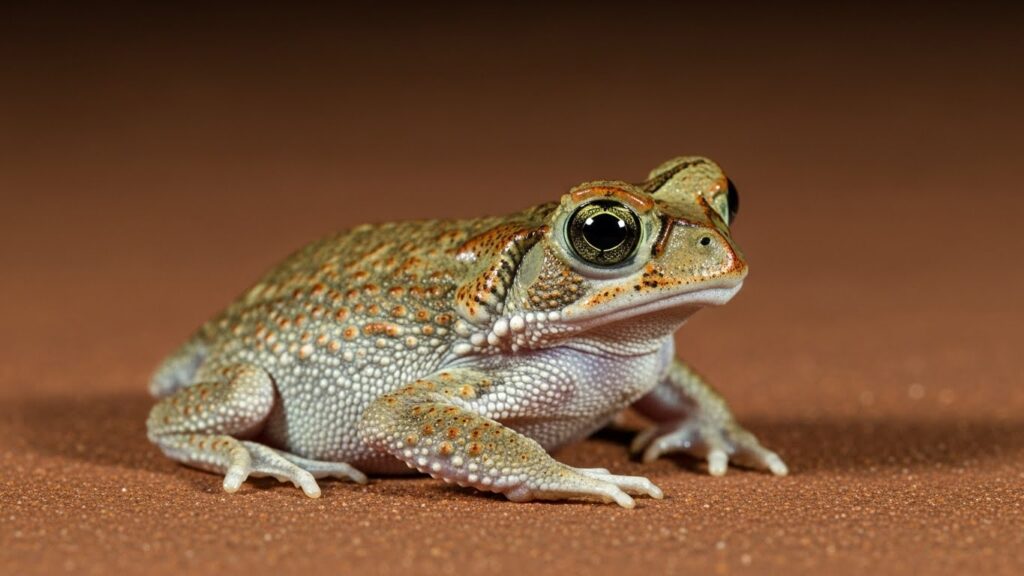
Couch’s spadefoot toad is another desert specialist, thriving in scarce rainfall zones. This amphibian spends much of the year hidden underground, using its strong legs to dig and avoid losing water, as stated by the Desert Museum. To survive long periods, it forms a protective cocoon of skin and mucus, functioning like a natural water-holding frog.
When sudden rain creates temporary pools, the spadefoot emerges to breed. Its reproductive cycle is accelerated: eggs hatch within hours, and tadpoles grow into toads in just days, ensuring survival before water bodies evaporate. This speed is vital in the desert’s fleeting conditions.
Equipped with sharp spades on its hind feet, it easily tunnels into sand, staying cool and maintaining vital moisture balance. By synchronizing life events with unpredictable storms, Couch’s spadefoot shows how well desert amphibians are adapted to tough landscapes.
Quick facts
- Creates a mucus cocoon to prevent dehydration during dormancy.
- Breeds rapidly after rain to take advantage of short-lived pools.
- Uses hind legs as digging tools to escape extreme heat.
4. Thorny Devil
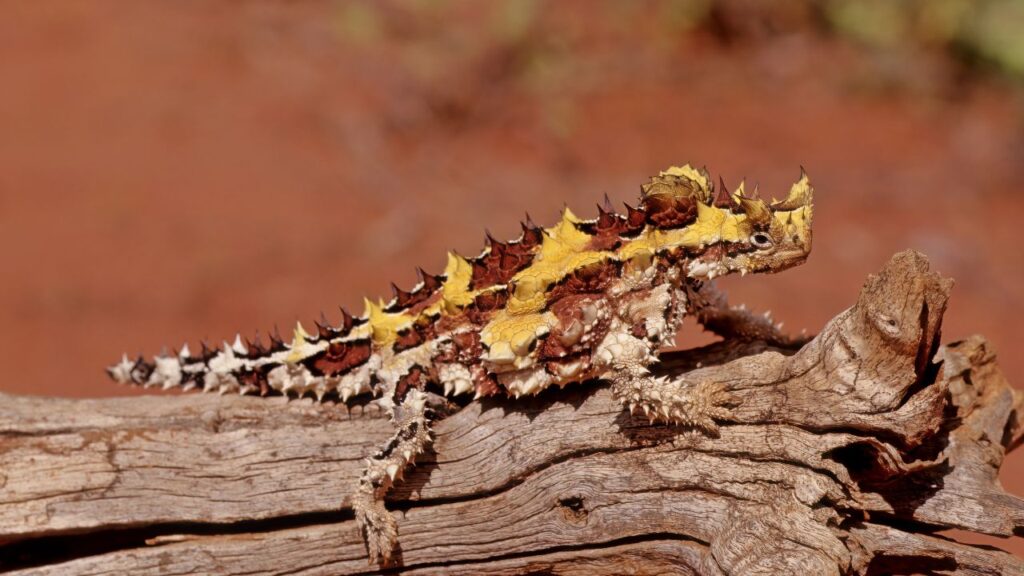
The thorny devil, native to the deserts of Australia, looks like a creature from another world. Covered in sharp spines, this lizard is perfectly adapted to arid desert environments where drinking water is extremely scarce. What makes it remarkable is its ability to collect and trap moisture directly from the sand and even dew on its body.
According to Bush Heritage Australia, its skin has tiny grooves that channel water toward its mouth through capillary action, allowing it to hydrate passively. This system lets the thorny devil drink without needing visible water sources, a vital survival tactic where rainfall is unpredictable.
In addition to hydration tricks, it feeds mainly on insects, especially ants, consuming thousands in a single day. Its spiky exterior not only discourages predators but also reduces evaporation by providing shade to its skin.
Quick facts
- Collects water through grooves in the skin that channel to the mouth.
- Eats thousands of ants daily as its primary food source.
- The camouflaged and spiny body protects from predators and heat.
5. Desert Tortoise
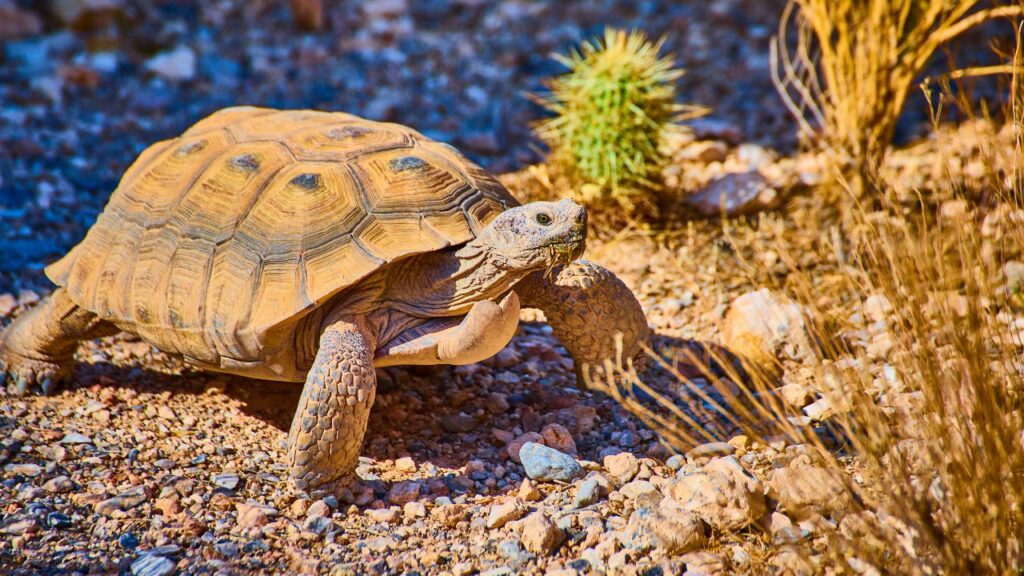
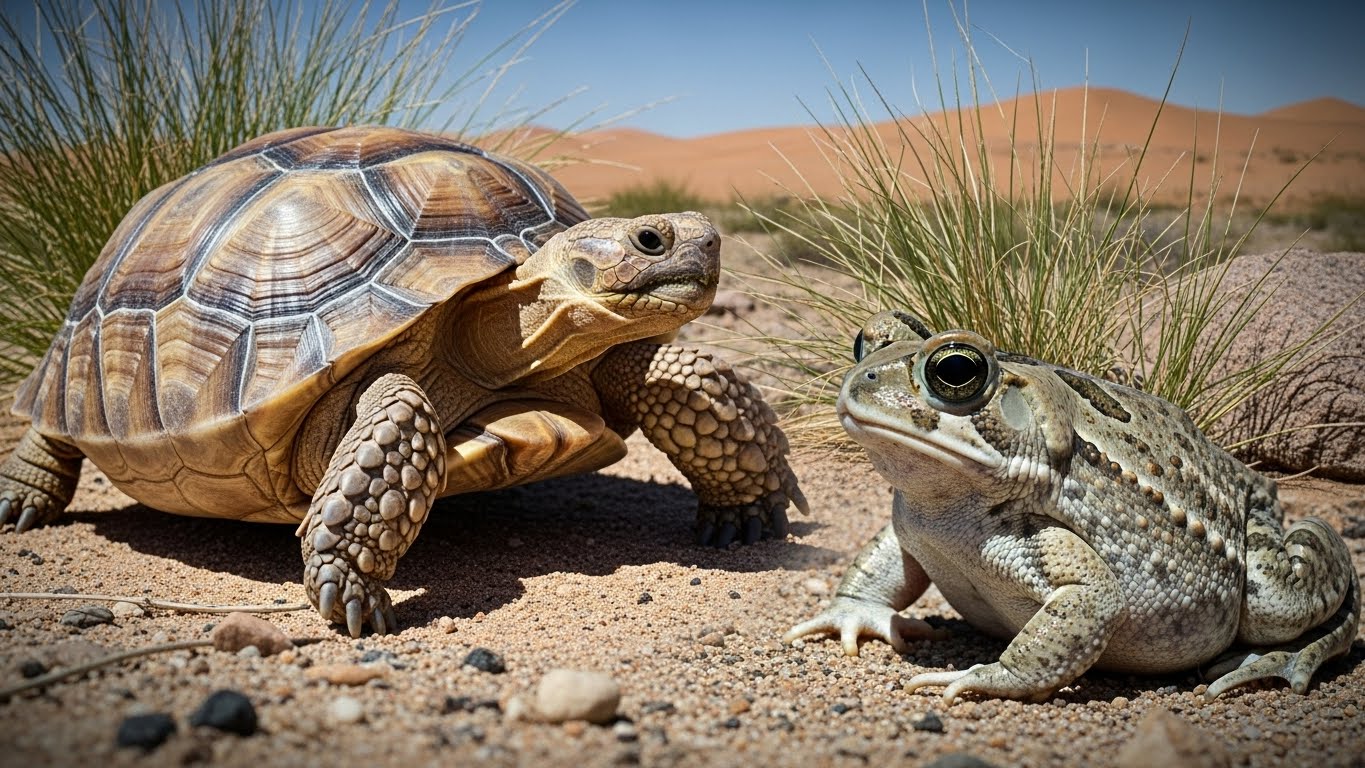
The desert tortoise is a slow but steady master of survival. Found in the Mojave and Sonoran deserts, it spends most of its life in burrows to avoid heat and reduce water loss. It has an ability to store water in its bladder, which it recycles during dry periods, a critical tool for living in scarce rainfall regions.
Its diet of grasses, flowers, and cacti helps to obtain moisture while providing the energy needed for its long, slow lifestyle. Unlike most animals, it can go nearly a year without drinking by carefully managing its internal reserves.
When rain returns, the tortoise replenishes its storage, often drinking copiously to refill its bladder. This makes it incredibly resilient and one of the most fascinating desert animals.
Quick facts
- Stores water in its bladder to use during dry periods.
- Spends most of its life underground to regulate body temperature.
- Eats desert plants that help conserve water and provide nutrients.
6. Water-Holding Frog

The water-holding frog, native to Australia, is one of nature’s most ingenious survivors. When the land bakes under extreme heat and rainfall disappears, this frog burrows deep into the earth, sealing itself in a self-made cocoon of skin and mucus. Inside this casing, the frog conserves vital resources, preventing dehydration and riding out long periods of drought.
This cocoon not only slows water loss but also helps regulate the frog’s body temperature, creating a stable micro-environment underground. What makes it truly unique is the way it stores significant reserves inside its own body weight, essentially turning into a living water reservoir.
Indigenous Australians have long known of this adaptation, sometimes carefully releasing the stored water in emergencies.
When rain returns, the frog awakens, breaks free from its cocoon, and emerges to feed on insects and breed quickly before the desert dries again. Its cycle of dormancy and reappearance shows how evolution equips animals to thrive where most animals cannot.
Quick facts
- Forms a protective mucus cocoon to survive drought.
- Stores water internally, acting like a living reservoir.
- Emerges after rain to feed, reproduce, and restore energy.
7. Jerboa
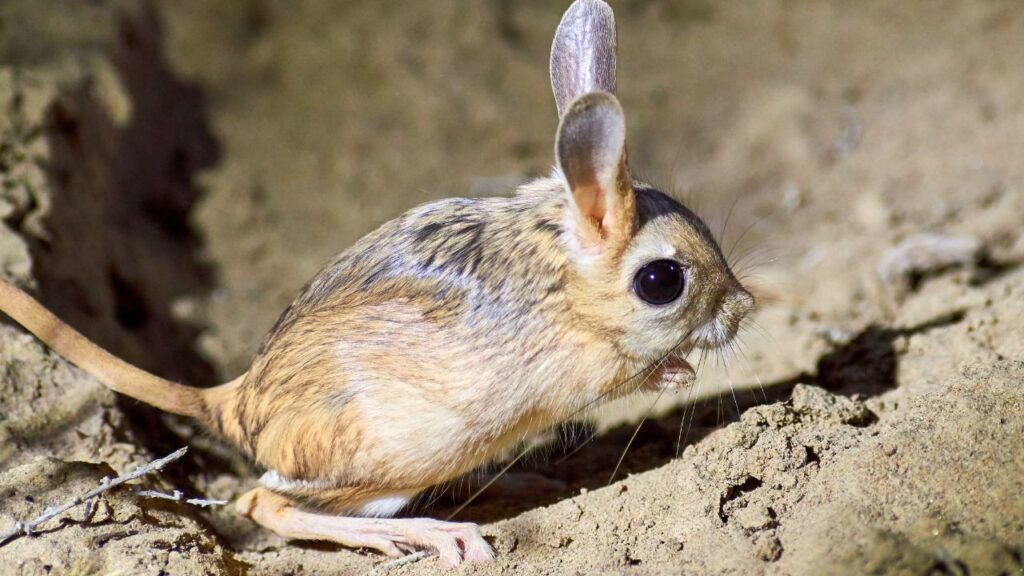
The jerboa is a small but remarkable rodent found in Asia and Africa’s sandy deserts. With its long hind legs, it hops like a miniature kangaroo, able to leap several feet in a single bound. These agile jumps, aided by its tail, help it escape predators and move quickly across shifting sand.
What makes the jerboa so extraordinary is its ability to survive without ever drinking water directly. Instead, it extracts what it needs from seeds and plants, showing a survival strategy similar to the kangaroo rat. By metabolizing dry foods, it can produce water internally, sustaining itself in places where open sources are absent.
To further conserve resources, the jerboa is nocturnal. Staying underground during the day prevents its body temperature from rising in the desert heat, reducing evaporation and risk of dehydration. At night, cooler conditions allow it to forage safely while using minimal energy.
Perfectly adapted to desert life, this small rodent thrives where survival seems impossible, demonstrating nature’s resilience in desert environments.
Quick facts
- Gains all moisture from food instead of drinking.
- Nocturnal lifestyle reduces water loss and heat stress.
- Strong hind legs and a balancing tail aid rapid hopping escape.
Conclusion
Survival in harsh landscapes often comes down to ingenious adaptations, and these animals prove just how creative nature can be. While creatures like the kangaroo rat, thorny devil, and desert tortoise are striking examples, other animals such as the fennec fox, gila monster, and even camels, famous for how they store fat in their humps, demonstrate equally remarkable strategies. Each has evolved unique ways of conserving resources, turning scarcity into strength.
For some species, survival means capturing every drop of moisture, even from their exhaled breath or through highly efficient breathing that reduces sweat and evaporation. Others rely on specialized excretion systems that recycle fluids, ensuring that nearly half of the water that enters their body remains present to fight off dehydration. Even the brain plays a role in managing body temperature and signals for energy use during drought.
These adaptations remind us that life’s breath of resilience is not limited to humans. Nature equips animals with extraordinary tools, showing us that survival in the most unforgiving conditions is as much about strategy as it is about strength.
