





As an animal lover, snakes have long held a fascination for me. I cannot say I have ever thought about having one as a pet, but that does not lessen my interest in them.
The collection of snake bite statistics by state below certainly reinforces the danger of getting too close to wild animals and should certainly serve as a warning to those who tread without care through a snake’s habitat.
Luckily, living in the UK, adders are the most venomous snakes we have in the wild. Adders are still vipers, but we are lucky that our indigenous snake population is largely venom-free. However, as this article will show, venomous or not, being bitten by a snake is never fun.
10 Most Breathtaking Stats
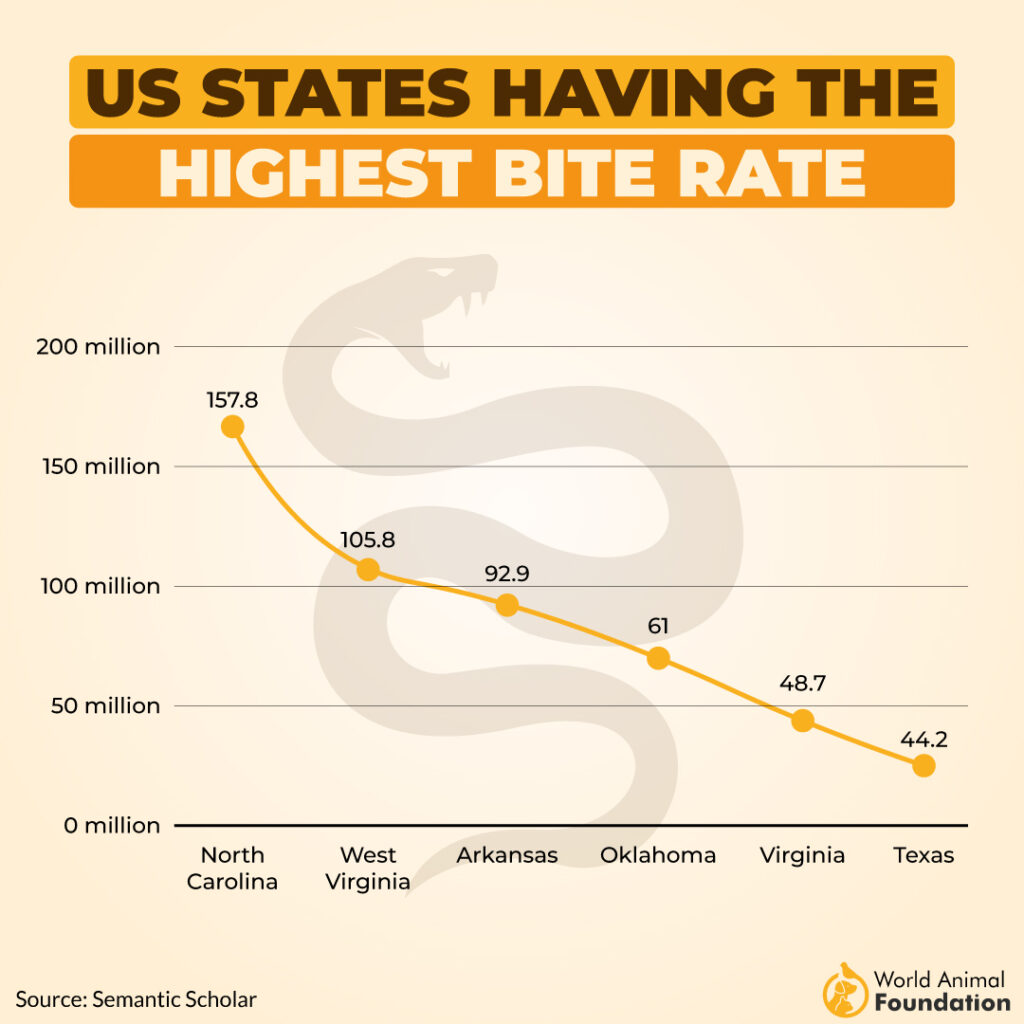
- North Carolina Has the Highest Bite Rate of 157.8 per Million Population per Year
- The Second State with the Highest Bite Rate of 105.3 Is West Virginia
- Arkansas Come Third on the List with a Bite Rate of 92.9
- The Snake Bite Rate in Oklahoma Is 61
- Virginia Has a Bite Rate of 48.7
- Texas Has a Bite Rate of 44.2
- The US Has 30 Species of Venomous Snakes
- In the US, Copperheads Bite 2,920 People Annually
- Only 0.2%, 1 in 500, of Venomous Snake Bite Results in Death
- From 7,000 to 8,000 Annual Snake Bites, Almost 5 People Die
Snake Bite Statistics by State
According to the WHO, every year, about 5.4 million people around the world are bitten by snakes. More than 80,000 of them die, and about three times as many survivors are left with long-term disabilities.
Did you know that every year, over 7,000 to 8,000 people in the United States are bitten by venomous snakes? But the likelihood of a snake bite varies greatly by state.
The states with the highest incidence of snake bites per million population per year are North Carolina at 157.8, followed by West Virginia at 105.3, Arkansas at 92.9, Oklahoma at 61, Virginia at 48.7, and Texas at 44.2.
Below are nine fascinating snake bite statistics based on individual US states.
North Carolina Has the Highest Bite Rate of 157.8 per Million Population per Year (Jama Network)
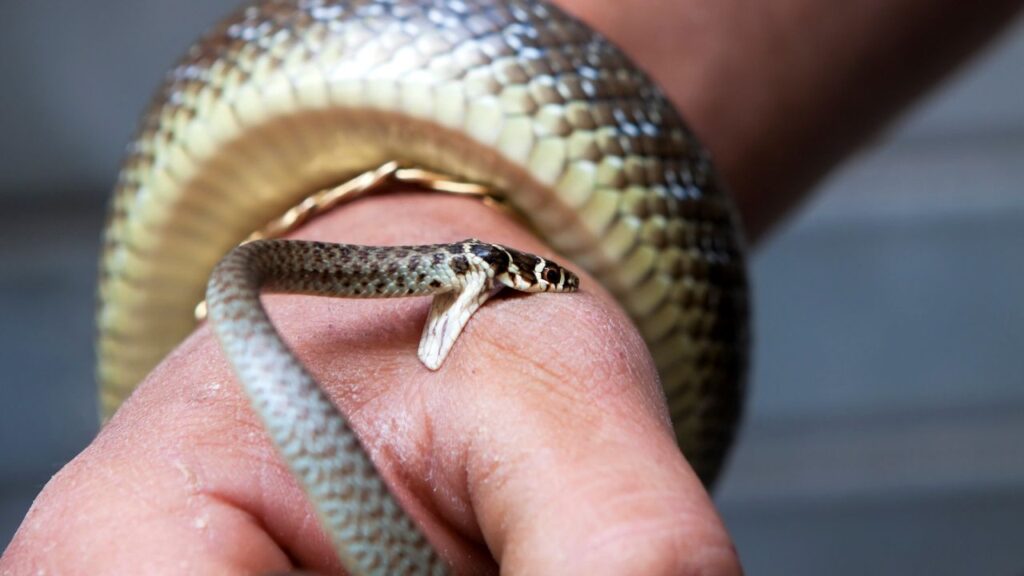
Out of all fifty states, North Carolina has the highest rate of venomous snakebites in the whole United States. According to data published on the Jama Network, North Carolina reports 157.8 snake encounters per million inhabitants.
This is five times higher than the country’s average of 30 bites per million of the population. By early June 2024, there had been 268 reported venomous snakebites. Around the same time in 2020, there were 259 cases.
6 Species of c Are Inhabited by North Carolina (ABC11)
North Carolina is home to nearly 37 different species of snakes. An article published by ABC11 News revealed that there are six different venomous serpents native to North Carolina. The six venomous species are listed below:
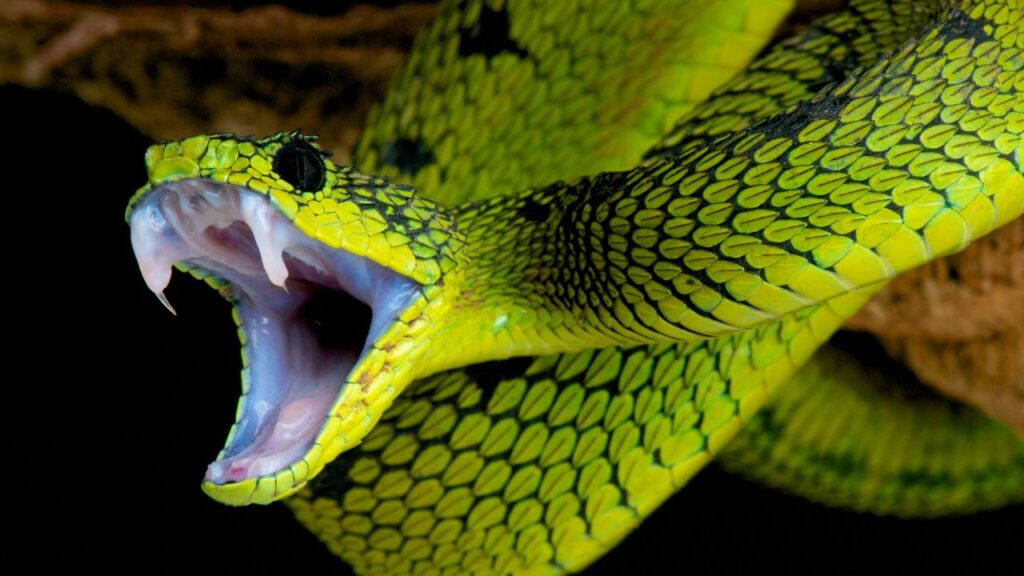
- Copperhead
- Cottonmouth
- Timber rattlesnake
- Pigmy rattlesnake
- Eastern diamondback rattlesnake
- Eastern coral snake
In May 2019, 92 People Were Bitten by Venomous Snakes in North Carolina, according to Snake Bite Statistics from 2020 (ABC11)
According to another article from ABC11 News, in May 2019, NC saw a total of 92 venomous snakebites reported. An average of 85 people are bitten by snakes in May each year.
A leading theory relating to the rise in bites is that humans are more frequently encroaching on snake territory.
The Second State with the Highest Bite Rate of 105.3 Is West Virginia (Jama Network)
According to Jama Network, West Virginia is the state that has the second-highest bite rate per million people.
With 105.3 bites per million, West Virginia is still more than three times above the national average. There are 23 species or subspecies of snakes documented in West Virginia. Interestingly, despite the high bite rates, West Virginia is home to just two venomous breeds.
Arkansas Come Third on the List with a Bite Rate of 92.9 (Jama Network)
The same article confirmed Arkansas to be the third most active state for venomous snakebites on humans.
Arkansas reports three times the national average, with 92.9 bites per million people in the population. While there are 39 different species native to the state, only six have a venomous bite.
The Snake Bite Rate in Oklahoma Is 61 (Jama Network)
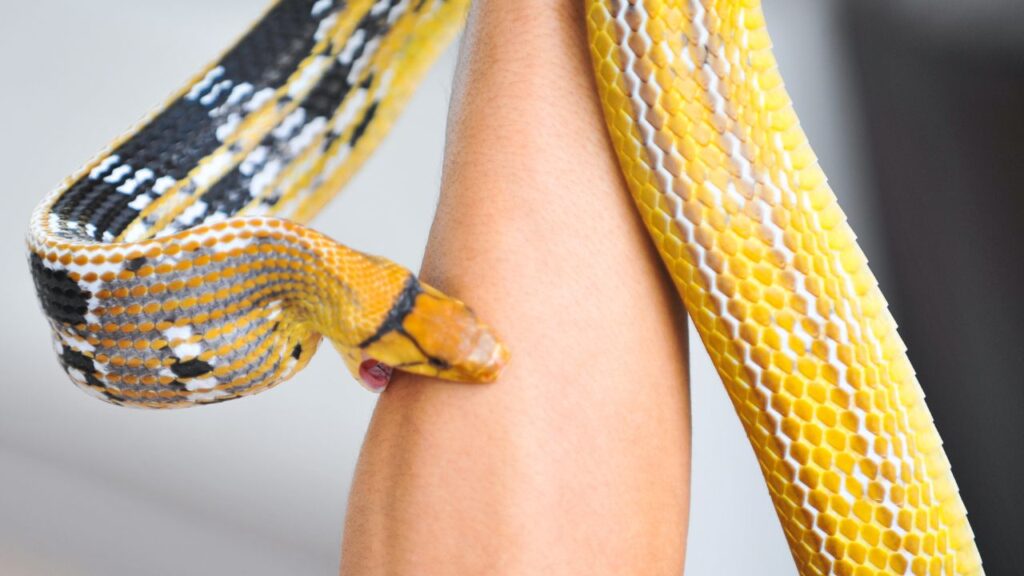
The same report also confirmed that Oklahoma is the fourth most bite-rich state, with a reported 61 bites per million, twice the national average. The low numbers are impressive when you think that Oklahoma has 46 different types of snakes and 7 venomous species.
Virginia Has a Bite Rate of 48.7 (Jama Network)
The state of Virginia is the fifth most active state for venomous snakebites. At 48.7 bites per million people, Virginia is roughly 50% above the national average.
Virginia is home to 30 types of snakes, including cottonmouths and copperheads, and a few types of rattlesnakes. But only three are venomous.
Texas Has a Bite Rate of 44.2 (Jama Network)
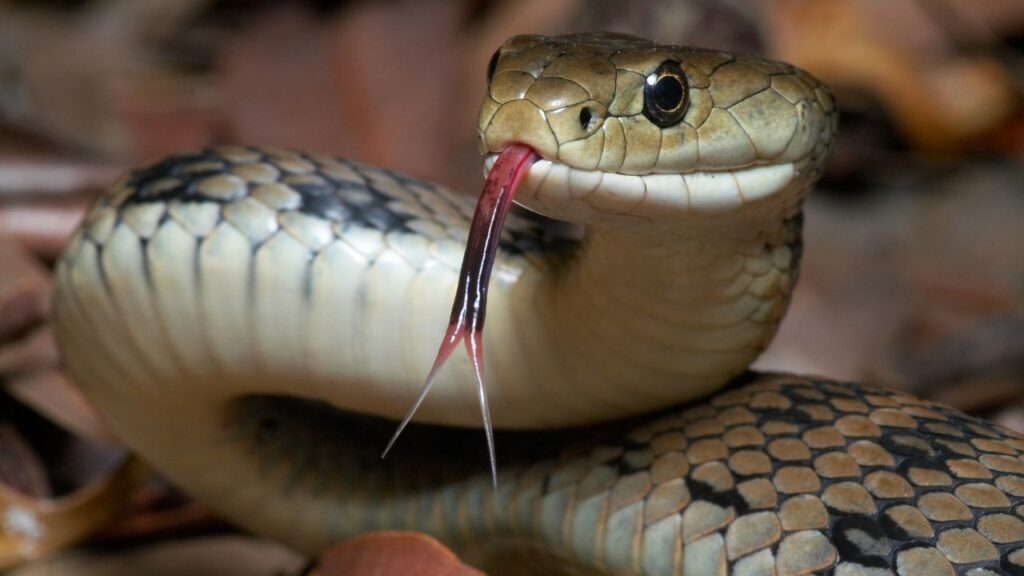
Continuing with data from the Jama Network, the news that Texas has an astonishing 44.2 bites per million.
While this is above the national average, what makes the figures truly incredible is that Texas is home to an incredible 68 types of snakes, including the Texas coral snake. Texas is home to 15 potentially dangerous snake species or subspecies.
Approximately 1 in 4 Snake Attacks on Children Occur in Florida and Texas (CBS News)
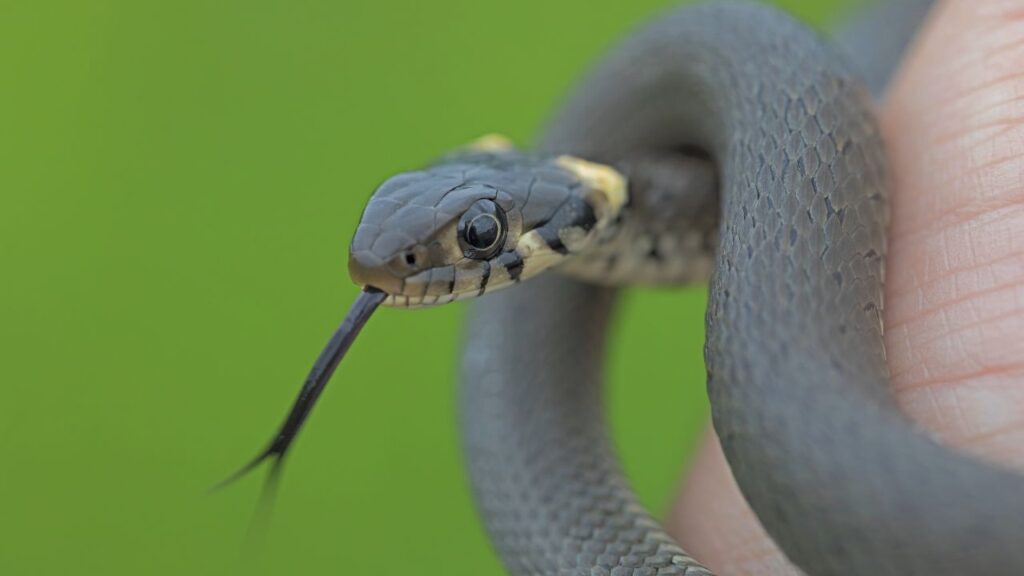
A report from CBS News revealed that in 2016, 1 in 4 snake attacks on children occurred in either Florida or Texas. More than 18,700 pediatric snakebite cases were phoned in between 2000 and 2013, about half of them venomous.
The average age of a child bitten by a snake in the US is 10.7, and boys are far more likely to be bitten than girls.
Most Poisonous Snakes in the United States
Below are eight eye-opening statistics about the most poisonous snakes in the United States.
In the US, there is One Species of cottonmouth snake in Florida (Florida Museum)
The cottonmouth is one of the more venomous snakes found in Florida. Also known as the water moccasin, there is actually one species of cottonmouth in the state.
Cottonmouth snakes live all across Florida and can be found in every county. Their bites are venomous and can be very dangerous for both people and pets. Anyone who is bitten should get medical help right away from a doctor or hospital that knows how to treat snakebites.
Copperhead Snakes Have Unique Hourglass Markings and Eat Just 10–12 Meals per Year (Live Science)
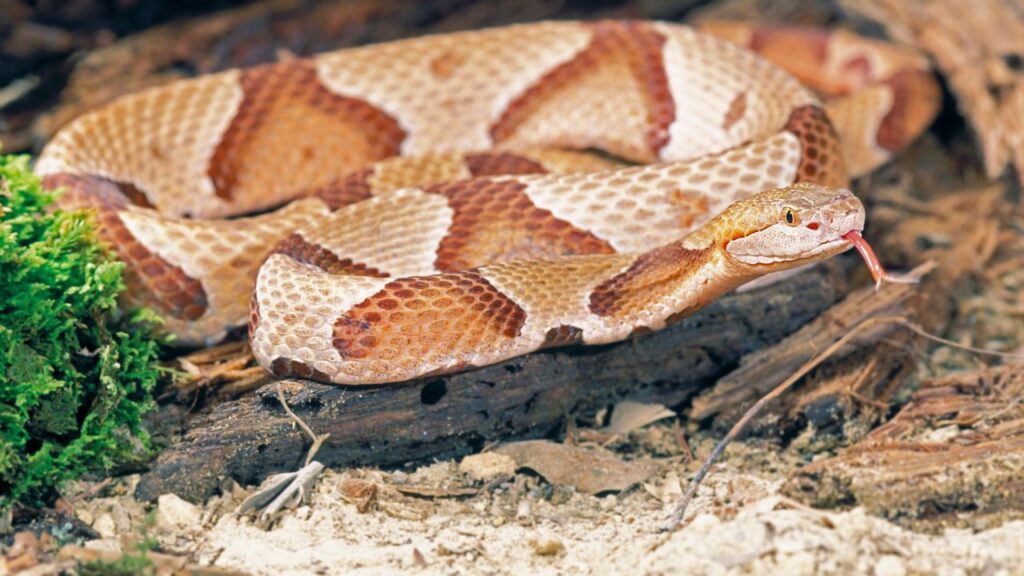
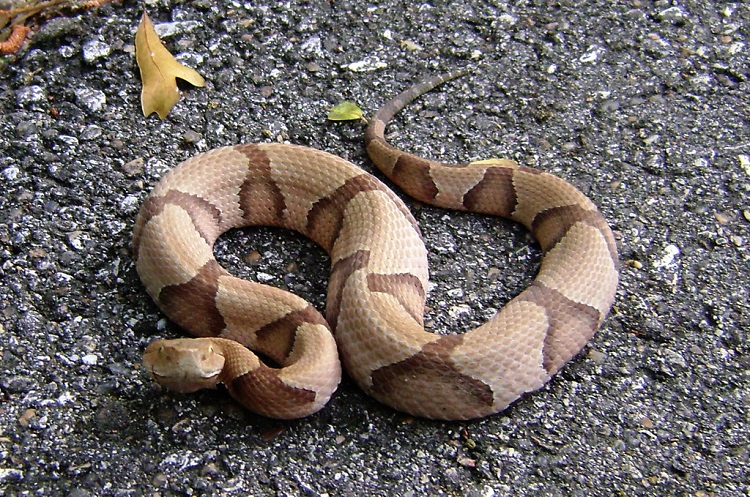
Although painful, copperhead bites are mild compared to most pit vipers, and as a result, their bites have a low fatality rate. The copperhead snake is easily identified by its copper coloration and the distinct hourglass pattern that runs horizontally across its body.
According to Live Science, the copperhead only eats 10-12 meals per year. Sadly, copperheads do not bite humans for food, so you always need to be careful whether they have eaten or not.
There Are 200 Species of Viper Divided across Four Sub-families (Science Direct)
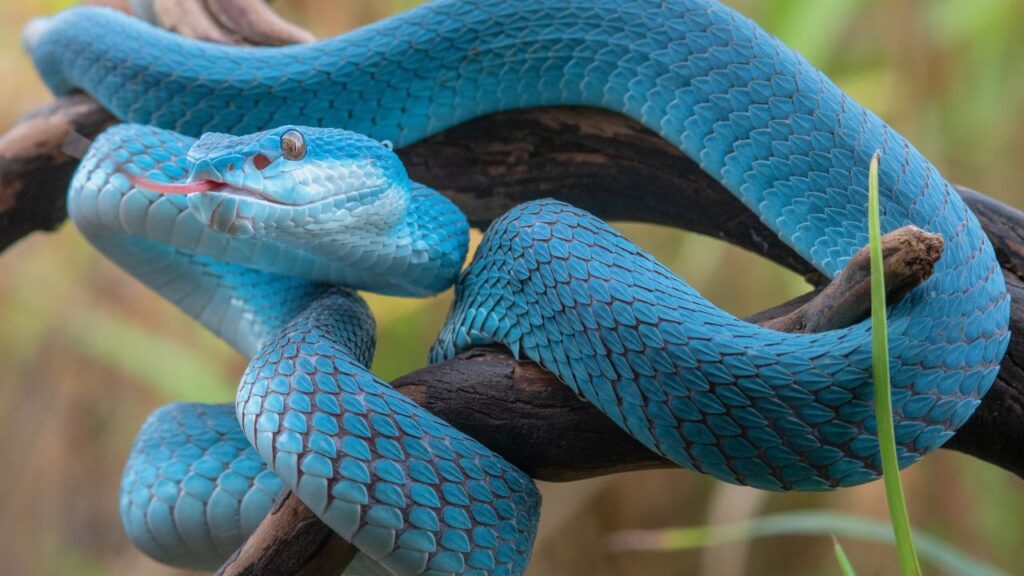
Vipers are found all over the globe, and there are more than 200 different identified species. According to Science Direct, there are four sub-families of vipers under which all species are classified.
Below are the four different sub-families.
- Fea’s vipers
- Night adders
- Pit vipers
- True or pitless vipers
There Are 32 Different Rattlesnake Species in the United States (Reptiles Magazine)
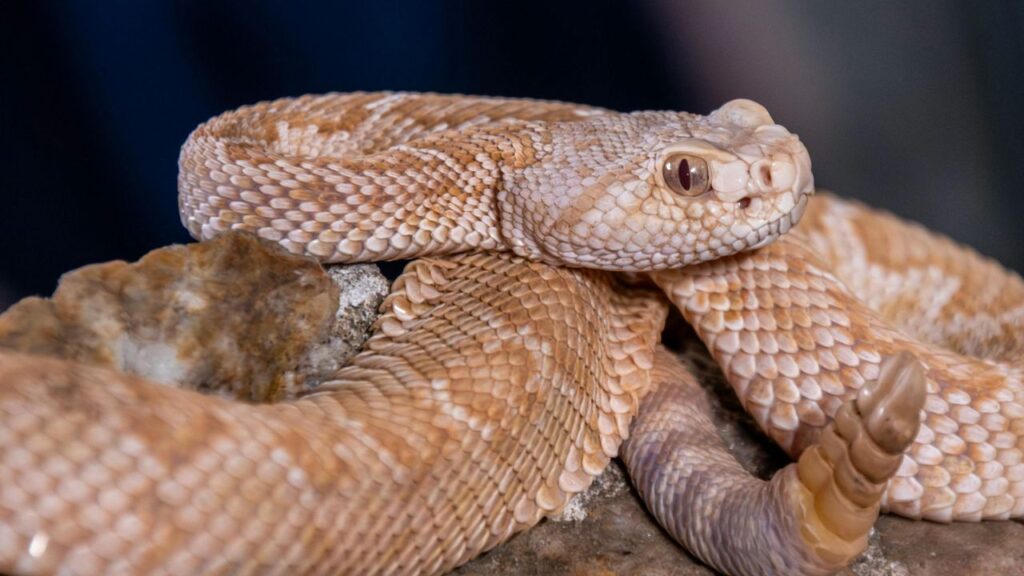
There are 32 different rattlesnake species, along with approximately 83 subspecies, native to the United States.
The article also confirms that Arizona takes the prize as being the state home to the most different species of rattlesnake, with an incredible 14! California has 12 rattlesnake species, and Texas has 9 rattlesnake species.
When Scared, the Eastern Diamondback Rattlesnake Attacks Humans in Self-Defense (National Geographic)
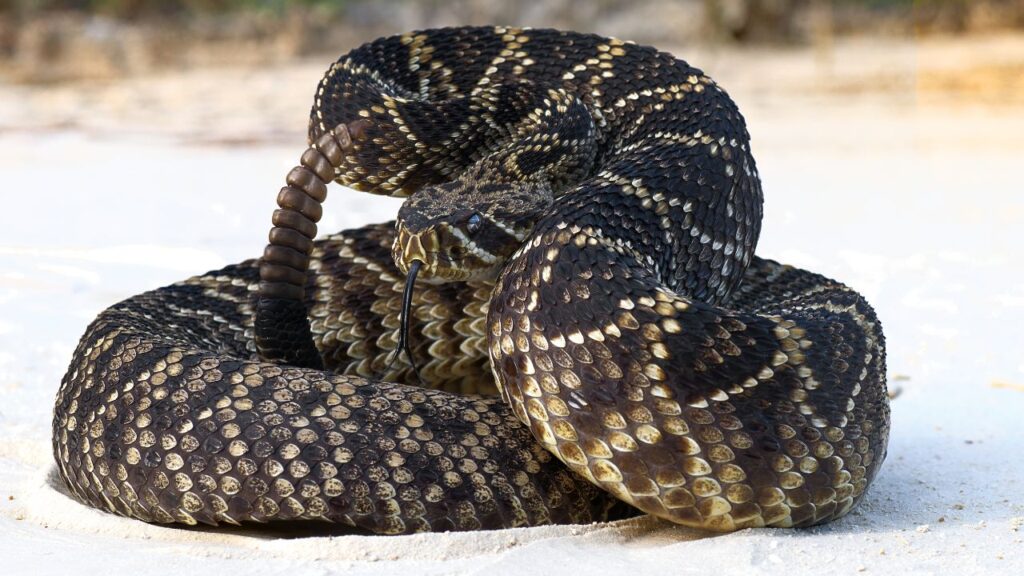
Humans are not natural prey for snakes. National Geographic confirmed in a post on its website that the eastern diamondback rattlesnake will only bite humans in self-defense.
The eastern diamondback is one of the most venomous snakes in the United States and has a fearsome reputation, but actually, it will only attack when it feels threatened or is startled.
The United States Is Home to Three Species of Coral Snake (NCBI)
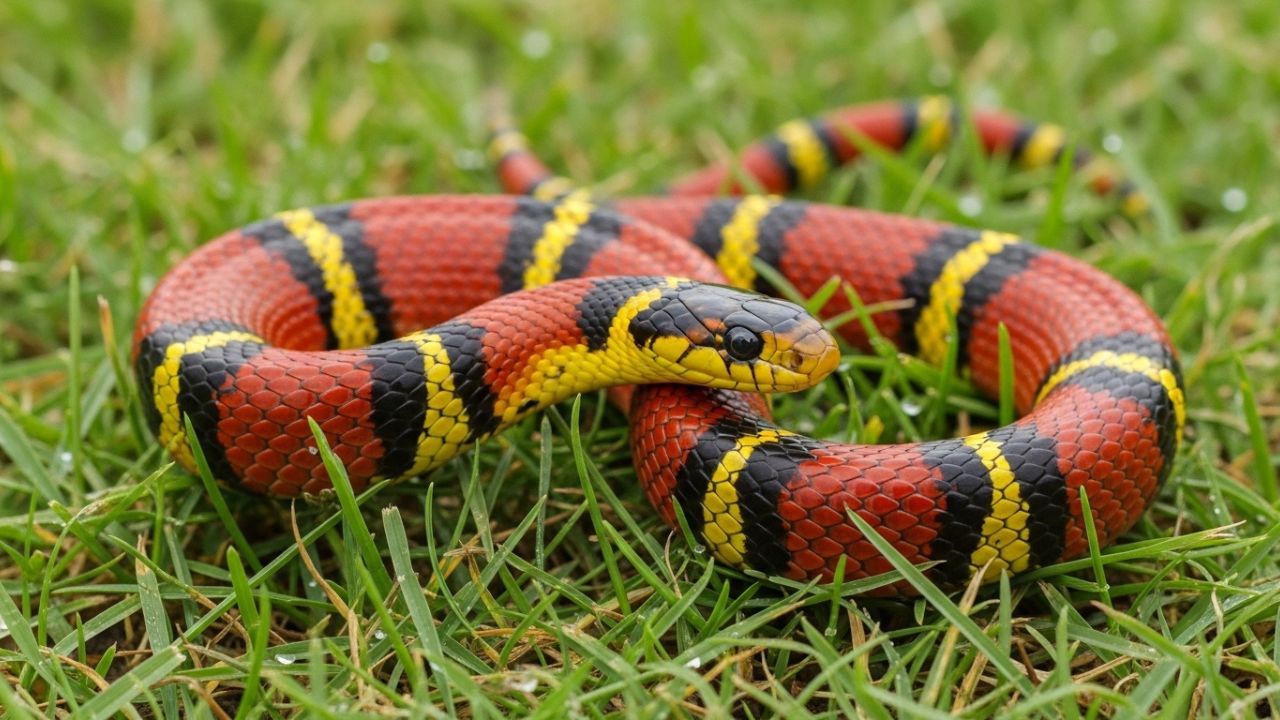
According to the National Library of Medicine, across the US, there are three primary species of coral snake. Coral snakes are members of the Elapidae family, and 40 to 50 species exist in the Americas.
- Eastern coral snake: The eastern coral snake is primarily found in Florida and throughout the southeast United States.
- Texas coral snake: The Texas coral snake is found primarily in Texas and down into northern Mexico.
- Sonoran coral snake: The Sonoran coral snake is found throughout Texas and the southeastern
The Slithering Speed of a Black Mamba Is 12mph (Live Science)
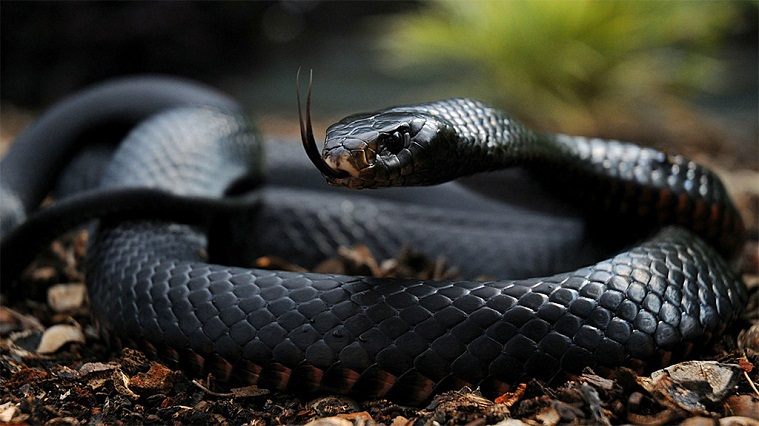
The black mamba is a fascinating snake. Not only does it have one of the most venomous snakebites on the planet, but it is also the fastest snake. According to a post on Live Science, the black mamba can reach speeds as high as 12 miles per hour.
An Inland Taipan Bite Can Kill Humans within 30 Mins of Attack If Left Untreated (UCSD)
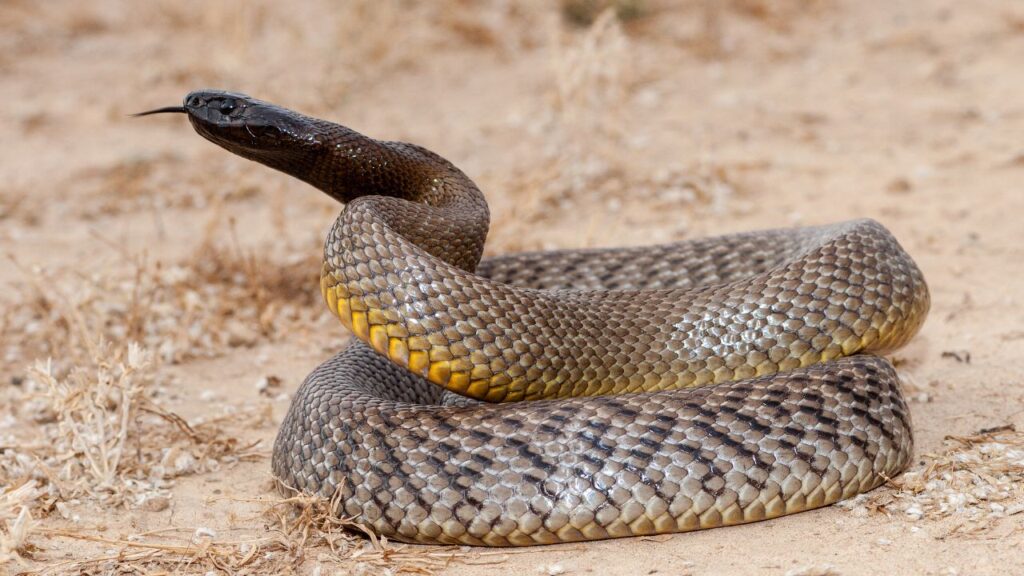
The inland taipan tops the global list of most venomous snakes. As per a report on UCSD, an untreated inland taipan bite can kill a human in as little as 30 minutes.
When attacking, an inland taipan bites up to eight times in a frenzy. Inland taipans produce enough venom in a single attack to be fatal to 100 humans or, amazingly, 250,000 mice.
However, it should be noted that they are not native to America. Inland taipans are endemic to Central East Australia, but they are rarely kept in captivity in parts of the US.
Are Copperhead Bites Fatal?
Below are three alarming facts addressing copperheads and the venom in their bites.
Copperheads Bite More People than Any Other U.S. Snake Species (CBS News)
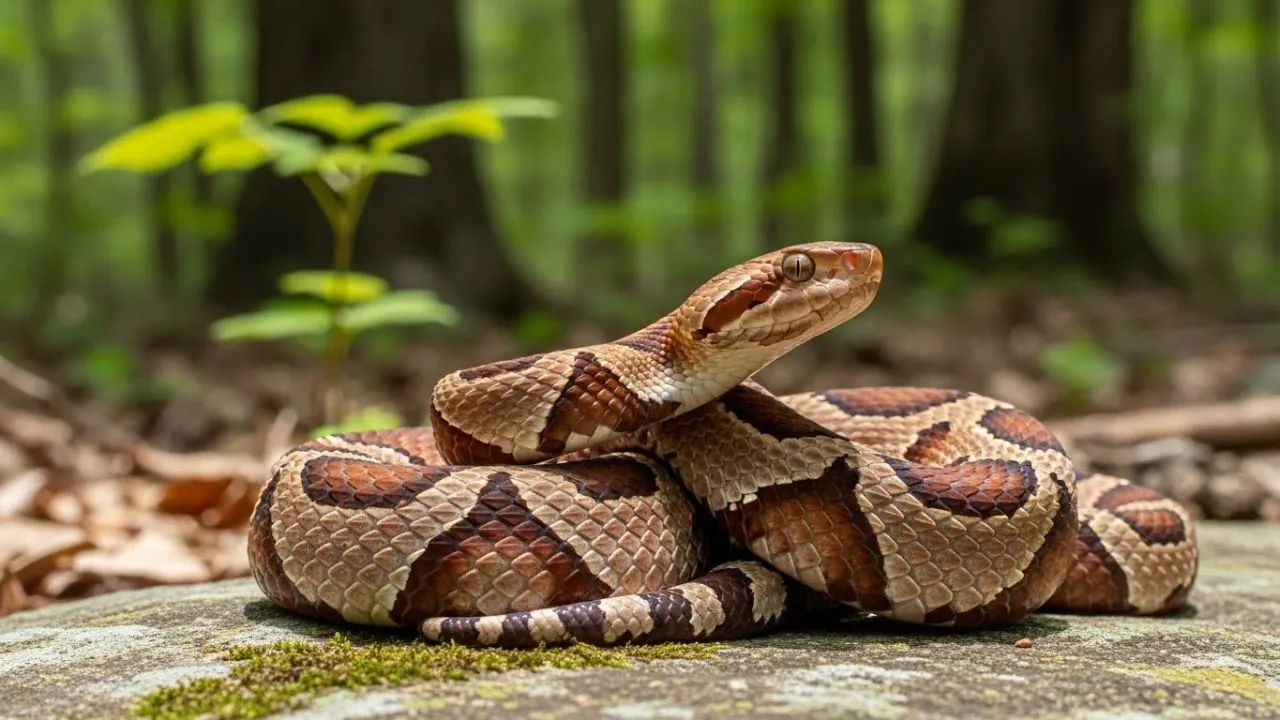
According to a post on CBS News, copperheads have higher bite rates than any other snake across the US. Luckily, however, fatalities resulting from a copperhead snakebite are rare.
However, it is always advisable to seek medical attention should you be bitten by a copperhead snake.
In the US, Copperheads Bite 2,920 People Annually (Jama Network)
According to an article on JamaNetwork, the copperhead is responsible for almost 3,000 bites per year.
That means that over 30% of the 7,000-8,000 people bitten by snakes come from just a single species. The article also specified that 98% of reported venomous snakebites were on the extremities, with 36% on the upper and 62% on the lower extremities.
The Incidence of Bites by Copperhead Snakes Is 16.4 per Million Population per Year (Jama Network)
An article published by JamaNetwork calculated that the bite rate of copperheads equates to 16.4 per million across a year. However, while many bites required medical treatment and a trip to the emergency room, the rate of fatalities was 0.01%.
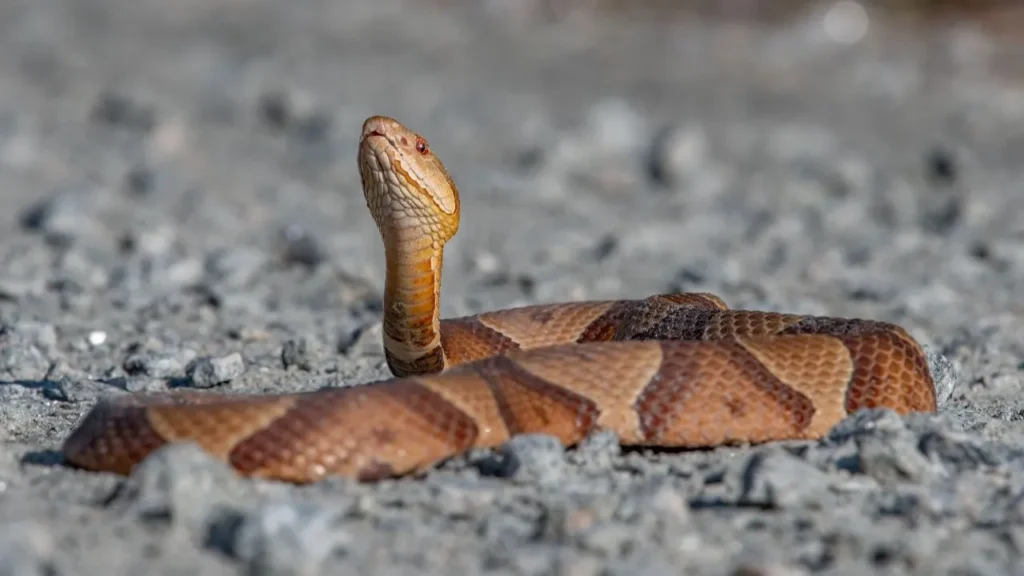
Interestingly, the majority of snakebite incidents involving copperheads occurred in an individual’s backyard.
Interesting Snakebite Statistics
Below are ten interesting snake bite statistics.
The Average Incidence of Venomous Snake Bites in the US Is Roughly 3 Bites per 100,000 Persons (CDC)
According to a report published by the CDC, there are approximately 7,000-8,000 reports of venomous snakebites per year. About 5 of those people die.
As of February 6, 2026, the population of the United States is 348,382,531. Based on CDC estimates and the current population, about 2.0 to 2.3 people out of every 100,000 are bitten by venomous snakes each year in the U.S.
The Number of Poisonous Snake Species Is 700 (Science Daily)
A study from Science Daily revealed that there are approximately 700 different types of poisonous snakes in the world.
The same study also mentioned that worldwide, there are an estimated 100,000 deaths attributed to encounters with various members of these species.
The US Has 30 Species of Venomous Snakes, including Rattlesnakes, Coral Snakes, Cottonmouth, and Copperheads (Animals Around the Globe)
Out of the 700 venomous species, according to AnimalsAroundTheGlobe, thirty of them are found in the United States.
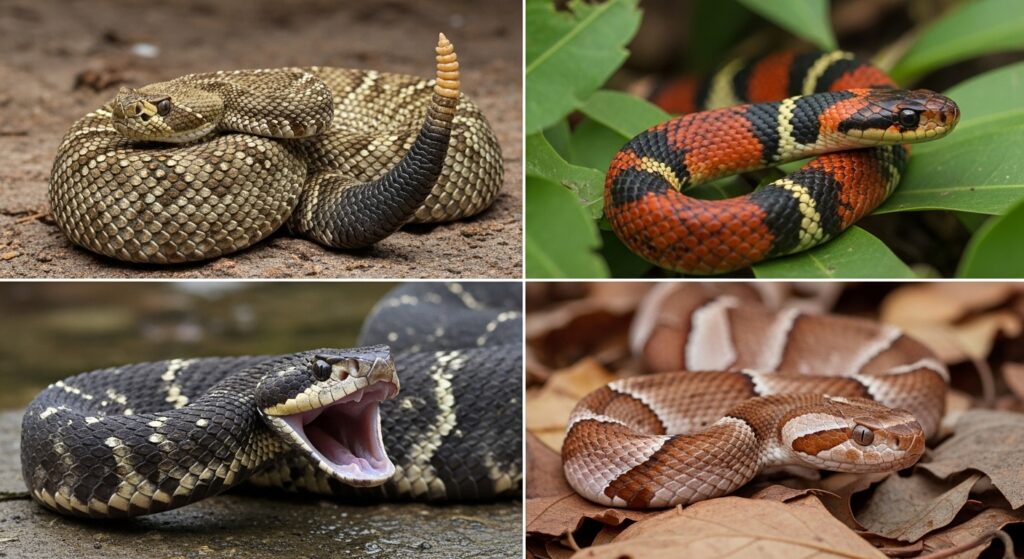
Of these thirty venomous snakes, rattlesnake bites are considered the most venomous and are roughly four times more potent than any other snake in the US.
Annually, 7,000 to 8,000 Americans Are Bitten by Snakes (CDC)
A study published by NCBI confirms that each year in the United States, anywhere between 7,000 and 8,000 people suffer venomous snakebites. From those, there are between 5 and 10 reported fatal snake bites per year.
Every Year 1,300 US Kids Suffer a Venomous Snakebite (CBS News)
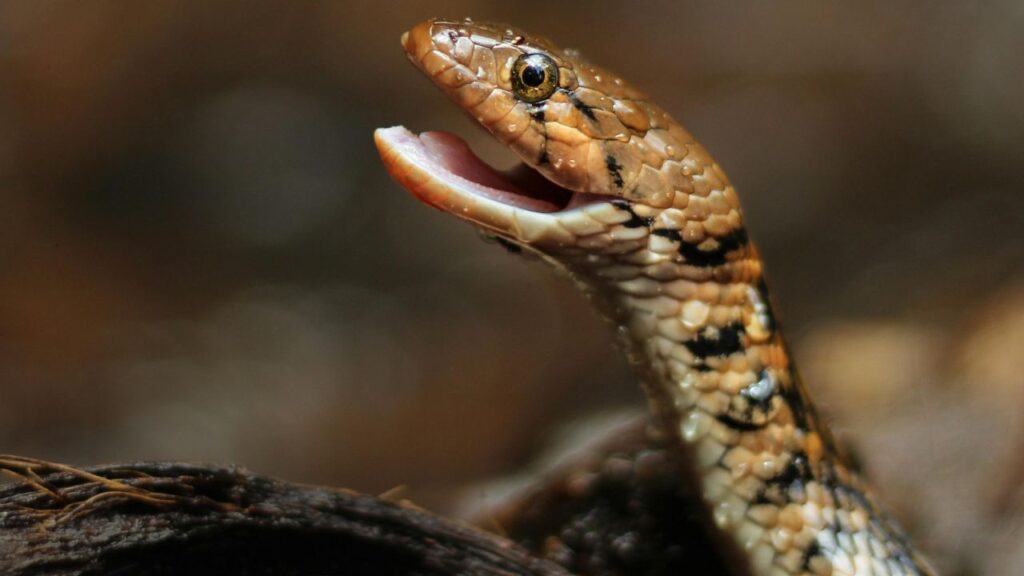
As per an article on CBS News, children account for 1,300 venomous snakebites every year, which is about 1,337 per year on average. This is understandable given the natural curiosity of children and their propensity to explore the world around them.
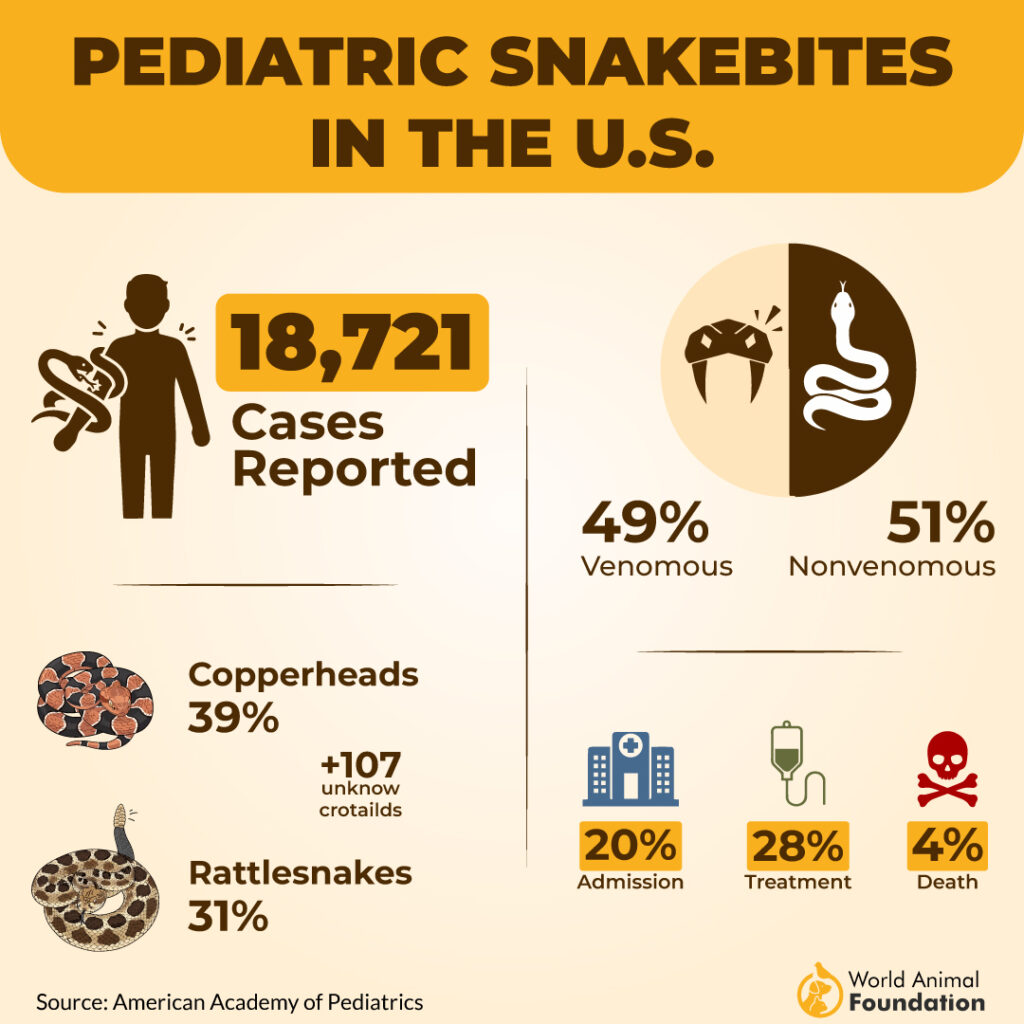
Between 2000 and 2013, there were 18,721 snakebites reported in children. About 68% of the victims were boys. The average age of the children was 10 years old.
About 25% of child snakebites happen in Texas or Florida. The highest bite rates (based on population) were in West Virginia, Oklahoma, and Louisiana.
Between 1990 and 2019, the US. recorded 17 deaths with a 0.01 snakebite death rate (World Population Review)
The United States has one of the lowest snakebite death rates in the world. Because of good medical care and easy access to antivenom, the chance of dying from a snakebite is almost zero.
Only 17 deaths were reported over nearly 30 years. This is very different from places like South Asia and Sub-Saharan Africa, where tens of thousands of people die from snakebites each year.
There Are Over 150,000 Incidents of Snakes Biting Cats and Dogs Annually (Morris Animal Foundation)
It’s not just humans that get bitten by snakes. According to the Morris Animal Foundation, there are over 150,000 incidents every year where dogs or cats suffer from venomous snakebites.
Statistics show that about 80% of dogs survive venomous snakebites if they receive quick medical treatment. However, this varies greatly depending on the cat or dog in question and the severity of the bite they receive.
10–44% of Rattlesnake Attack Victims Face Permanent Injury or Disability (CDC)
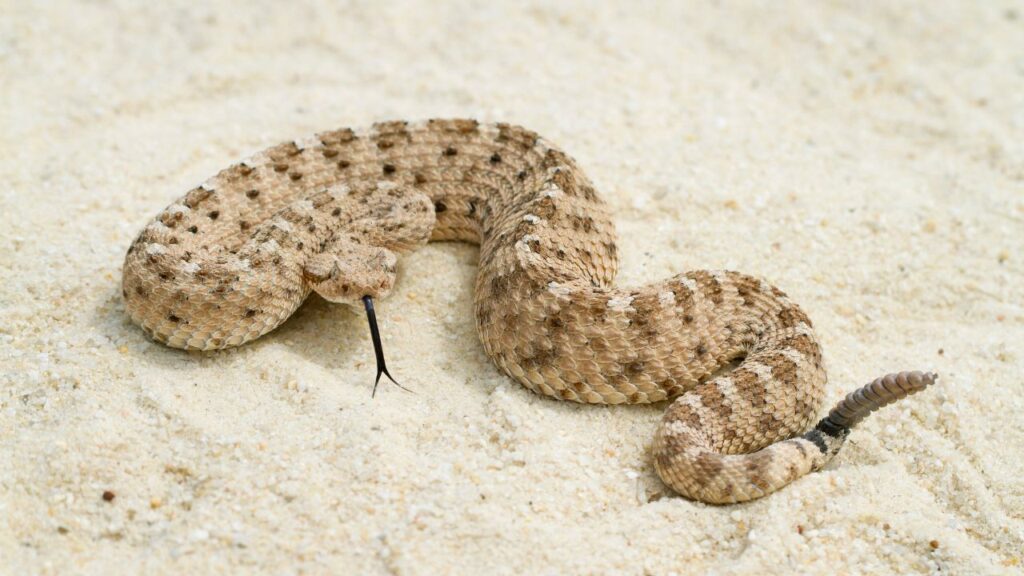
Rattlesnakes are tough creatures and the most venomous species of snake in the US. Species such as the timber rattlesnake or the massasauga rattlesnake are particularly venomous and aggressive.
According to the CDC, anywhere between 10-44% of those bitten by a rattlesnake suffer some form of permanent injury or resultant disability. This includes the loss of digits on a hand or even partial use of limbs or eyesight.
In India, the Death Rate from Snake Bites Is 4.1 per 100,000 Individuals (PLOS)
An article on PLOS revealed that snake bites in India result in over 50,000 deaths each year. These attacks mean an average countrywide death rate due to venomous snakebites of 4.1 per 100,000.
The exact rate varies depending on where in the country you look, as in rural areas, this average rises to 5.4 per 100,000.
In Australia, Almost 1,000 to 3,000 Serpent Bites Occur Annually (NCBI)
According to NCBI, Australia sees an average of 1,000 to 3,000 venomous serpent bites per year. This is surprisingly low, given the number of venomous serpents in the country.
Out of those 3,000 interactions, approximately 500 require some form of hospital treatment, while there are just 2 deaths, on average.
Snakes Pet Ownership Statistics

Below is another interesting statistic on people keeping snakes as pets.
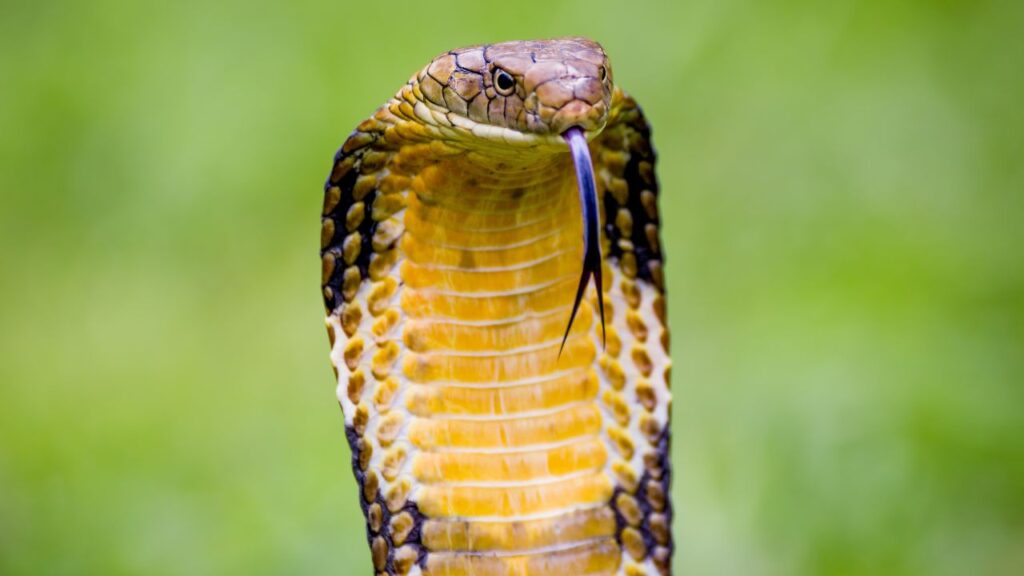
With an Annual Permit, a King Cobra Could Be Owned as a Pet in Florida (PetsOnMom)
The Florida Fish and Wildlife Conservation Commission (FWC) issues permits for venomous reptiles, but these are only for exhibition, research, or educational purposes, not for private pet ownership.
The king cobra is one of the deadliest snakes in the world. A snake bite from a king cobra can kill within 30 minutes without urgent medical help.
Yet, according to an article from Pets On Mom, it is still legal – with the proper licensing and permits – to own a king cobra as a pet in Florida.
Snake Bite Deaths per Year USA
Now, let’s look at the eye-opening facts about the number of deaths due to snake bites.
Only 0.2% (1 in 500) of Venomous Snake Bite Results in Death (Texas Parks and Wildlife Department)
According to an article from Texas Parks and Wildlife, while the danger of being bitten by a snake should never be underestimated, the chance of death is as low as 0.2%.
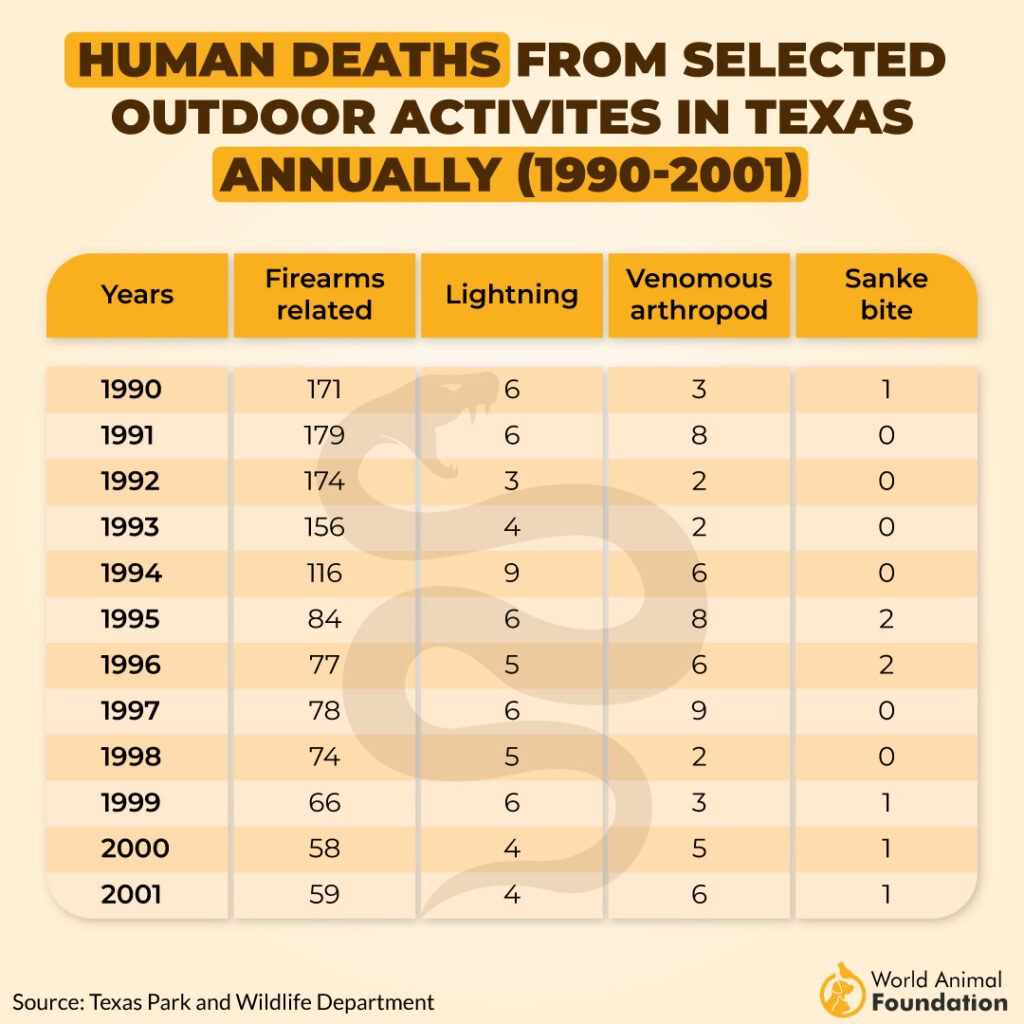
In fact, people are nine times more likely to die from being struck by lightning than to die of venomous snakebite. Interestingly, males are more likely to be bitten than females.
From 7,000 to 8,000 Annual Snake Bites, Almost 5 People Die (CDC)
According to the Centers for Disease Control (CDC), there are only an average of 5 deaths a year out of 7,000-8,000 recorded bites.
Most people living in a snake-rich area understand that they should seek treatment with antivenom should they receive a wound following a snake bite.
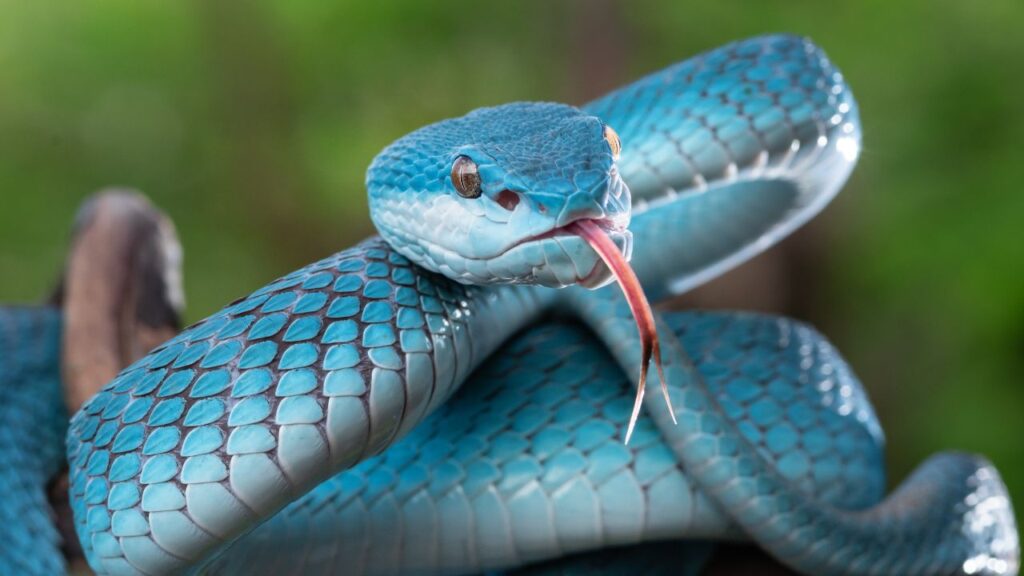
Every Year 1–2 People Are Killed by Poisonous Snakes in Texas (Texas Health and Human Services)
According to a post from the Texas Department of Health and Human Services, approximately 25% of fatal snake bites happen in Texas.
Texas is home to the largest number of different types of snakes in the United States, yet their death rate remains low. This has less to do with snakebite prevention and more to do with people seeing the correct treatment when bitten.
The Fatality Rate Due to Copperheads Bite Is Quite Low at Just 0.01% (Jama Network)
While there are nearly 3,000 people bitten by wild copperheads every year, the death rate remains low. According to Jama Network, the fatality rate is so rare that it measures just 0.01%
FAQs
Which Is the Deadliest Snake in the World?
The inland taipan is widely recognized as being the deadliest snake in the world. The inland taipan is a snake native to Australia, specifically central Australia.
Thankfully, despite topping the list of the most venomous snakes in the world, the inland taipan is rather shy and highly placid. Additionally, because of their geographical location, inland taipans do not often come into contact with humans.
What Is the Average Lifespan of a Viper?
The average age of a viper is anywhere between 15 and 20 years. However, there are approximately 80 different viper species, and each has its own individual age range.
For every rattlesnake that lives 10–25 years, there is an adder that lives just 5-10. It is impossible to give a single range for an entire snake species.
What Do the Rattles Numbers on a Rattlesnake’s Tail Signify?
The number of rattles on a rattlesnake’s tail signifies nothing in particular. There is a prevailing myth that the number of rattles acts the same as the number of rings in the tree, revealing the snake’s age. However, this is not true.
A new rattle emerges every time a snake sheds its skin, but rattlesnakes do not shed their skin on a regular or annual schedule, so it’s impossible to use this as an aging factor.
Additionally, the rattles on their tail can fall off due to accidents or predator attacks.
How Fast Does a Snake Bite Kill?
The length of time it takes for a snake bite to be fatal depends on the type of snake and how severe the bite is.
The inland taipan, the most venomous snake in the world, kills a human in around 45 minutes. However, a bite from a black mamba can kill as quickly as ten minutes after the bite.
How Could a Poisonous Snake Be Identified?
There are five key ways to identify venomous snakes.
- Broadhead: Most venomous snakes have a wide and triangular head compared to the more ovoid-shaped heads of non-venomous species.
- Cat-like eyes: Venomous snakes have cat-like pupils, meaning they are elliptical rather than round and humanoid. This is an important distinction, as there are very few exceptions to this rule.
- Nasal pits: Many venomous snakes are also called pit vipers and have two small nostril-like pits on their nose.
- Color: Non-venomous snakes are often solidly colored with less brightness or distinct markings. In contrast, venomous snakes can exhibit vivid and distinct coloring and markings. It’s worth noting that this rule is not always absolute, as there are exceptions.
- Underbelly: Observe the snake’s underbelly if you can. Finding a single row of scales leading to the anal plate indicates that the snake is venomous.
These are some identifiers that may help you identify the snake you’ve come across, but it is always recommended to stay at a safe distance or exit the area and consult a wildlife professional.
How to Recognize a Copperhead Snake?
The main way to identify a copperhead snake is through its coloration. Much like their name suggests, copperheads have a copper-colored body with a darker hourglass shape running horizontally over their back.
Wrap Up
Snakes and other reptiles are fascinating creatures, and while there are many experts who claim they make bad pets, the close relationships between man and snake remain.
The above snake bite statistics by state should serve as a warning that while the chance of dying after being bitten by a snake is very low, snake venom remains a potent toxin that requires urgent and decisive treatment.
Victims of a snakebite, whether it’s in Texas, Florida, or anywhere further afield, need to take care and remain vigilant at all times.
What are your thoughts on snakes? Have you ever come into contact with a wild snake? How did it go? Let us know in the comments. We always love hearing from you.
