




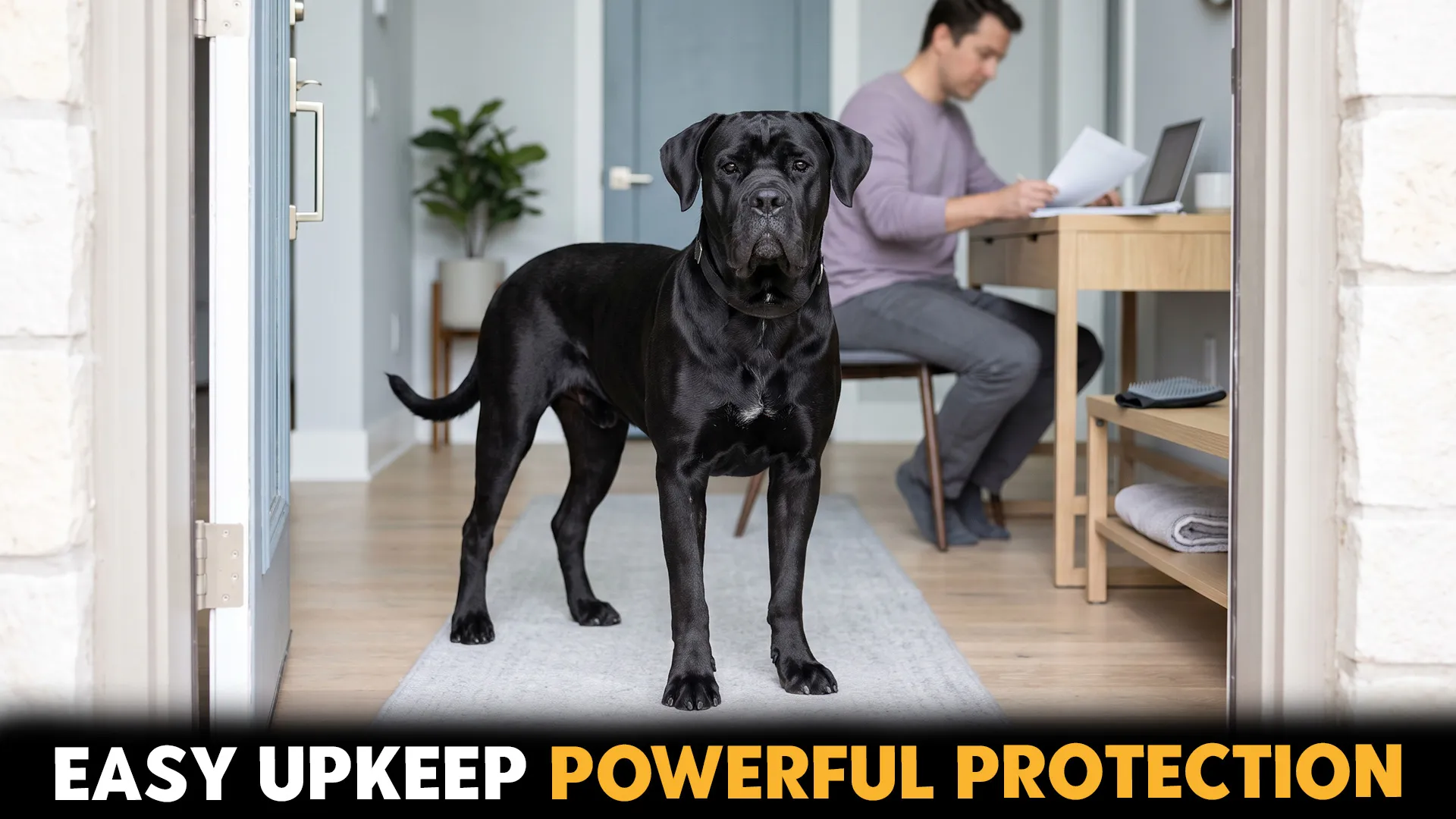
Unlike fluffy lap dogs, guard dogs don’t need professional grooming to look pampered and important. Some of the best security breeds have short, practical coats that need only a few brushings and the occasional bath.
Still, there’s a big difference between a low-maintenance coat and a low-maintenance breed. These guard dogs are large, powerful, and naturally protective, so they need exercise, training, socialization, and plenty of attention.
We’ve picked seven breeds that are easy to groom and have a real guardian presence. For each one, you’ll find a few key facts and some helpful tips for keeping them well-mannered, so dog ownership stays enjoyable and rewarding.
Best Guard Dog Breeds with Minimal Grooming for Busy Owners
1. Great Dane
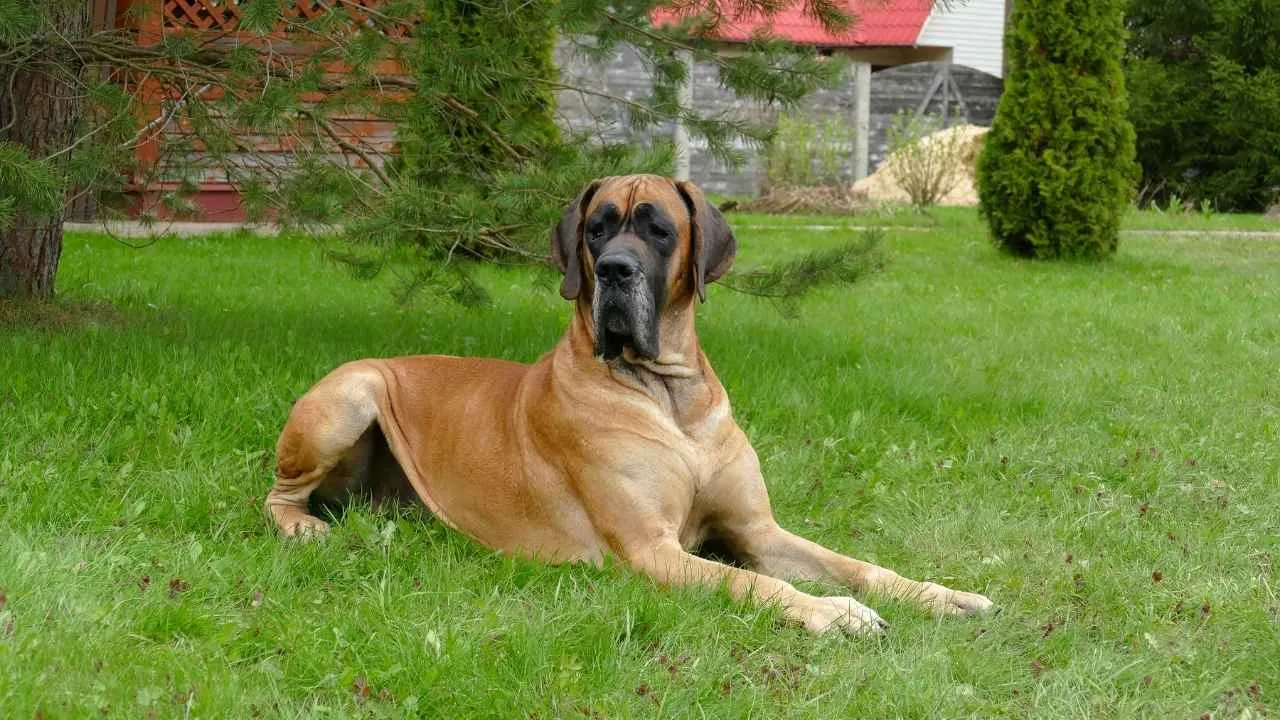
This gentle giant uses its imposing size, and its bark will keep intruders at bay.
The Great Dane originated in Germany. It was developed from its ancestors, which were used to hunt for large game, particularly wild boar. Its grace and imposing size earn it its apt nickname: the “Apollo of dogs,” as stated by the AKC.
This breed is surprisingly easy to groom. Its coat is short, smooth, and needs to be brushed with a rubber grooming mitt or medium bristle brush once a week. But do not underestimate the quantity of hair that a large dog can shed. It sheds twice a year, so brushing loose hair daily will help control it.
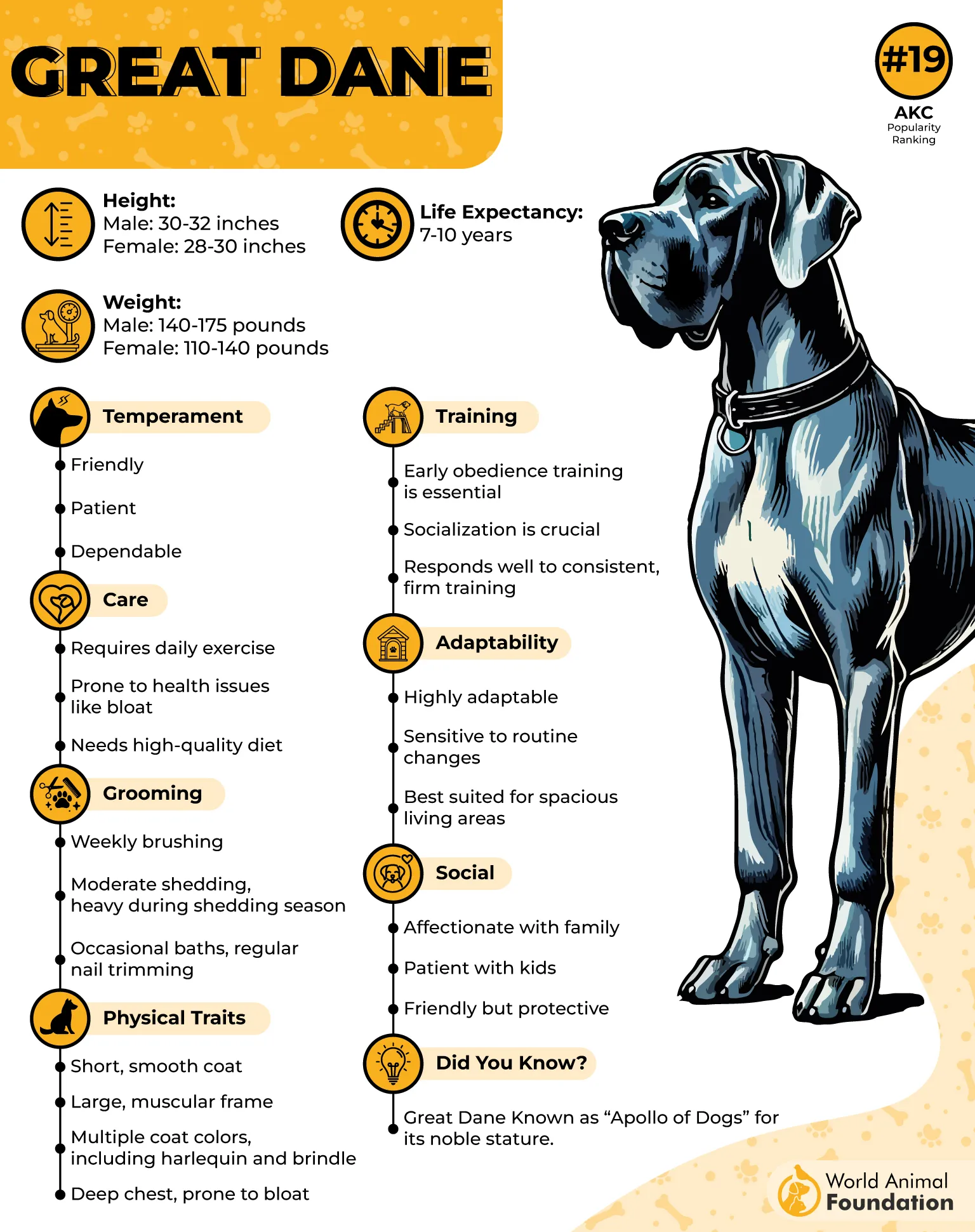
Keep a grooming mitt by the door, and quickly brush your Dane after an outdoor adventure. Also, set a nail-cutting schedule. Once your dog is comfortable with using those large paws, it’s much easier to control.
Unfortunately, bloat is a serious stomach disease that is very prevalent in Great Danes. Talk to your vet about prevention strategies for feeding and refrain from over-exercising at mealtimes.
2. Cane Corso
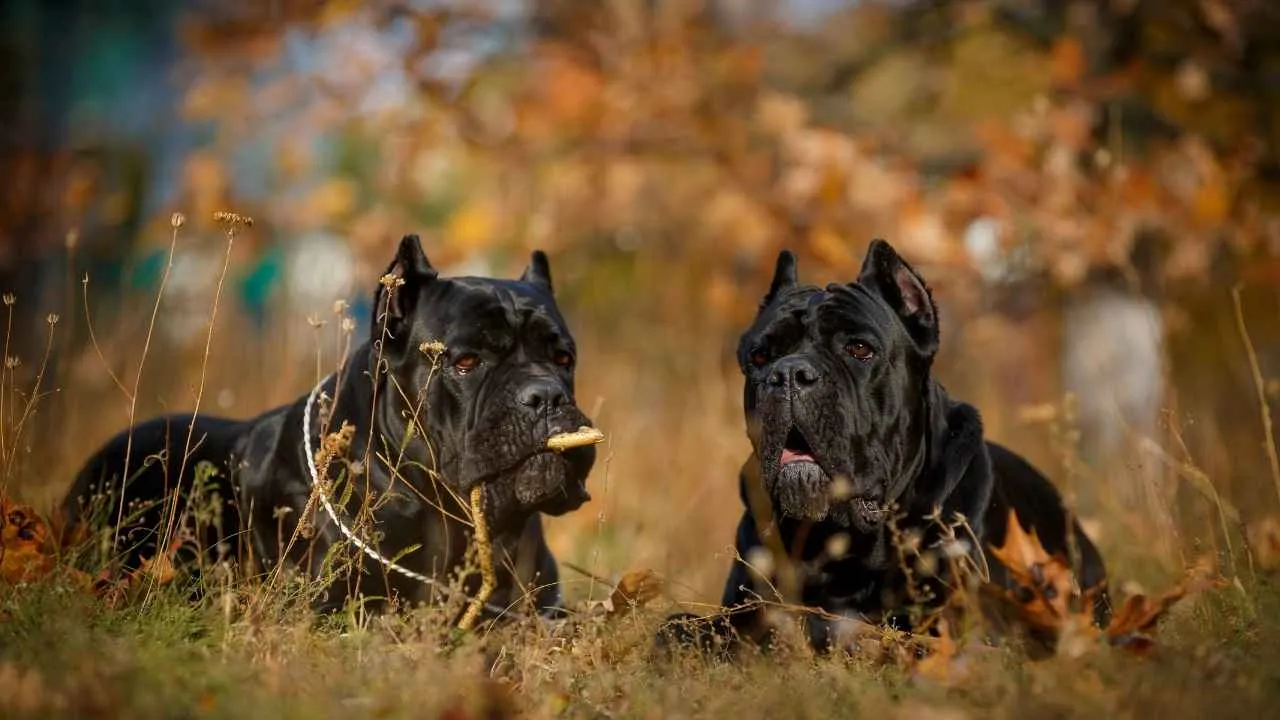
This breed is described as intelligent and versatile by Purina. It is an Italian working dog that has a protective attitude, especially with its family. While it may be a deterrent to others, a well-tempered nature and obedient behavior are more important.
The Cane Corso has a wide head, a muscular body, and a serious face, as if it is very serious about its duties. Its origins are rooted in the ancient times of Rome. This Roman guardian dog was bred to be a multi-purpose working dog that would guard homes and hunt.
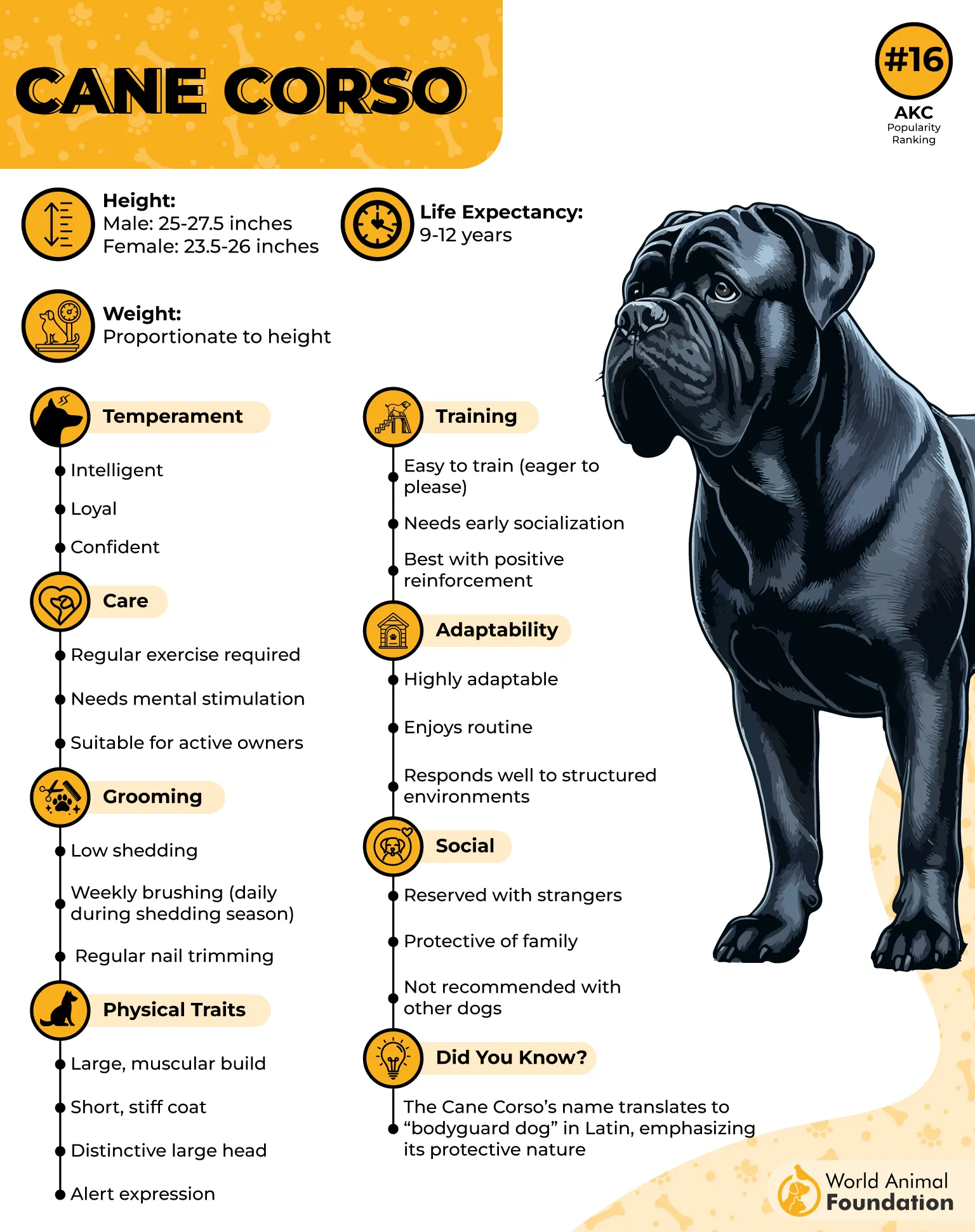
Cane Corsos have a short, coarse, and double coat, which is easy to groom. Loose hair and dirt can be removed by brushing once a week with a rubber mitt or medium-bristle brush. During shedding seasons, the undercoat will show more, which can be aided by daily brushing.
Observe the ears, examine their skin, trim nails, and praise their good behavior all the way through. This should make basic care extremely easy and will help your Corsos adjust to being handled and cared for.
The greater responsibility is training. Cane Corsos are intelligent, yet assertive and strong-willed. Socialization, positive reinforcement training, and positive daily exercise are required.
3. Rhodesian Ridgeback
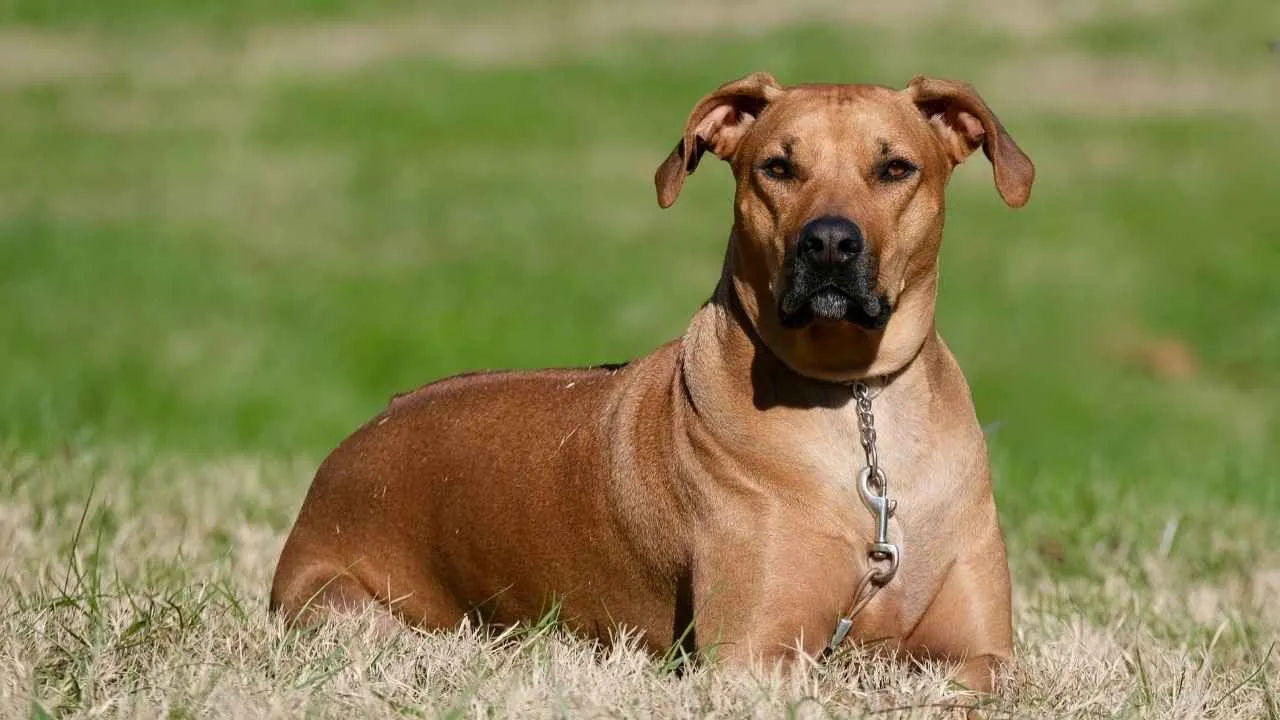
The Rhodesian Ridgeback was developed in Zimbabwe, as stated by Orvis. It has a fantastic ridge of hair running down its back that runs in the opposite direction to the coat hair. It is the unusual ridge that gives the breed its name and makes it instantly recognizable.
Of South African heritage, this breed was associated with big game hunting. Its task was to be able to help hunters find lions, hold them, and keep them trapped long enough for the hunters to arrive for the final shot.
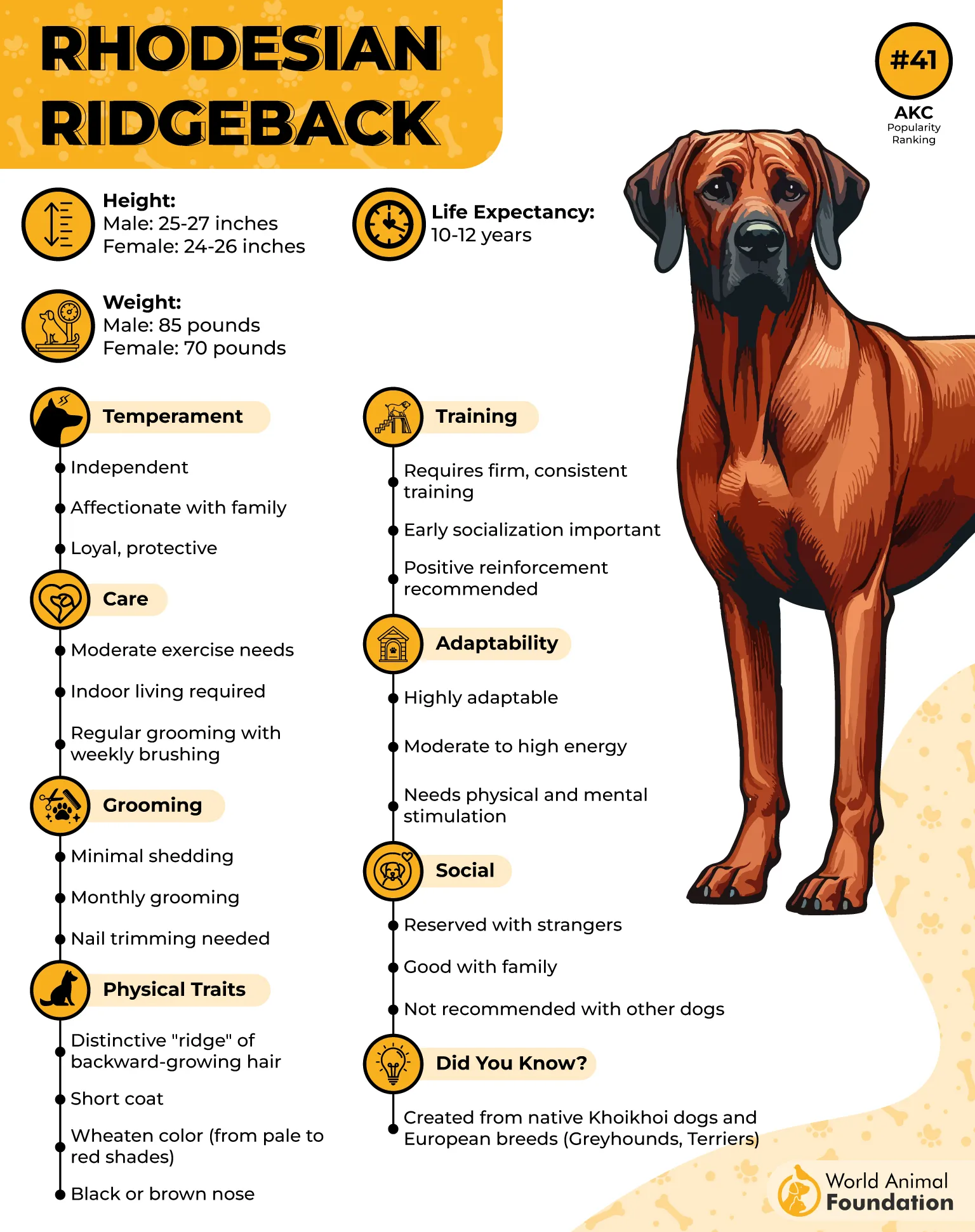
One of their most convenient features is their short, dense coat. Loose hair can cause the strands to tangle, and it keeps the hair looking its best by brushing it weekly, but baths are generally only necessary every few weeks.
Ridgebacks are physically fit, independent, and can match any imposing predators they come across. They need a secure fence due to the fact that just one small animal will become the object of their interest, leading to fast chases.
4. Greater Swiss Mountain Dog
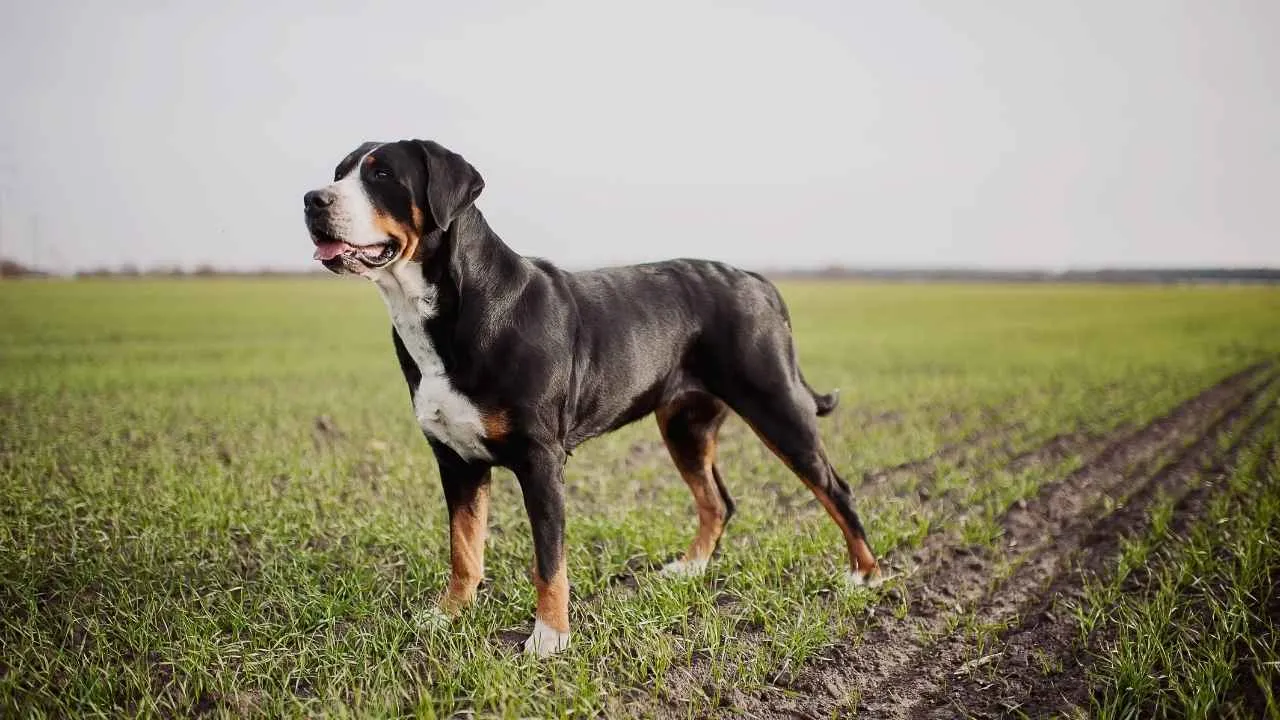
Also known as the Swissy, the Greater Swiss Mountain Dog is a strong farm dog. It is friendly and has a great history of work. It has a large body, black-and-white-and-rust coat, and an alert expression.
These pups were bred in Switzerland and are classified as Sennenhunds. On the farm, Swissies did everything from pulling carts and moving animals around to guarding property. They were so valuable that they were used as draft dogs, not pets.
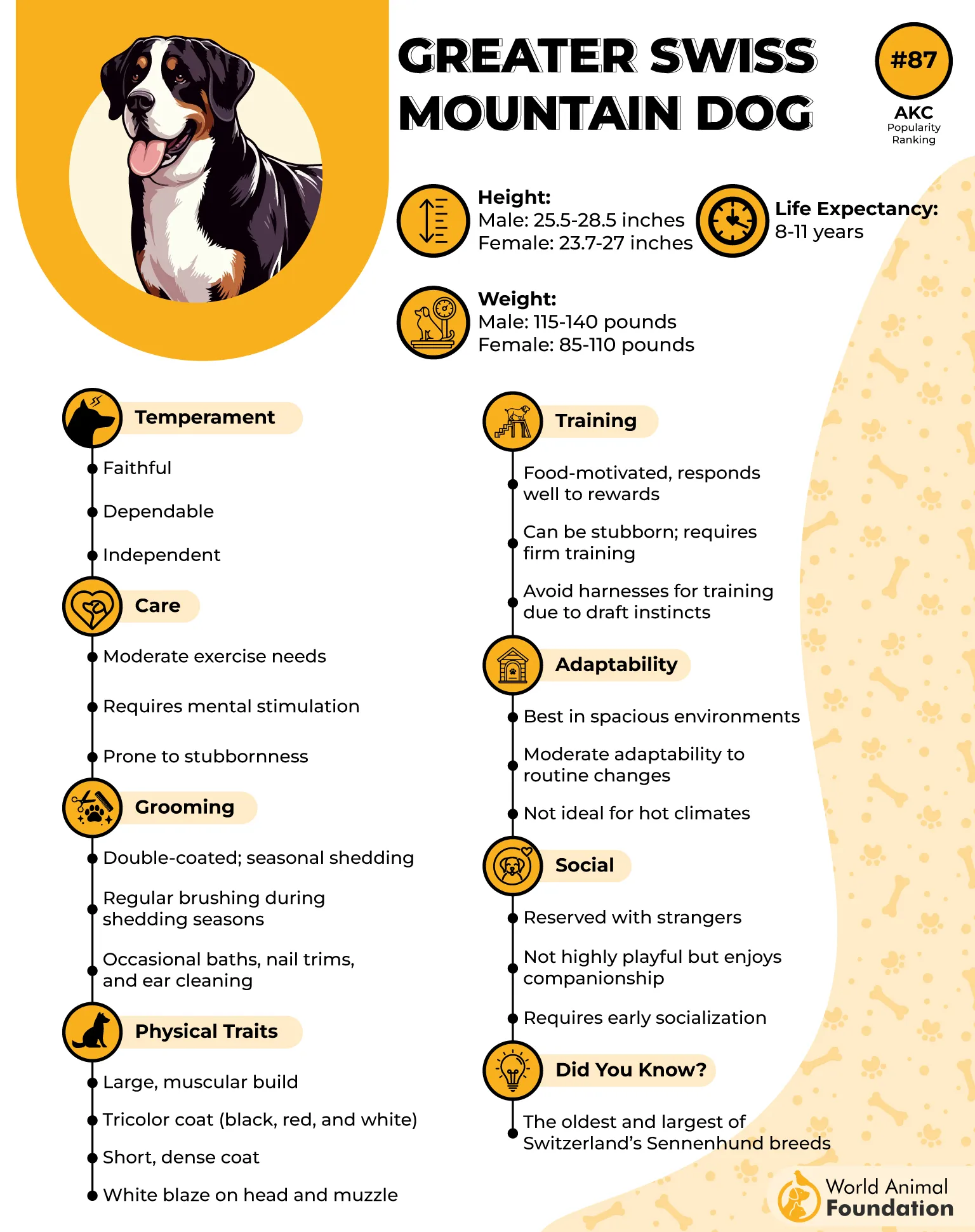
They have a double coat that sheds very lightly, and the fact that Swissies shed their undercoats twice a year is something busy owners should be familiar with. During the other times of the year, sporadic brushing and bathing should suffice.
Swissies require moderate amounts of exercise, but not hours of intense training. They are typically food-motivated, and reward-based training can be fun, but they may be stubborn. They are big and powerful, making it especially important to teach them loose-leash walking early.
5. Anatolian Shepherd
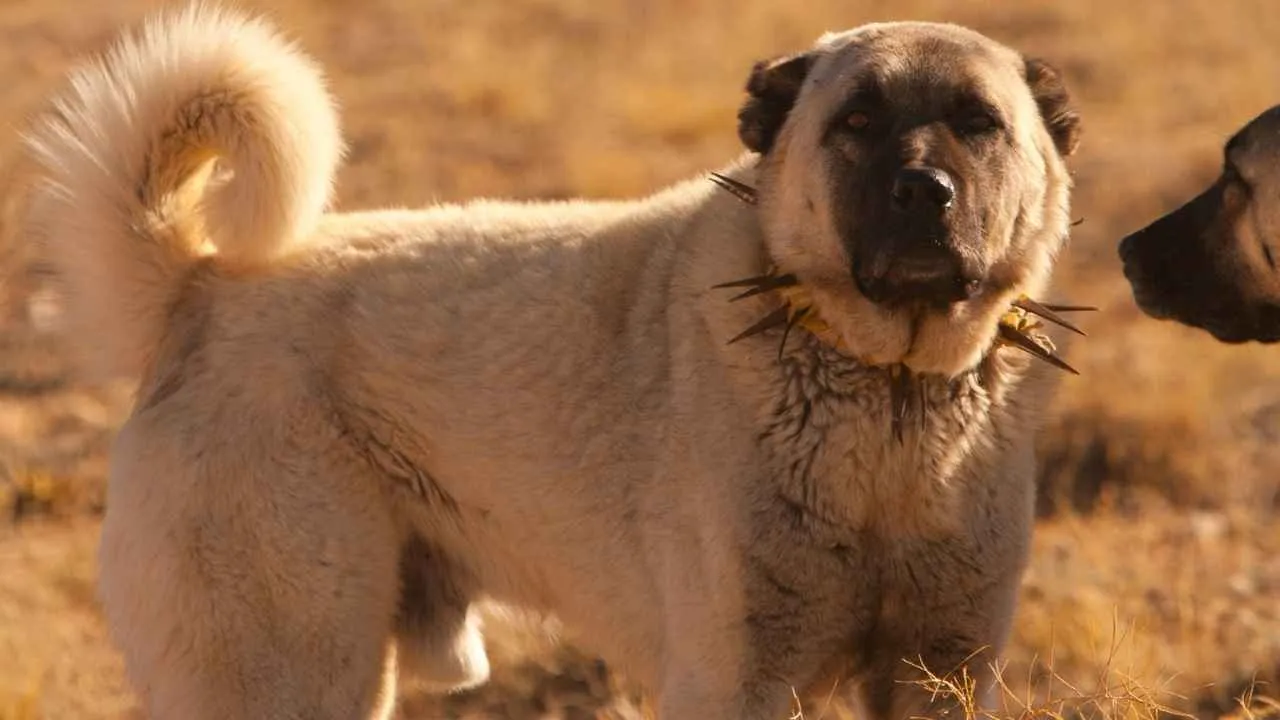
The Anatolian Shepherd is a very independent dog and doesn’t require anyone to tell them when or how to be alert. Over the years, this independent livestock guardian has been tasked with protecting livestock, frequently when a shepherd wasn’t around.
An Anatolian Shepherd is part of the flock and will keep it safe from predators. It’s meant to watch the environment, detect potential dangers, and deter threats. This is the reason the breed can be a territorial and independent real home dog.
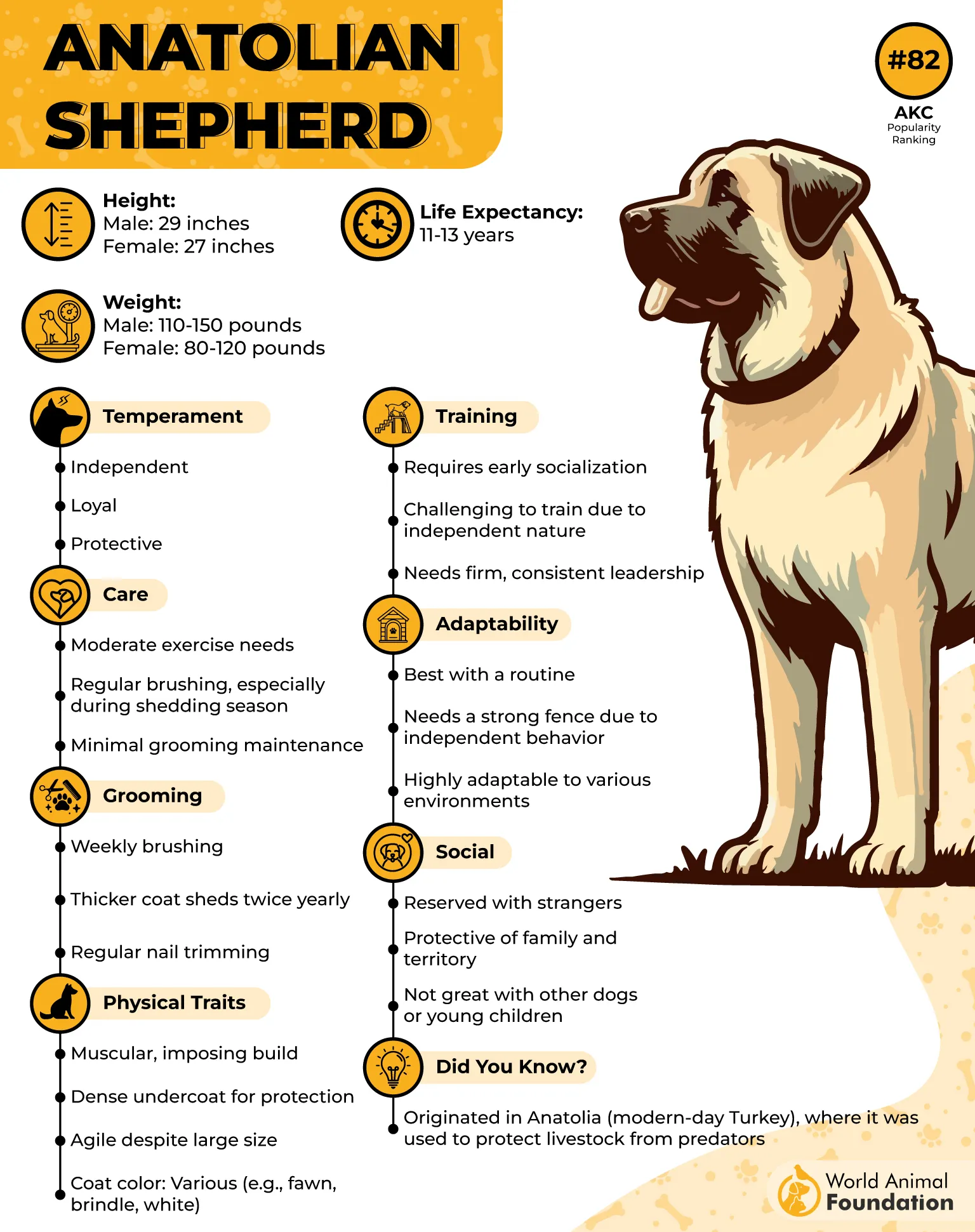
Loose outercoat and dense undercoat make up most Anatolian Shepherds. Brushing once a week is usually sufficient for regular maintenance. However, the undercoat might go through heavy shedding in some parts of the calendar.
The breed is independent, large, and has strong guardian instincts, and must be raised by an experienced and patient owner. It requires space to move around, and an appropriate setting such as a small home with regular intrusive people may be difficult.
6. Bullmastiff
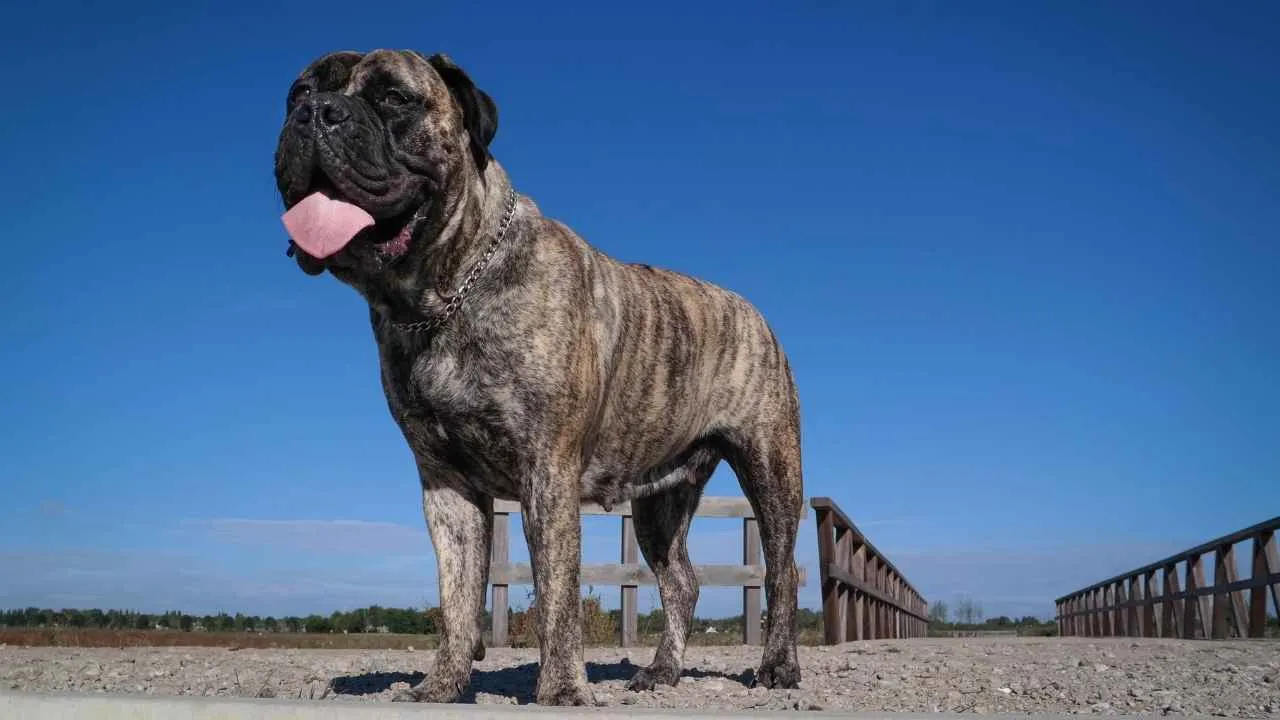
The Bullmastiff had an interesting role in the past: to catch poachers and keep them until the gamekeeper arrived at the scene of the crime. The Bullmastiff was not bred to chase and fight, but to knock down and hold an intruder. It has a real guardian instinct which you won’t find in any other ordinary dog.
It is a family protector known for its imposing structure and muscular build. A wide head, strong body, and a gentle temperament will cause visitors to pause for thought, even if the dog is relaxing beside its owner.
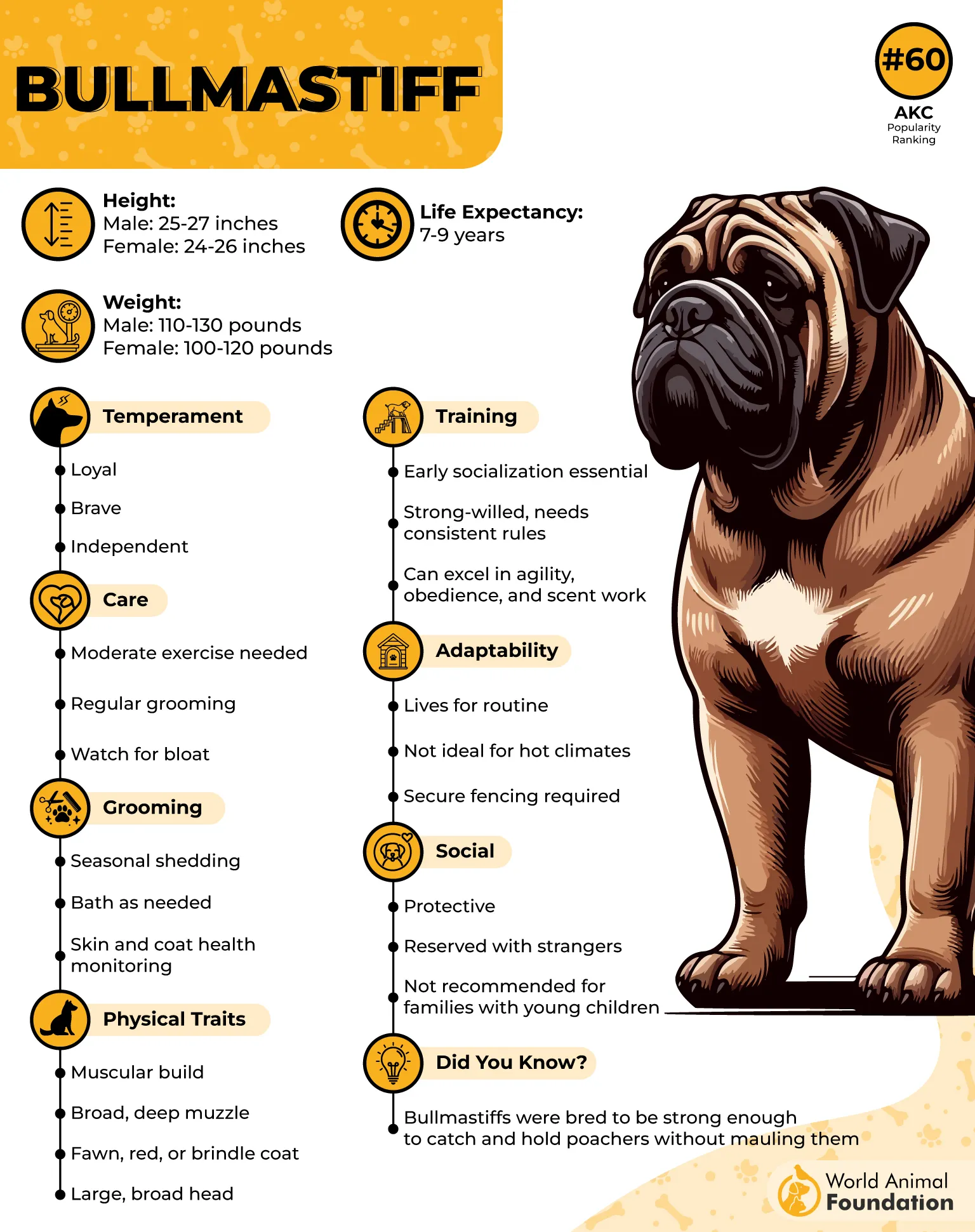
The Bullmastiff has an easy-to-care-for short coat. Loose hair is removed by weekly brushing, and it is generally sufficient to bathe the short-coated breed once every few weeks. Its facial wrinkles need attention: carefully check and clean the folds of the skin when necessary and dry them properly so they don’t irritate.
Bullmastiffs are calmer compared to other working dogs, but require daily walks and obedience training. These large breeds are strong, so leash training is a must. They require ample indoor space and are sensitive to heat, so try to avoid strenuous exercise in hot climates.
7. Rottweiler
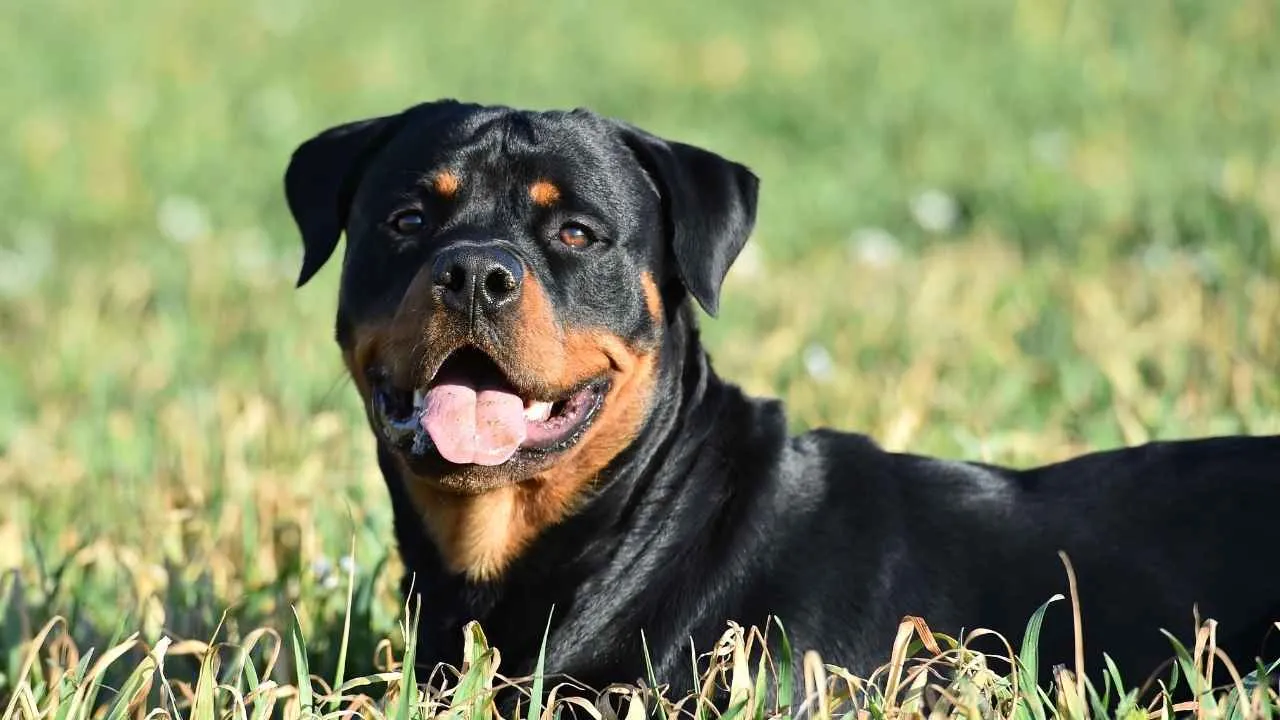
The Rottweiler is a dog that will definitely catch the eye with its self-assured demeanor, black and tan color, and muscular body. It is an all-purpose working dog that can be a loving and loyal family pet if treated right.
Their ancestors rode with the Romans, who used them for the transportation of cattle and required them to guard cattle from predators and robbers. The dogs drove the cattle and pulled the carts in the German town of Rottweil.
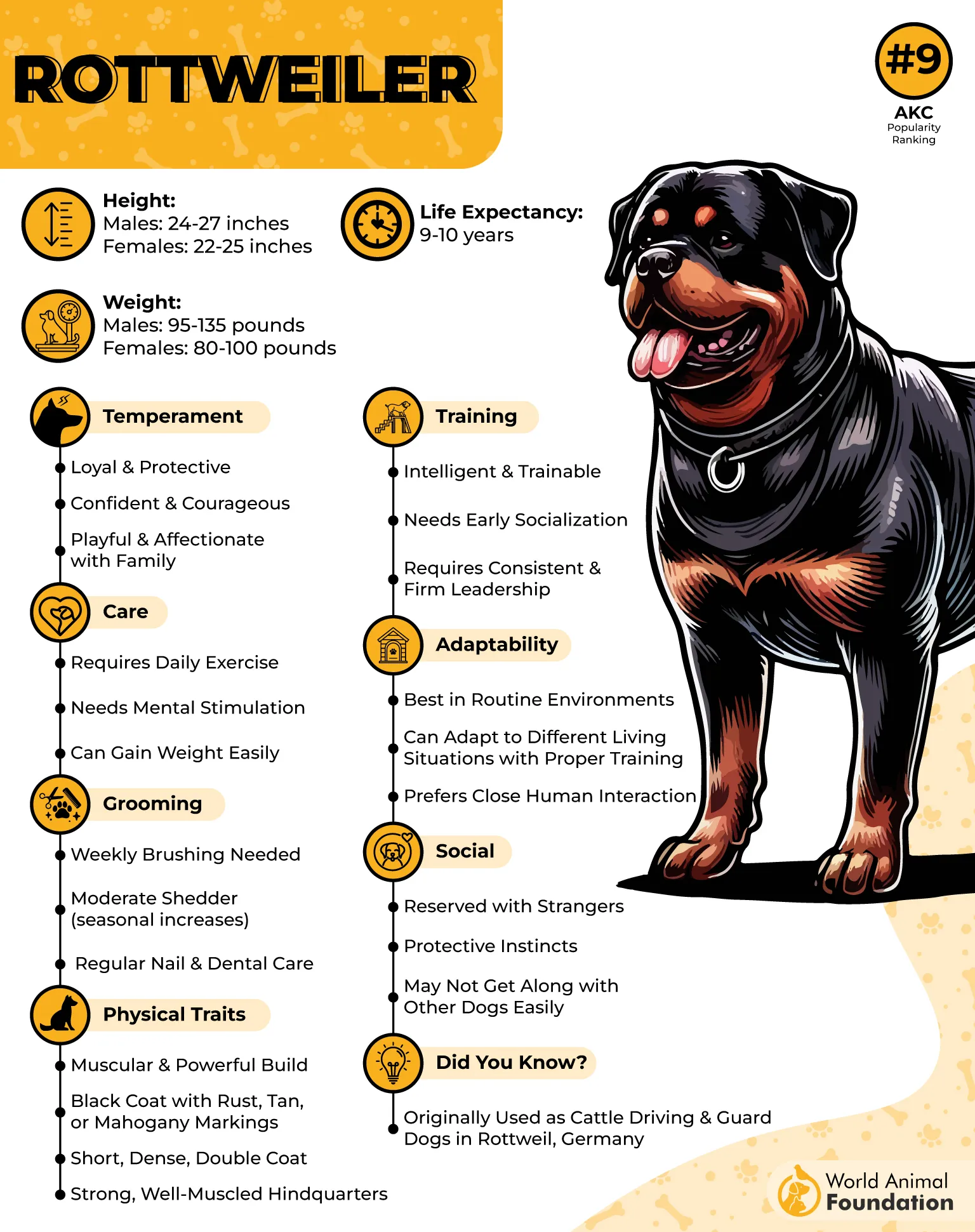
These steadfast guardians are robust, long-lasting, and capable of many different skills. However, they require daily exercise and mental stimulation. Socialization is important, and these dogs must learn what to be alert about and what to ignore.
Rottweilers are straight and coarse, with their coat being medium-length and with an undercoat around the neck and thighs. Shedding is heavier in the spring and fall, but most of the year, weekly brushing works just fine. Regular bathing, nail clipping, checking ears, and taking care of their teeth are a must.
Conclusion
These seven breeds have relatively easy-to-groom coats and are loyal and watchful, complementing your busy schedule. The important thing is not to judge them by the needs of their coat.
Some dogs can be your personal protection dogs, while others can be used as adult dogs for agencies like the military and police. All watchful guardian breeds have their own breed profiles, which you can take a look at before adopting one.
Instead, consider their exercise needs, their space requirements, training, and socialization, as well as obedience training, to get the most out of them as loyal guard dog breeds.
