




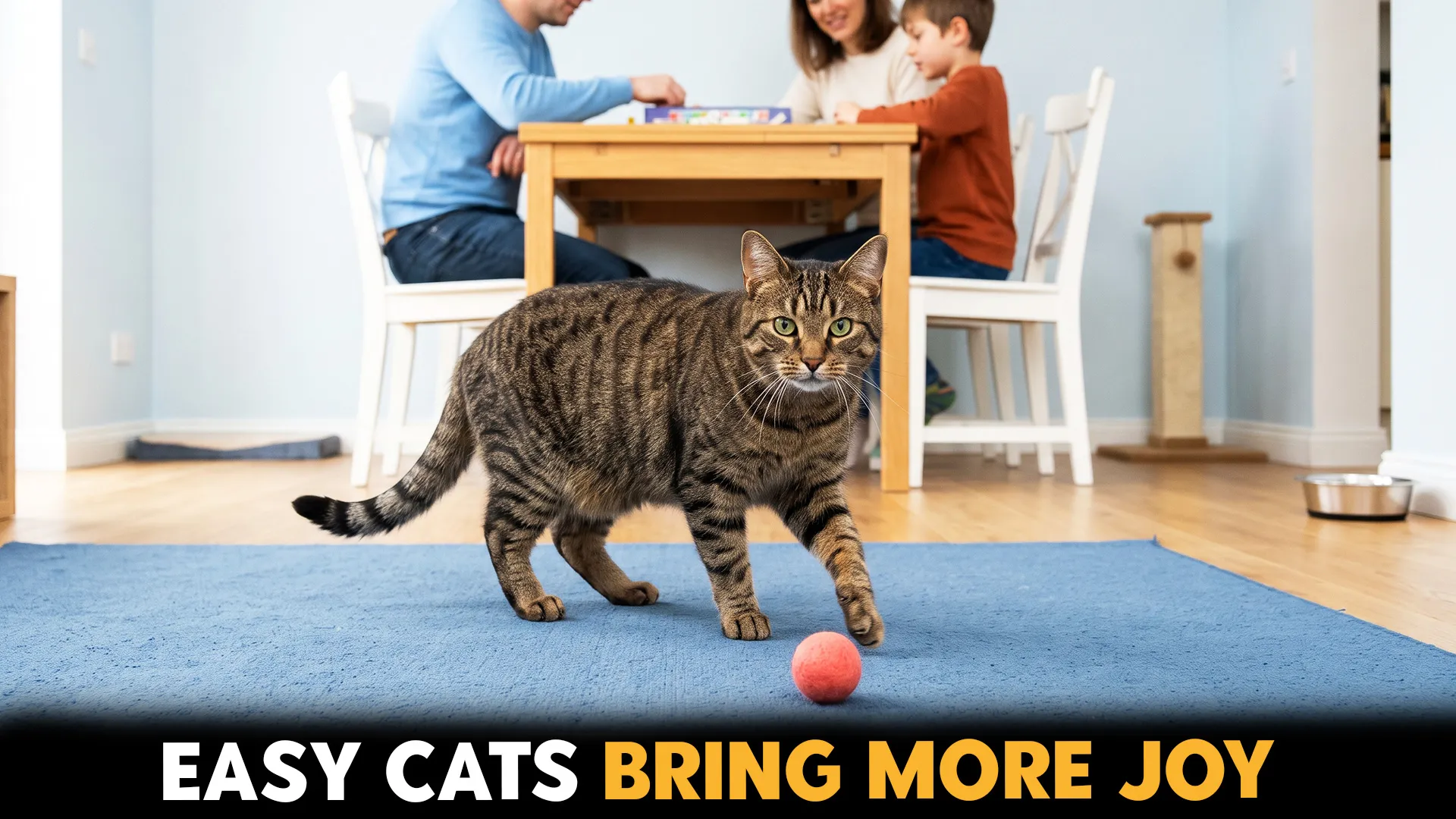
Bringing a cat into your family means welcoming a new companion for cuddles, playtime, and countless happy memories. The right feline can become a beloved part of the household, offering children a chance to develop kindness, patience, and a sense of responsibility.
Some cat breeds are especially adaptable, sociable, and easier to care for, making them suitable for busy family routines. Although every cat needs attention and affection, choosing one with manageable grooming needs and a gentle temperament can make family life much easier.
Explore low-maintenance cat breeds that can fill your home with companionship and joy.
Best Low-Maintenance Cat Breeds For Families
1. American Shorthair
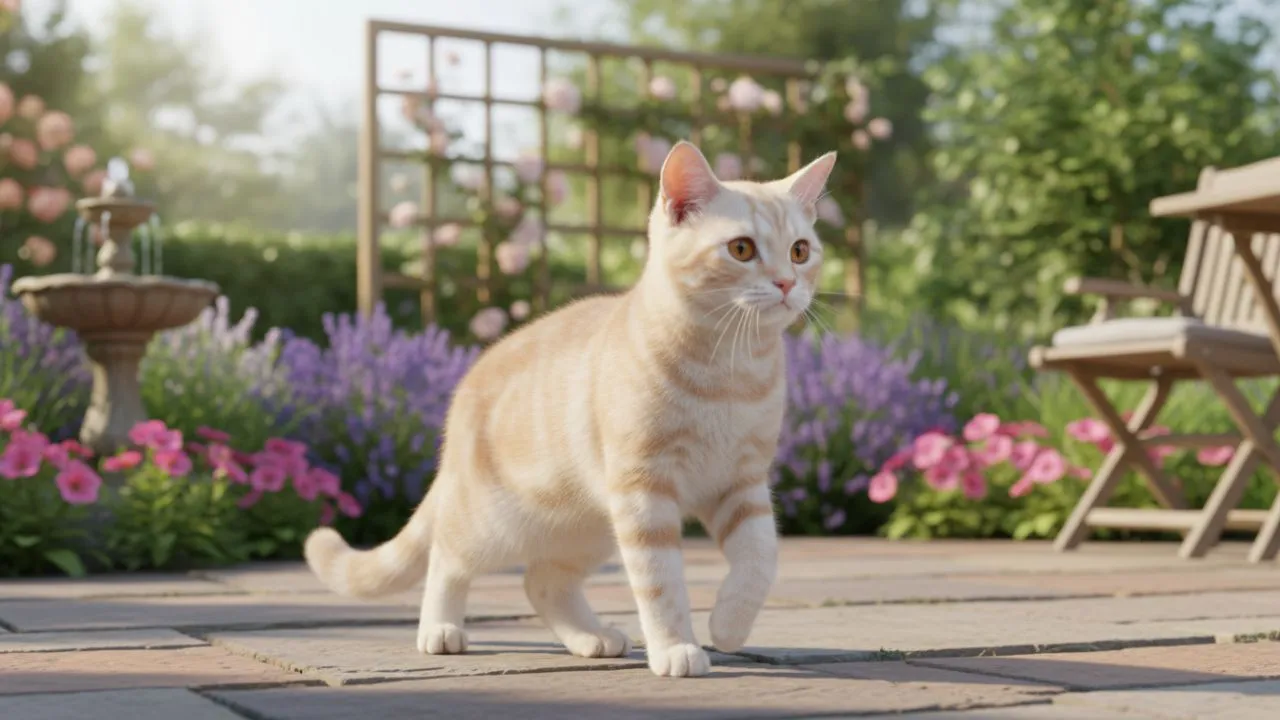
The American Shorthair is a friendly, adaptable cat that fits comfortably into different types of households. Its easygoing personality makes it a suitable companion for first-time cat owners and families with busy routines.
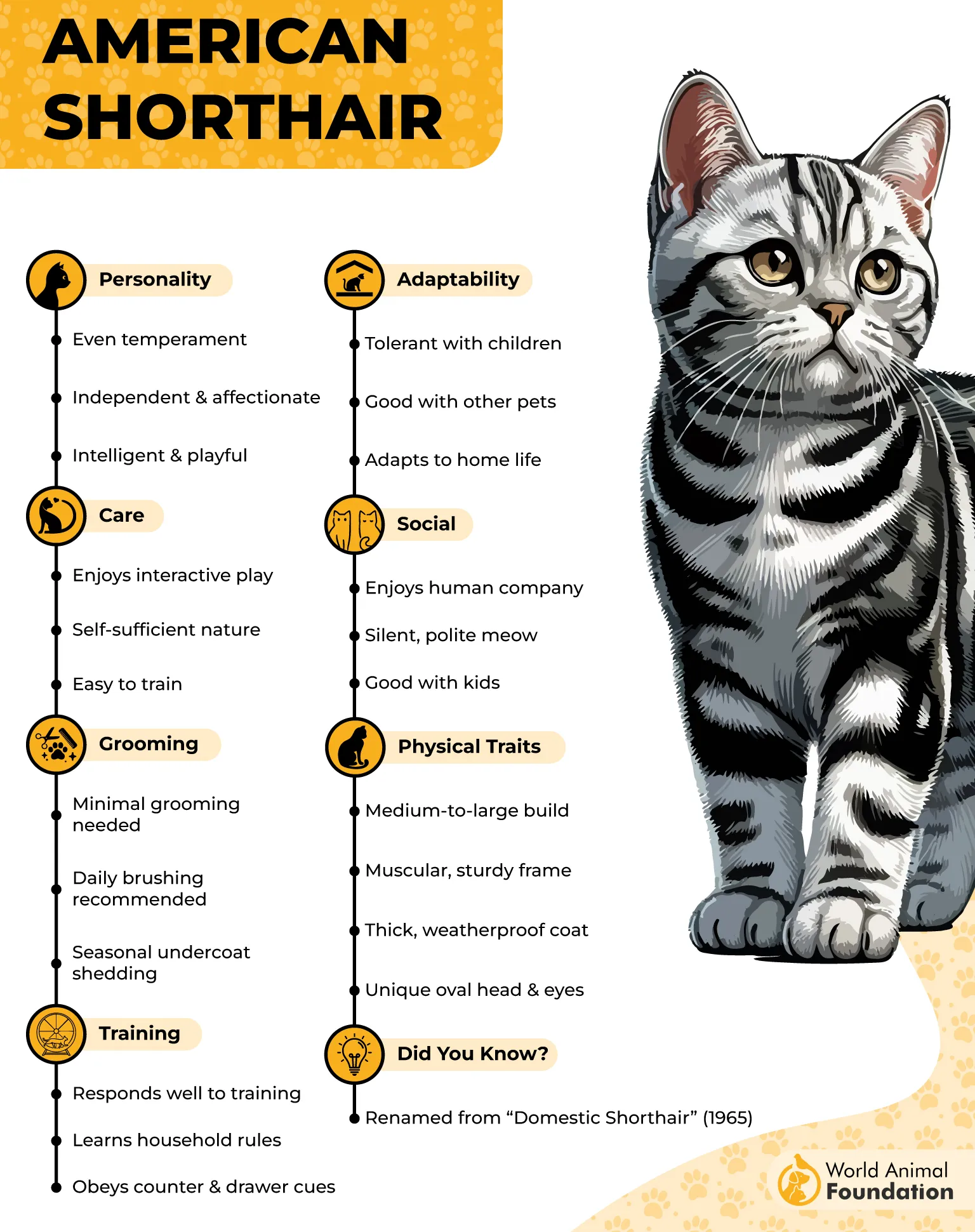
Unlike cats that constantly seek attention, this breed enjoys affection while remaining comfortable spending time independently. Its moderate energy level also makes it well suited to apartment living, where it can balance playtime with relaxed moments.
Grooming is relatively simple thanks to its short, dense coat, which generally needs only weekly brushing to remove loose hair and maintain its condition.
American Shorthairs are also known for their sturdy, muscular build and friendly nature. They often enjoy interacting with children, visitors, and other household pets when properly socialized.
Their independent side allows them to stay content while their owners are away, making them a practical choice for families with busy schedules.
How This Breed Stands Out
Dense, easy-care coat needs weekly brushing: Its short fur requires minimal grooming compared with long-haired breeds.
Adaptable nature suits busy family households: Its independent, easygoing temperament allows it to enjoy companionship without demanding constant attention.
2. British Shorthair
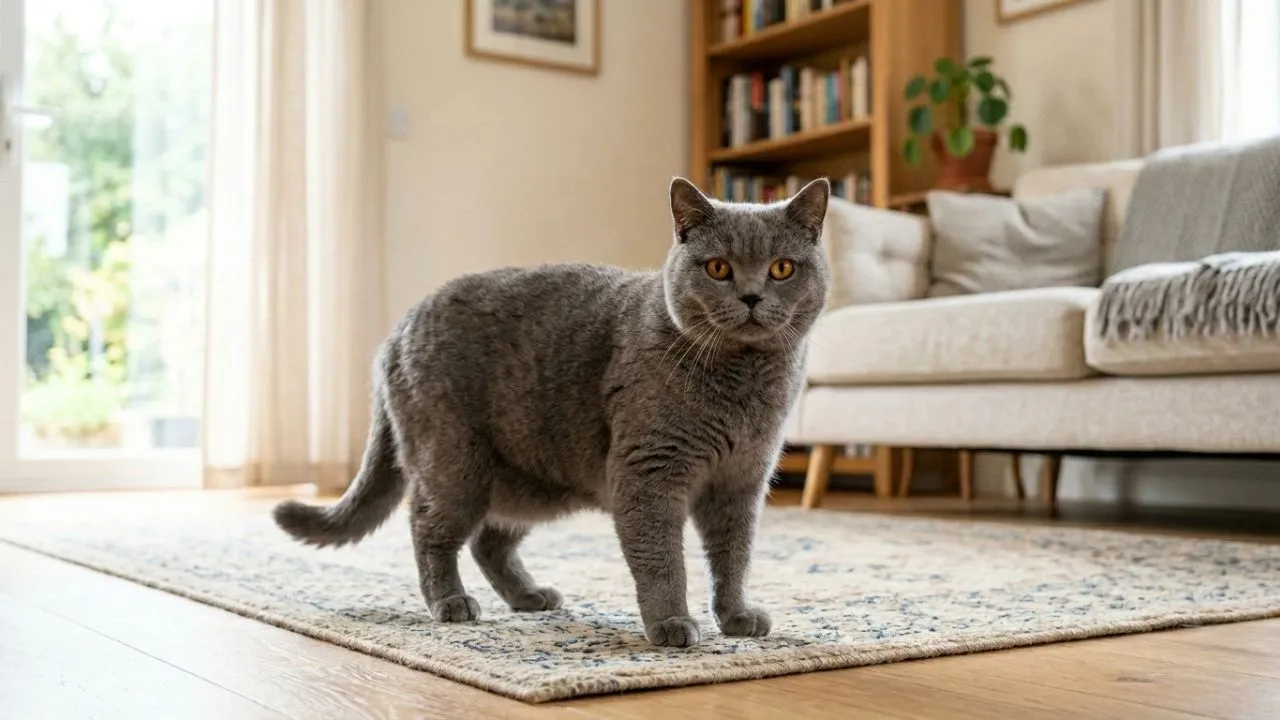
The British Shorthair is a relaxed, quiet companion that suits households where owners have busy schedules. Rather than demanding constant interaction, this affectionate cat is content lounging nearby or enjoying a peaceful corner of the home.
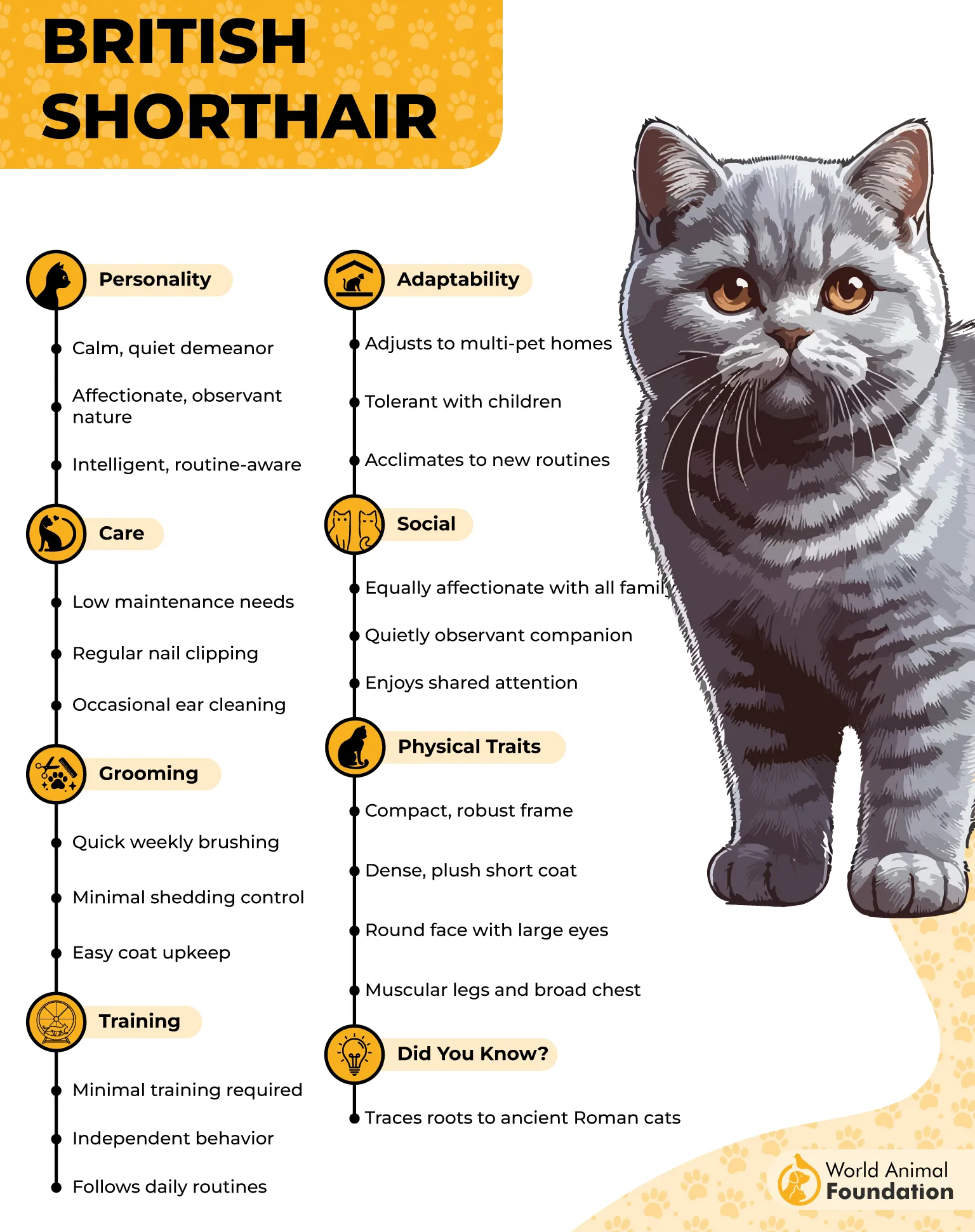
Its dense, plush coat and characteristic round face give it a charming appearance. Despite its thick fur, grooming is relatively straightforward, requiring only occasional brushing to remove loose hair and keep the coat tidy.
With an independent, even-tempered personality, the British Shorthair generally appreciates having its own space. Providing a comfortable perch or cat tree gives it a quiet retreat, especially in homes with active children.
Their sturdy build and patient disposition also make them well suited to family life. British Shorthairs generally enjoy observing household activities and sharing affection with everyone rather than attaching themselves to just one person.
They can coexist comfortably with children and other pets, although they may prefer a little distance during noisy play and are happier when handled gently.
How This Breed Stands Out
Plush coat requires minimal grooming: Its short, dense fur is relatively easy to maintain with occasional brushing.
Independent temperament respects children’s space: Its calm, self-contained nature allows it to enjoy family life without needing constant attention.
3. European Shorthair
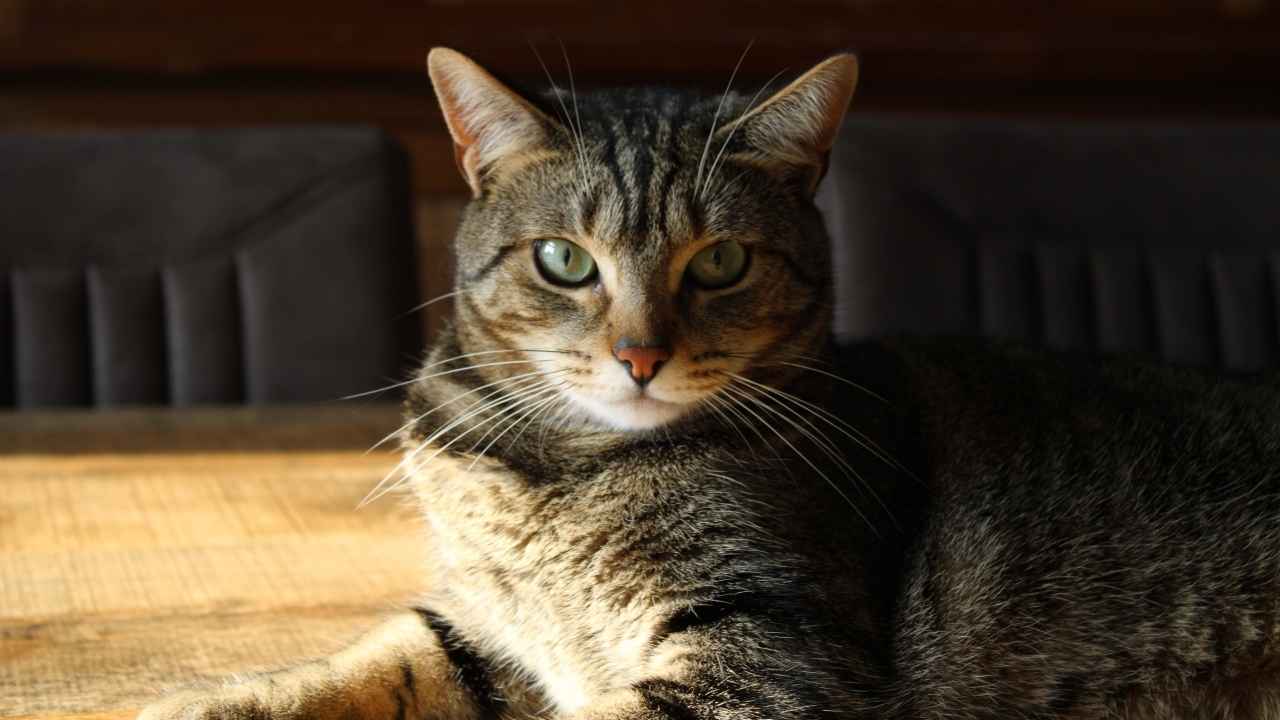
The European Shorthair is a friendly, adaptable cat that enjoys human companionship and can share its home comfortably with other pets. Its easygoing temperament makes it suitable for families with different daily routines.
Naturally sturdy and practical, this domestic breed has a sleek, short coat that requires relatively little attention. Weekly brushing helps remove loose fur and manage its moderate shedding, while its regular self-grooming keeps the coat in good condition.
Although generally relaxed, the European Shorthair has an active hunting instinct and enjoys chasing toys, exploring cat trees, and interactive play. A couple of short play sessions each day can provide stimulation before it settles down for a nap.
Its adaptable nature also helps it adjust to changes in the household, including new people and other companion animals. European Shorthairs are intelligent and enjoy activities that engage their minds, so food puzzles and interactive toys can provide useful enrichment.
Their distinctive appearance, with rounded facial features, a firm build, and a variety of eye colours, adds to their appeal.
How This Breed Stands Out
Hardy build and practical coat care: Its sturdy physique and short coat make everyday grooming relatively straightforward.
Adaptable personality suits different home routines: Friendly and sociable, it can adjust well to family life and coexist with other animals.
4. Bombay
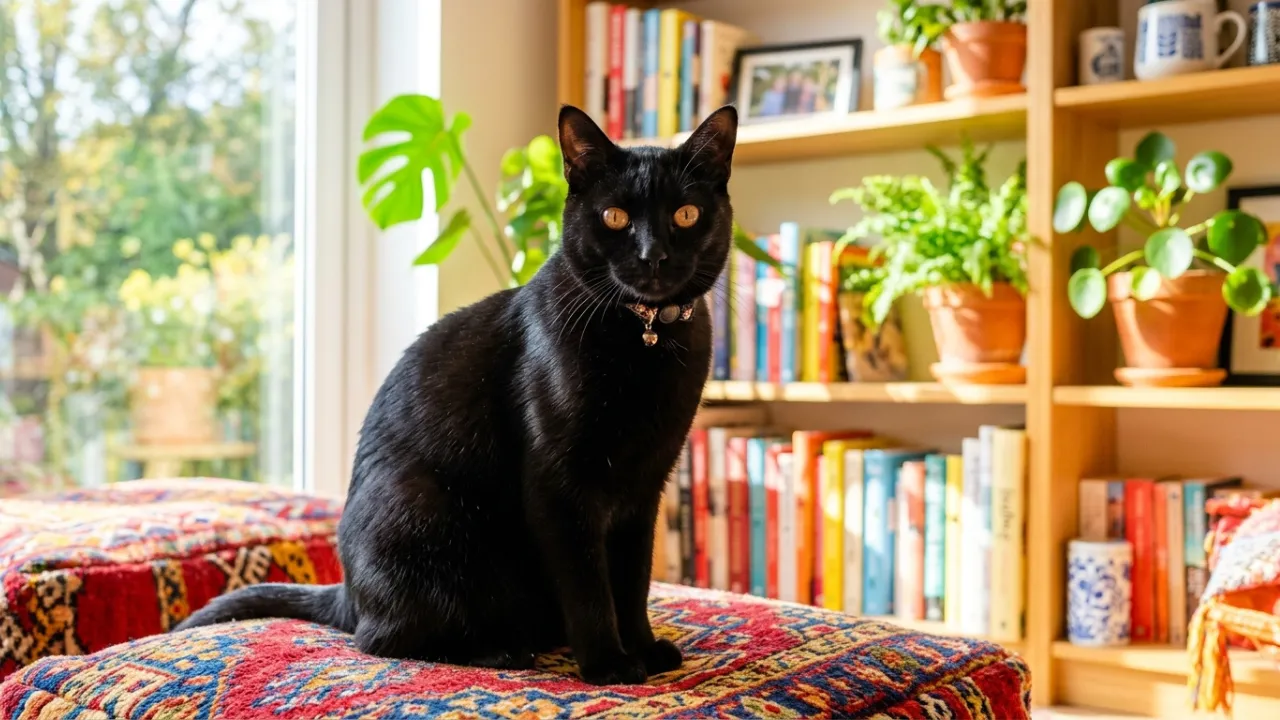
Developed in the United States during the 1950s, the Bombay was bred to resemble a miniature black panther. Its muscular body, glossy black coat, copper-colored eyes, and even dark paw pads give it a striking appearance.
Bombays are intelligent cats that enjoy interactive activities and can quickly learn simple tricks. Providing puzzle feeders, engaging toys, and occasional training sessions helps keep their minds occupied.
They also appreciate warm, comfortable resting spots and often seek out sunny windows or cosy blankets for a relaxing nap. Their playful nature makes them enjoyable family companions, while their affectionate side means they may happily curl up beside loved ones once playtime is over.
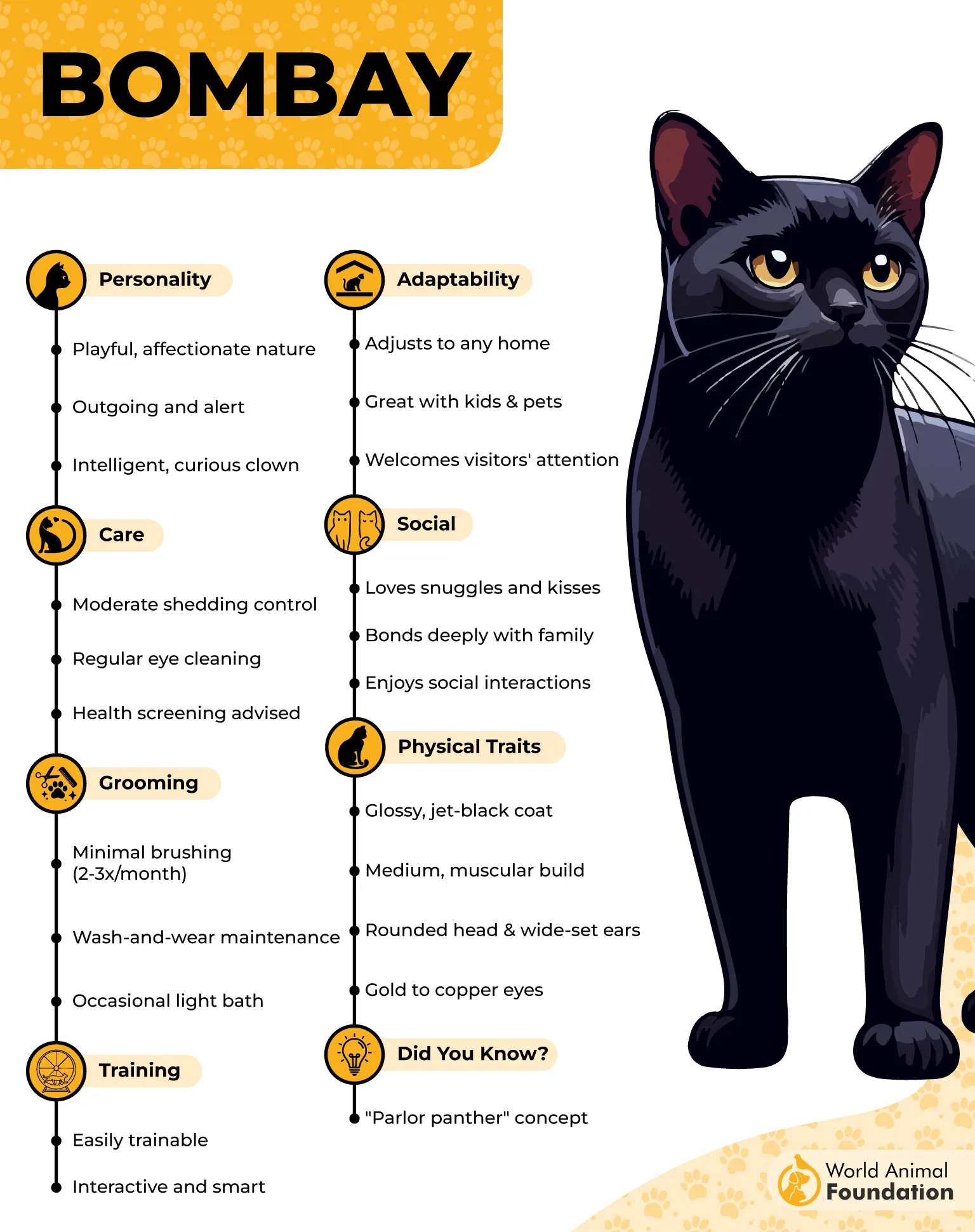
According to Omlet, this breed makes a wonderful family companion thanks to its affectionate, playful nature and gentle behaviour around children.
Grooming is uncomplicated because its short coat sheds relatively little and requires minimal maintenance. However, this people-oriented breed needs regular companionship and may become unhappy if left alone for extended periods.
How This Breed Stands Out
Sleek, glossy black coat needs little upkeep: Its short, smooth fur requires minimal brushing to maintain its shine.
People-oriented nature enjoys family interaction: Bombays love being involved in household activities and spending quality time with their families.
5. Chartreux
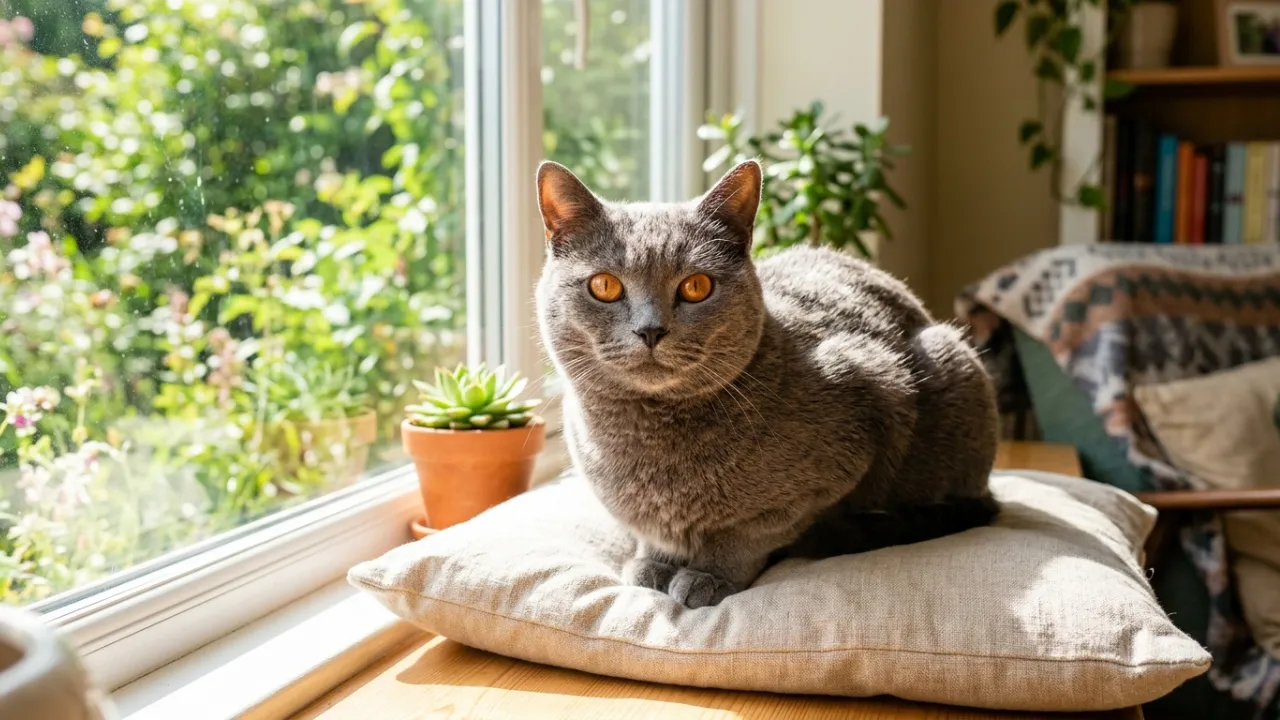
Originating in France, the Chartreux is admired for its plush blue-gray coat, copper-to-gold eyes, and sturdy, muscular build. This naturally developed breed has a distinctive appearance without requiring an elaborate grooming routine.
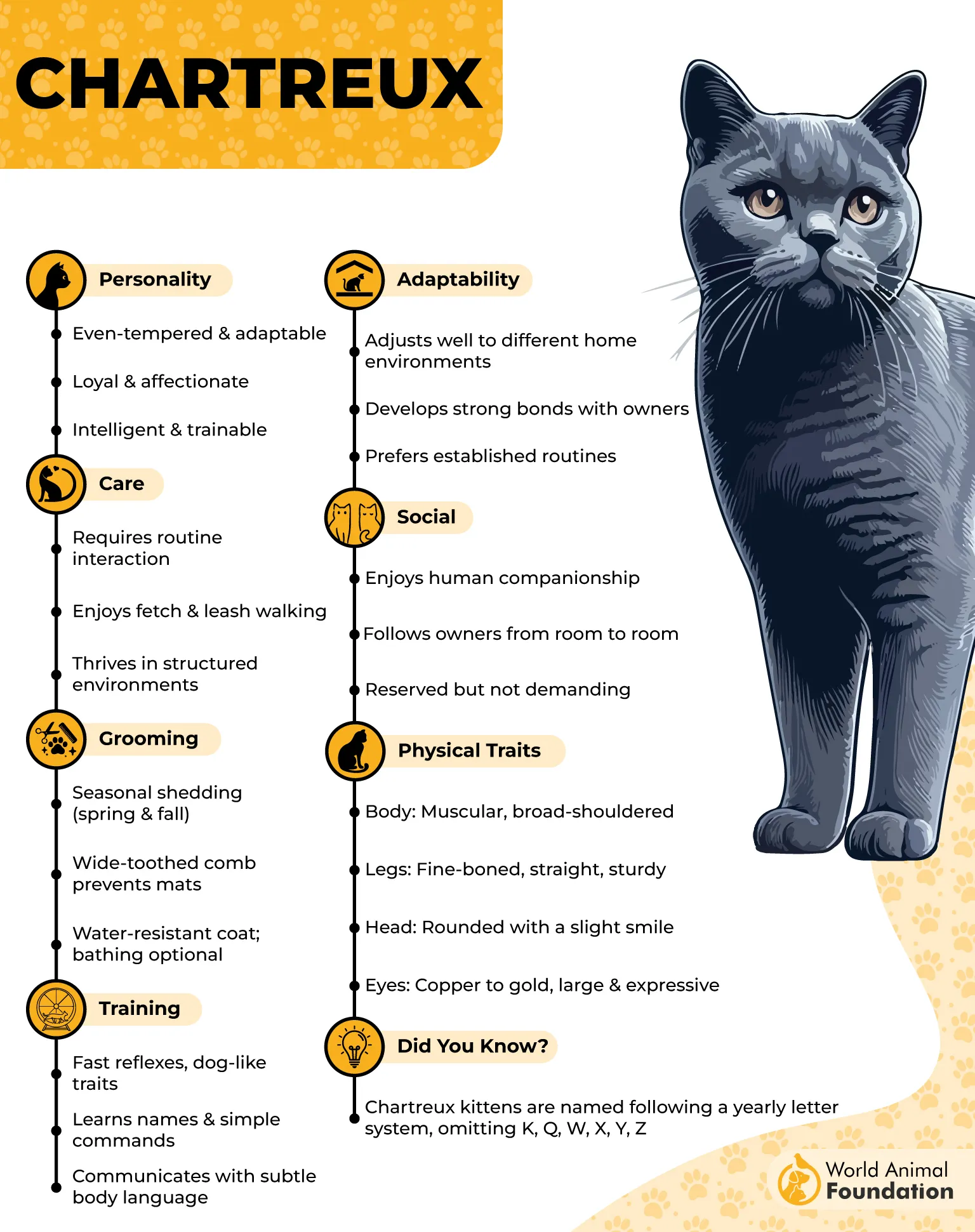
According to WebMD, the Chartreux is a medium-sized cat with a sturdy body and slender legs.
Quiet, loyal, and gentle, the Chartreux enjoys companionship without being overly demanding. Its calm personality makes it a pleasant addition to households with children, older family members, or other pets. Despite its relaxed nature, it retains a playful hunting instinct and enjoys interactive toys and climbing furniture.
Its short, woolly double coat needs occasional brushing to remove loose fur and maintain its soft texture. Regular grooming is generally manageable, making everyday coat care relatively simple.
How This Breed Stands Out
Dense woolly coat benefits from occasional brushing: Its plush double coat needs only moderate grooming to stay in good condition.
Quiet temperament suits peaceful households: Its gentle, undemanding personality fits comfortably into calm family environments.
6. Domestic Shorthair
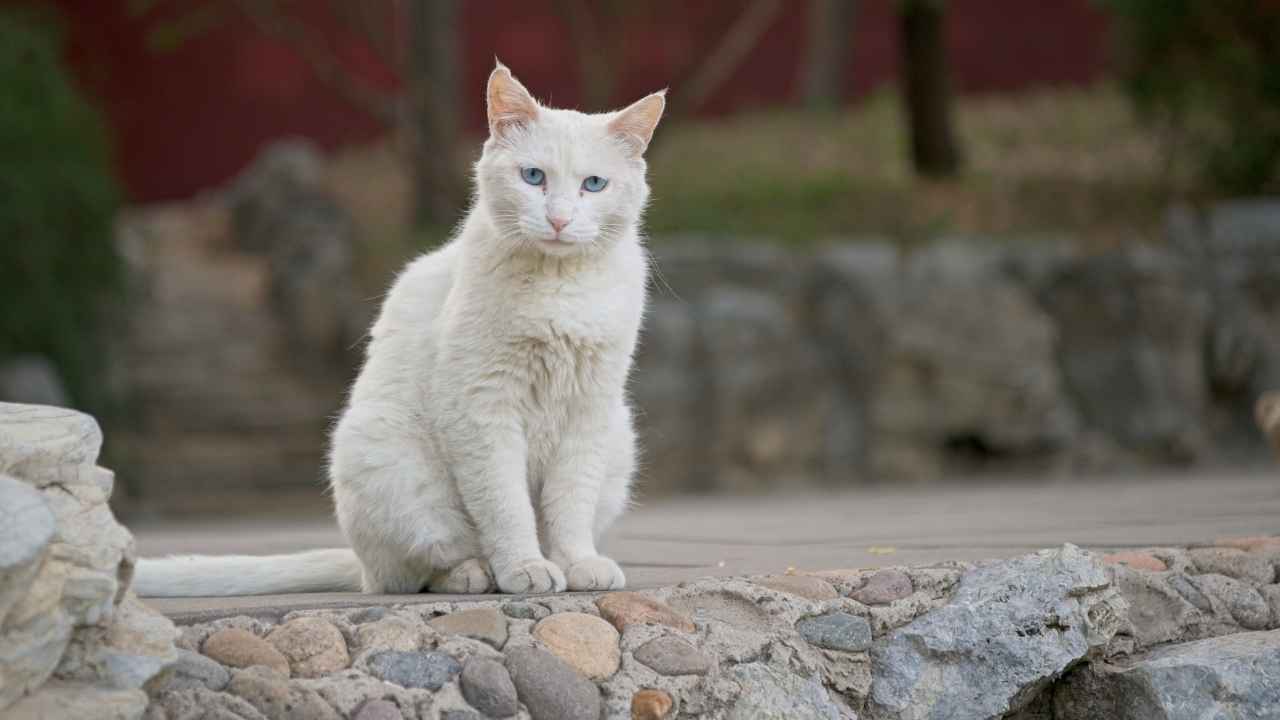
Unlike recognized pedigree breeds, the Domestic Shorthair describes mixed-ancestry cats with short coats and varied physical characteristics. They come in numerous colors, patterns, and body shapes, making each cat distinct in appearance.
Their personalities are equally diverse. Some are affectionate and sociable, while others prefer independence or quieter surroundings. Many adjust well to family life, but their individual temperament and previous experiences are better indicators of compatibility than breed-specific expectations.
Coat maintenance is generally uncomplicated, with occasional brushing helping remove loose hair and keep the fur tidy. Their naturally varied genetic backgrounds may also offer advantages when it comes to inherited health conditions.
How This Breed Stands Out
Short coat is generally easy to maintain: Its smooth, short fur requires relatively little grooming compared with longer-coated cats.
Wide range of personalities to suit different families: Their varied temperaments allow families to find an individual cat whose social needs and activity level match their household.
7. Exotic Shorthair
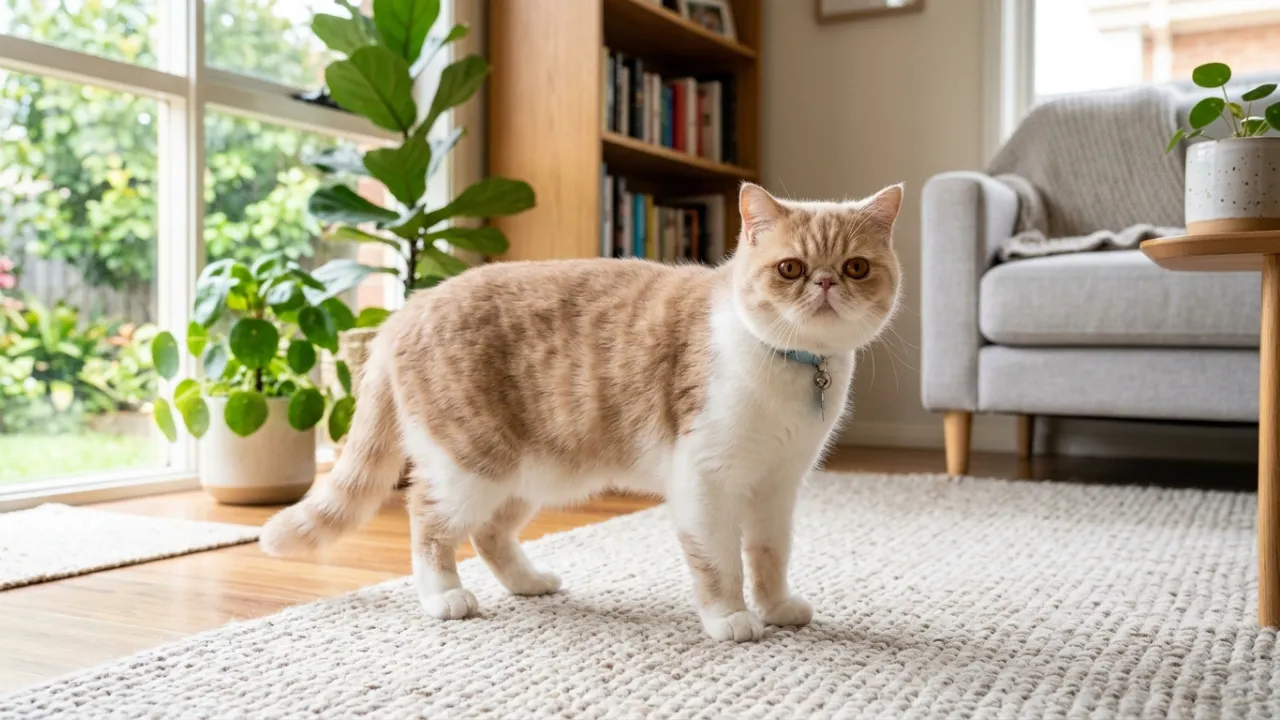
Often described as a short-haired version of the Persian, the Exotic Shorthair has a similar round face, flat nose, and plush appearance. Its shorter coat makes grooming easier, while its affectionate and gentle personality suits households with children and other pets.
According to Purina, the cat’s small, widely spaced ears enhance the rounded shape and fullness of its face.
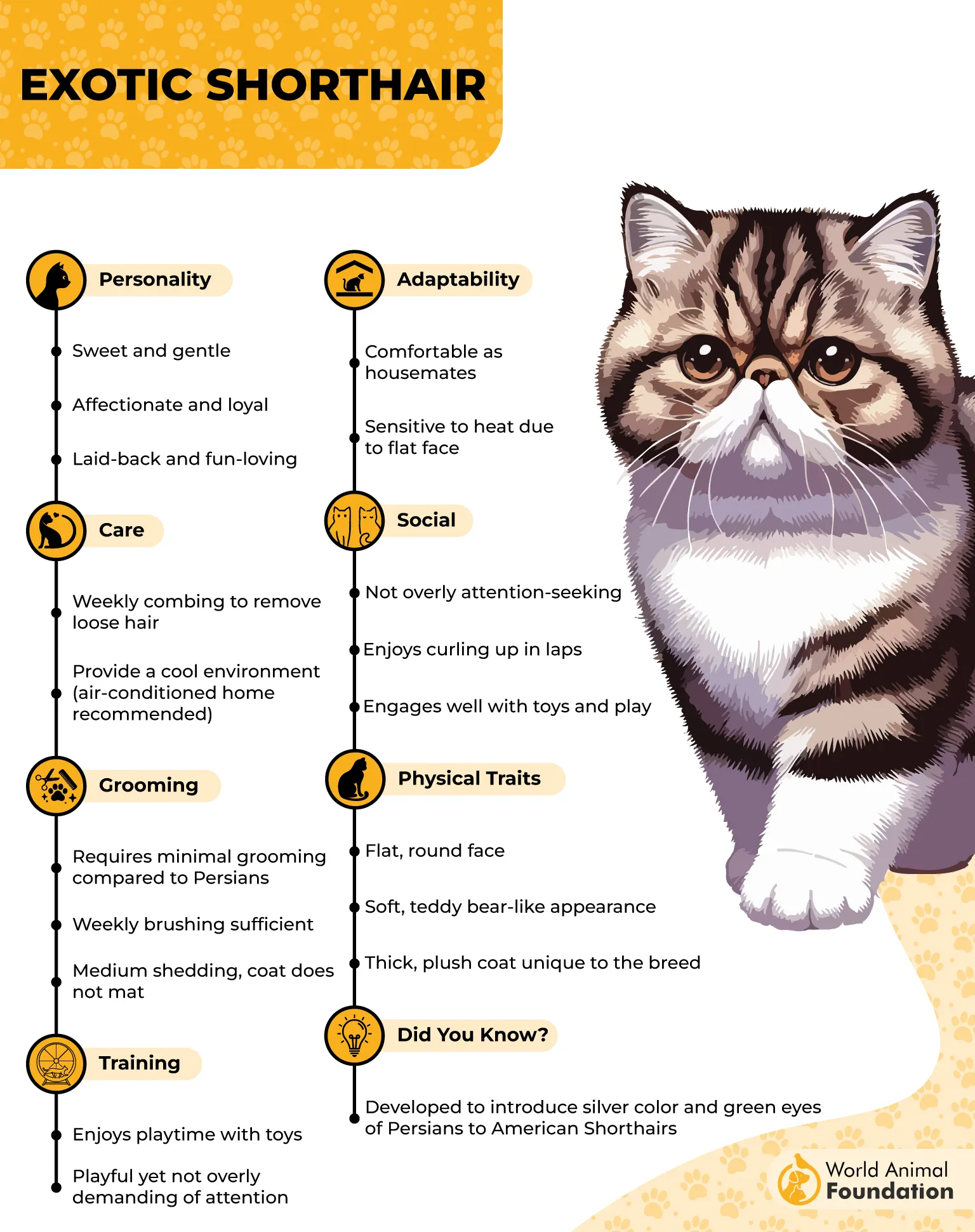
Although these cats enjoy relaxing beside their families, they are not entirely inactive. They have a playful, curious side and can happily spend time with interactive toys. They also form close bonds with their owners and generally prefer having company rather than being left alone for long periods.
Weekly brushing usually keeps their dense coat in good condition, although more frequent grooming may be needed during seasonal shedding. Their flattened facial structure can make them prone to breathing difficulties, so responsible breeding and routine veterinary care are important.
How This Breed Stands Out
Short, plush coat is easier to manage than a Persian’s: Its shorter fur is less likely to mat and generally needs only weekly brushing.
Calm, affectionate nature suits indoor family life: Its gentle temperament and enjoyment of companionship make it a good match for relaxed family households.
Conclusion
Choosing a low-maintenance cat can make family life more enjoyable without adding demanding grooming routines or complicated care needs. The right companion can bring affection, comfort, and playful moments into a household while fitting naturally into everyday routines.
Temperament is just as important as coat care. Gentle, adaptable cats that enjoy companionship can help create a warm bond with family members, including children and other pets.
Even cats with simple grooming needs still require regular brushing, balanced nutrition, veterinary checkups, and attention. Understanding their personalities and individual needs helps families make responsible choices.
With the right match, families can enjoy the rewards of cat companionship while keeping daily care manageable.
