




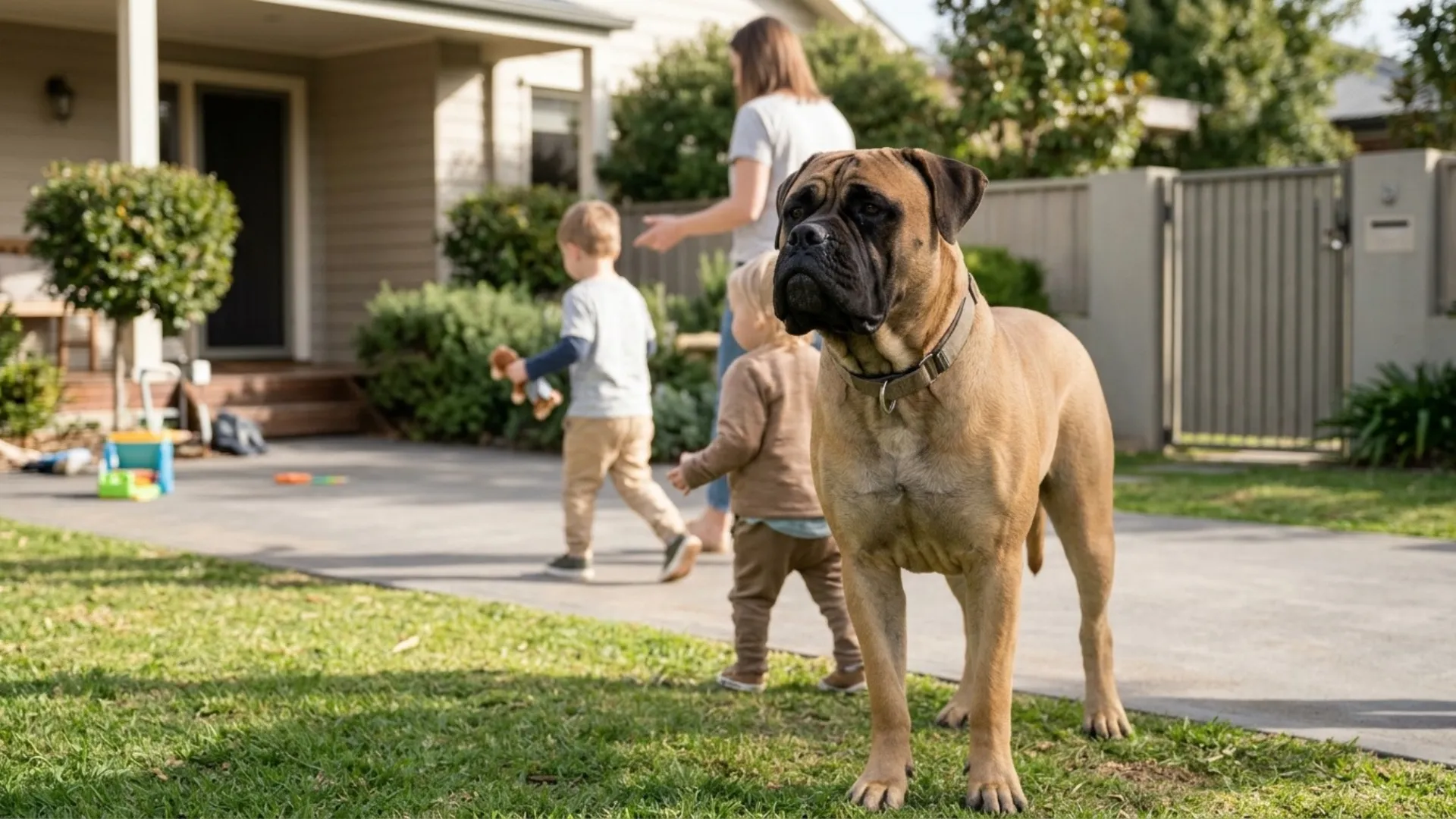
Choosing a dog to protect your family means finding more than just a big, intimidating companion. You want a loyal friend who can keep a watchful eye on your home, stand their ground when needed, and still enjoy spending time with the people they love.
Dogs have been protecting homes and working alongside humans for centuries. Their keen senses, loyalty, and ability to recognize unfamiliar situations make them excellent watchdogs and protectors. In fact, even having a dog around can discourage potential intruders.
The good news is that a powerful guard dog can also be a loving family companion. The key is choosing a dog whose temperament and energy level suit your household.
Let’s look at some of the most impressive dog breeds that can bring both strength and security to your family.
Top Herculean Dog Breeds for Family Protection
1. Cane Corso
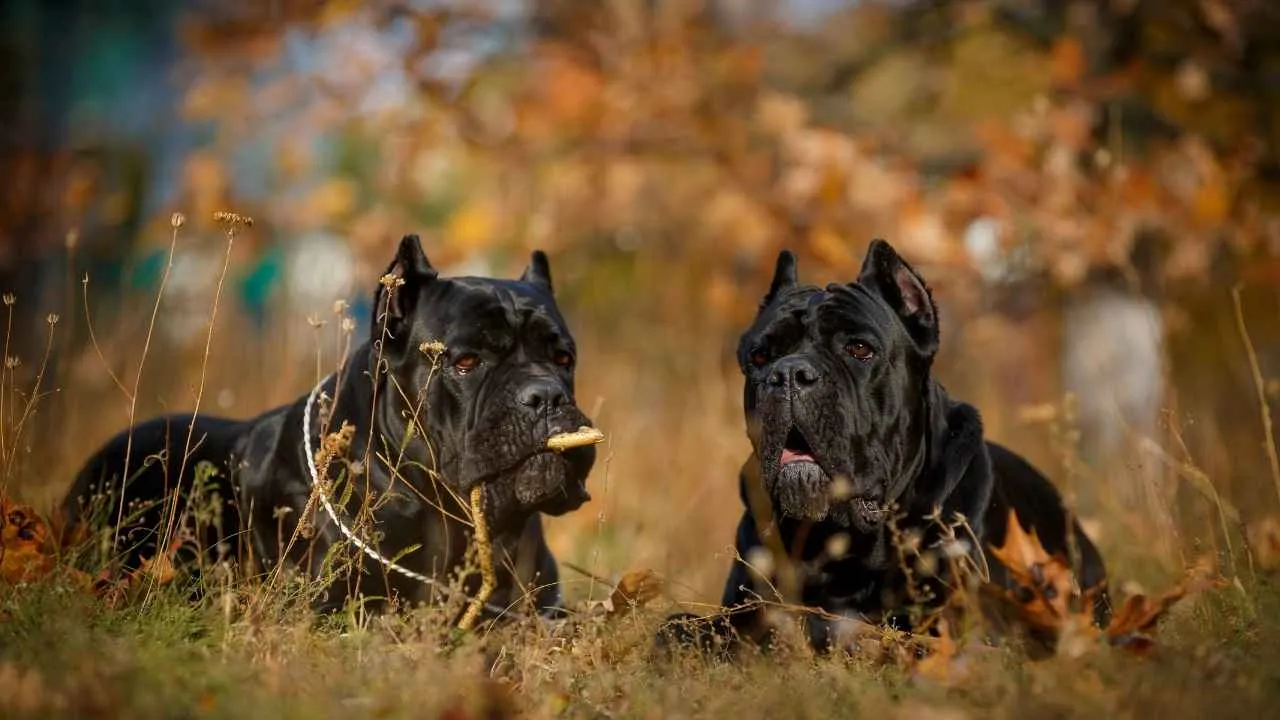
The Cane Corso is a powerful and confident dog with a natural instinct to protect its family. Also known as the Italian Mastiff, its history dates back to ancient Rome, where these dogs worked as watchdogs, farm dogs, and even canine soldiers.
According to the American Kennel Club, their name roughly translates to “bodyguard dog,” reflecting their long history as guardians. Their muscular build, large head, and alert expression give them an intimidating appearance.
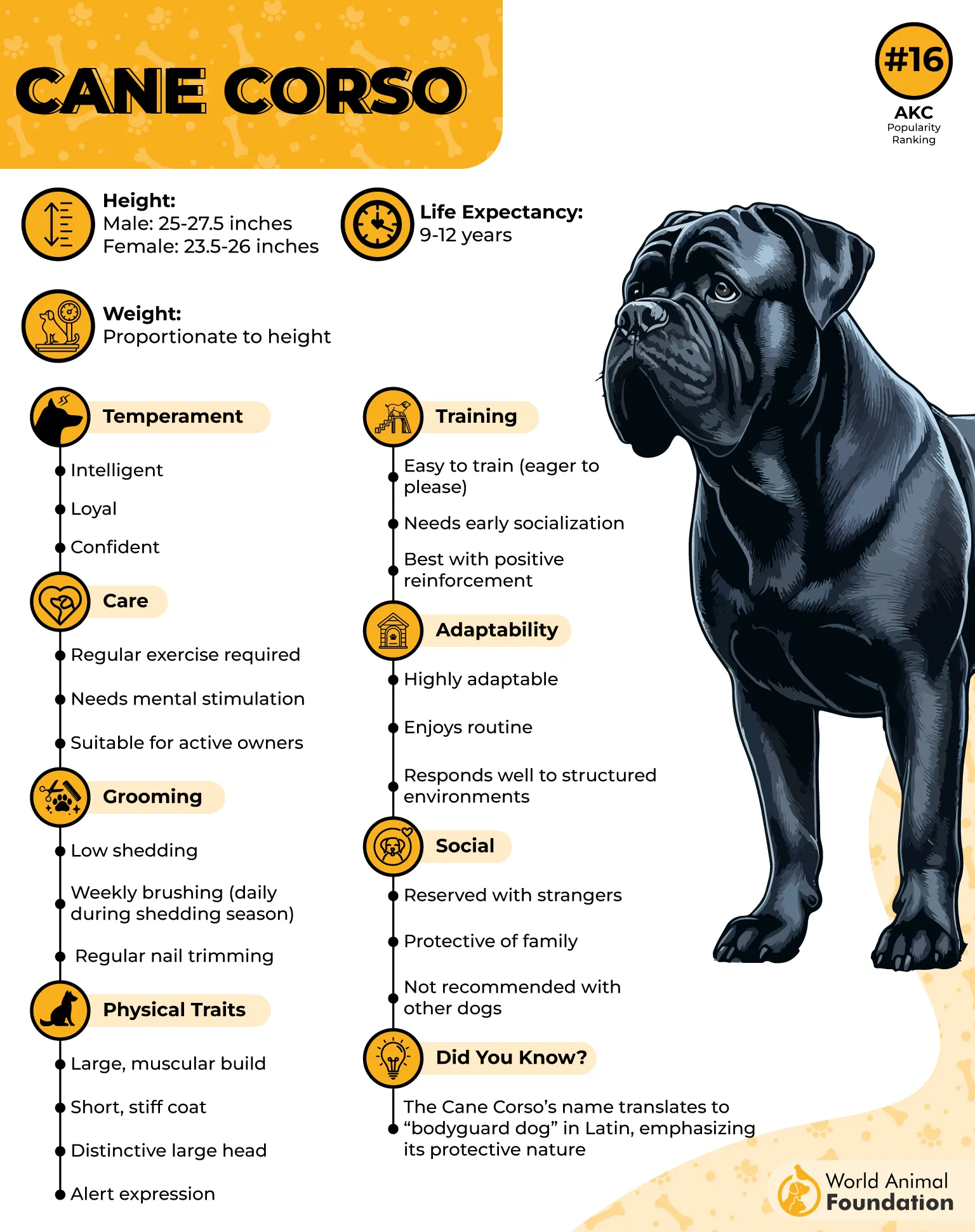
Cane Corsos are intelligent, affectionate, and deeply loyal to their families. They are naturally watchful and make excellent protectors, but can be reserved around strangers and other animals. Their independent and willful nature makes them better suited to experienced owners.
Training and Daily Care
Daily walks, structured activities, and training sessions help keep them physically and mentally active.
Their short, smooth coats need minimal grooming, but they shed moderately throughout the year.
They can be prone to obesity, hip and elbow dysplasia, epilepsy, and bloat. Their average lifespan is 9–12 years.
2. Bullmastiff
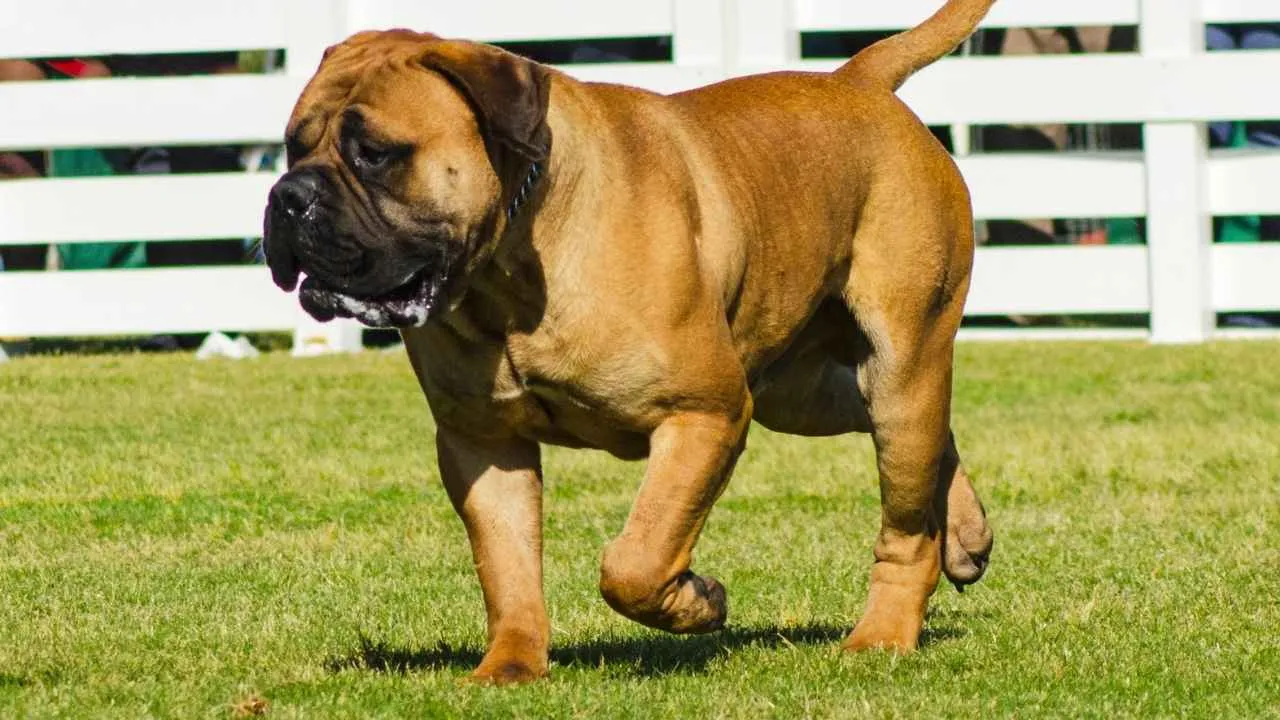
The Bullmastiff is a powerful, fearless dog with a surprisingly gentle side. Developed in 19th-century England by crossing Bulldogs and Mastiffs, these dogs were originally used to guard country estates and catch poachers.
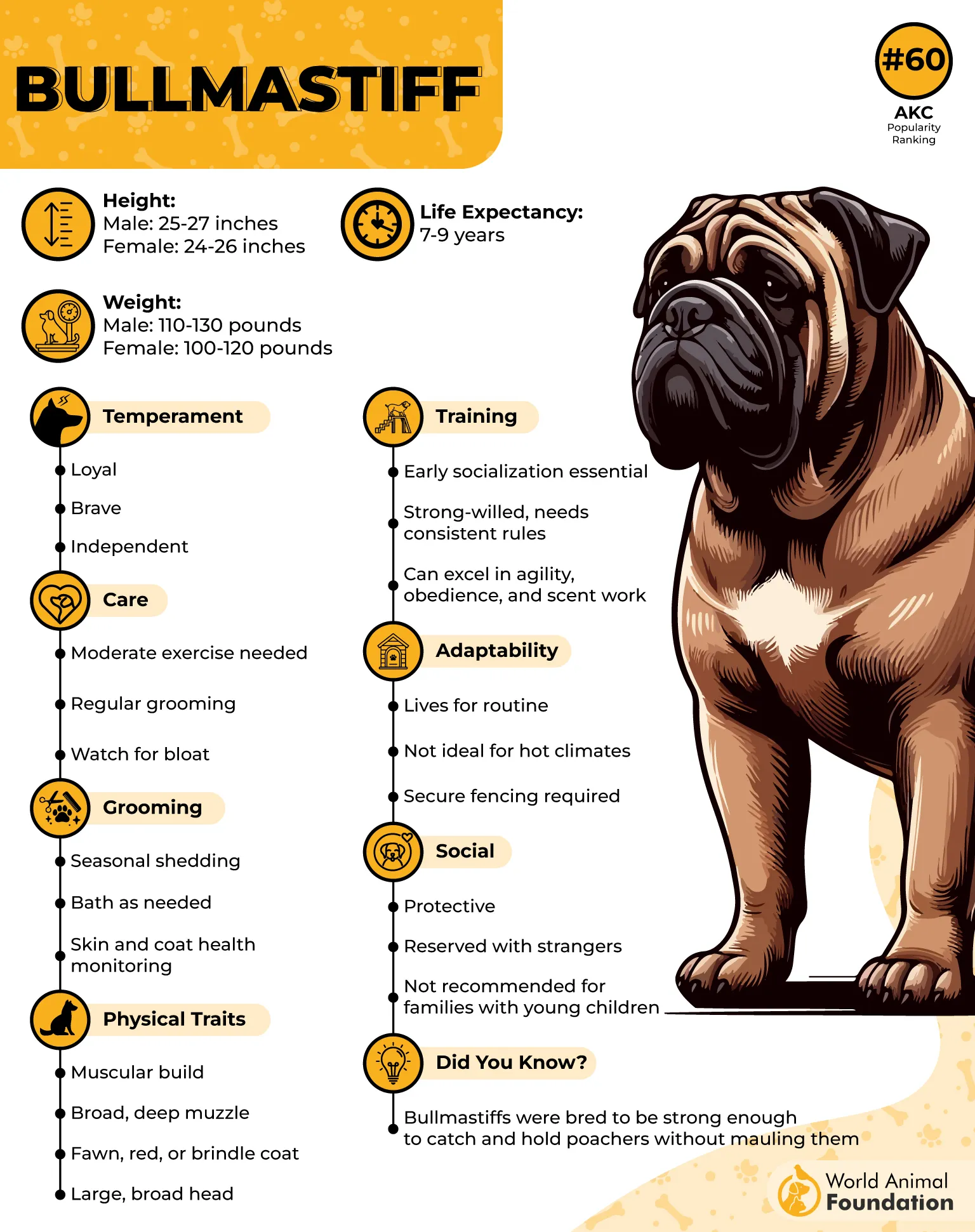
Their muscular build, broad head, and confident expression give them an imposing appearance, making them top-tier protectors. Despite their size, Bullmastiffs are known for being calm, affectionate, and devoted family companions.
Bullmastiffs form strong bonds with their families and enjoy being around people. They are usually quiet dogs and do not bark much, but can be suspicious of strangers and protective of their homes.
Training and Daily Care
Bullmastiffs need early training, regular socialization, and daily activity to stay healthy and well-behaved.
Their short coats are relatively easy to maintain, but their short muzzles can make them prone to breathing difficulties.
Maintaining a healthy weight is important because excess weight can put additional pressure on their joints.
3. Rottweiler
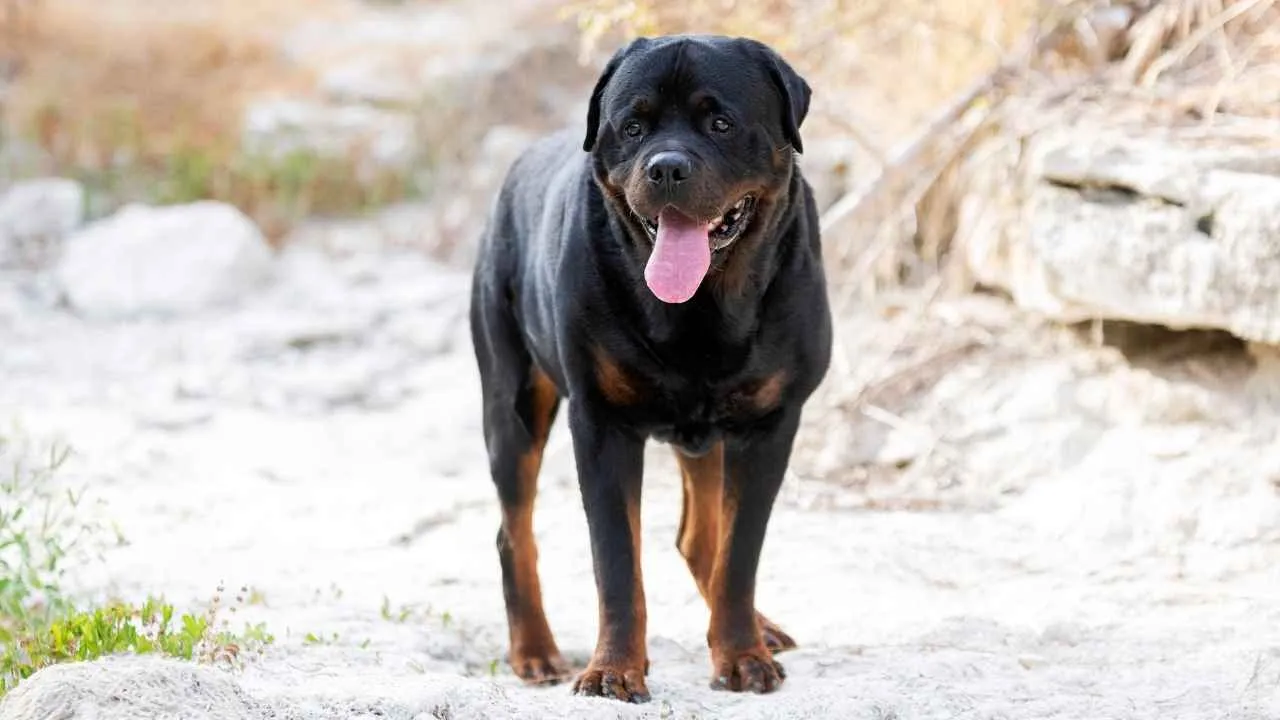
The Rottweiler is a powerful, confident, and hardworking dog with a long history as a guardian. Descended from the mastiffs used by Roman legions, these dogs were originally bred for working and protecting livestock.
Their muscular build, broad head, and distinctive black coat with rust markings give them an imposing appearance. Behind their strong exterior, however, Rottweilers have a playful and affectionate side.
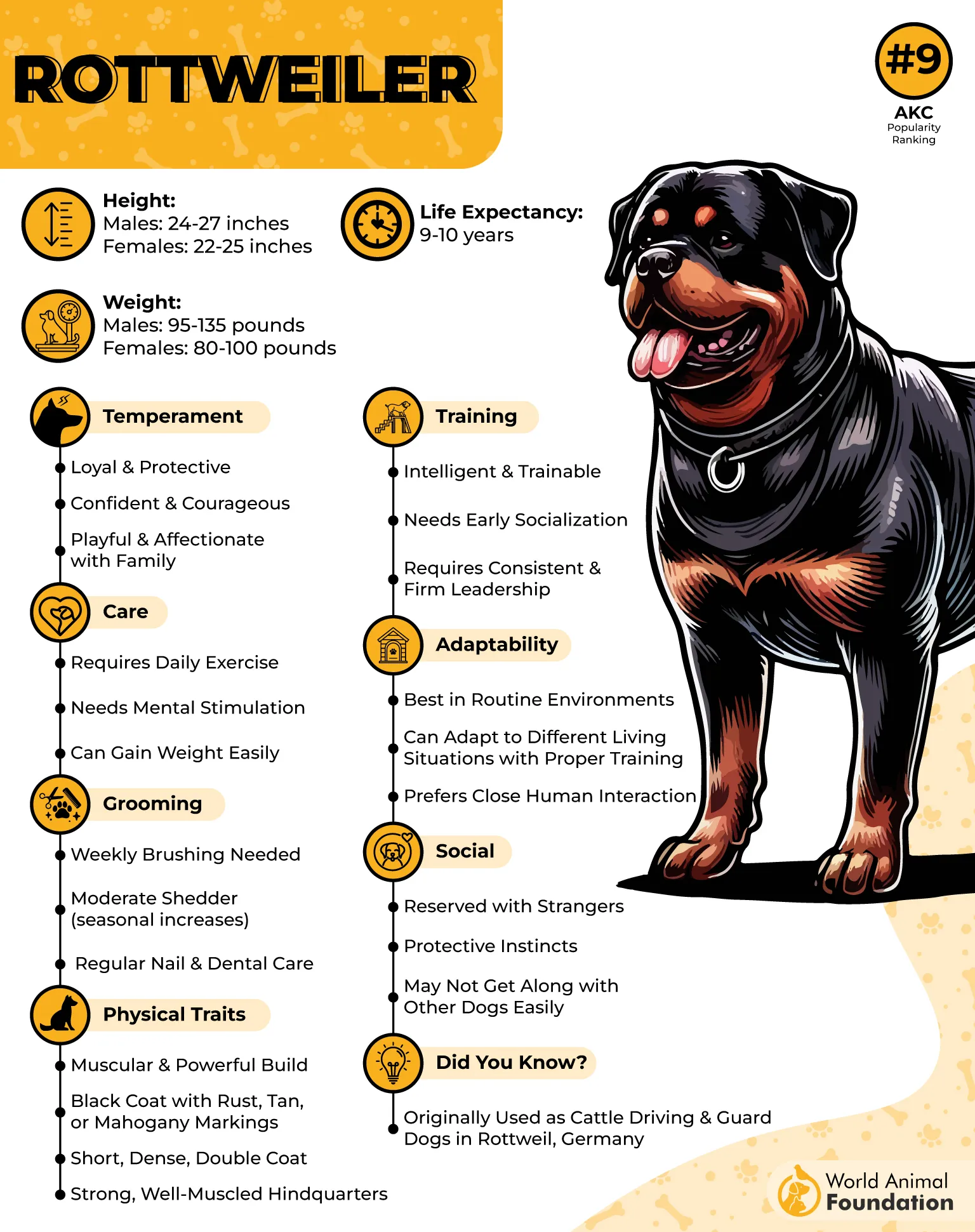
Rottweilers are deeply loyal to their families and naturally protective of their homes. They are usually calm and confident but can be reserved around strangers.
Their intelligence makes them quick learners, but their strong-willed nature means they are better suited to experienced owners. Early socialization helps manage their territorial instincts.
Training and Daily Care
Rottweilers need at least 60 minutes of daily exercise, along with mental stimulation and interactive activities.
Their short coats shed throughout the year and need regular brushing.
Regular veterinary checkups and a balanced diet help maintain their health and prevent weight-related problems.
4. Boerboel
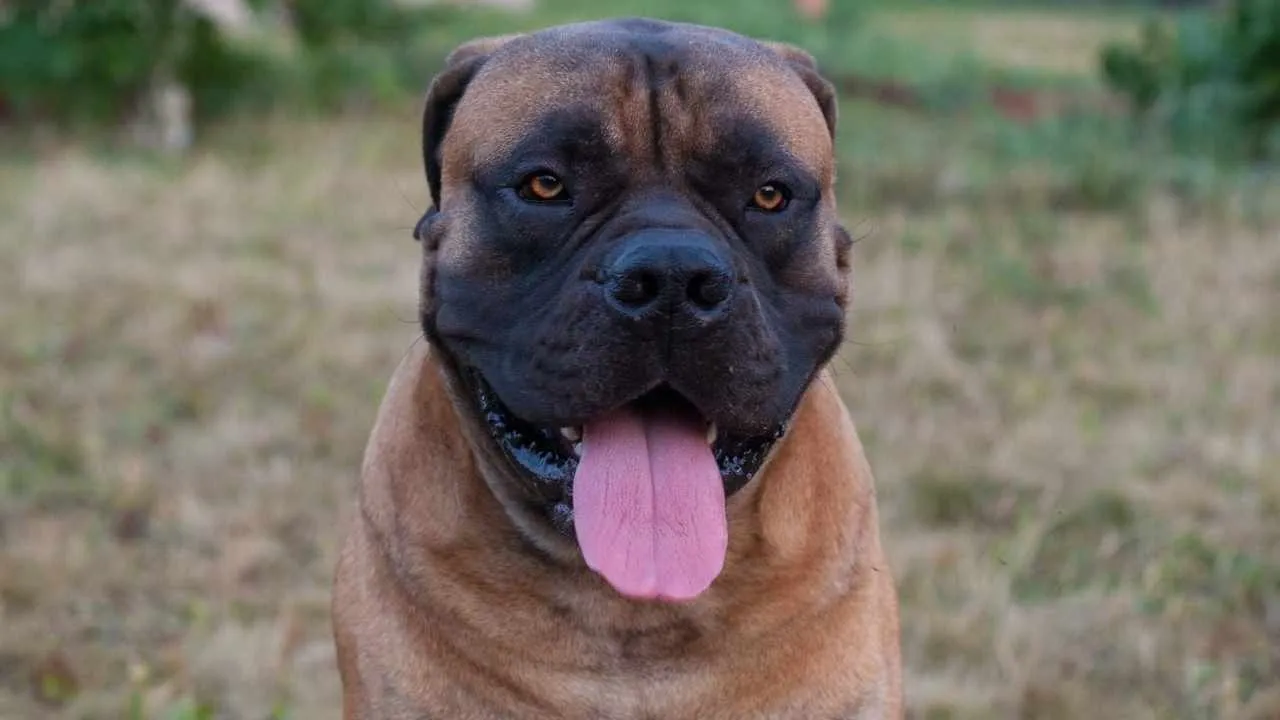
The Boerboel is a powerful and confident guardian originally bred to protect farms and remote homesteads in South Africa. These dogs were expected to defend their families against dangerous predators, which explains their strong protective instincts.
Despite their imposing looks, Boerboels are intelligent, agile, and eager to learn. Purina mentions that their name also means “farm dog.”
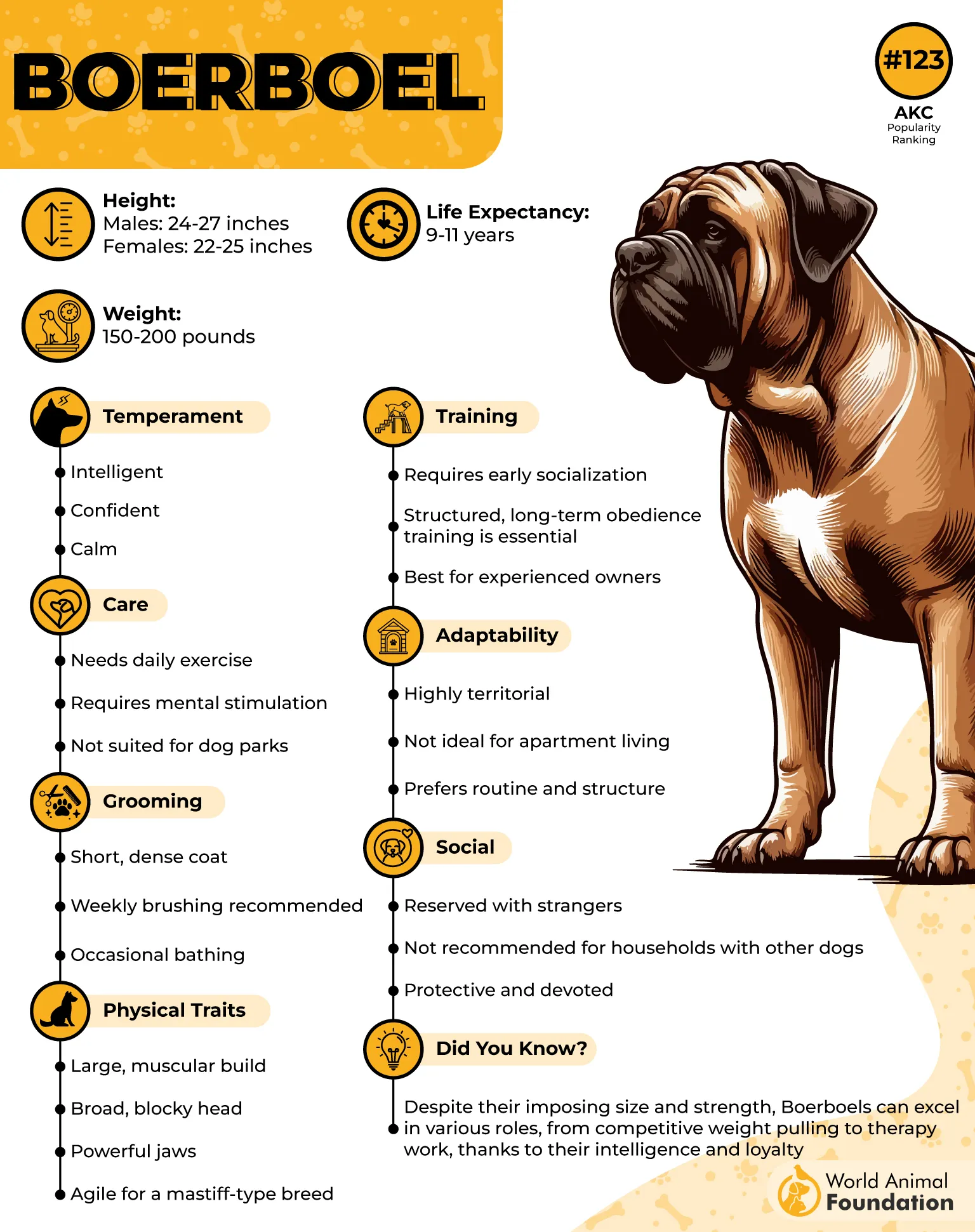
Boerboels are deeply devoted to their families and can be affectionate, playful companions. They are generally good with children and other pets when properly introduced, but tend to be reserved around strangers.
Their dominant nature and strong guarding instincts require careful handling. Early socialization and firm, consistent training are essential. These dogs are best suited to experienced owners who can manage their size and protective nature.
Training and Daily Care
Boerboels need regular exercise and structured activities to stay physically and mentally active.
Their short, smooth coats require minimal grooming.
Supervise playtime with small children, as their large size can lead to accidental knocks. Regular veterinary care and a balanced diet are also important.
5. Tibetan Mastiff
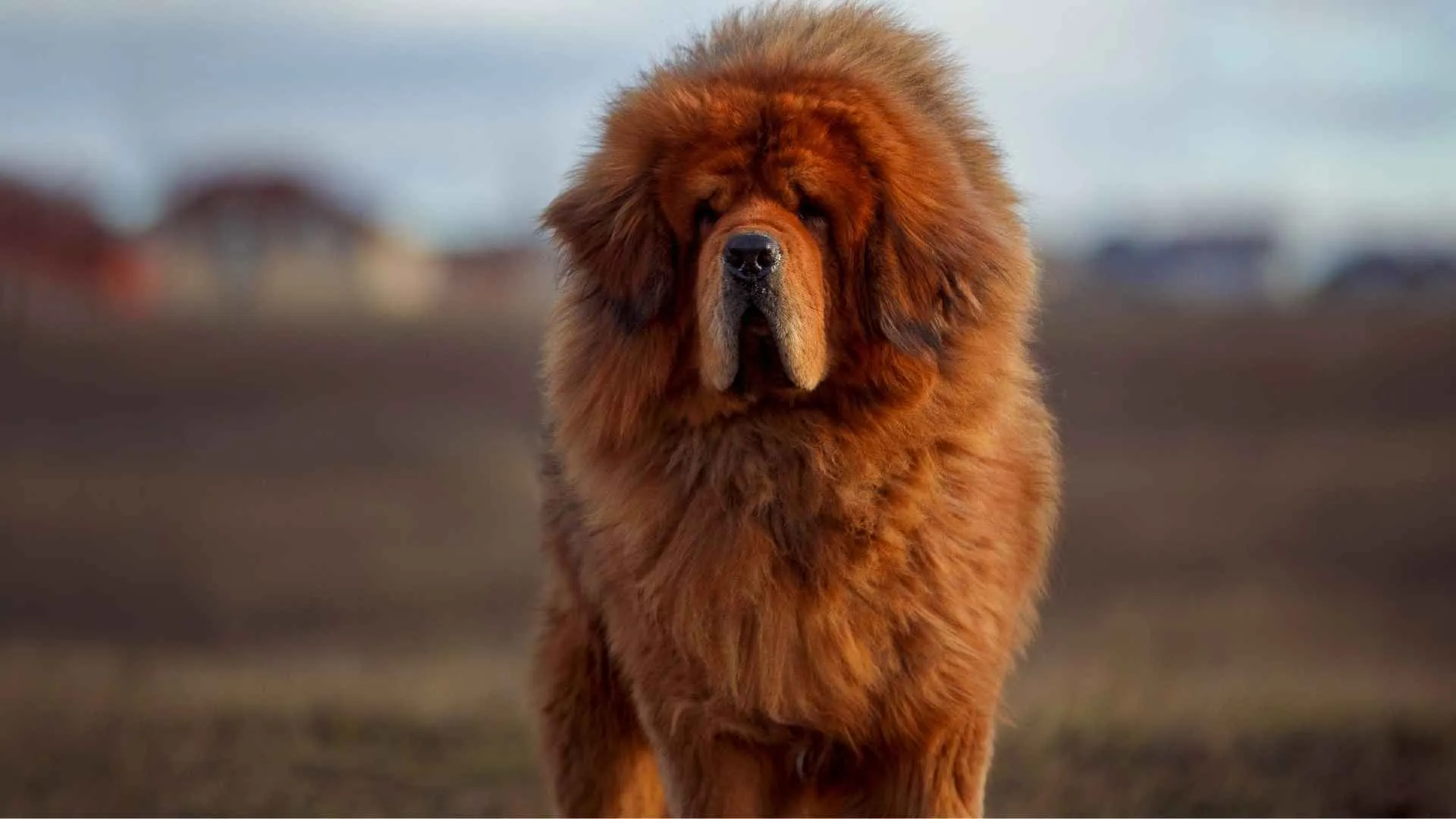
The Tibetan Mastiff is an ancient, powerful guardian known for its watchful nature and impressive appearance. Originally bred in Tibet, these dogs protected homes, monasteries, villages, and livestock from intruders and predators.
Their massive build, broad head, and thick double coat give them an imposing look. Despite their size, they are surprisingly agile and light-footed. They are also known for their calm nature around the family.
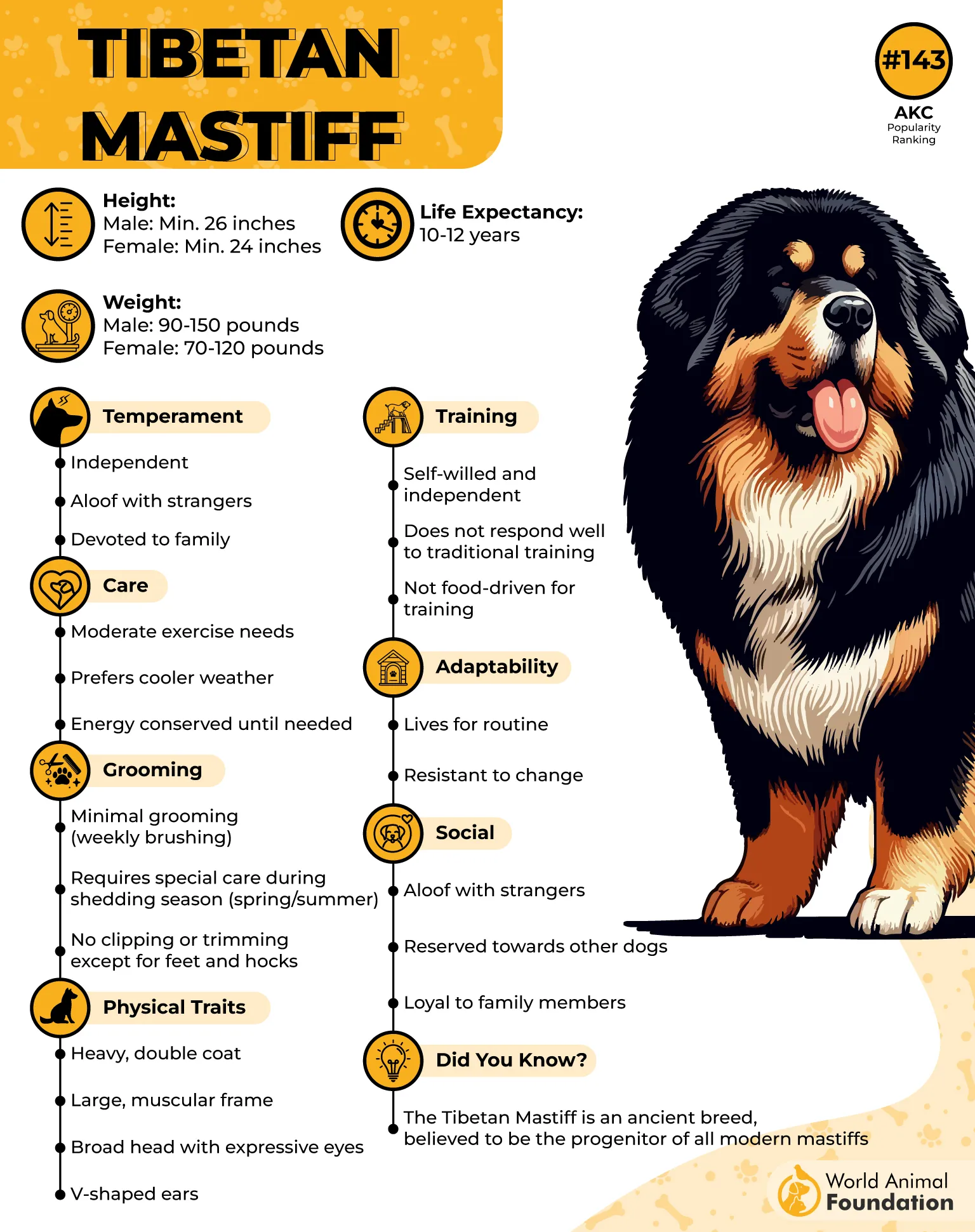
Tibetan Mastiffs are deeply devoted to their families but naturally wary of strangers. They are independent, territorial, and strong-willed, which can make training challenging. Early socialization with people and other animals is essential.
They can live with children they are raised with, but supervision is important, especially around younger kids. These dogs are best suited to experienced owners with plenty of outdoor space and a securely fenced property.
Training and Daily Care
Tibetan Mastiffs need around an hour of daily exercise and enjoy having space to roam and watch over their property.
Their thick double coats need regular brushing, especially during their heavy seasonal shedding.
Feed smaller, frequent meals to help reduce the risk of bloating and stomach problems. Regular hip and eye checks are also important.
6. Dogue de Bordeaux

The Dogue de Bordeaux, also known as the French Mastiff, is one of France’s oldest dog breeds. These powerful dogs were originally used to guard estates and protect their owners.
Dogue de Bordeaux dogs are loyal and protective but can also be gentle and loving companions. They usually enjoy spending time with their families and can get along with children and other pets when properly raised.
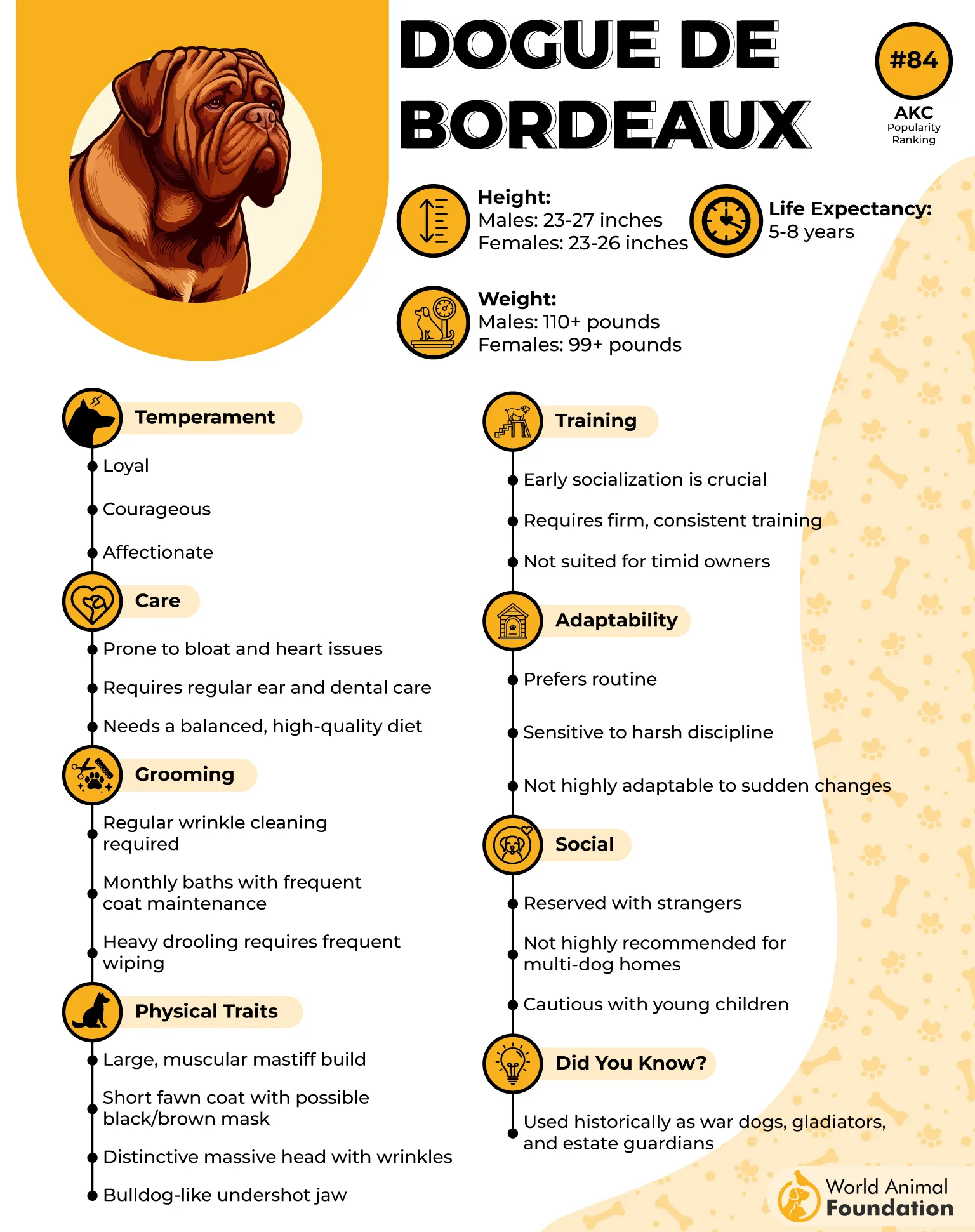
However, they may be reserved around strangers and can become stubborn without proper training. Early socialization and consistent guidance are important to manage their protective instincts.
Training and Daily Care
Moderate daily exercise, including walks and structured activities, helps keep them healthy.
Their short coats require minimal grooming, but owners should be prepared for drooling and snoring.
Supervise interactions with children because of their size, and avoid high-impact exercise during growth to protect their developing joints.
7. Neapolitan Mastiff
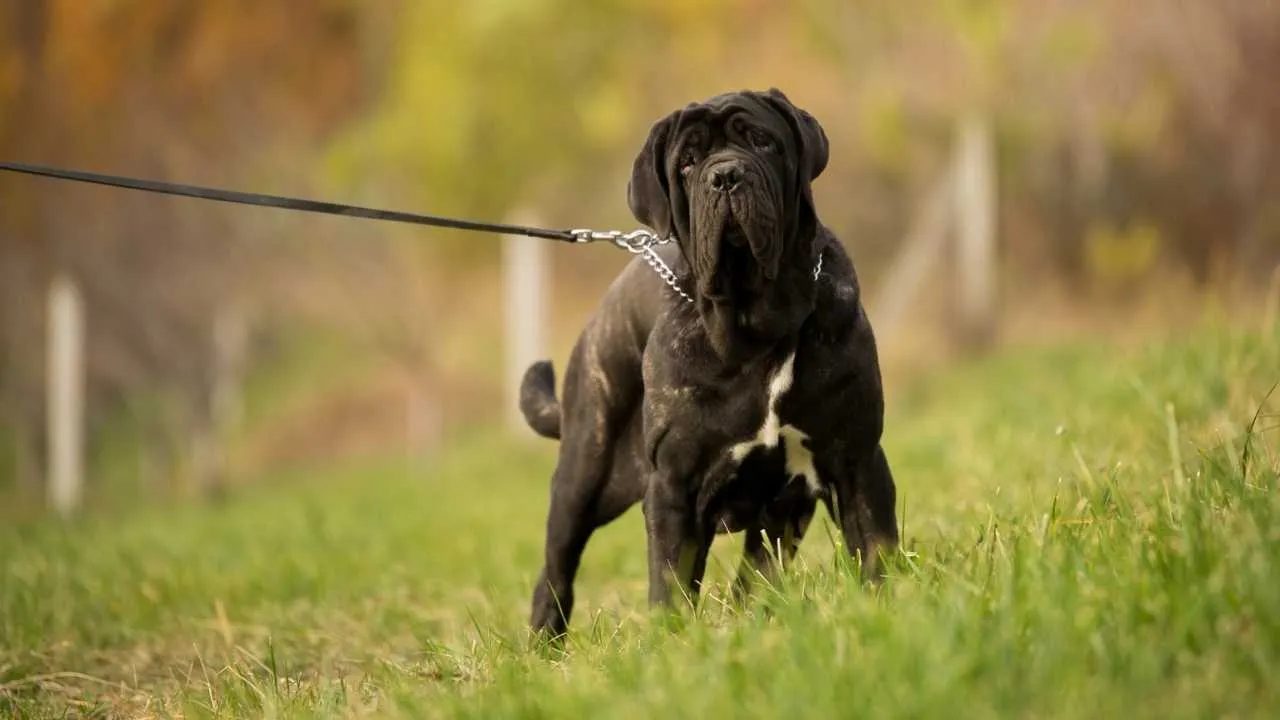
The Neapolitan Mastiff is a massive and powerful guardian with an appearance that is hard to forget. One of Italy’s oldest dog breeds, these dogs have been protecting homes since ancient Roman times.
Neapolitan Mastiffs are deeply loyal and affectionate companions who love staying close to their owners. They are naturally watchful and wary of strangers, making them excellent home guardians. However, they are generally calm and steady unless provoked.
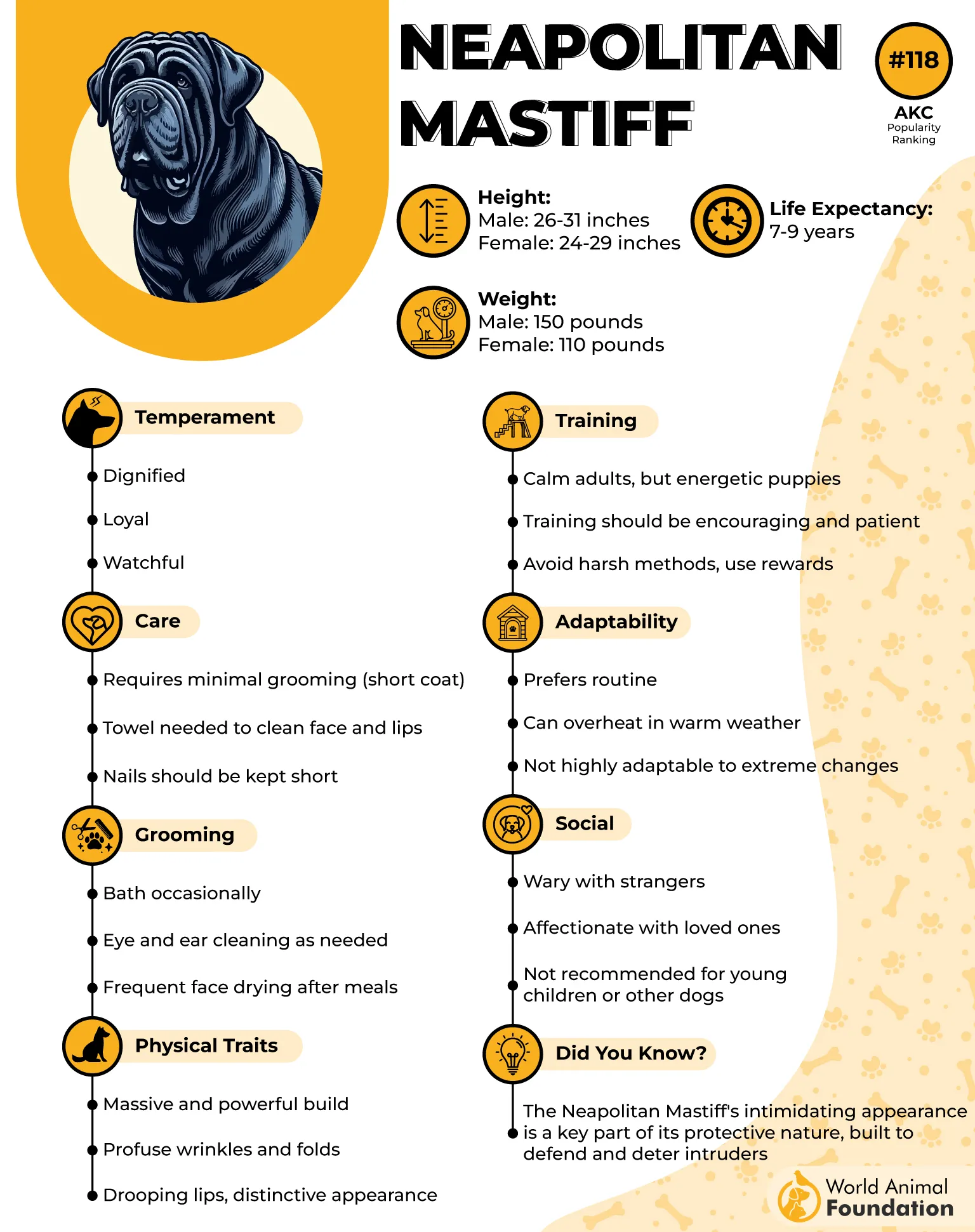
Although puppies can be playful and energetic, adults tend to enjoy lounging with their families. Due to their size and strength, they are not suitable for first-time owners, as mentioned by Royal Canin.
Training and Daily Care
Neapolitan Mastiffs need around 30–40 minutes of daily exercise, usually through regular walks.
Their wrinkles need regular attention, and owners should keep a towel handy because these dogs drool heavily.
They need extra care in hot weather, as drooling can increase with high temperatures.
8. Central Asian Shepherd
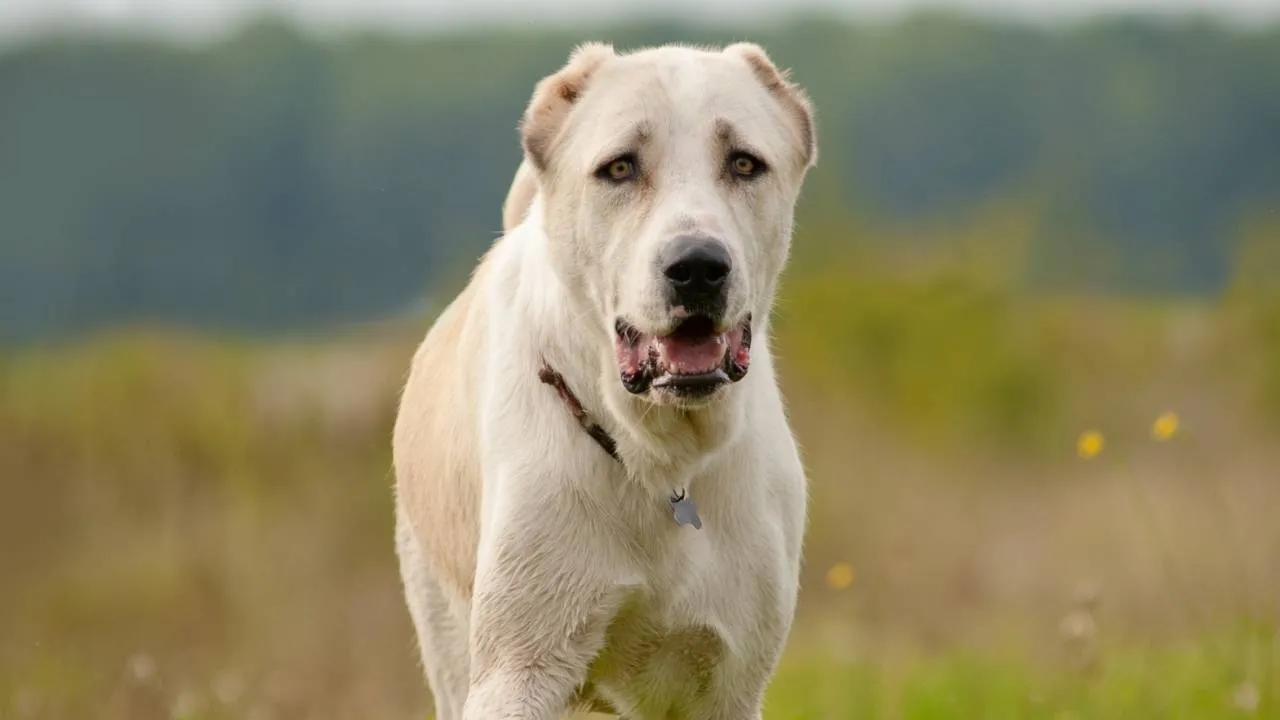
The Central Asian Shepherd Dog is a fearless and powerful guardian with a history spanning thousands of years. Developed through natural selection across Central Asia, these dogs were originally bred to protect livestock, families, and property from large predators.
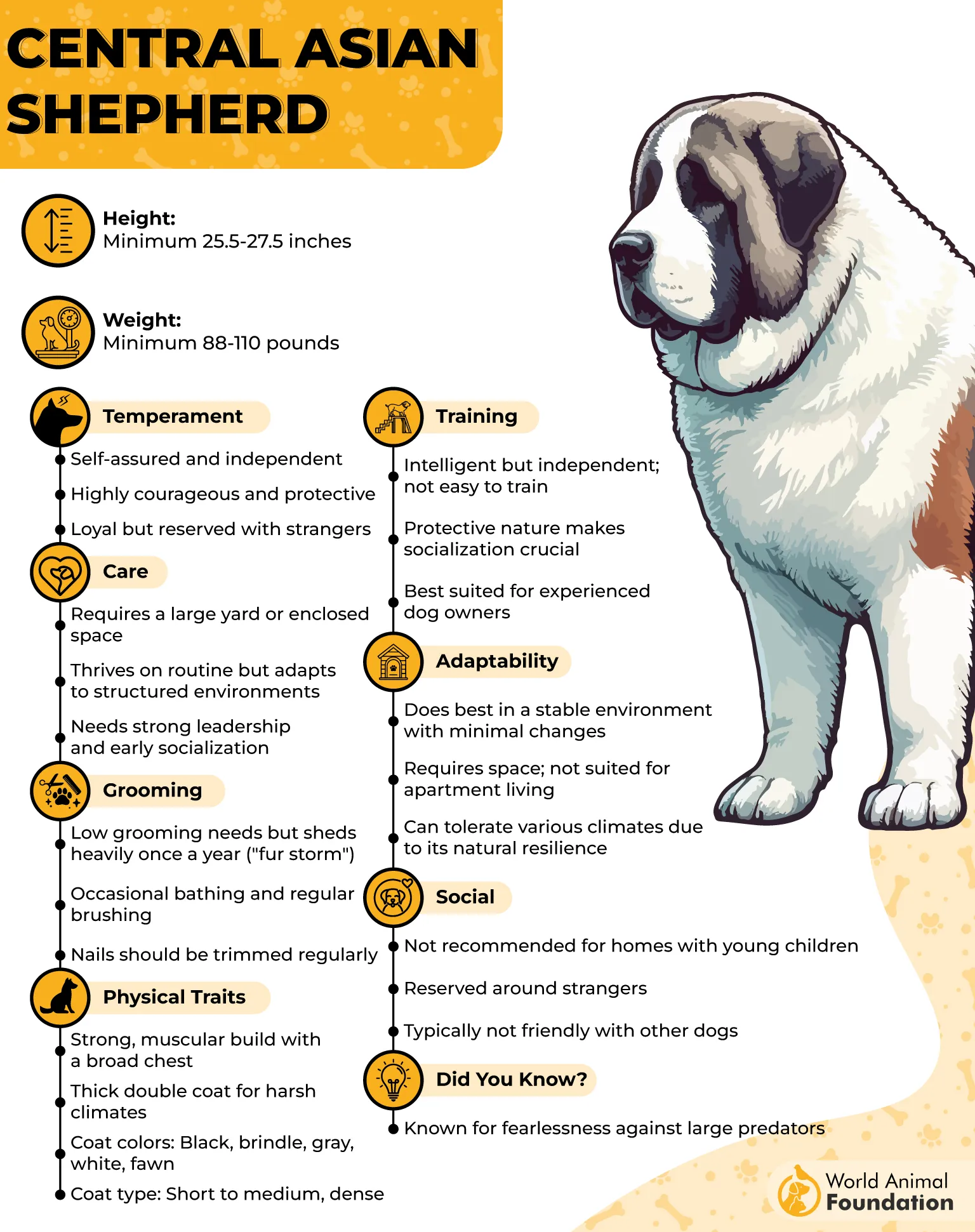
Central Asian Shepherds are loyal and affectionate toward their families but can be possessive and reserved around strangers. They are confident, quiet, and independent, often preferring to keep watch over their surroundings.
Although they can make loving family companions, their strong guarding instincts require experienced handling. They are not recommended for first-time owners, as lifelong training and early socialization are essential.
Training and Daily Care
Daily exercise through leashed walks and supervised yard activities helps meet their moderate energy needs.
They need early socialization with people and other animals to become more comfortable with unfamiliar situations.
A spacious home with a sturdy fence is ideal for these independent dogs.
9. Caucasian Shepherd

The Caucasian Shepherd is a giant and powerful guardian originally bred in the Caucasus region between Europe and Asia. For centuries, these dogs protected livestock and properties from predators such as wolves and coyotes.
There are two main types: the Mountain variety, which has a longer coat and heavier build, and the Steppe variety, which has a shorter coat and lighter frame.
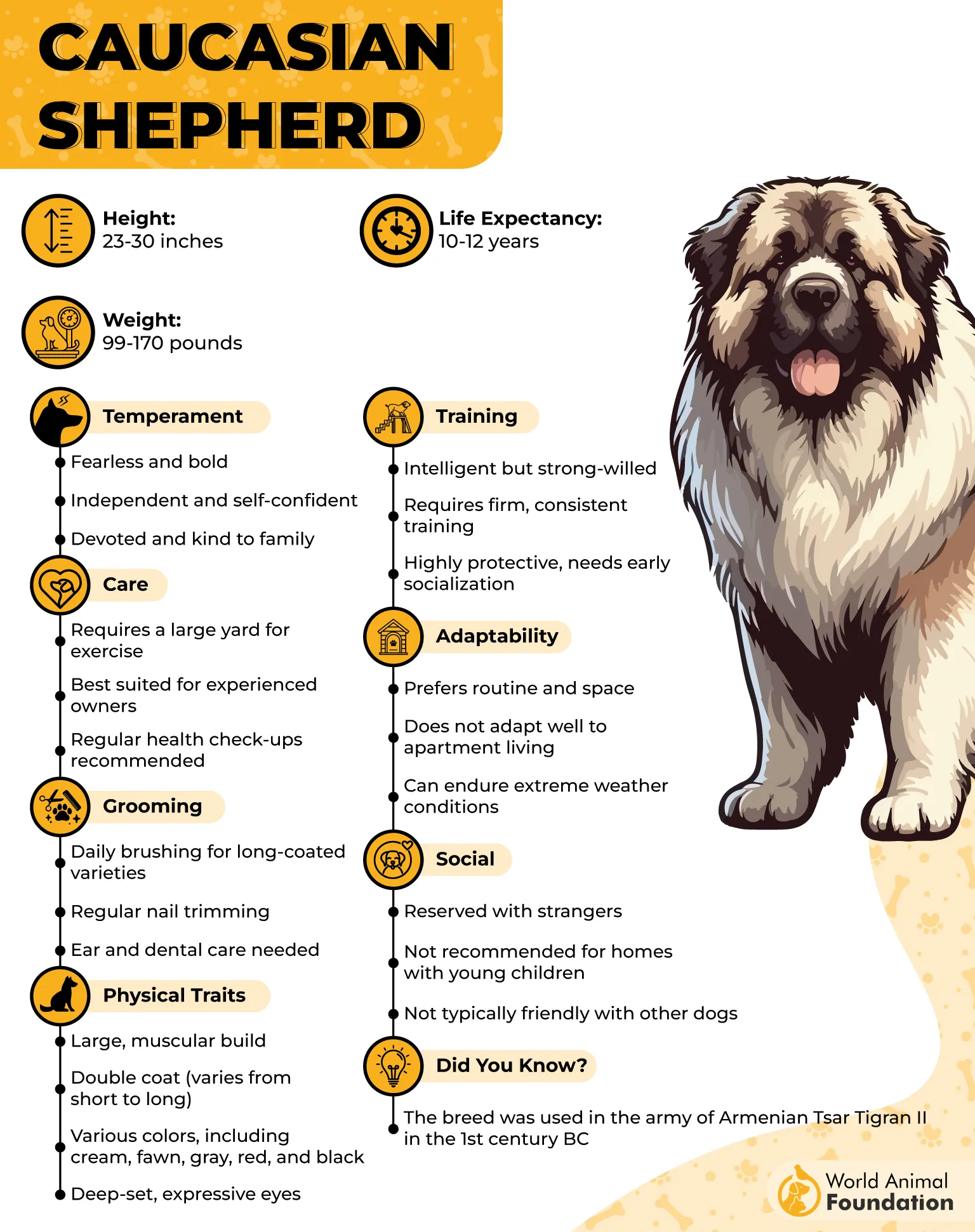
Caucasian Shepherds are bold, fearless, and highly protective of their families. Despite their serious appearance, they can be gentle, affectionate, and devoted to their loved ones, including other family pets.
However, they are naturally territorial and can be wary of unfamiliar people and animals. Their independent and strong-willed nature makes early socialization and consistent training essential. They are best suited to experienced owners with plenty of space.
Training and Daily Care
They need regular exercise and enough outdoor space to move around comfortably.
Positive-reinforcement training and early socialization help manage their territorial instincts.
Their thick coats require regular brushing, and interactions with young children should always be supervised.
10. Kangal Shepherd Dog
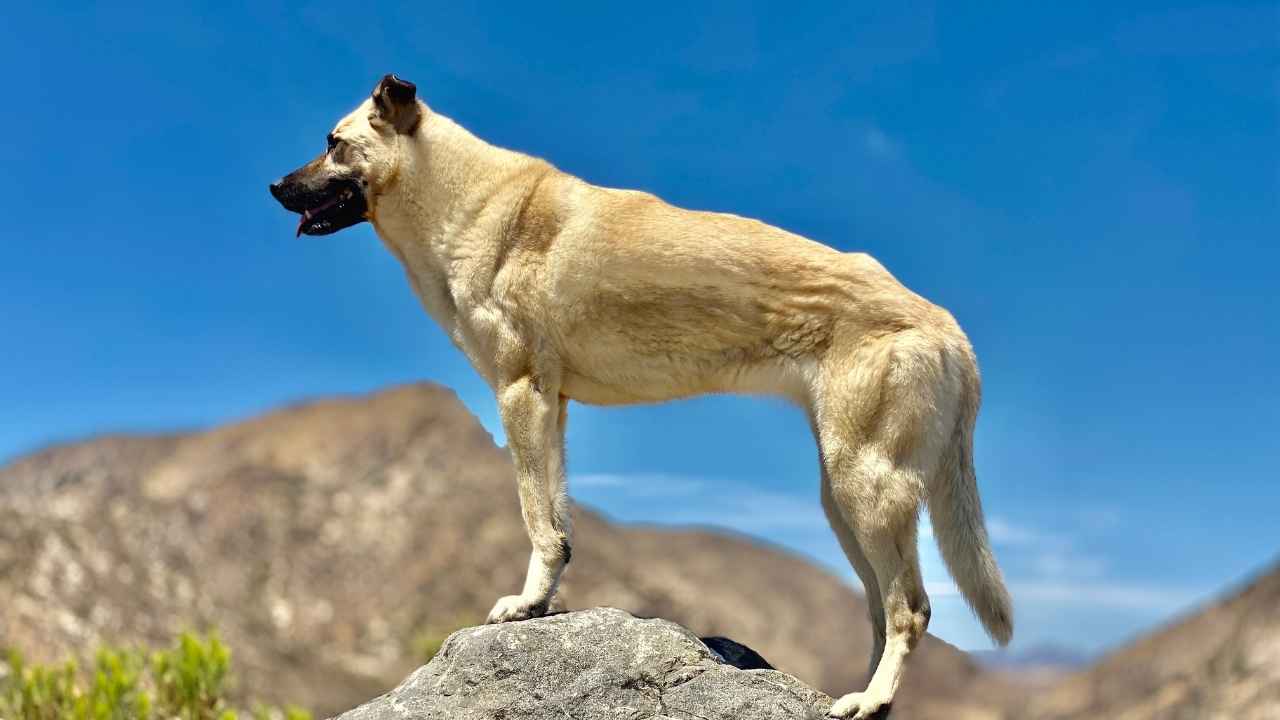
The Kangal Dog is a powerful livestock guardian originating from the town of Kangal in Turkey. For thousands of years, these dogs have protected livestock and property from predators. Their strength, speed, and endurance make them impressive working dogs.
Although often confused with Anatolian Shepherds outside Turkey, Kangals are recognized as a distinct breed in their homeland.
Kangals are loyal, calm, and deeply protective of their families and the animals in their care. They are generally gentle with those they know but remain aloof toward strangers and can react strongly to perceived threats.
Their intelligence and independent nature make training challenging, so early socialization and consistent guidance are essential.
Training and Daily Care
Kangals need regular exercise, purposeful activities, and mental stimulation to prevent boredom and destructive behavior.
Secure, sturdy fencing is essential, as they may dig, climb, or wander after other animals.
Their undercoats shed heavily twice a year, and they need quality food and regular veterinary care.
Conclusion
Choosing a powerful dog for family protection means looking beyond size and strength. The best guardians are loyal, alert, confident, and devoted to their families.
However, breeds with strong protective instincts also need early socialization, consistent training, regular exercise, and responsible handling. Their temperament, space requirements, and care needs should all be considered before bringing one home.
Before choosing a breed, think carefully about your experience, lifestyle, and ability to meet its needs. Take time to learn about the breed, speak with responsible breeders or rescue organizations, and make sure you can provide a safe and stable home.
A good family guardian is not simply a dog that looks intimidating, but one that can protect its loved ones while living comfortably as part of the family.
