




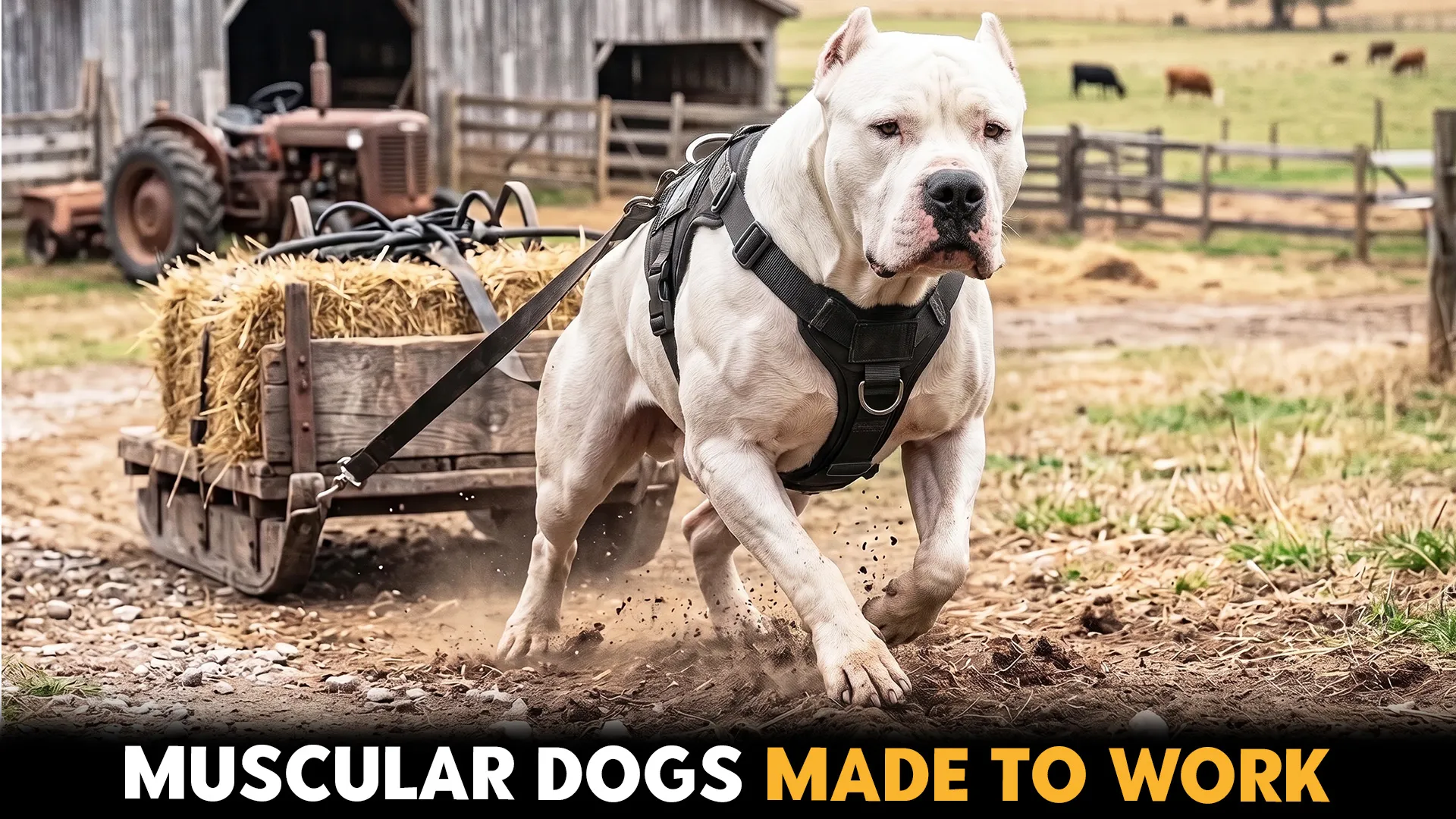
Picture a farm at the start of a demanding workday. Livestock needs moving, equipment must be hauled, and someone has to keep watch over the property while the day unfolds.
In places where physical labor is part of everyday life, a dependable working dog can make a considerable difference. For generations, certain dogs have assisted people with jobs requiring strength, stamina, and a sturdy physical frame. Their broad chests, muscular shoulders, thick necks, and powerful legs reflect years of selective breeding for practical responsibilities.
Some were suited to pulling heavy loads over difficult terrain, while others were valued for controlling livestock or protecting valuable property. Large working breeds can weigh anywhere from 70 to well over 100 pounds, depending on their genetics, build, and overall frame. Their impressive physical capabilities are fascinating to examine.
Here, we’ll explore nine muscular dog breeds, including their defining physical features, traditional labor roles, and the qualities behind their remarkable strength.
Key Takeaways
Heavy labor calls for serious muscle, and the Mastiff starts this list with the kind of body mass that is difficult to overlook.
The Dogo Argentino brings explosive movement into the picture, followed by a Cane Corso whose muscular chest and large head still leave room for impressive agility.
As the list continues, strength takes different forms through determined farm dogs, patient livestock guardians, and thickly built companions.
The last breed has another trick up its sleeve, conserving energy around the farm while staying ready to respond when trouble appears.
Top Dog Breeds with the Highest Muscular Mass for Labor Work
1. Mastiff

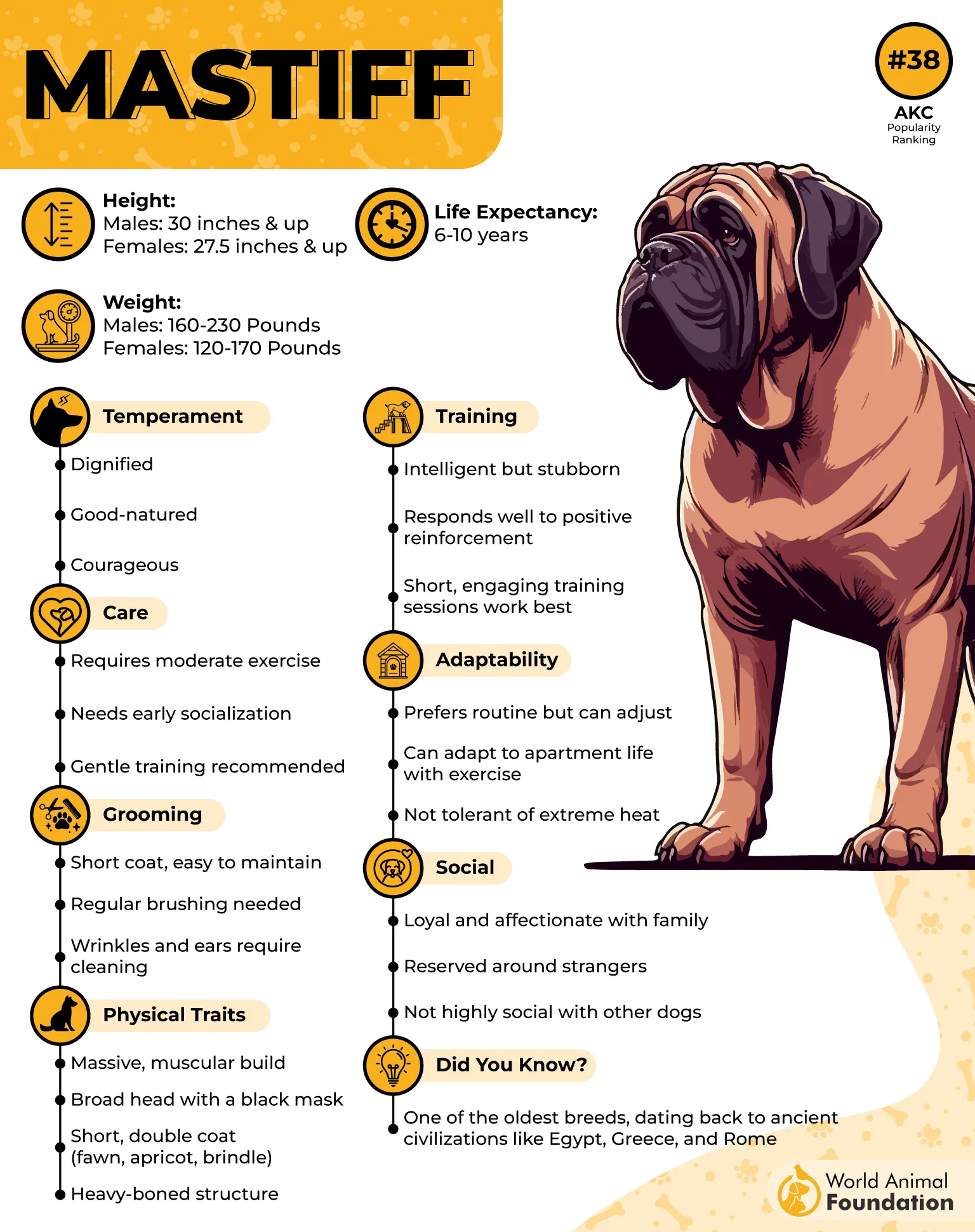
The Mastiff, which descends from an ancient mastiff-type dog once associated with lion hunting, according to the Mastiff Club of America. That early ancestor differed from today’s English Mastiff, and its lineage also links to breeds such as the Bullmastiff, Neapolitan Mastiff, and Tibetan Mastiff.
Built on an Enormous Frame
The English Mastiff has an exceptionally heavy, powerful physique, with substantial bones, a deep chest, and a broad back.
Its sheer body mass gives this giant breed a solid physical structure suited to the demanding strength historically associated with mastiff-type dogs.
A closer look reveals several defining features:
Massive, square-shaped head.
Short muzzle with a distinctive black mask.
Deep facial stop and broad skull.
Powerful Shoulders and Thick Skin
The Mastiff also has thick skin and substantial muscle around its powerful neck and broad shoulders, as described by Britannica.
Historically, these features were associated with the physical demands of close confrontations and restraint work, where a strong, heavily built upper body was especially important.
2. Dogo Argentino
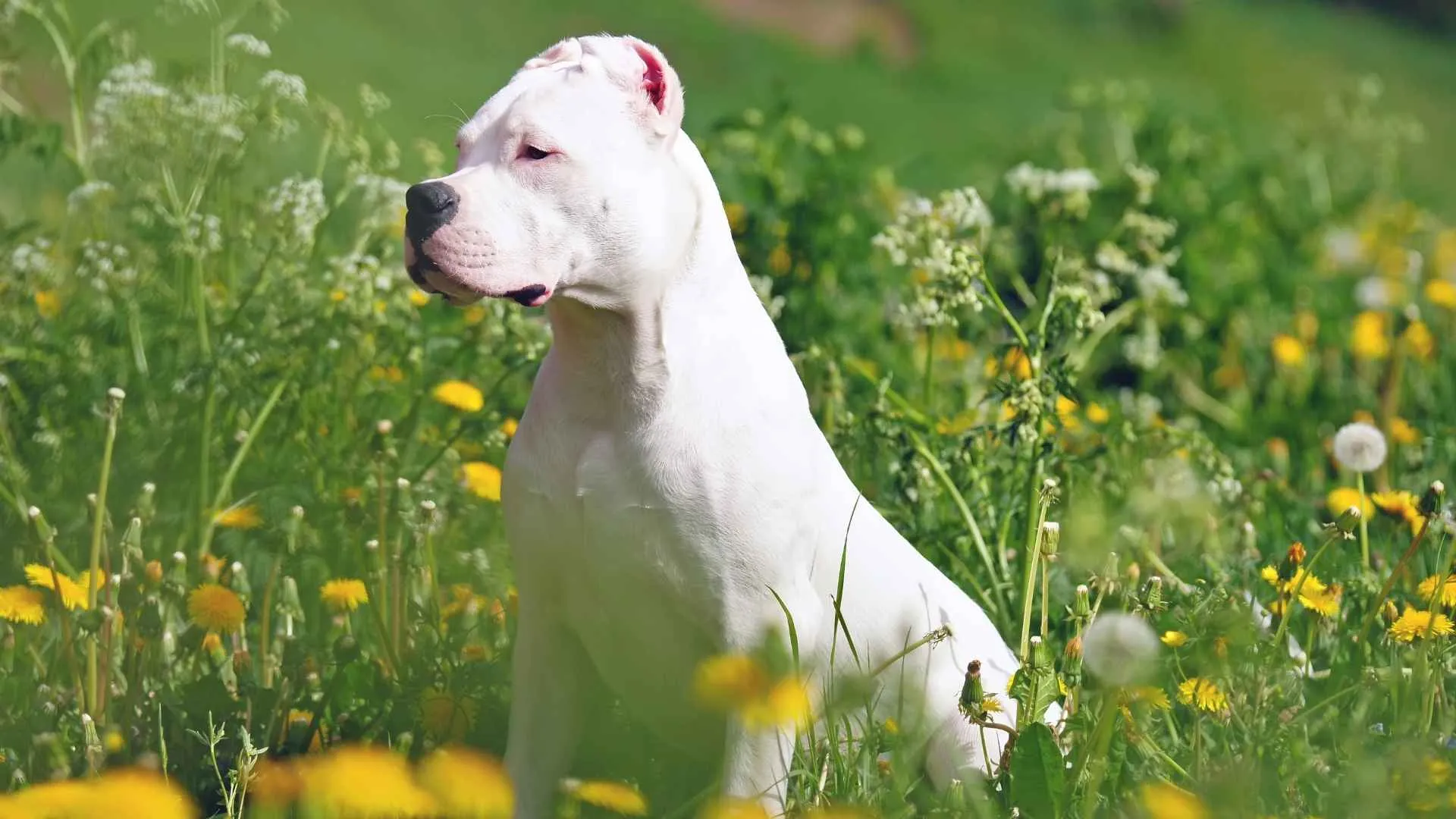
The Dogo Argentino originated in Argentina in 1928, following crosses between a local Córdoba hunting dog and several European breeds. Its ancestry includes Great Danes, Pointers, Boxers, Bull Terriers, and different Mastiff types, bringing together dogs with varied physical abilities.
A Powerful, Athletic Frame
These magnificent dogs have a large, muscular, deep-chested body built for demanding physical work. Its strength works alongside impressive agility, giving this breed the physical ability needed for fast, forceful movements during strenuous hunting tasks.

The following physical prowess adds to its capabilities:
Combines explosive power with stamina for long hunts.
Its short, tight coat helps release body heat in warm weather.
White coloring makes it easier for hunting partners to spot in thick vegetation.
A Strikingly Large Build
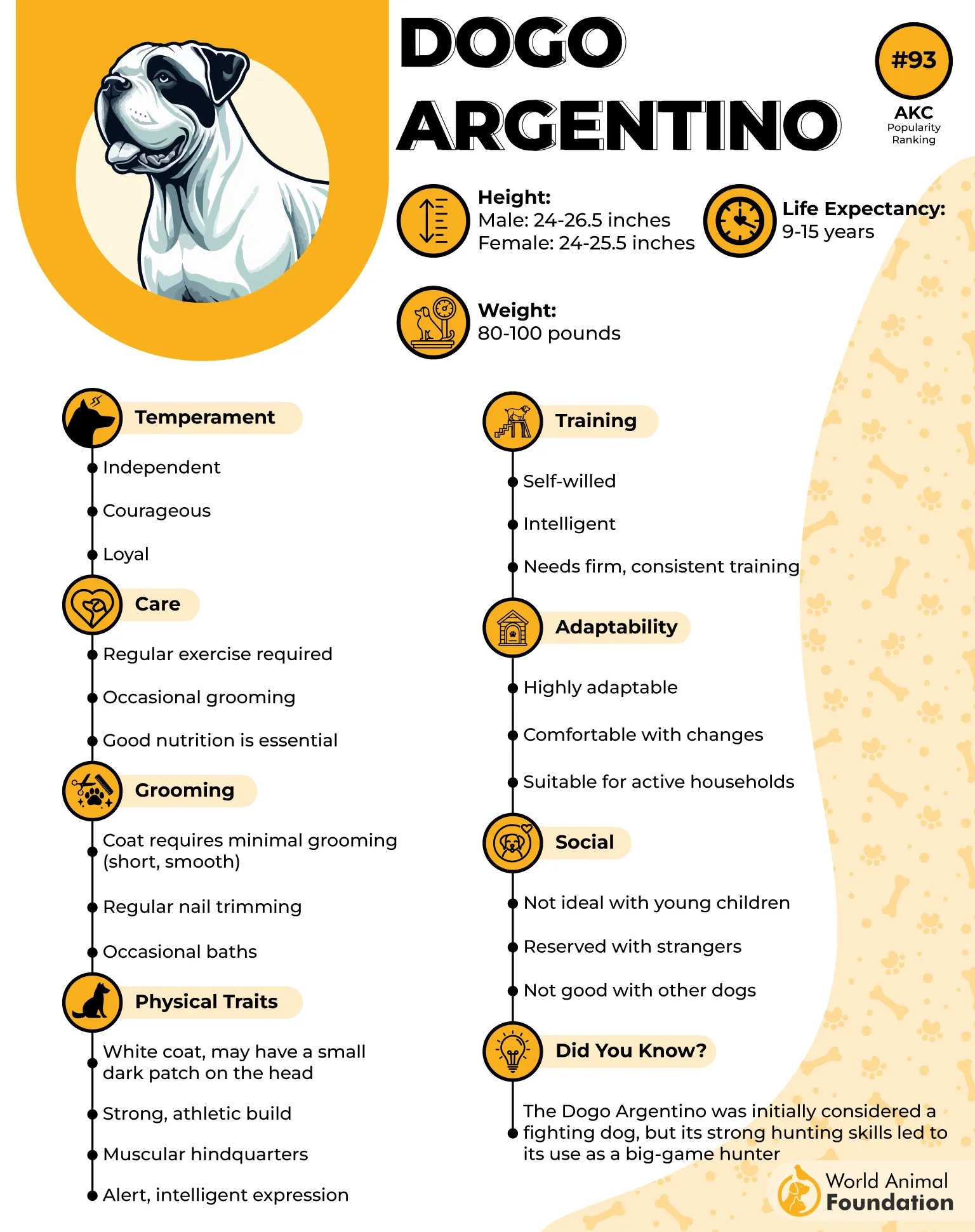
Adult Dogo Argentinos can weigh 90 pounds or more, with some larger individuals exceeding 100 pounds. Their short-haired coat is usually entirely white, although some have a distinctive black patch around one eye, adding an easily recognizable detail to their powerful appearance.
3. Cane Corso
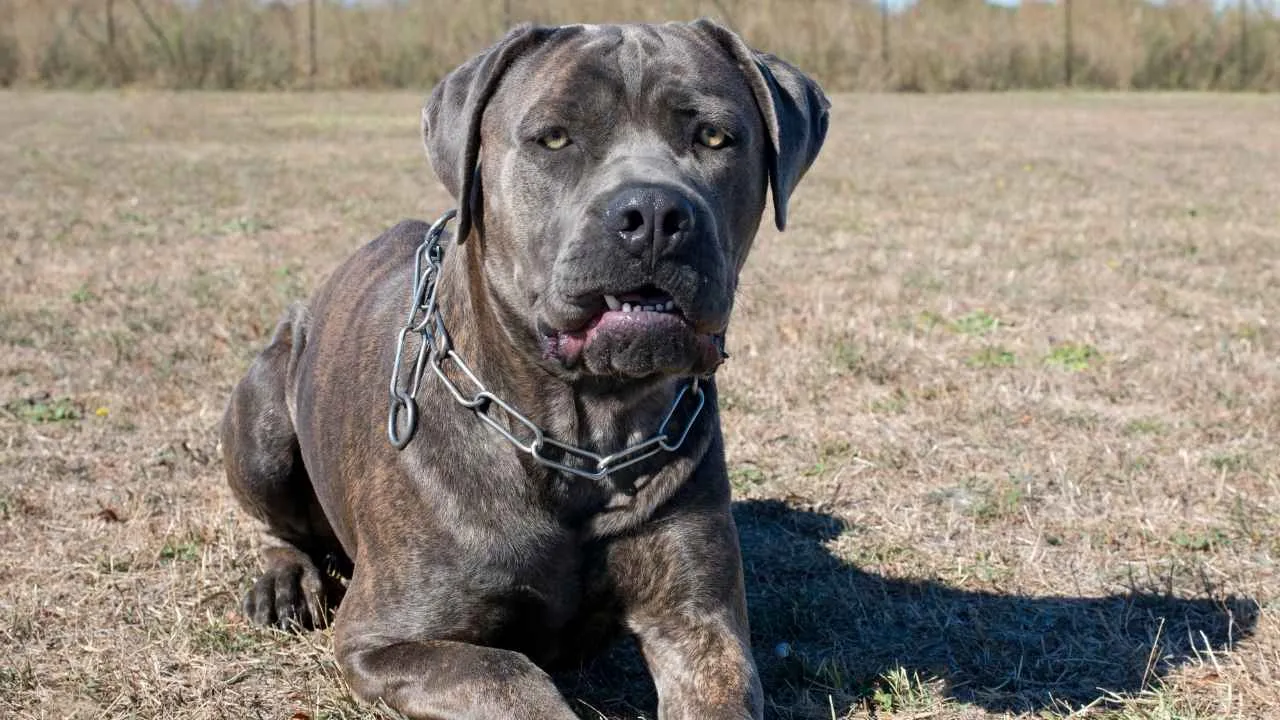
The Cane Corso descends from ancient Molosser dogs, large working mastiffs associated with a Greek tribe, as noted by VCA. After the Romans conquered the Greek Islands, they brought these dogs to Italy, where their descendants served as military dogs known as pireferi.
Built for Demanding Work
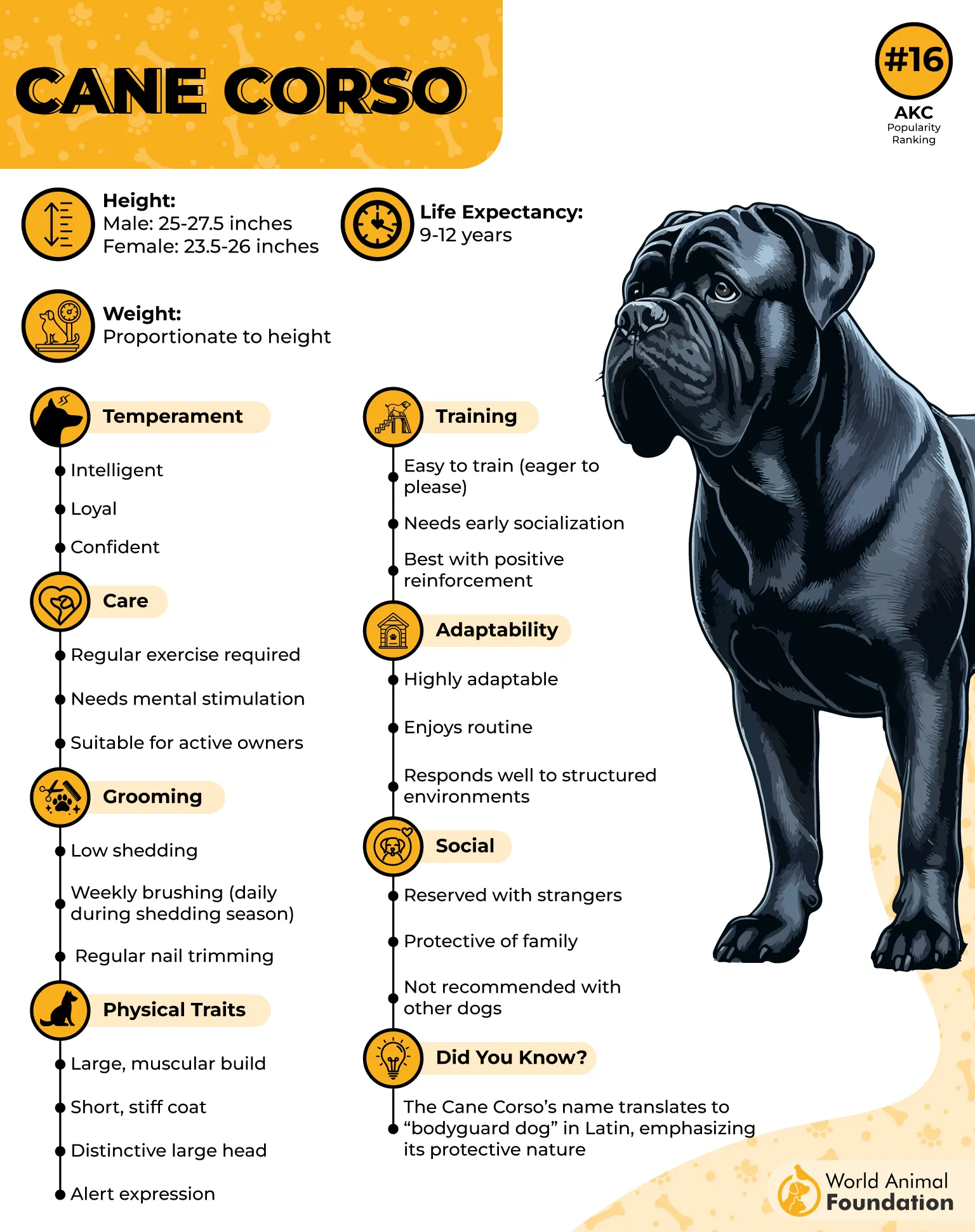
Weighing around 100 pounds, the Cane Corso has a muscular, rectangular frame with substantial bone and athletic proportions.
Its solid construction gives it the physical power needed for demanding tasks, while its more agile build allows purposeful movement across different terrain.
A closer look at its structure reveals several defining features:
Broad head with a strong, square muzzle.
Deep chest and powerful forequarters.
Tight lips and an alert, watchful expression.
An Intelligent Dog That Needs a Job
This guard dog learns quickly and responds well to consistent training and early socialization. It enjoys activities that give its mind and body a clear task, including scent work, agility courses, dock diving, and sled-pulling. Without enough activity, it may resort to digging, pawing, or jumping around the home.
4. American Pit Bull Terrier

The American Pit Bull Terrier descends from crosses between the Old English Bulldog and Old English Terrier, once used in blood sports in England. During the late 19th century, European immigrants brought these dogs to the United States, where they took on farm and ranch duties.
Strength in a Compact Frame
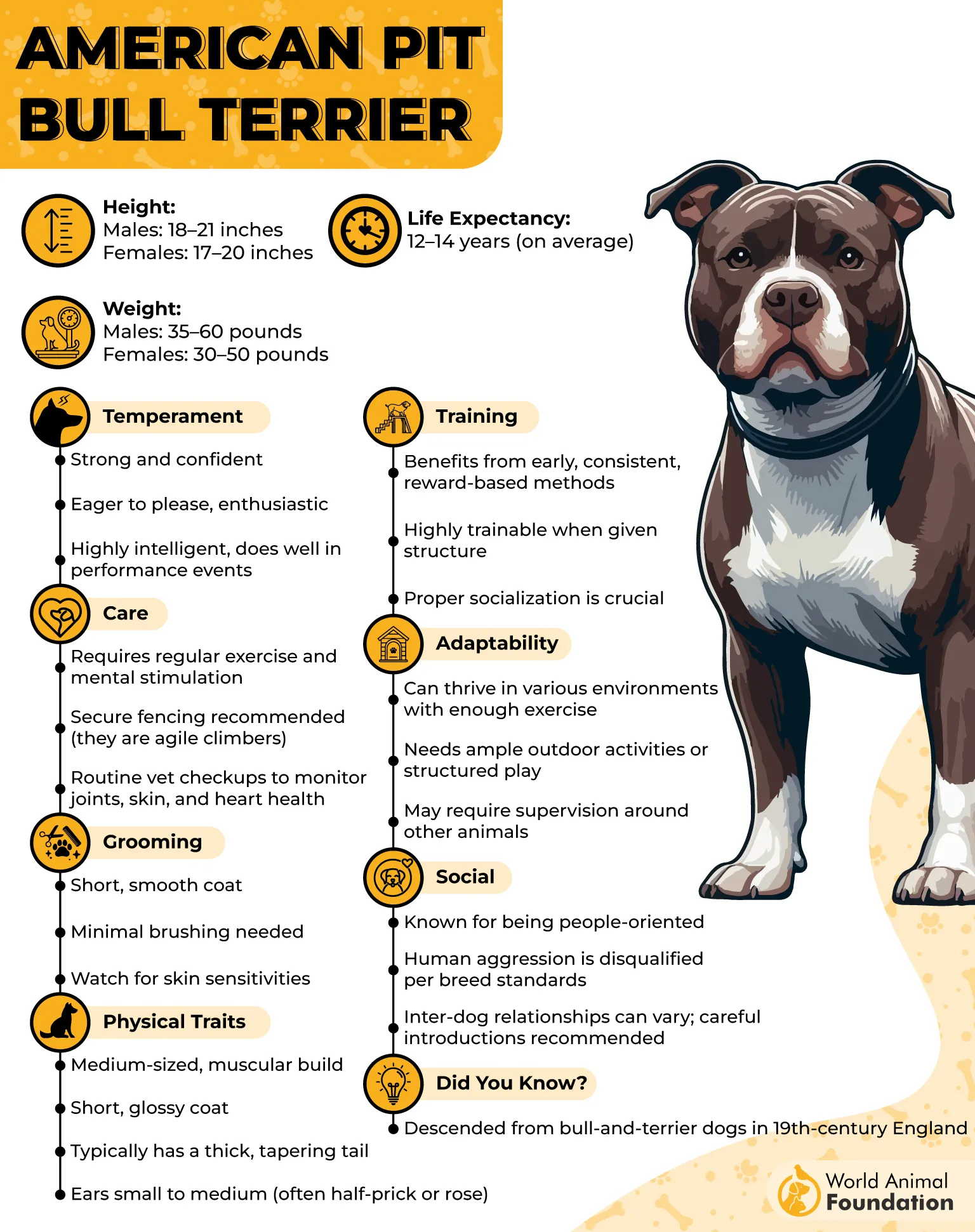
Strength is packed into the American Pit Bull Terrier’s compact body, particularly across its shoulders and chest. This powerful structure has practical value on farms, where the breed has caught hogs, hunted game, and assisted with livestock.
Its energy and determination also come through in several activities:
Persistent during focused training sessions.
Enthusiastic about tug games and interactive toys.
Enjoys agility, scent work, and dock diving.
A People-Oriented Personality
At home, this terrier is often affectionate, playful, and eager to spend time with its family. It generally enjoys children and can be friendly with unfamiliar people when properly socialized. According to PetMD, early introductions and training help it live peacefully with other household pets, especially smaller animals.
5. Turkish Kangal Dog
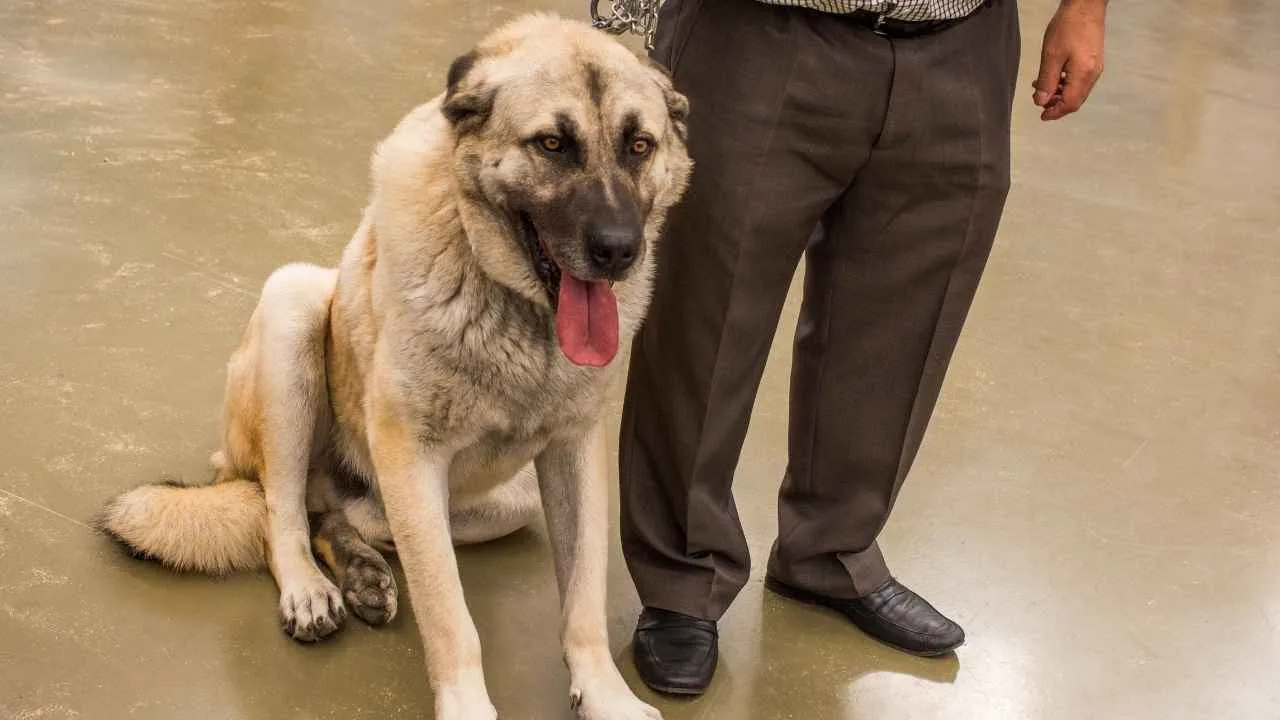
The Turkish Kangal Dog comes from the Kangal region of Turkey, where shepherds traditionally relied on its strength and courage to protect sheep and goats. These dogs worked alongside their human handlers across open grazing land, helping deter wolves and other predators that threatened the flocks.
Built for Demanding Work
A Kangal has a large, athletic frame with a deep chest, substantial bone, and powerful shoulders and neck. Its muscular build supports long patrols across open terrain, while its endurance helps it work alongside shepherds for extended periods.
Its working abilities also depend on these advantages:
Strong feet and pasterns for rough ground.
Coordinates with other livestock guardians.
Uses deep alarm barks and blocking postures to deter threats.
Energy When It Matters
Kangals have an economical working style that helps them manage long days in harsh, demanding steppe conditions without wasting energy. They often rest in elevated spots while carefully scanning their surroundings, then respond rapidly when a genuine threat appears nearby.
6. American Bully
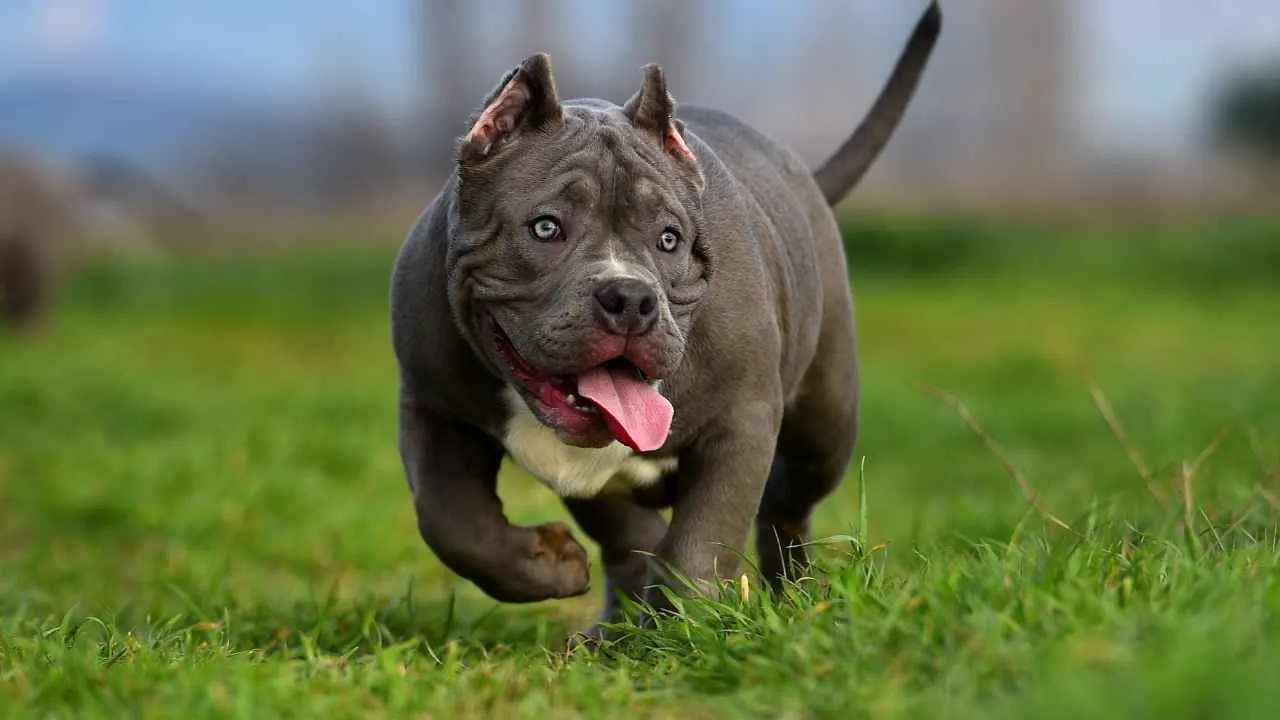
The American Bully originated in the United States during the mid-1990s, when breeders combined American Pit Bull Terrier and American Staffordshire Terrier bloodlines. Early development took place around Virginia and Los Angeles, with the aim of producing a muscular dog with a dependable, people-friendly temperament.
A Compact, Powerful Frame
Few features of the American Bully look lightly built, with heavy muscle, dense bone, and considerable width through the chest.
A thick neck leads into its characteristically large, blocky head, while the rest of its athletic frame provides the power and agility needed for active movement.
These details make this breed especially distinctive:
Compact to medium-large body, depending on variety.
Short-to-moderate muzzle and broad head.
Available in Pocket, Standard, Classic, and XL varieties.
Powerful Play and Everyday Care
This intimidating breed often enjoys energetic wrestling and body-bumping games, so supervised play with suitably matched dogs is important.
Its strong chewing instinct also calls for appropriate chew toys, while its short coat offers limited protection against cold weather and may leave it seeking warm indoor spots.
7. Boerboel
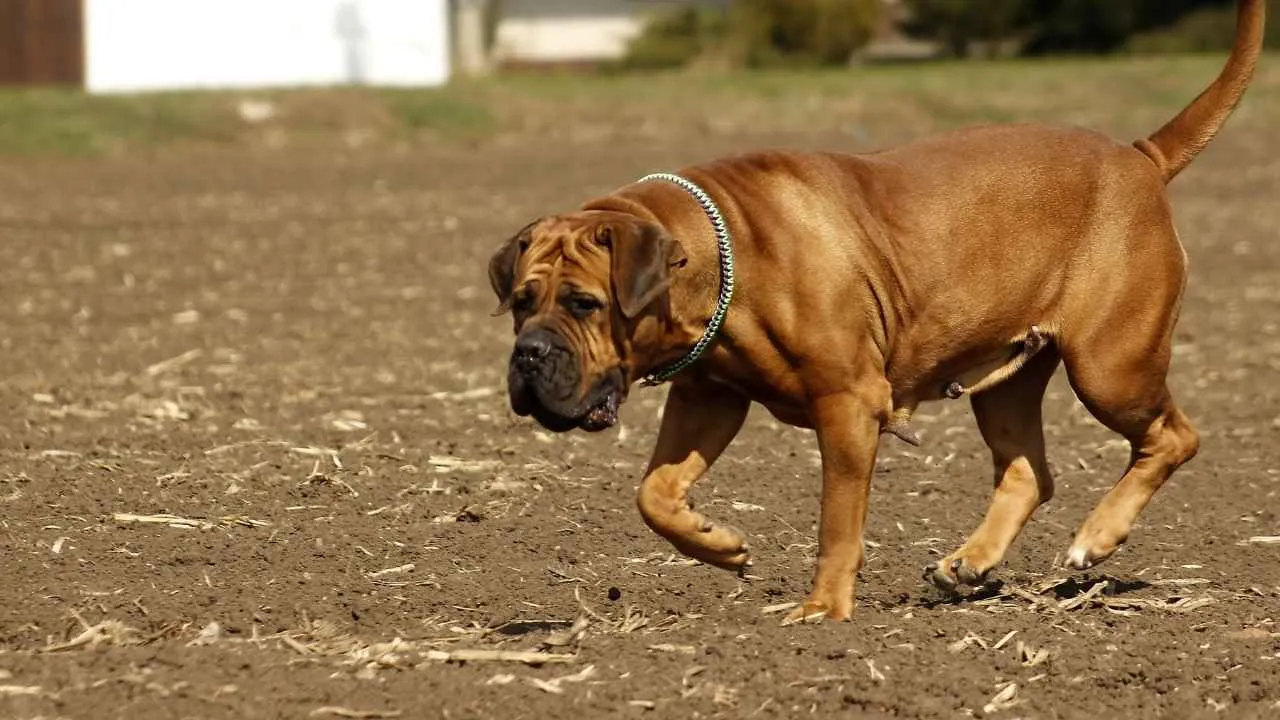
The Boerboel traces its roots to 17th-century South Africa, when Dutch, German, and Huguenot settlers brought large guardian and hunting dogs to the region. These dogs were later crossed with other breeds, possibly including Bullmastiffs, Rhodesian Ridgebacks, and English Bulldogs, contributing to the Boerboel’s ancestry.
Built for Demanding Work
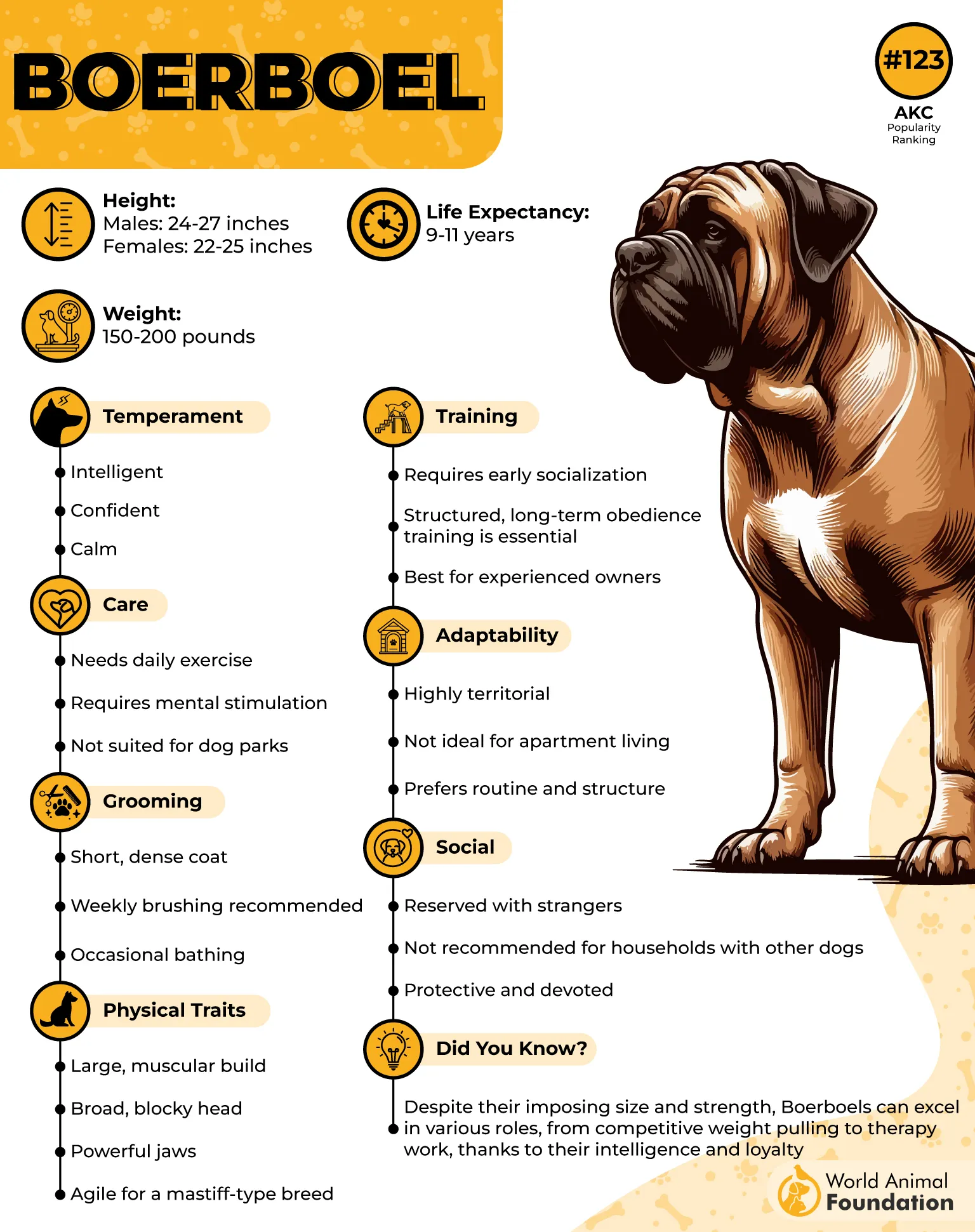
Strength is visible throughout the Boerboel’s large body, particularly in its deep chest, muscular shoulders, and powerful hindquarters. Add its heavy bones, thick neck, and strong jaw, and it is easy to see how this dog handled farm protection and strenuous work.
A few other physical qualities add to its rugged build
This massive canine presence has these qualities:
Thick skin suited to rough farm conditions
Short, dense coat with relatively low grooming needs.
Conserves energy indoors and becomes highly alert when needed.
Always Aware of Its Surroundings
Around a property, a Boerboel may patrol fences, gates, and entrances while keeping track of unfamiliar sounds and vehicles. It can quietly position itself between its family and a stranger, using its posture and deep warning bark when something raises concern.
Conclusion
A powerful, highly muscular build can help a dog handle demanding work, from guarding a property to assisting on a farm or spending long hours outdoors. Still, muscle alone does not make a dependable worker. Stamina, sound movement, good health, and a steady temperament matter just as much. Some breeds also have impressive sculpting abilities that contribute to their physical strength.
Each dog needs training suited to its size and natural abilities, along with enough space and daily activity. Before bringing a large working dog home, consider the time and experience required to manage it responsibly. Regular exercise, proper nutrition, and routine health checks help a highly muscular companion remain healthy, useful, and safe around people throughout its working life.
