




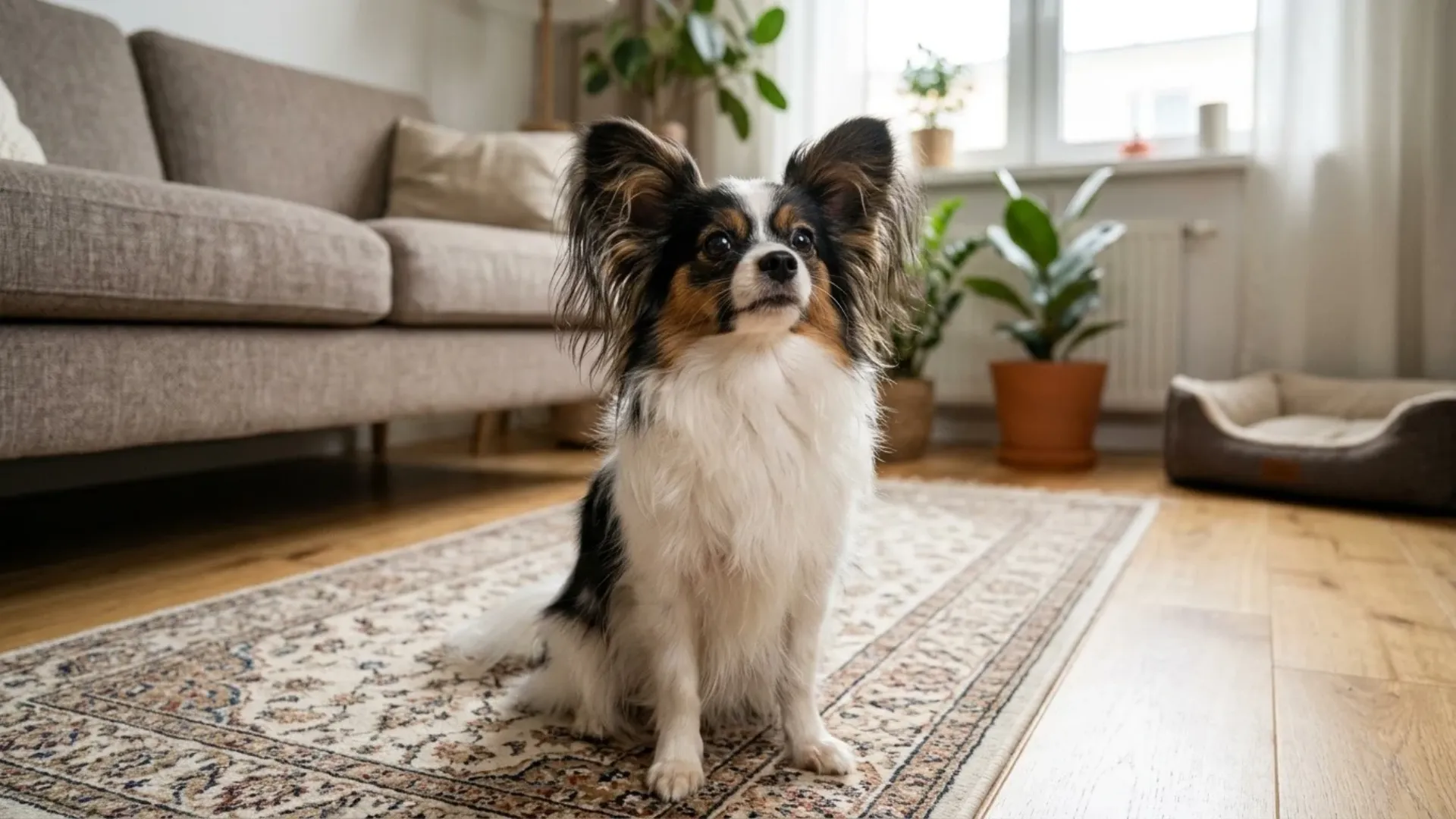
Living in an apartment doesn’t mean you have to settle for a tiny or low-energy dog. Some intelligent, obedient dogs can adapt beautifully to smaller spaces, especially when they are well-trained and get enough exercise, attention, and mental stimulation.
Obedience goes beyond following commands. It also means learning household rules, responding well to training, settling down indoors, and avoiding excessive barking that might disturb the neighbours. These qualities can make everyday apartment living much easier.
Whether you’re a first-time owner or an experienced pet parent, the right companion can make all the difference. Here are seven highly obedient dog breeds that combine intelligence, good manners, and the ability to adapt to apartment life.
Highly Obedient Dog Breeds Perfect for Apartment Living
1. Papillon
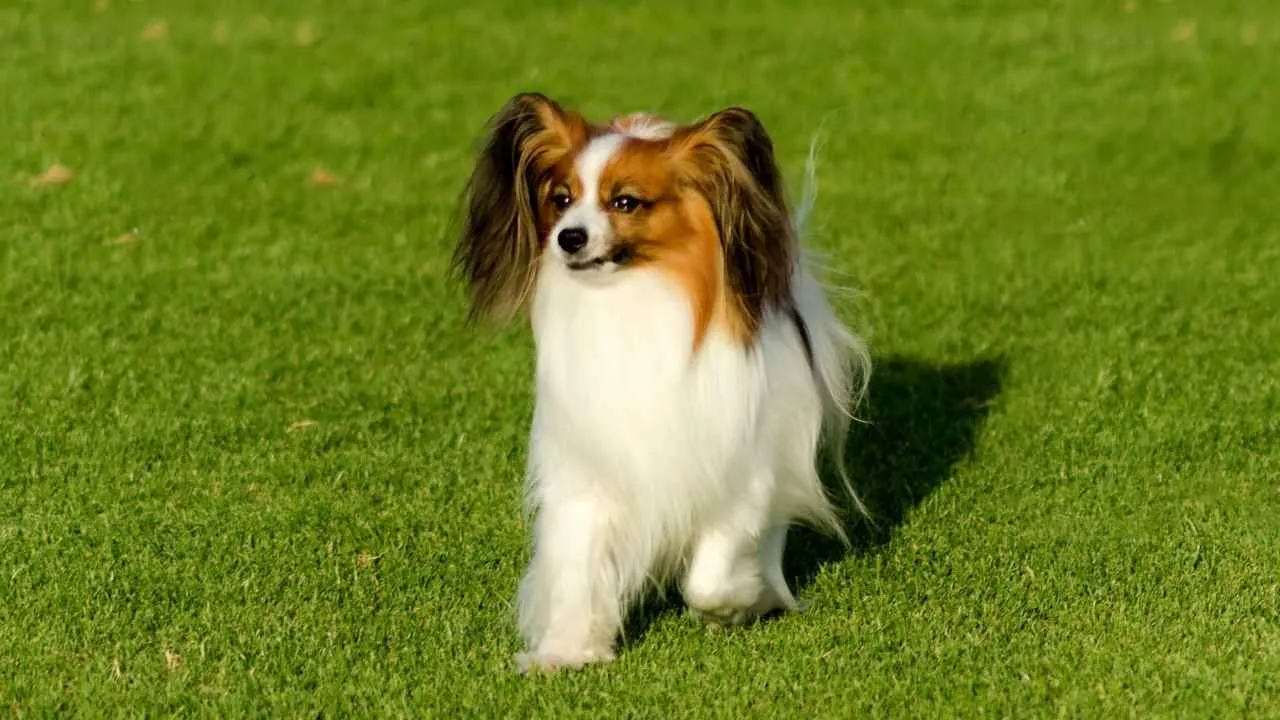
With their butterfly-like ears, silky coats, and lively personalities, Papillons are easy to recognise. But these little dogs are much more than pretty companions. They are considered one of the smartest and most trainable toy breeds.
Their eagerness to please, athletic nature, and quick learning abilities make them standouts in obedience and agility competitions. They also enjoy learning tricks, playing fetch, and taking part in family activities.
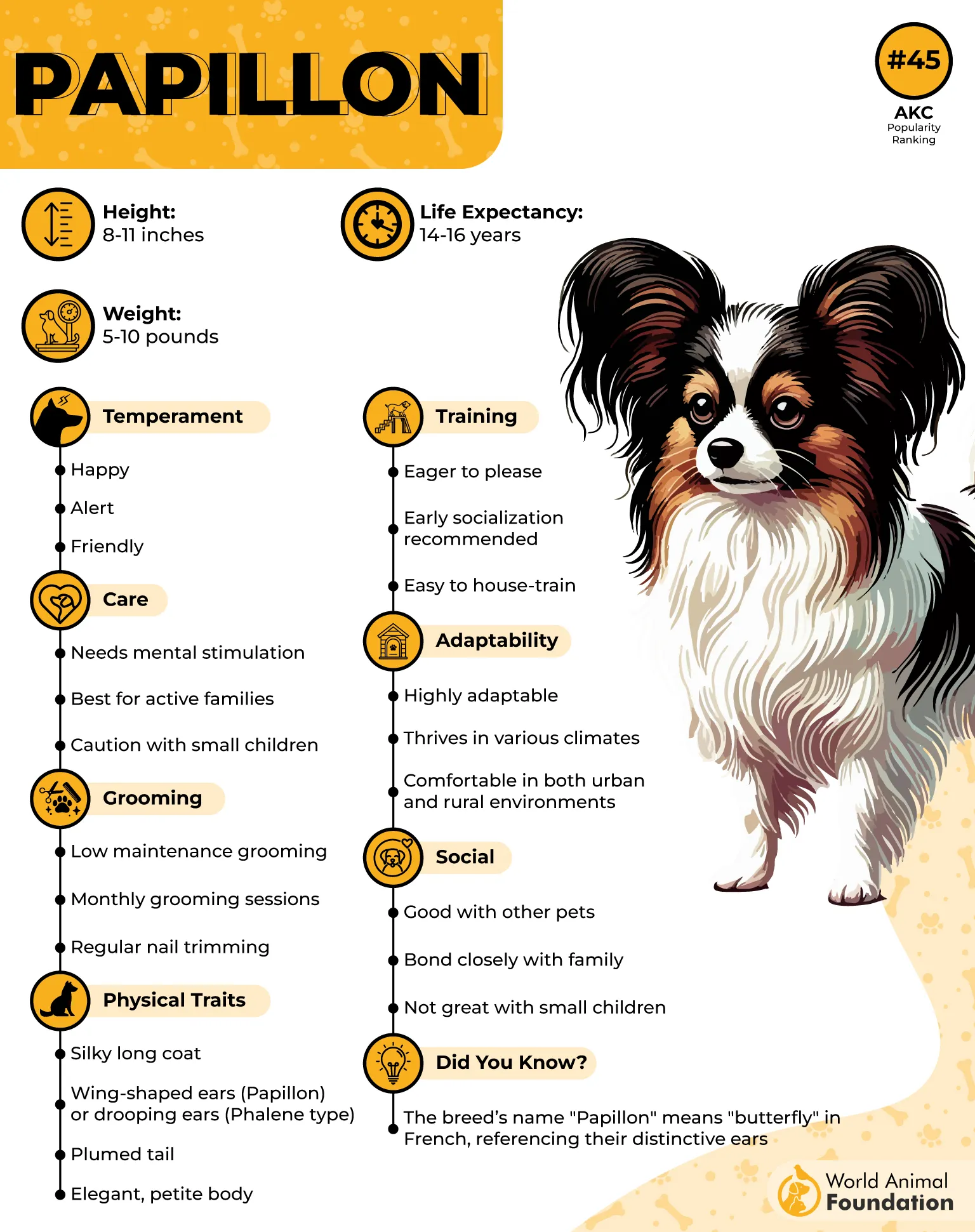
Papillons enjoy spending time with their owners. They are friendly with people of all ages, other dogs, and pets. After burning off their energy through walks and indoor games, they are happy to curl up beside their families.
However, they are more active than many other toy breeds and need regular exercise, attention, and mental stimulation. Some may also bark excessively when excited, as Britannica notes.
Training and Care
Use consistent, positive training methods to develop their obedience skills.
Start socialisation early to help them become confident and well-mannered.
Be patient with house training and provide frequent potty breaks.
Brush their long, silky coats several times a week to prevent tangles and mats.
Supervise interactions with very young children, as their small size makes them vulnerable to accidental injuries.
2. Miniature Schnauzer
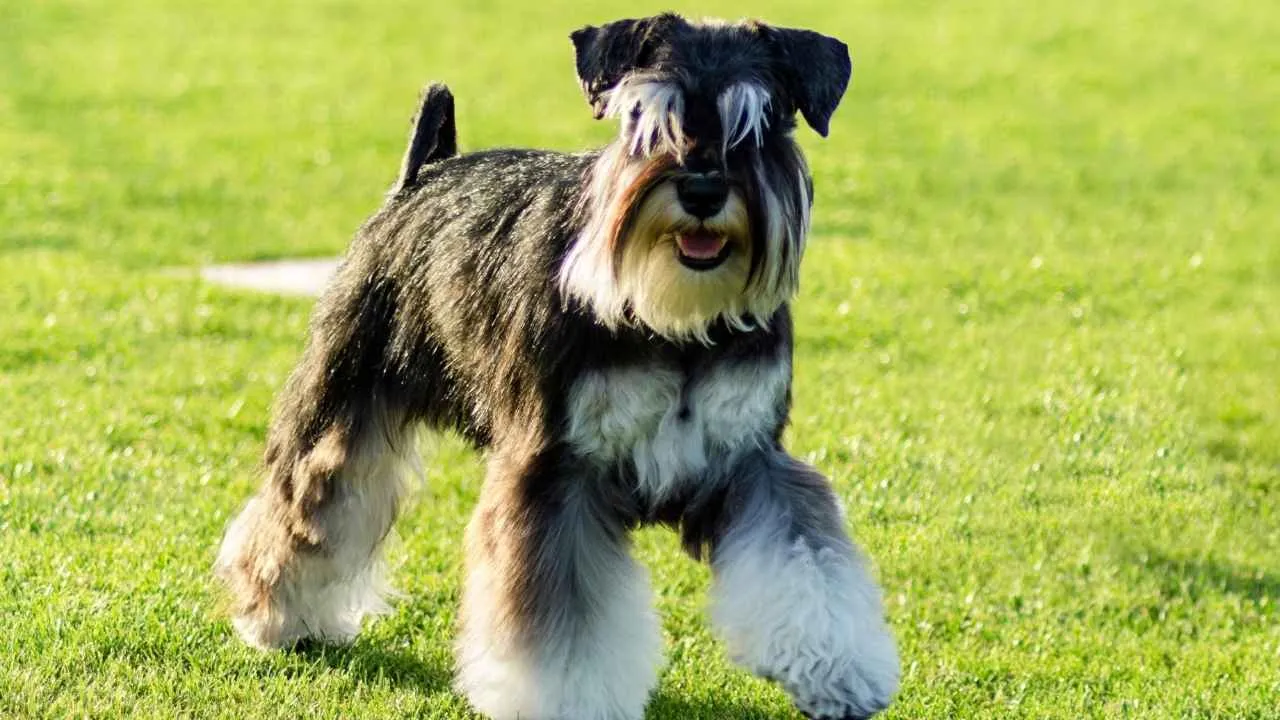
With their bushy beards, thick eyebrows, and charming expressions, Miniature Schnauzers have a look that is hard to forget. Originally bred in Germany as farm dogs and ratters, these little dogs are now popular family companions.
They are bright, friendly, and quick to learn, making them highly trainable. Their obedient nature and eagerness to please also make them strong performers in agility and Flyball competitions.
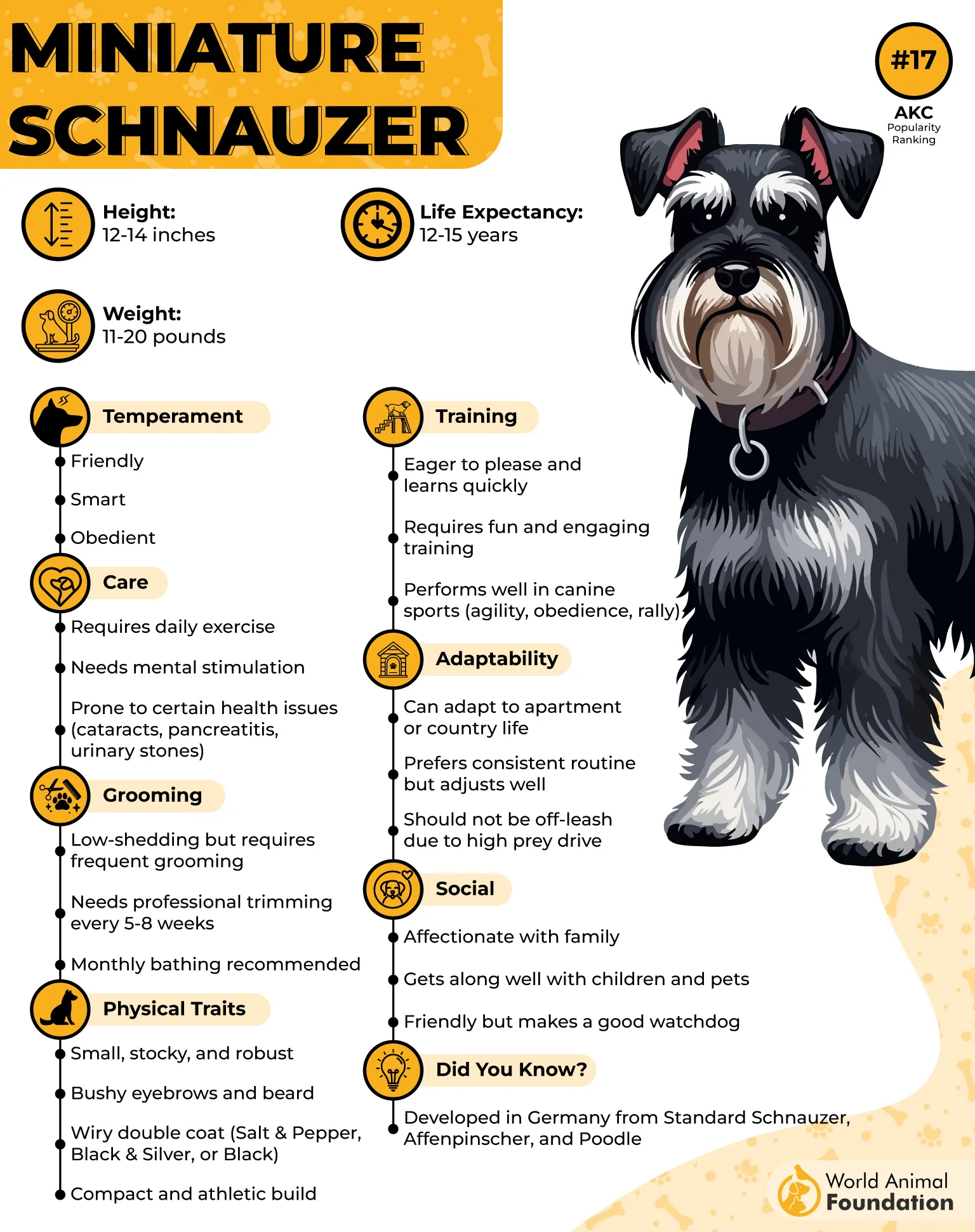
Miniature Schnauzers can adapt to apartment living and get along well with children and other dogs. They are affectionate, playful, and love being involved in family activities. However, they have plenty of energy and need regular walks, playtime, and mental stimulation.
They are also alert watchdogs and tend to bark at unfamiliar noises, which is worth considering if you have close neighbours. Although they learn quickly, they can be stubborn at times and need consistent training.
Training and Care
Provide at least an hour of daily exercise to keep them active and engaged.
Use regular training sessions to manage stubborn behaviour.
Offer puzzle games, agility activities, and new tricks for mental stimulation.
Brush their wiry coats and maintain their distinctive facial hair.
3. Cavalier King Charles Spaniel

With their silky coats, feathered ears, and sweet expressions, Cavalier King Charles Spaniels have a naturally charming appearance. Their royal British history is reflected in their name, but their loving personalities are what make them special.
These intelligent dogs are eager to please and respond well to training, especially when rewarded with affection. They combine the gentle nature of toy breeds with the playful energy of sporting spaniels.
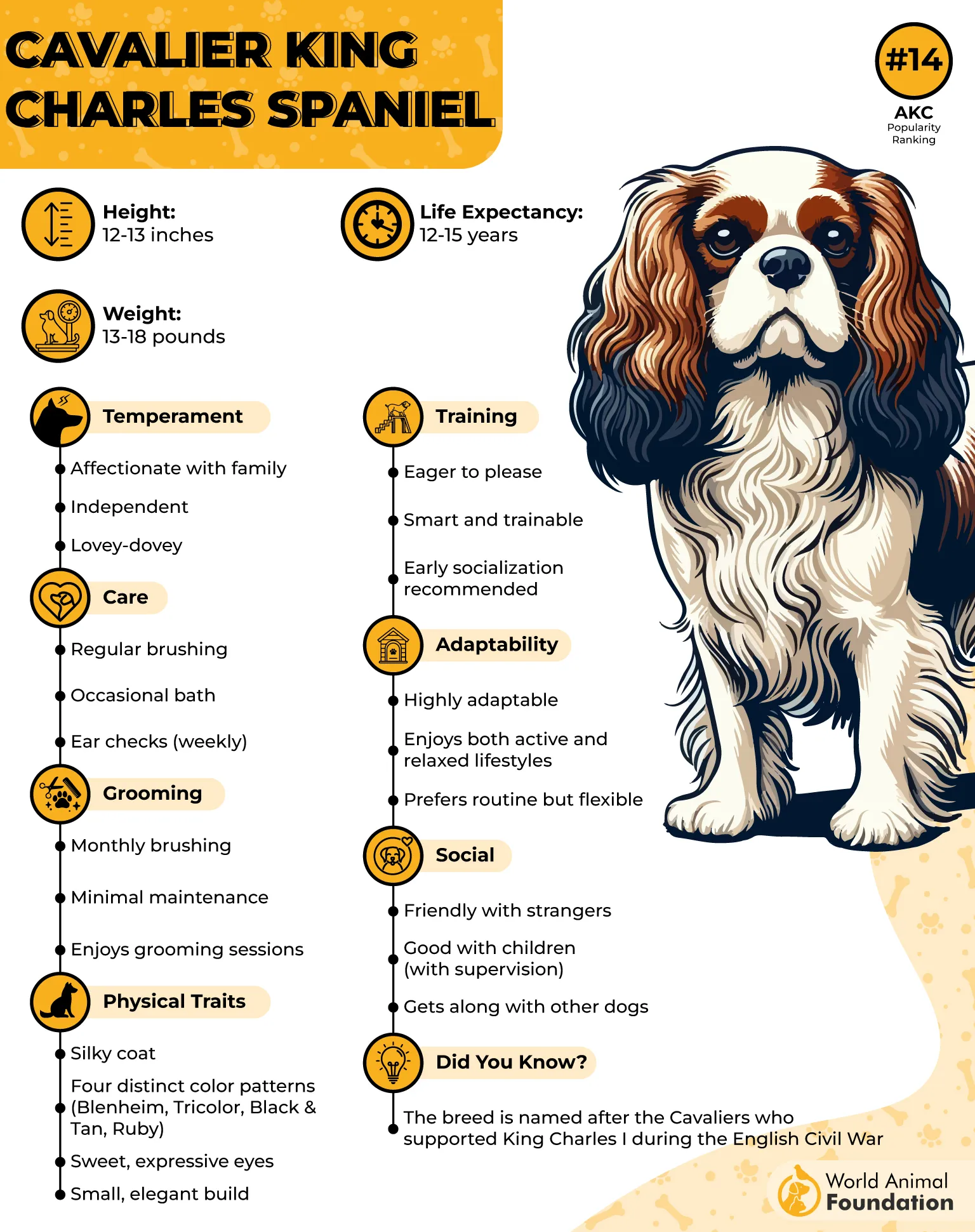
Cavalier King Charles Spaniels are excellent apartment companions because they can adapt to different lifestyles. They enjoy walks and playtime but are equally happy cuddling on the sofa with their owners. PetPlan says they generally get along well with children and other dogs.
They can also live peacefully with cats when introduced and socialised early. Their friendly nature makes them suitable for first-time owners, although they may give noisy greetings when excited.
Training and Care
Use affection and positive reinforcement to make training enjoyable.
Socialise puppies early to help them develop confidence.
Introduce them gradually to other pets and dogs.
Brush their silky coats weekly to keep them clean and lustrous.
Maintain regular bathing and professional trimming as needed.
4. Pembroke Welsh Corgi
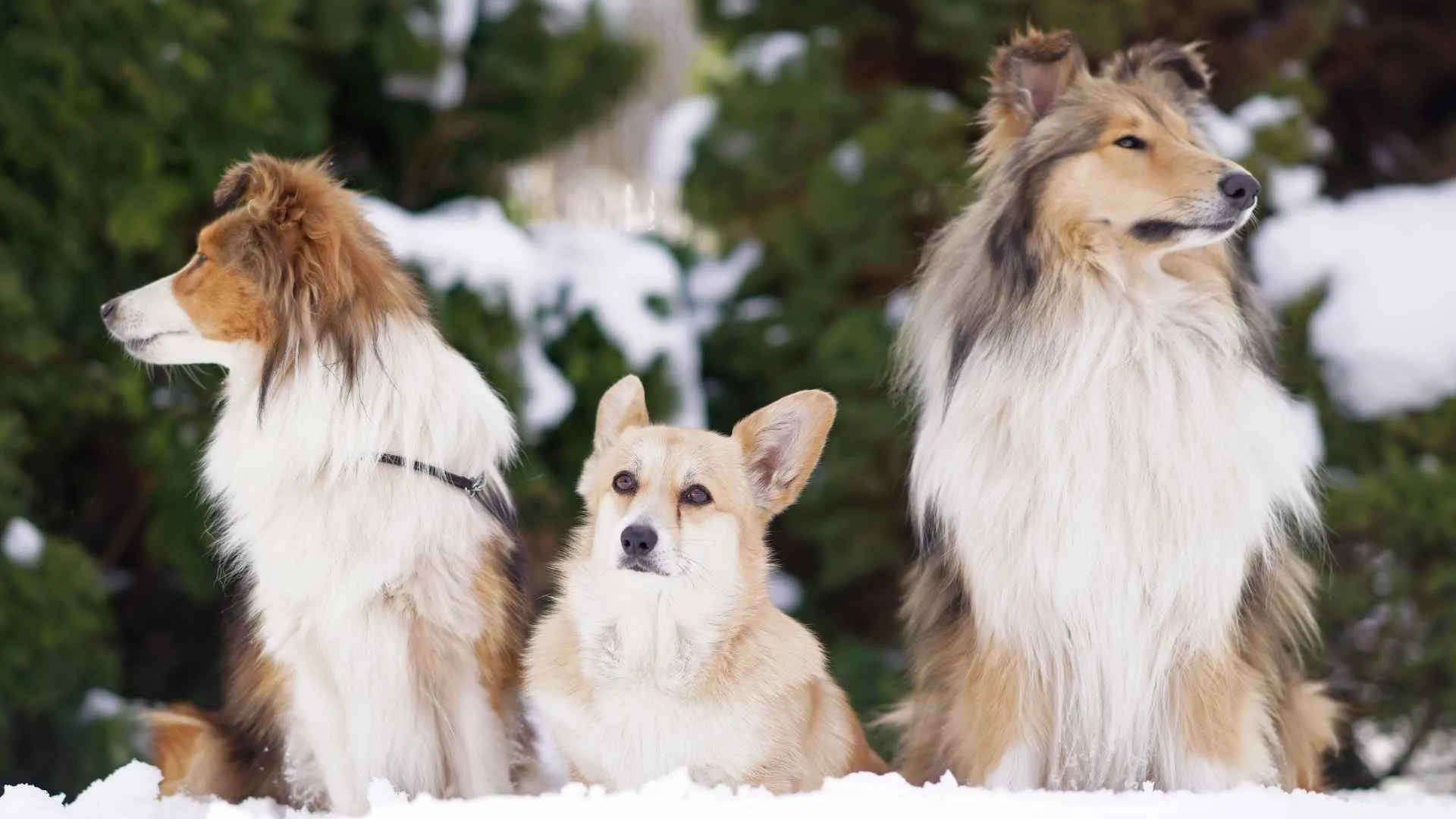
Don’t let their short legs fool you! Pembroke Welsh Corgis are strong, athletic herding dogs with big personalities and sharp minds. Originally bred in Wales to herd cattle and sheep, they are quick learners who enjoy working with their owners.
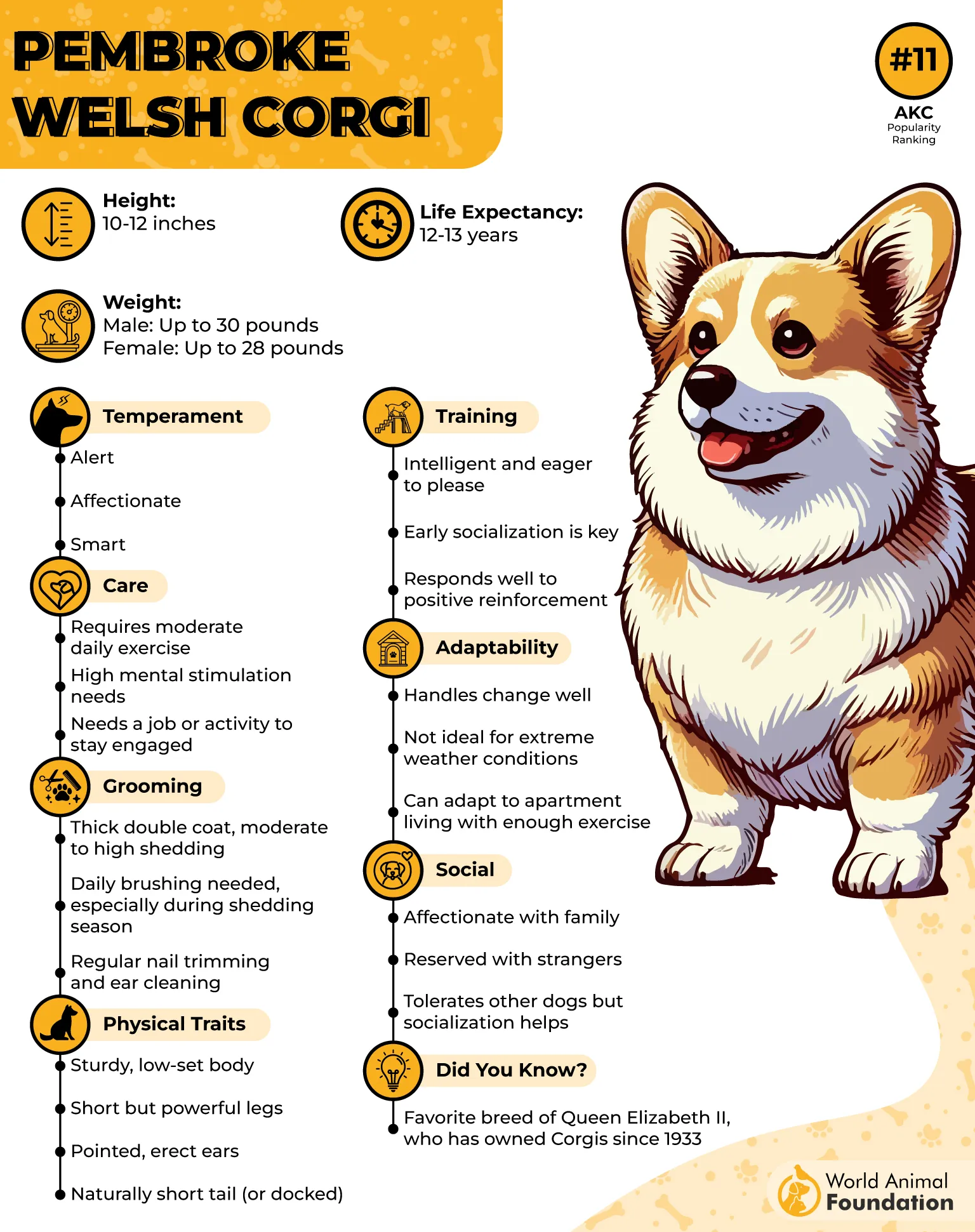
They are generally obedient, affectionate, and responsive to training, although their independent nature sometimes calls for a firm but kind approach. Their loyalty and alertness also make them excellent watchdogs.
Pembroke Welsh Corgis can adapt to apartment living and enjoy being close to their families. However, they have plenty of stamina and need at least an hour of daily exercise, along with games and puzzles to keep their minds busy.
Their herding instincts may lead them to chase or nip at the heels of running children. They can also bark at unfamiliar noises, dig, or chew when bored or left alone for too long.
Training and Care
Use treats, toys, and herding games to keep training interesting.
Provide daily walks and activities to burn off their energy.
Supervise interactions with young children and provide a secure outdoor area.
Brush their double coats weekly and more often during shedding periods.
Monitor their weight, as extra pounds can put strain on their backs.
5. Bichon Frise
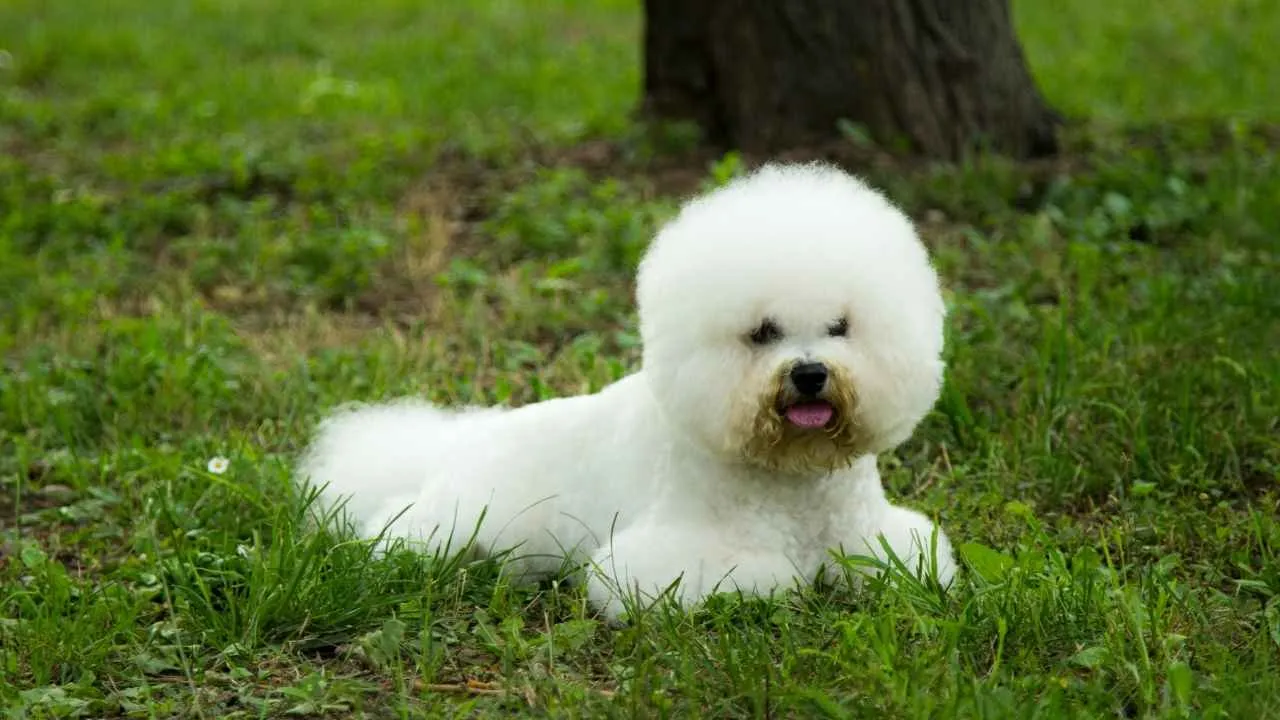
With their fluffy white coats, dark eyes, and cheerful expressions, Bichon Frises are hard to resist. These small, sturdy dogs have a playful personality and a long history as companion animals.
They are highly intelligent, eager to please, and quick to learn new commands and tricks. Their friendly nature and love of performing make training enjoyable, especially when they receive plenty of praise and attention.
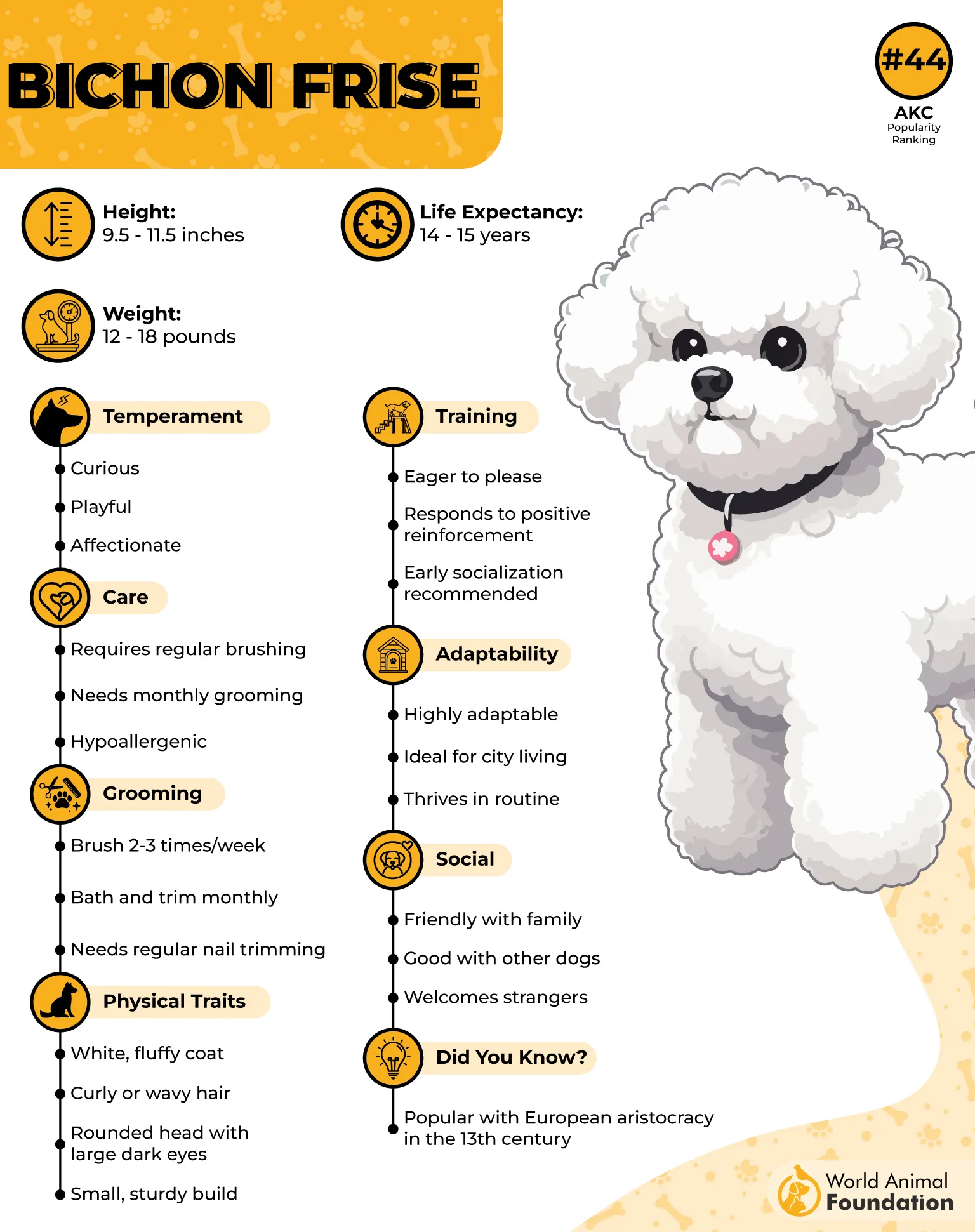
Bichon Frises are well suited to apartment living and adapt easily to different households. They get along with children and other pets and enjoy meeting new people. They love playing with toys and spending time with their families.
Once their energy needs are met, they are happy to relax on the couch. However, they thrive on human company and may develop separation anxiety if left alone for long periods.
Training and Care
Use positive reinforcement to teach commands and new tricks.
Socialise them early to encourage friendly behaviour.
Brush their coats daily to prevent tangles and mats.
Arrange regular baths and professional grooming appointments.
Provide daily playtime and regular exercise.
6. Boston Terrier
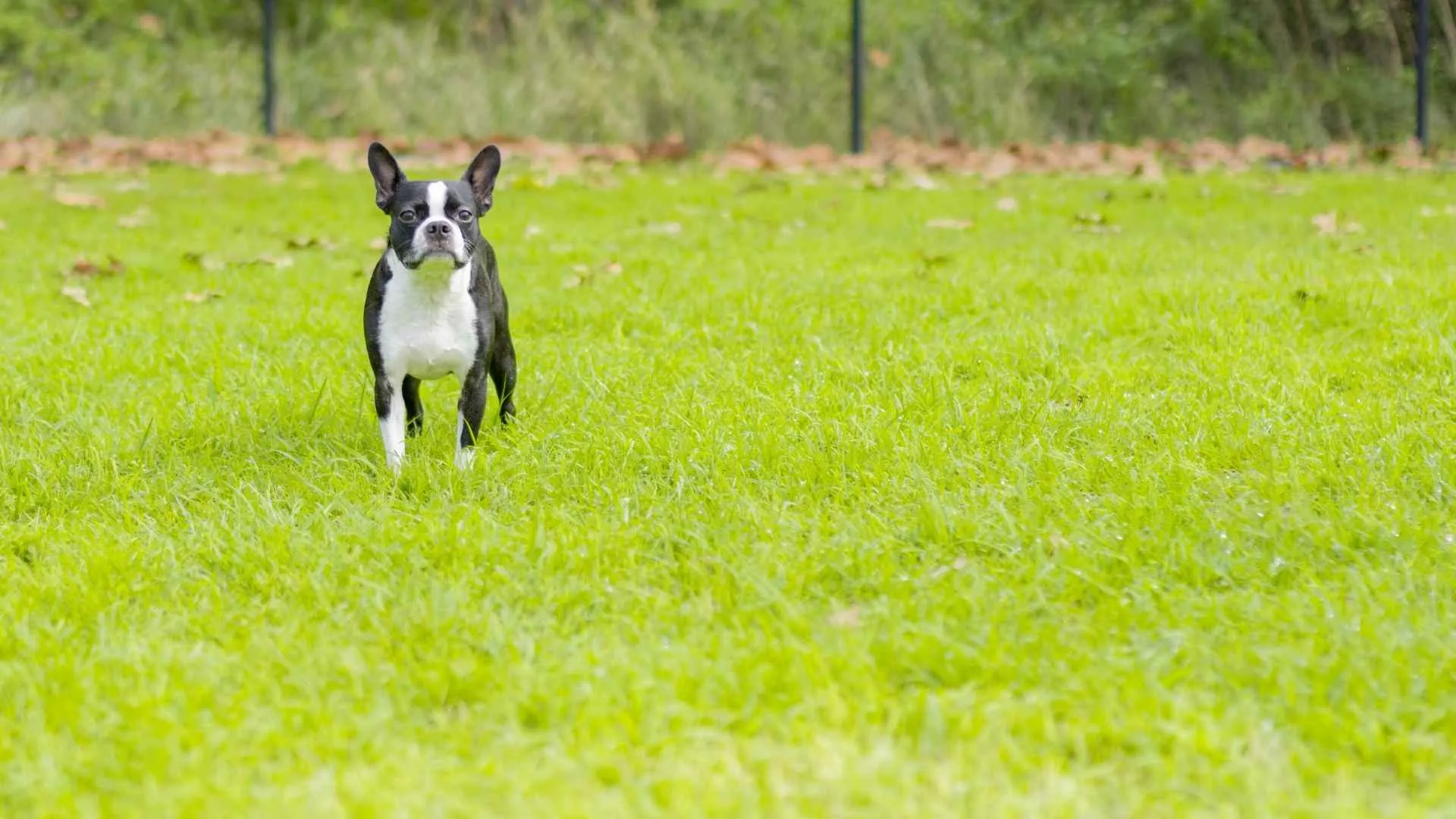
Often called the “American Gentleman,” Boston Terriers are known for their distinctive tuxedo-like coats, big round eyes, and friendly expressions. Originally developed in Boston, these lively little dogs make affectionate and entertaining companions.
They are intelligent and can learn commands well, although their strong-willed nature sometimes makes training challenging. Boston Terriers are excellent apartment companions because they adapt well to smaller spaces and need only moderate exercise.
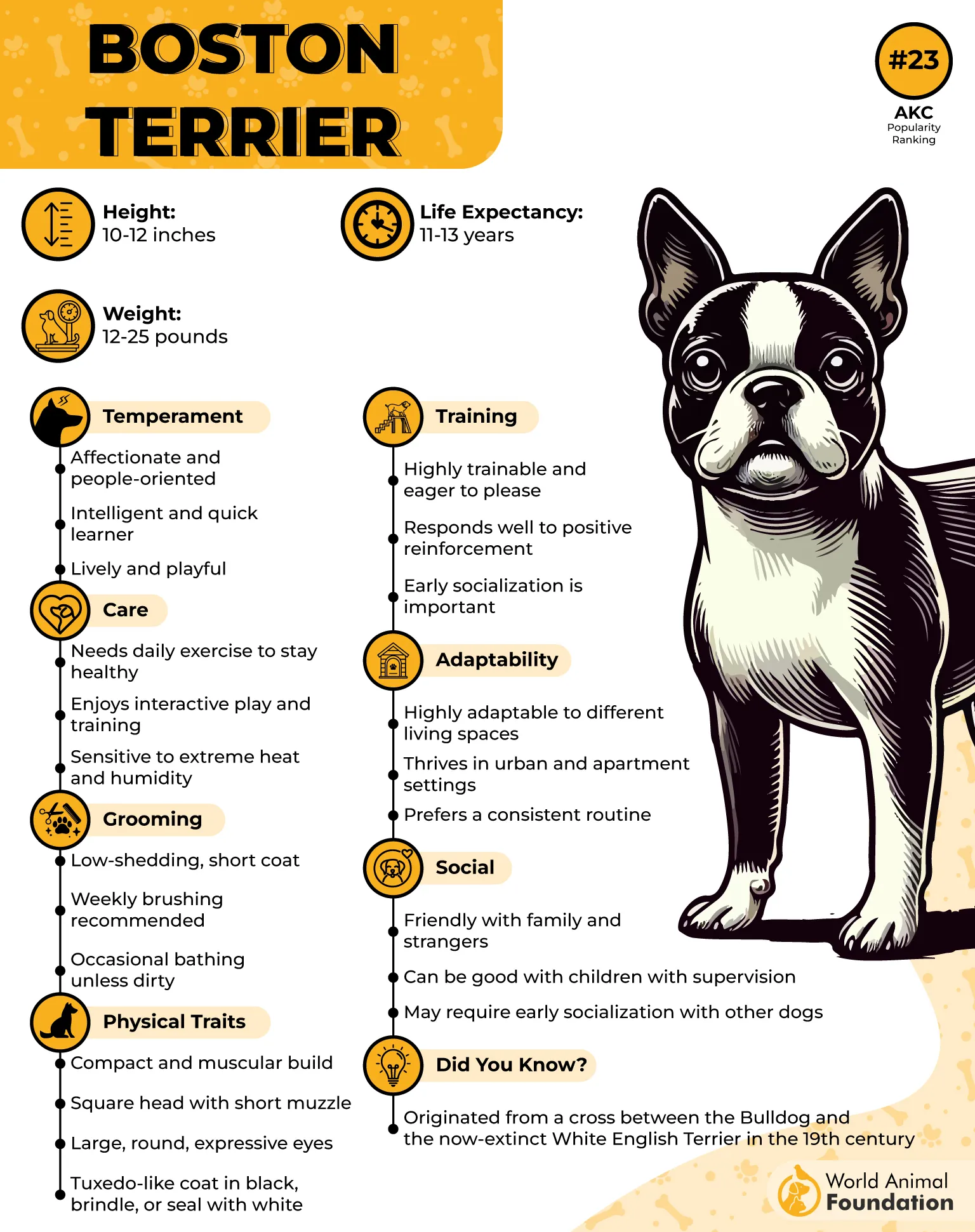
They generally get along well with children and other pets, including cats. However, they can become boisterous during play, so gentle interactions are important.
According to PetMD, their short noses also make them sensitive to heat and strenuous exercise, so they should be kept comfortable indoors during extreme weather.
Training and Care
Use consistent training to manage their stubborn streak.
Provide short walks and regular play sessions.
Keep outdoor activities moderate to avoid overheating.
Supervise play with children to prevent accidental injuries.
Use a leash or secure fenced area when outdoors.
7. Toy Poodle
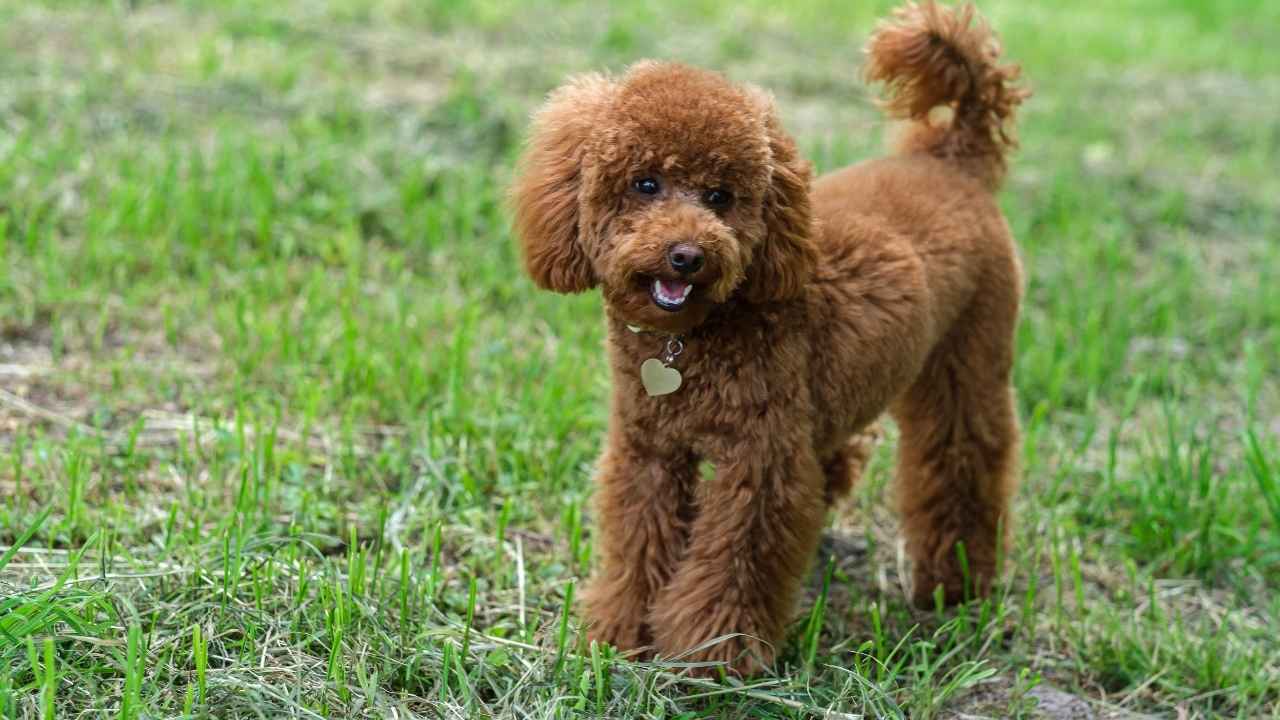
Don’t let their tiny size fool you! Toy Poodles are among the smartest dog breeds, known for their playful personalities and impressive learning abilities. Originally developed from larger Poodles, they were bred as smaller companion dogs.
They are eager to please, quick to pick up commands, and naturally talented at learning tricks. Their intelligence and love of performing also make them excellent at obedience training and dog sports.
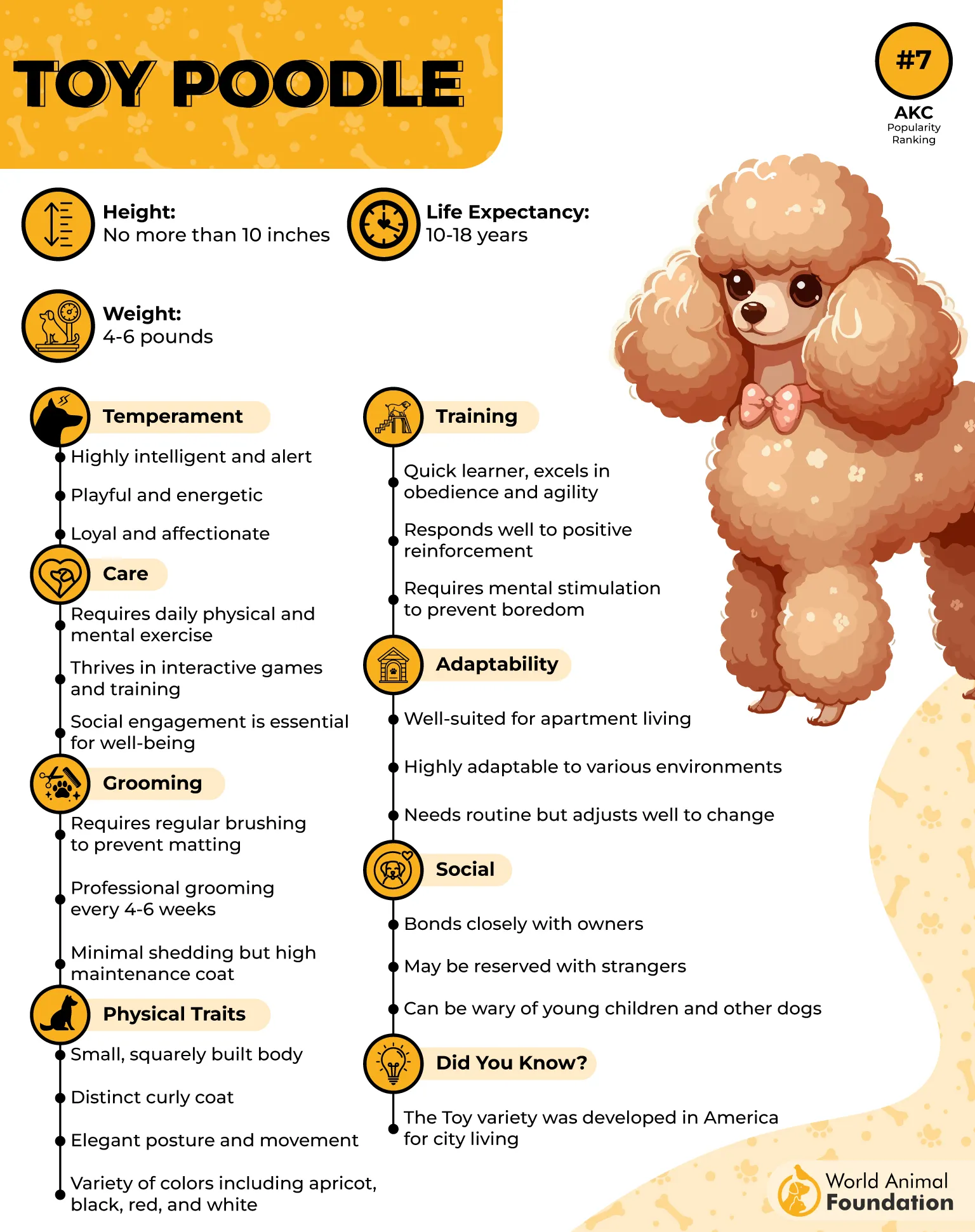
Toy Poodles are excellent apartment companions because they need less exercise than many larger breeds and adapt well to city living. They enjoy daily walks, indoor games, and spending time with their families.
They are affectionate and love being involved in household activities. However, they dislike being left alone for long periods and can become noisy or destructive when bored. Their alert nature also makes them good little watchdogs.
Training and Care
Provide daily walks, playtime, and mental stimulation.
Use interactive toys and puzzles to keep their minds occupied.
Start early socialization and maintain consistent training.
Arrange professional coat trimming every four to six weeks.
Avoid rough play, especially around young children, as they can be easily injured.
Conclusion
Choosing an obedient dog for apartment living can make everyday life much easier. These breeds bring a mix of intelligence, trainability, affection, and adaptability, making them wonderful companions for smaller homes.
However, even the smartest dogs need regular exercise, mental stimulation, consistent training, and plenty of attention to stay happy.
Before bringing a dog home, consider your daily routine, living space, and the time you can dedicate to their needs. Meet your potential companion, learn about their temperament, and choose a breed that fits your lifestyle.
After all, a happy apartment dog isn’t just one that follows commands but one that feels right at home with you.
