




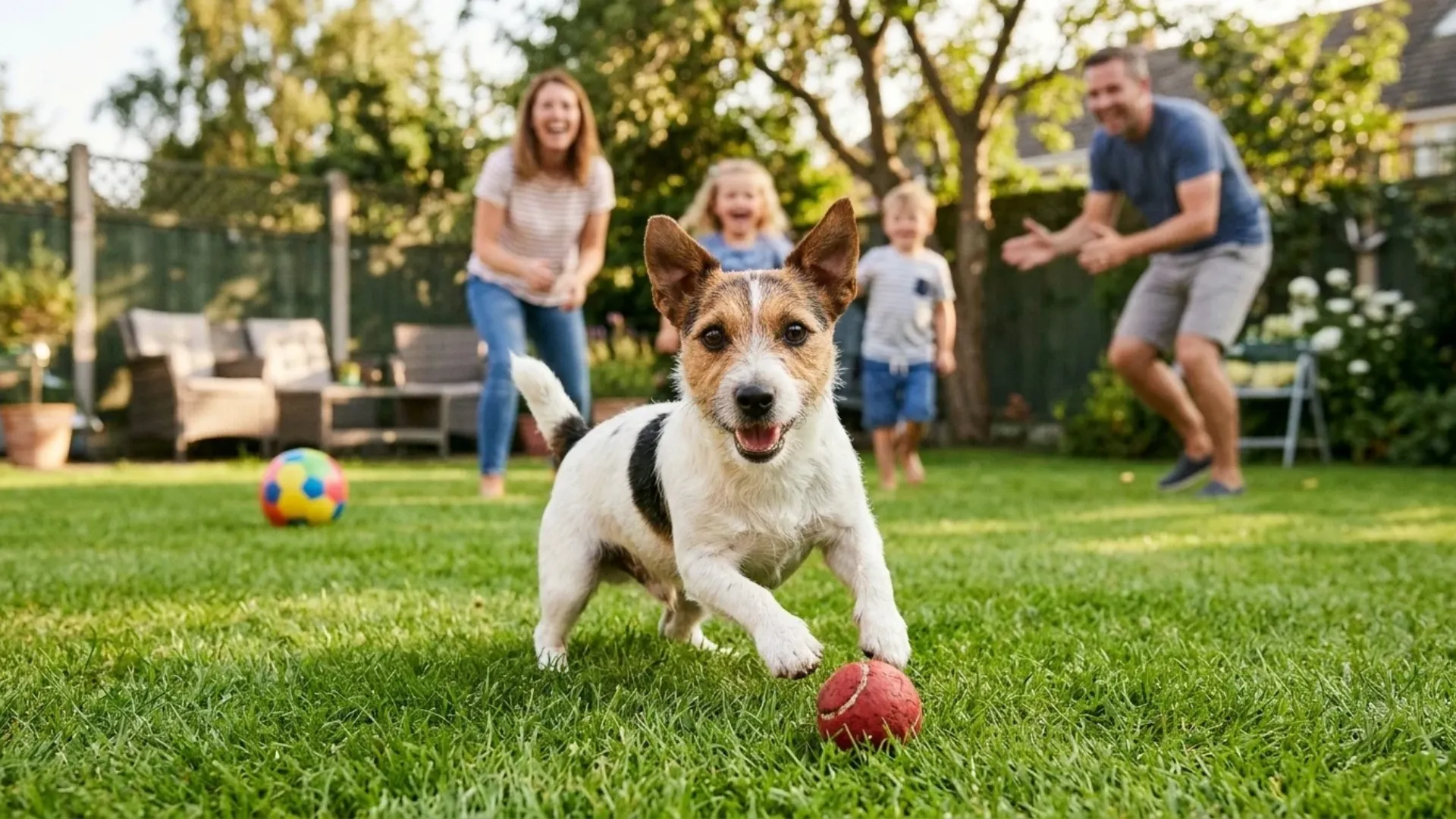
An active household runs on momentum. Between last-minute park trips, backyard games, and busy weekend schedules, there is never a dull moment. Bringing a four-legged partner into that environment should elevate the fun, turning everyday family routines into pure entertainment and shared adventure.
Many people assume that small dogs are meant exclusively for quiet laps and calm apartments.
The truth? Certain compact breeds carry massive personalities, incredible stamina, and sharp intellects capable of keeping pace with the most energetic households.
The real challenge is discovering the specific breed whose temperament, play style, and care needs align seamlessly with your family’s daily rhythm.
Choosing the ideal companion goes far deeper than falling for a cute face. From high-octane thinkers who love complex puzzle games to easygoing crowd-pleasers who balance energetic bursts with couch cuddle sessions, every breed brings a distinct dynamic to the table.
Which spirited little dog is actually built to thrive alongside your family’s lifestyle? Let’s explore seven adorable breeds ready to jump straight into your next chapter.
Top Fun-Filled Small Dog Breeds for Energetic Families
1. Jack Russell Terrier
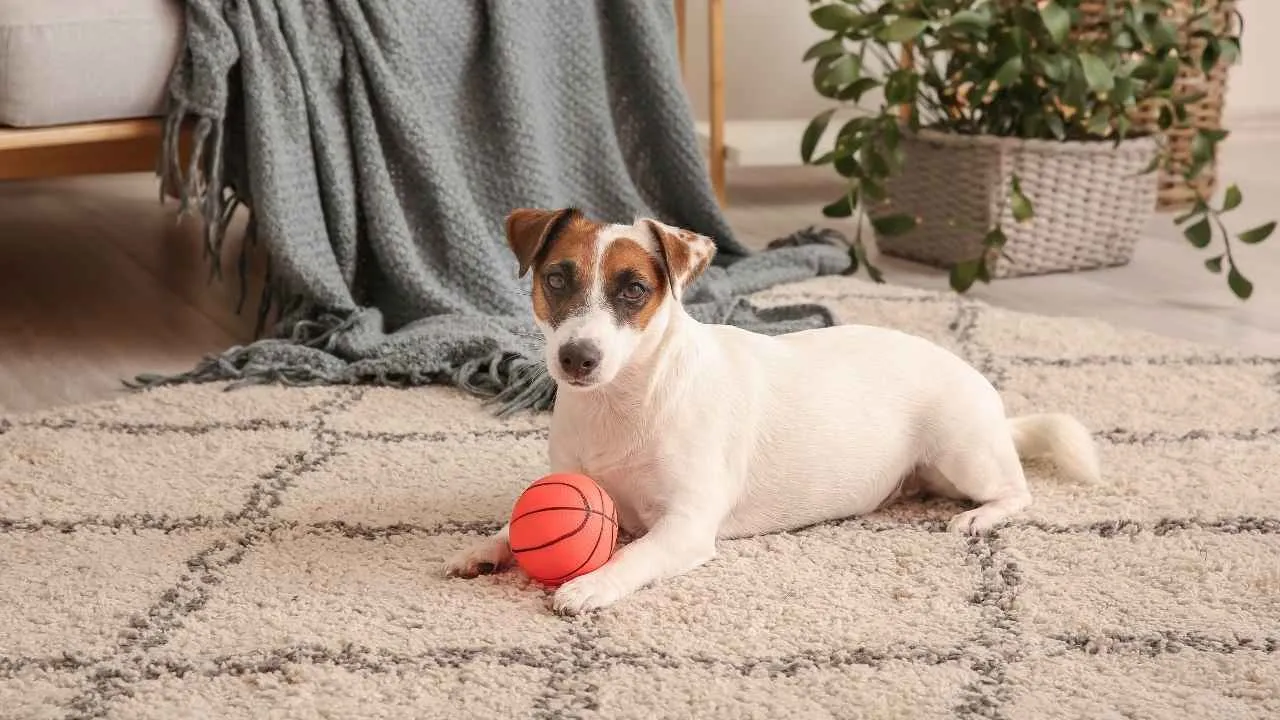
Think of the Jack Russell Terrier as a tiny dynamo coiled like a spring, itching to turn any quiet hour into a wild expedition. Developed back in the day for fox hunting, this fearless breed boasts laser-focused instincts, unmatched agility, and a non-stop craving for action.
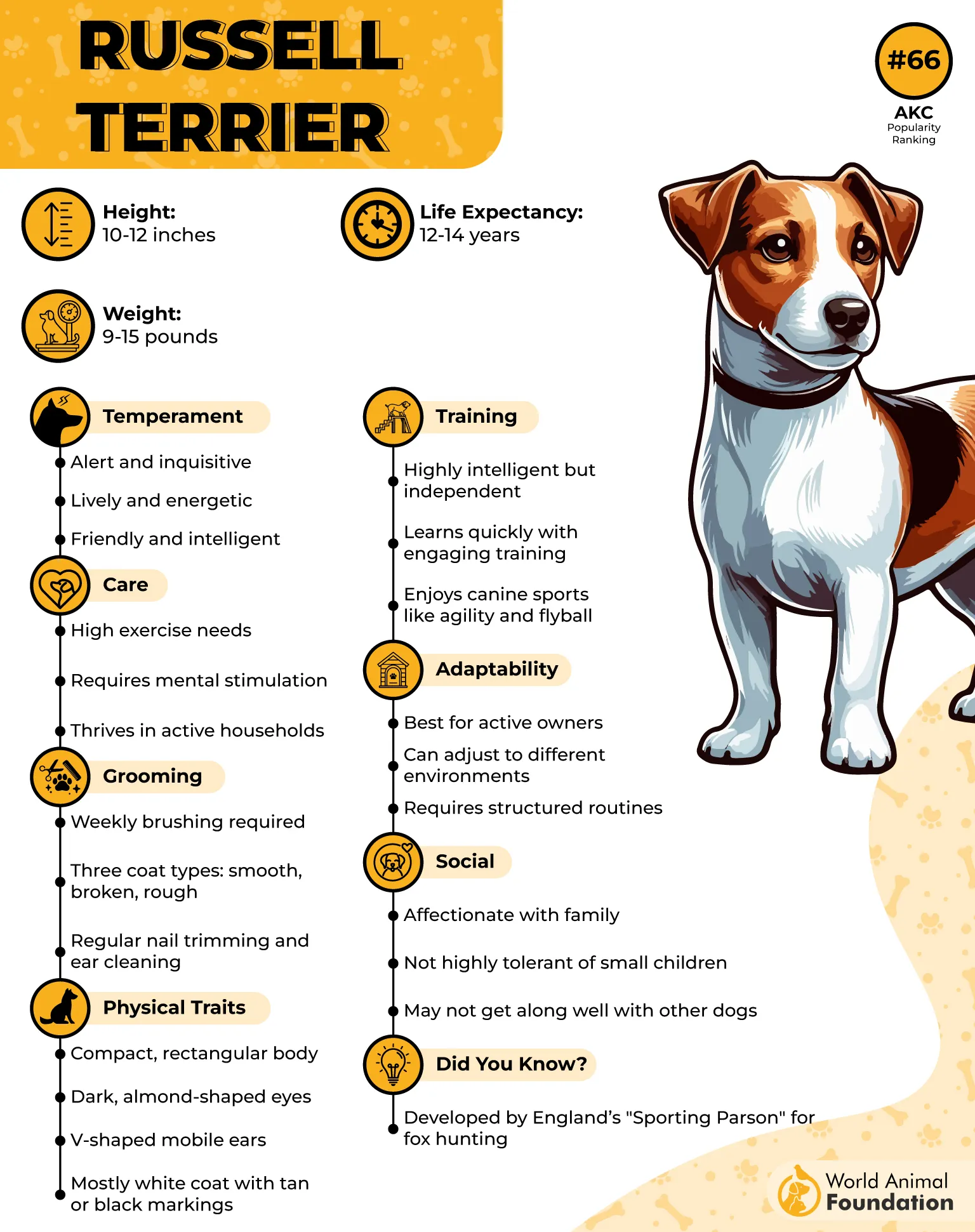
Positioned high among the most energetic small breeds, it thrives when faced with physical or mental tests. Try slinging a ball across the yard, burying treats around the living room, or building an indoor obstacle course. Their athletic build makes simple play feel like a sport, while their clever minds absorb new tricks in seconds.
Britannica highlights that this tiny explorer packs an intense prey drive. Spotting a neighborhood squirrel or catching a scent sends them running, making a secure fence and proper leash manners essential early on. Consistent socialization helps young dogs learn proper manners around new faces and four-legged peers.
Exercise and Training
Jack Russell Terriers need regular exercise, interactive games, and obedience training to channel their high energy. Scent work and puzzle toys provide valuable mental stimulation, while reward-based lessons encourage focus.
Families who enjoy hiking trails and outdoor exploration will appreciate this breed’s adventurous spirit, provided they keep outings age-appropriate and protect their companion from overheating.
2. Miniature Pinscher
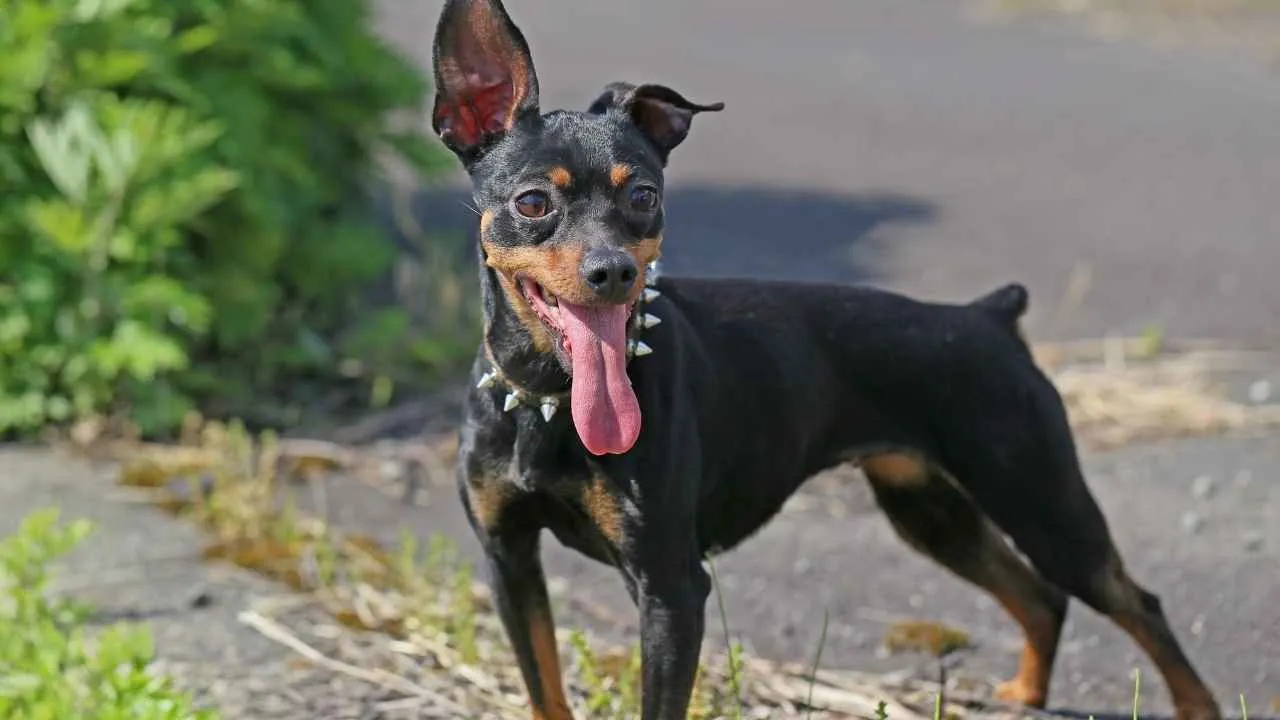
This little canine struts into a room like it owns the place, completely unaware it weighs under fifteen pounds. Better known as the Min Pin, this sleek, erect-eared power-pack brings endless attitude, sharp senses, and zero hesitation to every room it enters.
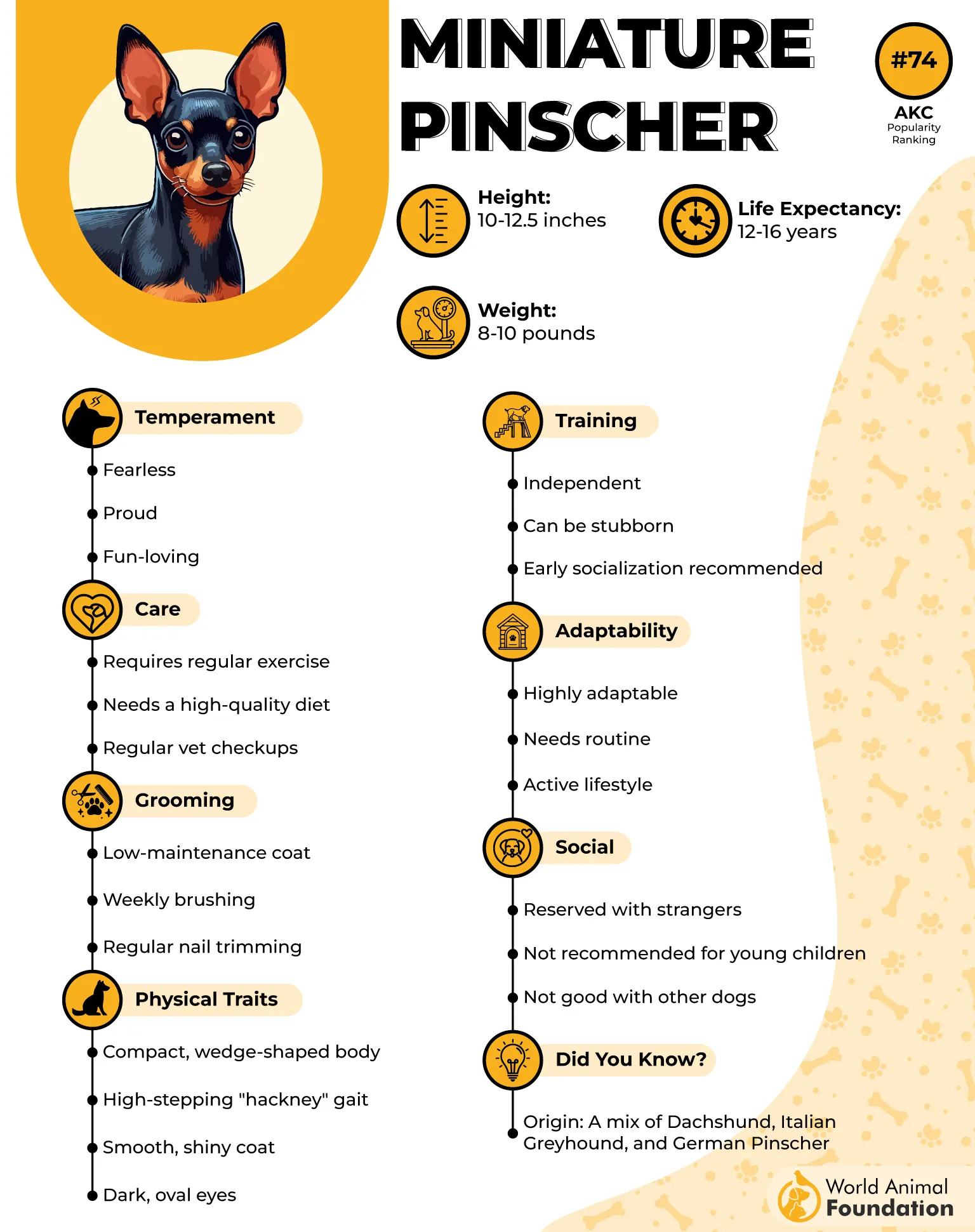
As a hyper-observant partner, PetMD mentions that this dog loves auditing every corner of the house and keeping tabs on daily affairs. That natural vigilance keeps things entertaining, whether it is running up to greet guests or investigating strange noises behind the furniture. Brain-teaser toys and brief training bursts give this inquisitive pup an ideal job to do.
Because these dogs are naturally independent thinkers, establishing firm boundaries with a gentle touch is key. Their bold temperament means they might challenge giant dogs without sensing the physical mismatch, so supervised intros and early positive socialization are vital to building safe habits.
While they adore high-velocity games, their petite frames can’t handle roughhousing. Households with younger kids ought to enforce calm play rules and set up a quiet sanctuary where the dog can rest undisturbed.
Daily Activity and Socialization
Daily walks, indoor play, and short bursts of physical exercise help maintain a Miniature Pinscher’s fitness. Training sessions should reward calm greetings and appropriate responses to distractions.
Keep activities varied to prevent boredom, and arrange routine veterinary care to monitor dental health, weight, and other age-related health issues.
3. Toy Fox Terrier
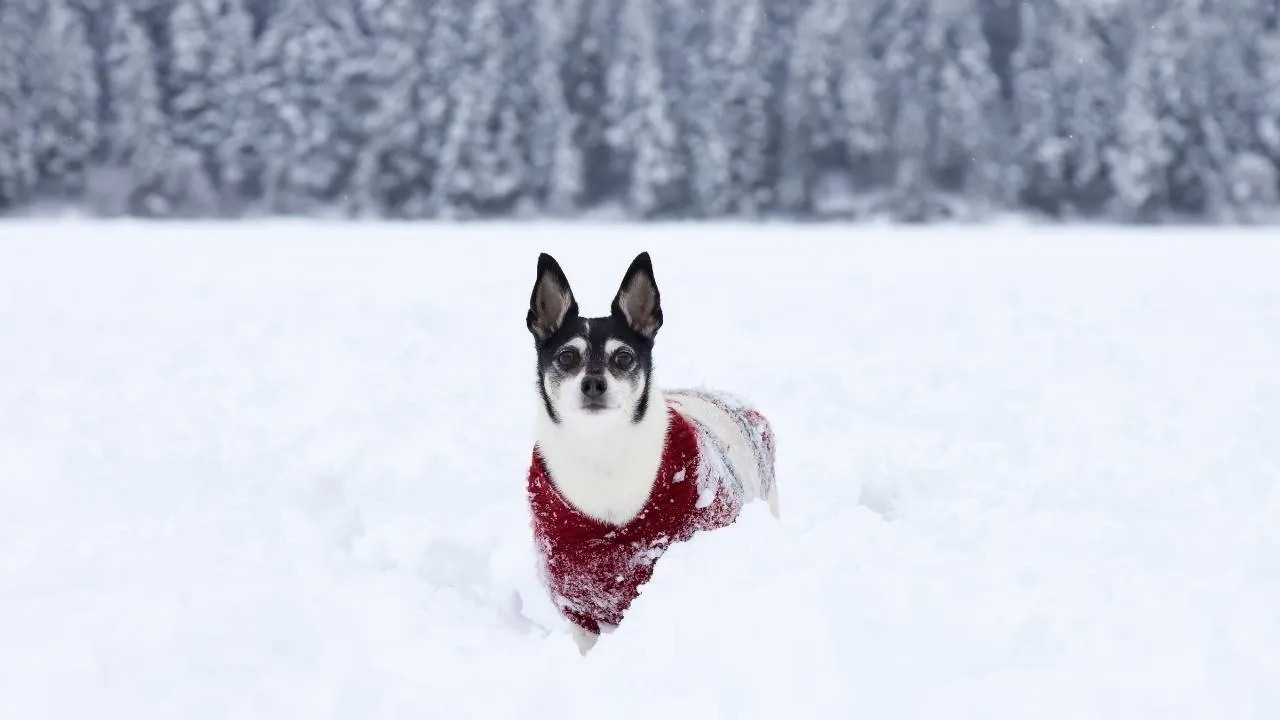
While some pets are content observing life from the couch, the Toy Fox Terrier insists on jumping right into the middle of every moment. Expressive, swift-footed, and perpetually bright-eyed, this spunky companion guarantees nonstop entertainment for active households.
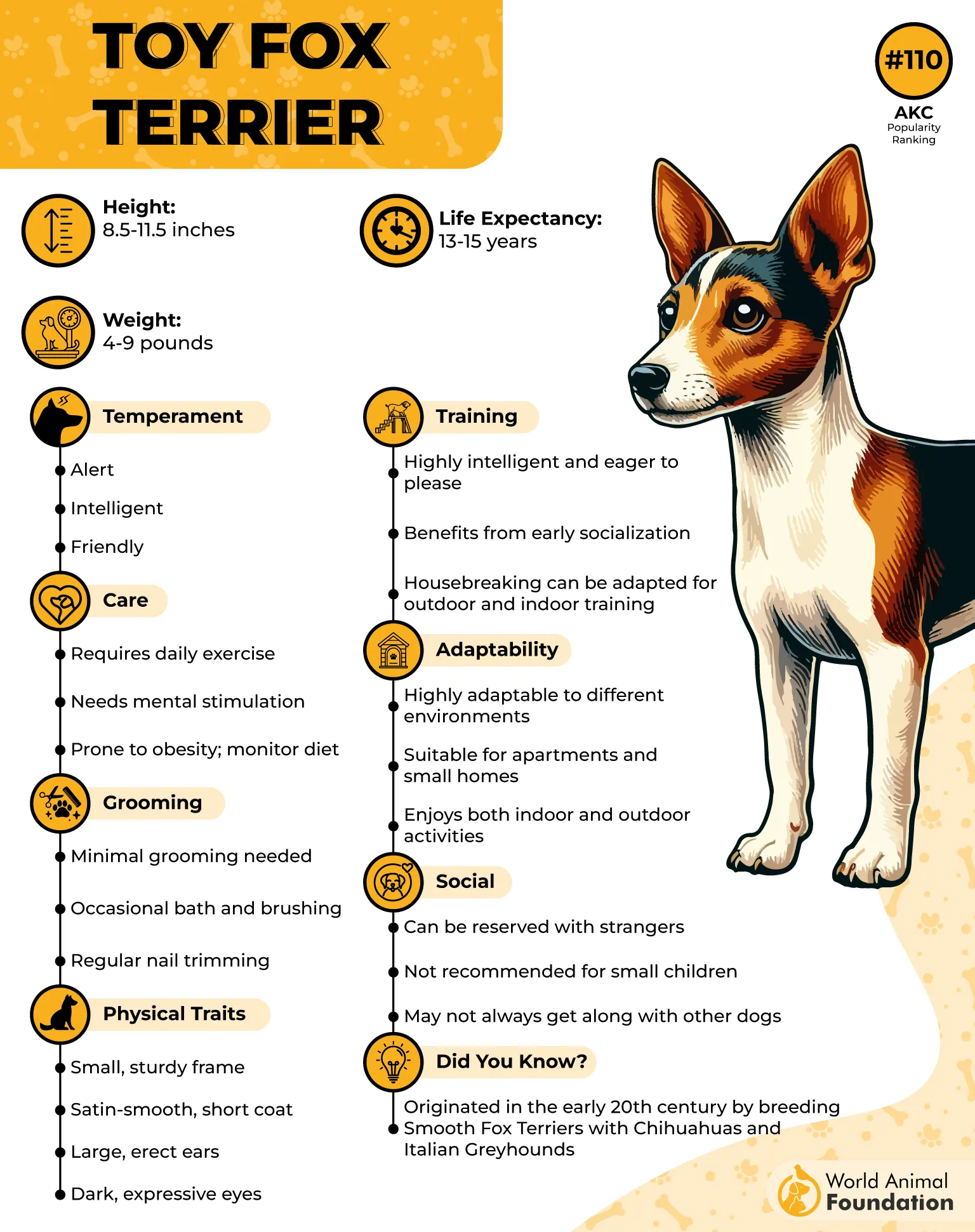
Underneath that pint-sized frame lies genuine terrier grit paired with a deep passion for hands-on games. Fetch marathons, treasure hunts, and trick-learning turn routine afternoons into mini carnivals. Thanks to their high intelligence and trainability, they excel alongside owners who enjoy teaching their pets cool behaviors.

These little companions form intense attachments to their human pack and want to participate in every family movement. VCA says that leaving them alone too long leads to boredom, so plan for constant companionship and engaging toys. Their small bodies also require careful handling around toddlers and larger pets.
Maintaining their short, smooth coat takes minimal effort, though periodic brushing and claw trims remain necessary. Because their alert system is always active, early training helps curb unnecessary barking.
Playtime and Companionship
Offer a mixture of short walks, interactive toys, and positive training exercises to keep this energetic companion engaged. Rotate activities to maintain interest and reward calm behavior around visitors. Gentle handling, appropriate socialization, and supervised family games help build confidence without overwhelming a delicate little dog.
4. Boston Terrier
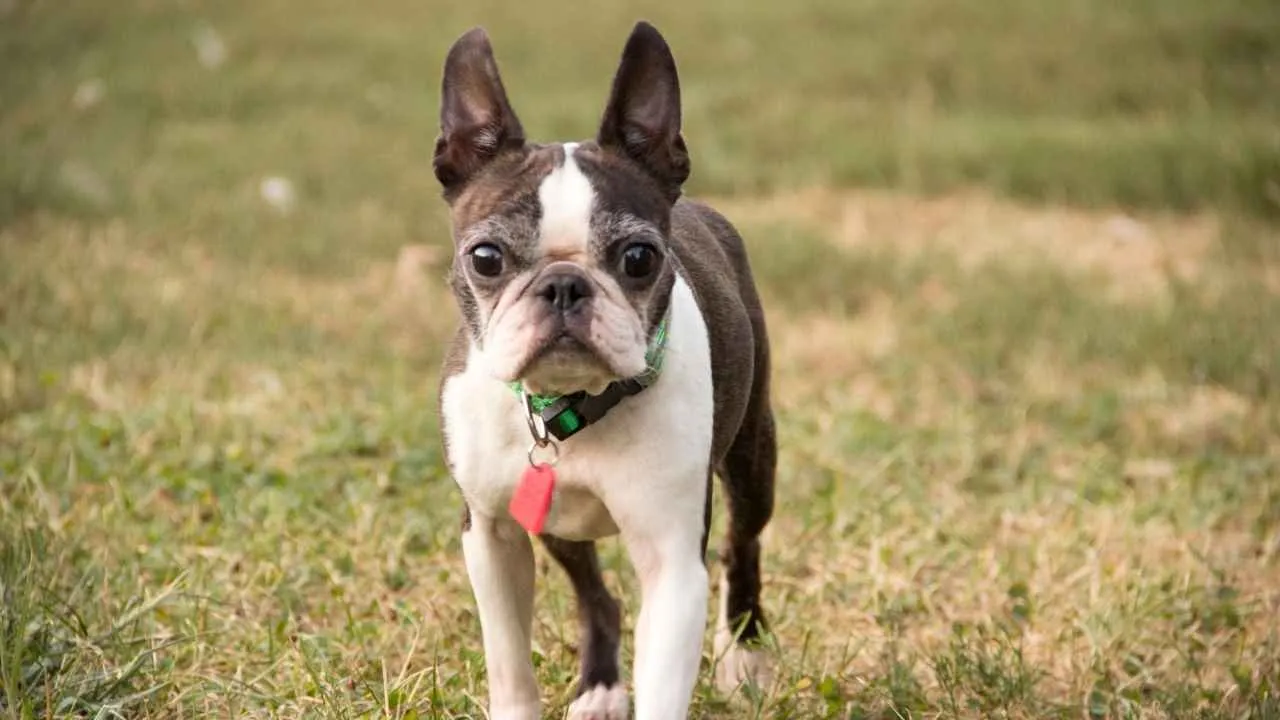
Dressed to impress in a permanent tuxedo and equipped with giant, soul-searching eyes, the Boston Terrier arrives ready to steal the spotlight in every family photo. That dapper look comes with a sweet, clownish personality, offering rich emotional engagement without demanding non-stop athletic workouts.
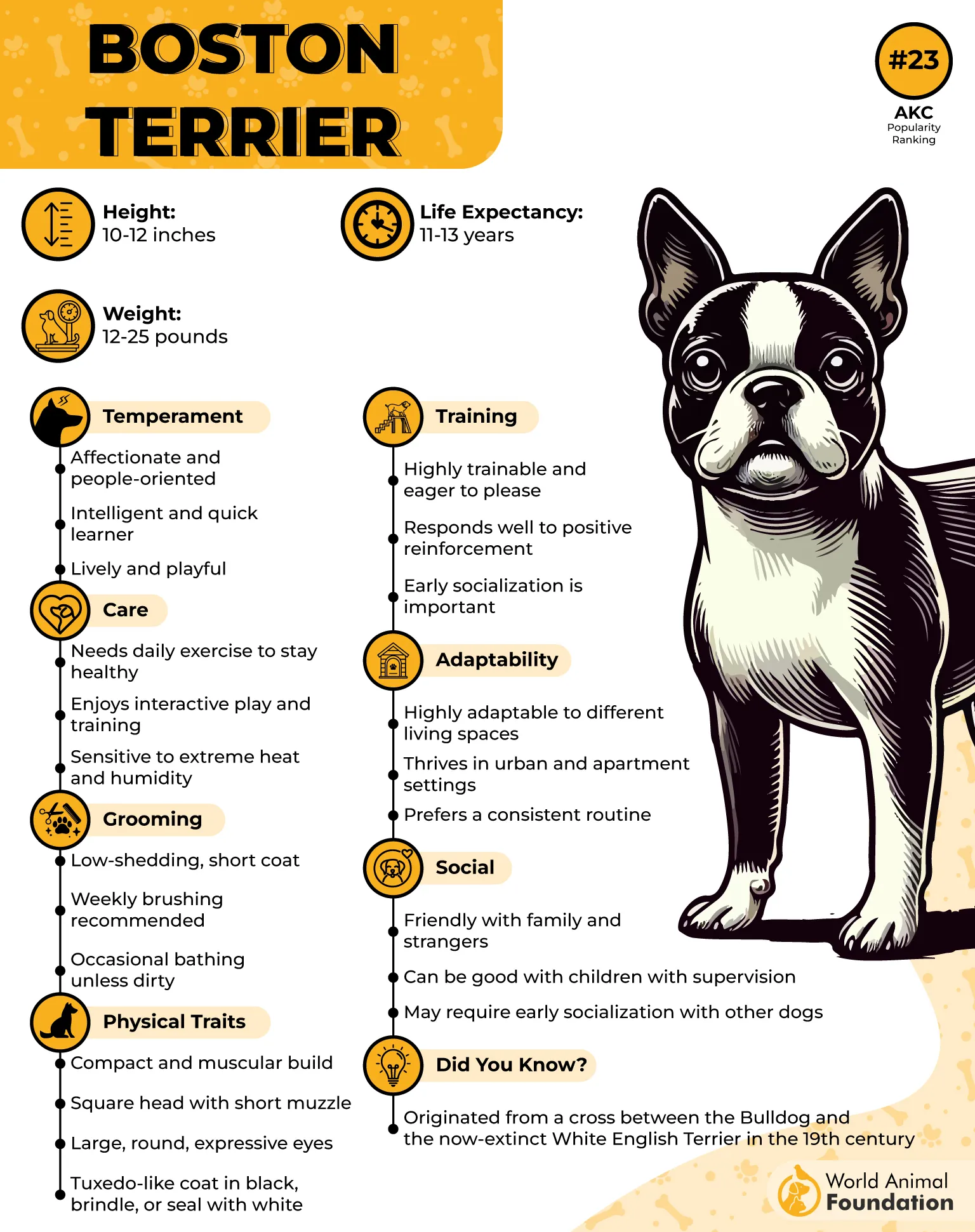
These well-balanced companions love slipping seamlessly into whatever the day brings. They are just as happy chasing a squeaky toy across the rug as they are walking through the neighborhood or snuggling beside you after a busy afternoon. Their affectionate nature makes them especially enjoyable companions for families who value shared downtime as much as energetic games.
Brief training sessions work best because these dogs respond to praise, treats, and engaging lessons. Teaching simple commands also gives children a supervised way to participate in pet care.
However, the Boston Terrier’s short muzzle deserves special consideration. Breathing difficulties and poor heat tolerance are important health concerns, particularly during strenuous exercise or hot weather. Watch for labored breathing and avoid pushing your dog beyond its comfort level.
Exercise and Health
Moderate exercise suits Boston Terriers better than intense workouts. Choose cooler hours for outdoor activities, offer fresh water, and use indoor play when temperatures climb.
Ask your veterinarian about appropriate weight management and breed-related health problems. A balanced routine supports a small dog healthy enough to enjoy family life comfortably.
5. Yorkshire Terrier
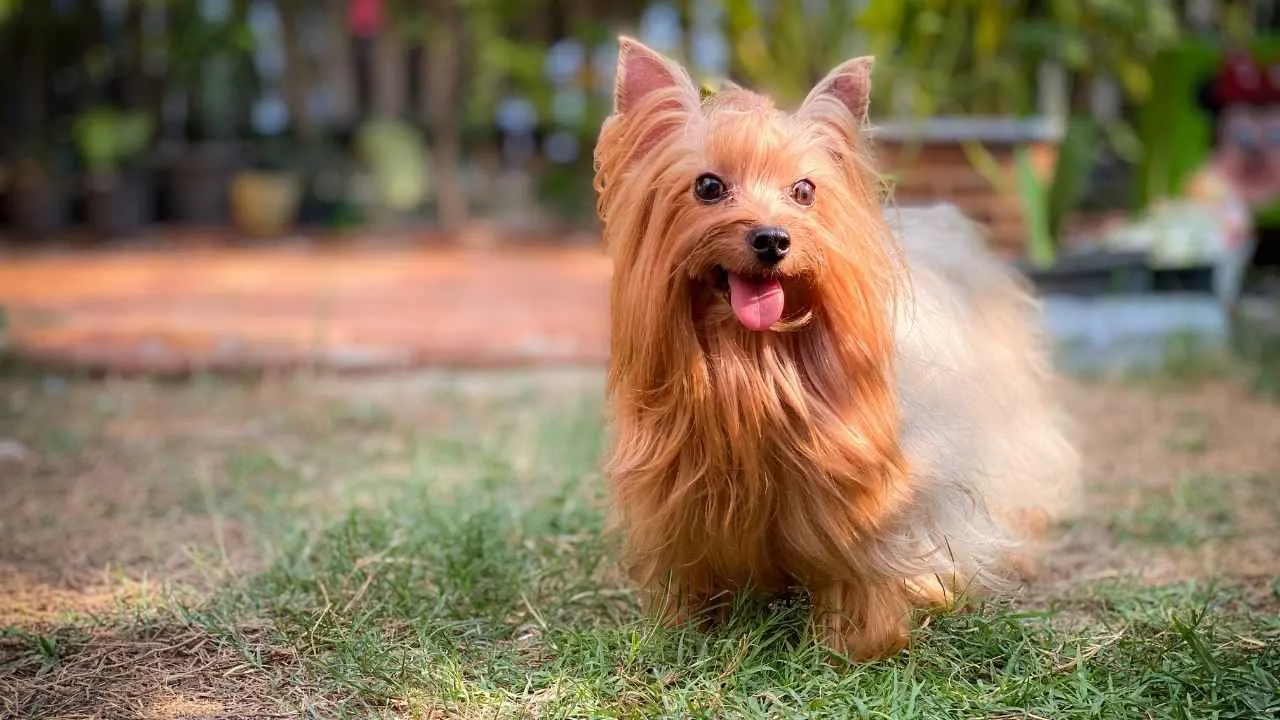
Do not let that glam silky hair fool you; the Yorkshire Terrier carries a massive personality that instantly fills up whatever space it walks into. Rooted in an impressive history as working ratters, this spunky breed blends a feisty temperament with a deeply affectionate heart.
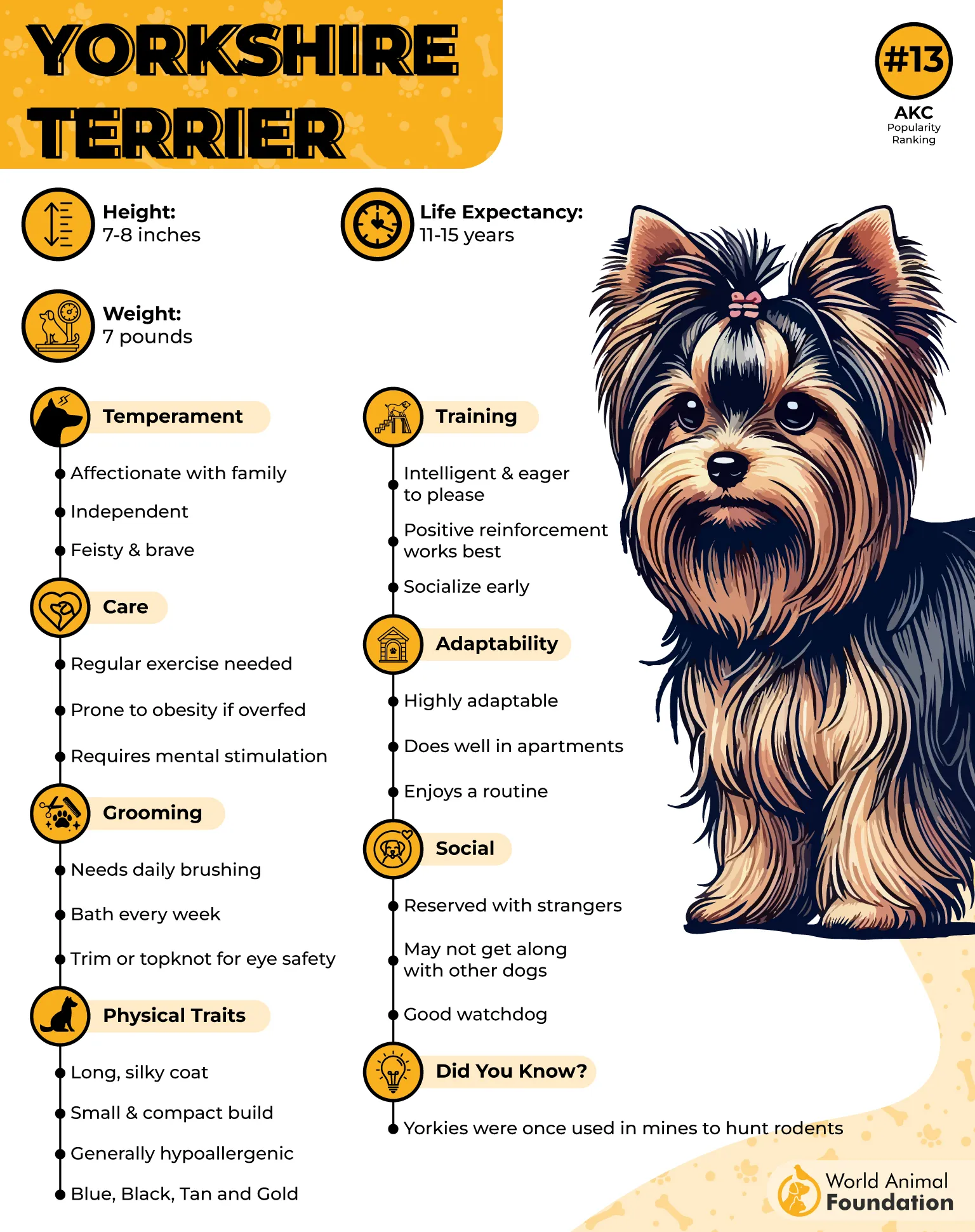
Yorkies thrive on chasing toys, sniffing around familiar walking routes, and mastering cute routines that earn applause. Their strong loyalty creates a tight bond with family members, while their hyper-alert nature ensures they notice every single movement around the house.
Never mistake their pampered aesthetic for fragility; these dogs possess real determination and crave stimulating tasks. Early training helps manage barking, improve leash manners, and encourage polite interactions with unfamiliar dogs.
Still, their tiny frames require protection from rough play, high jumps, and accidental falls. Older children who understand gentle handling can participate in playtime and grooming, helping the dog feel included without overwhelming it.
Coat Care and Handling
Regular grooming keeps a Yorkie’s long coat free from tangles, while routine dental care helps reduce the risk of dental disease. Short walks, gentle indoor games, and positive training provide suitable outlets for daily activity. Families should handle these little dogs carefully and establish consistent routines for brushing, nail trimming, and veterinary visits.
6. Papillon
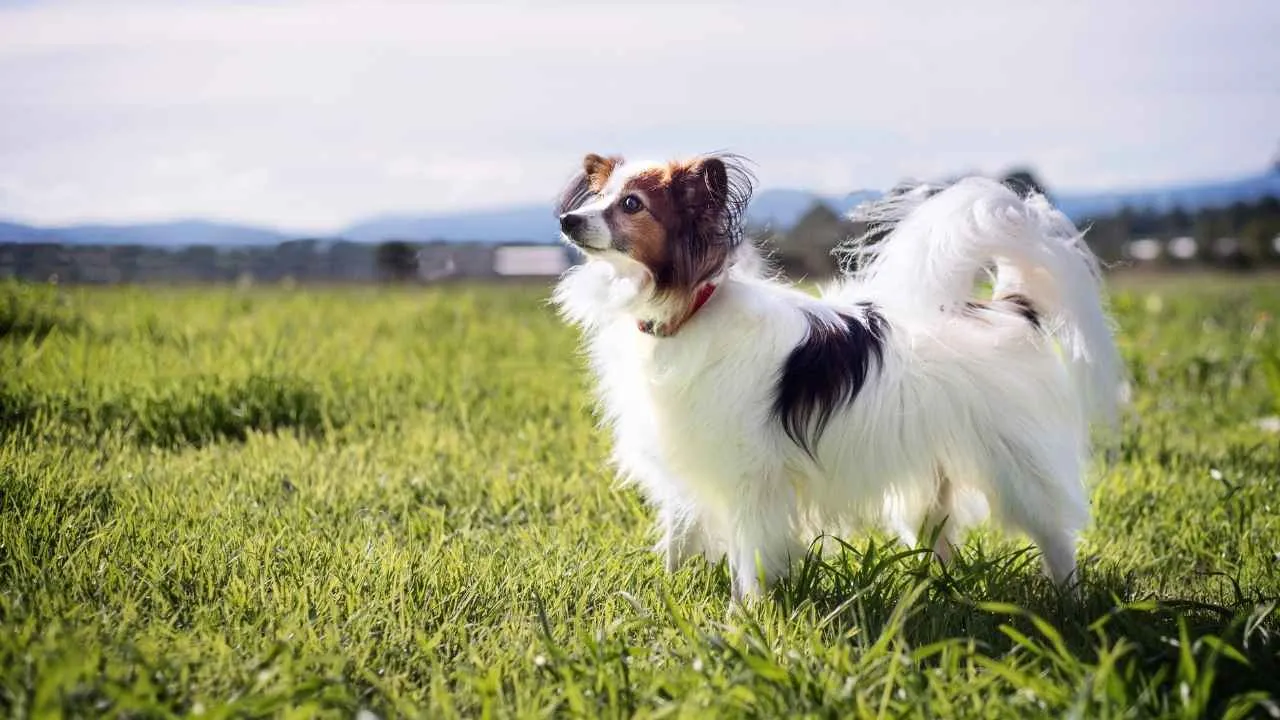
Named after the French word for butterfly thanks to those magnificent ears, the Papillon offers far more than just striking looks. It packs a brilliant brain inside a surprisingly athletic body. Curious and elegant, this upbeat partner adores going places, discovering new sights, and diving into group activities.
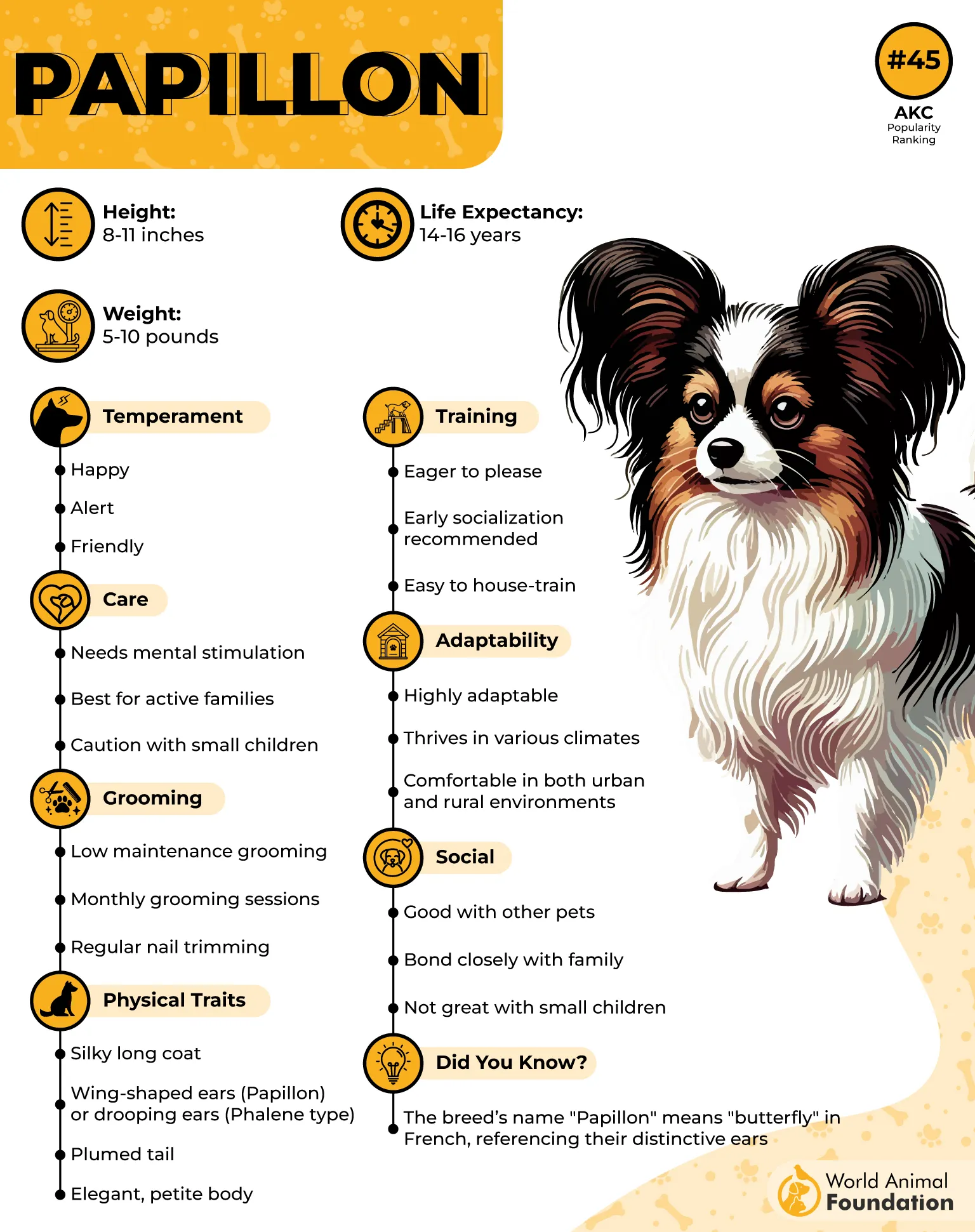
As incredibly smart and agile dogs, Papillons exhibit a natural talent for trick training, obedience, and dog sports. They thrive on challenges that combine physical movement with mental problem-solving, turning a backyard obstacle course or a living-room scent game into a thrilling event.
Their joyful demeanor makes them delightful companions in the house. Papillons bond closely with their people and appreciate plenty of attention. Rotating puzzle toys and practicing new commands help keep boredom away on quieter days.
While that flowing coat looks complex, straightforward brushing keeps knots at bay and maintains its healthy shine. AKC notes that their delicate build requires careful handling around young kids, making supervised interactions essential so everyone learns proper boundaries.
Training and Mental Stimulation
Papillons respond well to reward-based lessons, agility exercises, and interactive games. Offer varied activities to support their intelligence without overwhelming them, and provide regular walks suited to their fitness.
7. Toy Poodle
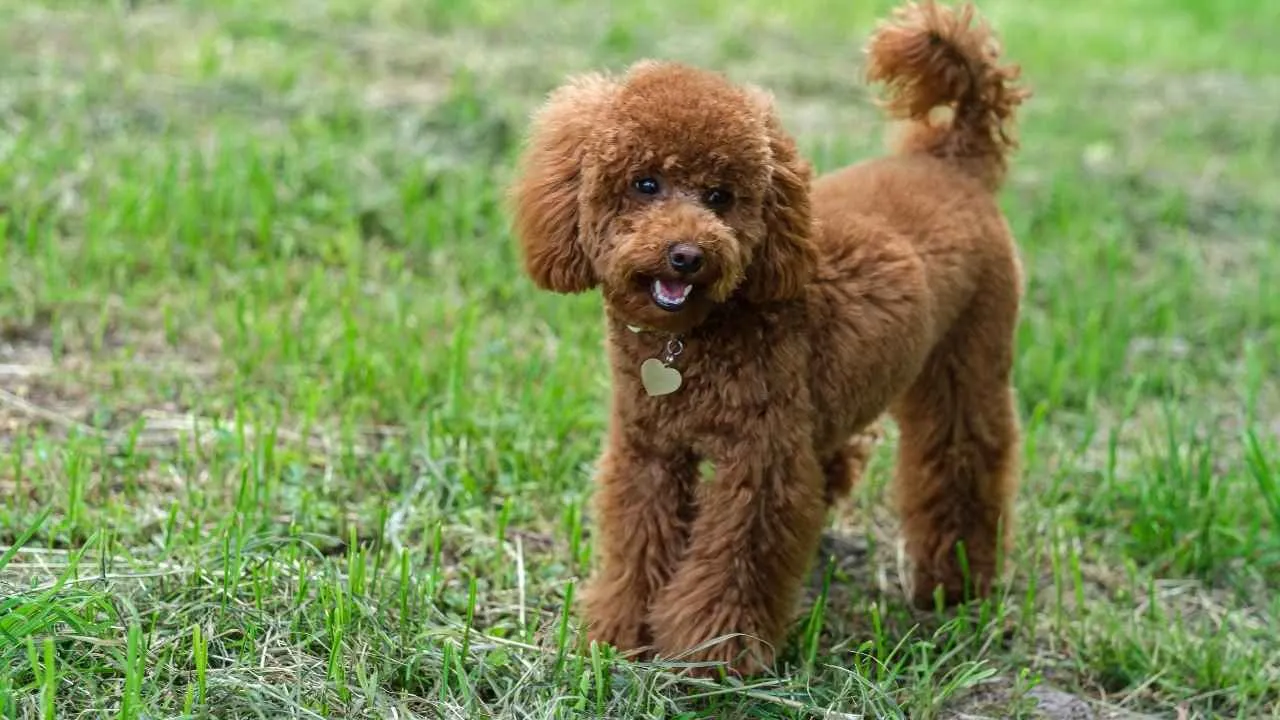
A cloud-like coat coupled with sharp wits makes the Toy Poodle a total delight for any lively household. Exhibiting soulful eyes, refined poise, and an eagerness to impress, this breed seamlessly blends physical charm with world-class trainability.
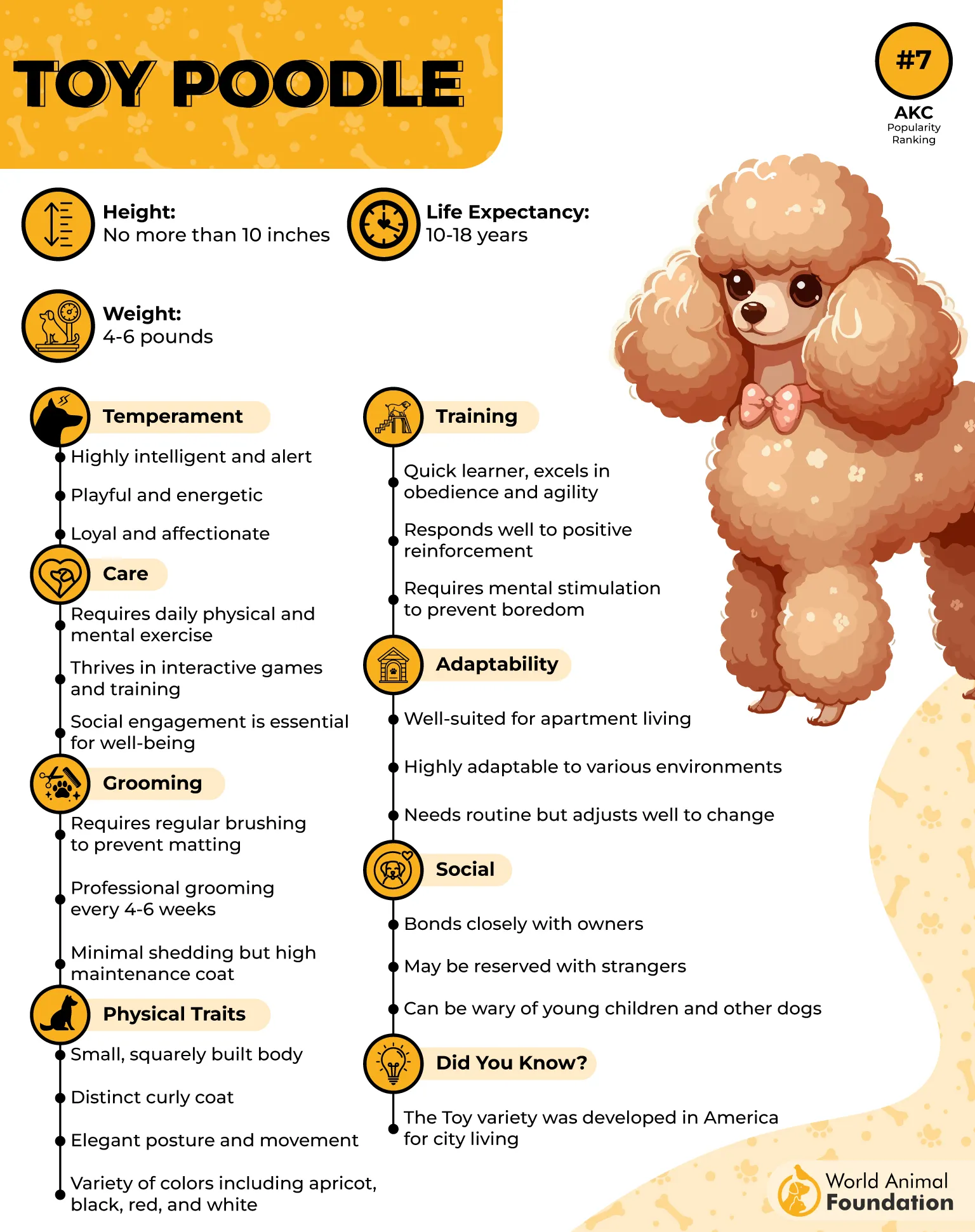
Toy Poodles learn commands quickly and enjoy solving food puzzles, playing fetch, and practicing entertaining tricks. Their intelligence gives families plenty of opportunities to build a strong bond through shared activities. Even a modest living room offers space for brief games when outdoor conditions become uncomfortable.
While their exercise needs are lighter than those of working terriers, Toy Poodles still require daily walks, play sessions, and mental workouts. Their people-oriented nature means companionship is vital; extended solitude can leave these sociable dogs feeling bored.
Their curly coat requires regular brushing and professional clipping to prevent mats. Families should also protect these tiny dogs from accidental falls and rough play.
Grooming and Enrichment
Brush the coat consistently and schedule professional grooming to prevent uncomfortable tangles. Combine daily walks with puzzle toys, trick practice, and supervised fetch sessions.
Conclusion
Welcoming the right compact dog into your home is introducing a whole new energy, turning routine afternoons into shared memories and everyday moments into comedy.
Whether your heart leans toward the relentless drive of a Jack Russell Terrier, the tuxedoed charm of a Boston Terrier, or the brilliant agility of a Papillon, the goal comes down to alignment. When a breed’s instincts, care needs, and exercise requirements fit your family’s daily rhythm, the result is pure magic.
The ultimate companion for your active home is about discovering the one that makes every single adventure feel complete. With thoughtful guidance, consistent training, and plenty of love, your family’s next great chapter is just waiting to begin.
