




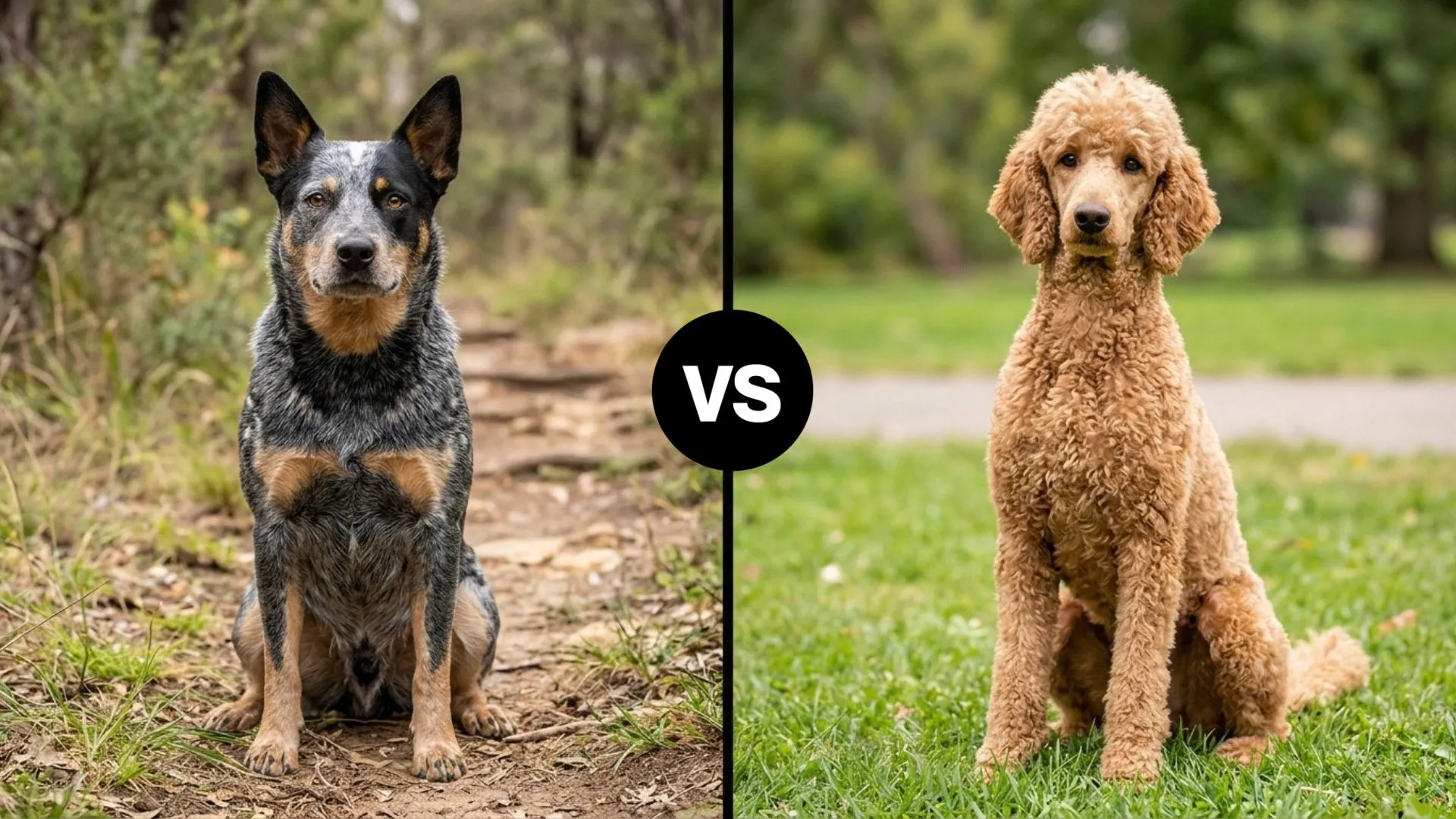
The Australian Cattle Dog and Poodle are both intelligent, athletic breeds, but their original working roles have shaped different strengths. Australian Cattle Dogs excel at herding and demanding physical tasks, while Poodles were developed for retrieving and are known for their versatility and responsiveness.
Both breeds need mental stimulation, regular exercise, and consistent training to thrive. However, their grooming requirements, social behaviors, and preferred activities differ, making it important to consider your lifestyle before choosing between them.
Discover how these breeds compare in personality, care, and activity needs to find the better match for your household.
Australian Cattle Dog vs. Poodle Dog Breeds
Australian Cattle Dogs and Poodles are intelligent, energetic breeds with very different personalities and care needs. Understanding their differences in temperament, training, and lifestyle can help you choose the right companion.
Origins & Purpose
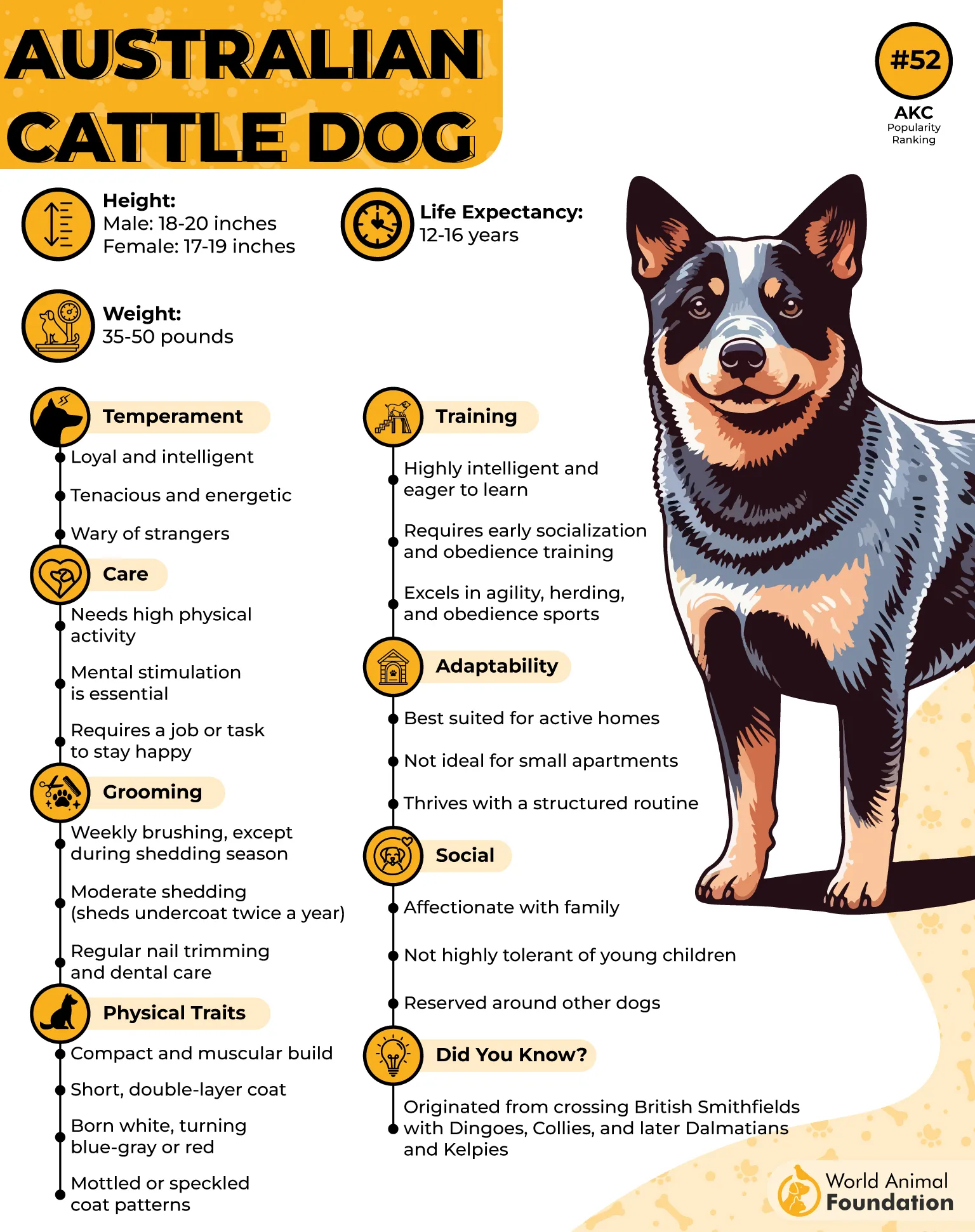
The Australian Cattle Dog originated in nineteenth-century Australia, where breeders needed a hardy dog to herd cattle across rugged grazing lands. Crossbreeding imported herding dogs with Dingoes helped develop Hall’s Heelers.
George Hall refined these dogs into tireless livestock workers capable of guiding cattle by nipping at their heels. Further crossbreeding eventually shaped the Australian Cattle Dog, which gained formal recognition in Australia.
The Poodle originated in Germany as a water-retrieving dog bred to hunt ducks. Its intelligence, athleticism, and curly coat later attracted French nobility, while smaller varieties were developed as companion dogs for urban households.
Size & Physical Build
The Australian Cattle Dog has a medium-sized, compact frame built for strength, agility, and endurance. Its broad head, pointed muzzle, erect ears, and powerful legs reflect its demanding livestock-herding background.
A dense undercoat sits beneath a short, harsh, water-resistant outer coat. Blue and red speckled patterns are characteristic, while puppies are typically born white before their markings develop.
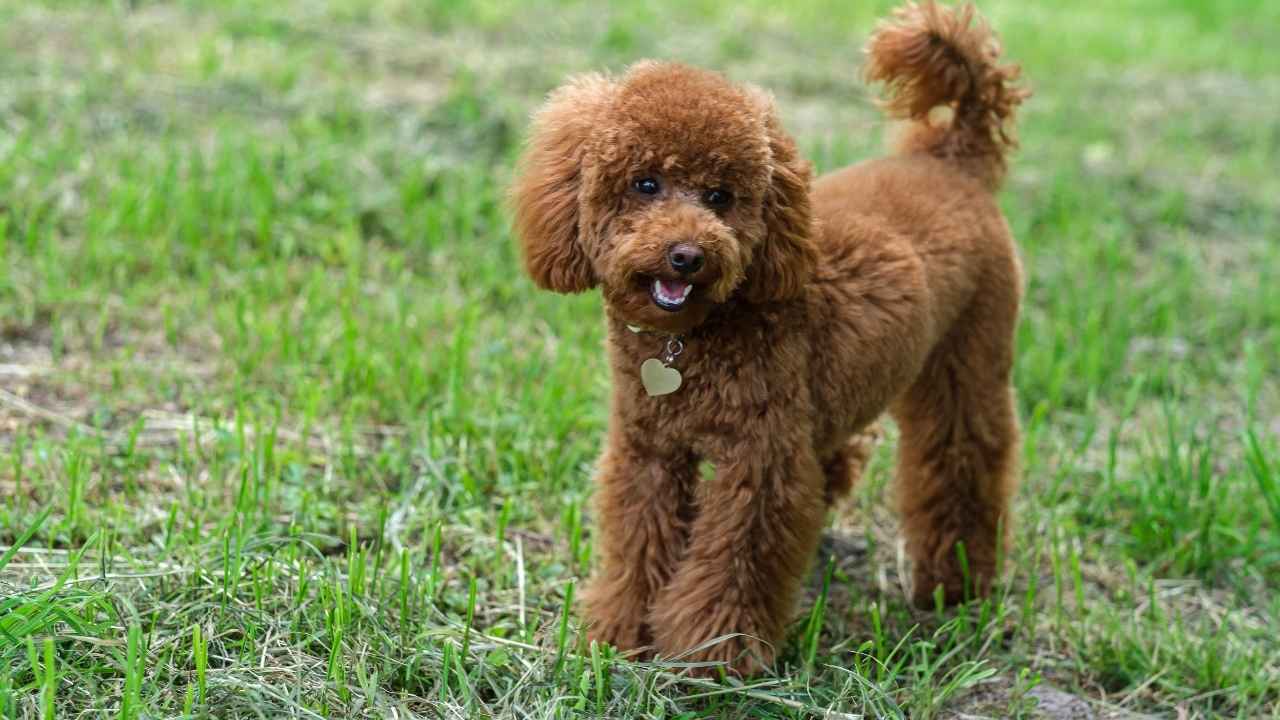
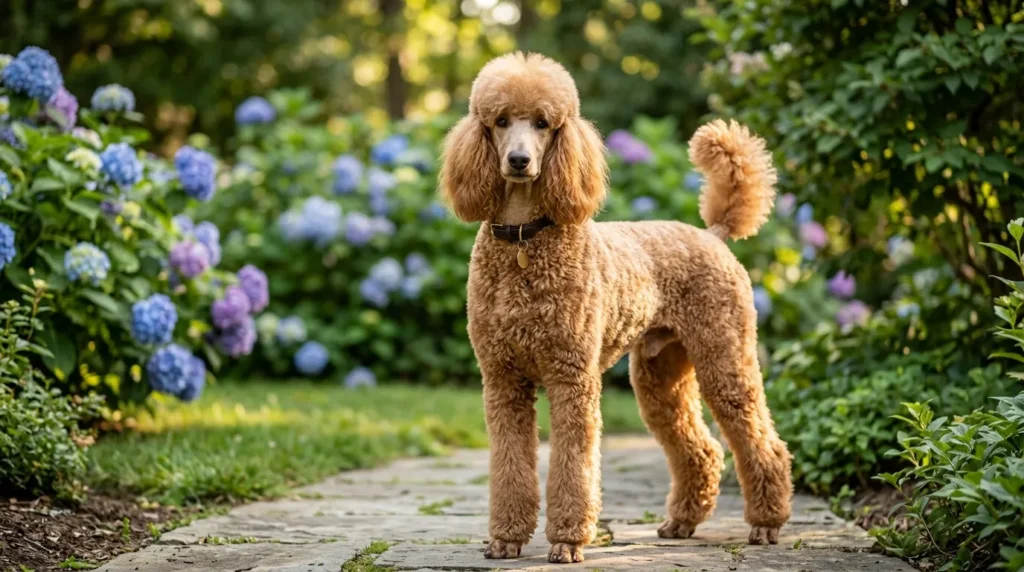
Poodles come in Standard, Miniature, and Toy sizes, ranging from small companions to taller, athletic dogs. All varieties share a balanced, square-like body, a long neck, a deep chest, a slender muzzle, and hanging ears.
Their distinctive coat is dense and curly, available in several solid colors. Standard Poodles have long, muscular legs suited to athletic movement, while smaller varieties retain the breed’s elegant proportions in a more compact frame.
Temperament & Personality
Australian Cattle Dogs are intelligent, courageous, and independent, with a strong work ethic shaped by their herding background. They are loyal and form deep bonds with their human families, but may act stubbornly without consistent training and clear leadership.
According to the AKC, Australian Cattle Dogs need regular mental and physical challenges to stay engaged, as boredom can lead to unwanted behaviors and mischief.
Naturally alert and cautious around strangers, they can be protective watchdogs. Clear boundaries and early socialization help them understand who is trustworthy. Their high energy and sharp minds require regular exercise, mental challenges, and early socialization to help prevent boredom, anxiety, and unwanted nipping.
Poodles are lively, affectionate, and exceptionally intelligent, making them highly responsive to training. Although they may initially be reserved with unfamiliar people, they generally enjoy family activities as a kind companion, form strong bonds at home, and can get along with children and other pets when properly socialized.
Their playful nature and need for stimulation keep them engaged, but insufficient exercise or prolonged isolation may lead to nuisance barking and other unwanted behaviors.
Exercise & Energy Levels
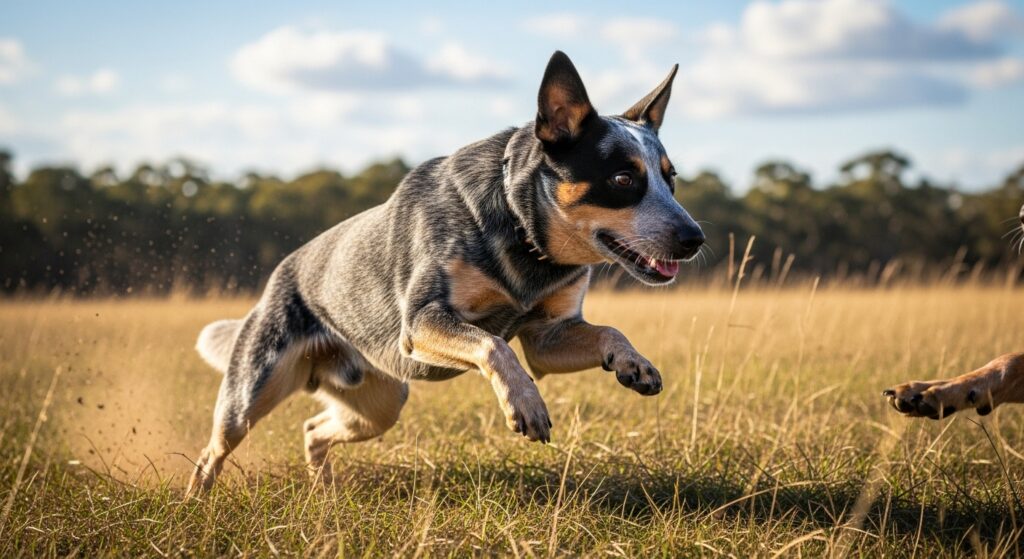
Australian Cattle Dogs possess remarkable stamina, reflecting their history of herding livestock across extensive terrain. They have high energy levels and tend to stay most happy with vigorous daily exercise, outdoor activity, and a job to do.
Agility, flyball, retrieving games, running, and learning new tricks can channel their energy productively. Without sufficient activity, these hardworking dogs may become bored, restless, or destructive, so they suit active owners who enjoy spending time outdoors.
According to Orvis, Australian Cattle Dogs are eager learners that enjoy having tasks to complete. They excel in advanced obedience and perform well in activities such as herding, agility, and tracking.
Poodles are energetic and playful, with exercise needs that include both physical movement and mental engagement. They generally need about 60 to 90 minutes of exercise daily, depending on size. Standard Poodles often enjoy hiking, jogging, and long walks, while smaller varieties can stay active through fetch and interactive games.
According to Petplan, interactive dog puzzles are an effective way to challenge their intelligence and provide valuable mental stimulation.
Swimming is another appealing activity because Poodles were originally bred for water retrieval. Training sessions, new tricks, and outdoor adventures also help keep their intelligent minds engaged across all sizes. Compared with less active companion dogs, Poodles typically need more daily activity and mental stimulation.
Training & Intelligence
Australian Cattle Dogs and Poodles both rank among the smartest in the canine world, but the Australian Cattle Dog pairs that intelligence with a strong desire to work. However, their independent streak can make them stubborn, so consistent training with rewards and positive feedback is especially effective, and they respond best when trained with consistency rather than repetition alone.
Beyond basic obedience, they excel at advanced activities such as herding, agility, tracking, and other canine sports. Regular challenges help keep their minds occupied while reinforcing good behavior and cooperation.
Poodles are highly intelligent and eager to please, making them particularly responsive to training. They can learn commands and tricks quickly when lessons remain engaging, consistent, and rewarding.
Their versatility shines in obedience, agility, tracking, and retrieving activities. Early socialization and positive reinforcement help develop their confidence and encourage appropriate behavior around unfamiliar people and other animals, so owners can expect an attentive dog that usually enjoys learning and responds well to guidance.
Coat Maintenance
The Australian Cattle Dog has a short, double-layered coat with a dense undercoat and a weather-resistant outer layer. Brushing once or twice weekly helps remove loose hair, while more frequent grooming may be needed during the times the breed typically sheds once or twice a year.
Poodles have a dense, curly, low-shedding coat that is often considered hypoallergenic, but it grows continuously and still requires high grooming maintenance because it is prone to tangling and matting. Daily brushing and combing are important, particularly when the coat is kept longer rather than clipped short.
Professional grooming every four to six weeks helps maintain a Poodle’s coat and includes clipping, bathing, and nail care. Introducing grooming routines early can make maintenance easier as the dog matures.
Health & Lifespan
Australian Cattle Dogs are generally robust but may develop hip or elbow dysplasia, progressive retinal atrophy, deafness, and spinal conditions. Responsible breeders should provide verified health records and appropriate genetic and hearing tests.
With proper care and responsible breeding, Australian Cattle Dogs can live for fourteen years or longer. Screening for inherited conditions can help reduce the risk of certain health problems.

Poodles may be susceptible to inherited conditions, including atrial septal defect and neonatal encephalopathy in certain lines. Their long, floppy ears also make regular ear checks and veterinary-recommended cleaning important to help prevent infections.
Conclusion
Choosing between the Australian Cattle Dog and the Poodle depends on your lifestyle, activity level, and grooming preferences. Both breeds are intelligent and capable companions, but their needs differ in important ways.
The Australian Cattle Dog suits active owners who can provide vigorous exercise, consistent training, and engaging tasks. Its hardworking nature and strong loyalty reflect its history as a livestock herder.
The Poodle offers versatility across different sizes, combining athleticism with an affectionate personality and excellent trainability. However, its curly coat requires frequent brushing and regular professional grooming.
Both breeds benefit from early socialization, positive reinforcement, and appropriate health screening. Consider your available time, living environment, and willingness to meet their exercise and care requirements before choosing your companion.
