




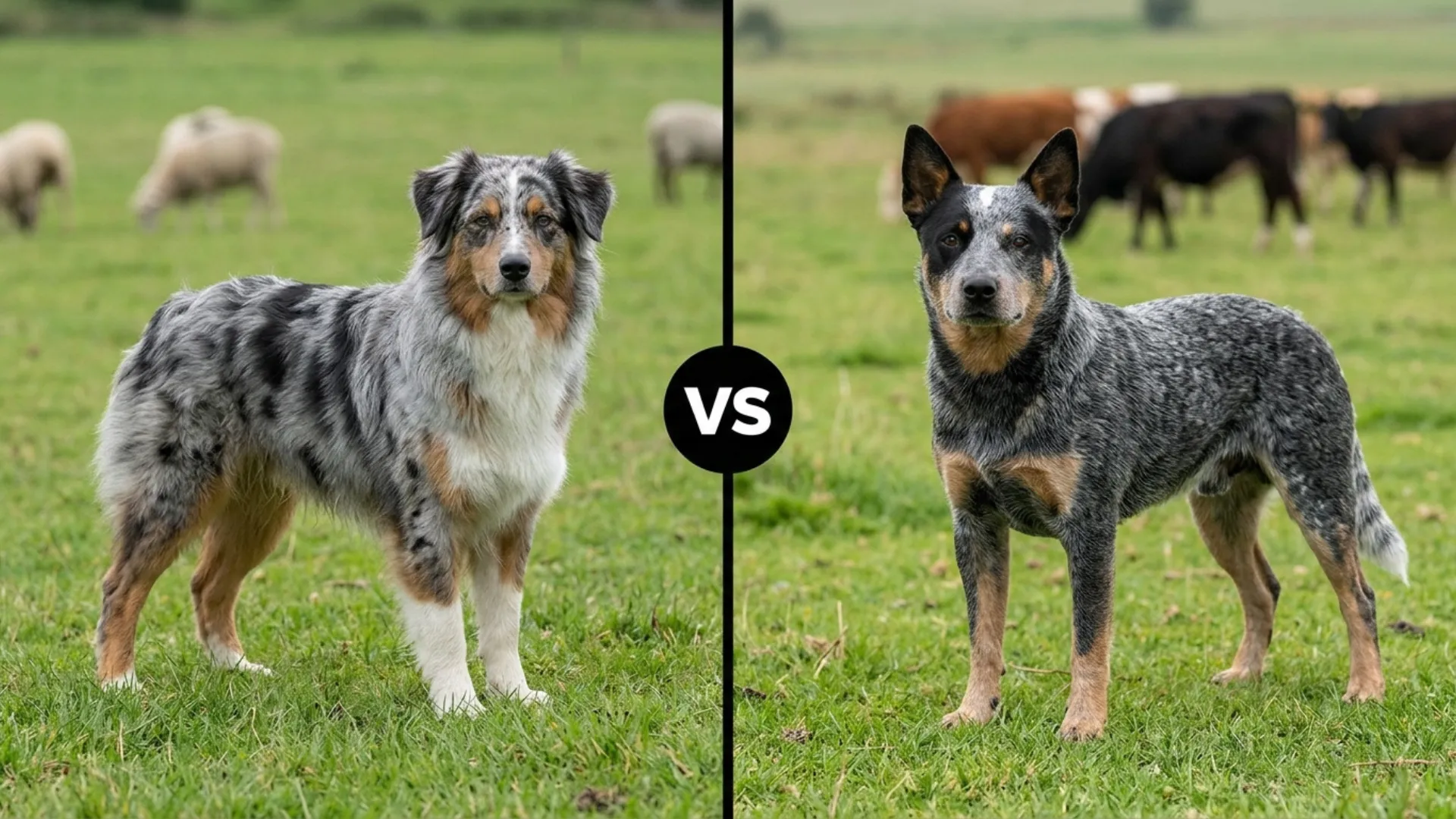
Some dogs are perfectly happy spending their afternoons snoozing on the couch, while others wake up every morning ready to conquer an entire mountain range.
If your ideal weekend involves hiking trails, camping adventures, outdoor games, and exploring new places, the Australian Shepherd and Blue Heeler are two seriously impressive canine companions worth knowing. Both breeds bring intelligence, incredible stamina, and strong working instincts, but their personalities and outdoor abilities aren’t identical.
Which breed fits your lifestyle better? From their fascinating origins and physical differences to exercise needs, grooming, trainability, and health concerns, there’s plenty to consider before you welcome either breed into your home.
Let’s compare these hardworking adventurers and discover which one deserves a place beside you on your next outdoor escape.
Australian Shepherd vs. Blue Heeler: Dog Breeds for the Outdoor Lifestyle
1. Origins & Purpose
Here’s a fun plot twist: despite its name, the Australian Shepherd wasn’t actually developed in Australia. This versatile herding dog breed developed in the western United States, where ranchers needed intelligent, athletic dogs to manage sheep and cattle across enormous properties.
According to the American Kennel Club, European herding dogs and Australian livestock traditions influenced its ancestry, although the exact historical mix remains debated.
By contrast, the Blue Heeler is genuinely Australian and has a fascinating working history. In the 19th century, cattle ranchers needed resilient dogs that could move stubborn livestock across expansive, unfenced terrain in harsh conditions.
Breeders developed the Australian Cattle Dog through working-dog crosses involving Dingoes and imported herding breed dogs, eventually producing a compact athlete with exceptional stamina and determination.
Their original jobs explain why these breeds approach livestock management differently. Australian Shepherds became versatile ranch workers, helping gather sheep, manage cattle, and respond to instructions across changing agricultural environments.
Blue Heelers were especially valued for moving difficult cattle, using careful positioning and controlled pressure near the animals’ heels to encourage movement.
2. Size & Build
At first glance, the Australian Shepherd looks like the slightly larger, fluffier athlete who belongs on the cover of an outdoor adventure magazine. Aussies typically stand 20–23 inches tall and weigh 50–65 pounds. Their balanced proportions, strong shoulders, and athletic legs create a physique built for quick turns, controlled movement, and long hours outdoors.
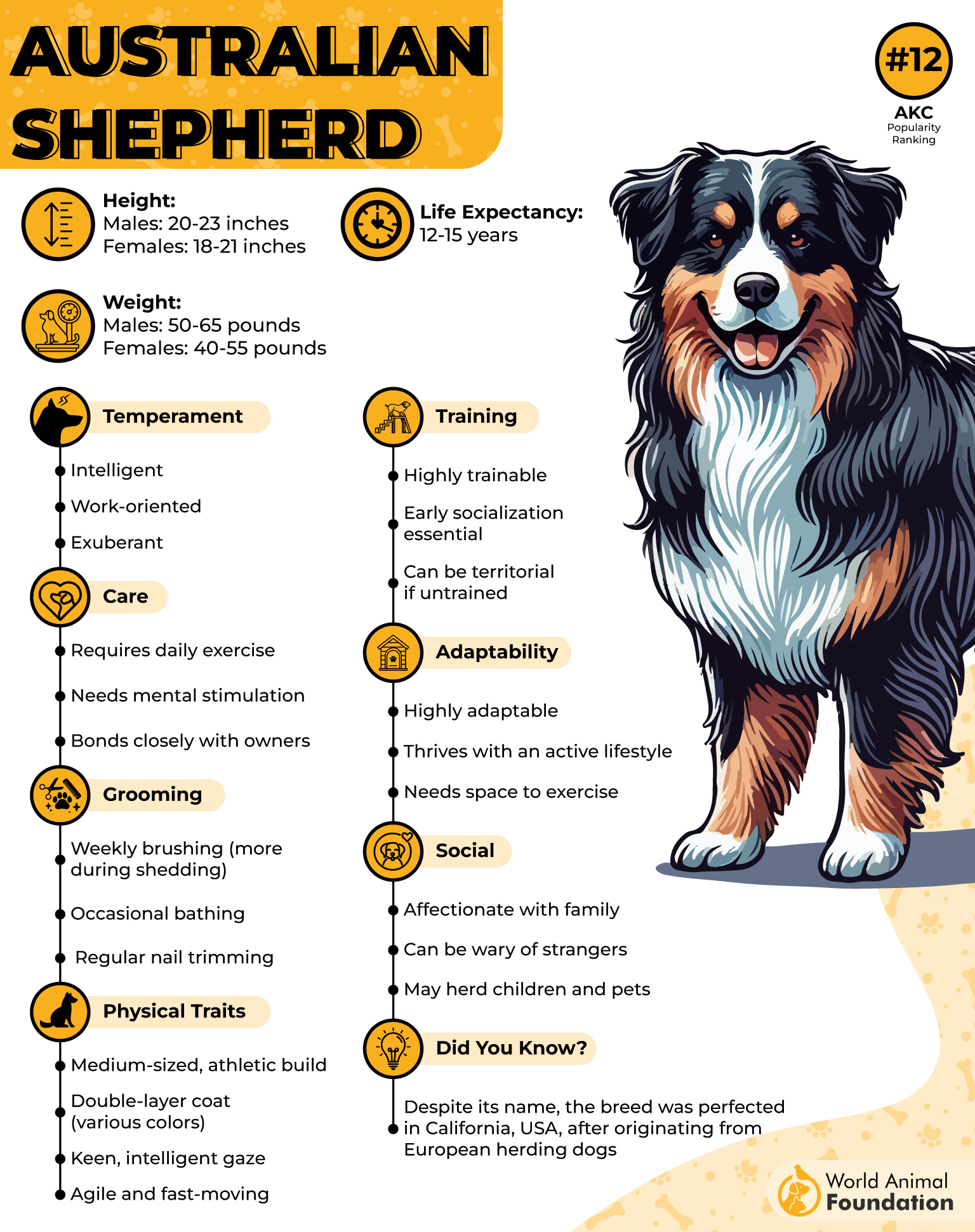
The Blue Heeler brings a different kind of physical confidence, packing considerable strength into a shorter, more compact body. According to the Pet Place, Australian Cattle Dogs generally stand 17–20 inches tall and weigh 35–50 pounds, making them somewhat smaller than most Australian Shepherds.
Their broad muscles, firm backs, and substantial limbs create a sturdy silhouette that looks ready to tackle rough terrain without hesitation.
One noticeable difference is how each breed carries its weight during movement. Australian Shepherds often appear more flowing and graceful, especially when their longer coats move during a run or quick direction changes. Blue Heelers have a more compact, powerful outline, reflecting their historical need to remain agile around large livestock while maintaining stability on uneven ground.
3. Pricing & Availability
Bringing home an Australian Shepherd or Blue Heeler involves more than falling in love with an adorable puppy photograph. Breeders and rescue organizations offer both breeds, but regional demand, bloodlines, health testing, and intended working roles can affect availability.
In the United States, current breeder-marketplace examples suggest that prices can overlap considerably, so neither breed should automatically be considered the budget-friendly choice.
For Australian Shepherds, PetMD gives a broad puppy-price estimate of approximately $500–$2,000, depending on breeding and location.
Blue Heeler pricing can vary similarly, especially for puppies from established cattle-working lines. Good Dog’s current Australian Cattle Dog listings provide an indicative national range of about $1,200–$2,000, though actual prices depend on the breeder and the individual dog.
Buyers interested in working cattle may also encounter breeders who prioritize proven livestock ability, temperament, and functional structure over fashionable coat patterns.
The actual cost of ownership extends far beyond the initial purchase or adoption fee. High-quality food, veterinary exams, proper training classes, parasite prevention, outdoor equipment, grooming supplies, and emergency medical care can significantly increase a family’s annual expenses.
4. Temperament & Personality Style
The Australian Shepherd is an energetic breed, like an enthusiastic overachiever who wants to join every family activity and somehow knows what’s happening before anyone explains the plan. These intelligent dogs often form strong bonds with their owners and enjoy activities that require cooperation and communication.
Blue Heelers bring a more intense personality, combining fierce loyalty with impressive independence and a tendency to take their responsibilities seriously. Many develop particularly strong attachments to their familiar people while remaining cautious around strangers or unfamiliar dogs.

One interesting difference is how their social personalities may show up in everyday family life. An Australian Shepherd might eagerly join games, follow several household members around, and enthusiastically explore new activities.
A Blue Heeler may be more selective about social interactions, preferring familiar routines and trusted companions rather than immediately welcoming everyone into its personal circle.
Neither breed is automatically aggressive or perfectly behaved simply because of its working reputation. Early socialization, predictable routines, appropriate introductions, and positive reinforcement help develop confidence while reducing unnecessary reactivity.
5. Exercise Needs & Energy Levels
If your idea of exercise is walking from the couch to the refrigerator, neither breed is likely to support your current fitness philosophy. Australian Shepherds are energetic dogs that thrive on challenging physical activities, regular movement, and opportunities to engage their intelligent minds.
The United States Australian Shepherd Association suggests that many Aussies benefit from 1 to 2 hours of active play or exercise daily, though individual needs vary with age, conditioning, and lifestyle.
Blue Heelers are equally serious about staying busy and may have a remarkable ability to continue working after their owners are completely exhausted. Their historical cattle-handling responsibilities favored dogs that could move steadily across difficult terrain rather than do occasional short bursts of play.
Australian Shepherds often enjoy varied activities such as fetch, agility, hiking, and interactive games that require frequent communication with their owners. Blue Heelers may particularly appreciate repetitive tasks with a clear purpose, such as controlled retrieving, challenging obedience exercises, or appropriately structured running activities.
Mental stimulation matters as much as physical fitness because both breeds can become frustrated when their days feel unnecessarily empty. Puzzle feeders, scent searches, obedience challenges, and training games encourage problem-solving while teaching dogs how to focus their considerable energy.
Without appropriate outlets, either breed may develop troublesome behaviors such as excessive barking, destructive chewing, compulsive chasing, or attempts to control movement around the house.
6. Trainability & Obedience
Australian Shepherds have serious straight-A-student energy when it comes to learning new skills. Their intelligence, attentiveness, and enthusiasm for interacting with familiar people often make them responsive to reward-based training.
VCA Animal Hospitals specifically highlights the breed’s ability to learn quickly and enjoy food-based exercises, games, or praise, making training a valuable part of everyday companionship.
Blue Heelers are also exceptionally intelligent, but they may learn more independently and with greater determination. These dogs were developed to make practical decisions around cattle, so some individuals naturally question routines or become frustrated with repetitive exercises that offer little challenge.
For a beginner interested in canine sports, an Australian Shepherd may be a slightly more cooperative starting point, especially when selected from suitable, companion-oriented lines.
Many Aussies enjoy following directional cues, performing tricks, and adjusting their behavior in response to subtle handler signals. However, their sensitivity and high energy can also create challenges if a new owner is inconsistent or unintentionally rewards excitement over calm behavior.
One particularly useful strategy for both breeds is to incorporate short training exercises into daily routines rather than reserving every lesson for a formal class. Practicing a calm wait before opening the door, checking in during walks, and responding to a recall cue can gradually build dependable behavior.
7. Grooming Needs & Shedding
If you’re obsessed with beautiful flowing fur, the Aussie brings a seriously impressive aesthetic to the outdoor-dog conversation. The Australian Shepherd’s coat is medium-length and can appear straight or slightly wavy, with feathering around the legs, chest, and hindquarters creating a beautifully athletic silhouette.
Blue Heelers take a much more practical approach to canine fashion, rocking short, dense fur that requires relatively little complicated maintenance. Their double coat has a close-fitting underlayer beneath straight, weather-resistant guard hairs, protecting the dog during demanding outdoor work.

The grooming difference becomes especially noticeable after a muddy hiking adventure. An Aussie may return home with leaves tangled in its feathering, burrs hidden behind its ears, and an impressive collection of trail souvenirs stuck to its longer fur. A Blue Heeler’s shorter coat generally releases dirt and vegetation more easily, making quick post-adventure cleanups relatively straightforward.
If grooming simplicity is a top priority, the Blue Heeler has a practical advantage. At the same time, the Australian Shepherd offers a more glamorous coat, but it requires more brushing and cleanup.
8. Outdoor Adventure & Exploration
The Australian Shepherd is an energetic adventure buddy that sees a hiking trail and immediately assumes the entire day was planned specifically for its enjoyment. With strong agility, athletic endurance, and a love of teamwork, this breed excels at hiking, trail exploration, and appropriate canine sports.
Blue Heelers approach outdoor adventures with the determination of experienced expedition partners who refuse to let rough terrain ruin the schedule. Their compact muscles, sturdy limbs, and resilient working background make them well suited to challenging activities when properly conditioned.
For camping enthusiasts, each breed brings a slightly different collection of strengths and challenges. Australian Shepherds often enjoy family activities and settle close to their people, while Blue Heelers may be especially watchful in unfamiliar surroundings.
Both need secure sleeping arrangements, dependable recall, appropriate identification, and careful management around wildlife rather than being allowed to roam freely through campsites.
Water activities can also be enjoyable, although neither breed should automatically be considered an expert swimmer simply because of its working heritage. Some Aussies enthusiastically splash through streams or retrieve floating toys, while certain Heelers enjoy wading and exploring shallow water.
9. Health & Lifespan
Australian Shepherds are generally active, athletic dogs with a typical lifespan of approximately 12–15 years. However, like every breed, they have inherited health concerns that responsible owners should understand before committing to a puppy.
One key genetic consideration is the MDR1 mutation, which can make affected Australian Shepherds unusually sensitive to certain medications. The Australian Shepherd Health & Genetics Institute also discusses the risks of breeding two merle-patterned dogs, since puppies that inherit two merle copies can develop serious hearing and eye abnormalities.
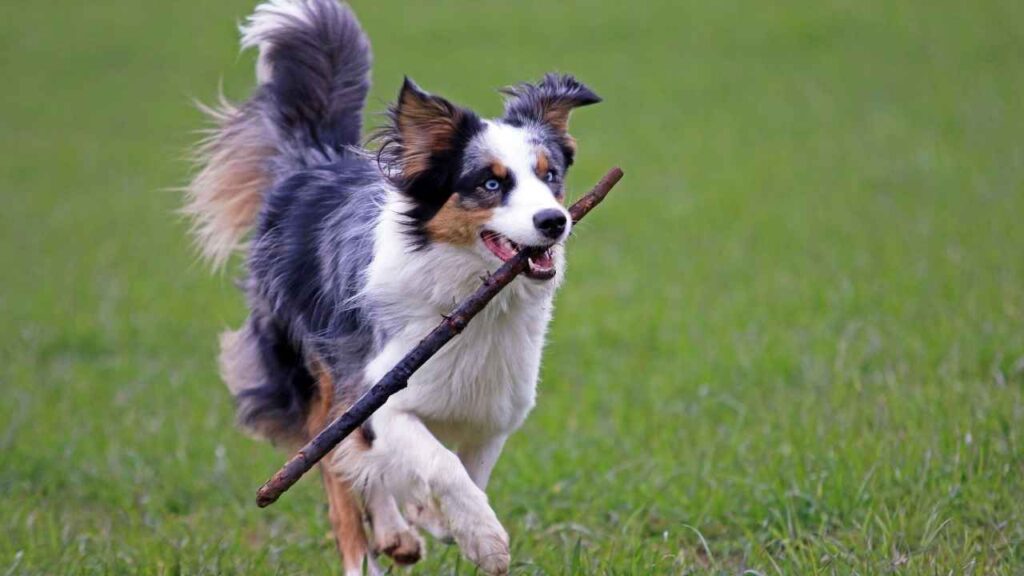
Blue Heelers often have an impressive potential lifespan of 12–16 years. Their generally sturdy working construction doesn’t eliminate hereditary disease risks, particularly conditions affecting hearing, eyesight, and joints.
One remarkable historical example is Bluey, an Australian Cattle Dog that Guinness World Records recorded as living for 29 years and five months before dying in 1939, as mentioned by Pawgen. Although this extraordinary lifespan helped establish the breed’s reputation for longevity, it shouldn’t be treated as a realistic expectation for most Australian Cattle Dogs.
Both breeds can enjoy many years of adventure, but choosing health-tested breeding lines and providing responsible lifelong care matters far more than chasing record-breaking endurance or impressive athletic statistics.
10. Which High-Energy Dog Is Better for You?
Choosing between these two breeds is like deciding whether you want an enthusiastic outdoor teammate or a determined wilderness specialist with a permanent work assignment.
The Shepherd dogs appeal to owners who enjoy cooperative activities, varied training challenges, and a dog that enthusiastically joins family adventures. The Blue Heeler may attract people who appreciate a compact, intensely focused companion with strong independence and a history of demanding cattle work.
For families who enjoy hiking, obedience training, and interactive outdoor activities, the Australian Shepherd can be a particularly rewarding match. Its responsiveness, versatile working background, and generally expressive personality appeal to people who want to communicate frequently with their dogs.
Conclusion
The Australian Shepherd and Blue Heeler are both remarkable working dogs with impressive stamina, sharp intelligence, and enough enthusiasm for outdoor activities to keep even dedicated adventurers busy.
Australian Shepherds shine for their versatility, expressive personalities, and enthusiasm for cooperative activities, while Blue Heelers bring exceptional determination, compact strength, and a deep cattle-working heritage. Their differences make each breed appealing for different reasons, rather than making one the automatic winner in every outdoor challenge.
If you want a dog that enjoys varied activities, interactive training, and frequent family participation, the Australian Shepherd may fit your lifestyle beautifully. If you’re an experienced owner who appreciates a strong-minded, resilient working companion and prefers simpler coat maintenance, the Blue Heeler could be an equally rewarding partner.
