





Not every dog requires hours of exercise, elaborate grooming routines, or constant outdoor adventures to live a happy and fulfilling life. Some breeds are naturally content with moderate activity, simple coat care, and relaxed time with their families. For busy individuals, apartment dwellers, and first-time owners, these dogs can offer companionship without an overwhelming daily routine.
However, low-maintenance does not mean no maintenance. Every dog needs proper nutrition, veterinary care, social interaction, exercise, and consistent training. Some breeds also have specific health concerns that require extra attention, so look beyond appearance and temperament when choosing a companion.
From relaxed sighthounds to affectionate household favorites, these seven breeds suit owners seeking a manageable daily routine. Understanding their individual needs can help you find a dog that fits your home, schedule, and lifestyle.
Low-Maintenance Dog Breeds That Thrive With Less Effort
1. French Bulldog

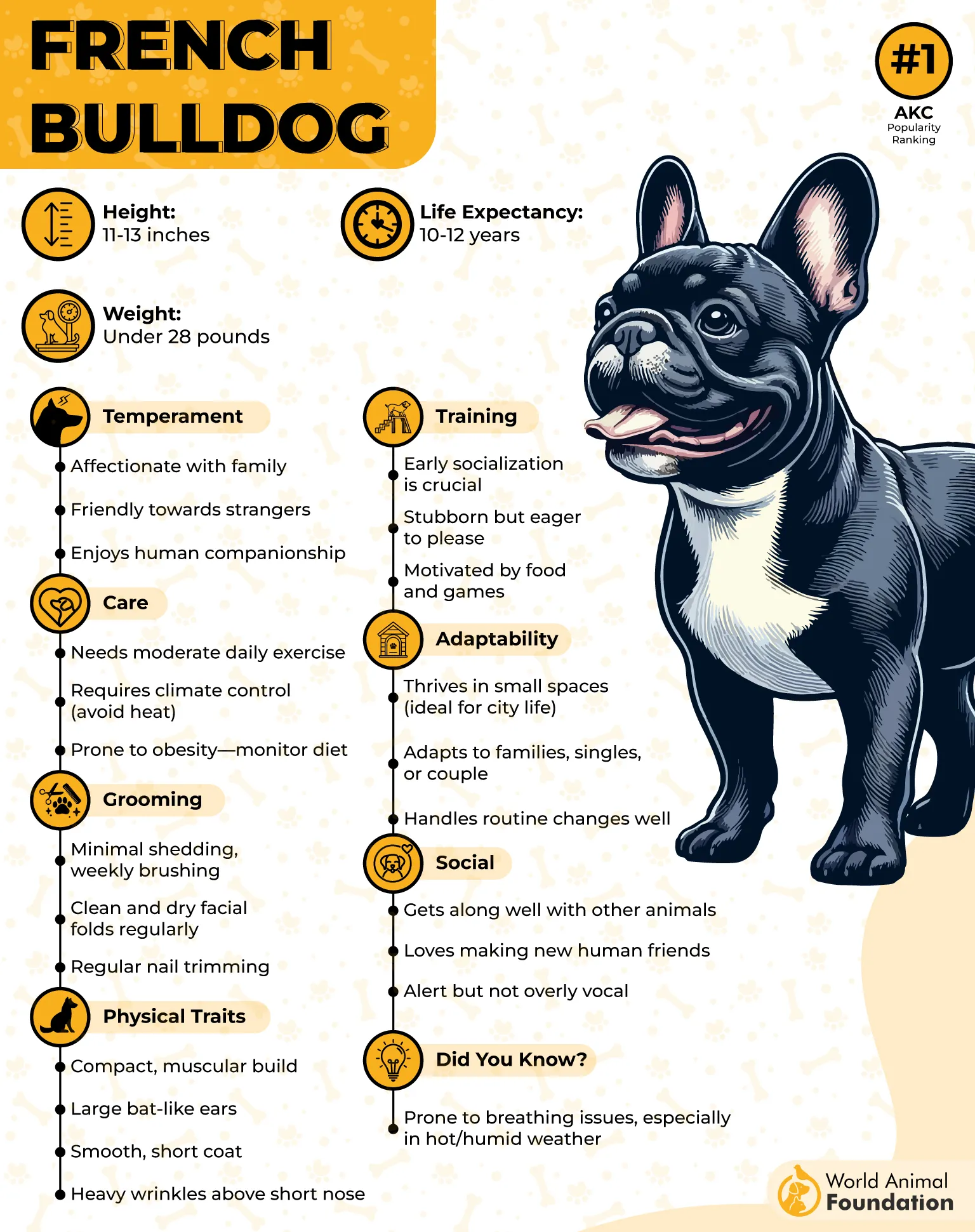
French Bulldogs are affectionate, compact companions that generally enjoy a relaxed lifestyle. Their short coats require relatively little grooming, and their exercise needs are usually moderate compared with those of high-energy working breeds. These playful dogs often enjoy short walks, indoor games, and plenty of time relaxing beside their favorite people.
A Compact Companion With an Easygoing Nature
The French Bulldog developed in France during the 19th century, drawing on small bulldog-type dogs associated with lace workers who migrated from England. Its distinctive bat-shaped ears, muscular body, and affectionate temperament helped establish its popularity as a companion. Today, the breed is especially appreciated for its adaptability to indoor living.
Simple Grooming With Important Health Considerations
A French Bulldog’s short coat usually needs only occasional brushing and routine bathing. Its facial folds should be cleaned and dried carefully, while its nails, ears, and teeth require regular attention. Because its flat face can interfere with breathing and temperature regulation, strenuous exercise and hot weather should be avoided, and responsible veterinary care is essential.
2. Boston Terrier
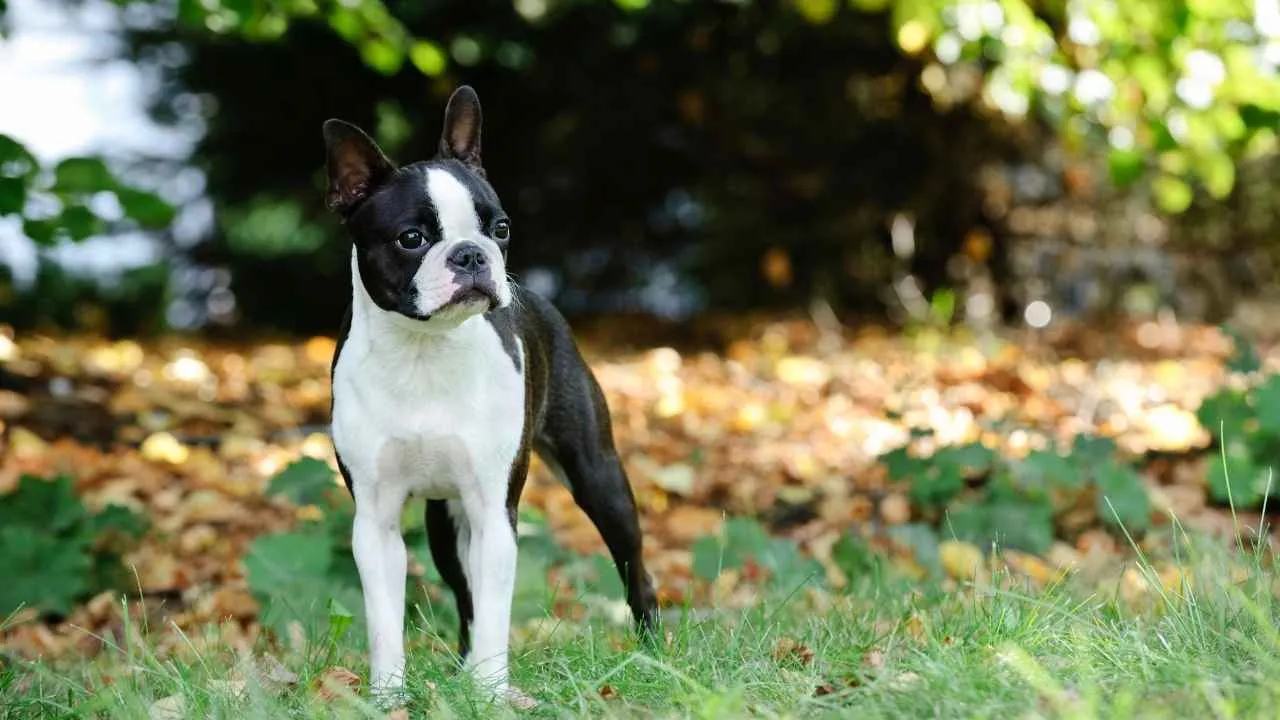
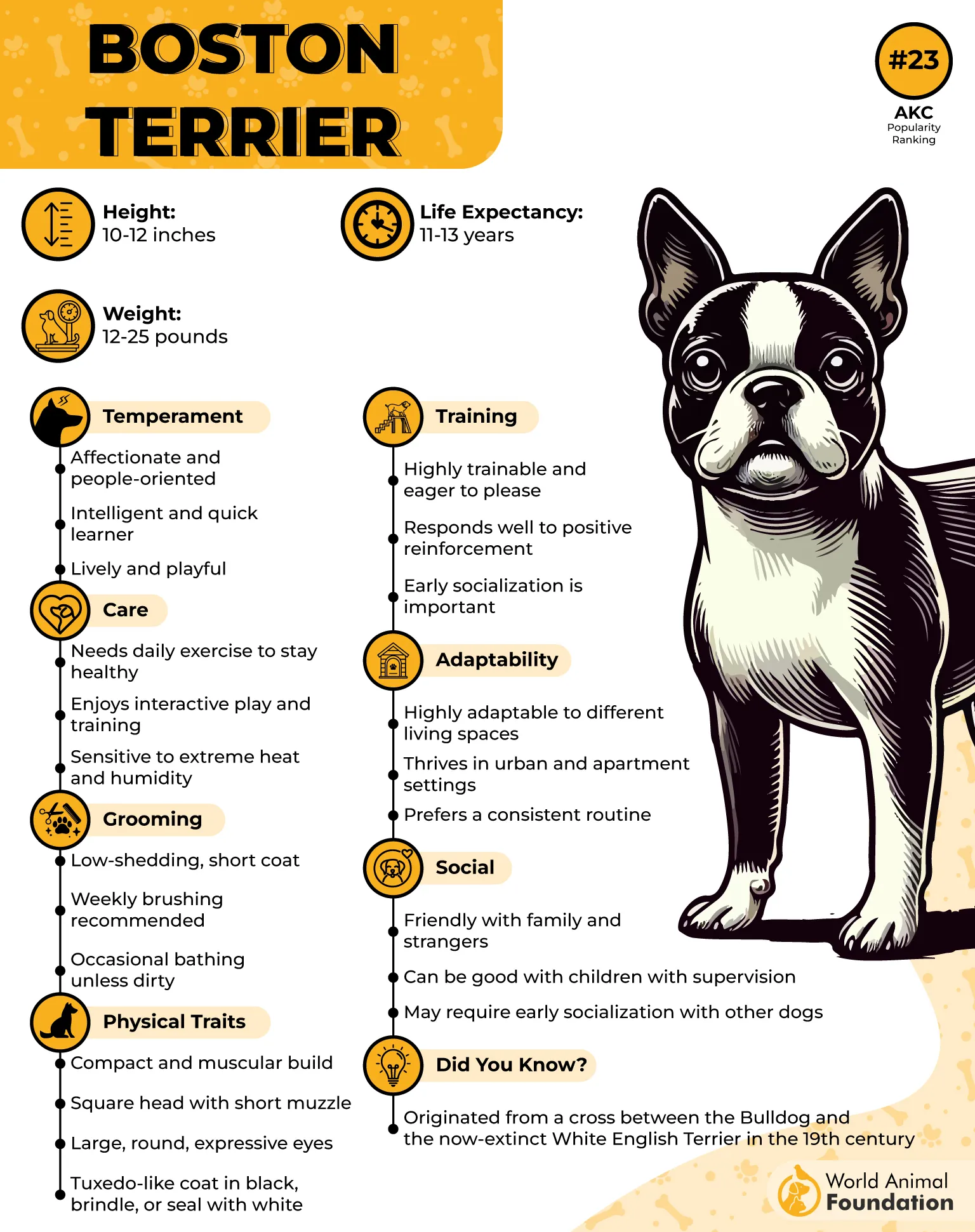
Boston Terriers are friendly, intelligent dogs with compact bodies and short coats that are easy to maintain. They generally enjoy moderate exercise, interactive play, and spending time with their families. Their adaptable personalities can make them suitable for apartments and smaller homes, provided they receive daily activity and opportunities for social interaction.
An American Breed With a Friendly Personality
The Boston Terrier originated in the United States during the late 19th century and became known for its distinctive tuxedo-like markings. Early breeding combined bulldog-type dogs with terriers, eventually producing a smaller companion with an alert expression and sociable temperament. Its manageable size and short coat have helped make it a popular household dog.
Keeping Daily Care Straightforward
Boston Terriers usually need only occasional brushing, routine nail trimming, and regular dental care. Short walks and indoor games can help meet their exercise needs without requiring lengthy outdoor adventures. Like other flat-faced breeds, they can experience breathing difficulties and heat sensitivity, so owners should monitor their comfort during activity and warm weather.
3. Pug
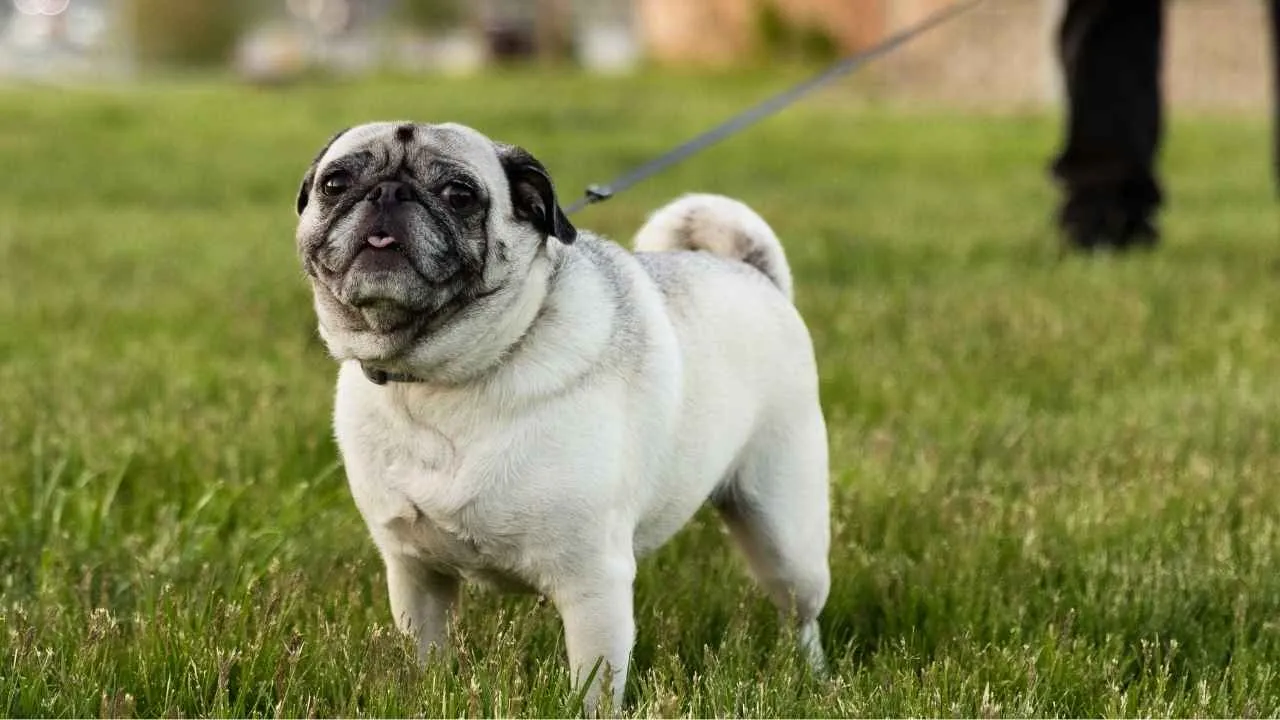
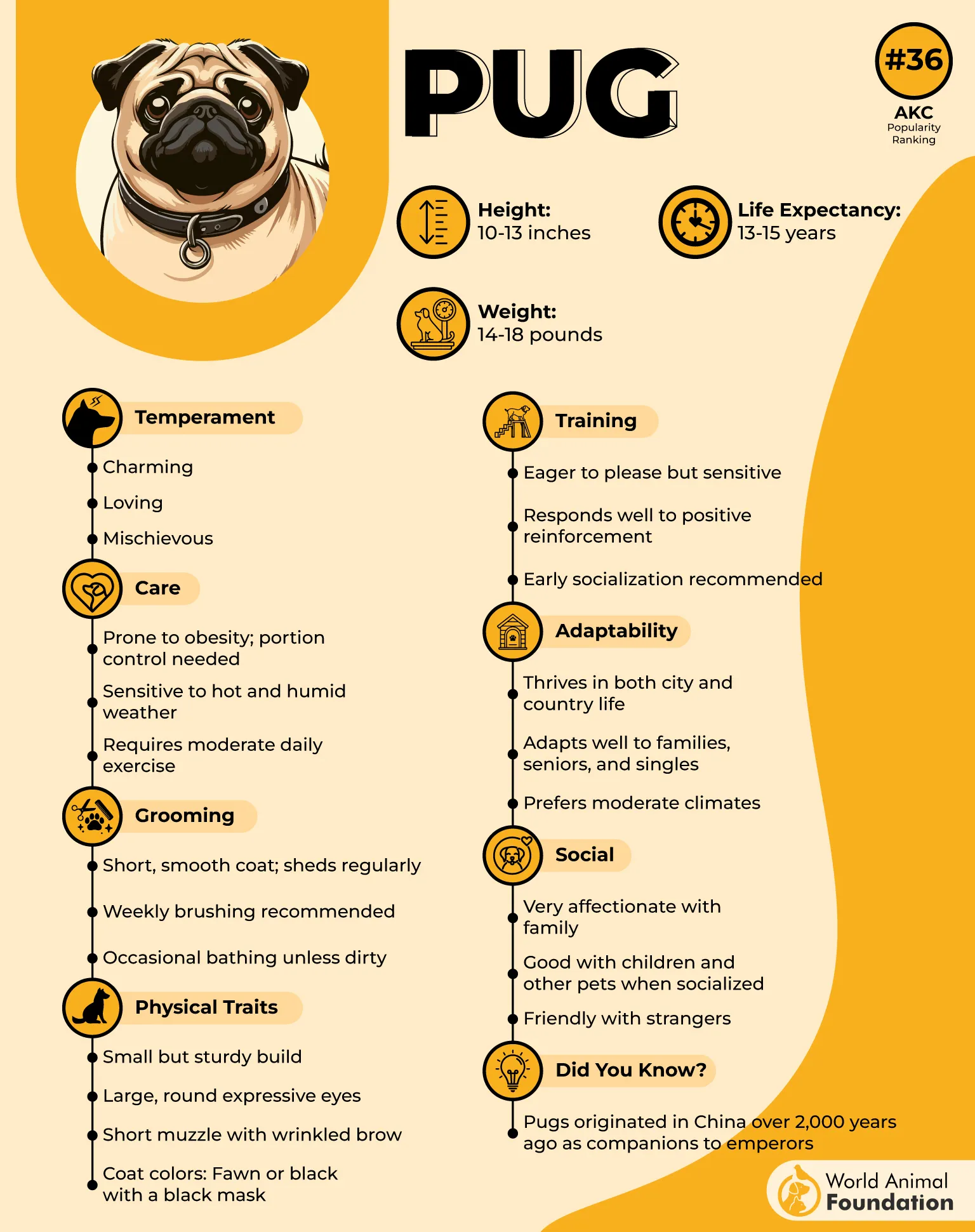
Pugs are sociable, affectionate dogs that often prefer being close to their families rather than engaging in demanding physical activities. Their short coats are relatively easy to care for, and their exercise needs can usually be met through gentle walks and indoor play. Their amusing expressions and charming personalities make them popular companions for relaxed households.
A Historic Companion With a Playful Spirit
The Pug has a long history as a companion dog, with origins tracing back to ancient China, where small, short-faced dogs were valued by wealthy households. The breed later spread to Europe and gained popularity among royal families and other prominent owners. Its compact build, curled tail, and expressive face remain defining characteristics.

Low Grooming Needs and a Comfortable Routine
Pugs benefit from occasional brushing, regular nail care, and careful cleaning of their facial folds. Their short muzzles can make breathing and cooling the body more difficult, so they need particular care in warm weather. Maintaining a healthy weight is also important because excess weight can worsen breathing and joint problems.
4. Whippet
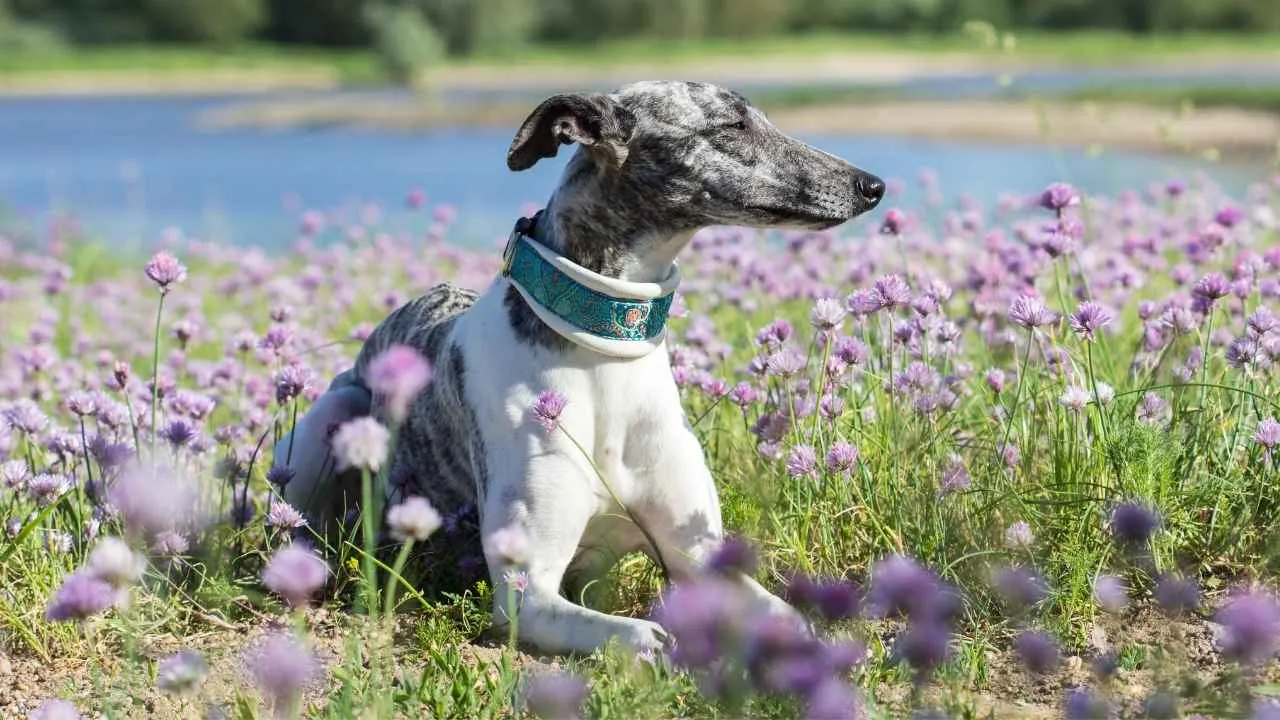
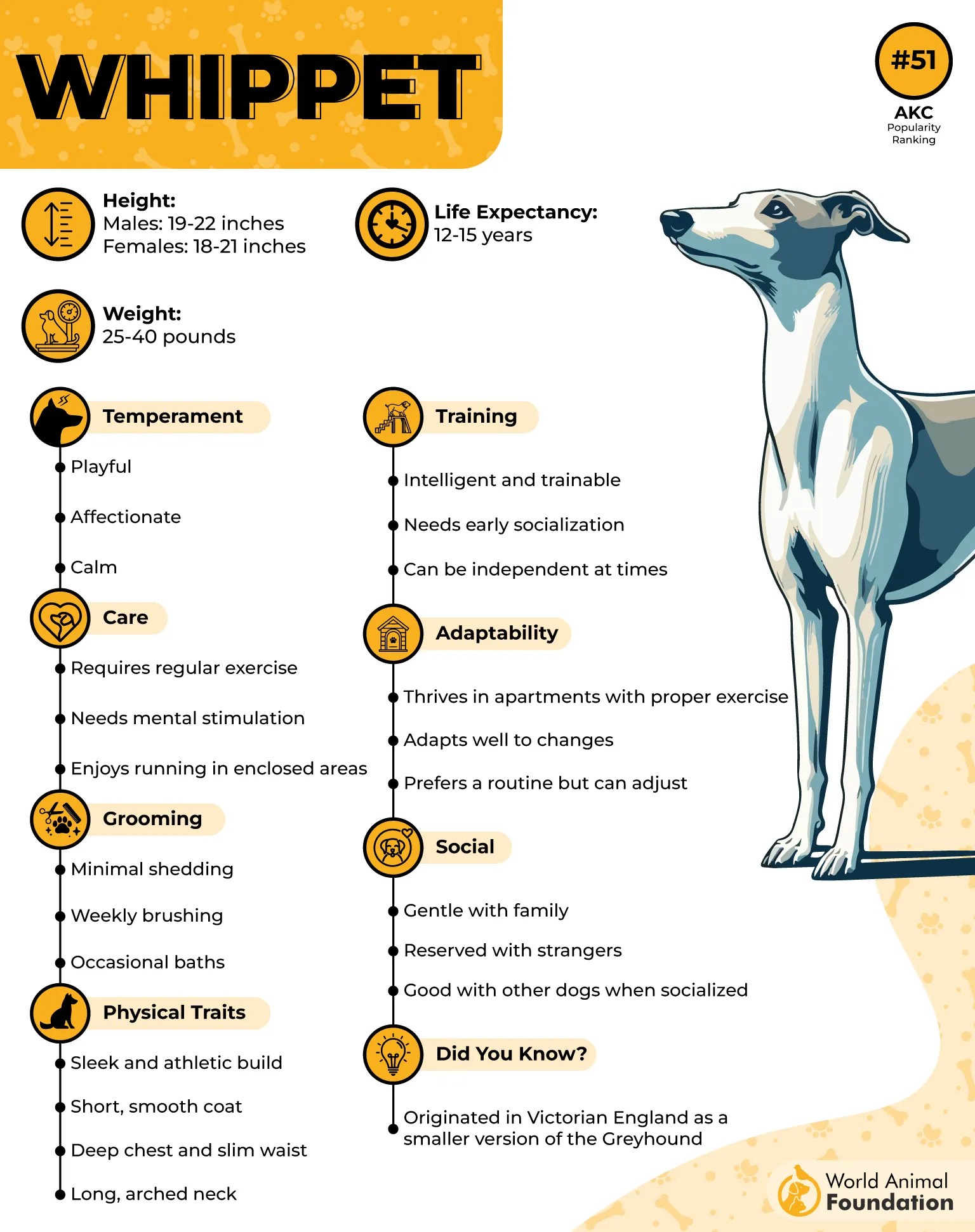
Whippets are gentle, relatively quiet dogs that often enjoy a balance of brief bursts of exercise and extended periods of relaxation. Their short, fine coats require minimal grooming, and many are content to spend much of the day resting indoors. Although athletic and capable of impressive speed, they typically appreciate a comfortable home environment.
A Racing Heritage With a Gentle Temperament
The Whippet developed in Britain, where smaller sighthounds were bred for hunting rabbits and later became popular in racing and other sporting activities. Its lean body, deep chest, and flexible build support rapid acceleration. Despite these athletic abilities, Whippets are often affectionate companions that enjoy close contact with their families.
Minimal Coat Care and Balanced Exercise
Whippets generally need little more than occasional brushing and routine grooming care. Daily walks and opportunities for safe, supervised running help maintain their physical condition, while a securely fenced area protects their strong chasing instincts. Their thin coats provide limited insulation, so warm bedding and suitable clothing may be helpful in cold weather.
5. Greyhound

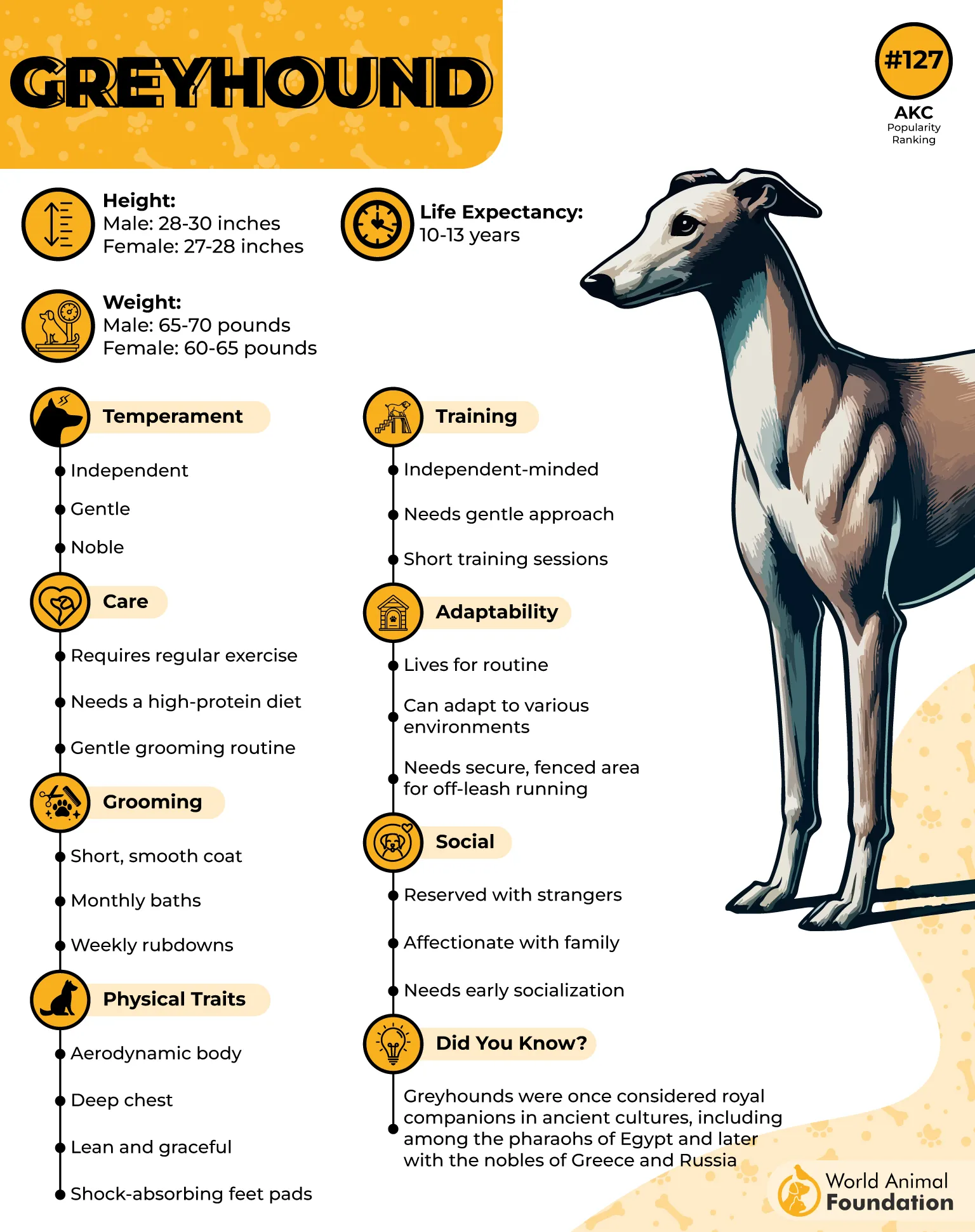
Greyhounds are often surprisingly relaxed companions despite their reputation for speed. Many enjoy short walks, occasional opportunities to run safely, and long stretches of quiet rest at home. Their short coats are easy to maintain, and their generally calm indoor behavior can make them suitable for owners who prefer a less demanding daily exercise routine, as per the AKC.
An Ancient Sighthound With an Athletic Build
Greyhounds belong to one of the oldest recognized types of sighthounds, historically bred to pursue game by sight and speed. Over generations, they became associated with coursing and organized racing. Their long legs, streamlined bodies, and deep chests make them exceptionally fast, while many individuals display a gentle and reserved temperament at home.
Relaxed Living With Essential Daily Activity
Greyhounds usually require only occasional brushing, routine nail trimming, and regular dental care. Daily walks and safe opportunities to stretch their legs help keep them healthy, although exercise requirements vary by age and individual condition. Because many have strong prey drives, secure outdoor areas and careful leash handling are especially important.
6. Dachshund

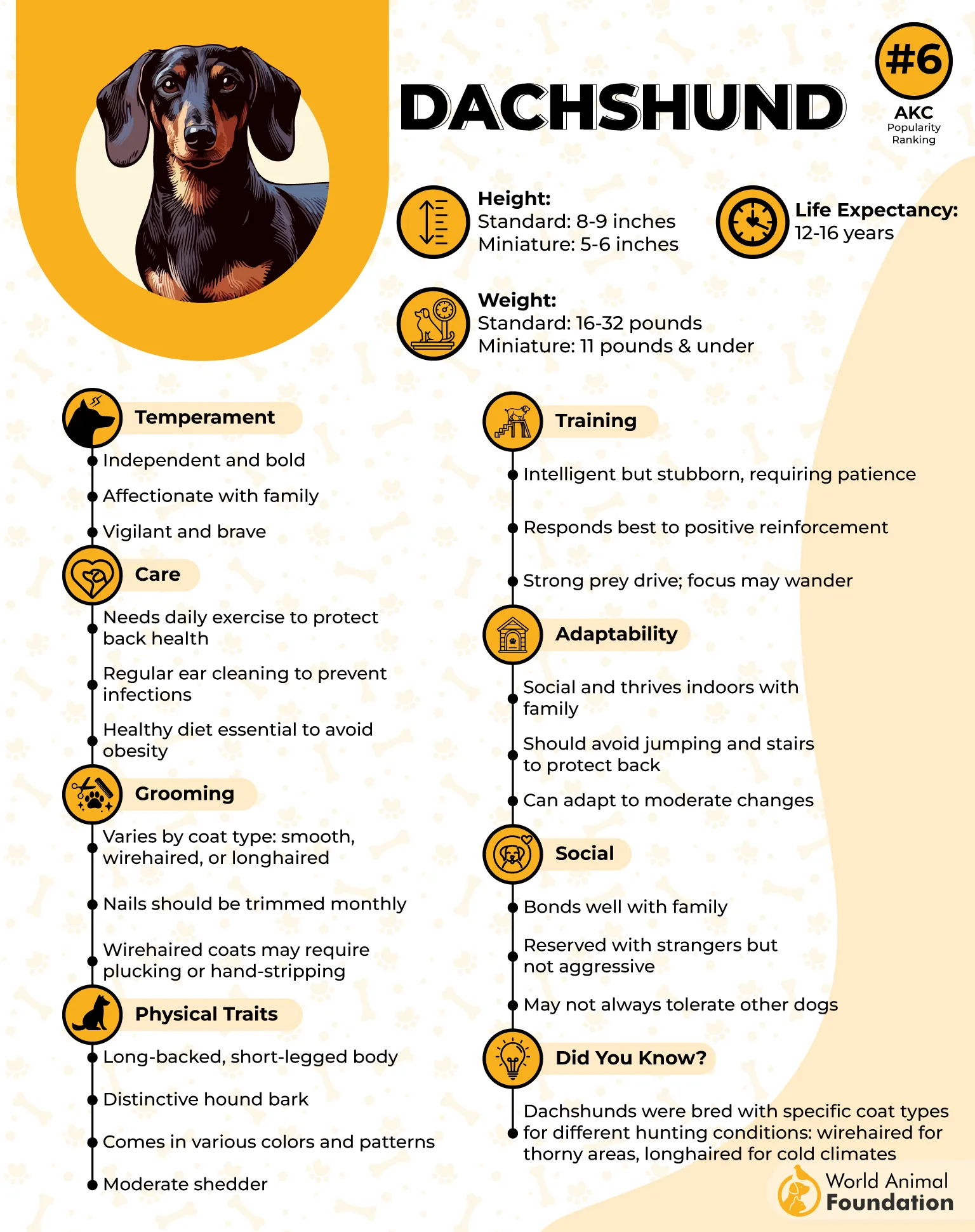
Dachshunds are lively, affectionate dogs that can adapt well to different home environments when their needs are understood. Smooth-coated varieties require relatively little grooming, while longhaired and wirehaired varieties need more coat maintenance.
Their exercise requirements are generally manageable, with daily walks and interactive games providing useful physical and mental stimulation.
A German Hunting Dog With a Distinctive Shape
The Dachshund originated in Germany, where it was developed to hunt badgers and other animals in underground burrows, as per Britannica. Its elongated body, short legs, and determined personality reflect this working heritage. The breed comes in different sizes and coat types, offering prospective owners several options with varying grooming requirements.
Easy Coat Care With Attention to Back Health
Smooth-coated Dachshunds are particularly easy to groom, usually needing occasional brushing and routine bathing. Daily walks and gentle play help maintain a healthy weight, but jumping from furniture and repeatedly climbing stairs should be limited because their long backs are vulnerable to injury. Consistent training also helps manage their independent, sometimes stubborn temperament.
7. Cavalier King Charles Spaniel
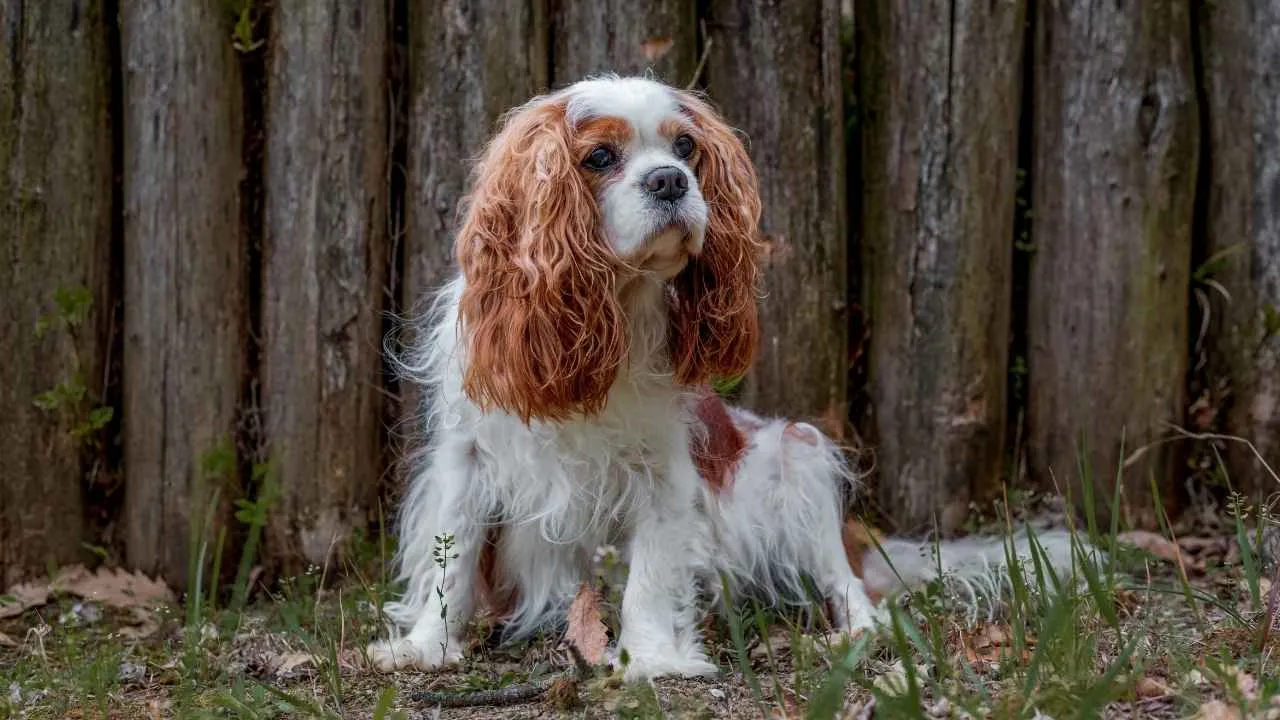
Cavalier King Charles Spaniels are affectionate, adaptable companions that often enjoy both gentle activity and quiet time with their families, as per Hill’s Pet. Their moderate exercise needs can usually be met through daily walks and play, making them suitable for many households.
Their friendly temperament and willingness to interact with people contribute to their reputation as devoted companion dogs.
A Royal Companion With a Gentle Disposition
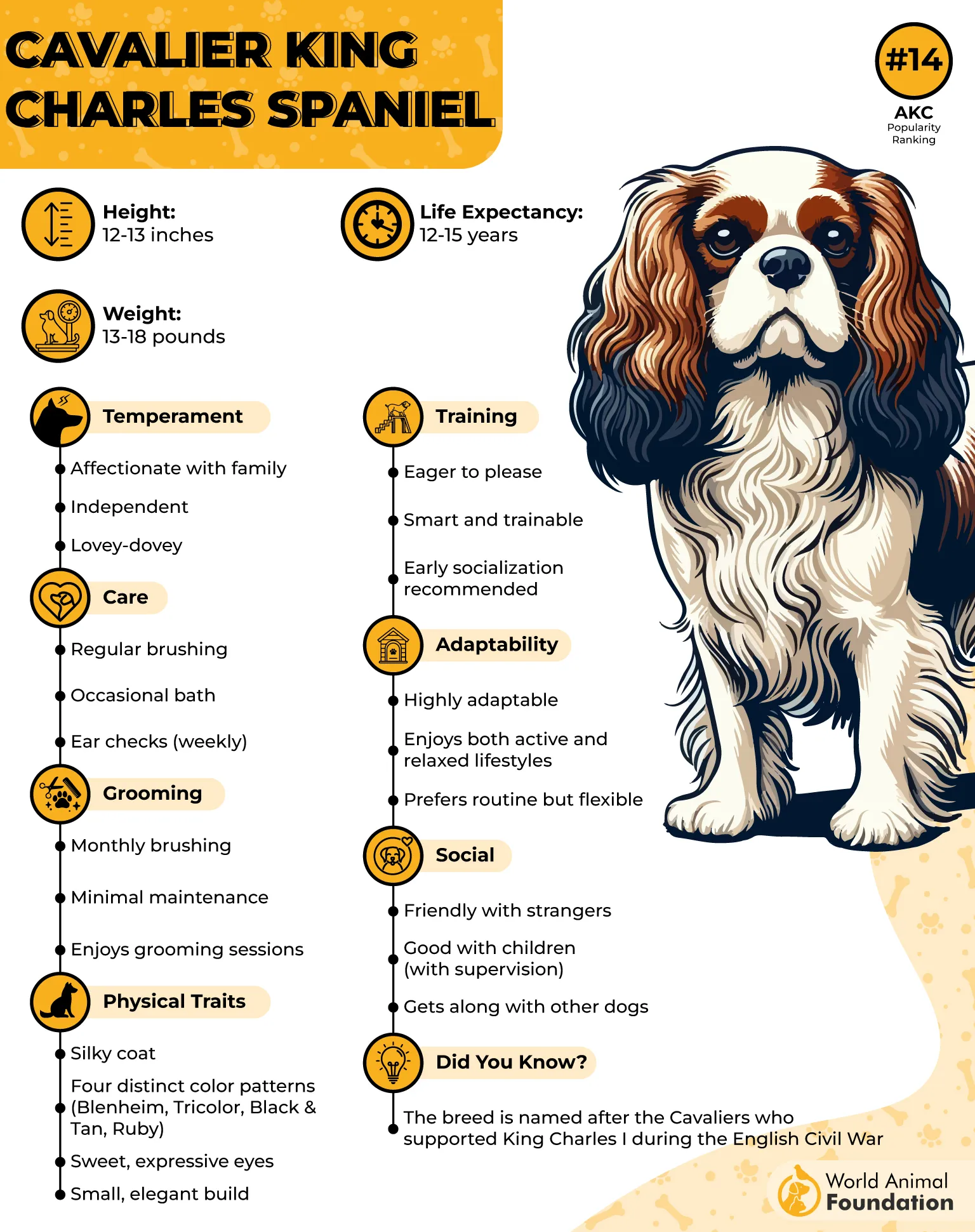
The Cavalier King Charles Spaniel developed in Britain from small companion spaniels associated with royal and aristocratic households. The breed became known for its expressive eyes, silky ears, and affectionate personality. Its history as a close human companion continues to influence its preference for social interaction and family involvement.
Manageable Exercise With Regular Coat Care
Cavaliers generally need daily walks, opportunities for play, and consistent companionship. Their silky coats require brushing several times a week to prevent tangles, particularly around the ears, chest, and legs.
Prospective owners should also understand that the breed has increased risks of certain heart conditions and other inherited health problems, making responsible breeding and regular veterinary checkups important.
Conclusion
French Bulldogs, Boston Terriers, Pugs, Whippets, Greyhounds, Dachshunds, and Cavalier King Charles Spaniels can all suit owners looking for companions with relatively manageable daily needs. Their grooming requirements, exercise preferences, and temperaments differ, but each can thrive in a home that provides appropriate care and a consistent routine.
Still, the easiest dog to maintain depends on more than coat length or activity level. Health concerns, training needs, companionship requirements, and individual personality all influence the time and effort involved in responsible ownership. Some breeds with simple grooming routines may require more veterinary attention than others.
Before choosing a dog, consider your schedule, living environment, budget, and ability to provide regular care. With suitable exercise, preventive veterinary visits, balanced nutrition, and plenty of affection, a relatively low-maintenance breed can become a happy and rewarding companion without making everyday life unnecessarily complicated.
