




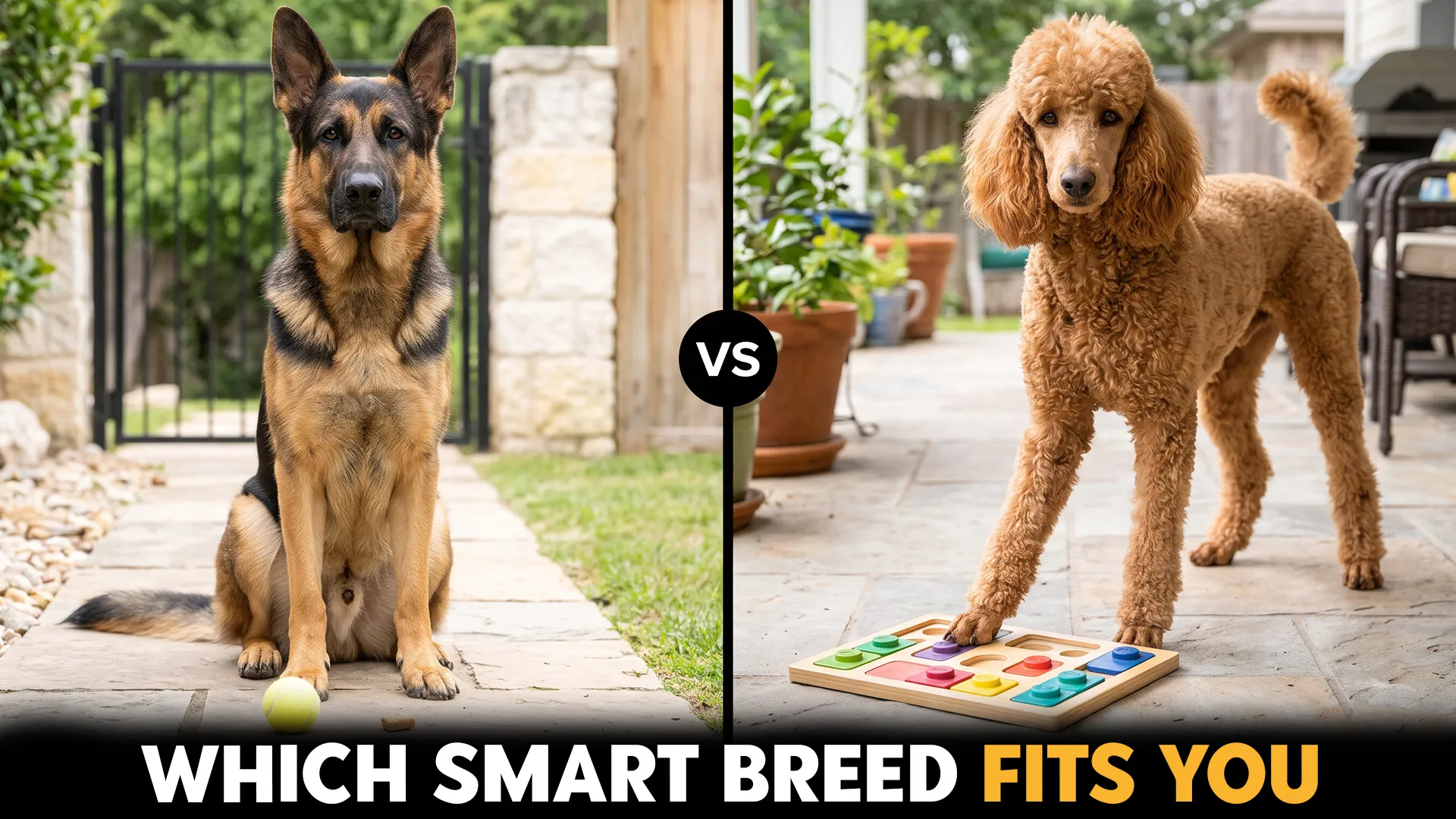
Put a German Shepherd beside a Standard Poodle, and the first impression is basically “serious security professional meets stylish overachiever.” One looks born to patrol a property, while the other could walk out of a grooming salon and immediately crush an agility course. The plot twist is that both are exceptionally intelligent working breeds with way more depth than their stereotypes suggest.
The German Shepherd Dog was built around herding, protection, versatility, and close cooperation with people. The Poodle, despite its fancy reputation, developed as a water retriever and still carries strong retrieving instincts, athletic ability, and a love of swimming.
A German Shepherd often feels serious, vigilant, task-driven, and constantly tuned into what is happening around the home. At the same time, a Poodle tends to bring a more playful, socially flexible vibe. At the same time, a problem-solving vibe.
Choosing between them, then, comes down to more than asking which one is smarter. Let’s break down their origins, size, temperament, training, grooming, outdoor ability, health, and lifestyle requirements so you can see where these two canine brainiacs seriously diverge.
German Shepherd vs. Poodle: Which Smart Dog Breed Is Right for You?
Origins & Purpose
The German Shepherd Dog traces its modern development to Germany, where breeders wanted an exceptionally capable herding and working dog. Historically, German Shepherds managed enormous flocks by acting like moving fences, maintaining boundaries while covering large areas efficiently.
That working foundation eventually expanded far beyond sheep. The breed became associated with police work, military service, search operations, protection, assistance work, tracking, and competitive dog sports because it combines athleticism, trainability, courage, and focus on its handler.
Despite its strong cultural association with France, this service dog has deep roots as a water-retrieving dog, and its traditional coat clips were connected with practical water work rather than pure fashion.
A working Poodle needed to enter water, locate fallen birds, swim efficiently, retrieve them, and bring them back to the hunter. That retrieving heritage is still visible in modern Poodles that love swimming, fetching, scent work, and performance sports.
Size & Build
German Shepherds are substantial dogs with the body structure to match serious work. The AKC figures place adult males around 24–26 inches tall and 65–90 pounds, while females typically stand 22–24 inches and weigh about 50–70 pounds.
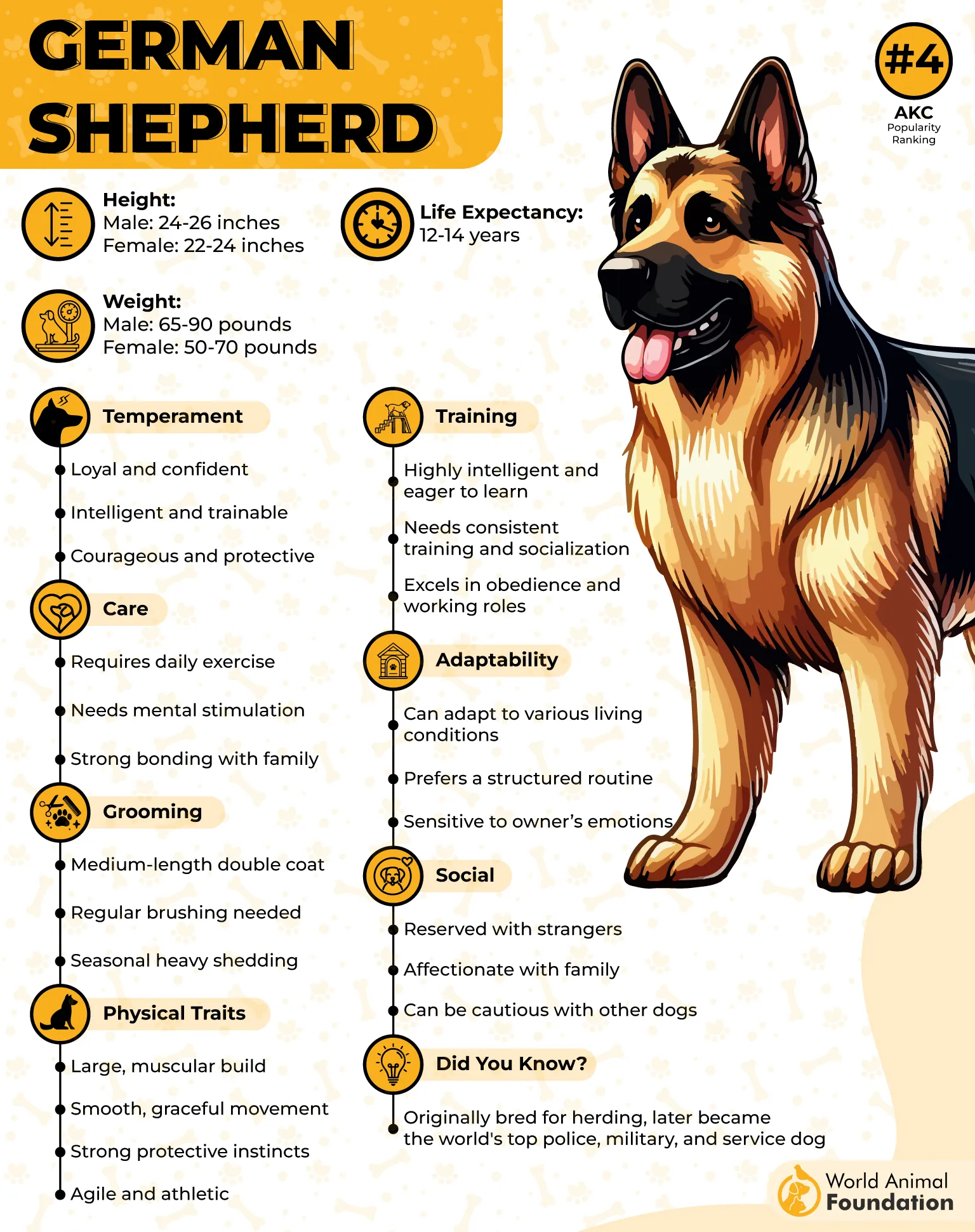
Their bodies are muscular, elongated, powerful, and designed around an efficient ground-covering trot. Historically, that movement mattered because a herding dog might spend hours traveling around livestock without burning through energy like it had accidentally selected sprint mode.
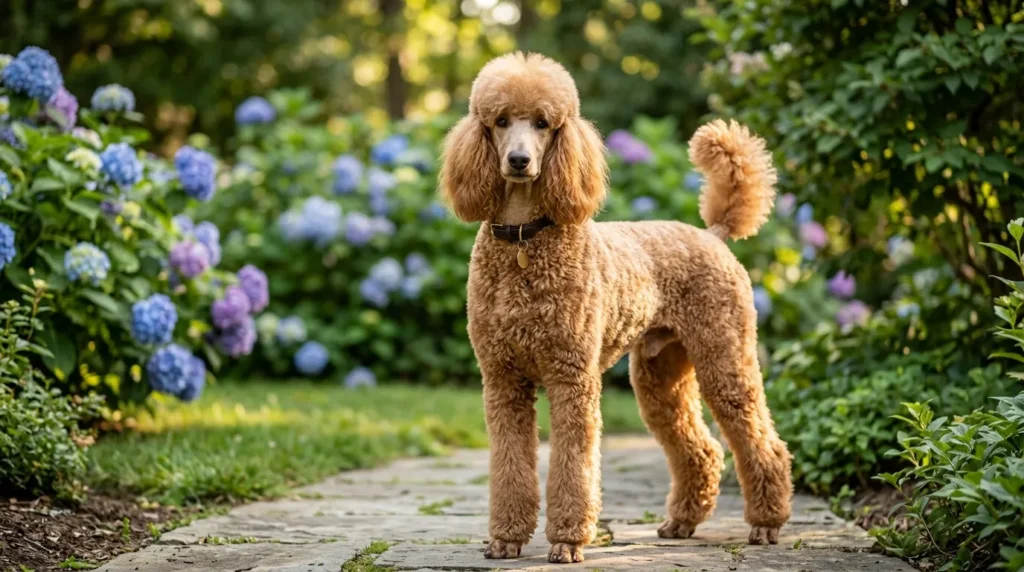
Standard Poodles are also genuine athletes, just packaged differently. The breed standard requires Standards to stand over 15 inches at the shoulder, and Purina commonly places them around 40–70 pounds depending on sex and individual build.
Their build is more square than the German Shepherd’s, with long legs, a lighter-looking outline, and an elegant carriage that can seriously hide how athletic they are. Under all those curls is a smoothly muscled dog built to move, swim, jump, retrieve, and perform rather than simply stand around looking expensive.
Pricing & Availability
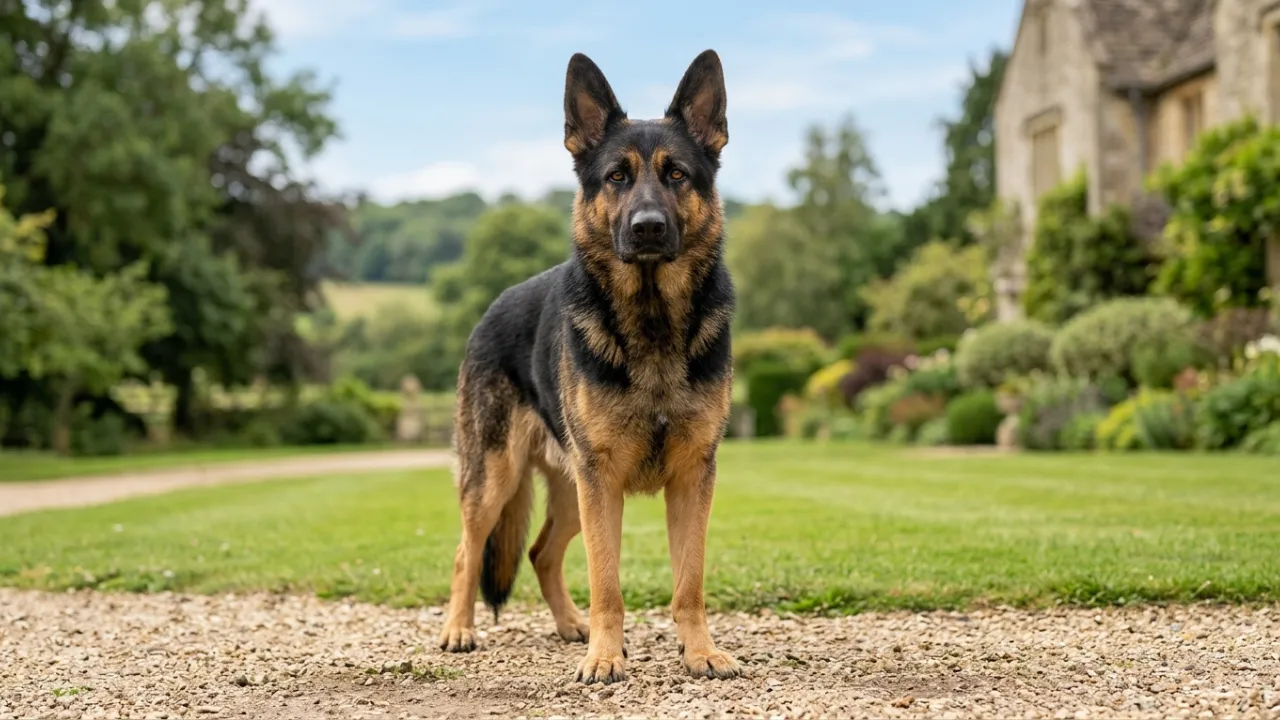
German Shepherds are widely available because the breed is globally popular and highly recognizable. That availability is a double-edged sword, though, because more breeders also mean enormous variation in temperament, orthopedic health, structure, working drive, and breeding quality.
A responsible German Shepherd breeder should be able to show meaningful health information rather than waving around a generic “vet checked” statement. The German Shepherd Dog Club of America emphasizes hip and elbow testing, temperament evaluation, and additional health testing.
Standard Poodles are also widely bred, but finding one from carefully health-tested lines still requires homework. Poodle Club of America recommendations for Standards include hip evaluation, eye examination, thyroid testing, and DNA testing for conditions including neonatal encephalopathy with seizures and von Willebrand disease type I.
Temperament & Personality
German Shepherds approach the world with a certain amount of seriousness. Their breed character emphasizes confidence, courage, steadiness, loyalty, and attentiveness, and they are commonly more reserved with strangers than socially exuberant breeds.
That reserve doesn’t mean uncontrolled aggression. A well-bred, well-socialized German Shepherd should be able to observe unfamiliar people without turning every Amazon delivery into the final battle scene of an action movie.
Family attachment can be extremely strong. It is known as a “one-man” dog because some individuals form especially intense bonds with a primary handler. However, well-adjusted family dogs can obviously bond closely with multiple people.
Toy poodles generally have a lighter, more openly social personality. They are intelligent, people-oriented, adaptable, energetic, and often friendly with strangers, particularly when properly socialized from puppyhood.
Exercise Needs & Energy Levels
Both breeds need real exercise and mental stimulation, so anyone searching for a brilliant dog that happily spends fourteen hours becoming one with the sofa may want to rethink the assignment. German Shepherds are active, athletic dogs that require substantial physical movement and mental work to remain balanced.
Walking alone may not satisfy many Shepherds. Tracking, obedience drills, scent games, hiking, agility, controlled retrieving, herding activities, and structured play provide the kind of combination workout that actually engages both body and brain.
Poodles are equally capable of exposing someone who bought them primarily because they looked elegant. They are active dogs that enjoy swimming, retrieving, running, long walks, and dog sports, and they need daily exercise to suit their high energy levels.
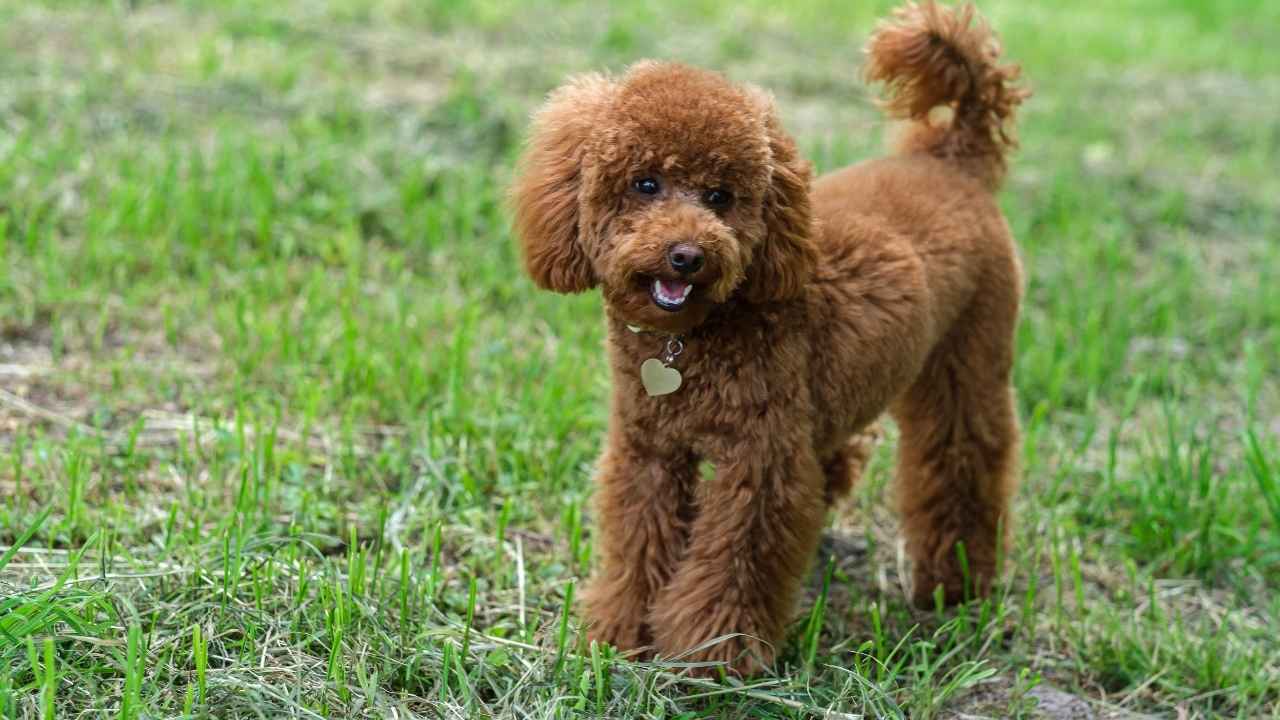
The difference is often style rather than whether exercise is necessary. German Shepherds commonly thrive on purposeful, structured jobs, while Poodles frequently enjoy mixing athletic activity with games, retrieval, training challenges, swimming, and social interaction.
Training & Obedience
Training is where both breeds start flexing their impressive canine intelligence. German Shepherds became famous working dogs partly because they can learn complicated routines, retain training, work closely with handlers, and transfer those skills into very different jobs.
Early socialization is especially important for a Shepherd because it is one of the smartest breeds out there, and its natural vigilance can become difficult if the dog grows up without learning how to distinguish normal life from genuine threats.
Poodles are also famously fast learners. These fun-loving dogs are attentive, eager to please, adaptable, and generally respond well to positive, consistent training. At the same time, their athleticism lets them excel in an enormous variety of canine sports.
The difference becomes noticeable in personality during learning. A Shepherd may approach obedience like a professional assignment, whereas a Poodle often brings more visible playfulness and creativity. In contrast, a Poodle may be adorable right up until the dog discovers three alternative interpretations of a command you thought was extremely clear.
Grooming Needs & Shedding
Here is where these breeds basically swap difficulty settings. German Shepherds have a dense double coat that is relatively straightforward to maintain, but the amount of loose hair can be impressive enough to make you. Still, the cleaner question is its career choices.
Brushing regularly is recommended. Once or twice a year, however, German Shepherds shed much more heavily, so you’ll usually need to brush more often unless you are actively trying to create a second dog from the fur collected around your home.
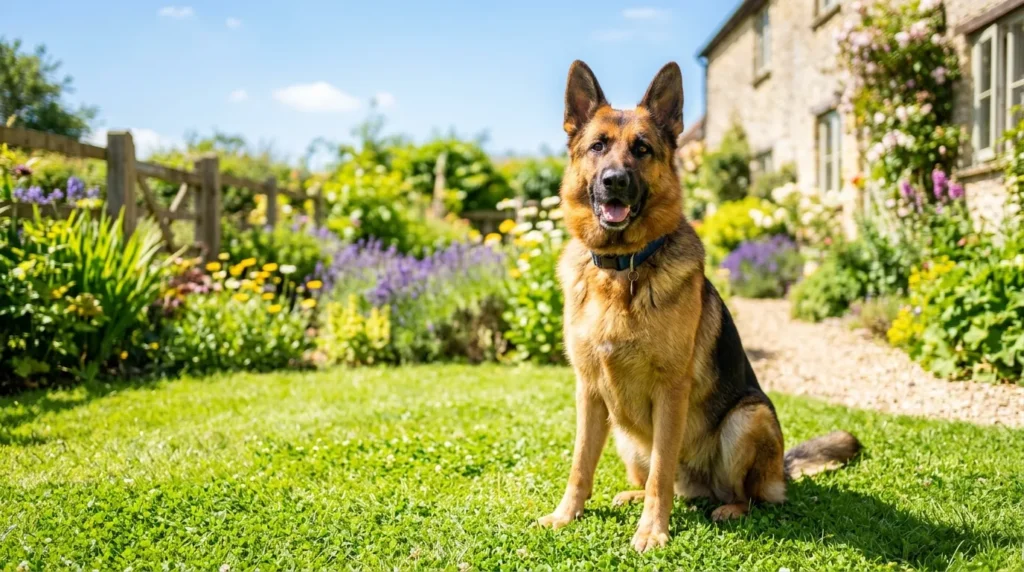
They generally do not need complicated haircuts or frequent professional coat styling. Occasional baths, nail trims, ear checks, dental care, and regular brushing cover the basics, making grooming relatively simple despite all that shedding.
Poodles flip this equation almost perfectly. Their curly coat sheds minimally, but continuously growing hair can mat close to the skin and needs consistent brushing plus regular clipping.
Many Poodle owners keep a short, practical trim and schedule professional grooming about every four to six weeks. So your choice is basically more loose hair but simpler grooming with the Shepherd, or less shedding but significantly more coat maintenance with the Poodle.
Outdoor Adventure & Exploration
German Shepherds are outstanding adventure partners for owners who are appropriately prepared. Their athletic build, endurance, trainability, and working background suit hiking, tracking, trail exploration, obedience outdoors, and a broad range of sports.
Their efficient movement historically allowed them to cover substantial ground while conserving energy. That translates nicely into longer adventures once an adult dog’s fitness has been built gradually and veterinary considerations are taken into account.
Poodles are wildly underrated adventure dogs. Their retrieving history produced animals comfortable around water, and they commonly enjoy swimming, jogging, long walks, fetching, and dog sports.
Health & Lifespan
German Shepherds typically live about 12–14 years, says Pooch And Mutt. Hip dysplasia, elbow dysplasia, degenerative myelopathy, and bloat are among the health concerns prospective owners should understand.
Orthopedic screening is particularly important because this is a large athletic dog whose hips and elbows affect virtually everything it does. Hip and elbow evaluations are a MUST.
Bloat deserves special attention because gastric dilatation-volvulus can become rapidly life-threatening. Owners of deep-chested breeds should discuss risk factors, warning signs, and preventive options with their veterinarian rather than researching the problem for the first time during an emergency.
Poodles have a broad expected lifespan of roughly 10–18 years, although lifespan varies by size variety and individual health. Standard Poodles have their own concerns, including hip problems, eye disease, thyroid issues, certain inherited bleeding disorders, and other conditions addressed through breed-specific testing.
Which Loyal Companion Suits You Best?
The German Shepherd makes sense for someone who genuinely wants the lifestyle that comes with a serious working breed. That means structured training, substantial daily exercise, careful socialization, ongoing mental work, tolerance for shedding, and comfort managing a large, powerful dog that may be naturally reserved around unfamiliar people.
A Standard Poodle offers a different package: extreme trainability, athletic ability, lower shedding, retrieving instinct, sociability, and more size-efficient elegance. You trade German Shepherd hair tumbleweeds for a real grooming commitment, because those curls don’t maintain themselves no matter how expensive they look.
Conclusion
German Shepherds and Standard Poodles are a perfect example of two breeds reaching exceptional intelligence through very different working histories. One developed around livestock management, versatility, vigilance, and later service roles, while the other emerged from water retrieval and carried that athletic problem-solving ability into countless modern activities.
Don’t choose either simply because they regularly appear in conversations about intelligent dogs. Intelligence means these breeds learn good habits quickly, but it also means they can become creative, frustrated, or difficult when you ignore their physical and mental needs.
