




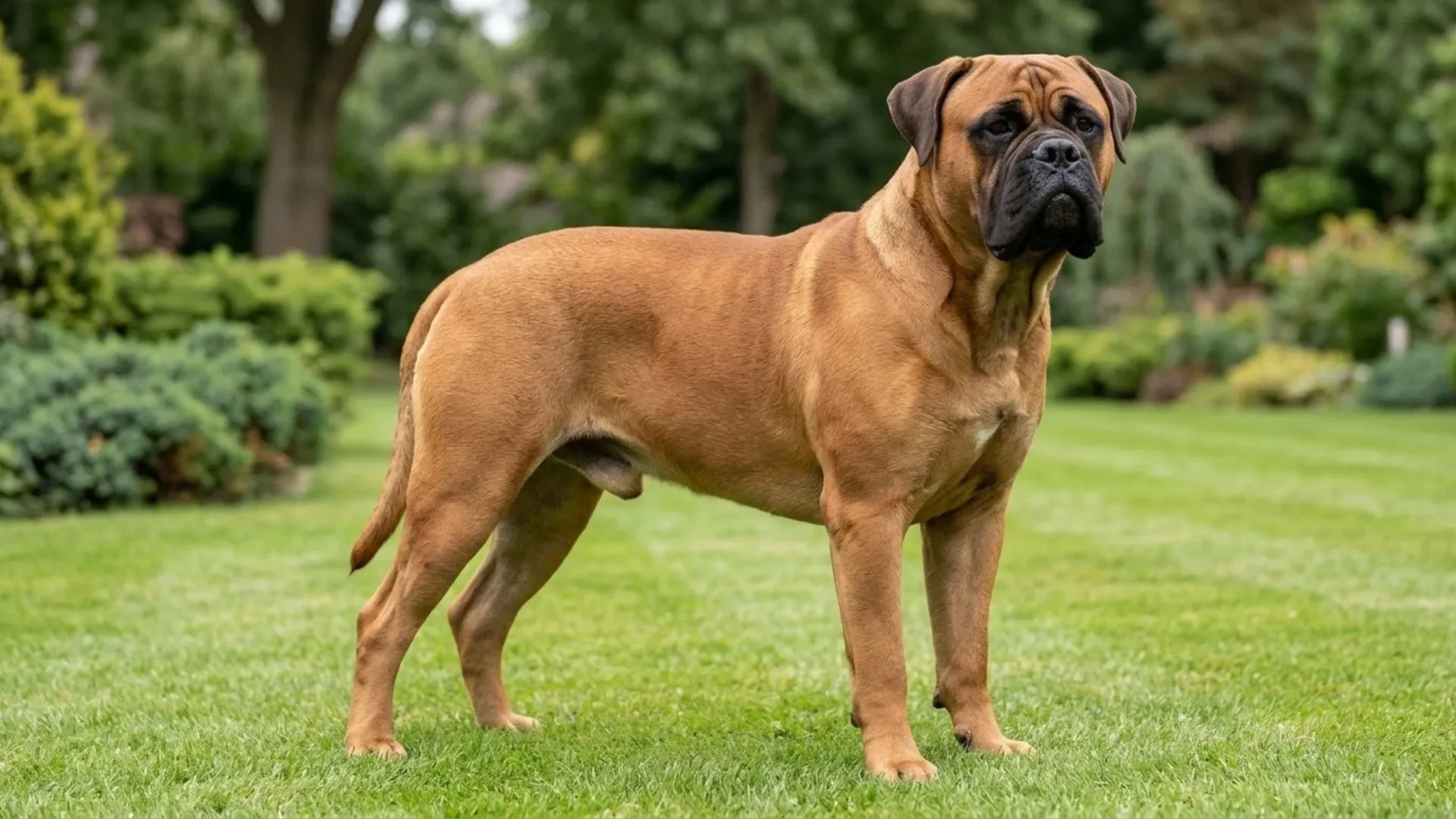
Large dogs have a distinctive appeal, from their commanding presence to their loyal companionship. Those with short, glossy coats offer an especially sleek appearance, showcasing their athletic builds without the extensive brushing often associated with longer fur.
Although short-coated breeds may need low maintenance, they still require regular care and can shed more than expected. Their temperaments, exercise needs, and suitability for different households also vary widely.
Explore these large dog breeds with beautiful, sleek coats and discover the unique qualities that make each one stand out.
Large Dog Breeds with Beautiful, Short, Sleek Coats
1. Boerboel
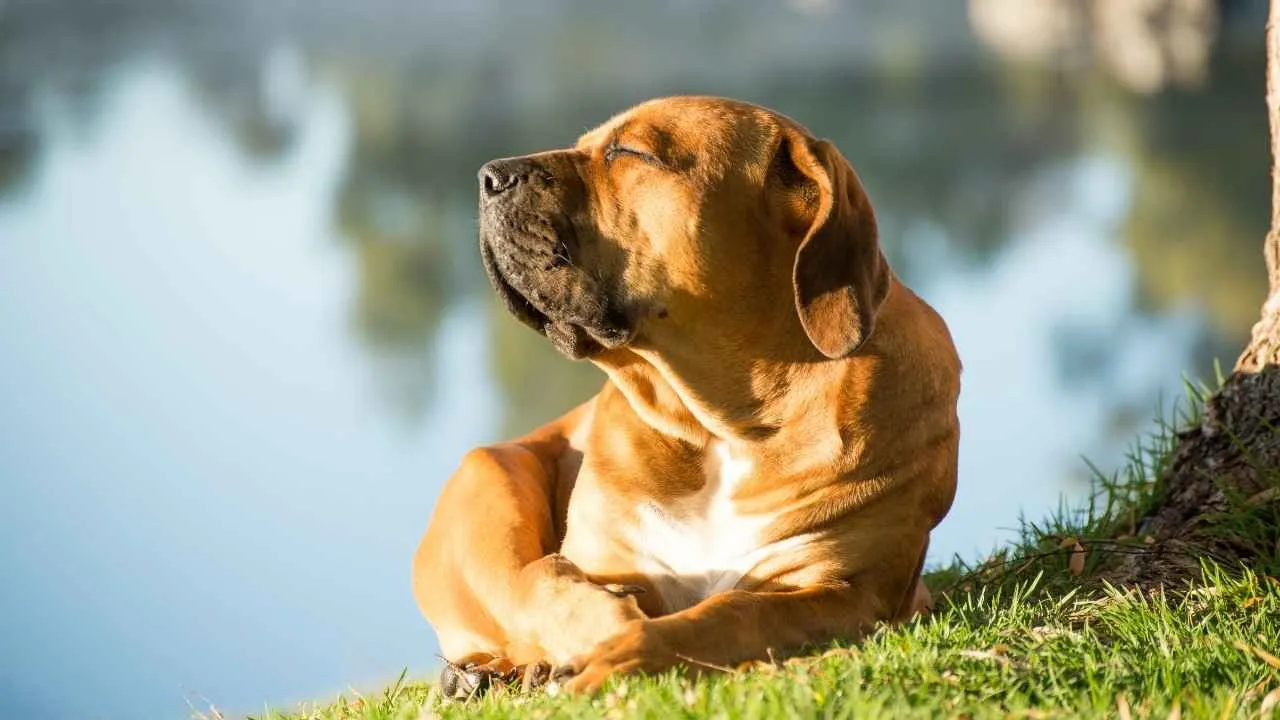
Originating in South Africa, the Boerboel is a formidable guardian with a broad, block-shaped head, powerful jaws, and a sturdy, muscular frame. Its smooth, short coat gives the breed a sleek appearance while allowing its well-developed physique to stand out.
According to Purina, Boerboels need consistent, firm training to guide their strong protective instincts and eagerness to please. Their smooth, glossy coats also require very little grooming.
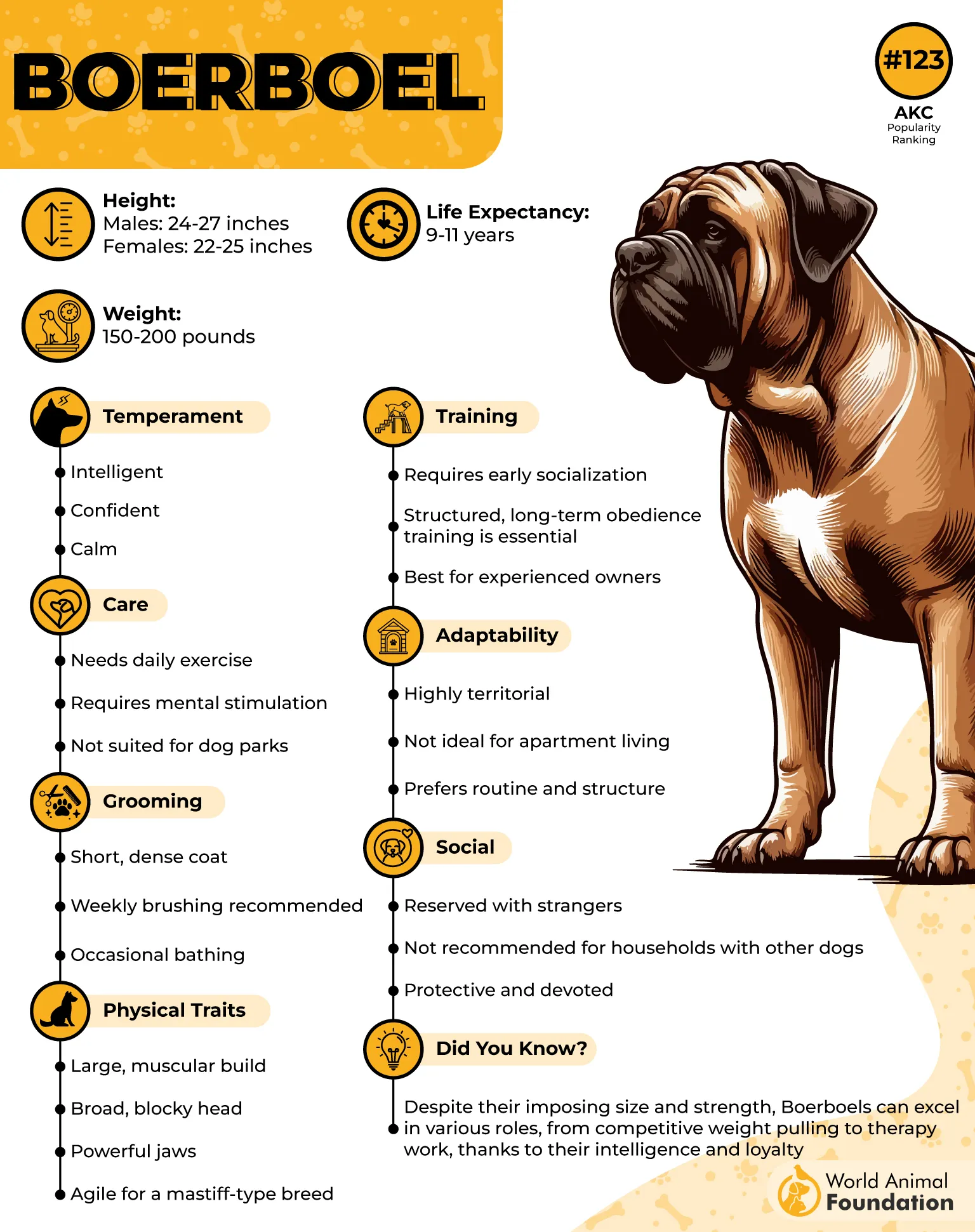
Bred to protect remote homesteads from dangerous predators, this mastiff-type dog is confident, intelligent, and deeply devoted to its family.
Although often affectionate with loved ones, Boerboels can be cautious around strangers and unfamiliar dogs. Their protective instincts make early socialization and consistent training especially important.
Despite its imposing size, the Boerboel can move with surprising agility. Its coat is relatively easy to maintain, requiring straightforward regular grooming rather than extensive brushing.
Regular exercise and firm, responsible handling help manage this powerful breed, which is generally better suited to experienced owners than beginners.
How This Breed Stands Out
Broad head and sturdy, balanced frame: Its blocky head, strong jaws, and muscular proportions create a commanding silhouette.
Short coat suited to straightforward grooming: The smooth, close-fitting fur needs relatively little maintenance.
2. Dogo Argentino
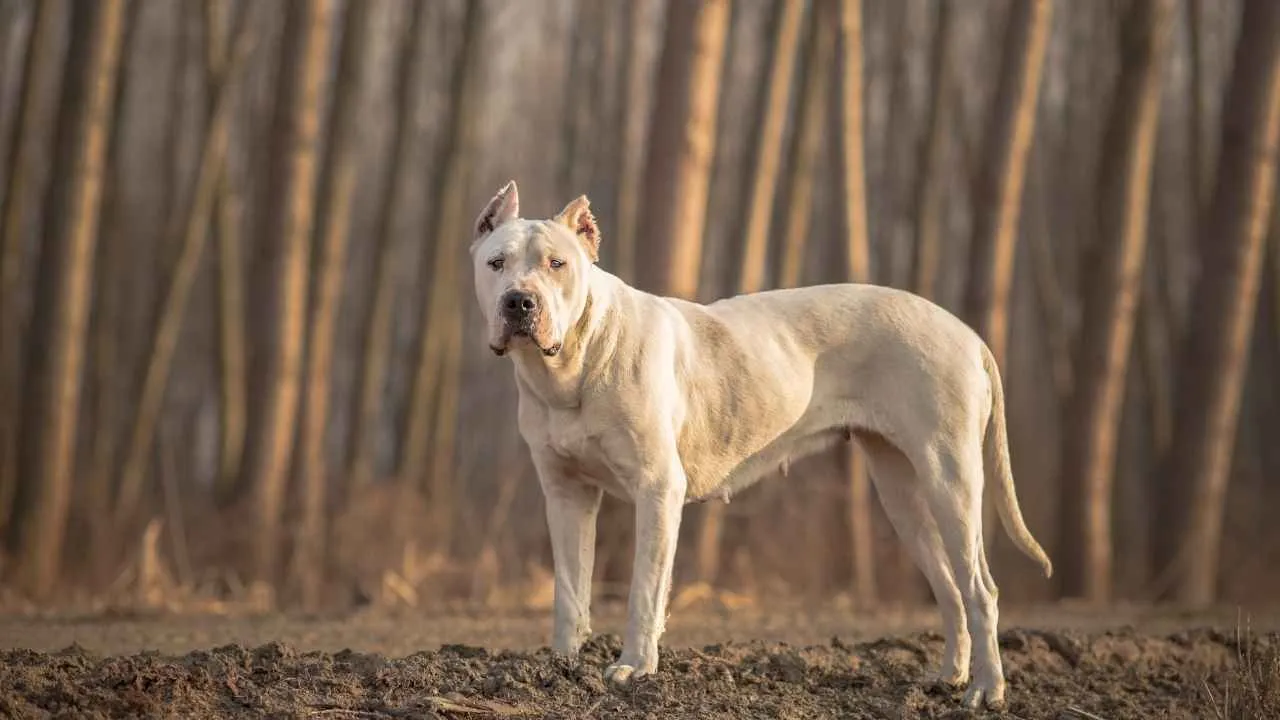
The Dogo Argentino is a powerful Argentine working breed instantly recognized by its short, smooth, predominantly white coat. Its muscular body, sturdy legs, and thick yet elegant neck create an athletic outline, while a small dark patch near one eye may be permitted.
According to PetMD, Dogo Argentinos can stand up to 27 inches tall at the shoulder and weigh between 80 and 100 pounds. These powerfully built dogs are known for their determination and being highly intelligent.
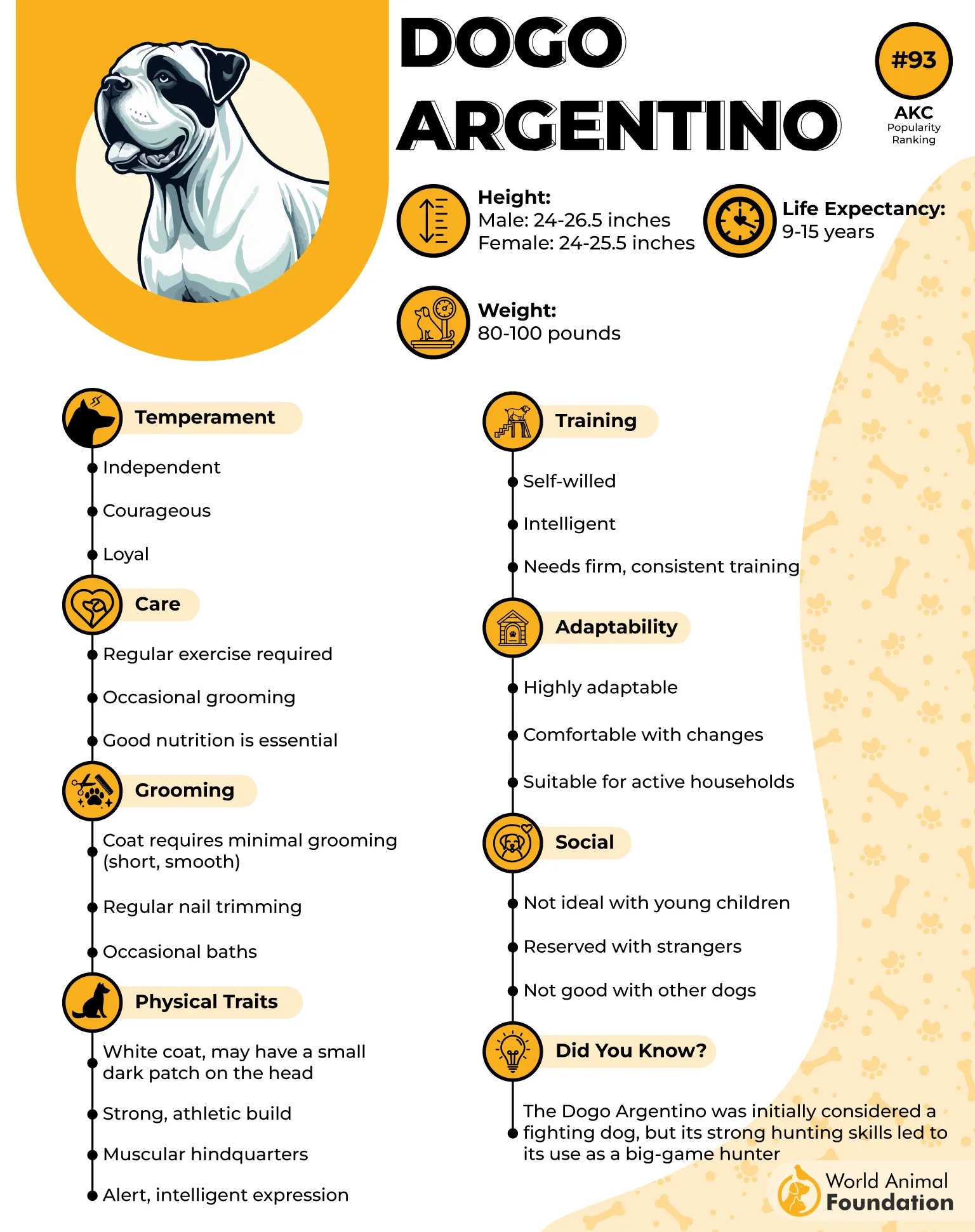
Originally developed for hunting large game, including wild boar and puma, this dog combines strength, stamina, intelligence, and agility. Beneath its courageous, gentle nature, the Dogo can be deeply affectionate and loyal to its family, but its strong prey drive may make living with smaller pets challenging.
That athletic build comes with substantial exercise and training needs. Consistent guidance and early socialization are essential, so the breed is generally better suited to experienced owners than beginners. Prospective owners should also be aware of its potential hearing problems.
How This Breed Stands Out
Solid white coat with a sleek finish: Its smooth, close-fitting white fur gives the breed a clean, distinctive appearance.
Athletic physique developed for demanding work: Muscular limbs and powerful lungs support the stamina and agility needed for strenuous activity.
3. Mastiff
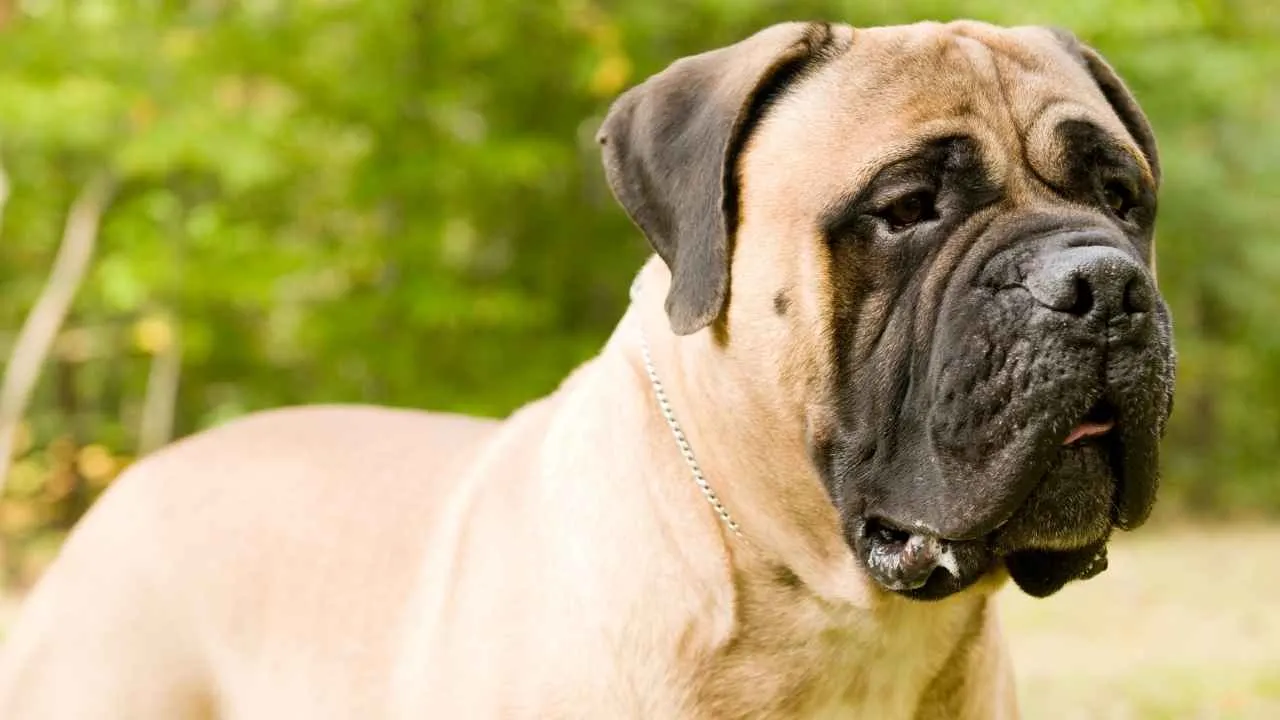
The English Mastiff is an enormous British breed with a thick, rectangular body and a broad head framed by loose, wrinkled skin. Its short double coat appears in shades such as apricot, fawn, and brindle, complementing its imposing build and gentle expression.
According to WebMD, Mastiffs are gentle giants known for their impressive strength and friendly temperament, and they belong to the working dog group.
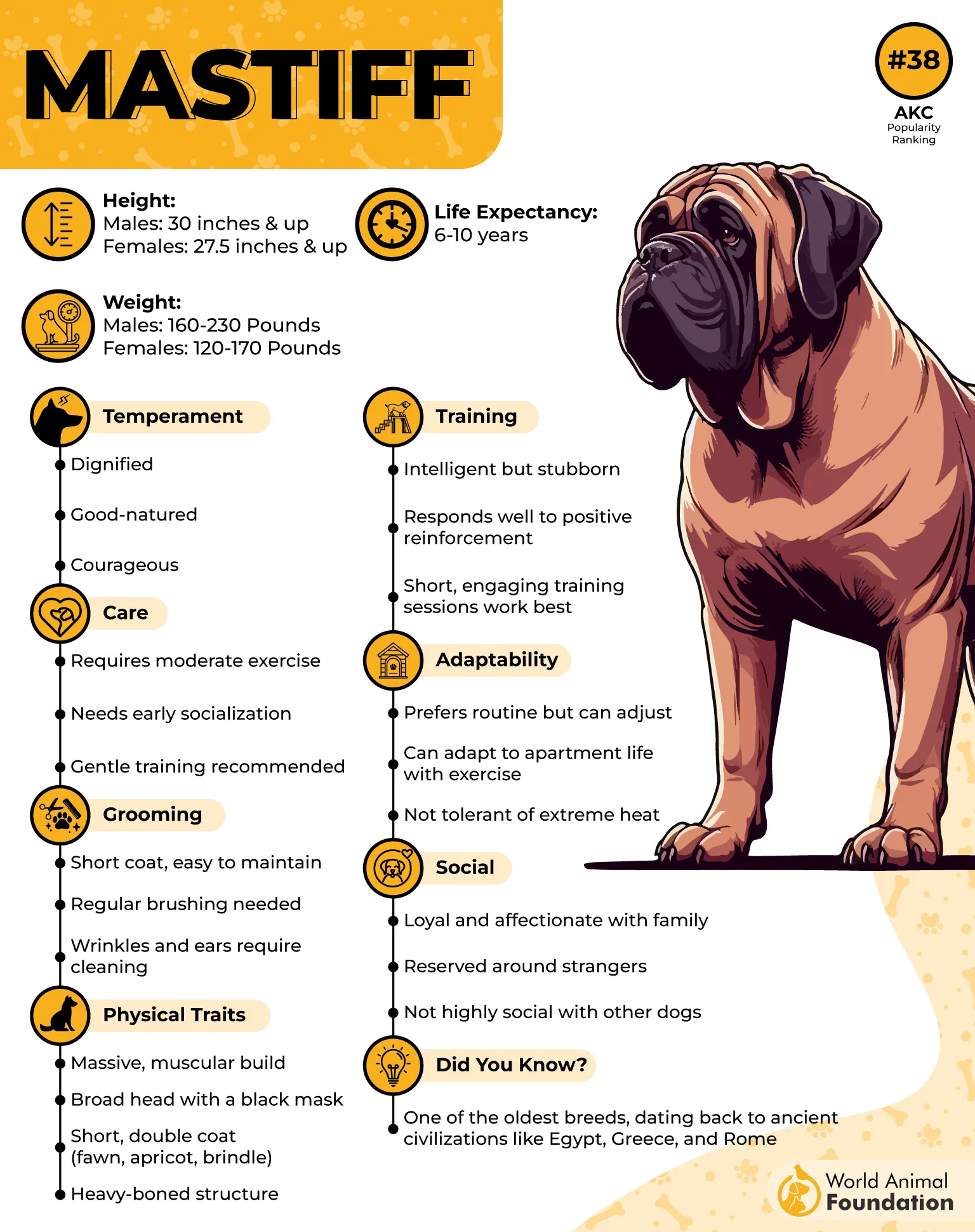
Despite their formidable size, Mastiffs are typically patient, affectionate, and devoted to their families. They have a natural protective instinct and may be cautious around unfamiliar people, making early socialization and gentle, consistent training important for developing good manners.
Coat maintenance is relatively simple, as occasional brushing helps keep the dense fur in good condition. However, Mastiffs can shed considerably, and their tendency to drool may require extra cleanup. These generally low-energy dogs usually do well with a few short daily walks rather than intense exercise.
How This Breed Stands Out
Massive frame with loose facial skin: Its broad head, heavy build, and forehead wrinkles create a distinctive appearance.
Dense, smooth coat needs minimal grooming: The short double coat is easy to maintain with regular, light grooming.
4. Bullmastiff
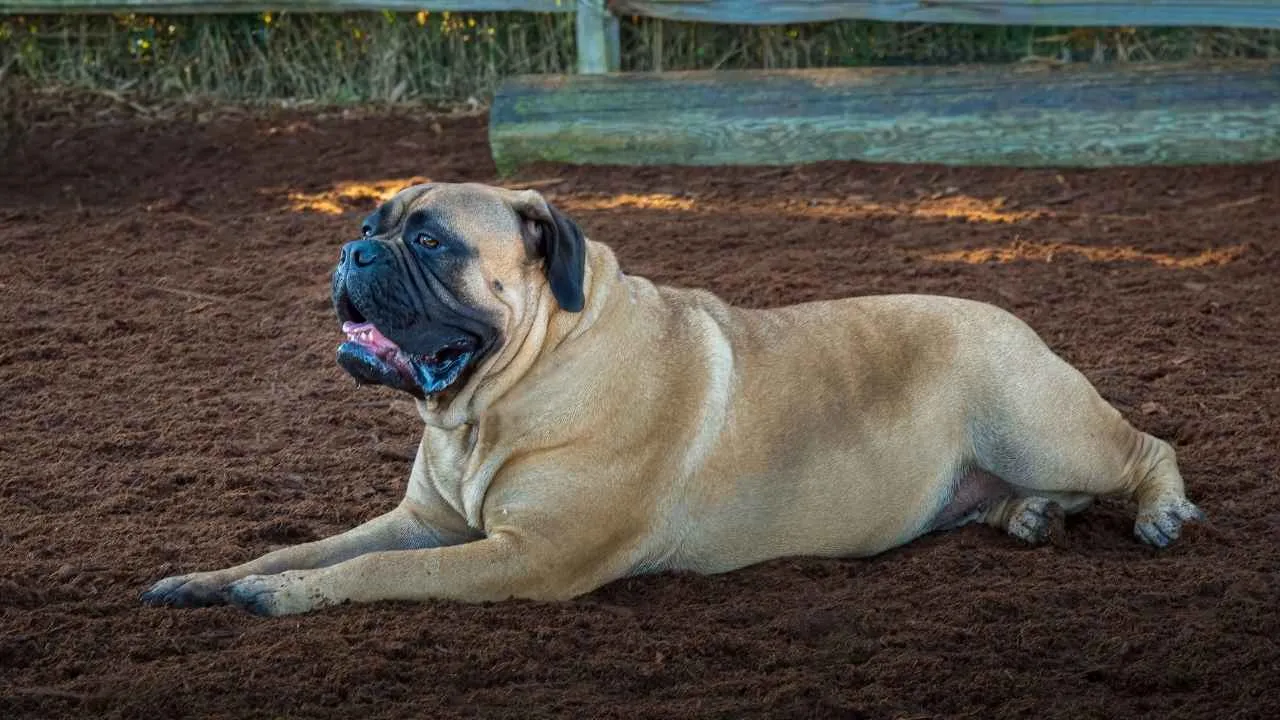
The Bullmastiff combines a broad, muscular frame with a short coat that comes in fawn, red, or brindle. Its large head, dark eyes, and deeply set muzzle create a distinctive expression, while the dark facial mask and forehead wrinkles add character to its appearance.
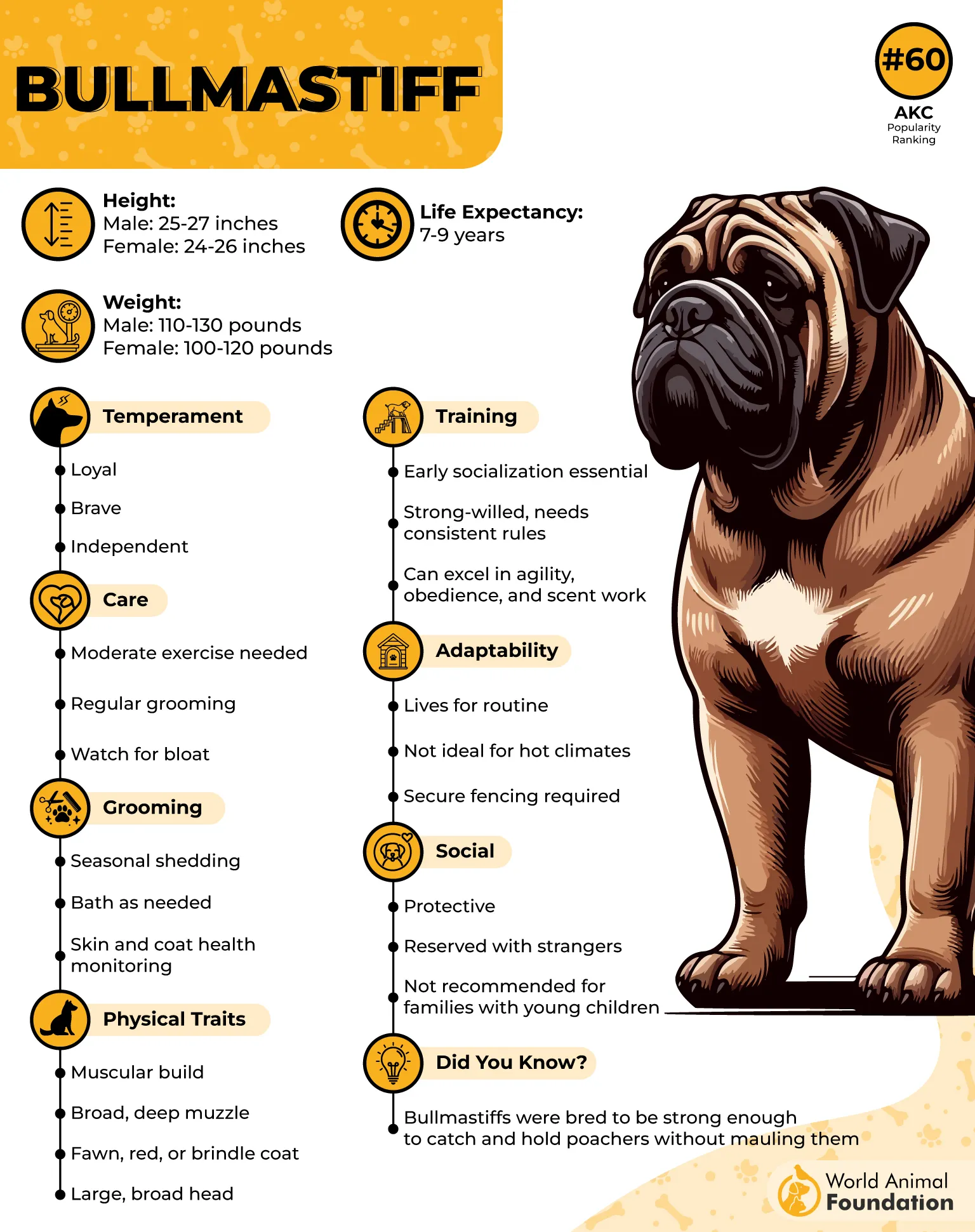
Originally developed in England by crossing Bulldogs with Mastiffs, this breed was used to track down and restrain poachers. Although naturally protective and wary of unfamiliar people, Bullmastiffs are typically gentle and affectionate with their families.
Their calm demeanor can make them suitable companions for households with well-behaved children.
Despite their laid-back nature at home, Bullmastiffs can be independent thinkers. Early training and socialization are important for managing their guarding instincts and encouraging reliable behavior. Their short coat also keeps grooming relatively straightforward.
How This Breed Stands Out
Wrinkled forehead and dark facial mask: These features give the Bullmastiff its recognizable, alert expression.
Broad, powerful build beneath a close coat: Its muscular body and short fur create a strong, solid silhouette.
5. Cane Corso
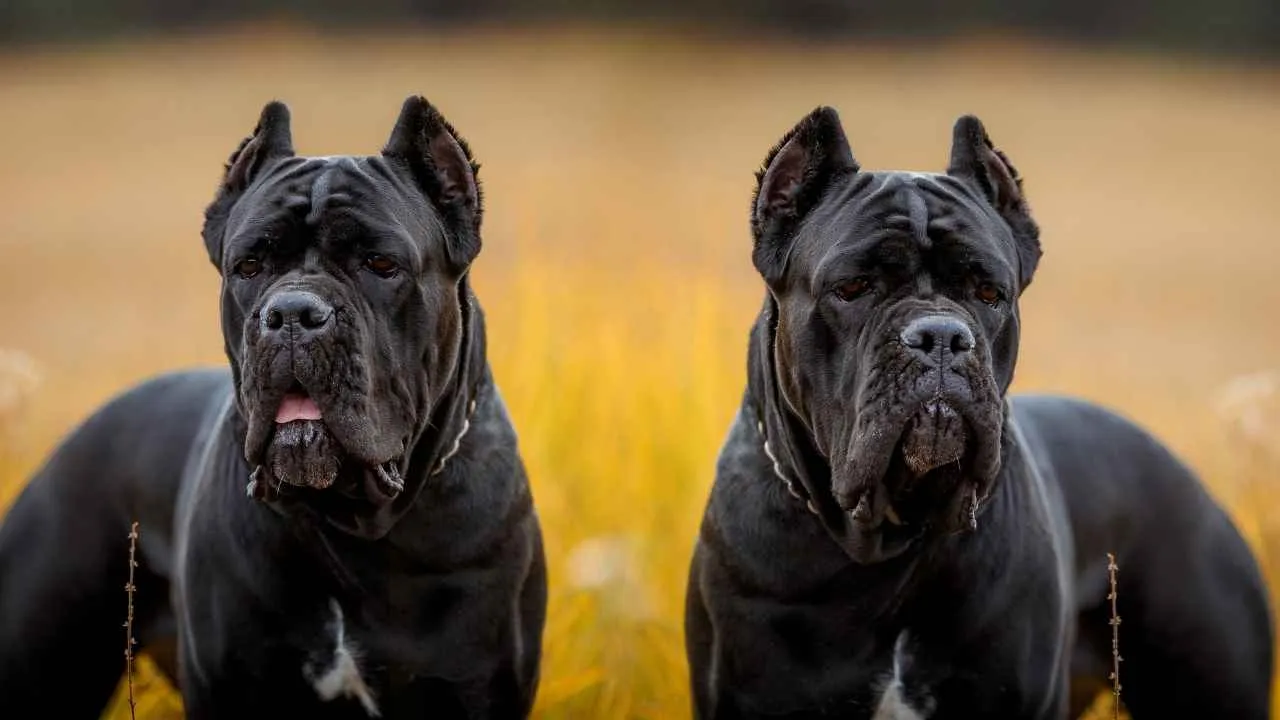
The Cane Corso has a powerful, athletic build, with defined muscles that give this Italian working breed an imposing appearance. Its short, close-lying coat reveals the contours of its sturdy frame, while its broad head and alert expression add to its commanding presence.
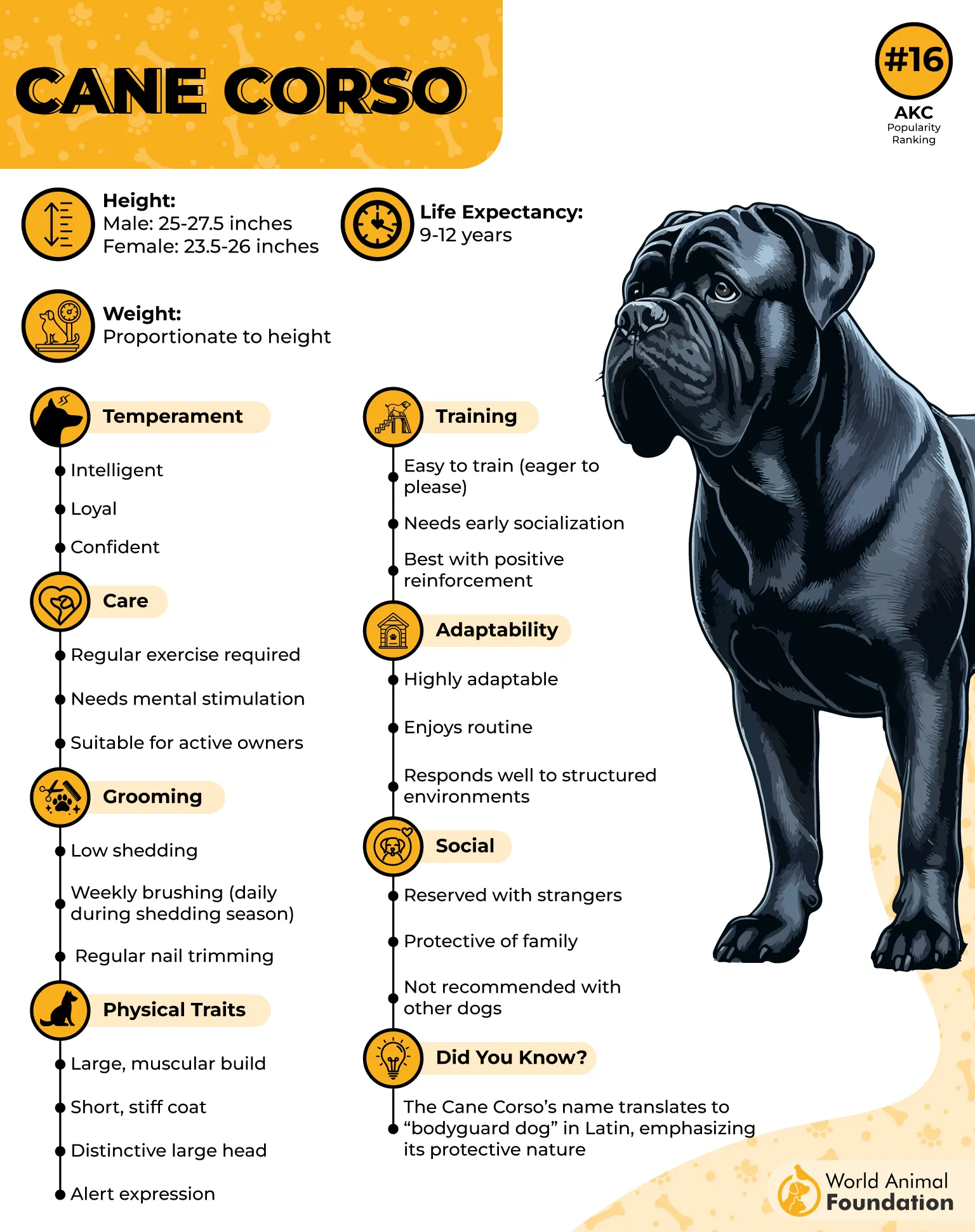
Tracing its ancestry to ancient Roman times, the Cane Corso developed as a guardian and protector. Despite its intimidating looks, it can be deeply affectionate and loyal toward its family.
Its intelligence and willingness to learn make training possible, although its assertive, independent temperament calls for experienced, consistent handling.
Coat care is relatively uncomplicated. Regular brushing helps remove loose hair and manage shedding, especially during seasonal changes. Early socialization with people and other dogs, alongside clear boundaries and ongoing training, is essential for encouraging good manners in this large guardian breed.
How This Breed Stands Out
Sculpted, athletic musculature: Prominent muscles create a strong, well-defined physique.
Short coat emphasizes its imposing frame: Close-fitting fur highlights the breed’s size and powerful structure.
6. Rottweiler
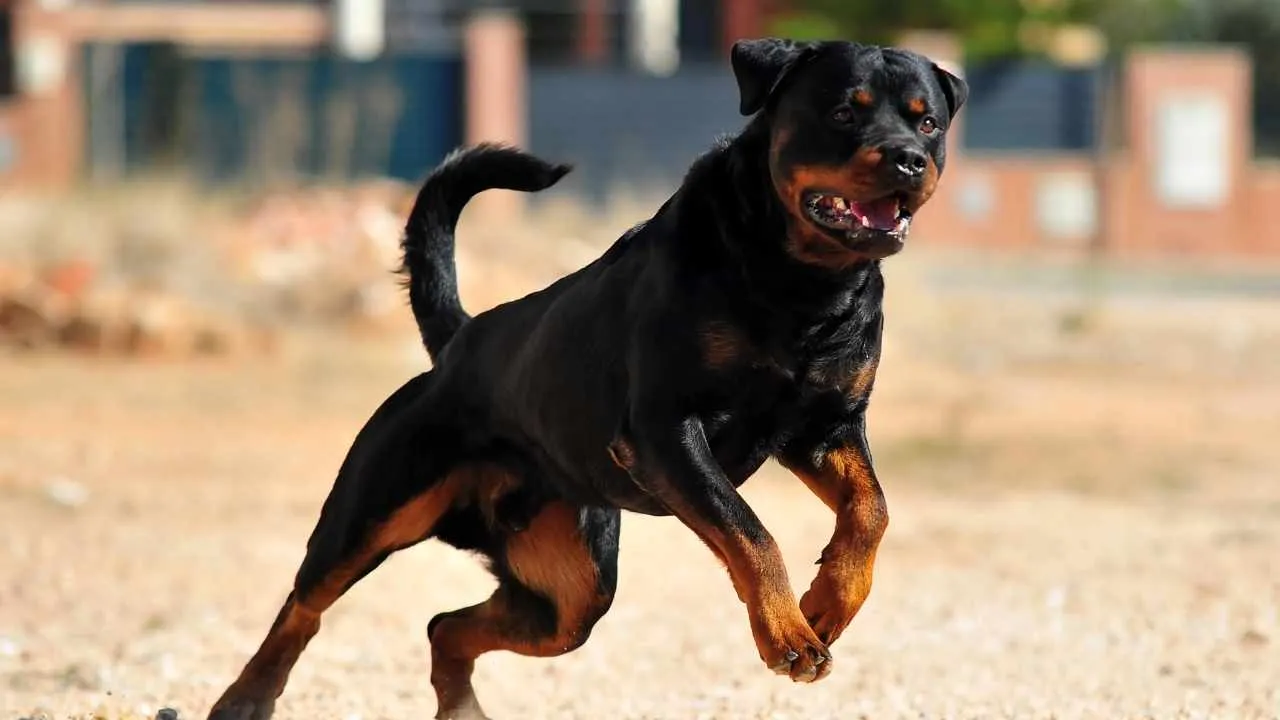
The Rottweiler’s sleek black coat, highlighted by rich rust-colored markings, creates a striking contrast. Its close-fitting fur outlines a muscular body, broad chest, and powerful hindquarters, giving this large breed a robust, athletic appearance without requiring elaborate grooming.
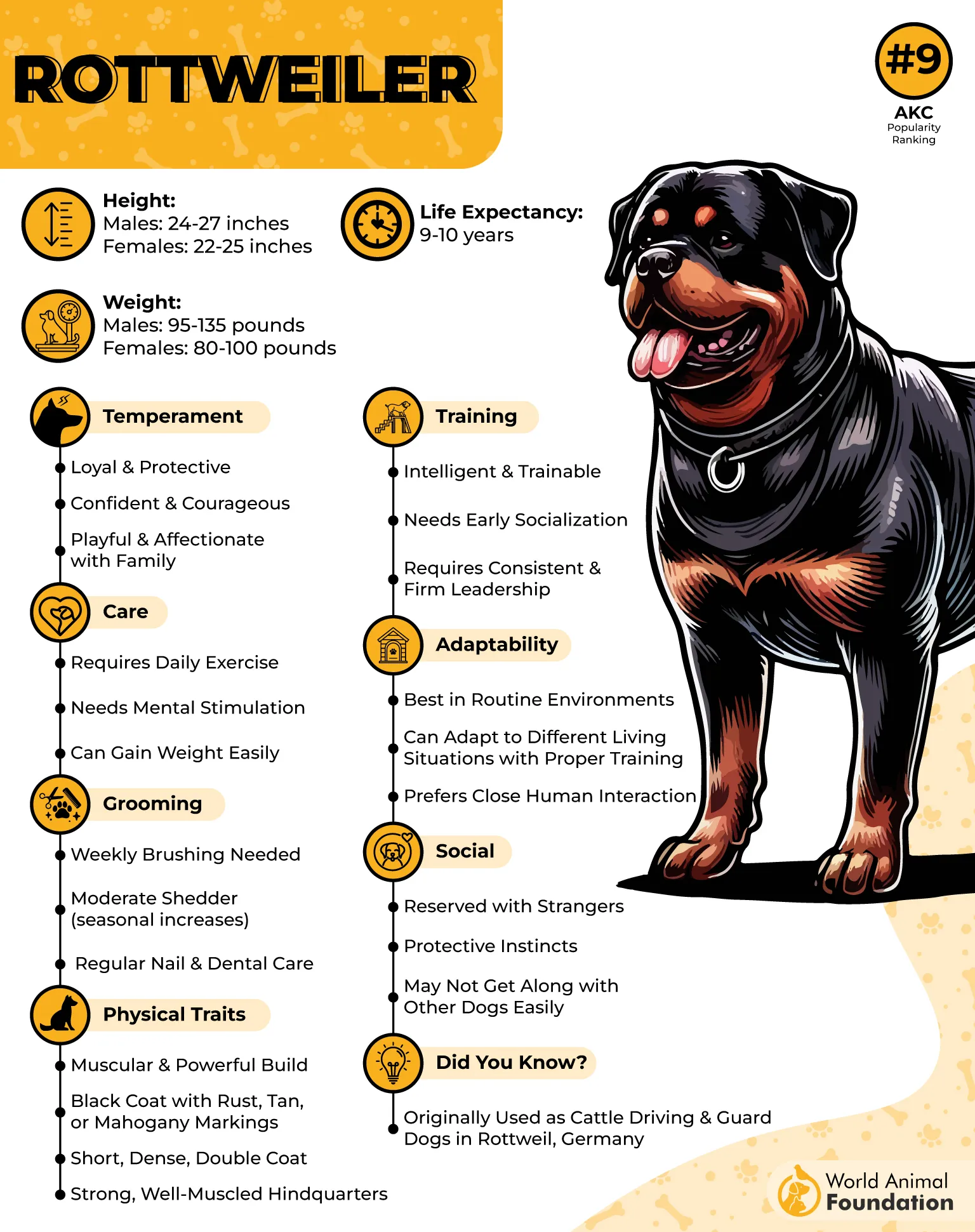
With roots linked to Roman-era dogs and a working history in Germany, Rottweilers were used to drive cattle and pull butcher carts. Their serious expression can hide a playful, affectionate side, while their strong loyalty often makes them devoted protectors of their families.
Maintaining their short coat is relatively simple, with brushing once a week helping remove loose hair, and a rubber curry brush can work well for this type of coat. Routine skin checks are also easier with a short coat, though shedding can still happen year-round.
Early training and consistent guidance are important for managing its independent nature, and food rewards can be useful during training. Just as important, consistency matters, and many Rottweilers do well in obedience training when they have clear guidance and rewards.
How This Breed Stands Out
Distinctive black-and-tan markings: Rust-colored accents stand out clearly against the glossy black coat.
Broad chest and powerful hindquarters: Its muscular proportions create a sturdy, commanding silhouette.
7. Great Dane
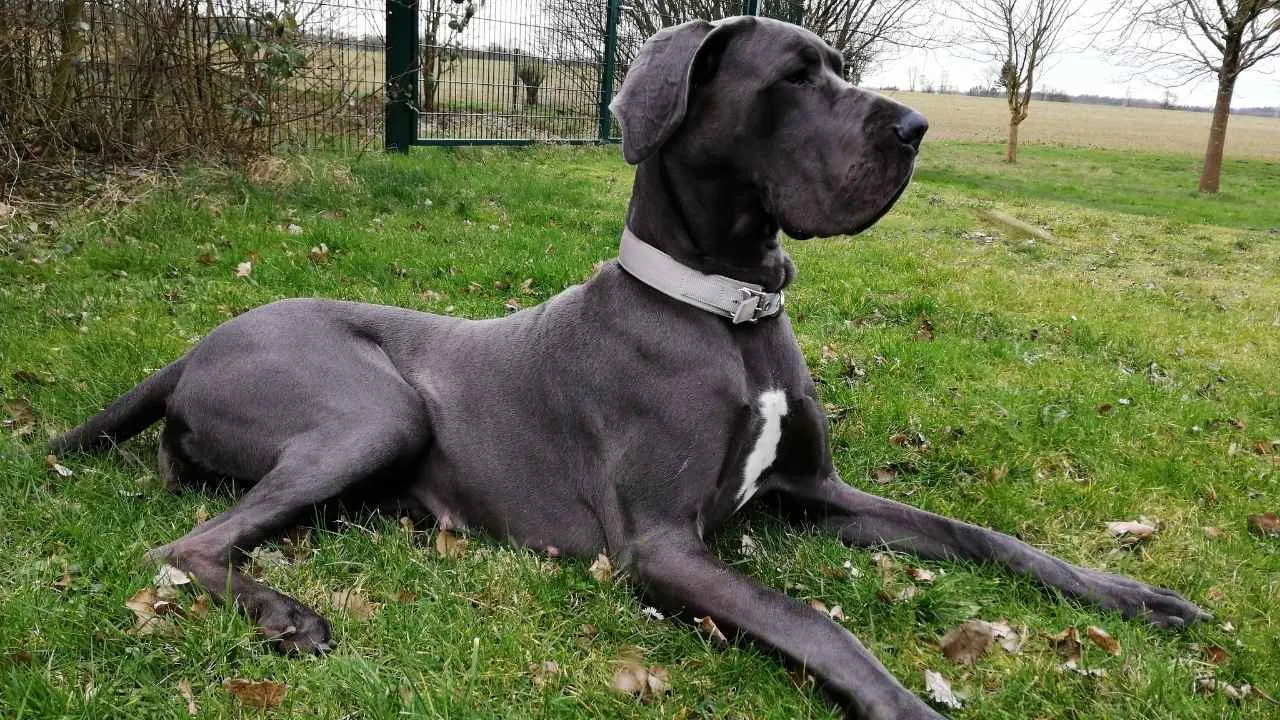
The Great Dane is instantly recognizable by its towering stature, long legs, and elegant outline, and it is one of the large dog breeds most often cited for a striking short, sleek coat. Despite its impressive size, this German working breed has a generally calm temperament and does not require excessive exercise to stay content.
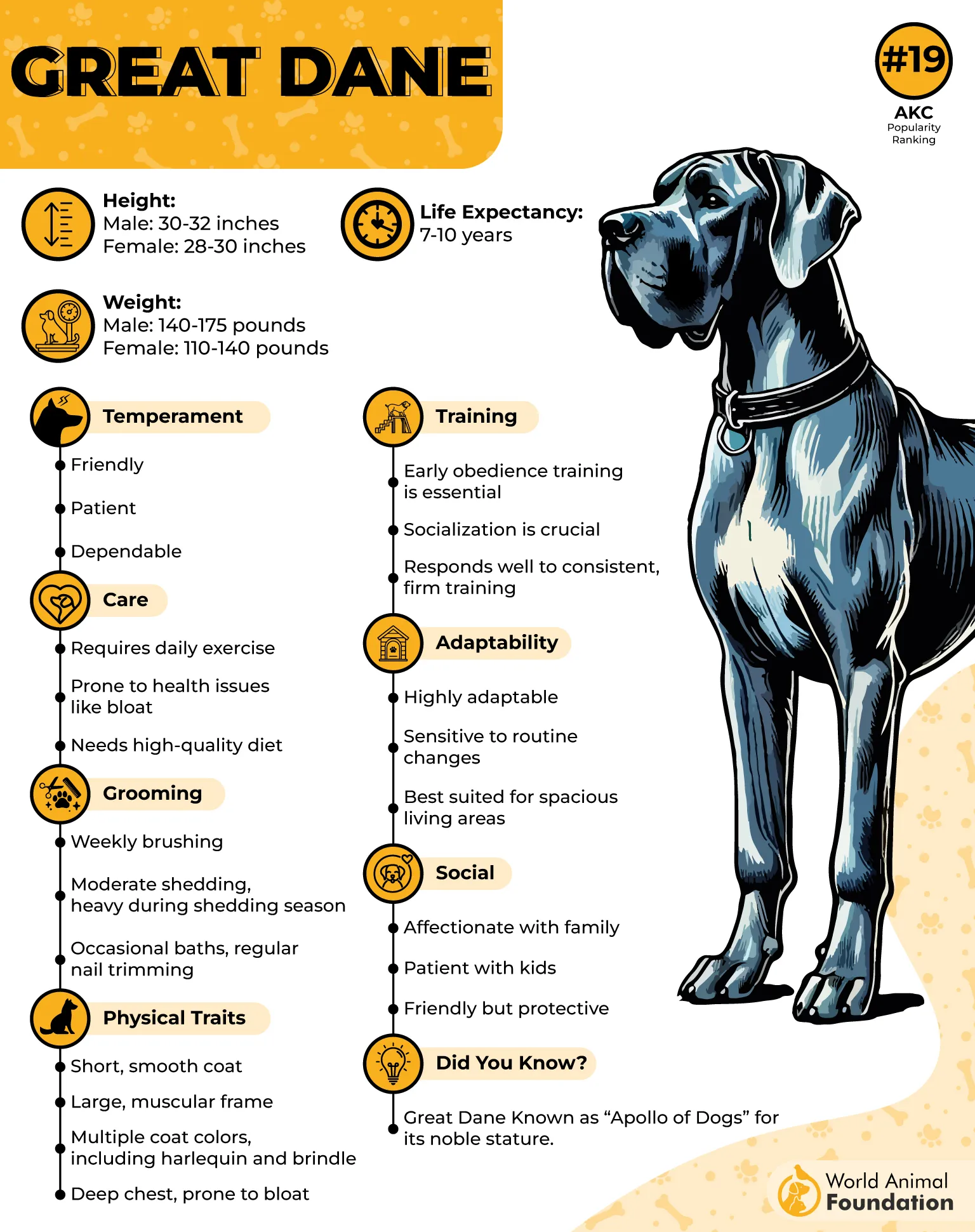
Its short, smooth coat comes in several colors and distinctive patterns. The striking harlequin variety, featuring black patches against a white background, is especially eye-catching and highlights the breed’s sleek appearance without demanding extensive grooming.
Affectionate and moderately playful, Great Danes can become loving family companions. However, early training and proper socialization are important because their sheer size can make them difficult to manage without guidance. Daily walks and enough room to stretch out help meet their needs, and even without intense exercise, regular walks help keep them healthy.
How This Breed Stands Out
Long-legged, statuesque silhouette: Its towering height and graceful build give the breed a commanding presence.
Smooth coat showcases striking color patterns: The easy-care coat comes in varied shades, including the distinctive harlequin pattern.
Conclusion
Large dog breeds with short, sleek coats combine impressive physiques with striking appearances. From the towering Great Dane to the muscular Rottweiler, these dogs showcase how a smooth coat can complement a powerful frame.
Each breed has its own distinctive features, whether it is the Cane Corso’s sculpted muscles, the Bullmastiff’s wrinkled face, or the Dogo Argentino’s pristine white coat. The Boerboel and English Mastiff also stand out for their solid builds and protective instincts.
Although their coats are generally easier to maintain than longer fur, regular brushing still helps manage shedding and keep them in good condition.
Before choosing a breed, consider its exercise requirements, temperament, training needs, and available living space. With responsible care and consistent guidance, these impressive dogs can become devoted companions and loyal family guardians.
