




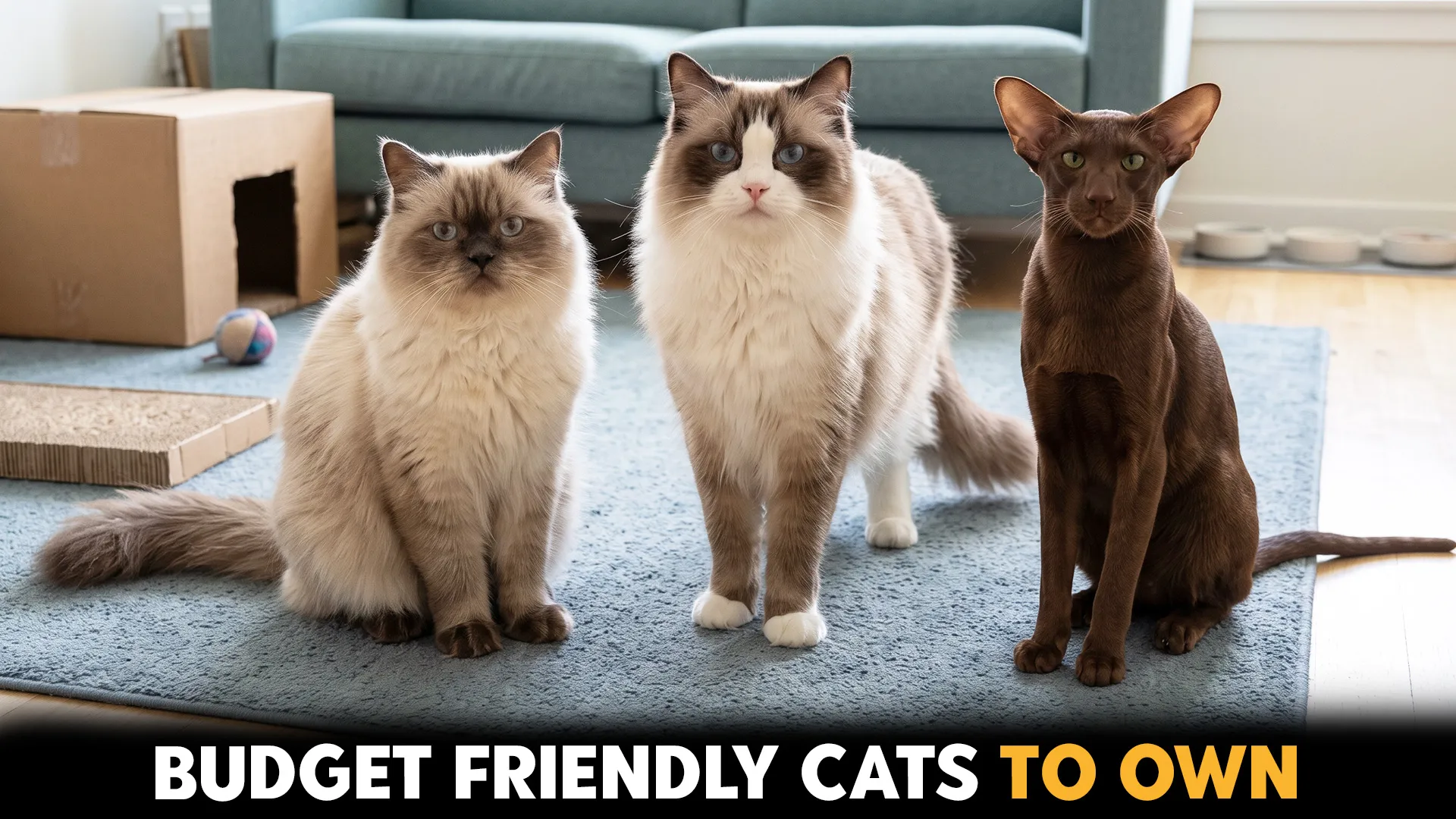
Your cat doesn’t come with a price tag, not really. Your cat’s entire life does, stretching 10, 15, sometimes 20 years of food, vet visits, and expenses you never saw coming.
Here’s the gut-punch stat: nearly 8 in 10 pet owners underestimate the true cost of care, according to a recent study. Vet bills, grooming, and food all creep up quietly until the numbers stop feeling small.
So forget the adoption fee; that’s the easy part. The real question is which breeds stay cheap to feed, groom, and treat long term.
Turns out, some of the most popular cat breeds are also the biggest budget wins. Gentle temperament, low grooming, and a long, healthy lifespan add up to a combo most owners never think to search for.
Curious which ones made the cut, and why? Keep scrolling, because your wallet and your new best friend will both truly thank you.
Best Inexpensive Cat Breeds To Own
1. Ragdoll
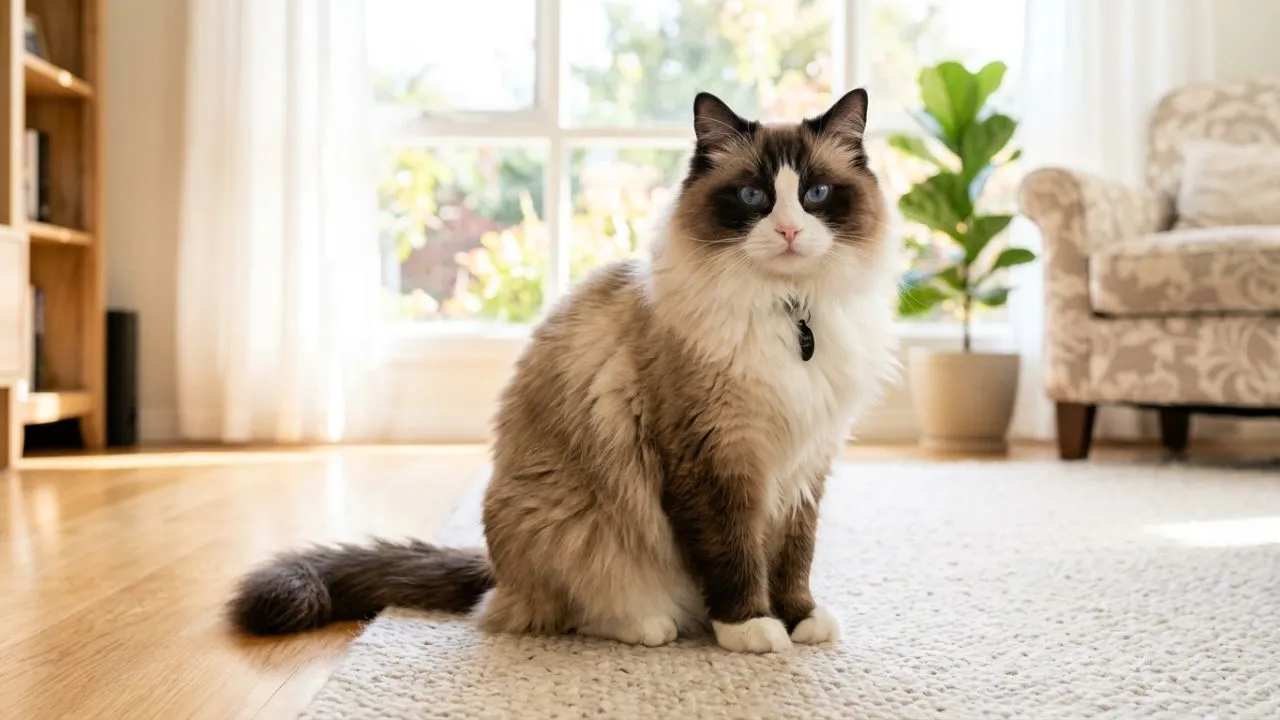
Picture a cat that melts into your arms the moment you lift them; that’s the Ragdoll. This breed’s calm, people-loving nature fits families, children, and other pets with ease. They thrive on company and rarely act shy around new faces.
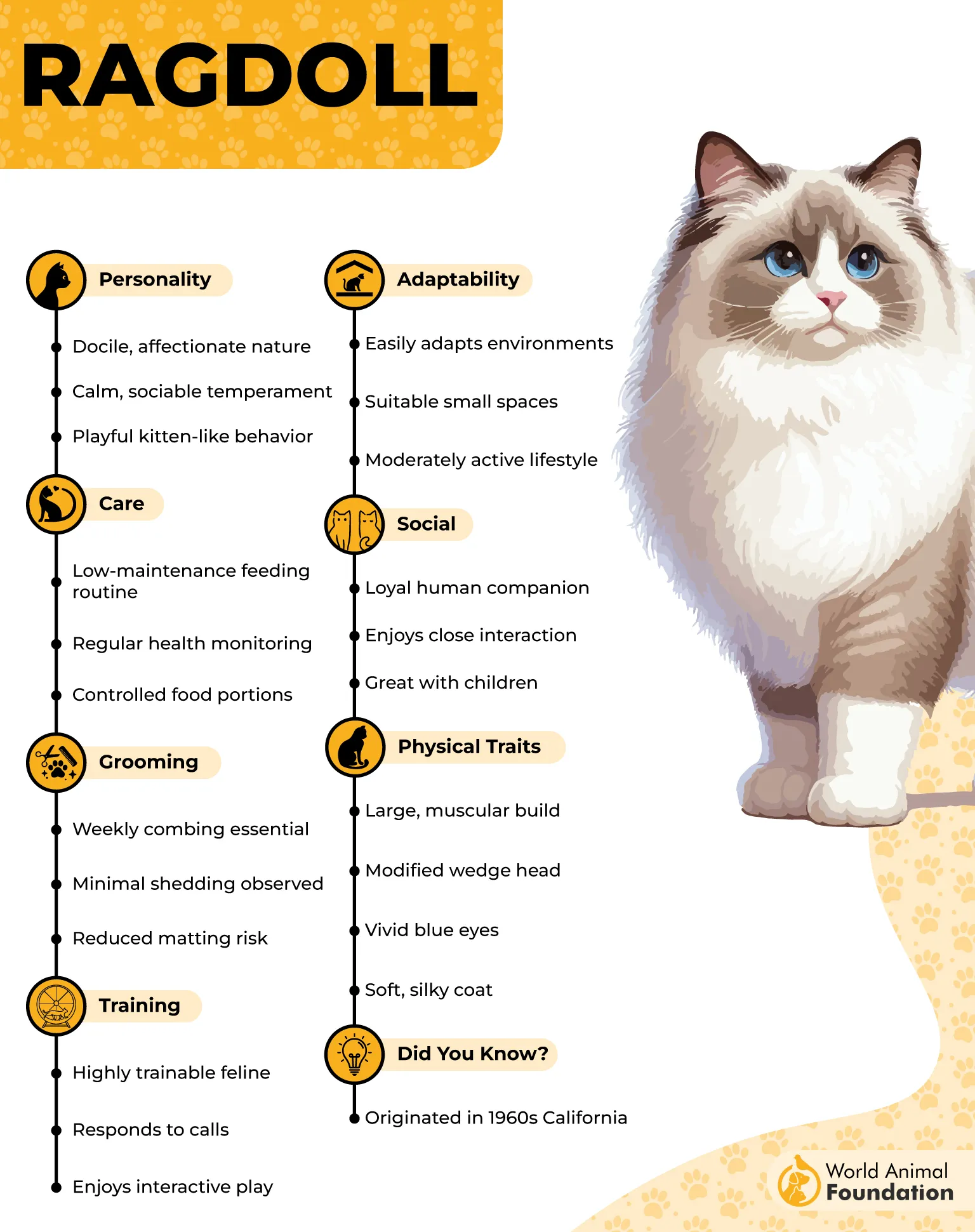
The coat is the real budget surprise here. It looks plush, but with barely any undercoat, it resists matting and only needs a weekly brush. That means fewer trips to a professional groomer and real savings over time.
The bigger cost risk sits in their genetics, not their coat. PDSA notes that Ragdolls are prone to certain inherited conditions, which can raise insurance premiums and vet bills. Choosing a breeder who screens for heart health is a smart way to keep costs down.
2. Himalayan
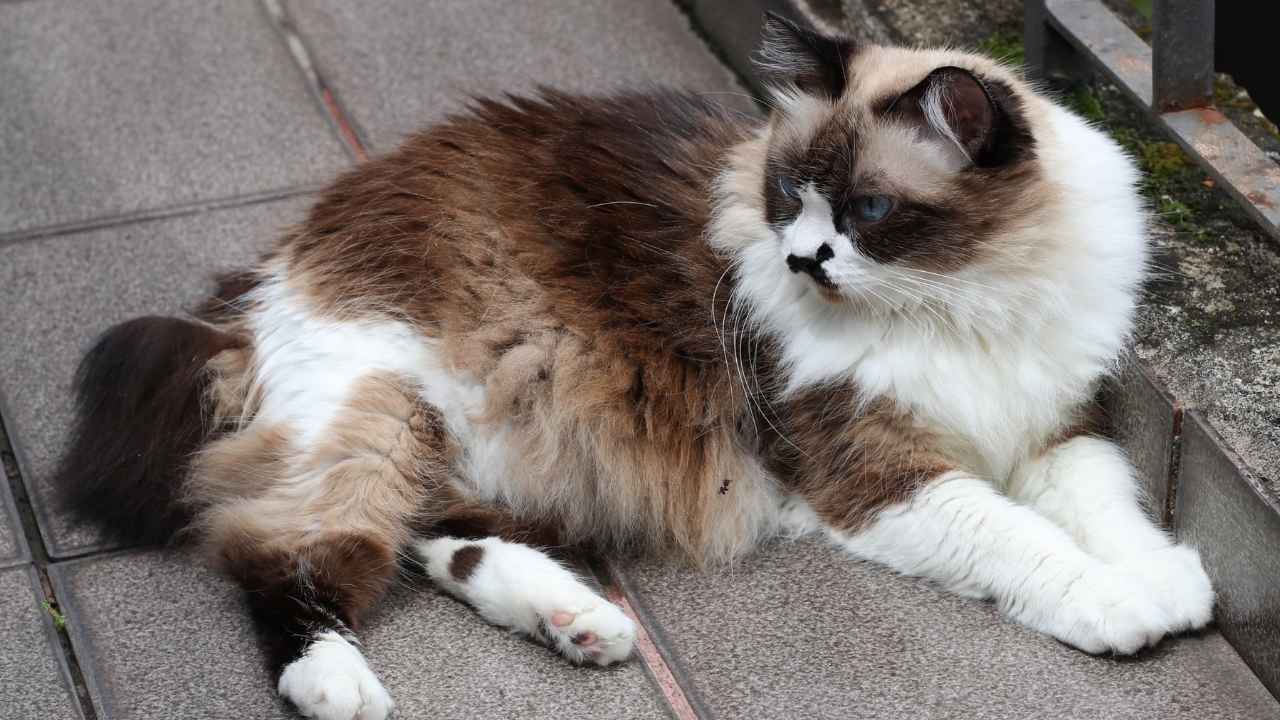
The Himalayan looks like a Persian wrapped in Siamese color points, and the pairing works beautifully. Sweet, quiet, and affectionate, this cat would rather nap on your lap than explore the top shelf. Children, other cats, and a slower household pace all suit this gentle companion.
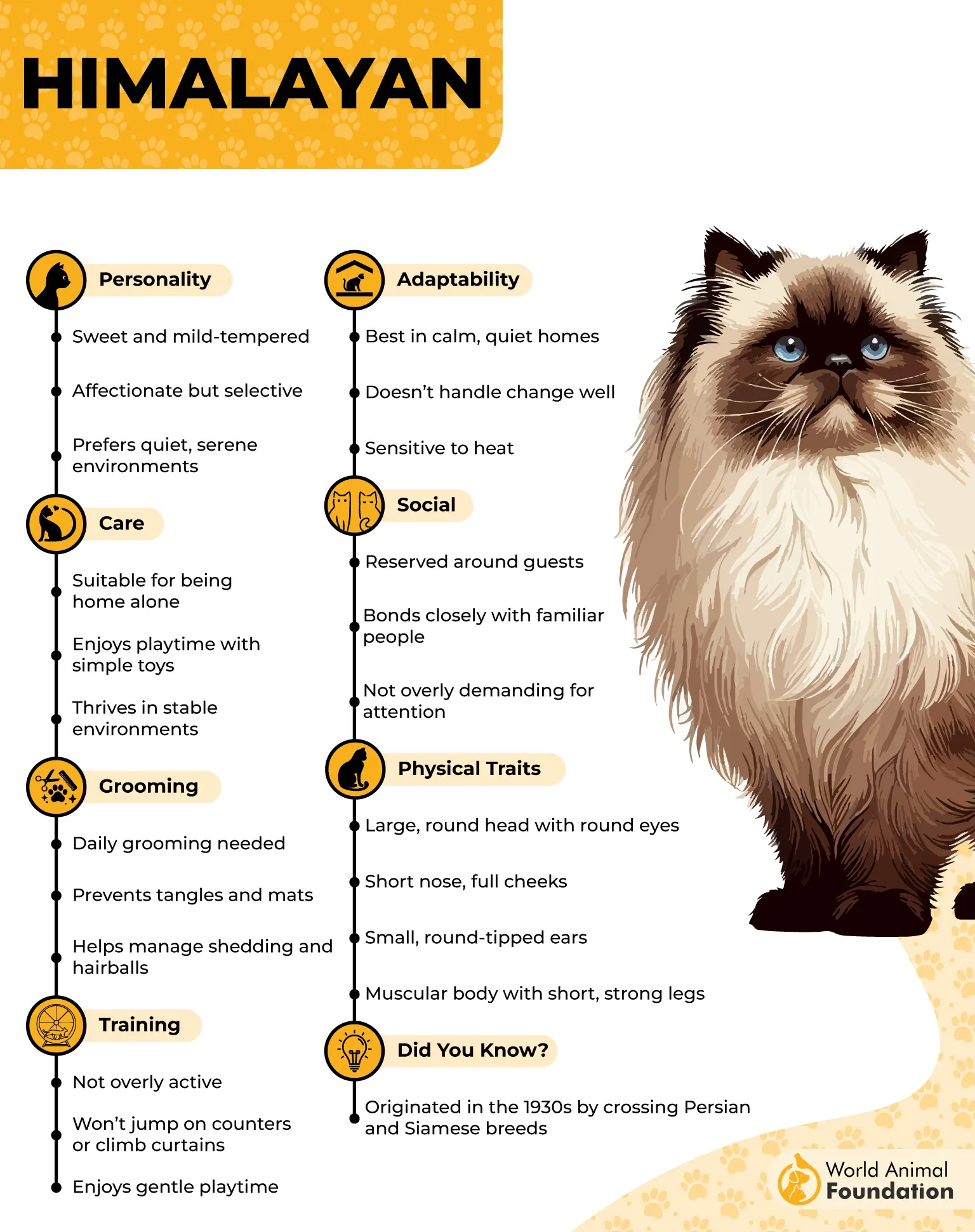
Himalayans carry Persian bloodlines, which bring a known risk called polycystic kidney disease. The advantage is that genetic testing exists, and VCA confirms screening can flag the condition long before costly symptoms appear. Picking a tested kitten turns an unpredictable vet bill into a preventable one.
Their flat face is where the ongoing costs tend to hide. Tear stains need regular wiping, and that long coat mats fast without daily attention. Factor grooming tools and time into the budget, not just food and litter.
3. American Shorthair
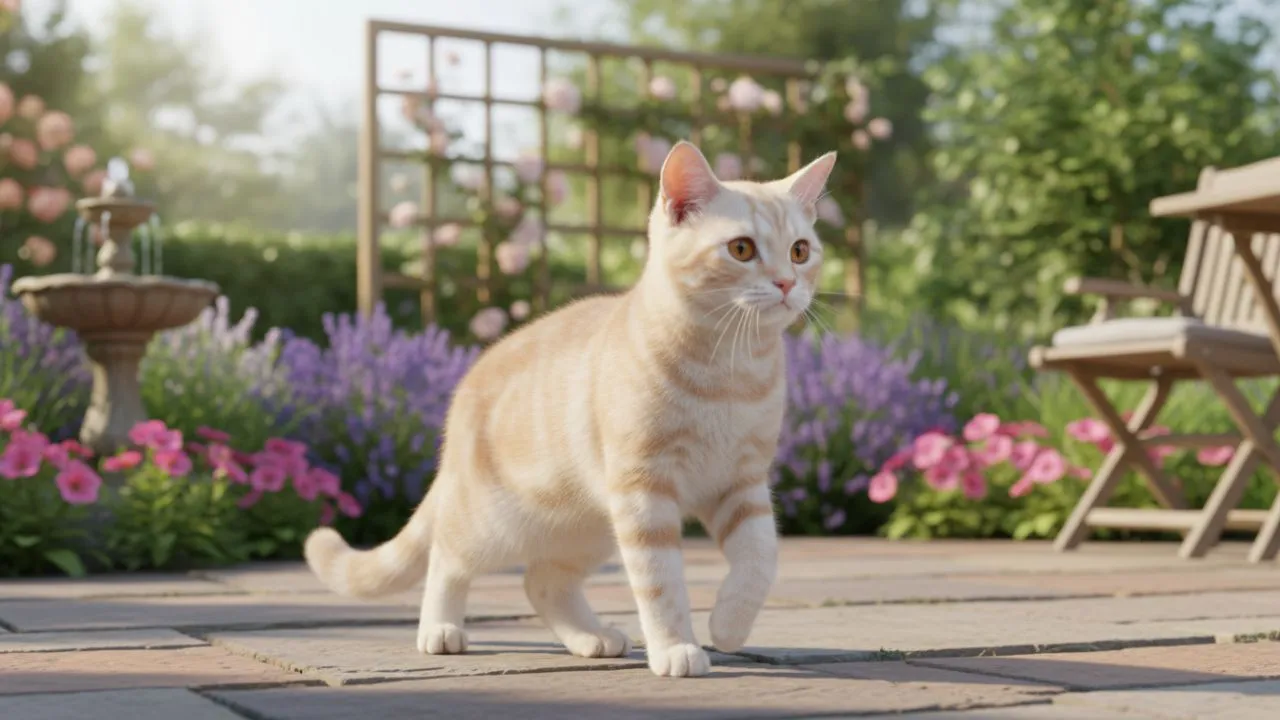
Easygoing is the best word for the American Shorthair. This breed adapts to apartments, houses, children, and other pets without much fuss, and they relax happily alone while you’re out. Few cats suit a busy household as effortlessly.
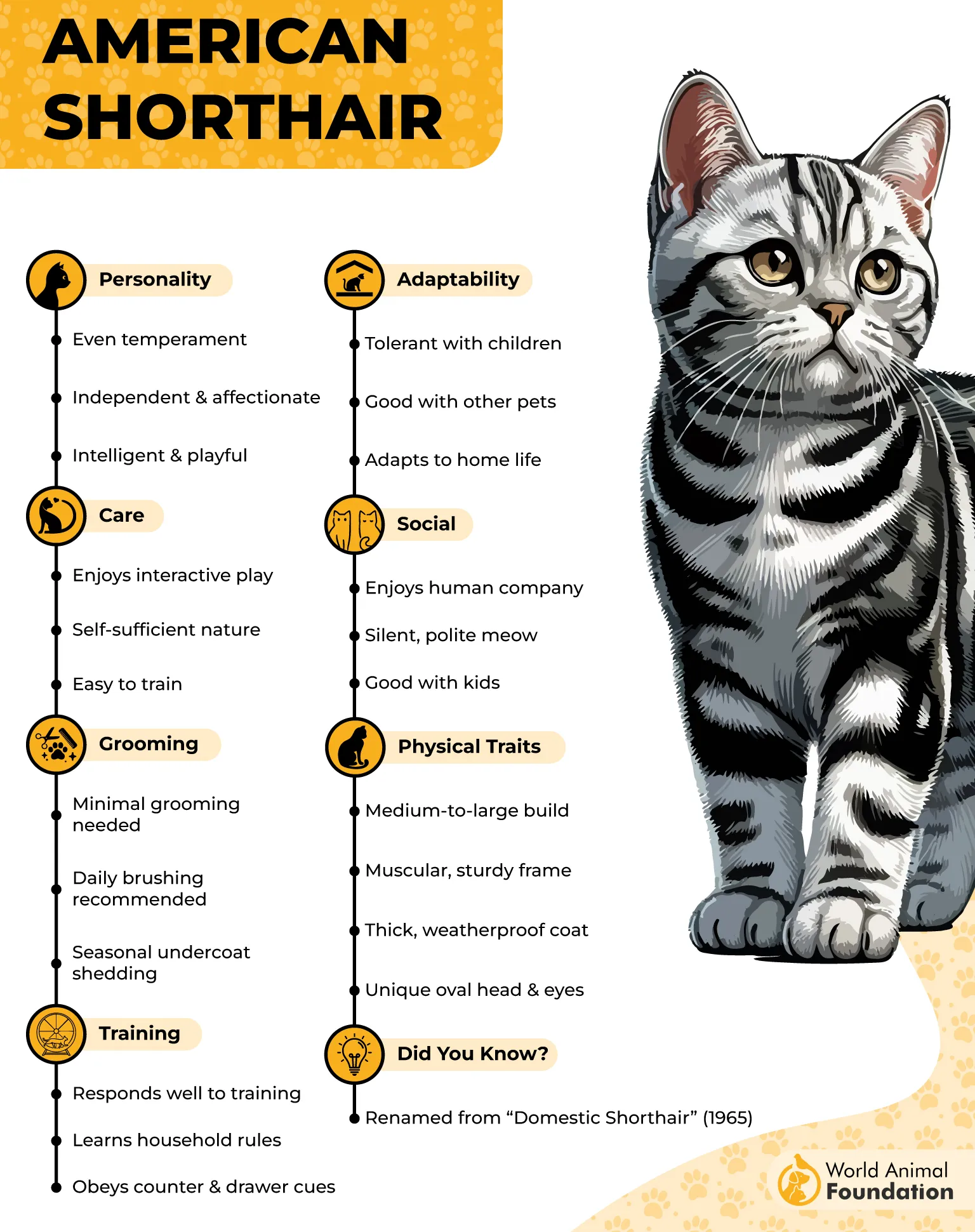
This is a low-cost breed to own over the long run. Bred originally as working cats, Purina describes the American Shorthair as a hearty, healthy breed. Fewer hereditary problems usually mean fewer surprise vet bills across a long, 15- to 20-year lifespan.
The trade-off is that sturdy build. This breed loves food and can gain weight quickly without daily play, which raises the risk of joint and heart strain later. A measured diet and regular playtime keep that long lifespan affordable instead of expensive.
4. Oriental Shorthair
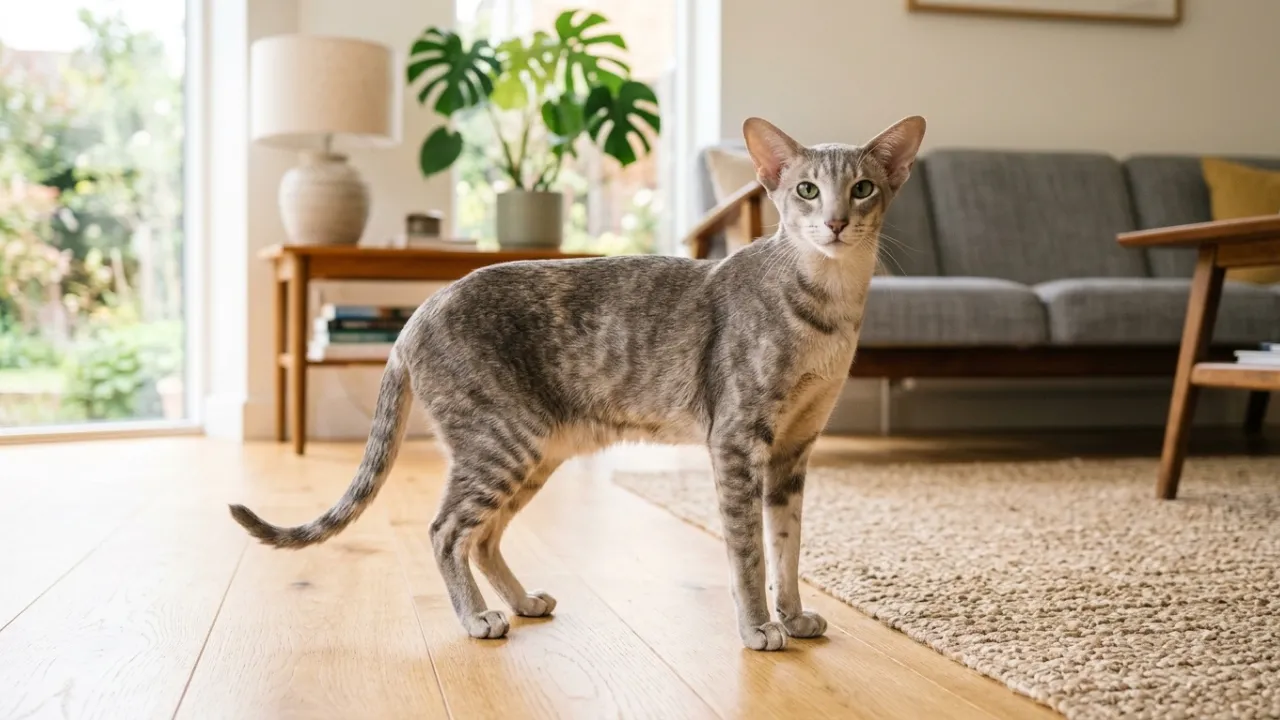
The Oriental Shorthair is Siamese-adjacent in nearly every way except the coat pattern. Vocal, intelligent, and endlessly curious, this cat will narrate your entire day if you let them. Owners who enjoy attention and conversation tend to adore this breed.
Grooming is where this breed saves you money. PetPlan notes that the silky, close-lying coat needs only a weekly brush, a real advantage over longer-haired breeds. Less coat means less shedding, fewer hairballs, and fewer grooming-related vet visits.
The real cost here is attention, not grooming. This breed bonds tightly with their people and can develop separation anxiety if left alone too often. Budget for toys, puzzle feeders, or even a second cat to keep them occupied.
5. Turkish Van
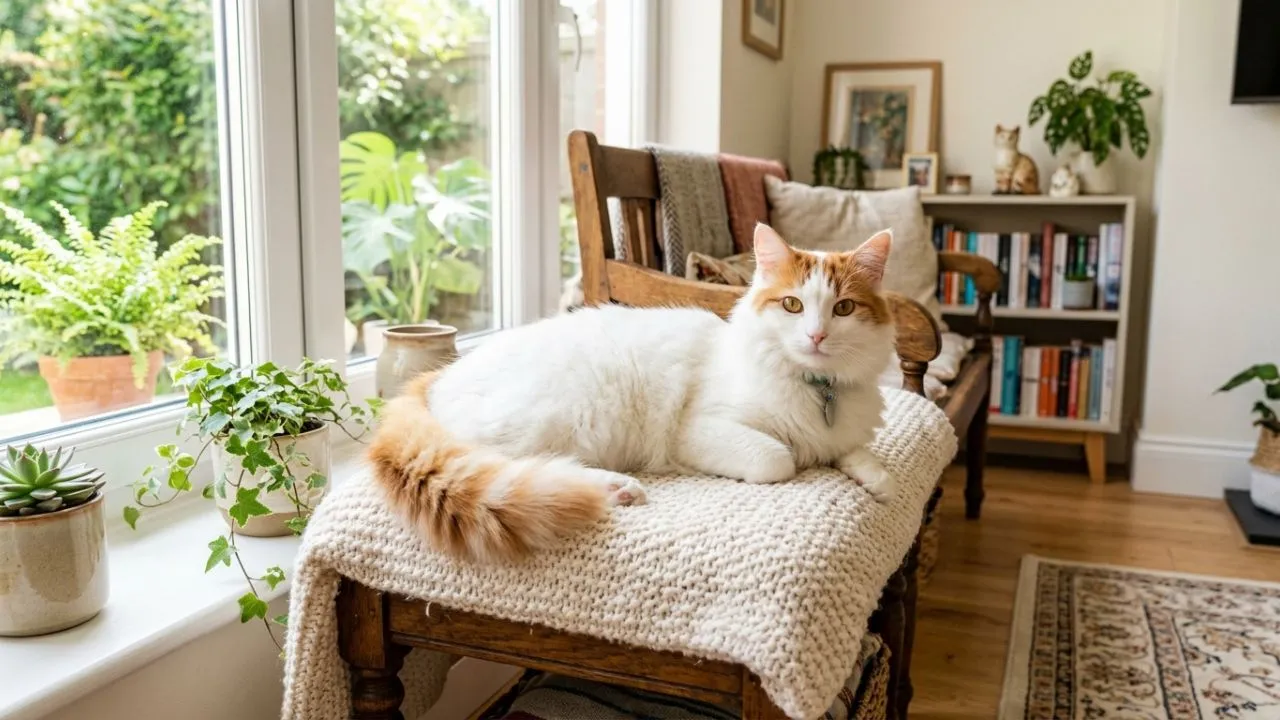
Nicknamed the swimming cat, the Turkish Van is an adventurous breed that would rather be exploring than relaxing on a cushion. Playful, clever, and endlessly curious, they need an active household to feel truly happy. Water bowls and sinks are not safe from their curiosity.
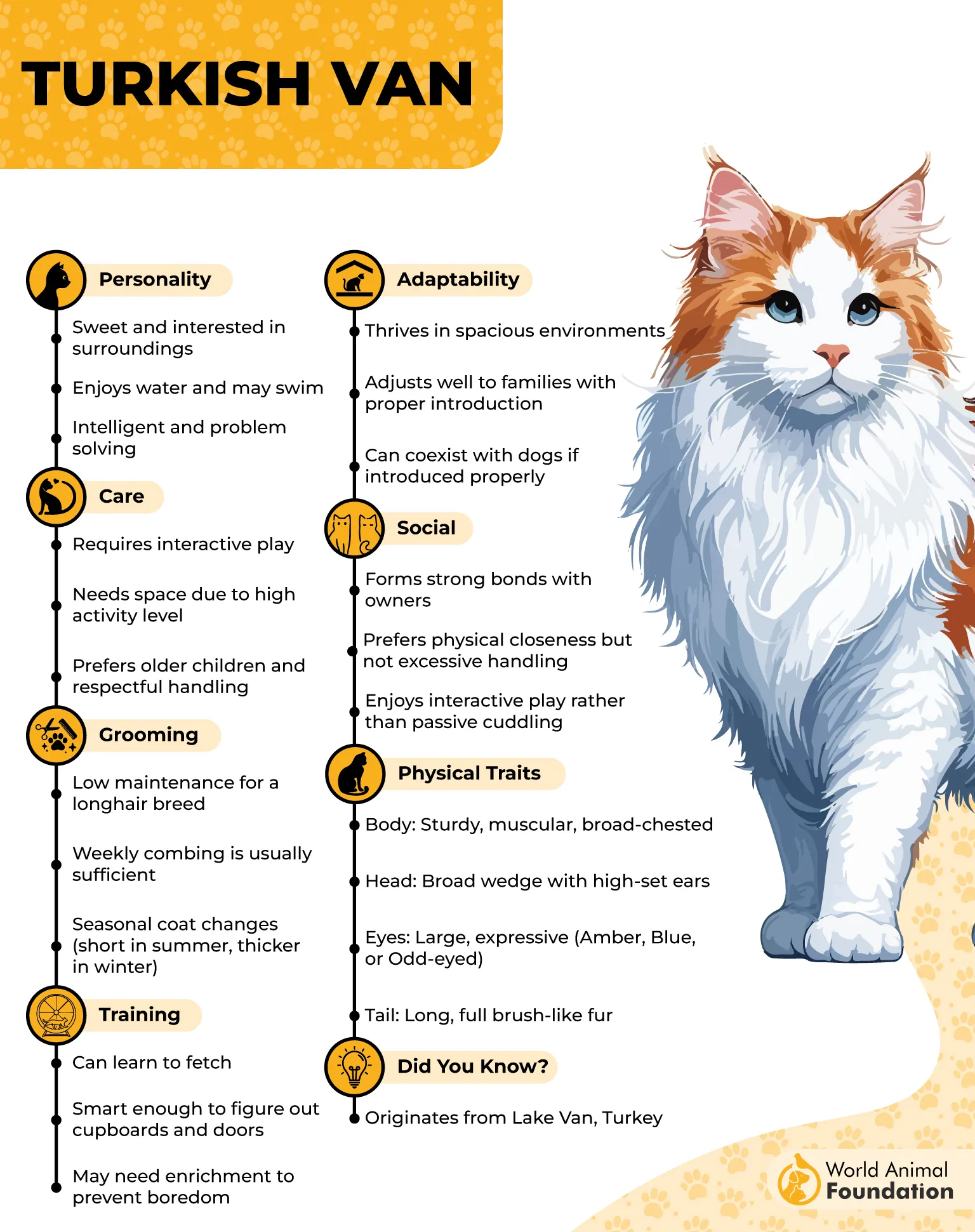
That semi-long coat looks high-maintenance, but it is not. Hill’s Pet points out that the Turkish Van’s single coat resists matting, so weekly combing is plenty. Skipping the professional groomer is an easy way to keep this breed affordable.
Rarity is the real cost factor here. As a natural, uncommon breed, Turkish Van kittens tend to carry a higher purchase price than other cats on this list. Their high energy also means more spent on toys and climbing trees to prevent boredom.
6. Manx
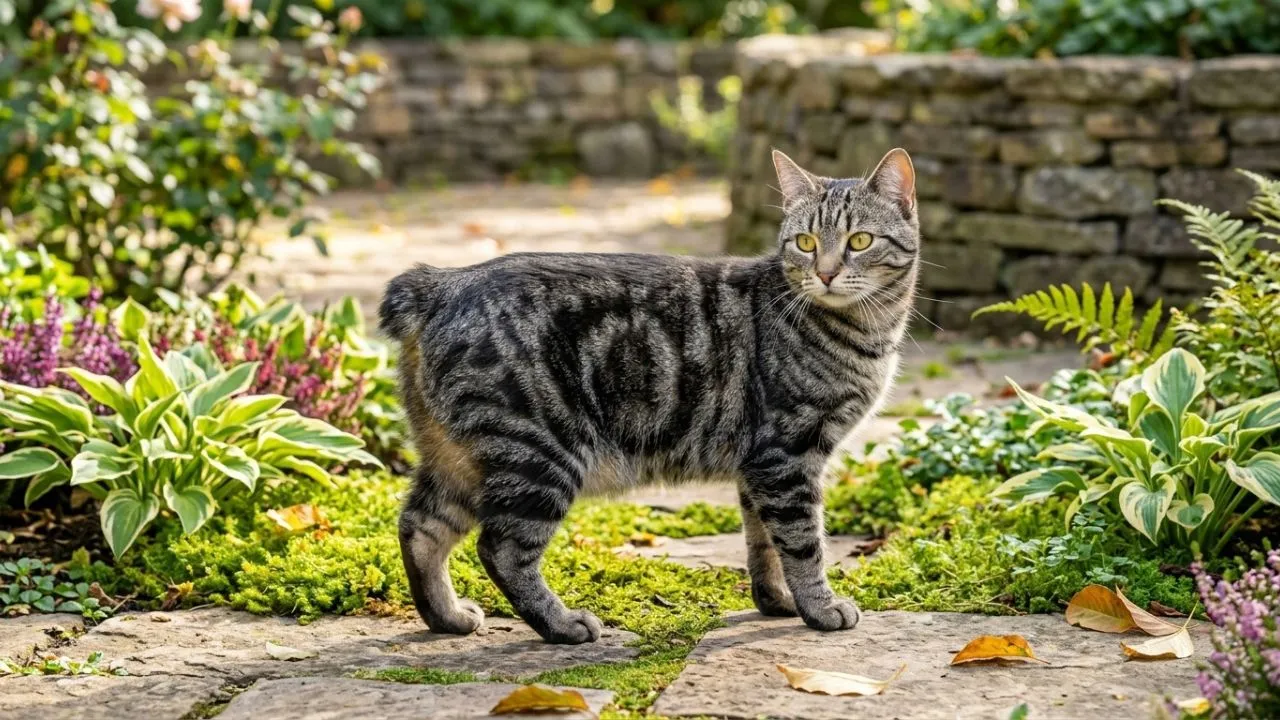
The Manx is famous for one thing above all: a tail that is short or missing entirely. Loyal, playful, and surprisingly dog-like, this breed enjoys fetch, climbing, and following owners from room to room. Families who want an interactive, people-oriented cat tend to love the Manx.
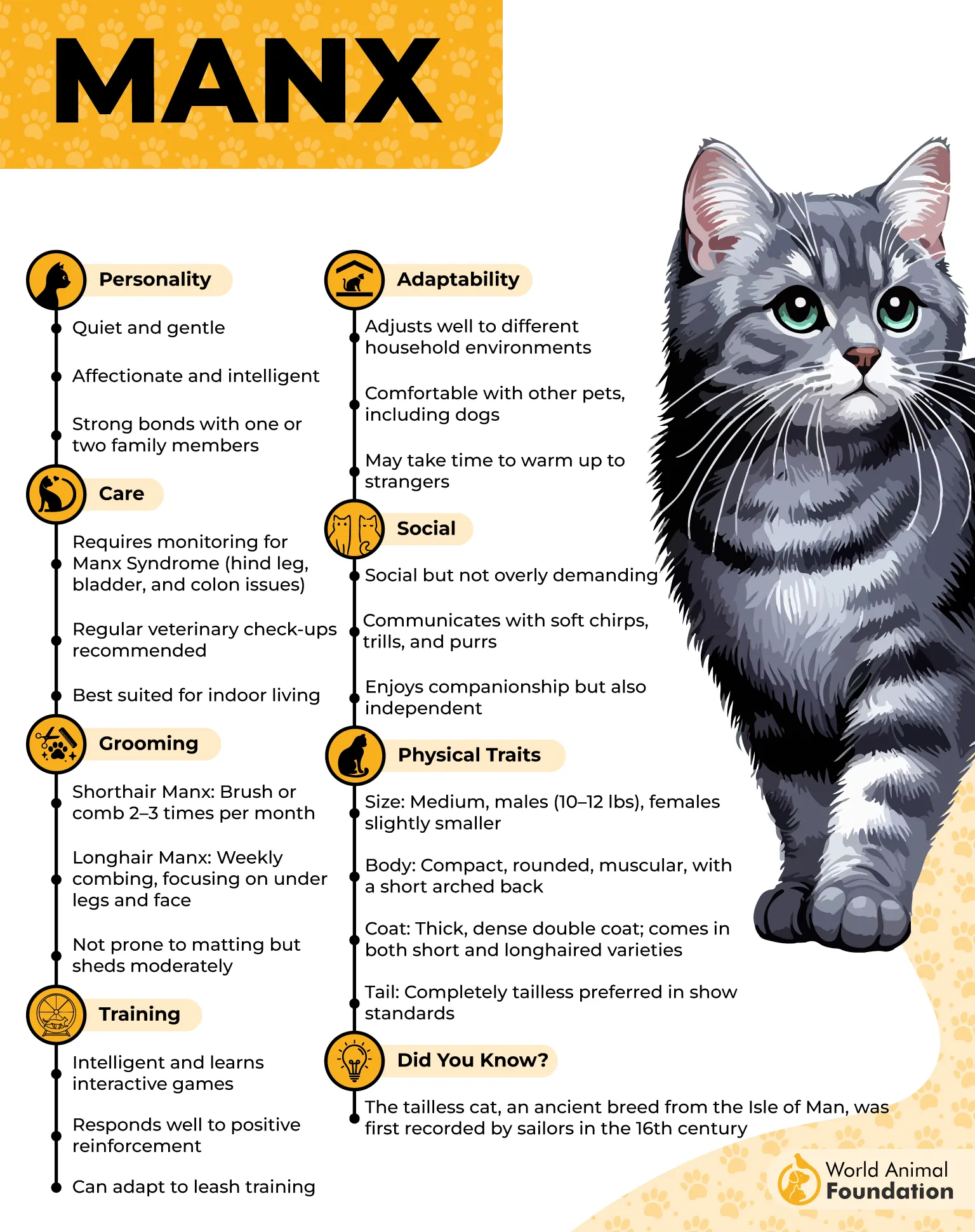
Day to day, the Manx is a fairly affordable breed to feed and groom. They have no special dietary needs beyond quality cat food, and a weekly brush through that dense coat is usually enough. Simple care routines keep the average monthly cost low.
The tail gene is also the breed’s biggest expense risk. The same mutation that removes the tail can cause Manx syndrome, a spinal condition that sometimes needs ongoing veterinary care. Ask a breeder about health screening before bringing a kitten home.
7. Siamese

Few breeds are as famous, or as vocal, as the Siamese. Outgoing, intelligent, and endlessly social, they crave conversation and attention from the people they love. A quiet, hands-off household is probably not the right match.
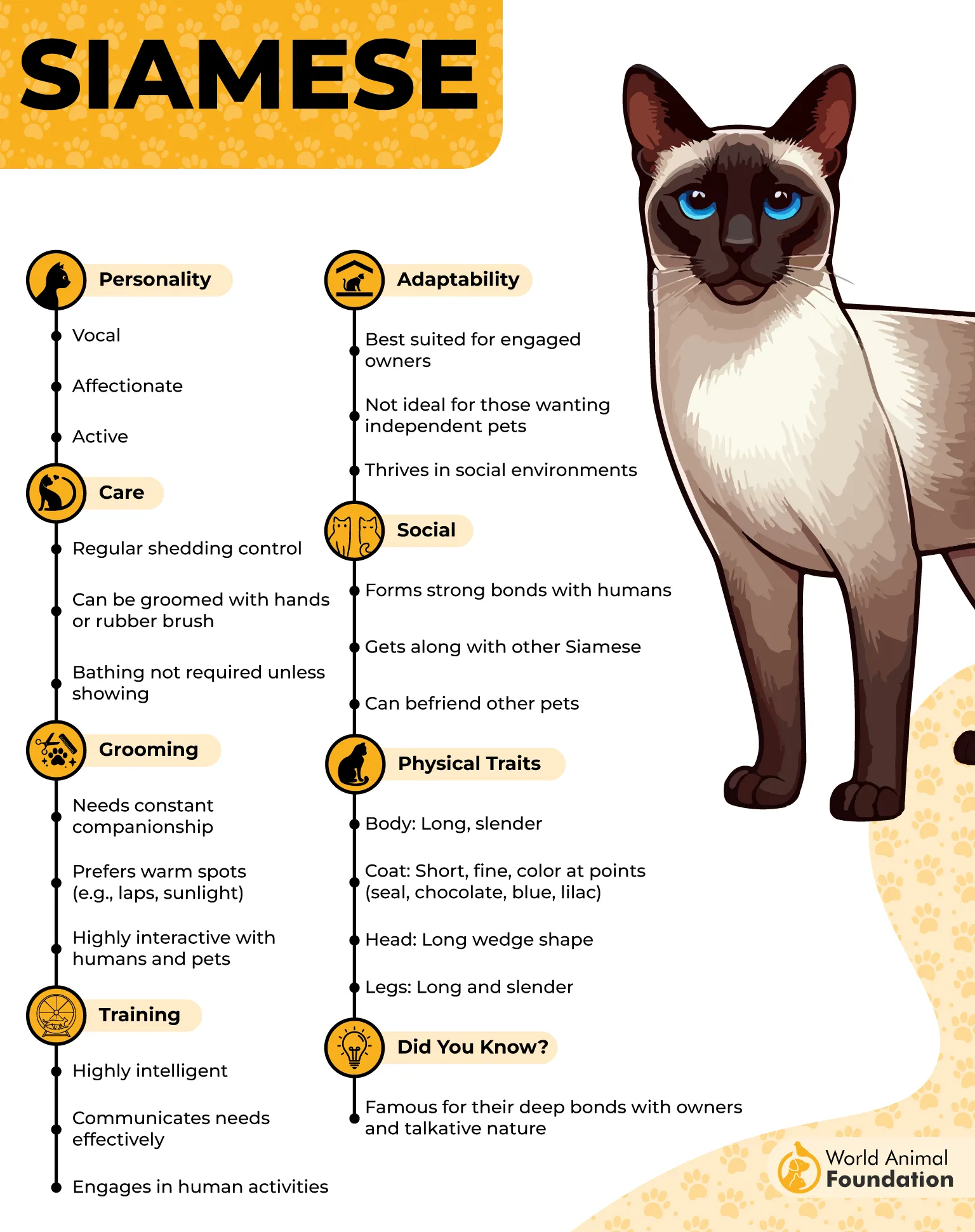
The Siamese is one of the most popular cat breeds, and that popularity works in your favor. Wide availability tends to keep purchase and adoption prices more reasonable than rarer breeds, and their short coat needs only minimal grooming. Many Siamese also enjoy a notably long lifespan, stretching the value of every dollar spent.
Their chatty nature comes with a health note worth remembering. Siamese cats are prone to dental disease, so regular checkups and cleanings are essential to avoid bigger bills later. Budgeting for dental care from kittenhood keeps this breed as affordable as its reputation suggests.
Conclusion
Inexpensive does not mean ordinary, and this list proves it: from the limp-on-cue Ragdoll to the chatty Siamese, these breeds show that an adorable, adaptable pedigree cat can still be wonderful for your wallet.
Most cats come with some cost, but unlike other breeds that rack up vet bills before their first birthday, these seven cats stay refreshingly budget-friendly as they grow.
Whichever one you prefer, choosing a healthy breed now means more savings as your cat grows older, so start browsing pictures, visit local breeders, and bring home the budget-friendly companion you’ve been waiting for.
