




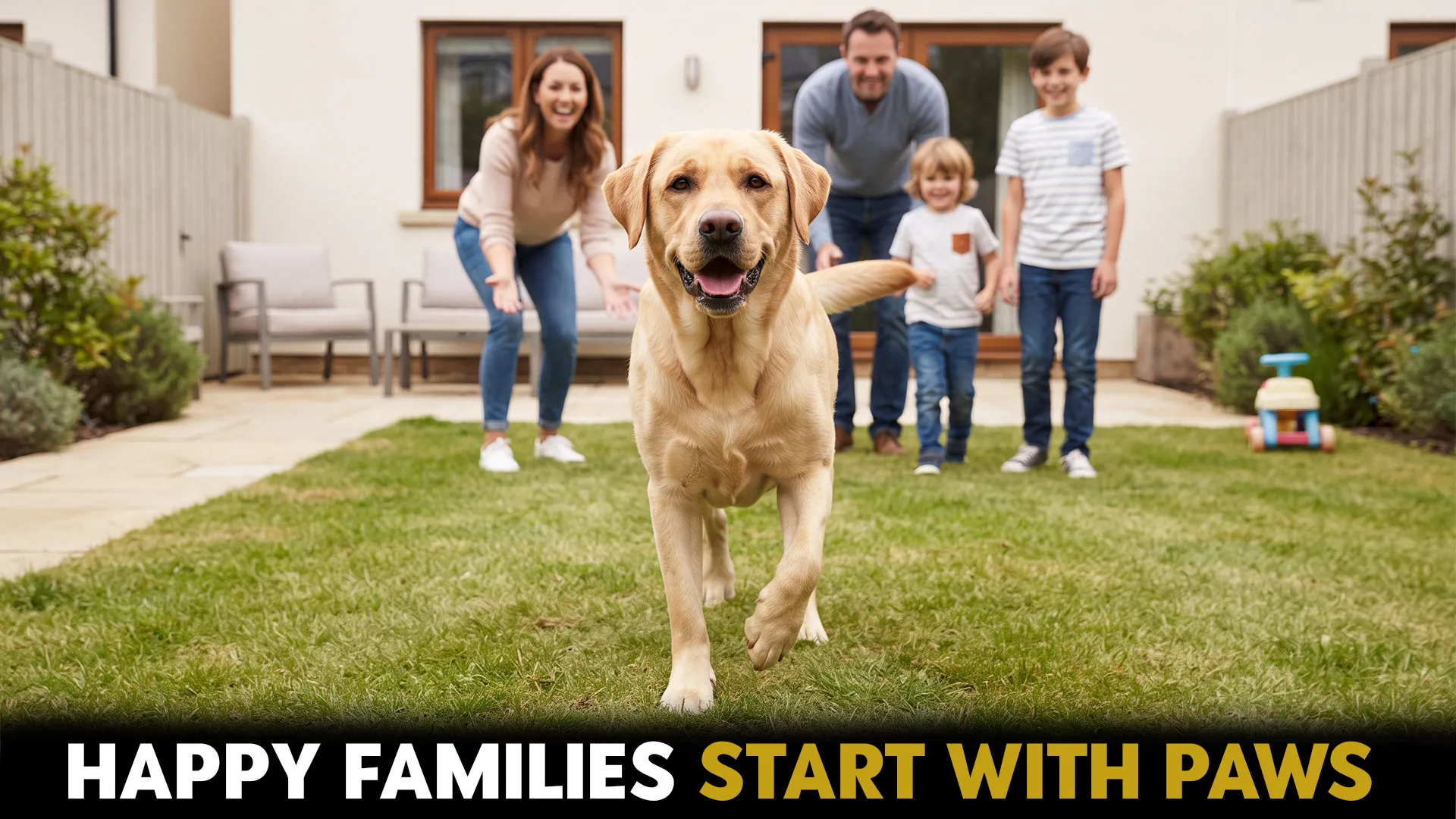
The arrival of your first dog plays an important part in your life, but there is a learning curve involved as well. Along with how much exercise a breed needs, you are also selecting a lifestyle, training method, level, and a partner that will become a part of your family’s lifestyle.
Some dogs can be easier to train, other dogs are good with kids, and others adjust to active families more easily, making the transition a smoother one for first-time owners. Some pets are great dogs, but need more experience, more exercise, or a particular lifestyle.
The following breeds are outstanding for various reasons. Some are a great choice to be family dogs due to their gentle temperament, and other pets make a wonderful introduction to training, outdoor life, or a smaller dog.
Wonderful Dog Breeds for First-Time Families
1. Golden Retriever

Known as a breed of great beauty by the AKC, the Golden Retriever is a beautiful dog that can make mundane family events special.
These medium-sized dogs are a great choice for first-time owners, as training doesn’t need to be an additional task. A Golden can learn while playing fetch, with families with kids, basic commands, or while going on outdoor adventures. It is an intelligent, eager-to-please, highly trainable breed.
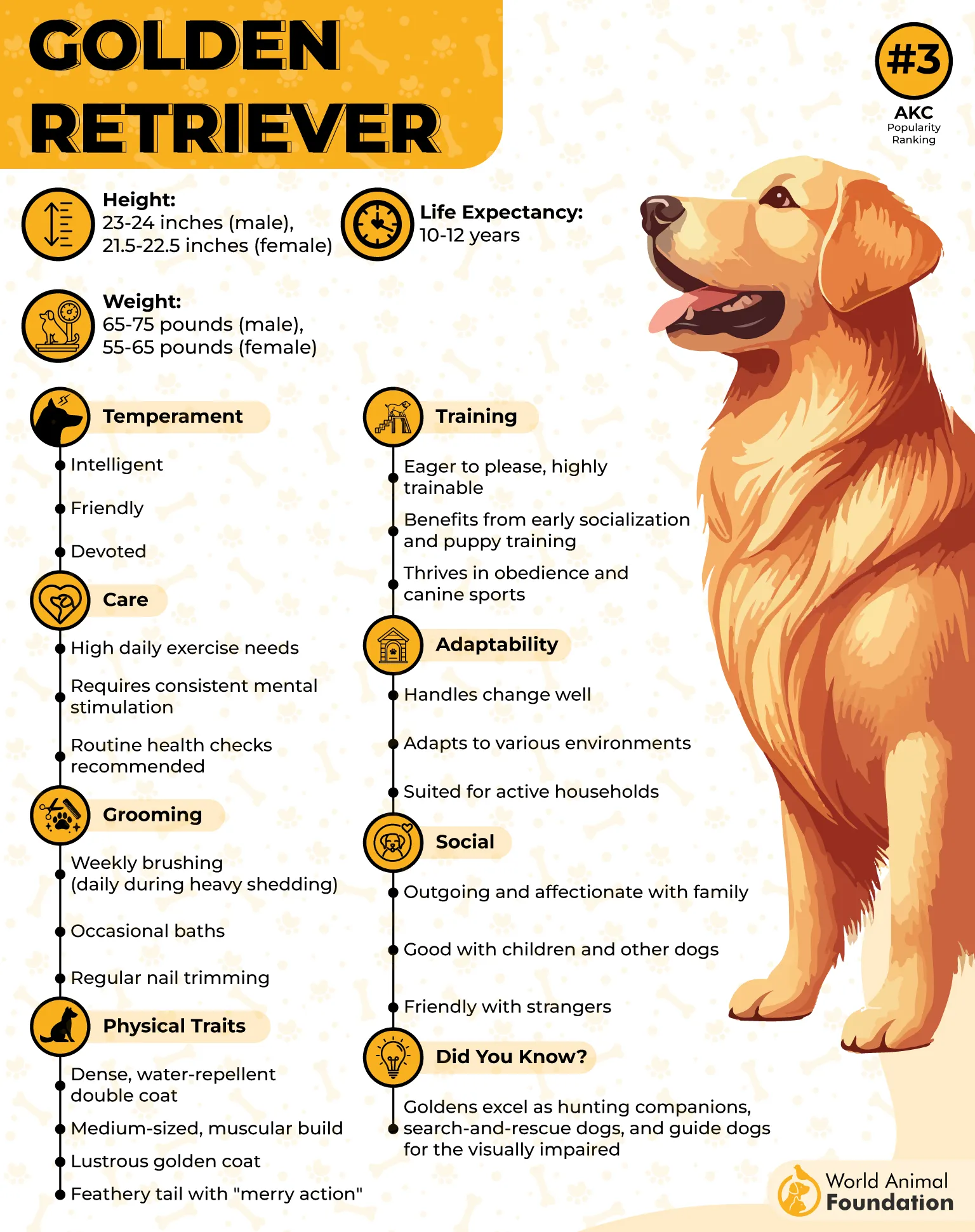
Goldens also tend to be easy to get along with children and others. They are social creatures and make good pets for family, friends, or neighborhood kids that come and go on a regular basis, unlike other animals.

Friendly Tip: Although it is one of the most popular dog breeds in the canine world, it is not a low-maintenance breed. Every day, physical exercise and mental stimulation are important to keep this adult dog entertained and healthy.
2. Labrador Retriever

The Lab is a good family dog and is capable of doing just about anything.
Labs have a long history of working closely with humans; today, Labradors are found in various types of assistance work, search and rescue, and detection. That versatility is indicative of their tolerance for humans.
Not all dog breeds can be particularly rewarding for the first-time family, but the Lab is one of the easiest dog breeds to handle. A Lab can learn the house manners at the same time as they are practicing skills for walks, retrieving games, swimming, hiking, and more.
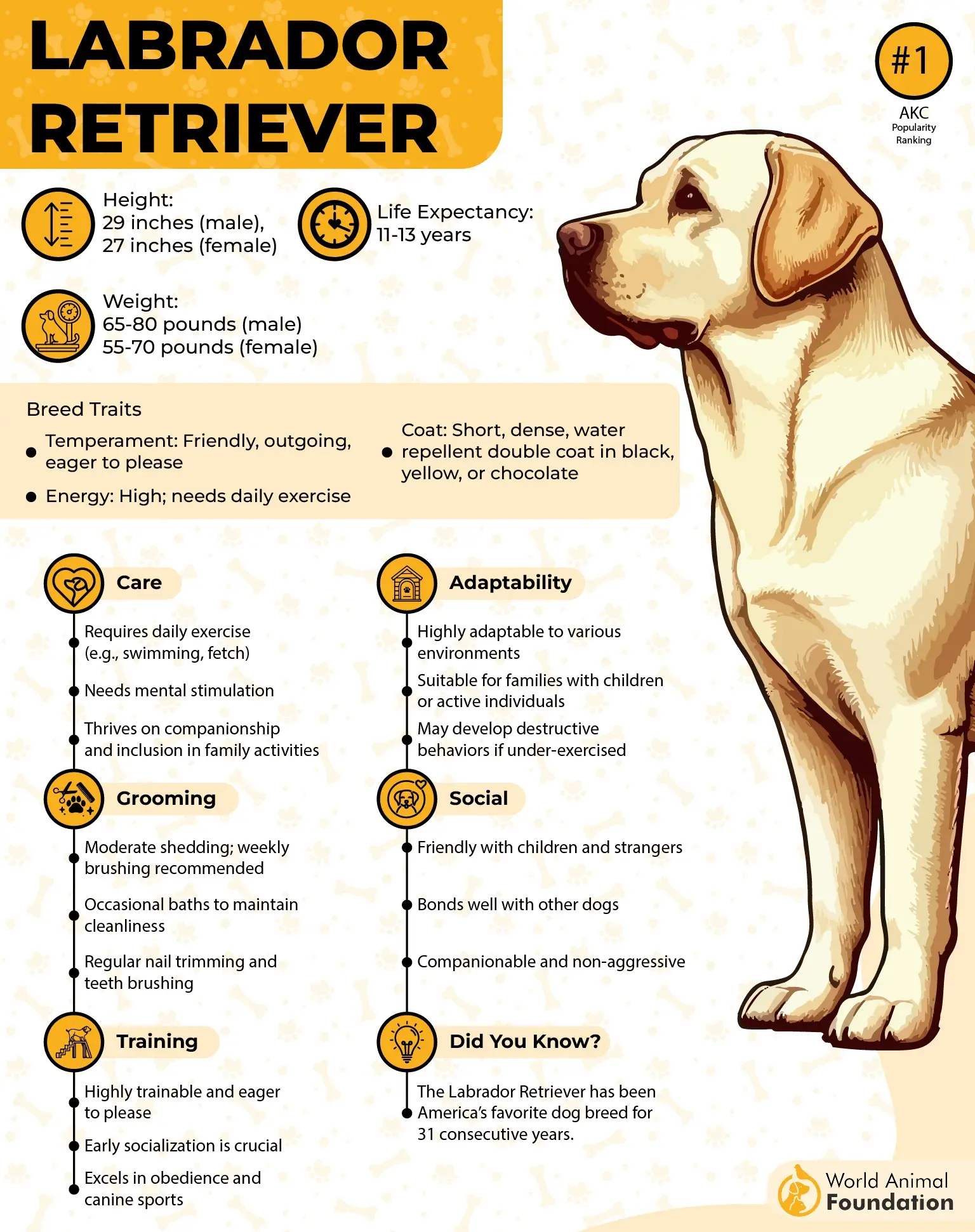
Strangers and other dogs will generally be friendly with Labs, making social situations easier to manage. They are also highly excitable dogs and need to be channeled. The energy level and exuberance they possess could be more suited to families with older children.
When your family enjoys being outdoors, your Lab can become that dog that participates in virtually anything.
3. Cavalier King Charles Spaniel

Known to be an excellent choice for first-time owners, as stated by PetMD, the Cavalier King Charles is an adaptable breed with a calm demeanor.
On some days, they prefer longer walks with moderate exercise. On other days, these loyal dogs may be more suited to a less hectic lifestyle, and both of these routines are suitable for Cavaliers. This breed fits owners who want a sporty furry friend that loves walks and outdoor activities.
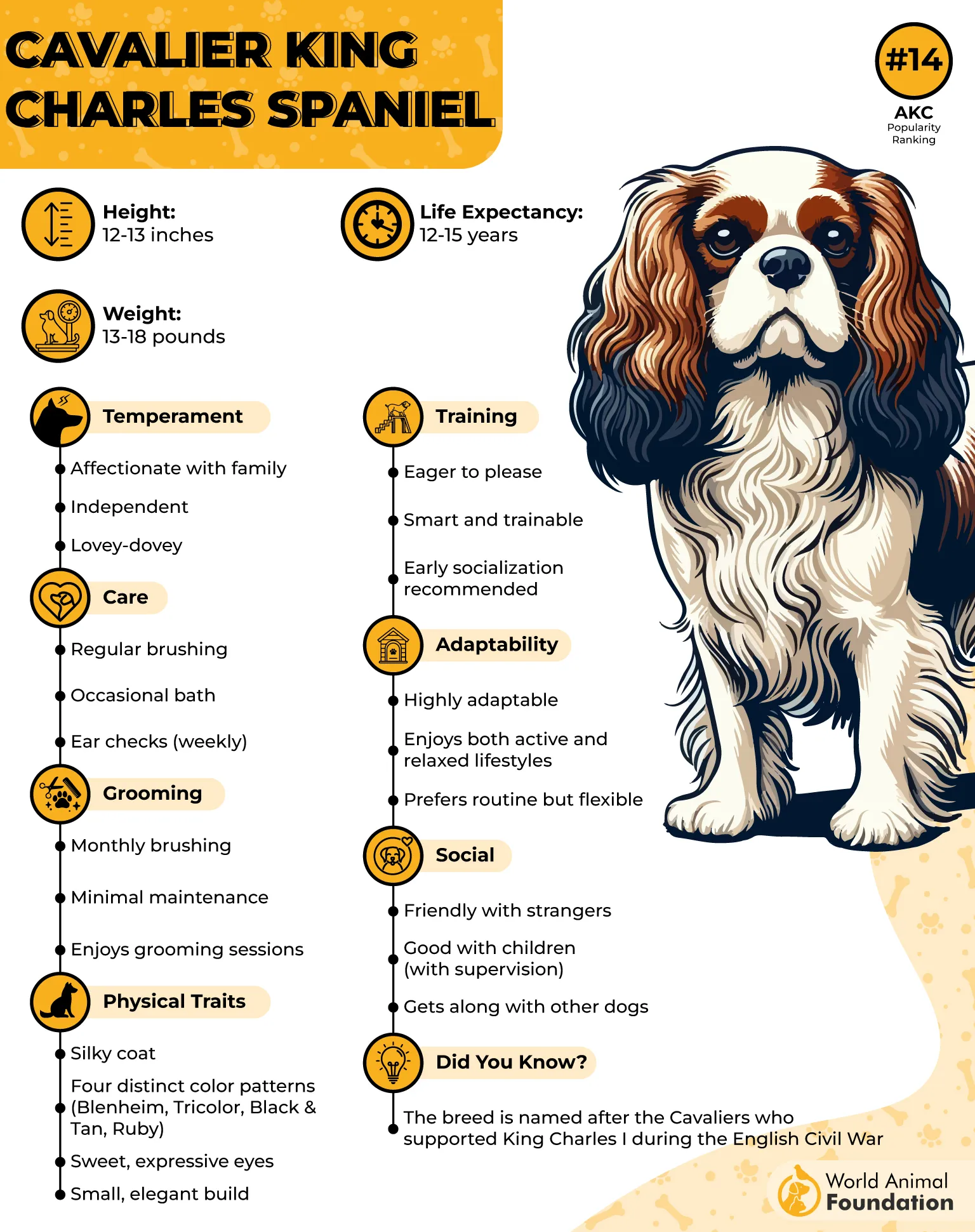
The adaptability is helpful for families still learning about dog life and how breeds adjust in different living environments.
Cavaliers are very loving and pleasant friends. Basic training can be accessible to the new owner due to their willingness to learn. When properly socialized, they tend to be friendly with children and other dogs.
As a breed for first-time owners, this dog may be especially attractive to a family that has someone home on a regular basis.
4. Havanese

The Havanese adds many benefits – they help make the whole process of transitioning into a doggy household easier to handle in a hectic household.
These little dogs are friendly, easy to train, and have moderate exercise needs. Sometimes, walking and playtime can keep the family busy enough without incorporating serious exercise into the daily schedule.
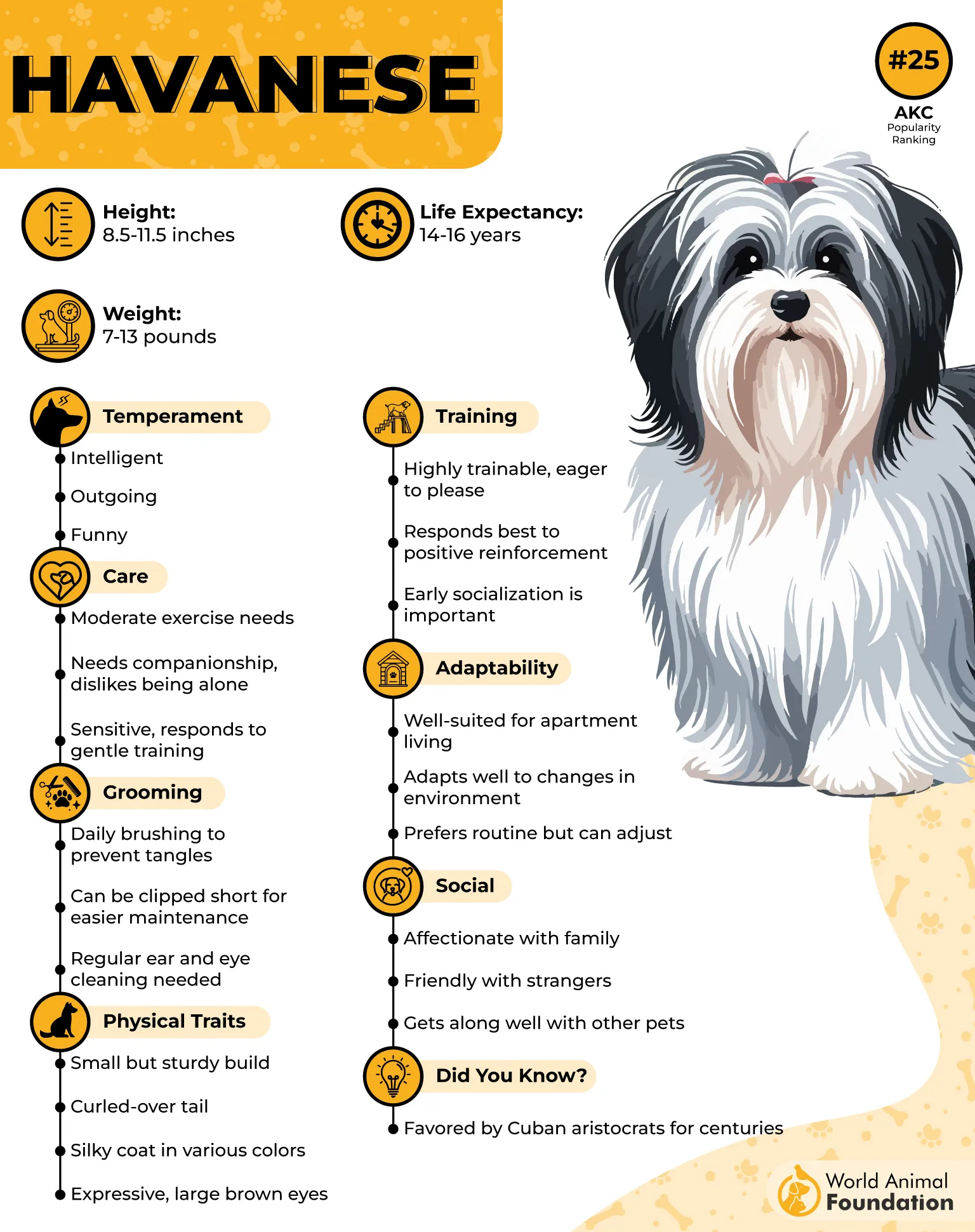
Havanese are also clever and easy to train. Positive training is well suited for this breed, as one can be sensitive. There’s no need to handle this breed harshly, which can damage the bond it is building with its owner.
The only problem is the companionship requirements. This is not a breed that is happiest when left alone for all day. Families should think about the time they have for their dog before they select one.
5. Bichon Frise
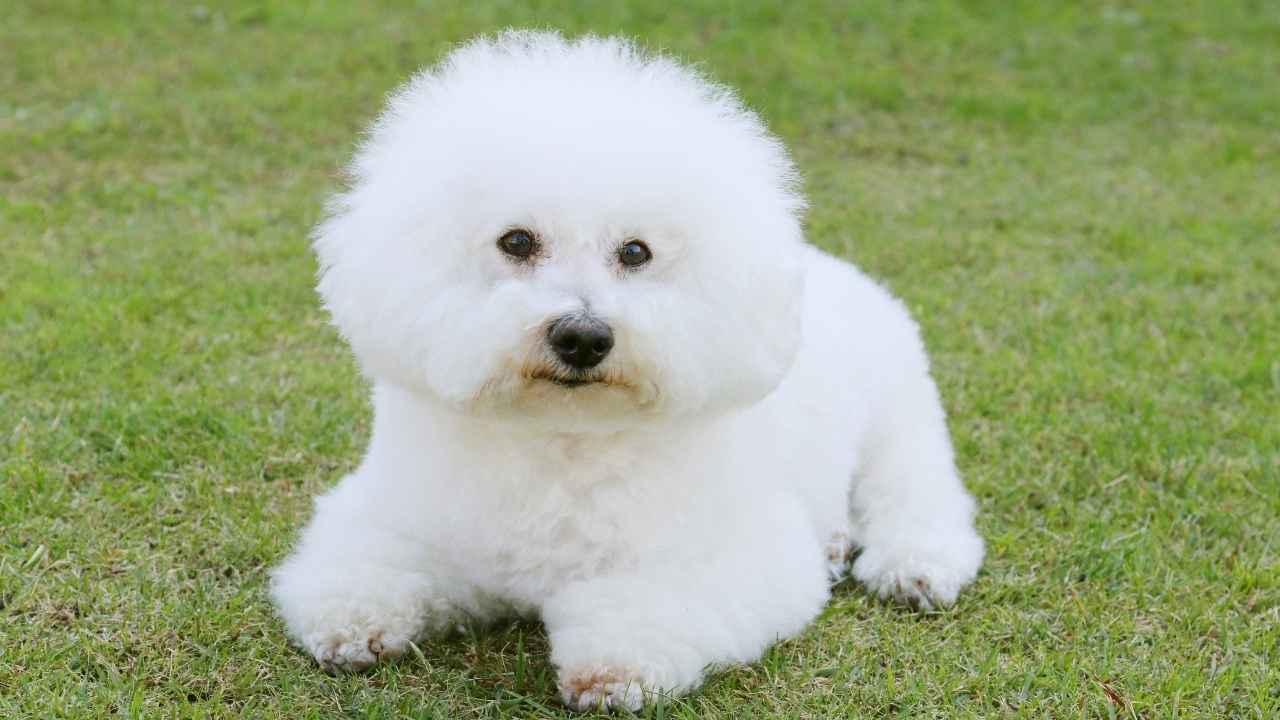
The Bichon Frise is evidence that a tiny dog doesn’t necessarily mean a weak or dull family.
Bichons are playful and surprisingly adjust to many living spaces, including living with apartment dwellers and living in small houses. This small breed is therefore a versatile companion, and when well-socialised, they can be good companions for families.
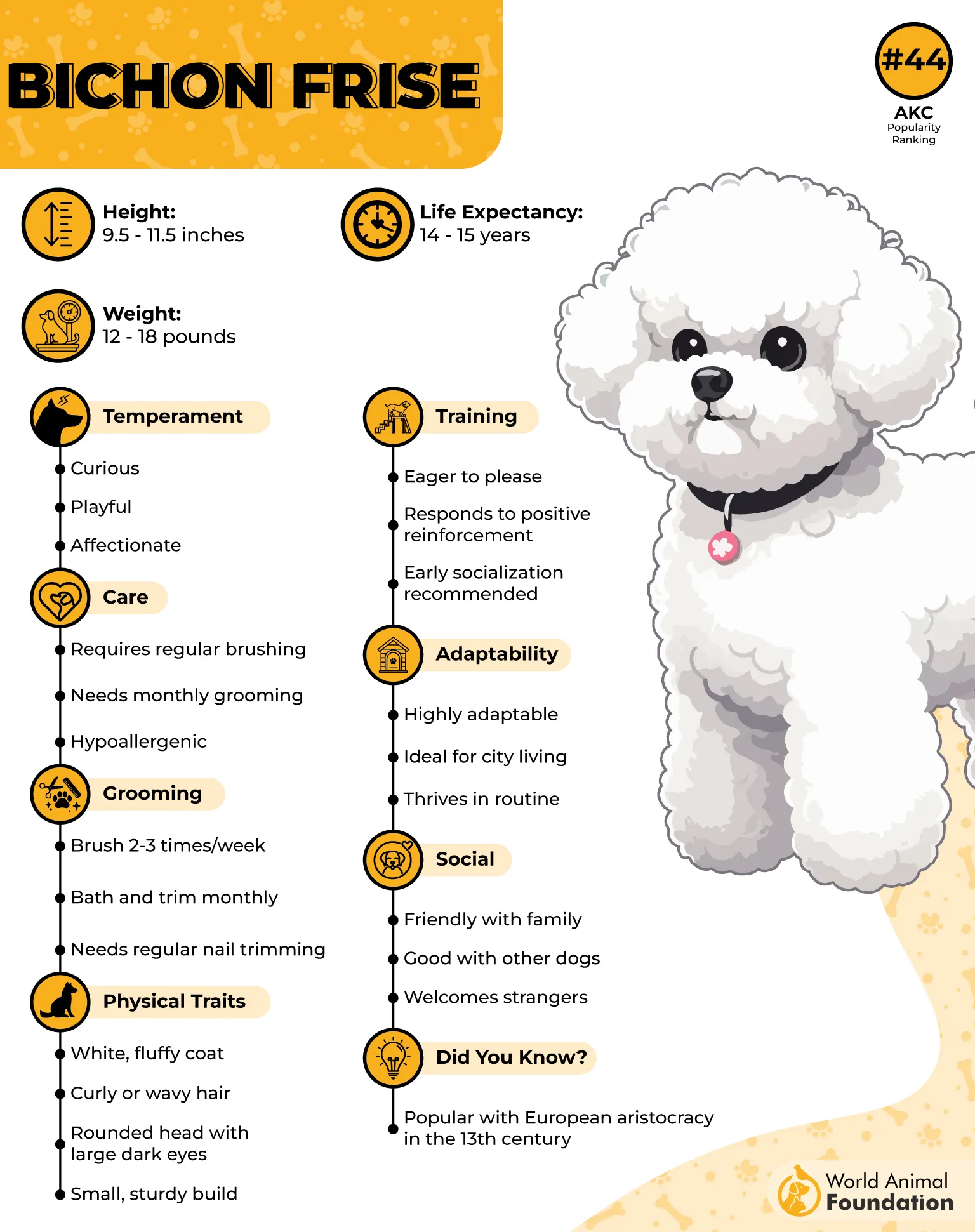
The breed’s other unique characteristic is their desire to learn tricks, which is great for first-time owners. They do have regular grooming needs, and professional grooming and regular brushing are part of being a pet owner.
The Bichon may be a fun addition to the family for those who desire a small dog that will play and enjoy being indoors.
6. Papillon

Coined as friendly and adventurous by Orvis, the Papillon is an interesting breed to consider as a first-time family pet due to its appearance.
The ears look like a butterfly, and the size is small, and it looks like a purely decorative lapdog. In fact, Papillons are bright, energetic little dogs that love to learn and enjoy activities with their owners.
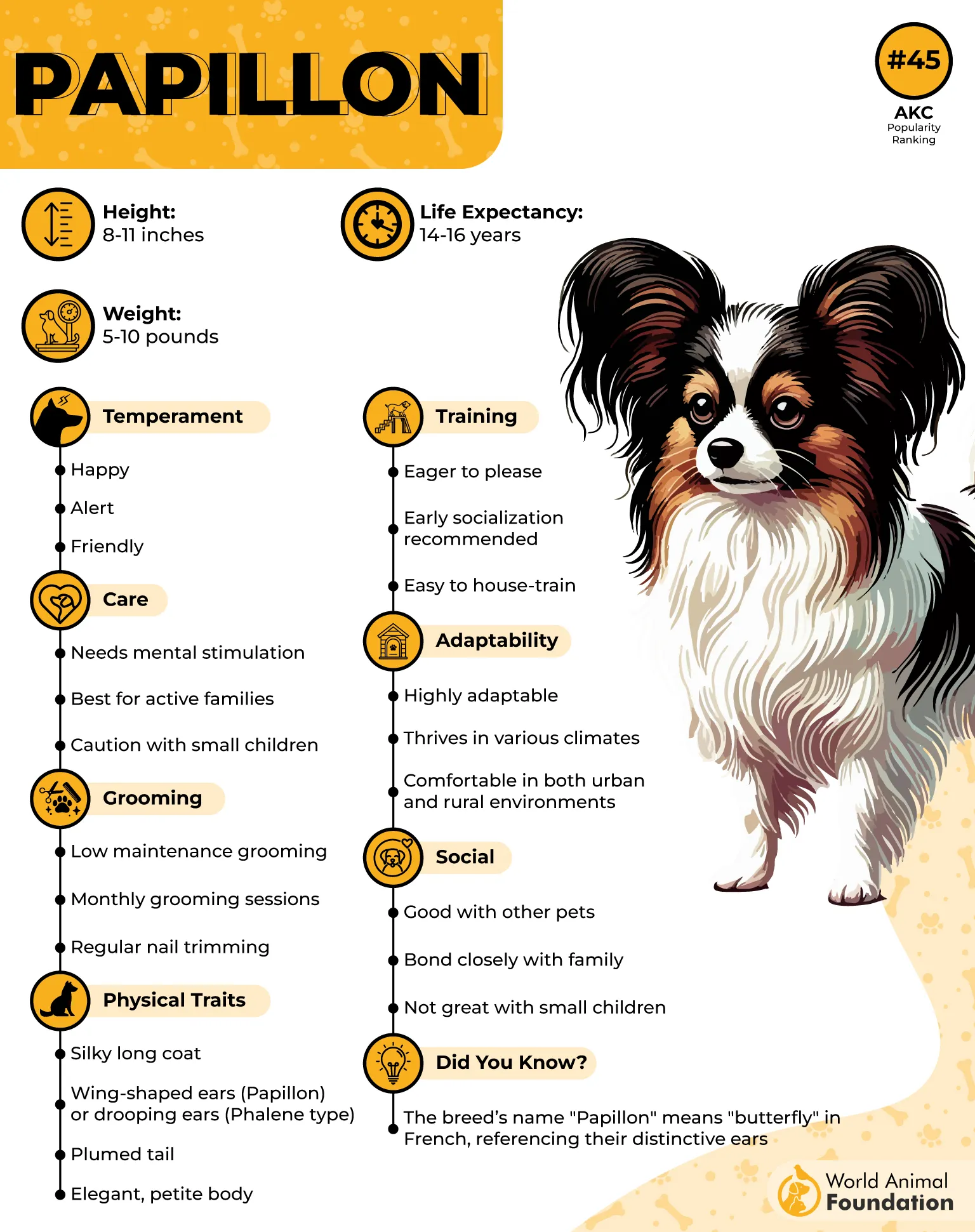
That makes them ideal for families looking to try the fun parts of dog training.
Basic obedience may be developed into tricks, agility, rally, or other mental stimulation exercises. The Papillon doesn’t need a lot of physical space, but it does need things to think about and jobs to do.
This is also a great teaching moment for first-time owners: Small dogs require structure just like any other breed.
7. Toy Poodle
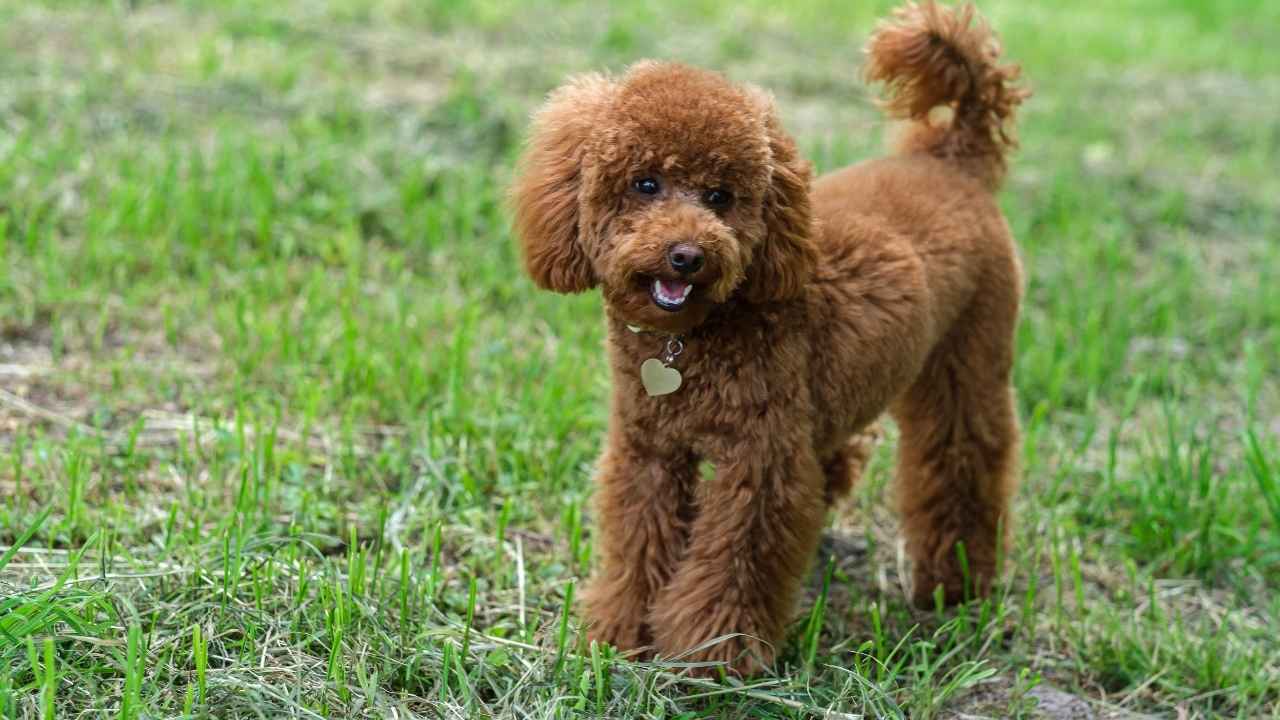
The Toy Poodle could be one of the most valuable breeds for a first-time family that is interested in intelligent breeds.
Poodles are very smart and sensitive, and Toy Poodles can learn so many things, such as house training, as well as advanced tricks. They are easily trainable, which means that new owners can establish good habits from the start, rather than work against a dog that is already independent and won’t listen.
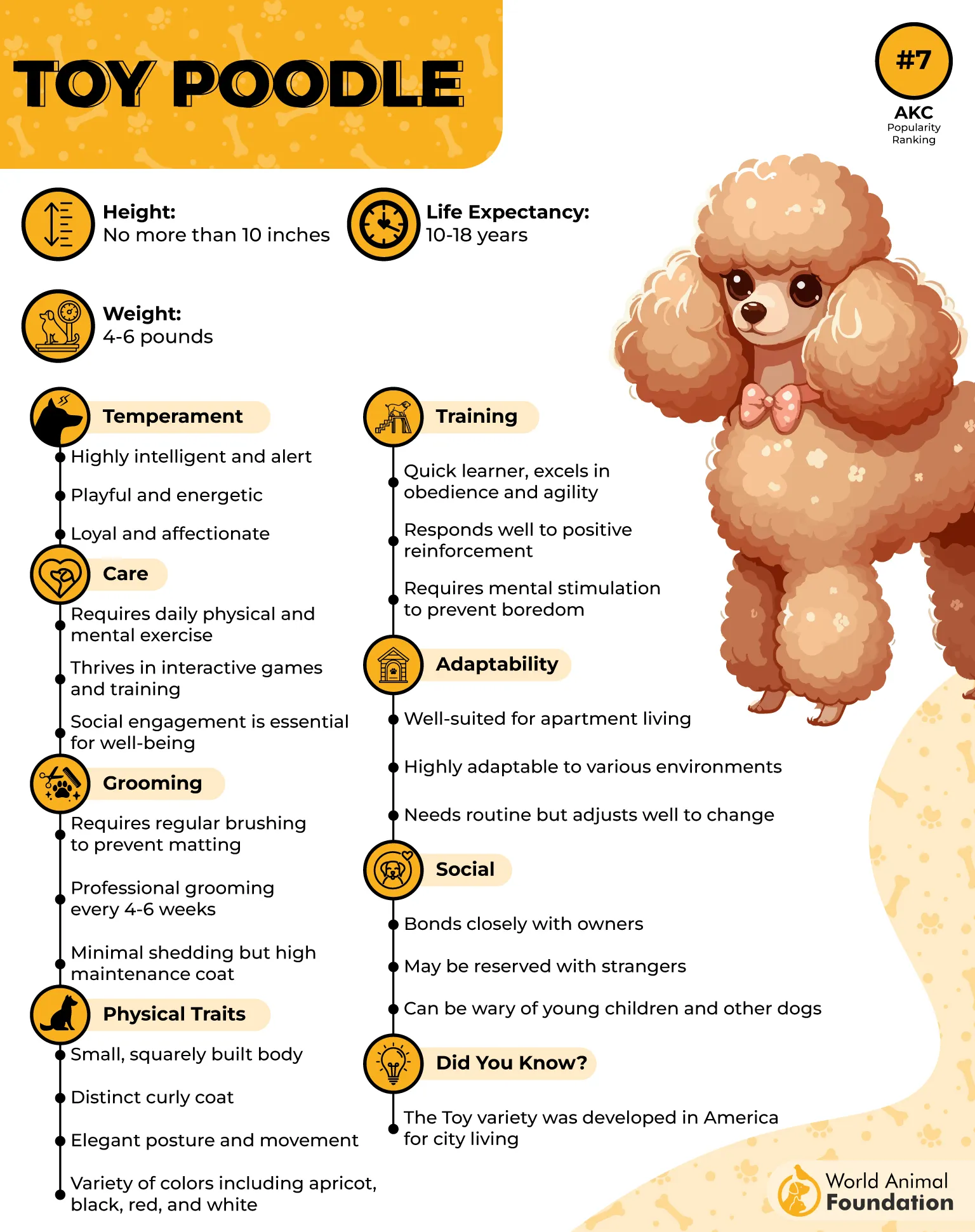
The breed is also not as laid-back as they look. It’s more active and mentally demanding. It’s not just a few short strolls. A Toy Poodle can be entertained with interactive games, training, and problem-solving.
A further benefit is that there are three sizes of Poodles, and the Toy is the smallest of the bunch for those seeking a smaller pet to join their family. The breed is very adaptable and very receptive to training.
The Toy Poodle can be an enthusiastic training partner to a family that desires their first dog to be one.
Conclusion
Selecting a first-family dog is not about picking a breed that is perfectly ideal for everyone, but a choice of a specific breed that is best suited for the household.
All in all, the first year is a learning year for a family regardless of the breed they adopt. Routine, positive training, proper socialization, veterinary care, and reasonable expectations will do much more to benefit the relationship than simply picking a dog based only on appearance.
